Article

Element Migration of Mineralization-Alteration Zones and Its Geological Implication in the Beiya Porphyry–Skarn Deposit, Northwestern Yunnan, China

1
College of Mining Engineering, Guizhou University of Engineering Science, Bijie 551700, China
2
Faculty of Land Resources Engineering, Kunming University of Science and Technology, Kunming 650093, China
3
Southwest Institute of Geological Survey, Geological Survey Center for Non-Ferrous Mineral Resources, Kunming 650093, China
4
Sino-Zijin Resources Ltd., Beijing 100012, China
*
Author to whom correspondence should be addressed.
Appl. Sci. 2024, 14(21), 9653; https://doi.org/10.3390/app14219653
Submission received: 2 September 2024 / Revised: 5 October 2024 / Accepted: 6 October 2024 / Published: 22 October 2024

Abstract

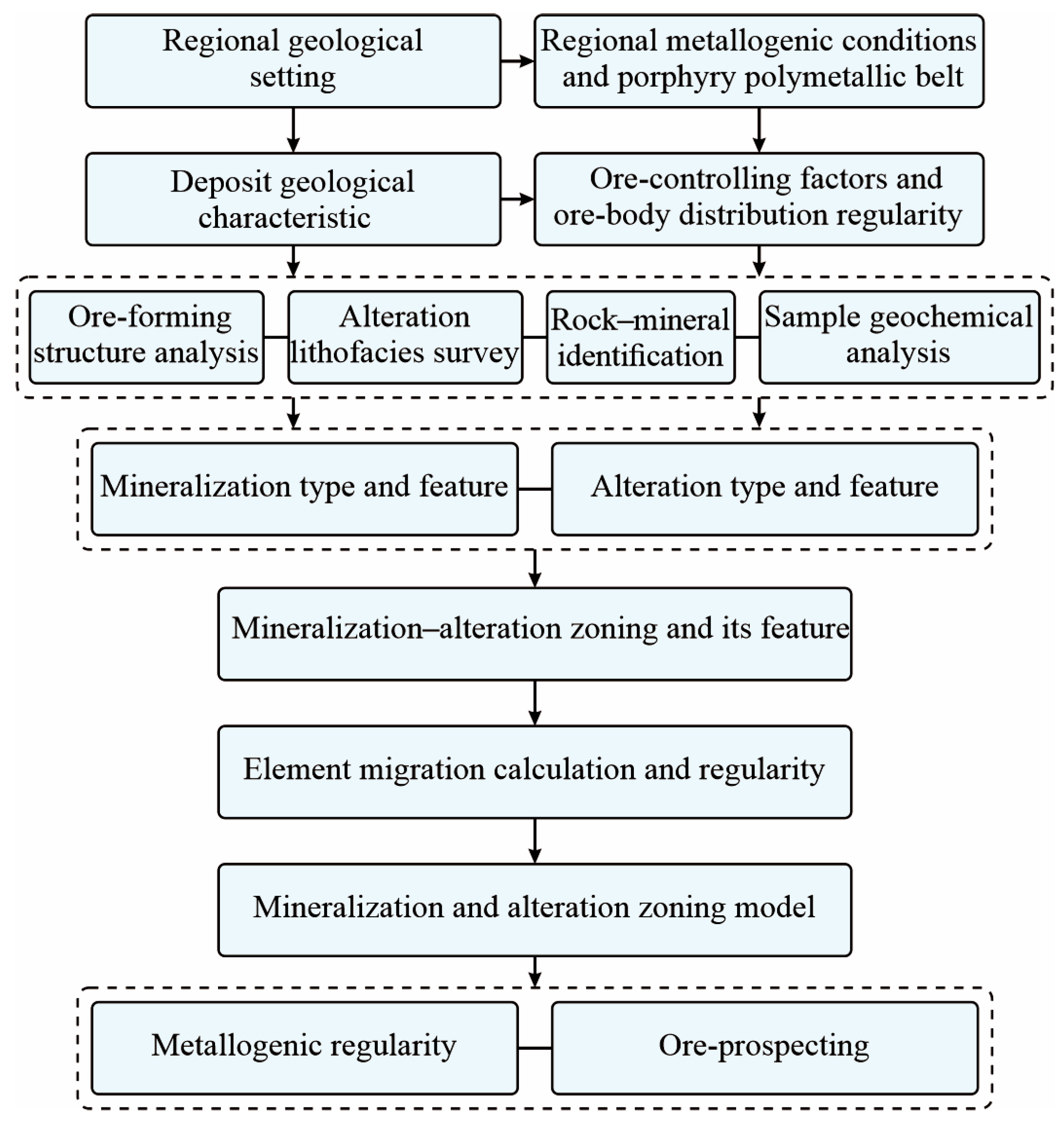
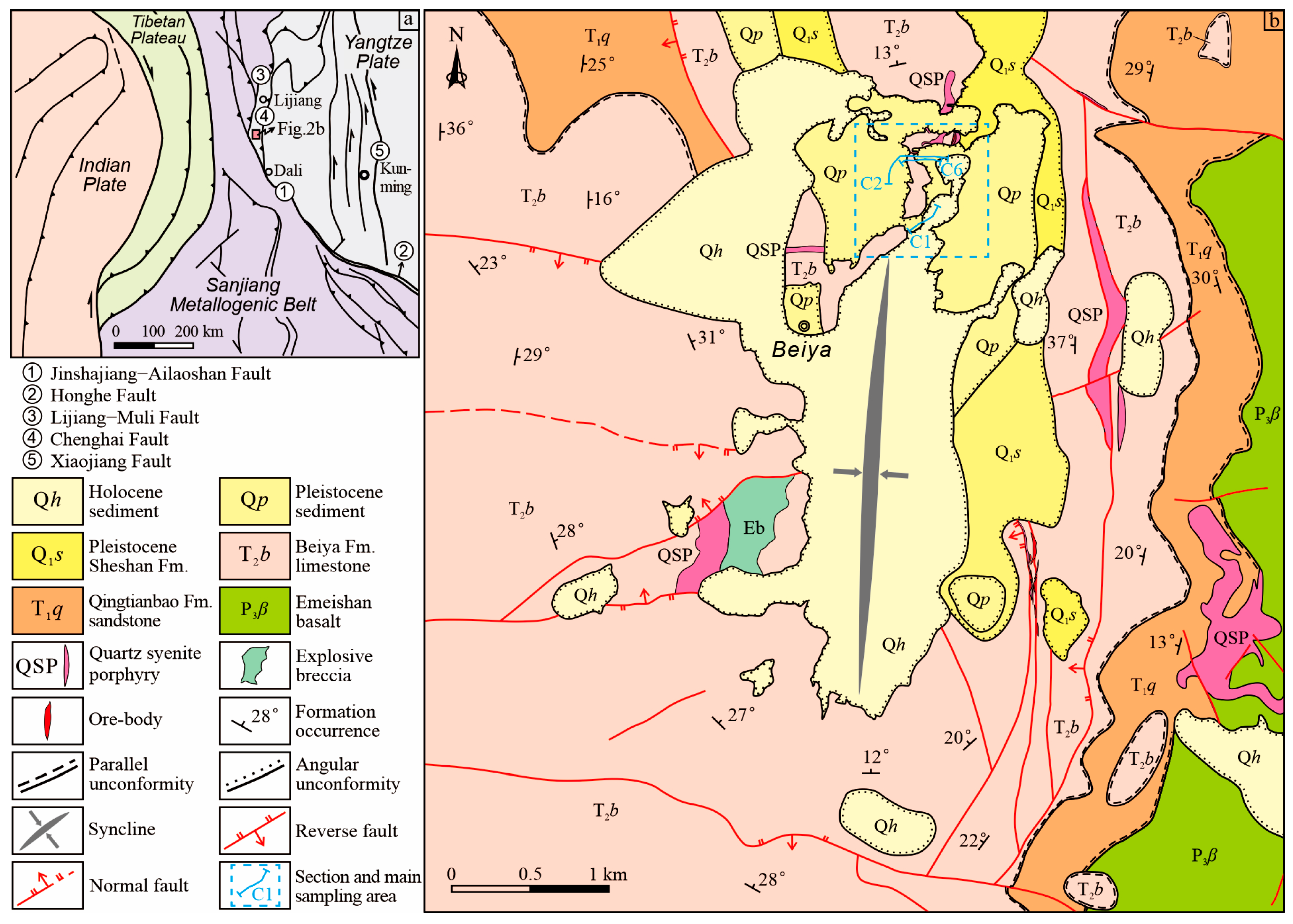
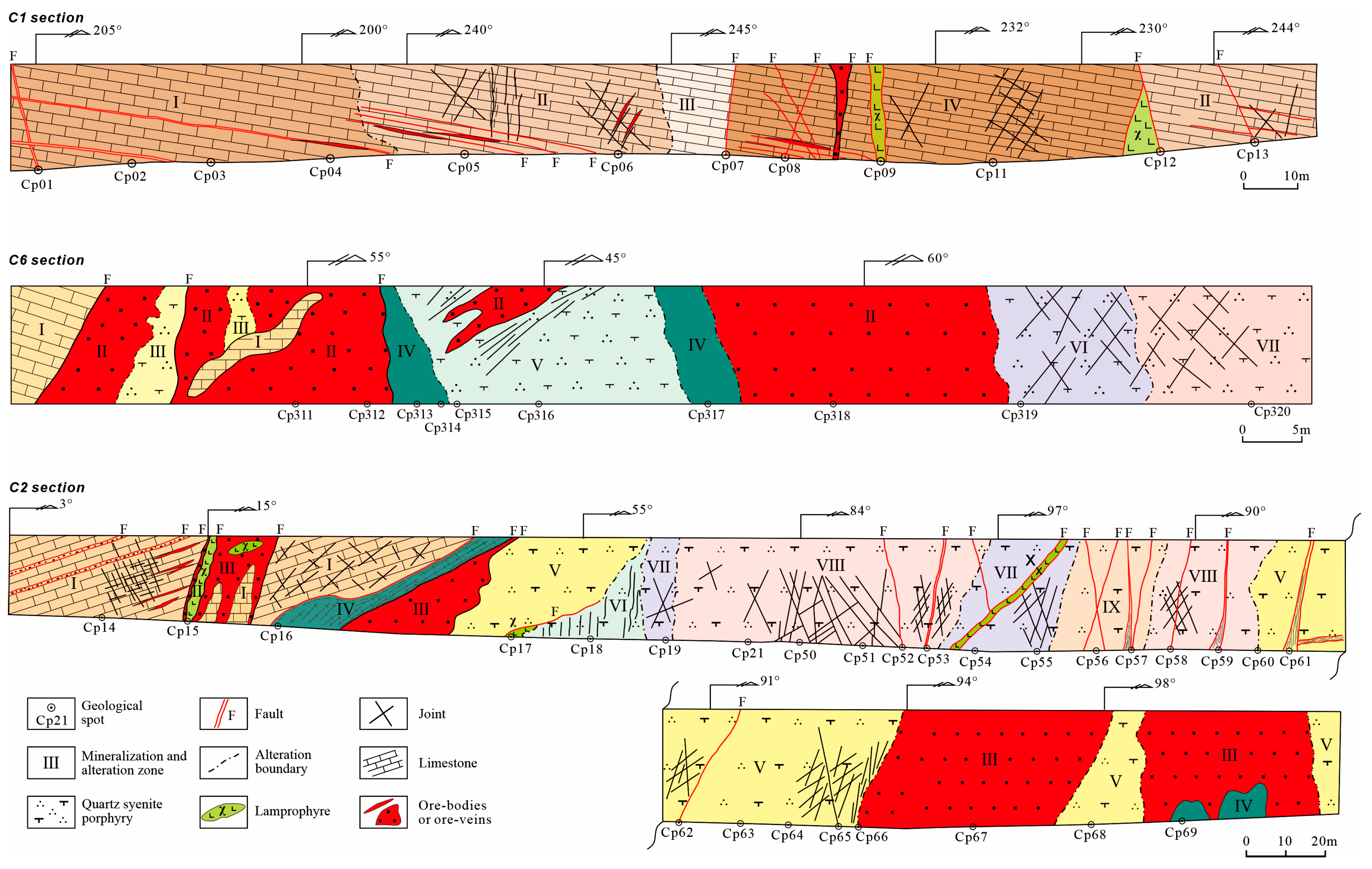
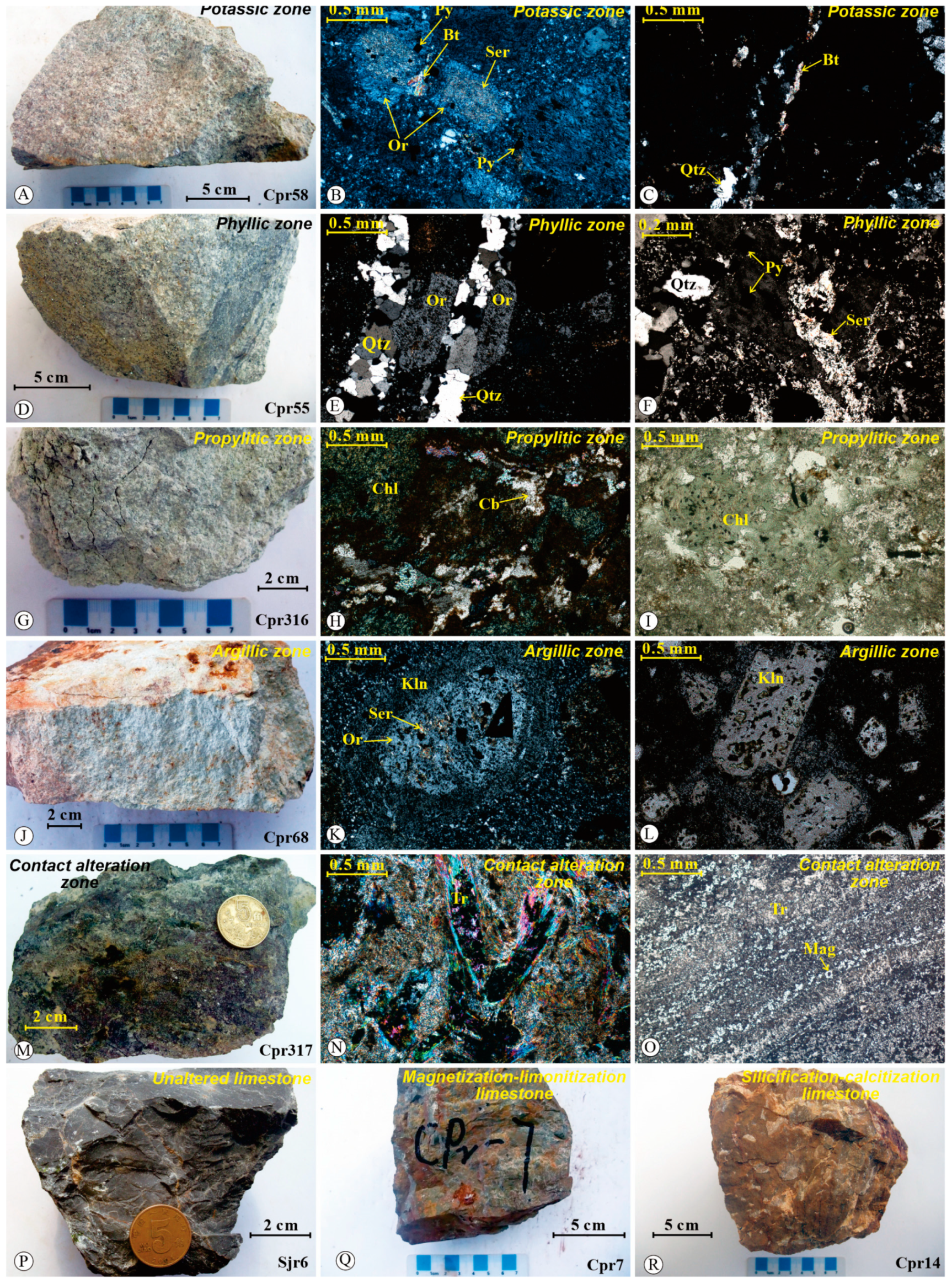
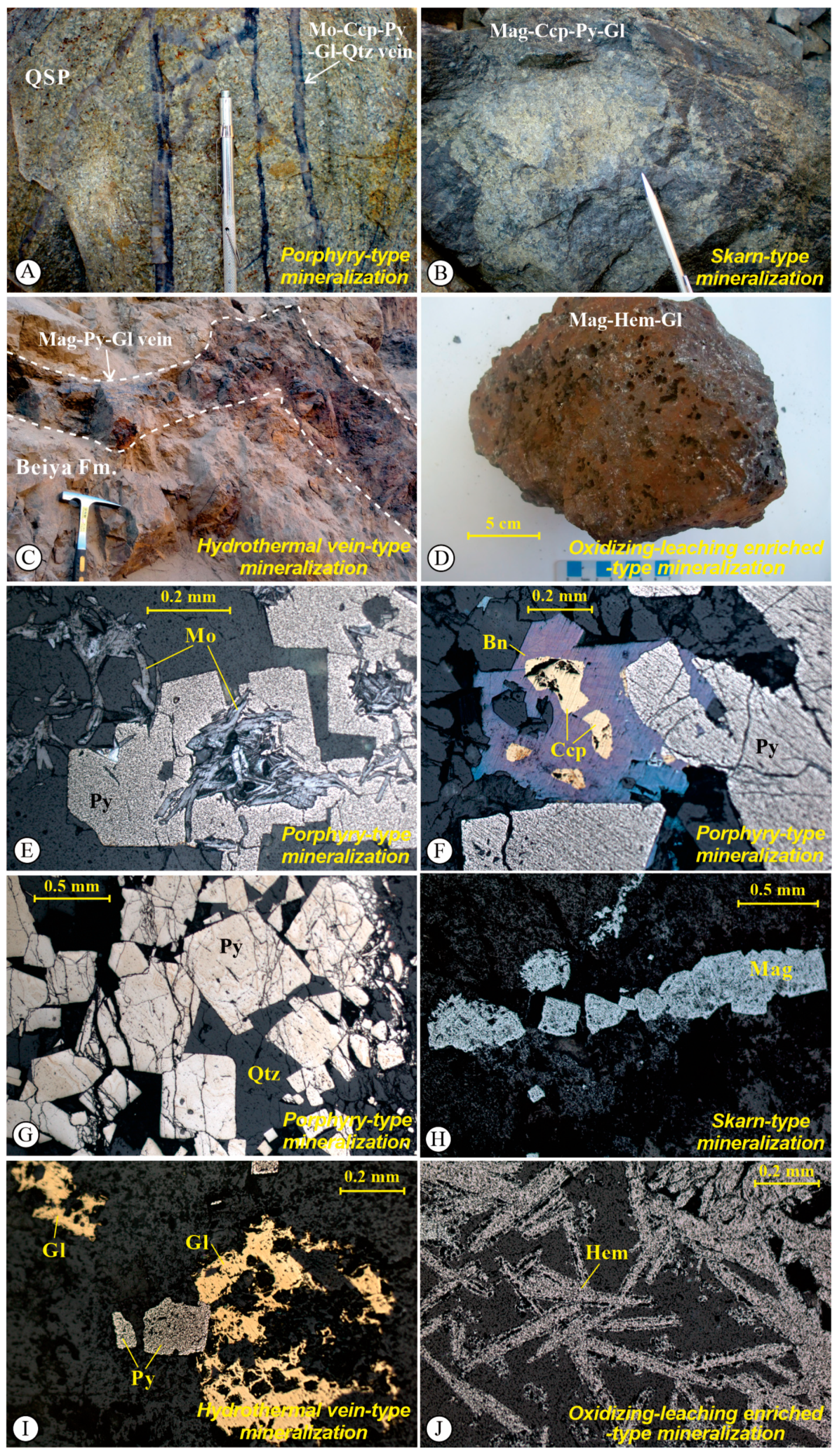
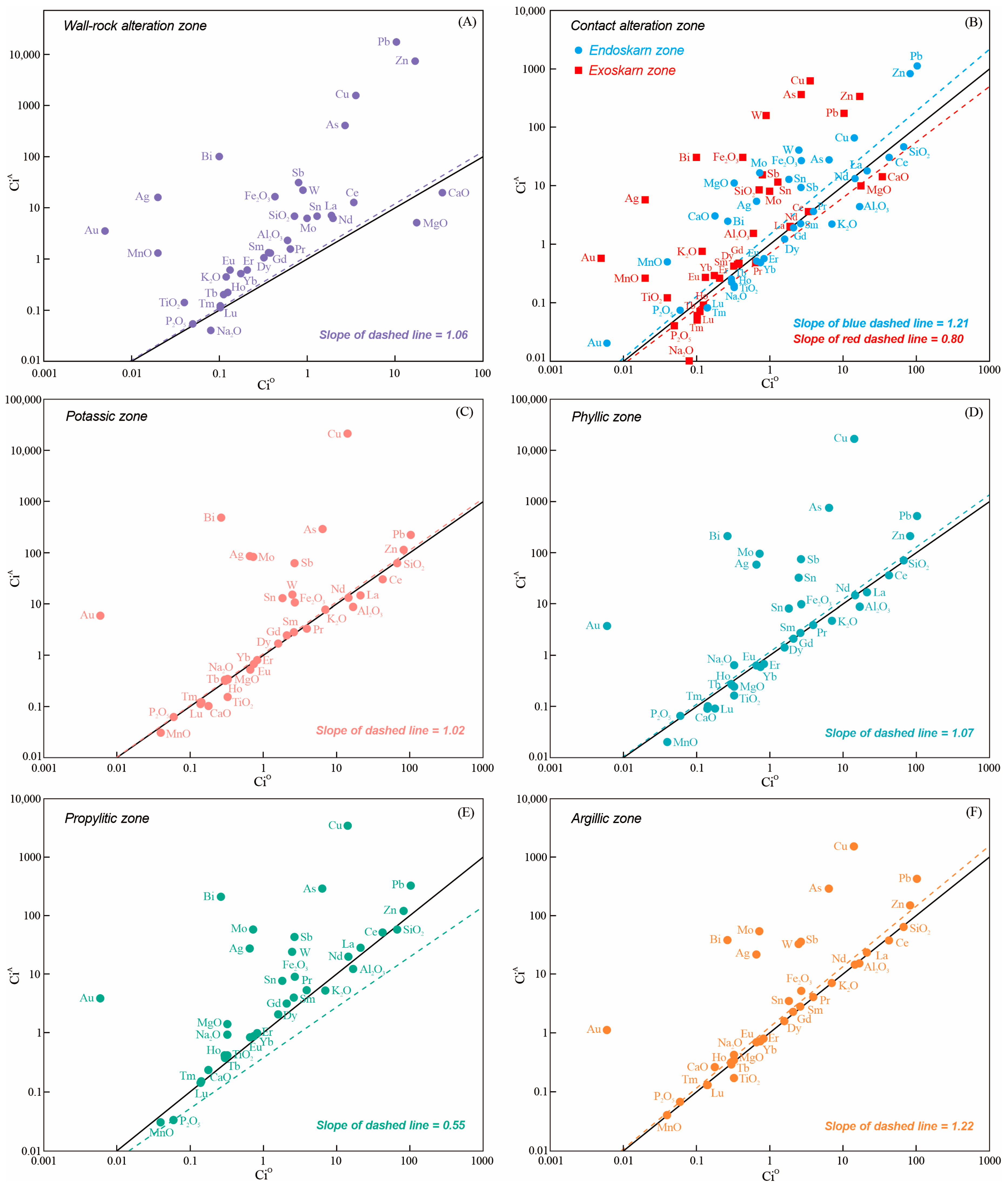
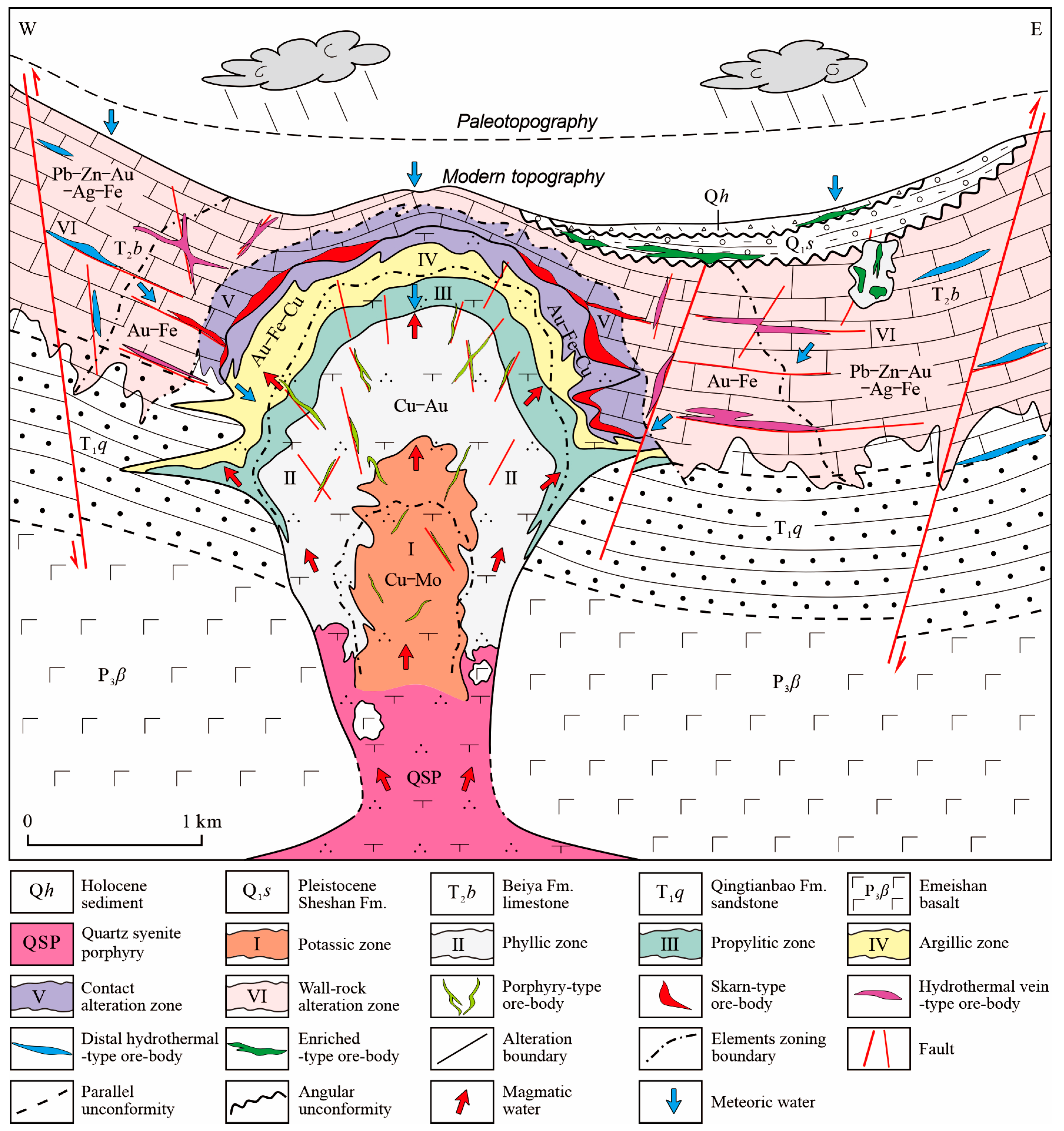
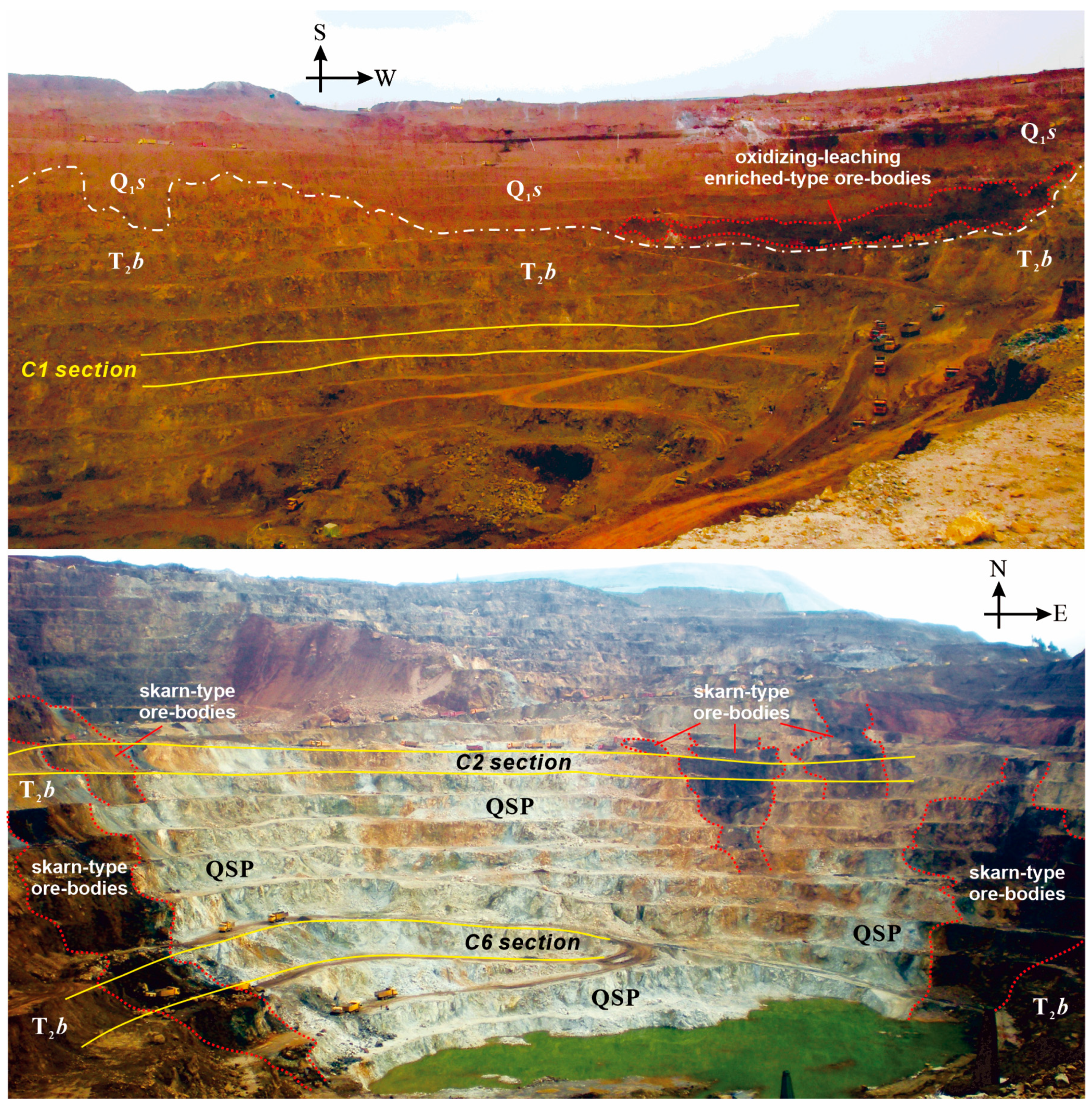
Porphyry and the associated skarn-type deposit is one of the most important types of ore deposits worldwide, which usually exhibit significant zoning of mineralization-alteration, but the research on element migration in these mineralization-alteration zones is relatively weak. The Beiya porphyry–skarn gold-polymetallic deposit is a super-large Cenozoic deposit located in the Sanjiang metallogenic belt, northwestern Yunnan, China. In this paper, through a detailed analysis of mineralization and alteration zoning and its element migration regularity, the findings are as follows: (1) Three types of hydrothermal alteration—porphyry alteration, contact alteration, and wall-rock alteration—are developed, and porphyry alteration includes potassic, phyllic, propylitic, and argillic alteration; (2) five types of mineralization—porphyry-type Cu–Au–(Mo), skarn-type Au–Fe–(Cu), hydrothermal vein-type Au–Fe, distal hydrothermal-type Pb-polymetallic, and oxidizing-leaching enriched-type Au—occur in a diversity of forms, which are dominantly controlled by structures and lithologies; (3) concentric-banded mineralization-alteration zones are exhibited centrally from the alkaline porphyry outward or upward, namely [porphyry alteration] potassic → phyllic → propylitic → argillic → [contact alteration] skarnitization–marbleization → [wall-rock alteration] marbleization–silicification–calcitization; (4) porphyry-type mineralization predominantly forms within potassic and phyllic zones, while skarn-type mineralization occurs in contact alteration zones, and proximal and distal hydrothermal (vein)-type mineralization are commonly distributed in marbleization–silicification–calcitization alteration zones; and (5) element migration analysis demonstrates a significantly lateral and vertical zoning in the metallogenic element association of Cu–Mo → Cu–Au → Au–Fe–Cu → Au–Fe → Pb–Zn–Au–Ag–Fe from alkaline porphyry outward to the wall-rock. The mineralization-alteration zoning model indicates the Beiya deposit has similar mineralization and alteration zone characteristics to the typical porphyry copper system; and element migration within mineralization-alteration zones provides new scientific information for understanding the metallogenic regularity and prospecting at Beiya, as well as the similar types of deposits in the Sanjiang metallogenic belt and elsewhere in the world.
Keywords: element migration; mineralization-alteration zone; porphyry copper system; Beiya porphyry–skarn deposit; Sanjiang metallogenic belt element migration; mineralization-alteration zone; porphyry copper system; Beiya porphyry–skarn deposit; Sanjiang metallogenic belt