Article

The Ideal Strategy of Carbon-Neutral for Park Landscape Design: A Proposal for a Rapid Detection Method


1
Department of Landscape and Urban Design, Chaoyang University of Technology, Taichung 41349, Taiwan
2
College of Art Design, College of Landscape Architecture, Nanjing Forestry University, No 159, Longpan Rd., Xuanwu District, Nanjing 210037, China
3
Doctoral in Architecture and Urban Design Program, Department of Architecture, College of Design, Chaoyang University of Technology, Taichung 41349, Taiwan
*
Author to whom correspondence should be addressed.
Appl. Sci. 2024, 14(18), 8128; https://doi.org/10.3390/app14188128
Submission received: 17 August 2024 / Revised: 2 September 2024 / Accepted: 5 September 2024 / Published: 10 September 2024

Abstract

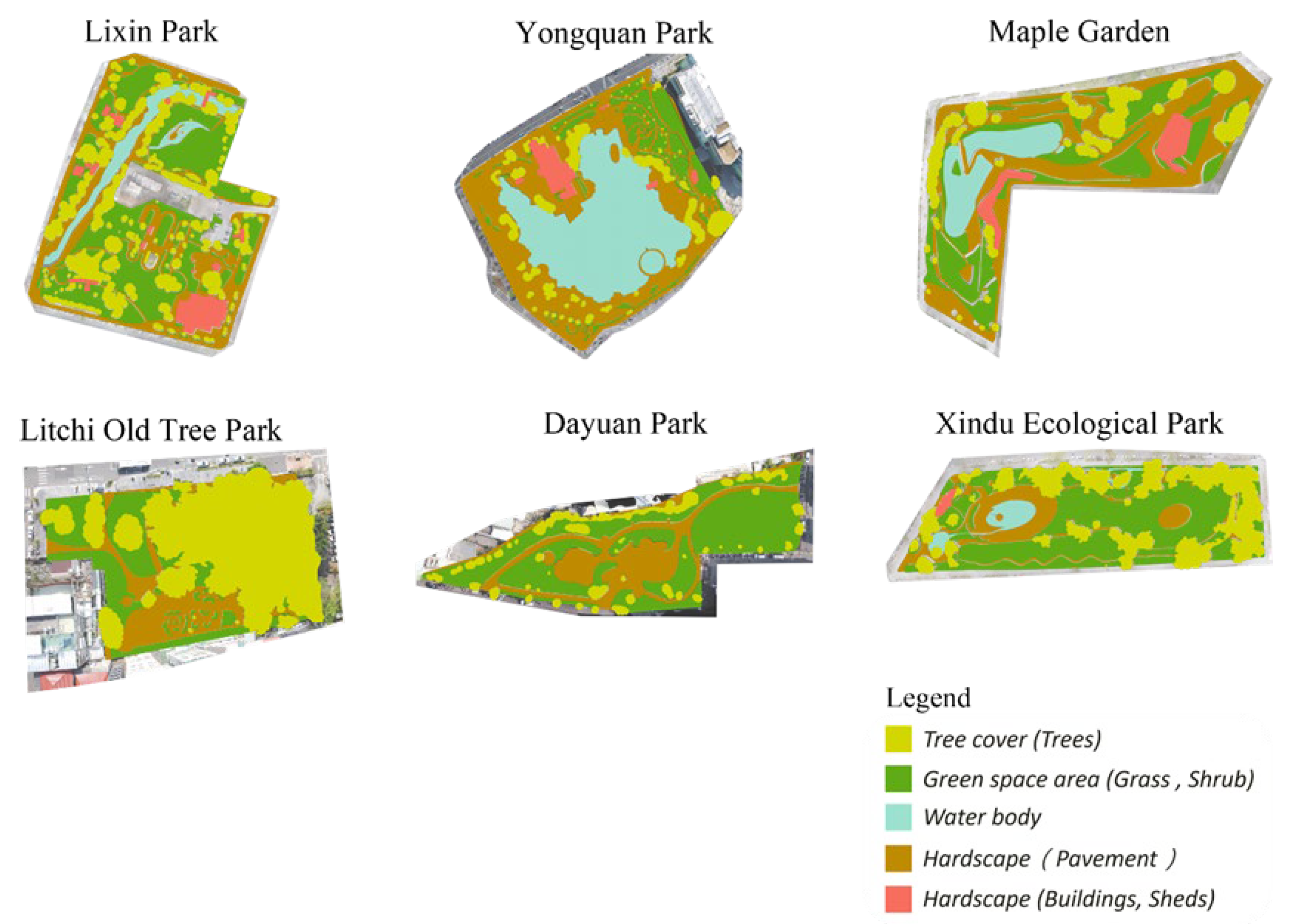
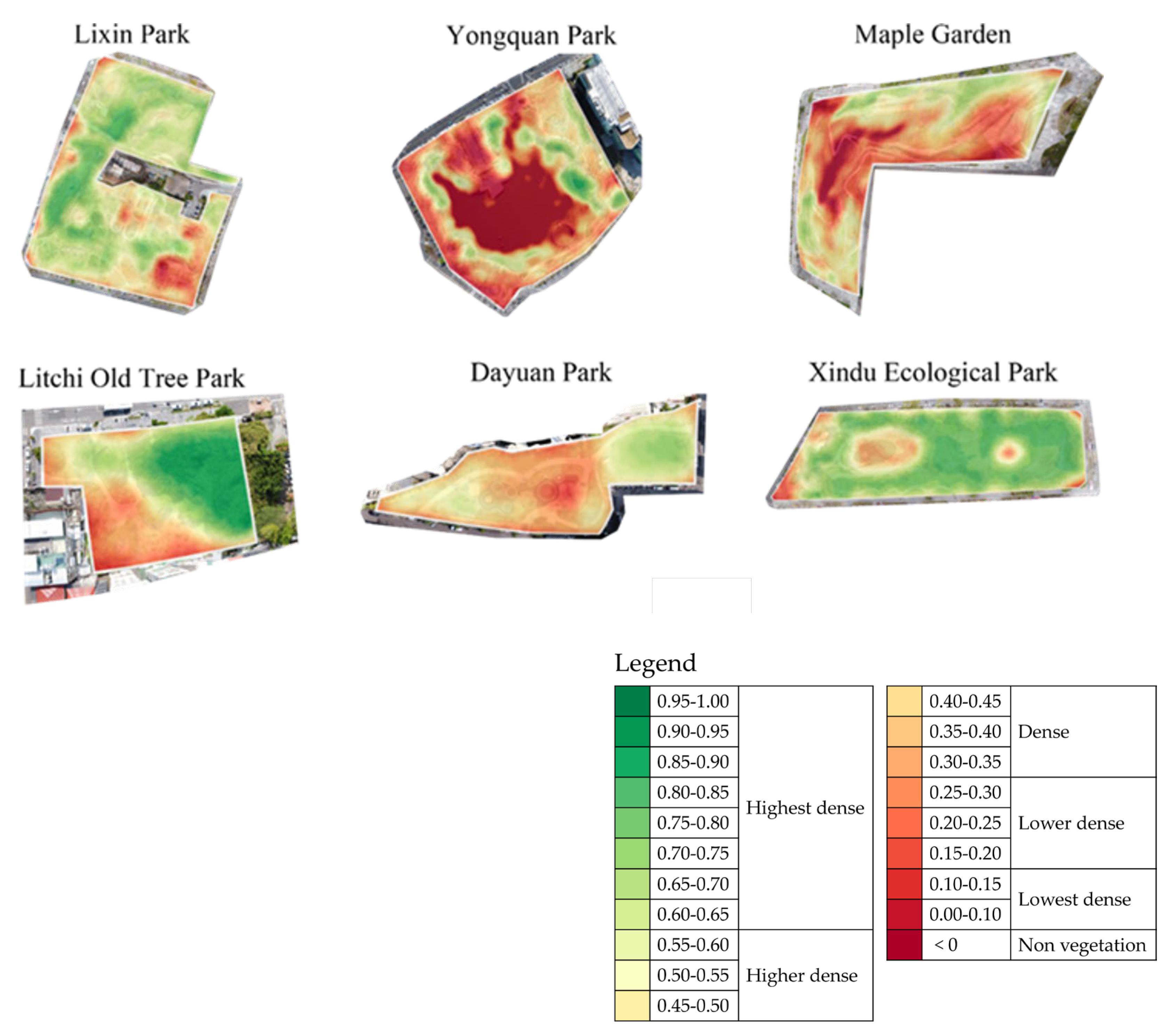
The primary objective of this study is to investigate the carbon footprint, resilience levels, and optimal landscape area ratios of various parks. Additionally, it explores the relationships between landscape element proportions (LEP), the normalized difference vegetation index (NDVI), resilience indicators (RI), and the carbon reduction benefits associated with carbon neutrality (CN). Six parks were assessed for resilience, NDVI, LEP, and CN values, with Pearson correlation analysis conducted. The results revealed that parks with or without waterbodies exhibited ideal LEP area ratios of 6.5:2:1.5 (Softscape:Waterbody:Hardscape) and 8.3:1.7 (Softscape:Hardscape), respectively. Enhanced Softscape and reduced Hardscape proportions in parks correlated with increased NDVI and CN. NDVI exhibited a positive correlation with Softscape percentage and a negative correlation with Hardscape percentage. Conversely, CN demonstrated a negative correlation with Hardscape percentage and a positive correlation with Softscape percentage. Suggesting Softscape should constitute over 65%, and Hardscape should be under 15% in parks with water bodies. Waterless parks are advised to maintain a Softscape ratio exceeding 83% and a Hardscape ratio below 17%. Finally, the study extended to assess the LEP of 22 additional parks, validating the suitability of the ideal LEP area ratio.
Keywords: carbon-neutral park; life cycle assessment; landscape element; carbon footprint; normalized difference vegetation index; resilience index carbon-neutral park; life cycle assessment; landscape element; carbon footprint; normalized difference vegetation index; resilience index