Article

Electrical Heating of Carbon Textile Reinforced Concrete—Possible Effects on Tensile Load-Bearing Behavior


Institute of Building Materials Research (IBAC), RWTH Aachen University, Schinkelstr. 3, 52062 Aachen, Germany
*
Author to whom correspondence should be addressed.
Appl. Sci. 2024, 14(11), 4430; https://doi.org/10.3390/app14114430
Submission received: 11 April 2024 / Revised: 14 May 2024 / Accepted: 21 May 2024 / Published: 23 May 2024
(This article belongs to the Section Civil Engineering)

Abstract

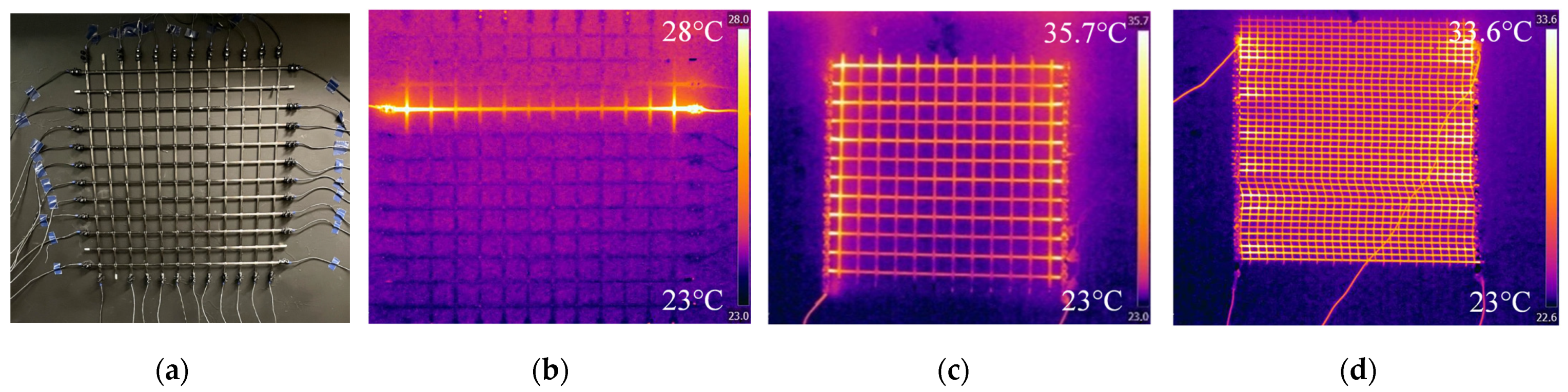
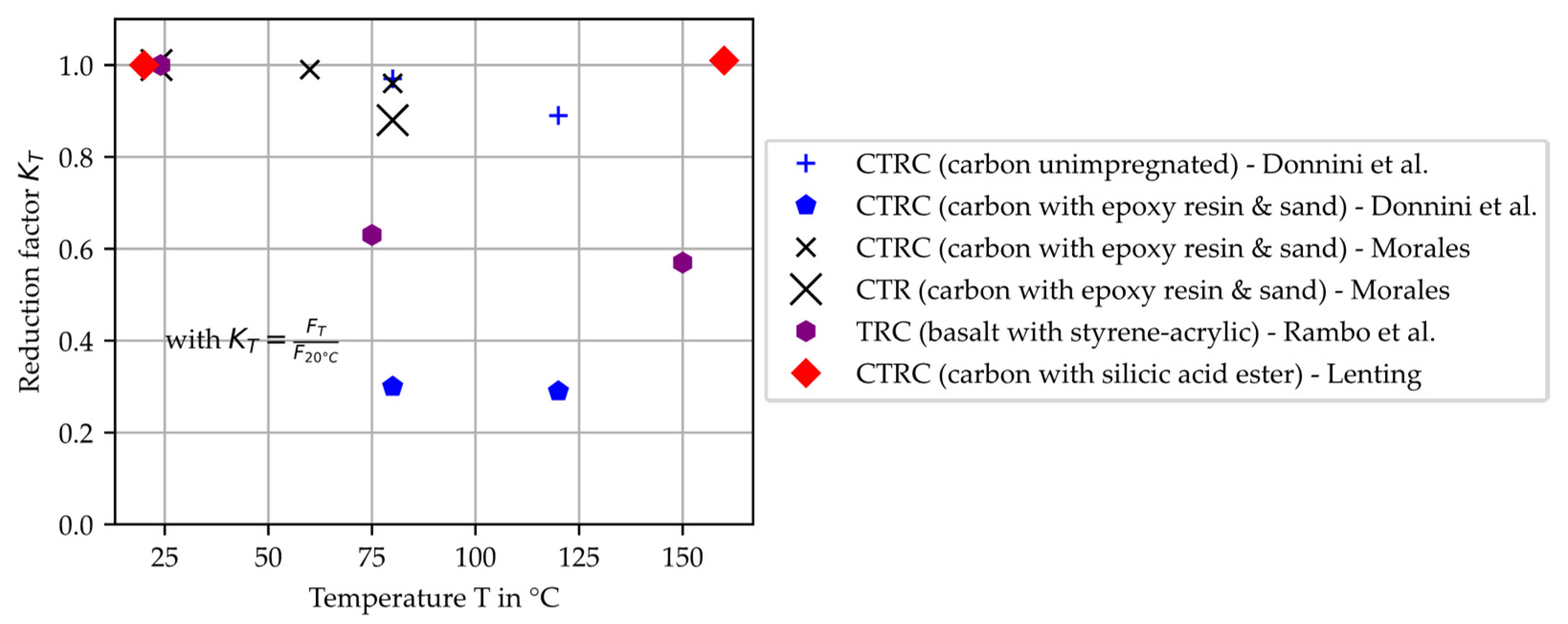
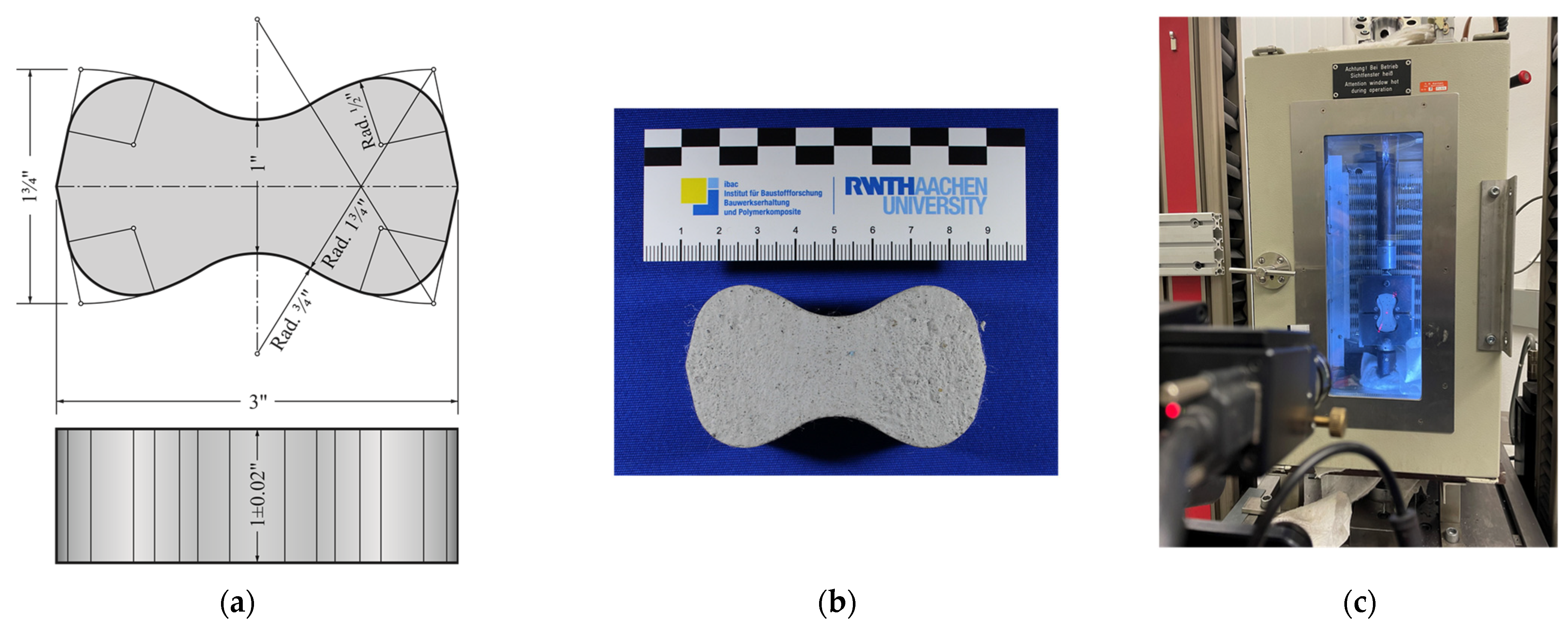
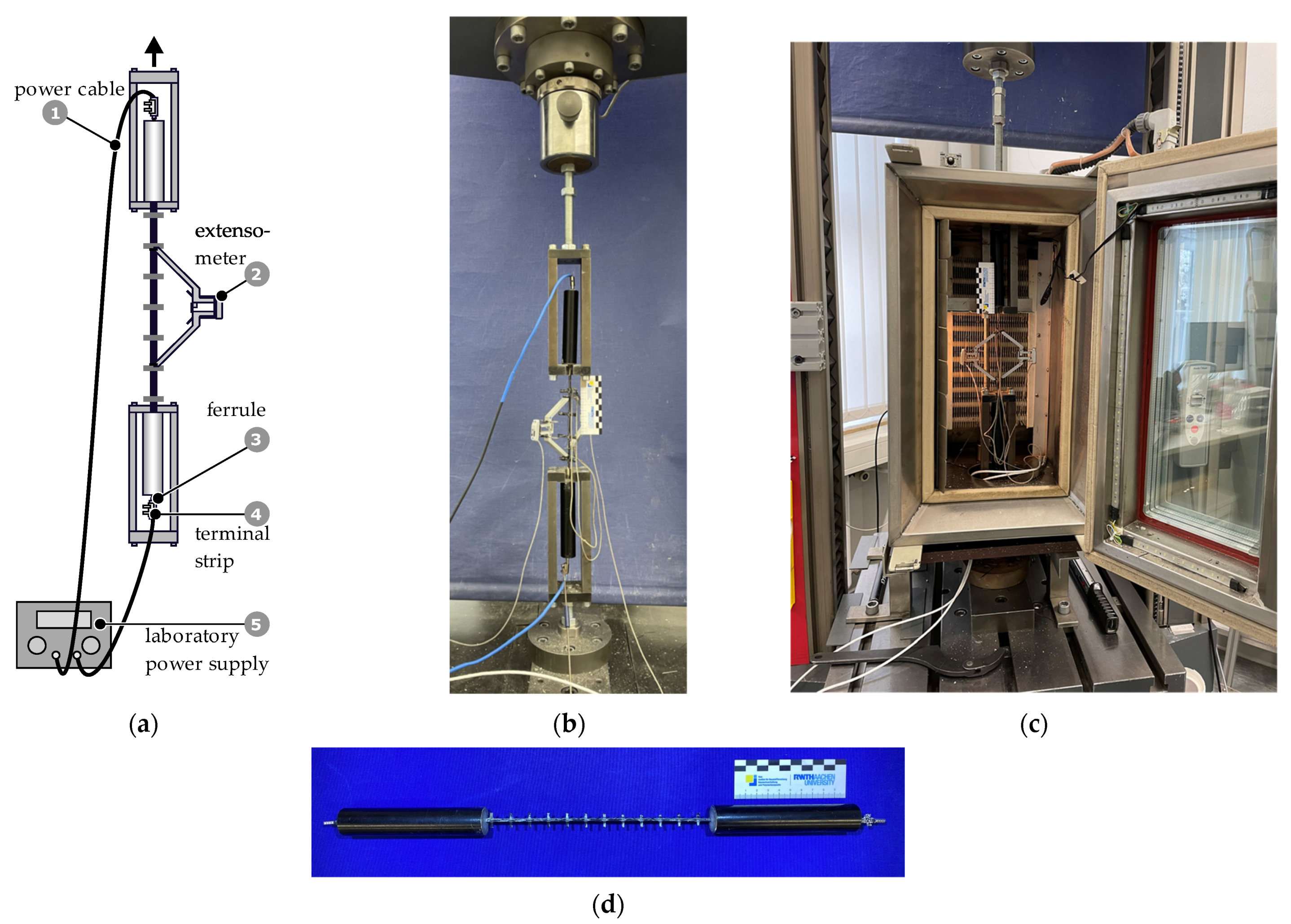
Carbon-textile-reinforced concrete (CTRC) is currently used as a high-performance composite material in the construction industry, comprising concrete and a non-metallic reinforcement. In addition to remarkable material properties such as tensile-load-bearing behavior, durability and density, this innovative material features high electrical conductivity, offering the potential for electrical heat generation within building components. This paper contributes to the field by exploring the unique combination of properties exhibited by carbon-textile reinforcements (CTR) electrically heated up to 80 °C. The impact of the electrical heating of CTR was evaluated by conducting stationary tests on load-bearing behavior. The tests were conducted on two different CTRs: one impregnated with polystyrene, and the other with epoxy resin additionally surface-modified with quartz sand. In order to quantify the influence of individual material parameters, tensile tests were conducted on the components comprising CTR and mortar, as well as the composite CTRC. The analysis focused on electrically heated carbon-textile reinforcements, comparing them through experiments conducted at varying ambient temperatures. This study presents pioneering findings on heated CTRC, determining that electrical heating decreases tensile strength with increasing temperature for the investigated reinforcement materials. The softening of the impregnation materials proved to be a decisive factor. This interdisciplinary approach bridges materials science with thermal management in construction, offering insights into the practical applications of CTR in innovative building designs.
Keywords: carbon textile reinforced concrete; tensile strength test; crack formation; electrical heating; temperature behavior carbon textile reinforced concrete; tensile strength test; crack formation; electrical heating; temperature behavior