Article

Chinese Event Detection without Triggers Based on Dual Attention

1
School of Computer and Information, Hohai University, Nanjing 211100, China
2
Key Laboratory of Water Big Data Technology of Ministry of Water Resources, Hohai University, Nanjing 211100, China
*
Author to whom correspondence should be addressed.
Appl. Sci. 2023, 13(7), 4523; https://doi.org/10.3390/app13074523
Submission received: 20 February 2023 / Revised: 26 March 2023 / Accepted: 31 March 2023 / Published: 3 April 2023
(This article belongs to the Section Computing and Artificial Intelligence)

Abstract

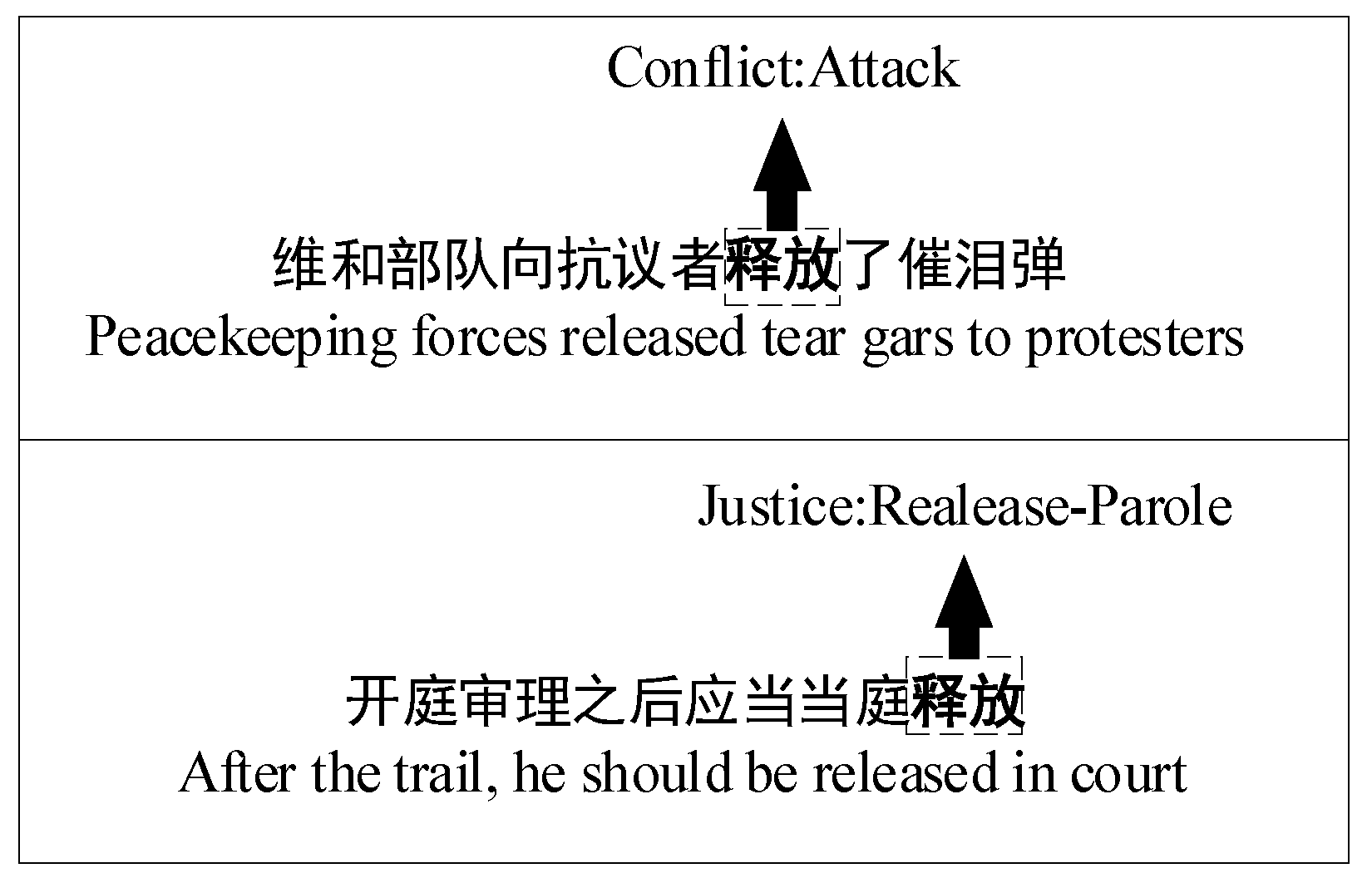
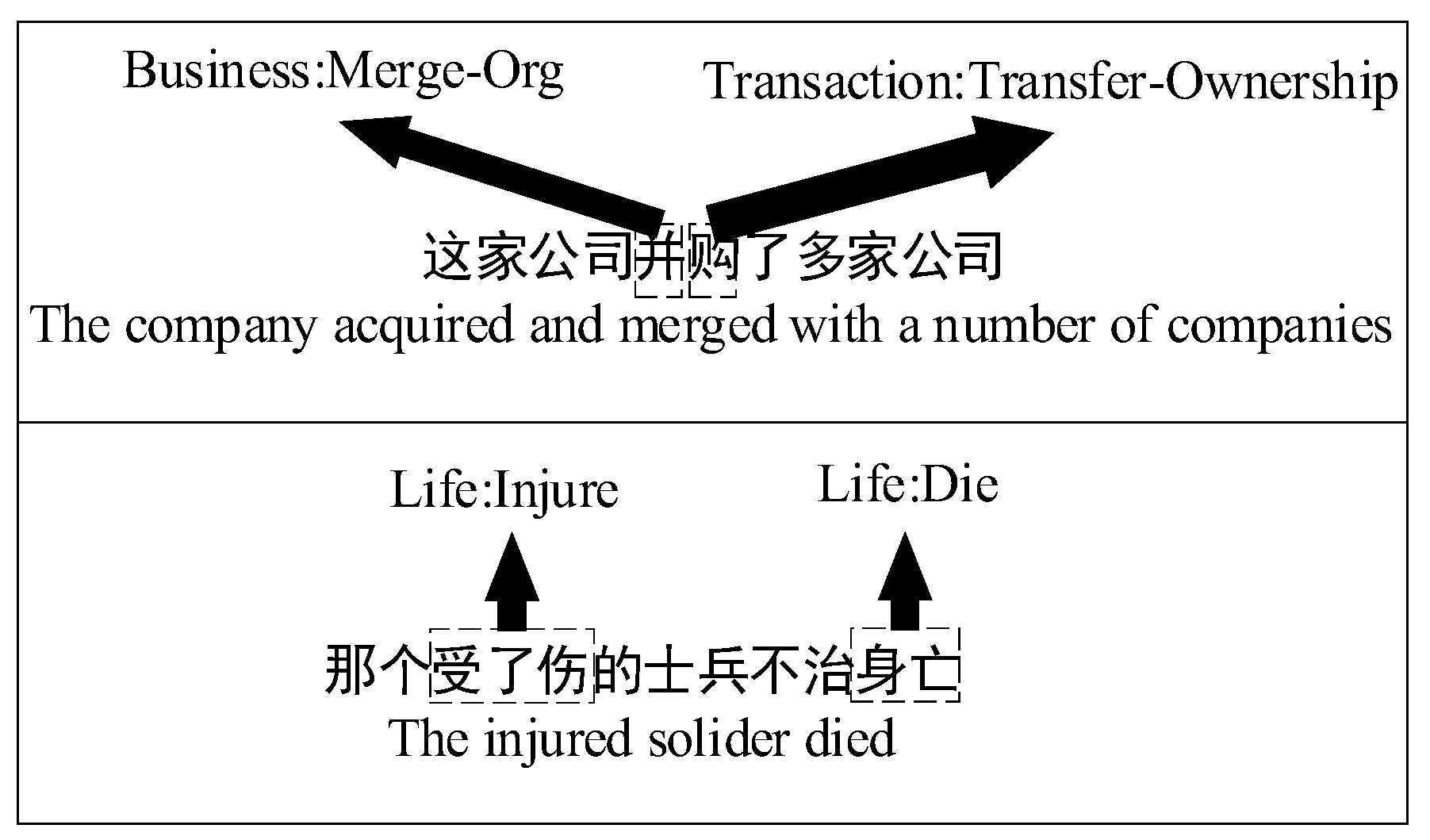
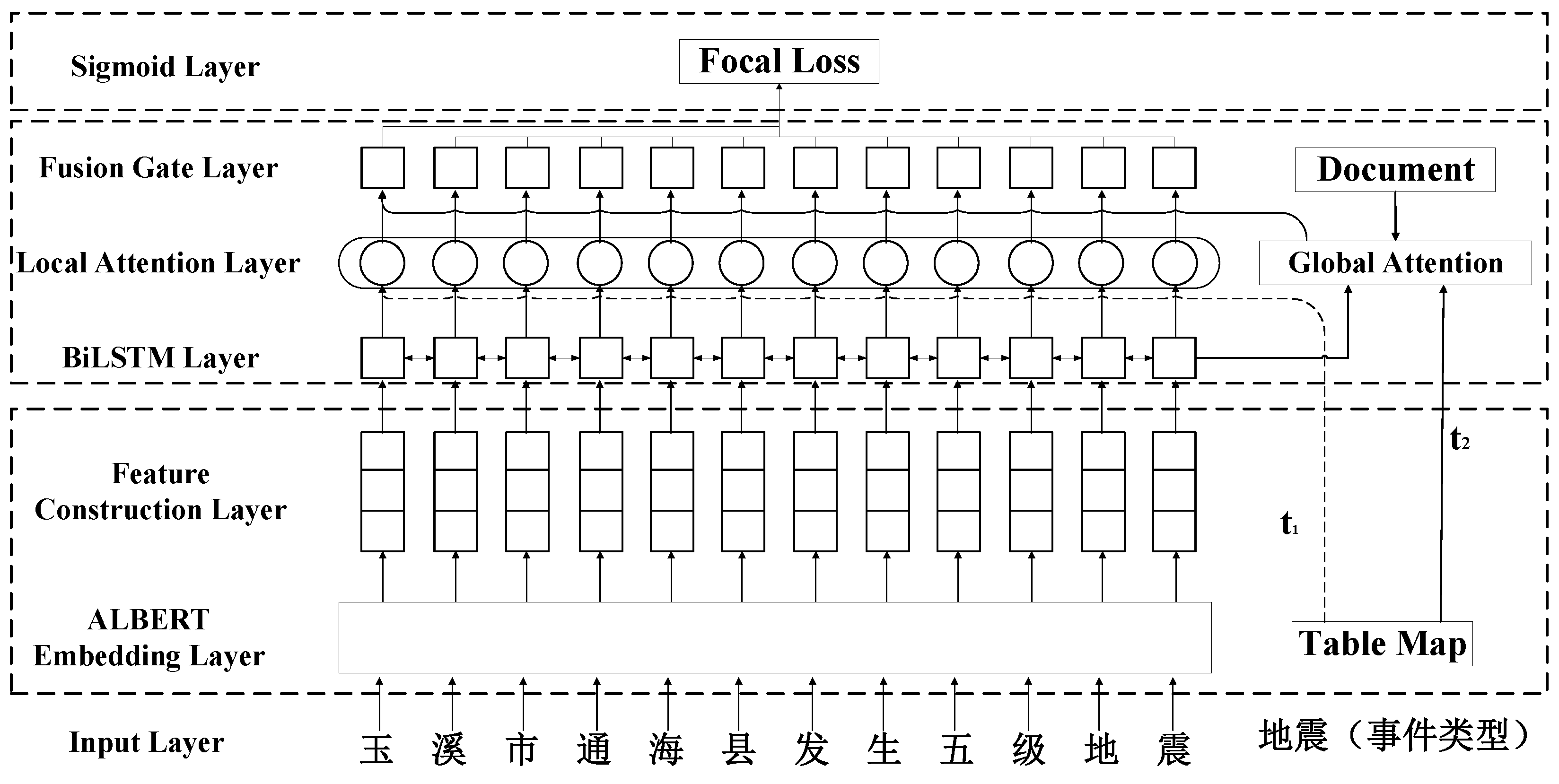
In natural language processing, event detection is a critical step in event extraction, aiming to detect the occurrences of events and categorize them. Currently, the defects of Chinese event detection based on triggers include polysemous triggers and trigger-word mismatches, which reduce the accuracy of event detection models. Therefore, event detection without triggers based on dual attention (EDWTDA), a trigger-free model that can skip the trigger identification process and determine event types directly, is proposed to fix the problems mentioned above. EDWTDA adopts a dual attention mechanism, integrating local and global attention. Local attention captures key semantic information in sentences and simulates hidden event trigger words to solve the problem of trigger-word mismatch, while global attention digs for the context of documents, fixing the problem of polysemous triggers. Besides, event detection is transformed into a binary classification task to avoid problems caused by multiple tags. Meanwhile, the sample imbalance brought about by the transformation is settled with the application of the focal loss function. The experimental results on the ACE 2005 Chinese corpus show that, compared with the best baseline model, JMCEE, the accuracy rate, recall rate, and F1-score of the proposed model increased by 3.40%, 3.90%, and 3.67%, respectively.
Keywords: dual attention; Chinese event detection; binary classification dual attention; Chinese event detection; binary classification