Article

Effects of Pyrolysis and Ball-Milling on the Physicochemical and Rhodamine B Removal Characteristics of Rice-Bran-Derived Biochar

Department of Physics Education, Chosun University, Gwangju 61452, Republic of Korea
*
Author to whom correspondence should be addressed.
Appl. Sci. 2023, 13(7), 4288; https://doi.org/10.3390/app13074288
Submission received: 16 February 2023 / Revised: 25 March 2023 / Accepted: 27 March 2023 / Published: 28 March 2023
(This article belongs to the Section Applied Physics General)

Abstract

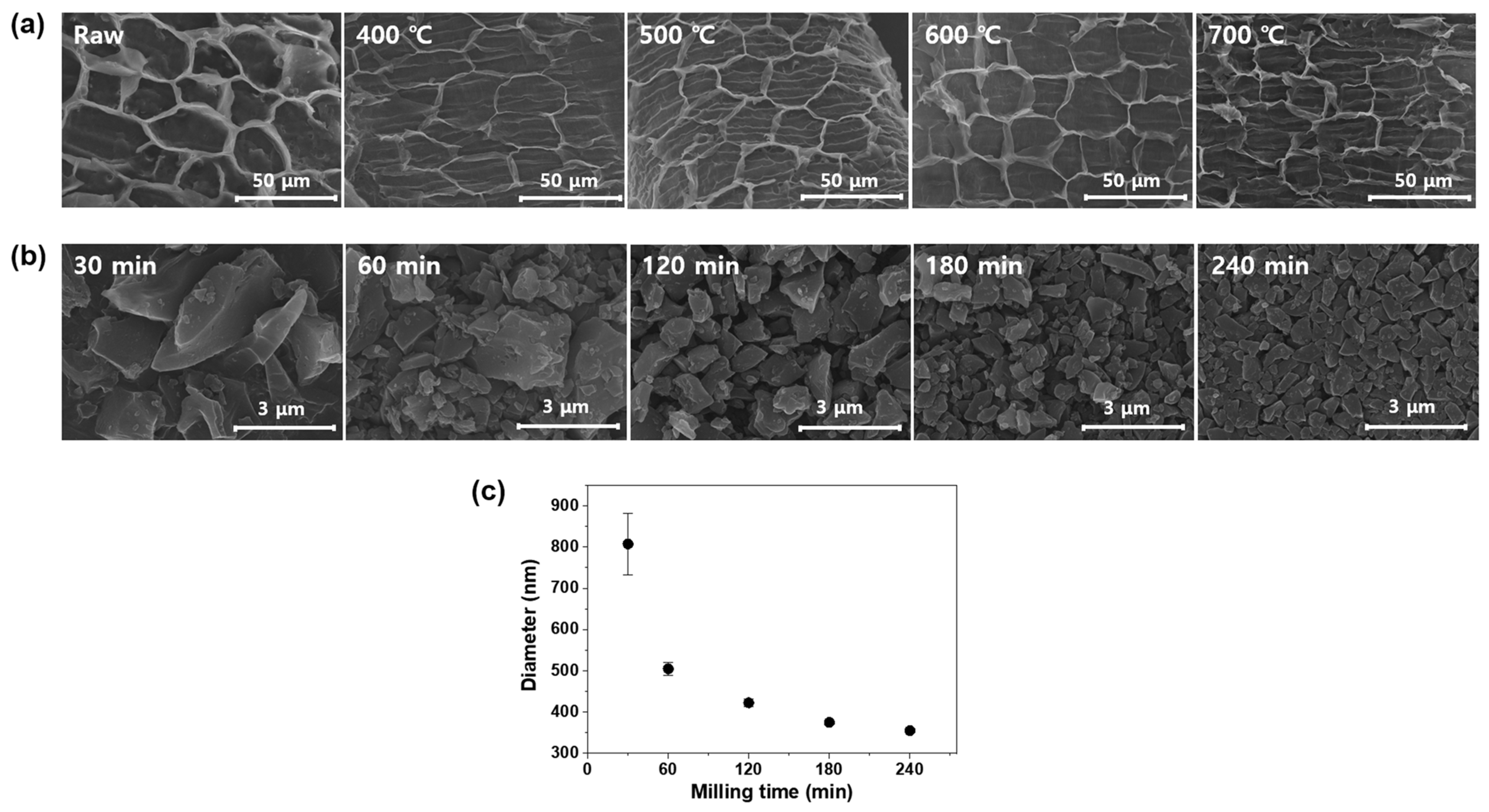
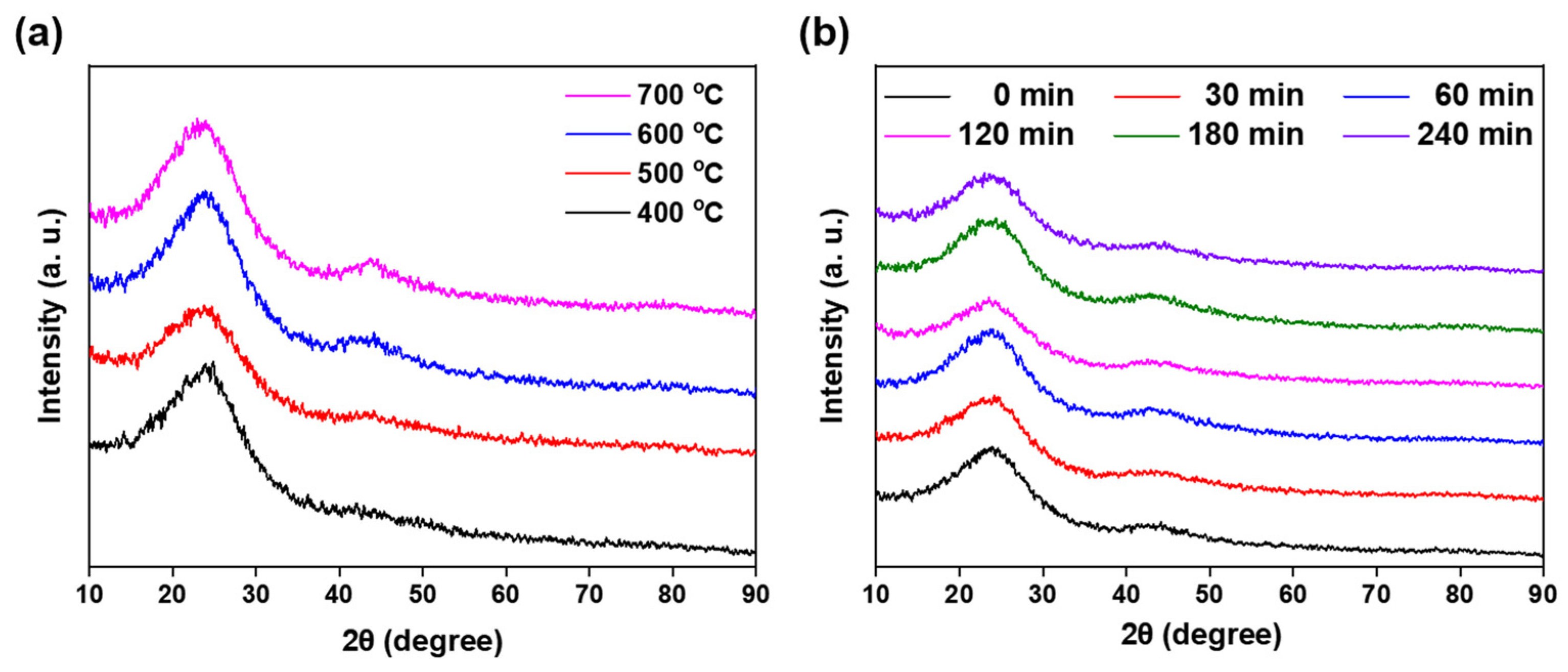
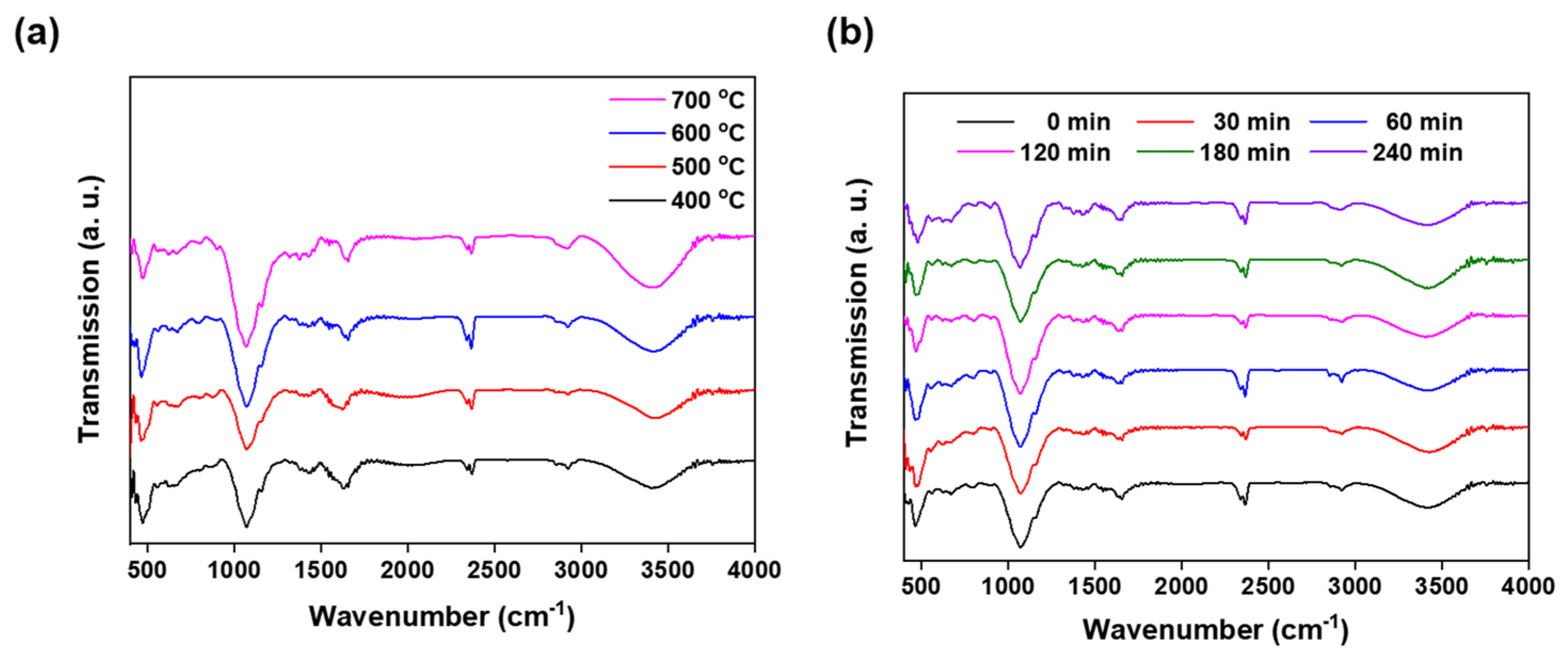
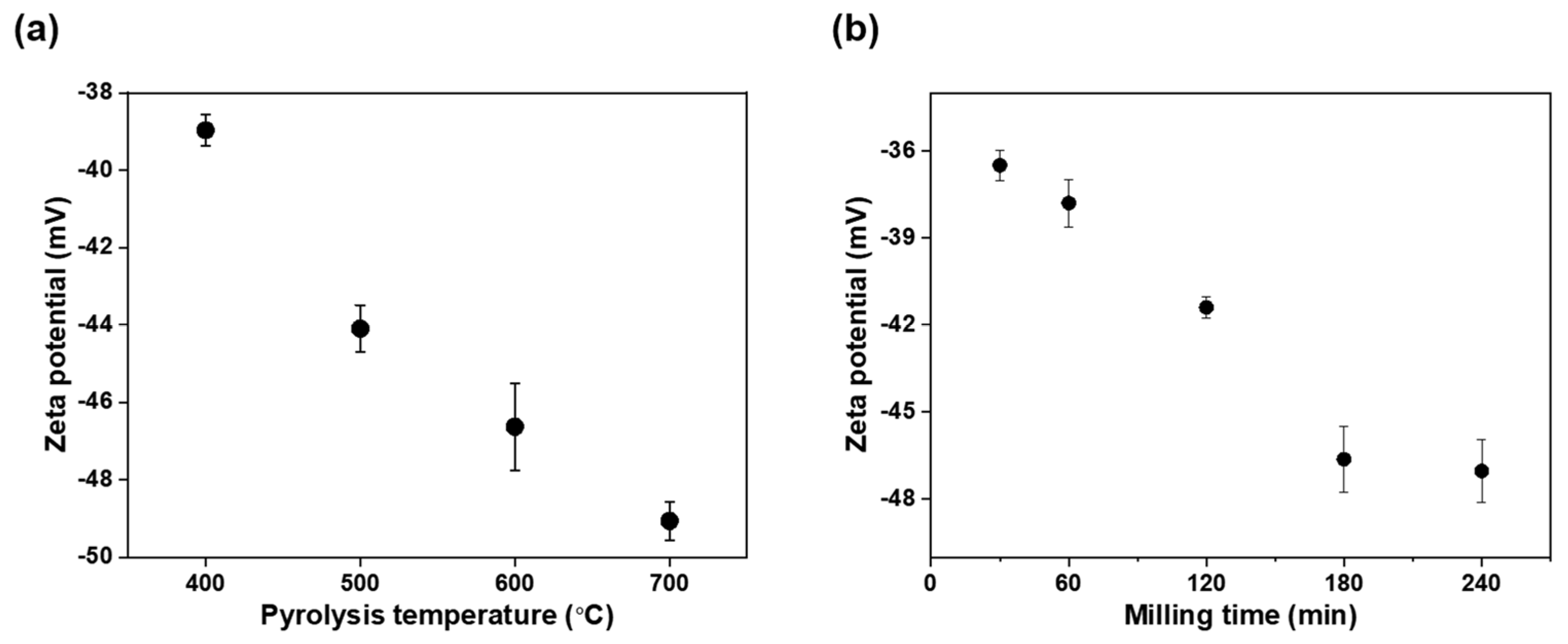
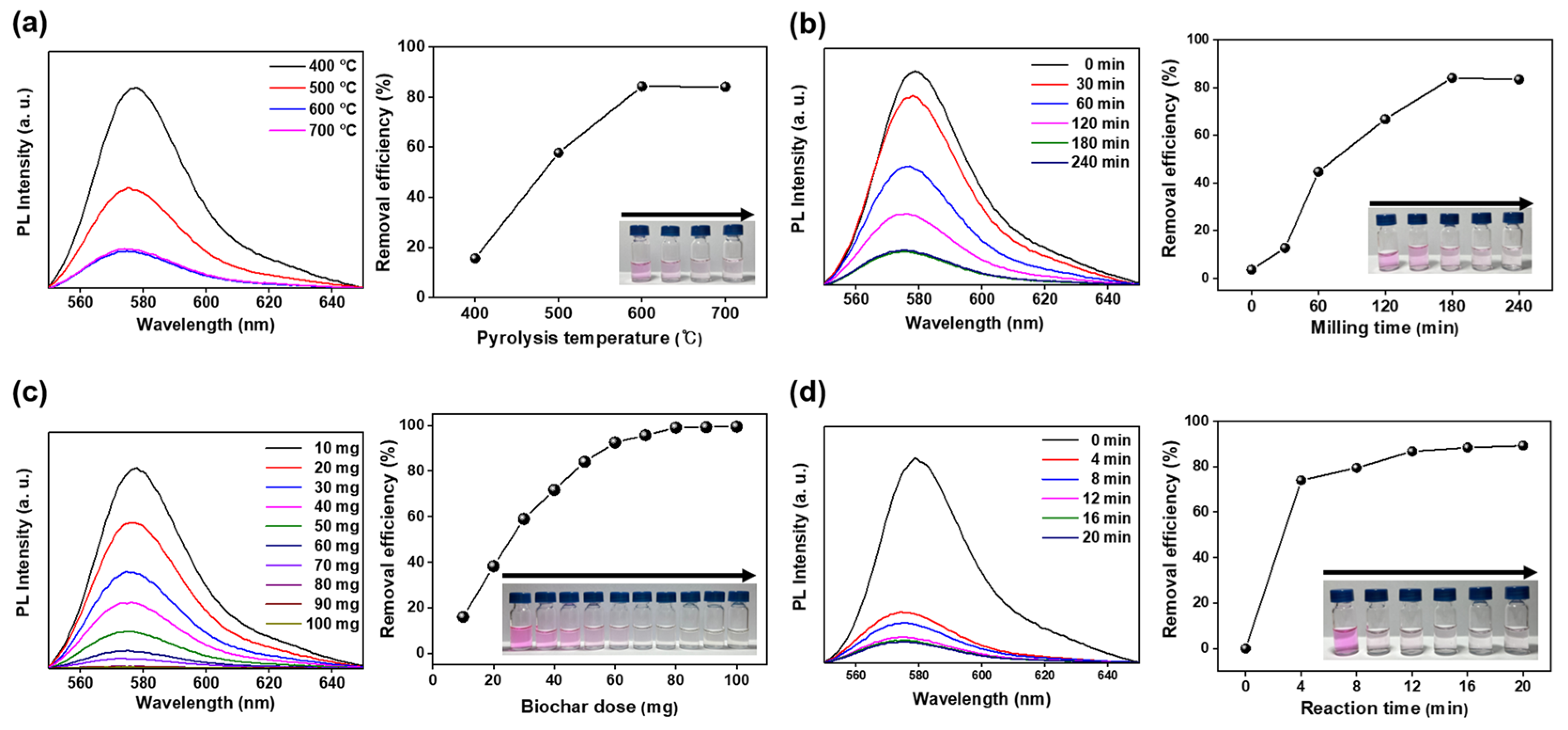
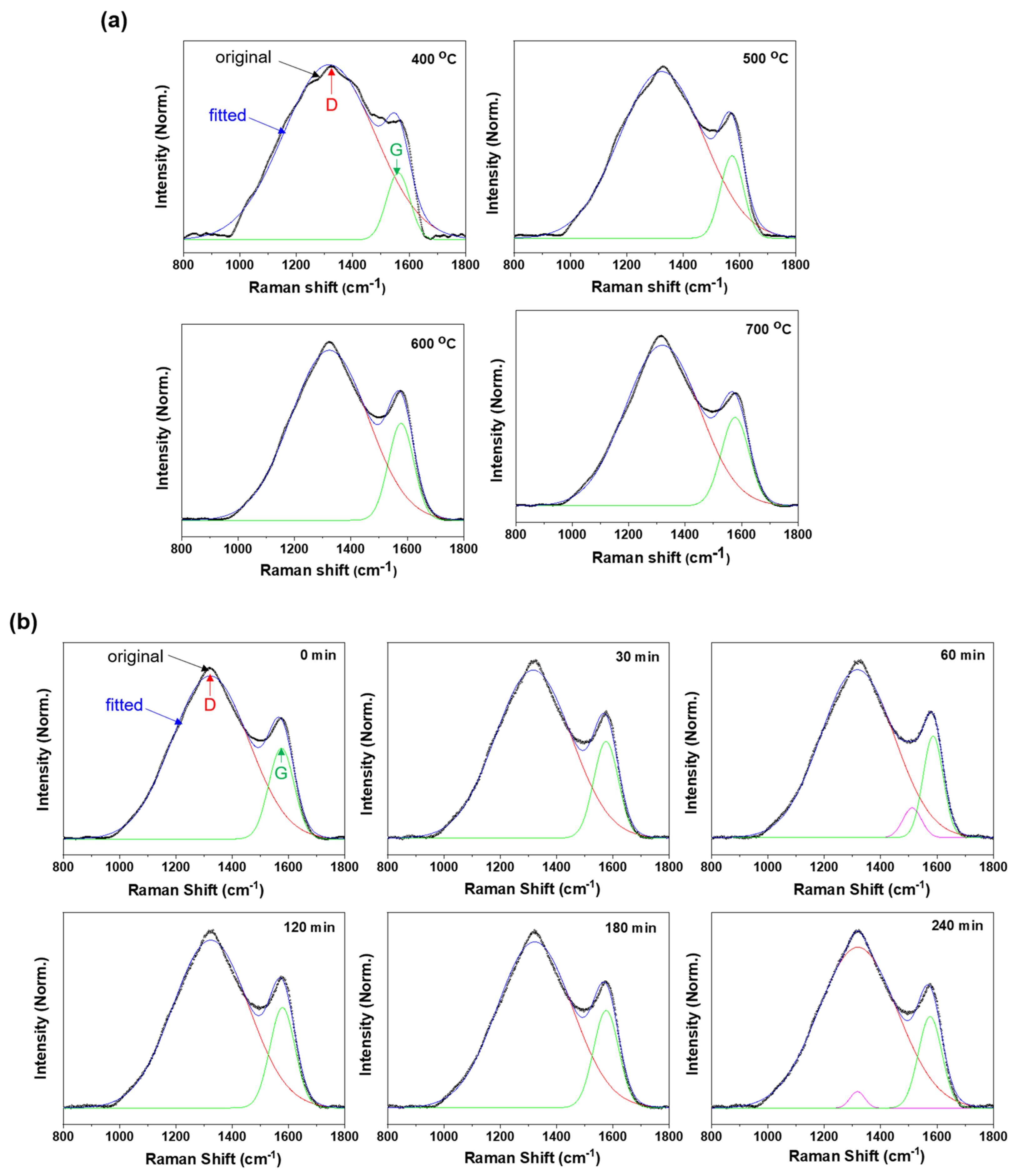
Biochar has attracted considerable attention in numerous industrial and environmental applications because of its advantageous properties. Pyrolysis, a cost-effective and eco-friendly engineering technique for improving biochar’s physicochemical and adsorption properties, is important in a variety of environmental applications. The effect of pyrolysis temperature and ball-milling time on the physicochemical properties of biochar derived from rice bran was investigated in this study, and its effectiveness in the aqueous removal of rhodamine B (RhB) dye was evaluated. The biochar was prepared by pyrolyzing rice bran at various temperatures, i.e., 400, 500, 600, and 700 ℃ (RB 400, RB 500, RB 600, and RB 700, respectively). In addition, in order to investigate the effect of the ball-milling time on the RB 600 biochar, it was milled for 30, 60, 120, 180, and 240 min. The surfaces of the raw material and biochar exhibited honeycomb-like pores and a layered structure. The biochar structure shrank, became fragile, and cracked as the pyrolysis temperature increased. After ball milling, the honeycomb-like pores and layered structure of the pristine biochar were transformed into irregular particles. The particle size decreased as milling time increased. Furthermore, the physicochemical properties of ball-milled biochar were superior to those of pristine biochar. According to the Raman spectral analysis, the ID/IG ratio decreased as the pyrolysis temperature and the milling time increased, indicating a decreased disorder and an increased graphitization in the biochar. The efficiency of RhB removal increased as the pyrolysis temperature and ball-milling time increased, and up to 82% of RhB was removed from 50 mg of biochar milled for 180 min at 600 °C.
Keywords: biochar; high-energy ball-milling; pyrolysis; adsorption; Raman spectroscopy biochar; high-energy ball-milling; pyrolysis; adsorption; Raman spectroscopy