Seismic Velocity Inversion via Physical Embedding Recurrent Neural Networks (RNN)
Abstract
1. Introduction
2. Materials and Methods
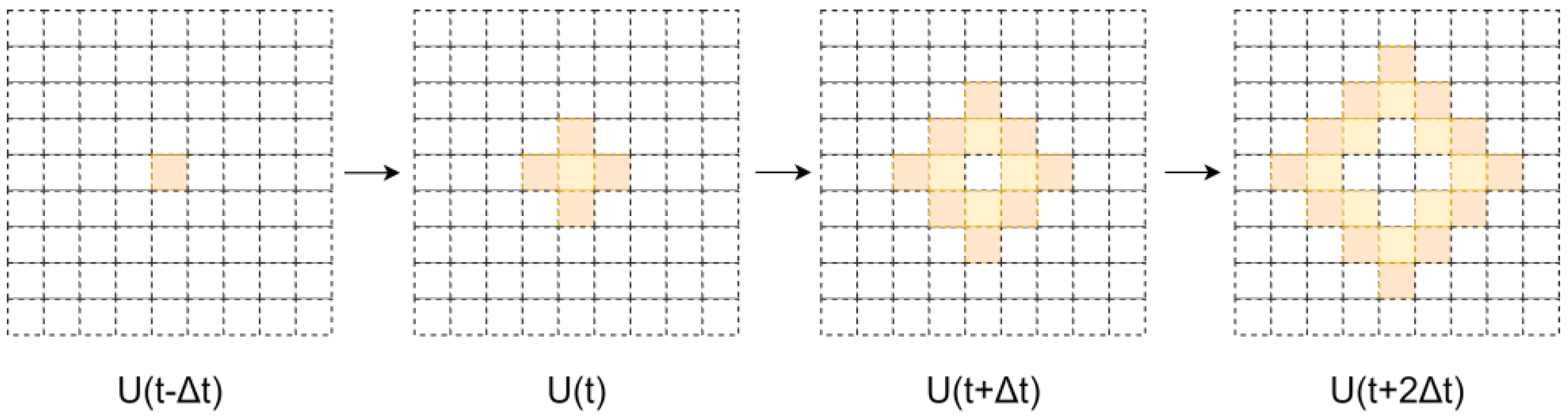
2.1. Finite-Difference Acoustic Wave Equation
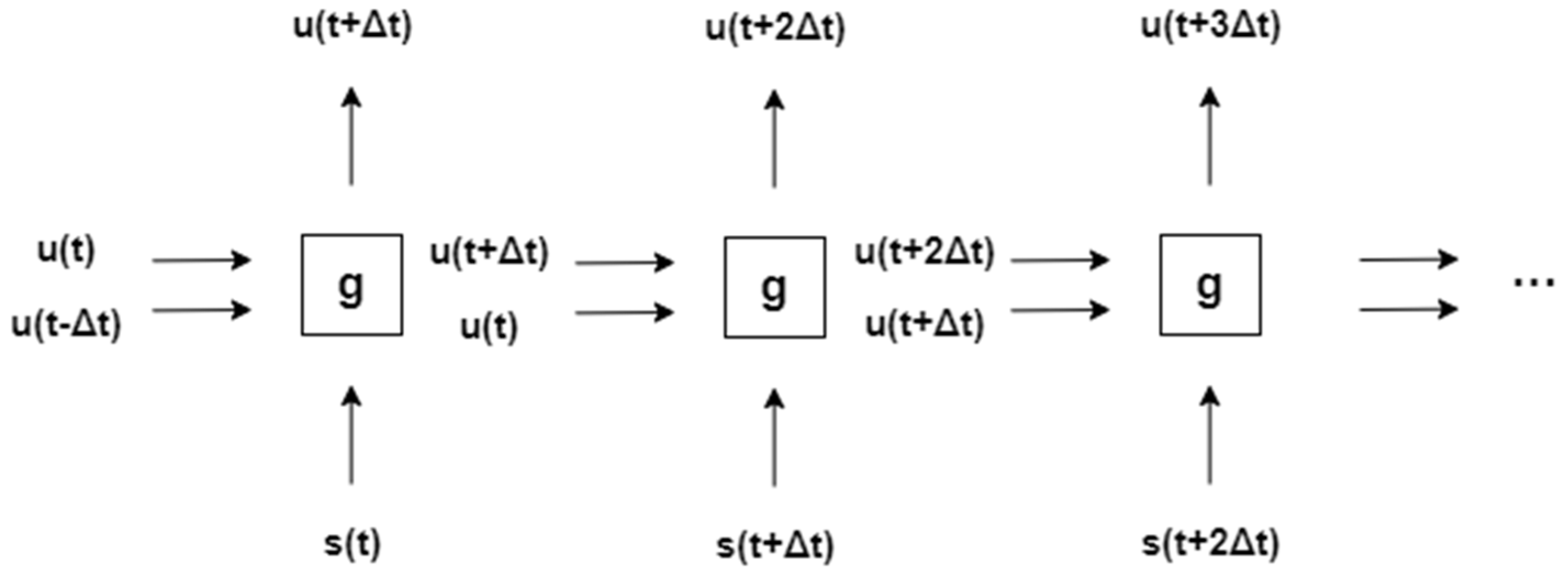
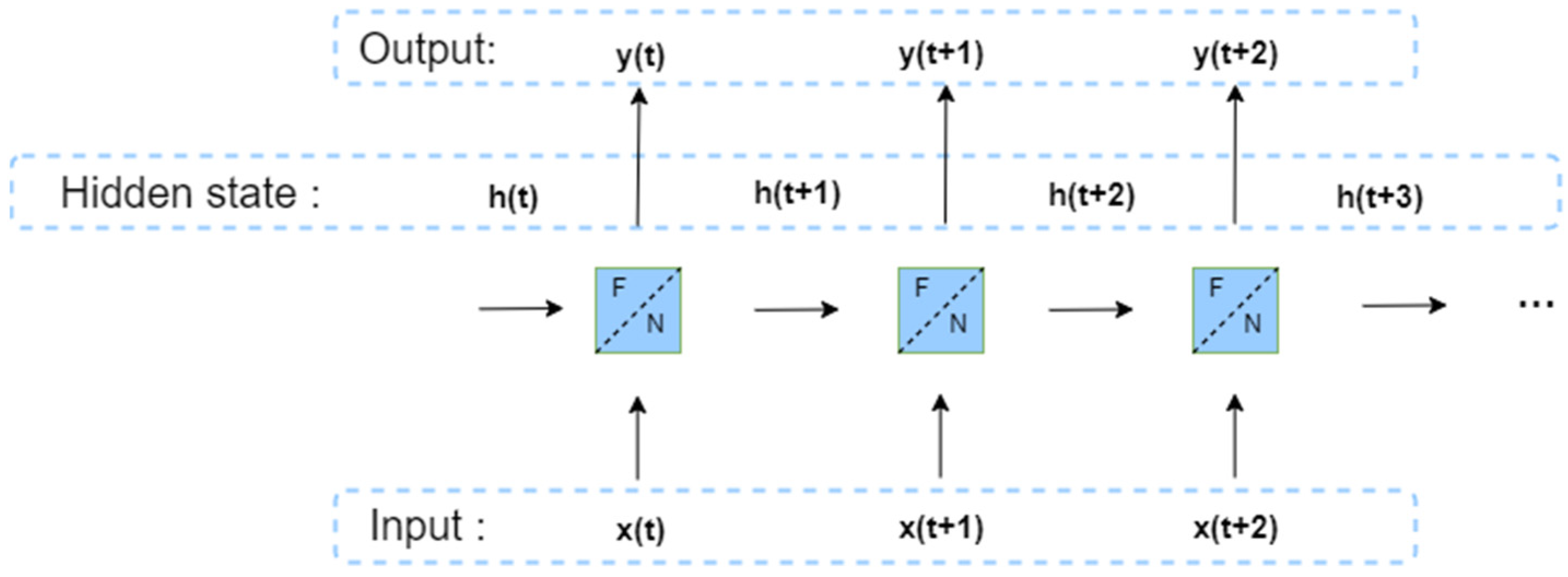
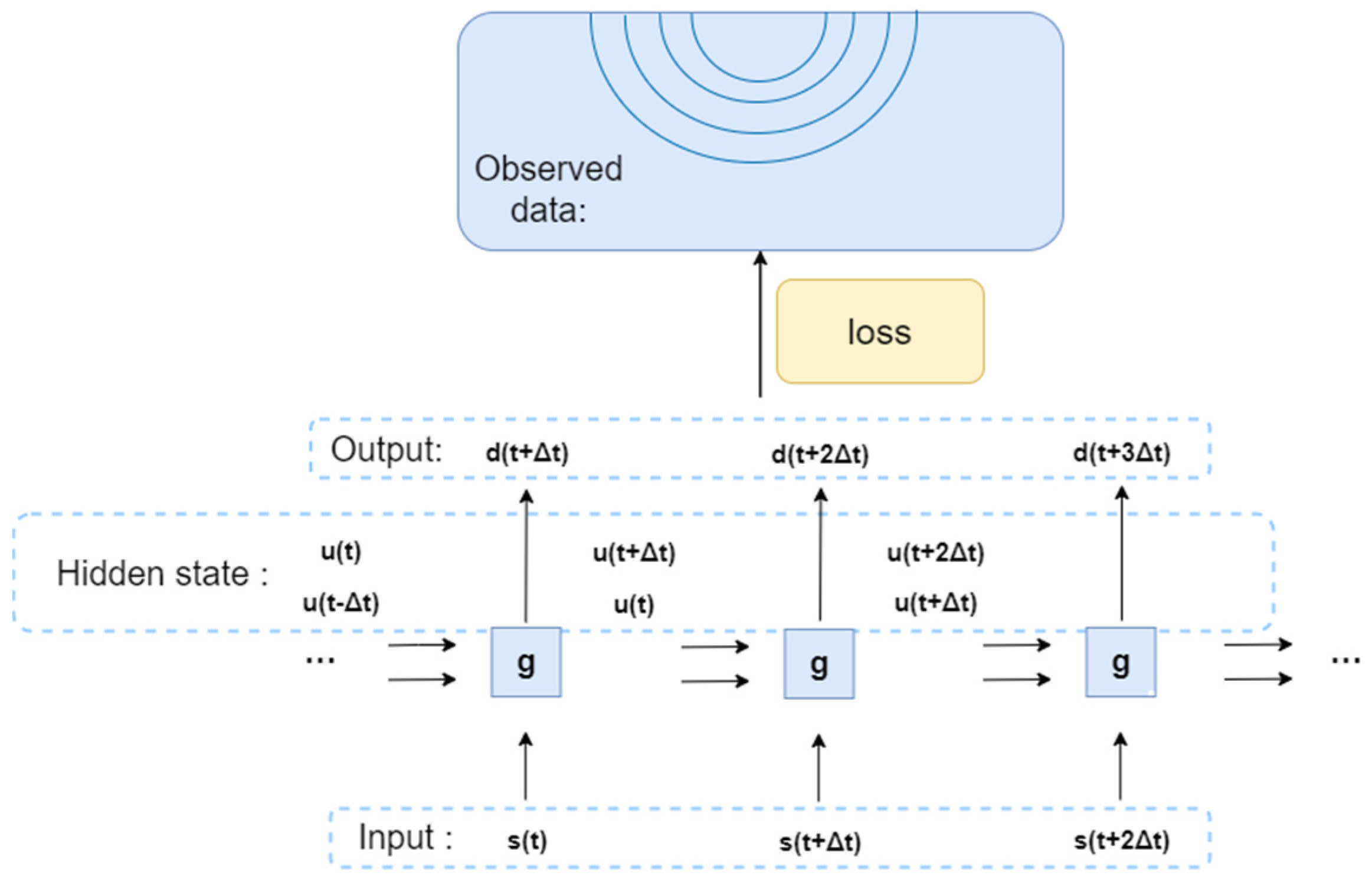
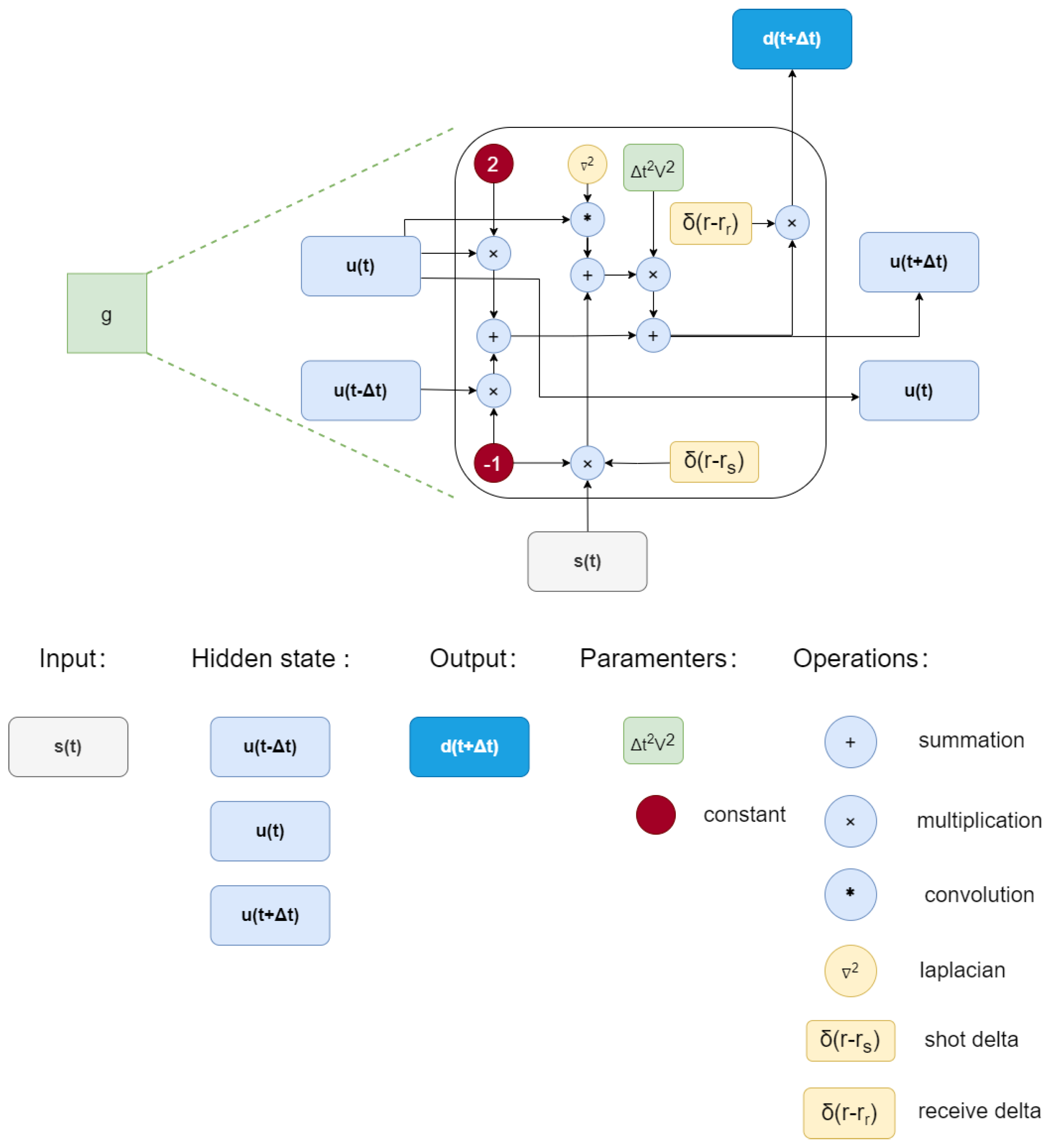
2.2. Recurrent Neural Network with Acoustic Wave Equation Embedding
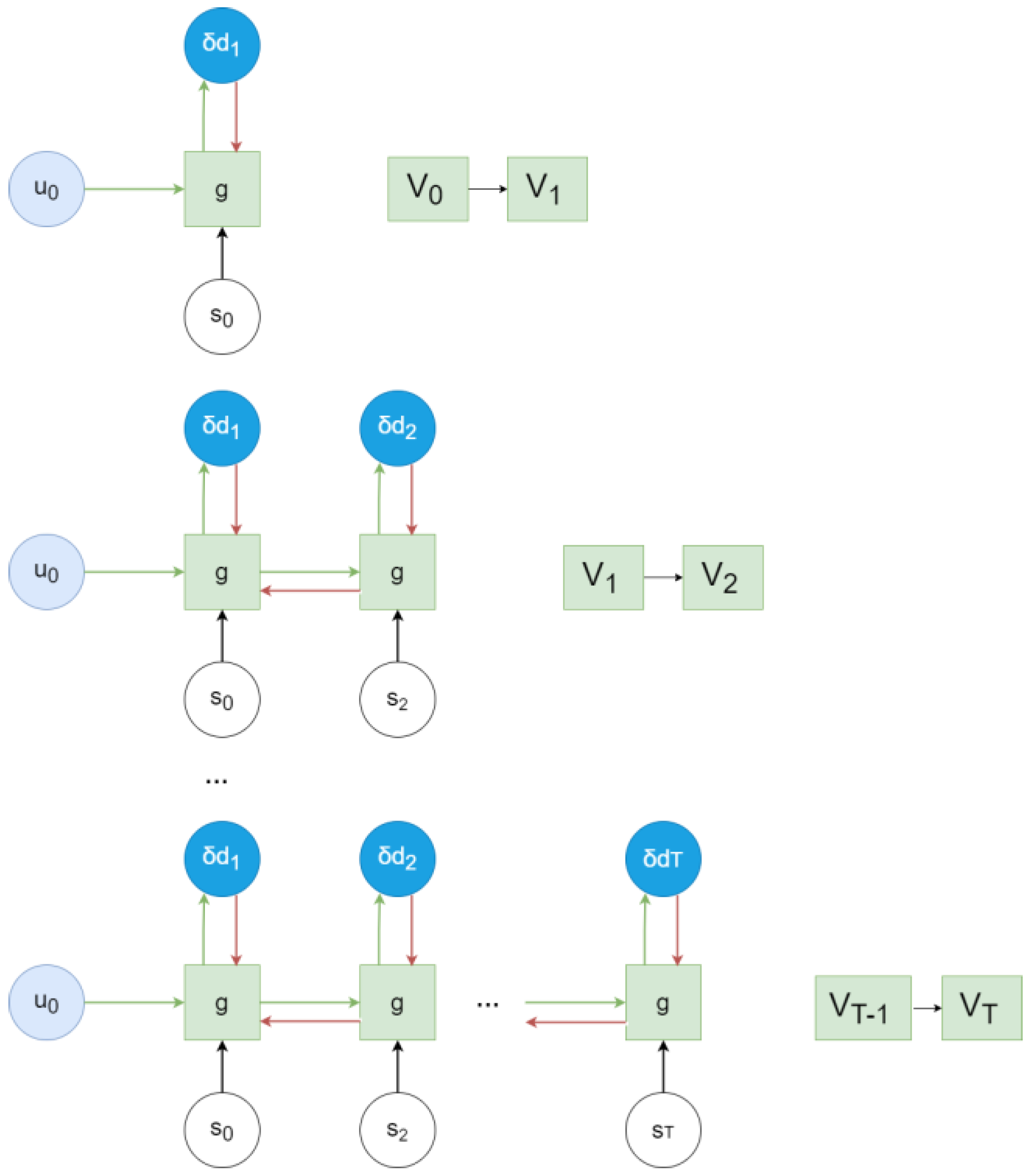
2.3. Time-by-Time Inversion Algorithm
3. Results
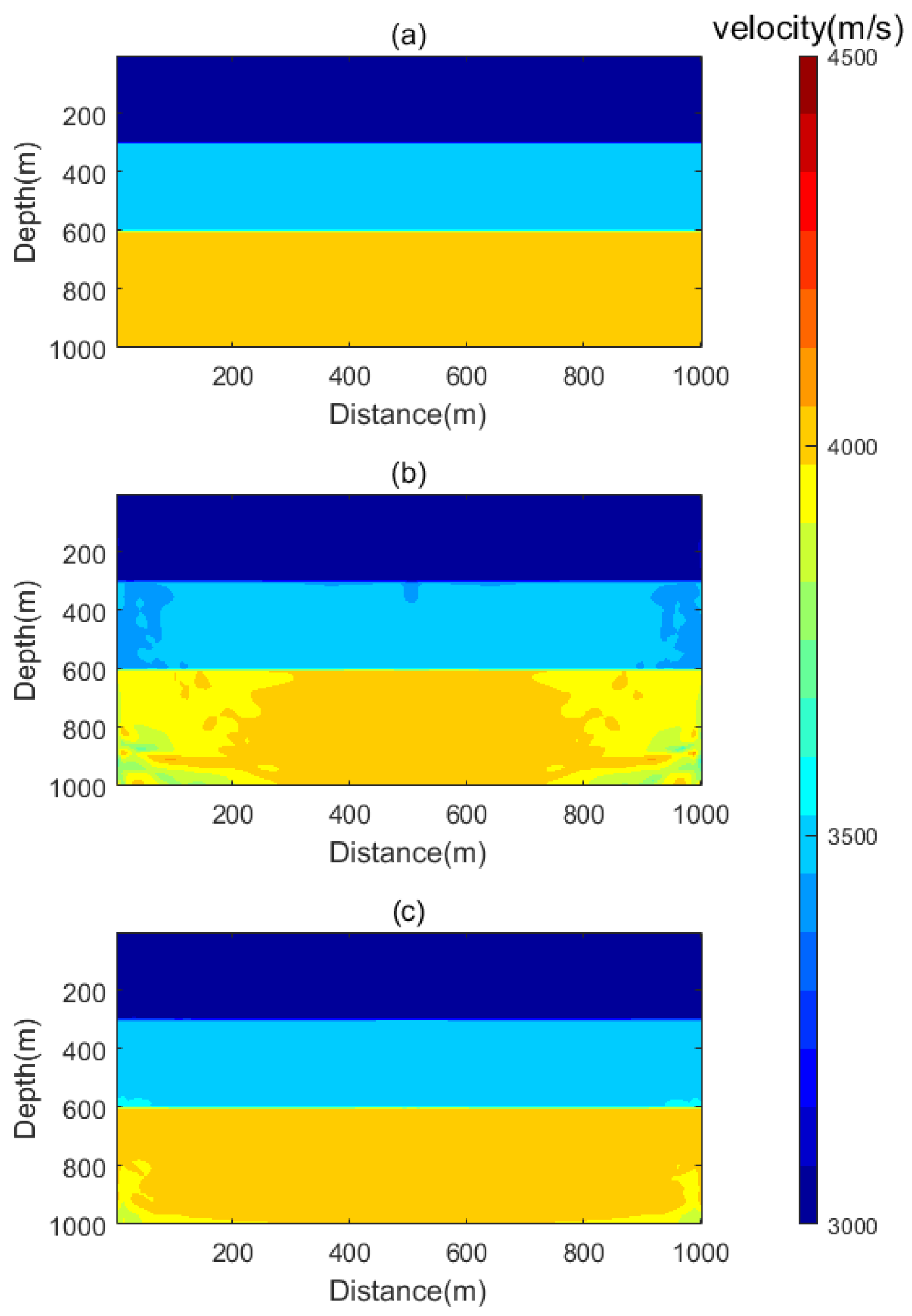
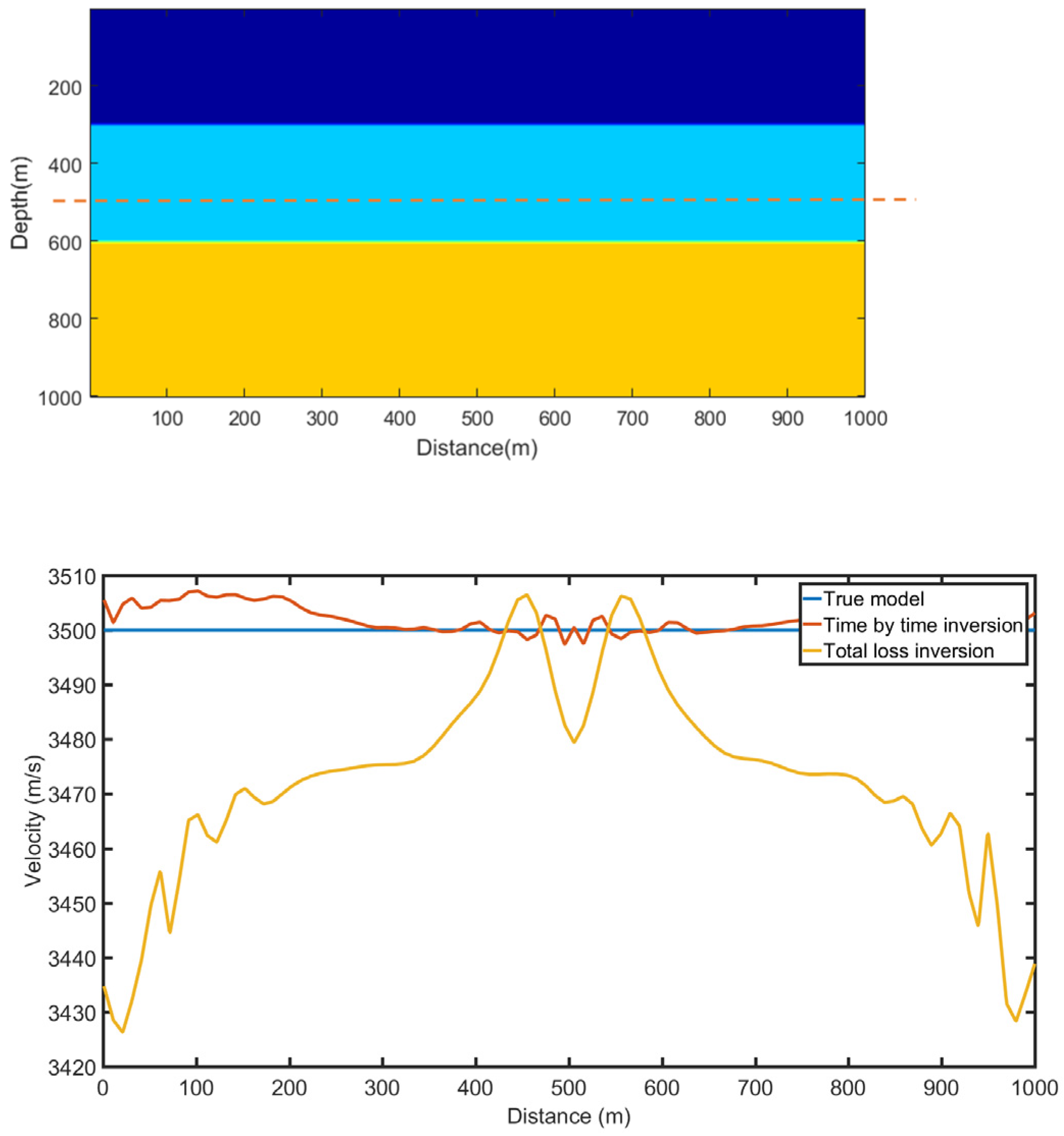
3.1. Homogeneous Layer Model
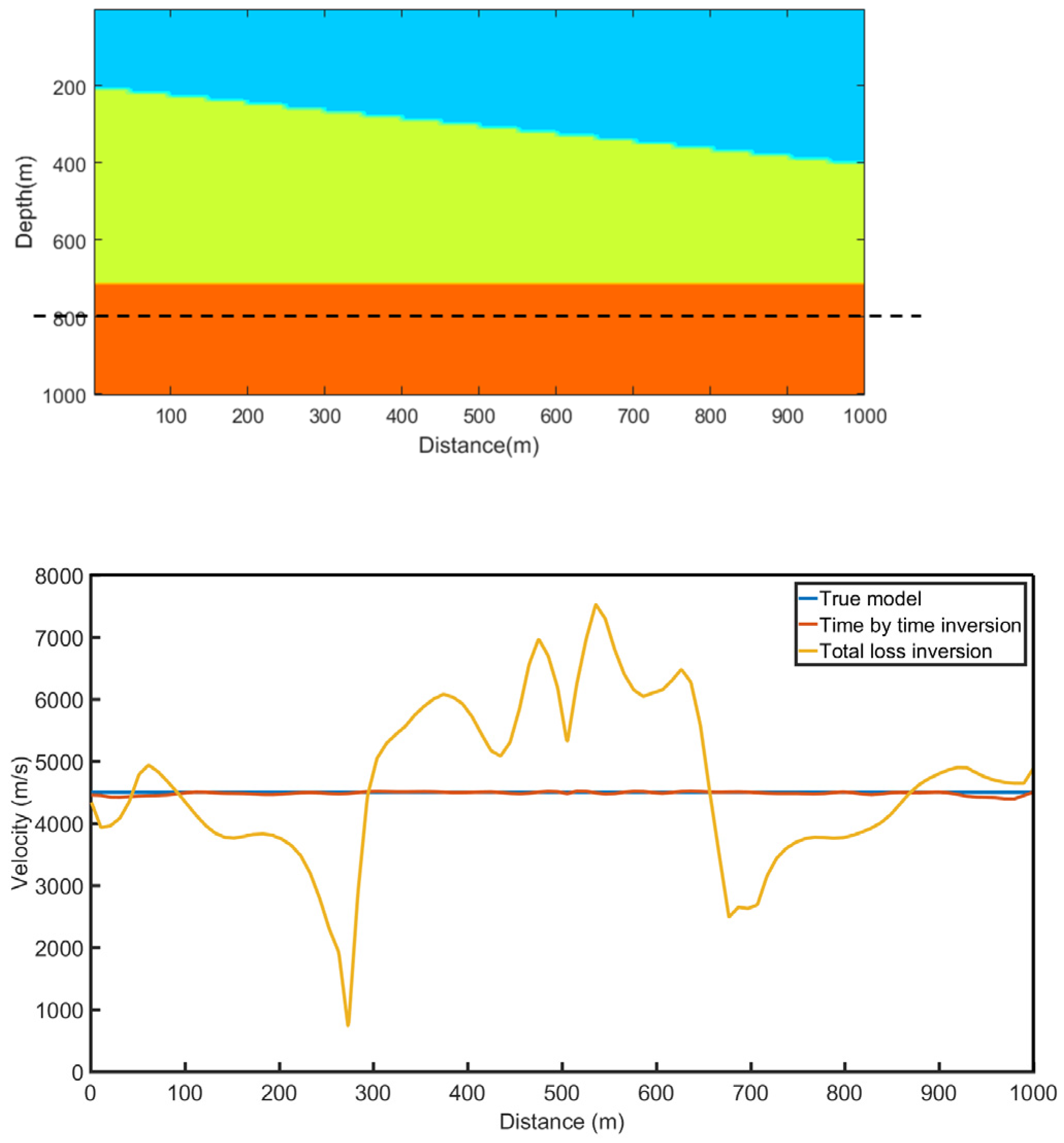
3.2. Sloping Layer Model
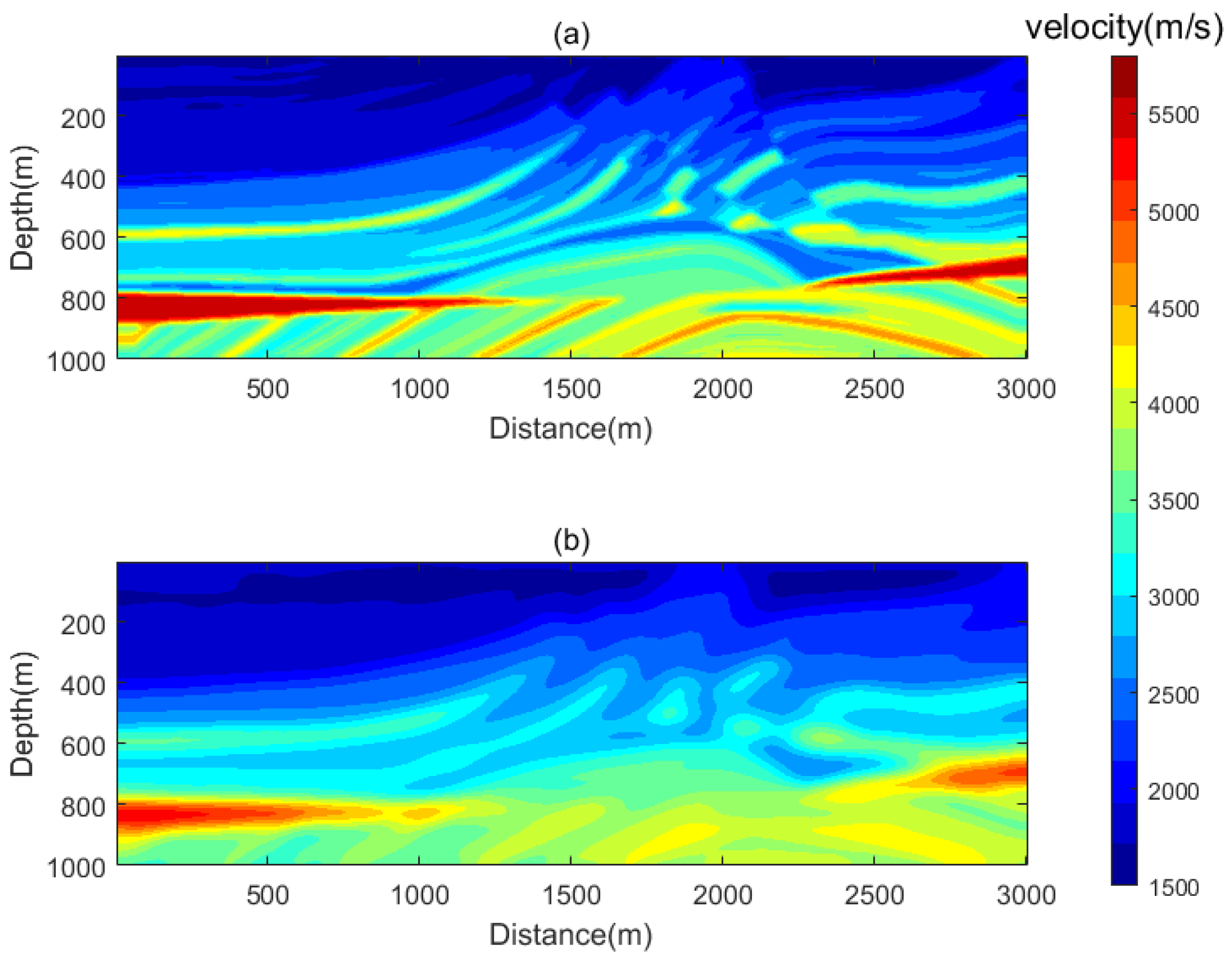
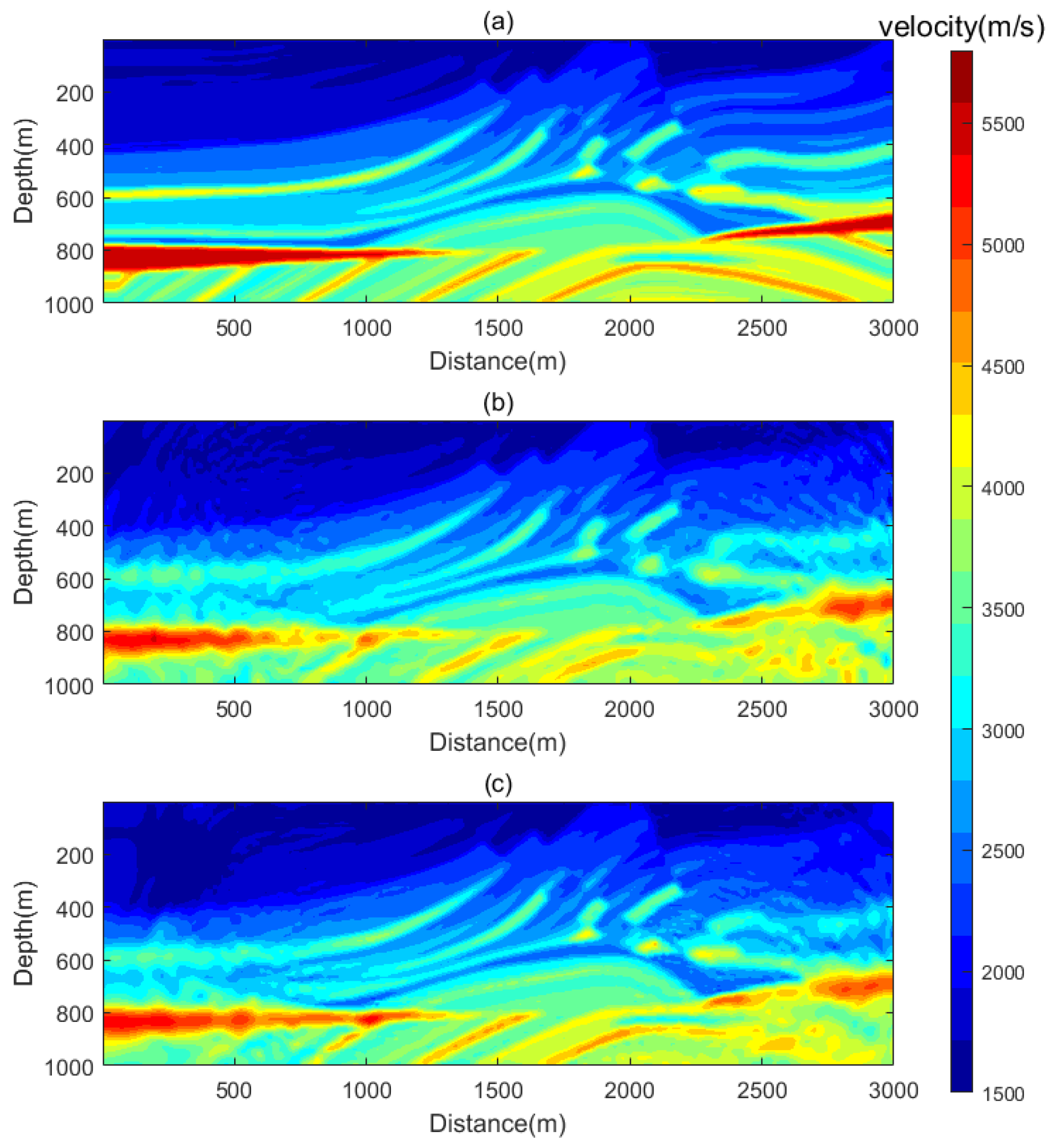
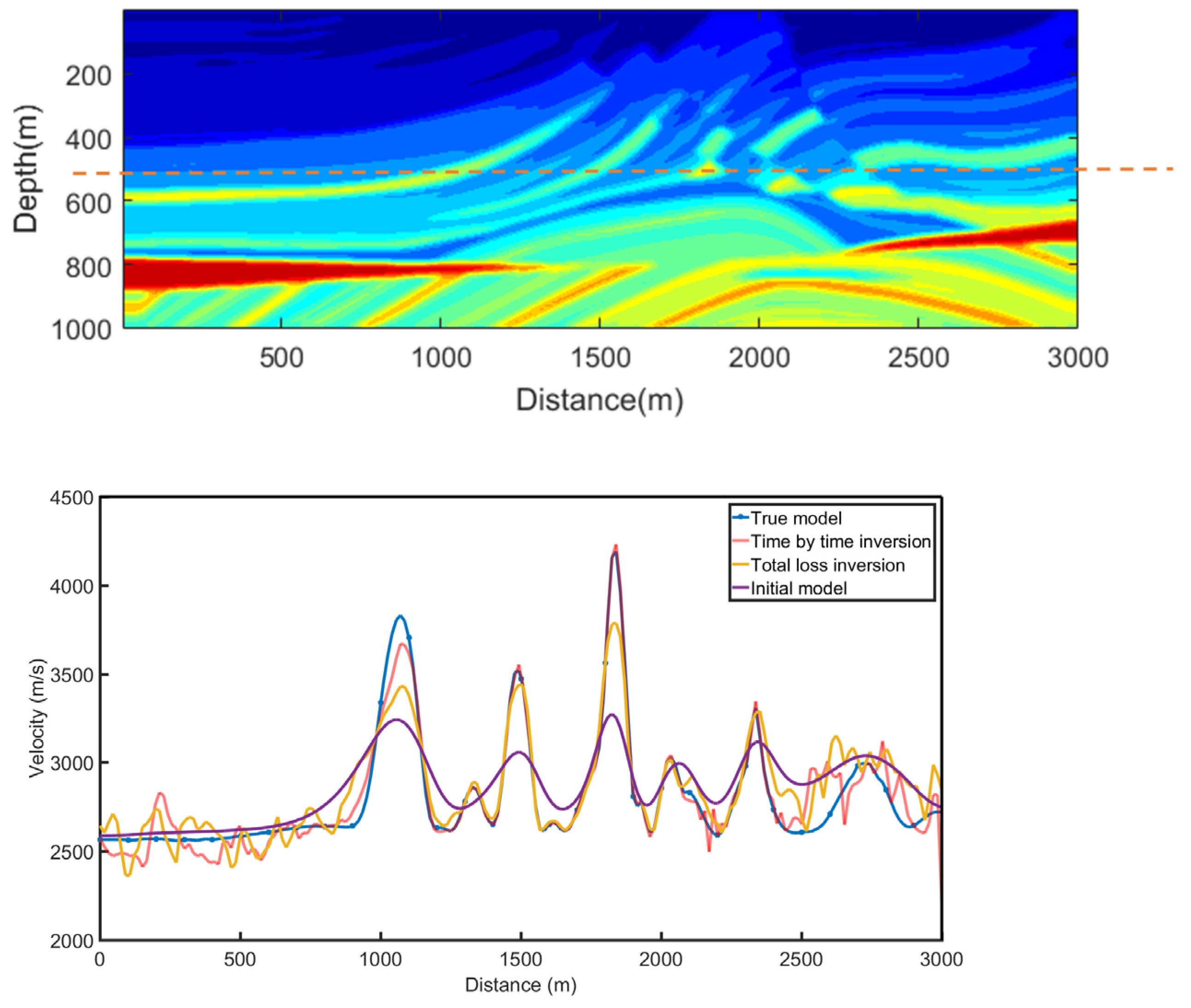
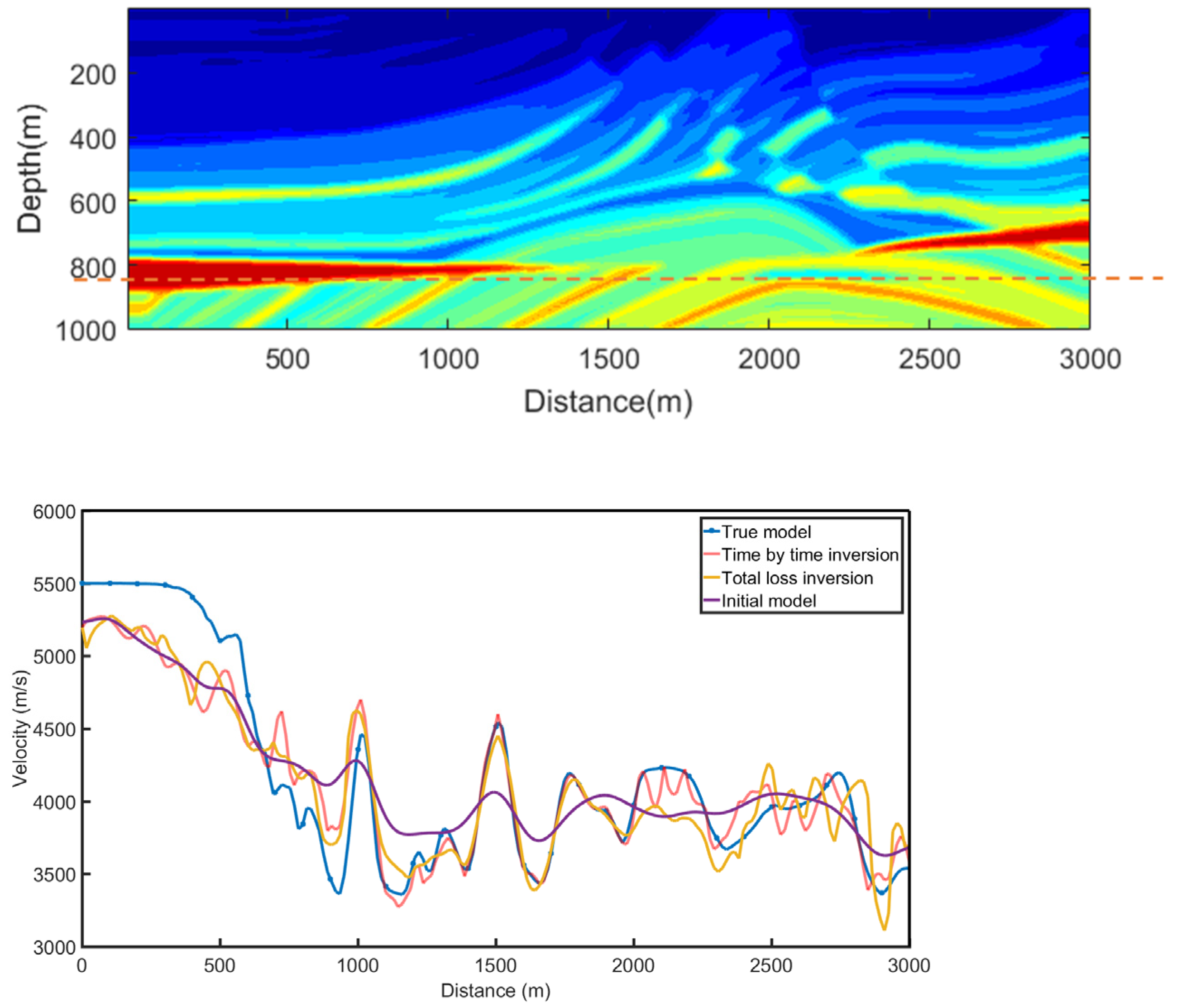
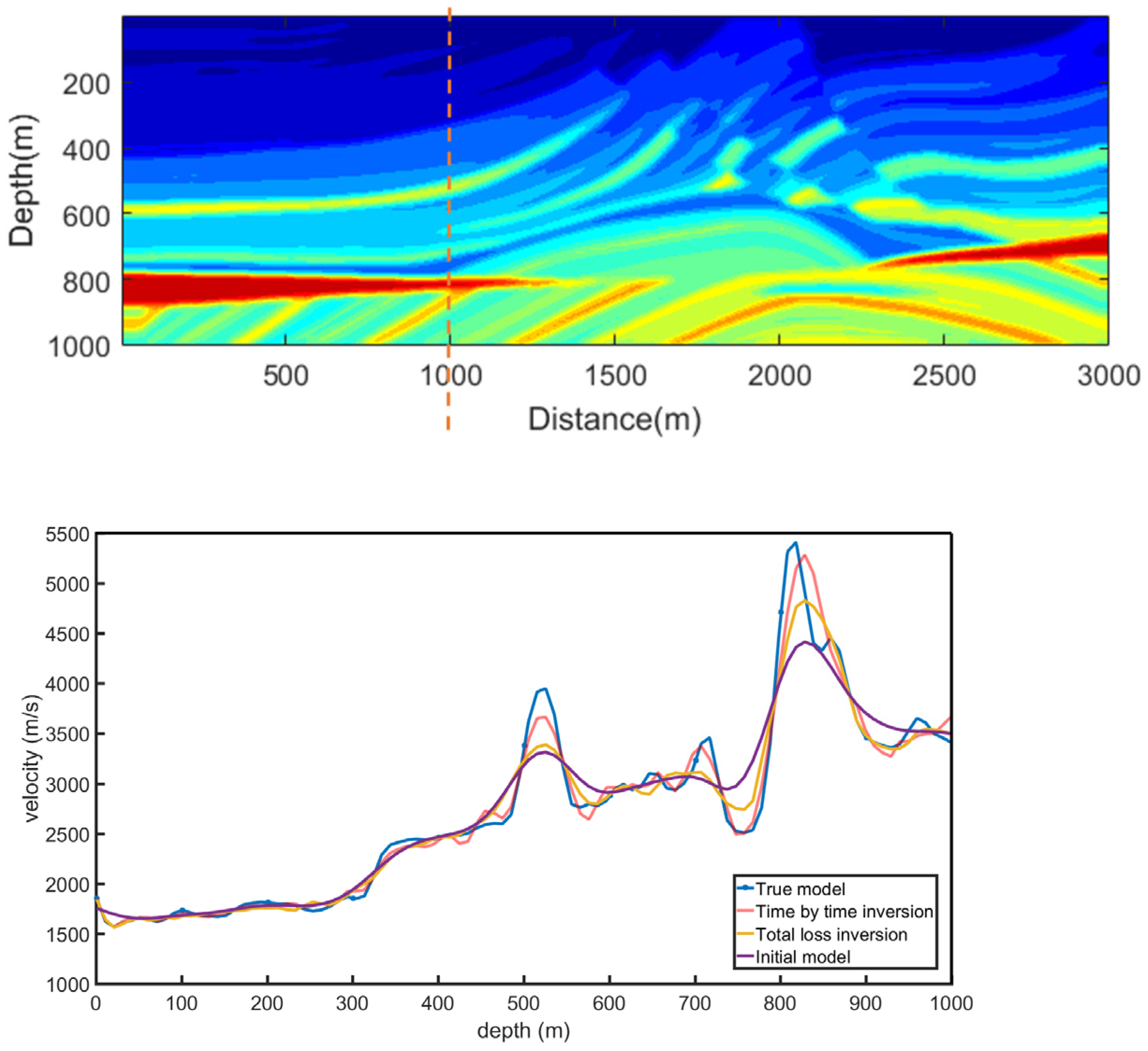
3.3. Marmousi Model
4. Discussion
5. Conclusions
Author Contributions
Funding
Institutional Review Board Statement
Informed Consent Statement
Data Availability Statement
Acknowledgments
Conflicts of Interest
References
- Liu, Y.; He, B.; Zheng, Y. Controlled-order multiple waveform inversion. Geophysics 2020, 85, R243–R250. [Google Scholar] [CrossRef] [Scilit]
- Kuang, W.; Yuan, C.; Zhang, J. Real-time determination of earthquake focal mechanism via deep learning. Nat. Commun. 2021, 12, 1432. [Google Scholar] [CrossRef] [Scilit]
- Zhang, J.; Zhang, H.; Chen, E.; Zheng, Y.; Kuang, W.; Zhang, X. Real-time earthquake monitoring using a search engine method. Nat. Commun. 2014, 5, 5664. [Google Scholar] [CrossRef] [Scilit] [PubMed]
- Roth, G.; Tarantola, A. Neural Networks and Inversion of Seismic Data. J. Geophys. Res. Solid Earth 1994, 99, 6753–6768. [Google Scholar] [CrossRef] [Scilit]
- Nath, S.K.; Vasu, R.; Pandit, M. Wavelet based compression and denoising of optical tomography data. Opt. Commun. 1999, 167, 37–46. [Google Scholar] [CrossRef] [Scilit]
- Kumar, N.S.; Subrata, C.; Kumar, S.S.; Nilanjan, G. Velocity inversion in cross-hole seismic tomography by counter-propagation neural network, genetic algorithm and evolutionary programming techniques. Geophys. J. Int. 1999, 138, 108–124. [Google Scholar]
- Yang, F.; Ma, J. Deep-learning inversion: A next-generation seismic velocity model building method. Geophysics 2019, 84, R583–R599. [Google Scholar] [CrossRef] [Scilit]
- Ren, P.; Rao, C.; Sun, H.; Liu, Y. Physics-informed neural network for seismic wave inversion in layered semi-infinite domain. Comput. Methods Appl. Math. 2022, 22, 1–24. [Google Scholar]
- Raissi, M.; Perdikaris, P.; Karniadakis, G.E. Physics-informed neural networks: A deep learning framework for solving forward and inverse problems involving nonlinear partial differential equations. J. Comput. Phys. 2019, 378, 686–707. [Google Scholar] [CrossRef] [Scilit]
- Moseley, B.; Nissen-Meyer, T.; Markham, A. Deep learning for fast simulation of seismic waves in complex media. Solid Earth 2020, 11, 1527–1549. [Google Scholar] [CrossRef] [Scilit]
- Moseley, B.; Markham, A.; Nissen-Meyer, T. Solving the wave equation with physics-informed deep learning. arXiv 2020, arXiv:2006.11894. [Google Scholar]
- Smith, J.D.; Azizzadenesheli, K.; Ross, Z.E. Eikonet: Solving the eikonal equation with deep neural networks. IEEE Trans. Geosci. Remote Sens. 2020, 59, 10685–10696. [Google Scholar] [CrossRef] [Scilit]
- Waheed, U.B.; Alkhalifah, T.; Haghighat, E.; Song, C.; Virieux, J. PINNtomo: Seismic tomography using physics-informed neural networks. arXiv 2021, arXiv:2104.01588. [Google Scholar]
- Song, C.; Alkhalifah, T.; Waheed, U.B. Solving the frequency-domain acoustic VTI wave equation using physics-informed neural networks. Geophys. J. Int. 2021, 225, 846–859. [Google Scholar] [CrossRef] [Scilit]
- Karniadakis, G.E.; Kevrekidis, I.G.; Lu, L.; Perdikaris, P.; Wang, S.; Yang, L. Physics-informed machine learning. Nat. Rev. Phys. 2021, 3, 422–440. [Google Scholar] [CrossRef] [Scilit]
- Rao, C.; Sun, H.; Liu, Y. Physics-informed deep learning for incompressible laminar flows. Theor. Appl. Mech. Lett. 2020, 10, 207–212. [Google Scholar] [CrossRef] [Scilit]
- Raissi, M.; Yazdani, A.; Karniadakis, G.E. Hidden fluid mechanics: Learning velocity and pressure fields from flow visualizations. Science 2020, 367, 1026–1030. [Google Scholar] [CrossRef] [Scilit]
- Lu, L.; Meng, X.; Mao, Z.; Karniadakis, G.E. Deepxde: A deep learning library for solving differential equations. SIAM Rev. 2021, 63, 208–228. [Google Scholar] [CrossRef] [Scilit]
- Haghighat, E.; Raissi, M.; Moure, A.; Gomez, H.; Juanes, R. A physics-informed deep learning framework for inversion and surrogate modeling in solid mechanics. Comput. Methods Appl. Mech. Eng. 2021, 379, 1137411. [Google Scholar] [CrossRef] [Scilit]
- Ren, P.; Rao, C.; Liu, Y.; Ma, Z.; Wang, Q.; Wang, J.-X.; Sun, H. Physics-informed deep super-resolution for spatiotemporal data. arXiv 2022, arXiv:2208.01462. [Google Scholar] [CrossRef] [Scilit]
- Sun, L.; Gao, H.; Pan, S.; Wang, J.-X. Surrogate modeling for fluid flows based on physics-constrained deep learning without simulation data. Comput. Methods Appl. Mech. Eng. 2019, 361, 112732. [Google Scholar] [CrossRef] [Scilit]
- Rao, C.; Sun, H.; Liu, Y. Physics-informed deep learning for computational elastodynamics without labeled data. J. Eng. Mech. 2021, 147, 04021043. [Google Scholar] [CrossRef] [Scilit]
- Gao, H.; Sun, L.; Wang, J.-X. Phygeonet: Physics-informed geometry-adaptive convolutional neural networks for solving parameterized steady-state pdes on irregular domain. J. Comput. Phys. 2021, 428, 110079. [Google Scholar] [CrossRef] [Scilit]
- Ren, P.; Rao, C.; Liu, Y.; Wang, J.-X.; Sun, H. Phycrnet: Physics-informed convolutional-recurrent network for solving spatiotemporal pdes. Comput. Methods Appl. Mech. Eng. 2022, 389, 114399. [Google Scholar] [CrossRef] [Scilit]
- Gao, H.; Zahr, M.J.; Wang, J.-X. Physics-informed graph neural Galerkin networks: A unified framework for solving PDE-governed forward and inverse problems. Comput. Methods Appl. Mech. Eng. 2022, 390, 114502. [Google Scholar] [CrossRef] [Scilit]
- Alaei, N.; Soleimani Monfared, M.; Roshandel Kahoo, A.; Bohlen, T. Seismic Imaging of Complex Velocity Structures by 2D Pseudo-Viscoelastic Time-Domain Full-Waveform Inversion. Appl. Sci. 2022, 12, 7741. [Google Scholar] [CrossRef] [Scilit]
- Abolghasemifar, S.A.; Monfared, M.S.; Aghajani, H. Acoustic wave propagation in strongly heterogeneous media: A lattice boltzmann approach. Int. Multidiscip. Sci. GeoConference SGEM 2009, 1, 643–648. [Google Scholar]
- Sun, J.; Niu, Z.; Innanen, K.A.; Li, J.; Trad, D.O. A theory-guided deep-learning formulation and optimization of seismic waveform inversion. Geophysics 2020, 85, R87–R99. [Google Scholar] [CrossRef] [Scilit]
- Brougois, A.; Bourget, M.; Lailly, P.; Poulet, M. Marmousi, model and data. In EAEG Workshop-Practical Aspects of Seismic Data Inversion; European Association of Geoscientists & Engineers: Utrecht, The Netherlands, 1990; cp-108-00002. [Google Scholar]
- Rointan, A.; Soleimani Monfared, M.; Aghajani, H. Improvement of seismic velocity model by selective removal of irrelevant velocity variations. Acta Geod. Et Geophys. 2021, 56, 145–176. [Google Scholar] [CrossRef] [Scilit]

Disclaimer/Publisher’s Note: The statements, opinions and data contained in all publications are solely those of the individual author(s) and contributor(s) and not of MDPI and/or the editor(s). MDPI and/or the editor(s) disclaim responsibility for any injury to people or property resulting from any ideas, methods, instructions or products referred to in the content. |
© 2023 by the authors. Licensee MDPI, Basel, Switzerland. This article is an open access article distributed under the terms and conditions of the Creative Commons Attribution (CC BY) license (https://creativecommons.org/licenses/by/4.0/).
Share and Cite
Lu, C.; Zhang, C. Seismic Velocity Inversion via Physical Embedding Recurrent Neural Networks (RNN). Appl. Sci. 2023, 13, 13312. https://doi.org/10.3390/app132413312
Lu C, Zhang C. Seismic Velocity Inversion via Physical Embedding Recurrent Neural Networks (RNN). Applied Sciences. 2023; 13(24):13312. https://doi.org/10.3390/app132413312
Chicago/Turabian StyleLu, Cai, and Chunlong Zhang. 2023. "Seismic Velocity Inversion via Physical Embedding Recurrent Neural Networks (RNN)" Applied Sciences 13, no. 24: 13312. https://doi.org/10.3390/app132413312
APA StyleLu, C., & Zhang, C. (2023). Seismic Velocity Inversion via Physical Embedding Recurrent Neural Networks (RNN). Applied Sciences, 13(24), 13312. https://doi.org/10.3390/app132413312