Article

Intelligent Data-Enabled Task Offloading for Vehicular Fog Computing

by
Ahmed S. Alfakeeh
1,* and
Muhammad Awais Javed
2
1
Department of Information Systems, King Abdul Aziz University, Jeddah 21589, Saudi Arabia
2
Department of Electrical and Computer Engineering, COMSATS University Islamabad, Islamabad 45550, Pakistan
*
Author to whom correspondence should be addressed.
Appl. Sci. 2023, 13(24), 13034; https://doi.org/10.3390/app132413034
Submission received: 20 September 2023 / Revised: 4 December 2023 / Accepted: 4 December 2023 / Published: 6 December 2023
(This article belongs to the Special Issue New Insights into Pervasive and Mobile Computing)

Abstract

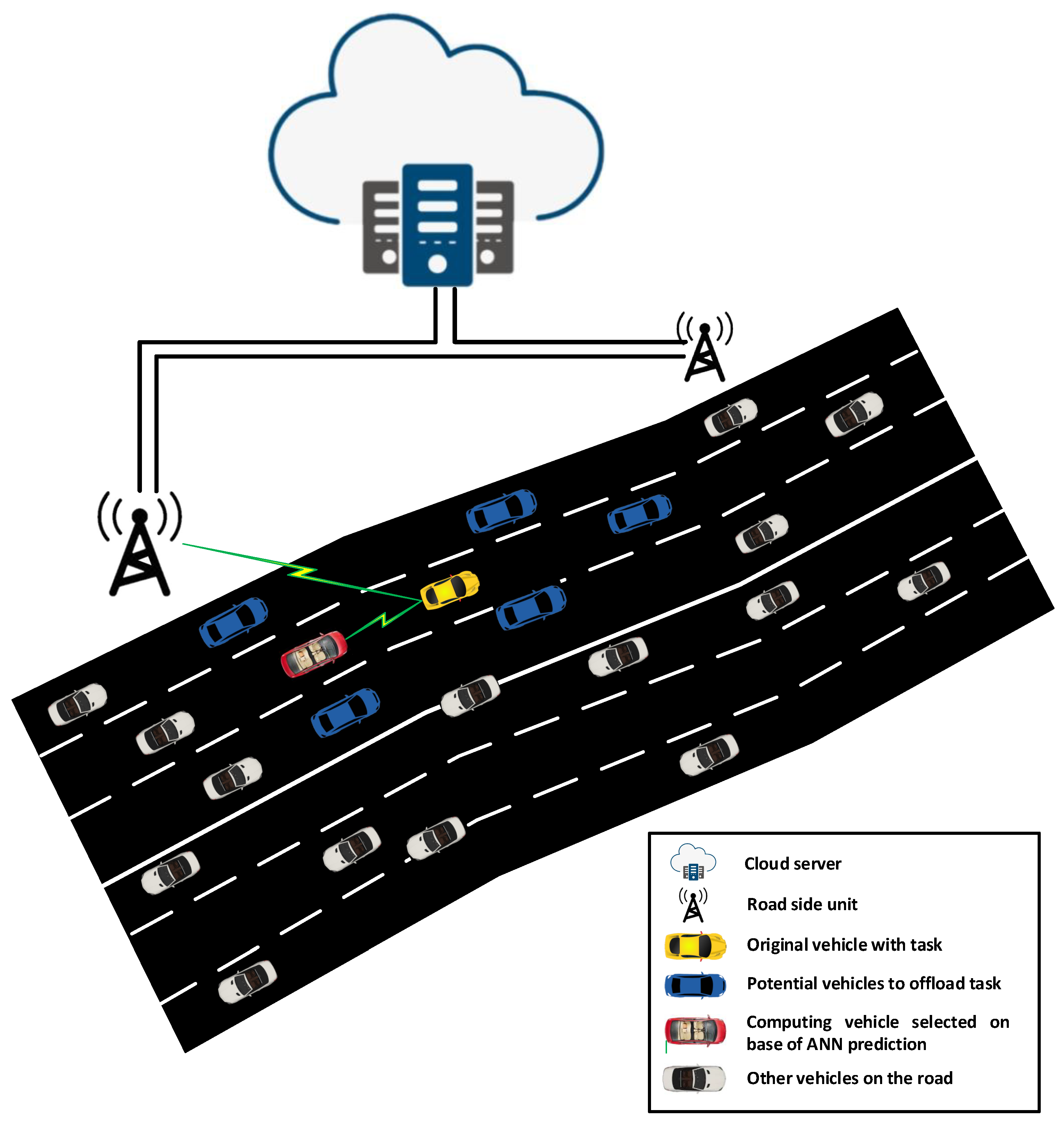
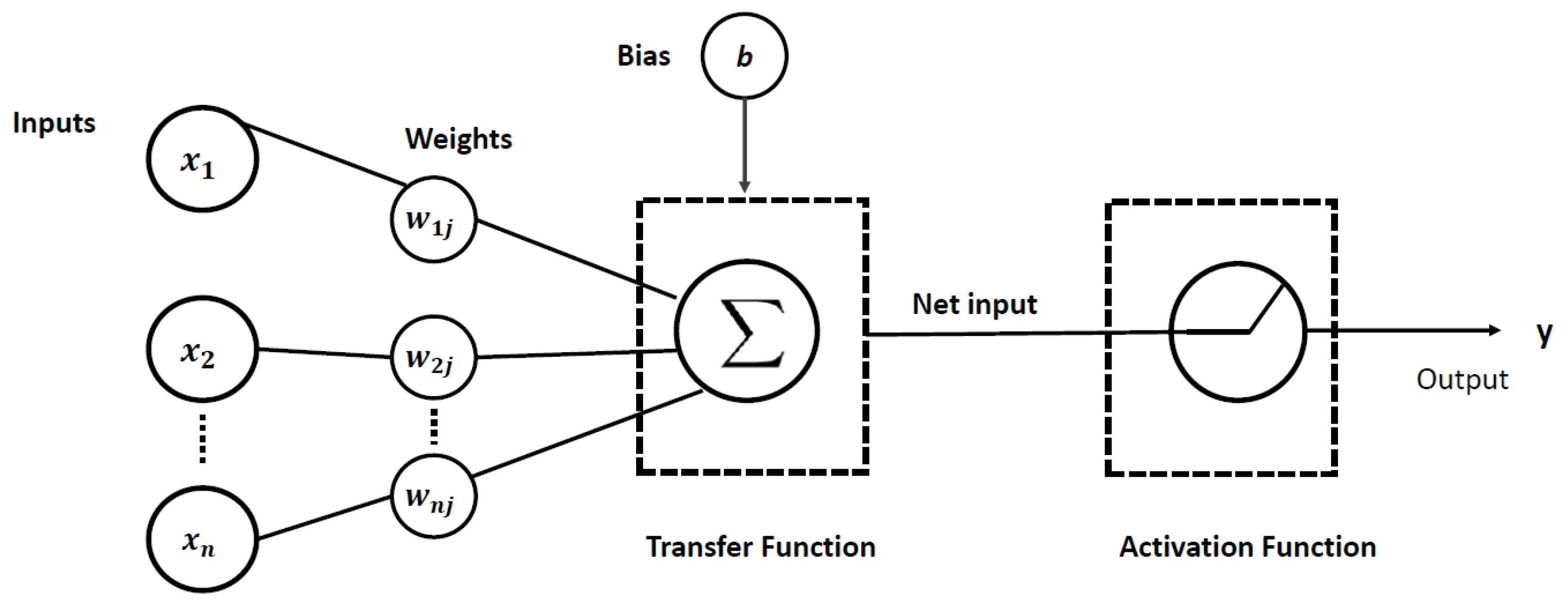
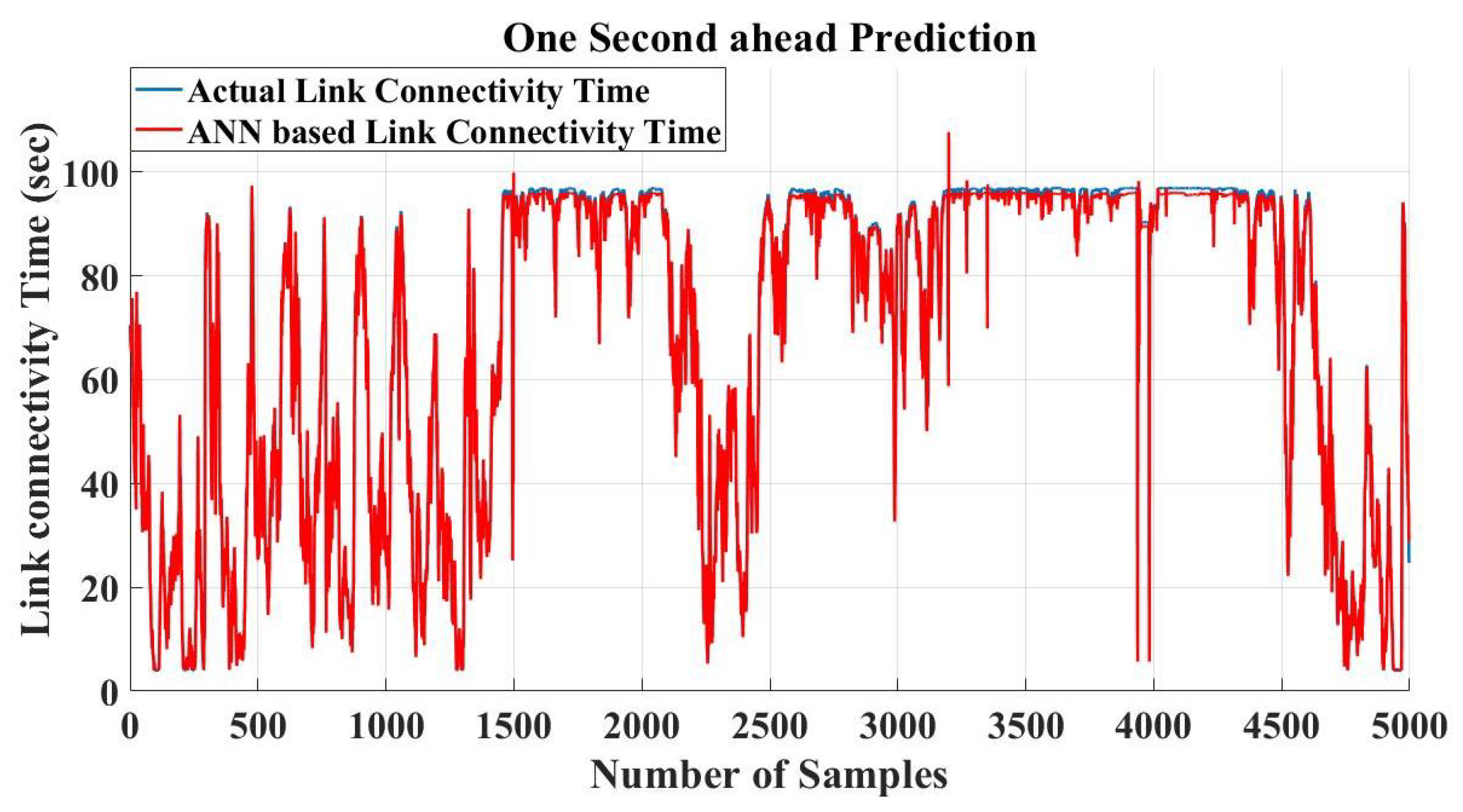
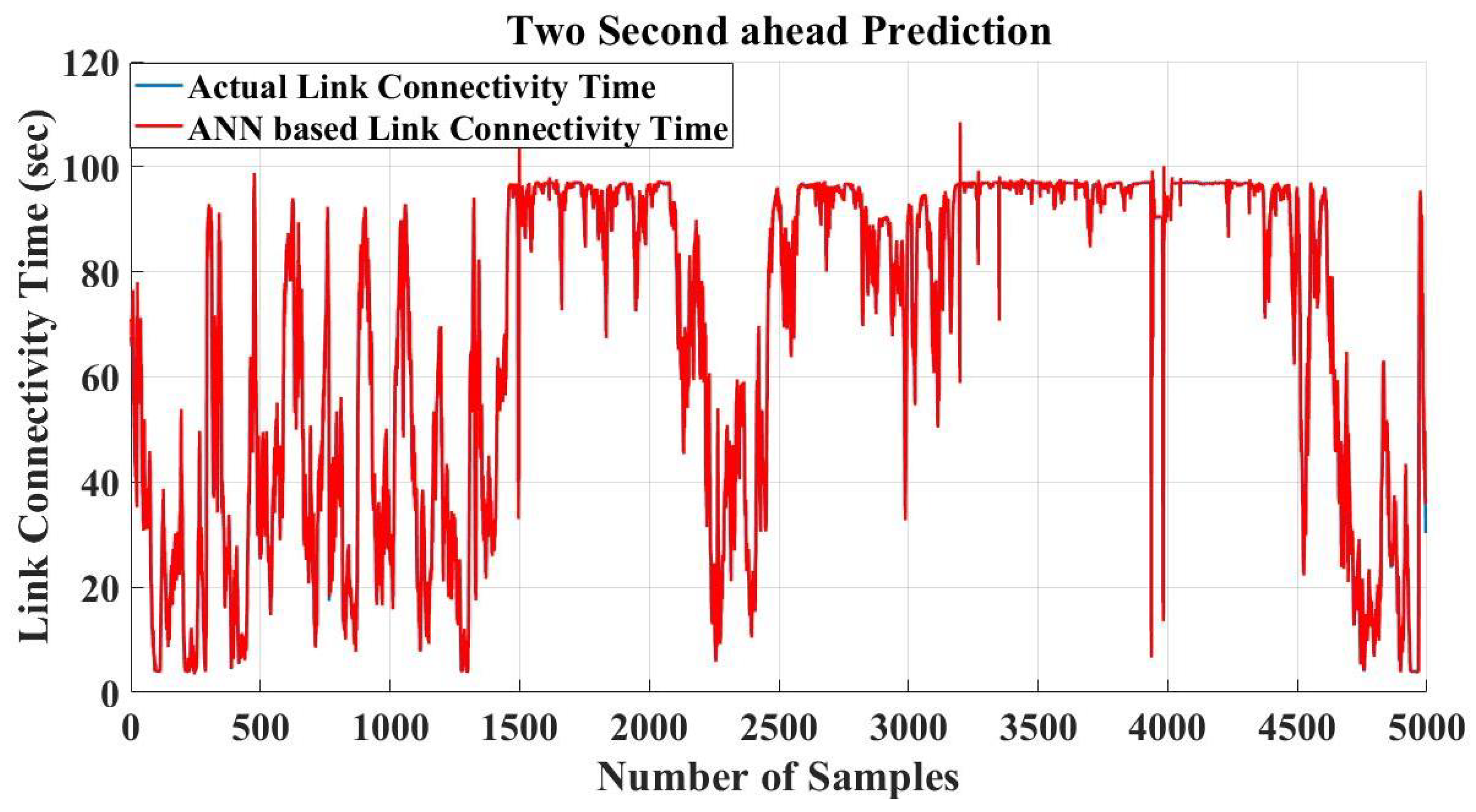
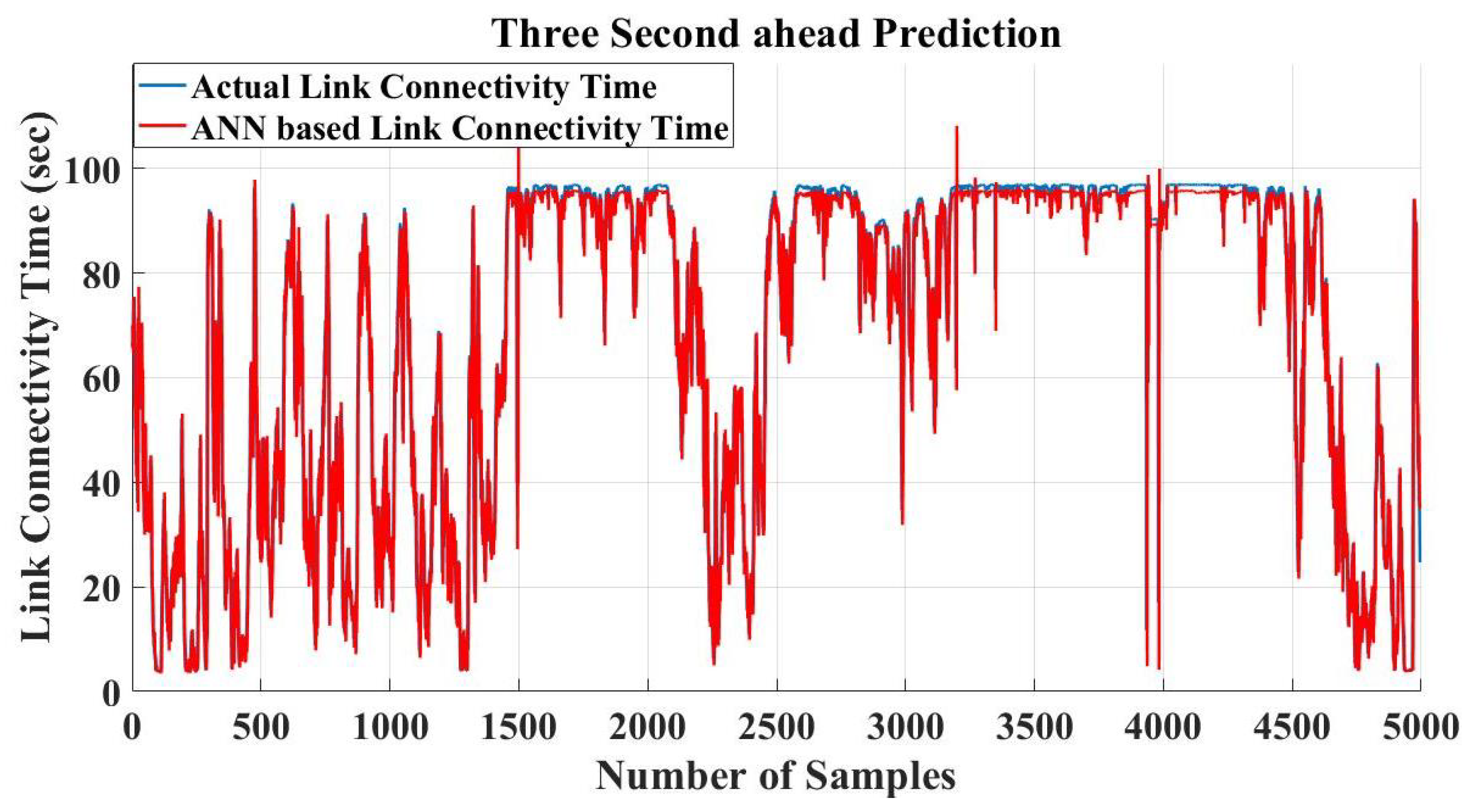
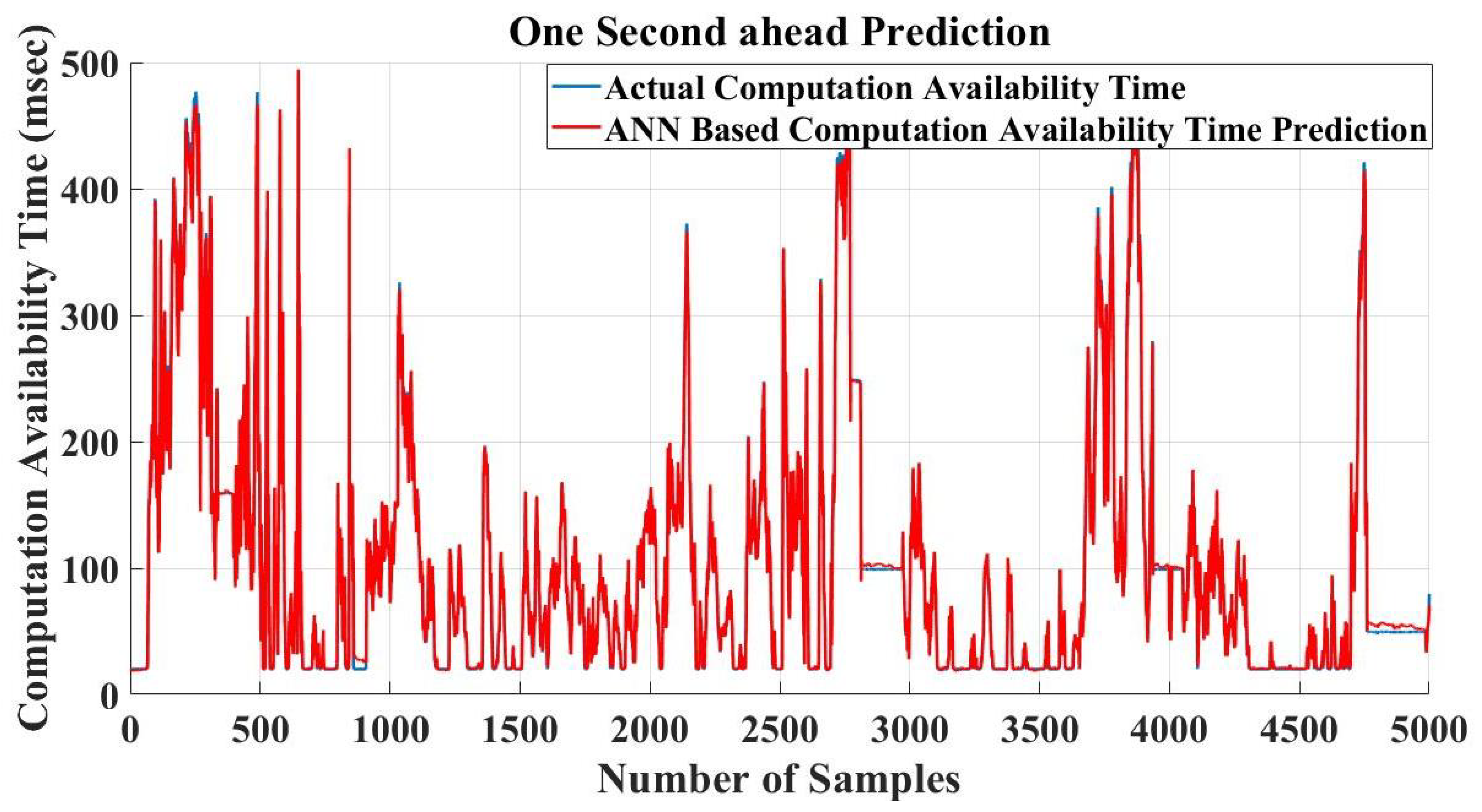
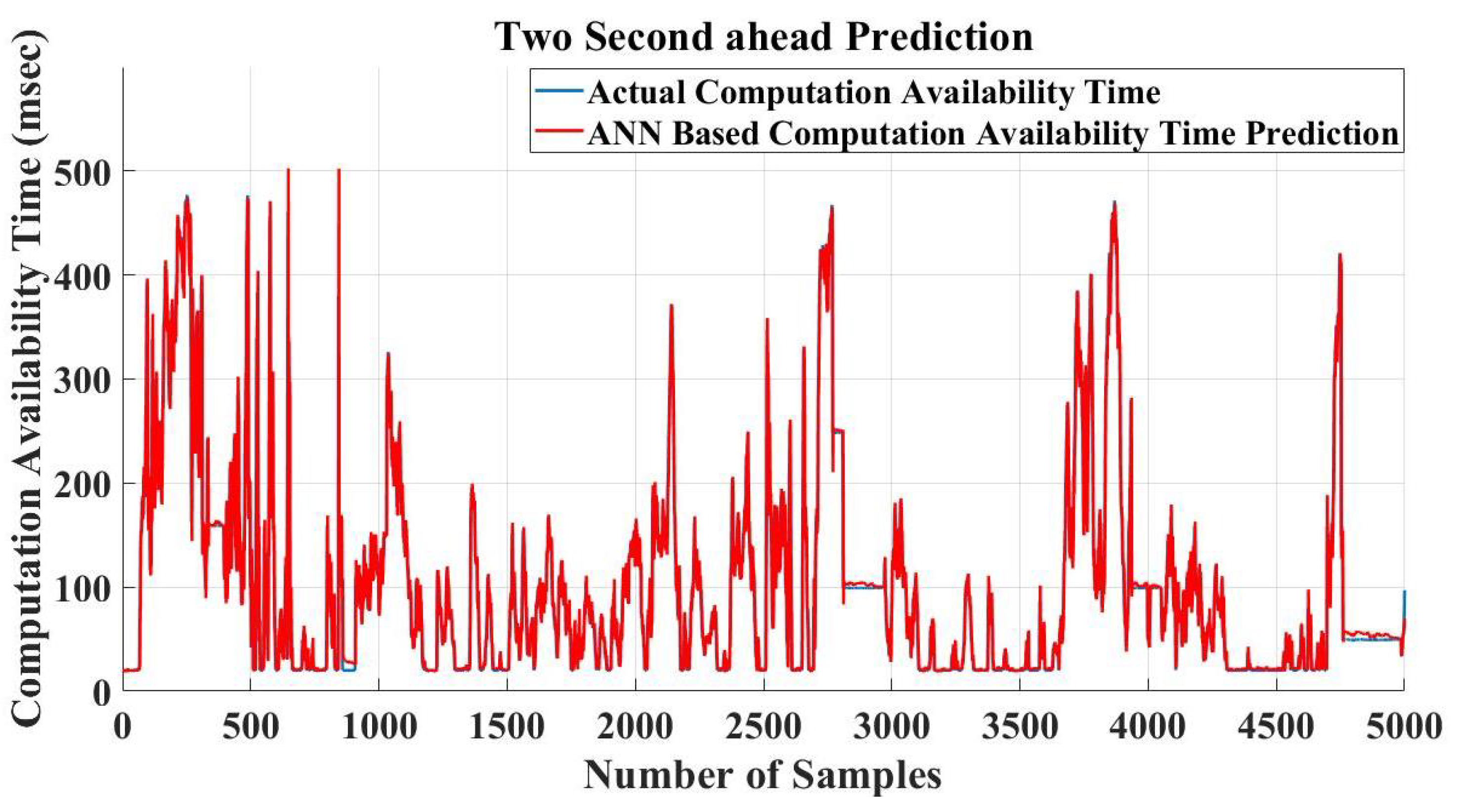
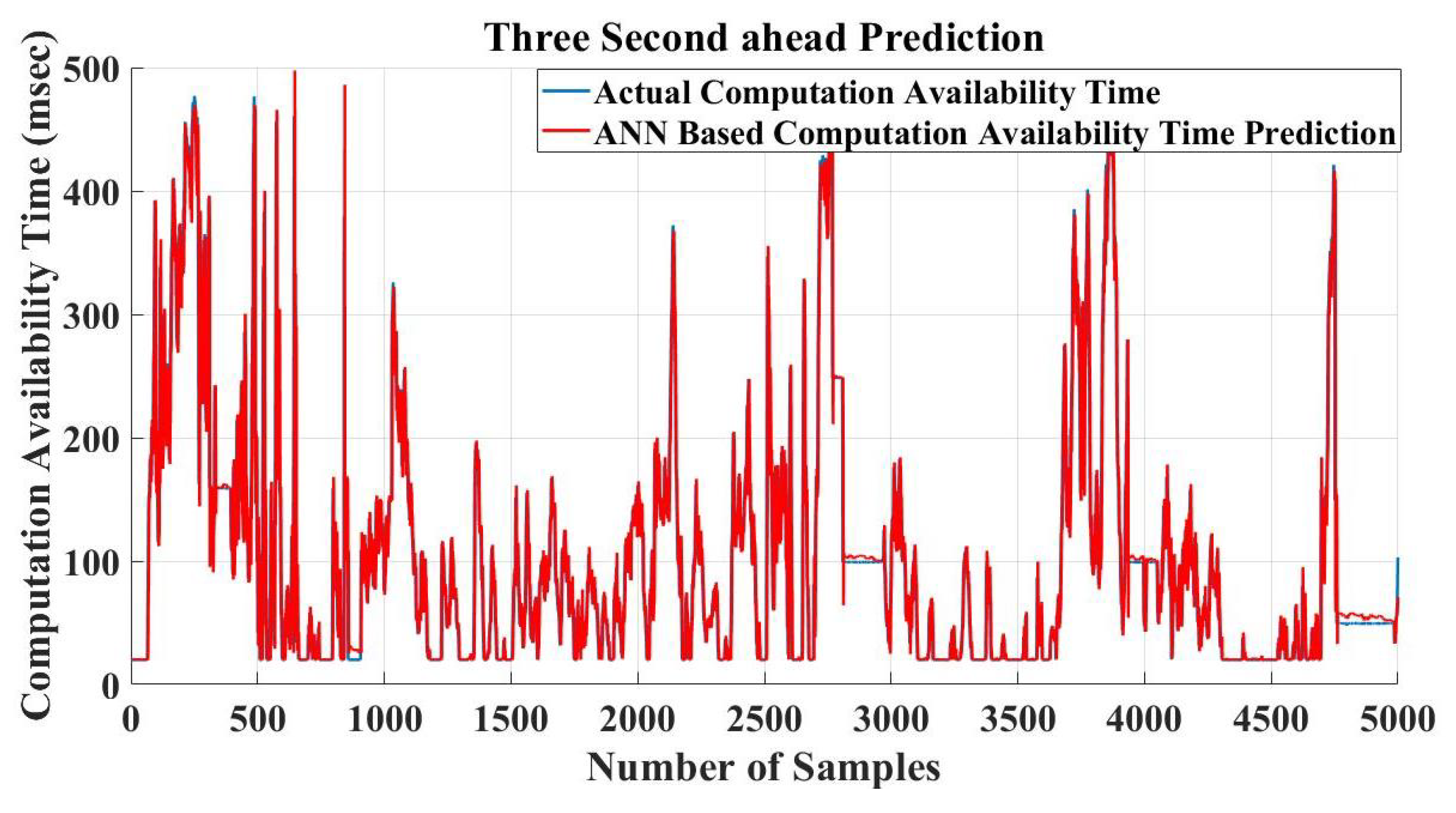
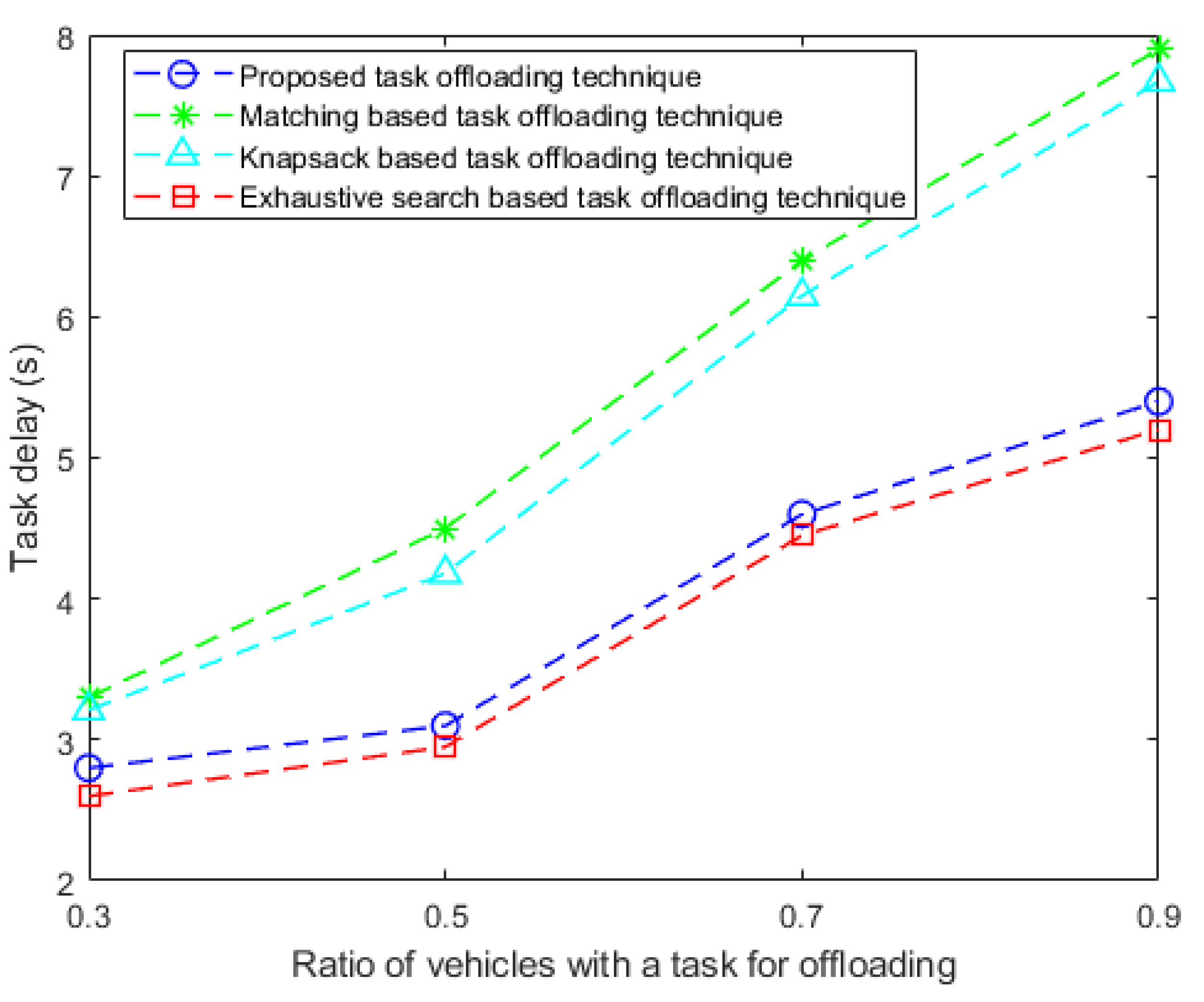
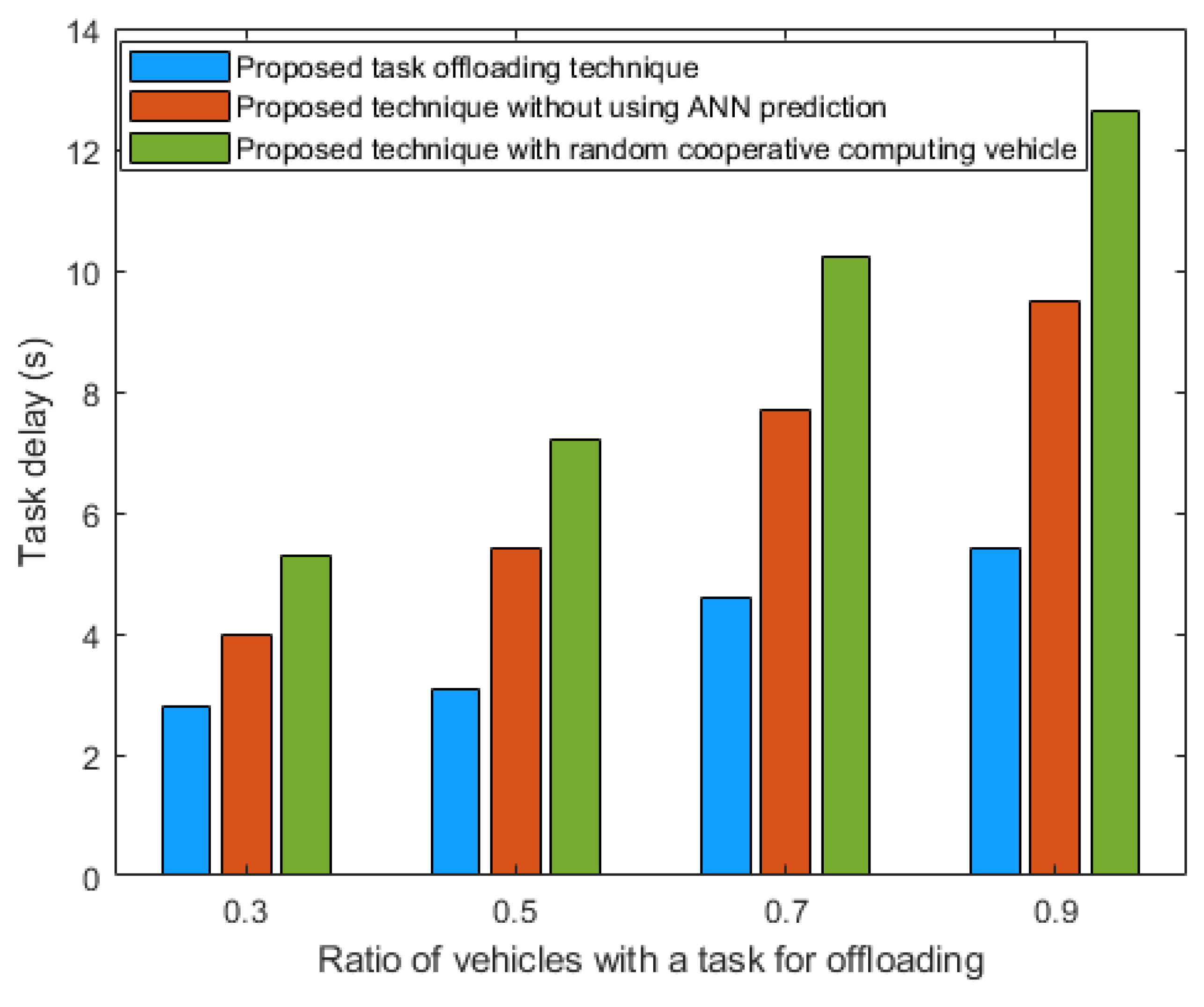
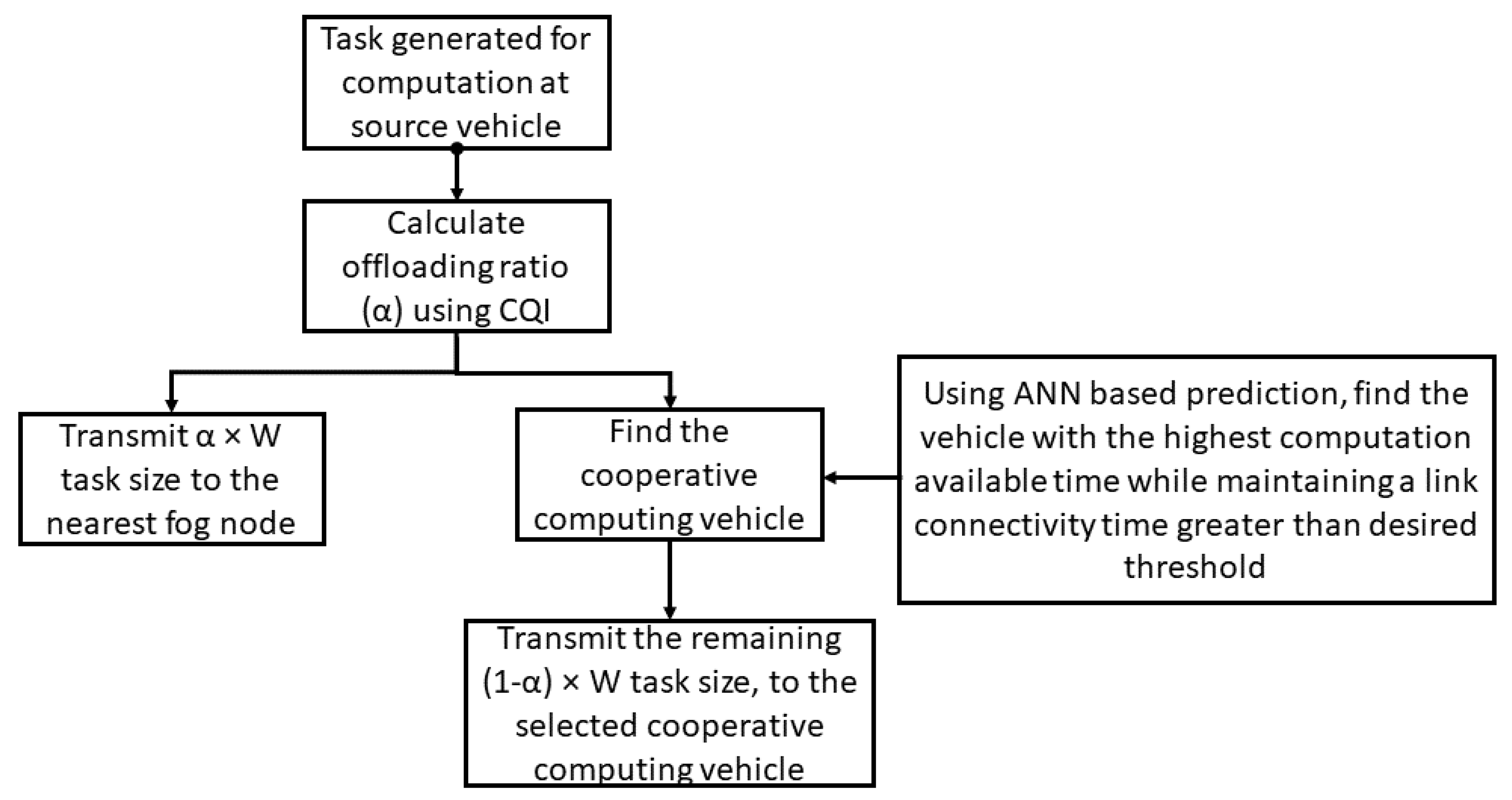
Fog computing is a key component of future intelligent transportation systems (ITSs) that can support the high computation and large storage requirements needed for autonomous driving applications. A major challenge in such fog-enabled ITS networks is the design of algorithms that can reduce the computation times of different tasks by efficiently utilizing available computational resources. In this paper, we propose a data-enabled cooperative technique that offloads some parts of a task to the nearest fog roadside unit (RSU), depending on the current channel quality indicator (CQI). The rest of the task is offloaded to a nearby cooperative computing vehicle with available computing resources. We developed a cooperative computing vehicle selection technique using an artificial neural network (ANN)-based prediction model that predicts both the computing availability once the task is offloaded to the potential computing vehicle and the link connectivity when the task result is to be transmitted back to the source vehicle. Using detailed simulation results in MATLAB 2020a software, we show the accuracy of our proposed prediction model. Furthermore, we also show that the proposed technique reduces total task delay by 37% compared to other techniques reported in the literature.
Keywords: fog computing; ITS; channel quality indicator (CQI); task offloading; vehicular networks; ANN fog computing; ITS; channel quality indicator (CQI); task offloading; vehicular networks; ANN