Article

Estimation of Daily Actual Evapotranspiration of Tea Plantations Using Ensemble Machine Learning Algorithms and Six Available Scenarios of Meteorological Data

1
Key Laboratory of Watershed Geographic Sciences, Nanjing Institute of Geography and Limnology, Chinese Academy of Sciences, Nanjing 210008, China
2
School of Surveying and Land Information Engineering, Henan Polytechnic University, Jiaozuo 454003, China
3
University of Chinese Academy of Sciences, Beijing 100049, China
*
Author to whom correspondence should be addressed.
Appl. Sci. 2023, 13(23), 12961; https://doi.org/10.3390/app132312961
Submission received: 17 October 2023 / Revised: 21 November 2023 / Accepted: 23 November 2023 / Published: 4 December 2023

Abstract

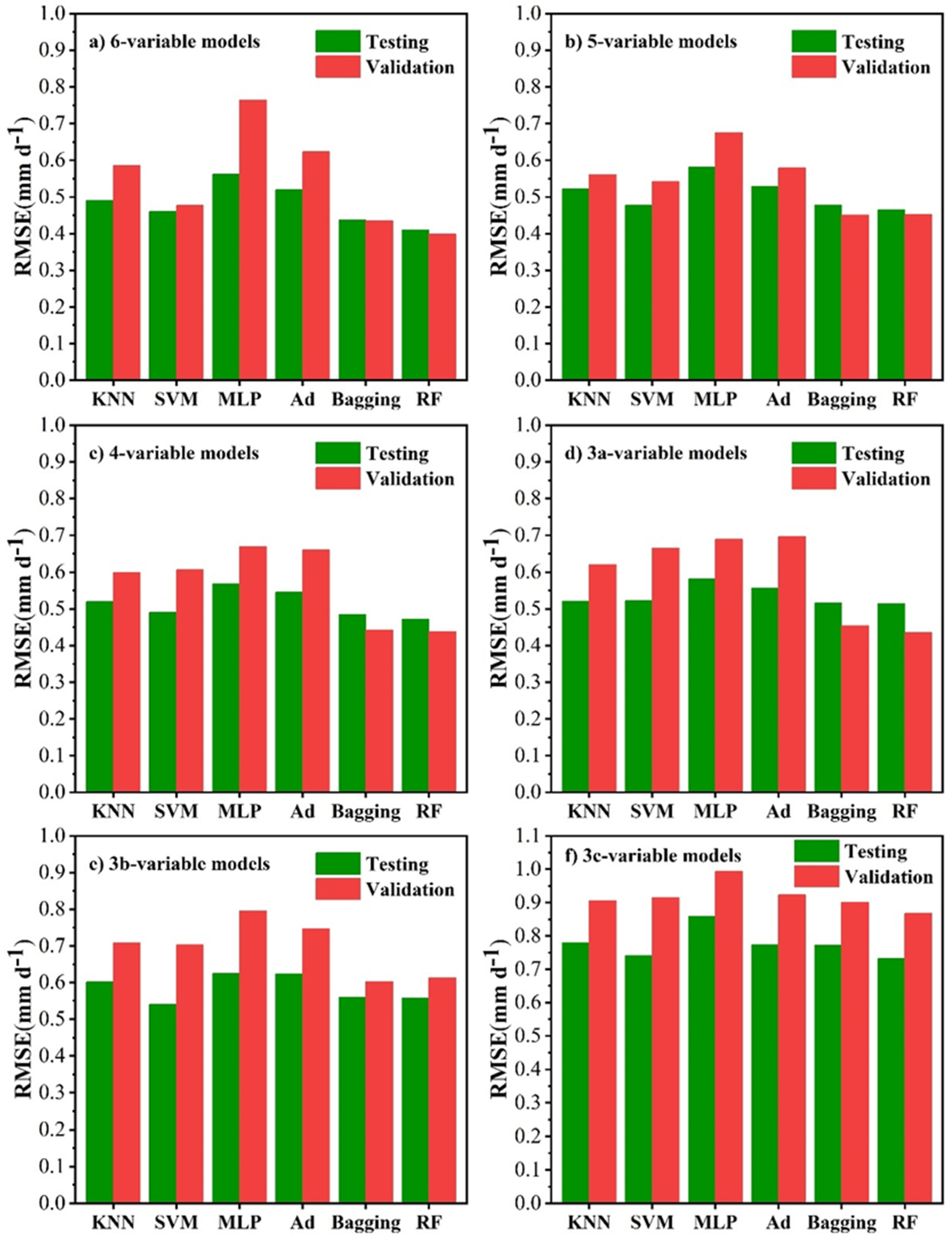
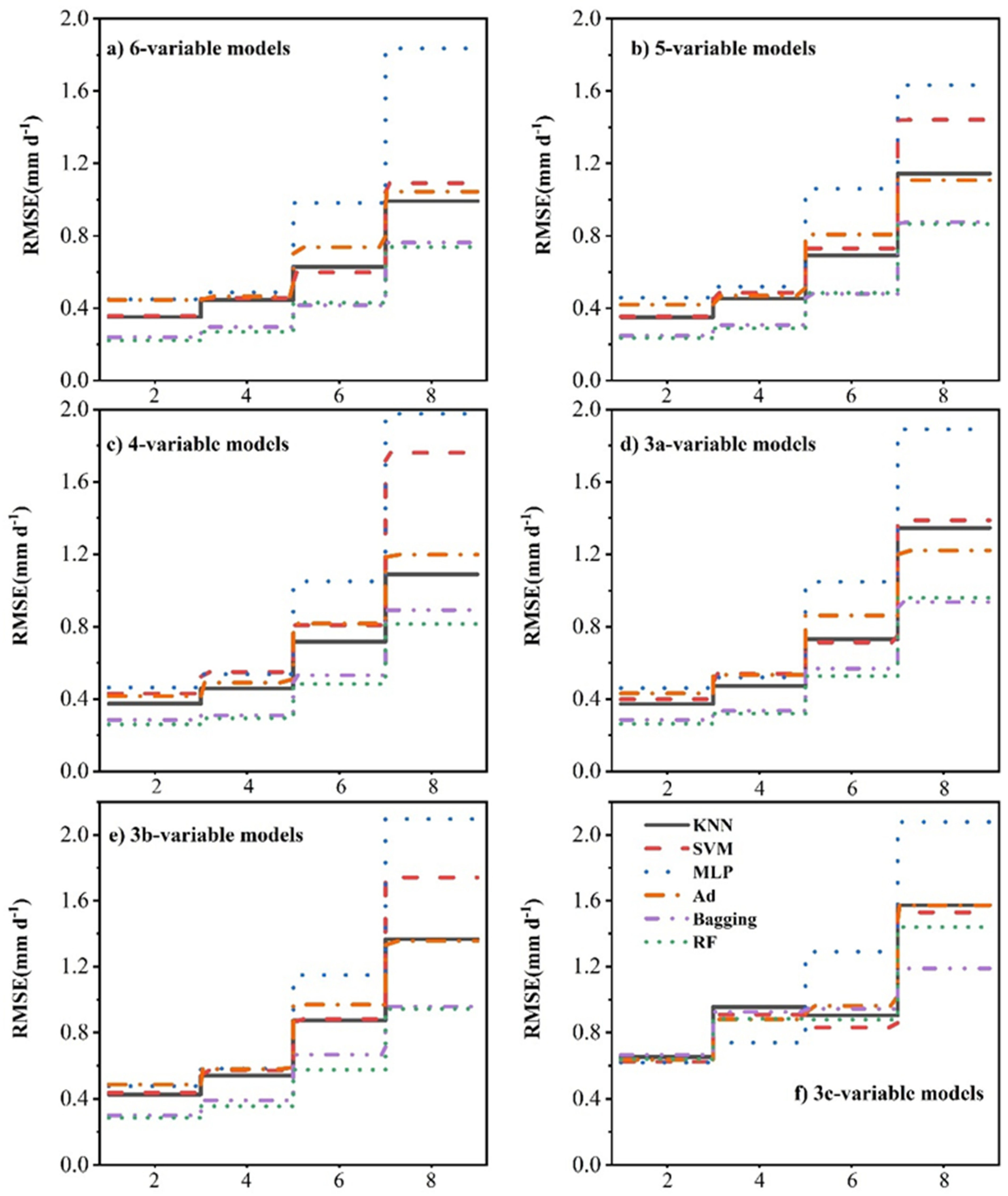
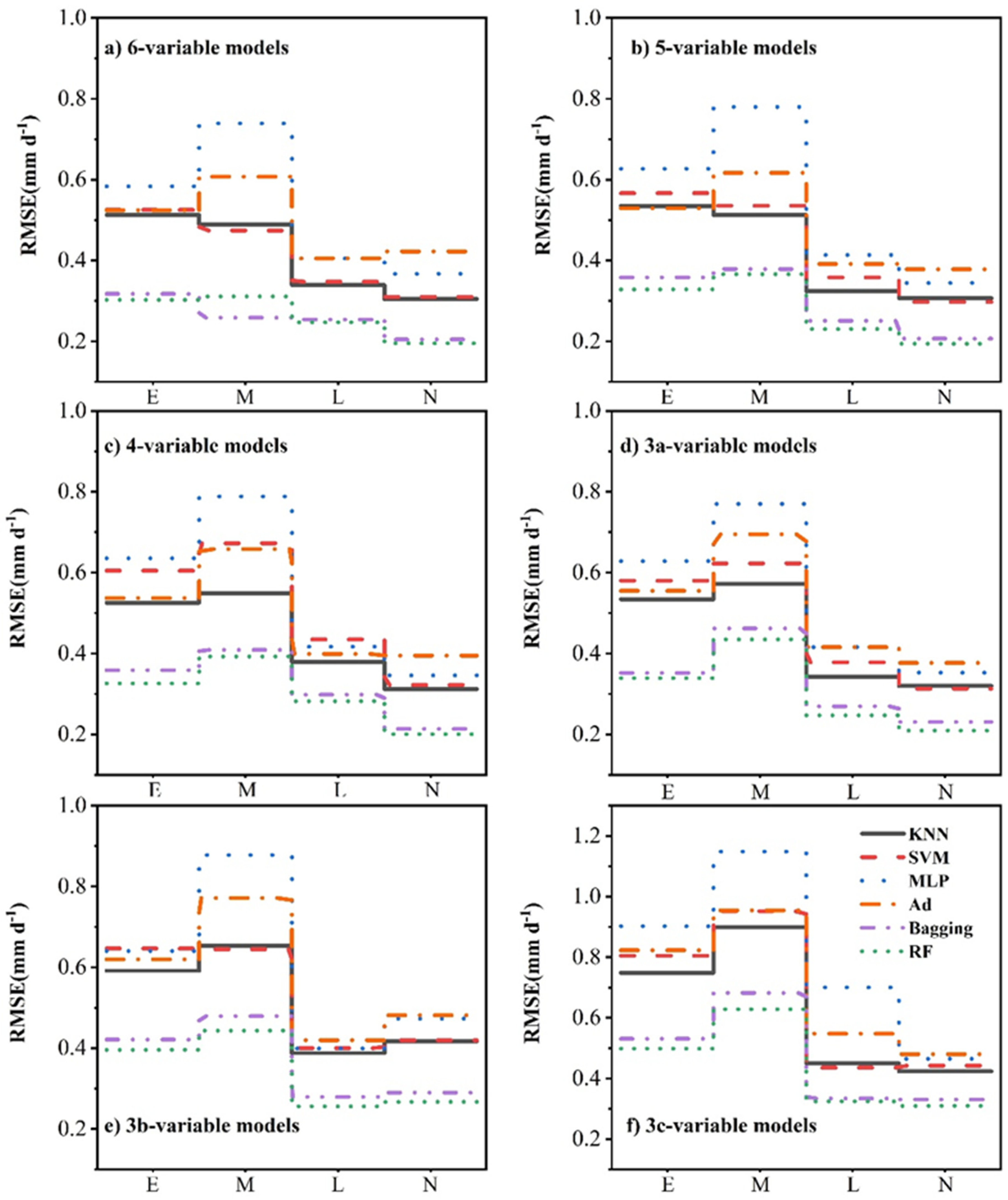
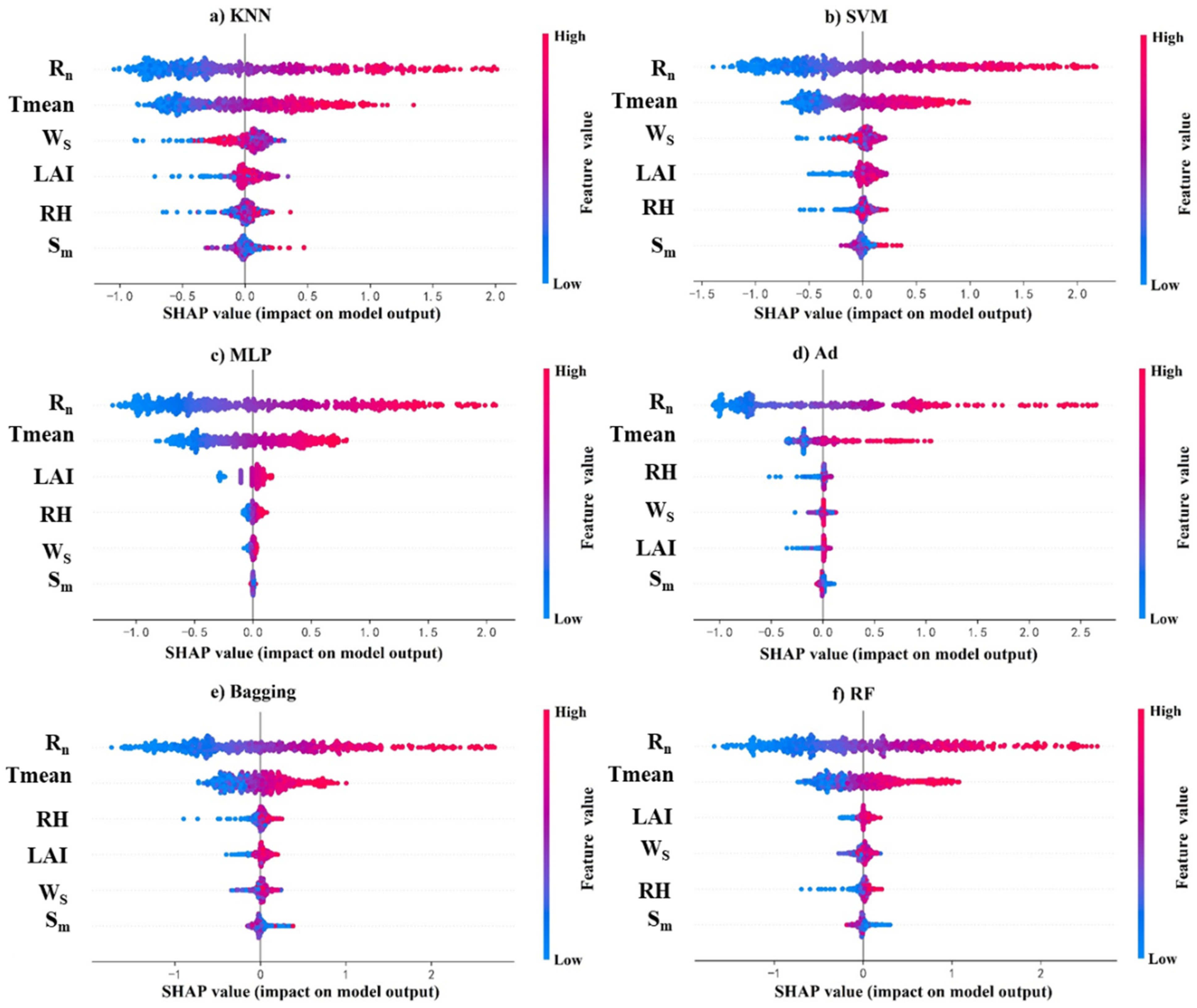
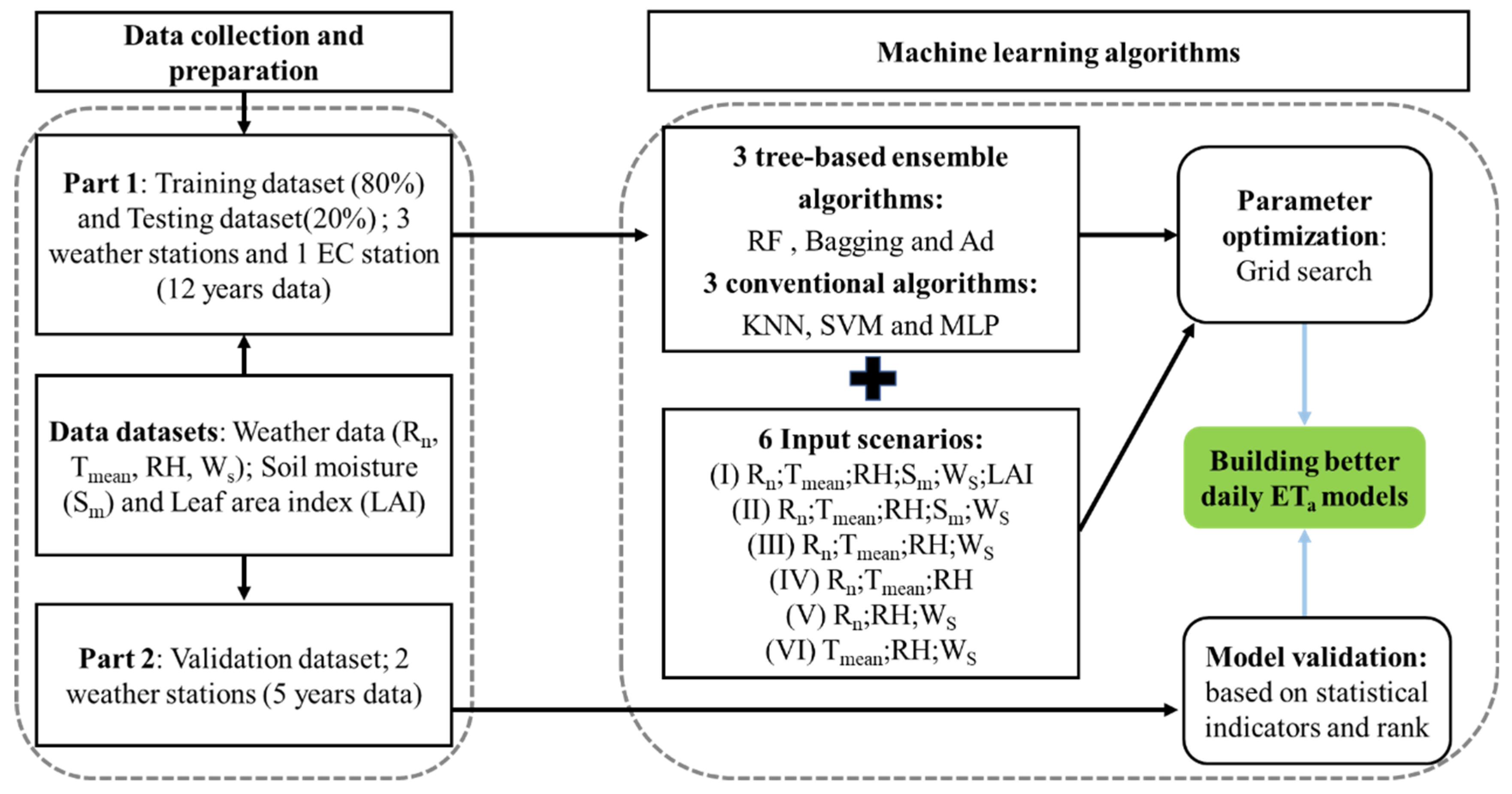
The tea plant (Camellia sinensis), as a major, global cash crop providing beverages, is facing major challenges from droughts and water shortages due to climate change. The accurate estimation of the actual evapotranspiration (ETa) of tea plants is essential for improving the water management and crop health of tea plantations. However, an accurate quantification of tea plantations’ ETa is lacking due to the complex and non-linear process that is difficult to measure and estimate accurately. Ensemble learning (EL) is a promising potential algorithm for accurate evapotranspiration prediction, which solves this complexity through the new field of machine learning. In this study, we investigated the potential of three EL algorithms—random forest (RF), bagging, and adaptive boosting (Ad)—for predicting the daily ETa of tea plants, which were then compared with the commonly used k-nearest neighbor (KNN), support vector machine (SVM), and multilayer perceptron (MLP) algorithms, and the experimental model. We used 36 estimation models with six scenarios from available meteorological and evapotranspiration data collected from tea plantations over a period of 12 years (2010–2021). The results show that the combination of Rn (net radiation), Tmean (mean air temperature), and RH (relative humidity) achieved reasonable precision in assessing the daily ETa of tea plantations in the absence of climatic datasets. Compared with other advanced models, the RF model demonstrated superior performance (root mean square error (RMSE): 0.41–0.56 mm day−1, mean absolute error (MAE): 0.32–0.42 mm day−1, R2: 0.84–0.91) in predicting the daily ETa of tea plantations, except in Scenario 6, followed by the bagging, SVM, KNN, Ad, and MLP algorithms. In addition, the RF and bagging models exhibited the highest steadiness with low RMSE values increasing (−15.3~+18.5%) in the validation phase over the testing phase. Considering the high prediction accuracy and stability of the studied models, the RF and bagging models can be recommended for estimating the daily ETa estimation of tea plantations. The importance analysis from the studied models demonstrated that the Rn and Tmean are the most critical influential variables that affect the observed and predicted daily ETa dynamics of tea plantations.
Keywords: evapotranspiration; tea plantations; machine learning; prediction models evapotranspiration; tea plantations; machine learning; prediction models