Article

Cold and Wet Mantle Transition Zone Beneath the Mediterranean Sea Revealed by the Electrical Image


College of Geo-Exploration Science and Technology, Jilin University, Changchun 130026, China
*
Author to whom correspondence should be addressed.
Appl. Sci. 2023, 13(2), 689; https://doi.org/10.3390/app13020689
Submission received: 5 December 2022 / Revised: 29 December 2022 / Accepted: 1 January 2023 / Published: 4 January 2023

Featured Application

Electrical structure of the mantle transition zone beneath the Mediterranean Sea is derived from long-term geomagnetic data through the application of electromagnetic induction. Using the conductivity model established according to laboratory measurements, the property of the mantle transition zone is analyzed.

Abstract

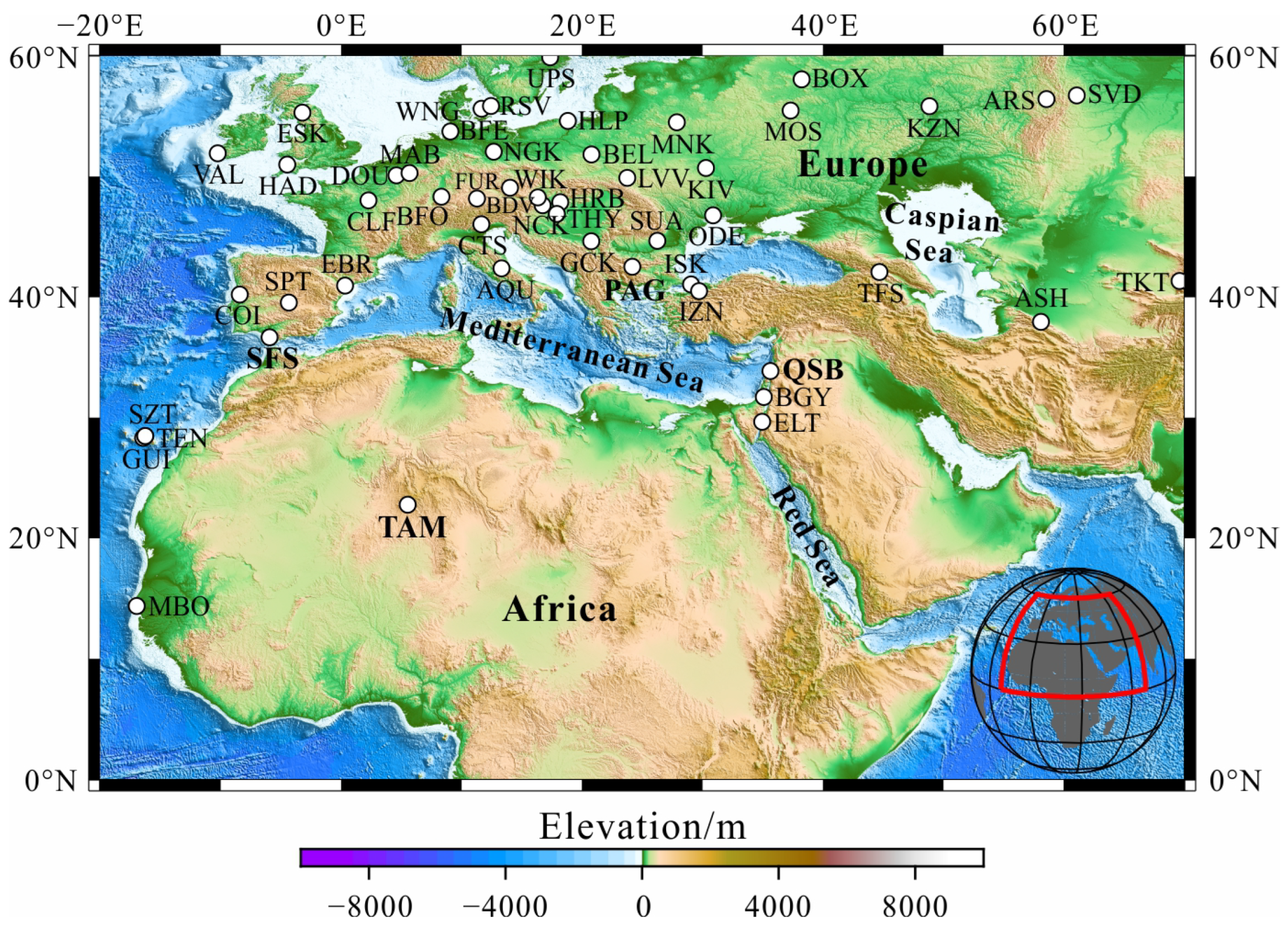
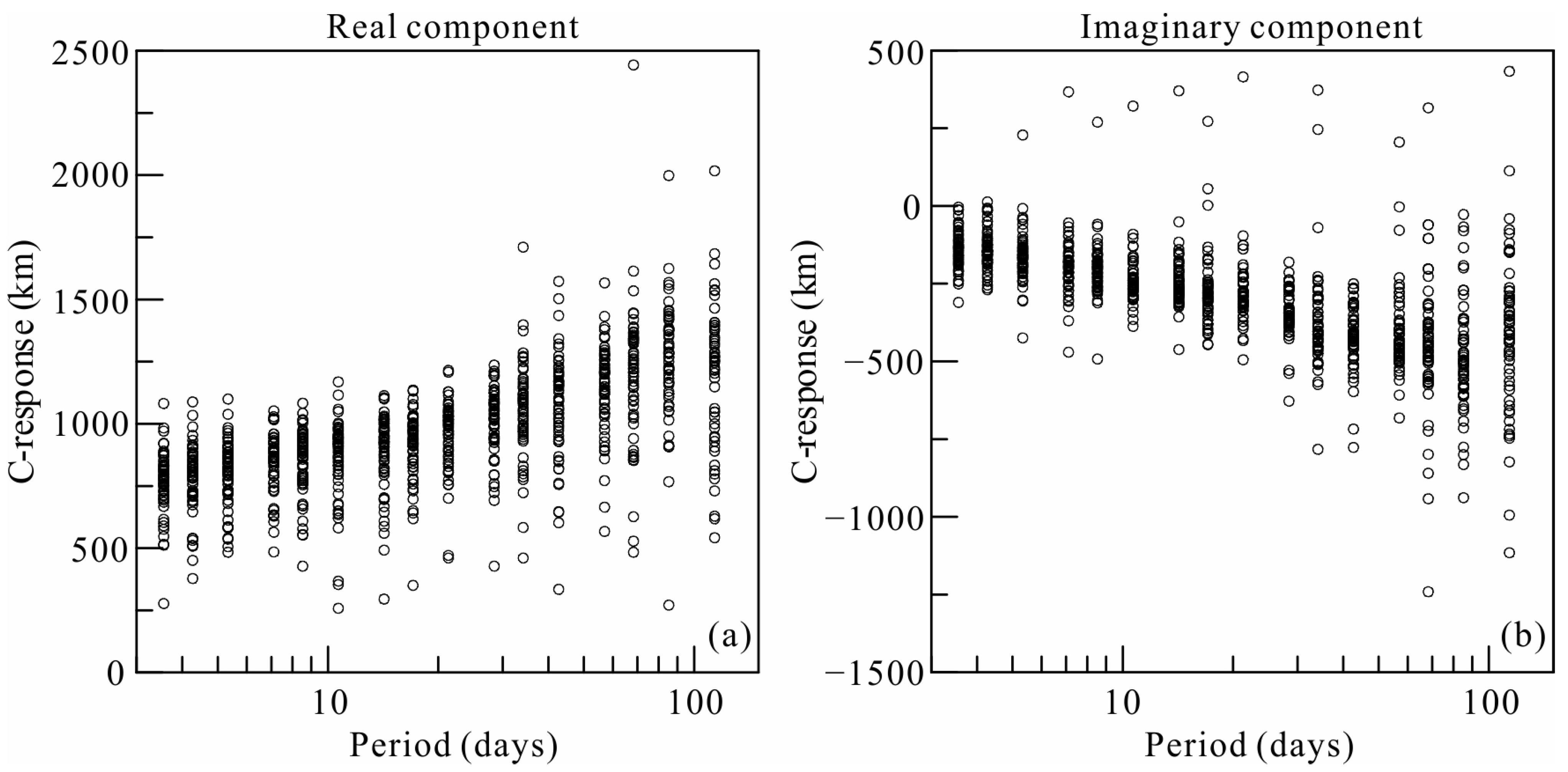
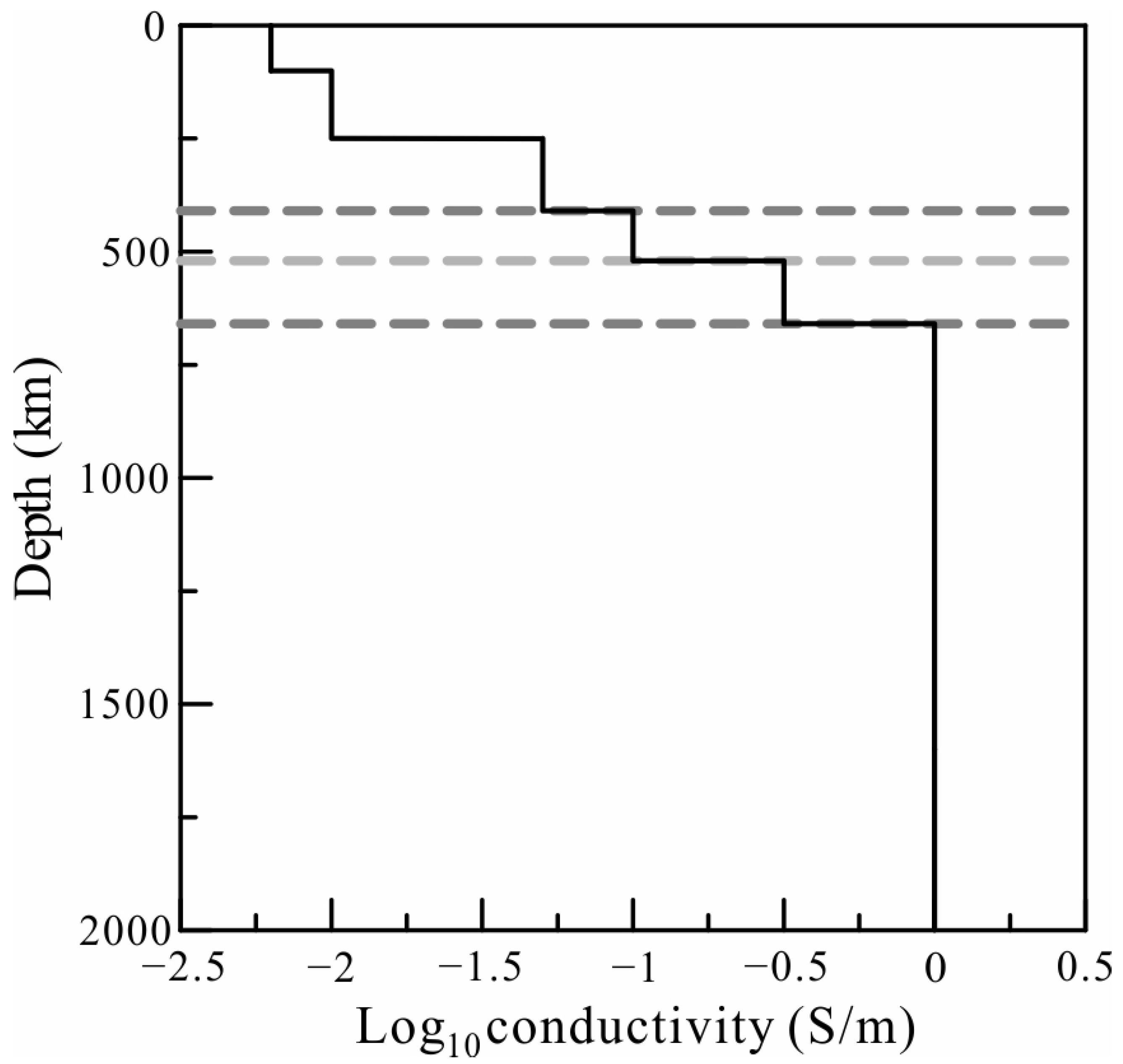
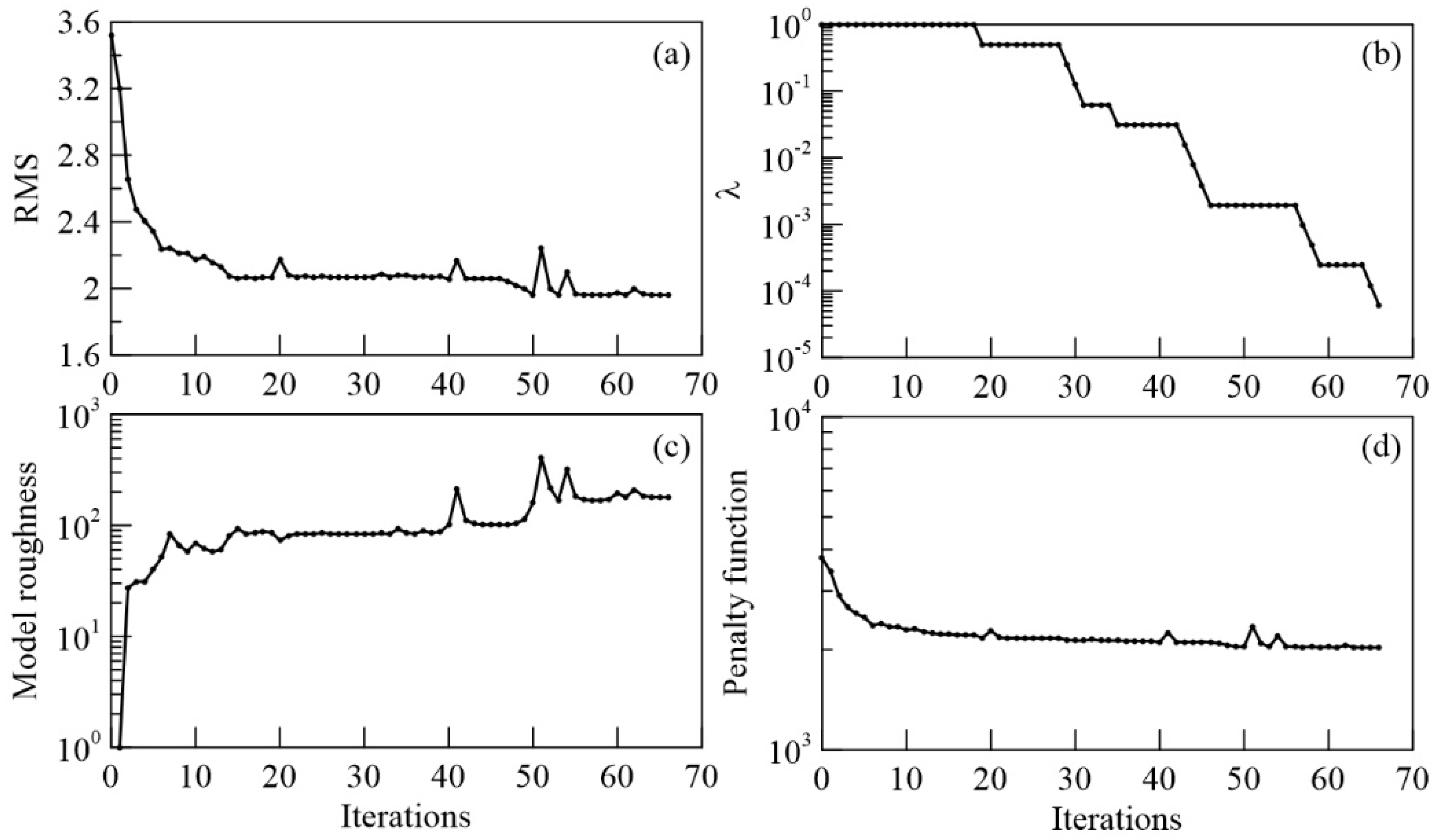
A three-dimensional electrical conductivity model of the mantle beneath North Africa and Southern Europe is obtained by geomagnetic depth sounding. C-responses are estimated from geomagnetic data observed at observatories in and around the region and converted to the electrical structure of the mantle transition zone. The limited-memory quasi-Newton method is chosen to minimize the nonlinear objective function of inversion, while the forward modeling relies on a staggered-grid finite difference method in the spherical coordinate system. The data misfit term of the inversion function is measured using the L1-norm in order to suppress the response instability caused by the significant noise contained in the observed data. In order to adequately correct the ocean effect in observatories near the coast, a fixed shell comprised of ocean and land is incorporated in inversion. A banded zone with reduced conductivity is present in the three-dimensional model, primarily seen in the lower mantle transition zone and lower mantle beneath the Mediterranean Sea. Combining laboratory-measured conductivity models, we propose that subducted slabs causing reduced temperature and a water reservoir in the mantle transition zone should be responsible for the observed electrical model.
Keywords: electrical conductivity; slab subduction; electromagnetic induction; mantle transition zone electrical conductivity; slab subduction; electromagnetic induction; mantle transition zone