Article

DialogCIN: Contextual Inference Networks for Emotional Dialogue Generation

1
School of Information Science and Engineering, Xinjiang University, Urumqi 830017, China
2
Xinjiang Key Laboratory of Multilingual Information Technology, Xinjiang University, Urumqi 830017, China
*
Author to whom correspondence should be addressed.
Appl. Sci. 2023, 13(15), 8629; https://doi.org/10.3390/app13158629
Submission received: 25 May 2023 / Revised: 23 July 2023 / Accepted: 24 July 2023 / Published: 26 July 2023
(This article belongs to the Section Computing and Artificial Intelligence)

Abstract

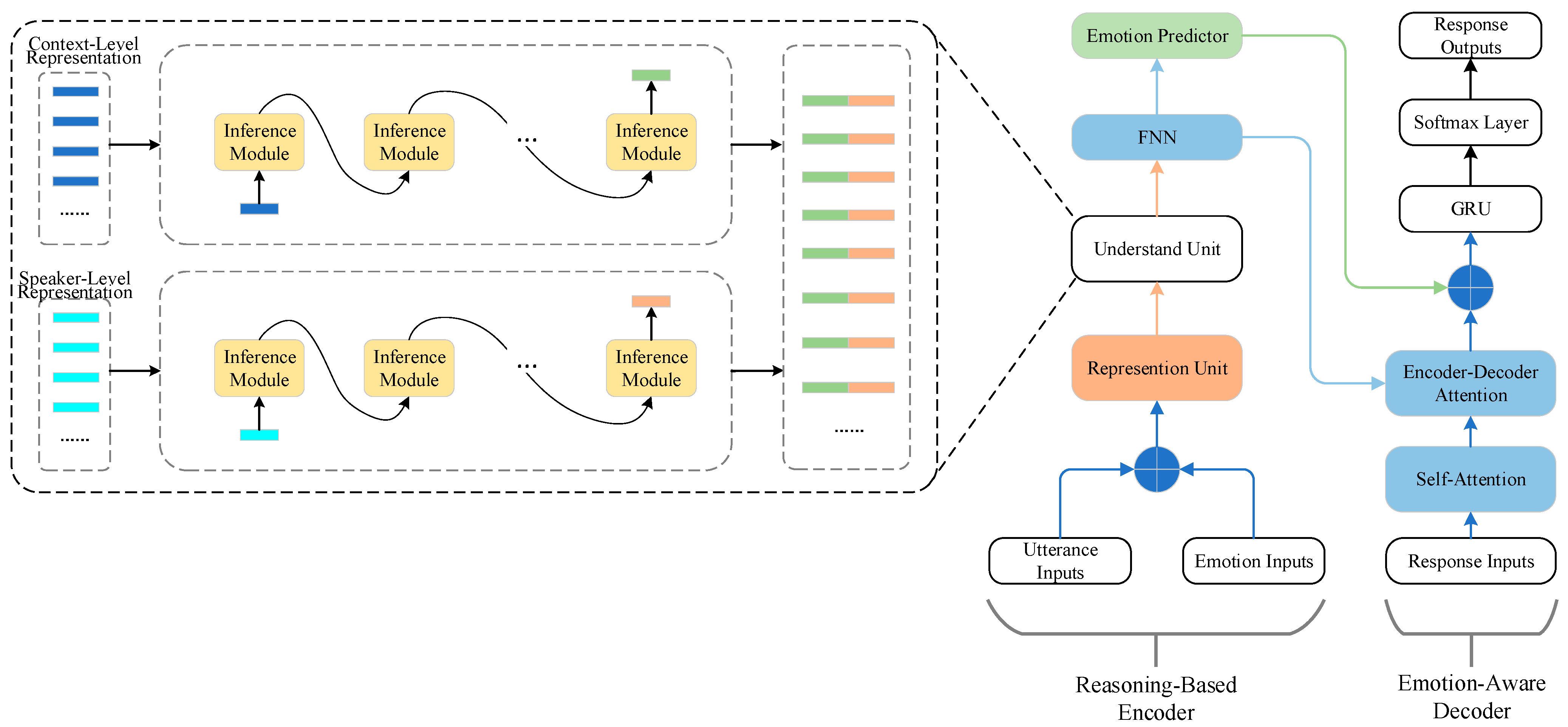
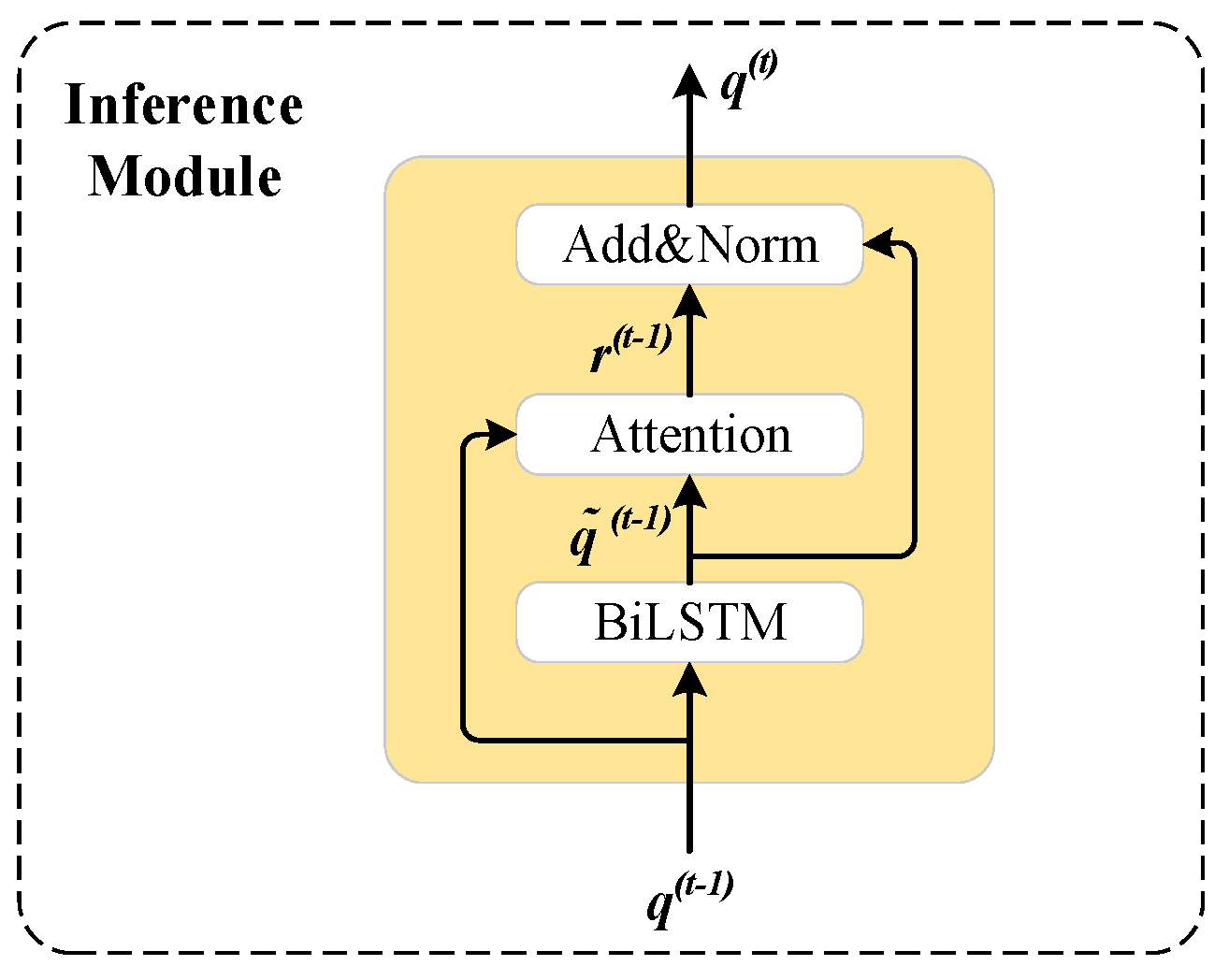
In recent years, emotional dialogue generation garnered widespread attention and made significant progress in the English-speaking domain. However, research on emotional dialogue generation in Chinese still faces two critical issues: firstly, the lack of high-quality datasets with emotional characteristics makes it difficult for models to fully utilize emotional information for emotional intervention; secondly, there is a lack of effective neural network models for extracting and integrating inherent logical information in the context to fully understand dialogues. To address these issues, this paper presented a Chinese dialogue dataset called LifeDialog, which was annotated with sentiment features. Additionally, it proposed DialogCIN, a contextual inference network that aims to understand dialogues based on a cognitive perspective. Firstly, the proposed model acquired contextual representations at both the global and speaker levels. Secondly, different levels of contextual vectors were separately inputted into the understanding unit, which consists of multiple inference modules. These modules iteratively performed reasoning and retrieval to delve into the inherent logical information of the dialogue context. Subsequently, appropriate emotions were predicted for feedback. Finally, an emotion-aware decoder was employed to generate a response. Experimental results on our manually annotated dataset, LifeDialog, demonstrated that DialogCIN can effectively simulate human cognitive inference processes, enabling a better understanding of dialogue context and improving the quality of generated dialogues.
Keywords: emotional dialogue; response generation; multi-turn dialogues; inference module emotional dialogue; response generation; multi-turn dialogues; inference module