Article

Determination of the Reverberation Time Using the Measurement of Sound Decay Curves

Faculty of Civil Engineering, Silesian University of Technology, 44-100 Gliwice, Poland
Appl. Sci. 2023, 13(15), 8607; https://doi.org/10.3390/app13158607
Submission received: 24 June 2023 / Revised: 20 July 2023 / Accepted: 25 July 2023 / Published: 26 July 2023
(This article belongs to the Special Issue New Frontiers of Acoustic Modeling and Optimization)

Featured Application

Application for reverberation time measurements. Method of estimating reverberation time and measurement uncertainty.

Abstract

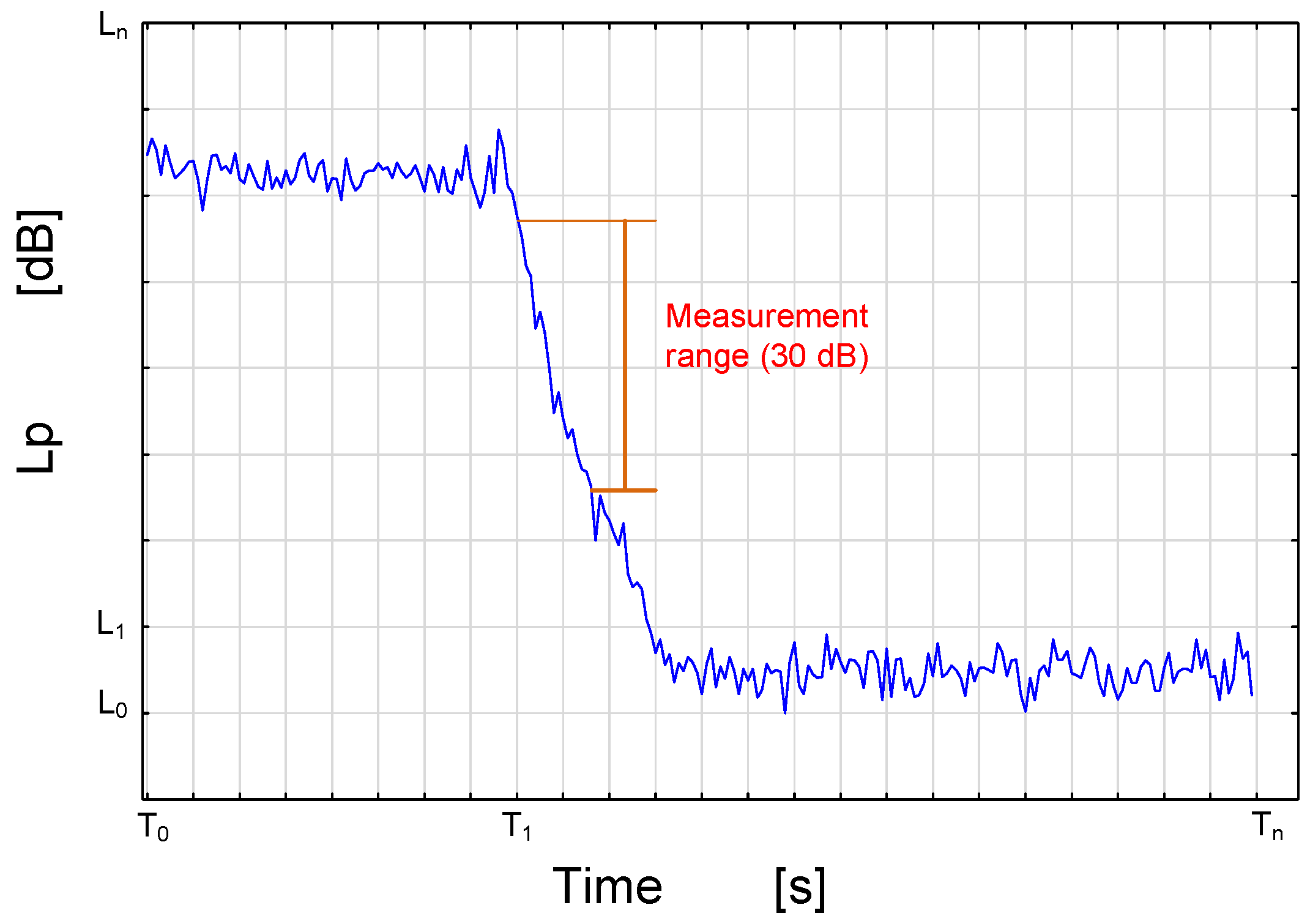
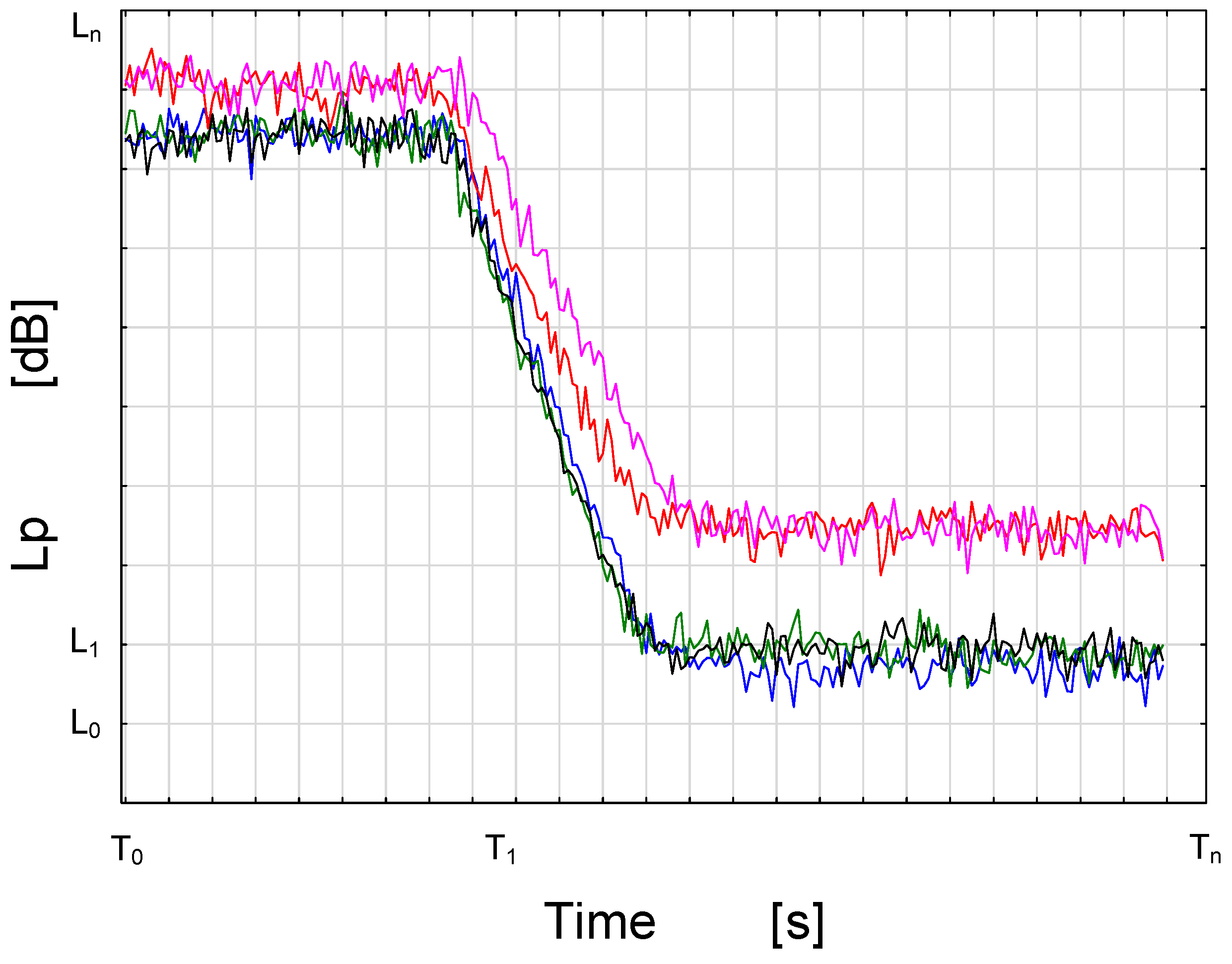
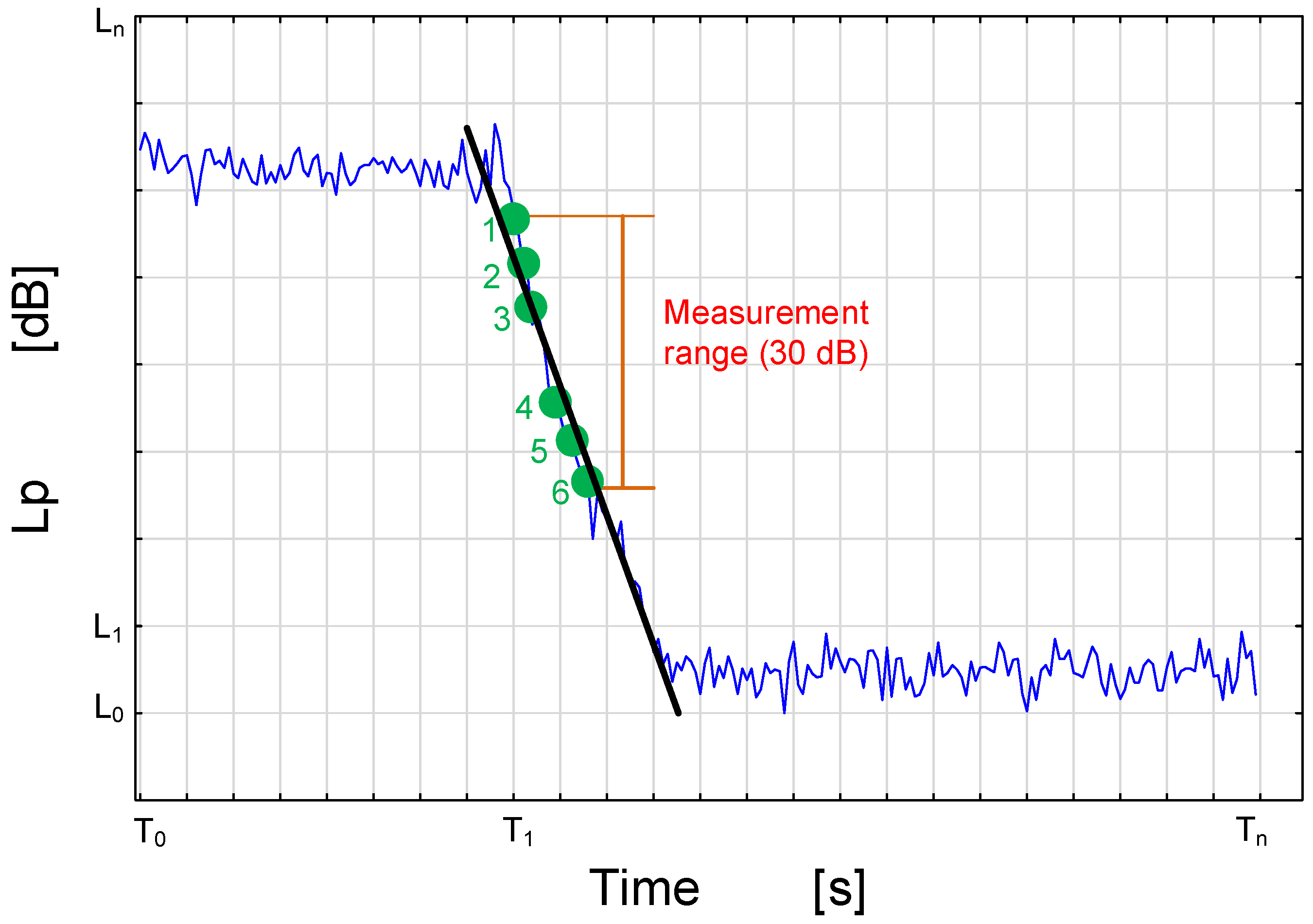
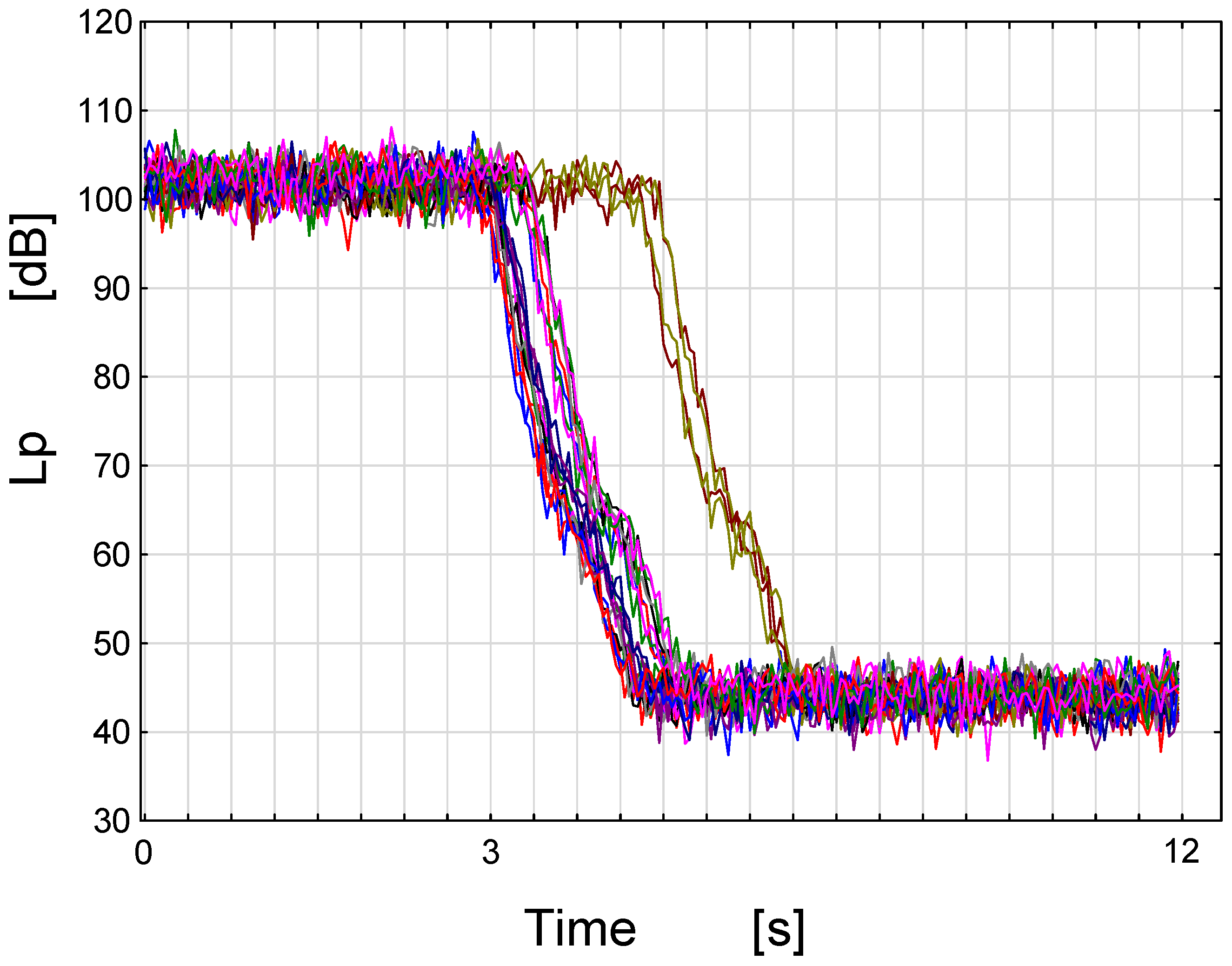
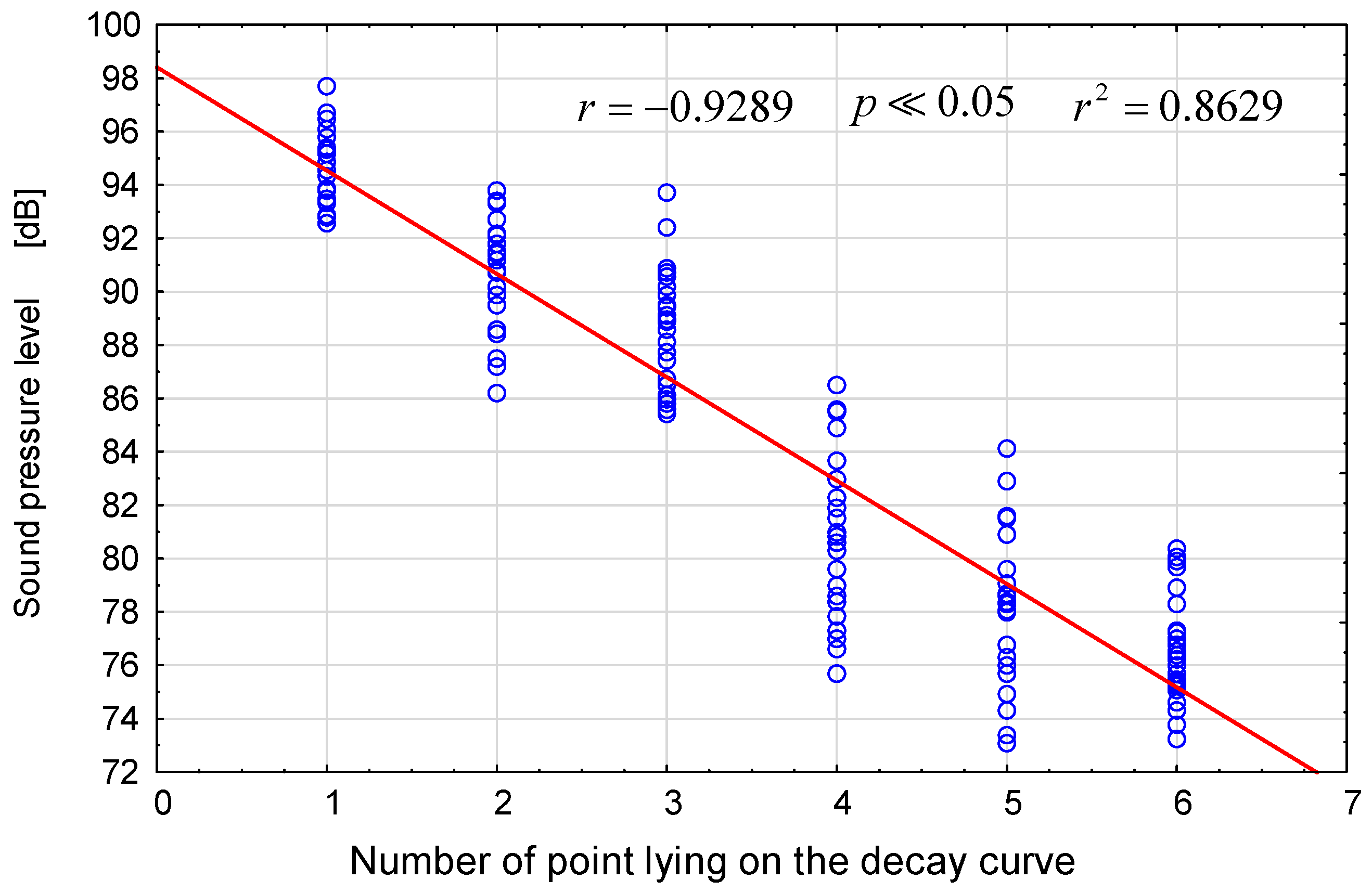
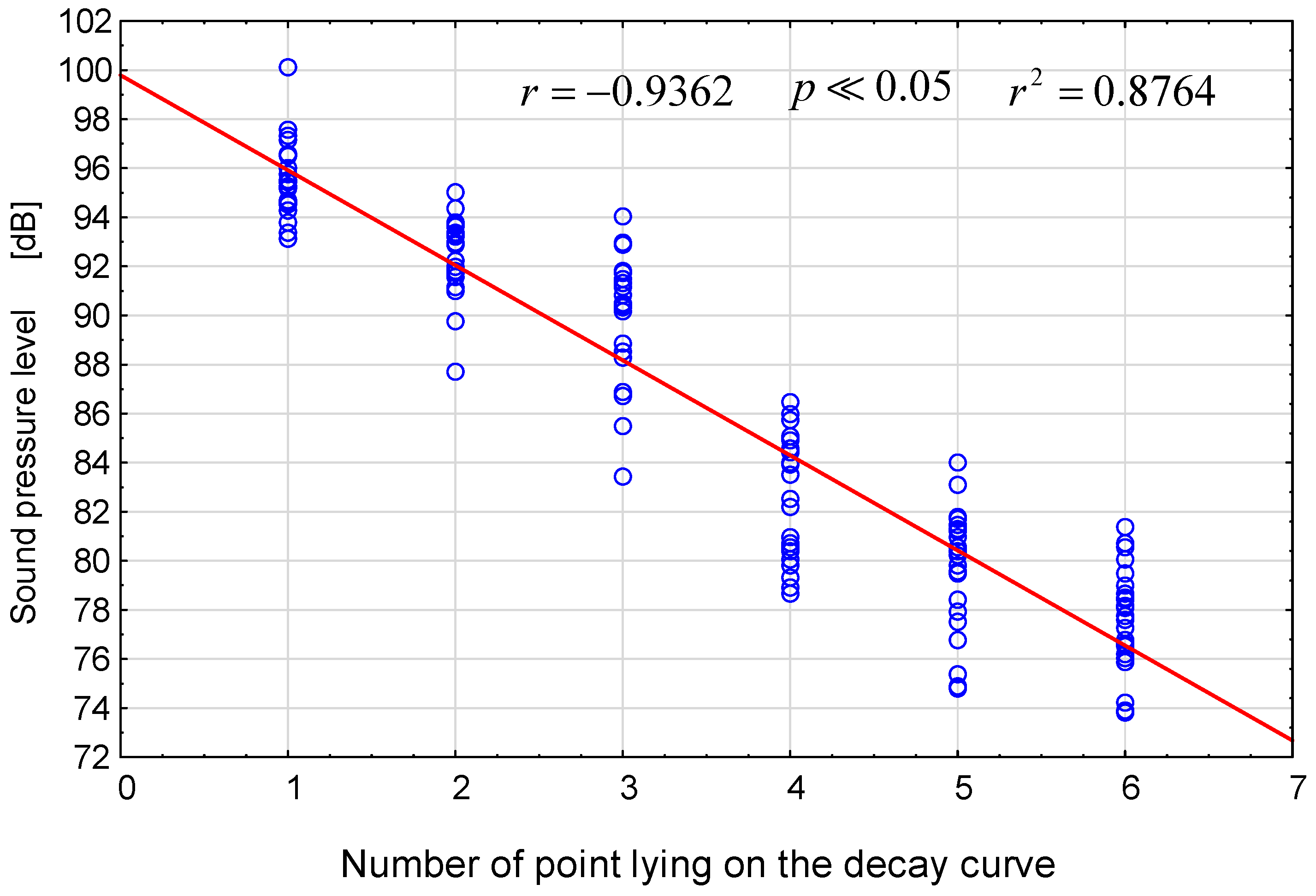
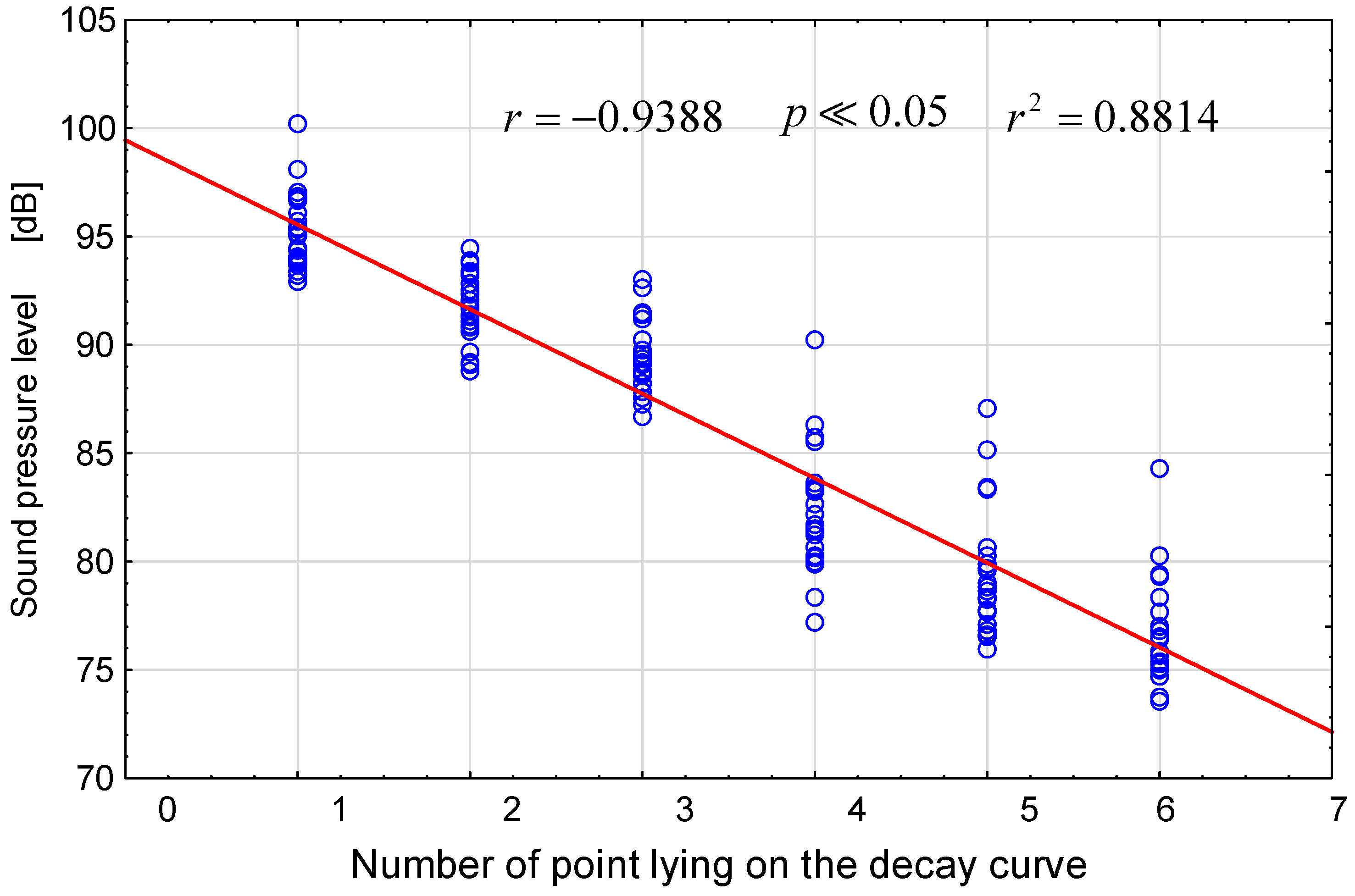
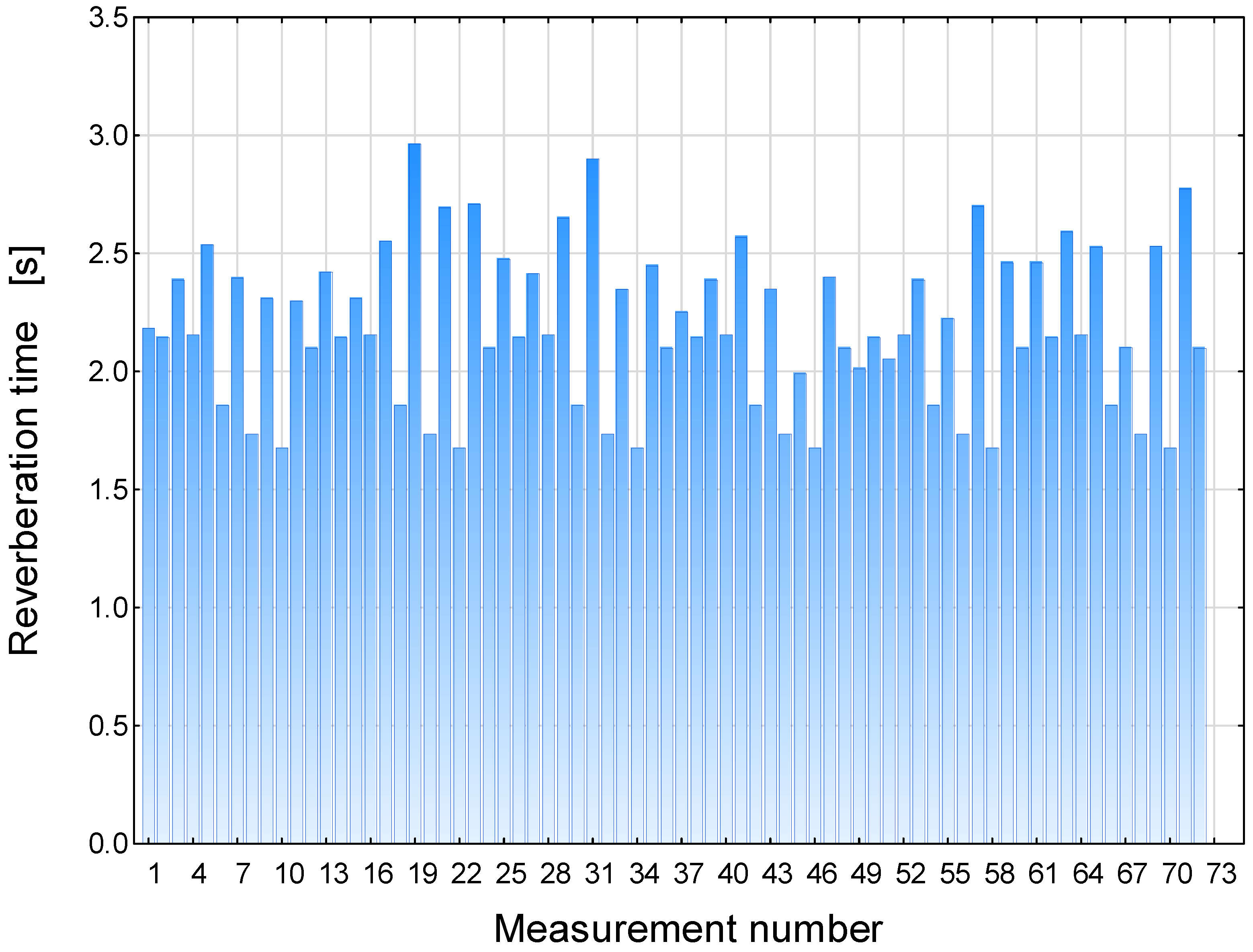
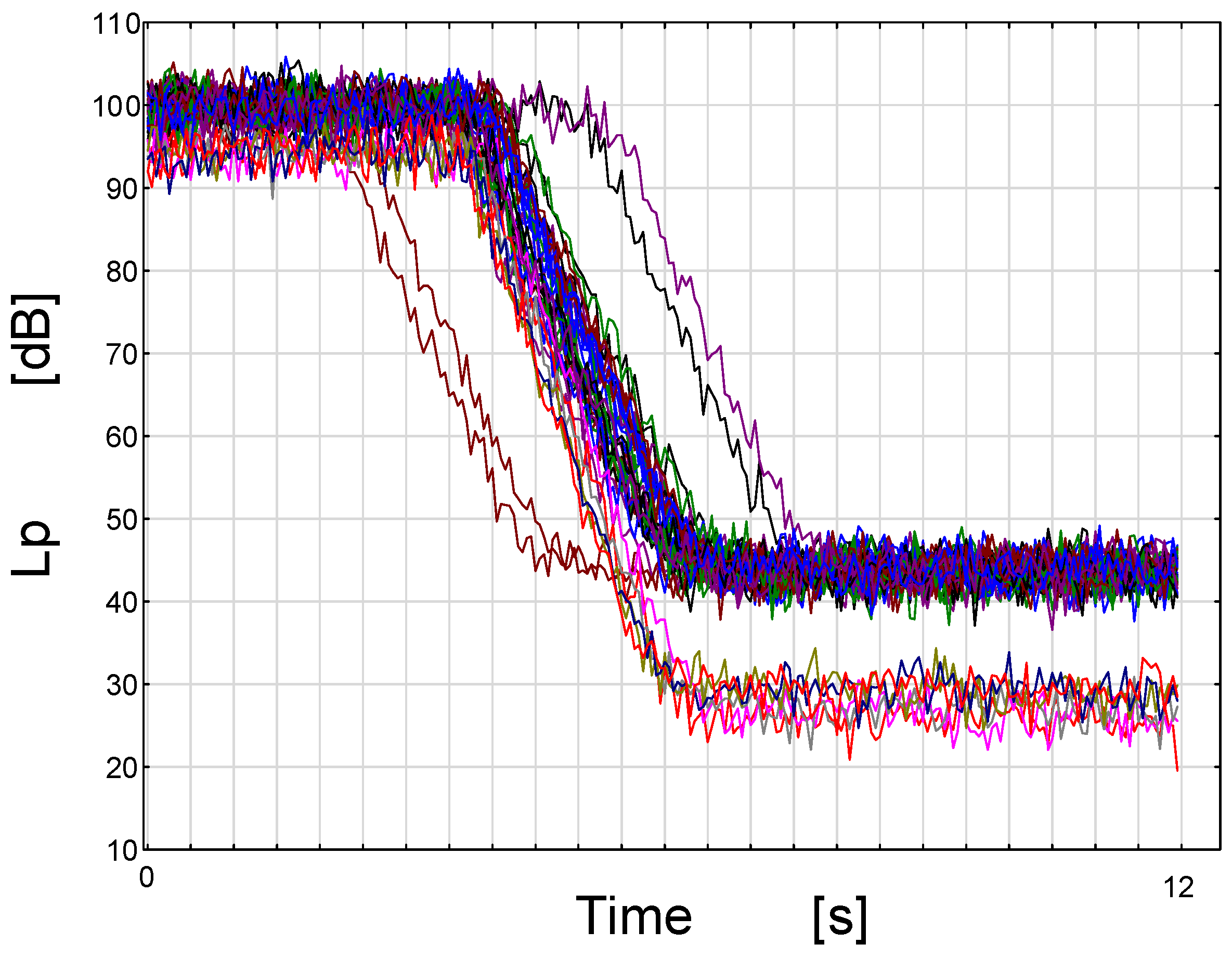
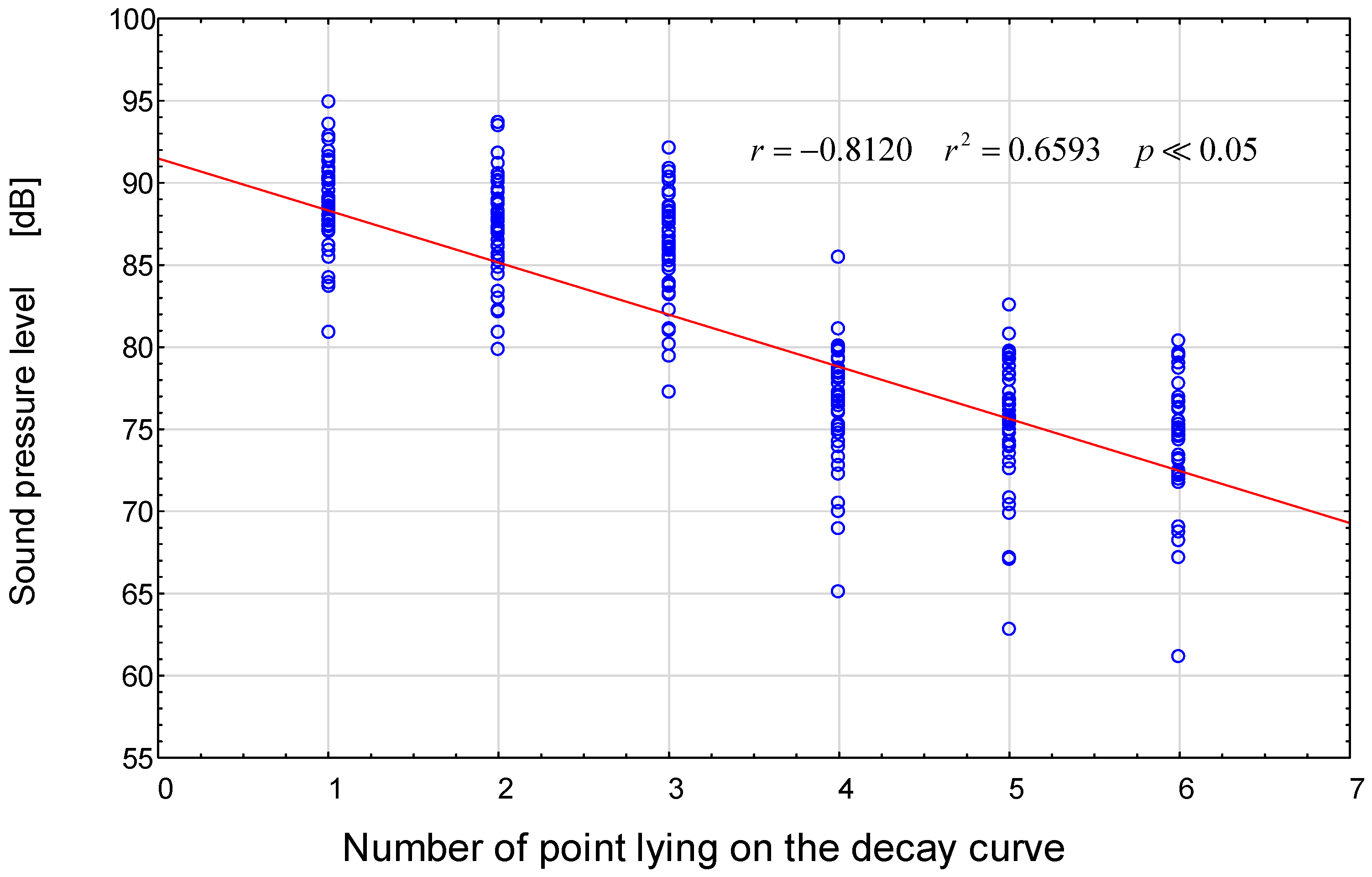
In the measurements of reverberation time, measurement methods of different accuracy are used depending on the room. For ordinary rooms, the measurements are made using the interrupted noise method, which consists of determining the decay curve after switching off the excitation source of the room. The measurements are made for different source arrangements and different receiver arrangements, and at least three repetitions are made at each of such points. Due to such a realization of measurements, several dozen different reverberation curves are obtained, from which the reverberation time is read out. This article demonstrates the differences between reverberation time readouts, depending on the averaging method of reverberation curves. The first analyzed method is based on reading out the reverberation times for each obtained curve and on averaging the results obtained in this way. The second analyzed method involves averaging the reverberation curves using the linear regression method and then determining a simple regression on the basis of which the reverberation time is read out. For each method, different average reverberation time values and different standard uncertainties were obtained. The difference for the 500 Hz frequency band in a teaching room for the measurement uncertainty is 0.28 s. The results obtained in the article are extremely important when designing interiors intended for the reception of verbal sound, in particular teaching rooms.
Keywords: room acoustics; reverberation time measurement; decay curve; measurement uncertainty room acoustics; reverberation time measurement; decay curve; measurement uncertainty