Article

Best Relay Selection Strategy in Cooperative Spectrum Sharing Framework with Mobile-Based End User

by
Lama N. Ibrahem
1,†,
Mamoun F. Al-Mistarihi
1,†,
Mahmoud A. Khodeir
1,*,†,
Moawiah Alhulayil
2,3,*,† and
Khalid A. Darabkh
4,†
1
Department of Electrical Engineering, Faculty of Engineering, Jordan University of Science and Technology, Irbid 22110, Jordan
2
Department of Electrical Engineering, Faculty of Engineering and Technology, Applied Science Private University, Amman 11937, Jordan
3
MEU Research Unit, Middle East University, Amman 11831, Jordan
4
Department of Computer Engineering, School of Engineering, The University of Jordan, Amman 11942, Jordan
*
Authors to whom correspondence should be addressed.
These authors contributed equally to this work.
Appl. Sci. 2023, 13(14), 8127; https://doi.org/10.3390/app13148127
Submission received: 11 June 2023 / Revised: 29 June 2023 / Accepted: 5 July 2023 / Published: 12 July 2023
(This article belongs to the Special Issue New Advances in Cognitive Radio Networks)

Abstract

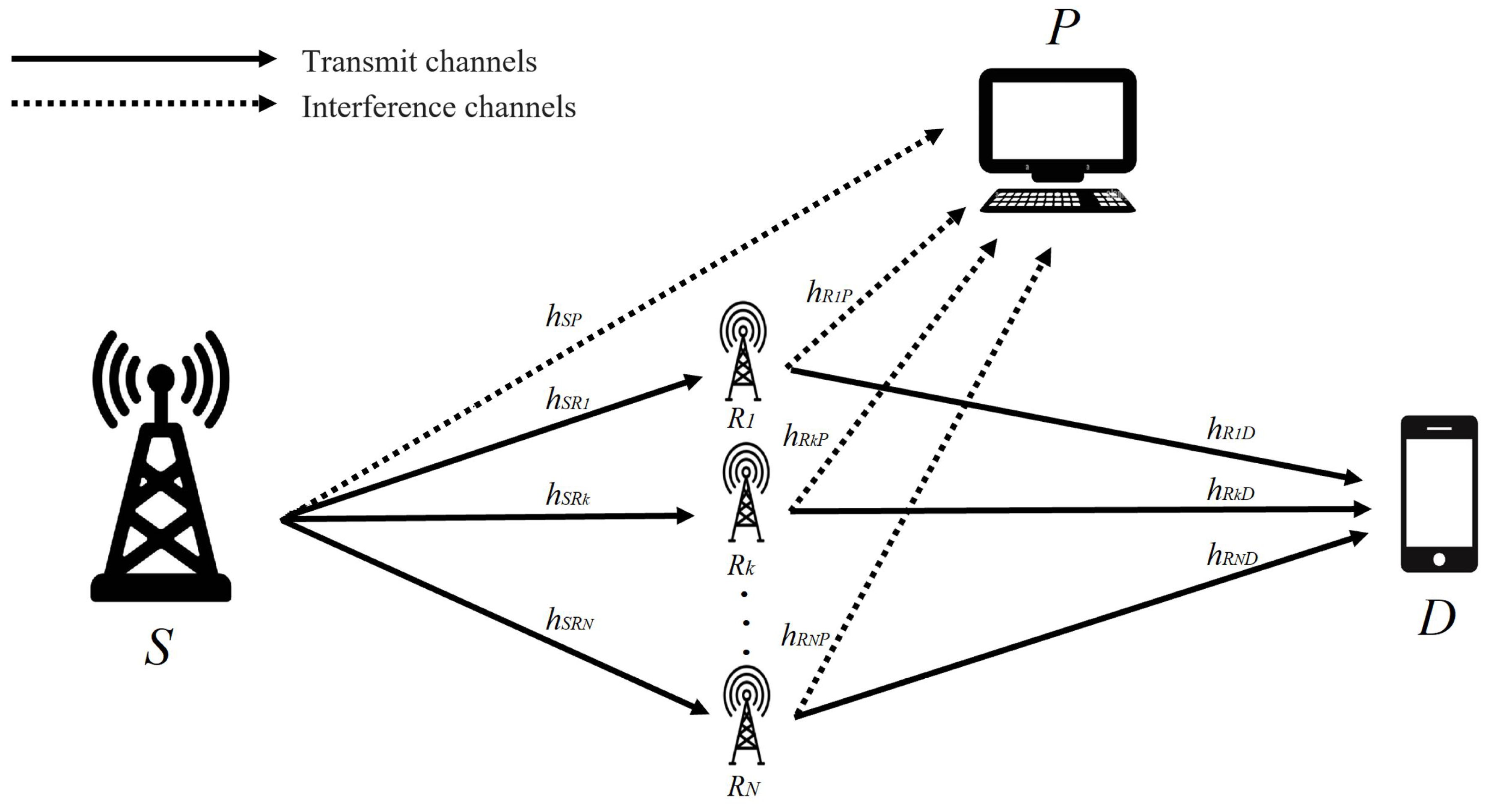
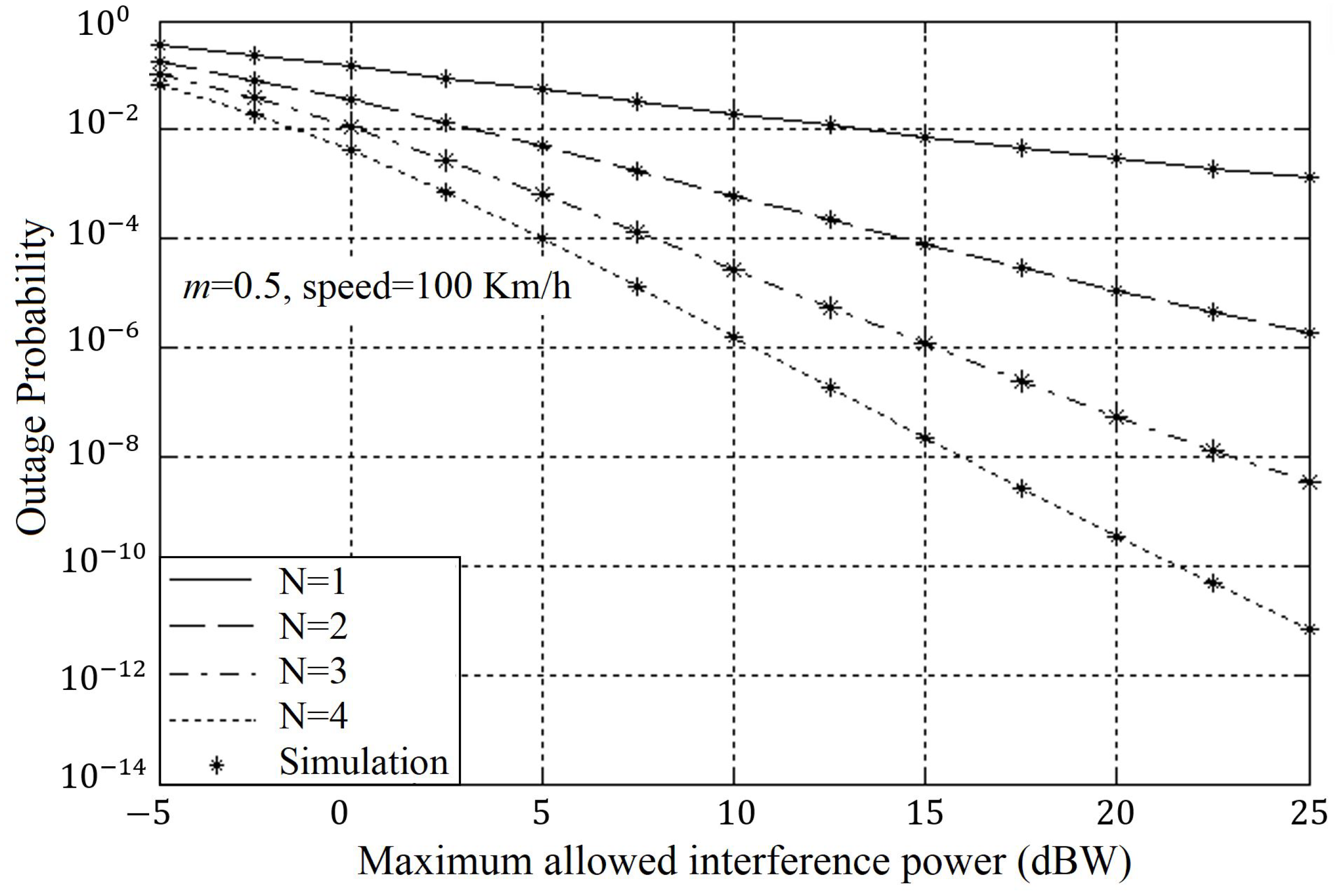
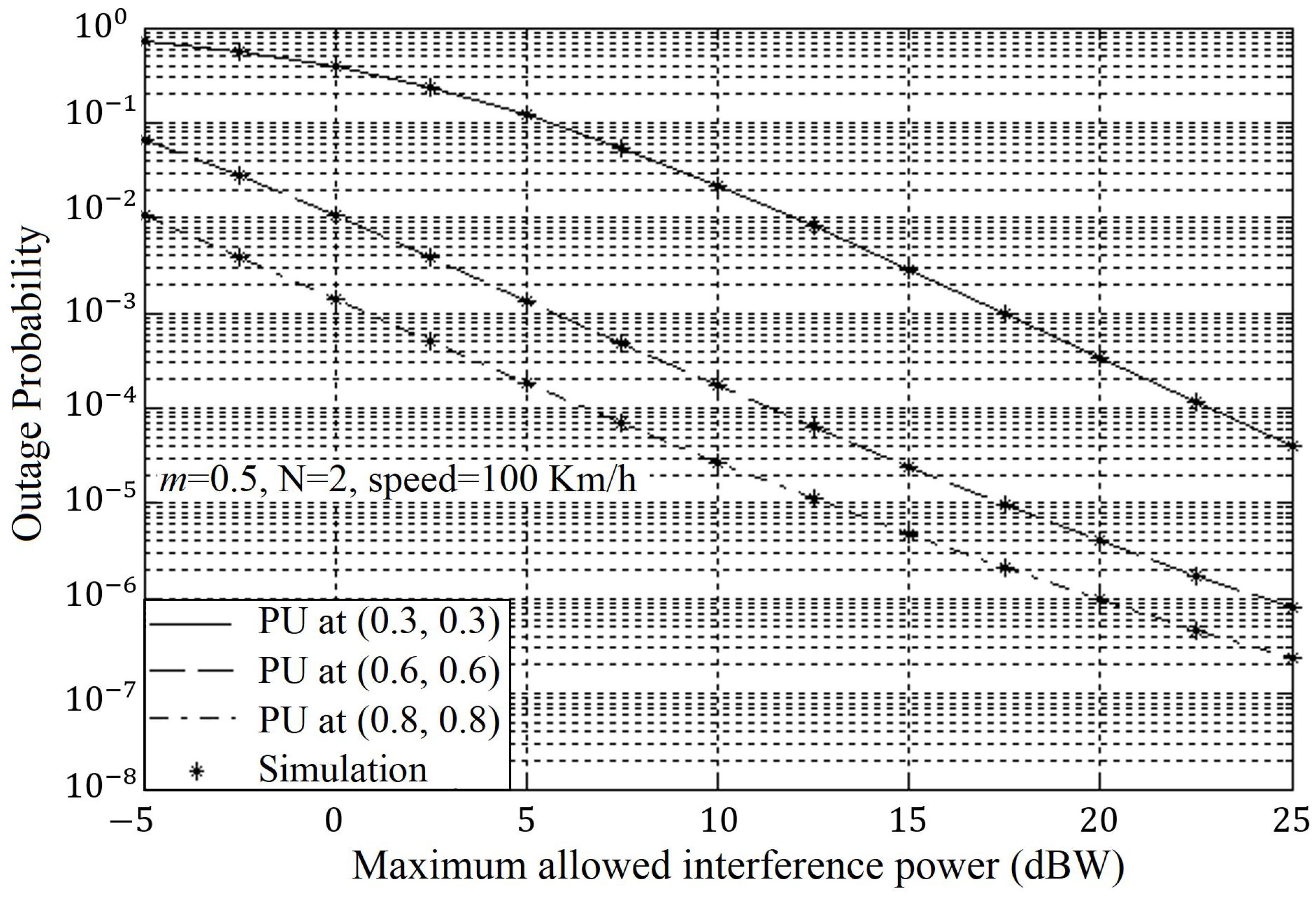
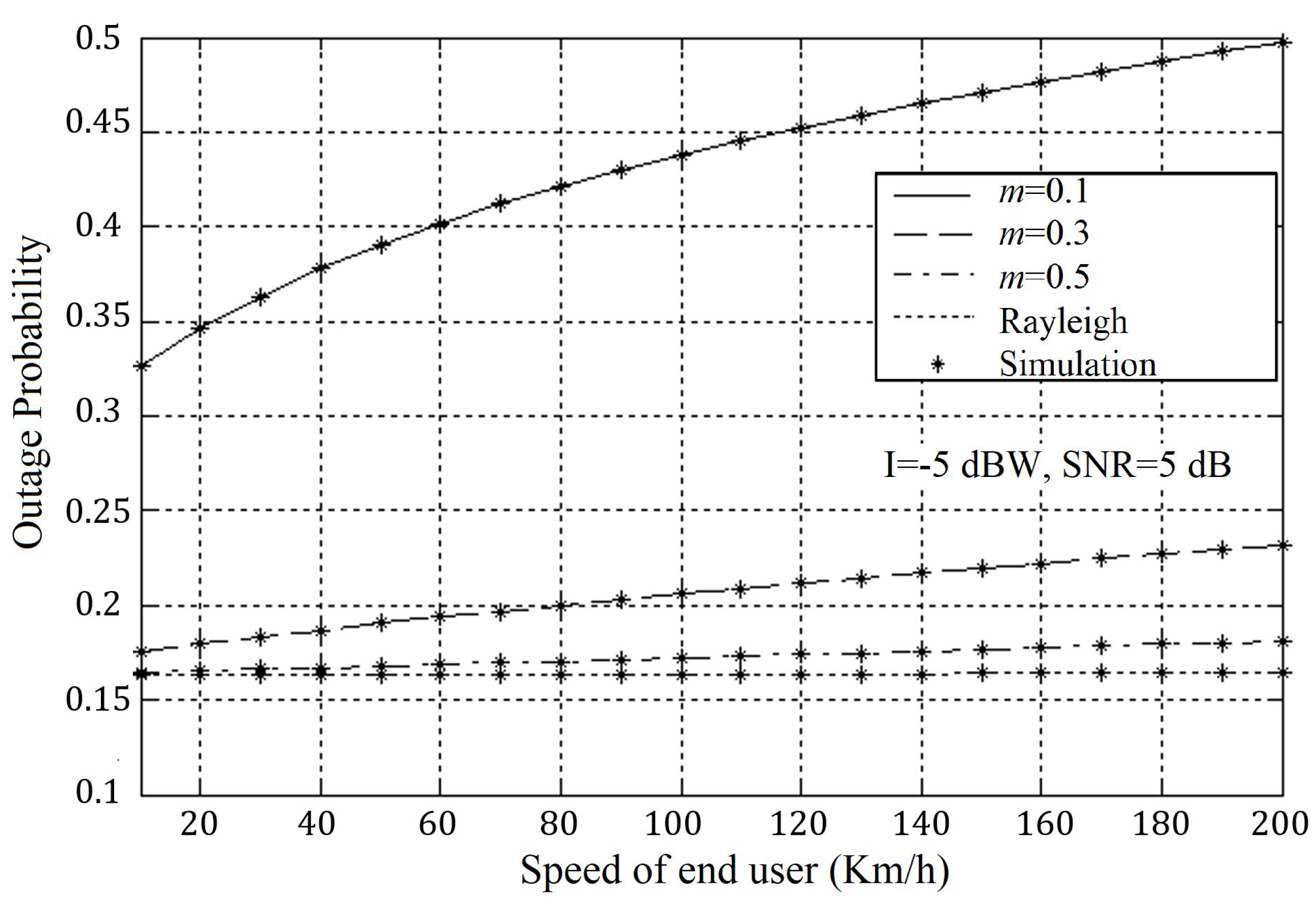
In this work, a cognitive relay network (CRN) with interference constraint from the primary user (PU) with a mobile end user is studied. The proposed system model employs a half-duplex transmission between a single PU and a single secondary user (SU). In addition, an amplify and forward (AF) relaying technique is employed between the SU source and SU destination. In this context, the mobile end user (SU destination) is assumed to move at high vehicular speeds, whereas other nodes (SU Source, SU relays and PU) are assumed to be stationary. The proposed scheme dynamically determines the best relay for transmission based on the highest signal-to-noise (SNR) ratio by deploying selection combiner at the SU destination, thereby achieving diversity. All channels connected with the stationary nodes are modelled using Rayleigh distribution, whereas all other links connected with the mobile end user are modelled using Nakagami-m fading distribution (m<1). The outage probabilities (OPs) are obtained considering several scenarios and Monte Carlo simulation is used to verify the numerical results. The obtained results show that a variety of factors, including the number of SU relays, the severity of the fading channels, the position of the PU, the fading model, and the mobile end user speed, might influence the CRN’s performance.
Keywords: cognitive networks; mobile end user; outage probability; primary user; secondary user; selection combining cognitive networks; mobile end user; outage probability; primary user; secondary user; selection combining