You are currently viewing a new version of our website. To view the old version click .
Applied Sciences
  • Editor’s Choice
  • Article
  • Open Access

9 May 2023

Evaluation of Fire Resistance of Polymer Composites with Natural Reinforcement as Safe Construction Materials for Small Vessels

,
,
,
,
,
and
1
Faculty of Marine Engineering, Maritime University of Szczecin, 70-500 Szczecin, Poland
2
Faculty of Mechatronics and Electrical Engineering, Maritime University of Szczecin, 70-500 Szczecin, Poland
3
Faculty of Maritime Technology and Transport, West Pomeranian University of Technology in Szczecin, al. Piastów 41, 71-065 Szczecin, Poland
4
A.P. Moller-Maersk, Esplanaden 50, 1098 Copenhagen, Denmark
This article belongs to the Special Issue Applied Maritime Engineering and Transportation Problems 2022

Abstract

In small vessels, for example, yachts, polymer–glass composites are mainly used for their construction. However, the disposal and/or recycling of composite units is very difficult. It is advisable to solve the problem of disposing of post-consumer items as soon as possible. Therefore, alternative, environmentally friendly, but also durable and safe construction materials are being sought. Such materials can be polymer–natural composites, which can be used as a potential material (alternative to polymer–glass composites) for the construction of small vessels. However, its performance properties should be investigated as new construction materials. The possibility of using polymer–hemp composites was assessed in terms of safety, i.e., the fire resistance of these materials. This paper compares selected characteristics that the reaction of composite materials has to fire with glass fiber and hemp fiber reinforcements. During the study, a natural composite reinforced with hemp fabric was investigated. Based on the laboratory test, it was found that this composite showed better susceptibility to energy recycling, with a relatively small deterioration in fire resistance compared to the composite reinforced with glass fiber. This material could therefore be a potential construction material for small vessels if we consider fire resistance in terms of the safety of the vessel’s operation.

1. Introduction

Water transport is an integral part of many recreational activities, both as an aid to access recreational opportunities and as a recreational activity itself. In inland and sea waters, small recreational units are used for recreational transport. These include yachts, sailboats, kayaks, pedal boats, and pontoons. Consumer interest in this type of vessel conduces the increase in their production and the continuous expansion of this fleet, which has increased from 1.3 million units in 2007 to almost 40 million in 2020. Taking into account the data published annually by the International Council of Marine Industry Associations—ICOMIA—the manufacture of these units has increased from 968,185 units in 2007 to 5,386,905 in 2017 [1]. About 22–24 thousand recreational units are produced annually in Poland. The value of exports of motor yachts in 2020 amounted to PLN 2 billion. Poland’s main partners in this industry, in terms of the value of exported goods, are the USA, Germany, France and the Netherlands.
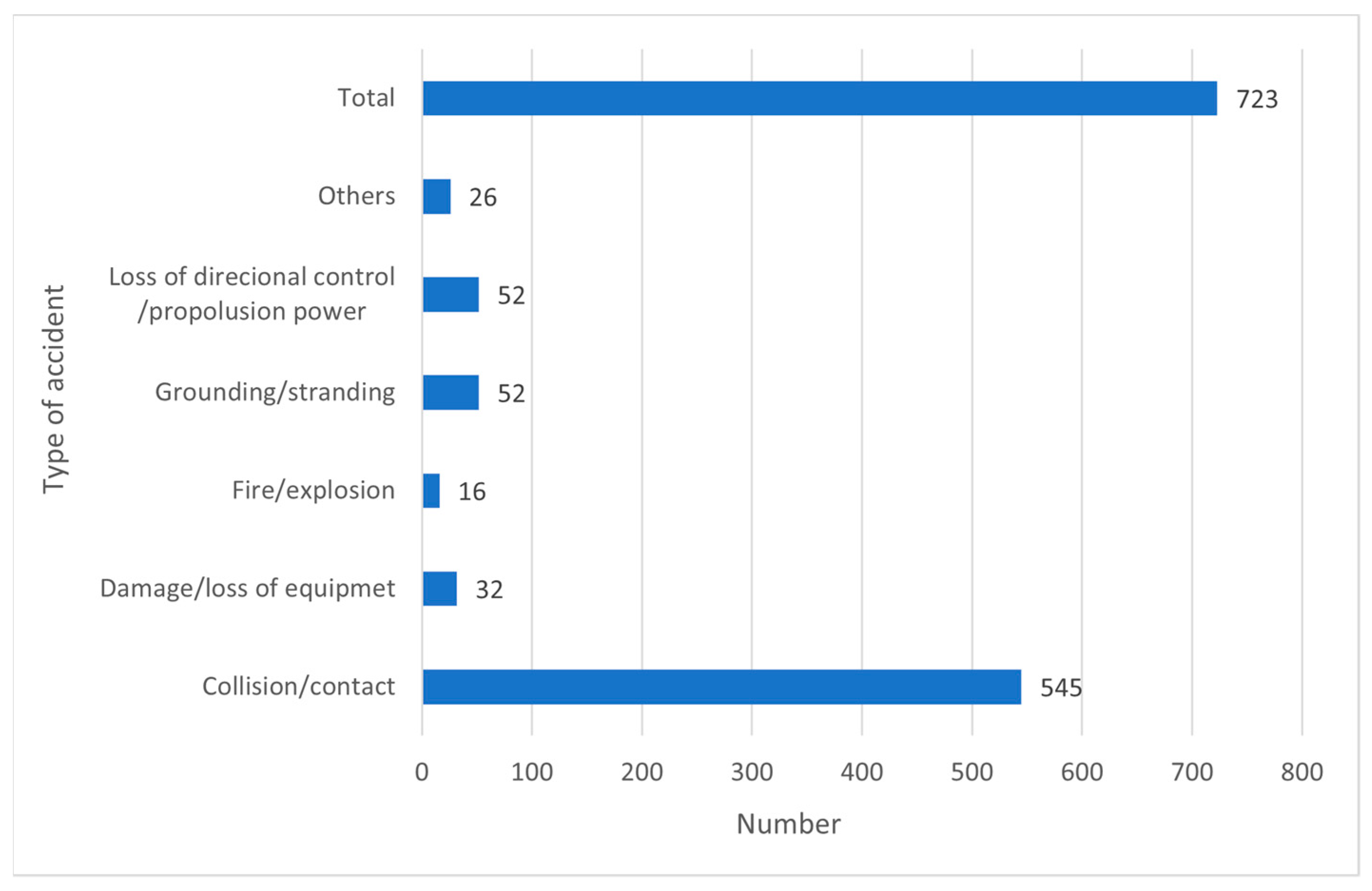
According to the data of the Polish Economic Institute [2], Polish exports from January to September 2021 were 38 percent higher than in the corresponding month period of 2019. The essential safety requirements for the design and construction of recreational vessels are set out in the relevant regulations (for Poland [3]). These regulations do not clearly indicate the type and kind of material for their structures (except for the description of insulating materials in the engine room of the vessel § 31. Section 1). It follows from the indications in this paragraph that these materials are non-combustible. Non-combustible materials are those which, when subjected to tests under specified conditions for a specified time, do not ignite and do not give off flammable gases, which could be ignited by a flame in the vicinity, and do not give off heat in such quantities as to increase the temperature to certain values [4]. This is a very important issue because fire is one of the greatest dangers that threatens vessels. Therefore, the task of designers is to construct individual elements of the vessel in such a way that they are resistant to fire. In addition, in accordance with the applicable safety regulations, the unit must be designed so that in the event of a fire, the structure retains its load-bearing capacity and the ability for rescue services to quickly reach the person in danger. The materials intended for recreational vessels should not pose a risk to people by emitting toxic smoke in the case of fire. The most important regulations related to the fire safety of vessels, i.e., the International Convention for the Safety of Life at Sea—SOLAS, the International Code for the Application of Fire Test Procedures—and the IMO FTP Code, mainly apply to marine vessels. However, fire-related accidents also involve recreational units. In the years 2014–2020, the European Maritime Safety Agency—EMSA—recorded a total of 723 accidents on vessels in European waters, including 16 related to fires Figure 1 [5].
Figure 1. Accidents on yachts in 2014–2020 according to European Maritime Safety Agency—EMSA.
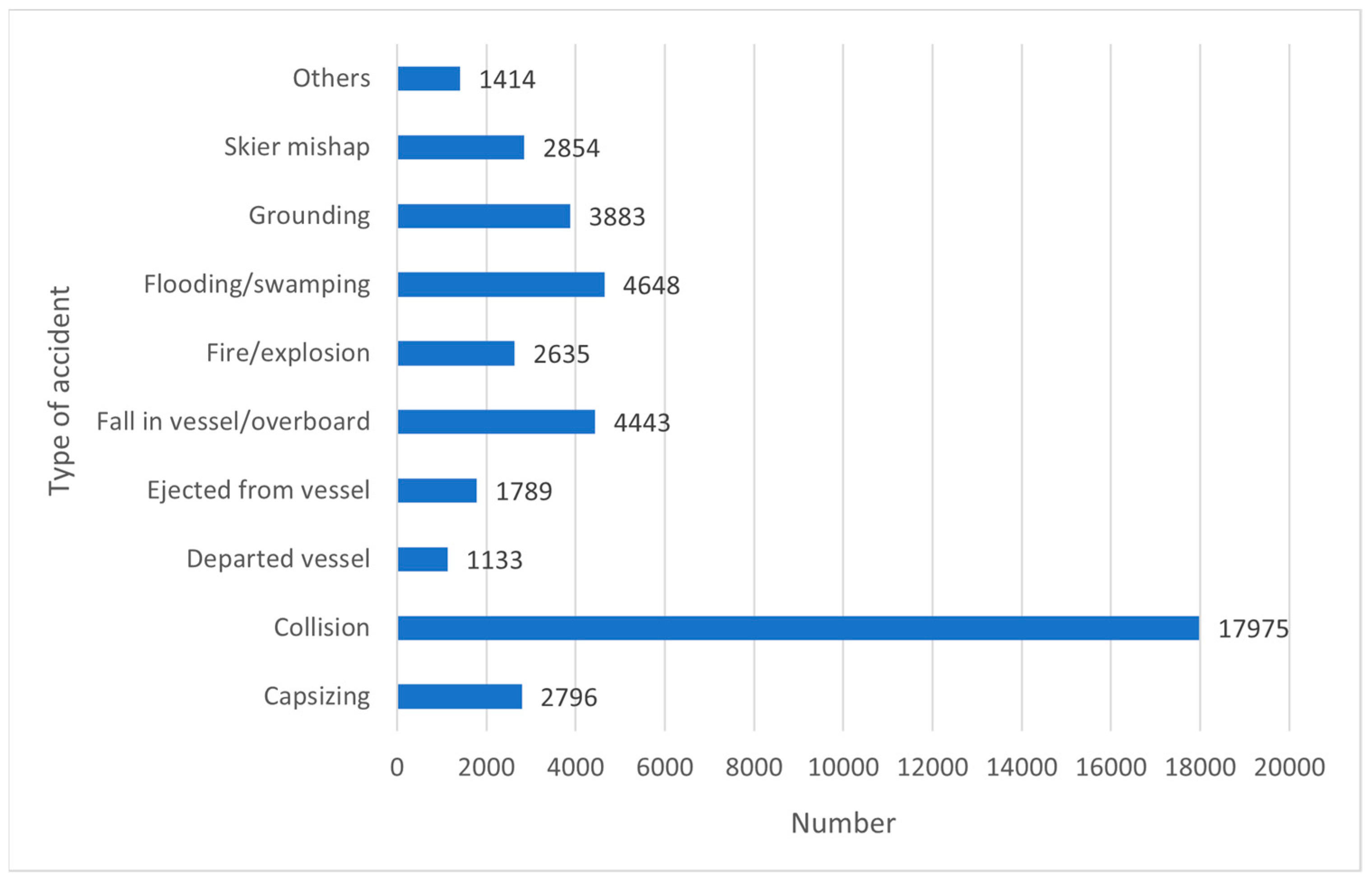
The United States of America has the largest fleet of recreational vessels, and for this reason, they also have the largest number of reported and recorded accidents. Between 2012 and 2021, there were 43,570 accidents in U.S. waters, of which 2635 involved fires (Figure 2).
Figure 2. Yacht accidents in 2012–2021 [own elaboration based on [6]].
When analyzing statistical data on accidents in recreational vessels, it should be noted that, regardless of the water area of the analysis, fires are not among the most common hazards on board. They are relatively rare and are most often associated with:
A fire in the hull resulting from improper use of equipment or a leaking gas system.
A fire in the engine compartment resulting from improper or insufficient engine servicing and related fuel leaks [7,8].
A fire in the electrical installation as a result of overloading the network and improper or insufficiently frequent checking of the electrical installation [9,10,11].
A fire involving wooden elements or laminates resulting from the improper handling of an open fire on the vessel.
The latter reasons are directly related to the material used to build these units. The basic structural part of the yacht is the hull, which used to be made of wood, aluminum alloys or iron alloys. Since the mid-twentieth century, small recreational vessels have been made of composites in the form of laminates based on polyester resin with glass fibers. Currently, with the development of new resins and the wide availability of advanced fibers, composites (laminates) with an epoxy or vinyl ester matrix with carbon [12], aramid or hybrid reinforcement (combination of glass and carbon and/or aramid fibers) are also used in the form of fabrics and/or mat [13]. Most often, however, the construction laminate itself is still made of glass fibers with a matrix of polyester resin. Only strategic places (hulls of long boats, sliding elements of the superstructure, masts, etc.) require a carbon–epoxy composite due to increased strength requirements (mainly stiffness). Polyester–glass composites are universal and versatile as materials used in hull structures of small vessels. Their advantages include high mechanical strength and low weight, ease of shaping and processing, and the possibility of joining by gluing. In addition, they are characterized by high corrosion resistance and good insulating properties [13,14].
The lifetime of this type of vessel is estimated to be 25 to 30 years [15], which means that in the near future, approximately one million units face being decommissioned annually [1]. Therefore, it is expected that in the coming years, the need for recycling could increase in both material, raw material and energy in order to fully manage this waste due to the increase in the price of their storage.
This generates a significant disposal problem for these units, as composite hulls are difficult to recycle due to the significant proportion of fiberglass. The hardening process of composite materials is not reversible; therefore, the mentioned functional advantages of these composites have become a serious disadvantage during tests for their reuse.
The choice of the waste management method is influenced by external and internal factors. Internal factors are related to waste properties and process capabilities. External factors include applicable laws and market needs.
Currently, composite waste ends up in landfill or is incinerated in municipal incineration plants [16]. Landfills are the cheapest method of disposing of composite waste in Poland, but according to the Waste Framework Directive 2008/98/EC [17], it is a last resort. The landfilling of composite waste is prohibited in Germany and is subject to additional taxation in Sweden [18]. Presumably, in the coming years, such tightening will also be introduced by other European Union countries. It is also planned to tighten the requirements for companies producing composites in order to introduce other methods of composite waste management in line with the circular economy.
An alternative to storing ship hulls in landfills is the idea of sinking decommissioned ships in the sea. However, this method is not an effective solution to the problem because the hulls, which are made of laminates, after removing the metal equipment, float in the water. Therefore, such a unit should be flooded with concrete and sunk into a marked place. They could then serve as mooring elements on roadsteads or anchors of larger navigational markings [19]. Other ways to treat or treat post-consumer hull waste can include chemical recycling.
The chemical recycling of composite materials through solvolysis causes a slight (only 50%) decrease in the strength of the recovered glass fiber [20]. Another chemical recycling method is pyrolysis or degradation in various solvents (ketones, esters, bases and oxidative concentrated acids) [21]. In this way, raw materials for further processing can be obtained. However, these methods are relatively expensive, and after these processes, there is waste in the form of solvents that must be managed in some way.
From an ecological point of view, material recycling, otherwise known as mechanical recycling, is often the preferred form of waste processing. The addition of shredded waste as fibers or fillers for new products does not force production plants to drastically change their production technology. The biggest disadvantage of this type of recycling is the formation of a new material, which after its end of use, becomes waste for reuse.
The second most popular method of recycling yacht hulls is incineration. As a result of this process carried out in municipal waste incineration plants, glass fibers end up in slag, which contains heavy metals and, therefore, must be stored in safe landfills so as not to pollute the environment. During the combustion process, toxic gases may be released (methane, ethane, ethylene, acetylene, ethylbenzene, carbon monoxide, etc.)
The currently used recycling technologies of post-consumer composite waste reinforced with glass fiber, in the opinion of international organizations [22], comply with the provisions of EU directives. The best recycling option for composite yachts is a composite recycling process that can enable the supply of cement kilns [22]. This method uses waste as both raw materials and energy (fuel). In the publication [23], published by the European Cement Society and in work [24], representatives of the European composites industry recognized this technology as the recommended method of waste management in glass fiber-reinforced duroplasts. The policy of the European Union, in connection with Directive 2008/98/EC, aimed to minimize the amount of waste and its harmful impact on the environment. In addition, the above-described significant problem related to the disposal of vessels caused a search for alternative materials and the construction of new ones [13,18,25]. One of the concepts for this was the use of natural fibers for their construction.
The advantages of this solution are the low cost of obtaining raw material and its production (in the form of fabrics and mats), reducing the weight of the finished product, and the possibility of producing units using the same methods as traditional composites. In addition, the replacement of synthetic fibers with natural fiber should make it possible to reduce the amount of waste needed for landfill after the recycling process through the use of energy recycling with energy recovery. One company in the yachting industry that is beginning to experiment with natural reinforcement is the Dutch yacht manufacturer Contest Yachts [26].
The Sunreef Yachts Eco Company has also set new standards in the field of sustainable design by introducing composites based on flax and basalt in the yacht-building process to its offer [27]. On the other hand, Corradi et al. [28] studied bamboo laminates for application on the hull’s panel. A review of the latest applications of polymer composites reinforced with various fibers in vessels (e.g., warships) was made in the work of Mouritz [29]. Trends of their development, and also of natural composites, e.g., based on wood, were indicated there. Currently, the use of natural composites in the construction of yachts is still in the experimental phase and requires further research and technological development and material properties.
Despite all the advantages of natural composites [30], it is necessary to assess the impact of their use on the safety of the crew (in accordance with the International Convention for the Safety of Life at Sea—SOLAS, or the International Code for the Application of Fire Test Procedures—IMO FTP Code), especially during a fire outbreak. Testing the fire resistance of these materials can also contribute to the assessment of the possibility of energy recycling. The description of the phenomena accompanying the flammability test of materials was applied to the assessment of engineering plastics in terms of the safety of their use. For example, this includes the intensity of smoke production, the attenuation of light intensity and the speed of smoke production [31]
In natural composites, various plant fibers that can be obtained from trees and plants can be used for reinforcement. The most popular are jute, kenaf, hemp, linen, ramie, sisal agave, cotton, coconut palm, sugar cane and bamboo. [32,33,34,35] An interesting solution is to reinforce laminates with natural hemp fiber, which is characterized by low weight and density, high mechanical strength, easy and widespread availability, and low purchase and production prices. They are fully biodegradable [13,36,37,38].
So far, research on composites reinforced with natural fibers, in particular hemp fibers, concerns mainly reinforcements in the form of mats and short or long fibers. The use of this type requires the development of new or the modification of old manufacturing technologies, e.g., innovations in the additive manufacturing technique of continuous fiber-reinforced composites [39,40]. The use of unmodified fiber in the form of fabric may contribute to the faster implementation of this material in the yachting industry. This is possible due to the minimization of interference in the existing production process by simply changing the type of fabrics used.
The materials used in the construction of floating structures must meet very high safety standards, as their improper operation can lead to serious accidents. Therefore, it is important to determine whether polymer composites with natural reinforcement are fire-resistant enough to ensure the safety of the people who use them. In addition, the materials used for the construction of floating structures must be resistant to external conditions, such as UV radiation, corrosion, as well as fire and high temperatures, which may occur as a result of a fire. Therefore, evaluating the fire resistance of natural-reinforced polymer composites is crucial to ensure that these materials meet safety and durability requirements. In addition, when building floating structures such as small vessels, it is important to use lightweight yet strong materials. Polymer composites with natural reinforcements are usually lighter than traditional materials, which can contribute to reducing the weight of the entire structure and improving the performance of such a vessel.
The aim of the work was to evaluate the possibility of replacing polymer–glass composites with polymer–hemp composites for the construction of small vessels. The possibilities of fire resistance in polymer–glass and polymer–hemp composites in terms of safety were analyzed. The smoke effect of the tested composites was compared. The conducted research also determined the possibility of energy recycling of the laminate reinforced with natural fiber (hemp) and the impact of the use of this material on the fire safety of the crew of a recreational vessel.

2. Research Material and Research Methodology

2.1. Research Material

Two types of composites were produced for the purposes of this research:
GFRP (Glass Fiber Reinforced Polymer) produced with the use of commercial reinforcement in the form of roving fabric (plain weave 1/1) with a medium grammage of 452 g/m2 by KROSGLASS.
HFRP (Hemp Fibers Reinforced Polymer) manufactured using commercial reinforcement in the form of a woven thread fabric (plain weave 1/1) a with medium grammage of 478 g/m2 by S.C. CAV-VAS LIMITED S.R.L. with the same number of 12 layers of fabric.
The matrix in both cases was made of a structural polyester resin (DCPD—DiCykloPentaDien) under the trade name AropolTM M 604 TBR, prod, Ashland. Metox-50 WR, manufactured by Oxytop Sp. zo.o. with the accelerator BÜFA®-Accelerator Co 6. Additionally, in order to increase the adhesion between the matrix and the reinforcement, a pro-adhesion agent in the form of maleic anhydride (MAH) was used in the proportion of 3 g per 100 g of resin.
The composites were created using the Hand Lay-Up method [13,41]. In the manufacturing technology used, successive layers were applied wet on wet. After the resin application process was complete, the produced materials were seasoned at a constant temperature and humidity for 72 h after the last layer of resin had gelled. The composites were shaped in laminates as a form of a panel. During the manufacturing process, the average room temperature was 22 ± 1 °C and humidity was 66 ± 2%. For the purposes of these tests, composite samples with dimensions of 100 × 100 mm were cut out. Five samples were cut from each material/panel for each test.
WaterJet technology was used for cutting; the cutting was performed at a working pressure of 3950 bar using an 80-mesh grenade. This cutting method was used for continuous piercing cutting outside the area of finished elements.

2.2. Research Methodology

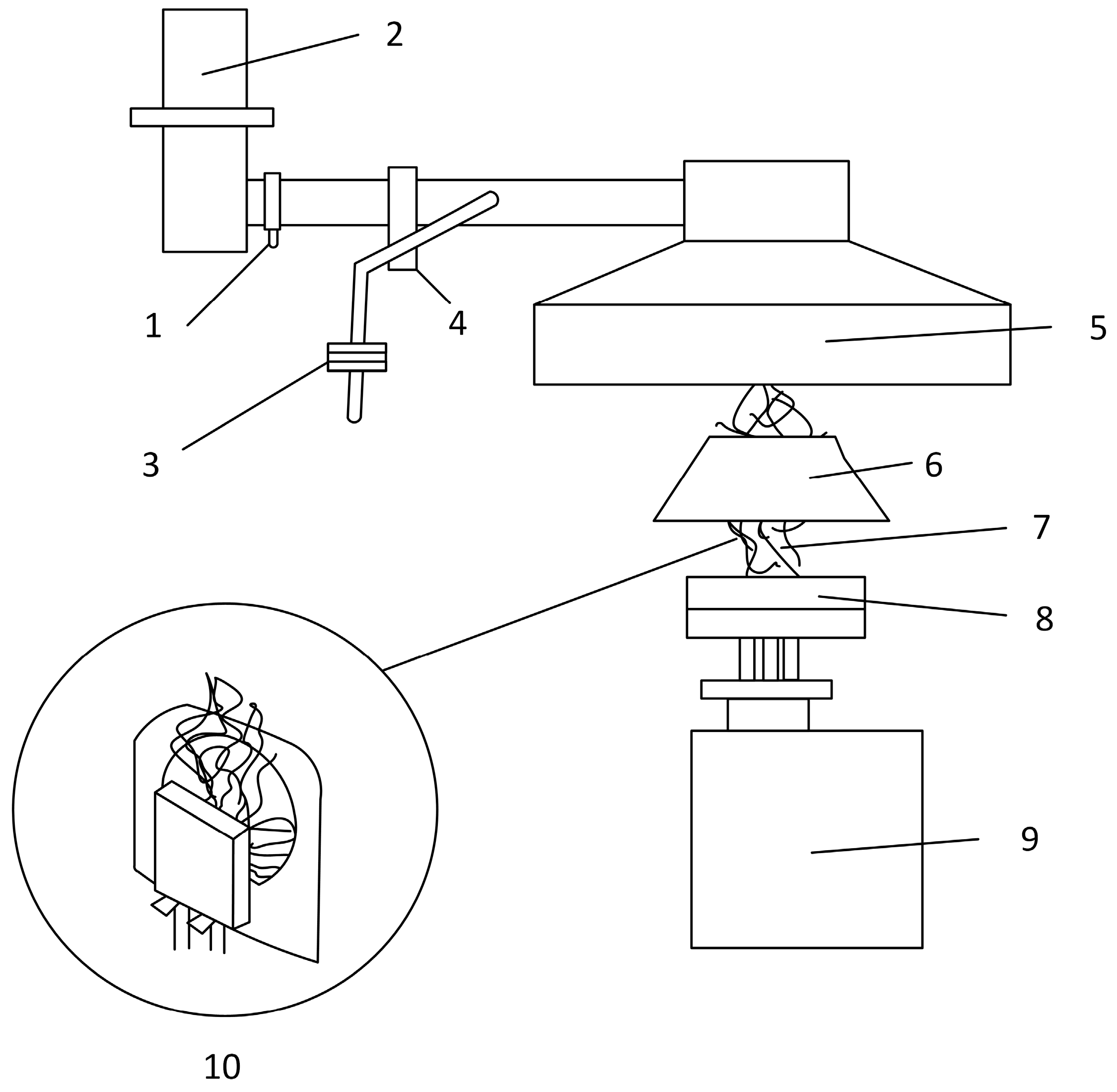
In this work, the fire resistance of the manufactured composites with different reinforcement materials was tested, and light attenuation due to the smoke emitted was and was also assessed, as well as the rate of smoke emission and the amount of smoke emitted. Reactions to the fire tests of the produced composites were carried out using a cone calorimeter (Figure 3) with an igniter in accordance with ISO 5660-1:2015, based on the International Code for the Application of Fire Test Procedures (FTP Code). Among other things, the kinetics of heat generation, i.e., the maximum intensity of heat release (HRR), was determined. This is the most important parameter measured by a cone calorimeter. It is known that the HRR value provides information about the size of the fire and directly communicates with the speed of its development. The rate of heat release is a fire characteristic that, when determining the share of material in a fire hazard, does not take into account the type of combustion. Other parameters are also related to HRR, such as smoke characteristics and the presence and concentration of toxic gases. This is a parameter that allows you to estimate the fire hazard and determine the time to carry out a safe evacuation. The basic parameter determining the combustion dynamics of the sample is the rate of mass loss (maximum rate of mass loss). In the case of heating a material with a heat flux, this feature reflects processes in the material due to heating with a constant heat flux (in action during a fire) rather than the rate of heat release. On the other hand, the intensity of smoke production is a critical parameter that determines the possibility of the effective evacuation of users from a small recreational vessel and affects the effectiveness of firefighting operations. During this study, the so-called extinction coefficient [1/m] was the basis of which the specific extinction in [m2/kg] was determined in relation to the mass and surface of the sample. The extinction coefficient is the absolute value of smoke production. It is equivalent to the mass optical density of smoke. The assessment of the amount of carbon monoxide produced is an important feature of the flammability of materials due to the fact that this gas is the cause of a large number of poisonings. It is a product of incomplete combustion. However, the assessment of the amount of carbon dioxide produced contributes to the determination of an increased concentration of CO2 in the air. The result of this elevation is a suffocating effect. A concentration of 4% causes headaches and dizziness, an increase in blood pressure, breathing disorders and shortness of breath, 5–6% (85–100 mg/dm3 of air) with the deepening and acceleration of breathing. A concentration above 12% is considered lethal [33]. The above parameters were tested and presented in the Results of this article. GFRP samples reinforced with glass fabric and HFRP samples reinforced with hemp fabric were burnt separately.
Figure 3. General diagram of a cone calorimeter with helium-neon laser (1), gases temperature and pressure measurement (2), soot filter (3), oxygen analyzer (4), hood (5), cone calorimeter (6), spark igniter (7), sample (8), scale (9), vertical orientation (10) [34].
The composite was insulated with metal foil to reduce heat emission from the bottom and side. Then, they were placed in a crucible in the shape of a metal tray with dimensions of 100 × 100 mm. During the measurement, the surface of the tested material was exposed to a constant heat flux emitted from the cone. The sample was placed on a scale that continuously measured the mass as a function of time. Gases from the sample decomposition were ignited by a spark igniter and extracted by means of a fan through a hood connected to the measuring system. Typically, tests are carried out at a flux intensity of 50 k/Wm2. A method for assessing the heat release rate and dynamic smoke production rate of specimens exposed in the horizontal orientation to controlled levels of irradiance with an external igniter was used. The heat release rate was determined by measuring the oxygen consumption derived from the oxygen concentration and the flow rate in the combustion product stream. The time to ignition (sustained flaming) was also measured in this test.
The dynamic smoke production rate was calculated from the measurement of the attenuation of a laser light beam by the combustion product stream. Smoke obscuration was recorded for the entire test, regardless of whether the specimen was flaming or not.
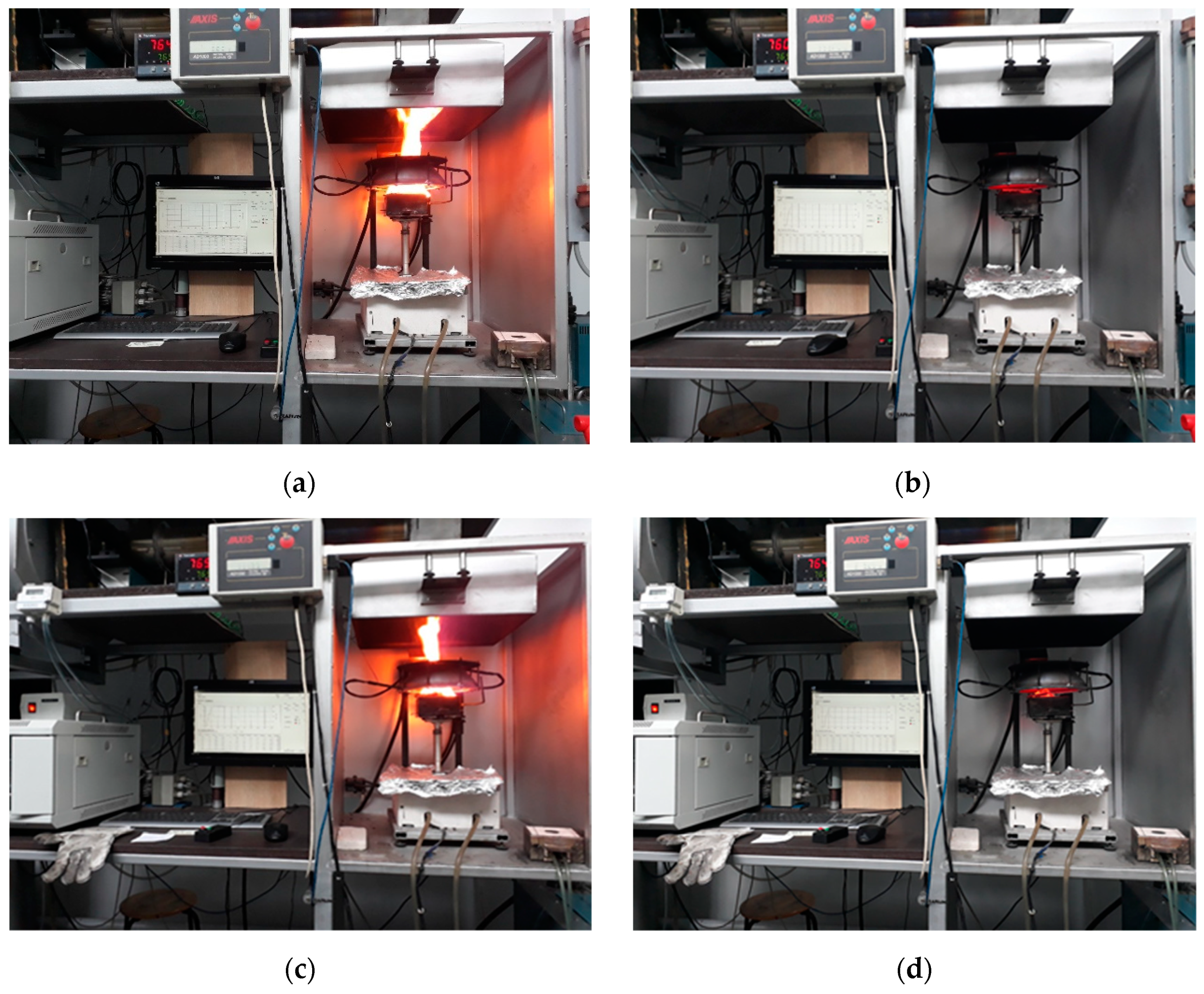
The basic input data for the reaction of composites to fire test are presented in Table 1. The course of the test is documented in Figure 4.
Table 1. Cone calorimeter output data and test material data.
Figure 4. Composite flammability test: GFRP: beginning (a) and end (b) of the test; HFRP: beginning (c) and end (d) of the test.

3. Results

Research Results and Their Analysis

The results of the reactions to the fire testing of the manufactured composites are presented in Table 2.
Table 2. Reaction to fire results for the tested composites.
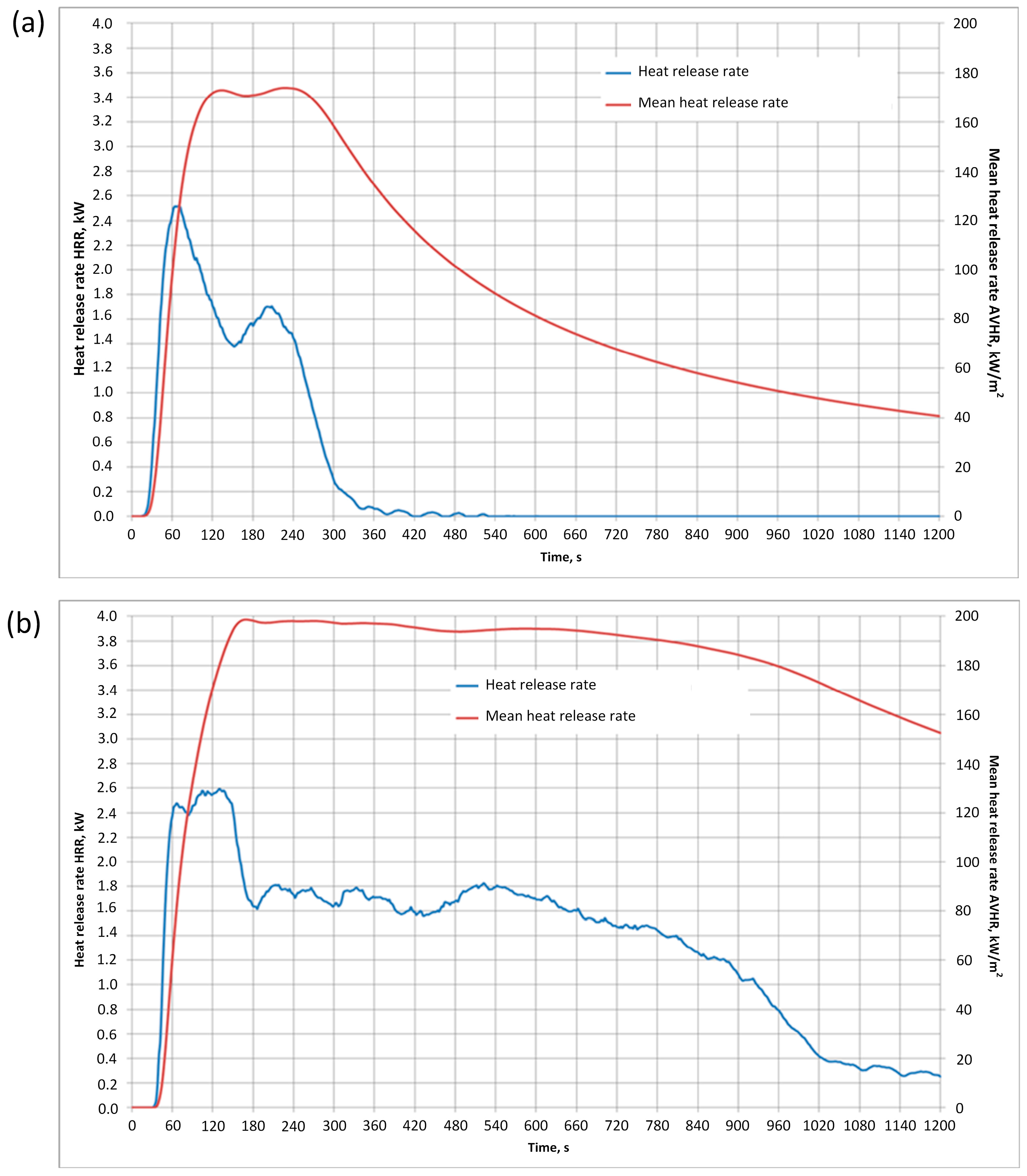
As a result of the analysis of the graphs showing the intensity of heat release during combustion tests of the composite samples (Figure 5), a higher and longer maximum average heat release intensity [kW/m2] was found for the HFRP sample compared to the GFRP sample. This is most likely related to the type of fiber used, which is the fuel, extending the burning time of the sample. Hemp fiber composites have a longer maximum average heat intensity due to several factors [42,43,44,45]. Hemp fiber has good thermal conductivity, which means it conducts heat very well. When this fiber is used as a reinforcement in composites, it contributes to the improvement of the thermal conductivity of the entire material, which, in turn, increases its ability to transfer heat. In addition, hemp fiber’s low density means it can absorb and store heat more efficiently than heavier materials. In this way, when the hemp fiber composite is heated, it can store more thermal energy than other materials, which increases its maximum average heat intensity. Additionally, hemp fiber is also very durable and resistant to thermal damage, which makes it an ideal material for use in composites that are exposed to extreme heat conditions. These properties allow for greater resistance to heat deformation, which, in turn, increases the maximum average heat intensity of the material. This is a positive feature of this material from the point of view of energy recycling. In addition, the ignition start of the sample for the GFRP composite is about 12 s shorter than for the HFRP composite, which is most likely due to the lower thermal conductivity of glass fibers than hemp fibers and faster local heating enabling the ignition. This feature made it possible to extend the time to evacuate the passenger crew or to undertake firefighting activities. However, the burning time of the HFRP sample was 72% longer than that of the GFRP composite. The burn time of the hemp fiber-reinforced composite was longer than that of the glass fiber-reinforced composite for several reasons. Hemp is an organic material, while glass is an inorganic material. Organic materials are typically less resistant to heat and combustion, which can lead to longer burn times. Second, hemp fibers tend to be more water-absorbent than glass fibers, which can affect their reactions to fire. Hemp fibers contain natural chemicals such as cellulose, lignin and hemicellulose [37] that absorb water and can cause a longer burning time. In addition, the diversity of the chemical composition of hemp fibers, depending on the type and origin of the plant, can also affect the burning time of the composite reinforced with hemp fiber.
Figure 5. Graph of heat release intensity during sample testing (a) GFRP (b) HFRP.
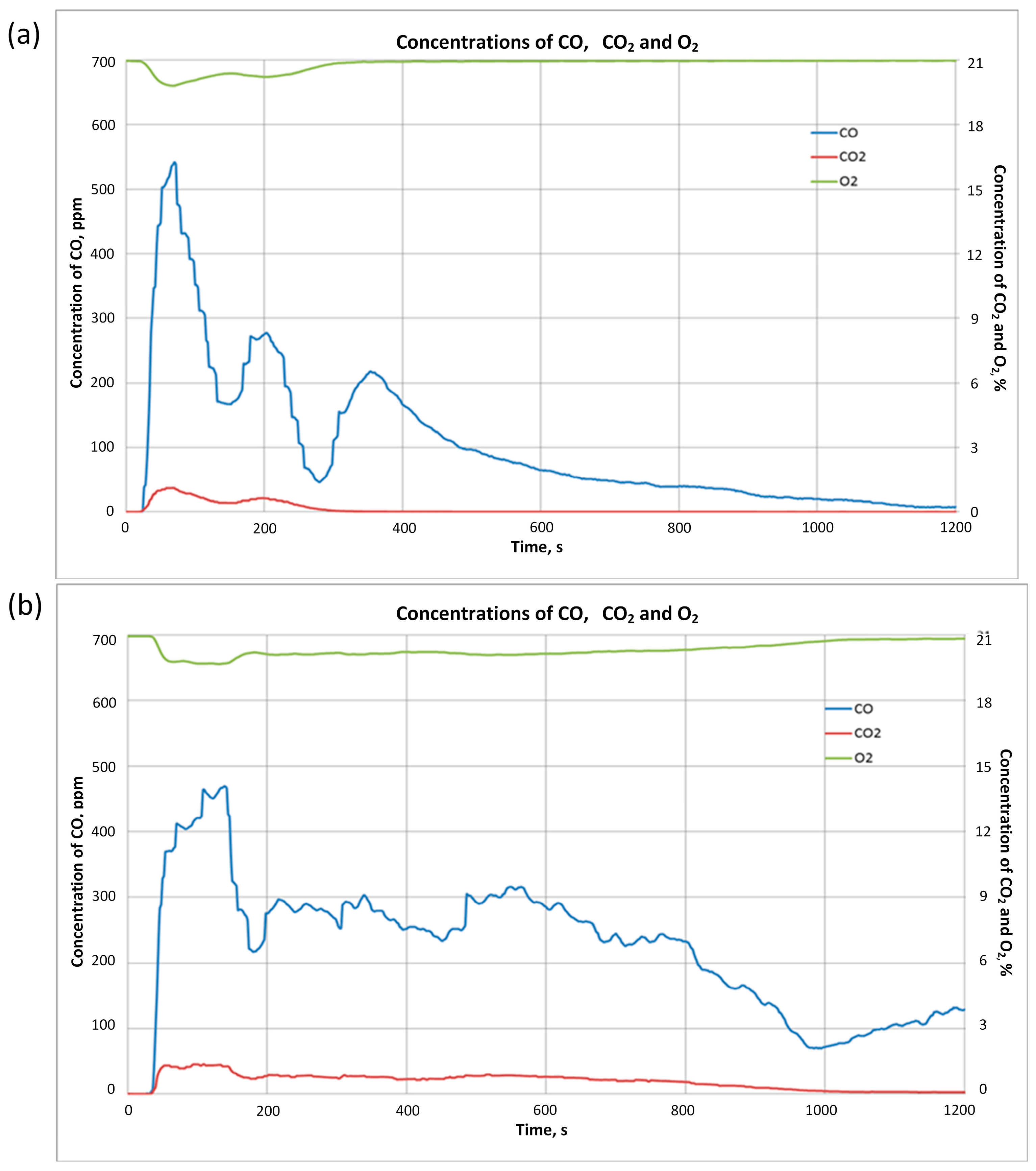
Based on the analysis of graphs showing the concentrations of CO, CO2 and O2 during the combustion tests of polymer composite samples, it was concluded that the gases generated during the combustion of a sample containing hemp fibers (HFRP) showed maximum O2 loss [%], which was higher by 11.4%, CO [ppm] lower by 13.5% and the maximum CO2 concentration [%] higher by 23.7% compared to the sample containing glass fibers (GFRP) (Figure 6). This is most likely because hemp [43] is a plant that naturally absorbs carbon dioxide from the atmosphere as it grows. The hemp fibers used to reinforce the composite may, therefore, contain higher amounts of carbon, which can lead to higher concentrations of carbon dioxide during combustion. In addition, natural fibers are generally less processed than glass fibers, which means that they are more prone to burning. Additionally, hemp fibers contain higher amounts of nitrogen than glass fibers, which can lead to higher oxygen depletion and lower carbon monoxide concentrations during combustion. Nitrogen reacts with oxygen during combustion, leading to greater oxygen loss and lower carbon monoxide concentrations.
Figure 6. Graph of CO, CO2 and O2 concentrations during sample testing (a) GFRP (b) HFRP.
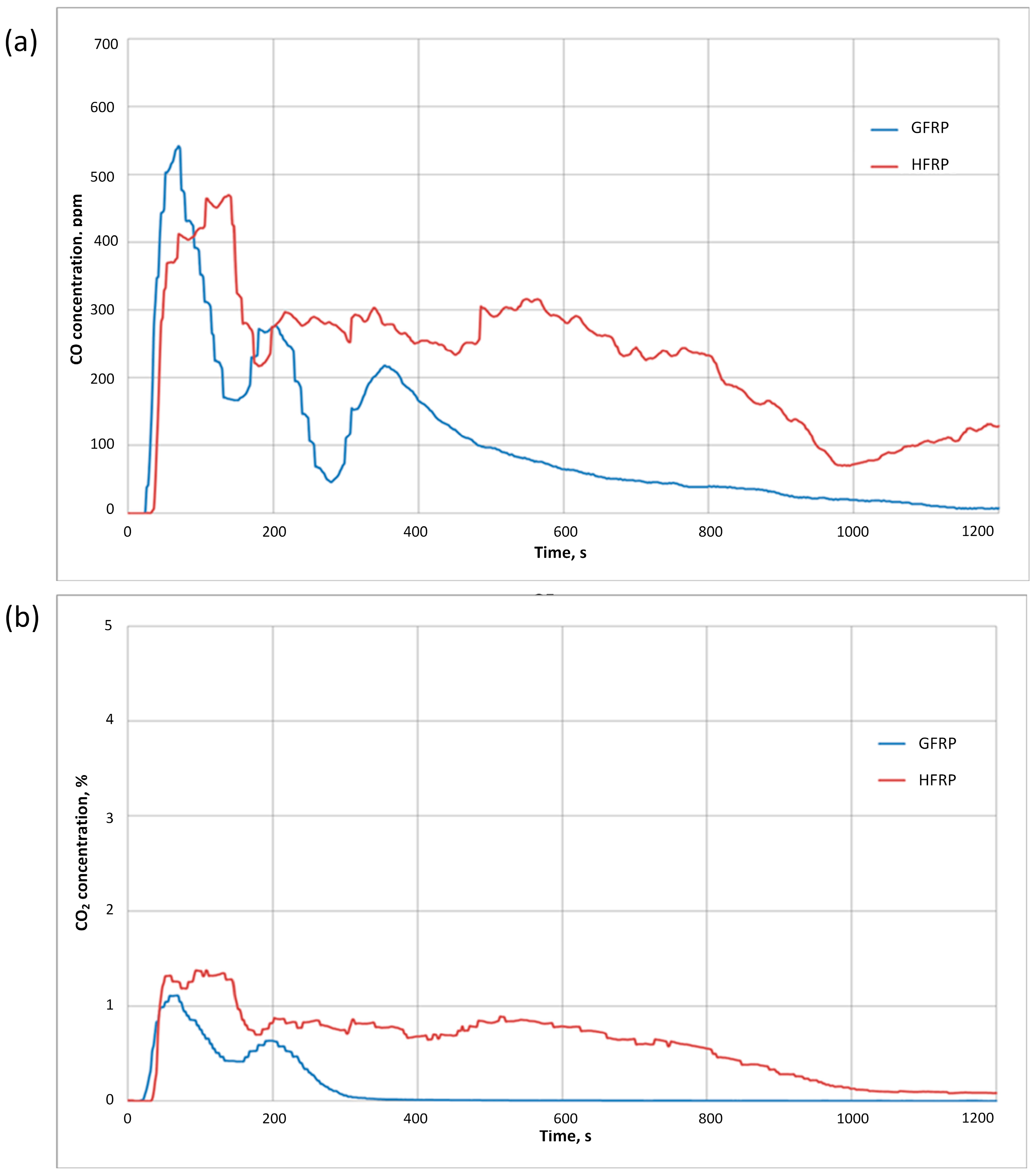
Graphs comparing the CO and CO2 emissions of the tested materials are presented below (Figure 7). From the comparative analysis, it could be concluded that the two types of materials tested had similar CO emissions in the initial phase of combustion up to about 200 s. After this time, a higher emission could be observed for the HFRP composite and a long time of gas emission due to the longer burning time of this composite compared to GFRP. The CO2 emission curves look similar. This is most likely due to the fact that in the first stage of the process, the matrix material was burned, and this was the same for both types of composites.
Figure 7. Graphs comparing the emissions of (a) CO and (b) CO2 when testing a sample of GFRP and HFRP.
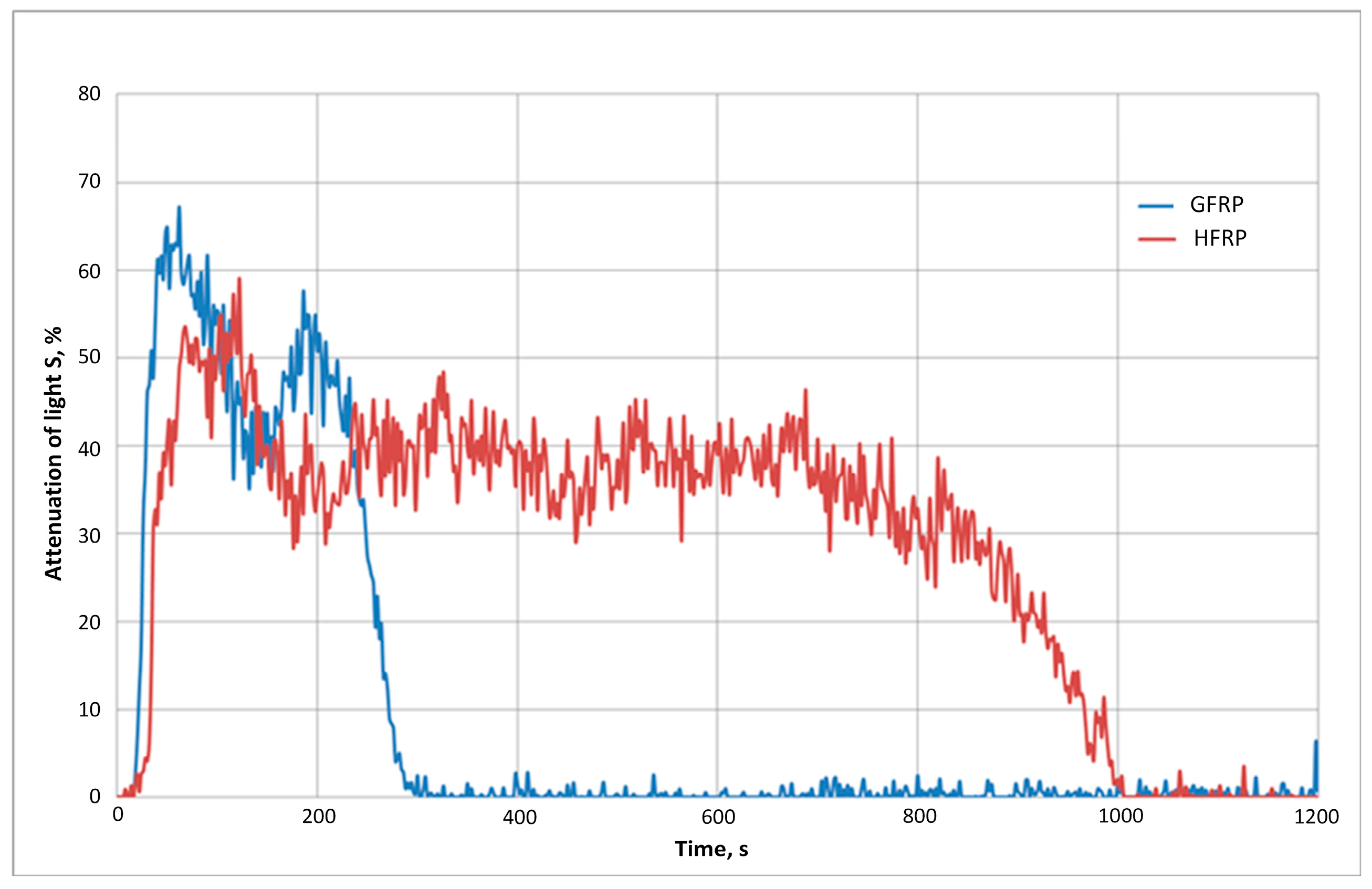
In the analysis of graphs showing the attenuation of light caused by smoke emissions during testing for the HFRP sample, the maximum value was 12% lower, and the maximum smoke emission rate [m2/s] was 22% lower compared to GFRP. It was also found that the total amount of smoke produced [m2] increased by almost three times in the case of the sample reinforced with hemp fabric in relation to the sample reinforced with glass fabric (Figure 8). It is possible that the value of the maximum amount of smoke emission was lower for the composite with hemp fiber than for glass fiber. This may be due to the properties of hemp fiber, which are more flexible and less brittle than glass [37] and may contribute to the limited disintegration of the material and also the release of less smoke during a fire. However, the total amount of smoke produced may be higher for a hemp fiber composite for several reasons. First, organic materials such as hemp tend to give off more smoke when burned than inorganic materials such as glass. Secondly, hemp fibers may contain a higher amount of chemicals, which may contribute to the release of more smoke in a fire. In addition, the production process of hemp fiber composites may require the use of adhesives or resins, which can also emit smoke when burned.
Figure 8. Graph comparing the light attenuation caused by smoke production when testing a sample of GFRP and HFRP.

4. Discussion and Conclusions

A summary of the analysis of the possibility of energy recycling for HFRP and the impact of the use of this material on the fire safety of the crew of a recreational vessel, based on the reaction of samples to fire, is presented in Table 3.
Table 3. Summary of the most important flammability test results for HFRP for energy recycling and crew safety.
Based on the analysis and laboratory tests, it can be concluded that:
The use of natural (hemp) fiber allows the amount of waste to be minimized compared to traditional composites reinforced with glass fiber, which is extremely desirable from an ecological point of view. The mass of the maximum waste for GFRP was 57.2% of the mass of the initial sample, and in the case of HFRP, it was only 2% of the mass of the initial sample (Table 3).
The use of hemp fiber made it possible to obtain more heat while increasing the amount of smoke and extending the ignition time, which is extremely important from the point of view of the safety of the people on a recreational vessel. The heat released during the combustion of the tested composite reinforced with hemp fabric (183 [MJ/m2]) was four times higher than 48.8 [MJ/m2] of the composite reinforced with glass fabric [MJ/m2].
The above conclusions indicate the greater profitability of recycling for HFRP than for GFRP.
Regardless of the cause and regardless of the frequency of occurrence, the greatest threat to people on the yacht during a fire is hot smoke containing toxic combustion products. Due to the very high speed that it spreads around the vessel, it can result in cutting off the crew’s escape route, poisoning, burns, and even death.
Based on the obtained results, it was concluded that the directions of further research should focus on the analysis of the possibility of using flame retardants to assess their potential use with a composite reinforced with hemp fabric in order to minimize the possibility of ignition. At a later stage, an assessment of the utilization of laminate with a flame retardant additive should also be conducted.

Author Contributions

Conceptualization, W.Ś.; Investigation, M.S. and R.D.; Writing—original draft, K.B.; Writing—review & editing, E.K., T.K. and I.K. All authors have read and agreed to the published version of the manuscript.

Funding

This research was co-funded by the Ministry of Science and Higher Education of Poland from Grant 1/S/KPBMiM/23.

Institutional Review Board Statement

Not applicable.

Conflicts of Interest

The authors declare no conflict of interest.

References

  1. Udo, K. (Ed.) ICOMIA Statistics Book 2017; Liquid Scope Limited: Auckland, New Zealand, 2017. [Google Scholar]
  2. Gniadek, J. Polish Yachts Sail around the World. PIE Economic Weekly, 25 November 2021; Volume 47. (In Polish) [Google Scholar]
  3. Dz.U. 2016 Poz. 807 Regulation of the Minister of Development of 2 June 2016 on Additional Regulations for Recreational Watercraft and Water Scooters. 2016. Available online: https://isap.sejm.gov.pl/isap.nsf/DocDetails.xsp?id=WDU20160000807 (accessed on 15 December 2022). (In Polish)
  4. Non-Combustible Materials. Available online: https://bariery-ogniowe.pl/slownik-pojec-ppoz/materialy-niepalne/ (accessed on 28 January 2023). (In Polish).
  5. The Annual Overview of Marine Casualties and Incidents 2014–2020. Available online: https://www.emsa.europa.eu/publications/item/4378-preliminary-annual-overview-of-marine-casualties-and-incidents-2014-2020.html (accessed on 8 February 2023).
  6. Recreational-Boating-Statistics-2012–2021. Available online: https://uscgboating.org/library/accident-statistics/USCGBoatingStatistics2012.pdf (accessed on 2 February 2023).
  7. Chybowski, L.; Wiaterek, D.; Jakubowski, A. The Impact of Marine Engine Component Failures upon an Explosion in the Starting Air Manifold. J. Mar. Sci. Eng. 2022, 10, 1850. [Google Scholar] [CrossRef]
  8. Chybowski, L. Explosions in Crankcases of Marine Engines—Causes, Prevention and Minimization of Effects; Wydawnictwo Naukowe Akademii Morskiej w Szczecinie: Szczecin, Poland, 2022. (In Polish) [Google Scholar]
  9. Gawdzińska, K.; Kwiecińska, B.; Przetakiewicz, W.; Pelczar, M. Causes of Accidents and Fires on Sea Ships. Zesz. Nauk. Akad. Mor. W Gdyni 2015, 91, 21–29. [Google Scholar]
  10. Tarnapowicz, D.; German-Galkin, S. Analysis of the Topology of “Shore to Ship” Systems—Power Electronic Connection of Ships with Land. New Trends Prod. Eng. 2018, 1, 325–333. [Google Scholar] [CrossRef]
  11. Nicewicz, G.; Sosinski, M.; Tarnapowicz, D. Identification of Power Factor in Marine Electrical Grid. In Geoconference on Energy and Clean Technologies; Book Series International Multidisciplinary Scientific Geo Conference-SGEM; SGEM: Vienna, Austria, 2013; Volume 2, pp. 391–398. [Google Scholar]
  12. Nachtane, M.; Tarfaoui, M.; Abichou, M.A.; Vetcher, A.; Rouway, M.; Aâmir, A.; Mouadili, H.; Laaouidi, H.; Naanani, H. An Overview of the Recent Advances in Composite Materials and Artificial Intelligence for Hydrogen Storage Vessels Design. J. Compos. Sci. 2023, 7, 119. [Google Scholar] [CrossRef]
  13. Scheibe, M. Analysis of the Applicability of Natural Fiber Reinforced Polymer Composites for the Construction of Selected Types of Vessels. Ph.D. Dissertation, Maritime University of Szczecin, Szczecin, Poland, 2022. (In Polish). [Google Scholar]
  14. Shah, D.U. Developing Plant Fibre Composites for Structural Applications by Optimising Composite Parameters: A Critical Review. J. Mater. Sci. 2013, 48, 6083–6107. [Google Scholar] [CrossRef]
  15. Dinu, O.; Ilie, A.M. Maritime Vessel Obsolescence, Life Cycle Cost and Design Service Life. IOP Conf. Ser. Mater. Sci. Eng. 2015, 95, 012067. [Google Scholar] [CrossRef]
  16. Brożek, P.; Złoczowska, E.; Staude, M.; Baszak, K.; Sosnowski, M.; Bryll, K. Study of the Combustion Process for Two Refuse-Derived Fuel (RDF) Streams Using Statistical Methods and Heat Recovery Simulation. Energies 2022, 15, 9560. [Google Scholar] [CrossRef]
  17. Directive 2008/98/EC of the European Parliament and of the Council of 19 November 2008 on Waste and Repealing Certain. Directives (Text. with EEA Relevance). Available online: https://eur-lex.europa.eu/legal-content/EN/ALL/?uri=CELEX%3A32008L0098 (accessed on 20 January 2023).
  18. Scheibe, M.; Urbaniak, M.; Goracy, K.; Bledzki, A.K. Problems Connected with Utilization of Polymer Composite Products and Waste Materials. Part II. “Scrapping” of Composite Recreational Vessels in the World in the Perspective of 2030. Polimery 2019, 64, 788–794. [Google Scholar] [CrossRef]
  19. Jastrzębska, M. Issues of Polyester and Glass Waste Management. Zesz. Nauk. Akad. Mor. Gdyni 2016, 93, 129–133. (In Polish) [Google Scholar]
  20. Jastrzębska, M.; Jurczak, W. Recycling of Composites from Marine Units. Logistyka 2011, 5, 663–667. (In Polish) [Google Scholar]
  21. Hedlund-Åström, A.; Luttropp, C.; Reinholdsson, P. Environmental Friendly Recycling of FRP-Sandwich Ship Hulls. In Royal Institution of Naval Architects International Conference—Recycling of Ships and other Marine Structures; The Royal Institution of Naval Architects: London, UK, 2005; pp. 119–125. [Google Scholar]
  22. EuCIA: Glass Fibre Reinforced Thermosets: Recyclable and Compliant with the EU Legislation. Available online: http://www.eucia.org/ (accessed on 12 December 2022).
  23. Sustainable Cement Production—Co-Processing of Alternative Fuels and Raw Materials in the European Cement Industry, Cembureau, January 2009. Available online: http://www.cembureau.eu (accessed on 8 January 2023).
  24. European Composite Recycling Service Company (ECRC). Available online: http://www.ecrc-greenlabel.org (accessed on 28 December 2022).
  25. Błędzki Andrzej, K.; Gorący, K.U.M.S.M. Problems Connected with Utilization of Polymer Composite Products and Waste Materials Part I. Production Volume, Utilization of Composites with Carbon Fibres, Legislative Aspects, Industrial Recycling. Polimery 2019, 64, 777–787. [Google Scholar] [CrossRef]
  26. Contest Yachts. Available online: https://www.contestyachts.com/facts-figures (accessed on 16 April 2023).
  27. Sunreef Yachts. Available online: https://www.sunreef-yachts.com/pl/news/a-viable-solution-for-responsible-boating-flax-fiber-yachts (accessed on 21 April 2023).
  28. Corradi, S.; Isidori, T.; Corradi, M.; Soleri, F.; Olivari, L. Composite Boat Hulls with Bamboo Natural Fibres. Int. J. Mater. Prod. Technol. 2009, 36, 73. [Google Scholar] [CrossRef]
  29. Mouritz, A.P.; Gellert, E.; Burchill, P.; Challis, K. Review of Advanced Composite Structures for Naval Ships and Submarines. Compos. Struct. 2001, 53, 21–42. [Google Scholar] [CrossRef]
  30. Czarnecka-Komorowska, D.; Bryll, K.; Kostecka, E.; Tomasik, M.; Piesowicz, E.; Gawdzińska, K. The Composting of PLA/HNT Biodegradable Composites as an Eco-Approach to the Sustainability. Bull. Pol. Acad. Sci. Tech. Sci. 2021, 69, e136720. [Google Scholar] [CrossRef]
  31. Konecki, M. Influence of the Rate of Heat. Release and Smoke Emission on the Development of Fire in the Layout of Rooms; Szkoła Główna Służby Pożarniczej: Warszawa, Poland, 2007. (In Polish) [Google Scholar]
  32. Khalid, M.Y.; Al Rashid, A.; Arif, Z.U.; Ahmed, W.; Arshad, H.; Zaidi, A.A. Natural Fiber Reinforced Composites: Sustainable Materials for Emerging Applications. Results Eng. 2021, 11, 100263. [Google Scholar] [CrossRef]
  33. Bledzki, A.K.; Urbaniak, M.; Jaszkiewicz, A.; Feldmann, M. Cellulose Fibres as an Alternative for Glass Fibres in Polymer Composites. Polimery 2014, 59, 372–382. [Google Scholar] [CrossRef]
  34. Madsen, B.; Hoffmeyer, P.; Thomsen, A.B.; Lilholt, H. Hemp Yarn Reinforced Composites—I. Yarn Characteristics. Compos. Part. A Appl. Sci. Manuf. 2007, 38, 2194–2203. [Google Scholar] [CrossRef]
  35. Pickering, K.L.; Efendy, M.G.A.; Le, T.M. A Review of Recent Developments in Natural Fibre Composites and Their Mechanical Performance. Compos. Part. A Appl. Sci. Manuf. 2016, 83, 98–112. [Google Scholar] [CrossRef]
  36. Stelea, L.; Filip, I.; Lisa, G.; Ichim, M.; Drobotă, M.; Sava, C.; Mureșan, A. Characterisation of Hemp Fibres Reinforced Composites Using Thermoplastic Polymers as Matrices. Polymers 2022, 14, 481. [Google Scholar] [CrossRef]
  37. Shahzad, A. Hemp Fiber and Its Composites—A Review. J. Compos. Mater. 2012, 46, 973–986. [Google Scholar] [CrossRef]
  38. Marrot, L.; Lefeuvre, A.; Pontoire, B.; Bourmaud, A.; Baley, C. Analysis of the Hemp Fiber Mechanical Properties and Their Scattering (Fedora 17). Ind. Crops Prod. 2013, 51, 317–327. [Google Scholar] [CrossRef]
  39. Cheng, P.; Peng, Y.; Wang, K.; Le Duigou, A.; Yao, S.; Chen, C. Quasi-Static Penetration Property of 3D Printed Woven-like Ramie Fiber Reinforced Biocomposites. Compos. Struct. 2023, 303, 116313. [Google Scholar] [CrossRef]
  40. Cheng, P.; Peng, Y.; Li, S.; Rao, Y.; Le Duigou, A.; Wang, K.; Ahzi, S. 3D Printed Continuous Fiber Reinforced Composite Lightweight Structures: A Review and Outlook. Compos. B Eng. 2023, 250, 110450. [Google Scholar] [CrossRef]
  41. Elkington, M.; Bloom, D.; Ward, C.; Chatzimichali, A.; Potter, K. Hand Layup: Understanding the Manual Process. Adv. Manuf. Polym. Compos. Sci. 2015, 1, 138–151. [Google Scholar] [CrossRef]
  42. Takizawa, Y.; Chung, D.D.L. Through-Thickness Thermal Conduction in Glass Fiber Polymer–Matrix Composites and Its Enhancement by Composite Modification. J. Mater. Sci. 2016, 51, 3463–3480. [Google Scholar] [CrossRef]
  43. Lekavicius, V.; Shipkovs, P.; Ivanovs, S.; Rucins, A. Thermo-Insulation Properties Of Hemp-Based Products. Latv. J. Phys. Tech. Sci. 2015, 52, 38–51. [Google Scholar] [CrossRef]
  44. Sair, S.; Oushabi, A.; Kammouni, A.; Tanane, O.; Abboud, Y.; El Bouari, A. Mechanical and Thermal Conductivity Properties of Hemp Fiber Reinforced Polyurethane Composites. Case Stud. Constr. Mater. 2018, 8, 203–212. [Google Scholar] [CrossRef]
  45. Takagi, H.; Nakagaito, A.N.; Liu, K. Heat Transfer Analyses of Natural Fibre Composites. In High Performance and Optimum Design of Structures and Materials; Wit Press: Southampton, UK, 2014; pp. 237–243. [Google Scholar]
Disclaimer/Publisher’s Note: The statements, opinions and data contained in all publications are solely those of the individual author(s) and contributor(s) and not of MDPI and/or the editor(s). MDPI and/or the editor(s) disclaim responsibility for any injury to people or property resulting from any ideas, methods, instructions or products referred to in the content.

Article Metrics

Citations

Article Access Statistics

Multiple requests from the same IP address are counted as one view.