Article

Parallel Frequent Subtrees Mining Method by an Effective Edge Division Strategy
1
School of Media Science, Northeast Normal University, Changchun 130024, China
2
Key Laboratory of Symbolic Computation and Knowledge Engineering of Ministry of Education, Jilin University, Changchun 130012, China
*
Author to whom correspondence should be addressed.
Appl. Sci. 2022, 12(9), 4778; https://doi.org/10.3390/app12094778
Submission received: 13 April 2022 / Revised: 4 May 2022 / Accepted: 6 May 2022 / Published: 9 May 2022
(This article belongs to the Special Issue Data Analysis and Mining)

Abstract

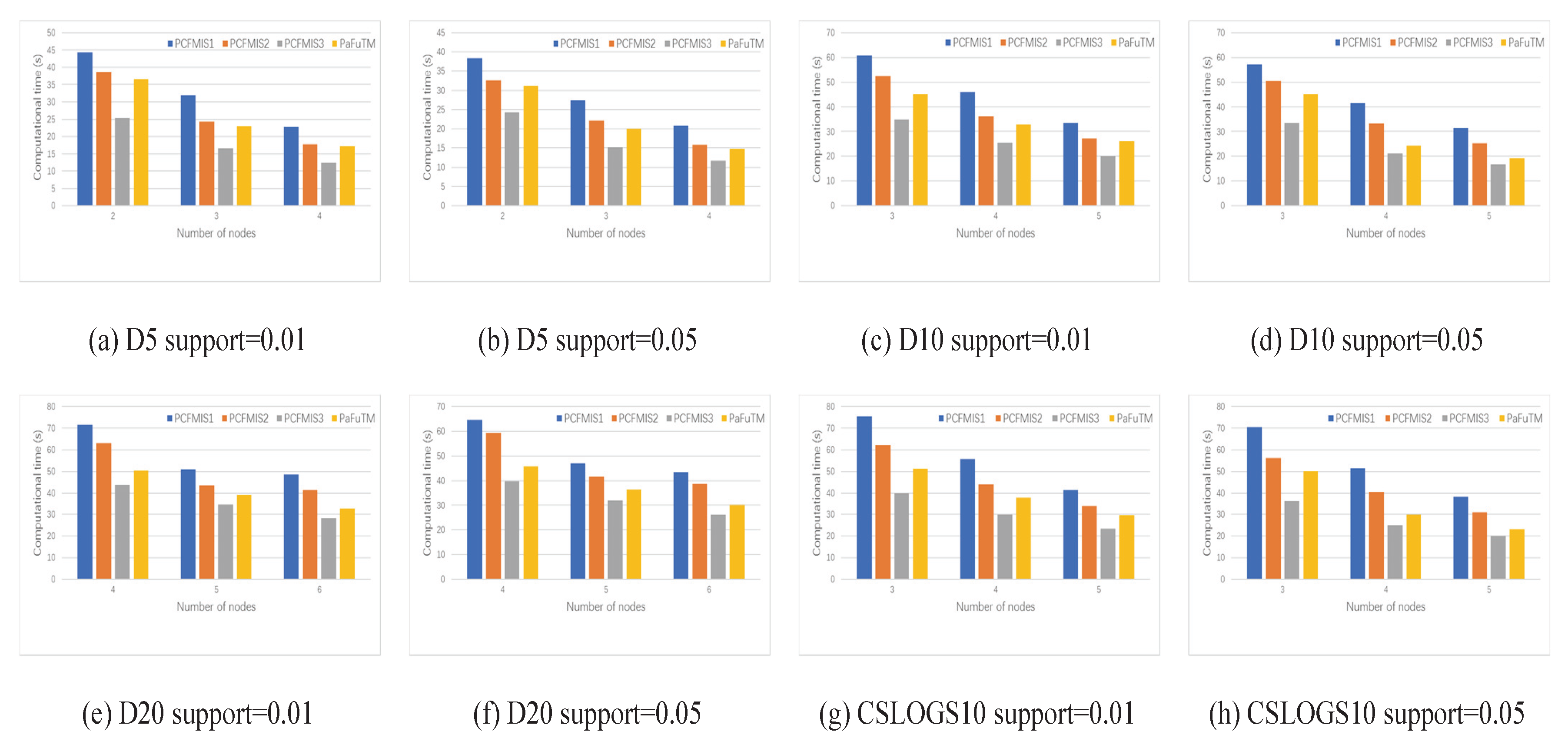
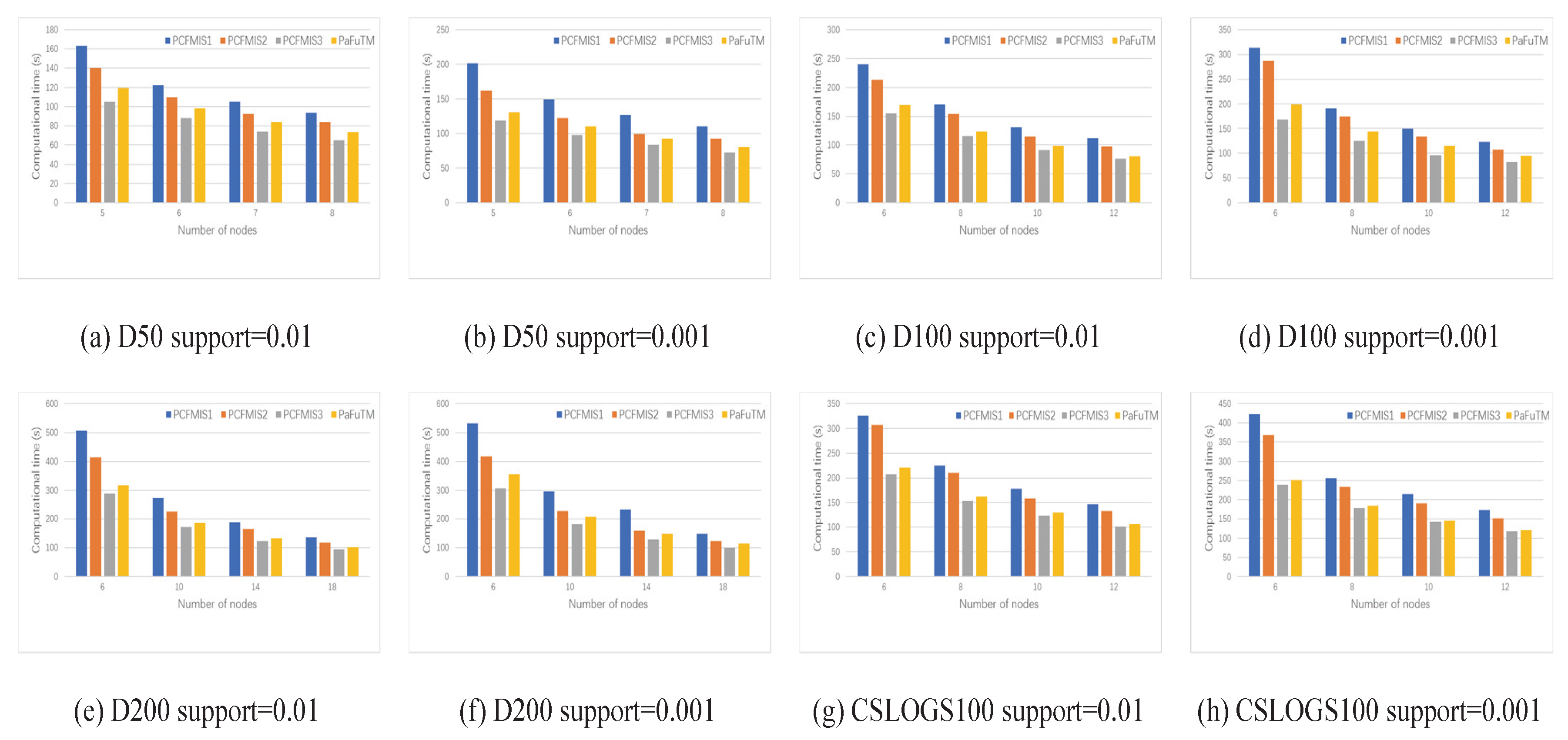
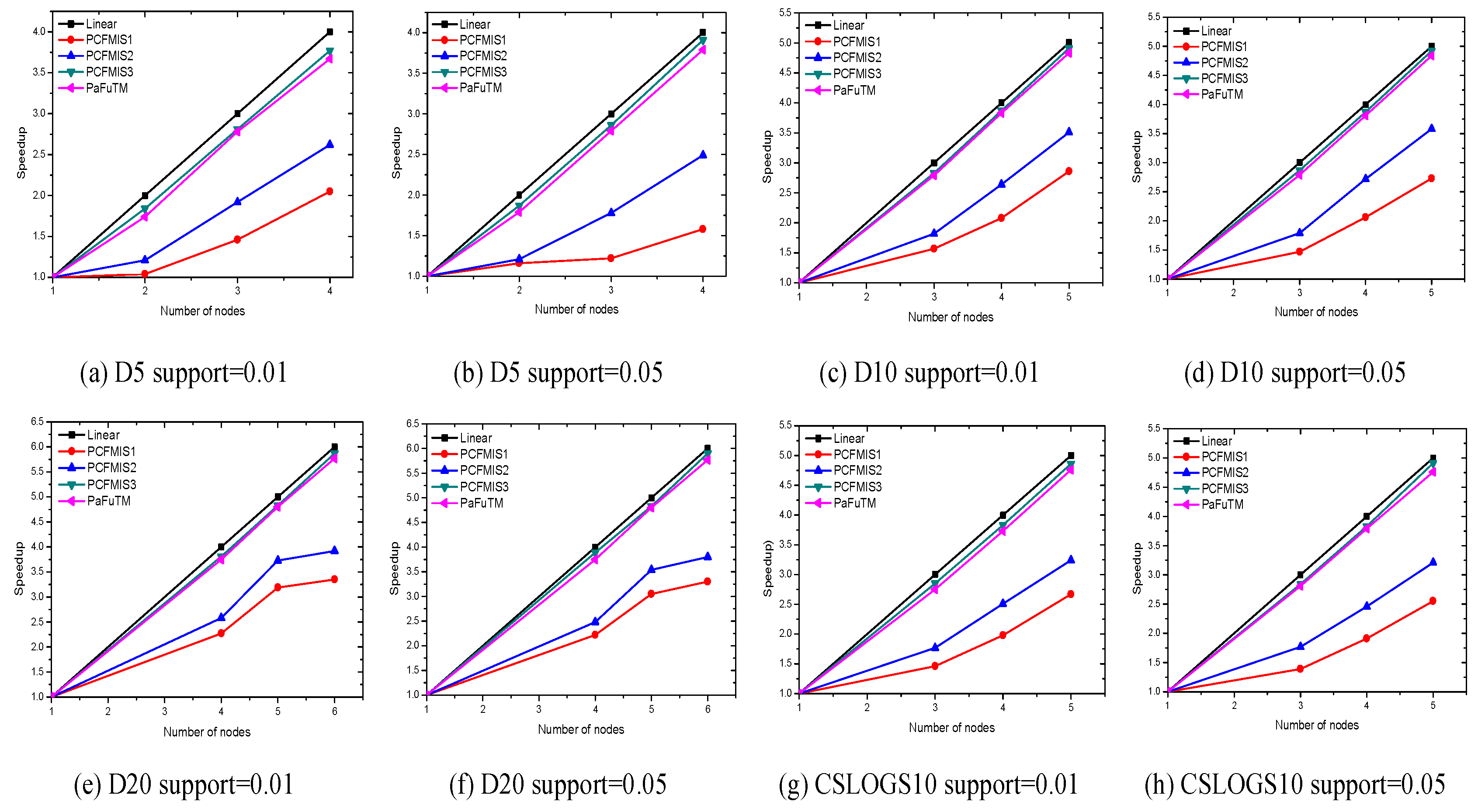
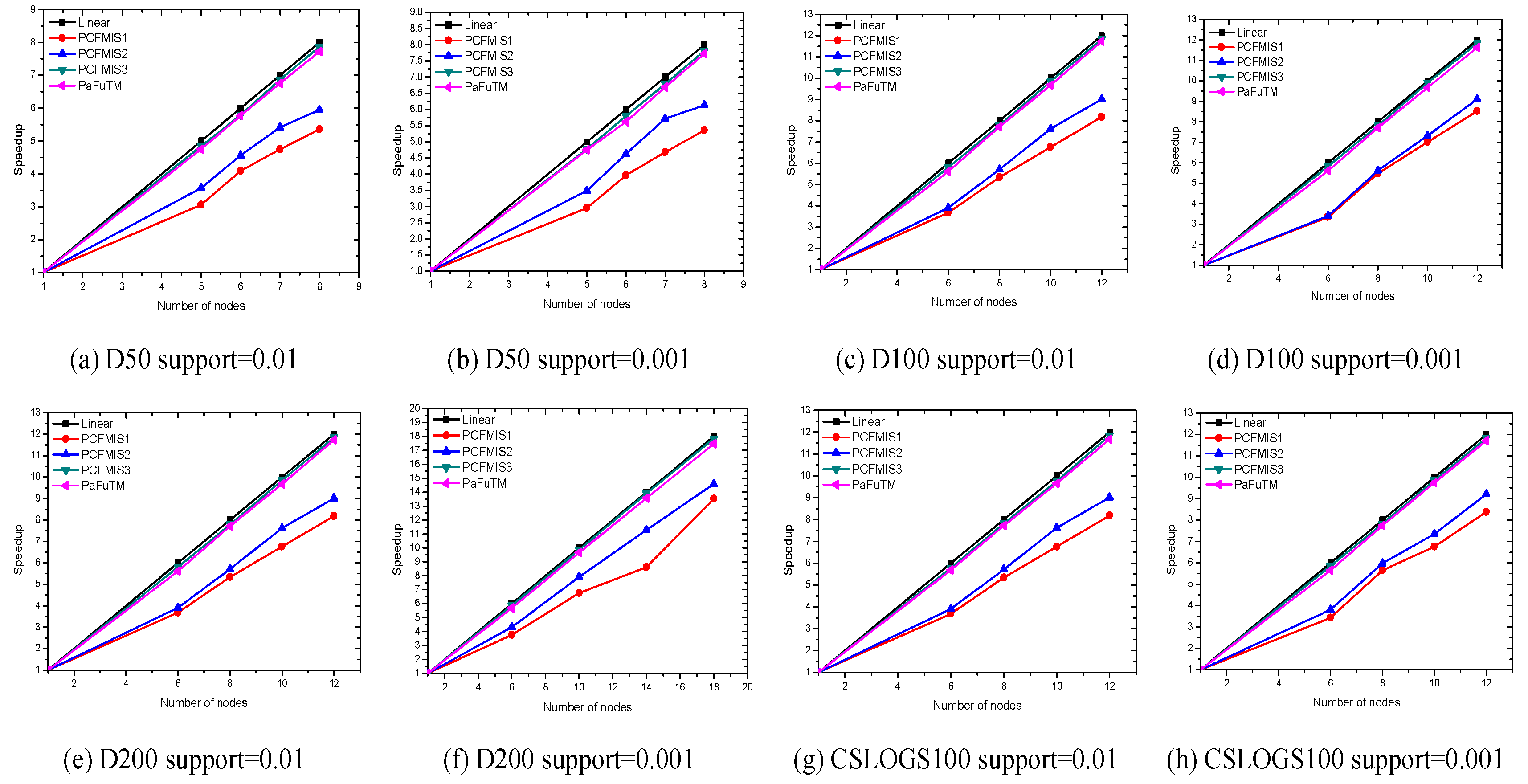
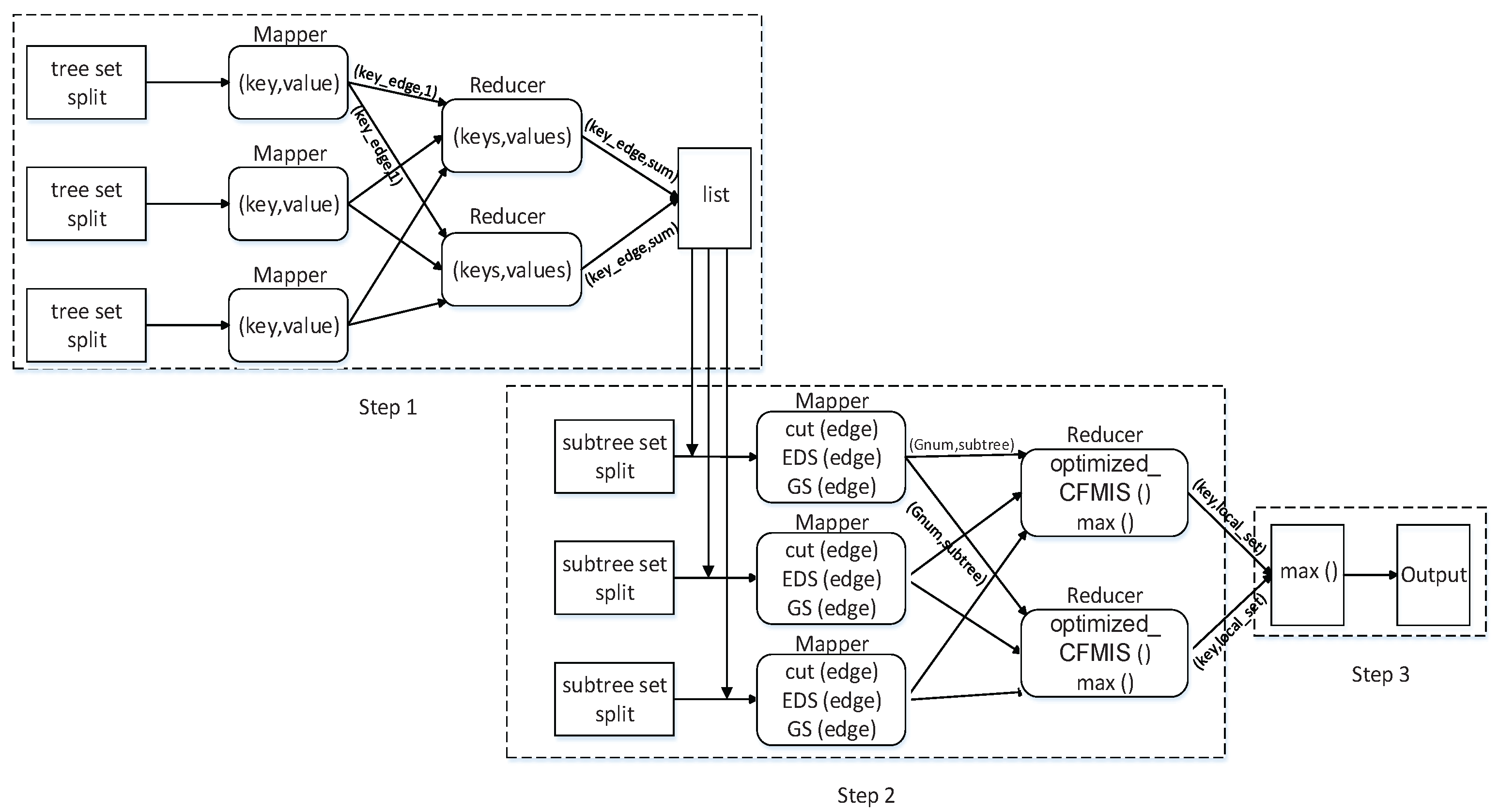
Most data with a complicated structure can be represented by a tree structure. Parallel processing is essential to mining frequent subtrees from massive data in a timely manner. However, only a few algorithms could be transplanted to a parallel framework. A new parallel algorithm is proposed to mine frequent subtrees by grouping strategy (GS) and edge division strategy (EDS). The main idea of GS is dividing edges according to different intervals and then dividing subtrees consisting of the edges in different intervals to their corresponding groups. Besides, the compression stage in mining is optimized by avoiding all candidate subtrees of a compression tree, which reduces the mining time on the nodes. Load balancing can improve the performance of parallel computing. An effective EDS is proposed to achieve load balancing. EDS divides the edges with different frequencies into different intervals reasonably, which directly affects the task amount in each computing node. Experiments demonstrate that the proposed algorithm can implement parallel mining, and it outperforms other compared methods on load balancing and speedup.
Keywords: frequent subtree; parallel algorithms; data partitioning; load balancing frequent subtree; parallel algorithms; data partitioning; load balancing