Article

Efficient Machine Learning Models for the Uplift Behavior of Helical Anchors in Dense Sand for Wind Energy Harvesting


1
State Key Laboratory of Hydraulic Engineering Simulation and Safety School of Civil Engineering, Tianjin University, Tianjin 300350, China
2
State Key Laboratory of Coastal and Offshore Engineering, Dalian University of Technology, Dalian 116081, China
3
School of Resources and Safety Engineering, Central South University, Changsha 410083, China
4
School of Civil Engineering and Architecture, Northeast Electric Power University, Jilin 132012, China
5
Department of Infrastructure Engineering, The University of Melbourne, Melbourne 3000, Australia
*
Author to whom correspondence should be addressed.
Appl. Sci. 2022, 12(20), 10397; https://doi.org/10.3390/app122010397
Submission received: 13 September 2022 / Revised: 4 October 2022 / Accepted: 8 October 2022 / Published: 15 October 2022
(This article belongs to the Special Issue Recent Advances in Smart Mining Technology)

Abstract

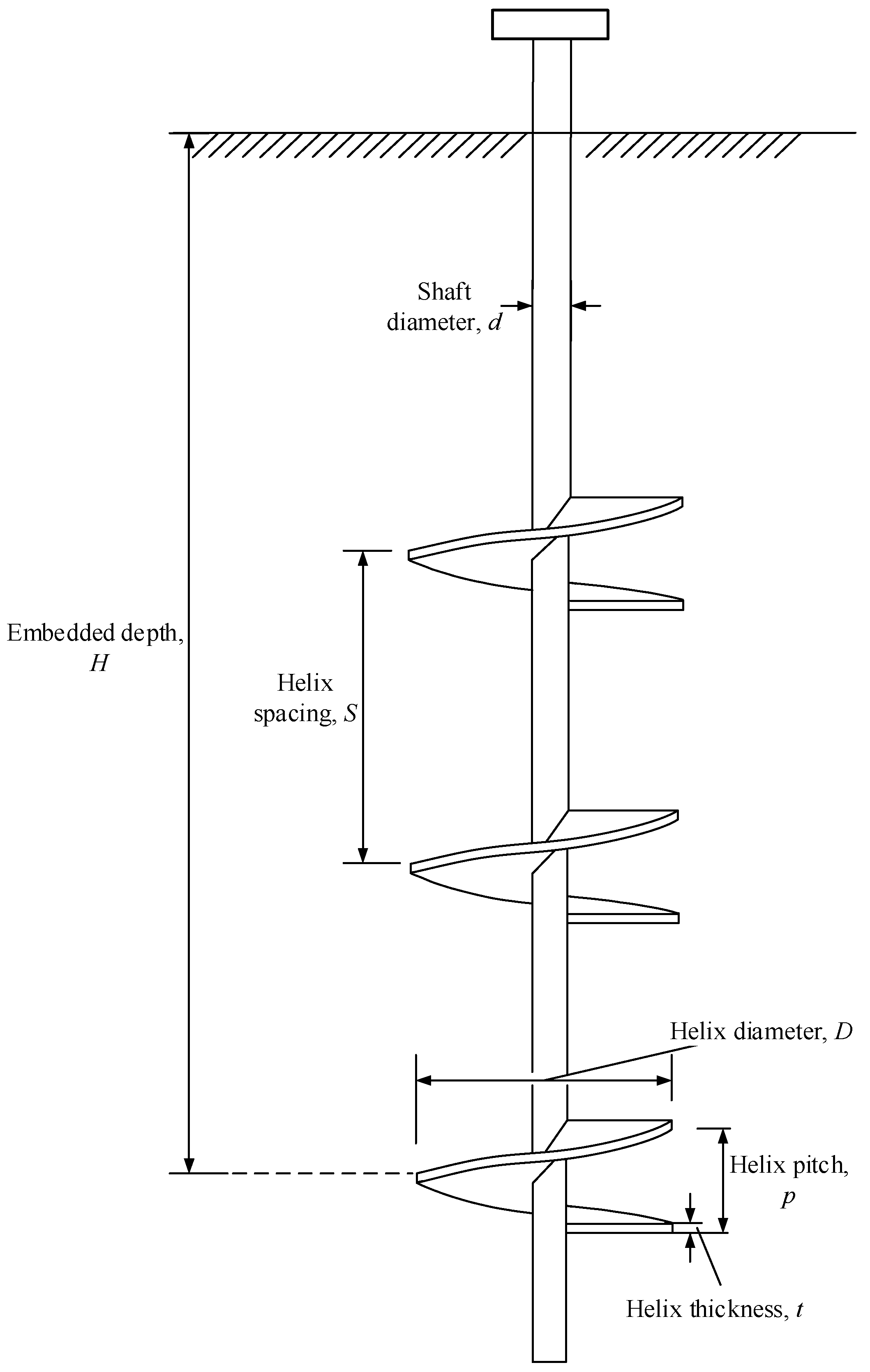
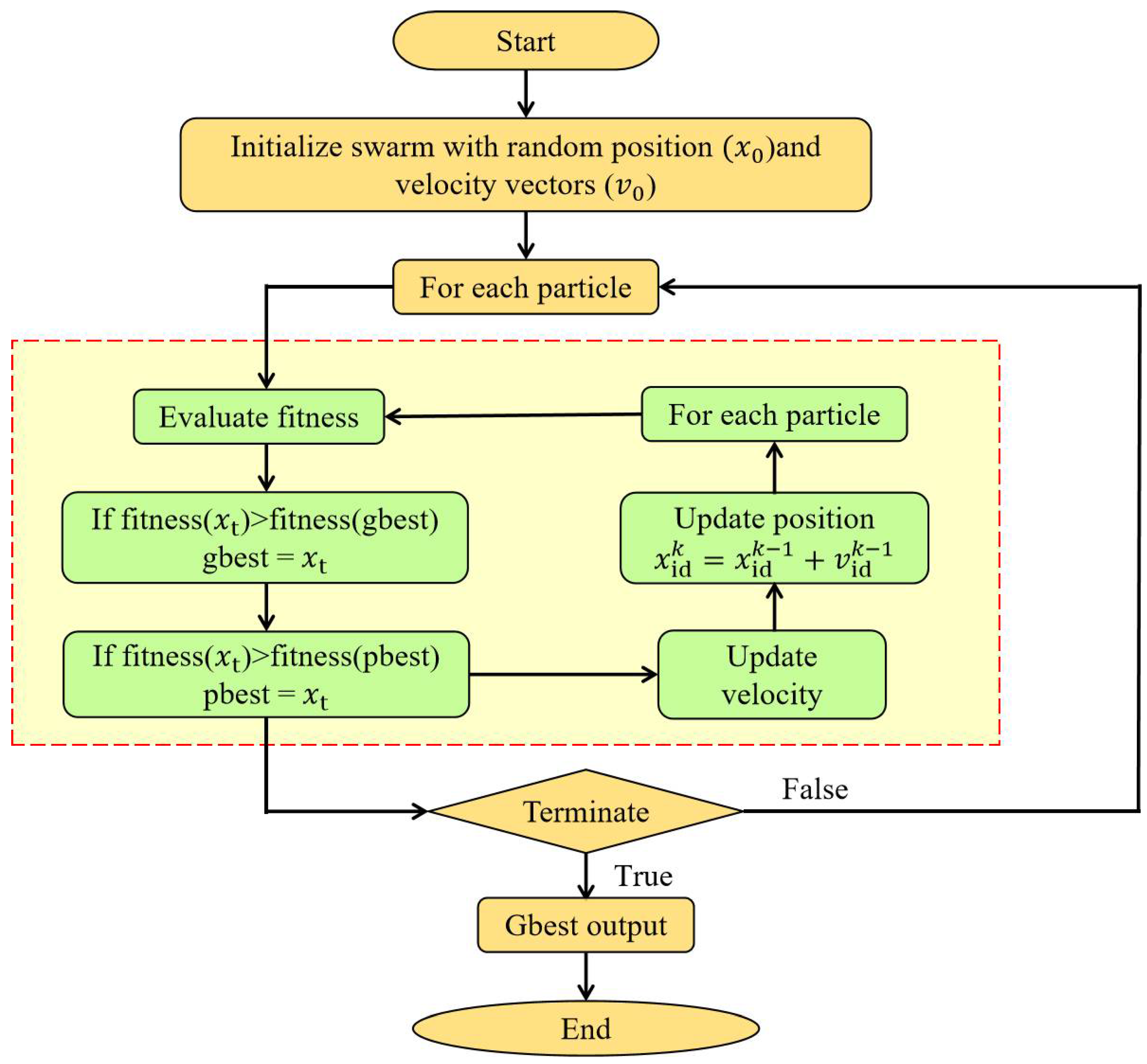
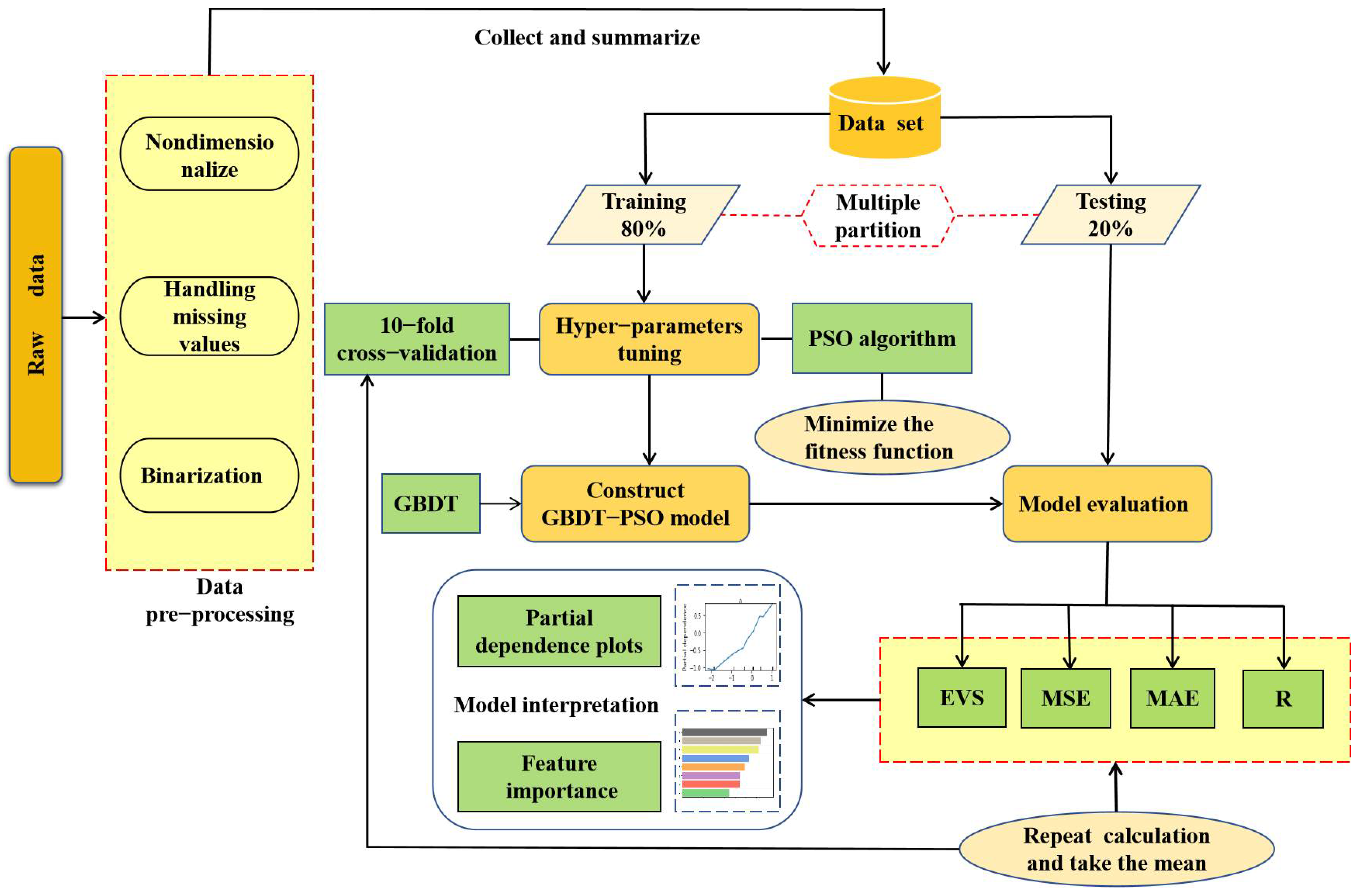
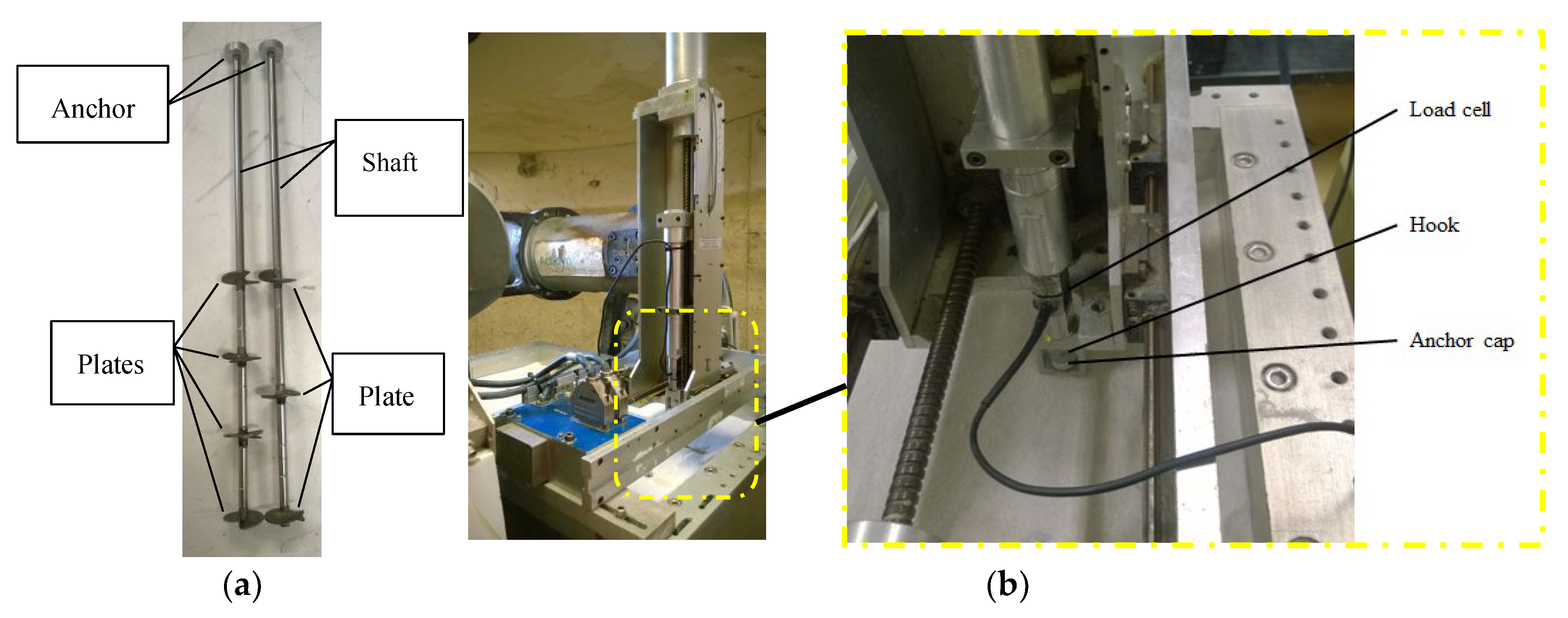
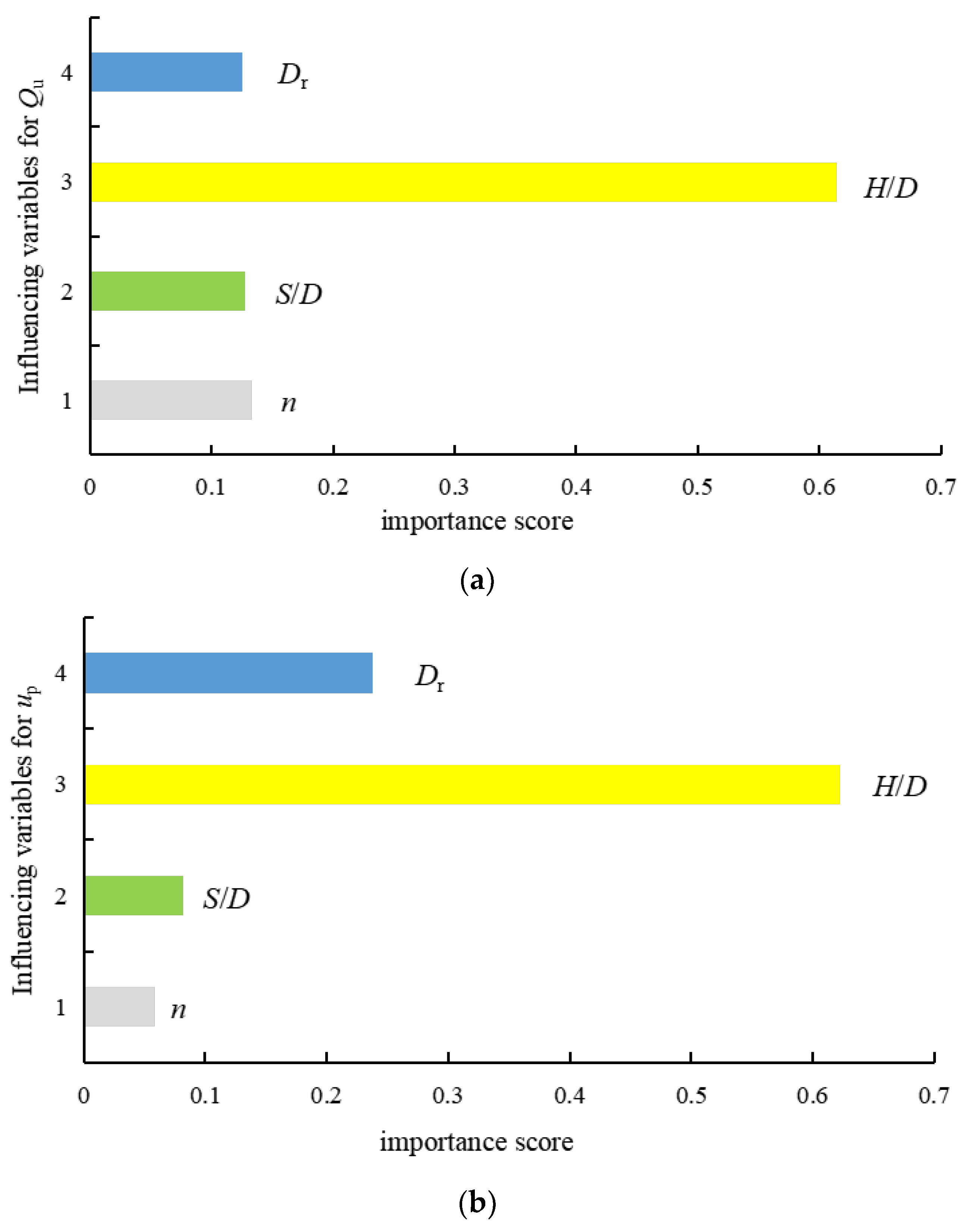
Helical anchors are widely used in engineering to resist tension, especially during offshore wind energy harvesting, and their uplift behavior in sand is influenced by many factors. Experimental studies are often used to investigate these anchors; however, scale effects are inevitable in 1× g model tests, soil conditions for in situ tests are challenging to control, and centrifuge tests are expensive and rare. To make full use of the limited valid data and to gain more knowledge about the uplift behaviors of helical anchors in sand, a prediction model integrating gradient-boosting decision trees (GBDT) and particle swarm optimization (PSO) was proposed in this study. Data obtained from a series of centrifuge tests formed the dataset of the prediction model. The relative density of soil, embedment ratio, helix spacing ratio, and the number of helices were used as input parameters, while the anchor mobilization distance and the ultimate monotonic uplift resistance were set as output parameters. A GBDT algorithm was used to construct the model, and a PSO algorithm was used for hyperparameter tuning. The results show that the optimal GBDT model accurately predicted the anchor mobilization distance and the ultimate monotonic uplift resistance of helical anchors in dense fine silica sand. By analyzing the relative importance of influencing variables, the embedment ratio was found to be the most significant variable in the model, while the relative density of the fine silica sand soil, the helix spacing ratio, and the number of helices had relatively minor influence. In particular, the helix spacing ratio was found to have no influence on the capacity of adjacent helices when S/D > 6.
Keywords: helical anchor; sand; artificial intelligence techniques; gradient-boosting decision trees; particle swarm optimization helical anchor; sand; artificial intelligence techniques; gradient-boosting decision trees; particle swarm optimization