Article

Dynamic Network Formation for FSO Satellite Communication
1
Ariel Cyber Innovation Center and Astrophysics, Geophysics & Space Science Research Center, Department of Computer Science, Ariel University, Ariel 4070000, Israel
2
Department of Computer Science, Holon Institute of Technology, Holon 5810201, Israel
3
Ariel Cyber Innovation Center, Department of Industrial Engineering & Management, Ariel University, Ariel 4070000, Israel
*
Author to whom correspondence should be addressed.
Appl. Sci. 2022, 12(2), 738; https://doi.org/10.3390/app12020738
Submission received: 12 December 2021 / Revised: 4 January 2022 / Accepted: 9 January 2022 / Published: 12 January 2022

Abstract

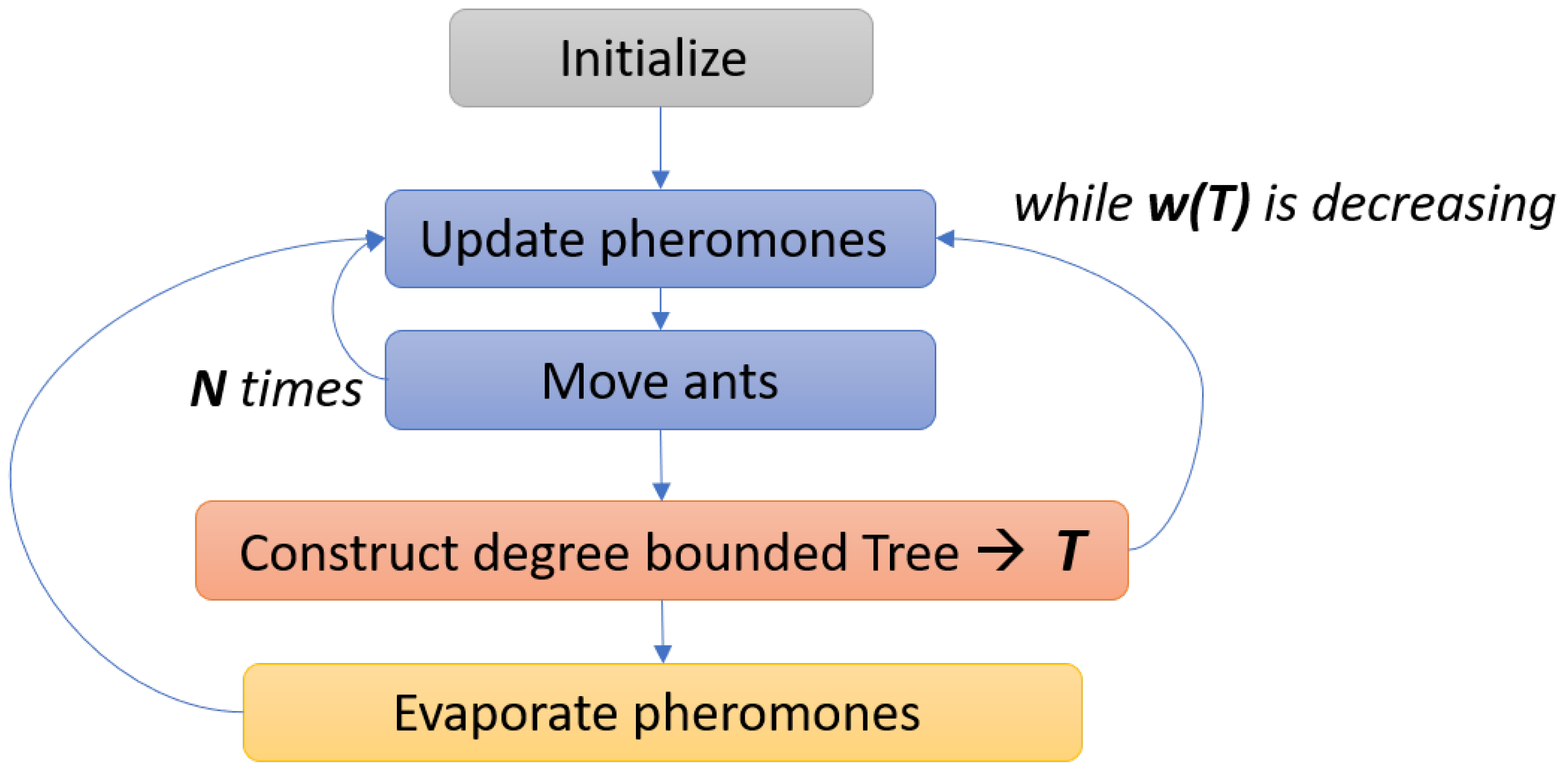
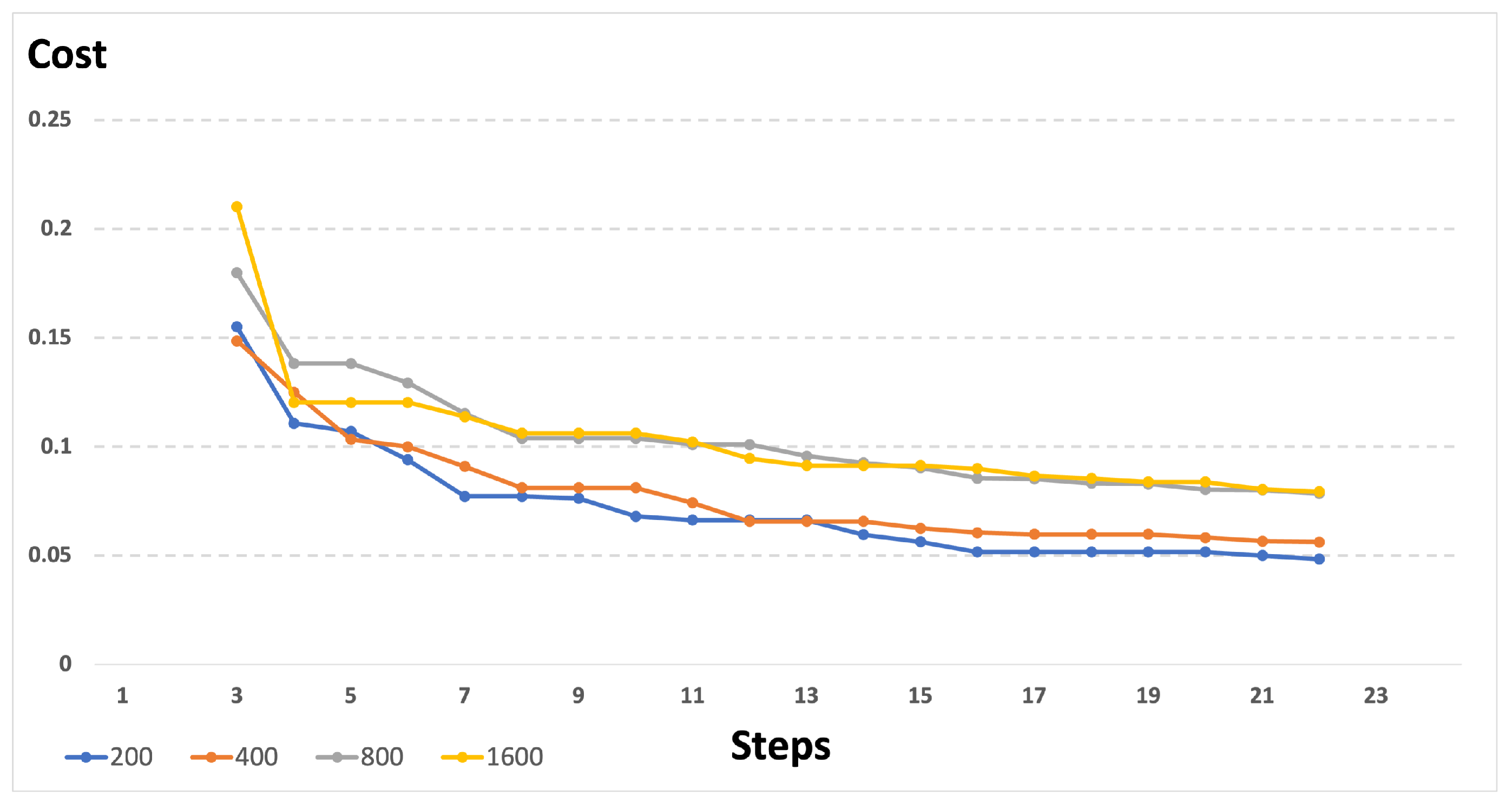
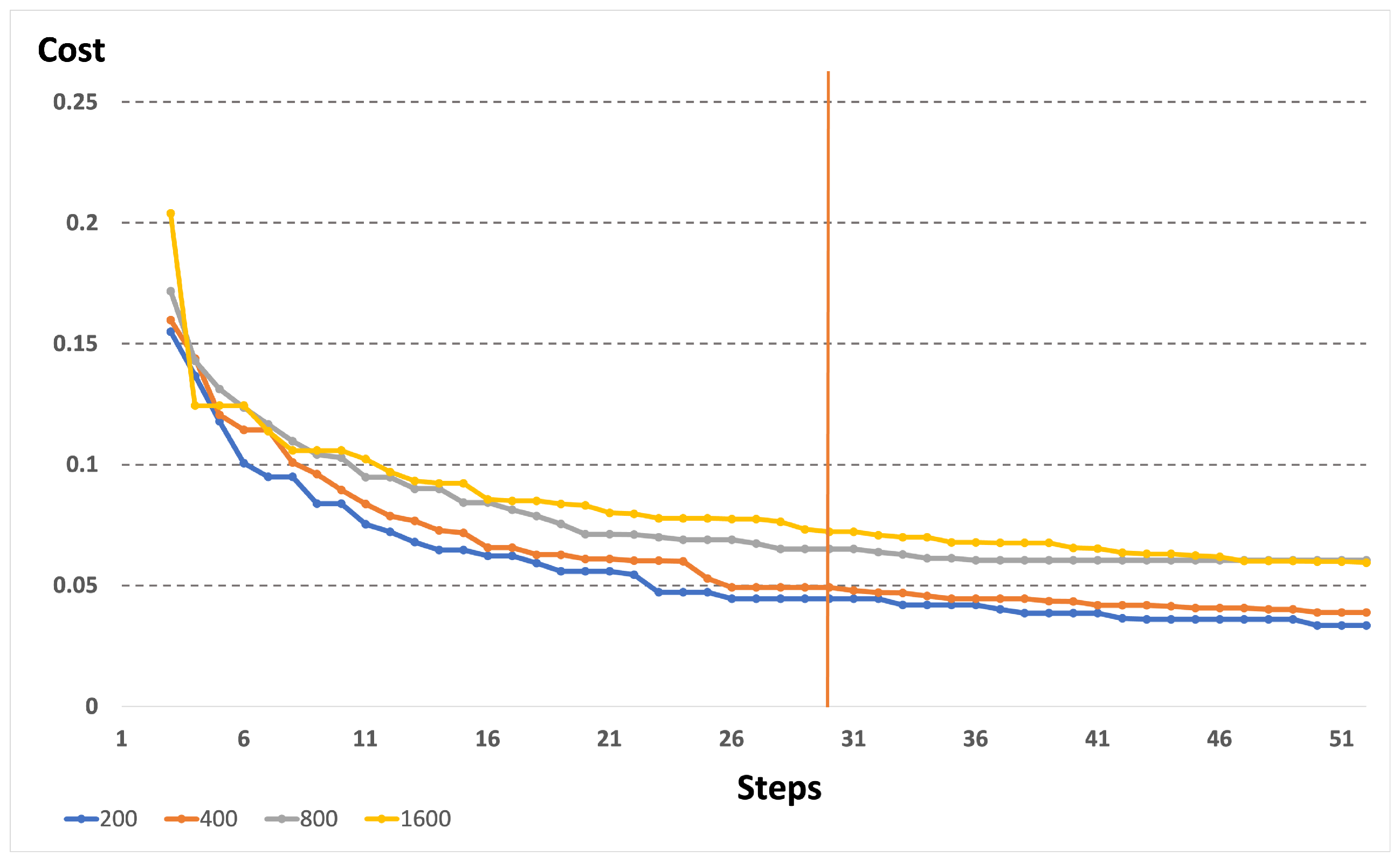
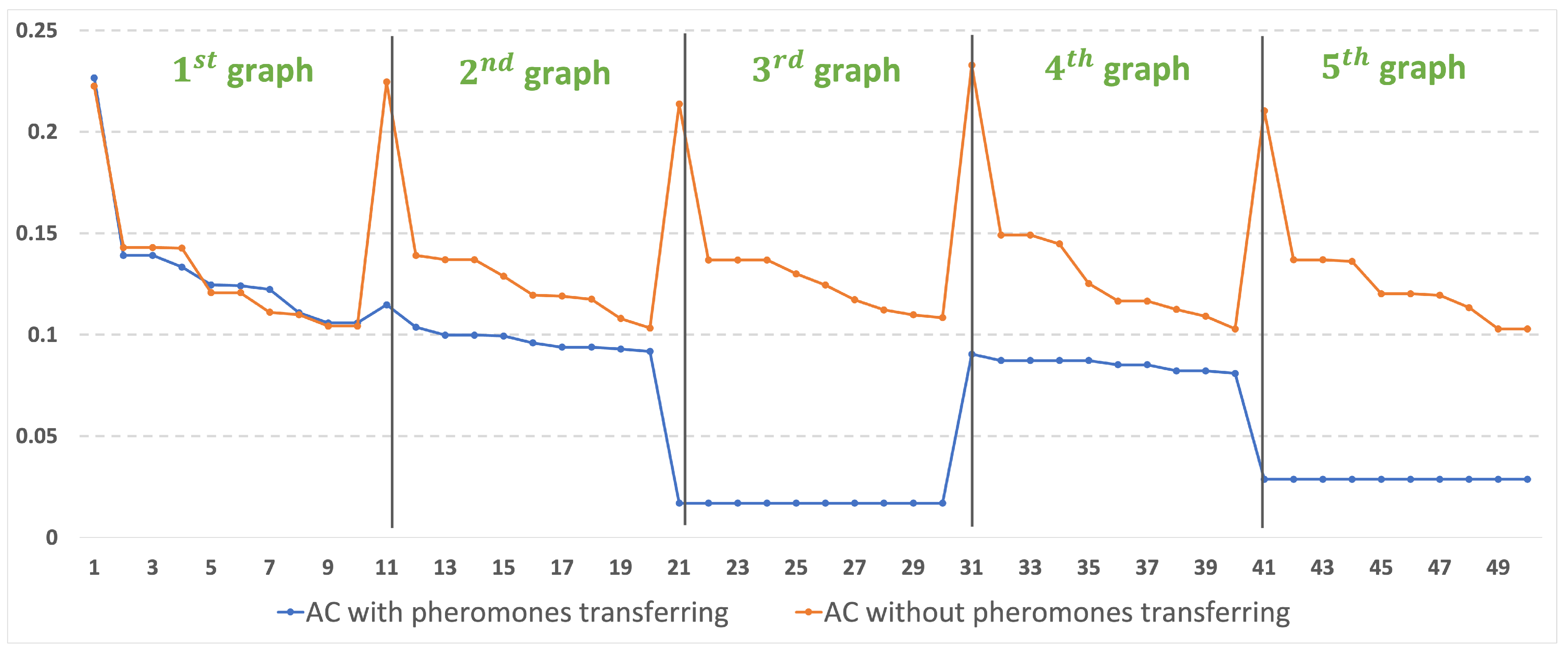
Satellite network optimization is essential, particularly since the cost of manufacturing, launching and maintaining each satellite is significant. Moreover, classical communication optimization methods, such as Minimal Spanning Tree, cannot be applied directly in dynamic scenarios where the satellite constellation is constantly changing. Motivated by the rapid growth of the Star-Link constellation that, as of Q4 2021, consists of over 1600 operational LEO satellites with thousands more expected in the coming years, this paper focuses on the problem of constructing an optimal inter-satellite (laser) communication network. More formally, given a large set of LEO satellites, each equipped with a fixed number of laser links, we direct each laser module on each satellite such that the underlying laser network will be optimal with respect to a given objective function and communication demand. In this work, we present a novel heuristic to create an optimal dynamic optical network communication using an Ant Colony algorithm. This method takes into account both the time it takes to establish an optical link (acquisition time) and the bounded number of communication links, as each satellite has a fixed amount of optical communication modules installed. Based on a large number of simulations, we conclude that, although the underlying problem of bounded-degree-spanning-tree is NP-hard (even for static cases), the suggested ant-colony heuristic is able to compute cost-efficient solutions in semi-real-time.
Keywords: FSO; satellite laser communication; ant colony methodology; dynamic network optimization; satellite constellation interlink optimization FSO; satellite laser communication; ant colony methodology; dynamic network optimization; satellite constellation interlink optimization