Article

Heart Disease Risk Prediction Using Machine Learning Classifiers with Attribute Evaluators

by
Karna Vishnu Vardhana Reddy
1,
Irraivan Elamvazuthi
1,*,
Azrina Abd Aziz
1,
Sivajothi Paramasivam
2,
Hui Na Chua
3 and
S. Pranavanand
4
1
Department of Electrical and Electronics Engineering, Universiti Teknologi PETRONS, Seri Iskandar 32610, Malaysia
2
School of Engineering, UOWM KDU University College, Shah Alam 40150, Malaysia
3
Department of Computing and Information Systems, School of Engineering, and Technology, Sunway University, Petaling Jaya 47500, Malaysia
4
Department of E.I.E, VNR Vignana Jyothi Institute of Engineering and Technology, Hyderabad 500090, India
*
Author to whom correspondence should be addressed.
Appl. Sci. 2021, 11(18), 8352; https://doi.org/10.3390/app11188352
Submission received: 27 July 2021 / Revised: 30 August 2021 / Accepted: 1 September 2021 / Published: 9 September 2021

Abstract

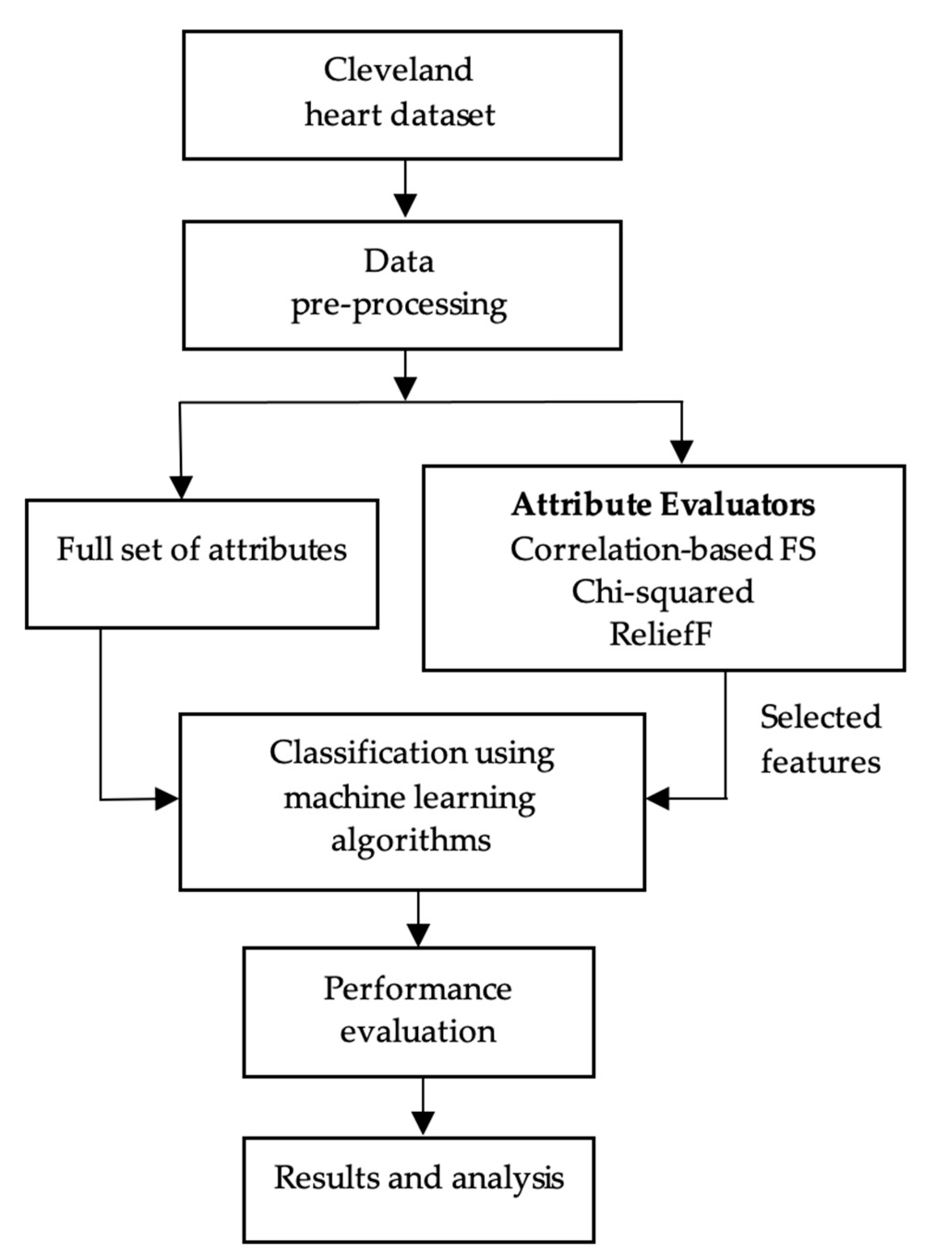
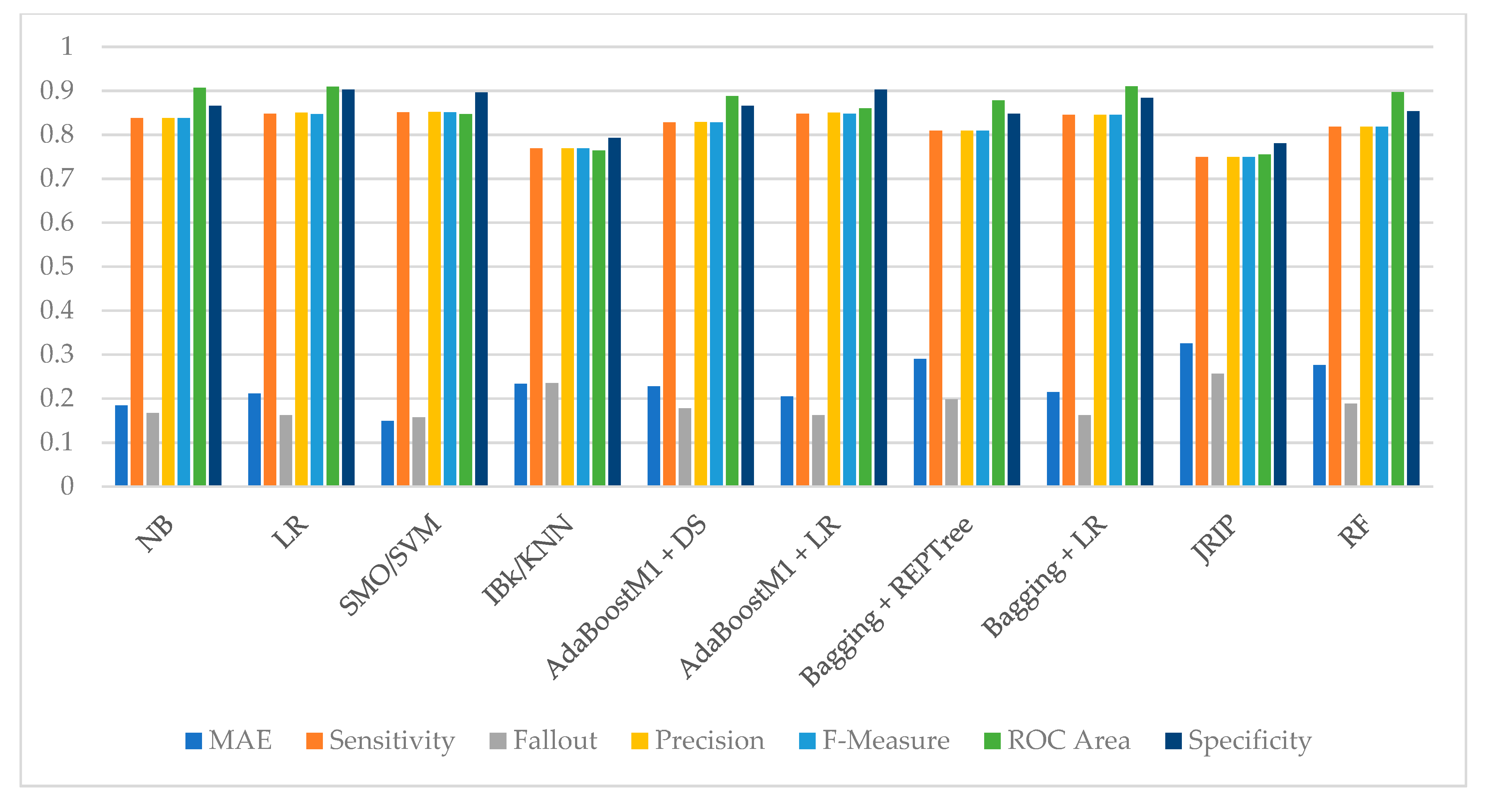
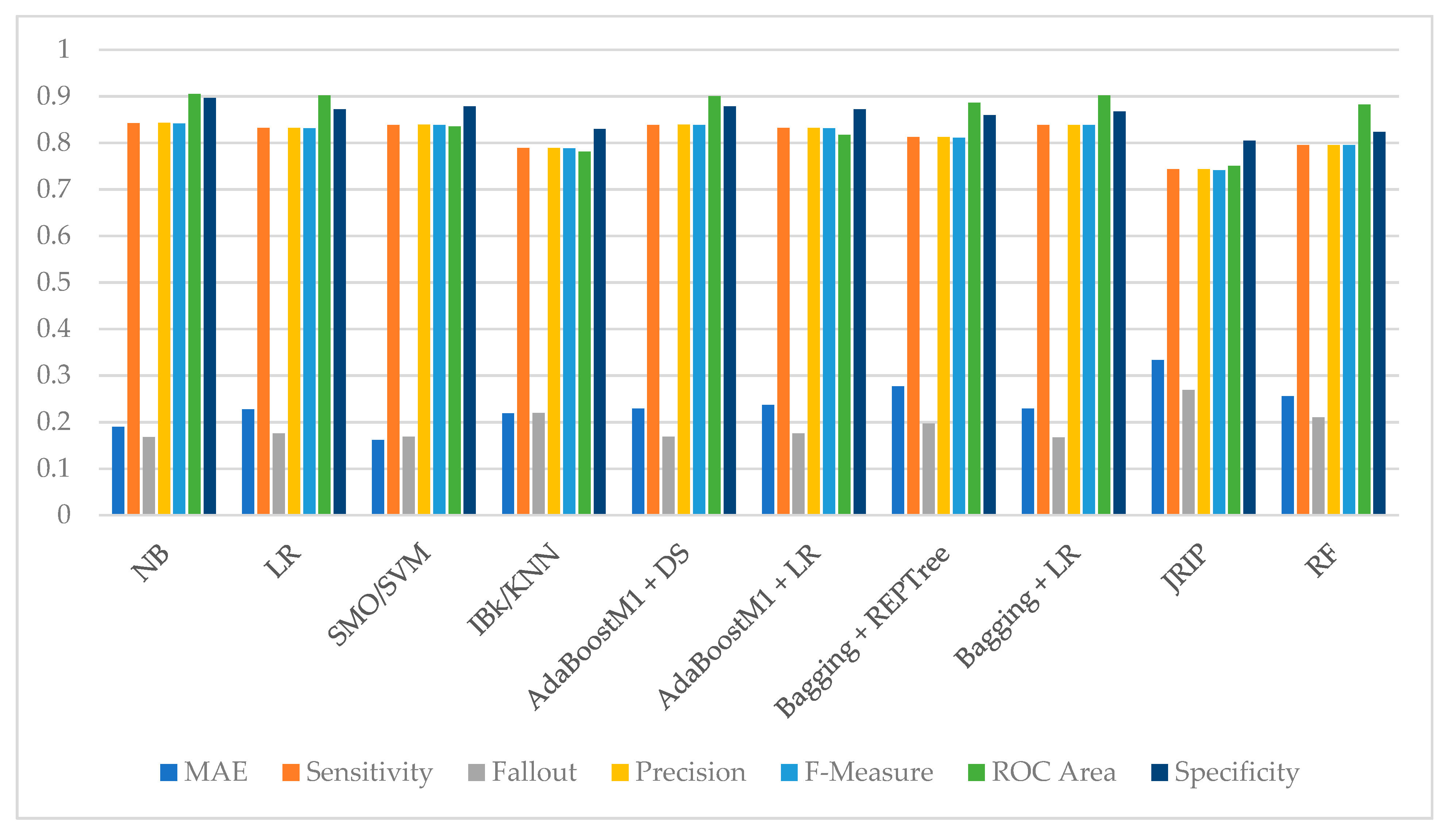
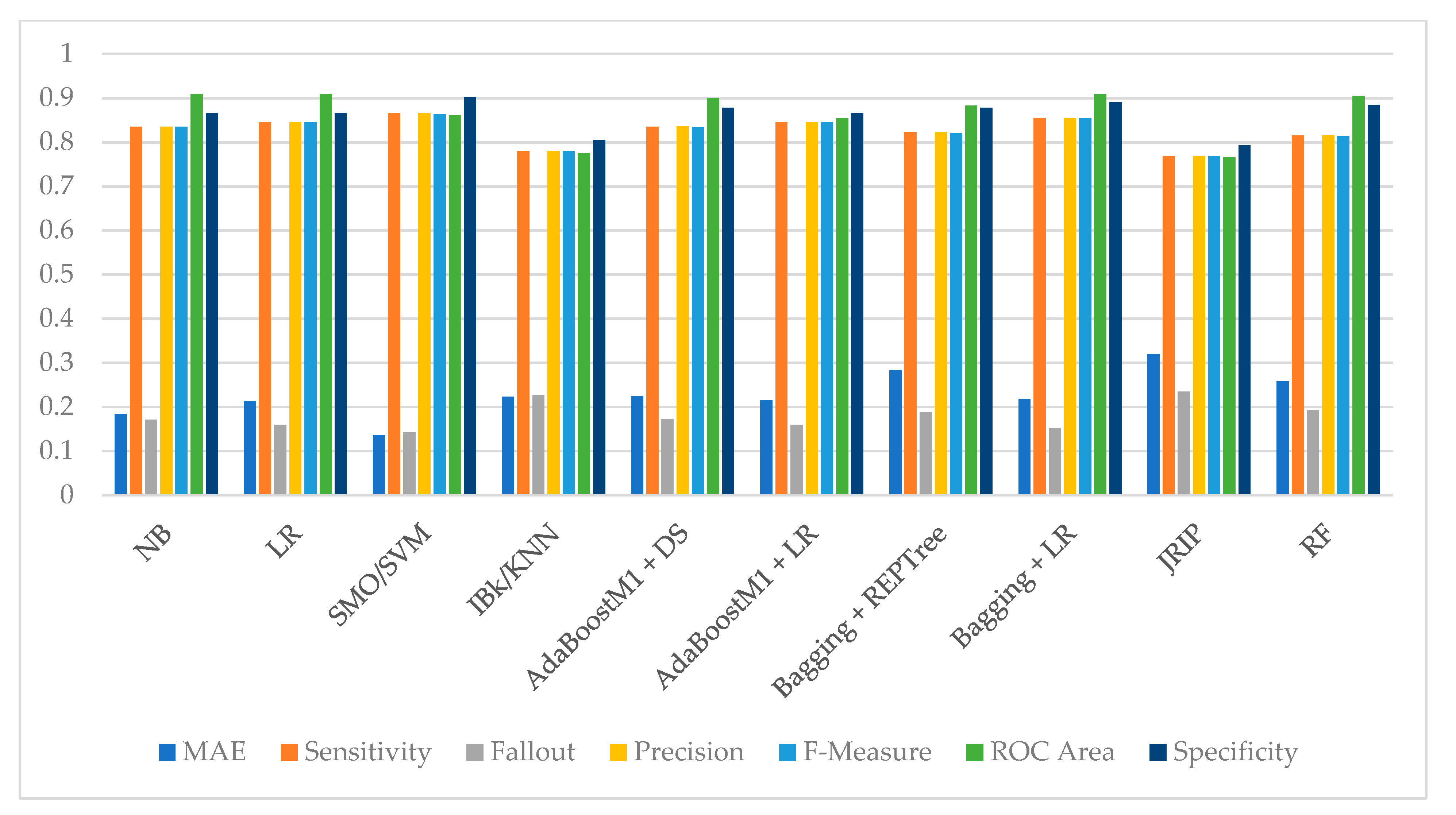
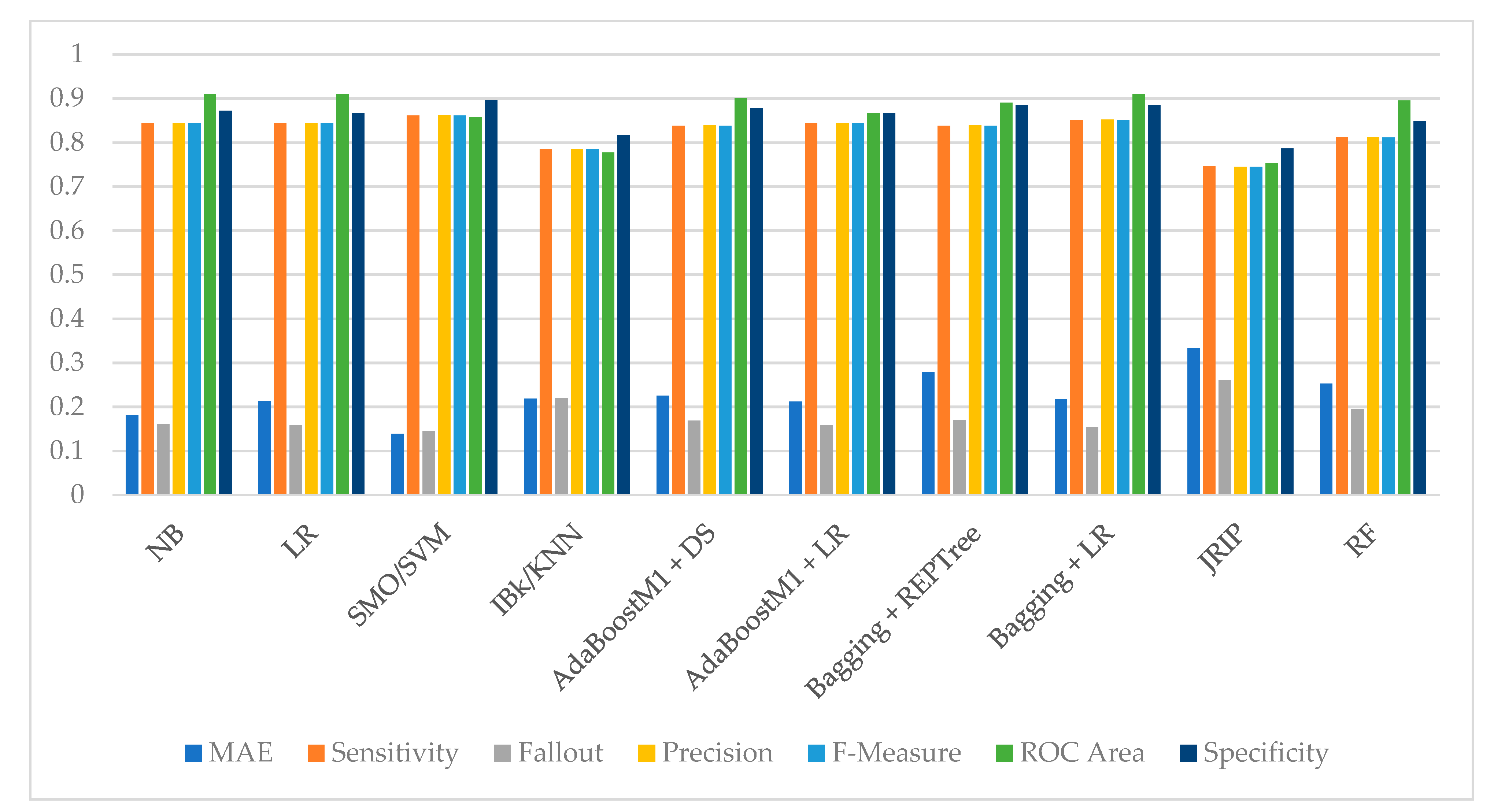
Cardiovascular diseases (CVDs) kill about 20.5 million people every year. Early prediction can help people to change their lifestyles and to ensure proper medical treatment if necessary. In this research, ten machine learning (ML) classifiers from different categories, such as Bayes, functions, lazy, meta, rules, and trees, were trained for efficient heart disease risk prediction using the full set of attributes of the Cleveland heart dataset and the optimal attribute sets obtained from three attribute evaluators. The performance of the algorithms was appraised using a 10-fold cross-validation testing option. Finally, we performed tuning of the hyperparameter number of nearest neighbors, namely, ‘k’ in the instance-based (IBk) classifier. The sequential minimal optimization (SMO) achieved an accuracy of 85.148% using the full set of attributes and 86.468% was the highest accuracy value using the optimal attribute set obtained from the chi-squared attribute evaluator. Meanwhile, the meta classifier bagging with logistic regression (LR) provided the highest ROC area of 0.91 using both the full and optimal attribute sets obtained from the ReliefF attribute evaluator. Overall, the SMO classifier stood as the best prediction method compared to other techniques, and IBk achieved an 8.25% accuracy improvement by tuning the hyperparameter ‘k’ to 9 with the chi-squared attribute set.
Keywords: heart disease; data pre-processing; attribute evaluation; machine learning classifiers; hyperparameter tuning heart disease; data pre-processing; attribute evaluation; machine learning classifiers; hyperparameter tuning