Article

Optimization of the Polishing Efficiency and Torque by Using Taguchi Method and ANOVA in Robotic Polishing


1
Shenzhen Institutes of Advanced Technology, Chinese Academy of Sciences, Shenzhen 518055, China
2
University of Chinese Academy of Sciences, Beijing 100049, China
3
Shenzhen Key Laboratory of Precision Engineering, Shenzhen 518055, China
4
Department of Surgery and Chow Yuk Ho Technology Centre for Innovation Medicine, The Chinese University of Hong Kong, Hong Kong 999077, China
5
S. M. Wu School of Intelligent Engineering, South China University of Technology, Guangzhou 511442, China
*
Author to whom correspondence should be addressed.
Appl. Sci. 2020, 10(3), 824; https://doi.org/10.3390/app10030824
Submission received: 31 December 2019 / Revised: 15 January 2020 / Accepted: 19 January 2020 / Published: 23 January 2020
(This article belongs to the Section Mechanical Engineering)

Abstract

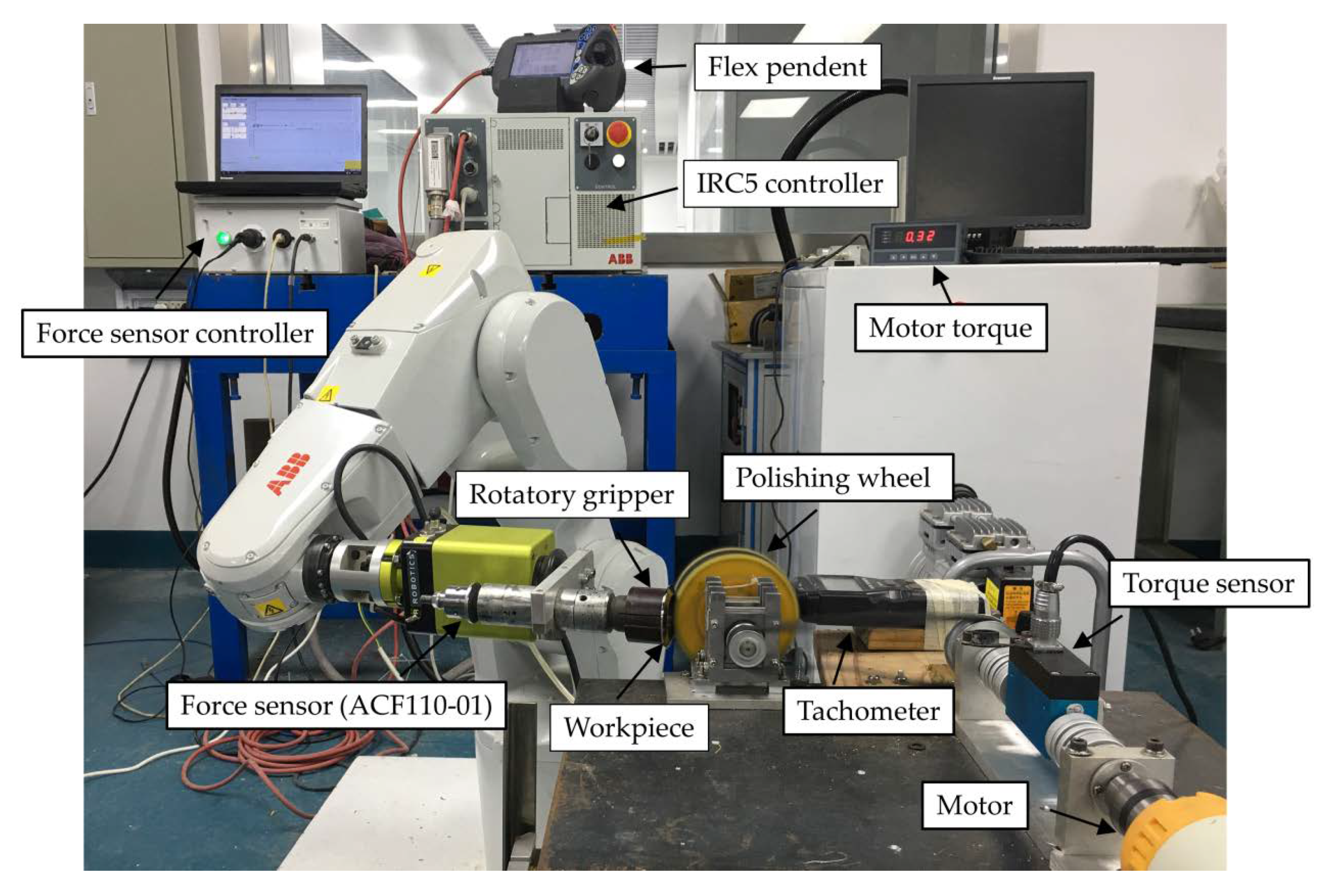
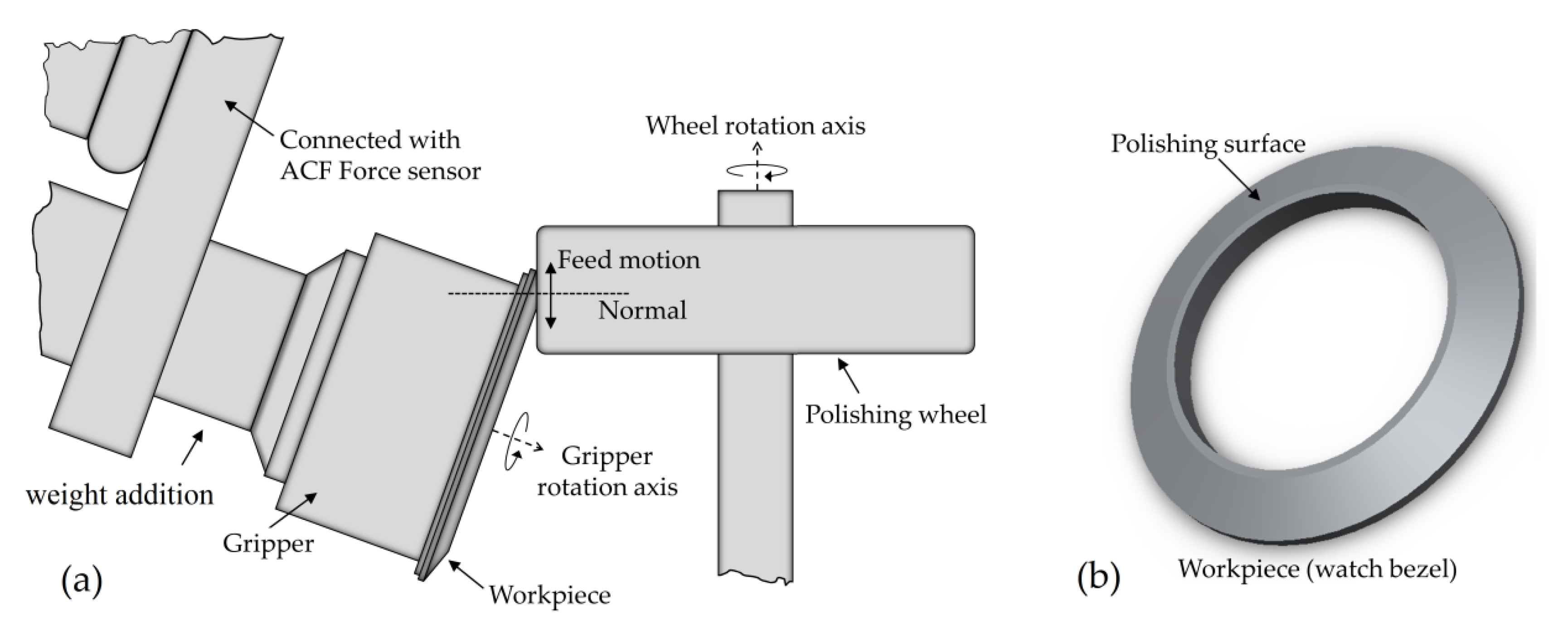
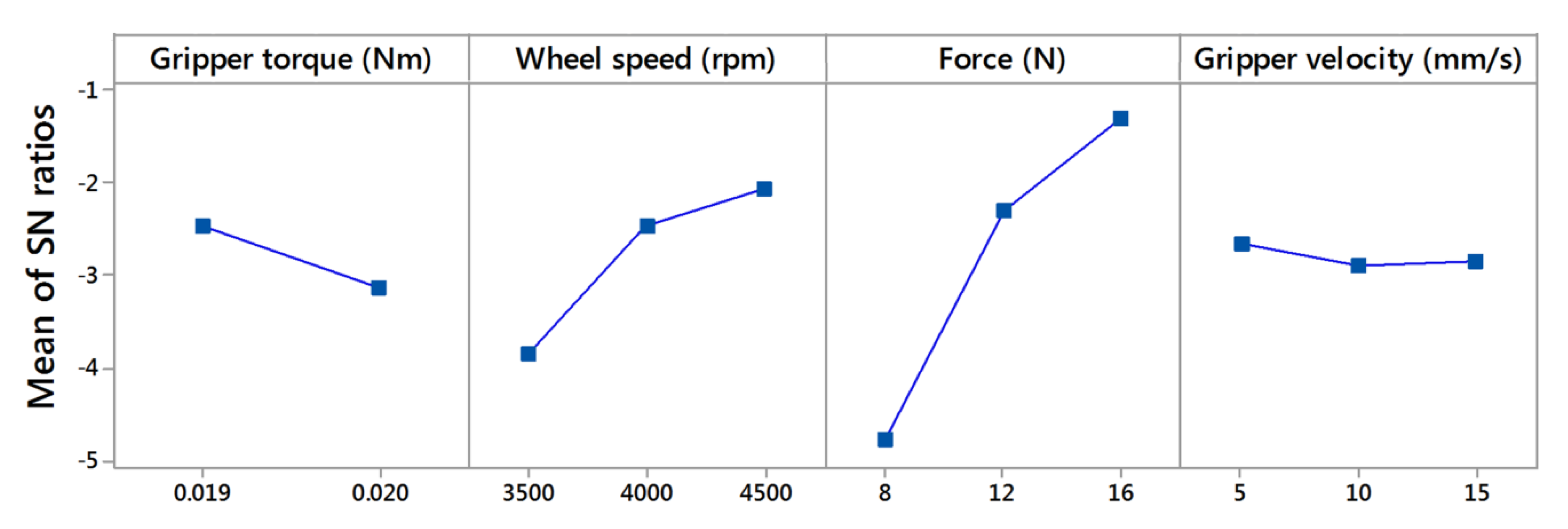
Surface finishing and polishing are important quality assurance processes in many manufacturing industries. A polished surface (low surface roughness) is linked with many useful properties other than providing an appealing gloss to the product, such as surface friction, electrical and chemical resistance, thermal conductivity, reflection, and product life. All these properties require an efficient polishing system working with the best machining parameters. This study analyzed the effects of the different input polishing parameters on the polishing efficiency and torque in the robotic polishing system for the circular-shaped workpieces (such as ring, cylinder, sphere, cone, etc.) by using the Taguchi method and analysis of variance (ANOVA). A customized rotatory passive gripper is designed to hold the watch bezel during polishing. Under the design of experiments (DOE) technique, Taguchi’s L 18 array is selected to find the optimized process parameters for polishing efficiency (based on surface roughness) and torque. Experimental results with the statistical analysis by signal-to-noise ratio and ANOVA (95% confidence level) confirms that the polishing force and tool speed are the most influencing parameter for polishing efficiency in the system. Linear regression equations are modeled for the polishing efficiency and torque. Finally, a confirmation test is conducted for the validation of the experimentation results against actual results.
Keywords: Taguchi method; ANOVA; regression analysis; surface polishing; torque Taguchi method; ANOVA; regression analysis; surface polishing; torque