


Abstract
The Pakistan construction industry recorded a high growth rate of 9.05% in 2016–2017. However, it fails to complete the projects within the specified cost, time and quality due to the use of traditional management techniques. This can be easily overcome by adopting and implementing new technologies like Building Information Modeling (BIM). In this study, a questionnaire survey was performed to find the present state of BIM in Pakistan and highlight the barriers in its successful adoption. In addition, Interpretive Structure Modeling (ISM) and Cross-Impact Matrix Multiplication Applied to Classification (MICMAC) analysis were used to identify interrelationships among these barriers. Out of 104 responses received, 63% of Architecture, Engineering and Construction (AEC) professionals were aware of BIM and among them, only 17% had utilized BIM in their projects, which is a very low percentage. The adoption of BIM in Pakistan is only at 11%. The respondents acknowledged that BIM helps in minimizing the cost and time of a project up to 57%. This study concluded that BIM is more economical and efficient than other management techniques. Moreover, this research also identifies the ISM and MICMAC analysis-based hierarchical model and three level strategy model that can facilitate the possible implementation. Solutions to common barriers around the globe are also proposed. Thus, by utilizing BIM, an economical, timely, properly managed project can be obtained in Pakistan and other developing construction markets all over the globe.
1. Introduction
Pakistan’s economy is significantly helped by the construction industry. It provides the biggest proportion of employment [1]. Pakistan’s economic survey from 2016–2017 reported that the construction sector of Pakistan has a yearly growth rate of 9.05% [2]. Like developing nations, Pakistan’s construction sector also deviates from the planned quality, cost and time constraints, thus resulting in delays [3,4]. Furthermore, most of the projects fail to meet their goals due to budget and schedule overrun; consequently, the Pakistan construction sector can’t convey according to government plans [4]. By using advanced technologies like BIM, it can effectively achieve the desired results.
The objectives of this paper are to find BIM implementation in Pakistan, to know the benefits of BIM and to investigate BIM barriers and their interrelationships in Pakistan. In addition, effective barriers and their interrelatedness were established. Moreover, Interpretive Structural Modeling (ISM)-based hierarchical model and a three-level strategy were established utilizing ISM and Cross-Impact Matrix Multiplication Applied to Classification (MICMAC) analysis. MICAMAC analysis is a general technique used to classify factors based on their ability to affect other factors.
1.1. Building Information Modeling (BIM)
Autodesk was the first to present 2D computer-aided design in 1982. 2D CAD provides better documentation, precise drafting and saves time. Because of the user-friendly behavior of AutoCAD, the architectural, engineers and construction professionals moved towards AutoCAD technology [5].
According to Bredella [6], Chuck Eastman and Robert were the first who presented the idea of BIM in 1970. For two decades, this arrangement of demonstrating was utilized under various nomenclature, for example, virtual structure, shrewd article and item model [7]. BIM has an edge over conventional CAD 2D models, such that the BIM model can be viably utilized for planning, designing, construction and operation tasks of the projects [8]. Design, engineering and construction experts are inclined towards BIM for the successful and productive structure and development of the board [9]. Building information modeling is not just a product, but is a total procedure [8,10]. In 1992, the term BIM was officially utilized, and in the 21st century, a program called “Revit Software” was developed. Later on in 2004, a similar program was offered to Autodesk and they acquired numerous changes in it. Presently, that product is named as “Autodesk Revit.” This technology has acquired progressive variations in the building design field [11].
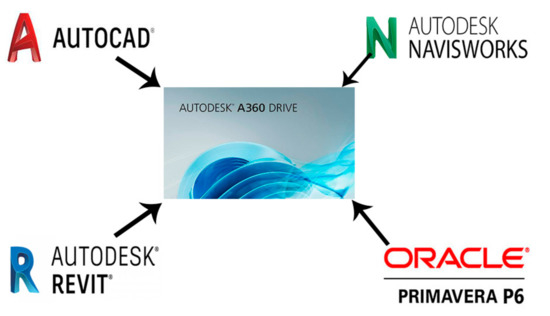
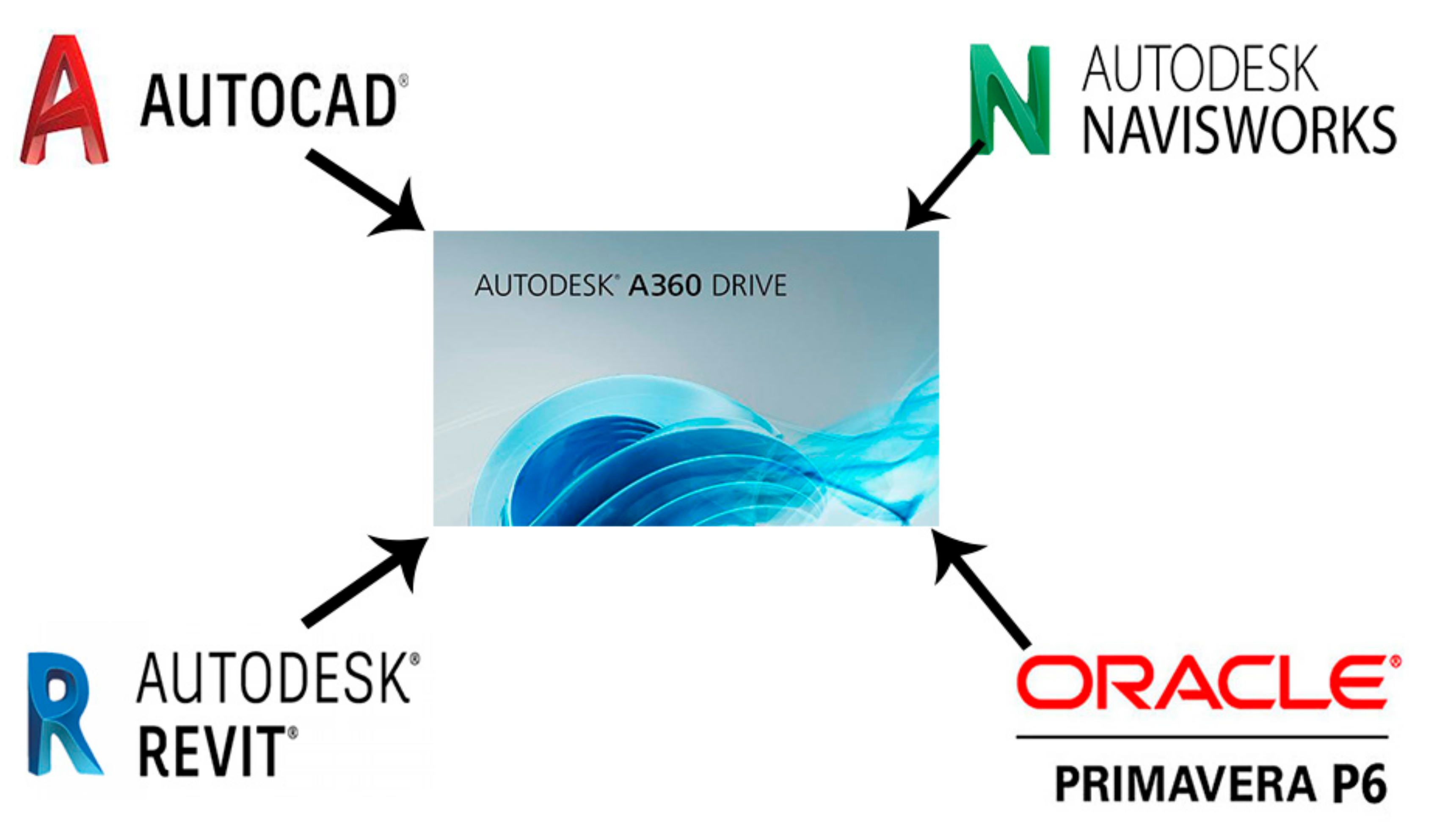
Most of the issues can easily be solved using BIM. In BIM, the creation of intelligent computer models helps in integrating the planning, designing, execution and operation phases [12]. Autodesk360 cloud, also known as A360, provides a central room in the cloud for project documents and the individuals dealing with a task can easily access the files. Autodesk360 cloud is a community-oriented program through which all the team members communicate, and they upload their files to the A360 drive, as shown in Figure 1. The project team can view and access all the shared information and designs in the central workspace anywhere, anytime.
Figure 1.
A360 Cloud.
1.2. Difference between 2D-CAD and BIM
2D CAD varies from BIM in such a manner that 2D CAD clarifies a structure by detached 2D perspectives, for example, elevations, plans and sections. On the off chance that changes in one area are made, variations in all perspectives are required—a tiring procedure which is progressively inclined to ill-advised documentation and mistakes. Besides, 2D drafting shows information as a graphical element, e.g., arcs, circles and lines, with a contrast with the intelligent background of building information modeling models in which design elements are distinguished as building elements and frameworks, e.g., walls, beams, columns and slabs. Building information modeling incorporates the overall information required along with the materials, style, useful specifications and data identified with the venture lifecycle, moreover known as “smart objects” e.g., any warming unit in BIM stores data identified with its provider, activity, support techniques, stream rates and leeway prerequisites [13].
1.3. BIM Implementation Globally
Researchers throughout the world are constantly looking for the problems related to BIM implementation in the construction sector. Bhatti et al. [14] investigated the worldwide implementation of BIM in the Architecture, Engineering and Construction (AEC) industry and found that it was 26% in 2007 and reached 57% in 2016. The figures almost doubled within a decade. BIM implementation in developed countries is made compulsory by establishing policies [15]. In developing countries like Malaysia, BIM implementation has a low percentage due to the absence of national BIM policies, software integration, rivalry and reluctant behavior to transfer skills [16]. Table 1 identifies the percentages of BIM implementation in the various countries, and amongst them, advanced construction markets are working on BIM level 2.
Table 1.
Implementation percentages of Building Information Modeling (BIM) in various construction markets data obtained from [14,17].
1.4. BIM in Pakistan
Due to ill procedures in the construction industry, Pakistan’s infrastructure development falls in the lowest ranks [1]. Ill quality, improper planning, scope and design changes of a project, claims and disputes, incomplete design, corruption and changes in quantity are the major risks associated with Pakistan’s construction sector [18]. Additionally, some other factors that cause time and cost overruns are inadequate design, change in scope, not preparing drawings in the allotted time, late approvals, conflicts between designs, improper estimates, lack of planning, weak coordination links between stakeholders and unhealthy management of contracts [3]. BIM implementation in Pakistan is 11% and they have just used this technology to develop 3D drawings, which is very limited and only one of the applications of BIM [14] and should be increased. The government of Pakistan should make national policies and take measures to manage the problems faced by the construction sector [19].
2. Research Methodology
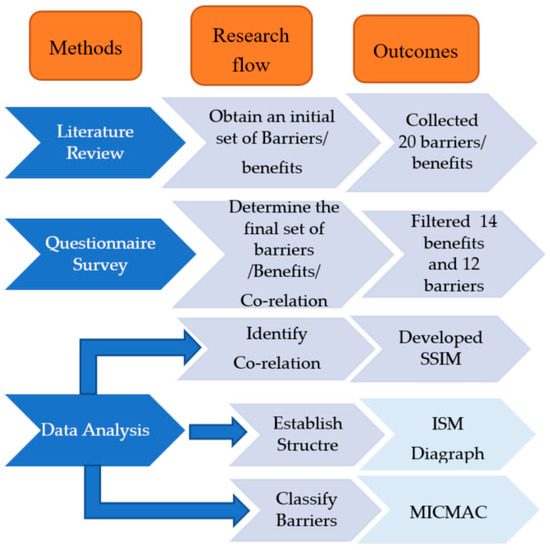
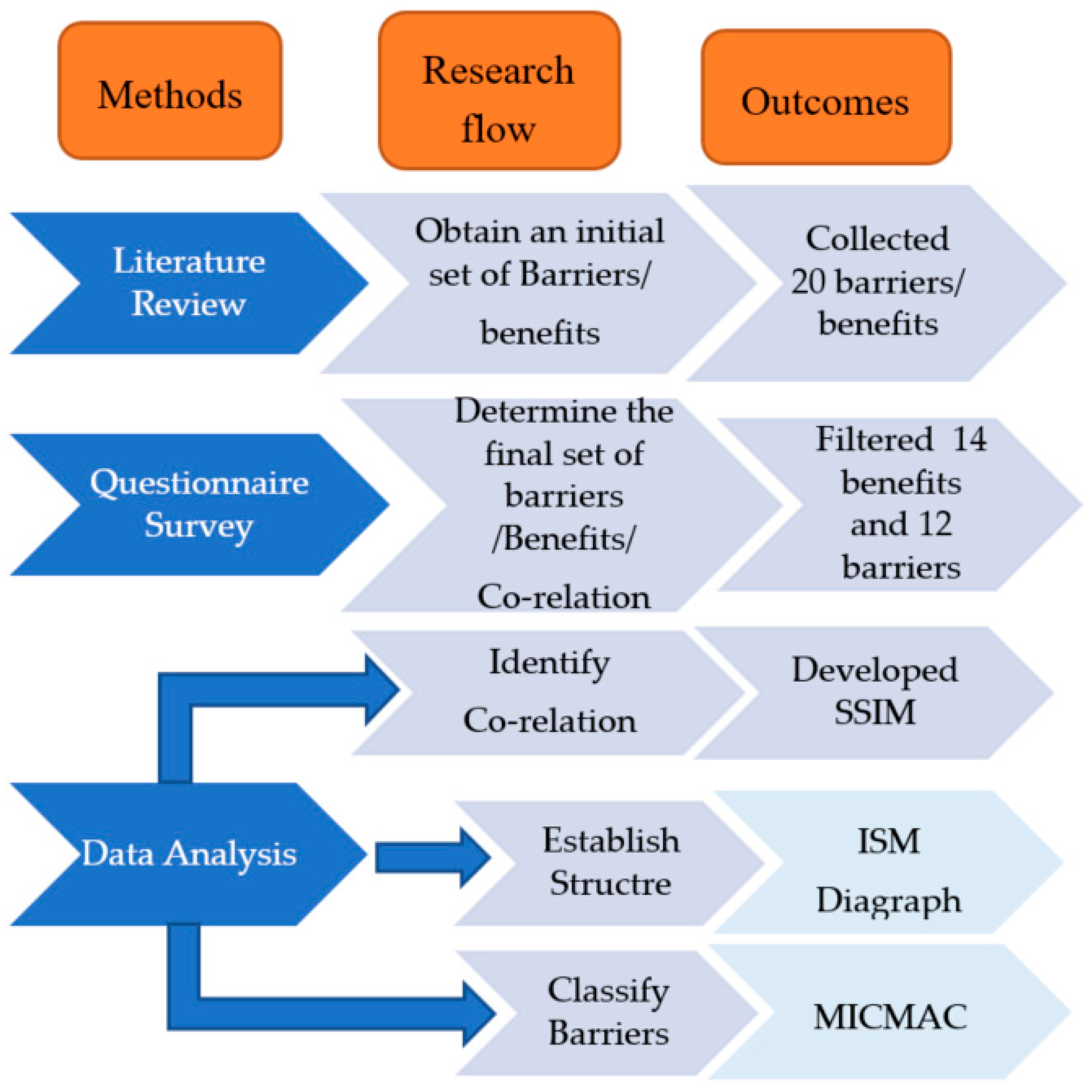
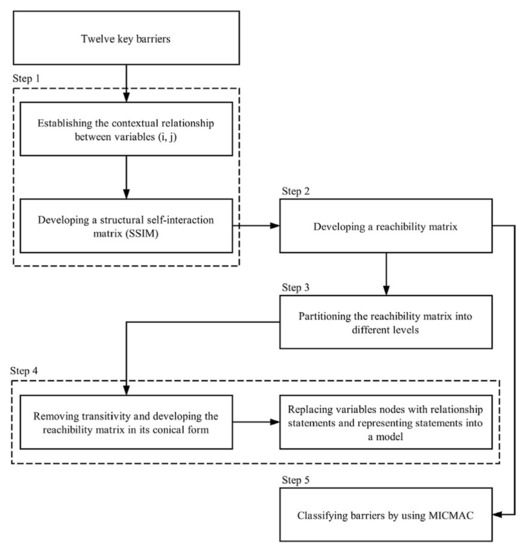
This research was completed in three phases (Figure 2). Phase 1, a systematic literature review technique (two-round) was used for preliminary investigation of BIM barriers that might affect the implementation of BIM in Pakistan. Some global barriers were also gathered to provide an overview and some common solutions. In phase 2, a questionnaire was developed and shared with the AEC professionals to rate the identified barriers and benefits of BIM in Pakistan. In the final phase, another survey was performed with the AEC professionals to get their opinions about the relationships amongst the barriers. Then ISM approach was made to model the interrelationships between the identified barriers and MICMAC analysis was performed to identify classes of barriers depending on their driving power and dependence power. By utilizing ISM and MICMAC analysis, a hierarchical model and the three-level strategy model were established which can facilitate the possible implementation.
Figure 2.
Research Flow.
3. Results and Discussions
After performing a two-round literature scan, 14 benefits and 12 barriers were obtained. A Google forms platform was used for the survey, on which the questionnaire was shared with the AEC professionals. The questionnaire split up into three parts: section A collected demographic data of the professionals. Section B asked about the benefits of BIM and its present status, and section C enlisted the barriers. Furthermore, another questionnaire was circulated among the BIM professionals to rate the co-relations among the existing twelve barriers.
Links were created and shared with the AEC professionals online via email. The contact information was obtained from the website of the Pakistan Engineering council, and some were shared via personal links.
3.1. Reliability Testing
The questionnaire items were tested for reliability using the Cronbach’s alpha technique to verify the consistency under the adopted Likert scale of measurement [20,21,22]. Cronbach’s alpha values lie between 0 and 1. If α is greater than or equal to 0.7, the scale is reliable [20,23,24]. Alpha values for this study were calculated using SPSS software (Table 2). The values obtained depict that the items are reliable, closely related and significant at less than 5%.
Table 2.
Cronbach’s alpha reliability test.
3.2. Demographic Section
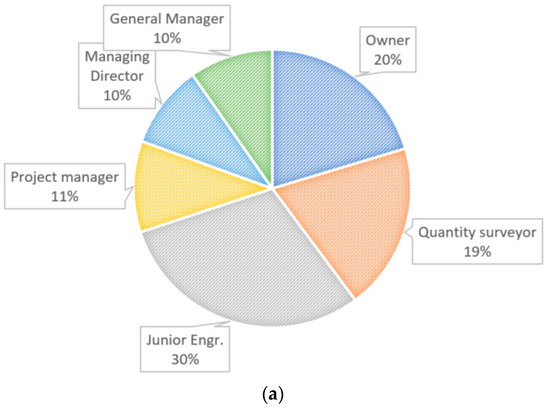
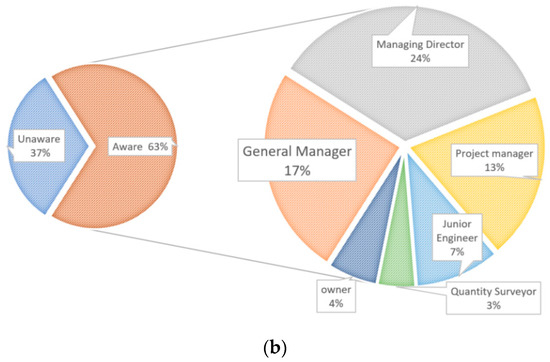
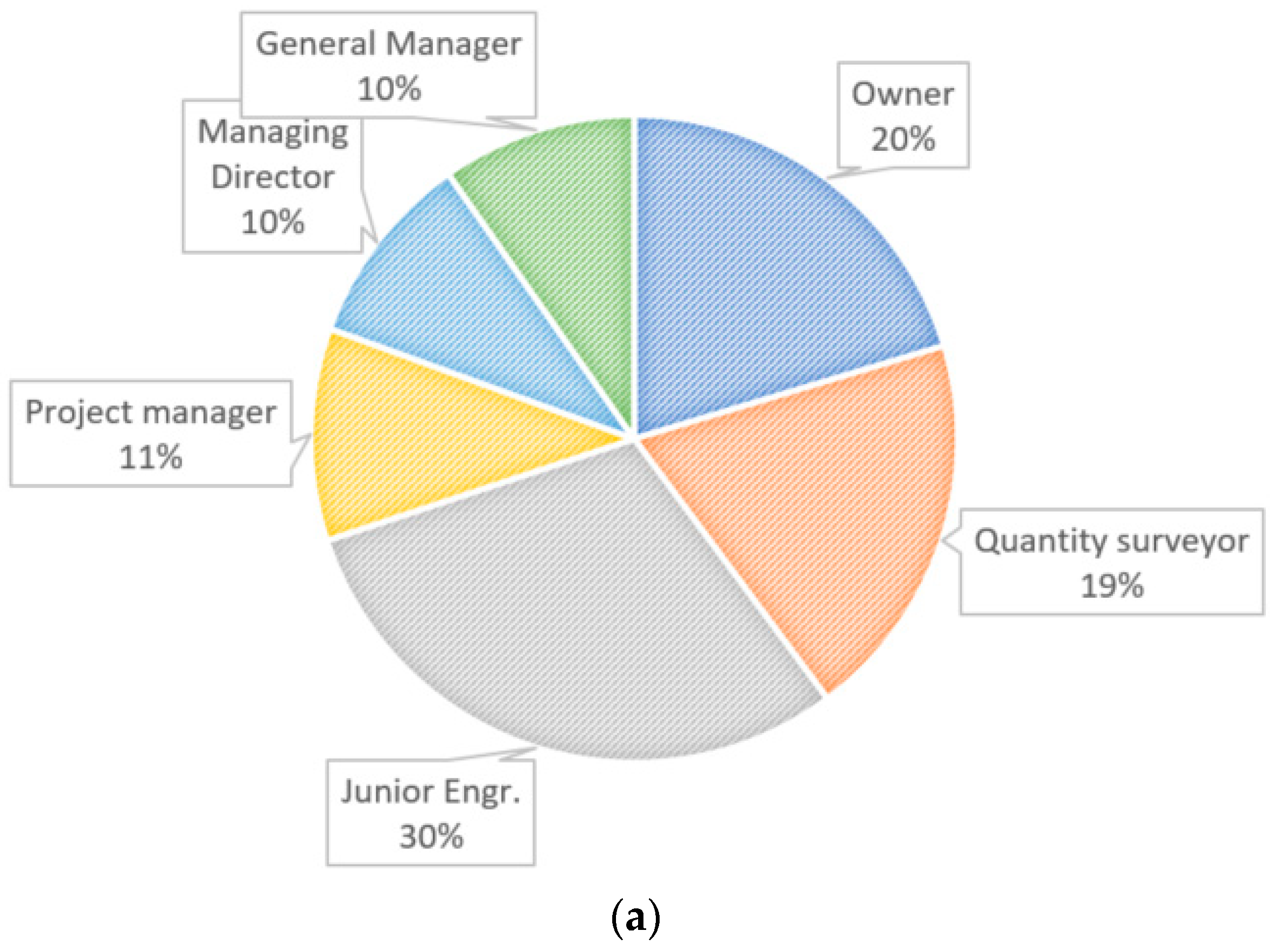
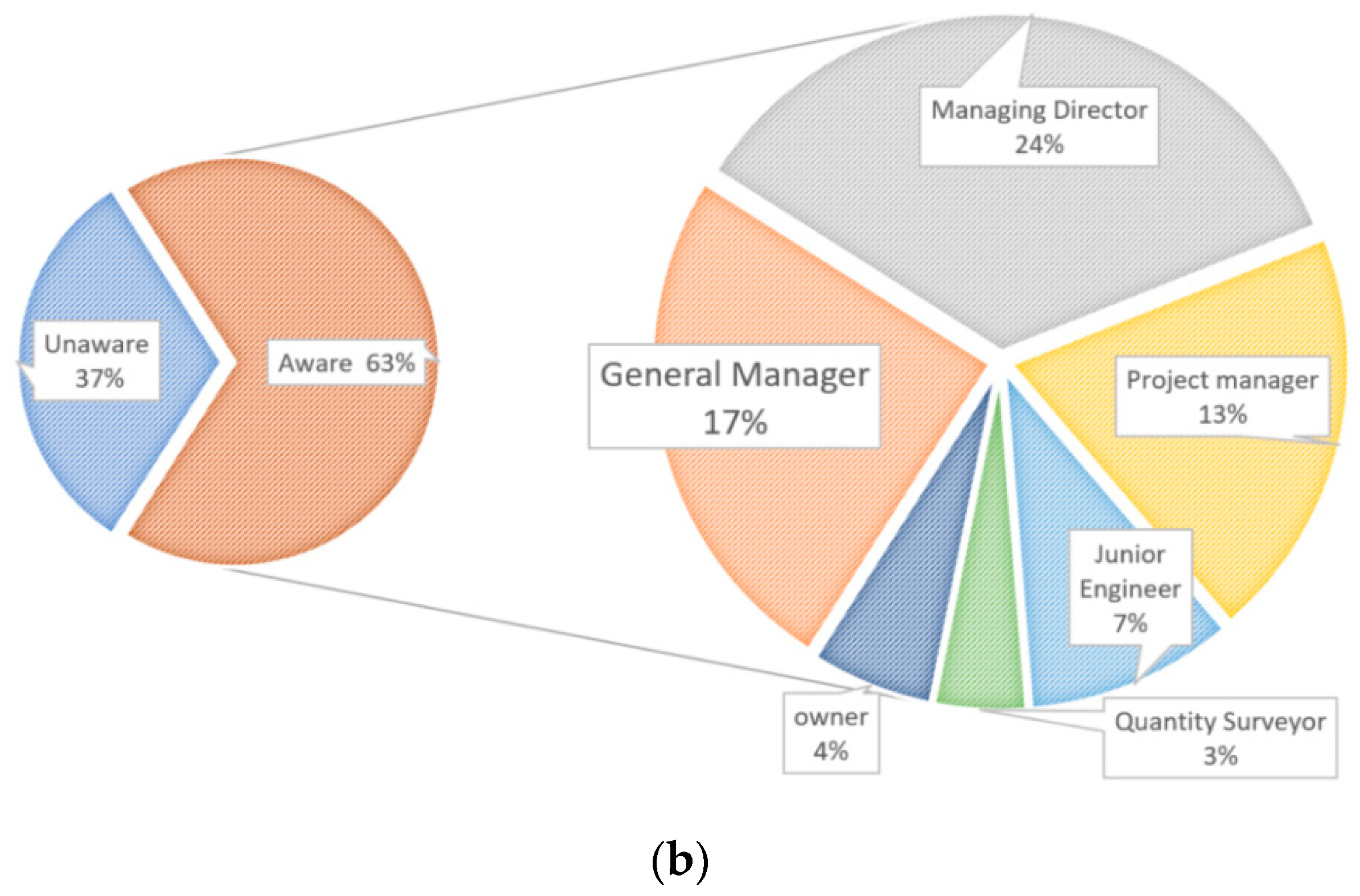
The demographic profile of the respondents is shown in Figure 3a,b and describes the awareness percentages of the respondents. After analyzing the responses, it was found that only 63% of the AEC professionals in Pakistan were aware of BIM applications.
Figure 3.
Respondents demographic profile; (a) post, (b) BIM awareness.
3.3. BIM Implementation
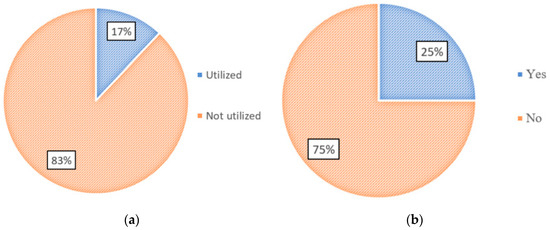
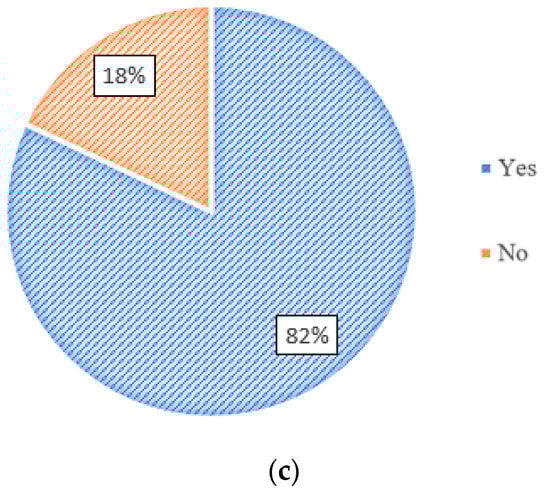
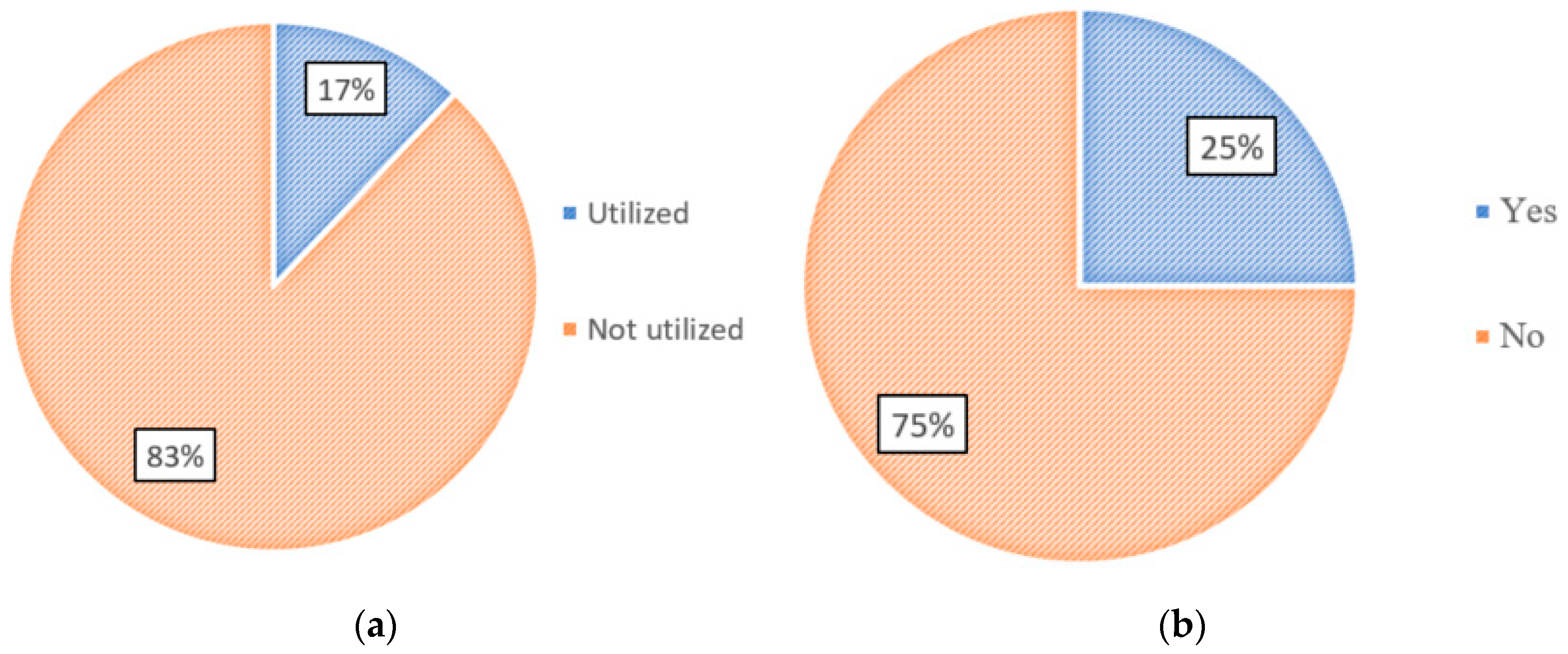
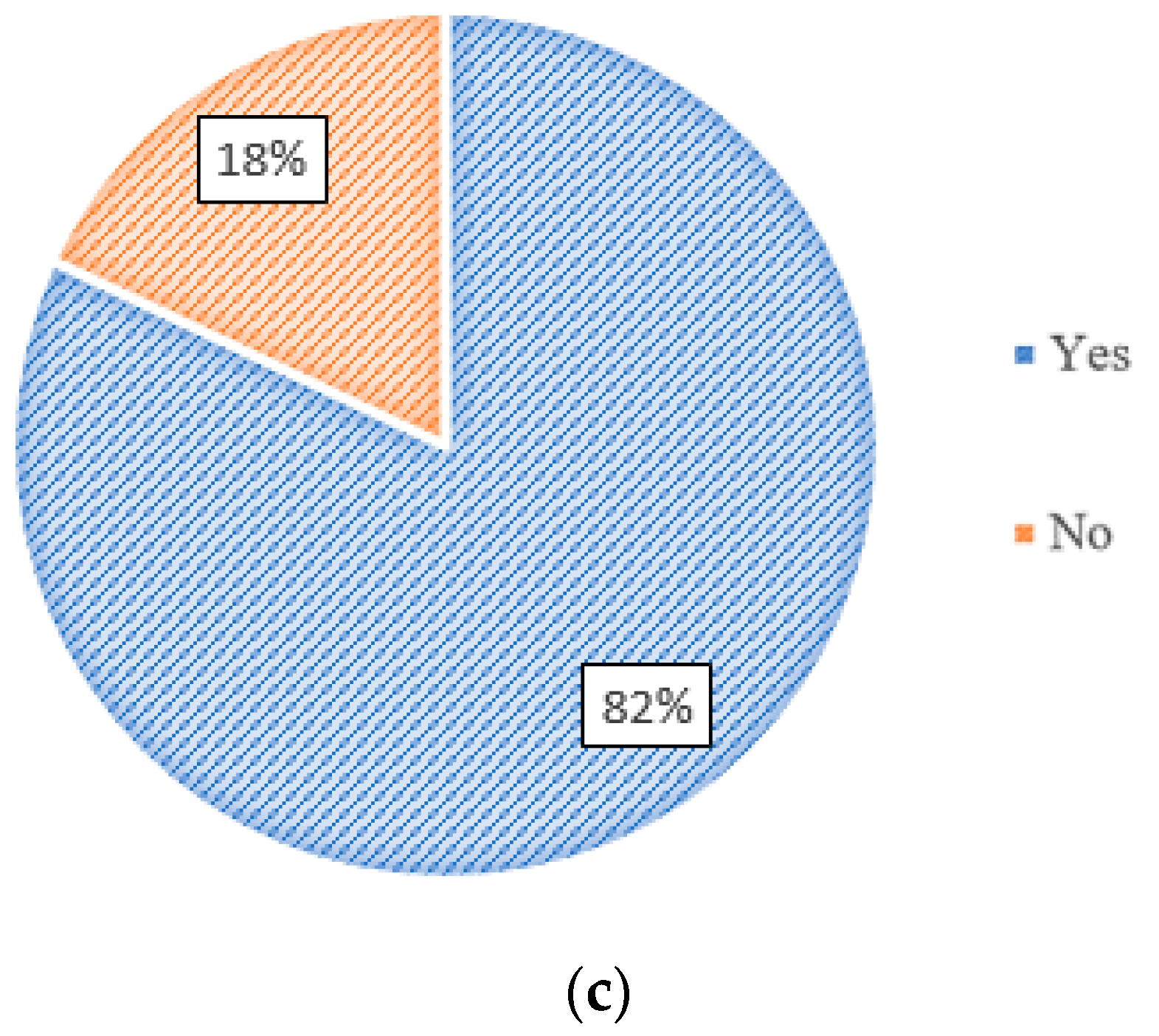
Figure 4a shows that only 17% out of 63% of the respondents who knew about BIM and its applications had used BIM in projects they planned, designed, managed, constructed and operated. Furthermore, Figure 4b illustrates that only 25% of the firms have some procedures/protocols regarding BIM. A question in the interview was “If the firms fail to adopt BIM quickly, what is your forecast that they will be left behind?” and 82% of the professionals responded with “Yes.” So, this predicts that the firms who want to survive in the future should adopt BIM quickly.
Figure 4.
Implementation of BIM; (a) BIM utilization in projects; (b) BIM policies in the organizations; and (c) prediction about BIM.
3.4. Benefits of BIM in Pakistan
In section B, questions about BIM benefits were asked and the respondents gave a rating from 0–5 on a Likert scale, with 0 representing 0% and 5 representing 100%. Then the mean percentage for each question was calculated using the mean percentage formula. Ratings are shown in Table 3, which suggest that BIM is a helpful tool and should be adopted for economic and efficient projects.
Table 3.
Questions about implementation of BIM in projects.
3.5. Barriers/Issues Related to BIM Adoption in Pakistan
The professionals were requested to judge the BIM barriers on a Likert scale from 0 to 5, with 0 being the lowest percentage and 5 representing 100%. The respondents’ ratings of the BIM barriers in the construction sector of Pakistan are shown in Table 4. The responses were then analyzed and the descriptive analysis was done through SPSS software. The frequencies of the barriers were obtained and listed in Table 4. The mean values were: lowest mean score = 2.5288 “Firms don’t provide software training to their employees,” and the highest was “Lack of government regulation about BIM” M = 3.6442.
Table 4.
Descriptive Frequencies.
3.6. Barriers/Issues Related to BIM Adoption in other Countries
Based on geographical location, construction type, literacy rate, social system, economic resources and technological advancement, various countries encounter different barriers and issues. In this section, various construction markets will be taken from developed, underdeveloped and developing countries to highlight the topmost problems related to BIM adoption. Table 5 provides the information showing that developed countries like the U.K., Germany and Singapore mostly encounter problems related to the complexity of BIM, interoperability issues and investment issues, while developing countries like the U.A.E. and Malaysia have major issues related to management commitment to adopt BIM, BIM understanding and standards, and the cyclic nature of the construction industry. In underdeveloped countries like Ghana and Uganda, most issues are related to socio-economical, inadequate knowledge and skills, delays in decision making and inconsistency in government policies.
Table 5.
Barriers in various countries.
In addition, barriers from other developing Asian countries sharing the same eco-social system with Pakistan were also studied and summarized in Table 6. If a comparison was performed with the barriers that were found in the survey in Pakistan, most of them were the same. The authors concluded that any findings of this research can be implemented in all developing countries as long as there are the same ranks of barriers in the respective industry.
Table 6.
Barriers in other Asian countries data obtained from [36,37,38].
3.7. ISM Methodology
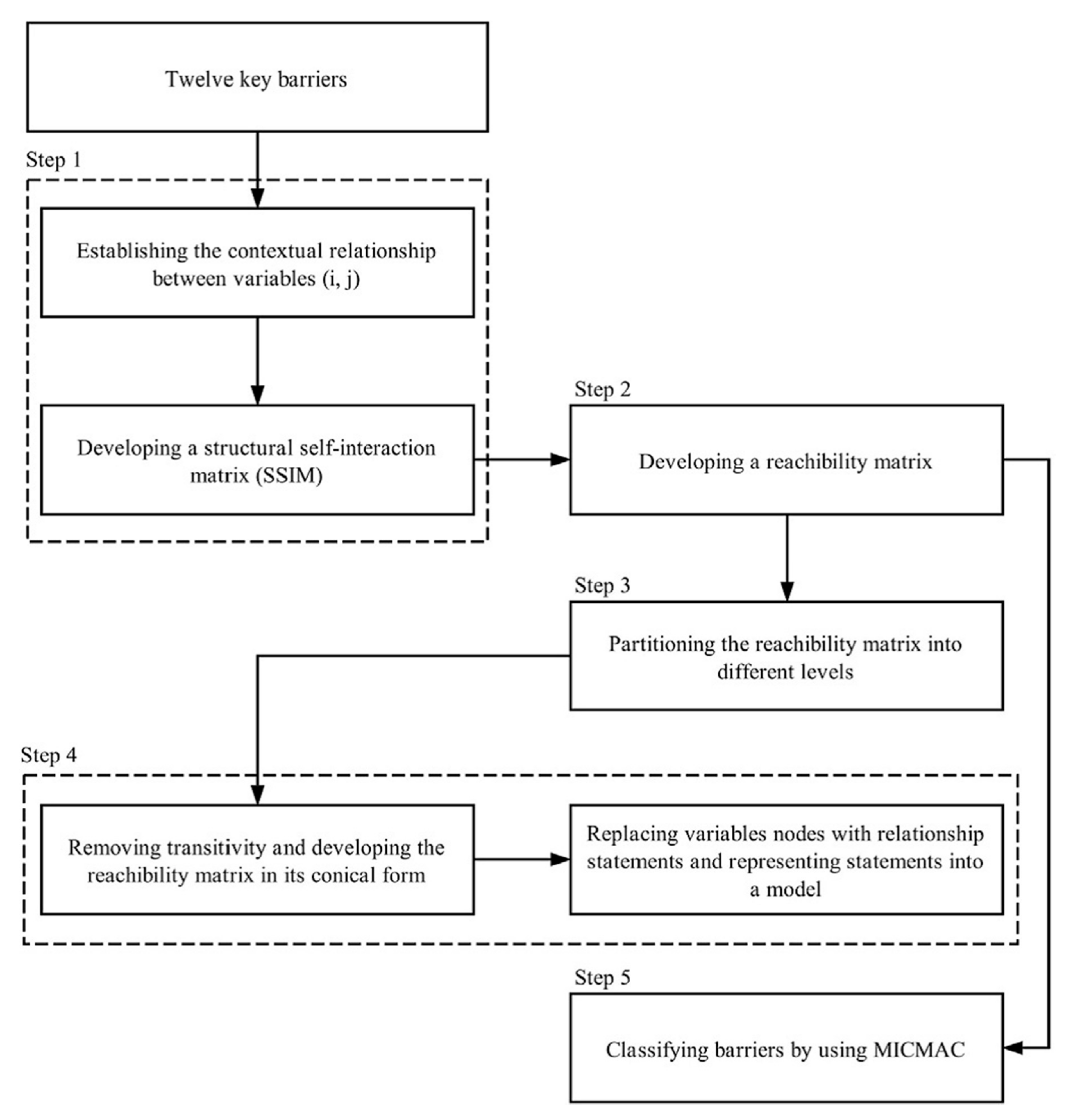
To analyze interrelationships among different factors, the Analytical Network Process (ANP) and ISM are mostly used. However, the analytical network process fails to show complete dependencies [39], whereas ISM authorizes intuition into interrelationships among different elements with ranking and direction [40]. In the construction management field, researchers used ISM to analyze factors that affect a construction worker’s productivity [41], plus the design phase of construction risks [42]. This paper generates the structural mapping of complicated interconnections of BIM implementation barriers in Pakistan’s construction industry. The methodology adopted for ISM can be seen in Figure 5.
Figure 5.
The adopted Interpretive Structure Modeling (ISM) methodology.
3.7.1. Step 1: Correlation Structure
Another questionnaire was developed through Google forms to collect the expert opinions about the interrelationship between the BIM barriers. The authors selected BIM professionals to respond to the online survey. Five responses were received. Questions about the interrelationship among each of the two BIM barriers were asked. The authors interpreted the responses of the professionals to get the contextual interrelationships between the BIM barriers and then put their responses in the Structural Self-Interaction Matrix (SSIM). Four symbols were used to represent i, j relationship:
- (1)
- W: “barrier i can drive in barrier j”;
- (2)
- X: “barrier j can result in barrier i”;
- (3)
- Y: “barriers i and j can drive to each other”;
- (4)
- Z: “barriers i and j are not related”.
“Majority wins” principle was adopted in cases where different professionals had different responses on the relationship between two barriers. Contextual relationships between the 12 barriers are shown in Table 7.
Table 7.
Structural Self-Interaction Matrix (SSIM) for barriers.
3.7.2. Step Two: Reachability Matrix
The W,X,Y,Z values in SSIM were replaced by 0 and 1 as mentioned in Table 8 [43]. The values in the reachability matrix were put as per the mentioned substitution rule. E.g., if (B1, B12) in the SSIM matrix is Y, then (B1, B12) in the reachability matrix would be 1. A preliminary matrix was established demonstrating the interrelationships among each of the 12 barriers as shown in Table 9. Further, the final reachability matrix was generated manually via excel as shown in Table 10. In Table 10, entry 1 shows incorporating transitivity. For instance, (B1, B5) is 1, which explains that there is an indirect relationship amongst barriers B1 (Lack of government regulation about BIM) and B5 (The top management do not support change).
Table 8.
Rule adopted for substitution.
Table 9.
Initial Reachability Matrix.
Table 10.
Final Reachability Matrix.
3.7.3. Step Three: Level Partitioning
Antecedent and reachability sets of each barrier were identified using the final reachability matrix, and level partitions are formed and presented in Table 11. The antecedent set includes each barrier and the other barriers that may result, while the reachability set includes each specific barrier and any other barriers which may occur. Further, the intersection between the sets was obtained. Those barriers that have the same intersection and reachability sets occupy the topmost level 1 of hierarchical model, illustrating that the other barriers will often affect these barriers. When the topmost level is identified, these barriers are removed from the reachability set of remaining barriers and thus this cycle continues until all other barriers are identified.
Table 11.
Level Partitioning.
3.7.4. Step 4: Development of ISM Diagraph and ISM-Based Hierarchical Model
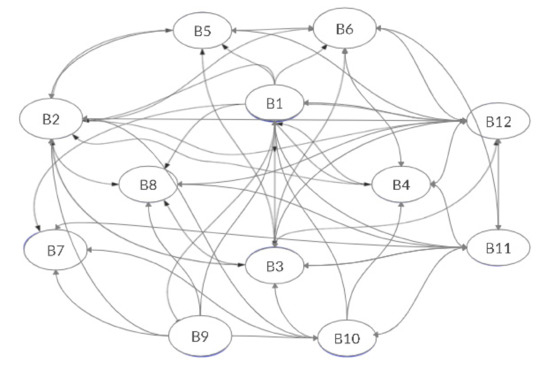
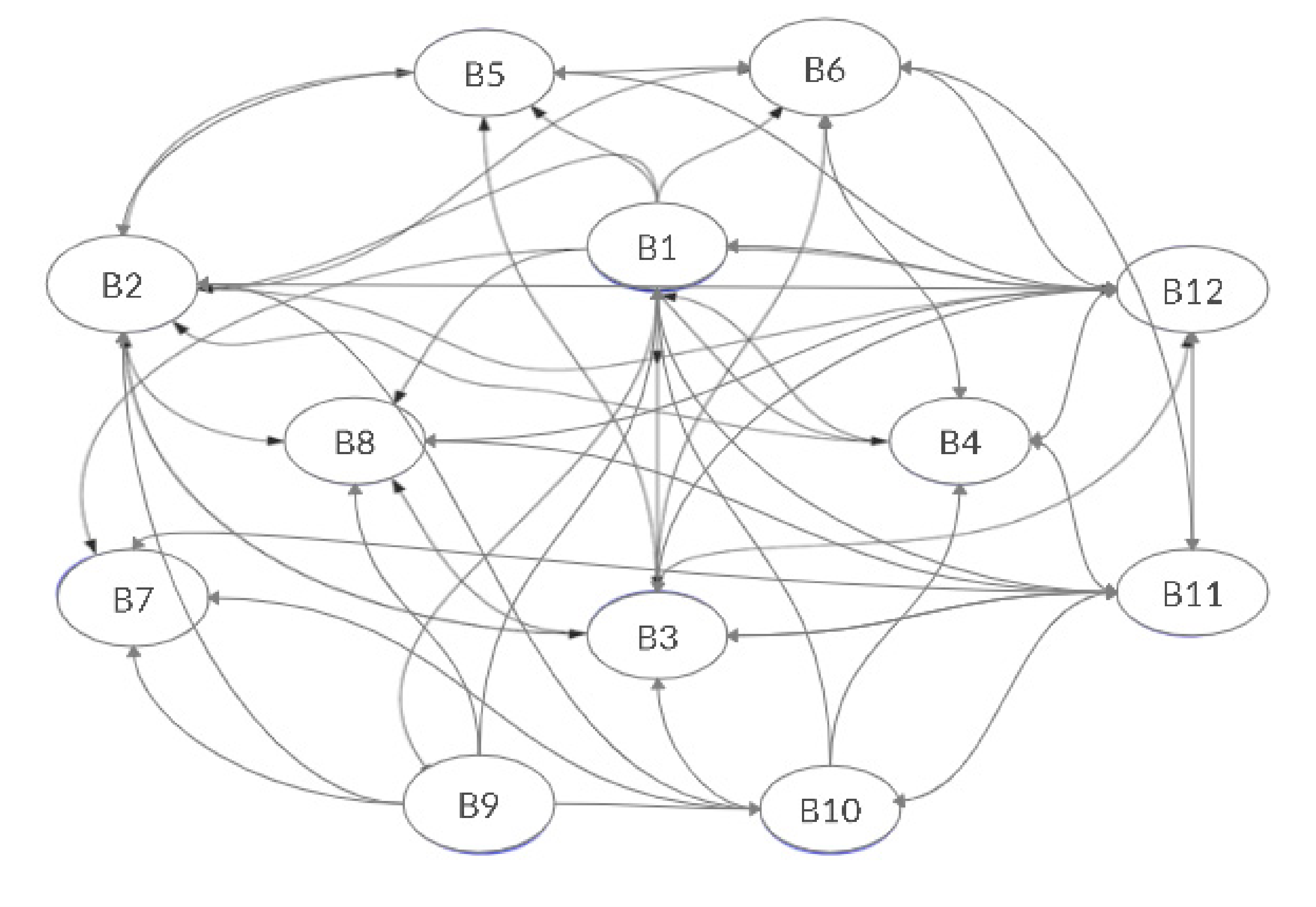
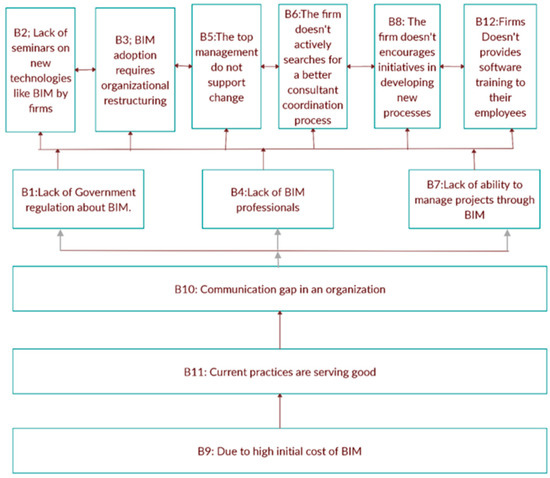
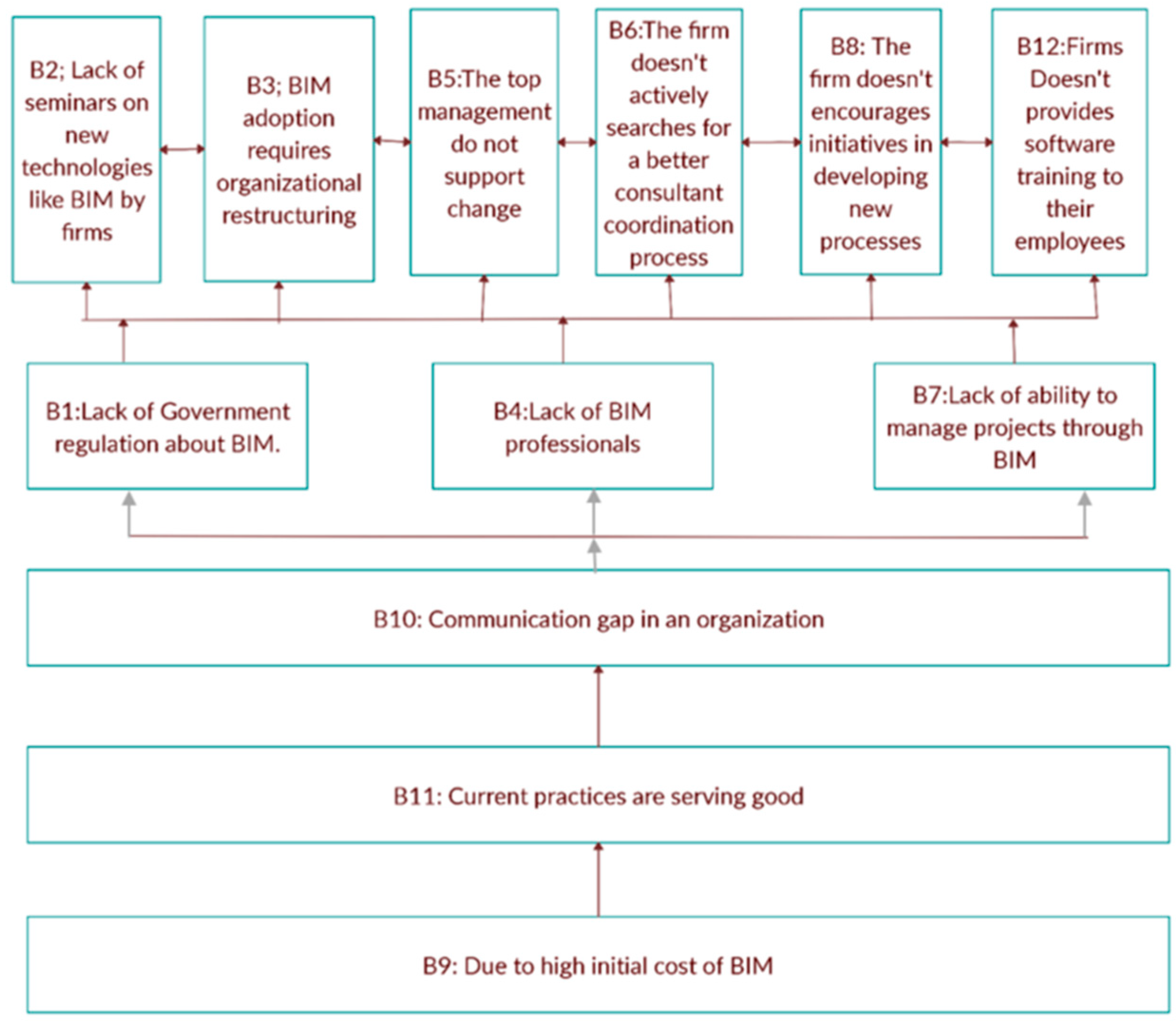
Initial diagraph was formed based on level partitions by positioning the 12 barriers to show the interrelationships between the BIM barriers. The diagraph can be seen in Figure 6. An arrow pointing from barrier i towards barrier j shows that barrier i can lead to barrier j, and in both ways the arrow indicates a mutual relationship. The diagraph is then modified by changing the nodes with statements to get 5 levels of the ISM-based hierarchical model, as shown in Figure 7.
Figure 6.
Initial Diagraph.
Figure 7.
ISM-based hierarchical model for BIM barriers in Pakistan.
Table 10 and Figure 7 show that a high initial cost of BIM (B9) is the critical barrier in the hierarchy which forces the industry to continue with the old practices (B11-level IV). Communication gap in an Organization (B10) constitutes level-III, which further gives rise to the important level-II barriers, i.e., unavailability of government organization about BIM (B1), unavailability of BIM professionals (B4) and lack of abilities to manage projects through BIM (B7). Level-I consists of barriers (B2, B3, B5, B6, B8, B12) related to firm policies.
3.7.5. Step 5: Barriers Classification
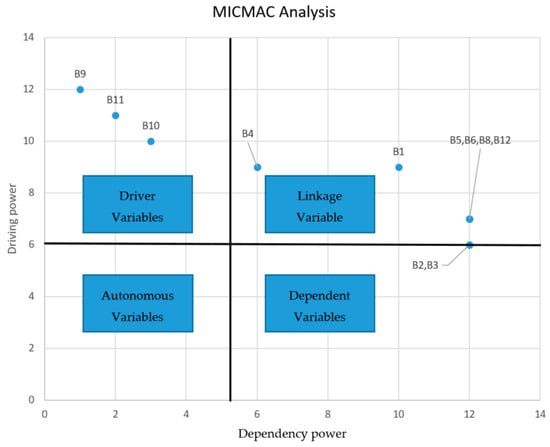
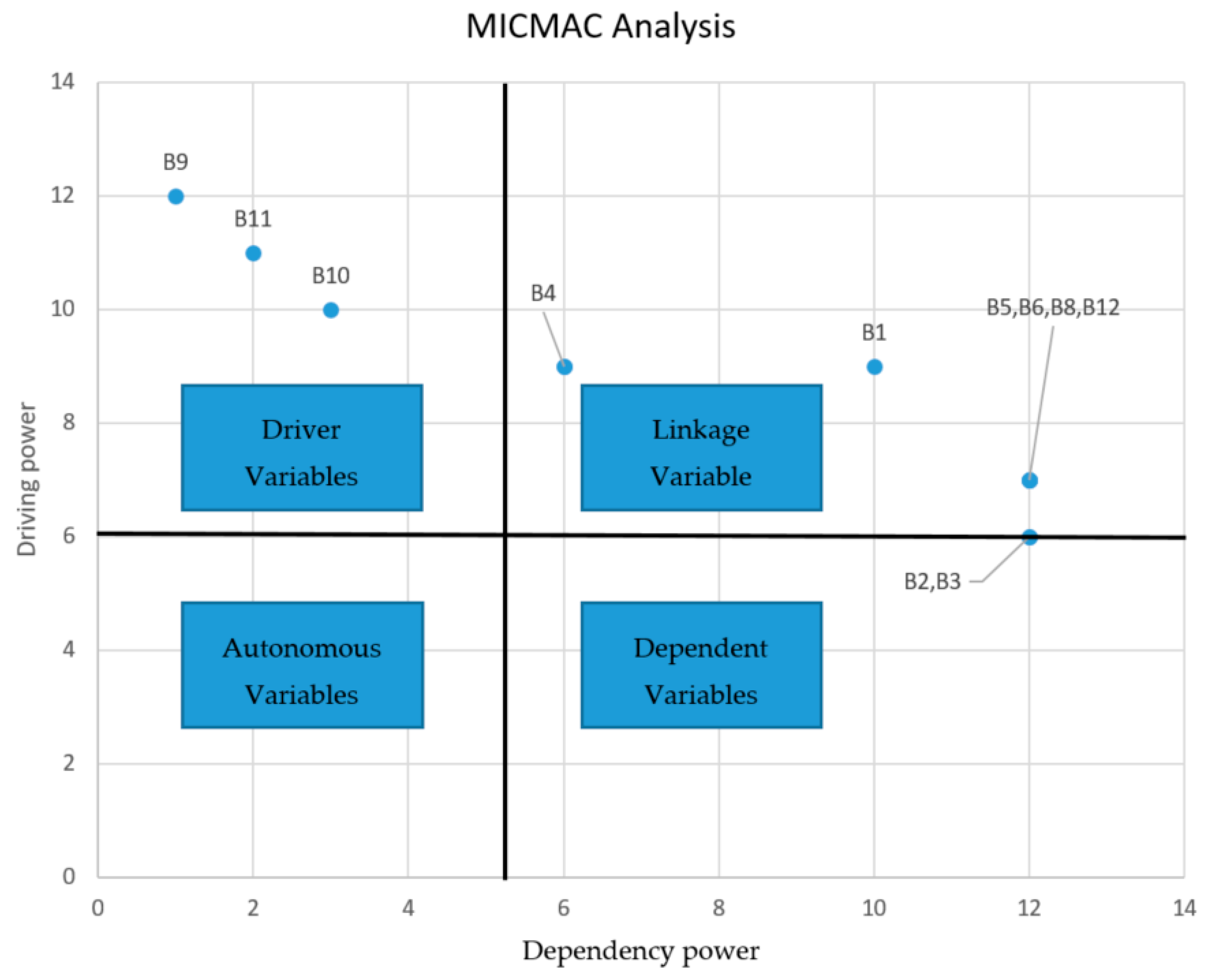
In Figure 8, a MICMAC diagram can be seen which was formed by modifying the reachability matrix. A MICMAC diagram helps in evaluation of driving power and dependence power. If the value of dependence power is higher, it illustrates that the other barriers should be addressed before the barrier with the highest dependence power is eliminated. A higher driving power means that by eliminating this barrier, other barriers could be easily solved [40].
Figure 8.
Results of Cross-Impact Matrix Multiplication Applied to Classification (MICMAC) analysis of barriers.
Researchers classified the diagram into four groups [44],
- (1)
- Linkage variables
- (2)
- Driver variables
- (3)
- Dependent variables
- (4)
- Autonomous variables
Figure 8 classifies the 12 BIM barriers based on the observations of MICMAC analysis. The common discussions on the BIM barrier classifications are:
- B9 (high initial cost of BIM) has the healthiest ability to affect other barriers and should be addressed prior to others.
- B3, B2 (BIM implementation requires organizational restructuring, Lack of conferences/seminars on new technologies by organizations) has high dependence power and the lowest driving power. Therefore, these barriers can be marked as the adverse result of other barriers.
- An autonomous variable does not have any barrier, which means that all barriers can obstruct the BIM implementation in Pakistan.
- Five BIM barriers, i.e., B1, B5, B6, B8, and B12 are classified as linkage variables. This means that any stance taken on these five barriers affects the other barriers, as they also react to themselves.
4. Recommendations for BIM Implementation in Pakistan and Other Developing Countries
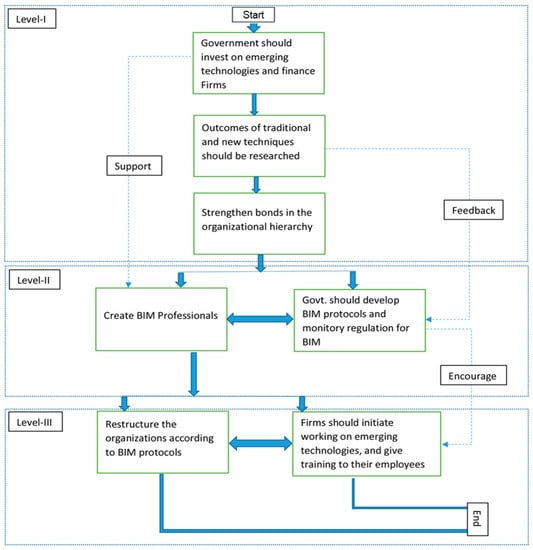
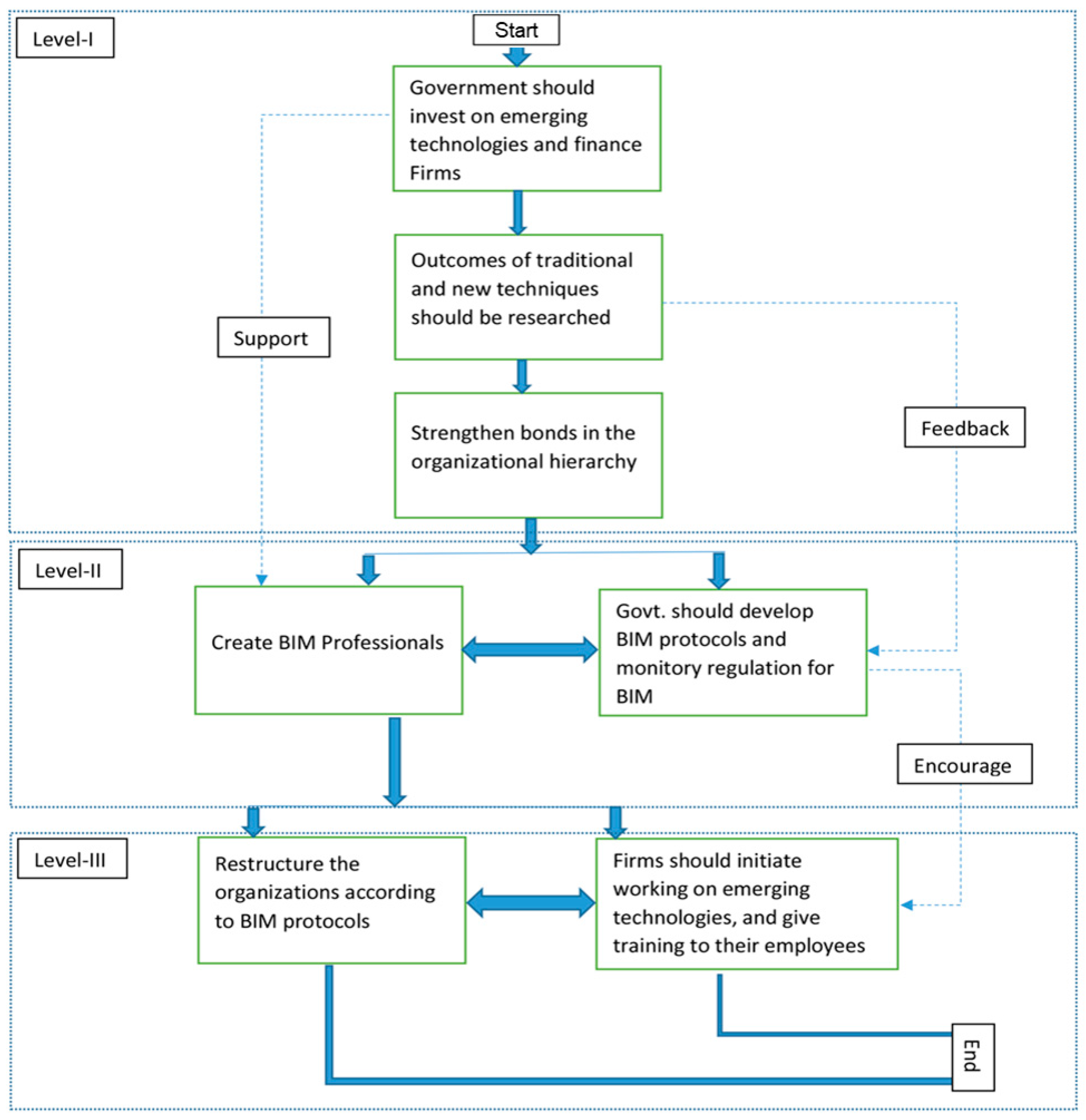
The authors proposed a three-level strategy as shown in Figure 9 from the interrelationships of the 12 barriers for the promotion and implementation of BIM in Pakistan and other developing countries that share the same cultural and socio-economic environment. Level-IV and Level-V barriers were given the top priority while computing the fundamental level of the BIM strategy. Being a developing country, the government should finance the construction sector and create a bond amongst the industry and academia. Academia can further research the outcomes of traditional methods and new emerging technologies.
Figure 9.
Developed strategy for different stakeholders.
The second level of the BIM strategy should focus on the Level III barriers, which advise the government to design protocols for BIM based on the research of academia.
Setting up development work processes and mechanisms is required for the first time for the enterprise. People should try to ingest information and skills with respect to BIM through constant training and learning. Training programs concentrating on BIM duties can rapidly raise the BIM skills of an organization. Developing a successful and tech-accommodating workplace for BIM usage is envisioned. As the Level IV barriers are connected, effectively defeating them can lead to inputs for the primary level and build up the methodology for the third level.
The third level of the BIM strategy concentrates on the organization’s conduct towards the new rising advances like BIM. The government ought to urge the organizations to build up another structure for their associations which support the BIM selection. Many researchers have accentuated the mix of the two ideas, for example BIM and lean [45], to improve the performance of the projects. Furnished with lean reasoning, it could be almost certain for all stakeholders to gradually solve the levels III, II, and I barriers.
The barriers highlighted in this study are similar as reported by various researchers for incorporating new techniques like Lean construction and BIM in the construction industry [25,26,27,28,46]. Ahmed and Shakeel [46] performed a study to scrutinize the problems encountered during implementing lean construction in Bangladesh. The authors used Relative Important Index (RII) and Mann-Whitney U test for analyzing data. Their study found 41 barriers of implementation of lean construction. The highest challenges mainly involved training and lean techniques, lack of awareness, lack of management commitment, lack of skills and knowledge, unwillingness to support change, poor coordination between project stakeholders and cyclic nature of the construction projects. Furthermore, in Table 12, solutions are proposed to overcome the challenges mentioned for different countries by various researchers. Various barriers are grouped together and solutions are recommended. Overall, it can be deduced that new technologies should be introduced at the university program level. The benefits of BIM should be highlighted to top management of government, construction firms and clients so that they can form policies regarding implementation and legal issues, standard operating procedures and make decisions accordingly. Seminars, workshops, short training courses and conferences should be arranged regularly to create awareness, highlight benefits, train staff and develop skilled workers in BIM.
Table 12.
Solutions to overcome various barriers in different construction markets around the globe.
5. Conclusions
Pakistan’s construction sector has a low productivity in terms of finishing the projects at the prescribed time and cost due to communication gaps throughout the project lifecycle. The communication links should be developed to overcome these issues. BIM can effectively help in this regard. This research identified the present stage of BIM implementation in Pakistan, highlighted the benefits of utilizing BIM and the critical BIM barriers in the victorious implementation of building information modeling in Pakistan. It also gave an overview of the BIM barriers around the globe and a possible solution to overcome the issues. It further suggests the three-level strategy to help in the implementation of BIM in Pakistan. In total, 64% of the respondents had some knowledge about BIM and only 17% of them had used BIM in their projects. The respondents responded that BIM helps in minimizing the cost and time of a project up to 57%.
Interpretive Structural Modeling (ISM) was used to find the interrelationships between the barriers, and the model was prepared which shows the dependencies of barriers at different levels. Additionally, MICMAC was applied which classified the 12 barriers into three driver variables: five among them were linkage variables, three fell in the driver variables criteria and two were the dependent variables. The authors discovered a three-level strategy based on the interrelationships among the identified 12 barriers to help in the implementation of BIM in Pakistan as well as other developing construction markets. The government should take steps and invest in the implementation of BIM to get efficiency in their projects by tackling the barriers as shown in the ISM-based hierarchical model and three-level strategy. The solution proposed to grouped barriers in adoption and implementation of BIM will help other developing countries as well.
This paper still holds some limitations that could not be ignored. (1) Pakistan faces different BIM barriers and this study analyzed only the important 12 amongst them to overcome the complexity of the ISM technique. There could be more barriers which can be studied, such as lack of educational grooming, lack of awareness, lack of revolutionary ideas, etc. (2) The outcome may vary by choosing different sample size and different groups.
Author Contributions
S.K.U.R., U.F. conceived and designed the idea; U.F. performed experiments; U.F. and S.K.U.R. analyzed the data; F.A., R.A. and M.J. contributed reagents/materials/analysis tools; S.K.U.R., U.F. wrote the original draft of the paper. S.K.U.R., U.F., M.F.J., F.A. revised the draft of the paper. All authors have read and agreed to the published version of the manuscript.
Funding
The authors extend their appreciation for funding this work to the Deanship of Scientific Research at Prince Sattam Bin Abdulaziz University under the research project No 2020/01/16810.
Acknowledgments
The authors are thankful to the editor and reviewers who provide valuable suggestion to improve this manuscript.
Conflicts of Interest
The authors declare no conflict of interest.
References
- Maqsoom, A.; Charoenngam, C.; Awais, M. Internationalization process of Pakistani contractors: An exploratory study. In Proceedings of the ICCREM 2013: Construction and Operation in the Context of Sustainability, Karlsruhe, Germany, 10–11 October 2013; pp. 59–72. [Google Scholar]
- Ministry of Finance, Government of Pakistan. Pakistan Economic Survey 2016–2017. Available online: http://www.finance.gov.pk/survey_1617.html (accessed on 14 August 2020).
- Gardezi, S.S.S.; Manarvi, I.A.; Gardezi, S.J.S. Time extension factors in construction industry of Pakistan. Procedia Eng. 2014, 77, 196–204. [Google Scholar] [CrossRef] [Scilit]
- Maqsoom, A.; Charoenngam, C. Motives and competitive assets of Pakistani international construction contracting firms: Impact of size and international experience. J. Financ. Manag. Prop. Constr. 2014, 19, 138–151. [Google Scholar] [CrossRef] [Scilit]
- Yan, H.; Demian, P. Benefits and barriers of building information modelling. In Proceedings of the 12th International Conference on Computing in Civil and Building Engineering (ICCCBE XII) & 2008 International Conference on Information Technology in Construction (INCITE 2008), Beijing, China, 16–18 October 2008. [Google Scholar]
- Bredella, N. Simulation and architecture: Mapping building information modeling. NTM Z. Gesch. Wiss. Tech. Med. 2019, 27, 419–441. [Google Scholar] [CrossRef] [Scilit] [PubMed]
- Ozorhon, B.; Karahan, U. Critical success factors of building information modeling implementation. J. Manag. Eng. 2016, 33, 04016054. [Google Scholar] [CrossRef] [Scilit]
- Azhar, S. Building information modeling (BIM): Trends, benefits, risks, and challenges for the AEC industry. Leadersh. Manag. Eng. 2011, 11, 241–252. [Google Scholar] [CrossRef] [Scilit]
- Charlesraj, V.P.C. Knowledge-based building information modeling (K-BIM) for facilities management. In Proceedings of the International Symposium on Automation and Robotics in Construction, ISARC, Sydney, Australia, 9–11 July 2014. [Google Scholar]
- BIM Process through A360 Cloud. Available online: https://bimandbeam.typepad.com/.a/6a00d83453439169e201b7c73706ed970b-pi (accessed on 14 August 2020).
- Haron, A.T.; Marshall-Ponting, A.J.; Aouad, G. Building information modelling in integrated practice. In Proceedings of the 2nd Construction Industry Research Achievement International Conference (CIRIAC 2009), Kuala Lumpur, Malaysia, 3–5 November 2009. [Google Scholar]
- Masood, R.; Kharal, M.; Nasir, A.R. Is BIM adoption advantageous for construction industry of Pakistan? Procedia Eng. 2014, 77, 229–238. [Google Scholar] [CrossRef] [Scilit]
- Innovation, C.C. Adopting BIM for Facilities Management: Solutions for Managing the Sydney Opera House; Cooperative Research Center for Construction Innovation: Brisbane, Australia, 2007. [Google Scholar]
- Bhatti, I.A.; Abdullah, A.H.; Nagapan, S.; Bhatti, N.B.; Sohu, S.; Jhastial, A.A. Implementation of building information modeling (BIM) in Pakistan construction industry. Eng. Technol. Appl. Sci. Res. 2018, 8, 3199–3202. [Google Scholar]
- Chuah, S.; Pan, Z.; Sanjayan, J.G.; Wang, C.M.; Duan, W.H. Nano reinforced cement and concrete composites and new perspective from graphene oxide. Constr. Build. Mater. 2014, 73, 113–124. [Google Scholar] [CrossRef] [Scilit]
- Bin Zakaria, Z.; Muhamed Ali, N.; Tarmizi Haron, A.; Marshall-ponting, A.J.; Abd Hamid, Z. Exploring the adoption of Building Information Modelling (BIM) in the Malaysian construction industry: A qualitative approach. Int. J. Res. Eng. Technol. 2013, 2, 384–395. [Google Scholar]
- Ullah, K.; Lill, I.; Witt, E. An overview of BIM adoption in the construction industry: Benefits and barriers. In Proceedings of the 10th Nordic Conference on Construction Economics and Organization, Tallinn, Estonia, 7–8 May 2019; Emerald Publishing Limited: Bingley, UK, 2019. [Google Scholar]
- Shabbar, H.; Ullah, F.; Ayub, B.; Thaheem, M.J.; Gabriel, H.F. Empirical evidence of extension of time in construction projects. J. Leg. Aff. Disput. Resolut. Eng. Constr. 2017, 9, 04517008. [Google Scholar] [CrossRef] [Scilit]
- Ali, B.; Zahoor, H.; Mazher, K.M.; Maqsoom, A. BIM Implementation in Public Sector of Pakistan Construction Industry. In Proceedings of the International Conference on Construction and Real Estate Management, Charleston, SC, USA, 9–10 August 2018. [Google Scholar]
- Akinade, O.O.; Oyedele, L.O.; Ajayi, S.O.; Bilal, M.; Alaka, H.A.; Owolabi, H.A.; Bello, S.A.; Jaiyeoba, B.E.; Kadiri, K.O. Design for Deconstruction (DfD): Critical success factors for diverting end-of-life waste from landfills. Waste Manag. 2017, 60, 3–13. [Google Scholar] [CrossRef] [Scilit] [PubMed]
- Chan, D.W.; Chan, A.P.; Choi, T.N. An empirical survey of the benefits of implementing pay for safety scheme (PFSS) in the Hong Kong construction industry. J. Saf. Res. 2010, 41, 433–443. [Google Scholar] [CrossRef] [Scilit] [PubMed]
- Olatunji, S.O.; Olawumi, T.O.; Aje, I.O. Rethinking partnering among quantity-surveying firms in Nigeria. J. Constr. Eng. Manag. 2017, 143, 05017018. [Google Scholar] [CrossRef] [Scilit]
- Field, A. Discovering Statistics Using SPSS (3. baskı); Sage Publications: Thousand Oaks, CA, USA, 2009. [Google Scholar]
- Santos, J.R.A. Cronbach’s alpha: A tool for assessing the reliability of scales. J. Ext. 1999, 37, 1–5. [Google Scholar]
- Von Both, P. Potentials and barriers for implementing BIM in the German AEC market: Results of a current market analysis. In Proceedings of the Digital Physicality—Proceedings of the 30th eCAADe Conference, Prague, Czech Republic, 12–14 September 2012. [Google Scholar]
- Johansen, E.; Walter, L. Lean construction: Prospects for the German construction industry. Lean Constr. J. 2007, 3, 19–32. [Google Scholar]
- Piroozfar, P.; Farr, E.R.; Zadeh, A.H.; Inacio, S.T.; Kilgallon, S.; Jin, R. Facilitating Building Information Modelling (BIM) using Integrated Project Delivery (IPD): A UK perspective. J. Build. Eng. 2019, 26, 100907. [Google Scholar] [CrossRef] [Scilit]
- Sarhan, S.; Fox, A. Barriers to implementing lean construction in the UK construction industry. Built Hum. Environ. Rev. 2013, 6, 1–17. [Google Scholar]
- Shen, L.; Edirisinghe, R.; Yang, M. An investigation of BIM readiness of owners and facility managers in Singapore: Institutional case study. In Proceedings of the 20th CIB World Building Congress 2016, Intelligent Built Environment for Life, Tampere, Finland, 30 May–3 June 2016. [Google Scholar]
- Peng, W.; Pheng, L.S. Lean production, value chain and sustainability in precast concrete factory—A case study in Singapore. Lean Constr. J. 2011, 2010, 92–109. [Google Scholar]
- Mehran, D. Exploring the adoption of BIM in the UAE construction industry for AEC firms. Procedia Eng. 2016, 145, 1110–1118. [Google Scholar] [CrossRef] [Scilit]
- Memon, A.H.; Rahman, I.A.; Memon, I.; Azman, N.I.A. BIM in Malaysian construction industry: Status, advantages, barriers and strategies to enhance the implementation level. Res. J. Appl. Sci. Eng. Technol. 2014, 8, 606–614. [Google Scholar] [CrossRef] [Scilit]
- Saka, A.B.; Chan, D.W. A Scientometric review and Metasynthesis of building information modelling (BIM) research in Africa. Buildings 2019, 9, 85. [Google Scholar] [CrossRef] [Scilit]
- Saleh, M.A.D. Barriers and Driving Factors for Implementing Building Information Modelling (BIM) in Libya; Eastern Mediterranean University (EMU)-Doğu Akdeniz Üniversitesi (DAÜ): Famagusta, Cyprus, 2015. [Google Scholar]
- Chan, A.P.C.; Darko, A.; Olanipekun, A.O.; Ameyaw, E.E. Critical barriers to green building technologies adoption in developing countries: The case of Ghana. J. Clean. Prod. 2018, 172, 1067–1079. [Google Scholar] [CrossRef] [Scilit]
- Ahmed, S. Barriers to implementation of building information modeling (BIM) to the construction industry: A review. J. Civ. Eng. Constr. 2018, 7, 107–113. [Google Scholar] [CrossRef] [Scilit]
- Sawhney, A.; Singhal, P. Drivers and barriers to the use of building information modelling in India. Int. J. 3-D Inf. Modeling (IJ3DIM) 2013, 2, 46–63. [Google Scholar] [CrossRef] [Scilit]
- Twasl, J. The Effectiveness of Building Information Modeling in Sri Lankan Construction Industry. Ph.D. Thesis, University of Moratuwa, Moratuwa, Sri Lanka, May 2019. [Google Scholar]
- Wu, W.-W. Choosing knowledge management strategies by using a combined ANP and DEMATEL approach. Expert Syst. Appl. 2008, 35, 828–835. [Google Scholar] [CrossRef] [Scilit]
- Attri, R.; Dev, N.; Sharma, V. Interpretive structural modelling (ISM) approach: An overview. Res. J. Manag. Sci. 2013, 2319, 1171. [Google Scholar]
- Sandbhor, S.; Botre, R. Applying total interpretive structural modeling to study factors affecting construction labour productivity. Australas. J. Constr. Econ. Build. 2014, 14, 20. [Google Scholar] [CrossRef] [Scilit]
- Etemadinia, H.; Tavakolan, M. Using a hybrid system dynamics and interpretive structural modeling for risk analysis of design phase of the construction projects. Int. J. Constr. Manag. 2018, 1–20. [Google Scholar] [CrossRef] [Scilit]
- Tan, T.; Chen, K.; Xue, F.; Lu, W. Barriers to building information modeling (BIM) implementation in China’s prefabricated construction: An interpretive structural modeling (ISM) approach. J. Clean. Prod. 2019, 219, 949–959. [Google Scholar] [CrossRef] [Scilit]
- Mandal, A.; Deshmukh, S. Vendor selection using interpretive structural modelling (ISM). Int. J. Oper. Prod. Manag. 1994, 14, 52–59. [Google Scholar] [CrossRef] [Scilit]
- Sacks, R.; Koskela, L.; Dave, B.A.; Owen, R. Interaction of lean and building information modeling in construction. J. Constr. Eng. Manag. 2010, 136, 968–980. [Google Scholar] [CrossRef] [Scilit]
- Ahmed, S.; Sobuz, M.H.R. Challenges of implementing lean construction in the construction industry in Bangladesh. Smart Sustain. Built Environ. 2019, 9, 174–207. [Google Scholar] [CrossRef] [Scilit]

Publisher’s Note: MDPI stays neutral with regard to jurisdictional claims in published maps and institutional affiliations. |
© 2020 by the authors. Licensee MDPI, Basel, Switzerland. This article is an open access article distributed under the terms and conditions of the Creative Commons Attribution (CC BY) license (http://creativecommons.org/licenses/by/4.0/).