1. Introduction
The contemporary business environment is defined by an era of sustained poly-crisis, characterized by sequential and interconnected disruptive events, including the profound economic and social shock of the COVID-19 pandemic (
Miah et al., 2021) and subsequent geopolitical conflicts (
Opatska et al., 2024). These crises present organizations with unpredictable challenges, significantly jeopardizing their resilience and survival (
Demerouti & Bakker, 2023;
Kézai & Kurucz, 2023). Consequently, the imperative for organizations to rapidly adapt and implement effective change management has become paramount, leading to increased research interest within the field of organizational behavior (OB). While conventional change is typically a proactive, planned, and internally driven process aimed at improving efficiency over a predictable timeline, crisis-induced change is triggered by external ‘disruptive events’—such as pandemics, war, or hyper-inflation—and is characterized by extreme suddenness and a high threat level (
Mokhtarifar et al., 2024). Compared with planned transitions, crisis-induced changes are often characterized in the literature by less preparation time, greater uncertainty, and stronger external pressure on SMEs. In this context, leadership may extend beyond traditional administrative functions by providing an important source of psychological safety, helping employees navigate the gap between their current abilities and the sudden, complex demands of a crisis-driven environment (
Lau & Aguirre Reid, 2026).
Organizational behavior is an interdisciplinary field drawing on psychology, sociology, and management science to examine factors affecting individuals, groups, and organizations, with the broader aim of supporting organizational effectiveness and employee well-being (
Quttainah, 2025). Unexpected negative events fundamentally alter the employee-organization relationship (
Garai-Fodor et al., 2023) and deeply shape employee attitudes, often negatively affecting their commitment to the workplace and the organization (
Ergun et al., 2023). For instance, during the pandemic, a perceived lack of organizational support led to reduced employee commitment and increased turnover intention (
Adisa et al., 2022;
Chancharat et al., 2023). Effective crisis management therefore requires not only technological readiness and effective communication but also a supportive organizational culture and strong employee engagement to reduce the risk of employee withdrawal and turnover (
Celi et al., 2022). Organizational change is often unavoidable and may provide economic advantages and opportunities for innovation (
Kamarova et al., 2025;
Rosnerova et al., 2024), but its effective implementation requires highly committed leaders and employees capable of solving problems (
Prouska et al., 2023).
Although the general importance of change management is acknowledged, crises disproportionately affect the small and medium-sized enterprise (SME) sector. SMEs are particularly vulnerable, often lacking the formalized human resource mechanisms and deep resource buffers of larger firms to adapt to changing environmental conditions.
The change management literature consistently emphasizes the importance of supportive leadership, but comparatively less attention has been paid to the relationship between indifferent leadership and job insecurity, as well as to the ways in which psychological and physical strain are associated with employees’ intention to quit. These issues deserve particular attention during crises, when successful adaptation to organizational change may be critical to organizational survival. There is a critical research gap in the empirical assessment of crisis-related changes and their impact on organizational behavioral outcomes in SMEs. Accordingly, we seek answers to the following research questions:
RQ1: How are psychological and physical strain associated with intention to quit, and is there a statistically significant indirect effect through stress caused by organizational change?
RQ2: How is indifferent leadership associated with job insecurity, and is there a statistically significant indirect effect through stress caused by organizational change?
The aim of this research is to examine the associations between workplace factors related to organizational change and employees’ intention to quit and perceived job insecurity during a crisis. Special emphasis is placed on the mediating role of stress caused by organizational change, conceptualized as an appraisal-based process that may statistically link employees’ psychological and physical strain to workplace outcomes during crisis-induced organizational change.
This study makes two main contributions. First, it provides context-specific empirical evidence on theoretically derived relationships among employee strain, stress caused by organizational change, leadership, intention to quit, and job insecurity in the under-researched context of Hungarian SMEs experiencing crisis-related organizational change. Rather than establishing causal mechanisms or extending the underlying theories themselves, the study examines whether relationships derived from the TSM, JD-R, and COR frameworks are empirically consistent with the observed cross-sectional associations. Second, the findings provide practical insights for SME managers by identifying workplace conditions associated with intention to quit and job insecurity during periods of crisis-related organizational change.
2. Theoretical Background
Fundamentally, change management (CM) aims to guide modifications to existing strategies and organizational practices, manage the transformation process, facilitate stakeholder adjustment, and promote acceptance of change. CM is focused on appropriately addressing the drivers of change—such as technological evolution, process review, crisis response, and competitive pressure—and intentionally shifts organizational behavior to achieve enhanced performance. Conventional change is typically characterized as a proactive, intentional, and planned process aimed at improving organizational efficiency or strategic alignment. It generally follows a predictable timeline, allowing for structured preparatory phases, employee participation, and a gradual ‘un-freezing’ of organizational norms. In contrast, crisis-induced change—triggered by external shocks such as global pandemics, geopolitical conflicts, or sudden hyperinflationary cycles—is defined by its extreme suddenness, high degree of threat, and the absence of a structured transition period (
Ludviga & Kalvina, 2024;
Sun et al., 2023). The survival and long-term sustainability of organizations have been challenged by successive social, economic, and health crises over the past decade, necessitating a fundamental reassessment of strategic priorities. In such turbulent conditions, top management plays a central role in developing strategies and supporting organizational changes that enable rapid adaptation (
Mhlanga & Dzingirai, 2024).
Njaramba and Olukuru (
2025) highlight that in such high-pressure environments, organizational survival is closely linked to employees’ psychological capital and resilience, both of which may be challenged by sudden and prolonged crises. In this context, leadership may extend beyond traditional administrative roles by providing an important source of psychological safety. From a theoretical perspective, conventional change is generally described as more internally driven and planned, whereas crisis-induced change is more strongly shaped by external disruptions. Such differences may be associated with greater perceived uncertainty and reduced employee control; however, the present study did not directly compare crisis-induced and conventional organizational change. In SMEs, which often have fewer financial and organizational buffers than larger corporations, these challenges may be particularly pronounced, increasing the importance of leadership support and psychologically safe working conditions. Global and local challenges demand that leaders, including those in Hungary, maintain up-to-date change management expertise (
Filep, 2024). Recent crises, including the COVID-19 pandemic, the Russia–Ukraine conflict, and periods of high inflation, have had particularly strong effects on the small and medium-sized enterprise (SME) sector, increasing the need for rapid organizational adaptation.
Karácsony et al. (
2023) showed that many Hungarian SMEs implemented organizational changes aimed at increasing productivity, introducing new management practices, and reducing costs. Employees may respond to organizational change in different ways; however, previous experiences with change may also be perceived as opportunities for learning and personal development. Management support, transparent communication, and regular information sharing are important factors in successful change management. Recent crises have increased the importance of leadership competencies related to change and crisis management, including problem recognition, risk management, and continuous learning. Beyond these technical skills, leaders must emphasize organizational trust and emotional stability for subordinates, in addition to securing job and financial stability. During the pandemic, leaders had to demonstrate high capabilities in problem-solving and rapid decision-making (
Udod et al., 2024). Research indicates that in crises, ‘disturbance handler’ and ‘motivator’ roles gain prominence over developmental ones, and that aligning leadership practices with change processes is critical (
Mouazen et al., 2024). The effectiveness of strategic leadership is crucial in complex environments (
Ferede et al., 2024), demanding a feasible vision, resource allocation, and evidence-based decision-making. Leaders who promote employee involvement in strategic decisions, foster internal democracy, and communicate transparently achieve greater success in change management, thereby improving performance and development (
Jinga & Hassen, 2025;
Sott & Bender, 2025). Ultimately, a development-oriented organizational culture, championed by supportive, inspiring leaders, is key to handling changes and improving performance (
Omokhuale & Tarurhor, 2025). Communication emerges as a powerful leadership tool that shapes culture, fosters cooperation (
Poltoratska et al., 2025), and is critical for building trust during crises (
Men et al., 2024). Empathetic and inclusive communication strategies build organizational trust (
Sarihasan et al., 2022;
Wang et al., 2025), which is directly linked to corporate survival (
Asaturyan & Kosals, 2024). Increased information sharing is essential during crises, and leaders must recognize that their actions influence employee behavior. Effective change management requires competencies related to recognizing the need for change, planning and implementing change, and managing employee stress and resistance. This is well-illustrated by the ADKAR Model (Awareness; Desire; Knowledge; Ability; Reinforcement), a diagnostic tool for identifying individual barriers to change (
Mudjisusatyo et al., 2024;
Argüello & González-Prida, 2024). In the initial stages of organizational change, uncertainty may be associated with increased workload and a greater likelihood of voluntary employee exit (
Vijaykumar et al., 2025). A crucial initial step is involving employees in the joint analysis of the organization’s challenges, fostering loyalty and a proactive stance. Sustaining organizational change may require continuous monitoring, institutionalizing achieved improvements, addressing employee concerns, and, where necessary, reconsidering organizational values and incentive systems. Employee involvement, transparent information sharing, and appropriately designed incentive systems may help reduce resistance to change, particularly when resistance stems from information deficiencies or fear of job loss (
Krajcsák & Bakacsi, 2025;
Hussain et al., 2018;
Serban & Iorga, 2016). Humility in leadership fosters a trust-based atmosphere and aids adaptation (
Bah et al., 2024;
Gil et al., 2023).
The VUCA (Volatile, Uncertain, Complex, and Ambiguous) environment presents leaders with substantial organizational and managerial challenges. Organizations may face increasingly demanding and stressful conditions, creating a need to continuously adapt leadership competencies and practices in order to manage organizational change effectively. High levels of workplace stress may activate coping responses among employees and may contribute to decisions about whether to remain with or withdraw from the organization. Remaining in the organization may involve active, problem-focused coping, whereas disengagement may represent a withdrawal response to persistent organizational difficulties (
Pandey et al., 2025). Job stress is an imbalance between job expectations and job resources (
Alzadjali & Ahmad, 2024). The Transactional Stress Model (TSM) provides a useful process-oriented framework for understanding how employees respond to demanding workplace conditions. Rather than treating stress as a direct consequence of an external event, the model emphasizes the interaction between the individual and the environment and, in particular, the individual’s appraisal of situational demands and available coping resources. When employees encounter a potentially stressful workplace condition, they first evaluate its relevance and subsequently assess whether they possess sufficient resources to cope with it. Stress therefore reflects an appraisal-based process in which perceived demands are evaluated relative to perceived coping capacity (
Biggs et al., 2017;
Goh et al., 2010;
Obbarius et al., 2021). This distinction is particularly relevant in the context of crisis-related organizational change. Organizational changes may constitute important workplace demands, but employees may differ considerably in how they interpret these demands and in the extent to which they perceive themselves as able to cope with them. Consequently, similar organizational conditions may be associated with different levels of experienced stress caused by organizational change and different employee outcomes. This appraisal-based mechanism makes the TSM particularly relevant to the present study, which examines whether stress caused by organizational change is statistically involved in the association between employee strain and intention to quit. In the present study, the TSM therefore serves specifically as the process-oriented theoretical basis for the proposed mediation mechanism. It explains why stress caused by organizational change is positioned as a potential mediator: employees’ appraisal of crisis-related organizational demands relative to their available coping resources may link individual or organizational conditions to subsequent workplace outcomes. Accordingly, the TSM primarily underpins hypotheses H2, H2a, and H3a, whereas the JD-R and COR frameworks provide complementary explanations for the direct relationships included in the model.
Verdorfer et al. (
2026) show that supportive leadership styles, such as servant leadership, are particularly effective during periods of high uncertainty, as they help employees replenish their internal psychological capital and reduce the perceived threat of uncertainty.
Onan et al. (
2025) further emphasize leaders’ psychological resilience as a potential resource that may help mitigate resource depletion under conditions of organizational stress. In SMEs, where formal institutional support may be more limited than in larger organizations, managers may play an especially important role in supporting and preserving these employee resources. In the present study, psychological strain and stress caused by organizational change are treated as theoretically related but distinct constructs. Psychological strain refers to the employee’s experienced affective and cognitive burden associated with demanding workplace conditions. It includes psychological difficulty, impaired concentration, and perceived emotional burden and is consistent with the health-impairment pathway of the Job Demands–Resources model, according to which excessive job demands may deplete employees’ cognitive and emotional resources (
Bakker & Demerouti, 2024). Stress caused by organizational change, in contrast, refers specifically to employees’ appraisal of the demands associated with organizational change relative to their perceived ability and resources to cope with those demands. In line with the TSM, the construct therefore captures an appraisal-based stress process rather than the psychological response itself. Psychological strain and stress caused by organizational change are consequently not used interchangeably in this study: psychological strain represents an experienced employee condition, whereas stress caused by organizational change represents the employee’s appraisal of change-related demands and coping resources. Job insecurity represents a further conceptually distinct employee outcome and refers to the subjective appraisal of the probability and severity of potential employment loss. It is conceptually distinct from psychological strain because it concerns the perceived threat to future employment status rather than a present affective experience, and it is theoretically rooted in the COR framework’s loss-spiral mechanism, wherein the threat to a key re-source—employment stability—initiates a cascade of further resource depletion. Recent research on job insecurity and intention to quit during crises has increasingly focused on the boundary conditions and organizational mechanisms that may shape this relationship. Recent evidence suggests that inadequate leadership support and unclear communication during organizational change may contribute to negative leadership perceptions and stronger turnover intentions (
Chen et al., 2025). The three theoretical perspectives used in this study serve complementary rather than competing explanatory roles. The TSM provides the primary process-oriented logic for the proposed mediating role of stress caused by organizational change by emphasizing employees’ appraisal of environmental demands and coping resources. The JD-R framework helps explain why psychological and physical strain can be understood in relation to demanding workplace conditions and resource depletion, while COR theory provides an additional resource-based explanation for perceived job insecurity and the consequences of insufficient leadership support. Together, these perspectives allow the proposed relationships to be examined at complementary levels: appraisal processes (TSM), job demands and resources (JD-R), and resource preservation or loss (COR). The impact of crisis-induced organizational change on employee behavior is increasingly understood through the dual lenses of the Job Demands-Resources (JD-R) Theory and the Conservation of Resources (COR) Theory. According to the current JD-R framework, workplace stressors are categorized into job demands and job re-sources, where crisis-induced changes represent significant demands that trigger a health-impairment process (
Bakker & Demerouti, 2024). Recent empirical research by
Jovanović et al. (
2025) suggests that when such demands remain insufficiently addressed, they may contribute to emotional exhaustion and psychological strain, which in turn may be associated with burnout and subsequent withdrawal behaviors. Within the JD-R model, job resources can initiate a motivational process and may buffer the negative impact of excessive job demands. However, when leadership support is perceived as insufficient to meet the demands of a crisis, employees may be more likely to consider organizational withdrawal as a coping response to a resource-depleting work environment (
Qin et al., 2025). Concerns about potential job loss and subsequent financial insecurity may represent important sources of uncertainty for employees during crises and may be addressed through appropriate leadership support, communication, incentives, and training. The integration of organizational behavior and human resource management approaches may help organizations address resource limitations and support employee commitment during periods of continuous change. During crises, human resource practices that strengthen organizational trust may contribute to lower levels of employee stress (
Chang et al., 2022). Organizations operating in continuously changing environments may therefore benefit from engaged employees and adaptive leadership that supports trust and organizational resilience (
Ahmed et al., 2024;
Yue et al., 2022).
3. Conceptualization
The JD-R and COR theories, together with the TSM, provide the theoretical foundation for the hypotheses developed in this study.
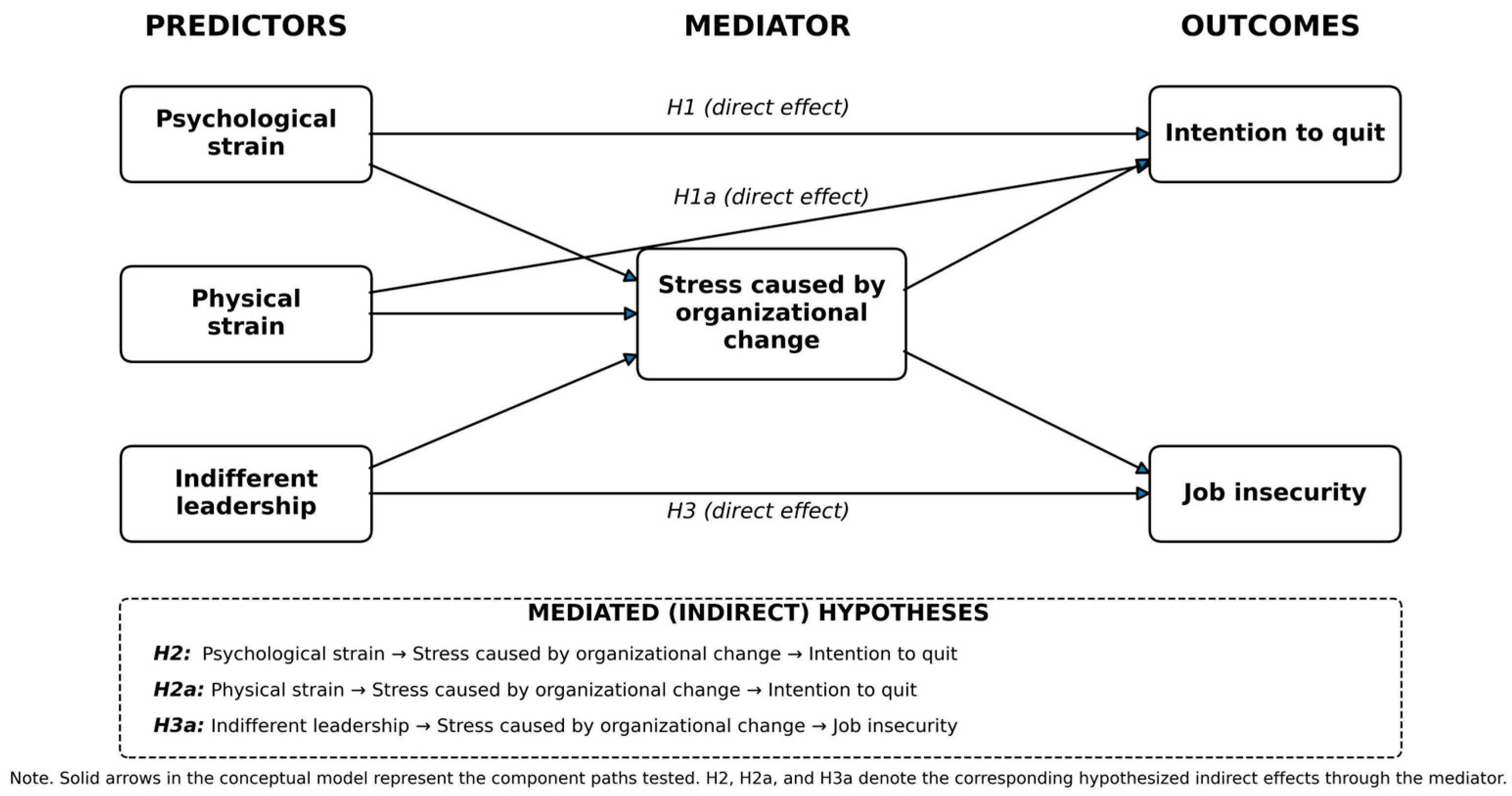
Figure 1 integrates the complete conceptual framework and presents the hypothesized direct relationships as well as the proposed indirect effects through stress caused by organizational change.
Based on the theoretical relationships outlined above, the following hypotheses were formulated:
H1. Psychological strain is positively associated with intention to quit.
This direct relationship can be explained through the health-impairment process of the JD-R framework. During crisis-induced organizational change, sustained psychological strain reflects the depletion of employees’ cognitive and emotional resources. When such resource depletion persists, employees may increasingly view withdrawal from the organization as a means of escaping an environment whose demands exceed their available coping resources. Psychological strain may therefore be directly associated with intention to quit, independently of the additional appraisal-based mechanism represented by stress caused by organizational change.
H1a. Physical strain is positively associated with intention to quit.
Physical strain may similarly contribute to withdrawal cognitions because sustained physical demands consume employees’ energetic resources and reduce their capacity to cope with additional workplace demands. From a JD-R perspective, prolonged physical resource depletion may therefore be associated with stronger withdrawal cognitions when employees experience excessive workplace demands.
H2. Psychological strain is positively associated with intention to quit indirectly through stress caused by organizational change.
According to the TSM, employees experiencing psychological strain may appraise crisis-induced organizational changes as more demanding relative to their available coping resources. This appraisal can intensify stress caused by organizational change, which may subsequently increase withdrawal cognitions and intention to quit. Stress caused by organizational change is therefore expected to constitute an indirect pathway linking psychological strain to intention to quit.
H2a. Physical strain is positively associated with intention to quit indirectly through stress caused by organizational change.
Physical strain may also reduce employees’ perceived capacity to cope with additional demands generated by crisis-induced organizational change. From a TSM perspective, diminished coping capacity may increase the appraisal of organizational change as stressful, thereby providing a potential indirect pathway from physical strain to intention to quit.
H3. Indifferent leadership is positively associated with job insecurity.
The quality of leadership plays a key role in the psychological well-being of employees, in coping with job stress and in adapting to organizational changes. Indifferent leadership represents a deficiency in an important workplace resource because employees receive insufficient guidance, feedback, and support. From a JD-R and COR perspective, the absence of these leadership resources may intensify uncertainty regarding the organization and employees’ future employment, thereby increasing perceived job insecurity.
H3a. Indifferent leadership is positively associated with job insecurity indirectly through stress caused by organizational change.
According to COR theory, indifferent leadership may deprive employees of important resources such as support, information, and reassurance during crisis-induced organizational change. This resource deficiency may increase employees’ appraisal of organizational change as stressful, which can subsequently heighten perceived threats to employment stability. Stress caused by organizational change is therefore proposed as a potential mediator between indifferent leadership and job insecurity.
4. Research Objective, Methodology and Data
An online questionnaire was used as the data collection tool for the empirical research. Questionnaire-based data collection may be subject to response bias and measurement error. To enhance data quality, incomplete responses and duplicate entries were identified and removed during data cleaning. The survey was conducted anonymously to protect respondents’ privacy and to reduce potential concerns related to the disclosure of individual responses. Ethical approval was not required for this study under the applicable institutional requirements because the research involved an anonymous and voluntary questionnaire survey, no personally identifiable or sensitive personal data were collected, and no intervention was performed. Participants were informed about the purpose of the study and participated voluntarily. A purposive sampling strategy was used to recruit employees working in Hungarian SMEs that had experienced crisis-related organizational change. In the present study, the crisis context refers to the period of successive external disruptions affecting Hungarian SMEs, particularly the COVID-19 pandemic, the economic and organizational consequences of the Russia–Ukraine conflict, and the subsequent high-inflation environment. Crisis-related organizational change therefore refers to organizational modifications implemented in response to, or in the context of, these external disruptions. For the purposes of participant selection, organizational change was operationalized as a substantive alteration in at least one of the following areas: (1) the reorganization of organizational units or job roles, (2) changes in the way work was organized or performed, or (3) changes in organizational or work processes. The term “significant organizational change” therefore did not refer to a predefined numerical threshold but rather to the presence of at least one substantive organizational modification affecting employees’ work environment. Potential participating organizations were identified through professional networks within the Hungarian SME sector. Employees from organizations known to have implemented such crisis-related changes were invited to participate voluntarily. Accordingly, the sampling procedure was purposive rather than probabilistic, and the resulting sample should not be interpreted as representative of the entire Hungarian SME workforce. A structured questionnaire was developed specifically for the present study and was aligned with the research questions and the theoretical constructs examined. The items were not directly adopted from established validated scales; rather, they were newly formulated based on the relevant literature and the authors’ research experience. Consequently, the instrument should be considered a study-specific, non-validated questionnaire. The items were designed to capture demographic characteristics, employment characteristics, and employees’ perceptions of crisis-related organizational change, psychological and physical strain, leadership, job insecurity, intention to quit, and stress caused by organizational change. The questionnaire consisted of 28 questions, including closed, open and scale-type questions. The questions were divided into three groups: demographic data (gender, age and education), employment data (industry, company size, position, type of job) and questions related to crisis and change management (e.g., job insecurity, intention to quit, stress). Responses to the scale-type items were recorded on a 7-point Likert scale ranging from 1 (Not at all typical) to 7 (Completely typical). All Likert items were treated as ordinal indicators, not continuous variables. No formal pilot study or expert-panel validation of the questionnaire was conducted prior to the main data collection. This limitation is acknowledged when interpreting the measurement properties of the study-specific instrument. The focal predictor and outcome constructs—psychological strain, physical strain, intention to quit, indifferent leadership, and job insecurity—were operationalized using single-item indicators. Stress caused by organizational change was operationalized as a multi-item latent construct and its measurement properties were evaluated using CFA, factor loadings, model-fit indices, AVE, and internal consistency. Because internal consistency coefficients and conventional discriminant-validity procedures are not applicable to single-item measures in the same way as to multi-item latent constructs, these statistics were not calculated for the single-item variables. This measurement approach and the use of study-specific, non-validated items are explicitly acknowledged as limitations of the present study. Data collection took place in the spring of 2025. Data analysis was performed using JASP software 0.96.0 (Windows Installer). Prior to analysis, incomplete responses and duplicate entries were removed, and the remaining data were coded and organized into a unified database. Descriptive statistical methods were used to examine the basic characteristics of the sample. Categorical variables were summarized using frequencies and percentages, while appropriate descriptive statistics were used for quantitative variables. Based on the theoretical conceptualization of stress caused by organizational change, a unidimensional measurement structure was specified a priori and evaluated using confirmatory factor analysis (CFA). Given the ordinal nature of the Likert-type indicators, the model was estimated using diagonally weighted least squares (DWLS). Mediation analysis was used to test the hypothesized direct and indirect associations. These mediation models were estimated within a structural equation modeling (SEM) framework, allowing the direct, indirect, and total effects to be estimated simultaneously and represented graphically through path diagrams. In this study, SEM therefore refers to the structural representation and estimation framework of the mediation models rather than to a separate analytical procedure conducted after mediation analysis.
Sample Description
Following data cleaning, the final sample consisted of n = 203 respondents (
Table 1). Women represented 63.1% of the sample. The most frequently represented age group was 26–35 years (37.4%), while 44.3% of respondents had a university degree. Regarding employment characteristics, 31.5% of respondents worked in small enterprises (10–49 employees), 61.6% held white-collar positions, 32.5% worked in the service sector, and 68.0% worked on-site.
5. Results
CFA was performed to evaluate the measurement model of stress caused by organizational change, which was specified as the mediator in the hypothesized models. The analysis was based on the questionnaire items designed to capture stress caused by organizational change. The DWLS estimator was used because it is appropriate for ordinal indicators and does not require Likert-type responses to be treated as continuous and normally distributed variables.
The chi-square statistic for the specified factor model was significant, χ
2(9) = 31.209,
p < 0.001 (
Table 2), with a χ
2/df ratio of 3.46.
The standard CFA fit indices are reported in
Table 3. The CFI value of 0.962 indicates favorable fit, while the TLI value of 0.937 indicates acceptable fit. The SRMR value of 0.041 is also favorable. The RMSEA value of 0.110 indicates some model misfit, which is also reflected in its 90% confidence interval [0.070, 0.154]. Taken together, the fit indices provide mixed evidence regarding model fit: CFI and SRMR indicate favorable fit, whereas the elevated RMSEA warrants caution when interpreting the single-factor measurement model. The elevated RMSEA may partly reflect limitations of the specified single-factor structure and the relatively modest sample size. Replication of this measurement model in a larger independent sample is therefore recommended to assess the stability and generalizability of the observed factor structure.
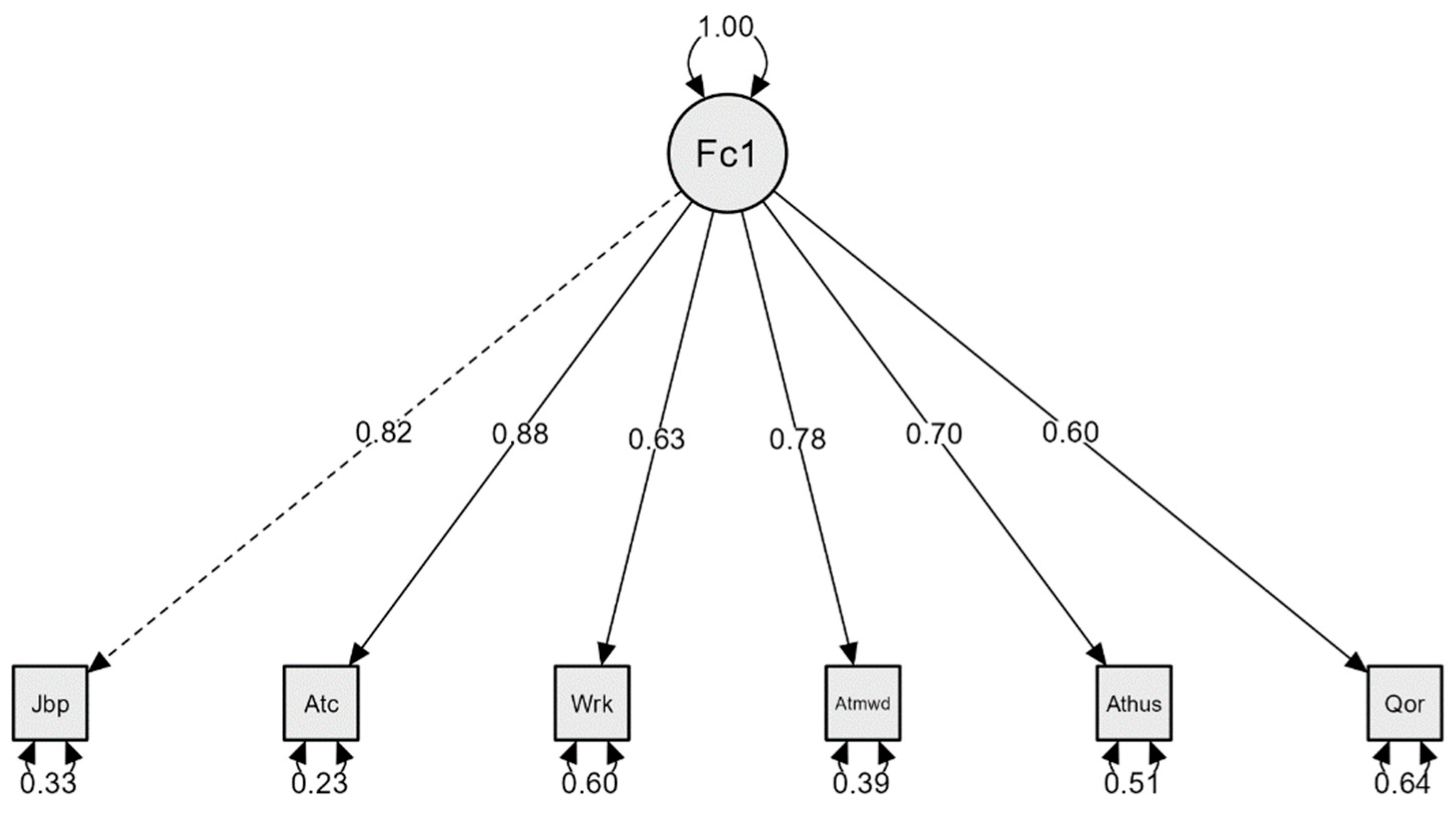
Table 4 shows that all six items loaded on the single latent factor, stress caused by organizational change. All freely estimated factor loadings were statistically significant (
p < 0.001), indicating that the corresponding items were significantly associated with the latent construct. The content coverage of the construct was theoretically informed by the literature; however, no formal expert-panel content-validity assessment was conducted. This is acknowledged as a limitation of the instrument.
As shown in
Table 5, the variance of the latent factor was statistically significant (σ
2 = 2.524,
p < 0.001), indicating significant between-respondent variability in stress caused by organizational change. The 95% confidence interval for the factor variance was [1.801, 3.247].
The indicator-level R
2 values represent the proportion of variance in each item explained by the latent factor. The values ranged from 0.362 to 0.771. The latent factor explained between 36.2% and 77.1% of the variance in the individual indicators (
Table 6).
Although the Quality of relationships item showed the lowest indicator-level explained variance (R2 = 0.362), it was retained because it represents the interpersonal dimension of employees’ experiences of organizational change, which is conceptually relevant to the appraisal of change-related workplace demands. Its factor loading was statistically significant, and removing the item would have narrowed the content coverage of the construct by excluding the relational consequences of organizational change.
As shown in
Table 7, the average variance extracted (AVE) was 0.551, exceeding the commonly used threshold of 0.50 and indicating adequate convergent validity. The scale showed good internal consistency (Cronbach’s α = 0.874). Discriminant validity was not assessed because the measurement model contained only a single latent construct.
Figure 2 shows how the observed items relate to the latent factor.
As shown in
Table 8, the model accounted for 54.3% of the variance in intention to quit (R
2 = 0.543). The model accounted for 16.3% of the variance in stress caused by organizational change (R
2 = 0.163).
Table 9 presents the direct associations tested under H1 and H1a. Regarding hypothesis H1, we wanted to examine whether there is a relationship between psychological strain and intention to quit. The results showed a statistically significant positive association between psychological strain and intention to quit (Estimate = 0.438,
p = 0.047, 95% CI [0.005, 0.872]). Thus, H1 was supported.
Regarding hypothesis H1a, we wanted to examine whether there is a relationship between physical strain and intention to quit. The results showed a statistically significant positive association between physical strain and intention to quit (Estimate = 0.559, p = 0.002, 95% CI [0.198, 0.920]). Thus, H1a was supported.
Table 10 presents the indirect associations tested under H2 and H2a. H2 examined the indirect association between psychological strain and intention to quit through stress caused by organizational change. A statistically significant positive indirect association was observed (Estimate = 0.546,
p < 0.001, 95% CI [0.274, 0.818]). Thus, H2 was supported.
H2a examined the indirect association between physical strain and intention to quit through stress caused by organizational change. No statistically significant indirect association was observed (Estimate = 0.085, p = 0.349, 95% CI [−0.093, 0.263]). Thus, H2a was not supported.
Table 11 shows the total effects. The total effect between psychological strain and intention to quit was significant (Estimate = 0.984,
p < 0.001, 95% CI [0.647, 1.321]). Based on the results of the direct and indirect effects, as well as the total effect, partial mediation is observed. Psychological strain showed both a statistically significant direct association with intention to quit and a statistically significant indirect association through stress caused by organizational change. The overall effect between physical strain and intention to quit is significant (Estimate = 0.644,
p < 0.001, 95% CI [0.330, 0.958]). Physical strain remained significantly associated with intention to quit after accounting for stress caused by organizational change; however, the indirect association through stress caused by organizational change was not statistically significant.
Table 12 presents the path coefficients, including the estimates, standard errors, z-values,
p-values, and 95% confidence intervals. Direct structural relationships are visible between the variables. The results show that there is a positive significant relationship between stress caused by organizational change and intention to quit (Estimate = 0.450,
p < 0.001, 95% CI [0.283, 0.616]). Higher values related to stress caused by organizational change are associated with higher intention to quit. There is a positive significant relationship between psychological strain and intention to quit (Estimate = 0.438,
p = 0.047, 95% CI [0.005, 0.872]). There is a positive significant relationship between physical strain and intention to quit (Estimate = 0.559,
p = 0.002, 95% CI [0.198, 0.920]). There is a positive significant relationship between psychological strain and stress caused by organizational change (Estimate = 1.214,
p < 0.001, 95% CI [0.807, 1.620]). No statistically significant association was observed between physical strain and stress caused by organizational change (Estimate = 0.189,
p = 0.342, 95% CI [−0.201, 0.578]).
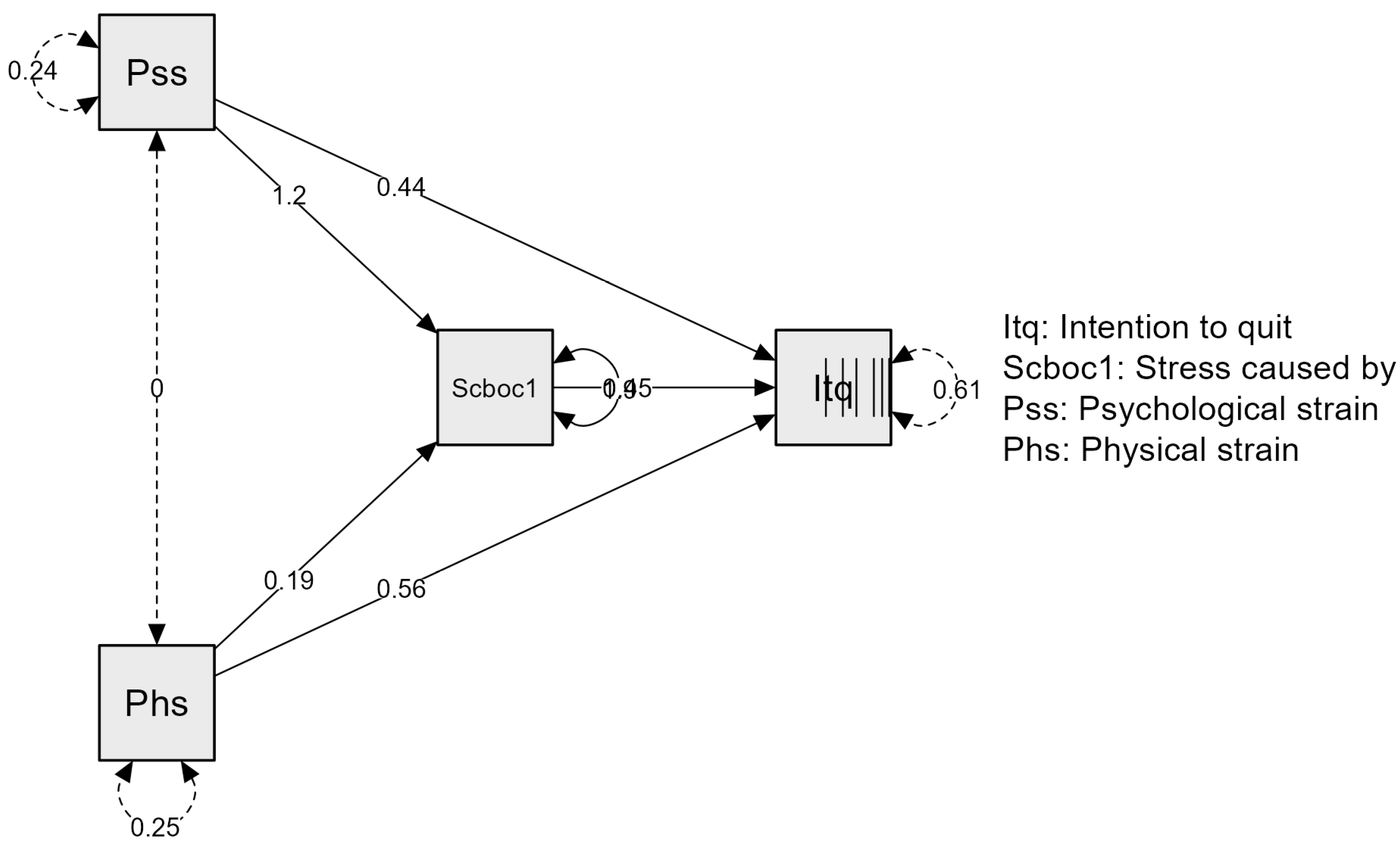
Figure 3 presents the relationships among the study variables and their corresponding unstandardized path coefficients. The statistical significance of the direct paths and indirect effects was evaluated using the corresponding path coefficients,
p-values, and confidence intervals. During the statistical analysis of the hypotheses, it was found that there is a significant relationship between psychological strain and intention to quit. Accordingly, hypothesis H1 was supported. Furthermore, it was shown that there is a significant relationship between physical strain and intention to quit. Accordingly, hypothesis H1a was supported. A statistically significant indirect effect of psychological strain on intention to quit through stress caused by organizational change was observed. Together with the significant direct effect, this pattern was consistent with partial statistical mediation; therefore, H2 was supported. The indirect effect of physical strain on intention to quit through stress caused by organizational change was not statistically significant; therefore, H2a was not supported.
In the H3/H3a model, the relatively low R
2 values indicate limited explanatory power. The model accounted for 10.8% of the variance in job insecurity and 0.9% of the variance in stress caused by organizational change (
Table 13). These results suggest that substantial variance in both endogenous variables remains unexplained by the predictors included in this model.
Table 14 contains the direct effects. Regarding hypothesis H3, we wanted to examine whether there is a relationship between indifferent leadership and job insecurity. H3 examined the association between indifferent leadership and job insecurity. The results showed a statistically significant positive association between indifferent leadership and job insecurity (Std. Estimate = 0.206,
p = 0.003, 95% CI [0.068, 0.344]). Thus, H3 was supported.
H3a examined the indirect association between indifferent leadership and job insecurity through stress caused by organizational change. The indirect association between indifferent leadership and job insecurity through stress caused by organizational change was not statistically significant (Std. Estimate = 0.022,
p = 0.251, 95% CI [−0.016, 0.059]); therefore, H3a was not supported (
Table 15).
Table 16 presents the total effect. The total effect of indifferent leadership on job insecurity was statistically significant (Std. Estimate = 0.228,
p = 0.002, 95% CI [0.084, 0.372]). Although indifferent leadership showed a significant direct association with job insecurity, the indirect association through stress caused by organizational change was not statistically significant.
Table 17 presents the standardized path coefficients, standard errors, z-values,
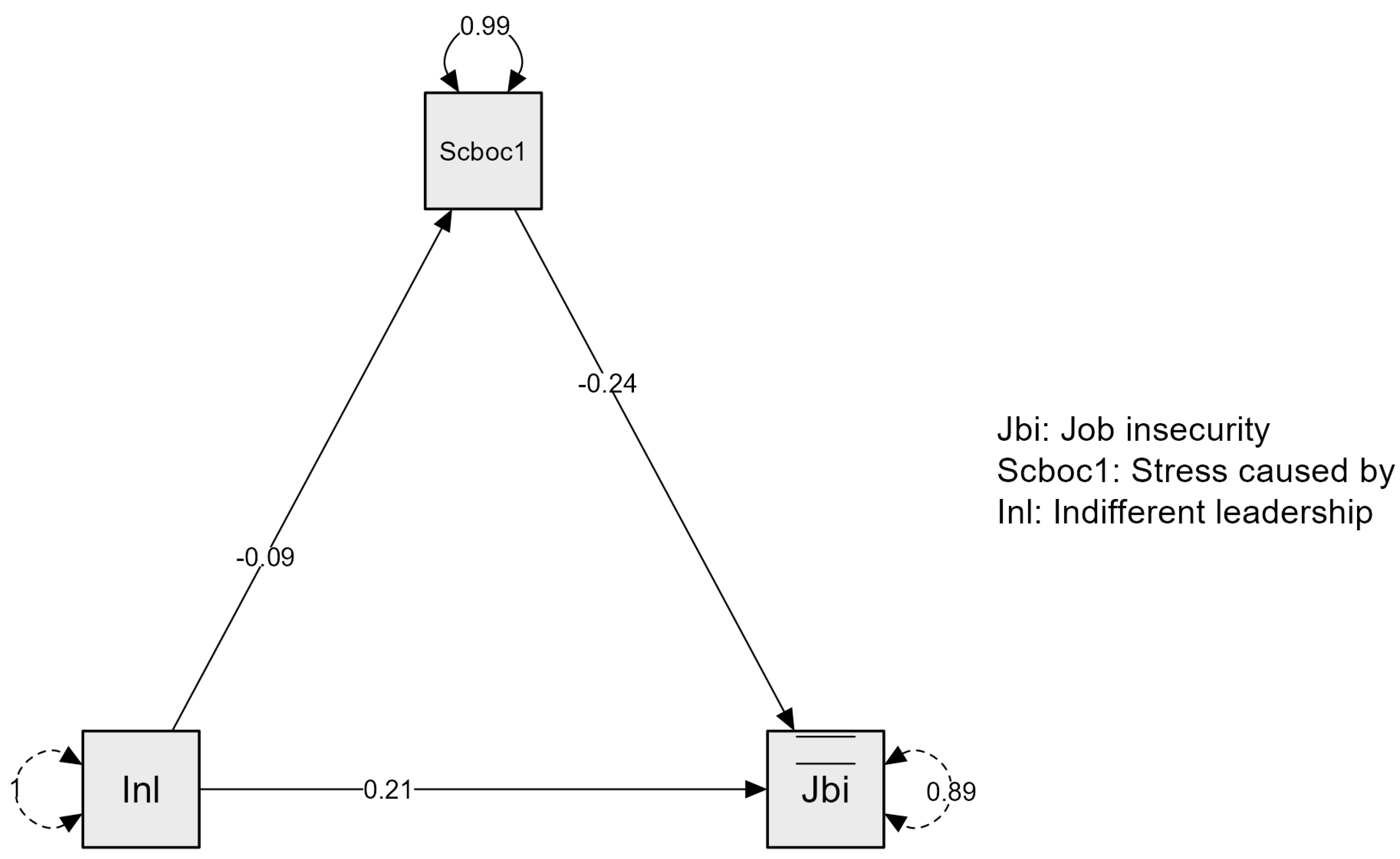
p-values, and 95% confidence intervals for the H3/H3a model. A statistically significant negative association was observed between stress caused by organizational change and job insecurity (Std. Estimate = −0.237,
p = 0.002, 95% CI [−0.386, −0.088]). Within the multivariable model, higher levels of stress caused by organizational change were conditionally associated with lower levels of job insecurity after accounting for indifferent leadership. Given the counterintuitive direction of this association and the cross-sectional nature of the data, this finding should be interpreted with caution. Potential suppression effects and measurement characteristics should also be considered when interpreting this conditional association. Indifferent leadership was positively associated with job insecurity (Std. Estimate = 0.206,
p = 0.003, 95% CI [0.068, 0.344]). No statistically significant association was observed between indifferent leadership and stress caused by organizational change (Std. Estimate = −0.093,
p = 0.216, 95% CI [−0.239, 0.054]).
Figure 4 presents the relationships among the study variables and their corresponding standardized path coefficients. Indifferent leadership was significantly and positively associated with job insecurity; therefore, H3 was supported. The indirect effect of indifferent leadership on job insecurity through stress caused by organizational change was not statistically significant; therefore, H3a was not supported.
6. Discussion
The study contributes to the understanding of organizational behavior during periods of prolonged and overlapping crises in several ways. By examining Hungarian SMEs, the study extends the empirical context of existing change management research, which has often focused on large corporate environments. One theoretical contribution of the study is its explicit consideration of the distinction between traditional organizational change and crisis-induced change. While the literature often treats organizational change as a broad construct, the present study is consistent with
Mokhtarifar et al. (
2024), who emphasize that disruptive crisis-related shocks may substantially alter employees’ psychological contract with the organization. Specifically, the findings highlight the relevance of psychological strain, physical strain, job insecurity, and leadership conditions for understanding employee responses to crisis-related organizational change. The study provides context-specific empirical evidence on organizational behavior dynamics within the Hungarian SME sector—a setting characterized by relatively lean HR structures, exposure to multiple crises, and a specific national context. Given the economic importance of SMEs in Hungary and Central Europe, this context-specific evidence may have implications for organizational behavior research and practical relevance for managers and HR professionals. The findings therefore contribute to the literature on organizational functioning under crisis conditions while also identifying directions for future research.
The study examined how psychological and physical strain during crises are associated with employees’ intention to quit in SMEs and whether these associations involve an indirect pathway through stress caused by organizational change. We also examined the association between indifferent leadership and job insecurity and the potential indirect role of stress caused by organizational change in this relationship.
Njaramba and Olukuru (
2025) highlight the importance of employees’ psychological capital for organizational functioning under highly demanding conditions. According to the TSM, stress responses are strongly influenced by individuals’ appraisal processes. When individuals encounter a stressor, they evaluate its relevance and the resources available to cope with it (
Biggs et al., 2017;
Goh et al., 2010;
Obbarius et al., 2021).
The results showed a statistically significant positive association between psychological strain and intention to quit, together with a statistically significant indirect effect through stress caused by organizational change. Considering the significant direct, indirect, and total effects, the observed pattern is consistent with partial statistical mediation. From a practical perspective, this finding suggests that reducing stress caused by organizational change alone may not be sufficient to address employees’ intention to quit when psychological strain is already elevated. Organizations may therefore need to address both employees’ appraisal of crisis-induced organizational change and their broader psychological burden. Interventions aimed at transparent change communication, employee involvement, and strengthening coping resources may help reduce stress associated with organizational change, whereas measures targeting workload, emotional exhaustion, and psychological well-being may be relevant to the remaining direct association between psychological strain and intention to quit. Organizational withdrawal may represent an extreme coping response under conditions of persistent strain, as also discussed by
Pandey et al. (
2025). Persistent psychological strain and elevated stress caused by organizational change may therefore contribute to adverse employee outcomes, including withdrawal from the organization.
Physical strain was also significantly and positively associated with intention to quit. However, the indirect effect through stress caused by organizational change was not statistically significant. The significant direct and total effects, together with the non-significant indirect effect, suggest that the association between physical strain and intention to quit was not explained by the proposed indirect pathway through stress caused by organizational change.
Karácsony et al. (
2025) reported a stable negative association between job stress and employee engagement, while workplace stressors have also been associated with lower motivation and engagement (
Pei et al., 2024). These findings reinforce the importance of organizational practices aimed at reducing unnecessary workplace stress through improvements in workplace culture, fair workload distribution, effective internal communication, and clear feedback mechanisms. To reduce the risk of employee withdrawal and turnover, leaders should seek to reduce unnecessary workplace stress, set achievable goals, communicate honestly and regularly, and foster employees’ sense of value and involvement (
Krajcsák & Bakacsi, 2025;
Verdorfer et al., 2026;
Yue et al., 2022).
Leadership may become particularly important during periods of crisis, when uncertainty and organizational disruption are elevated.
Udod et al. (
2024) emphasize the importance of effective crisis management, problem-solving capabilities, and the creation of a stable and trusting organizational environment. A climate of distrust may increase uncertainty and contribute to employee withdrawal intentions, particularly under crisis conditions (
Vijaykumar et al., 2025). The present study focused on indifferent leadership and did not directly examine the potentially protective role of supportive leadership. The results showed a statistically significant positive association between indifferent leadership and job insecurity, supporting H3. However, the indirect effect through stress caused by organizational change was not statistically significant, and H3a was therefore not supported. This finding suggests that the association between indifferent leadership and job insecurity may involve mechanisms other than stress caused by organizational change, which were not examined in the present study. The mechanisms underlying this association therefore warrant further investigation.
From a theoretical perspective, the pattern of findings may also indicate an important boundary condition regarding the applicability of the TSM. The indirect pathway through stress caused by organizational change was supported for the association between psychological strain and intention to quit, but not for the relationships involving physical strain or indifferent leadership. This pattern suggests that the TSM may be particularly relevant when employee outcomes are closely linked to the appraisal of demands relative to perceived coping resources. Psychological strain is directly related to employees’ cognitive and emotional burden, which may make an appraisal-based mechanism particularly relevant. By contrast, indifferent leadership represents the absence or insufficiency of an organizational resource, while job insecurity concerns the anticipated loss of employment stability. In this context, the COR framework may provide a more proximal explanation because insufficient leadership support, information, and reassurance may be associated with perceived threats to valued employment-related resources without necessarily operating through stress caused by organizational change. Thus, the present findings suggest that the explanatory relevance of the TSM may be conditional rather than universal and may depend on the nature of the predictor and outcome involved.
A particularly noteworthy finding was the statistically significant negative association between stress caused by organizational change and job insecurity after accounting for indifferent leadership. Because this direction is contrary to the theoretically expected positive relationship, it should not be interpreted as evidence that greater change-related stress reduces employees’ perceived employment insecurity. Several methodological and statistical explanations are possible. First, the negative coefficient may reflect a suppression or conditional effect arising from the simultaneous inclusion of indifferent leadership and stress caused by organizational change in the structural model. In such a case, the sign and magnitude of a partial regression coefficient may be affected by the shared variance among predictors when they are entered simultaneously into the model. Second, the use of a single-item indicator for job insecurity and a study-specific measurement instrument may have introduced measurement error or limited construct coverage, potentially affecting the magnitude and direction of the estimated association. Third, the cross-sectional design prevents the temporal ordering of stress and job insecurity from being established and does not permit causal interpretation of the observed path. The coefficient should therefore be regarded as a model-specific conditional association that requires replication rather than as evidence of a substantive protective effect of change-related stress. Future studies using validated multi-item measures, larger samples, and longitudinal or time-lagged designs are needed to determine whether this negative association is reproducible or reflects suppression, measurement characteristics, or sample-specific variation.
The relatively low explained variance in job insecurity (R2 = 0.108) further indicates that indifferent leadership and stress caused by organizational change capture only a limited proportion of the factors shaping employees’ perceptions of employment insecurity during crises. Job insecurity is likely to be associated with a broader set of organizational, individual, and external factors that were not included in the present model. These may include contractual status, tenure, perceived employability, financial vulnerability, organizational performance, downsizing expectations, communication regarding future staffing, industry-specific exposure to crisis, and perceived labor-market stability. The low R2 should therefore not be interpreted as evidence that leadership is irrelevant, but rather as an indication that job insecurity is a multifactorial outcome whose variance cannot be adequately explained by leadership and stress caused by organizational change alone. Future models should incorporate a broader set of employment, organizational, and labor-market predictors to improve explanatory power. These findings highlight several avenues for future research, particularly regarding the broader organizational, individual, and labor-market determinants of job insecurity.