Article

Sociotechnical Enablers of Digital Transformation of South African Retail SMMEs


by
Luyolo Mahlangabeza
1,* and
Michael Twum-Darko
2
1
Department of Management and Project Management, Faculty of Business and Management Sciences, Cape Peninsula University of Technology, Cape Town 7530, South Africa
2
Graduate Centre for Management, Faculty of Business and Management, Cape Peninsula University of Technology, Cape Town 7530, South Africa
*
Author to whom correspondence should be addressed.
Adm. Sci. 2026, 16(5), 237; https://doi.org/10.3390/admsci16050237
Submission received: 27 March 2026 / Revised: 17 April 2026 / Accepted: 22 April 2026 / Published: 19 May 2026

Abstract

Digital transformation (DT) is becoming of strategic importance for Small, Medium and Micro Enterprises (SMMEs), especially in the retail sector, where a significant portion of customer engagement, operational efficiency, and market competitiveness is shaped by digital technologies. Even though there is a growing availability of smartphones, mobile payment systems, and social media platforms, many South African retail SMMEs struggle to achieve a sustained and meaningful DT. Existing studies offer limited insights into the dynamic interactions between technological, organisational, and human agency factors that enable digital uptake over time. This study investigates the sociotechnical dynamics of DT among retail SMMEs in the Eastern and Western Cape provinces of South Africa. The research integrates Adaptive Structuration Theory (AST) with the Limits to Success Archetype (LSA) to conceptualise DT as an evolving process shaped by the interplay of technology, organisational structures (formal arrangement of roles, responsibilities, authority, and communication patterns within an organisation), and human agency. Using an exploratory qualitative research design, purposively sampled semi-structured interviews were conducted with 23 retail owners, directors and managers. The interviews were transcribed, and the data were analysed thematically using the Braun and Clarke six-step thematic analysis framework on Atlas.ti 25. Findings indicate that DT in retail SMMEs is enabled by pragmatic, tool-level digital adoption, training, education, ongoing skill development, alignment with business capacity, regulatory clarity, operational realities, addressing scams, fraud, data security, a user-friendly interface, and the availability of native language digital tools, structural interventions that reduce inequality, and DT ecosystem support. The study contributes to DT scholarship by integrating sociotechnical and systems-thinking perspectives to explain the trajectories of DT in retail SMMEs. It also provides practical insights for policymakers, support institutions, and digital ecosystem actors seeking to democratise DT in emerging-market retail contexts.

1. Introduction and Problem Statement

Although digital technologies can improve efficiency, customer engagement, and market access, many SMMEs in developing economies have not implemented them to their full potential, resulting in limited DT engagement (Nkomo & Kalisz, 2023, p. 422; Jeza & Lekhanya, 2022, pp. 300, 307; Achieng & Malatji, 2022, p. 1). To that end, South African retail SMMEs operate under conditions of structural inequality, infrastructural constraints, and limited institutional support, which fundamentally shape how digital technologies are adopted and enacted in practice. Despite the rapid rise in smartphones, digital payments and online marketplaces, adoption remains uneven due to a persistent lack of skills, financial constraints, infrastructural challenges, resistance to change, and cybersecurity concerns (M. H. Khumalo & Moloi, 2025, pp. 7–8; Chasaya & Ayandibu, 2025; Shaifullah & Hossain, 2025, p. 482). This poses a threat to SMMEs’ survival and competitiveness (van Tonder, 2023, p. ix).
Compounding the problem is that existing DT frameworks are largely developed for resource-rich large enterprises (Bilal et al., 2024, p. 23) and do not adequately account for the system-level constraints and social structuration dynamics shaping technology adoption among retail SMMEs in South Africa. Much of the existing research focuses narrowly on ICT adoption (Masadeh et al., 2024) or on specific digital technologies (Jeza & Lekhanya, 2022; Classen et al., 2021), with limited attention to the broader psychological and sociotechnical dynamics influencing adoption. Consequently, DT remains complex and poorly understood among retail SMMEs in developing economies (Bilal et al., 2024, p. 3).
This study makes a novel contribution by being the only study recently to draw on a dual-theoretical model to explain sociotechnical reinforcing feedback loops enabling retail SMMEs to digitally transform. Recent scholarship on DT in developing economies reveals important areas of convergence, yet remains fragmented in providing an integrative explanation of how constraints and enablers interact over time. For example, Yesuf and Fields (2026), in a desktop study, identify financial, technological, institutional, regulatory, and cultural constraints as key barriers to DT. These categories closely align with the constraints identified in this study, including financial pressures, infrastructure limitations, skills gaps, regulatory challenges, and trust-related concerns. However, their analysis adopts a largely categorical perspective and does not sufficiently account for the dynamic and interdependent relationships among these factors. As a result, the complex feedback mechanisms through which these constraints evolve and reinforce one another remain underexplored.
Similarly, M. H. Khumalo and Moloi (2025), in their qualitative investigation of municipal health clinics in Gauteng, South Africa, identify key inhibitors such as funding shortages, infrastructure limitations, digital skills deficits, weak data protection systems, and resistance to technological change. While these findings converge with the present study—particularly in relation to skills, infrastructure, and trust-related constraints—their applicability is limited by the healthcare-specific context, which does not fully reflect the competitive pressures, market dynamics, and operational realities characteristic of retail SMMEs.
This pattern of convergence alongside fragmentation is further evident in international literature. Halid et al. (2025), in the Malaysian context, emphasise resource constraints, limited technical capabilities, and financial barriers, whereas Kargas et al. (2026), in Greece, focus on digital capabilities, strategic orientation, and organisational transformation processes. In a similar vein, Doghri et al. (2026) highlight the role of intellectual capital, digital leadership, and dynamic capabilities in enabling digital reconfiguration. Although these studies contribute important insights, they predominantly adopt single-perspective or factor-based approaches, thereby overlooking the recursive interplay between structural conditions, human agency, and feedback dynamics that shape DT trajectories over time.
Consequently, empirical research on DT within retail SMMEs remains limited (Teng et al., 2022), particularly in developing-country settings where contextual constraints are more pronounced (Ofosu-Ampong, 2021). More critically, existing studies fall short of providing context-sensitive and theoretically integrated explanations of how multiple inhibitors interact across time and space—such as between urban, township and rural environments or between resource-rich and resource-constrained settings. This gap underscores the need for a more holistic, systems-oriented approach that captures the dynamic, sociotechnical nature of DT in retail SMMEs.
This study addresses this gap through its threefold rationale. First, there is a need to move beyond linear adoption models toward dynamic, system-oriented explanations of DT in SMMEs. Second, qualitative insights are required to unpack how technology use is shaped by organisational norms, leadership practices, trust, and employee–owner relationships. Third, South Africa’s dual economy—characterised by stark contrasts between provinces and business types—offers a rich empirical setting for advancing DT theory in emerging-market contexts. These provinces reflect significant socio-economic contrasts: the Eastern Cape remains one of the most economically constrained and digitally underdeveloped regions, while the Western Cape is comparatively more developed in both economic and digital terms. By employing AST, the study foregrounds how digital technologies are appropriated through social structures (the underlying system of norms, values, relationships, and shared meanings that guide behaviour within an organisation) and human agency, while the LSA helps explain why the reinforcing benefits of DT are often counteracted by balancing constraints. Thus, the contribution of this study lies not in identifying entirely new categories of constraints, but in explaining how and why these constraints emerge, interact, and persist within a dynamic system.

2. Research Questions and Research Objectives

The overarching objective of the study is to explore how DT is enabled within retail SMMEs through the interaction of technology, social structures, and human agency. The research questions guiding this study are:
  • RQ1: What sociotechnical factors enable DT in South African retail SMMEs?
  • RQ2: How do technology, organisational structures, and human agency interact to shape DT outcomes?

3. Literature Review

3.1. Gaps in the Literature

Scholars have observed that DT of SMMEs in Sub-Saharan Africa, which includes South Africa, has been slow owing to several impediments (OECD, 2020; Achieng & Malatji, 2022, p. 1) which inhibit their efficiency in digital innovation (Bilal et al., 2024, p. 3). Interestingly, the literature on DT discourse points to the fact that successful transformation is heavily influenced by the geographical context of an organisation (Ulez’ko et al., 2019). Even though SMME-focused digitalisation and DT have grown significantly, existing literature has primarily either focused on DT in macro enterprises or SMMEs in high-income countries, as well as DT antecedents and outcomes in those regions (Achieng & Malatji, 2022, p. 4; Bilal et al., 2024, p. 22).
To illustrate, Bin and Hui (2021, pp. 1673–1686) conducted a systematic literature review on the factors influencing the DT of SMMEs. The study found that most SMMEs examined were based in high-income countries, such as China, Australia, the United Kingdom (UK), and the United States of America (USA), with a few exceptions in low to middle-income countries like Pakistan and Chile.
Notably, no African countries were included in the SMME population studied. Achieng and Malatji (2022, p. 4) believe that this exclusion can be attributed to the fact that SMMEs in high-income countries are more advanced in their adoption of DT compared to those in low to middle-income countries. Therefore, it is critical to consider the SMME’s geographical operational context.
It is also noteworthy that many studies on DT revolve around the adoption of Information and Communication Technologies (ICT) (Masadeh et al., 2024), use a single research method in one province or location (Makiwa & Steyn, 2020; Modiba et al., 2020; Spalinger et al., 2019; Van Dyk & van Belle, 2019; Bvuma & Marnewick, 2020; Gono et al., 2016; Adeniran & Johnston, 2014; Chinyanyu Mpofu & Watkins-Mathys, 2011) or investigate digital technologies only (Jeza & Lekhanya, 2022; Classen et al., 2021).
For example, Makiwa and Steyn (2020) conducted a case study using semi-structured interviews to collect data in Zimbabwe to develop a framework for stimulating the adoption of ICT in SMMEs in developing countries based on the Diffusion of Innovation (DOI) theory, the Technology-Organisation-Environment (TOE) framework and the Unified Theory of Acceptance and Use of Technology (UTAUT). Notably, this study only identified key government-related ICT adoption factors in Zimbabwean SMMEs. Spalinger et al. (2019) used 56 interviews to collect data from insurance brokers in Switzerland and South Africa to probe 9 influence factors on DT adoption based on the Technology Evaluation and Adoption (TEA) framework. However, this framework was designed solely for usage in the first phase of DT of SMMEs, with applicability in the animate phase of the ABILI-method (Spalinger et al., 2019, p. 10). Van Dyk and van Belle (2019, p. 528) used a TOE framework and proposed that studies in DT of retail SMMEs should identify new factors that might impact adoption. This study attempts to fill this gap in the literature.

3.2. The Importance of Digital Transformation

L. Li et al. (2018) argue that enterprises are required to create conditions to generate digital innovations because of increasing consumer demands and a sharp shortening of the product innovation cycle (Favoretto et al., 2022). However, many SMMEs still lack meaningful digital presence (Maduku et al., 2016). This is due to organisational inertia (Svahn et al., 2017) and resistance (A. Singh & Hess, 2020) emanating from inherent practices that hinder the potential dividends that can be drawn from being digitally transformed.

3.3. Digitisation Technologies

According to Paul et al. (2023, p. 8), a digitally transformed business implements innovative digital technologies to advance its business and formulate new digital business models by using digital tools and digital platforms. Furthermore, Teng et al. (2022) and Kane et al. (2017) propose that SMMEs must utilise digital technologies in enterprise procedures, offerings, and resources to elevate customer benefits, reveal novel avenues for monetisation, enhance operational effectiveness, and oversee risks throughout the entire enterprise.

3.4. Digitisation Transformation of Retail SMMEs in South Africa

Jeza and Lekhanya (2022, p. 306) highlight that “every SME must adapt new business ways by implementing effective digital transformation.” Van Dyk and van Belle (2019, p. 10) suggest that future studies around the adoption of DT in retail SMMEs could be conducted to identify new factors that might impact adoption.

3.5. Digital Transformation Enablers

Enablers are the action plans to be implemented to achieve the objective set for DT (Zaoui & Souissi, 2021, p. 505). According to Achieng and Malatji (2022), in Southern Africa, the advancement of mobile telecommunication infrastructure and the accessibility of the Internet, especially through mobile broadband networks, have laid a solid foundation for the surge in digital initiatives. These developments have significantly transformed the methods by which individuals work, communicate, access government services, and conduct business. These encompass a wide range of technologies, including ICT, computer and mobile applications (e.g., email), electronic commerce, websites, cloud computing, electronic payment devices, social media platforms, and other innovations like the IoT (Lutfi et al., 2022), but to ensure successful DT of SMMEs, continuous digital innovation is necessary.

3.5.1. Technical Enablers

Technical enablers relate to the availability, adoption, and effective utilisation of digital technologies that support SMME operations. African SMMEs are increasingly adopting localised digital solutions tailored to contextual challenges, such as agricultural applications for smallholder farmers and healthcare platforms for rural communities, thereby enhancing the relevance of DT within local environments (Raji et al., 2024). Furthermore, SMMEs are encouraged to adopt adaptable and flexible digital technologies that can respond to evolving business needs (Sari et al., 2024, p. 8).
A critical component of technical enablement is cybersecurity and data protection. SMMEs must implement robust cybersecurity frameworks, including encryption technologies and secure systems, to safeguard sensitive information and maintain customer trust (Raji et al., 2024). In addition, compliance with data protection regulations, such as the Protection of Personal Information (POPI) Act, is essential to ensure transparency, legal compliance, and consumer confidence. Technology integration and the use of shared digital platforms further enhance operational efficiency and collaboration among SMMEs (Beliaeva et al., 2020; Han & Trimi, 2022).

3.5.2. Social Enablers

Social enablers emphasise the role of human agency, relationships, and collaborative practices in facilitating DT. SMMEs benefit significantly from networks, partnerships, and ecosystems that enable knowledge sharing, resource pooling, and collective problem-solving (Raji et al., 2024; Zhang et al., 2022). These networks function as digital innovation ecosystems, allowing firms to leverage both internal and external capabilities through strategic relationships (Beliaeva et al., 2020).
Collaboration occurs at multiple levels, including partnerships with technology providers, internal employee involvement, and active customer engagement to drive innovation and value creation (Sari et al., 2024, p. 8; Arcidiacono et al., 2019; Pisoni, 2021). Additionally, continuous skills development and learning are critical. SMME owners and employees must develop digital and business competencies through formal training, informal learning, and experiential “learning by doing,” which enhances adaptability and competitiveness (Cassetta et al., 2020; Denicolai et al., 2021; Matarazzo et al., 2021; Nasiri et al., 2020; Olsson & Bernhard, 2021). Moreover, fostering a culture of innovation and openness to change, supported by positive attitudes toward technology adoption, is essential for successful DT (Tarutė & Gatautis, 2014).

3.5.3. Structural Enablers

Structural enablers refer to organisational systems (an integrated set of interrelated components within a firm), strategies, and processes that guide and sustain DT. A foundational requirement for SMMEs is the development of a well-defined technology adoption strategy aligned with organisational goals and objectives. This includes evaluating technological needs, allocating appropriate budgets, and establishing structured implementation timelines (Kohtamäki et al., 2020).
SMMEs are also encouraged to adopt a staged approach to DT, progressing through phases such as digital awareness, inquiry, collaboration, and full transformation (Garzoni et al., 2020). Organisational practices such as digital readiness assessments, benchmarking, and needs identification support this progression (Lassnig et al., 2018).
Furthermore, resource-sharing mechanisms, such as shared infrastructure, bulk purchasing of digital services, and collaborative marketing, enable SMMEs to overcome resource constraints and enhance resilience (Raji et al., 2024). Engaging external experts or consultants also strengthens decision-making and ensures that technological solutions are appropriately aligned with organisational requirements (Devece et al., 2019). These structural arrangements facilitate the integration of digital technologies into everyday business processes.

3.5.4. Institutional Enablers

Institutional enablers encompass the broader regulatory, policy, and ecosystem-level support mechanisms that create an enabling environment for DT. Governments and international organisations play a crucial role by investing in digital infrastructure, including broadband expansion and improved network resilience, particularly in underserved regions (Raji et al., 2024). In the South African context, several institutional mechanisms have been established to support SMMEs. The National Small Business Act and related initiatives, such as the Integrated Small Enterprise Development Strategy (ISEDS), National Empowerment Fund (NEF), and the National Small Business Council, provide foundational support for enterprise development (Botha et al., 2021). The establishment of the Small Enterprise Development Agency (SEDA) further strengthens this support system (Schirmer & Visser, 2021).
Additionally, the Department of Small Business Development (DSBD) and the Department of Trade and Industry (DTI) play a significant role in fostering SMME growth through financial and non-financial support programmes, including partnerships with institutions such as the National Youth Development Agency (NYDA) and the Small Enterprise Finance Agency (SEFA) (Vivence, 2021; Zulu, 2021). These initiatives include funding mechanisms, empowerment programmes, and capacity-building interventions, reflecting a coordinated, multi-agency approach to SMME development (Arshad et al., 2020; Lose, 2019).
Furthermore, innovative financing mechanisms, such as venture capital, crowdfunding, and public–private partnerships, are emerging as critical institutional enablers that enhance access to financial resources for DT (Raji et al., 2024). Educational reforms, vocational training programmes, and reskilling initiatives also contribute to building a digitally capable workforce, thereby reinforcing long-term DT sustainability.

3.6. Digital Transformation Frameworks

Achieng and Malatji (2022) propose that the existing body of literature has predominantly concentrated on DT within large corporations or SMMEs located in high-income nations, while also examining the antecedents and consequences of DT within these regions. For instance, Bin and Hui (2021) conducted a systematic review of literature that explored the factors influencing DT in SMMEs.

3.7. Digital Transformation Frameworks for Large Enterprises

The framework for DT strategy, known as the integrated methodological framework, offers large enterprises directives to assist them in creating, executing, and overseeing their transformation strategies (Korachi & Bounabat, 2019), while the DT success framework serves as a tool for identifying the advantages gained through DT and signalling the potential for achieving success in large corporations (Liere-Netheler et al., 2018). The framework for digital innovation strategy offers large companies a perspective on digital innovation, aiding them in navigating the swiftly evolving digital innovation landscape (Nylén & Holmström, 2015). The framework for DT strategies also crafts a strategy for DT, acting as a central concept to integrate coordination, prioritisation, and adoption of DT for large companies (Matt et al., 2015).
Cognisant’s DT framework is used to develop an organisation’s digital vision and build a new business model based on digital opportunities for corporations (Corver & Elkhuizen, 2014), while the focus of the digital reinvention framework lies in an organisation’s imperative to adopt a new strategic direction, establish innovative work methodologies, and cultivate fresh expertise in large enterprises. Lastly, the framework for dimensions of DT focuses on four critical areas (go-to-market, engagement, operations, organisation) as focal points during DT, subsequently integrating these into other facets of a large business (Udovita, 2020).

3.8. The Lack of a Digital Transformation Framework for SMMES

How SMMEs build multiple factors for DT is relatively unknown (K. Li, 2025) since very little research has been undertaken to understand critical success factors in digitally transforming SMMEs (Paul et al., 2023, p. 12). Some studies have attempted to investigate the key elements supporting digital innovation (K. Li, 2025) using the TOE framework, and they yield that there are key antecedents supporting DT (Ciriello et al., 2018; Autio et al., 2018; Ravichandran, 2018; Bilal et al., 2024). Notably, the use of the TOE framework eliminates the investigation of specific quantifiable contents, which include firms’ technology infrastructure (foundational digital and physical systems that support the use of technology within an organisation), organisational digital strategy, and government policy (K. Li, 2025). Table 1 depicts a comparative and critical analysis of some of the DT frameworks.

4. Conceptual Framework

This study is anchored in AST, which conceptualises technology use as an emergent process shaped by human agency and organisational structures. AST allows the analysis to move beyond deterministic views of technology by examining how digital tools are interpreted, enacted, resisted, or repurposed by retail owners and employees.
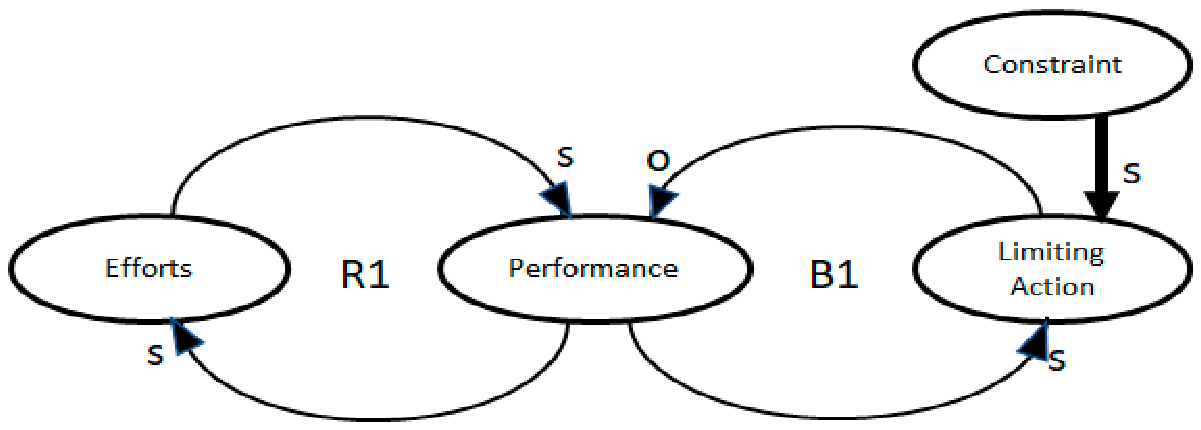
The LSA from systems thinking is employed to model dynamic feedback relationships (Senge, 1997). This archetype explains how initial reinforcing gains from digital adoption—such as increased efficiency or customer reach—can activate balancing forces, including cost escalation, skills overload, risk exposure, and regulatory pressures, ultimately slowing DT progress. As a result, performance plateaus over time. The LSA therefore explains DT as based on systemic enablers that emerge from the interaction of interdependent technological, organisational, and environmental factors (Clancy, 2018; Smith & Brown, 2018). Figure 1 depicts the LSA framework.
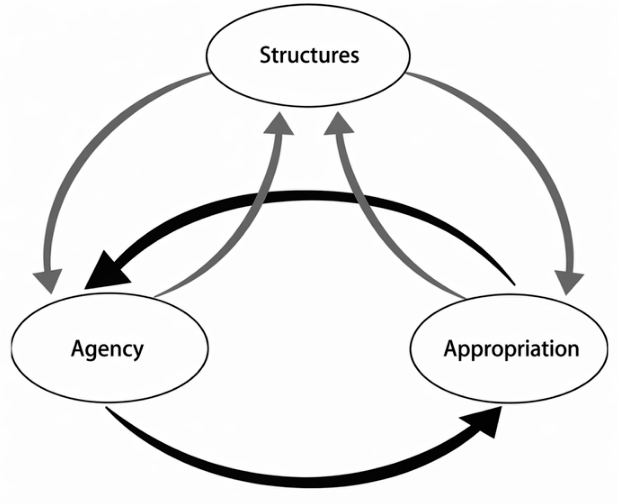
Developed by Poole and DeSanctis (1990) as an extension of Giddens’ (1984) Structuration Theory, AST complements this systemic perspective by explaining how these enablers are enacted and reproduced at the micro level through everyday technology use. AST posits that technology use is shaped by the interaction between structures (rules, norms, and resources) and human agency. Through appropriation processes, users interpret, adapt, and sometimes resist digital technologies based on their skills, experiences, and organisational context (Greenhalgh & Stones, 2010; Wu & Tóth, 2025). Figure 2 depicts the AST model. Various studies have also explored the appropriation of IT and IS using this theory (Greco & Corvello, 2024; Felicetti et al., 2024; Meier & Peters, 2023; Toha et al., 2023; Qatamin & Alkoud, 2023; Elbasha & Wright, 2017). Therefore, this theory is useful in investigating the sociotechnical dynamics (Ngary & Twum-Darko, 2024; A. C. Khumalo & Gharaie, 2023, p. 6) that enable DT of retail SMMEs in the Eastern and Western Cape provinces of South Africa.
The integration of AST and LSA enables a multi-level understanding of DT, linking micro-level practices to broader structural and systemic enablers. Together, the two theories provide complementary and interdependent explanatory power. This integrated perspective moves beyond linear or technology-centric explanations by conceptualising DT in retail SMMEs as a recursive sociotechnical process shaped by continuous interaction between structure and agency. Similar dual-theoretical approaches have been employed by Gkinko and Elbanna (2023), Meier and Peters (2023), and Ko et al. (2021).
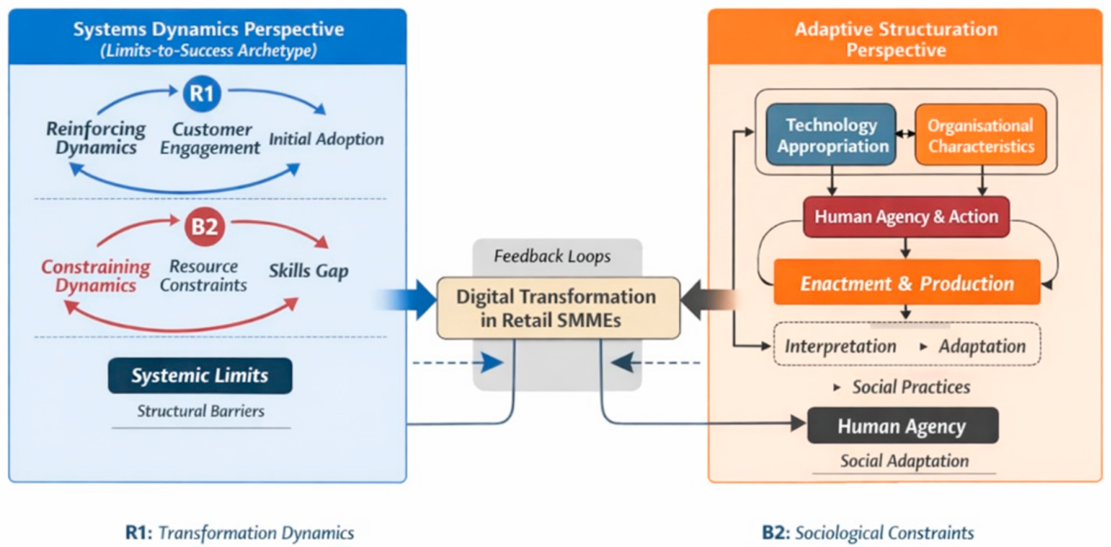
Accordingly, this study proposes an integrated conceptual framework that captures the interaction between LSA (macro/systemic feedback loops) and AST (micro-level sociotechnical dynamics). This framework provides a nuanced explanation of how reinforcing and balancing loops, mediated by agency, structures, and appropriation processes, jointly shape the enablers of DT among retail SMMEs in the Western Cape and Eastern Cape provinces of South Africa. Figure 3 depicts the study’s integrated conceptual framework.
At the micro level, appropriation reflects how technologies such as WhatsApp, mobile payments, and POS systems are adopted and enacted within everyday operations. These practices are often informal and shaped by individual agency, organisational routines, and resource constraints. However, such appropriation can unintentionally activate balancing feedback loops within the LSA framework.
For instance, the use of WhatsApp to manage customer interactions initially enhances engagement (reinforcing loop R1), but increasing message volumes and expectations of immediacy create cognitive overload, exposing skill limitations and triggering the skills constraint loop. Similarly, adopting mobile payment systems without adequate financial planning introduces transaction costs and cash flow pressures, activating the financial constraint loop. Fragmented use of multiple platforms further increases operational complexity, contributing to technical constraints.
From an AST perspective, these outcomes are shaped by interpretive schemes, organisational structures, and human agency, which influence how technologies are enacted and reproduced. As such, balancing loops are not purely external barriers but are endogenously generated through everyday appropriation practices. This highlights that sustained DT depends not only on access to technology but on how effectively it is structured and integrated into business operations. Failure can be understood as a misalignment between organisational structures and technological demands, mediated by information processing capability and the need for adaptation.
Digital technologies increase the volume, speed, and complexity of information flows, requiring organisations to develop corresponding capabilities to process, interpret, and act on this information effectively. However, when existing structures—such as rigid routines, limited skills, resource constraints, or restrictive regulations—lack the capacity to absorb and respond to these demands, an adaptation gap emerges. This misalignment constrains effective technology use, leading to inefficiencies, overload, and underutilisation, which ultimately undermine DT outcomes.
Thus, DT emerges from the recursive interaction between technological capabilities and organisational structures, where technology enables change, but its outcomes are shaped by how it is appropriated within existing structural conditions. This interaction forms the basis for the integrated conceptual framework presented in Figure 3.

5. Design and Methods

Previous studies on DT have predominantly employed case study and qualitative methodologies to explore factors influencing DT adoption and implementation (Cichosz et al., 2020; Osmundsen et al., 2018). In alignment with this methodological tradition, the present study adopts a cross-sectional qualitative multi-case study design, which enables an in-depth exploration of DT experiences across diverse retail SMME contexts.
A total of 23 participants were purposively selected from the Western Cape and Eastern Cape provinces of South Africa to ensure variation in enterprise characteristics such as size, digital maturity, ownership structure, and operational models. The inclusion criteria required that participants (1) be owners, directors or managers of retail SMMEs, (2) be actively involved in day-to-day operations and decision-making processes, (3) be retailers at early, experimental, or even struggling stages of digital engagement, and (4) operate within the specified provincial contexts. All participants were 18 years or older.
To enhance analytical richness and capture contextual diversity, cases were deliberately selected to reflect variation across key organisational and environmental dimensions. These included enterprise size (ranging from micro-enterprises with no employees to small enterprises employing up to 10 staff members), years in operation (from newly established firms operating for less than one year to businesses with over 20 years of experience), and geographical location (spanning urban, peri-urban, township, and rural settings within the Western Cape and Eastern Cape). This heterogeneity enabled a nuanced understanding of how contextual conditions shape DT processes among retail SMMEs.
The sample consisted of 15 retail owners and 8 retail managers, thereby incorporating both strategic and operational perspectives. Participants represented a diverse range of retail subsectors, including food retail, hair and beauty services, electronics, liquor retail, pharmacies, and informal trading. This sectoral diversity strengthened the study’s ability to capture varied manifestations of DT across different retail environments, thereby enhancing the contextual depth and transferability of the findings.
Data saturation was achieved at 23 participants, at which point no new themes, codes, or conceptual insights emerged from subsequent interviews (Hennink & Kaiser, 2022). Saturation was assessed repeatedly throughout the data collection and analysis process using constant comparison techniques, whereby ongoing coding revealed redundancy in emerging patterns and confirmed sufficient thematic depth and coverage. Consistent with qualitative research principles, the objective of this study was not statistical generalisation but rather to generate rich, contextually grounded insights into how retail SMMEs experience DT (Creswell, 2018).
Data were collected through semi-structured interviews and analysed using an inductive approach. All interviews were transcribed verbatim and analysed using Atlas.ti 25, following Braun and Clarke’s six-phase thematic analysis framework. This process involved (1) familiarisation with the data, (2) generation of initial codes, (3) development of preliminary themes, (4) review of themes, (5) refinement and definition of themes, and (6) final reporting. Throughout the analysis, codes and categories were continuously compared against the raw transcripts to ensure consistency, credibility, and alignment with participants’ lived experiences.
Methodological rigour was strengthened through multiple strategies aimed at enhancing the credibility, dependability, and confirmability of the study. Investigator triangulation was employed by involving more than one researcher in both the data collection and analysis processes, thereby reducing the potential for individual bias and enhancing interpretive depth (Denzin, 1978). In addition, data triangulation was achieved by incorporating perspectives from participants across diverse contexts, geographical locations, and retail business types, allowing for a more comprehensive understanding of DT phenomena (Denzin, 1978).
Furthermore, the integration of the LSA and AST facilitated theoretical triangulation, enabling the study to interpret findings through complementary analytical lenses that capture both systemic constraints and sociotechnical dynamics (Denzin, 1978). Table 2 is a mapping of themes into their respective theoretical constructs.
To support analytical transparency, the study employed reflexive memoing and maintained a comprehensive audit trail documenting key methodological decisions, coding processes, and emerging interpretations throughout the research process.
To enhance reliability, inter-coder agreement was established through collaborative coding sessions involving a second qualitative researcher. The subset of interview transcripts was independently coded, after which coding outputs were compared. Any discrepancies were resolved through iterative discussion and consensus-building, ensuring consistency in code application and interpretation. Supporting documentation, including annotated coding frameworks, detailed codebooks, and reflective memos, was systematically maintained to strengthen the audit trail and enhance methodological transparency.
Trustworthiness was further reinforced through member checking, whereby participants were allowed to verify the accuracy of interpretations, and peer debriefing, which provided critical external scrutiny of the analytical process. Ethical rigour was upheld through adherence to established research principles, including obtaining informed consent, ensuring participant confidentiality, and implementing secure data storage procedures.
Collectively, these methodological strategies ensured a rigorous, transparent, and credible exploration of the sociotechnical enablers shaping DT among retail SMMEs in South Africa. Table 3 is a demographics table summary of the study participants.

6. Findings

The findings reveal a set of interrelated enablers that promote DT among retail SMMEs, particularly when aligned with local realities and owner agency. These enablers operate across technological, human, structural, and ecosystem dimensions, reflecting the sociotechnical nature of DT.

6.1. Tool-Level Digital Enablers

A primary enabler identified across participants was the use of accessible and familiar digital tools, particularly WhatsApp and social media platforms such as Facebook and Instagram. These tools were widely valued for their affordability, ease of use, and immediate applicability in customer engagement, marketing, and communication.
Participants emphasised that these platforms enhance visibility and strengthen customer relationships. For example, one participant noted that “it would be good to incorporate the use of WhatsApp, as it is very popular” (P9), while another highlighted that “social media, we’re all using it” (P1). Similarly, participants indicated that digital platforms facilitate direct engagement with customers, as reflected in the statement: “when you are advertising your things on marketplace, that means you are connected with your customers” (P4). These findings suggest that DT in resource-constrained environments is driven by the incremental adoption of low-cost, high-impact tools that align closely with existing business practices.

6.2. Capability Development and Skills Enhancement

Participants consistently identified training, education, and continuous learning as critical enablers of effective DT. While access to digital tools is important, their successful use depends on the development of practical digital skills.
There was a strong preference for hands-on, context-specific training, particularly in areas such as marketing, payments, and customer communication. One participant stated that “training… making [staff] informed about the technology” (P13) is essential, while another emphasised, “training and education (digital literacy)” (P10).
Institutional support was also highlighted, with participants suggesting that “universities should… create short courses” tailored to SMME needs (P7). These insights indicate that capability development is an ongoing process, enabling sustained digital engagement rather than one-off adoption.

6.3. Business Capacity and Operational Alignment

The findings further indicate that DT is enabled when digital tools are aligned with business capacity, including access to infrastructure, skilled personnel, and operational resources. Participants emphasised the importance of connectivity, benchmarking, and external expertise in supporting digital adoption.
For example, one participant noted that “benchmarking would help… you see how other companies do things, and then you adopt” (P16), “You get influenced by other people.” (P6), “I think if we can, as a country, be encouraged and have companies that really encourage businesspeople to use these digital tools” (P10), while another highlighted the importance of connectivity: “everybody wants to use Wi-Fi… to be connected” (P5).
These findings demonstrate that DT is not solely dependent on technology but requires alignment between digital tools and organisational capacity, enabling effective and sustainable implementation.

6.4. Regulatory Clarity and Operational Context

Regulatory requirements and operational realities were found to shape how digital technologies are adopted and used. In some cases, participants adopted a cautious or selective approach to ensure compliance and maintain service quality.
For instance, one participant explained that businesses may need to “reach out to the Pharmacy Council… before introducing [technology]” (P6), highlighting the importance of regulatory approval. Similarly, documentation challenges were identified as barriers, particularly for foreign-owned businesses: “what blocks us the most is documentation… it’s difficult to get to banks” (P5).
These findings indicate that regulatory clarity and institutional accessibility are critical in enabling or constraining DT.

6.5. Trust, Safety, and Security Mechanisms

Trust and security concerns emerged as significant factors influencing DT uptake. Participants expressed fears related to fraud, scams, and data breaches, which shaped their engagement with digital platforms.
One participant highlighted the need for “awareness of what to look out for in scams” (P11), while another emphasised the importance of “safety measures” (P9). In some cases, participants adopted risk mitigation strategies such as insurance, as reflected in the statement: “have insurance just in case” (P1).
These concerns often resulted in restricted or cautious use of digital tools, suggesting that trust and security are not merely secondary considerations but core conditions for sustained digital engagement.

6.6. Inclusive and Accessible Digital Solutions

Participants highlighted the importance of user-friendly, accessible, and locally relevant digital solutions in enabling broader participation in DT. Ease of use, language accessibility, and platform design were identified as key factors influencing adoption.
For example, one participant noted that “tech developers should make the interface more user-friendly… maybe even use more native languages” (P8). Additionally, digital platforms were found to extend business operations beyond traditional hours, improving responsiveness and customer engagement.
Emerging tools such as influencer marketing and platforms like TikTok, Facebook and WhatsApp were also identified as effective mechanisms for attracting customers, with one participant noting that such strategies “help quite a lot of customers” (P4), “WhatsApp that you can actually chat to us directly” (P1), “My employees can use Facebook and WhatsApp, because the phone is here on-site” (P11), “We post them online” (P6).
These findings underscore the importance of inclusive design and accessibility in supporting DT among diverse SMME contexts.

6.7. Digital Transformation Ecosystem Support

Finally, DT was found to be shaped by a broader ecosystem of support, including government, private sector actors, and peer networks. Participants emphasised the importance of training, funding, infrastructure, and collaborative partnerships.
For instance, one participant stated that “government can… provide free training” (P9), while another highlighted the role of funding and training institutions: “I was fortunate enough to get funding… [they] can offer short courses” (P16).
Collaboration across stakeholders was also emphasised, with participants noting the need for “collaboration between all the role players… linked to a digital vision” (P8). Additionally, financial institutions were identified as key actors in reducing barriers, “particularly through lowering transaction costs” (P6).
These findings demonstrate that DT is not solely an individual or organisational process, but a collective, system-level phenomenon shaped by interconnected actors and institutional structures.

7. Discussion

Technological elements shape the success of DT through their characteristics and alignment with organisational contexts. Factors such as usability, interoperability, cost, and scalability influence adoption and sustained use. Technologies that are intuitive, compatible, and affordable enhance efficiency and innovation, while complex or poorly integrated systems create operational and financial strain. Thus, DT success depends on how well technological features align with organisational needs and capabilities, with their impact realised through interaction with users and organisational systems.
Interestingly, several participants demonstrated faithful appropriation, where digital tools were adopted and used in ways consistent with their intended functionality—particularly for customer engagement, marketing, and communication. For example, participants described how platforms such as WhatsApp and social media were seamlessly integrated into daily operations: “Social media, we’re all using it” (P1), “When you are advertising your things on marketplace… you are connected with your customers” (P4), “WhatsApp that you can actually chat to us directly” (P1).
In these cases, digital tools were appropriated as intended, enhancing visibility, responsiveness, and customer relationships. This reflects high levels of user alignment with technological structures, where interpretive schemes, and rules are embedded in the technology are accepted and effectively enacted. In contrast, other participants exhibited resistance or partial appropriation, where digital technologies were used selectively, cautiously, or even avoided altogether due to perceived risks, regulatory pressures, or contextual barriers: “Awareness of what to look out for in scams” (P11), “Have insurance just in case” (P1), “What blocks us the most is documentation… it’s difficult to get to banks” (P5), “Reach out to the Pharmacy Council… before introducing [technology]” (P6).
These responses indicate that users reinterpret or restrict the use of digital technologies, often deviating from their intended purpose. In such cases, appropriation is shaped by fear, uncertainty, institutional constraints, and trust deficits, leading to cautious engagement or outright resistance.

7.1. Tool-Level Digital Enablers

When digital technologies are perceived as useful, affordable, and closely aligned with business needs, they can play a transformative role in enabling customer attraction, marketing effectiveness, and market expansion. These digital tools included bank cards, POS machines, iKhokha machines, iPhones (to take and post good pictures on social media for marketing), quality cameras and lighting equipment (especially for salons, barbershops, and beauty retailers). This finding demonstrates that DT in resource-constrained contexts does not necessarily require complex or advanced technologies but can be enabled through sequential adoption, leveraging accessible, everyday digital tools that deliver immediate business value and align with their existing operations and capabilities (Mehta & Sharma, 2025, p. 18).
In corroboration of this finding, research on women micro-retail entrepreneurs in Indonesia shows that mobile payment systems and messaging platforms enhance operational efficiency and customer reach precisely because they are convenient, low-cost, and easily integrated into existing routines (Azis, 2025). That is why Mehta and Sharma (2025, p. 18) suggest that traditional businesses should start their digital journey by sequentially adopting simple and widely used digital tools, such as digital payment systems, WhatsApp Business, and basic accounting software, as they can significantly improve efficiency without requiring advanced technical knowledge. South African evidence on WhatsApp Business also demonstrates how instant messaging platforms function as powerful enablers of stakeholder engagement, marketing reach, and operational coordination for micro- and small retailers (Azionya & Mashigo, 2025).

7.2. Capability Development and Skills Enhancement

DT among retail SMMEs is strongly enabled by sustained investment in human capital through training, education, and ongoing skill development for both owners and employees. Studies on mobile payment adoption among women micro-retail entrepreneurs in Indonesia reveal that training, peer learning, and experiential knowledge play a decisive role in enabling effective use of digital tools beyond initial experimentation (Riu, 2025). Research on WhatsApp Business adoption among small and micro-retailers demonstrates that successful digital engagement depends on users’ ability to understand platform features, communication norms, and performance measurement practices (Azionya & Mashigo, 2025). Evidentially, capability building enhances the interpretive and procedural structures through which technology is appropriated. According to Mehta and Sharma (2025, p. 19), a digitally competent workforce supports smoother technology adoption and reduces resistance to change. Undoubtedly, continuous learning—rather than superficial exposure—is essential for transforming DT into enduring performance improvements.

7.3. Business Capacity and Operational Alignment

Successful DT among retail SMMEs requires not only access to technology and skills but also careful alignment with business capacity, regulatory clarity, and operational realities. Those retail SMMEs’ lived realities include the availability of reliable power (electricity), infrastructure, internet connectivity, fibre and system adoption software. Evidently, digital tools deliver meaningful benefits only when they are strategically integrated into broader communication and customer-engagement practices (Azionya & Mashigo, 2025). This is because digital platforms generate value when organisational readiness, regulatory compliance, and platform functionality are synchronised (Riu, 2025).
However, when these embedded structures conflict with regulatory requirements, staffing capacity, or operational rhythms, appropriation becomes constrained or distorted. Conversely, when alignment is achieved, technology is more easily routinised, enabling stable and productive patterns of use. Therefore, unresolved integration issues—such as regulatory ambiguity, workflow overload, or misfit between platform demands and business capacity—activate balancing loops that limit further progress. Consequently, integration is an enabling process, not a post-adoption adjustment, because alignment with operational and regulatory realities determines whether digital adoption translates into sustained value.

7.4. Trust, Safety, and Security Mechanisms

Addressing scams, cybercrime fraud, data security, and regulatory clarity is essential for enabling confident and responsible DT uptake. This is because SMMEs are afraid that using digital technologies might put them in danger from cyber threats such as data breaches, hacking, and fraud, especially in the case of e-commerce and online payments (Shaifullah & Hossain, 2025, p. 482). Empirical evidence from Bangladesh shows that one of the most important issues for SMMEs in their digitalisation journey is cybersecurity (Ahmed, 2025). Thus, enabling measures should include investing in secure payment gateways, installing firewalls, and encrypting data, as well as conducting employee training on cyber-related risks (Shaifullah & Hossain, 2025, p. 485). Therefore, trust-building features play a decisive role in enabling sustained digital engagement (Azionya & Mashigo, 2025).
Retailers are confident in using digital platforms when they perceive interactions to be secure, traceable, and aligned with customer expectations. Thus, trust enables DT use rather than being a by-product of adoption. It also functions as a normative and interpretive structure that shapes how technology is appropriated. Trust and safety are enabling conditions, not merely barriers to be overcome. Therefore, there is a need to address inhibitors such as security (H. Singh & Malviya, 2025, p. 6) and payment security concerns (Paliwal & Puttanna, 2025, p. 151).

7.5. Regulatory and Operational Contexts

The findings reveal that the use of influencers, a user-friendly interface, and the availability of native language digital tools could enable DT. Studies by Xie et al. (2021) and Werth et al. (2023) also argue that digital tool interventions should combine platform improvements, such as easier interfaces. These platforms allow small retailers to transcend geographic constraints, experiment with new product offerings, and co-create value with customers—key indicators of innovation-led growth.
Furthermore, digital tools enable scalable customer engagement and relationship management for micro- and small retailers (Azionya & Mashigo, 2025). By professionalising communication, segmenting customers, and integrating digital touchpoints into the customer journey, retailers are able to increase responsiveness, improve retention, and support business expansion without proportional increases in cost. Sectors such as online pharmacies illustrate how digital platforms can dramatically expand reach and service models (H. Singh & Malviya, 2025; Almeman, 2024; Kumar & Udayai, 2025).

7.6. Digital Transformation Ecosystem Support

DT among retail SMMEs is not solely an individual or organisational endeavour, but a collective process shaped by the broader support ecosystem. Government, institutional, and external support structures—along with clear and enabling regulatory frameworks—are therefore central to creating conditions under which DT can be inclusive, sustainable, and growth-oriented. Vial (2019) affirmed that firms lacking internal expertise and external collaborations—such as outsourcing and partnerships—can be very important mitigators.
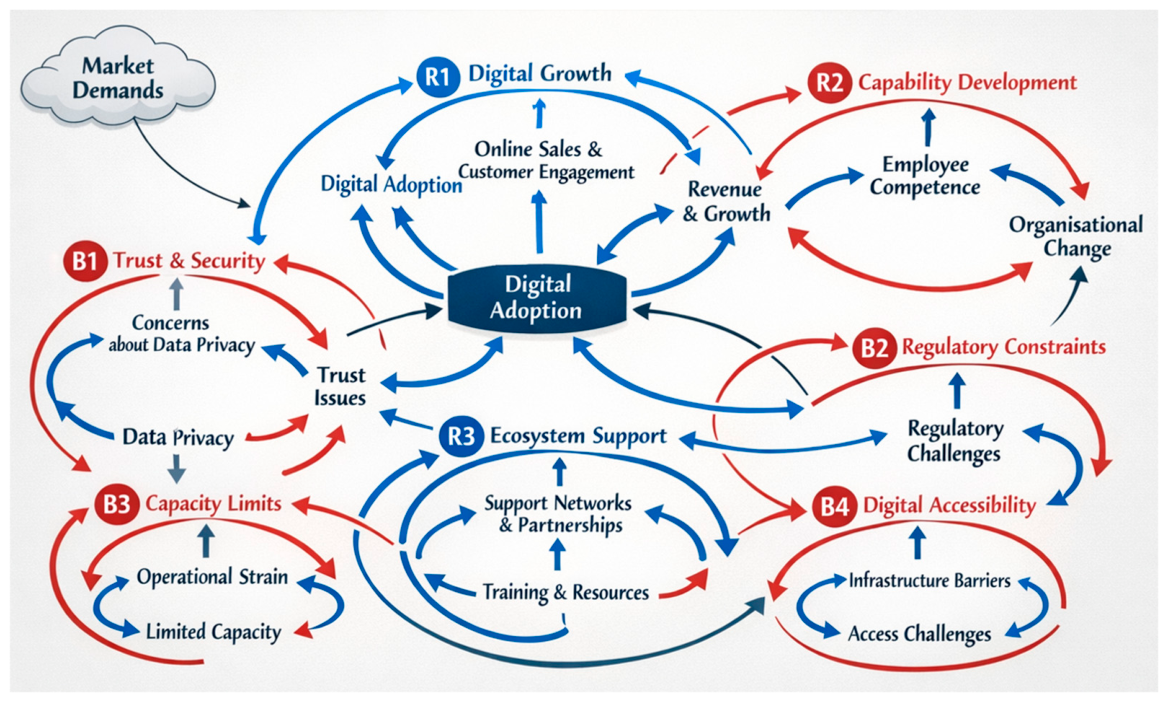
Along these lines, Wu and Tóth (2025, p. 4) stress that strategic collaborations complement policy efforts by aligning DT initiatives with long-term business objectives. Kane et al. (2017) highlight that public–private partnerships not only facilitate access to technology but also accelerate technology adoption. Collaboration with technology providers, research institutions, and industry associations is equally important (Wu & Tóth, 2025). Furthermore, according to Mehta and Sharma (2025, p. 19), businesses can benefit from external support such as government programmes, digital training initiatives, or partnerships with technology providers. Collaborating with digital service providers or joining local business networks helps enterprises access expertise, resources, and guidance for successful DT. Thus, DT uptake is enabled by ecosystem support (Kurnia et al., 2025; Shaifullah & Hossain, 2025). Figure 4 depicts how human agency mediates structural constraints in a causal loop diagram from the data findings.

8. Recommendations

8.1. Immediate Interventions

Retail SMMEs should optimise the use of widely adopted tools such as WhatsApp and Facebook for customer engagement, marketing, and order management. Introducing simple communication protocols (e.g., response times, message templates) can improve efficiency while reducing cognitive overload. SMMEs should prioritise digital solutions with intuitive interfaces and, where possible, native language support to enhance usability and reduce adoption barriers.

8.2. Short-to-Medium Term Interventions

Policymakers, educational institutions, and industry stakeholders should collaborate to deliver accessible, context-specific training programmes. Short courses and practical training in e-commerce, digital marketing, and fintech can enhance effective technology use. SMMEs should adopt basic cybersecurity measures and safe digital practices, supported by awareness campaigns and improved consumer protection mechanisms to build trust in digital platforms.

8.3. Long-Term Strategic Interventions

Retail SMMEs, particularly foreign-owned businesses, should secure legal documentation to enable formal registration, access to finance, and long-term stability. Streamlined regulatory processes and institutional support are critical in this regard. Government and industry stakeholders should establish physical, virtual, or hybrid digital hubs in townships and underserved areas. These hubs can provide infrastructure, training, and continuous support, thereby reducing resource constraints and fostering sustained DT.

8.4. Policy Implications

In the short term (0–12 months), Sector Education and Training Authorities, universities, and municipalities should deliver practice-oriented digital training programmes, targeting at least 70% completion rates and measurable improvements in digital tool usage. Concurrently, the Department of Communications and Digital Technologies should implement nationwide cybersecurity awareness campaigns to ensure that at least 60% of participating SMMEs adopt basic digital safety practices. In the medium term (1–3 years), the Department of Small Business Development, in partnership with municipalities and private firms such as Vodacom and MTN Group, should establish township-based digital support hubs that provide subsidised internet access, technical assistance, and training, with a target of increasing digital adoption by at least 30%.
Financial inclusion should be strengthened through collaboration between commercial banks, fintech providers, and the South African Reserve Bank to introduce tiered transaction fee structures, reducing costs by 1–2% and increasing digital payment usage. Furthermore, regulatory bodies such as the Department of Home Affairs and the Companies and Intellectual Property Commission should streamline business registration and documentation processes to improve formalisation rates among SMMEs. In the long term (2–5 years), private-sector technology developers—including firms such as Deloitte Digital, Translated SRL—in collaboration with the government, should develop user-friendly, low-data, and multilingual platforms (e.g., isiXhosa-enabled POS and mobile payment interfaces), with measurable outcomes such as increased adoption and user satisfaction among underserved retailers.

9. Conclusions and Suggestions for Future Research Areas

This study illuminates the sociotechnical enablers to DT uptake among retail SMMEs. The findings identify key enablers, including tool-level digital adoption, training, education, and ongoing skill development, improving business capacity, regulatory clarity, and operational realities, addressing scams, fraud and data security, a user-friendly interface, and the availability of native language digital tools, structural interventions that reduce inequality, and DT ecosystem support. These enablers function as reinforcing loops that enable DT uptake towards competitiveness.
From a theoretical perspective, this study contributes by integrating the LSA and AST to explain how DT enablers emerge as dynamic sociotechnical reinforcing feedback loops. In doing so, the study advances existing DT literature by moving beyond static, technology-centric explanations toward a processual and sociotechnical understanding of transformation into resource-constrained environments. Therefore, there is a need for an empirically tested, context-specific framework to guide retail SMME DT within the South African context.

Suggestions for Future Research

It is recommended that future studies on AST also be used in other retail sectors not covered in this study. Further research adopting mixed-methods approaches could triangulate qualitative insights with quantitative data to deepen understanding of context-specific enablers to retail SMME DT in a developing country. Longitudinal and cross-sectional studies would also provide valuable insights into how these sociotechnical dynamics evolve.
In summary, this study proposes an integrated conceptual sociotechnical framework that explains how reinforcing and balancing feedback loops, shaped by the interaction between structural constraints and human agency, enable or inhibit DT among retail SMMEs.

Author Contributions

Conceptualization, LM. and M.T.-D.; methodology, L.M.; software, L.M.; validation, L.M.,; formal analysis, L.M.; investigation, L.M.; resources, L.M.; data curation, L.M.; writing—original draft preparation, L.M.; writing—review and editing, M.T.-D.; visualization, L.M.; supervision, M.T.-D.; project administration, L.M.; funding acquisition, L.M. All authors have read and agreed to the published version of the manuscript.

Funding

This research was funded by the National Research Foundation, grant number [NFSG240329211393] and the APC was funded by the National Research Foundation.

Institutional Review Board Statement

The study was approved by the Institutional Review Board of Cape Peninsula University of Technology (2024_FBMSREC_ST01, 22 February 2026).

Informed Consent Statement

Informed consent was obtained from all subjects involved in the study.

Data Availability Statement

Data in this article and other data are available from the author upon reasonable request. The data are not publicly available due to a two-year embargo.

Acknowledgments

During the preparation of this study, the author(s) used ChatGPT-5.3 to generate a conceptual framework and feedback loop image. The authors have reviewed and edited the output and take full responsibility for the content of this publication.

Conflicts of Interest

The authors declare no conflicts of interest.

References

  1. Achieng, M. S., & Malatji, M. (2022). Digital transformation of small and medium enterprises in sub-Saharan Africa: A scoping review. Journal for Transdisciplinary Research in Southern Africa, 18(1), 1257. [Google Scholar] [CrossRef]
  2. Adeniran, T. V., & Johnston, K. A. (2014). ICT utilisation within experienced South African small and medium enterprises. The Electronic Journal of Information Systems in Developing Countries, 64(1), 1–24. [Google Scholar] [CrossRef]
  3. Ahmed, M. U. (2025). Investigating the barriers to digitalisation and AI adoption among small retailers in Pakistan: A TOE framework perspective. Pakistan Journal of Social Science Review, 4(4), 684–708. [Google Scholar]
  4. Almeman, A. (2024). The digital transformation in pharmacy: Embracing online platforms and the cosmeceutical paradigm shift. Journal of Health, Population and Nutrition, 43(1), 60. [Google Scholar] [CrossRef]
  5. Arcidiacono, F., Ancarani, A., Di Mauro, C., & Schupp, F. (2019). Where the rubber meets the road. Industry 4.0 among SMEs in the automotive sector. IEEE Engineering Management Review, 47(4), 86–93. [Google Scholar] [CrossRef]
  6. Arshad, M. Z., Ahmad, M. J., Ali, M., Khan, W. A., & Arshad, M. (2020). The role of government business support services and absorptive capacity on SMEs’ performance. International Journal of Advanced Science and Technology, 29(3), 1492–1499. [Google Scholar]
  7. Autio, E., Nambisan, S., Thomas, L. D., & Wright, M. (2018). Digital affordances, spatial affordances, and the genesis of entrepreneurial ecosystems. Strategic Entrepreneurship Journal, 12(1), 72–95. [Google Scholar] [CrossRef]
  8. Azionya, C. M., & Mashigo, R. D. (2025). WhatsApp business as a digital engagement tool: Factors influencing success among South African small and microretailers. Communitas, 30, 1–16. [Google Scholar] [CrossRef]
  9. Azis, I. (2025). Adoption of social commerce and live streaming selling in MSMEs: An analysis of success factors in the era of TikTok and Instagram. Return: Study of Management, Economics and Business, 4(10), 830–844. [Google Scholar] [CrossRef]
  10. Beliaeva, T., Shirokova, G., Wales, W., & Gafforova, E. (2020). Benefiting from economic crisis? Strategic orientation effects, trade-offs, and configurations with resource availability on SME performance. International Entrepreneurship and Management Journal, 16(1), 165–194. [Google Scholar] [CrossRef]
  11. Bilal, M., Zhao, X., Wu, J., Sohu, J. M., Akhtar, S., & Hassan, M. I. U. (2024). Digital transformation and SME innovation: A comprehensive analysis of mediating and moderating effects. Journal of the Knowledge Economy, 16(1), 1153–1182. [Google Scholar] [CrossRef]
  12. Bin, M., & Hui, G. (2021). A systematic review of factors influencing the digital transformation of SMEs. Turkish Journal of Computer and Mathematics Education (TURCOMAT), 12(11), 1673–1686. [Google Scholar]
  13. Botha, A., Smulders, S. A., Combrink, H. A., & Meiring, J. (2021). Challenges, barriers, and policy development for South African SMMEs—Does size matter? Development Southern Africa, 38(2), 153–174. [Google Scholar] [CrossRef]
  14. Bvuma, S., & Marnewick, C. (2020). An information and communication technology adoption framework for small, medium and micro-enterprises operating in townships in South Africa. Southern African Journal of Entrepreneurship and Small Business Management, 12(1), 12. [Google Scholar] [CrossRef]
  15. Cassetta, E., Monarca, U., Dileo, I., Di Berardino, C., & Pini, M. (2020). The relationship between digital technologies and internationalisation: Evidence from Italian SMEs. Industry and Innovation, 27(4), 311–339. [Google Scholar] [CrossRef]
  16. Chasaya, W., & Ayandibu, A. (2025). Artificial intelligence adoption in South African SMEs: Challenges, opportunities and gaps in research. International Journal of Business Ecosystem & Strategy, 7(5), 235–241. [Google Scholar]
  17. Chinyanyu Mpofu, K., & Watkins-Mathys, L. (2011). Understanding ICT adoption in the small firm sector in Southern Africa. Journal of Systems and Information Technology, 13(2), 179–199. [Google Scholar] [CrossRef]
  18. Cichosz, M., Wallenburg, C. M., & Knemeyer, A. M. (2020). Digital transformation at logistics service providers: Barriers, success factors and leading practices. International Journal of Logistics Management, 31(2), 209–238. [Google Scholar] [CrossRef]
  19. Ciriello, R. F., Richter, A., & Schwabe, G. (2018). Digital innovation: R. Ciriello et al. Business & Information Systems Engineering, 60(6), 563–569. [Google Scholar]
  20. Clancy, T. (2018). Systems thinking: Three system archetypes every manager should know. IEEE Engineering Management Review, 46(2), 32–41. [Google Scholar] [CrossRef]
  21. Classen, R., Garbutt, M., & Njenga, J. (2021). Factors influencing the adoption of digital technologies in South African SMMEs. In International conference on information resources management (CONF-IRM) 2021 proceedings. AIS Electronic Library (AISeL). [Google Scholar]
  22. Corver, Q., & Elkhuizen, G. (2014). A framework for digital business transformation. Cognizant. [Google Scholar]
  23. Creswell, J. W. (2018). Research design: Qualitative, quantitative and mixed methods approaches. Sage. [Google Scholar]
  24. Denicolai, S., Zucchella, A., & Magnani, G. (2021). Internationalisation, digitalisation, and sustainability: Are SMEs ready? A survey on synergies and substituting effects among growth paths. Technological Forecasting and Social Change, 166, 120–650. [Google Scholar] [CrossRef]
  25. Denzin, N. K. (1978). Triangulation: A case for methodological evaluation and combination. Sociological Methods, 56, 339–357. [Google Scholar]
  26. Devece, C., Palacios-Marqués, D., & Alguacil, M. P. (2019). IT and relationship learning in networks as drivers of green innovation and customer capital: Evidence from the automobile sector. Journal of Knowledge Management, 23(9), 1835–1851. Available online: https://www.emerald.com/jkm/article-abstract/20/3/444/264050/IT-and-relationship-learning-in-networks-as?redirectedFrom=fulltext (accessed on 1 March 2026).
  27. Doghri, S. B. S., Zinoubi, S., & Abidi, R. (2026). Harnessing intellectual capital, digital leadership, and dynamic capabilities to reorchestrate change in digital transformation. Knowledge and Process Management, 1–19. [Google Scholar] [CrossRef]
  28. Elbasha, T., & Wright, A. (2017). Reconciling structure and agency in strategy-as-practice research: Towards a strong-structuration theory approach. Management, 2, 107–128. [Google Scholar]
  29. Favoretto, C., Mendes, G. H. D. S., Filho, M. G., Gouvea de Oliveira, M., & Ganga, G. M. D. (2022). Digital transformation of business model in manufacturing companies: Challenges and research agenda. Journal of Business & Industrial Marketing, 37(4), 748–767. [Google Scholar]
  30. Felicetti, A. M., Cimino, A., Mazzoleni, A., & Ammirato, S. (2024). Artificial intelligence and project management: An empirical investigation on the appropriation of generative Chatbots by project managers. Journal of Innovation & Knowledge, 9(3), 100–545. [Google Scholar] [CrossRef]
  31. Garzoni, A., De Turi, I., Secundo, G., & Del Vecchio, P. (2020). Fostering digital transformation of SMEs: A four-level approach. Management Decision, 58(8), 1543–1562. [Google Scholar] [CrossRef]
  32. Giddens, A. (1984). The constitution of society: Outline of the theory of structuration. University of California Press. [Google Scholar]
  33. Gkinko, L., & Elbanna, A. (2023). The appropriation of conversational AI in the workplace: A taxonomy of AI chatbot users. International Journal of Information Management, 69, 102–568. [Google Scholar] [CrossRef]
  34. Gono, S., Harindranath, G., & Özcan, G. B. (2016). The adoption and impact of ICT in South African SMEs. Strategic Change, 25(6), 717–734. [Google Scholar] [CrossRef]
  35. Greco, M., & Corvello, V. (2024). Artificial intelligence in project management: An empirical study of project managers’ appropriation of generative chatbots. In International conference of the digital transformation society (pp. 107–121). Springer Nature. [Google Scholar]
  36. Greenhalgh, T., & Stones, R. (2010). Theorising big IT programmes in healthcare: Strong structuration theory meets actor-network theory. Social Science & Medicine, 70(9), 1285–1294. [Google Scholar] [CrossRef]
  37. Halid, H., Johari, N. A., & Yope, S. B. (2025). Digital transformation roadblocks: Challenges faced by small and medium enterprises (SMEs) in integrating digital technology. International Journal of Academic Research in Business and Social Sciences, 15(12), 2747–2755. [Google Scholar] [CrossRef]
  38. Han, H., & Trimi, S. (2022). Towards a data science platform for improving SME collaboration through Industry 4.0 technologies. Technological Forecasting and Social Change, 174, 121242. [Google Scholar] [CrossRef]
  39. Hennink, M., & Kaiser, B. N. (2022). Sample sizes for saturation in qualitative research: A systematic review of empirical tests. Social Science & Medicine, 292, 114–523. [Google Scholar] [CrossRef]
  40. Jeza, S., & Lekhanya, L. M. (2022). The influence of digital transformation on the growth of small and medium enterprises in South Africa. Problems and Perspectives in Management, 20(3), 297–309. [Google Scholar] [CrossRef]
  41. Kane, G. C., Palmer, D., Phillips, A. N., & Kiron, D. (2017). Winning the digital war for talent. MIT Sloan Management Review, 58(2), 17. [Google Scholar]
  42. Kargas, A., Drosos, D., Gkika, E., Komisopoulos, F., Katsianis, D., Andriopoulos, A., Chaniotaki, E., Rokkas, T., Argyroulis, V., Filios, S., Alvertos, K., Kokkinis, D., & Loumos, G. (2026). Factors leading SMEs to implement a digital transformation strategy and to increase their digital maturity. Corporate and Business Strategy Review, 7(2), 72–85. [Google Scholar] [CrossRef]
  43. Khumalo, A. C., & Gharaie, A. (2023). Implications of including the developer in the IS delegation framework. Association for Information Systems (AIS). [Google Scholar]
  44. Khumalo, M. H., & Moloi, T. S. (2025). Barriers to digital transformation in Gauteng’s municipal health clinics. Journal of Local Government Research and Innovation, 6, a282. [Google Scholar] [CrossRef]
  45. Ko, E. J., Kim, A. H., & Kim, S. S. (2021). Toward the understanding of the appropriation of ICT-based smart-work and its impact on performance in organisations. Technological Forecasting and Social Change, 171, 120–994. [Google Scholar] [CrossRef]
  46. Kohtamäki, M., Parida, V., Patel, P. C., & Gebauer, H. (2020). The relationship between digitalization and servitization: The role of servitization in capturing the financial potential of digitalization. Technological Forecasting and Social Change, 151, 119804. [Google Scholar] [CrossRef]
  47. Korachi, Z., & Bounabat, B. (2019). Integrated methodological framework for digital transformation strategy building (IMFDS). International Journal of Advanced Computer Science and Applications, 10(12), 242–250. [Google Scholar] [CrossRef]
  48. Kumar, P., & Udayai, K. (2025). Reimagining business through technology: A case of medlife pharmacy. Journal of Health Management, 28(1), 77–84. [Google Scholar] [CrossRef]
  49. Kurnia, R., Fentaria, R., & Asyiah, N. (2025). Digital transformation as a strategy to improve business performance in the retail sector. EDUCTUM: Journal Research, 4(5), 189194. [Google Scholar]
  50. Lassnig, M., Stabauer, P., Breitfuß, G., & Mauthner, K. (2018). Business model innovation in the age of digital transformation and industry 4.0. HMD Praxis der Wirtschaftsinformatik, 55, 284–296. [Google Scholar] [CrossRef]
  51. Li, K. (2025). Management strategies for SMEs in the era of digital transformation. Accounting, Marketing and Organisation, 1(2), 31–47. [Google Scholar] [CrossRef]
  52. Li, L., Su, F., Zhang, W., & Mao, J. Y. (2018). Digital transformation by SME entrepreneurs: A capability perspective. Information Systems Journal, 28(6), 1129–1157. [Google Scholar] [CrossRef]
  53. Liere-Netheler, K., Packmohr, S., & Vogelsang, K. (2018, January 3–6). Drivers of digital transformation in manufacturing. 51st Hawaii International Conference on System Sciences, Hilton Waikoloa Village, HI, USA. [Google Scholar]
  54. Lose, T. (2019). A framework for the effective creation of business incubators in South Africa [Unpublished Ph.D. thesis]. Vaal University of Technology.
  55. Lutfi, A., Alsyouf, A., Almaiah, M. A., Alrawad, M., Abdo, A. A. K., Al-Khasawneh, A. L., Ibrahim, N., & Saad, M. (2022). Factors influencing the adoption of big data analytics in the digital transformation era: Case study of Jordanian SMEs. Sustainability, 14(3), 1802. [Google Scholar] [CrossRef]
  56. Maduku, D. K., Mpinganjira, M., & Duh, H. (2016). Understanding mobile marketing adoption intention by South African SMEs: A multi-perspective framework. International Journal of Information Management, 36(5), 711–723. [Google Scholar] [CrossRef]
  57. Makiwa, P. J., & Steyn, A. A. R. (2020). A framework for stimulating adoption of ICT in SMEs in developing countries: The case of Zimbabwe. African Journal of Gender, Society and Development, 9(3), 137–158. [Google Scholar] [CrossRef]
  58. Masadeh, R. E., Majali, S., Almajali, H., AlAmayreh, E., Thurasamy, R., & Almajali, D. (2024). Antecedents of information and communication technology adoption among organisations: Empirical study in Jordan. International Journal of Data and Network Science, 8(3), 1829–1838. [Google Scholar] [CrossRef]
  59. Matarazzo, M., Penco, L., Profumo, G., & Quaglia, R. (2021). Digital transformation and customer value creation in Made in Italy SMEs: A dynamic capabilities perspective. Journal of Business Research, 123, 642–656. [Google Scholar] [CrossRef]
  60. Matt, C., Hess, T., & Benlian, A. (2015). Digital transformation strategies. Business & Information Systems Engineering, 57, 339–343. [Google Scholar] [CrossRef]
  61. Mehta, R., & Sharma, A. (2025). Digital transformation: Challenges and opportunities for traditional businesses. International Journal of Business & Commercial Research, 1(1), 11–21. [Google Scholar]
  62. Meier, A., & Peters, M. (2023). Limited engagement of SMEs with social media: A structuration and sensemaking perspective. Information & Management, 60(7), 103–853. [Google Scholar] [CrossRef]
  63. Modiba, M., Kekwaletswe, R., & Komati, M. (2020). IT capability framework for digital transformation in South African financial service providers. International Journal of Computer Organisation Trends, 10, 24–39. [Google Scholar] [CrossRef]
  64. Nasiri, M., Ukko, J., Saunila, M., & Rantala, T. (2020). Managing the digital supply chain: The role of smart technologies. Technovation, 96, 102121. [Google Scholar] [CrossRef]
  65. Ngary, C., & Twum-Darko, M. (2024). Enhancing student performance in South African higher education through machine learning and big data analytics: A theoretical framework. Scientific Research, New Technologies and Applications, 6, 107–122. [Google Scholar]
  66. Nkomo, L., & Kalisz, D. (2023). Establishing organisational resilience through developing a strategic framework for digital transformation. Digital Transformation and Society, 2(4), 403–426. [Google Scholar] [CrossRef]
  67. Nylén, D., & Holmström, J. (2015). Digital innovation strategy: A framework for diagnosing and improving digital product and service innovation. Business Horizons, 58(1), 57–67. [Google Scholar] [CrossRef]
  68. OECD. (2020). Coronavirus (COVID-19): SME policy responses. Available online: https://www.oecd.org/en/publications/coronavirus-covid-19-sme-policy-responses_04440101-en.html (accessed on 1 March 2026).
  69. Ofosu-Ampong, K. (2021). Determinants, barriers, and strategies of digital transformation adoption in a developing country COVID-19 era. Journal of Digital Science, 3(2), 67–83. [Google Scholar] [CrossRef]
  70. Olsson, A. K., & Bernhard, I. (2021). Keeping up the pace of digitalisation in small businesses—Women entrepreneurs’ knowledge and use of social media. International Journal of Entrepreneurial Behaviour & Research, 27(2), 378–396. [Google Scholar]
  71. Osmundsen, K., Iden, J., & Bygstad, B. (2018, September 28–30). Digital transformation: Drivers, success factors, and implications. MCIS 2018 Proceedings (p. 37), Corfu, Greece. Available online: https://aisel.aisnet.org/mcis2018/37 (accessed on 1 March 2026).
  72. Paliwal, D., & Puttanna, K. (2025). Digital dispense: The rise of E-pharmacies and their impact on traditional pharmacies in India. TIJER, 12(10), 147–157. [Google Scholar] [CrossRef]
  73. Paul, J., Alhassan, I., Binsaif, N., & Singh, P. (2023). Digital entrepreneurship research: A systematic review. Journal of Business Research, 156, 113507. [Google Scholar] [CrossRef]
  74. Pisoni, G. (2021). Going digital: Case study of an Italian insurance company. Journal of Business Strategy, 42(2), 106–115. [Google Scholar] [CrossRef]
  75. Poole, M., & DeSanctis, G. (1990). Understanding the use of group decision support systems: The theory of an appropriation process. In Organisations and communication technology. Sage. [Google Scholar]
  76. Qatamin, L., & Alkoud, S. (2023). Concept, theory, and classification of electronic HRM: A conceptual study. International Journal of Academic Research in Business and Social Sciences, 13(7), 1115–1127. [Google Scholar] [CrossRef] [PubMed]
  77. Raji, M. A., Olodo, H. B., Oke, T. T., Addy, W. A., Ofodile, O. C., & Oyewole, A. T. (2024). The digital transformation of SMEs: A comparative review between the USA and Africa. International Journal of Management & Entrepreneurship Research, 6(3), 737–751. [Google Scholar] [CrossRef]
  78. Ravichandran, T. (2018). Exploring the relationships between IT competence, innovation capacity and organizational agility. The Journal of Strategic Information Systems, 27(1), 22–42. [Google Scholar] [CrossRef]
  79. Riu, I. A. (2025). Mobile payment adoption in marketing transactions: A study of women entrepreneurs in Makassar’s retail sector. Management, Economics, Trade, and Accounting Journal (Meta-Journal), 3(2), 463–470. [Google Scholar]
  80. Sari, E. C., Dalimunthe, R. F., & Lumbanraja, P. (2024). Challenges of digital transformation in the VUCA era on micro, small and medium enterprises: A systematic review of the literature. Musytari: Neraca Manajemen, Akuntansi, dan Ekonomi, 5(3), 14–24. [Google Scholar]
  81. Schirmer, S. D., & Visser, R. (2021). What role can small and micro businesses play in achieving inclusive growth? Questions requiring answers. Department of Trade and Industry, South Africa. [Google Scholar]
  82. Senge, P. M. (1997). The fifth discipline. Measuring Business Excellence, 1(3), 46–51. [Google Scholar] [CrossRef]
  83. Shaifullah, A. K., & Hossain, E. (2025). Adoption of digital technologies in Bangladeshi SMEs: Barriers, enablers, and strategic responses post-COVID-19. Canadian Journal of Business and Information Studies, 7(5), 474–493. [Google Scholar] [CrossRef]
  84. Singh, A., & Hess, T. (2020). How chief digital officers promote the digital transformation of their companies. In Strategic information management (pp. 202–220). Routledge. [Google Scholar]
  85. Singh, H., & Malviya, N. (2025). Advancement of the healthcare system and the impact of E-Pharmacy on the economy growth. International Journal of Pharmaceutical Chemistry and Analysis, 12(1), 1–7. [Google Scholar] [CrossRef]
  86. Smith, J., & Brown, A. (2018). Understanding the limits to success: A review of archetype theory in entrepreneurship research. Journal of Small Business Management, 56(3), 390–408. [Google Scholar]
  87. Spalinger, D., Grivas, S. G., & de la Harpe, A. (2019). TEA-A technology evaluation and adoption influence framework for small and medium-sized enterprises. In Business information systems workshops: BIS 2018 international workshops, Berlin, Germany, July 18–20, 2018, revised papers 21 (pp. 433–444). Springer International Publishing. [Google Scholar]
  88. Svahn, F., Mathiassen, L., & Lindgren, R. (2017). Embracing digital innovation in incumbent firms: How Volvo cars managed competing concerns. Management Information Systems Quarterly, 41(1), 239–253. [Google Scholar] [CrossRef]
  89. Tarutė, A., & Gatautis, R. (2014). ICT impact on SMEs’ performance. Procedia-Social and Behavioural Sciences, 110, 1218–1225. [Google Scholar] [CrossRef]
  90. Teng, X., Wu, Z., & Yang, F. (2022). Research on the relationship between digital transformation and the performance of SMEs. Sustainability, 14(10), 6012. [Google Scholar] [CrossRef]
  91. Toha, M., Ronda, M., & Widowati, D. (2023). Crisis communication management in restructuring programs. International Journal of Environmental, Sustainability, and Social Science, 4(6), 1927–1939. [Google Scholar] [CrossRef]
  92. Udovita, P. V. M. V. D. (2020). Conceptual review on dimensions of digital transformation in the modern era. International Journal of Scientific and Research Publications, 10(2), 520–529. [Google Scholar] [CrossRef]
  93. Ulez’ko, A., Demidov, P., & Tolstykh, A. (2019). The effects of the digital transformation. In International scientific and practical conference “Digital agriculture-development strategy” (ISPC 2019) (pp. 125–129). Atlantis Press. [Google Scholar]
  94. Van Dyk, R., & van Belle, J. P. (2019). Factors influencing the intended adoption of digital transformation: A South African case study. In Federated conference on computer science and information systems (FedCSIS) (pp. 519–528). IEEE. [Google Scholar]
  95. van Tonder, C. (2023). Digital transformation of business models in SMEs [Unpublished Ph.D. thesis]. University of Johannesburg.
  96. Vial, G. (2019). Understanding digital transformation: A review and a research agenda. Journal of Strategic Information Systems, 25(2), 118–144. [Google Scholar] [CrossRef]
  97. Vivence, K. (2021). Understanding the state and the role of cooperatives in South Africa: A profiling approach. ASBBS Proceedings, 28, 116–130. [Google Scholar]
  98. Werth, O., Cardona, D. R., Torno, A., Breitner, M., & Muntermann, J. (2023). What determines FinTech success?—A taxonomy-based analysis of FinTech success factors. Electronic Markets, 33, 21. [Google Scholar] [CrossRef]
  99. Westerman, G., Bonnet, D., & McAfee, A. (2014). The nine elements of digital transformation. MIT Sloan Management Review. 55, 3, 1–6.
  100. Wu, C., & Tóth, A. (2025). The systemic transformation of small and medium enterprises (SMEs) in the era of digitalisation. Prosperitas, 12(4), 1–16. [Google Scholar]
  101. Xie, G., Wang, L., & Lee, B. (2021). Understanding the impact of social capital on entrepreneurship performance: The moderation effects of opportunity recognition and operational competency. Frontiers in Psychology, 12, 687205. [Google Scholar] [CrossRef]
  102. Yesuf, Y. M., & Fields, Z. (2026). SMEs, digital transformation and sustainable development: A systematic review of barriers, enablers and outcomes. Cogent Business & Management, 13(1), 2631198. [Google Scholar] [CrossRef]
  103. Zaoui, F., & Souissi, N. (2021, June). A framework for a strategic digital transformation. In 2020 6th IEEE congress on information science and technology (CiSt) (pp. 502–508). IEEE. [Google Scholar]
  104. Zhang, X., Gao, C., & Zhang, S. (2022). The niche evolution of cross-boundary innovation for Chinese SMEs in the context of digital transformation: A case study based on dynamic capability. Technology in Society, 68, 101870. [Google Scholar] [CrossRef]
  105. Zulu, B. C. (2021). An economic development policy implementation approach to the creation of sustainable maritime SMMEs in the KwaZulu-Natal Province. In The 1st international conference on maritime education and development: ICMED (pp. 297–303). Springer International Publishing. [Google Scholar]
Figure 1. LSA Model; Source: (Clancy, 2018).
Admsci 16 00237 g001
Figure 2. AST Model of the Study; Source: Authors.
Admsci 16 00237 g002
Figure 3. Conceptual model of the study; Source: Authors.
Admsci 16 00237 g003
Figure 4. How human agency mediates structural constraints; Source: Authors.
Admsci 16 00237 g004
Table 1. Critical synthesis comparing DT frameworks.
DT FrameworkDeveloped forStrengthsWeaknessesRelevance to This Study
Westerman et al. (2014)Large enterprisesStrategic roadmap, leadership focusAssumes resources and scaleHighlights why township SMMEs need tailored guidance
Kane et al. (2017)Global corporatesEmphasises culture and leadershipOverlooks infrastructure and agency deficitSupports cultural/leadership aspects but not systemic constraints
Vial (2019)Broad DT ecosystemsClear inhibitors/enablersNot contextualised to developing economiesProvides general DT drivers but lacks township specificity
Source: Authors.
Table 2. Mapping themes to theoretical constructs.
Theme (Findings)Illustrative EvidenceAST Appropriation TypeAST DimensionLSA LoopSociotechnical Interpretation
Tool-level digital adoptionUse of WhatsApp, Facebook, and Instagram for marketing and communicationFaithful appropriationAgency + StructuresR1 (Reinforcing)Familiar and well-aligned tools enhance customer engagement, efficiency, and growth
Training, education, and skill developmentPreference for hands-on training, mentorship, and peer learningEnhanced appropriation capabilityAgencyR1 (Reinforcing)Skills development strengthens effective use and sustains DT
Improving business capacityNeed for consultants, infrastructure (e.g., solar, inverters)Facilitated appropriationStructuresR1 → B1 (Infrastructure constraint)Capacity support enables adoption, but infrastructure gaps can limit scalability
Regulatory clarity and operational realitiesSelective use due to compliance concerns (e.g., pharmacy regulationsSelective appropriationInterpretive Schemes + StructuresB6 (Legal)/B8 (Strategic)Regulatory uncertainty constrains how and when technologies are used
Scams, fraud, and data securityAvoidance or restriction of digital transactions due to fear of fraudResistant appropriationInterpretive SchemesB7 (Trust/Risk)Fear of cyber risks reduces adoption and limits sustained use
Structural interventionsNeed for user-friendly, local language tools; use of influencersSelective appropriationAgency + StructuresR1/B2 (Skills)Accessibility and usability enable adoption, but complexity can exclude some users
DT ecosystem supportGovernment training, funding, partnerships, ecosystem collaborationFacilitated appropriationStructuresR1 (Reinforcing)External support strengthens capability, reduces constraints, and enables scaling
Table 3. Summary of the study participants.
Demographics n n n n n n n
GenderMale15Female8
RaceAsian2Black20Colored1Indian0
Participants nationalitySouth Africans17Foreign nationals5
ProvinceWestern Cape8Eastern Cape15
Work Experience0–5 years86–10 years811–15 years416–20 years 321 years and above0
Role in the businessOwner15Manager8
Number of employees0–5 employees206–10 employees311–15 employees016–20 employees 0
Type of SMMEHair Salon3Barbershop1Electronics4Pharmacy1Liquor retailer1Beauty Platform1Food retailer1
Aluminium 1Meat retailer1Spaza1Wood Retail1Jewellery1Sewing Machine Retail1Medicine retailer1
Automotive parts retailer1Shoes retailer1Fruit retailer2
Source: Authors.
Disclaimer/Publisher’s Note: The statements, opinions and data contained in all publications are solely those of the individual author(s) and contributor(s) and not of MDPI and/or the editor(s). MDPI and/or the editor(s) disclaim responsibility for any injury to people or property resulting from any ideas, methods, instructions or products referred to in the content.