


Abstract
As the European population ages, the sustainability of pension systems faces a trilemma: the structural conflict between achieving benefit adequacy, fiscal stability, and labor market flexibility. This study investigates the primary research hypothesis that these three objectives involve trade-offs under current institutional designs. We examine the structural interrelationships between economic development, population health, and institutional pension characteristics across the EU’s 27 member states. Using cross-sectional data from Eurostat and the OECD from 2023, the study employs a multivariate framework, including Multiple Factor Analysis (MFA) and Principal Component Analysis (PCA), to visualize latent trade-offs. Non-parametric statistical tests were applied to validate structural differences between the Nordic, Continental, Southern, and Central and Eastern European (CEE) welfare regimes. The paper’s central argument is that pension sustainability is less a demographic inevitability and more a path-dependent result of institutional “exit cultures” and regional health-wealth traps. The analysis explains 56.7% of the total variance across two primary dimensions, revealing a persistent east–west divide where GDP per capita and Healthy Life Years (HLYs) at age 65 are strongly coupled. Additionally, the analysis identified a fundamental sustainability trade-off: countries with higher pension expenditures and replacement rates, such as those in the Southern and Continental clusters, have significantly earlier labor market exit ages. Statistical evidence shows that the gender pension gap is the most significant factor in differentiating welfare regimes, with the CEE region showing significantly lower inequality than the Western cluster. Ultimately, the findings contribute to public administration literature by demonstrating that policy interventions must prioritize addressing the culture of early retirement in Western countries and the health-wealth trap in Eastern countries to ensure long-term viability.
1. Introduction
The long-term sustainability of pension systems is one of the most critical challenges facing European welfare states as they navigate accelerating demographic aging and volatile economic conditions. Policymakers are confronted with an increasingly difficult “pension trilemma”: achieving adequate income protection, fiscal stability, and labor market flexibility simultaneously. Beyond fiscal stability, public policy’s essential role is to foster social innovation to reduce social exclusion and improve citizens’ well-being, particularly through strategic GDP allocations to social protection (Pripoaie et al., 2025). To understand these pressures, one must first define the phenomenon of “early exit,” which refers to the permanent withdrawal of individuals from the labor market before they reach the statutory retirement age. This behavior is often incentivized by institutional “pull factors”—such as generous early retirement schemes or disability pathways—which create a significant policy challenge by simultaneously reducing tax contributions and extending the duration of pension payouts. Recent scholarship suggests that achieving high benefit generosity while permitting early labor market exit is financially unsustainable, creating a stark trade-off that forces nations to prioritize one objective over another (Moeis et al., 2022; Otavova et al., 2023). This analysis is further contextualized by a typology of European welfare regimes: the Nordic (focused on social investment and high employment), the Continental (insurance-based with strong status maintenance), the Southern (reliant on family solidarity and often characterized by earlier exit patterns), and the Central and Eastern European (CEE) (a transitional regime often balancing legacy structures with fiscal austerity) welfare regimes.
Despite extensive research in this field, there is still a significant gap in our understanding of the complex trade-offs and regional disparities within pension systems. This research is novel because it uses an integrated, multivariate approach. Unlike previous studies, which often analyze fiscal sustainability, public health, and labor market participation in isolation, this study uses Multiple Factor Analysis (MFA) to visualize the nonlinear, latent interdependencies between these factors. Emerging evidence and recent visualizations suggest that the divide between wealthier Western nations and economically challenged Eastern regions extends beyond economic metrics to include different health outcomes and retirement behaviors. Furthermore, our study shifts the focus from demographic pressures alone to institutional “exit cultures,” viewing pension systems as governance structures that must manage the friction between statutory design and citizen behavior. This comprehensive analysis integrates economic, demographic, and social dimensions to inform more equitable and sustainable pension strategies across Europe. The primary objective of this study is to determine the nature of these systemic trade-offs to address these complexities. We begin by asking: Can a pension system simultaneously achieve high benefit generosity, early labor market exit, and fiscal sustainability, or are these objectives involve trade-offs based on current data? (RQ1).
This macro-level tension is further complicated by the disparity between policy intent and actual behavior. Although many countries have increased the statutory retirement age to improve solvency, the actual age at which people leave the labor market often falls short of these benchmarks (Zhao et al., 2024; Kamar & Magnani, 2024). This suggests that cultural norms and economic incentives, rather than statutory parameters, drive retirement patterns. A distinct culture of early exit exists in specific regions, most notably in Southern Europe and parts of the continental bloc (von Nordheim & Kvist, 2023; Rabaté & Rochut, 2020). To understand this phenomenon, we investigate: First, how significantly does the effective retirement age diverge from the statutory benchmark across Europe? Second, does this divergence signal a distinct culture of early exit in specific welfare clusters? (RQ2).
Furthermore, the mechanisms used to bridge this gap vary profoundly across the continent. European pension policy is not monolithic. It is characterized by distinct regional strategies, ranging from the Nordic welfare regime, which links retirement age directly to life expectancy to balance growth with sustainability (Popa et al., 2021), to the divergent adaptation strategies found in Southern European and Central and Eastern European nations (Dumiter et al., 2024; Lee, 2024). This necessitates a comparative analysis to answer the following questions: How do different welfare regimes (Nordic, Southern, and CEE) manage the gap between legislative expectations and labor market participation reality? (RQ3).
However, sustainability is not just a fiscal issue; it is also a matter of social equity and health capacity. As populations age, a critical disparity in quality of life has emerged. While life expectancy is rising globally, research indicates that these additional years are not uniformly healthy. This creates disparities that may undermine the logic of active aging policies, particularly in regions facing socioeconomic disadvantages (Alvarez et al., 2021; Vanella et al., 2022). Therefore, we must ask: Does the extension of life expectancy across Europe uniformly translate into healthy life years, or does a quality-of-life gap persist between northern, southern, and eastern welfare regimes? (RQ4).
Finally, these demographic and behavioral factors must be situated within the broader economic context. Although economic development usually correlates with stronger social safety nets, this relationship is nonlinear and heavily influenced by historical and strategic choices (Devolder et al., 2021; Wroński, 2023). Distinct North–South and East–West divides suggest that wealth alone does not dictate pension outcomes. Rather, structural logic drives the trade-off between sustainability and burden (Dumiter et al., 2024). In light of this, our final inquiry is: Does the statistical evidence support the existence of a linear relationship between economic wealth and pension sustainability, or are distinct regional logics (North–South vs. East–West) at play? (RQ5).
The remainder of this paper is organized as follows: Section 2 provides a thorough review of the literature on pension systems and demographic challenges. Section 3 outlines the methodology and data sources used for the analysis. Section 4 presents the empirical results derived from the statistical models. Section 5 discusses these findings in detail, interpreting them in the context of the defined research questions. Finally, Section 6 presents the conclusions and policy implications.
2. Theoretical Framework
The theoretical foundation of this study builds upon the evolving literature on pension sustainability, welfare state reform, and active ageing policies (Hemerijck, 2013; Zaidi et al., 2013). While Esping-Andersen’s (1990) original welfare regimes focused primarily on state-market-family relations in providing decommodification, modern demographic shifts require a multidimensional approach. Existing literature highlights that contemporary welfare states face a complex policy environment characterized by the need to balance fiscal constraints with social adequacy (Pierson, 2001). Our proposed framework extends this literature by conceptualizing a specific trilemma: the simultaneous challenge of ensuring fiscal sustainability, maintaining adequate pension levels, and promoting active ageing through extended labor market participation. By integrating these dimensions, our framework demonstrates how different welfare regimes navigate the inherent trade-offs of this trilemma, offering a more dynamic theoretical model than traditional, static welfare categorizations.
The transformation of European pension systems from mechanisms of decommodification to fiscally sustainable insurance systems has generated a vast body of comparative literature. As the demographic dividend turns into a deficit, scholars have moved beyond single-country case studies, adopting multivariate frameworks that analyze the structural trade-offs between macroeconomic performance, institutional design, and population health. The prevailing consensus is that pension regime sustainability is not solely dependent on demographic aging; rather, it is path-dependent on the incentive structures inherited from historical welfare regimes (Barr & Diamond, 2008; Holzmann, 2013; Pierson, 2001).
To understand these variations, one must acknowledge the diverse statutory landscape across the continent. Historically, countries like France and Italy maintained lower statutory retirement ages (often 60–62), rooted in a social contract of early leisure, whereas Nordic and Baltic nations have pioneered a shift toward ages 67 or higher, often indexing them to life expectancy. These differences are not merely technical; they reflect deep-seated cultural expectations and historical labor market settlements (OECD, 2023).
Consequently, the academic debate has coalesced around four critical axes: economic trade-offs and fiscal sustainability; the divergence of regional welfare regimes; the constraints imposed by health inequalities; and the persistence of gender-based disparities. Foundational comparative economic analyses have shown that institutional parameters often override individual preferences in retirement decisions. Agent-based modeling further demonstrates that, although delaying retirement is an effective way to enhance system sustainability, it creates a persistent trade-off regarding benefit extensions with significant intergenerational implications (Bazzana, 2020). Gruber and Wise (1998, 2002) conceptualized the implicit tax on continued work, showing that, in systems with high replacement rates and actuarially unfair adjustments, the opportunity cost of working is too high. This pull factor theory has been corroborated by OECD-wide comparisons quantifying how early retirement schemes were used as labor management tools on the supply side (Duval, 2003).
Recent scholarship has expanded economic frameworks to include modern variables, such as policy uncertainty and social efficiency. Karimi and Fan (2026) examine the influence of economic policy uncertainty and the shift toward green growth on public pension spending. They suggest that achieving sustainability now requires balancing environmental goals with fiscal commitments. Darvas et al. (2025) add to the fiscal urgency by warning that demographic shifts will necessitate historically high fiscal adjustments to primary balances in order to maintain public debt sustainability across the EU. They note that current country-specific recommendations have been insufficient to address these pressures. Furthermore, the efficiency of social protection investments varies significantly; Chien et al. (2025) demonstrate that the efficiency of healthcare and well-being systems differs greatly across European regions. In the Mediterranean context, Alonso-García and Rosado-Cebrian (2021) demonstrate how labor market dynamics and post-financial crisis economic risks have caused the Spanish system to become unsustainable. Bilbao-Ubillos (2022) builds on this critique, arguing that the EU’s prioritization of economic requirements over the social dimension has weakened the European welfare regimes, especially in southern nations where external pressures threaten social cohesion.
Researchers have refined Esping-Andersen’s (1990) typology of welfare regimes to categorize strategic divergences. Ferrera (1996) and Gal (2010) identified the Southern European welfare regime, which is characterized by fragmentation, hyper-protection for insiders, clientelism, and the historical reliance on pension benefits as a primary mechanism for social compensation to offset the absence of a comprehensive minimum income safety net. This creates a sustainability trade-off in which high GDP-proportional expenditures coexist with low effective retirement ages (Grech, 2013). Furthermore, the overuse of early retirement and disability pathways in these regimes has historically functioned as a form of social assistance for the unemployed, further straining fiscal balances (Ferrera, 1996). In contrast, the Nordic shift toward social investment has decoupled pension adequacy from early retirement by increasing employment rates among the 55–64 age group (Ebbinghaus, 2006; Hofäcker, 2014).
The enlargement of the European Union required the inclusion of Central and Eastern European (CEE) systems. Cerami (2006) argues that post-communist states constitute a transitional cluster defined by a double disadvantage. Comparative studies by Aidukaite (2011) and Saxonberg (2013) have shown that pension reforms in the CEE region were often driven by external constraints, such as World Bank/IMF conditionalities. These reforms resulted in lower replacement rates, forcing older cohorts to remain in the labor market. While some CEE countries show statistical evidence of active aging, Vanhuysse (2006) describes this as a survival strategy driven by low replacement rates and labor market precarity. The political feasibility of reform is often mediated by unions, which function as long-lived agents in intergenerational pacts. However, unions often favor the status quo for older members, leading to dynamic inefficiencies in the face of demographic transitions (Boeri et al., 2002). Nicolae and Amalia (2020) also identify migration and the exodus of young people from transition economies as significant threats to budget sustainability, which puts additional strain on shrinking labor markets. Recent studies by Dedak and Fiser (2024) and Popa et al. (2021) further emphasize that CEE pension strategies are heavily shaped by fiscal policies and unique labor market characteristics. However, Guardiancich and Borgognoni (2025) introduce a political dimension, pointing out that although wage regulations have been lifted in CEE, pension systems are still full of elements that are difficult to change, despite the European Commission’s push for a neoliberal agenda. Additionally, Polat et al. (2025) use spatial econometric approaches to demonstrate that aging populations, healthcare expenditures, and environmental sustainability are deeply interconnected at the regional level. They specifically found that environmental quality is a co-dependent predictor of elderly well-being, suggesting that pension sustainability is not merely a financial issue but depends heavily on the synergy between public health infrastructure and ecological conditions. This implies that in regions where environmental and healthcare systems work in harmony, the social burden of aging is significantly reduced, meaning pension systems cannot be assessed in isolation from the quality of the physical environment.
The integration of health metrics challenges the feasibility of uniform active aging policies. The health-wealth gradient, as mapped by Mackenbach et al. (2008, 2019) and Jagger et al. (2008), shows that, although life expectancy (LE) is converging, healthy life years (HLYs) remain divided along an east–west axis. This “Iron Curtain of Health” suggests that raising the statutory retirement age could be regressive in lower-GDP nations where workers lack the physical capacity to remain employed. There is evidence suggesting that social spending plays a direct role in mitigating these disparities. Álvarez-Gálvez and Jaime-Castillo (2018) and de Breij et al. (2020) found that higher social spending correlates with improved health outcomes after retirement and reduced health inequalities. However, regional disparities in socioeconomic development continue to influence public health spending, limiting CEE governments’ ability to adopt genuine social investment models (Peña-Sánchez et al., 2021). Furthermore, Dvulit et al. (2025) argue for harmonizing health and inequality metrics (SDG 3 and SDG 10) to accurately assess the sustainability of European pension systems.
Finally, the gender dimension remains a critical area of comparative inequality and is essential to our analysis of welfare regimes (RQ3). Bismarckian earnings-related systems tend to perpetuate labor market disparities, such as the gender pay gap and interrupted careers, into retirement (Betti et al., 2015; Möhring, 2014). Jędrzychowska et al. (2020) quantify the “motherhood penalty” in defined contribution schemes, estimating that the pension gap increases significantly with the number of children. This effectively treats child-rearing as a private cost rather than a social investment. Ebbinghaus (2021) observes that the gender pension gap is often widest in countries with generous standard pensions because women are less likely to meet the required contribution history for maximum benefits. Although some modern labor market shifts are closing these gaps, Fernández-Bastidas and Pycroft (2025) point out that these changes have significant implications for the fiscal sustainability of public systems. They suggest that closing labor market gender gaps could offset the fiscal impact of an aging population as effectively as raising the retirement age. However, Arcanjo (2019) warns that recent reforms aimed at increasing financial sustainability have, in many cases, inadvertently exacerbated gender inequality. This necessitates our multivariate inquiry into whether high replacement rates (adequacy) inevitably lead to higher gender inequality in specific regimes. To provide a theoretical grounding for these observations, this study utilizes a path-dependency framework (Pierson, 2001) and Welfare Regime Theory (Esping-Andersen, 1990). This approach enables us to analyze how historical institutional choices, particularly in Southern and CEE clusters, create structural inertia that restricts contemporary administrative efforts to improve fiscal sustainability.
Research Hypotheses
Based on the synthesis of path-dependency and welfare regime logic, this study tests the following hypotheses:
H1
(The Trilemma). High pension replacement rates and expenditures are negatively correlated with the effective age of labor market exit, confirming the sustainability-adequacy trade-off.
H2
(Health-Wealth Trap). Economic development (GDP) is a significant predictor of healthy life years at age 65, creating a regional divide that limits active aging capacity in CEE states.
H3
(Institutional Path-Dependency). Southern and Continental regimes, due to their earnings-related design, exhibit significantly higher gender pension gaps than the CEE region.
H4
(Exit Cultures). In Southern and Continental regimes, the effective retirement age will deviate significantly more from the statutory benchmark than in Nordic regimes, reflecting structural inertia.
H5
(The Southern Paradox). In Mediterranean countries, high life expectancy will not be matched by a proportional number of healthy life years, particularly for women.
The theoretical reasoning behind these hypotheses is grounded in the economic theory of labor supply and retirement behavior. Standard economic literature demonstrates that high pension replacement rates can create significant financial disincentives to continue working (Gruber & Wise, 1998). When the pension system provides a high percentage of pre-retirement income, the marginal financial utility of working an additional year decreases, creating what economists term an implicit tax on continued work. Consequently, generous replacement rates without corresponding penalty mechanisms for early exit strongly incentivize individuals to leave the labor market as soon as they reach the minimum eligibility age. Therefore, we hypothesize that welfare regimes offering higher replacement rates will structurally encourage earlier average retirement ages. The mechanism driving the ‘Southern paradox’—whereby populations exhibit high overall life expectancy but a comparatively low number of healthy life years—is deeply rooted in the structural characteristics of the Mediterranean welfare regime. On the one hand, high overall life expectancy is historically supported by beneficial lifestyle factors, such as the Mediterranean diet, and strong intergenerational family structures that provide robust informal care networks (Ferrera, 1996). On the other hand, the comparatively low number of healthy life years can be attributed to structural limitations within the healthcare systems of these regimes. Characterized by underfunded formal long-term care (LTC) infrastructures and a reliance on family-based care, these systems often lack the institutional capacity for early prevention and the efficient management of chronic morbidities in old age (Costa-Font & Courbage, 2012). Thus, while informal care effectively prolongs life, systemic healthcare bottlenecks prevent the corresponding extension of disease-free, healthy life years.
3. Materials and Methods
This study employs a cross-sectional, multivariate research design focused on the 27 member states of the European Union (N = 27). Eurostat serves as the primary data source for macroeconomic and health indicators, supplemented by OECD “Pensions at a Glance” reports for institutional retirement benchmarks. The reference year for the analysis is 2023. This specific year was selected to provide the most current structural snapshot of European pension systems while ensuring the data is free from the temporary labor market shocks and health distortions introduced by the COVID-19 pandemic emergency measures (Pripoaie et al., 2025). Especifically Healthy Life Years (HLYs) at age 65 and pension replacement rates are unavailable or incomplete in the Eurostat and OECD databases for 2024 and beyond.
3.1. Data Collection and Variable Selection
To address the multidimensional nature of the pension trilemma and evaluate the structural differences between welfare regimes, thirteen indicators were selected. The selection of the thirteen indicators for this study was driven by their established reliability and comparability across major international databases, specifically Eurostat and the OECD. While alternative indicators (such as health expenditure per capita or gross national income) were considered during the research design phase, the final selection was strictly guided by our theoretical framework. This ensured that each variable accurately captures the fiscal, health, and social dimensions of the underlying welfare regimes.
To ensure the robustness of our statistical models, we conducted a comprehensive diagnostic of the variable relationships. Given the inclusion of gender-disaggregated data—which is theoretically essential for testing Hypotheses H3 and H5—we performed a correlation matrix analysis (see Appendix A, Figure A1) and calculated Variance Inflation Factors (VIFs). As expected in demographic modeling, high internal correlations (r > 0.90) and correspondingly elevated VIF scores were observed between male and female cohorts for Life Expectancy and Healthy Life Years. However, these correlations represent the structural symmetry of European populations rather than data redundancy. As detailed in Section 3.3, our choice of multivariate methodology (MFA) was specifically selected to neutralize the impact of this multicollinearity while preserving the granular gender-specific data required for our analysis.
Moving beyond isolated economic metrics, these variables were organized into three thematic groups to capture the holistic capacity of each system. This structured approach allows us to test the theoretical trade-offs between adequacy, sustainability, and behavioral reality. Economy: Reflects the macroeconomic wealth available to fund social protection (e.g., GDP per capita in Purchasing Power Standards).
Demography & Health: Measures both the demographic pressure (Old-age dependency ratio) and the biological potential for extending working lives (Healthy Life Years and Life Expectancy). Pension System: Captures the institutional design, fiscal burden, and actual labor market behavior (e.g., Statutory vs. Effective Exit Ages, Aggregate Replacement Rate, and the Gender Pension Gap).
Table 1 operationalizes these variables, detailing their descriptions, units of measurement, and exact source codes for replicability.
Table 1.
Summary of Indicators, Descriptions, and Sources.
3.2. Sample and Cluster Classification
The sample includes all 27 EU member states, ensuring comprehensive geographical and institutional coverage. To test the path-dependency hypotheses outlined in the theoretical framework, the countries were assigned to four distinct welfare clusters (Nordic, Continental, Southern, and Central and Eastern European). This categorization is based on the established typologies of Ferrera (1996) and Cerami (2006), grouping nations with shared historical, administrative, and labor market characteristics (Table 2).
Table 2.
Country Sample and Welfare Regime Clustering.
3.3. Statistical Analysis
Given the multidimensional nature of the data, the statistical analysis was conducted in two main phases using R software (version 4.2.3) and the FactoMineR 2.12 and factoextra 1.0.7 packages. First, descriptive statistics were calculated for each cluster. Because the sample size within clusters is relatively small and the variables may not adhere to strict normal distributions, non-parametric tests (such as the Kruskal–Wallis H test) were employed to determine if the differences between welfare regimes were statistically significant. Then, post hoc pairwise comparisons were made using the Mann–Whitney U test. To maintain statistical rigor, the Holm (1979) correction was applied to adjust for multiplicity when comparing the four country clusters. This step-down procedure was essential for identifying significant differences between welfare regimes, such as the gender pension gap, while accounting for the mathematical constraints imposed by the sample size.
Second, to visualize the latent relationships and trade-offs between the variables, Multiple Factor Analysis (MFA) was utilized. MFA is particularly suited for this study because it is inherently robust to multicollinearity. Unlike standard linear regressions, where high VIF scores can bias coefficient estimates, MFA handles redundancy by grouping related variables (Economy, Demography & Health, Pension System) and projecting them onto orthogonal (uncorrelated) principal dimensions (Pagès, 2014). By balancing the influence of each thematic block, MFA ensures that the highly correlated demographic variables do not disproportionately dominate the model, allowing for a stable visualization of the “pension trilemma” and the institutional distance between clusters. Finally, regression analysis was used to assess the strength of correlations between longevity and health status and identify systemic paradoxes within specific clusters.
4. Results
4.1. Descriptive Overview and Cluster Characteristics
The empirical analysis begins with a granular examination of unweighted cluster means to identify the distinct institutional signatures of each welfare regime (Table 3). Addressing the methodological justification for this approach, using unweighted averages ensures that the specific policy designs of smaller member states—such as Estonia or Luxembourg—are treated with equal analytical weight. This prevents the high population mass of larger nations (e.g., Germany or France) from disproportionately masking the unique policy signatures of their respective regimes. The sample—comprised of Nordic (n = 3), Continental (n = 7), Southern (n = 6), and CEE (n = 11) member states—was subjected to non-parametric Kruskal–Wallis H tests to ensure statistical validity despite the small subgroup sizes and non-normal distribution of institutional data.
Table 3.
Descriptive statistics by Cluster (Unweighted Means, 2023).
The descriptive analysis in Table 3 reveals significant structural disparities. The Continental cluster demonstrates the highest economic prosperity (mean GDP PPS = 155.9), while the CEE region lags significantly behind (79.3), reflecting a persistent east–west economic divide. This economic disparity is mirrored in health outcomes: while Life Expectancy at Birth is relatively consistent among Western clusters (approx. 80 years for men and 84–85 for women), the CEE region is significantly disadvantaged, particularly for men (73.8 years). Crucially, the quality of these additional years differs. Nordic countries achieve the highest Healthy Life Years at age 65 (11.9 years for men, 12.2 for women), indicating a successful “active aging” model. Regarding pension characteristics, the Nordic cluster stands out with the highest effective labor market exit ages (65.5 years for men), close to the statutory retirement age. In contrast, Southern and Continental clusters demonstrate a discrepancy between statutory and effective retirement ages, indicating a tendency toward earlier retirement despite high life expectancy. The financial burden also varies: Southern countries record the highest Public Pension Expenditure (12.7% of GDP) and Aggregate Replacement Rates (0.6). Finally, the gender pension gap serves as a distinct separator: it is alarmingly high in Continental (34.0%) and Southern (31.4%) states, while the CEE displays the lowest inequality (14.0%), likely due to historical female labor participation.
To confirm whether these observed mean differences are statistically significant or merely artifacts of sample variance, Table 4 presents the results of the Kruskal–Wallis H tests. This step establishes the mathematical basis for accepting or rejecting the primary hypotheses regarding institutional divergence.
Table 4.
Kruskal–Wallis H Test Results for the Main Variables.
Table 4 provides a profound insight into the true fault lines of European welfare regimes. The Kruskal–Wallis tests reveal a striking dichotomy: macroeconomic and biological indicators exhibit highly significant differences across clusters, whereas pure institutional and demographic indicators (with one major exception) do not. Specifically, economic wealth (GDP PPS, p < 0.001), life expectancy for both genders (p < 0.001), and healthy life years (p = 0.001 and p = 0.005) strongly and mathematically differentiate the regimes. This statistical confirmation proves that the structural divides in Europe are currently driven by foundational economic and health capacities.
Conversely, traditional pension system metrics—such as Aggregate Replacement Rates (p = 0.138), Pension Expenditure % GDP (p = 0.188), and Effective Exit Ages for both men (p = 0.226) and women (p = 0.159)—do not show statistically significant variance at the cluster level. This indicates massive within-cluster heterogeneity (e.g., highly varied retirement behaviors within the Continental block itself) and significant overlap between regimes, rendering the cluster means statistically indistinguishable. Similarly, the Old-Age Dependency Ratio (p = 0.482) is non-significant, proving that demographic aging is a uniformly shared baseline pressure across all of Europe, not a regime-specific trait. The sole, glaring exception among institutional variables is the Gender Pension Gap (p < 0.001), which acts as the most definitive structural separator of European pension regimes.
4.2. Multivariate Patterns: MFA Structural Analysis
Multiple Factor Analysis (MFA) was employed to explain the latent structure of the data, accounting for 56.7% of the total variance across two primary dimensions. The Correlation Circle (Figure 1) confirms the core hypotheses by revealing a clear trade-off between effective labor market exit age and pension system cost requirements along the second dimension. Specifically, the visualization explains how this trade-off manifests in the data: the Southern and Continental regimes, which feature high aggregate replacement rates and extensive public pension expenditures, statistically correlate with lower effective exit ages, proving that high system generosity and earnings-related designs strongly disincentivize delayed retirement among older workers. H1 can be accepted.
Figure 1.
Correlation between the quantitative variables and the principal dimensions.
The visualization enables us to interpret the relationships between these factors based on the direction of their vectors. Variables pointing in the same direction, such as GDP per capita and healthy life years at age 65, demonstrate a strong positive correlation, indicating that financial wealth and health usually go together. Conversely, vectors pointing in opposite directions represent a trade-off, as seen with the contrast between effective exit age and pension expenditure. Because all of the vectors in the model are substantial in length, each variable plays a significant role in the analysis.
The horizontal axis, which represents Wealth and Demography, illustrates the difference between Western and Eastern Europe. Variables on the positive side, including GDP, healthy life years, and life expectancy, indicate that people in more economically developed nations generally live longer, healthier lives and face higher statutory retirement ages. The old-age dependency ratio lies on the opposing, negative side. This highlights demographic pressure in Central and Eastern Europe, where lower GDP coincides with a higher proportion of elderly people relative to the working-age population, a situation often exacerbated by the emigration of the working-age population. Therefore, H2 can be supported.
The vertical axis represents the sustainability trade-off and primarily separates Northern and Southern strategies. The upward vector of the effective exit age reflects the approach taken by Scandinavian and Baltic countries, where system sustainability is achieved by keeping people in the workforce longer. In contrast, the downward vectors for pension expenditure and aggregate replacement rates depict the generous state strategy found in Southern Europe. These systems are characterized by high replacement rates and significant state spending, as well as earlier withdrawal from the labor market. These opposing strategies provide statistical evidence that when people work longer, state pension costs are lower. In contrast, expensive systems with high benefits tend to encourage earlier retirement.
Finally, the gender pension gap in the lower-right quadrant indicates a complex dynamic. The gap is linked to life expectancy, implying that women’s longer lifespans may paradoxically increase the disparity due to factors like widowhood. Additionally, the vector’s orientation toward pension expenditures indicates that expensive systems with high replacement rates tend to perpetuate labor market inequalities into old age, maintaining a substantial gender gap.
4.3. Regional Similarities: MFA Individual Mapping
Figure 2 illustrates the degree of similarity among nations based on the three analyzed dimensions. The visualization confirms the existence of a trade-off, though it reveals that the relationship is nonlinear. Instead, the map shows two distinct patterns: a west–east slope representing wealth and health, where no trade-off exists (wealthier nations are healthier), and a north–south tension representing pension strategy, where countries either accept high financial costs for social stability or prioritize a more active labor market.
Figure 2.
MFA Individual/Cluster Mapping.
Central and Eastern European nations, such as Bulgaria, Romania, Hungary, and Slovakia, populate the left side, characterized by lower GDP, shorter life expectancy, and poorer health outcomes. Conversely, the right side is home to continental and Nordic countries such as Luxembourg, Ireland, the Netherlands, and Sweden, where high economic output strongly correlates with longevity and good health. The lower, negative region contains Southern European nations (Italy, Greece, Spain) and France. These countries have costly systems characterized by early labor market exit, high pension spending, and demographic pressure. In contrast, the upper, positive region comprises countries with more sustainable systems or higher elderly employment rates, such as the Baltic and Scandinavian countries (Denmark, Sweden).
Clustering further refines this: the CEE group is tightly clustered, indicating strong structural similarities, though Poland drifts downward due to demographics, while Estonia trends upward toward the Scandinavian. The Southern cluster is distinct due to high system costs and early retirement patterns rather than a lack of development. The Continental group shows the widest dispersion, heavily distorted by outliers like Luxembourg and Ireland. Without these outliers, core nations like Germany and Austria would sit closer to the center. France is formally assigned to the Continental cluster based on its Bismarckian institutional roots; however, its data notably aligns more closely with the Southern profile than its Continental peers, acting as a hybrid case defined by high expenditures and early exit. Finally, the Nordic nations occupy the most favorable position in the upper-right quadrant by combining wealth and health with high levels of activity in old age.
4.4. The Culture of Early Retirement: Exit Gaps
Figure 3 illustrates the gap between legislative expectations and reality. It is arguably the most effective visualization for drawing policy conclusions. Furthermore, to provide necessary context, the baseline statutory retirement age for each member state has been appended directly to the country labels on the vertical axis. The figure is sorted by the magnitude of the divergence observed among men, moving from the earliest exits at the bottom to the latest at the top.
Figure 3.
Divergence Between Statutory and Effective Retirement Ages.
A significant portion of the European workforce disengages from the labor market prematurely. Although the statutory retirement age is a benchmark, most of the workforce retires well before reaching it; however, the variation is immense. In Southern European countries and certain continental states (e.g., Italy, Belgium, Greece), the effective retirement age occurs four to five years before the legal limit, imposing a severe burden on the budget. Conversely, in the Baltic states and Romania, participation often continues past the mandatory retirement age. These patterns support the idea that pension expenditures are driven more by incentive structures and exit culture than pure demographics.
The most striking takeaway is the prevalence of a culture of early retirement. While the tendency toward “early exit” is observable globally in other OECD nations like the US or Japan, the highly policy-induced nature of this gap in Europe—driven by institutional “pull factors” like early retirement pathways—is a distinct characteristic of the Continental and Southern welfare regimes. The dominance of negative values signals that the statutory age is considered a theoretical maximum rather than a social norm. The data outlines a trend in which the average citizen exits the workforce 1–3 years early.
The Southern and Continental regimes show the deepest rift: early retirement for men in Greece and Luxembourg directly correlates with the high system costs identified earlier. The combination of early retirement and the high life expectancy typical of Southern Europe creates an extremely long payout period, which places significant financial strain on public finances. In stark contrast, CEE countries are adopting a survival strategy. Estonia, Romania and Latvia stand out, with work continuing beyond the legal retirement age for both men and women, likely due to plausible policy directions resulting from low replacement rates. The vast majority of countries in the CEE region, such as Slovenia, Bulgaria, Croatia, Hungary and Slovakia, align more with the Western pattern of early exit. Nordic states occupy the middle ground with minimal deviation, suggesting the system successfully retains older workers. Finally, comparing genders provides critical insights. Austria presents a distinct case: a significant negative gap for men but a sharp positive gap for women. This paradox is technical, resulting from a lower statutory age for women, making work past sixty appear as overwork. Broader trends show women generally stay closer to or exceed their retirement age compared to men, likely forced by financial circumstances (the gender pension gap) to extend their working lives. Based on the above mentioned, H4 can be accepted.
4.5. Distributional Variance: The Gender Pension Gap
Figure 4 provides deeper insight into the internal structure of the clusters. Based on the Kruskal–Wallis test (Table 4), the structural differences between the groups are primarily defined by the gender pension gap (H-statistic = 19.5, p < 0.001). Pairwise comparisons using the Holm correction (Holm, 1979) confirm that the CEE region (14.0%) has significantly lower inequality than the Continental (34.0%, p.adj < 0.001) and Southern (31.4%, p.adj < 0.001) clusters (Table 3 and Table 4). In this dimension, the CEE cluster is structurally distinct from Western and Southern systems, which are characterized by an average gap of 31–34%. Only a weak statistical trend (p.adj = 0.095) is observable between the Scandinavian states and the Southern group. H3 is accepted.
Figure 4.
Box-plot for clusters (Distribution of Key Indicators).
Trends are visible at the level of group means for other variables: the Southern cluster displays the highest aggregate replacement rate (0.608) and pension expenditures (12.7%), while the CEE region is the most modest. However, these differences were not statistically robust (Agg_Repl_Rate: H = 5.51, p = 0.138; Pens_Exp_GDP: H = 4.78, p = 0.188). In pairwise tests following the Holm correction, these relationships consistently remained within the non-significant range. This indicates that while averages differ, the within-cluster variance and overlap are significant. Furthermore, the difference in internal homogeneity is striking; data for the Nordic states are highly concentrated (flat boxplots), whereas the Continental group exhibits significant variability. Finally, the analysis of the old-age dependency ratio (H = 2.46, p = 0.482) shows no statistically significant difference in demographic baselines. The true demonstrable dividing line between welfare regimes lies in gender pension inequality, not demographic pressure or the scale of payouts.
4.6. Health Constraints and Reliability Analysis
Figure 5 is tightly integrated into the core argument by illustrating the physical demographic limits of extending working lives, providing direct evidence for the regional divides proposed in our hypotheses. Figure 5 examines the relationship between Life Expectancy and Healthy Life Years at age 65 (HLY) to validate the reliability of the database. For men, a robust correlation was observed (R = 0.77; p < 0.001), whereas for women, the relationship was only moderately strong (R = 0.57; p = 0.002). This suggests that for men, longevity and health move together deterministically, whereas for women, longer life does not automatically translate into an increase in healthy years.
Figure 5.
Life Expectancy (LE) and Healthy Life Years at age 65 (HLY) between genders.
CEE countries cluster in the lower-left segment, indicating a dual health disadvantage: shorter life expectancies and low HLY, often falling below the regression line. This validates the Health-Wealth Trap, demonstrating why applying a “one-size-fits-all” European active aging policy is structurally unfeasible for Eastern European states that lack the necessary economic and health baselines. H2 is supported.
In contrast, Nordic states are positioned in the upper-right. The Southern European model’s paradox is particularly instructive and contributes to the weaker correlation for women: these nations rank among the best in Life Expectancy, but their HLY indicators often fall below the trend line. This directly visualizes the “Southern Paradox”: this negative residual suggests that the increase in life expectancy has not been accompanied by proportional health improvements. Consequently, old age is characterized by prolonged periods of illness or disability, imposing a significant additional burden on pension and healthcare systems. H5 is accepted.
4.7. Methodological Limitations Regarding Cluster Sizes
The Kruskal–Wallis and Mann–Whitney tests utilized in this analysis are mathematically appropriate for handling small sample sizes and non-normally distributed data across welfare regimes. However, a significant limitation regarding inferential claims must be acknowledged: the small number of observations within the specific Nordic cluster (n = 3) severely constrains the statistical power of the tests. Detecting significant differences in this group, particularly when applying the Holm correction (Holm, 1979) for multiple comparisons, is mathematically challenging. Therefore, the observed non-significant results do not necessarily imply an absence of a relationship, but rather reflect the constraints of the sample size. Consequently, the findings regarding the Scandinavian countries should be interpreted as indicative trends rather than definitive statistical conclusions.
5. Discussion
The multivariate analysis presented in this study provides a thorough mapping of the structural trade-offs that define European pension systems. Our results confirm that the sustainability of these systems is not solely dependent on demographic aging, but rather on specific incentive structures and regional economic disparities. Visualization of the principal component analysis (PCA) reveals that no single model can simultaneously achieve all policy objectives; rather, member states must choose between fiscal sustainability, benefit adequacy, and labor market inclusiveness.
The horizontal axis of our model explains the largest share of variance and delineates a sharp divide in the Health-Wealth spectrum. In Western and Nordic nations, a high GDP per capita strongly correlates with Healthy Life Years (HLYs), creating a virtuous cycle in which populations are biologically capable of working longer (Peña-Sánchez et al., 2021; Chien et al., 2025). Conversely, the Central and Eastern European (CEE) cluster faces a double disadvantage of lower Life Expectancy and fewer healthy years. While some CEE nations (e.g., the Baltics and Romania) have high effective retirement ages, our analysis suggests that this is more a survival strategy driven by low replacement rates and economic constraints than the result of active aging policies (i.e., comprehensive labor market strategies combining lifelong learning, workplace health adaptations, and flexible retirement pathways). The intersection of shorter life expectancy, fewer healthy life years, and prolonged employment implies that older workers in the CEE region often remain in the labor market despite declining health. Substantively, this indicates a high degree of socioeconomic vulnerability; from a policy perspective, it highlights the urgent need to decouple poverty prevention from the physical capacity to work in advanced age. As Nicolae and Amalia (2020) and Popa et al. (2021) argue, demographic pressure in this region is exacerbated not only by aging but also by the emigration of the working-age population, creating a dependency ratio driven by labor exodus rather than longevity alone.
The vertical axis illustrates the fundamental tension between system generosity and labor market participation. The Southern European model (including France) demonstrates a strategy in which high aggregate replacement rates and substantial public spending coincide with early labor market exit. This finding aligns with the conclusions of Alonso-García and Rosado-Cebrian (2021) and Dedak and Fiser (2024), who argue that costly systems with substantial benefits tend to encourage early retirement, thereby jeopardizing their financial stability. In contrast, the Nordic and Baltic approach aligns effective retirement ages with statutory requirements, representing the only empirically verified path to fiscal balance (Karimi & Fan, 2026). Darvas et al. (2025) emphasize that, without such alignments, countries require historically high fiscal adjustments to maintain debt sustainability. Bilbao-Ubillos (2022) further warns that the EU’s focus on economic requirements often neglects the social dimension. However, our data confirms that the generous Southern strategy is becoming fiscally unsustainable.
A key finding is the discrepancy between legislative intent and social reality. Although the statutory retirement age serves as a benchmark, our data reveals a widespread institutional and behavioral pattern of early retirement, especially in the Continental and Southern clusters, where employees typically retire 4–5 years before the legal age. This behavioral pattern is often deeply embedded in regional labor market norms and historically generous early exit pathways (Hofäcker, 2014).
This discrepancy highlights a failure in administrative governance, where the execution of pension policy diverges from its design due to ingrained incentive structures. This significantly extends the payout period and creates a severe burden on public finances (Dvulit et al., 2025). In the CEE region, labor market behaviors remain distinct despite the neoliberal agenda of fiscal sustainability described by Guardiancich and Borgognoni (2025). The overwork observed in Estonia and Romania, which often extends beyond the statutory retirement age, stands in stark contrast to the Western pattern of early retirement. Only the Nordic states have successfully bridged this gap, demonstrating that incentive structures can effectively retain older workers in the labor market (de Breij et al., 2020).
Paradoxically, the gender pension gap emerged as the only statistically robust structural differentiator between welfare clusters, outweighing demographic or spending differences. The gap is widest in the generous systems of the Continental and Southern clusters. This finding lends support to the hypothesis that earnings-related systems with high replacement rates perpetuate labor market penalties, such as the motherhood penalty quantified by Jędrzychowska et al. (2020), into old age. Conversely, the significantly lower gap in the CEE region may result from lower overall replacement rates and historical labor market patterns. However, Fernández-Bastidas and Pycroft (2025) argue that closing these gaps is essential for macroeconomic stability. Their modeling suggests that reducing labor market gender disparities could have a fiscal impact similar to raising the retirement age. Thus, the persistence of the gap in generous systems represents a double failure: it is socially inequitable and fiscally inefficient (Arcanjo, 2019; Ebbinghaus, 2021).
Finally, the analysis of health metrics reveals a concerning trend. While male life expectancy and health status correlate strongly, the relationship for women is more varied. Southern European nations exhibit an unfortunate paradox: they have high Life Expectancies, yet their Healthy Life Expectancy is low. This implies that raising the retirement age in these regions without improving health outcomes effectively shifts the fiscal burden from the pension system to the healthcare and disability systems. As Polat et al. (2025) suggest, achieving true sustainability requires an approach that integrates health, environmental, and fiscal parameters.
6. Conclusions
The goal of this study was to unravel the intricate relationship between economic, demographic, and institutional factors that define European pension systems. Using a multivariate framework that included Multiple Factor Analysis (MFA) and nonparametric structural testing, we moved beyond simple linear descriptions to map the latent trade-offs that constrain national welfare strategies. Our empirical findings provide robust answers to the five research questions posed at the outset. These findings confirm that pension sustainability is not merely a function of aging but rather the result of distinct political and economic choices.
Regarding the first and fifth research questions, the analysis confirms that this trilemma represents a persistent structural trade-off rather than a hard structural constraint. Our cross-sectional results demonstrate that it is highly improbable for current pension systems to achieve high benefit generosity, permit early labor market exit, and maintain fiscal sustainability simultaneously. While our study does not directly test dynamic fiscal sustainability, the vectors for Pension Expenditure and Effective Exit Age are diametrically opposed along the vertical axis of our model, highlighting a strong inverse relationship between these objectives.
Furthermore, the data rejects the hypothesis of a simple, linear relationship between national wealth and sustainability. Instead, we identified two distinct regional logics. The first is an East–West axis defined by the capacity to age well (Health and Wealth). The second is a North–South axis defined by the strategic choice between subsidizing leisure or incentivizing work. Although wealthier nations tend to have healthier populations, wealth alone does not determine the sustainability of the pension system. Rather, fiscal viability depends on the institutional design, specifically the choice between the Northern active aging model and the Southern transfer model.
Regarding the divergence between policy intent and reality, the analysis provides striking evidence of a widespread pattern of early retirement, particularly within the Southern and Continental clusters. In these regions, the statutory retirement age merely functions as a theoretical maximum, with the effective retirement age lagging significantly behind, often by four to five years for men. This suggests that changes to the legislative parameter (raising the statutory age) may be ineffective if the underlying incentive structures continue to subsidize early withdrawal. However, as our data is cross-sectional, longitudinal studies tracking behavioral responses before and after legislative changes are required to definitively establish this causal link.
In contrast, the regional comparison reveals three distinct behavioral models. The Nordic cluster demonstrates high efficiency, with effective exit ages that closely track statutory expectations. This indicates the success of their active aging policies (characterized by investments in continuous education, age-friendly working environments, and flexible transition schemes). The Southern model is characterized by a de-commodification strategy, in which the state bears the substantial cost of early retirement. The Central and Eastern European (CEE) cluster, however, exhibits a survival strategy. In countries such as Estonia and Romania, labor market participation often meets or exceeds the statutory retirement age despite shorter healthy life expectancies. This is not driven by the success of active aging policies, but rather by the demand for supplementing low pension replacement rates. The substantive implication of this intersection is profound: individuals in the CEE region are frequently forced to work through declining health. Consequently, policy responses in these nations must extend beyond statutory age parameters and urgently address public health infrastructure and baseline benefit adequacy.
Policy Implications for Public Administration
Based on these findings, we propose three targeted administrative interventions tailored to the specific pathologies of each regional cluster. To translate our empirical framework into actionable policy, our recommendations are directly linked to the structural vulnerabilities identified within specific welfare regimes. First, based on our finding that high replacement rates in Southern regimes correlate with early labor market exit and fewer healthy life years (the Southern paradox), policy interventions in these regions must decouple pension adequacy from early retirement. Policymakers should implement stricter actuarial penalties for early exit while simultaneously investing in preventative healthcare to improve healthy life expectancy. Second, for Central and Eastern European (CEE) regimes, where our data indicates that fiscal sustainability is often maintained through low replacement rates and labor market precarity, policies must pivot toward genuine social investment. Rather than relying solely on restrictive fiscal measures, CEE governments should prioritize lifelong learning and targeted labor market integration for older cohorts. Finally, given our finding that the gender pension gap is structurally exacerbated by interrupted career paths, all welfare regimes must adopt gender-sensitive pension crediting systems that treat caregiving as a social investment rather than a private penalty.
- Central and Eastern Europe (CEE): Prioritizing health investments. Since the CEE region faces disadvantages in both economic and health terms, raising the statutory retirement age alone is insufficient and potentially regressive. Instead, policymakers should allocate resources to preventive healthcare for the workforce over 50. Closing the gap in healthy life expectancy is the only way to ensure the population can sustain the longer working lives required by fiscal pressures.
- Southern and Continental Europe: Enforcing actuarial neutrality. To address the persistent pattern of early labor market exit, incentive systems must be restructured. Benefit formulas should be adjusted to ensure actuarial neutrality, meaning early retirement results in a proportional reduction in lifetime benefits. This effectively removes implicit subsidies for early exit and helps align the actual retirement age with the statutory benchmark.
- Cross-regional: Introducing care credits. Since the gender pension gap is a persistent issue even in generous systems, reforms should introduce care credits that count periods of child-rearing as years of contribution. Decoupling retirement security from the expectation of a continuous, linear career is essential to reducing gender inequality without increasing the overall retirement age.
These findings have clear implications: there is no single solution to the European pension crisis. For Southern and Continental states, the priority should be to close the significant gap between the statutory and effective retirement ages by eliminating fiscal incentives for early retirement. For the CEE region, raising the retirement age alone is insufficient and could be harmful without substantial investment in public health to close the healthy life expectancy (HLE) gap. The challenge for the Nordic states remains maintaining their high-efficiency equilibrium in the face of migration and changing labor markets. This study ultimately demonstrates that sustainable pension reform requires a holistic approach integrating labor market activation, public health improvements, and reconsidering the incentives currently driving the prevalence of early exit.
Interpreting these results requires acknowledging two methodological caveats. First, relying on self-reported metrics for Healthy Life Years (HLYs) introduces potential measurement error because these subjective indicators may be influenced by different cultural reporting styles in European regions. Second, the cross-sectional nature of the dataset inherently restricts our ability to infer causal relationships or track dynamic policy changes over time. Consequently, the empirical findings presented here should be interpreted as highlighting strong structural associations and systemic differences between welfare regimes, rather than establishing strict causal links. To fully capture the long-term impact of pension reforms, demographic shifts, and active ageing policies, future research must incorporate longitudinal panel data. Such time-series analyses will be crucial for testing the causal mechanisms underlying the proposed pension trilemma and observing how different welfare regimes evolve over extended periods. To address this latter constraint, future research will broaden the analytical framework by incorporating a temporal dimension. Using a longitudinal dataset would allow researchers to assess policy evolution over time. Expanding the geographical sample to include EU candidate nations would enrich the comparative analysis by offering insights into additional heterogeneous welfare regimes.
Supplementary Materials
The following supporting information can be downloaded at: https://www.mdpi.com/article/10.3390/admsci16030157/s1, Table S1: Socio-Economic and Pension Sustainability Profiles of European Countries.
Author Contributions
Conceptualization, L.S.N.; methodology, S.K.; software, S.K.; validation, L.S.N.; formal analysis, S.K.; investigation, L.S.N.; resources, L.S.N. and S.K.; data curation, L.S.N.; writing—original draft preparation, L.S.N. and S.K.; writing—review and editing, L.S.N. and S.K.; visualization, S.K.; supervision, S.K. All authors have read and agreed to the published version of the manuscript.
Funding
This research received no external funding.
Institutional Review Board Statement
Not applicable.
Informed Consent Statement
Not applicable.
Data Availability Statement
The original contributions presented in this study are included in the article/Supplementary Material. Further inquiries can be directed to the corresponding authors.
Acknowledgments
The study was supported by the University of Debrecen Program for Scientific Publication. Generative artificial intelligence (AI) tools were used to support parts of this research. Google’s Gemini Pro 3.0 large language models were used to aid in code generation and refinement of manuscript text. DeepL Write (deepl.com) was used in order to improve readability and language. All outputs produced by these tools were critically reviewed, verified, and edited by the authors to ensure accuracy, originality, and adherence to academic standards. The final responsibility for the content of this article rests entirely with the authors.
Conflicts of Interest
The author declares no conflicts of interest.
Abbreviations
The following abbreviations are used in this manuscript:
| AI | Artificial Intelligence |
| ANOVA | Analysis of Variance |
| CEE | Central and Eastern European |
| ESSPROS | European System of integrated Social Protection Statistics |
| EU | European Union |
| GDP | Gross Domestic Product |
| HLE | Healthy Life Expectancy |
| HLY | Healthy Life Years |
| ILC | Income and Living Conditions |
| IMF | International Monetary Fund |
| LE | Life Expectancy |
| MFA | Multiple Factor Analysis |
| OECD | Organisation for Economic Co-operation and Development |
| PCA | Principal Component Analysis |
| PPS | Purchasing Power Standards |
| RQ | Research Question |
| SDG | Sustainable Development Goals |
Appendix A. Correlation Matrix of Indicators
Figure A1.
Pearson Correlation Matrix of Socioeconomic and Pension Indicators.
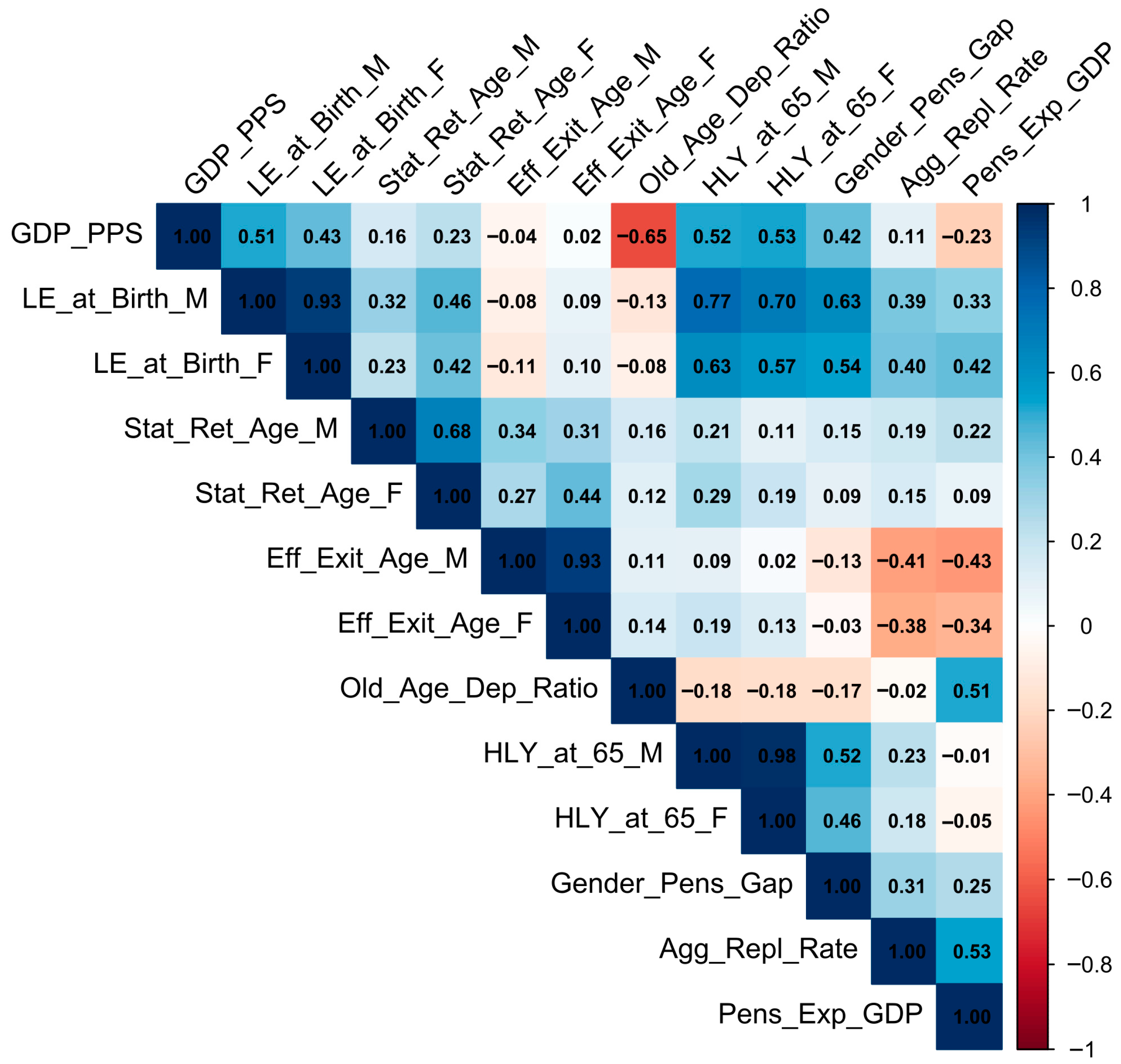
The heatmap displays the strength and direction of the linear relationships between various indicators, including GDP per capita (PPS), life expectacy (LE), statutory and effective retirement ages, healthy life years (HLY), and pension system metrics. The color scale represents the correlation coefficients, ranging from −1.00 (dark red, indicating a prfect negative correlation) to +1.00 (dark blue, indicating a perfect poitive correlation). Cell with values closer to zeroor in ligher shades indicate weakr or negligible relationships between those specific variables.
References
- Aidukaite, J. (2011). Welfare reforms and socio-economic trends in the 10 new EU member states. Communist and Post-Communist Studies, 44(3), 211–219. [Google Scholar] [CrossRef] [Scilit]
- Alonso-García, J., & Rosado-Cebrian, B. (2021). Financial crisis and pension reform in Spain: The effect of labour market dynamics. Journal of Economic Policy Reform, 24(2), 201–218. [Google Scholar] [CrossRef] [Scilit]
- Alvarez, J.-A., Kallestrup-Lamb, M., & Kjærgaard, S. (2021). Linking retirement age to life expectancy does not lessen the demographic implications of unequal lifespans. Insurance: Mathematics and Economics, 99, 363–375. [Google Scholar] [CrossRef] [Scilit]
- Arcanjo, M. (2019). Retirement pension reforms in six European social insurance schemes between 2000 and 2017: More financial sustainability and more gender inequality? Social Policy and Society, 18(4), 501–515. [Google Scholar] [CrossRef] [Scilit]
- Álvarez-Gálvez, J., & Jaime-Castillo, A. M. (2018). The impact of social expenditure on health inequalities in Europe. Social Science & Medicine, 200, 9–18. [Google Scholar] [CrossRef] [Scilit] [PubMed]
- Barr, N., & Diamond, P. (2008). Reforming pensions: Principles and policy choices. Oxford University Press. [Google Scholar] [CrossRef] [Scilit]
- Bazzana, D. (2020). Ageing population and pension system sustainability: Reforms and redistributive implications. Economia Politica, 37(3), 971–992. [Google Scholar] [CrossRef] [Scilit]
- Betti, G., Bettio, F., Georgiadis, T., & Tinios, P. (2015). Gender gaps in pensions in Europe. In F. Bettio, P. Tinios, & G. Betti (Eds.), Unequal ageing in Europe (pp. 51–72). Palgrave Macmillan. [Google Scholar] [CrossRef] [Scilit]
- Bilbao-Ubillos, J. (2022). The social dimension of the European Union: A means to lock out social competition? Social Indicators Research, 165(1), 267–281. [Google Scholar] [CrossRef] [Scilit]
- Boeri, T., Brugiavini, A., & Calmfors, L. (2002). The role of unions in the twenty-first century. Oxford University Press. [Google Scholar]
- Cerami, A. (2006). Social policy in central and eastern Europe: The emergence of a new European welfare regime. Lit Verlag. [Google Scholar]
- Chien, H. F., Lu, L. C., & Chiu, Y. H. (2025). Assessing social sustainability efficiency in European countries: Focusing on health and well-being. Sustainable Development, 33(3), 3283–3302. [Google Scholar] [CrossRef] [Scilit]
- Costa-Font, J., & Courbage, C. (Eds.). (2012). Financing long-term care in Europe: Institutions, markets and models. Palgrave Macmillan. [Google Scholar]
- Darvas, Z., Welslau, L., & Zettelmeyer, J. (2025). Demographic change will hit public debt sustainability in European Union countries. Journal of Policy Modeling, 47(6), 1131–1157. [Google Scholar] [CrossRef] [Scilit]
- de Breij, S., Huisman, M., & Deeg, D. J. H. (2020). Macro-level determinants of post-retirement health and health inequalities: A multilevel analysis of 18 European countries. Social Science & Medicine, 245, 112669. [Google Scholar] [CrossRef] [Scilit]
- Dedak, I., & Fiser, N. (2024). Pension reforms in Hungary: Have they gone too far? Journal of Pension Economics & Finance, 23(3), 438–453. [Google Scholar] [CrossRef] [Scilit]
- Devolder, P., Levantesi, S., & Menzietti, M. (2021). Automatic balance mechanisms for notional defined contribution pension systems guaranteeing social adequacy and financial sustainability: An application to the Italian pension system. Annals of Operations Research, 299(1–2), 765–795. [Google Scholar] [CrossRef] [Scilit]
- Dumiter, F. C., Schebesch, K. B., Nicoară, Ș. A., & Bențe, C. (2024). The impact of social features on the financial sustainability of pension systems in Central and Eastern Europe and Baltic States. Technological and Economic Development of Economy, 30(6), 1920–1949. [Google Scholar] [CrossRef] [Scilit]
- Duval, R. (2003). The retirement effects of old-age pension and early retirement schemes in OECD countries (OECD Economics Department Working Papers, No. 370). OECD Publishing. [Google Scholar] [CrossRef]
- Dvulit, Z., Maznyk, L., & Bartnik, B. (2025). Harmonizing the interplay between SDG 3 and SDG 10 in the context of income inequality: Evidence from the EU and Ukraine. Sustainability, 17(16), 7442. [Google Scholar] [CrossRef] [Scilit]
- Ebbinghaus, B. (2006). Reforming early retirement in Europe, Japan and the USA. Oxford University Press. [Google Scholar] [CrossRef] [Scilit]
- Ebbinghaus, B. (2021). Inequalities and poverty risks in old age across Europe: The double-edged income effect of pension systems. Social Policy & Administration, 55(3), 440–455. [Google Scholar] [CrossRef] [Scilit]
- Esping-Andersen, G. (1990). The three worlds of welfare capitalism. Princeton University Press. [Google Scholar]
- Eurostat. (2024). Eurostat database. European Commission. Available online: https://ec.europa.eu/eurostat/data/database (accessed on 16 January 2026).
- Fernández-Bastidas, R., & Pycroft, J. (2025). Mind the (narrowing) gender gap: Implications of labour market changes for EU pension sustainability. Economic Modelling, 151, 107185. [Google Scholar] [CrossRef] [Scilit]
- Ferrera, M. (1996). The “southern model” of welfare in social Europe. Journal of European Social Policy, 6(1), 17–37. [Google Scholar] [CrossRef] [Scilit]
- Gal, J. (2010). Is there an extended family of Mediterranean welfare states? Journal of European Social Policy, 20(4), 283–300. [Google Scholar] [CrossRef] [Scilit]
- Grech, A. G. (2013). Assessing the sustainability of pension reforms in Europe. Journal of International and Comparative Social Policy, 29(2), 143–162. [Google Scholar] [CrossRef] [Scilit]
- Gruber, J., & Wise, D. A. (Eds.). (1998). Social security and retirement around the world. University of Chicago Press. [Google Scholar] [CrossRef] [Scilit]
- Gruber, J., & Wise, D. A. (Eds.). (2002). Social security programs and retirement around the world: Micro-estimation. University of Chicago Press. [Google Scholar] [CrossRef] [Scilit]
- Guardiancich, I., & Borgognoni, E. (2025). The post-socialist neoliberal agenda through the prism of Europeanization in social and labour market policy. Journal of European Social Policy, 35(5), 471–485. [Google Scholar] [CrossRef] [Scilit]
- Hemerijck, A. (2013). Changing welfare states. Oxford University Press. [Google Scholar]
- Hofäcker, D. (2014). In line or at odds with active ageing policies? Exploring patterns of retirement preferences in Europe. Ageing & Society, 35(1), 163–188. [Google Scholar] [CrossRef] [Scilit]
- Holm, S. (1979). A simple sequentially rejective multiple test procedure. Scandinavian Journal of Statistics, 6(2), 65–70. [Google Scholar]
- Holzmann, R. (2013). Global pension systems and their reform: Worldwide drivers, trends and challenges. International Social Security Review, 66(2), 1–29. [Google Scholar] [CrossRef] [Scilit]
- Jagger, C., Gillies, C., Moscone, F., Cambois, E., Van Oyen, H., Nusselder, W., & Robine, J. M. (2008). Inequalities in healthy life years in the 25 countries of the European Union in 2005: A cross-national meta-regression analysis. The Lancet, 372(9656), 2124–2131. [Google Scholar] [CrossRef] [Scilit] [PubMed]
- Jędrzychowska, A., Kwiecień, I., & Poprawska, E. (2020). The motherhood pension gap in a defined contribution pension scheme—The case of Poland. Sustainability, 12(11), 4425. [Google Scholar] [CrossRef] [Scilit]
- Kamar, M.-C., & Magnani, R. (2024). Population aging, pensions, informality and labor market frictions in Lebanon: Reforms and policy choices. International Economics, 179, 100531. [Google Scholar] [CrossRef] [Scilit]
- Karimi, E., & Fan, F. (2026). Examining the role of economic policy uncertainty and green growth in public pension spending dynamics: Evidence from OECD economies. Work, Aging and Retirement, 12(1), 88–105. [Google Scholar] [CrossRef] [Scilit]
- Lee, K. (2024). Varying effects of public pensions: Pension spending and old-age employment under different pension regimes. Journal of European Social Policy, 34(1), 3–19. [Google Scholar] [CrossRef] [Scilit]
- Mackenbach, J. P., Meerding, W. J., & Kunst, A. E. (2008). Socioeconomic inequalities in health in 22 European countries. New England Journal of Medicine, 358(23), 2468–2481. [Google Scholar] [CrossRef] [Scilit]
- Mackenbach, J. P., Valverde, J. R., Bopp, M., Brønnum-Hansen, H., Deboosere, P., Kalediene, R., Kovács, K., Leinsalu, M., Martikainen, P., Menvielle, G., Regidor, E., & Nusselder, W. J. (2019). Determinants of inequalities in life expectancy: An international comparative study of eight risk factors. The Lancet Public Health, 4(10), e529–e537. [Google Scholar] [CrossRef] [Scilit]
- Moeis, A. I. A., Djalal Nachrowi, N., Ananta, A., & Adrison, V. (2022). A trade-off between old-age financial adequacy and state budget sustainability: Searching a government optimum solution to the pension system in Indonesia. Cogent Economics & Finance, 10(1), 2079176. [Google Scholar] [CrossRef] [Scilit]
- Möhring, K. (2014). Employment histories and pension incomes in Europe. European Societies, 17(1), 3–26. [Google Scholar] [CrossRef] [Scilit]
- Nicolae, B., & Amalia, J. S. (2020). Study regarding the effects of demographic transition on labor market and public pension system in central and eastern Europe. Studies in Business and Economics, 15(1), 158–170. [Google Scholar] [CrossRef] [Scilit]
- OECD. (2023). Pensions at a glance 2023: OECD and G20 indicators. OECD Publishing. [Google Scholar] [CrossRef] [Scilit]
- Otavova, M., Glaserova, J., Blazkova, J., & Hasikova, I. (2023). Social responsibility for insurance companies. Montenegrin Journal of Economics, 19(2), 167–178. [Google Scholar] [CrossRef] [Scilit]
- Pagès, J. (2014). Multiple factor analysis by example using R. CRC Press. [Google Scholar] [CrossRef] [Scilit]
- Peña-Sánchez, A. R., Ruiz-Chico, J., & Jiménez-García, M. (2021). Dynamics of public spending on health and socio-economic development in the European Union: An analysis from the perspective of the sustainable development goals. Healthcare, 9(3), 353. [Google Scholar] [CrossRef] [Scilit]
- Pierson, P. (2001). The new politics of the welfare state. Oxford University Press. [Google Scholar]
- Polat, İ. H., Tosunoğlu, M., & Aslan, T. (2025). Analyzing the ageing population and healthcare expenditures from an environmental sustainability perspective for the EU countries: A spatial approach. Kafkas Üniversitesi İktisadi ve İdari Bilimler Fakültesi Dergisi, 16(31), 168–200. [Google Scholar] [CrossRef] [Scilit]
- Popa, A. F., Jimon, S. A., David, D., & Sahlian, D. N. (2021). Influence of fiscal policies and labor market characteristics on sustainable social insurance budgets—Empirical evidence from central and eastern European countries. Sustainability, 13(11), 6197. [Google Scholar] [CrossRef] [Scilit]
- Pripoaie, R., Turtureanu, A.-G., Radu, R. I., Matic, A.-E., Schin, G.-C., Beldiman, C.-M., & Pătrașcu, G.-C. (2025). The role of public policy in advancing social innovation and inclusion: EU and Romania’s comparison. Administrative Sciences, 15(11), 443. [Google Scholar] [CrossRef] [Scilit]
- Rabaté, S., & Rochut, J. (2020). Employment and substitution effects of raising the statutory retirement age in France. Journal of Pension Economics and Finance, 19(3), 293–308. [Google Scholar] [CrossRef] [Scilit]
- Saxonberg, S. (2013). From defamilialization to degenderization: Toward a new welfare typology. Social Policy & Administration, 47(1), 26–49. [Google Scholar] [CrossRef] [Scilit]
- Vanella, P., Rodriguez Gonzalez, M., & Wilke, C. B. (2022). Population ageing and future demand for old-age and disability pensions in Germany: A probabilistic approach. Comparative Population Studies, 47, 87–118. [Google Scholar] [CrossRef] [Scilit]
- Vanhuysse, P. (2006). Divide and pacify: Strategic social policies and political protests in post-communist democracies. Central European University Press. [Google Scholar] [CrossRef] [Scilit]
- von Nordheim, F., & Kvist, J. (2023). Regulating the retirement age—Lessons from Nordic pension policy approaches. Regulation & Governance, 17(3), 644–657. [Google Scholar] [CrossRef] [Scilit]
- Wroński, M. (2023). The impact of the public pension system on wealth inequality: The distribution of augmented wealth in Poland. Applied Economics Letters, 30(3), 355–359. [Google Scholar] [CrossRef] [Scilit]
- Zaidi, A., Gasior, K., Hofmarcher, M. M., Lelkes, O., Marin, B., Rodrigues, R., Safarova, A., Schmidt, P., & Sidorenko, A. (2013). Active ageing index 2012: Concept, methodology and final results (methodology report). European Centre for Social Welfare Policy and Research. [Google Scholar]
- Zhao, G., Zhou, D., & Fu, Y. (2024). Study on the impact of delayed retirement on the sustainability of basic pension insurance fund for urban employees in China. Sustainability, 16(10), 3969. [Google Scholar] [CrossRef] [Scilit]
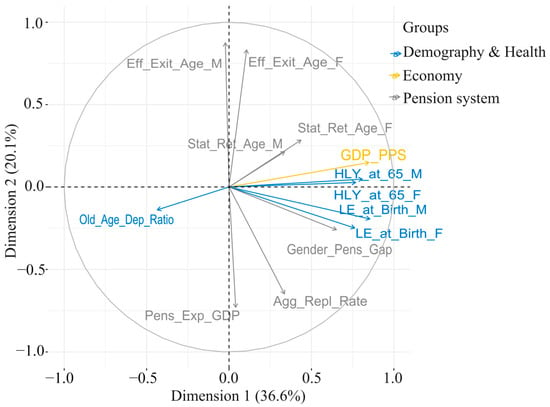
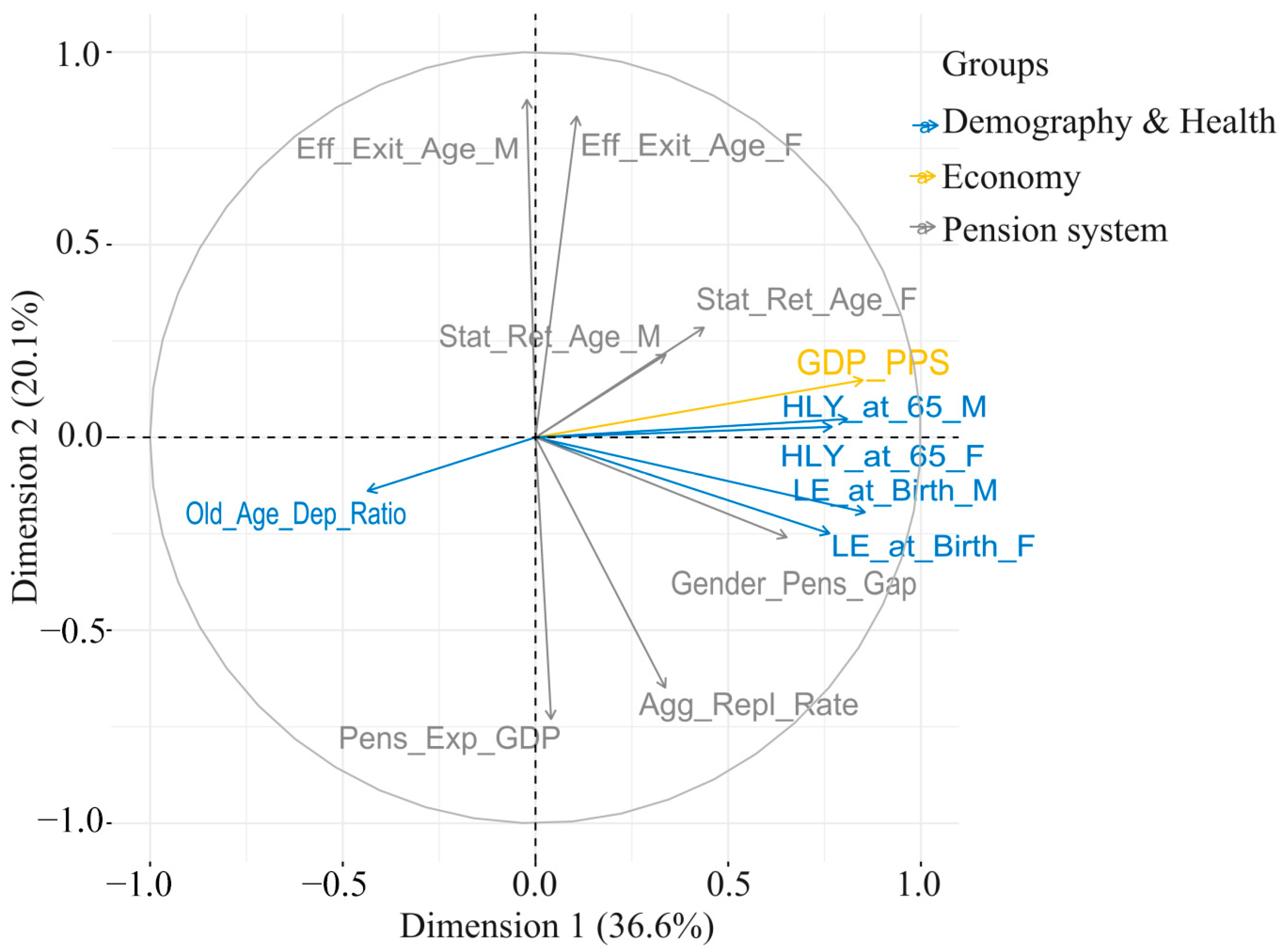
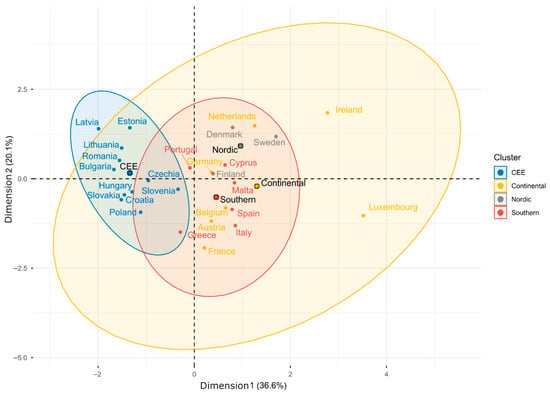
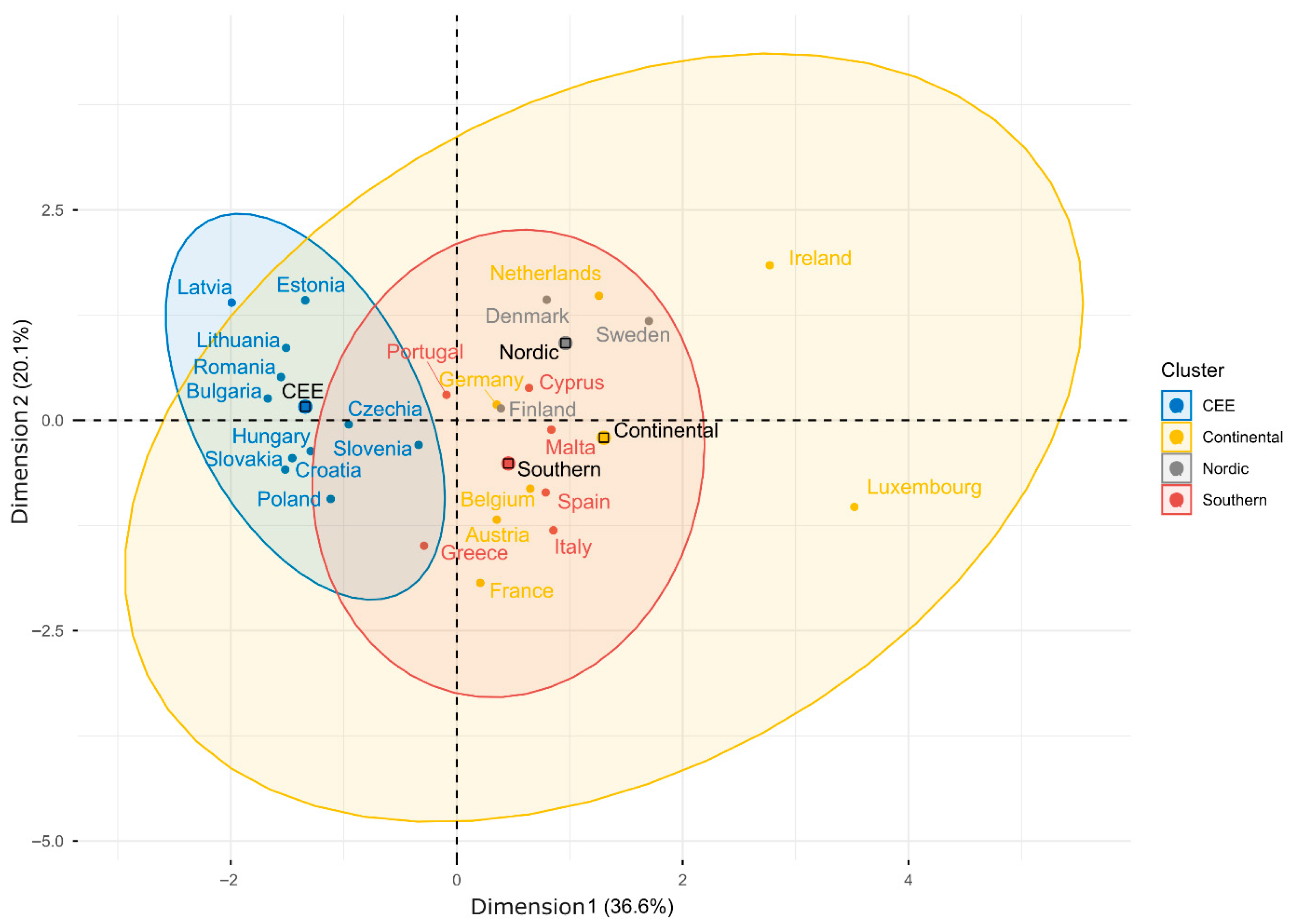
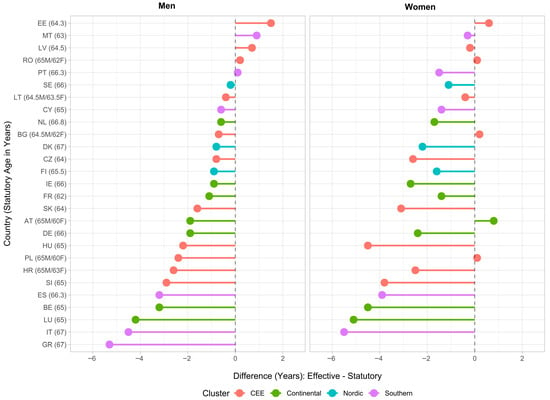
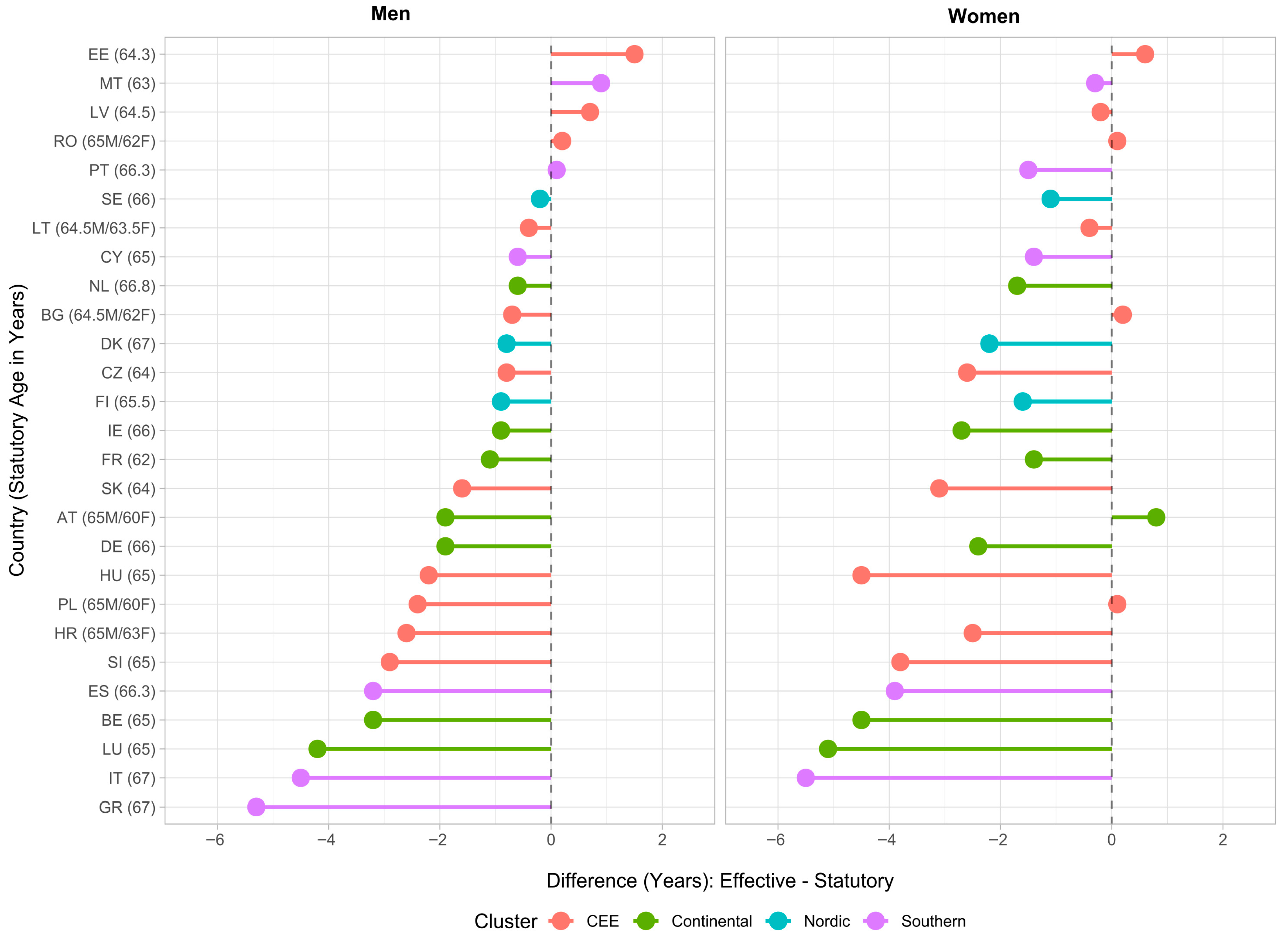
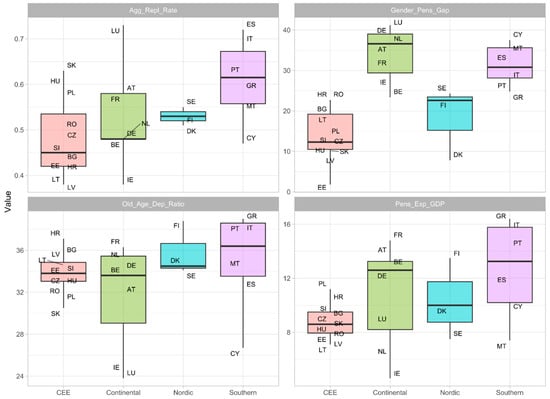
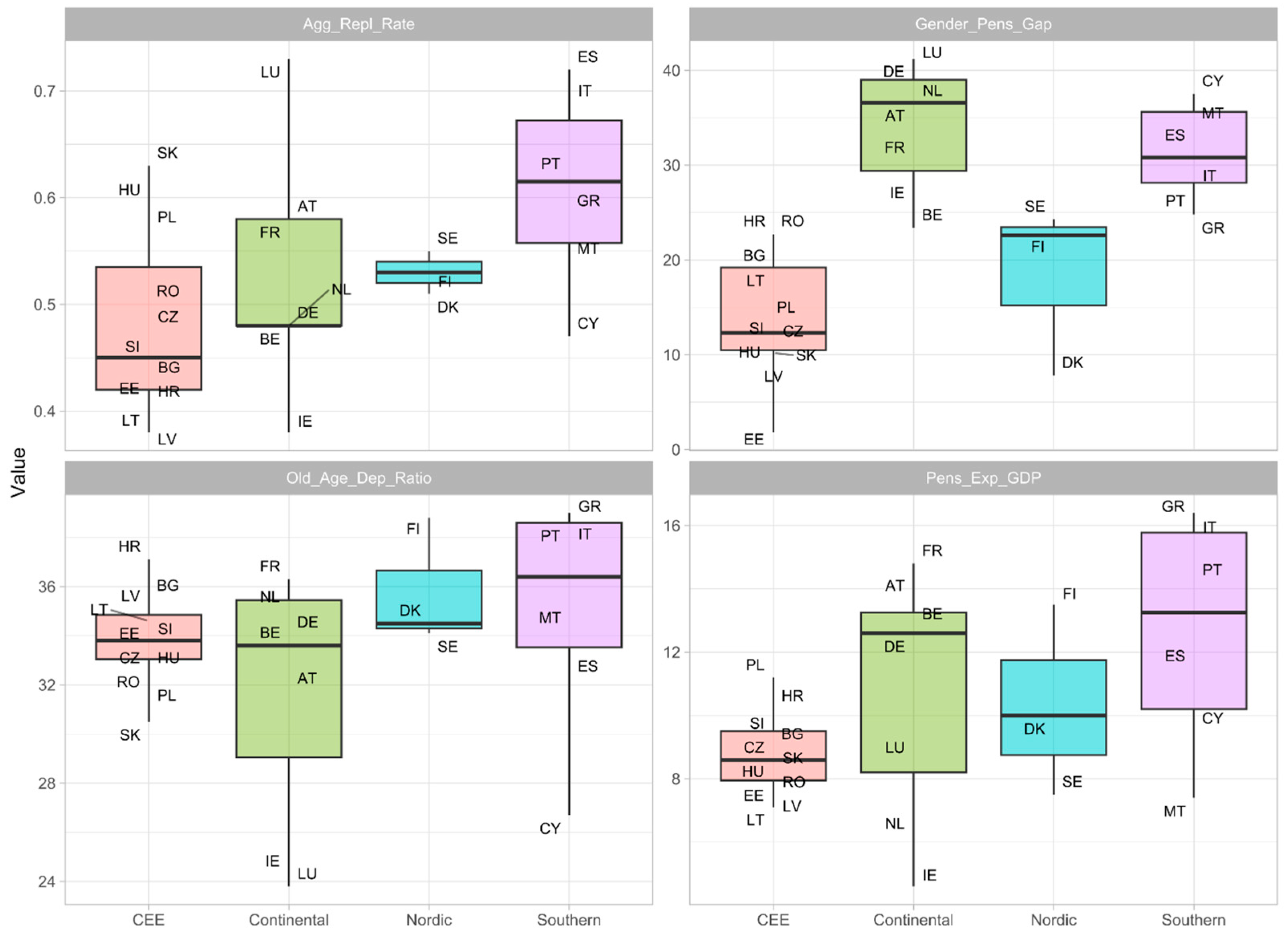
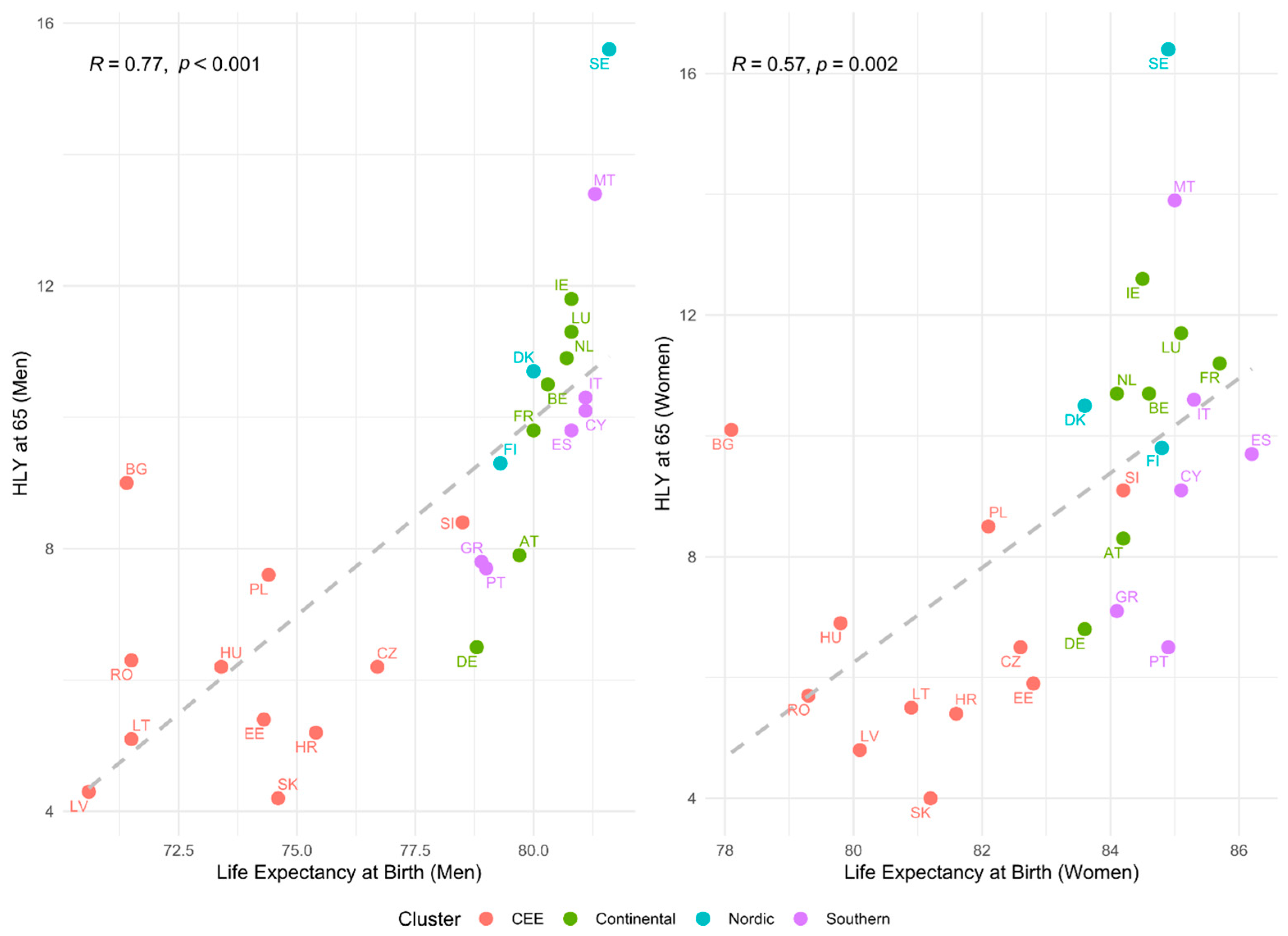

Disclaimer/Publisher’s Note: The statements, opinions and data contained in all publications are solely those of the individual author(s) and contributor(s) and not of MDPI and/or the editor(s). MDPI and/or the editor(s) disclaim responsibility for any injury to people or property resulting from any ideas, methods, instructions or products referred to in the content. |
© 2026 by the authors. Licensee MDPI, Basel, Switzerland. This article is an open access article distributed under the terms and conditions of the Creative Commons Attribution (CC BY) license.