Article

Examining Associations Between Socio-Demographic Characteristics and Online Shopping Risk Determinants of Consumers in Bulgaria


Department of Commerce, Tsenov Academy of Economics, 5250 Svishtov, Bulgaria
Adm. Sci. 2026, 16(3), 151; https://doi.org/10.3390/admsci16030151

Submission received: 11 February 2026 / Revised: 11 March 2026 / Accepted: 16 March 2026 / Published: 19 March 2026

Abstract

This study examines associations between socio-demographic characteristics and online shopping risk determinants of consumers in Bulgaria. It focuses on nine risk determinants grouped into four domains—technological, logistical, legal and geographical, and other risks. The analysis is based on aggregated official data from Eurostat and the National Statistical Institute of Bulgaria. The methodological framework employs a correlational approach using non-parametric correlation coefficients. The empirical results reveal statistically significant associations of varying strength. Employment status demonstrates the strongest associations among the socio-demographic variables, while gender, educational level, and age exhibit relatively weaker associations. These findings provide actionable insights for evidence-based strategies to mitigate online shopping risk determinants and support policies and initiatives to enhance consumer protection and engagement in Bulgaria’s e-commerce sector.

1. Introduction

In recent years, Bulgarian consumers have increasingly shifted to online channels to purchase goods or services for private purposes. The appeal of e-commerce stems from its ability to enable transactions without time or location constraints. It provides consumers with the opportunity to browse multiple stores and platforms, compare products and services, and benefit from the convenience and privacy offered by the digital environment.
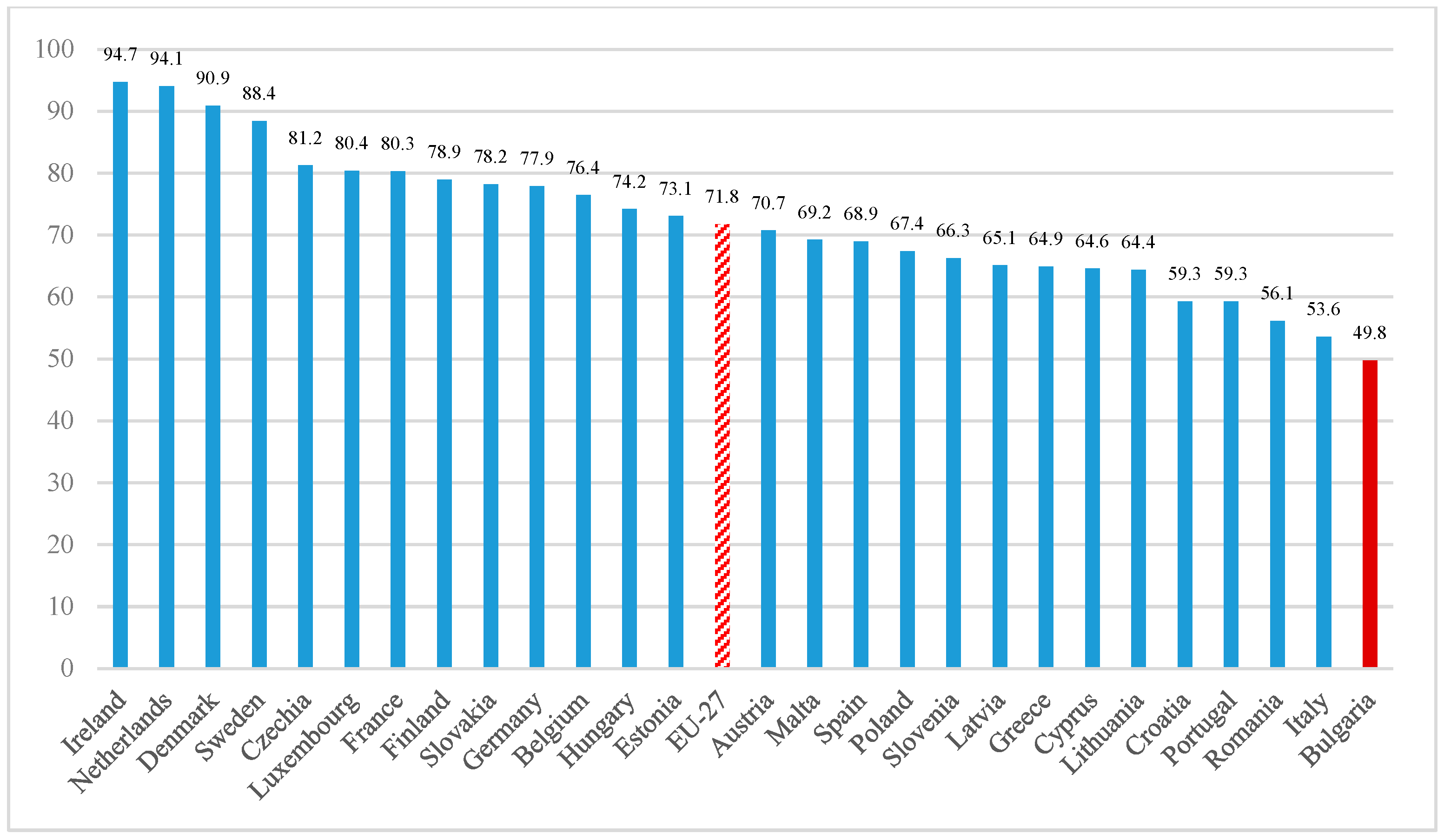
Despite these advantages, Bulgaria consistently ranks last among the EU-27 in e-commerce participation. According to Eurostat, only 49.8% of consumers in Bulgaria purchased goods or services online in 2024, compared to the EU average of 71.8%. The activity of Bulgarian online consumers is 44.9 percentage points lower than that of the leading country, Ireland, which reports an impressive 94.7% (Eurostat, 2024b). In a similar context, the European E-commerce Report 2024 indicates that Bulgaria continues to lag behind in the adoption and expansion of e-commerce (Ecommerce Europe, 2024). Figure 1 presents a comparative overview of the share of consumers making online purchases across EU member states, highlighting Bulgaria’s position.
Given the current circumstances, it is particularly important to examine risk determinants that are significantly associated with Bulgarian consumers in online shopping. Various risk determinants are linked to cautious or skeptical approaches toward online transactions in Bulgaria.
From this perspective, the present study aims to assess the associations between online shopping risk determinants and key socio-demographic characteristics of Bulgarian consumers. The study focuses on four risk domains—technological, logistical, legal and geographical, and other risks—and examines their correlations with employment status, gender, educational level, and age. The study addresses the following research questions (RQs):
  • RQ1: Are there statistically significant associations between the socio-demographic characteristics of consumers in Bulgaria and online shopping risk determinants?
  • RQ2: What is the strength of these associations, and how do they vary across different socio-demographic characteristics in relation to the specific online shopping risk determinants?
The study is entirely based on aggregated official statistical data from Eurostat and the National Statistical Institute of the Republic of Bulgaria, covering Bulgarian individuals aged 16–74. These data are based on a two-stage stratified cluster design to ensure national representativeness (a total of 4091 households selected at random, as well as 8275 members aged 16–74 years living in these households). Relying on these official sources provides a standardized and comparable basis for analysis, ensuring that the results reflect associations observable at the population level.
Most previous studies investigating associations between socio-demographic characteristics and online shopping risk determinants have relied on survey-based data from digitally advanced economies. In contrast, aggregate-level analyses remain scarce. This is particularly true for Bulgaria, which is less digitally integrated. By focusing on Bulgaria’s relatively low e-commerce adoption, the present study provides empirical evidence on how consumers’ socio-demographic characteristics relate to online shopping risk determinants. These findings come from an underrepresented EU member state, highlighting the importance of examining digitally less advanced markets.

2. Literature Review

The critical importance of online shopping risk determinants is increasingly recognized, as they capture potential uncertainties in e-commerce transactions (Handoyo, 2024; McKnight et al., 2002; X. Sun et al., 2023). These risk determinants encompass aspects of transactional processes, consumer considerations, and systemic vulnerabilities within digital platforms (Al-Adwan et al., 2022; Habib & Hamadneh, 2021; Octaviani & Gunawan, 2018). Their multidimensional character demonstrates the complex interrelations and structural diversity within digital marketplaces.
The transformation in digital markets has been widely observed. While the expansion of data-driven platforms and e-commerce applications has facilitated access and enhanced shopping convenience (Shah & Murthi, 2021; Stofkova et al., 2022), online transactions still involve uncertainties and limited transparency (Duch-Brown et al., 2017; Stojanov, 2019). This context highlights the relevance of online shopping risk determinants.
Within the outlined research area, technological risks—especially interface risk—have received considerable attention from researchers. Studies show that inadequate website usability, disorganized visual design, or unclear navigation are linked to greater potential for interface issues in online shopping (Boustani et al., 2022; Ou & Sia, 2010; Pandey & Parmar, 2019; Sanyal, 2019; Sohn et al., 2017). Fong et al. (2023) emphasize that platform aesthetics and perceived trustworthiness are associated with online shopping risk assessments (Fong et al., 2023). Similarly, Sohn et al. (2017) examine the relationship between the perceived visual complexity of online stores and consumer perceptions (Sohn et al., 2017). In a contrasting setting, Frik and Mittone (2019) find that security, privacy, and reputation are considered more influential than website quality in online purchases (Frik & Mittone, 2019). Taken together, the literature reveals partial consensus that technological design features are associated with assessments of online shopping risk. However, there is divergence regarding which technological attributes are most prominent. Several studies identify usability and visual clarity as important elements of perceived trust, while others suggest that security, privacy protection, and institutional reputation may be more influential than interface quality in high-risk situations. These observations indicate that technological risk is multidimensional and may vary depending on market maturity and contextual factors—an issue that remains under-investigated in less mature digital markets.
Logistical risks constitute another critical cluster. Delays in delivery, the presence of hidden fees, receipt of damaged goods, and ambiguities in return policies are associated with lower consumer confidence (Agus et al., 2021; H. Li et al., 2023; Sakas et al., 2022; Tham et al., 2019). Lantz and Hjort (2013) and Yue et al. (2024) report that failures in delivery reliability are linked to lower post-transactional trust (Lantz & Hjort, 2013; Yue et al., 2024). In this regard, studies by Yao et al. (2023) underscore the potential of integrating Online-to-Offline (O2O) services to mitigate logistical challenges for consumers (Yao et al., 2023). Moreover, researchers (Al Hamli & Sobaih, 2023; Asante et al., 2024; Lee, 2020) explore synergy between various e-commerce logistics services and consumer preferences by identifying risk-related service factors. Across studies, delivery reliability and cost transparency emerge as consistently significant determinants following a purchase. Unlike technological risks, whose relative importance varies, logistical failures are linked to more uniform negative responses across consumer segments. Despite this, most existing analyses are based on survey data and focus on individual perceptions rather than examining how these risks correlate with broader socio-demographic profiles among consumer groups. Logistical risks are frequently associated with post-purchase confidence and future purchase intentions. Experiences such as delayed delivery or hidden costs are reflected in lower consumer satisfaction and may influence platform use in subsequent transactions.
Legal and geographical risks also represent key considerations in consumers’ online purchases. Practices such as geo-blocking, although banned within the EU, persist in certain contexts. This creates perceptions of unfairness and barriers to online access, thereby limiting consumers’ ability to transact across certain regions (Gomez-Herrera et al., 2014). International logistics constraints further limit market efficiency, particularly for countries with underdeveloped digital integration (He et al., 2021). Legal risks related to data privacy and security—such as data misuse, cyber threats, and unauthorized transactions—are widely recognized in scientific research (D’Adamo et al., 2021; Handoyo, 2024; Jain & Kulhar, 2019; Morić et al., 2024; Singh et al., 2024). Metzger (2004) notes that limited information and lack of security on online platforms constitute a significant issue that increases susceptibility to fraud (Metzger, 2004). According to Saw and Inthiran (2022), misleading or incomplete information, persistent cybercrimes, and online threats, including phishing messages, website hacking, malware, credit card fraud, and unsecured web services, are linked to negative consumer attitudes and decreased platform loyalty (Saw & Inthiran, 2022). The literature consistently shows that legal uncertainty, data privacy concerns, and cross-border restrictions have been observed alongside lower willingness to transact online. However, these dimensions are often examined independently from other risk categories, resulting in fragmented explanations of consumer hesitation. The interplay between legal-geographical constraints and socio-demographic characteristics remains under-explored, particularly in smaller EU economies with lower levels of digital integration. Legal uncertainty, perceived fraud exposure, or cross-border restrictions can result in avoidance of foreign retailers, preference for domestic platforms, or withdrawal from certain types of online transactions. These patterns are especially pertinent where institutional trust is fragile.
Lastly, other online risks pertain to aspects of digital consumer engagement. These include issues such as incomplete or missing information about the country of origin or purchase of a product, price discrepancies for the same product across different countries, and the absence of a link to the manufacturer’s official website (Zhuang et al., 2018). These risks indicate that consumers can encounter difficulties in assessing the quality, authenticity, or value of a product, potentially affecting the safety and satisfaction of online shopping (Biswas & Burman, 2009; W. Li et al., 2021). Informational ambiguities in digital environments coincide with increased purchasing caution, longer search processes, and reluctance to finalize transactions.
The risk determinants thus derived enhance the understanding of the multifaceted nature of the phenomenon, offering a perspective for examining its key characteristics. Thorough knowledge and systematic investigation support continued scholarly focus and contribute to the identification of practical implications in the field. Nevertheless, digitally lagging countries such as Bulgaria remain underrepresented in comparative EU research. To address this gap, the present study examines the statistical associations between the socio-demographic characteristics of Bulgarian consumers and reported risk determinants. The analysis provides additional empirical insights into the Bulgarian setting.

3. Materials and Methods

3.1. Analytical Framework

The study is based on a methodological framework aimed at promoting objectivity, reliability, and analytical rigor. The research design combines tools selected to maintain logical coherence, analytical depth, and clarity of conclusions. Given the complex nature of online shopping risk determinants, particular attention was paid to the definition and operationalization of variables, as well as to the application of statistical techniques appropriate to the data structure.
Online shopping risk determinants are conceptualized as dynamic and multi-dimensional constructs, providing a framework for examining the structure and assessment of different aspects of transactional uncertainty. The study employs correlation analysis to investigate associations between these determinants and key socio-demographic characteristics of Bulgarian consumers—namely employment status, gender, educational level, and age—evaluating the direction, strength, and statistical significance of the observed relationships. This approach allows for the identification of significant associations and the comparison of their magnitude across distinct consumer segments within the national online environment.
The correlation analysis was conducted using non-parametric correlation coefficients, grouped according to the measurement scale of the variables:
  • Dichotomous variables: Yule’s Q coefficient of association, Pearson’s phi (φ) coefficient, and Yule’s Y coefficient of colligation. These coefficients are directional, with values ranging from −1 to +1; the sign indicates the direction of the association.
  • Ordinal variables with more than two categories: Cramer’s V, Chuprov’s K, and Pearson’s C coefficients. These coefficients are non-directional, with values ranging from 0 to 1, reflecting only the strength of the association.
The strength of an association is interpreted as follows: 0.00–0.30 = weak, 0.31–0.50 = moderate, 0.51–0.70 = strong, and 0.71–1.00 = very strong. For directional coefficients, the sign indicates the association; for non-directional coefficients, only the magnitude is considered.
The statistical significance of the observed associations was evaluated using the chi-square (χ2) test. Degrees of freedom (df) were determined based on the number of categories in each variable, and exact p-values were reported. Associations with p < 0.05 were considered statistically significant, ensuring methodological transparency and accommodating the varying sizes of contingency tables. Given the multiple comparisons conducted, the analysis considered both the magnitude of the correlation coefficients and the corresponding p-values. Where appropriate, adjustments for multiple testing (e.g., Holm-Bonferroni correction) were applied to ensure the validity of the results.
The analysis considers nine online shopping risk determinants classified into four categories—technological, logistical, legal and geographical, and other risks (see Table 1). These categories follow the framework established in the literature review and were selected to represent different dimensions of the digital environment, as well as their relevance for examining associations with key socio-demographic characteristics.
The classification of risk determinants informed the structuring of the correlation analysis and enabled consistent comparisons between each socio-demographic characteristic (employment status, gender, educational level, and age) of Bulgarian consumers and the corresponding risk determinants within each category.

3.2. Data and Limitations

All variables were derived from officially aggregated data published by Eurostat and the National Statistical Institute of the Republic of Bulgaria (NSI), including thematic modules on internet purchasing and various problems and barriers encountered. The analysis uses the most recent aggregated data available as of 2024, ensuring that the study reflects up-to-date population-level information. Key sources include the Eurostat datasets ISOC_EC_IB20 (Internet purchases by individuals) (Eurostat, 2024b) and ISOC_EC_IPRB21 (Internet purchases—problems encountered) (Eurostat, 2024a), as well as NSI national-level survey results. Aggregated data provided in the official datasets were used, reflecting the distribution across relevant categories. It should be noted that the use of aggregated data implies that the observed associations reflect group-level statistical patterns. The validity of the data is supported by the quality assurance procedures and consistency checks implemented by Eurostat and NSI, following the Methodological Manual for Statistics on the Information Society. Aggregated data enable the systematic examination of collective patterns, provide reliable insights across consumer groups, and underpin robust, generalizable conclusions.
Based on these aggregated data, the socio-demographic characteristics of Bulgarian consumers were classified and coded to facilitate the analysis of associations. Specifically, the variables were defined and treated as follows:
  • Employment status—dichotomous variable (1 = unemployed, i.e., individuals not in employment; 2 = employed, including employees, self-employed, and family workers). Positive correlation coefficients indicate a higher incidence of the reported risk determinants among employed individuals, whereas negative coefficients indicate a higher incidence among unemployed individuals.
  • Gender—coded as a dichotomous variable (1 = male; 2 = female). Positive correlation coefficients reflect a higher incidence of the reported risk determinants among female consumers, whereas negative coefficients reflect a higher incidence among male consumers.
  • Educational level—ordinal variable, categorized into three groups: individuals with no or low formal education, individuals with medium formal education, and individuals with high formal education. Associations with the reported risk were assessed using non-directional coefficients (Cramer’s V, Chuprov’s K, and Pearson’s C), which range from 0 to 1 and reflect only the magnitude of the association.
  • Age—ordinal variable, coded into three age groups: 16–24, 25–54, and 55–74. The same non-directional coefficients were applied to assess associations with the reported risk.
It should be noted that the use of aggregated data implies that the reported associations reflect structures observable at the group level rather than individual outcomes. Consequently, these findings represent general population-level distributions and do not imply causal relationships. Care should be taken to avoid ecological fallacies when interpreting the results, as patterns observed at the group level may not directly apply to individuals. Nevertheless, the data provide a reliable basis for identifying consistent associations across consumer groups and generating broadly generalizable insights.

4. Results

4.1. Structural Overview of Bulgarian Online Consumers

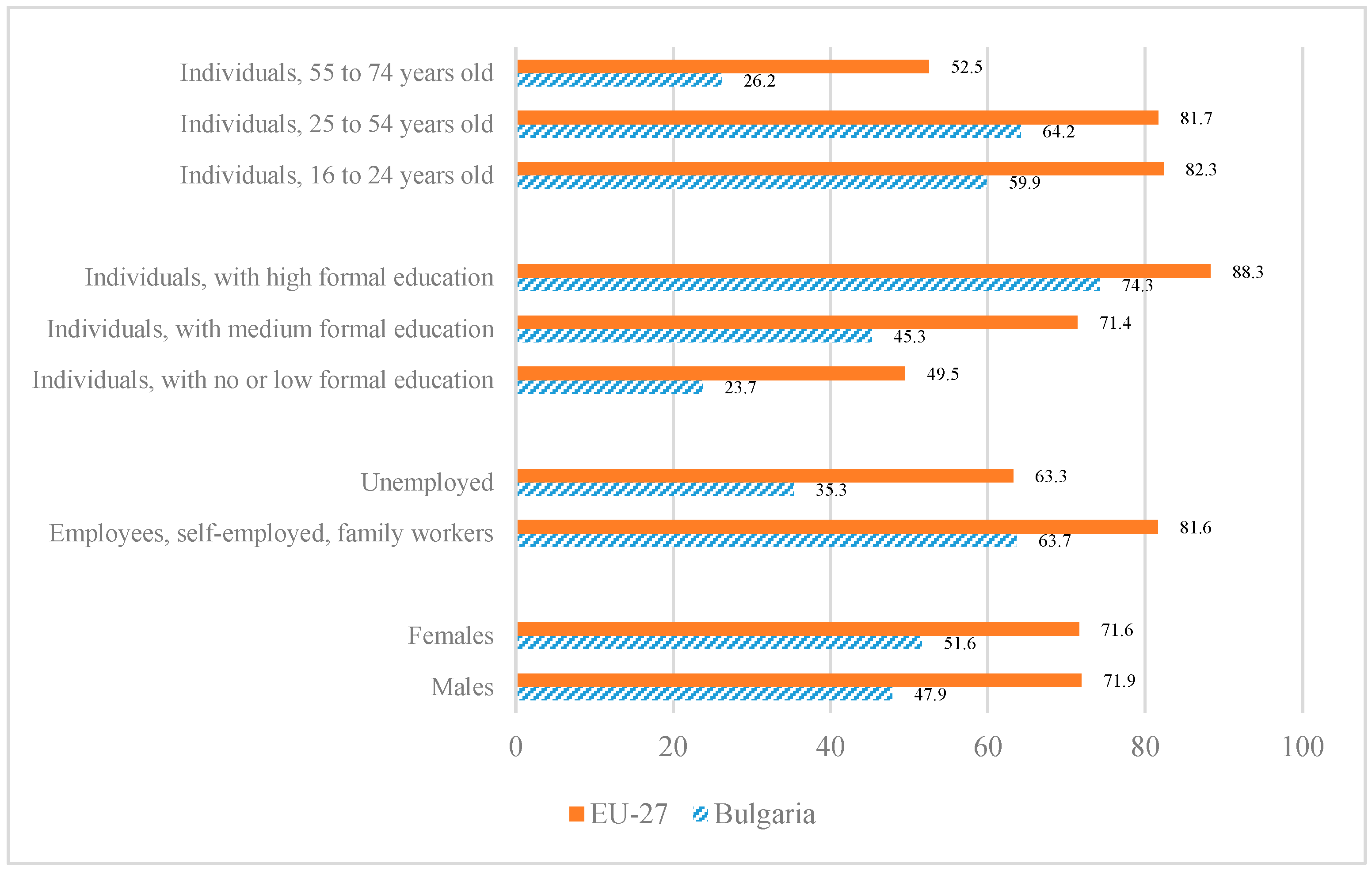
In recent years, particularly since the onset of the COVID-19 pandemic, there has been a shift in consumer philosophy toward rational choice and the pursuit of underlying benefits and values. Nevertheless, as shown above, Bulgarian consumers lag significantly behind their counterparts in other EU member states. This gap in online consumer engagement can be illustrated in more detail through the structural characteristics of Bulgarian consumers who purchased goods or services online for private purposes in 2024, compared to the EU-27 average (see Figure 2).
The data in Figure 2 show that in Bulgaria, the relative share of females who purchased online is 51.6%, 3.7 percentage points higher than that of males (47.9%). Both shares are below the EU-27 averages by 20.0 and 24.0 percentage points, respectively.
Bulgarians aged 25 to 54 are the most active participants in online transactions (64.2%) among all age groups. However, this indicator also lags behind the EU-27 average by 17.5 percentage points.
The relative share of online consumers in Bulgaria with high formal education is 74.3%, which is 29.0 and 50.6 percentage points higher than the shares of consumers with medium and no or low formal education, respectively. Compared to the EU-27 averages, all three education levels lag behind—by 14.0 percentage points for consumers with high formal education, and by 26.1 and 25.8 percentage points for those with medium and no or low formal education, respectively.
In Bulgaria, the share of online consumers is 63.7% among employed individuals (including employees, self-employed, and family workers) and 35.3% among the unemployed. These shares are significantly lower than the EU-27 averages—by 17.9 and 28.0 percentage points, respectively.
It should be emphasized that the structural characteristics of online consumers in Bulgaria are key factors of digital consumption patterns. However, the analysis reveals significant disparities in all characteristics relative to the EU average.

4.2. Correlation Analysis

The present correlation analysis examines the existence and strength of statistically significant associations between the socio-demographic characteristics of consumers in Bulgaria (employment status, gender, educational level, and age) and the nine identified online shopping risk determinants. It also considers how these associations vary across different socio-demographic groups.

4.2.1. Correlation Between Employment Status of Consumers in Bulgaria and Online Shopping Risk Determinants

Of particular relevance to this study is the correlation between the characteristic “employment status” and the specified risk determinants (see Table 2). A χ2 test was conducted for each determinant (df = 1), with a critical χ2 value of 3.841 at α = 0.05. Associations with χ2_em ≥ 3.841 were considered statistically significant.
Holm-Bonferroni corrections were applied to the seven determinants with available data to account for multiple comparisons, while determinants with missing data (N/A) were excluded from the analysis.
According to Table 2, six out of nine risk determinants show statistically significant associations with the employment status of Bulgarian online consumers (χ2_em > 3.841; p < 0.05). Most of these significant associations are of moderate strength, based on Yule’s Q. One determinant (“Other”) demonstrates a very strong association according to Yule’s Q (Q = 0.787), while Yule’s Y for the same determinant suggests a slightly weaker association (Y = 0.487).
The relationship between employment status and “Final costs higher than indicated” is not statistically significant (χ2_em = 2.183; p > 0.05). Two determinants with missing data (“Foreign retailer did not sell to my country” and “Problems with fraud encountered” (e.g., no goods/services received, misuse of personal data, misuse of credit card details)) were excluded from the analysis due to N/A restrictions.
Positive correlation coefficients indicate that the respective risk determinant is relatively more frequently reported by employed consumers. Strength of association is reported using Yule’s Q and Y, with Pearson’s φ (phi) suggesting slightly weaker associations; however, the overall patterns remain consistent across coefficients. These results indicate that employment status is associated with certain online shopping risk determinants in Bulgaria.

4.2.2. Correlation Between Gender of Consumers in Bulgaria and Online Shopping Risk Determinants

The second socio-demographic characteristic of Bulgarian consumers examined in this study is “gender”, which exhibits varying associations with the analyzed risk determinants. The correlation relationships are presented in detail in Table 3. A χ2 test was conducted for each determinant (df = 1), with a critical χ2 value of 3.841 at α = 0.05. Associations with χ2_em ≥ 3.841 were considered statistically significant. Holm-Bonferroni corrections were applied to all determinants to account for multiple comparisons.
The analysis of Table 3 indicates that five out of nine risk determinants show a statistically significant association with the gender of Bulgarian online consumers (χ2_em > 3.841; p < 0.05). No significant association was observed for the remaining four determinants.
Among the significant determinants, three are reported more frequently by male consumers: “Speed of delivery slower than indicated”, “Wrong or damaged goods/services delivered”, and “Difficulties in finding information concerning guarantees and other legal rights”. Two determinants are reported more frequently by female consumers: “Foreign retailer did not sell to my country” and “Problems with fraud encountered (e.g., no goods/services received, misuse of personal data, misuse of credit card details)”.
Strength of these associations is reported using Yule’s Q and Y, while Pearson’s φ (phi) suggests slightly lower magnitudes. Overall, gender is related to differences in consumers’ reporting of certain online shopping risk determinants in Bulgaria.

4.2.3. Correlation Between Educational Level of Consumers in Bulgaria and Online Shopping Risk Determinants

The findings of the study indicate that the educational level of consumers in Bulgaria shows statistically significant associations with all examined risk determinants, with the strength of these associations quantified (see Table 4). Chi-square (χ2) tests were conducted for each determinant, with degrees of freedom corresponding to the three-category educational level (df = 2). Associations where χ2_em ≥ 5.991 at a significance level of α = 0.05 were considered statistically significant. Holm–Bonferroni corrections were applied to account for multiple comparisons and to control the risk of Type I error.
The results in Table 4 show that the educational level of consumers in Bulgaria is statistically associated with all examined risk determinants (χ2_em ≥ 5.991, p < 0.05 after Holm–Bonferroni correction). The strength of these associations was measured using Cramér’s V, Chuprov’s K, and Pearson’s C. The values ranged from 0.056 to 0.200. Specifically, Cramér’s V ranged between 0.080 and 0.200, Chuprov’s K between 0.056 and 0.141, and Pearson’s C between 0.079 and 0.196. Overall, these associations are weak, indicating limited practical impact despite statistical significance.

4.2.4. Correlation Between Age of Consumers in Bulgaria and Online Shopping Risk Determinants

Similar results are observed for the socio-demographic characteristic “age”, indicating that this variable shows statistically significant associations with the examined risk determinants, comparable to those of educational level (see Table 5). Chi-square (χ2) tests were conducted for each determinant, with degrees of freedom corresponding to the three age groups: 16–24, 25–54, and 55–74 (df = 2). Associations with χ2_em ≥ 5.991 at a significance level of α = 0.05 were considered statistically significant, and Holm–Bonferroni corrections were applied to account for multiple comparisons.
The results in Table 5 indicate that the age of Bulgarian online consumers is statistically associated with all examined risk determinants. The strength of these associations, as measured by Cramer’s V, Chuprov’s K, and Pearson’s C, is generally weak. This suggests that age is related to variations in how consumers report these risks, with coefficient values remaining below 0.2 across all measures.

4.3. Interpretation of the Results

The analysis indicates that socio-demographic characteristics are associated with online shopping risk determinants among Bulgarian consumers. The strength of these associations varies across variables. Employment status exhibits the strongest relationships, suggesting that employed and unemployed consumers differ more substantially in their reporting of certain risk determinants. Gender, educational level, and age show relatively weaker associations, indicating more nuanced variations across these demographic groups. These observations are consistent with prior research showing that demographic variables such as age, gender, and education are linked to differences in online shopping participation across European countries (Bălăcescu et al., 2023; Huterska & Huterski, 2022).
These findings have practical implications for policy development and consumer protection initiatives. Understanding that employment status is linked to multiple online shopping risk determinants can support the design of targeted strategies. These strategies may help mitigate associated risks. Similarly, recognizing the associations with gender, educational level, and age can assist in tailoring consumer guidance and educational campaigns. Such campaigns can address specific domains of risk determinants, including technological, logistical, and legal aspects.
In a broader context, Bulgarian consumers demonstrate lower participation in online shopping compared to EU-27 averages. This highlights areas where national strategies could focus on improving both consumer engagement and protection.
Although the observed associations are generally weak to moderate in magnitude, they remain statistically significant. They provide valuable insights for evidence-based interventions. Overall, these findings contribute to a better understanding of how socio-demographic characteristics shape the reporting of online shopping risk determinants, providing an empirical basis for policies aimed at enhancing the safety, confidence, and participation of Bulgarian consumers.

5. Discussion

The findings of this study provide empirical evidence on the relationships between distinct categories of online shopping risk determinants and socio-demographic characteristics of Bulgarian consumers. These results address the research questions by demonstrating statistically significant associations (RQ1) and by highlighting how the strength of these associations varies across consumer groups and risk categories (RQ2). By situating these associations within the national context, the study expands the empirical literature and informs the development of policies to support online consumer engagement and online shopping risk determinants.
The results align with previous research (Gefen et al., 2003; Pavlou, 2003; Theodorou et al., 2023; Yang et al., 2023), indicating statistically significant associations between certain risk determinants and socio-demographic characteristics of consumers on e-commerce platforms. While many correlations are weak to moderate in magnitude, they remain meaningful for Bulgarian online marketplaces, where participation levels are comparatively low and the country has consistently ranked among the lowest in the Digital Economy and Society Index (European Commission, 2023).
These observations are supported by literature highlighting socio-demographic differences in education, age, and income in online shopping participation (Hernández et al., 2011; Lissitsa & Kol, 2016), as well as the role of digital skills and the digital divide in shaping online engagement (Lian & Yen, 2014). In addition, trust and perceived service quality—including reliability, transparency, and security—have been identified as relevant factors influencing consumer interactions with e-commerce platforms (Rita et al., 2019). In this sense, socio-demographic characteristics remain central for analyzing consumers and their relationship with online shopping risk determinants in digital markets.
Extending these findings, specific risk determinants—across technological, logistical, legal, and geographical domains—have been identified. These determinants are associated with online platform quality, delivery reliability, personal data security, product authenticity, and consumer trust. This finding is consistent with prior studies linking e-commerce and shopping experience challenges to lower consumer satisfaction and loyalty in emerging economies (De Ruyter et al., 2001; Garbarino & Strahilevitz, 2004; Zhou et al., 2009). More specifically, the determinants of fraud exposure and difficulties in accessing information about legal rights can be interpreted through the lens of established e-commerce trust frameworks. They undermine perceived structural assurance and transaction security, which are central components of trust formation in digital environments (Gefen et al., 2003; Pavlou, 2003). In emerging digital markets such as Bulgaria, where familiarity with digital infrastructures can differ across socio-demographic groups, these determinants are particularly relevant for understanding diminished trust and reduced online engagement.
While emerging technologies such as blockchain are frequently presented as tools capable of enhancing transaction transparency and immutability, technological safeguards alone are insufficient to eliminate fraud risks in digital marketplaces. The immutability of transaction records does not automatically resolve issues related to dispute resolution, the enforcement of consumer rights, or cross-border jurisdictional limitations. Consequently, mitigating fraud and legal-geographical risks relies not solely on technological architecture. It also depends on robust governance mechanisms, effective regulatory oversight, and accessible redress systems. This reinforces the view that risk determinants in e-commerce are shaped by the dynamic interaction between technological design and institutional trust.
From a policy perspective, the identified risk categories allow for the design of targeted and testable interventions, building on the observed associations between risk determinants and socio-demographic characteristics. For technological risks, Bulgarian platforms could pilot simplified interface standards. Mandatory transparency indicators, such as visible complaint channels and clear information on data handling, could improve perceptions of platform reliability and consumer confidence in digital governance. Enhanced cybersecurity certification labels may further strengthen consumer confidence by signaling adherence to recognized security standards. The effectiveness of these interventions could be evaluated empirically through A/B testing, user-experience surveys, and monitoring reductions in reported usability-related complaints. Socio-demographic heterogeneity should be considered to ensure that solutions are inclusive and equitable. Studies on human–computer interaction and e-commerce usability report associations suggesting that such measures are linked to reduced user errors and higher engagement across diverse consumer groups (Oliveira et al., 2022; Y. Sun & Zhang, 2021).
To address logistical risks, authorities and major e-commerce platforms could implement standardized delivery transparency metrics, mandatory cost breakdown disclosures, and monitored return-time benchmarks. These measures aim to reduce dissatisfaction stemming from unclear delivery operations, delays, or unexpected costs. Such issues disproportionately affect consumers in emerging digital markets, where confidence in regulatory processes varies across consumer segments. Pilot implementations could be evaluated through pre–post comparisons of complaint rates, customer satisfaction surveys, and delivery-related dissatisfaction indicators derived from official statistics. Incorporating feedback from diverse demographic groups ensures that interventions respond to variations in age, income, and digital literacy, supporting inclusive improvements in the e-commerce experience (Chong et al., 2016).
In relation to legal and geographical risks, regulators could enhance the visibility of consumer rights information through harmonized formats. They could also support cross-border complaint handling procedures. Incorporating feedback from diverse demographic groups can ensure that interventions respond to variations in age, income, and digital literacy, supporting inclusive improvements in cross-border e-commerce experiences (Chen et al., 2022; W. Li et al., 2021).
Effectively reducing risk determinants requires coordinated technological, regulatory, and governance measures rather than isolated digital solutions. Understanding the associations between socio-demographic characteristics and online shopping risk determinants provides nuanced insights for evidence-based policymaking in digital marketplaces.

6. Conclusions

The present study contributes to the scientific understanding of the associations between socio-demographic characteristics and online shopping risk determinants. The obtained results confirm the existence of such associations, thereby expanding existing analytical approaches and frameworks for the Bulgarian digital market. In this regard, the findings reinforce the relevance of the socio-demographic characteristics–risk determinants construct in digital commerce and lay the groundwork for further research across different economic contexts and environments.
Given the aggregated and categorical nature of the dataset, the study acknowledges limitations in capturing the full diversity of context-specific variables. Internal robustness measures were implemented to enhance the credibility of the findings, providing a sound basis for analyzing the correlations between online shopping risk determinants and socio-demographic characteristics of Bulgarian consumers.
Future research is encouraged to empirically test and further refine the proposed framework. Potential directions include:
  • Conduct surveys or experiments to examine the associations between each risk dimension (technological, logistical, legal, geographical) and trust across different consumer segments, with a particular attention to Bulgaria, where trust levels remain relatively low.
  • Investigate the links between emerging technologies (e.g., AI-based recommendations or blockchain payment systems) and risk-related concerns among Bulgarian consumers.
  • Explore cross-cultural and generational differences in online shopping risk determinants, focusing on Balkan countries where regulatory frameworks and shopping norms differ significantly, including non-EU countries such as Serbia, North Macedonia, and Albania.
  • Analyze the relationships between specific interventions (e.g., privacy seals, transparent return guarantees, and enhanced communication tools) and risk determinants, particularly in countries with lower levels of digital adoption, such as Bulgaria and Romania.
Additionally, longitudinal research designs could be used to assess changes in risk-related perceptions over time, particularly in relation to regulatory developments such as data privacy laws. Comparative studies across EU member states may reveal structural and cultural differences in digital trust, while qualitative methods (e.g., in-depth interviews, diary studies, or focus groups) could provide deeper insights into perceptions of trust and risk.
In conclusion, the present study offers both academic contributions and practical implications. It establishes a structured basis for future empirical research and supports the development of secure, sustainable, and consumer-oriented practices in e-commerce, deepening the understanding of the associations between risk determinants and socio-demographic characteristics of online consumers. By linking empirical findings with actionable implications, the study aims to inform initiatives promoting trust and inclusivity within digital marketplaces—both in Bulgaria and across diverse international contexts.

Funding

This research received no external funding.

Institutional Review Board Statement

Not applicable.

Informed Consent Statement

Not applicable.

Data Availability Statement

The data presented in this study are openly available in Eurostat at https://ec.europa.eu/eurostat (accessed on 10 April 2025) and in the National Statistical Institute of Bulgaria at https://www.nsi.bg (accessed on 10 April 2025). Specific data sources are cited within the manuscript.

Conflicts of Interest

The author declares no conflicts of interest.

References

  1. Agus, A. A., Yudoko, G., Mulyono, N., & Imaniya, T. (2021). E-commerce performance, digital marketing capability and supply chain capability within e-commerce platform: Longitudinal study before and after COVID-19. International Journal of Technology, 12(2), 360. [Google Scholar] [CrossRef]
  2. Al-Adwan, A. S., Alrousan, M. K., Yaseen, H., Alkufahy, A. M., & Alsoud, M. (2022). Boosting online purchase intention in high-uncertainty-avoidance societies: A signaling theory approach. Journal of Open Innovation: Technology, Market, and Complexity, 8(3), 136. [Google Scholar] [CrossRef]
  3. Al Hamli, S. S., & Sobaih, A. E. E. (2023). Factors influencing consumer behavior towards online shopping in Saudi Arabia amid COVID-19: Implications for e-businesses post pandemic. Journal of Risk and Financial Management, 16(1), 36. [Google Scholar] [CrossRef]
  4. Asante, I. O., Jiang, Y., & Luo, X. (2024). Leveraging online omnichannel commerce to enhance consumer engagement in the digital transformation era. Journal of Theoretical and Applied Electronic Commerce Research, 20(1), 2. [Google Scholar] [CrossRef]
  5. Bălăcescu, A., Pătrașcu, A., & Tănăsescu, A. (2023). Analysis of disparities in internet purchases by individuals at the EU state level. Electronics, 12(4), 982. [Google Scholar] [CrossRef]
  6. Biswas, D., & Burman, B. (2009). The effects of product digitalization and price dispersion on search intentions in offline versus online settings: The mediating effects of perceived risks. Journal of Product & Brand Management, 18(7), 477–486. [Google Scholar] [CrossRef]
  7. Boustani, N. M., Sayegh, M. M., & Boustany, Z. (2022). Attitude towards online shopping during pandemics: Do gender, social factors and platform quality matter? Journal of Risk and Financial Management, 15(10), 474. [Google Scholar] [CrossRef]
  8. Chen, Y., Li, M., Song, J., Ma, X., Jiang, Y., Wu, S., & Chen, G. L. (2022). A study of cross-border e-commerce research trends: Based on knowledge mapping and literature analysis. Frontiers in Psychology, 13, 1009216. [Google Scholar] [CrossRef]
  9. Chong, A. Y. L., Li, B., Ngai, E. W. T., Ch’ng, E., & Lee, F. (2016). Predicting online product sales via online reviews, sentiments, and promotion strategies: A big data architecture and neural network approach. International Journal of Operations & Production Management, 36(4), 358–383. [Google Scholar] [CrossRef]
  10. D’Adamo, I., González-Sánchez, R., Medina-Salgado, M. S., & Settembre-Blundo, D. (2021). E-commerce calls for cyber-security and sustainability: How European citizens look for a trusted online environment. Sustainability, 13(12), 6752. [Google Scholar] [CrossRef]
  11. De Ruyter, K., Wetzels, M., & Kleijnen, M. (2001). Customer adoption of e-service: An experimental study. International Journal of Service Industry Management, 12(2), 184–207. [Google Scholar] [CrossRef]
  12. Duch-Brown, N., Grzybowski, L., Romahn, A., & Verboven, F. (2017). The impact of online sales on consumers and firms. Evidence from consumer electronics. International Journal of Industrial Organization, 52, 30–62. [Google Scholar] [CrossRef]
  13. Ecommerce Europe. (2024). European e-commerce report 2024 [Report]. Ecommerce Europe. [Google Scholar]
  14. European Commission. (2023). Digital decade report 2023|shaping europe’s digital future. Available online: https://digital-strategy.ec.europa.eu/en/library/country-reports-digital-decade-report-2023 (accessed on 28 February 2026).
  15. European Commission. Statistical Office of the European Union. (2025). European business statistics compiler’s manual on the use of ICT in households and by individuals, 2024 survey: 2025 edition. Publications Office. [Google Scholar] [CrossRef]
  16. Eurostat. (2024a). Internet purchases—Problems encountered (2021 onwards) [Dataset]. Eurostat. Available online: https://ec.europa.eu/eurostat/databrowser/view/ISOC_EC_IPRB21__custom_20265703/default/table (accessed on 28 February 2026).
  17. Eurostat. (2024b). Internet purchases by individuals (2020 onwards) [Dataset]. Eurostat. [Google Scholar] [CrossRef]
  18. Fong, Y. Y., Tan, B. C., & Lau, T. C. (2023). Factors affecting customer satisfaction on online shopping: An empirical study. International Journal of Management, Finance and Accounting, 4(2), 55–82. [Google Scholar] [CrossRef]
  19. Frik, A., & Mittone, L. (2019). Factors influencing the perception of website privacy trustworthiness and users’ purchasing intentions: The behavioral economics perspective. Journal of Theoretical and Applied Electronic Commerce Research, 14(3), 89–125. [Google Scholar] [CrossRef]
  20. Garbarino, E., & Strahilevitz, M. (2004). Gender differences in the perceived risk of buying online and the effects of receiving a site recommendation. Journal of Business Research, 57(7), 768–775. [Google Scholar] [CrossRef]
  21. Gefen, D., Karahanna, E., & Straub, D. W. (2003). Trust and TAM in online shopping: An integrated model. MIS Quarterly, 27(1), 51. [Google Scholar] [CrossRef]
  22. Gomez-Herrera, E., Martens, B., & Turlea, G. (2014). The drivers and impediments for cross-border e-commerce in the EU. Information Economics and Policy, 28, 83–96. [Google Scholar] [CrossRef]
  23. Habib, S., & Hamadneh, N. N. (2021). Impact of perceived risk on consumers technology acceptance in online grocery adoption amid COVID-19 pandemic. Sustainability, 13(18), 10221. [Google Scholar] [CrossRef]
  24. Handoyo, S. (2024). Purchasing in the digital age: A meta-analytical perspective on trust, risk, security, and e-WOM in e-commerce. Heliyon, 10(8), e29714. [Google Scholar] [CrossRef] [PubMed]
  25. He, Y., Wu, R., & Choi, Y.-J. (2021). International logistics and cross-border e-commerce trade: Who matters whom? Sustainability, 13(4), 1745. [Google Scholar] [CrossRef]
  26. Hernández, B., Jiménez, J., & José Martín, M. (2011). Age, gender and income: Do they really moderate online shop-ping behaviour? Online Information Review, 35(1), 113–133. [Google Scholar] [CrossRef]
  27. Huterska, A., & Huterski, R. (2022). Determinants of using online shopping in European Union countries. Ekonomia i Prawo, 21(4), 675–691. [Google Scholar] [CrossRef]
  28. Jain, R., & Kulhar, M. (2019). Barriers to online shopping. International Journal of Business Information Systems, 30(1), 31. [Google Scholar] [CrossRef]
  29. Lantz, B., & Hjort, K. (2013). Real e-customer behavioural responses to free delivery and free returns. Electronic Commerce Research, 13(2), 183–198. [Google Scholar] [CrossRef]
  30. Lee, W. (2020). Unravelling consumer responses to omni-channel approach. Journal of Theoretical and Applied Electronic Commerce Research, 15(3), 37–49. [Google Scholar] [CrossRef]
  31. Li, H., Wang, Z., Yuan, Z., & Yan, X. (2023). Multidimensional evaluation of consumers’ shopping risks under live-streaming commerce. Sustainability, 15(19), 14060. [Google Scholar] [CrossRef]
  32. Li, W., Dan, Q., Chi, M., & Wang, W. (2021). Influence of price level and perceived price dispersion on consumer information search behaviour: Moderating effect of durables and consumables. Sustainability, 13(4), 2105. [Google Scholar] [CrossRef]
  33. Lian, J.-W., & Yen, D. C. (2014). Online shopping drivers and barriers for older adults: Age and gender differences. Computers in Human Behavior, 37, 133–143. [Google Scholar] [CrossRef]
  34. Lissitsa, S., & Kol, O. (2016). Generation X vs. generation Y—A decade of online shopping. Journal of Retailing and Consumer Services, 31, 304–312. [Google Scholar] [CrossRef]
  35. McKnight, D. H., Choudhury, V., & Kacmar, C. (2002). Developing and validating trust measures for e-commerce: An integrative typology. Information Systems Research, 13(3), 334–359. [Google Scholar] [CrossRef]
  36. Metzger, M. J. (2004). Privacy, trust, and disclosure: Exploring barriers to electronic commerce. Journal of Computer-Mediated Communication, 9(4), JCMC942. [Google Scholar] [CrossRef]
  37. Morić, Z., Dakic, V., Djekic, D., & Regvart, D. (2024). Protection of personal data in the context of e-commerce. Journal of Cybersecurity and Privacy, 4(3), 731–761. [Google Scholar] [CrossRef]
  38. National Statistical Institute. (2024). Problems encountered by individuals when purchasing goods and services over the Internet [NSI Statistical Database]. Available online: https://www.nsi.bg/statistical-data/314/ (accessed on 10 April 2025).
  39. Octaviani, E. S., & Gunawan, H. (2018). Perceived risk on consumer online shopping behaviour. Journal of Applied Accounting and Taxation, 3(2), 203–209. [Google Scholar] [CrossRef]
  40. Oliveira, J. R. D., Limongi, R., Lim, W. M., Eastman, J. K., & Kumar, S. (2022). A story to sell: The influence of storytelling on consumers’ purchasing behavior. Psychology & Marketing, 40(2), 239–261. [Google Scholar] [CrossRef]
  41. Ou, C. X., & Sia, C. L. (2010). Consumer trust and distrust: An issue of website design. International Journal of Human-Computer Studies, 68(12), 913–934. [Google Scholar] [CrossRef]
  42. Pandey, A., & Parmar, J. (2019, January 5). Factors affecting consumer’s online shopping buying behavior. 10th International Conference on Digital Strategies for Organizational Success (pp. 541–548), Gwalior, India. Available online: https://ssrn.com/abstract=3308689 (accessed on 18 July 2025).
  43. Pavlou, P. A. (2003). Consumer acceptance of electronic commerce: Integrating trust and risk with the technology acceptance model. International Journal of Electronic Commerce, 7(3), 101–134. [Google Scholar] [CrossRef]
  44. Rita, P., Oliveira, T., & Farisa, A. (2019). The impact of e-service quality and customer satisfaction on customer be-havior in online shopping. Heliyon, 5(10), e02690. [Google Scholar] [CrossRef]
  45. Sakas, D. P., Kamperos, I. D. G., & Terzi, M. C. (2022). The long-term risk familiarity effect on courier services’ digital branding during the COVID-19 crisis. Journal of Theoretical and Applied Electronic Commerce Research, 17(4), 1655–1684. [Google Scholar] [CrossRef]
  46. Sanyal, S. (2019). Factors affecting customer satisfaction with ecommerce websites—An omani perspective. International Journal of Business and Management Invention (IJBMI), 8(9), 25–30. [Google Scholar]
  47. Saw, C. C., & Inthiran, A. (2022). Designing for trust on e-commerce websites using two of the big five Personality traits. Journal of Theoretical and Applied Electronic Commerce Research, 17(2), 375–393. [Google Scholar] [CrossRef]
  48. Shah, D., & Murthi, B. P. S. (2021). Marketing in a data-driven digital world: Implications for the role and scope of marketing. Journal of Business Research, 125, 772–779. [Google Scholar] [CrossRef]
  49. Singh, N., Misra, R., Quan, W., Radic, A., Lee, S.-M., & Han, H. (2024). An analysis of consumer’s trusting beliefs towards the use of e-commerce platforms. Humanities and Social Sciences Communications, 11(1), 899. [Google Scholar] [CrossRef]
  50. Sohn, S., Seegebarth, B., & Moritz, M. (2017). The impact of perceived visual complexity of mobile online shops on user’s satisfaction. Psychology & Marketing, 34(2), 195–214. [Google Scholar] [CrossRef]
  51. Stofkova, K. R., Laitkep, D., & Stofkova, Z. (2022). Shopping behavior in the context of the digital economy. Journal of Risk and Financial Management, 15(2), 39. [Google Scholar] [CrossRef]
  52. Stojanov, M. (2019). Problems and reasons that make shopping over the internet difficult. Trakia Journal of Sciences, 17, 683–688. [Google Scholar]
  53. Sun, X., Pelet, J.-É., Dai, S., & Ma, Y. (2023). The effects of trust, perceived risk, innovativeness, and deal proneness on consumers’ purchasing behavior in the livestreaming social commerce context. Sustainability, 15(23), 16320. [Google Scholar] [CrossRef]
  54. Sun, Y., & Zhang, Y. (2021). A review of theories and models applied in studies of social media addiction and implications for future research. Addictive Behaviors, 114, 106699. [Google Scholar] [CrossRef] [PubMed]
  55. Tham, K. W., Dastane, O., Johari, Z., & Ismail, N. B. (2019). Perceived risk factors affecting consumers’ online shopping behaviour. The Journal of Asian Finance, Economics and Business, 6(4), 249–260. [Google Scholar] [CrossRef]
  56. Theodorou, A., Hatzithomas, L., Fotiadis, T., Diamantidis, A., & Gasteratos, A. (2023). The impact of the covid-19 pandemic on online consumer behavior: Applying the theory of planned behavior. Sustainability, 15(3), 2545. [Google Scholar] [CrossRef]
  57. Yang, H., Luo, Y., Qiu, Y., Zou, J., Masukujjaman, M., & Ibrahim, A. M. (2023). Modeling the enablers of consumers’ e-shopping behavior: A multi-analytic approach. Sustainability, 15(8), 6564. [Google Scholar] [CrossRef]
  58. Yao, P., Sabri, M. F., Osman, S., Zainudin, N., & Li, Y. (2023). Consumers’ continued intention to use online-to-offline (O2O) services in omnichannel retail: Differences between to-shop and to-home models. Sustainability, 15(2), 945. [Google Scholar] [CrossRef]
  59. Yue, Z., Zheng, X., Zhang, S., Zhong, L., & Zhang, W. (2024). Influencing path of consumer digital hoarding behavior on e-commerce Platforms. Sustainability, 16(23), 10341. [Google Scholar] [CrossRef]
  60. Zhou, T., Lu, Y., & Wang, B. (2009). The relative importance of website design quality and service quality in determining consumers’ online repurchase behavior. Information Systems Management, 26(4), 327–337. [Google Scholar] [CrossRef]
  61. Zhuang, H., Popkowski Leszczyc, P. T. L., & Lin, Y. (2018). Why is price dispersion higher online than offline? the impact of retailer type and shopping risk on price dispersion. Journal of Retailing, 94(2), 136–153. [Google Scholar] [CrossRef]
Figure 1. Share of Consumers Who Purchased Goods or Services Online for Private Purposes Across EU Member States in 2024. Source: Eurostat. Internet purchases by individuals (2020 onwards) (Eurostat, 2024b).
Admsci 16 00151 g001
Figure 2. Structure of Bulgarian and EU-27 Consumers Who Purchased Goods or Services Online for Private Purposes in 2024 (%). Source: Eurostat. Internet purchases by individuals (2020 onwards) (Eurostat, 2024b), NSI (National Statistical Institute, 2024).
Admsci 16 00151 g002
Table 1. Classification of Online Shopping Risk Determinants 1.
Category of Online Shopping Risk DeterminantsTypes of Online Shopping Risk Determinants
Technological risksWebsite was difficult to use, or it worked unsatisfactorily (too complicated, confusing, poorly functioning technically, etc.)
Complaints and redress were difficult or no satisfactory response received after complaint, since the consumer cannot find sufficient information on the website about how to contact the seller
Logistical risksSpeed of delivery slower than indicated
Final costs higher than indicated (e.g., unexpected transaction fees or unjustified guarantee fees)
Wrong or damaged goods/services delivered
Legal and geographical risksForeign retailer did not sell to my country
Difficulties in finding information concerning guarantees and other legal rights
Problems with fraud encountered (e.g., no goods/services received at all, misuse of personal data, misuse of credit card details)
OtherThese problems might include a general lack of information about the product or the producer (no link to the producer’s website, no information about the country where the product is bought), or different prices in different countries for the same product
Table 2. Associations Between Employment Status and Online Shopping Risk Determinants Among Bulgarian Consumers 1.
Types of Risk DeterminantsYule’s Q Coefficient of AssociationPearson’s φ (phi) CoefficientYule’s Y Coefficient of Colligationχ2_emdfp-ValueStrength of AssociationHolm-Bonferroni Significant
Website was difficult to use, or it worked unsatisfactorily (too complicated, confusing, poorly functioning technically, etc.)0.4740.0910.25271.3261<0.001ModerateYes
Complaints and redress were difficult or no satisfactory response received after complaint, since the consumer cannot find sufficient information on the website about how to contact the seller0.3230.0360.16611.23410.0008ModerateYes
Speed of delivery slower than indicated0.4350.0850.22962.4801<0.001ModerateYes
Final costs higher than indicated (e.g., unexpected transaction fees or unjustified guarantee fees)0.1430.0160.0722.18310.139WeakNo
Wrong or damaged goods/services delivered0.4950.0870.26564.7371<0.001ModerateYes
Foreign retailer did not sell to my country 2N/AN/AN/AN/AN/AN/AN/AN/A
Difficulties in finding information concerning guarantees and other legal rights0.4270.0820.22457.9111<0.001ModerateYes
Problems with fraud encountered (e.g., no goods/services received at all, misuse of personal data, misuse of credit card details, etc.) 2N/AN/AN/AN/AN/A N/AN/AN/A
Other0.7870.0760.48749.6081<0.001Very StrongYes
1 Source: Eurostat (Eurostat, 2024a) and author’s own calculations. 2 N/A indicates non-estimable cases due to structural constraints in the officially aggregated data.
Table 3. Associations Between Gender and Online Shopping Risk Determinants Among Bulgarian Consumers 1.
Types of Risk DeterminantsYule’s Q Coefficient of AssociationPearson’s φ (phi) CoefficientYule’s Y Coefficient of Colligationχ2_emdfp-ValueStrength of AssociationHolm-Bonferroni Significant
Website was difficult to use, or it worked unsatisfactorily (too complicated, confusing, poorly functioning technically, etc.)−0.050−0.018−0.0252.62910.105WeakNo
Complaints and redress were difficult or no satisfactory response received after complaint, since the consumer cannot find sufficient information on the website about how to contact the seller−0.080−0.015−0.0401.85810.173WeakNo
Speed of delivery slower than indicated−0.127−0.043−0.06415.62510.00008WeakYes
Final costs higher than indicated (e.g., unexpected transaction fees or unjustified guarantee fees)0.0330.0080.0170.50910.476WeakNo
Wrong or damaged goods/services delivered−0.132−0.042−0.06615.09510.0001WeakYes
Foreign retailer did not sell to my country0.7280.0920.43272.6961<0.001Very StrongYes
Difficulties in finding information concerning guarantees and other legal rights−0.121−0.038−0.06112.44010.0004WeakYes
Problems with fraud encountered (e.g., no goods/services received at all, misuse of personal data, misuse of credit card details, etc.)0.2780.0290.1427.08610.0078WeakYes
Other−0.023−0.005−0.0110.18610.666WeakNo
1 Source: Eurostat (Eurostat, 2024a) and author’s own calculations.
Table 4. Associations Between Educational Level and Online Shopping Risk Determinants Among Bulgarian Consumers 1.
Types of Risk DeterminantsCramer’s V CoefficientChuprov’s K CoefficientPearson’s C Coefficientχ2_emdfp-ValueStrength of AssociationHolm-Bonferroni Significant
Website was difficult to use, or it worked unsatisfactorily (too complicated, confusing, poorly functioning technically, etc.)0.1860.1310.182295.6472<0.001WeakYes
Complaints and redress were difficult or no satisfactory response received after complaint, since the consumer cannot find sufficient information on the website about how to contact the seller0.0920.0650.09272.6212<0.001WeakYes
Speed of delivery slower than indicated0.2000.1410.196342.5102<0.001WeakYes
Final costs higher than indicated (e.g., unexpected transaction fees or unjustified guarantee fees)0.1100.0780.109104.1042<0.001WeakYes
Wrong or damaged goods/services delivered0.1710.1210.168250.3322<0.001WeakYes
Foreign retailer did not sell to my country0.0820.0580.08258.3712<0.001WeakYes
Difficulties in finding information concerning guarantees and other legal rights0.2000.1410.196343.6452<0.001WeakYes
Problems with fraud encountered (e.g., no goods/services received at all, misuse of personal data, misuse of credit card details, etc.)0.0880.0620.08765.9462<0.001WeakYes
Other0.0800.0560.07954.3112<0.001WeakYes
1 Source: Eurostat (Eurostat, 2024a) and author’s own calculations.
Table 5. Associations Between Age and Online Shopping Risk Determinants Among Bulgarian Consumers 1.
Types of Risk DeterminantsCramer’s V CoefficientChuprov’s K CoefficientPearson’s C Coefficientχ2_emdfp-ValueStrength of AssociationHolm-Bonferroni Significant
Website was difficult to use, or it worked unsatisfactorily (too complicated, confusing, poorly functioning technically, etc.)0.1350.0950.134156.2292<0.001WeakYes
Complaints and redress were difficult or no satisfactory response received after complaint, since the consumer cannot find sufficient information on the website about how to contact the seller0.1090.0770.108101.2472<0.001WeakYes
Speed of delivery slower than indicated0.1610.1140.159222.3102<0.001WeakYes
Final costs higher than indicated (e.g., unexpected transaction fees or unjustified guarantee fees)0.1560.1100.154209.5782<0.001WeakYes
Wrong or damaged goods/services delivered0.1650.1170.163234.4432<0.001WeakYes
Foreign retailer did not sell to my country0.0770.0550.07751.1022<0.001WeakYes
Difficulties in finding information concerning guarantees and other legal rights0.1680.1190.165241.7482<0.001WeakYes
Problems with fraud encountered (e.g., no goods/services received at all, misuse of personal data, misuse of credit card details, etc.)0.0730.0520.07346.1702<0.001WeakYes
Other0.0930.0660.09374.2942<0.001WeakYes
1 Source: Eurostat (Eurostat, 2024a) and author’s own calculations.
Disclaimer/Publisher’s Note: The statements, opinions and data contained in all publications are solely those of the individual author(s) and contributor(s) and not of MDPI and/or the editor(s). MDPI and/or the editor(s) disclaim responsibility for any injury to people or property resulting from any ideas, methods, instructions or products referred to in the content.