Article

Governing Artificial Intelligence for Sustainable Territorial Development in Fragile Contexts: Insights from North Lebanon


1
Department of Economics, Lebanese University, Beirut P.O. Box 6573/14, Lebanon
2
Faculty of Letters and Humanities, Saint Joseph University, Human Science Campus, Beirut P.O. Box 17-5208, Lebanon
3
Faculty of Business & Management, University of Balamand, Koura P.O. Box 100, Lebanon
*
Author to whom correspondence should be addressed.
Adm. Sci. 2026, 16(3), 130; https://doi.org/10.3390/admsci16030130
Submission received: 26 January 2026 / Revised: 14 February 2026 / Accepted: 28 February 2026 / Published: 6 March 2026

Abstract

Sustainable territorial development seeks to balance economic growth, social well-being, and environmental preservation across spatial contexts. In fragile and resource-constrained regions, achieving this balance remains particularly challenging. With the growing diffusion of artificial intelligence (AI), digital tools are increasingly presented as potential enablers of sustainability-driven territorial strategies. This study explores the role of AI in supporting sustainable territorial development across rural and urban areas of North Lebanon, a region characterized by infrastructural deficits, governance constraints, and socio-economic vulnerability. Adopting a qualitative research design, the study draws on semi-structured interviews with five key stakeholders from the public sector, civil society, business, and sustainability expertise, complemented by an illustrative case study of the proposed AI-enabled redevelopment of Klayaat (René Mouawad) Airport. The findings reveal that while stakeholders recognize AI’s potential to enhance resource optimization, smart agriculture, urban mobility, and disaster preparedness, its effective adoption remains constrained by limited digital infrastructure, insufficient policy frameworks, funding shortages, and gaps in digital literacy. Interpreted through the lenses of the Triple Bottom Line and Diffusion of Innovation theories, the results show that AI-driven sustainability outcomes in fragile territorial contexts are highly conditional on institutional readiness, governance capacity, and contextual alignment. The study contributes to the literature by providing context-specific insights into AI-enabled sustainable development in a developing and crisis-affected region, highlighting the need to complement technological innovation with policy reform, capacity building, and inclusive territorial governance.

1. Introduction

1.1. Background

Sustainable development is an approach to “growth and human development that aims to meet the needs of the present without compromising the ability of future generations to meet their own needs” (Mensah, 2019). This concept encompasses several considerations, including the economy, environment, and society, which are all key pillars under the Triple Bottom Line Theory, which highlights the interconnectedness of these aspects at different territorial levels (Mensah, 2019).
In 2015, the United Nations launched its 2030 Agenda, prompting a strategic shift in sustainable development (United Nations, 2015). This shift was important in supporting sustainable territorial development, with researchers like Kleespies and Dierkes (2022) highlighting its role and impact on several dimensions of society, the economy, and the environment. The UN addresses the importance of shedding light on sustainable territorial development, both in rural and urban areas, because achieving the Sustainable Development Goals (SDGs) requires key considerations of territorial governance and spatial planning are needed (United Nations, 2015).
As stated by Ruggerio (2021), “The industry is progressively embracing sustainability principles influenced by the SDGs by incorporating sustainable design, adopting green building standards, concentrating on sustainable materials and technologies, highlighting lifecycle assessment, forging collaborative partnerships, and investing in research and innovation”. This shows the impact of technological and organizational innovations on the development of local trajectories, as delineated by the United Nations and other international organizations (Ruggerio, 2021; United Nations, 2015).
Lebanon, particularly North Lebanon, is known for its mix of rural and urban areas. The country as a whole is known for struggling with economic and political tensions, affecting its financial stability and its ability to achieve sustainable growth (Khneyzer, 2016). As highlighted by Ben Hassen (2024), territorial development in Lebanon is a concerning topic, especially with the wide array of challenges presented in the face of it. The author highlights barriers like economic instability, social inequalities, limited resources, and environmental issues as key factors that hinder the achievement of sustainable territorial development. These challenges impose a vulnerable state on Lebanon, especially its northern region due to the structural vulnerabilities they bring to the region. In other words, the country is classified as a fragile territory according to the FY25 list of the World Bank (2025), leading to significant limitations in the context of development strategies and proper policy implementation. In the literature, researchers explain that the described fragility is multidimensional: institutional (weak governance and accountability, fragmented regulatory oversight, isolated initiatives) (Baghdadi, 2025; Naffah, 2025); infrastructural (lack of continuous maintenance, limited budget, outdated infrastructure, fragmented approach to digitalization) (Verdeil, 2018; D. G. Sanchez, 2018); and economic (banking system collapse, inflation, fiscal limitations, lack of investment) (World Bank Group, 2025).
Nevertheless, while organizations like UN-Habitat Lebanon (2023) highlight that the country, and specifically North Lebanon, is on a quest to optimize territorial development and regional connectivity, others like LCPS (2020) emphasize the emerging role of Artificial Intelligence (AI) and the opportunities it presents to support sustainable development under critical conditions of outdated infrastructure and fragile institutions. In this limited and fragile context, the introduction of AI in sustainable territorial development cannot be seen as an isolated initiative; rather, it requires an interconnected approach that is highly affected by key factors like the infrastructural readiness of the region, its economic ability to invest in this technology, and the right institutional capacity to exercise proper governance over it, as suggested by researchers like Garber and Carrette (2018) and El-Jardali et al. (2023) addressing technology integration in fragile contexts with significant conflicts.
The role of AI has been gaining recognition in several sectors, especially across agriculture, territorial development, urban planning, and governance. Authors like Chisom et al. (2024) have acknowledged the role of AI in addressing the worrying issue of resource depletion and ecological degradation, prompting the adoption of smart solutions to combat these challenges. In rural zones, AI has been leveraged for smart farming, supporting agriculture experts and farmers with predictive analytics, precision farming, and other smart solutions like smart irrigation systems (Assimakopoulos et al., 2025). In urban zones, AI-powered design and smart technologies like Urban Digital Twin (UDT) have also been used to optimize resources and implement sustainable management plans for waste and carbon emissions (Bibri et al., 2024). However, the extent of success linked to these technologies is conditional on the region itself, especially in the case of limited governance frameworks and a lack of digital infrastructure. This study acknowledges that the extent of success linked to AI in territorial development is shaped by local considerations, especially in conflict-affected and fragile regions like Lebanon, with significant limitations like lack of funds, fragmented governance, slow digital transformation, and outdated infrastructure.
Thus, by exploring the role of AI, North Lebanon can explore its impact on territorial development, tackling important aspects of rural and urban development to serve communities and alleviate environmental and economic concerns.
From a theoretical perspective, the relationship between artificial intelligence and sustainable territorial development can be understood through a socio-technical lens, where technological innovation interacts with institutional capacity, infrastructure, and local socio-economic conditions. In this study, AI is not approached as a standalone solution, but as an enabling mechanism whose effectiveness depends on governance structures, diffusion processes, and contextual readiness. This positioning allows AI to be examined not only as a technical tool, but as part of a broader transformation process shaping environmental, social, and economic outcomes at the territorial level.

1.2. Aim of This Study

This study aims to evaluate the use of AI and key stakeholders’ perceptions of it as a key enabler of sustainable territorial development in the context of rural and urban areas of North Lebanon.
The study specifically evaluates the perceived limitations of AI-led initiatives considering existing territorial problems and limitations in North Lebanon, covering key environmental, economic, and social perspectives of sustainability.
The study addresse the importance of leveraging smart AI tools to overcome challenges of territorial development in this specific territorial context of North Lebanon while highlighting their ability to foster environmental, social, and economic prosperity and balance. By adopting a specific scope, the study aims to address the potential role of AI on broader scales across the country and in different sectors, to show how AI-driven solutions can be potentially enabling tool for several societal and environmental issues

1.3. Research Question and Objectives

To address the aim of this study, the following research question was crafted: How do key stakeholders perceive the role, feasibility, and limitations of Artificial Intelligence (AI) in supporting sustainable territorial development across rural and urban areas of North Lebanon?
To answer the research question, the following Table 1 illustrates the chosen research objectives of this study.

1.4. Significance of the Study

The study is highly significant for the theoretical aspect of sustainable development as it is for its practical aspect. Theorists, academic researchers, and practitioners can all benefit from this study’s findings, using them as exploratory insights to support sustainable territorial development in the context of North Lebanon. The study’s analytical recommendations, supported by the literature and aligned with the UN’s SDGs, specifically SDG 9 (Industry, Innovation and Infrastructure), SDG 11 (Sustainable Cities and Communities), and SDG 17 (Partnerships), can support relevant stakeholders in leveraging AI tools to optimize sustainable development in rural and urban areas in North Lebanon.
For North Lebanon specifically, this study holds high significance, as it can assist relevant stakeholders in evaluating local conditions, resulting in beneficial solutions that account for the region’s needs, culture, and economic expectations. With the ongoing economic and political crisis in the whole country and especially in border areas, exploring the role of advanced technologies like AI can serve as a context-specific implications for the needed change, driving economic flourishing and supporting sustainable projects that can serve North Lebanon and its communities.

2. Literature Review

2.1. Overview

The general purpose of this literature review is to uncover the role of AI in sustainable territorial development, covering key arguments addressing the potential of this innovation and its limitations. According to Khneyzer et al. (2024), the emergence of AI has been significantly impactful in a wide range of sectors, affecting environmental outcomes, global productivity, equality, and cohesion, both in the short-term and long-term basis. Similarly, Mannuru et al. (2023) explain that AI-powered technologies are proving capable in territorial development and are used as essential tools to attain sustainable goals through a wide array of solutions, including vast dataset processing, anticipation of outcomes, and automation of tasks.
The literature predominantly argues that AI’s capabilities serve as a catalyst to support territorial development within sustainable benchmarks, highlighted by Siddik et al. (2024) and Dabbous and Boustani (2023) as an answer to environmental, social, and economic concerns in this context. Similarly, Ben Hassen (2024) argues that AI tools are essential to leverage in territorial development due to their “ability to optimize energy usage in building designs, minimize waste through accurate resource allocation, enhance safety measures by pre-emptively identifying risks, streamline project management for efficiency, ensure real-time compliance with sustainability standards through monitoring, and enable life-cycle assessments for eco-friendly materials” (Ben Hassen, 2024). However, there is also a critical view in the literature that is presented by researchers like Papagiannidis et al. (2025), who warn against the unsupervised use of AI, emphasizing the need for proper governance mechanisms and systems to ensure ethical and responsible application.

2.2. AI in Sustainable Development

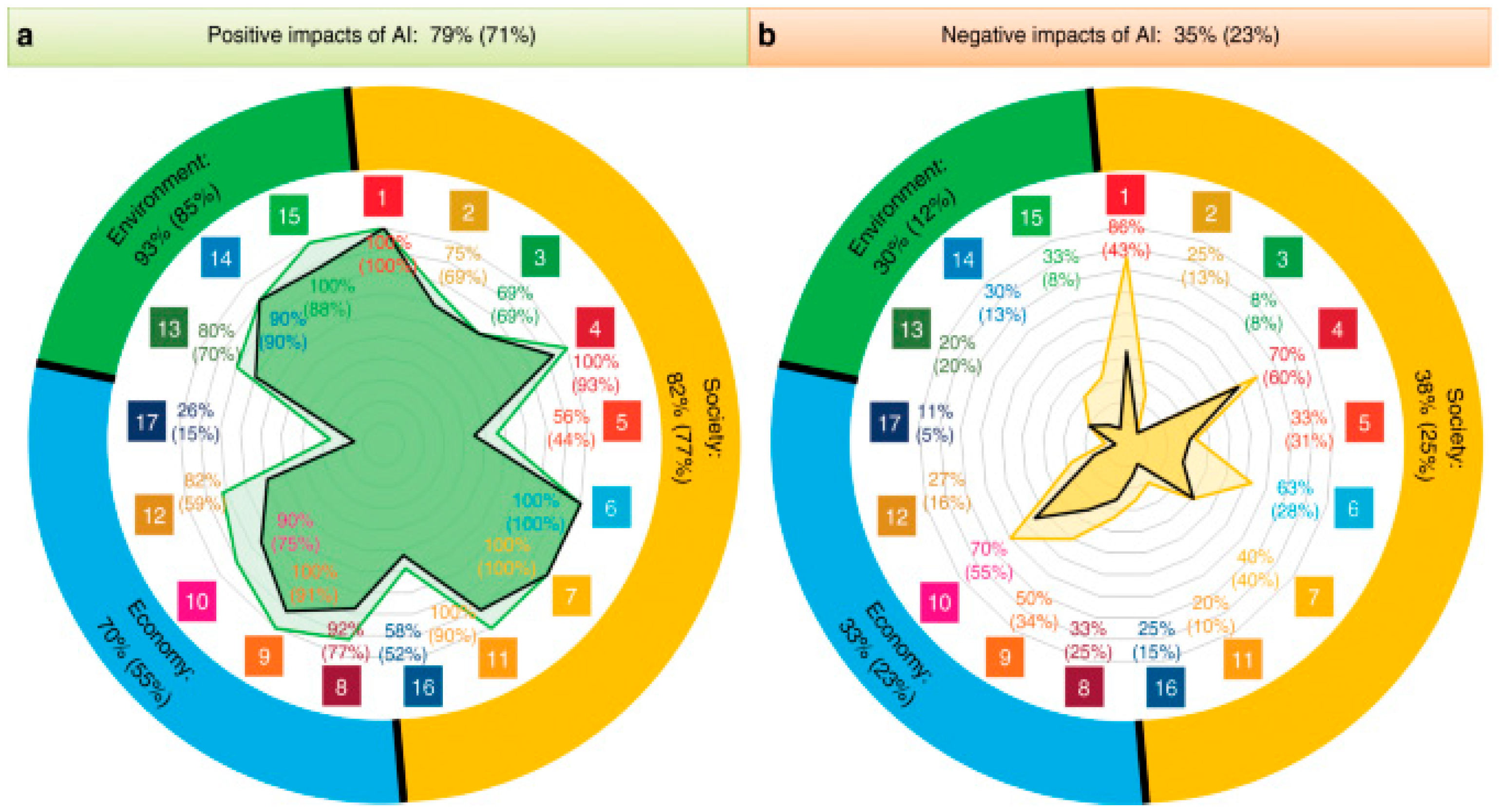
As established, the role of AI has been growing in the context of sustainable development, especially due to its economic, social, and environmental impact across several industries (Boustani et al., 2024). As stated by Demaidi (2023), AI-driven technologies are showing promising avenues, powered by informed decision-making, streamlined operations, and optimized efficiency. While the literature predominantly argues that AI is a strong enabler of sustainable development, another critical view exists in the literature (Figure 1) Vinuesa et al. (2020), provided by researchers like Mienye et al. (2024) and Maghsoudi et al. (2025) who argue that the success of AI in enabling sustainable development is dependent on local and contextual factors. The literature is therefore still fragmented when it comes to evaluating these impacts and how they manifest in different territorial settings, especially in conflict-affected areas.
Two major theoretical foundations emerge in this context, highlighting the role of AI in advancing sustainable territorial development. To begin with, Elkington’s (1997) Triple Bottom Line highlights the importance of addressing environmental, social, and governance considerations when referring to sustainability as a concept. According to the TBL theory, relevant stakeholders must understand the importance of focusing on three essential bottom lines, otherwise known as the 3Ps: profit, people, and planet. To achieve sustainable success in any given setting, stakeholders must focus on all three pillars with equal consideration (Elkington, 1997). This theoretical framework can be applied to the scope of AI and sustainable development, as AI is capable of enhancing the three pillars described: aligning with environmental standards, improving economic productivity, and enhancing social cohesion through inclusion and community involvement.
The second theoretical framework that is relevant in this case is the innovation diffusion theory. According to Rogers (2003), this framework represents “the process through which an individual (or another decision-making unit) passes from first knowledge of an innovation to forming an attitude toward the innovation, the to decision to adopt or reject, to implementation of the idea, and confirmation of this decision”. This theory therefore suggests that compatibility considerations, perceived usefulness, and regional limitations can all affect the adoption of AI (Rogers, 2003). This theory is also highly relevant in the context of this study, because it explains that the adoption of AI is dependent on territorial settings and conditions, including infrastructural readiness, economic ability, institutional cohesion, and local acceptance.
In the context of this study, the Triple Bottom Line (TBL) framework provides an analytical lens to assess how AI applications simultaneously affect environmental sustainability (e.g., resource optimization, disaster mitigation), social inclusion (e.g., access to services, digital literacy), and economic viability (e.g., productivity and cost efficiency). Meanwhile, Diffusion of Innovation theory offers insight into the uneven adoption of AI across rural and urban zones, where infrastructure availability, perceived usefulness, and institutional support shape adoption trajectories. Together, these frameworks are used in this study to analyze the integration of AI in context-specific settings, informing the analytical interpretation of AI not merely as a technological artifact, but as a territorially embedded innovation whose sustainability impact depends on diffusion conditions and systemic balance.

2.3. AI in Rural Development

Rural areas in North Lebanon are known to encounter several socio-economic challenges, characterized by IPSOS (2023) as “limited access to essential services, inadequate infrastructure, high poverty rates, unemployment, and inequality”. These challenges hinder the positive development and well-being of rural areas, further exacerbating disparities between urban and rural areas (Khneyzer & Donsimoni, 2015). Addressing this problem from the diffusion theory perspective, it is clear that these challenges are primary hinderers of AI adoption in rural areas, because they affect the perceived relevance and compatibility of such tool in limited contexts. To address these issues, Mulliah (2024) highlights the role of AI in addressing complex social issues and supporting sustainable development initiatives in such communities.
The study by IFAD (2024) highlights the impact of adopting AI solutions in rural areas, helping these communities overcome resource limitations and optimize resource allocation to ultimately improve the overall quality of life. Similarly, the study by Gholam et al. (2025) emphasizes the potential of AI in rural development in the Lebanese context, stating that the topic has gained more recognition across the field. For example, the startup “Aerobotics” uses AI-powered drone technology to assist farmers in rural areas to “monitor crop health, detect pests, and optimize irrigation” (Aerobotics, 2025). Both the economic and environmental pillars of the TBL theory are covered by these applications, because they are capable of optimizing resources, supporting economic soundness, and optimizing productivity and costs. These findings are supported by Kesler (2022), who suggests that AI-powered solutions can optimize territorial development in rural areas, as they can streamline infrastructure development and improve access to essential services across rural areas.
Moreover, Al-Raeei (2024) argues that AI technologies have the potential to support sustainable rural development through various methods. The authors highlight Machine Learning (ML) and data processing as technological advances that can handle vast amounts of datasets, “leading to sustainable development in rural areas through the identification of robust and useful patterns”.
Nevertheless, while the literature emphasizes that the use of AI is highly supported in sustainable territorial development in rural areas, an opposing view is featured by authors like Mulliah (2024), who highlight that AI resources may not always be accessible or affordable for rural populations, potentially triggering digital gaps and increasing isolation among members of these communities. Petcu et al. (2024) add to this idea by stating that solely focusing on AI can overlook the value of community engagement in such sustainable projects, exacerbating feelings of isolation and lack of efficiency. The dual view in the literature reflects tension in academic perspectives considering AI adoption in sustainable development, with significant risks linked to affordability, governance, readiness, and resistance, particularly in rural areas.

2.4. AI in Urban Development

On the other hand, with increasing urbanization across international communities, cities are acknowledging the need to turn to innovative, specialized technologies, aiming for economic, social, and environmental reforms (Boustani & Abidib, 2023). Researchers like T. W. Sanchez et al. (2024) have emphasized the role of AI as a transformative tool that has the potential to revolutionize city development. As stated by Son et al. (2023), with AI’s ability to “learn, predict, and potentially operate autonomously, AI offers a wealth of opportunities for developing and managing smart cities”. Scholars Mashhood et al. (2023) highlight the wide range of AI applications, spanning several areas, from predictive maintenance and optimized public services to smart sustainability solutions that can improve citizens’ quality of life.
Similarly, the study by Szpilko et al. (2023) has concluded that as one of the most advanced technological tools, AI can significantly contribute to the integration of smart city dimensions, optimizing ways of living, the economy, mobility, the environment, and even public policies and governmental regulations. The authors also highlighted the promising avenues offered by AI in developing optimal policies to “tackle complex issues intrinsic to the evolution of smart cities, ranging from intelligent transportation systems and cybersecurity to energy-efficient smart grids and smart healthcare systems”. These findings can be directly linked to the TBL theory in urban contexts because in such contexts, there is infrastructural readiness and institutional ability to govern such advanced tools and leverage them efficiently to meet environmental, economic, and social needs.
In addition, authors such as Jha et al. (2021) address the importance of progressively integrating AI into governmental systems, especially in urban areas with advanced territorial development. The study highlighted the improved productivity provided by AI tools, as they optimize the effectiveness of policymaking by using large amounts of data to generate specific user needs and patterns. In turn, governments acquire the targeted information needed to create specific policies and deliver the best outcomes by “better targeting social expenditures, public investments, and government services”. OECD (2024) gave the example of the municipality of Nijmegen in the Netherlands, which uses AI to monitor traffic by counting people across different locations. The generated outputs serve the municipality in creating more effective policies, especially in addressing road safety.
Beyond governance and mobility, AI has been applied in different sectors like intelligent transportation, cybersecurity, smart grids, and UAV-assisted next-generation communication in urban cities. Artificial intelligence has been praised by researchers like Wolniak and Stecuła (2024) as having a transformational role in these sectors, supporting urban development by enhancing scalability and efficiency. These are critical conditions that can support the integration of AI and reduce uncertainty linked to the concept, further supporting faster diffusion compared to more restricted rural settings. Another supporting study under the same theme is presented by Stecuła et al. (2023), who argue that AI continues to revolutionize energy generation, management, and consumption in urban cities, supporting governments in optimizing resource allocation and contributing to the achievement of sustainable benchmarks across smart cities. Nevertheless, a critical review is also prominent in the literature (Frimpong, 2025; Maghsoudi et al., 2025), pointing to the potential limitations brought by AI in terms of social problems like data governance, surveillance, and fragmented access, supporting the importance of tackling all three TBL pillars equally to yield optimal outcomes.

2.5. Future Directions and Research Gaps

The review of the literature highlights emerging AI trends and their use in sustainable development, emphasizing key AI roles in resource optimization, energy management, environmental preservation, and more. However, the majority of the existing studies focus on advanced environments that are either high-income or digitally advanced, leaving a significant gap in the literature, especially concerning the role of AI in sustainable development in challenging regions such as North Lebanon. This particular scope lacks proper empirical evidence to support the use of AI in this region and to understand the potential challenges that might be present throughout the implementation process. Thus, this study aims to fill this gap by providing an exploratory and context-specific perspective that clarifies the potential of AI in sustainable territorial development in North Lebanon.

3. Materials and Methods

3.1. Research Design

This study employs a qualitative single-case study design, focusing on the Klayaat Airport AI initiative, following Yin’s (2018) critical case rationale. Primary data are collected through semi-structured interviews with key stakeholders involved in or affected by this case. Secondary data from project documents and reports supplement the analysis. To address the research question and tackle the research objectives, this study adopts a qualitative research approach, leveraging semi-structured interviews with local stakeholders, including government officials, NGOs, and community leaders, alongside a case study highlighting the role of AI in territorial development at Klayaat Airport in North Lebanon to provide a locally relevant context.
This approach provides deep insights into the role of AI in sustainable development, generating contextual insights and preliminary propositions, contributing to the literature.
This study follows an interpretivist qualitative research paradigm, aiming to capture context-specific perceptions and institutional realities surrounding AI adoption in North Lebanon. Given the exploratory nature of the research and the limited empirical work on AI-driven territorial development in fragile contexts, a small, purposive sample of key informants was deemed appropriate. Rather than seeking statistical generalization, the study prioritizes analytical depth and stakeholder diversity, consistent with qualitative research standards for early-stage inquiry.

3.2. Qualitative Research Plan

The chosen case study will show the real-life application of AI in sustainable development, argued as a beneficial research plan by Leymun et al. (2017), who assert that this approach provides in-depth information on a particular context with concrete evidence.
As for the semi-structured interview, researchers like Mathers et al. (2000) highlight their role in supplementing a study with a rich context, capitalizing on verbal and non-verbal cues to generate the needed information that will help answer the study’s research question and fulfil its purpose. This is why this study chooses semi-structured interviews alongside a case study as primary data collection tools.

3.3. Data Collection Methods, Sampling and Target Population

The following Table 2 provides an overview of the interviewed participants.
All five participants (Table 2) underwent semi-structured interviews, which lasted approximately fifteen minutes each. All participants’ responses were kept anonymous to guarantee confidentiality. Participants were selected using purposive sampling to ensure representation across policy, civil society, business, and expert domains, aiming to generate informative insights from different experts’ perspectives rather than numerical frequency. For the semi-structured interviews, five key stakeholders were chosen to generate insights on the importance of AI in territorial development in North Lebanon (Table 1). Furthermore, interviewees had the choice between in-person or virtual interviews, depending on their preferences and constraints. The information generated from the interviews was supported by evidence from the literature, applying the concept of triangulation to increase the credibility of the findings and cross-reference the results with robust academic articles and relevant industry reports.
It is important to note that the small sample size (n = 5) is acknowledged as a limitation, but it is justified. The exploratory qualitative design used in this study aimed to generate informative insights from different experts’ perspectives rather than aiming for thematic saturation. The choice of participants was carefully conducted to feature experts from different sectors, fields, and positions. Empirical evidence by Sharma et al. (2024) confirms the suitability of this sample size for qualitative and exploratory studies when the goal is to feature rich cases. To further enhance the reliability and credibility of the results, this analysis applied triangulation to compare the interviews with the case study and available literature, using these multiple data sources to identify repetitive patterns and themes within the findings. Nevertheless, the small sample size may potentially limit the generalizability of the findings, which can be addressed in future studies to enhance depth.
Table 3 provides a detailed justification of the chosen case study: Klayaat Airport in North Lebanon.

3.4. Data Analysis

The data collected from the five interviews will undergo thematic analysis to generate common patterns and themes across the interviews and address the research question established (Table 4). The following steps will be followed to conduct the thematic analysis (Naeem et al., 2023):

4. Results

In this section of the study, the findings of the interviews and the case study are detailed.

4.1. Qualitative Semi-Structured Interviews

Starting with the interviews conducted with key stakeholders involved in territorial development across North Lebanon, the findings revealed three main themes identified through thematic analysis of the results.

4.1.1. Theme 1: Challenges in Sustainable Development

The first theme that was synthesized from the primary evidence involved the perceived structural and contextual challenges that limit sustainable territorial development and inhibit the full adoption of AI in North Lebanon. When asked about the potential of sustainable territorial development in North Lebanon, participants highlighted several key challenges that hinder this initiative. Participant 1, a municipal government official in the region, admitted that rural areas lack the proper infrastructure needed to implement the technological tools and facilitate sustainable development. He argues that “people living in these rural areas still struggle with having electricity 24/7, let alone internet accessibility. Without the proper infrastructure, the use of AI can remain only a dream, as major investments are needed”. In addition, Participant 4, a business owner in the agricultural sector, highlighted another financial constraint, expressing that businesses do not have the necessary resources to implement technological advances and empower sustainable development: “I am personally very interested in AI, especially since my company deals with crops, and implementing AI would facilitate our job. However, we do not have adequate resources to implement it”. Lastly, Participant 2, an environmental NGO director, addressed the lack of sustainable initiatives observed in the region: “Our biggest issue is proper waste management. We deal with illegal dumpsters in the region, threatening our environment and biodiversity”.
The primary data collected and grouped under this theme shows that there is an evident tension between the theoretical acknowledgement of the importance of sustainability and its practical application and feasibility through AI, especially in rural areas in Lebanon. Despite the fact that key elements like environmental management, economic limitations, and infrastructure were addressed by the participants, the discussions did not feature any insight linked to community involvement or local inclusion, hinting at significant limitations in community-led and locally centered initiatives. Addressing these insights from the theoretical lens adopted, this analysis concludes that the use of AI in sustainable development is affected by a web of interconnected factors, including infrastructural, economic, institutional, and social challenges.

4.1.2. Theme 2: AI’s Potential for Territorial Development

The second theme synthesized from the primary data revealed a general consensus regarding AI’s potential for territorial development in rural areas in Lebanon. Although the majority of the interviewed stakeholders expressed serious concerns regarding the possibility of implementing AI to support territorial development, they also recognized AI’s potential in this context and its long-term benefits. Community leader Participant 3 acknowledged the role of AI in smart agriculture, supporting hardworking farmers throughout their supply chain and optimizing water management in the region: “During summer, we suffer from a lack of proper water irrigation and drought. With AI tools, farmers can implement smart solutions to optimize water management and predict weather patterns”. While Participant 3 focused on the benefits of AI in rural sustainable development, Participant 1 emphasized its role in urban areas of North Lebanon. According to his views, Tripoli in particular is experiencing serious traffic flow, necessitating prompt solutions to quantify citizens at particular times of day and analyze movement patterns to optimize flow. Last but not least, Participant 5, a sustainability expert, emphasized the potential benefits of implementing AI tools as early warning systems: “Early warning systems for natural disasters have been showing promising results in disaster forecasting and contributing to mitigation strategies. North Lebanon is subject to several potential natural disasters like floods or wildfires, emphasizing the potential role of AI in alleviating these issues”. However, a critical view was provided by Participant 4, who shared her concerns: “If I want to be completely honest, I cannot see huge potential for AI in sustainable territorial development in our country, especially in rural areas. We have a long way ahead before we become even remotely ready to invest in such technology and, if not properly studied and implemented, it can lead to more economic, social, and environmental challenges, which can seriously damage the region”.
This theme reveals that while there is a significant positivity linked to the long-term potential of AI in streamlining sustainable territorial development, there is a simultaneous hesitancy concerning its short-term effects and the readiness of relevant stakeholders. Notably, urban and rural stakeholders’ assessments of AI viability differed significantly, with urban respondents stressing optimization potential and rural actors emphasizing infrastructural absence as a major hurdle. This tension highlights the uneven dissemination conditions described in the research and calls into question the notion of universal AI preparedness across areas.

4.1.3. Theme 3: Policy and Implementation Barriers

The last generated theme across the interviews revolves around policy and implementation barriers, with different aspects emphasized by participants. All five stakeholders had strong views on potential challenges to AI adoption, with participants 2 and 3 highlighting the lack of public policy surrounding AI implementation, participant 4 focusing on digital literacy limitations, and participants 1 and 5 emphasizing the need for increased awareness to overcome resistance to change. Participants 2 and 3 highlighted the lack of proper public policy concerning the implementation of AI for sustainable development. Both participants acknowledged that there are no policy frameworks that propose a detailed plan for implementation, monitoring, and other related considerations. Without proper governmental support, businesses and municipalities cannot successfully consider AI-powered technological tools. Similarly, Participant 4 highlights the issue of digital literacy across the rural and urban areas in North Lebanon. According to the business owner, even if AI technologies can be implemented, without proper knowledge of how to use them, they are “worth nothing”. The participant highlights the importance of having training programs for relevant people, emphasizing the importance of having the technical expertise to navigate complex AI tools. Last but not least, Participants 1 and 5 expressed the importance of fostering general awareness concerning the use of AI to avoid feelings of uncertainty and potential resistance to change.
This theme provides another important synthesis that shows the interconnectedness between limited digital abilities, fragmented policies, and poor knowledge and public awareness. This is consistent with the insights provided by participants, as they confirmed that people in rural areas in Lebanon do not have the needed skills to navigate and properly understand AI. This, in turn, emphasizes the importance of supporting AI use with the right training and awareness, as it cannot succeed without them.

4.2. Illustrative International Example: Klayaat Airport

The case study addresses the Klayaat Airport project, which is also known as the René Mouawad Airport, located in North Lebanon. This airport was originally created in 1934 for military purposes but has been rediscussed in recent years to become a second official civilian airport in the country to enhance tourism, accessibility, and the overall trade capacity of the region (Gemayel, 2025).
In light of the development discussions, a phased plan by Dar el Handasah has been proposed, with an expected launch in 2026. This plan is powered by the use of AI systems to optimize the airport’s operations and resource management, comparable to the recent “Digital Gates” projects launched at Rafic Hariri Airport, which use digital gates to streamline passenger processing, enhance safety, and optimize flow (This is Beirut, 2025).
This illustrative example was leveraged to further support the findings generated from the interviews with the chosen stakeholders, focusing on the opportunities and challenges of AI in the context of sustainable territorial development. This case study strongly aligns with the primary evidence provided by the participants because it shows that despite the presence of an airport in the region, it is still limited in terms of infrastructure, policy, and overall adoption of new technologies like AI.
These findings can be viewed from the themes synthesized from the primary data. In other words, the infrastructural challenges linked to the Klayaat airport are comparable to the findings under Theme 1. In addition, the limited and conditional integration of AI in this specific context is relevant under Theme 2 and the significant policy gaps can be associated with Theme 3. The progressing discussions about a phased development in this airport can also be linked to the interview results, which relates to the importance of working on rural development and connecting this part of the country to the urban areas. In other words, the use of AI tools in the development and relaunch of this airport can be seen as an opportunity to optimize infrastructure planning and local policies in North Lebanon, a region that needs critical changes and reforms to achieve sustainable territorial development.

5. Discussion

The findings of this study provide nuanced insights into the role of artificial intelligence in sustainable territorial development within a fragile and unevenly developed context. While existing literature often presents AI as a powerful catalyst for sustainability transitions (Vinuesa et al., 2020; Siddik et al., 2024), the results from North Lebanon indicate that such potential is neither automatic nor uniformly distributed across territories. Instead, AI adoption and its sustainability impacts are deeply shaped by infrastructural conditions, governance arrangements, and socio-institutional readiness.
The discussion leverages the theoretical frameworks outlined earlier, particularly the Triple Bottom Line and Diffusion of Innovation perspectives, to understand why the integration of AI in sustainable territorial development is different in urban versus rural areas. While the literature often portrays AI as a catalyst for sustainable development, the results reveal that such potential is highly contingent upon territorial conditions. In North Lebanon, AI aligns with environmental and economic sustainability objectives in principle, yet diffusion barriers—such as infrastructure deficits, policy absence, and limited digital literacy—significantly constrain practical implementation.

5.1. Interpretation of Findings

This study highlights the role of AI technologies in sustainable development, both in urban and rural areas in North Lebanon. The case study of Klayaat Airport and the participants highlighted several opportunities for the use of AI in this region, highlighting important avenues like smart agriculture, weather forecasting, traffic control, and urban planning. The findings revealed that the successful implementation of AI necessitates more than mere technological alignment or knowledge but is also dependent on other socio-institutional factors as well. These findings align with those of Jha et al. (2021) and Khneyzer and Donsimoni (2017), emphasizing the potential role of AI in streamlining important societal and environmental considerations across communities. However, the findings also suggest significant challenges and policy barriers to the use of AI tools in territorial development, mainly revolving around weak infrastructure, lack of proper knowledge, lack of national policy and governmental support, and most importantly, limitations in funding. The primary findings therefore suggest that generating successful outcomes from the implementation of AI is neither direct nor automatic; rather, it depends on several conditions that need to be addressed, as challenges may inhibit this projected success. These findings are supported by studies like Mannuru et al. (2023) and Mulliah (2024) as well as Dagher et al. (2024), also emphasizing the presence of an urban–rural divide. For example, while the urban city of Tripoli can benefit from traffic control systems that optimize traffic flow and minimize carbon emissions, rural areas still struggle with basic access to the internet, making the idea of AI tools more complex, as seen by the efforts undertaken to re-launch the Klayaat Airport in North Lebanon. The Klayaat Airport example featured in this analysis further shows how barriers described by the TBL theory and diffusion theory can create practical limitations. For example, theoretically, the plan to digitalize and re-invest in the Klayaat Airport is ideal on an environmental, social and economic level. However, practically, it is faced with significant and interconnected challenges like limited awareness, low local inclusion, and fragmented institutional capacity.
From a Triple Bottom Line perspective (Elkington, 1997), the findings reveal an imbalance between sustainability aspirations and implementation capacity. Environmentally, stakeholders acknowledged AI’s potential to improve water management, agricultural productivity, disaster risk reduction, and urban traffic optimization—findings that align with prior research on AI-enabled sustainability in agriculture and urban systems (Assimakopoulos et al., 2025; Son et al., 2023; Stecuła et al., 2023). Economically, AI was perceived as a means to enhance efficiency and long-term productivity, particularly through smart infrastructure and logistics planning, consistent with the arguments of Mannuru et al. (2023) and Demaidi (2023). The evident lack of harmony between AI’s environmental and social repercussions reaffirms the importance of addressing all related considerations involving digital literacy, institutional readiness, and human capital. However, the social dimension of sustainability—particularly digital inclusion, skills development, and institutional trust—emerged as the weakest pillar, especially in rural areas where access to electricity, internet connectivity, and technical expertise remains limited (IPSOS, 2023; Mulliah, 2024).
The Diffusion of Innovation theory (Rogers, 2003) further clarifies these dynamics. While AI is widely perceived by stakeholders as offering relative advantage and potential usefulness, its adoption is constrained by low compatibility with existing territorial conditions and limited institutional support. Urban stakeholders, particularly in Tripoli, emphasized AI’s feasibility for traffic management and urban planning, whereas rural actors highlighted infrastructural absence as a fundamental barrier. This divergence illustrates uneven diffusion trajectories, reinforcing arguments by Papagiannidis et al. (2025) that responsible and effective AI adoption requires supportive governance frameworks and contextual adaptation. In this sense, the findings partially support Diffusion of Innovation theory by demonstrating how relative advantage and perceived usefulness drive interest in AI adoption while simultaneously revealing structural barriers that delay implementation. Similarly, the Triple Bottom Line framework is only partially realized, as environmental ambitions are not matched by social and institutional readiness. This misalignment suggests that AI-driven sustainability in fragile contexts requires a multifaceted approach, covering governance and capacity-building interventions alongside technological solutions to achieve the desired success.
The Klayaat Airport example further exemplifies these findings. Although the proposed AI-enabled redevelopment reflects strategic ambitions to enhance regional connectivity and sustainable infrastructure, its realization remains dependent on policy coordination, regulatory clarity, and long-term investment. Similar to other AI-driven infrastructure initiatives in fragile contexts, the case underscores that technological readiness alone is insufficient without institutional alignment and stakeholder engagement (OECD, 2024; UN-Habitat Lebanon, 2023). This shows that case examples like Klayaat Airport should be seen and addressed as complex and multi-layered cases that depend on several key factors to achieve the desired sustainability outcomes rather than being linked to the technical aspect of the innovation alone.

5.2. Implications for Policy and Practice

The findings of this study highlight several interconnected implications for policymakers and practitioners seeking to leverage artificial intelligence (AI) in support of sustainable territorial development, particularly in fragile and resource-constrained contexts such as North Lebanon. First and foremost, effective AI deployment is contingent upon foundational investments in digital infrastructure. Reliable electricity supply and stable internet connectivity are essential preconditions, especially in rural and peri-urban areas. Without these basic enablers, AI-driven initiatives risk reinforcing existing spatial and social inequalities rather than mitigating them, as also emphasized by Hussain et al. (2024). Table 5 below presents Proposal 1, for example, which highlights the importance of focusing on digital infrastructure to ensure that AI integration is optimal and is without risks when it comes to sustainable territorial development. The presented proposals contextualize the theoretical insights supported by the Diffusion of Innovation theory and the Triple Bottom Line theory into concrete actions, covering key aspects of AI implementation such as environmental, economic, and social dimensions while also addressing potential fragmented integration in rural versus urban regions.
Beyond infrastructure, the absence of a coherent national or regional AI governance framework emerges as a major structural limitation. The findings indicate that fragmented initiatives, lack of coordination, and unclear accountability mechanisms hinder long-term planning and effective implementation. In line with Demaidi (2023) and OECD (2024), the results underscore the need for clear regulatory, ethical, and strategic frameworks to guide AI adoption in developing countries. For example, Proposal 2 featured in Table 5 should therefore combine the development of proposed AI policies and incentives with appropriate development of infrastructure to cover all legal considerations. A dedicated governmental entity or national strategy could play a central role in aligning AI initiatives with sustainability objectives, coordinating stakeholders, and facilitating public–private partnerships across urban and rural territories. This is supported by the adopted case of Klayaat Airport, which shows that even if the plan is theoretically optimal, it cannot work without the appropriate regulatory considerations needed.
Capacity building and digital literacy constitute another critical pillar for successful AI adoption. Stakeholders consistently emphasized that AI technologies remain ineffective without trained users, informed decision-makers, and institutional learning processes. This finding aligns with prior research highlighting the central role of human capital in digital transformation and sustainability transitions (Boustani et al., 2024). Training programs targeting local authorities, farmers, business owners, and community leaders are therefore essential to bridge the gap between technological potential and practical implementation. Building on this logic, this discussion therefore concludes that Proposal 3 must be accompanied by significant infrastructure-related expansions to avoid financially burdensome projects in critically fragile contexts such as Klayaat Airport. This issue is particularly salient in large-scale infrastructure projects such as the proposed redevelopment of Klayaat Airport, where insufficient local expertise could widen the divide between global technological standards and local operational realities.
The findings also point to the importance of strengthening empirical research and data availability in the Lebanese context. The limited documentation surrounding AI-enabled infrastructure projects—such as the Klayaat Airport initiative—reveals a broader gap in evidence-based policy design. Expanding empirical research on AI applications in fragile territorial settings would support more informed decision-making, facilitate learning from pilot projects, and improve the scalability of successful initiatives. Therefore, these insights can be linked to Proposal 8 in Table 5 below (data sharing and research promotion), which is key to ensuring that AI integration is appropriately monitored and evaluated using evidence-based strategies.
Taken together, these implications reinforce the argument that AI should not be approached as a purely technological solution. Instead, in fragile territorial contexts, AI functions as a conditional enabler whose effectiveness depends on governance capacity, infrastructural readiness, and social inclusion. This analysis also presented strong evidence that to achieve effective AI integration, all governance, human capital, and infrastructural challenges must be collectively addressed rather than independently addressed, as they are all interconnected. By focusing on North Lebanon, this study extends the AI and sustainability literature beyond technologically advanced or high-income settings, contributing empirical insights to an underexplored context. At the same time, it reinforces the relevance of socio-technical and diffusion-based perspectives in understanding how AI adoption unfolds unevenly across territories and development levels.

5.3. Proposals for Stakeholders

The following Table 5 summarizes the key proposals for relevant stakeholders.
The table above emphasizes the key proposals that are synthesized from the primary data and case example leveraged in this analysis. Proposal 1 is related to the importance of expanding digital infrastructure, because without a reliable base, AI integration cannot be successful, as it is a technological tool that necessitates strong internet connectivity and uninterrupted electricity. The Klayaat Airport example further confirms that working on AI awareness and literacy cannot be achieved without the right infrastructure to support a multifaceted and complete integration. The table also highlights another key proposal, Proposal 2, which stresses the importance of creating reliable and unified AI policies that can create standardized and clear rules to make the integration of AI easier and more feasible. All other proposals further build on these three arguments, all proposed to create a seamless and successful integration of AI in the context of sustainable territorial development.

6. Conclusions

AI offers promising solutions for sustainable territorial development in North Lebanon, particularly in agriculture, urban planning, and disaster management. However, infrastructure gaps, policy barriers, and financial constraints limit its adoption. A context-specific approach, along with strong public–private collaboration and AI literacy programs, is essential for success.
Future studies should explore successful AI applications in similar regions, cost-effective AI models for low-resource settings, and policy frameworks that support AI adoption. Long-term research on AI’s impact on sustainability indicators would provide deeper insights.

Author Contributions

Conceptualization, C.K.; Methodology, C.K.; Validation, C.K.; Formal analysis, J.D.; Resources, C.K. and J.D.; Data curation, Z.B.; Writing—original draft, C.K.; Writing—review & editing, C.K. and Z.B.; Visualization, Z.B. and J.D.; Supervision, C.K. All authors have read and agreed to the published version of the manuscript.

Funding

This research received no external funding.

Institutional Review Board Statement

This study involves an anonymous questionnaire completed voluntarily by participants who provided their informed consent before responding. All data were collected and analyzed in a manner that fully protects participant anonymity and confidentiality. The study complies with internationally recognized ethical principles for research involving human participants, including the spirit of the Declaration of Helsinki, as well as standard academic guidelines for minimal-risk social science research.

Informed Consent Statement

Informed consent was obtained from all subjects involved in the study. Written informed consent has been obtained from the participants to publish this paper.

Data Availability Statement

The original contributions presented in this study are included in the article. Further inquiries can be directed to the corresponding author.

Conflicts of Interest

The authors declare no conflict of interest.

References

  1. Aerobotics. (2025). Aerobotics|Optimize and protect your yields, season after season. Available online: https://www.aerobotics.com/ (accessed on 27 February 2026).
  2. Al-Raeei, M. (2024). Artificial intelligence for climate resilience: Advancing sustainable goals in SDGs 11 and 13 and its relationship to pandemics. Discover Sustainability, 5(1), 513. [Google Scholar] [CrossRef]
  3. Assimakopoulos, F., Vassilakis, C., Margaris, D., Kotis, K., & Spiliotopoulos, D. (2025). AI and related technologies in the fields of smart agriculture: A review. Information, 16(2), 100. [Google Scholar] [CrossRef]
  4. Baghdadi, J. (2025, March 5). Navigating sectoral reforms in Lebanon’s recovery. The Tahrir Institute for Middle East Policy. Available online: https://timep.org/2025/03/05/navigating-sectoral-reforms-in-lebanons-recovery/ (accessed on 27 February 2026).
  5. Ben Hassen, T. (2024). A study on Lebanon’s competitive knowledge-based economy, relative strengths, and shortcomings. Journal of the Knowledge Economy, 15(3), 15390–15417. [Google Scholar] [CrossRef]
  6. Bibri, S. E., Huang, J., Jagatheesaperumal, S. K., & Krogstie, J. (2024). The synergistic interplay of artificial intelligence and digital twin in environmentally planning sustainable smart cities: A comprehensive systematic review. Environmental Science and Ecotechnology, 20, 100433. [Google Scholar] [CrossRef]
  7. Boustani, N. M., & Abidib, S. (2023). ESG investing in “White Gold”: The case of Lebanese Salinas. Journal of Risk and Financial Management, 16(3), 147. [Google Scholar] [CrossRef]
  8. Boustani, N. M., Sidani, D., & Boustany, Z. (2024). Leveraging ICT and generative AI in higher education for sustainable development: The case of a Lebanese Private University. Administrative Sciences, 14(10), 251. [Google Scholar] [CrossRef]
  9. Chisom, N., Biu, W., Akpan, A., & Bartholomew. (2024). Reviewing the role of ai in environmental monitoring and conservation: A data-driven revolution for our planet. World Journal of Advanced Research and Reviews, 21(1), 161–171. [Google Scholar] [CrossRef]
  10. Dabbous, A., & Boustani, N. M. (2023). Digital explosion and entrepreneurship education: Impact on promoting entrepreneurial intention for business students. Journal of Risk and Financial Management, 16(1), 27. [Google Scholar] [CrossRef]
  11. Dagher, J., Boustani, N. M., & Khneyzer, C. (2024). Unlocking HRM challenges: Exploring motivation and job satisfaction within military service (LAF). Administrative Sciences, 14(4), 63. [Google Scholar] [CrossRef]
  12. Demaidi, M. N. (2023). Artificial intelligence national strategy in a developing country. AI & Society, 40(2), 423–435. [Google Scholar] [CrossRef]
  13. El-Jardali, F., Bou-Karroum, L., Jabbour, M., Bou-Karroum, K., Aoun, A., Salameh, S., Mecheal, P., & Sinha, C. (2023). Digital health in fragile states in the Middle East and North Africa (MENA) region: A scoping review of the literature. PLoS ONE, 18(4), e0285226. [Google Scholar] [CrossRef]
  14. Elkington, J. (1997). Accounting for the triple bottom line. Measuring Business Excellence, 2(3), 18–22. Available online: https://www.johnelkington.com/archive/TBL-elkington-chapter.pdf (accessed on 27 February 2026). [CrossRef]
  15. Frimpong, V. (2025). The sustainability paradox of artificial intelligence: How AI both saves and challenges resource management efforts. Artificial Intelligence and Sustainability: Innovations in Business and Managerial Practices, 60–79. [Google Scholar] [CrossRef]
  16. Garber, K., & Carrette, S. (2018). Using technology in fragile, conflict, and violence situations: Five key questions to be answered. World Bank. [Google Scholar] [CrossRef]
  17. Gemayel, F. (2025, March 20). Qleiaat airport: An economically justified project? L’Orient Today. Available online: https://today.lorientlejour.com/article/1452612/qleiaat-airport-an-economically-justified-project.html (accessed on 27 February 2026).
  18. Gholam, N., Maalouf, L., Tawk, S., Jaber, L., & Hamadeh, S. (2025). Use and Governance of AI in food security the case of Lebanon. Available online: https://menaobservatory.ai/storage/eNWguhAS1xtYprrxYXx1kwj41Vt5lO-metaQTJLNEQgLSBNRU5BIEFJIC0gRm9vZCBTZWN1cml0eSAtIENhc2Ugb2YgTGViYW5vbiAtIFYyLnBkZg==-.pdf (accessed on 27 February 2026).
  19. Hussain, H., Jun, W., & Radulescu, M. (2024). Innovation performance in the digital divide context: Nexus of digital infrastructure, digital innovation, and e-knowledge. Journal of the Knowledge Economy, 16(1), 3772–3792. [Google Scholar] [CrossRef]
  20. IFAD. (2024). 4 ways IFAD is using AI to transform rural development. IFAD. Available online: https://www.ifad.org/en/w/opinions/4-ways-ifad-is-using-ai-to-transform-rural-development (accessed on 27 February 2026).
  21. IPSOS. (2023). Socioeconomic and political landscape of Lebanon. Available online: https://www.ipsos.com/sites/default/files/ct/news/documents/2024-03/Socioeconomic%20and%20Political%20Landscape.pdf (accessed on 27 February 2026).
  22. Jha, A. K., Ghimire, A., Thapa, S., Jha, A. M., & Raj, R. (2021, January 20–22). A review of AI for urban planning: Towards building sustainable smart cities. 2021 6th International Conference on Inventive Computation Technologies (ICICT), Coimbatore, India. [Google Scholar] [CrossRef]
  23. Kesler, J. (2022). Q&A: Drone technology, climate adaptation, and aerobotics—An interview with Benji Meltzer. Dai-Global-Digital.com. Available online: https://dai-global-digital.com/q-and-a-drone-technology-climate-adaptation-and-aerobotics-an-interview-with-benji-meltzer.html (accessed on 27 February 2026).
  24. Khneyzer, C. (2016). Les facteurs d’attractivité territoriale au service du développement au Liban: Le cas du Akkar [Doctoral dissertation, Université Grenoble Alpes]. Available online: https://theses.hal.science/tel-01918185 (accessed on 27 February 2026).
  25. Khneyzer, C., Boustany, Z., & Dagher, J. (2024). AI-driven chatbots in CRM: Economic and managerial implications across industries. Administrative Sciences, 14(8), 182. [Google Scholar] [CrossRef]
  26. Khneyzer, C., & Donsimoni, M. (2015, July 5–7). Provoquer le contre-exode pour declencher le developpement local: Etude de cas du caza de akkar au liban. 52ème Colloque de l’Association de Science Régionale de Langue Française: “Territoires mediterranéens: Agriculture, alimentation et villes”, Montpellier, France. Available online: https://hal.science/hal-01348025 (accessed on 27 February 2026).
  27. Khneyzer, C., & Donsimoni, M. (2017, July 5–7). Le Liban entre analogie et spécificité des processus de développement des territoires: La nécessaire originalité d’une stratégie crédible de développement pour le Akkar. Les Défis de Développement Pour les Villes et les Régions Dans une Europe en Mutation, ASRDLF—ERSA-GR, Athènes, Grèce. Available online: https://hal.science/hal-01589576 (accessed on 27 February 2026).
  28. Kleespies, M. W., & Dierkes, P. W. (2022). The importance of the Sustainable Development Goals to students of environmental and sustainability studies—A global survey in 41 countries. Humanities and Social Sciences Communications, 9(1), 218. [Google Scholar] [CrossRef]
  29. LCPS. (2020). LCPS-why Lebanon needs integrated territorial approaches to development? LCPS. Available online: https://www.lcps-lebanon.org/en/articles/details/1773/why-lebanon-needs-integrated-territorial-approaches-to-development (accessed on 27 February 2026).
  30. Leymun, Ş. O., Odabaşı, H. F., & Yurdakul, I. K. (2017). The importance of case study research in educational settings. Journal of Qualitative Research in Education, 5(3), 369–385. [Google Scholar] [CrossRef]
  31. Maghsoudi, M., Mohammadi, N., & Bakhtiari, M. (2025). Artificial intelligence and sustainable development: Public concerns and governance in developed and developing nations. Cleaner Environmental Systems, 19, 100340. [Google Scholar] [CrossRef]
  32. Mannuru, N. R., Shahriar, S., Teel, Z. A., Wang, T., Lund, B., Tijani, S., Pohboon, C. O., Agbaji, D., Alhassan, J. K., Galley, J., Kousari, R., Ogbadu-Oladapo, L., Saurav, S., Srivastava, A., Tummuru, S. P., Uppala, S., & Vaidya, P. (2023). Artificial intelligence in developing countries: The impact of generative Artificial Intelligence (AI) technologies for development. Information Development, 41(3), 1036–1054. [Google Scholar] [CrossRef]
  33. Mashhood, M., Salman, H., Amjad, R., & Nisar, H. (2023). The advantages of using artificial intelligence in urban planning—A review of literature. Statistics, Computing and Interdisciplinary Research, 5(2), 1–12. [Google Scholar] [CrossRef]
  34. Mathers, N., Fox, N. J., & Hunn, A. (2000). Using interviews in a research project. ResearchGate. Available online: https://www.researchgate.net/publication/253117832_Using_Interviews_in_a_Research_Project (accessed on 27 February 2026).
  35. Mensah, J. (2019). Sustainable development: Meaning, history, principles, pillars, and Implications for Human action: Literature Review. Cogent Social Sciences, 5(1), 1653531. [Google Scholar] [CrossRef]
  36. Mienye, I. D., Sun, Y., & Ileberi, E. (2024). Artificial intelligence and sustainable development in Africa: A comprehensive review. Machine Learning with Applications, 18, 100591. [Google Scholar] [CrossRef]
  37. Mulliah, G. (2024). The potential of artificial intelligence in south African rural development. ResearchGate, 17(11), 207–218. Available online: https://www.researchgate.net/publication/384152095_The_Potential_of_Artificial_Intelligence_in_South_African_Rural_Development (accessed on 27 February 2026).
  38. Naeem, M., Ozuem, W., Howell, K. E., & Ranfagni, S. (2023). A Step-by-step process of thematic analysis to develop a conceptual model in qualitative research. International Journal of Qualitative Methods, 22(1), 16094069231205789. [Google Scholar] [CrossRef]
  39. Naffah, C. (2025). Precarity by design: Governance gaps, refugee resilience, and policy lessons from Lebanon|The LAU school of arts and sciences. The LAU School of Arts and Sciences. Available online: https://soas.lau.edu.lb/news/2025/07/precarity-by-design-governance-gaps-refugee-resilience-and-polic.php (accessed on 27 February 2026).
  40. OECD. (2024). Governing with artificial intelligence: Are governments ready? Available online: https://www.oecd.org/content/dam/oecd/en/publications/reports/2024/06/governing-with-artificial-intelligence_f0e316f5/26324bc2-en.pdf (accessed on 27 February 2026).
  41. Papagiannidis, E., Mikalef, P., & Conboy, K. (2025). Responsible artificial intelligence governance: A review and research framework. The Journal of Strategic Information Systems, 34(2), 101885. [Google Scholar] [CrossRef]
  42. Petcu, M. A., Sobolevschi-David, M.-I., Curea, S. C., & Moise, D. F. (2024). Integrating Artificial intelligence in the sustainable development of agriculture: Applications and challenges in the resource-based theory approach. Electronics, 13(23), 4580. [Google Scholar] [CrossRef]
  43. Rogers, E. (2003). Diffusion of innovations third edition library of congress cataloging in publication data the American center library contents. Available online: https://teddykw2.wordpress.com/wp-content/uploads/2012/07/everett-m-rogers-diffusion-of-innovations.pdf (accessed on 27 February 2026).
  44. Ruggerio, C. A. (2021). Sustainability and sustainable development: A review of principles and definitions. Science of the Total Environment, 786(1), 147481. [Google Scholar] [CrossRef]
  45. Sanchez, D. G. (2018). LCPS-Perpetuating regional inequalities in Lebanon’s infrastructure: The role of public investment. LCPS. Available online: https://www.lcps-lebanon.org/en/articles/details/2182/perpetuating-regional-inequalities-in-lebanon%E2%80%99s-infrastructure-the-role-of-public-investment (accessed on 27 February 2026).
  46. Sanchez, T. W., Fu, X., Yigitcanlar, T., & Ye, X. (2024). The research landscape of ai in urban planning: A topic analysis of the literature with ChatGPT. Urban Science, 8(4), 197. [Google Scholar] [CrossRef]
  47. Sharma, S. K., Mudgal, S. K., Gaur, R., Chaturvedi, J., Rulaniya, S., & Sharma, P. (2024). Navigating sample size estimation for qualitative research. Journal of Medical Evidence, 5(2), 133–139. [Google Scholar] [CrossRef]
  48. Siddik, A. B., Forid, M. S., Yong, L., Du, A. M., & Goodell, J. W. (2024). Artificial intelligence as a catalyst for sustainable tourism growth and economic cycles. Technological Forecasting and Social Change, 210, 123875. [Google Scholar] [CrossRef]
  49. Son, T. H., Weedon, Z., Yigitcanlar, T., Sanchez, T., Corchado, J. M., & Mehmood, R. (2023). Algorithmic urban planning for smart and sustainable development: Systematic review of the literature. Sustainable Cities and Society, 94(1), 104562. [Google Scholar] [CrossRef]
  50. Stecuła, K., Wolniak, R., & Grebski, W. (2023). AI-driven urban energy solutions—From individuals to society: A review. Energies, 16(24), 7988. [Google Scholar] [CrossRef]
  51. Szpilko, D., Naharro, F. J., Lãzãroiu, G., & Nica, E. (2023). Artificial intelligence in the smart city—A literature review. Engineering Management in Production and Services, 15(4), 53–75. [Google Scholar] [CrossRef]
  52. This is Beirut. (2025). Launch of the “Digital Gates” project at Beirut airport. This Is Beirut. Available online: https://thisisbeirut.com.lb/articles/1309794/launch-of-the-digital-gates-project-at-beirut-airport (accessed on 27 February 2026).
  53. UN-Habitat Lebanon. (2023). In partnership with the Ministry of Social Affairs a road map towards a socioeconomic development plan for the union of Jord El-Aala-Bhamdoun, mount Lebanon governorate. Available online: https://unhabitat.org/sites/default/files/2024/02/2301963e-un-habitat-jord-aala-bhamdoun-web-web.pdf (accessed on 27 February 2026).
  54. United Nations. (2015). Transforming our world: The 2030 agenda for sustainable development. United Nations. Available online: https://sdgs.un.org/2030agenda (accessed on 27 February 2026).
  55. Verdeil, É. (2018). Infrastructure crises in Beirut and the struggle to (not) reform the Lebanese State. ResearchGate. Available online: https://www.researchgate.net/publication/327172603_Infrastructure_crises_in_Beirut_and_the_struggle_to_not_reform_the_Lebanese_State (accessed on 27 February 2026).
  56. Vinuesa, R., Azizpour, H., Leite, I., Balaam, M., Dignum, V., Domisch, S., Felländer, A., Langhans, S. D., Tegmark, M., & Fuso Nerini, F. (2020). The role of artificial intelligence in achieving the sustainable development goals. Nature Communications, 11(1), 233. [Google Scholar] [CrossRef]
  57. Wolniak, R., & Stecuła, K. (2024). Artificial intelligence in smart cities—Applications, barriers, and future directions: A review. Smart Cities, 7(3), 1346–1389. [Google Scholar] [CrossRef]
  58. World Bank. (2025). FY25 list of fragile and conflict-affected situations. Available online: https://thdocs.worldbank.org/en/doc/b3c737c4687db176ec98f5c434d0de91-0090082024/original/FCSListFY25.pdf (accessed on 27 February 2026).
  59. World Bank Group. (2025). Fragile stabilization fuels growth in Lebanon. World Bank; World Bank Group. Available online: https://www.worldbank.org/en/news/press-release/2025/06/19/fragile-stabilization-fuels-growth-in-lebanon (accessed on 27 February 2026).
  60. Yin, R. (2018). Case study research and applications (6th ed.). Sage. Available online: https://opac.atmaluhur.ac.id/uploaded_files/temporary/DigitalCollection/YTE3NDlmYTY0ZjE2MDA5ODE4NGI1Y2FhMjdkMjRmYWNkMDA2MTVhOQ==.pdf (accessed on 27 February 2026).
Figure 1. Documented evidence of the potential of AI acting as (a) an enabler or (b) an inhibitor on each of the SDGs. Source: Vinuesa et al. (2020).
Admsci 16 00130 g001
Table 1. Research Objectives.
ObjectivesDescription
1. Examine the Territorial ContextTo identify key territorial development challenges and opportunities in rural and urban areas of North Lebanon.
2. Explore Stakeholder Perspectives on AITo explore stakeholder views on the role, feasibility, and limitations of AI in sustainable territorial development.
3. Analyze a Localized Case StudyTo examine Klayaat (Rene Mouawad) Airport as a territorially grounded case to understand how AI-enabled infrastructure initiatives are perceived and discussed in relation to sustainable territorial development.
Choice Justification: The case is selected due to its strategic location in North Lebanon and its potential role in enhancing regional connectivity, economic revitalization, and rural–urban integration within a fragile territorial context.
4. Identify Analytical ImplicationsTo identify key conditions and barriers shaping AI adoption for sustainable territorial development.
Table 2. Interview Details.
ParticipantRoleGenderSectorRelevance to Study
Participant 1Municipal Government OfficialMalePublic Sector (Policy)Develops policies on AI and sustainability
Participant 2Environmental NGO RepresentativeFemaleNon-Profit (Sustainability)Works on sustainability initiatives using AI
Participant 3Community LeaderMaleLocal DevelopmentRepresents community concerns in sustainability
Participant 4Business Owner (SME) in AgricultureFemalePrivate Sector (SME)Implements AI-based sustainable practices
Participant 5Sustainability ExpertFemaleResearch and ConsultingAdvises firms on AI-powered sustainability
Table 3. Case Study—Klayaat Airport.
AspectDetails
Project NameKlayaat Airport AI-Enabled Territorial Development
Implementing OrganizationLebanese Civil Aviation Authority, in collaboration with local municipalities and technology providers
Geographical ScopeNorth Lebanon (Klayaat region)
Rationale for the Choice Selected due to:
-
Its pioneering AI initiatives in North Lebanon
-
Representation of both rural and urban territorial challenges
-
Status as a high-impact infrastructure project in a fragile context
ObjectiveTo use AI-driven systems to optimize airport operations, resource management, and local territorial development, supporting sustainable urban and rural integration.
Technology UsedMachine learning, predictive analytics, smart sensors, and AI-based resource management platforms
Impact
-
Improved operational efficiency and resource allocation.
-
Enhanced safety and monitoring of airport-related infrastructure.
-
Provided data to support local urban planning and community development.
Challenges
-
Limited local data availability and quality.
-
Integration with existing infrastructure and regulatory frameworks.
-
Awareness and adoption of AI tools by local authorities and stakeholders.
Lessons for AI and Sustainability
-
AI can support infrastructure optimization and sustainable local development.
-
Collaboration between public authorities and technology providers is essential.
-
Scaling AI initiatives require stakeholder engagement and alignment with local policies.
Table 4. Steps of Thematic Analysis.
StepDescription
1. Data FamiliarizationReading and re-reading interview transcripts to gain an in-depth understanding of the data.
2. Initial Coding
-
Codes were developed inductively from the data, capturing meaningful segments relevant to the research questions.
-
A manual review of transcripts was conducted to generate themes.
3. Searching for Themes
-
Grouped similar codes into candidate themes
-
Compared across participants/sectors to identify recurring patterns.
4. Reviewing ThemesRefined themes through iterative review and peer debriefing to ensure coherence, relevance, and consistency.
5. Defining and Naming ThemesThemes clearly defined; applied consensus coding to resolve discrepancies and accurately represent participant perspectives.
6. Reporting FindingsReported themes with illustrative quotes; triangulated with case study data and literature to enhance credibility and validity.
Table 5. AI Proposals for Territorial Development.
ProposalDescriptionKey Stakeholders
1. Expand Digital InfrastructureImprove internet access and connectivity in rural and peri-urban areas to enable AI adoption.Government, Local Authorities
2. Develop AI Policies and IncentivesEstablish regulations, financial support, and frameworks that enable AI-based territorial development.Government, Policymakers
3. Enhance AI Literacy and TrainingTrain local officials, community leaders, businesses, and farmers on AI tools and data-driven decision-making.NGOs, Educators, Local Businesses
4. Promote Public–Private PartnershipsFacilitate collaboration between government, tech firms, and sustainability experts to implement AI projects.Businesses, Government, AI Experts
5. Implement AI in Urban PlanningUse AI for traffic flow, energy optimization, and waste management in urban centers like Tripoli.Municipalities, Urban Planners
6. Apply AI in AgricultureSupport smart farming, water management, and crop yield optimization in rural areas.Farmers, Cooperatives, Local Authorities
7. Strengthen Disaster Preparedness with AIUse AI for early warning systems and risk management in natural hazards (floods, wildfires).Government, NGOs, Emergency Services
8. Promote Data Sharing and ResearchMake local AI and sustainability data accessible to improve decision-making and innovation.Academia, Researchers, Local Agencies
Disclaimer/Publisher’s Note: The statements, opinions and data contained in all publications are solely those of the individual author(s) and contributor(s) and not of MDPI and/or the editor(s). MDPI and/or the editor(s) disclaim responsibility for any injury to people or property resulting from any ideas, methods, instructions or products referred to in the content.