Prospects for Integrating Artificial Intelligence into the Administration of Higher Education in Greece




Abstract
1. Introduction
1.1. Literature Review
1.2. Research Purpose
2. Theoretical Framework
2.1. Theoretical and Empirical Background
2.2. Conceptual Model of AI Adoption in University Administration
2.3. Key Definitions and Alignment with Questionnaire Items
3. Research Design and Methodology
3.1. Study Design and Setting
3.2. Sampling Strategy and Recruitment
3.3. Questionnaire, Item Transparency, and Content Validity
3.4. Measures and Data Analysis
3.5. Ethics, Data Protection, and Data Handling
4. Results
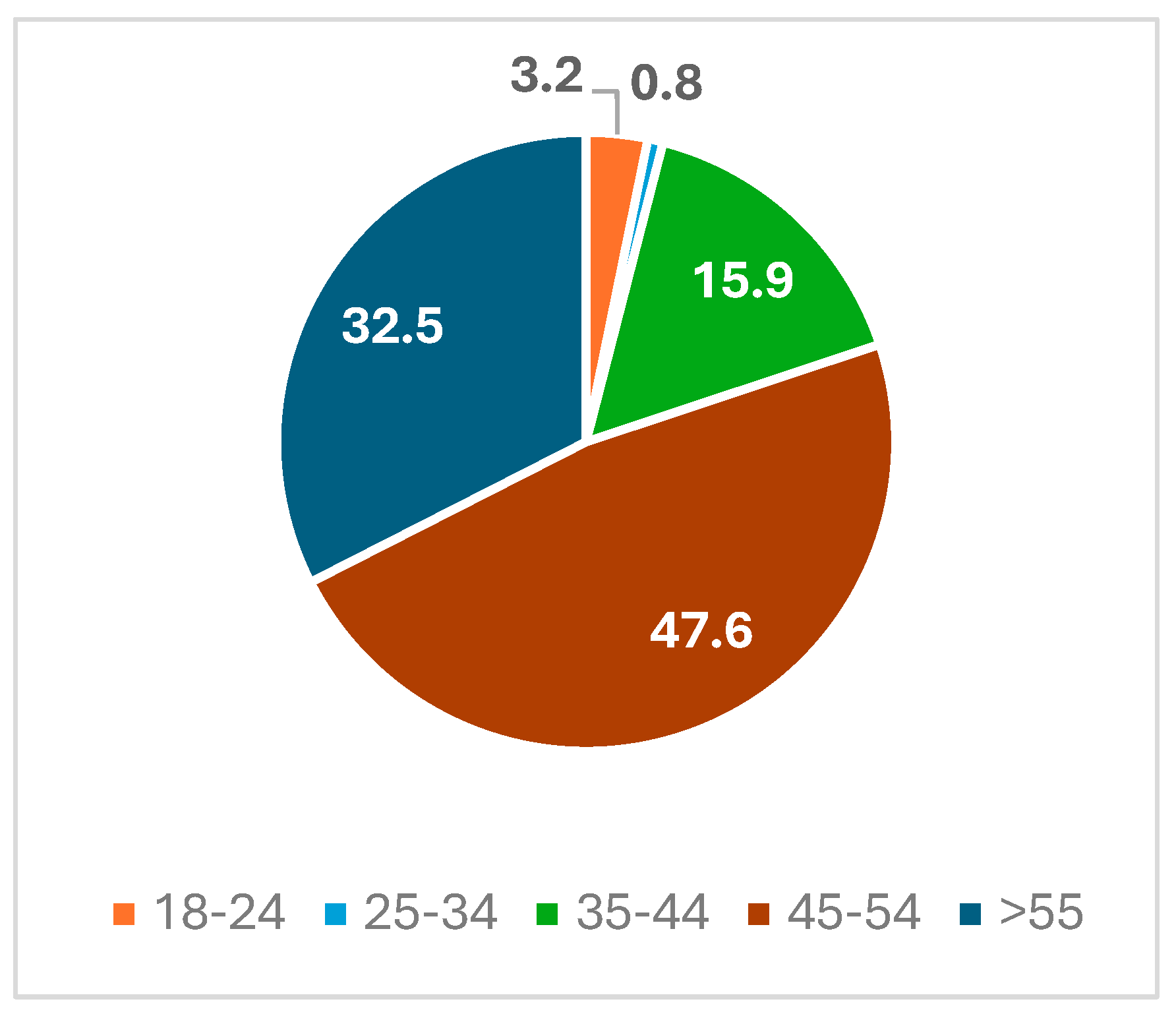
4.1. Demographic Data
4.2. General Questions
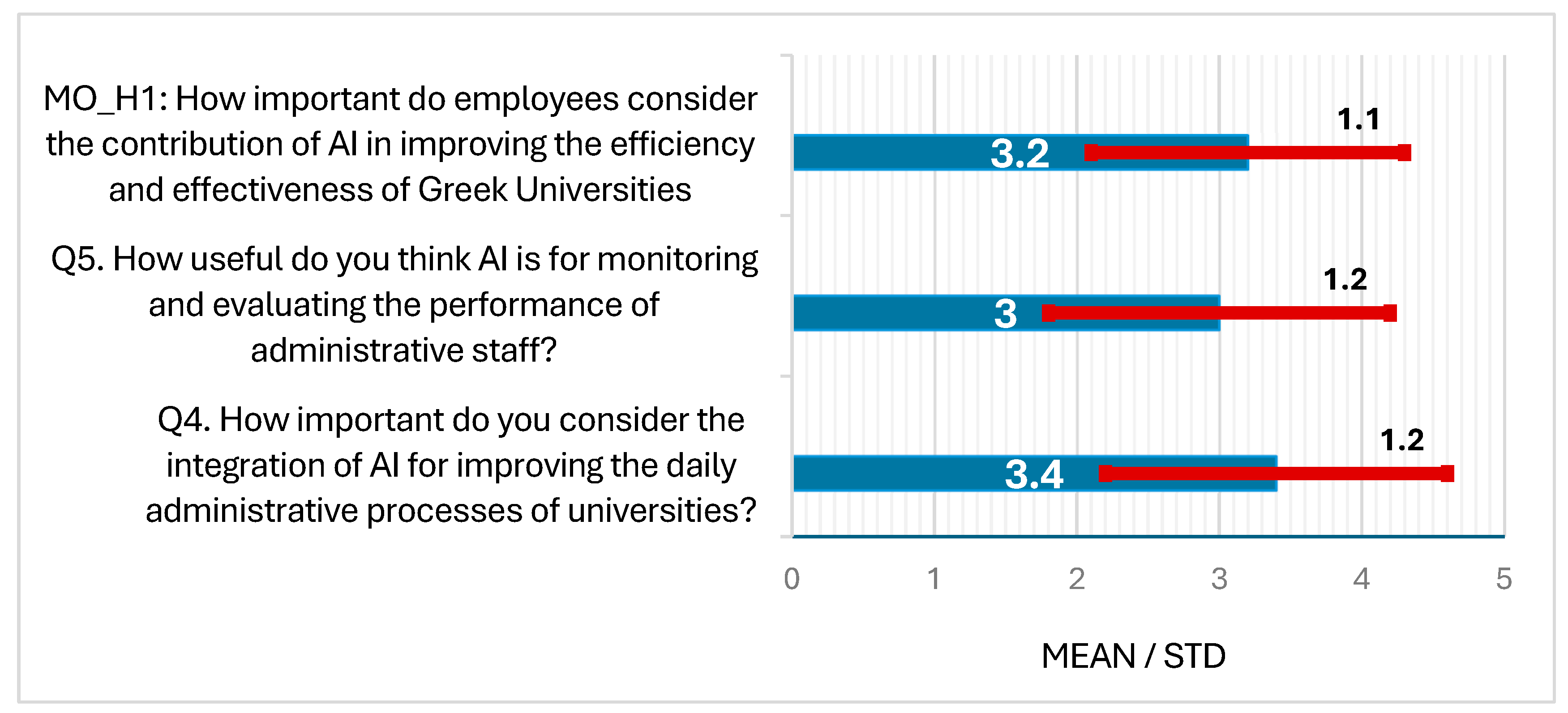
4.3. Opinions of Administrative Staff on the Contribution of AI to Improving the Efficiency and Effectiveness of Greek Universities
4.4. Employee Views on the Benefits of Automating University Administrative Processes Using AI
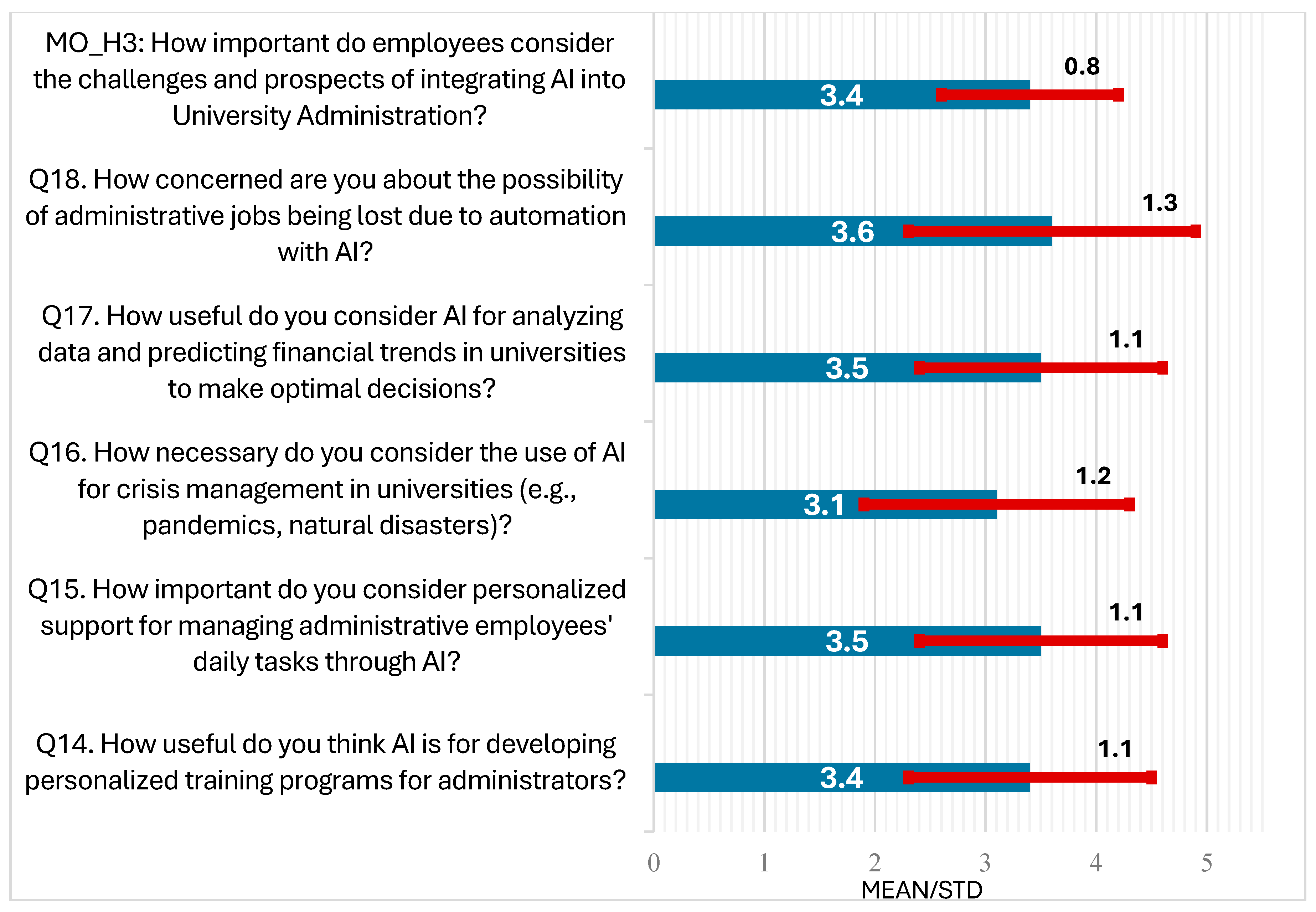
4.5. Challenges and Prospects from the Integration of AI in University Administration
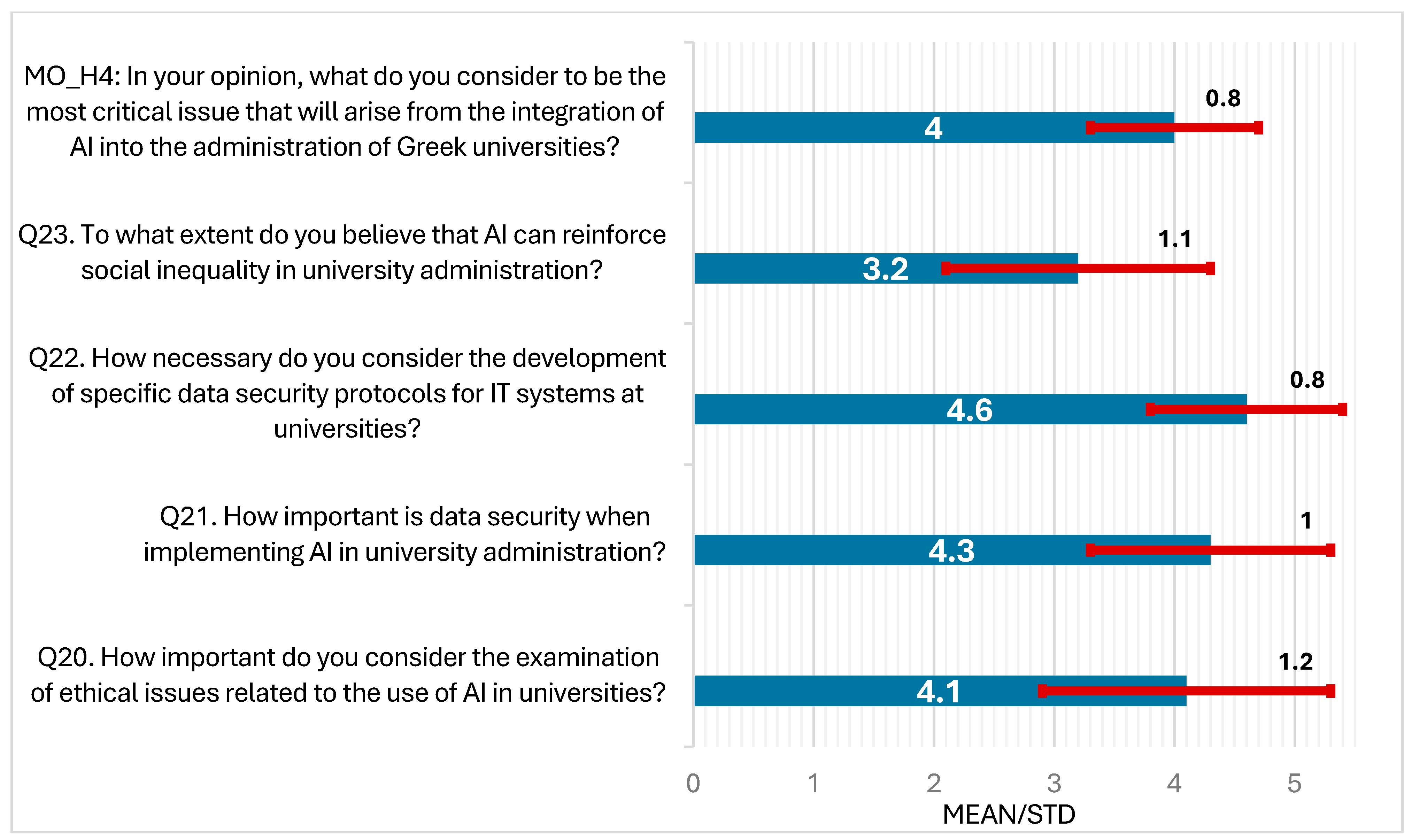
4.6. Employees’ Views on Ethics and Deontology with the Integration of AI in University Administration
4.7. Employees’ Views on the Contribution of Employee Skills Development to the Smooth Integration of AI into the Administration of Greek Universities
5. Discussion
5.1. Data Interpretations
5.2. Limitations of the Research
5.3. Recommendations
- It is crucial that policymakers must take clear steps towards governance policy with AI implementation programs. Given the high importance of ethics/data security (MO_H4) recorded by survey participants and the conditional nature of AI support, universities may consider establishing a clear AI governance framework before scaling-up use cases. This includes clear accountability arrangements, documented decision-making rights (who approves, who monitors, who can override), risk assessment processes, and audit trails for outcomes affected by AI.
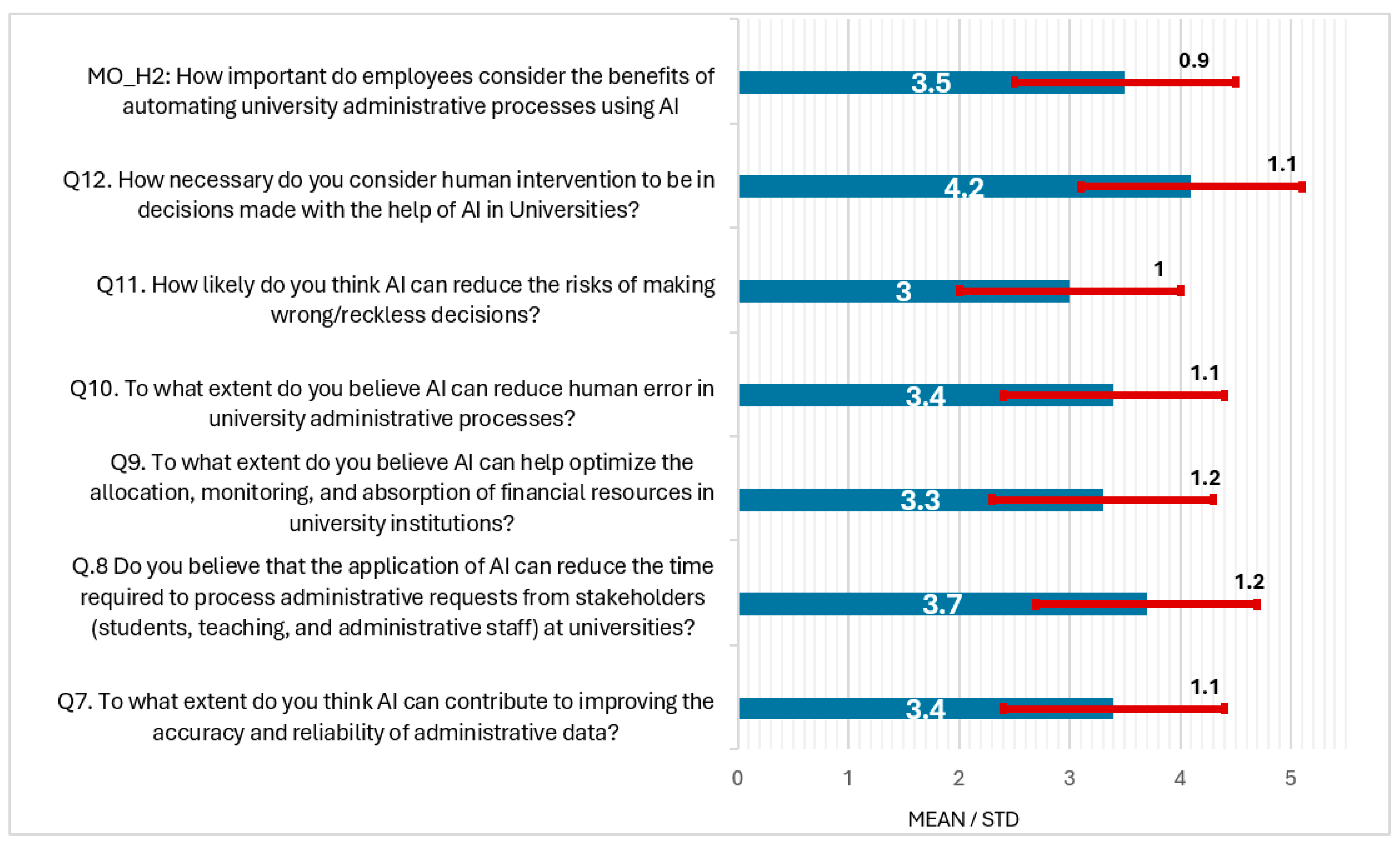
- Our findings suggest stronger support for the benefits of automation at the task level (MO_H2) than for broad improvements in organizational effectiveness (MO_H1). Therefore, we conclude that for the smooth and faster integration of Artificial Intelligence, it would be important for designers to focus initially on routine tasks based on administrative automation rules (accelerating workflow, reducing errors, standardized communication) rather than high-risk management decisions (analysis/forecasting) where the risks of explainability and provocation are higher. To this end, it is important for universities to record the available AI tools and map the tasks that could be performed without significant resistance from administrative staff. Gradually, and with the continuous familiarization and specialized training of staff with AI, the attitudes and culture of the organization are expected to change so that more demanding processes can be integrated.
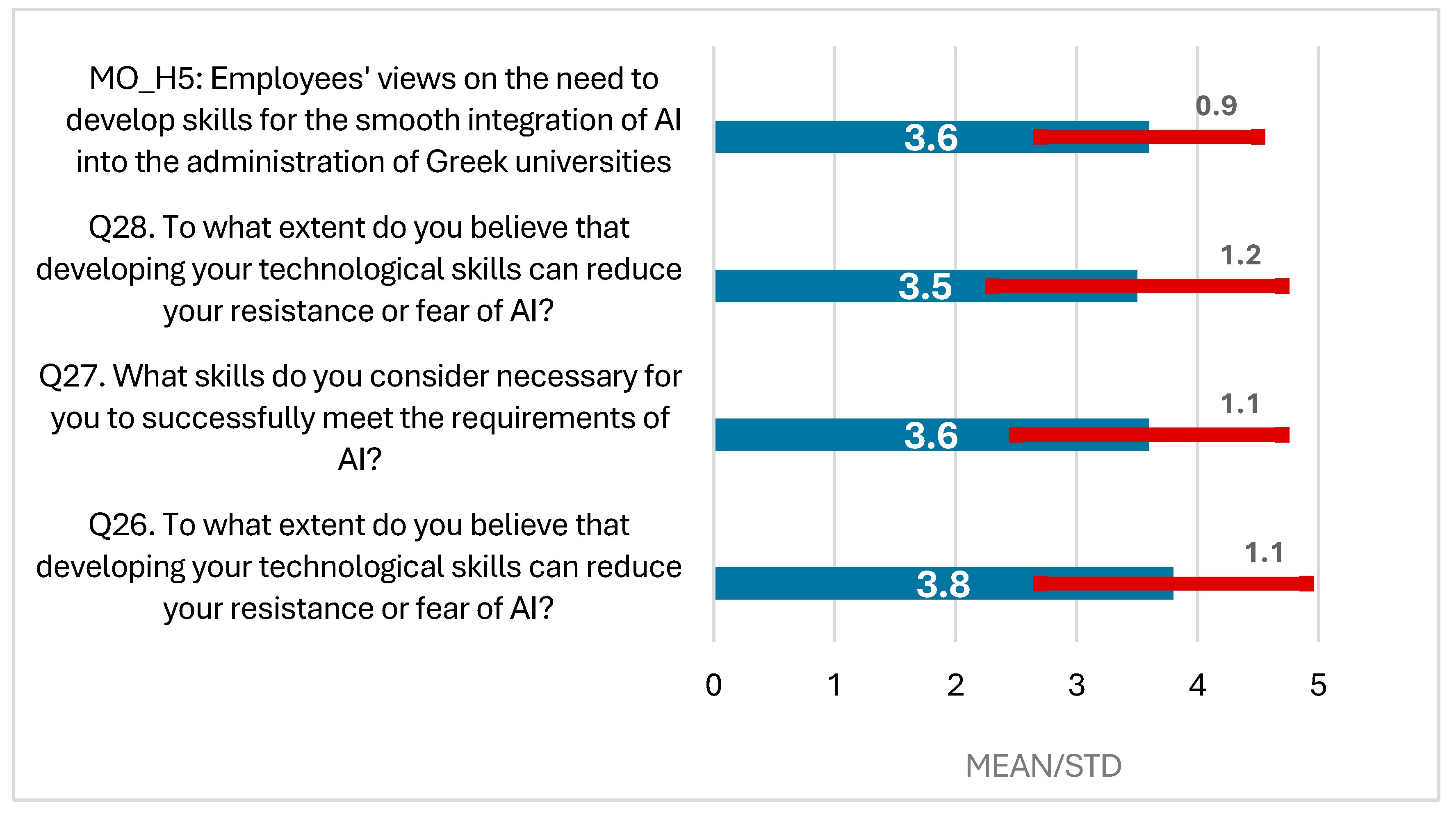
- Regarding investment in capacity-building as a condition for facilitating the integration of AI, the variable Capacity Development Needs (MO_H5) was rated moderately high, indicating that staff consider training and guidance as necessary prerequisites for responsible adoption. We interpret the results and we propose that the universities should be interested in training, which can be designed to be personalized and graded in difficulty to meet the needs of employees at all stages and levels (executives and front-line employees). It is useful to include in training in the following areas: (i) practical use of approved tools, (ii) data management practices and GDPR and (iii) procedures for human oversight (for high-risk processes).
- In accordance with public-sector legitimacy requirements, Artificial Intelligence systems used in administration can be considered that are designed with mechanisms for human review, appeal, and correction, especially for decisions that affect individuals’ rights or access to services. These results show a trend that employees want universities to define “non-automation” zones for important tasks, particularly for high-impact decisions, and to ensure that staff retain the power to challenge and modify AI outcomes in cases where problems and risks are identified.
- An important observation from our findings showed that the average central variable MO_H4 received the highest value. These results lead us to conclude that staff perceptions suggest that trust is related to transparent rules for data collection, storage, access, and sharing. The results also lead us to interpret that it is both desirable and necessary for universities to take measures to strengthen the GDPR and the applicable AI governance requirements at the EU/international level, including minimizing data storage and processing, role-based access controls, and incident response protocols. We further recommend that university administrations implement transparency measures, such as documenting training data sources (where relevant) and providing clear notices to users, to further enhance legitimacy and user trust.
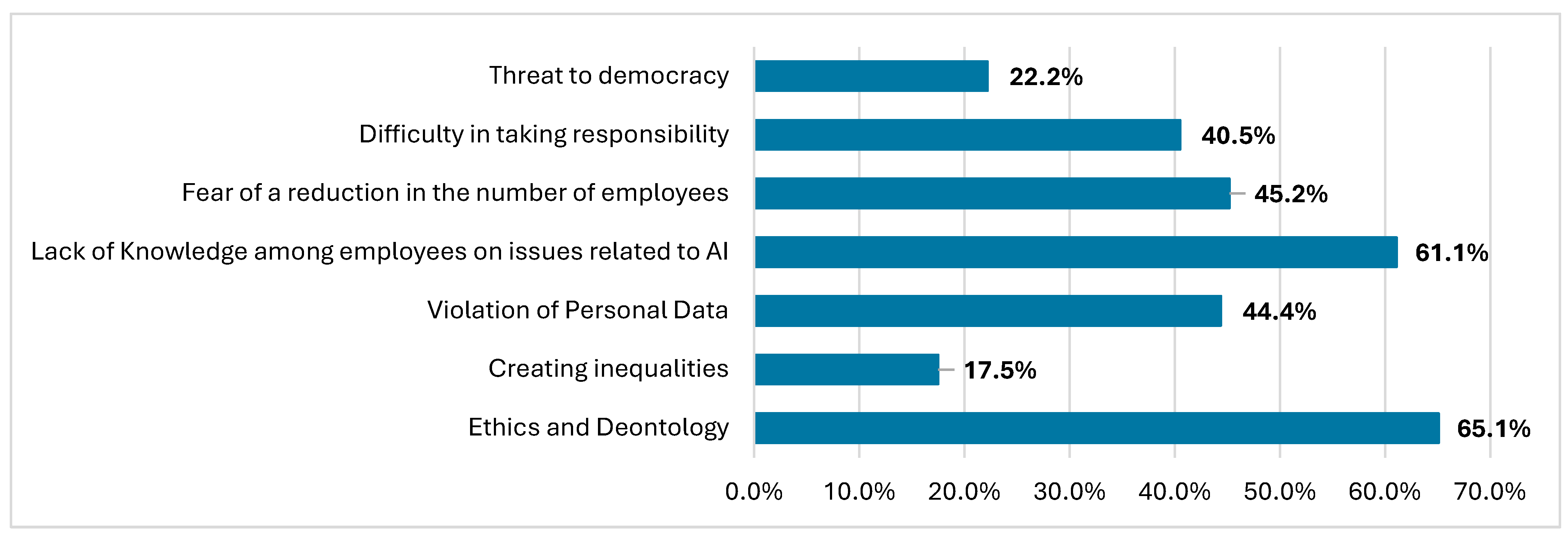
- The challenges of integrating Artificial Intelligence into university governance (MO_H3) indicate perceived friction. Therefore, we interpret that universities may pilot AI tools in limited processes, collect feedback from users, and iterate workflows before universal implementation. Active participation and open dialogue with employees before any AI integration efforts can reduce uncertainty and help distinguish between responsible preparation and risk-based hesitation—particularly regarding ethics, fears about impact on work, and concerns about data protection highlighted in the multiple-choice item ‘critical issues’ (E25).
5.4. Suggestions for Future Research
- With comparative studies across universities. Research could compare the degree and forms of AI use in Greek universities with those in other European or non-European institutions. Such studies could identify factors that enable some universities to achieve a higher level of AI integration, as well as barriers that delay or hinder adoption in others. Comparative designs could also address differences between types of universities (e.g., large vs. small, metropolitan vs. regional, technical vs. humanistic, etc.) and provide insights into how institutional context shapes AI-related policies and practices.
- Using the triangular methodology (questionnaires and interviews), as this would enable the simultaneous collection of qualitative and quantitative statistical data. A mixed-methods or triangulation design, combining quantitative surveys with qualitative data, could therefore provide a richer (e.g., capturing subtle perceptions, emotional reactions and ethical considerations) and more holistic understanding of AI integration in higher education.
- Related to the evaluation of specific interventions related to Artificial Intelligence that are already being implemented on a pilot or universal basis in universities. For example, the results of studies related to the implementation of pilot training programs for employees in Artificial Intelligence tools, algorithmic bias, data protection, and digital skills would be important, or targeted initiatives to support specific groups of staff with lower levels of digital skills. The evaluation research could examine not only effectiveness (e.g., impact on processing times, error rates, or user satisfaction) but also acceptance, perceived fairness, and unintended consequences for different categories of workers.
- With a multicenter stratified sample including all categories of staff. Expanding the scope and composition of the sample would strengthen the generalizability of the results. Research involving employees from all Greek universities, as well as from different staff categories and educational levels, could provide a more comprehensive picture of attitudes towards Artificial Intelligence. It is important to pay attention to groups that are often underrepresented in online surveys (e.g., cleaning staff, security or technical staff, and employees with limited digital access) so that their views and needs are considered when designing policies and interventions related to Artificial Intelligence in higher education.
6. Conclusions
Author Contributions
Funding
Institutional Review Board Statement
Informed Consent Statement
Data Availability Statement
Acknowledgments
Conflicts of Interest
References
- Abdullah, Y. I., Schuman, J. S., Shabsigh, R., Caplan, A., & Al-Aswad, L. A. (2021). Ethics of artificial intelligence in medicine and ophthalmology. The Asia-Pacific Journal of Ophthalmology, 10(3), 289–298. [Google Scholar] [CrossRef] [Scilit]
- Ackermann, H., Henke, A., Chevalère, J., Yun, H. S., Hafner, V. V., Pinkwart, N., & Lazarides, R. (2025). Physical embodiment and anthropomorphism of AI tutors and their role in student enjoyment and performance. NPJ Science of Learning, 10(1), 1. [Google Scholar] [CrossRef] [Scilit]
- Ahmad, S. F., Alam, M. M., Rahmat, M. K., Mubarik, M. S., & Hyder, S. I. (2022). Academic and administrative role of Artificial Intelligence in education. Sustainability, 14(3), 1101. [Google Scholar] [CrossRef] [Scilit]
- Allen, J. (2019). Digital entrepreneurship. Routledge. [Google Scholar]
- Androutsopoulou, A., Karacapilidis, N., Loukis, E., & Charalabidis, Y. (2019). Transforming the communication between citizens and government through AI-guided chatbots. Government Information Quarterly, 36(2), 358–367. [Google Scholar] [CrossRef] [Scilit]
- Berber, N., & Slavić, A. (2016). The practice of employees’ training in Serbia based on Cranet research. Economic Themes, 54(4), 535–548. [Google Scholar] [CrossRef] [Scilit]
- Black, J., & Murray, A. (2019). Regulating AI and machine learning: Setting the regulatory agenda. European Journal of Law and Technology, 10(3). Available online: https://www.ejlt.org/index.php/ejlt/article/view/722/980 (accessed on 15 December 2025).
- Chatterjee, S., & Sreenivasulu, N. S. (2019). Personal data sharing and legal issues of human rights in the era of artificial intelligence: Moderating effect of government regulation. International Journal of Electronic Government Research (IJEGR), 15(3), 21–36. [Google Scholar] [CrossRef] [Scilit]
- Chowdhury, S., Dey, P., Joel-Edgar, S., Bhattacharya, S., Rodriguez-Espindola, O., Abadie, A., & Truong, L. (2023). Unlocking the value of Artificial Intelligence in human resource management through AI capability framework. Human Resource Management Review, 33(1), 100899. [Google Scholar] [CrossRef] [Scilit]
- Christopoulos, A., Conrad, M., & Shukla, M. (2018). Increasing student engagement through virtual interactions: How? Virtual Reality, 22(4), 353–369. [Google Scholar] [CrossRef] [Scilit]
- Dabis, A., & Csáki, C. (2024). AI and ethics: Investigating the first policy responses of higher education institutions to the challenge of generative AI. Humanities and Social Sciences Communications, 11(1), 1–13. [Google Scholar] [CrossRef] [Scilit]
- Davis, F. D. (1989). Perceived usefulness, perceived ease of use, and user acceptance of information technology. MIS Quarterly, 13(3), 319–340. [Google Scholar] [CrossRef] [Scilit]
- Dessler, G. (2024). Human resource management (17th ed.). Pearson Education Limited. [Google Scholar]
- Doyle, T., & Brady, M. (2018). Reframing the university as an emergent organisation: Implications for strategic management and leadership in higher education. Journal of Higher Education Policy and Management, 40(4), 305–320. [Google Scholar] [CrossRef] [Scilit]
- EC. (2024). Greece 2024 digital decade country report. Available online: https://digital-strategy.ec.europa.eu/en/factpages/greece-2024-digital-decade-country-report (accessed on 15 December 2025).
- Floridi, L., Cowls, J., Beltrametti, M., Chatila, R., Chazerand, P., Dignum, V., Luetge, C., Madelin, R., Pagallo, U., Rossi, F., Schafer, B., & Valcke, P. (2018). AI4People—An ethical framework for a good AI society: Opportunities, risks, principles, and recommendations. Minds and Machines, 28(4), 689–707. [Google Scholar] [CrossRef] [Scilit]
- Foss, N. J., & Laursen, K. (2012). Human resource management practices and innovation (pp. 505–530). Institut for Strategic Management and Globalization. ISBN 9788791815805. [Google Scholar]
- Funck, E. K., & Karlsson, T. S. (2020). Twenty-five years of studying new public management in public administration: Accomplishments and limitations. Financial Accountability & Management, 36(4), 347–375. [Google Scholar] [CrossRef] [Scilit]
- George, B., & Wooden, O. (2023). Managing the strategic transformation of higher education through artificial intelligence. Administrative Sciences, 13(9), 196. [Google Scholar] [CrossRef] [Scilit]
- George, O. J., Okon, S. E., & Akaighe, G. O. (2023). Psychological capital and work engagement among employees in the Nigerian public sector: The mediating role of emotional intelligence. International Journal of Public Administration, 46(6), 445–453. [Google Scholar] [CrossRef] [Scilit]
- Glyptis, L., Christofi, M., Vrontis, D., Del Giudice, M., Dimitriou, S., & Michael, P. (2020). E-Government implementation challenges in small countries: The project manager’s perspective. Technological Forecasting and Social Change, 152, 119880. [Google Scholar] [CrossRef] [Scilit]
- Hammerschmid, G., Van de Walle, S., Andrews, R., & Mostafa, A. M. S. (2019). New public management reforms in Europe and their effects: Findings from a 20-country top executive survey. International Review of Administrative Sciences, 85(3), 399–418. [Google Scholar] [CrossRef] [Scilit]
- Jungwirth, C. (2025). Balancing Acts: Navigating Leadership, Transparency, and Compliance in University Governance. Beiträge zur Hochschulforschung, 47, 10–26. [Google Scholar]
- Kankanhalli, A., Charalabidis, Y., & Mellouli, S. (2019). IoT and AI for smart government: A research agenda. Government Information Quarterly, 36(2), 304–309. [Google Scholar] [CrossRef] [Scilit]
- Kaplan, S. (2023). Experiential intelligence: Harness the power of experience for personal and business breakthroughs. BenBella Books. [Google Scholar]
- Kappos, D., & Kling, A. (2020). Ground-level pressing issues at the intersection of AI and IP. Columbia Science & Technology Law Review, 22, 263–283. [Google Scholar]
- Kefalaki, M. (2024). The role of strategic management and leadership in higher education institutions. The case of public universities in Greece. Journal of Applied Learning and Teaching, 7(2), 433–440. [Google Scholar] [CrossRef] [Scilit]
- Kerr, K. (2020). Ethical considerations when using artificial intelligence-based assistive technologies in education. In Ethical use of technology in digital learning environments: Graduate student perspectives. Open Education Alberta. Available online: https://pressbooks.openeducationalberta.ca/educationaltechnologyethics/ (accessed on 15 December 2025).
- Kitsakis, D., Kalogianni, E., & Dimopoulou, E. (2022). Public law restrictions in the context of 3D land administration—Review on legal and technical approaches. Land, 11, 88. [Google Scholar] [CrossRef] [Scilit]
- Larsson, C., Launberg, A., & Lindell, E. (2025). Scoping ethical AI in working life: Lessons for the Nordic model. Nordic Journal of Working Life Studies. [Google Scholar] [CrossRef] [Scilit]
- Leslie, D., Burr, C., Aitken, M., Cowls, J., Katell, M., & Briggs, M. (2021). Artificial intelligence, human rights, democracy, and the rule of law. The Council of Europe’s Ad Hoc Committee on Artificial Intelligence. Available online: https://edoc.coe.int/en/artificial-intelligence/10206-artificial-intelligence-human-rights-democracy-and-the-rule-of-law-a-primer.html# (accessed on 15 December 2025).
- Liargovas, P., & Pilichos, V. (2022). Is EU fiscal governance effective? A case study for the period 1999–2019. Economies, 10(8), 187. [Google Scholar] [CrossRef] [Scilit]
- Lin, C. C., Huang, Y. Y., Zhang, J. Q., & Chang, S. F. (2021). Combining AI with corporate governance to enhance operational efficiency of universities. Journal of Physics: Conference Series, 1827(1), 012126. [Google Scholar] [CrossRef] [Scilit]
- Manresa, A., Bikfalvi, A., & Simon, A. (2019). The impact of training and development practices on innovation and financial performance. Industrial and Commercial Training, 51(7/8), 421–444. [Google Scholar] [CrossRef] [Scilit]
- Manzoni, M., Medaglia, R., Tangi, L., van Noordt, C., Vaccari, L., & Gattwinkel, D. (2022). AI watch road to the adoption of Artificial Intelligence by the public sector: A handbook for policymakers. Publications Office of the European Union. [Google Scholar] [CrossRef]
- McCaffery, P. (2018). The higher education manager’s handbook: Effective leadership and management in universities and colleges. Routledge. [Google Scholar] [CrossRef] [Scilit]
- Mogaji, E., Jain, V., Maringe, F., & Hinson, R. E. (2022). Re-imagining educational futures in developing countries. Springer International Publishing. [Google Scholar] [CrossRef] [Scilit]
- Mohamed, M. Z. B., Hidayat, R., Suhaizi, N. N. B., Sabri, N. B. M., Mahmud, M. K. H. B., & Baharuddin, S. N. B. (2022). Artificial Intelligence in mathematics education: A systematic literature review. International Electronic Journal of Mathematics Education, 17(3), em0694. [Google Scholar] [CrossRef] [Scilit]
- Neumann, O., Guirguis, K., & Steiner, R. (2024). Exploring Artificial Intelligence adoption in public organizations: A comparative case study. Public Management Review, 26(1), 114–141. [Google Scholar] [CrossRef] [Scilit]
- Nikolinakos, N. T. (2023). Ethical principles for trustworthy AI. In EU policy and legal framework for artificial intelligence, robotics and related technologies-the AI act (pp. 101–166). Springer International Publishing. [Google Scholar] [CrossRef] [Scilit]
- Ocaña-Fernández, Y., Valenzuela-Fernández, L. A., & Garro-Aburto, L. L. (2019). Artificial Intelligence and its implications in higher education. Journal of Educational Psychology-Propositos y Representaciones, 7(2), 553–568. [Google Scholar] [CrossRef] [Scilit]
- Oracle. (2019). The 2019 state of Artificial Intelligence in talent acquisition. HR.Research Institute. Available online: https://www.oracle.com/a/ocom/docs/artificial-intelligence-in-talent-acquisition.pdf (accessed on 15 December 2025).
- Petit, N. (2017). Law and regulation of artificial intelligence and robots-conceptual framework and normative implications. SSRN Electronic Journal. [Google Scholar] [CrossRef] [Scilit]
- Pudelko, M. (2006). Universalities, particularities, and singularities in cross-national management research. International Studies of Management & Organization, 36(4), 9–37. [Google Scholar] [CrossRef] [Scilit]
- Pyrgiotakis, E. I., & Symeou, L. (2016). Qualitative research and the scientific value of the knowledge produced in the social sciences and humanities. In Research methodology in social sciences and education. Contribution to epistemological theory and research practice. Pedio. (In Greek) [Google Scholar]
- Reis, J., Santo, P. E., & Melão, N. (2019). Artificial Intelligence in government services: A systematic literature review. In World conference on information systems and technologies (pp. 241–252). Springer. [Google Scholar] [CrossRef] [Scilit]
- Saaida, M. B. (2023). AI-driven transformations in higher education: Opportunities and challenges. International Journal of Educational Research and Studies, 5(1), 29–36. [Google Scholar]
- Sallis, E. (2014). Total quality management in education. Routledge. [Google Scholar] [CrossRef] [Scilit]
- Scherer, M. U. (2015). Regulating artificial intelligence systems: Risks, challenges, competencies, and strategies. Harvard Journal of Law & Technology, 29, 353. [Google Scholar]
- Schorr, A. (2023). The Technology Acceptance Model (TAM) and its importance for digitalization research: A review. Proceedings TecPsy, 2023, 55. [Google Scholar] [CrossRef] [Scilit]
- Singh, G., & Slack, N. J. (2022). New public management and customer perceptions of service quality—A mixed-methods study. International Journal of Public Administration, 45(3), 242–256. [Google Scholar] [CrossRef] [Scilit]
- Spanou, C. (2016). Policy conditionality, structural adjustment and the domestic policy system. Conceptual framework and research agenda. Robert Schuman Centre for Advanced Studies Research Paper No. RSCAS 2016/60. European University Institute. [Google Scholar]
- Taylor, J., & Machado, M. D. L. (2006). Higher education leadership and management: From conflict to interdependence through strategic planning. Tertiary Education and Management, 12(2), 137–160. [Google Scholar] [CrossRef] [Scilit]
- Uzun, M. M., Yıldız, M., & Önder, M. (2022). Big questions of AI in public administration and policy. Siyasal: Journal of Political Sciences, 31(2), 423–442. [Google Scholar] [CrossRef] [Scilit]
- Vasilenko, L. A., & Seliverstova, A. D. (2024). Symbiotic intelligence in smart configuration: Opportunities and Challenges. In Digital transformation: What are the smart cities today? (Vol. 846, pp. 173–180). Lecture Notes in Networks and Systems. Springer. [Google Scholar] [CrossRef] [Scilit]
- Vinichenko, M. V., Melnichuk, A. V., & Karácsony, P. (2020). Technologies of improving the university efficiency by using artificial intelligence: Motivational aspect. Entrepreneurship and Sustainability Issues, 7(4), 2696. [Google Scholar] [CrossRef] [Scilit]
- Votto, A. M., Valecha, R., Najafirad, P., & Rao, H. R. (2021). Artificial Intelligence in tactical human resource management: A systematic literature review. International Journal of Information Management Data Insights, 1(2), 100047. [Google Scholar] [CrossRef] [Scilit]
- Wirtz, B. W., & Müller, W. M. (2019). An integrated Artificial Intelligence framework for public management. Public Management Review, 21(7), 1076–1100. [Google Scholar] [CrossRef] [Scilit]
- Wirtz, B. W., Weyerer, J. C., & Geyer, C. (2019). Artificial intelligence and the public sector—Applications and challenges. International Journal of Public Administration, 42(7), 596–615. [Google Scholar] [CrossRef] [Scilit]
- Wirtz, B. W., Weyerer, J. C., & Sturm, B. J. (2020). The dark sides of artificial intelligence: An integrated AI governance framework for public administration. International Journal of Public Administration, 43(9), 818–829. [Google Scholar] [CrossRef] [Scilit]





| Construct/Term | Operational Definition in This Paper | Alignment to Questionnaire Items/Composite |
|---|---|---|
| AI integration (administration) | The perceived introduction and use of AI-enabled automation and/or decision-support tools within university administrative workflows under defined governance rules and human oversight (not pedagogical AI). | Measured indirectly via domain items (Q4–Q5; Q7–Q12; Q14–Q18; Q20–Q23; Q26–Q28). |
| Efficiency | Perceived reduction in processing time, workload, or resource use per administrative case attributed to AI support. | MO_H1 items Q4–Q5 (efficiency/effectiveness domain). |
| Effectiveness | Perceived improvement in service quality, accuracy, consistency, responsiveness, or decision quality in administration attributed to AI support. | MO_H1 items Q4–Q5 (efficiency/effectiveness domain). |
| Automation benefits | Perceived advantages of AI for routine, rules-based task automation (e.g., speed, error reduction, consistency, standard communication). | MO_H2 items Q7–Q12. |
| Ethics and data protection | Perceived requirements/risks related to fairness, transparency, accountability, explainability, lawful processing, data security, and GDPR compliance. | MO_H4 items Q20–Q23 (and Q25 as multiple-response salience item, if applicable). |
| Skills development (facilitating condition) | Perceived need for training, upskilling, and guidance to enable feasible and responsible AI use, including human-in-the-loop oversight. | MO_H5 items Q26–Q28. |
| Adoption challenges/barriers | Perceived obstacles to implementation and use (e.g., complexity, uncertainty, role impacts, limited suitability for high-discretion tasks). | MO_H3 items Q14–Q18. |
| Name | Description | Questions |
|---|---|---|
| MO_H1 | AI Efficiency/Effectiveness Perceptions | Q4–Q5 |
| MO_H2 | Automation Benefits | Q7–Q12 |
| MO_H3 | Adoption Challenges | Q14–Q18 |
| MO_H4 | Ethics and Data Protection | Q20–Q23 & Q25 |
| MO_H5 | Skills Development Needs | Q26–Q28 |
| Spearman’s Correlations | Value | Sig. p-Value | Characterization |
|---|---|---|---|
| MO_H4:MO_H2 | ρ = 0.160 | sig. p-values 0.073 | weak correlation |
| MO_H4:MO_H3 | ρ = 0.171 | sig. p-values 0.055 | weak correlation |
Disclaimer/Publisher’s Note: The statements, opinions and data contained in all publications are solely those of the individual author(s) and contributor(s) and not of MDPI and/or the editor(s). MDPI and/or the editor(s) disclaim responsibility for any injury to people or property resulting from any ideas, methods, instructions or products referred to in the content. |
© 2026 by the authors. Licensee MDPI, Basel, Switzerland. This article is an open access article distributed under the terms and conditions of the Creative Commons Attribution (CC BY) license.
Share and Cite
Bousiou, O.; Paraskevas, M.; Kapoulas, V.; Liargovas, P. Prospects for Integrating Artificial Intelligence into the Administration of Higher Education in Greece. Adm. Sci. 2026, 16, 131. https://doi.org/10.3390/admsci16030131
Bousiou O, Paraskevas M, Kapoulas V, Liargovas P. Prospects for Integrating Artificial Intelligence into the Administration of Higher Education in Greece. Administrative Sciences. 2026; 16(3):131. https://doi.org/10.3390/admsci16030131
Chicago/Turabian StyleBousiou, Ourania, Michael Paraskevas, Vaggelis Kapoulas, and Panagiotis Liargovas. 2026. "Prospects for Integrating Artificial Intelligence into the Administration of Higher Education in Greece" Administrative Sciences 16, no. 3: 131. https://doi.org/10.3390/admsci16030131
APA StyleBousiou, O., Paraskevas, M., Kapoulas, V., & Liargovas, P. (2026). Prospects for Integrating Artificial Intelligence into the Administration of Higher Education in Greece. Administrative Sciences, 16(3), 131. https://doi.org/10.3390/admsci16030131