


Abstract
The global maritime and logistics sectors are undergoing rapid digital transformation driven by emerging technologies such as automation, the Internet of Things (IoT), and blockchain. Artificial Intelligence (AI), with its ability to analyze complex datasets, predict operational patterns, and optimize resource allocation, offers a transformative potential beyond the capabilities of conventional technologies. However, mixed results are shown in its implementation. This study examines the current state of AI applications to unlock higher levels of efficiency and competitiveness in logistics firms. A mixed-methods approach was employed, combining surveys from logistics companies with in-depth interviews from key stakeholders in ports and logistics firms to triangulate insights and enhance the validity of the findings. Our results reveal that while technologies such as automation and digital tracking are increasingly utilized to improve operational transparency and cargo management, AI applications remain limited and largely experimental. Where implemented, AI contributes to strategic decision-making, predictive maintenance, customer service enhancement, and cargo flow optimization. Nonetheless, financial conditions, data integration challenges, and a shortage of AI-skilled professionals continue to impede its wider adoption. To overcome these challenges, this study recommends targeted investments in AI infrastructure, the establishment of collaborative frameworks between public authorities, financial institutions, and technology-driven Higher Education Institutions (HEIs), and the development of human capital capable of sustaining AI-enabled transformation. By strategically leveraging AI, Oman can position its ports and logistics sector as a regional leader in efficiency, innovation, and sustainable growth.
1. Introduction
The maritime sector is undergoing a fundamental transformation driven by the integration of advanced technologies such as artificial intelligence (AI) and digital technologies, indicating a greater move toward Industry 4.0. As critical logistics hubs and nodes, many seaports increasingly incorporate AI, the Internet of Things (IoT), and blockchain technologies to enhance resource utilization, improve throughput, and strengthen resilience across port operations, transport networks, and warehousing systems. The adoption of digital logistics is motivated by its potential to integrate processes, reduce operational costs, and enhance customer satisfaction through improved visibility, predictive analytics, and secure information flows (Perman et al., 2025; Sun et al., 2021).
Recent studies show a paradigmatic shift in logistics and supply chain management, particularly in the warehousing sector. The warehousing sector is traditionally regarded as a tactical or operational activity. However, the warehouse sector is currently placed as a strategic resource that directly contributes to firms’ competitive advantage. An increasing trend in automated warehousing system (AWS) investment is being witnessed, as it is evaluated based not only on cost and return on investment but also on alignment with strategic objectives such as reliability, scalability, and long-term service performance. This shift displays an increasing recognition that warehouse automation, when strategically configured, can shape firm competitiveness and innovation practices (Kembro & Norrman, 2025). The literature further emphasizes that technology choices such as Autostore, shuttle systems, and autonomous mobile robots involve trade-offs between scalability, flexibility, and throughput, underscoring the need for alignment between system design and firm-level strategic intent.
In Oman, logistics and port modernization is embedded within broader economic diversification policies, notably the Sultanate’s SOLS2040 strategy. This initiative positions logistics as a key pillar for economic growth, including reducing hydrocarbon dependency and enhancing Oman’s competitiveness as a regional logistics hub. However, implementation is still ongoing, requiring structural and institutional challenges improvements to curve limited digital infrastructure, fragmented regulatory frameworks, and skills shortages. High transport costs and lengthy customs procedures further inhibit sectoral development (Al Kalbani et al., 2024; Ba-Awain & Daud, 2018). Addressing these factors requires coordinated investment in AI-driven port management, smart warehousing, and digital ecosystems capable of supporting end-to-end integration. While IoT-enabled monitoring, blockchain-based traceability, and digital supply chain twins promise improved product integrity and export competitiveness, their implementation remains uneven. Research highlights the importance of aligning technology adoption with cost–benefit analysis, capacity-building projects, and promoting policy instruments to foster consistent implementation (Al Kalbani et al., 2024).
Comparative evidence from the Gulf Cooperation Council (GCC) reveals both opportunities and challenges. Systematic reviews of digital transformation initiatives show that regional leaders such as the United Arab Emirates and Saudi Arabia have advanced comprehensive national digital strategies, whereas Oman’s progress remains modest, with fewer large-scale implementations and limited research output. The broader GCC experience emphasizes that successful transformation requires not only technological adoption but also organizational adaptability, management commitment, and governance frameworks addressing cybersecurity, data governance, and interoperability (Al-Hajri et al., 2024).
The present study examines the status of digital technology integration in the seaports and logistics sector. Specifically, it investigates prevailing technology typologies, the challenges constraining adoption, and the potential of emerging tools such as AI, the IoT, and blockchain to enhance operational efficiency and competitiveness. By synthesizing global insights on automation and regional evidence on digital transformation, this research aims to provide context-specific recommendations to accelerate Oman’s logistics modernization in alignment with national strategic priorities.
The remainder of the paper is organized as follows: Section 2 reviews related literature and identifies existing gaps. Section 3 outlines the methodology, including data collection and sampling. Section 4 presents and discusses the empirical findings in light of the literature review. The paper concludes with recommendations for policy and practice, along with directions for future research.
2. Literature Review
2.1. Introduction
Advanced technologies such as AI are revolutionizing port and logistics operations, transforming the management of goods, services, and information. By leveraging information and communication technologies (ICT), these innovations improve critical business processes across port operations, transportation, inventory management, materials handling, warehouse management, and entire supply chain systems. Port authorities globally are focusing on modernizing operations, creating seamless supply chains, and achieving decarbonization goals, for which harnessing advanced technologies is a key enabler (du Plessis et al., 2025). Essential components of this digital transformation include enhancing supply chain visibility, deploying predictive analytics, fostering collaboration through digital platforms, automating physical and administrative tasks, and employing blockchain for enhanced transparency and security.
To this end, the studies by Al Kalbani et al. (2024) and Perman et al. (2025) highlight the effect of digital technologies on logistics processes and port operations, leading to improved efficiency and effectiveness. Digital logistics, as explored by Perman et al. (2025), refers to streamlining digital technologies to enhance the flow of goods and information within the supply chain. These technologies include RFID, GPS, and the IoT, driven by increasing demand for fast and efficient delivery, rising competition, evolving customer expectations, cost reduction, and government support initiatives. Enablers of digitalization in logistics, identified by the authors, encompass technological advancements, supply chain integration through collaboration, investment in digital infrastructure, and government assistance.
Despite its benefits, digital logistics faces significant challenges. As noted by Al Kalbani et al. (2024), these include technological barriers, data security concerns, regulatory issues, and employees’ resistance to adopting the technology. Moreover, a systematic review by du Plessis et al. (2025) reveals that despite the immense potential, the adoption rate of AI in logistics remains low, with only 22–26% of companies having integrated AI into their business, often due to a lack of understanding of its practical applications and value. Adopting AI and other advanced technologies to digitalize ports and logistics operations provides tremendous actual and potential benefits by optimizing operational efficiency and effectiveness. Nevertheless, technology adoption resistance, limitations in the skilled workforce, and investment constraints hinder the proper integration of these technologies in port and logistics firms. Overcoming challenges related to technology adoption, workforce skills, and regulatory frameworks is therefore imperative for realizing its full benefits. Studying this in the context of Oman will help search for contextualized resolutions to these challenges. The literature reviewed herein will contribute to understanding and navigating the evolving landscape of applications of advanced technologies.
2.2. Advanced Technology Applications
Various port and logistics firms apply several advanced technologies such as AI, Machine Learning (ML), the IoT, and Blockchain. Each of these technologies offers unique capabilities that can be integrated to create smart and sustainable logistics systems (Chen et al., 2024). Blockchain technology is a decentralized, distributed ledger that enables multiple parties to record transactions and share data without a central authority (Moosavi et al., 2021; Manzoor et al., 2022). In logistics and supply chain management, blockchain technology can help trace the location of goods and materials, verify the authenticity of products, and improve the efficiency of supply chain processes (Rejeb et al., 2021). Blockchain technology can provide several benefits, such as increased transparency, improved traceability, enhanced security, and cost reduction (Manzoor et al., 2022; Rejeb et al., 2021; du Plessis et al., 2025; Zhang & Liu, 2022; Kouhizadeh et al., 2021). In this regard, Omani port authorities are researching the use of blockchain technology to enhance the transparency, security, and traceability of logistics and shipping operations. For instance, the Port of Sohar is collaborating with a startup to establish a blockchain-based network for container tracking (Khan et al., 2025).
Advanced technologies such as AI and ML allow machines to perform tasks typically requiring human intelligence, such as learning, decision-making, and problem-solving. AI and ML can improve and automate various processes in logistics and supply chain management, including demand forecasting, inventory control, route optimization, and warehouse management (Chen et al., 2024). Use of AI and ML can help firms to gain several benefits such as improved efficiency, enhanced accuracy, reduced costs, and enhanced customer satisfaction (Liu & Yuen, 2025; Toorajipour et al., 2021; Sakeri et al., 2025; Younis et al., 2022).
Researchers have indicated the growing use of AI and ML in the logistics and supply chain sectors. AI plays a key role in reducing human errors and accelerating complex analyses, making it invaluable for warehouse management, demand forecasting, last-mile logistics optimization, supplier selection, and workforce planning. As identified by du Plessis et al. (2025), specific AI use cases span holistic supply chains (e.g., dynamic freight opportunity platforms and risk mitigation), transport vehicles (e.g., predictive maintenance and operator profiling), and logistical facilities (e.g., optimal storage location and workload planning). AI and ML are particularly valuable for predictive analytics, aiding in product demand forecasting and allowing logistics companies to optimize warehouse utilization by categorizing products based on demand patterns. ML algorithms that analyze huge volumes of historical data are widely used for predictive analytics in seaports. For instance, ML models also predict equipment failures, enabling predictive maintenance that minimizes downtime and reduces maintenance costs (Chaibi & Daghrir, 2024). Computer vision technology, often powered by deep learning, is utilized for automated inspection and monitoring. In seaports, it is applied to monitor container conditions, detect damage, and oversee loading and unloading processes. This technology improves accuracy and speed in identifying issues that might go unnoticed (Weerasinghe et al., 2024). Autonomous vehicles and robotic systems are increasingly used in seaports to handle repetitive and hazardous tasks. AGVs and robotic cranes manage container movement with high precision and efficiency, reducing the need for manual intervention and enhancing safety (Di Vaio & Varriale, 2019). Natural Language Processing and chatbots are employed to streamline communication within port operations. These AI tools facilitate real-time information exchange and query resolution between different stakeholders, improving coordination and reducing delays in decision-making processes (Munim et al., 2020).
Furthermore, AI is critical for advancing sustainability initiatives, enabling the calculation of carbon footprints, dynamic reconfiguration of supply chains to reduce emissions, and optimization of routes for energy efficiency (Chen et al., 2024). The integration of the IoT with AI enables real-time monitoring and data collection from various port assets. AI algorithms process this data to optimize asset utilization, monitor environmental conditions, and enhance security measures. For example, sensors installed on cranes and trucks provide continuous data that AI systems analyze to optimize performance (Liu & Yuen, 2025; Haifa & Aksoy, 2024). The IoT enables the establishment of an interconnected network of physical devices, sensors, and other objects equipped with Internet connectivity to collect, exchange, and share data. In logistics, the expansion of the IoT creates countless connections between goods, packaging, transportation hubs, and vehicles, providing data to manage assets remotely, predict risk, ensure proper cargo handling, and forecast traffic congestion. When combined with blockchain, the IoT can offer end-to-end visibility of packages. In supply chain management, the IoT is used to track and monitor the movement of goods and materials in real-time, optimize transportation routes and fleets, and improve warehouse efficiency (Chen et al., 2024). The IoT is providing various benefits such as improved tracking and visibility, reduced costs, and improved customer satisfaction (Ben-Daya et al., 2019; Haifa & Aksoy, 2024; Sun et al., 2021).
Showcases of Advanced Technologies in Seaport Operations
Advanced technologies are transforming various aspects of seaport operations, including logistics, predictive maintenance, and decision-making processes. The primary areas where AI is making significant impacts are cargo handling, vessel traffic management, and predictive maintenance. AI enhances cargo handling efficiency through automated systems that optimize container stacking and retrieval processes. For instance, ML algorithms can predict the best arrangement of containers to minimize handling time and maximize space utilization. AI-powered robotic systems automate loading and unloading operations, reducing human error and increasing speed (Weerasinghe et al., 2024). This aligns with use cases such as “internal vehicle routing” and “optimize order picking or storage activities” within logistical facilities (du Plessis et al., 2025).
Effective vessel traffic management is another essential application of AI. Vessel traffic management is crucial for avoiding congestion. AI systems analyze real-time data from sources like Automatic Identification Systems (AISs) and radar to optimize traffic flow. Predictive analytics helps forecast vessel arrival times and efficiently plan berthing schedules (Liu & Yuen, 2025), directly contributing to the “transport management system” research theme (du Plessis et al., 2025). Predictive maintenance is another critical application of AI in logistics and port operations. AI-driven predictive maintenance systems use sensor data from port equipment to predict potential failures before they occur. This approach reduces downtime and maintenance costs. ML algorithms analyze equipment data patterns to forecast maintenance needs, enhancing the reliability of critical port infrastructure (Chaibi & Daghrir, 2024). This is a core use case under the “asset care” theme for transport vehicles and facilities (du Plessis et al., 2025).
Several ports around the globe are mainstreaming AI in their operations. The Port of Rotterdam employs a comprehensive AI-driven system that integrates predictive analytics and the IoT to manage its operations. The Digital Twin technology implemented in the Rotterdam port creates a real-time digital replica of the port, enabling simulation and optimization of various processes. This system has significantly improved the port’s efficiency in handling cargo and managing vessel traffic (Port of Rotterdam, 2022). The Port of Los Angeles uses AI-powered predictive maintenance systems to monitor and maintain its infrastructure. Sensors and AI algorithms work together to predict equipment malfunction before it occurs, reducing downtime and maintenance costs. This proactive approach has improved the reliability and efficiency of the operations of the port (Port Technology Team, 2021). The Port of Singapore has integrated autonomous vehicles and robotic systems to streamline its cargo handling processes. AI-driven automated guided vehicles (AGVs) transport containers between ships and storage areas, while robotic cranes handle loading and unloading with high precision. This automation has drastically reduced turnaround times and improved the overall efficiency of the port (Dinh et al., 2024).
2.3. Status of Digital Logistics in Oman: Empirical Literature Review
Oman is one of the Middle Eastern countries actively investing in and adopting digital technologies in various sectors, including ports and logistics. The sultanate actively adopts digital technologies and systems to improve its logistics and shipping industry. Recent initiatives in Oman have aimed to promote digital logistics technologies. One such initiative is the Sultanate of Oman Logistics Strategy (SOLS2040) as part of the national Vision 2040, launched by the Ministry of Transport and Communications in 2018. The SOLS aims to transform Oman’s logistics sector into a modern, efficient, and competitive industry by promoting AI, ML, the IoT, blockchain, and other digital technologies and improving the efficiency of logistics and port operations. SOLS2040 also aims to create a conducive environment for developing digital logistics capabilities in Oman.
Another initiative is the Oman Logistics Center (OLC), established in 2019 by the Ministry of Transport and Communications in collaboration with the Omani logistics industry. OLC is an initiative by the Ministry of Transport, Communications, and Information Technology to serve as a center to realize Oman’s effort to become the regional logistics hub in 2040. It is established as part of the National Logistics Strategy 2040 (MTCIT, 2025). The OLC aims to facilitate the development and adoption of advanced logistics technologies in Oman and to support the growth of the country’s logistics sector. The OLC also serves as a platform for exchanging information and knowledge about digital logistics between stakeholders in Oman, including logistics providers, shippers, and government agencies. In general, Oman is making significant efforts to promote the use of advanced technologies in logistics, intending to improve the efficiency and competitiveness of the sector.
Several studies have been conducted on digital logistics in Oman in recent years. One of the studies was by Masengu et al. (2024). In their research on e-readiness of Omani ports, they found the positive impacts of E-HRM (e.g., automated HR processes and digital training) on improving global competitiveness through workforce efficiency. Moreover, their findings reveal the effect of strong legal frameworks (e.g., trade facilitation policies and cybersecurity laws) in improving digital readiness. Investments in port infrastructure (automated cargo handling, the IoT, and blockchain) and IT systems significantly boost both e-readiness and global competitiveness; ports like Duqm adopting 5G and innovative logistics solutions show improved efficiency and connectivity. The study, on the other hand, identified that the negative effects of increased e-HRM adoption negatively affect port e-readiness, possibly due to implementation complexities, high costs, and resistance to change; over-regulation (e.g., lengthy customs procedures and compliance burdens) can hinder global competitiveness (Masengu et al., 2024). The study further found the mediating effect of E-readiness as an essential bridge between infrastructure, regulations, and global competitiveness. This implies that ports with higher digital maturity perform better in international trade. Lastly, their study findings revealed unclear documentation procedures, which result in high costs and slow adoption of digital HR systems as critical challenges identified among the Omani ports.
Another study related to digital logistics in Oman was performed by Al Kalbani et al. (2024), who investigated the challenges and opportunities in adopting digital solutions in cold chain logistics in Oman. The study findings revealed that AI is enhancing decision-making and demand forecasting. The study identified data privacy concerns requiring a robust regulatory framework, variability in digital readiness among stakeholders, and the need for strategic investment in digital infrastructure and workforce development as challenges in streamlining digital logistics. The study highlighted the contribution of digital technologies in realizing Oman’s Logistics Vision (SOLS2040). The efficiency gains driven from streamlining operations and the reduction in risk, particularly from fraud and errors, would be among the benefits, given the strategic positions of the Sultanate of Oman.
Al-Hajri et al. (2024) conducted research on digital transformation in the Gulf region by employing a systematic literature review. The study provided an overview of digital transformation in the logistics sector of the region, covering the primary drivers, enablers, and hurdles to digitalization. The study highlights efficiency and cost-related contributions of digital logistics as extracted from the literature reviewed. Ba-Awain and Daud (2018) also conducted research on Oman as a future logistics hub and identified the efforts of the Omani government and private sector to transform Oman into a digital logistics hub, including through the development of infrastructure, regulations, and enabling technologies. The study examined the challenges and opportunities the Omani logistics sector faces in the digitalization process and provides recommendations for developing digital logistics in Oman.
Al-Ajmi et al. (2025) conducted a review on advancing the shipping sector in Oman. The study applied the technology-organization-environment framework it examines the how IoTs., Blockchain and automation affect operational efficiency, sustainability and transparency in the shipping sector. The study identifies challenges such as organizational and regulatory related that influence digital transformation in the maritime sector of Oman.
Al-Maqbali et al. (2021) and Al-Ajmi et al. (2025) discovered several challenges, such as a lack of skilled personnel and standardization, and interoperability affecting the implementation and adoption of digital technologies. The authors also identify several challenges facing the shipping industry in Oman as it continues to digitize. These include a lack of standardization, inadequate infrastructure, and poor awareness and understanding of digital technologies among industry stakeholders. The authors suggest that addressing these challenges is critical to the successful adoption and deployment of digital technologies in the shipping industry in Oman (Al-Maqbali et al., 2021; Al-Ajmi et al., 2025). Among the recommendations, key developments and trends in digital logistics and shipping in Oman include the following:
E-commerce and online retail: E-commerce in Oman has increased demand for efficient and reliable delivery services. E-commerce and online retail drive the demand for efficient and reliable delivery services in Oman. Companies like Omantel, the national telecommunications company, have launched e-commerce platforms and are working with logistics providers to develop innovative solutions for last-mile delivery.
Digital supply chain management: Omani companies use digital tools and systems to improve the planning, coordination, and execution of logistics activities within their supply chains. This includes using cloud-based platforms, predictive analytics, and data visualization tools to optimize routes, forecast demand, and identify potential bottlenecks or disruptions.
Port digitization: The Port of Sohar, one of the major ports in Oman, has implemented various digital technologies to improve efficiency and streamline operations. These include using electronic data interchange (EDI) systems to automate the exchange of shipping and customs documents and deploying sensors and tracking systems to improve visibility and traceability.
2.4. Impact of Digitization in Oman
Al Kalbani et al. (2024) highlighted the adoption of digital technologies and systems in the logistics industry in Oman and identified various digital tools and systems used in the industry, including cloud-based platforms, data analytics, and robotics. The authors identified improved efficiency, cost savings, and increased customer satisfaction as basic contributions of digital logistics in the logistics sector.
Al Kalbani et al. (2024) examined the effects of digitalization on the logistics and transportation industry in Oman, including adopting digital tools and systems for supply chain management, transportation planning, and inventory management. The authors note factors such as a lack of investment in digital technologies, skilled personnel, and standardization and interoperability as challenges facing the logistics and port sectors. The authors discuss the impact of digitalization on the logistics and transportation industry in Oman. The authors describe various digital tools and systems used in the industry, including digital platforms for supply chain management, transportation planning, and inventory management. They also highlight the benefits of these technologies, including improved efficiency, cost savings, and increased customer satisfaction.
2.5. Advanced Technology Applications (AI) in Omani Seaports: Overview
Omani seaports like the Port of Salalah and Sohar Port are exploring AI to improve operational efficiency. These ports are strategically significant due to their location on key international shipping routes (Al-Ajmi et al., 2025). The Port of Salalah has implemented several AI initiatives to optimize its container terminal operations. AI-driven systems are used for predictive maintenance of cranes and other handling equipment, significantly reducing operational disruptions. Furthermore, the port utilizes AI for logistics planning, which has improved vessel turnaround time (Simion et al., 2024). Sohar Port is leveraging AI to enhance its cargo handling and logistics efficiency. The port has implemented AI-powered traffic management systems that utilize real-time data to optimize vessel movements and minimize congestion. Additionally, AI algorithms are employed to optimize warehouse management and automate customs clearance processes, thereby speeding up cargo throughput (Abdelfattah et al., 2025).
Although existing studies recognize the rising interest in the application of AI within the logistics firms and port sectors in the Sultanate of Oman, the evidence surrounding its actual implementation and effectiveness remains mixed and inconclusive. Much of the available literature provides descriptive accounts of AI adoption or highlights its potential benefits, yet few empirical studies examine how AI is currently implemented, to what extent it is integrated into operational processes, or the specific organizational, technological, and regulatory challenges that influence its uptake. As a result, there is limited understanding of the real-world conditions that shape AI adoption decisions, the barriers firms encounter, and the contextual factors unique to Omani logistics firms and ports. This lack of robust empirical research creates a clear gap that necessitates a comprehensive investigation into the present status of AI deployment, the practical constraints hindering its effective implementation, and the types of AI technologies most suitable for the sector. Addressing this gap is essential for formulating evidence-based recommendations that can guide logistics firms, port authorities, and policymakers in accelerating meaningful and sustainable AI integration (Al-Ajmi et al., 2025).
3. Methodology
This study employs a mixed-methods research design to comprehensively investigate the state and adoption of advanced technologies in the seaport and logistics sectors. A mixed-methods approach allows for the integration of qualitative depth and quantitative breadth, providing a more robust and detailed understanding of the research problem than either approach could alone (Creswell & Clark, 2017). The sequential explanatory design is adopted, wherein qualitative data collection and analysis (interviews) are conducted first to explore the phenomenon in depth, followed by quantitative data collection and analysis to test and generalize the initial findings by employing a larger population (Ivankova et al., 2006). Interview survey research for this study involves collecting data from a sample of 20 managers or officials in ports and logistics firms in Oman. Structured interviews with self-administered questionnaires were implemented to gather the required data from 150 respondents. The mixed approach assisted the researchers in obtaining factual data and insights from managers that can enhance the validity of the study results.
The survey helped to collect data from the opinions and attitudes of the respondents and covered many respondents (nearly 150 respondents), and it is also believed to be less expensive (Dillman, 2018; Johnson & O’Leary-Kelly, 2003). As simple random sampling is difficult to implement if the population is primarily spread in a broader geographical area, cluster sampling is recommended to be more efficient if the clusters are relatively homogeneous. Besides the above techniques, convenience sampling can be applied by selecting convenient and easily accessible Omani ports.
4. Data Analysis
4.1. Interview Survey Analysis
This section presents qualitative data analysis, focusing on the adoption of digital technologies—specifically artificial intelligence (AI), blockchain, and the Internet of Things (IoT) in the logistics and port sectors. The study aims to evaluate readiness, perceptions, and implementation challenges. The qualitative phase involved twenty semi-structured interviews with managers, operations supervisors, and technology officers from ports and logistics firms. This sample size is consistent with recommendations for achieving thematic saturation in qualitative research (Guest et al., 2006). Participants were conveniently selected to ensure they possessed direct experience related to technology implementation in their organizations (Palinkas et al., 2015).
The questions were designed to elicit detailed data on the current state and drivers of advanced technology application, perceived benefits and realized impacts on operational performance and sustainability, barriers and challenges, and strategies for overcoming these barriers and future investment plans. An interview protocol with open-ended questions was developed based on the literature review (Chen et al., 2024; du Plessis et al., 2025) and served as a flexible guide. Managers constituted the majority (45%), providing strategic perspectives, while supervisors and operational staff each represented 20% of respondents. Other roles included administrative and support staff (15%). Participants generally had extensive industry experience (Table 1), with a notable presence of over 15 years (35% of respondents). Respondents were from Al Batinah (12), Muscat (7), and Al Sharqiyah (1).
Table 1.
Industry Experience of Respondents.
The distribution, listed in Table 1, indicates the predominance of experienced professionals, suggesting that the findings are informed by long-term industry involvement and operational knowledge.
4.1.1. Organizational Characteristics
The surveyed firms are shown in Table 2, with them having various characteristics representing variations in size, which will help to capture data controlling for size. The firms varied in size, with medium-sized companies (51–200 employees) comprising the largest group (35%). Large-scale enterprises (more than 500 employees) and small-scale firms (1–50 employees) each represented significant proportions.
Table 2.
Sector Representation.
The distribution across sectors included Omani ports (40%), warehousing and logistics (35%), government (15%), and other private firms (10%). This diverse representation enriches the study’s validity across the port logistics ecosystem (Table 3).
Table 3.
Firm Size.
4.1.2. Technology Adoption Status
The adoption of digital technologies was assessed on a scale of 1 to 7 as depicted in Table 3. The data indicates that blockchain utilization was predominantly low, reflecting minimal integration. AI and machine learning applications showed moderate adoption levels. IoT usage varied widely, with notable use in warehouse operations. The perceived effectiveness of digital tools ranged from moderate to high, indicating general approval without strong consensus (Table 4).
Table 4.
Technology Adoption rating.
4.1.3. Barriers and Challenges
The level of difficulty in implementing technology is measured based on respondents’ perception, as presented in Table 5. Challenges in adoption in digital logistics were assessed using a scale from 1 to 10. Respondents evaluated the level of difficulty of implementing each technology using a scale from 1 (minimal difficulty) to 10 (high resistance/difficulty). The results indicated that learning new technologies posed moderate difficulties. Understanding technology benefits ranged from moderate to significant barriers. Implementation challenges were most pronounced for blockchain and AI, attributed to complexity and readiness issues. Team resistance or concerns indicated moderate levels of apprehension, often related to training and change management.
Table 5.
Difficulty of implementing technology.
4.1.4. Perception of Tailored Technology Models
The attitude of respondents towards the application and use of technology was measured as shown in Table 6. Respondents expressed strong support (ratings of 6–7) for sector-specific digital transformation models, highlighting perceived relevance, confidence in effectiveness, and openness to adoption. This underscores a strategic orientation toward customized digital solutions in maritime logistics. Respondents were asked to rate their attitudes toward the development of a sector-specific digital model using a 1–7 scale.
Table 6.
Attitudes toward the development of a sector-specific digital model.
There is a clear demand for contextualized solutions that reflect the operational realities of Oman’s logistics sector. Respondents believe that digital transformation models need to be tailored to sector-specific requirements and workforce readiness.
4.1.5. Simulation and Future Readiness
Respondents were also asked to respond to their perception of simulations and their future readiness, as presented in Table 7. The survey explored familiarity with simulated applications of AI, blockchain, and the IoT. Confidence levels varied across technologies, with higher support observed for the IoT. Familiarity with simulations was moderate, suggesting a need for increased exposure and training. Participants showed mixed perceptions regarding simulation accuracy and readiness for implementation, emphasizing the need for realistic and context-specific simulations.
Table 7.
Participants’ familiarity with and support for technology simulations.
While simulation tools are viewed as promising, participants expressed concerns about their realism and ability to reflect real-world complexities. Many called for more interactive and data-driven simulations to improve training effectiveness and internal buy-in. This reveals that the logistics sector is transitioning towards digital transformation, with the IoT leading in adoption while blockchain and AI lag due to technical and cognitive issues. There is significant interest in tailored technology solutions, indicating readiness for sector-specific digital models.
4.2. Survey Data
A survey response from 147 respondents was collected to identify areas of application and the extent of use of AI in various companies. What follows is a presentation and interpretation of the data.
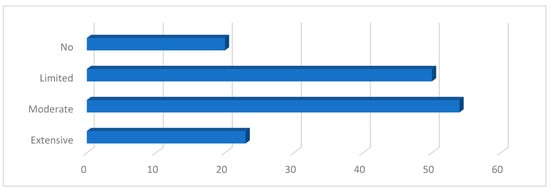
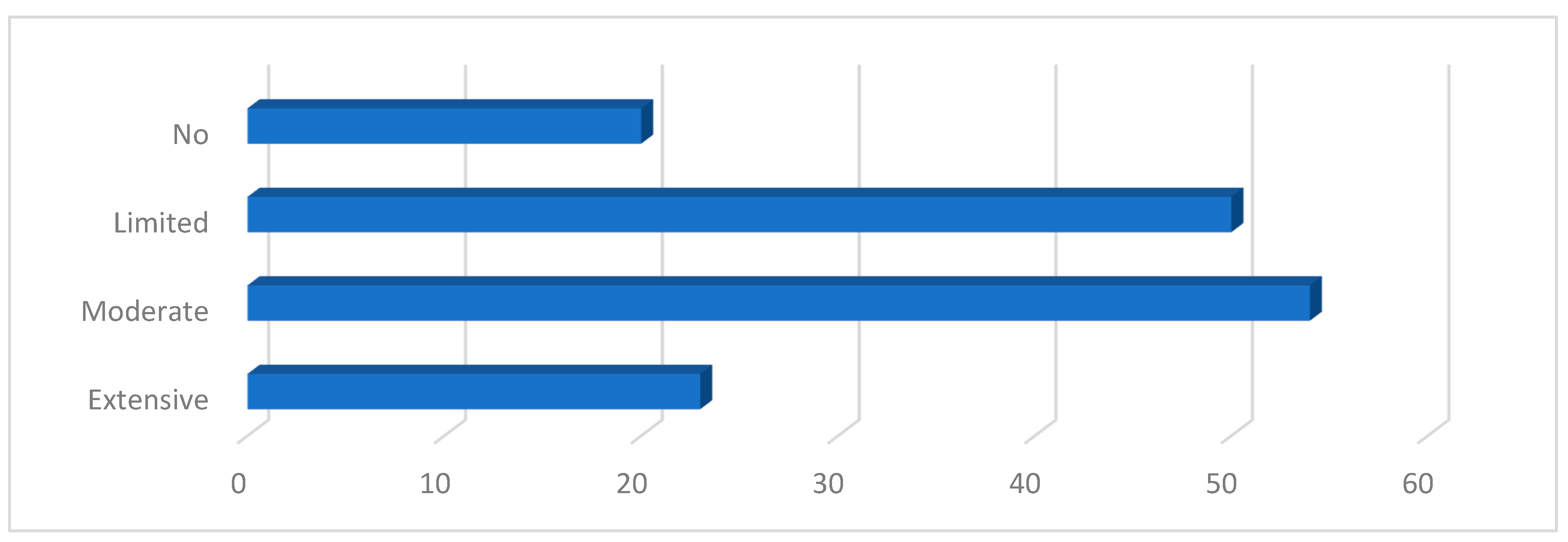
The experience levels of respondents (Figure 1) are categorized into four groups, Extensive, Moderate, Limited, and No experience, along with their respective frequencies. The number of respondents is 147, of which 15.65% had extensive experience. Of note, 36.73% had moderate experience, 34.01% of them had limited experience, and 13.61% had little experience. Most respondents have either Moderate (36.73%) or Limited (34.01%) experience levels. Approximately 15.65% have Extensive experience, while about 13.61% have no experience. This distribution can provide insights into the level of expertise among the respondents, which could influence decisions related to training, resource allocation, or targeting specific skill development programs based on the distribution of experience levels.
Figure 1.
Experience of survey respondents.
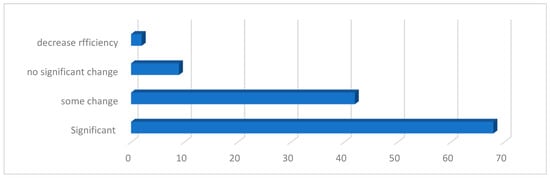
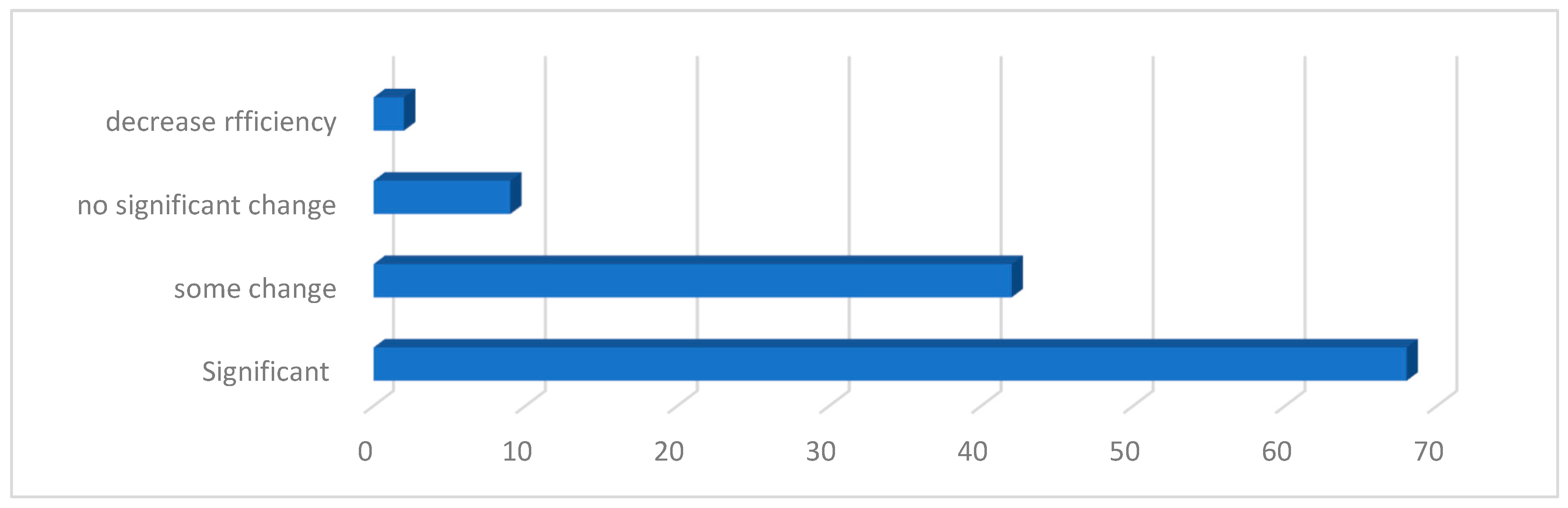
The perception of respondents on the change integration of technology has brought to their company has been analyzed. Figure 2 represents the impact of an integration process on efficiency, categorized into four outcomes: significant change, some change, no significant change, and decreased efficiency. Significant change (68 occurrences, 57.6%)—A majority of cases experienced substantial improvements after integration. Some change (42 occurrences, 35.6%)—A considerable portion saw moderate but noticeable improvements. No significant change (9 occurrences, 7.6%)—A small fraction did not observe any major improvements. Decreased efficiency (2 occurrences, 1.7%)—Very few cases reported negative outcomes.
Figure 2.
Change after technology integration.
Overall Positive Impact: The data suggests that integration is largely beneficial, with 93.2% (110 out of 121 cases) experiencing at least some improvement. Varied Levels of Impact: While a majority (57.6%) reported significant changes, a considerable proportion (35.6%) experienced only moderate improvements, indicating that integration success might depend on various factors such as implementation strategies, organizational readiness, or external conditions. Minimal Negative Impact: Only 1.7% reported decreased efficiency, which could be due to poor execution, system incompatibility, or resistance to change. Possible Challenges: The 7.6% who reported no significant change may indicate that integration efforts were not fully optimized or that the baseline performance was already high. From the analysis results, integration generally leads to positive changes, with over half of the cases experiencing significant improvement. Organizations should investigate why 7.6% did not see a notable impact and why 1.7% faced reduced efficiency. A deeper analysis of factors influencing different outcomes could help maximize integration benefits.
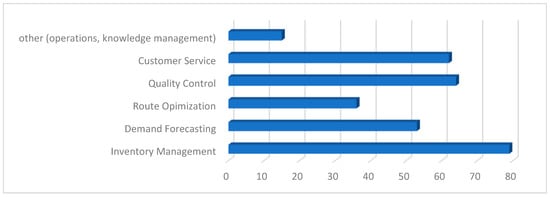
Figure 3 presents the frequency of different technology applications in logistics and supply chain management. Inventory Management (79 occurrences): The most frequently used technology application, indicating its crucial role in supply chain efficiency. Advanced inventory systems, real-time tracking, and automation likely drive this high usage. Demand Forecasting (53 occurrences): A critical function for optimizing stock levels and reducing waste. Technologies such as AI, machine learning, and big data analytics are enhancing accuracy in predicting demand trends. Route Optimization (36 occurrences): Although important for cost and time efficiency, it appears less frequently than other applications. The complexity of logistics networks and variable factors like traffic and weather may impact its lower adoption. Quality Control (64 occurrences): A significant aspect of logistics, ensuring product integrity and compliance with standards. Technologies such as IoT sensors and automated inspection tools are improving quality control processes. Customer Service (62 occurrences): Customer satisfaction is a key driver in logistics, and technology is improving service through chatbots, real-time tracking, and automated issue resolution. Other (operations and knowledge management) (15 occurrences): This category covers various functions, but its lower frequency suggests these technologies are either less developed or less prioritized compared to core logistics functions.
Figure 3.
Use of technology in various logistics firms and ports.
The Analysis and Insights indicate Inventory Management Dominance: The highest frequency suggests businesses prioritize real-time stock visibility and automation to reduce costs and avoid stockouts. Balanced Focus on Quality and Customer Service: The relatively high frequency of these two functions highlights how businesses are focusing on customer satisfaction and product integrity, reflecting consumer-driven market trends. Underutilization of Route Optimization: The relatively lower frequency of route optimization suggests that businesses may still rely on traditional routing methods or that integrating AI-driven route planning is more complex. Potential Growth in Demand Forecasting: As supply chain disruptions become more common, increased investment in AI-powered forecasting tools may be expected in the future. Limited Adoption of Knowledge Management: The low frequency of technology applications in operations and knowledge management suggests that companies may need to improve internal data sharing and decision-making processes.
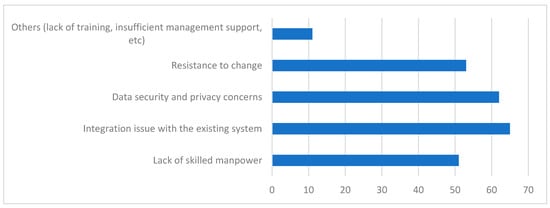
The Results Suggest Enhance Route Optimization: Investing in AI-driven route planning software can help reduce fuel costs and improve delivery times. Expand Demand Forecasting Capabilities: Companies should leverage machine learning and predictive analytics to improve forecasting accuracy. Integrate Quality Control Technologies: Using the IoT and automation in quality control can minimize defects and enhance product reliability. Improve Knowledge Management Systems: Encouraging the use of digital platforms for knowledge sharing can enhance decision-making and operational efficiency. Respondents cited several factors challenging the integration of advanced technology. As shown on Figure 4, integration issues with the existing system were considered the main challenge, followed by data security and privacy issues.
Figure 4.
Challenges affecting technology integration.
4.2.1. Analysis of the Data on Technology Application in Logistics
The data illustrates the frequency of technology adoption across various logistics functions, revealing distinct patterns in organizational priorities and digital maturity. The highest frequency of application is recorded in Inventory Management (79 instances), underscoring the centrality of technology in controlling stock levels, minimizing holding costs, and improving overall supply chain efficiency. This finding aligns with the prevailing industry view that inventory accuracy and responsiveness are critical drivers of competitiveness.
A moderate level of adoption is evident in Quality Control (64 instances) and Customer Service (62 instances). These figures indicate that many organizations recognize the value of technology in ensuring consistent product quality and in fostering positive customer experiences. Such applications can improve defect detection, standard compliance, and real-time responsiveness to customer needs. Demand Forecasting (53 instances) is also part of a moderate level of adoption, highlighting the strategic role of predictive analytics in matching supply capabilities with fluctuating market demand. The widespread application of forecasting tools suggests that companies are increasingly data-driven in their operational planning, seeking to enhance agility and reduce the risks of overstocking or stockouts.
In contrast, Route Optimization (36 instances) registers a comparatively lower frequency of adoption. This may be attributed to the technical complexity, capital requirements, or integration challenges associated with advanced routing solutions, particularly for organizations that rely on legacy transport systems or operate in regions with less developed infrastructure. The least-utilized category, encompassing other operational areas and knowledge management (15 instances), reflects a potential underinvestment in technology-enabled process improvements beyond core logistics activities. This suggests that opportunities remain untapped in leveraging digital tools for enhanced decision-making, cross-functional collaboration, and organizational learning.
Overall, the concentration of technological investment in inventory management and demand forecasting implies a strategic emphasis on cost control, supply chain efficiency, and market responsiveness. The lower adoption rates for route optimization and knowledge management point to implementation challenges, resource constraints, or limited awareness of potential benefits. Addressing these gaps through targeted digital transformation initiatives could enable companies to unlock additional efficiencies, improve service delivery, and strengthen long-term competitiveness.
4.2.2. Interpretation and Analysis
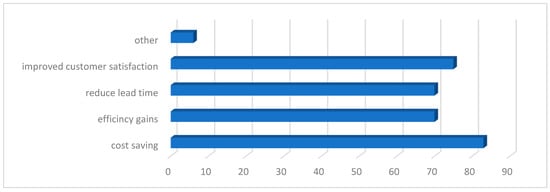
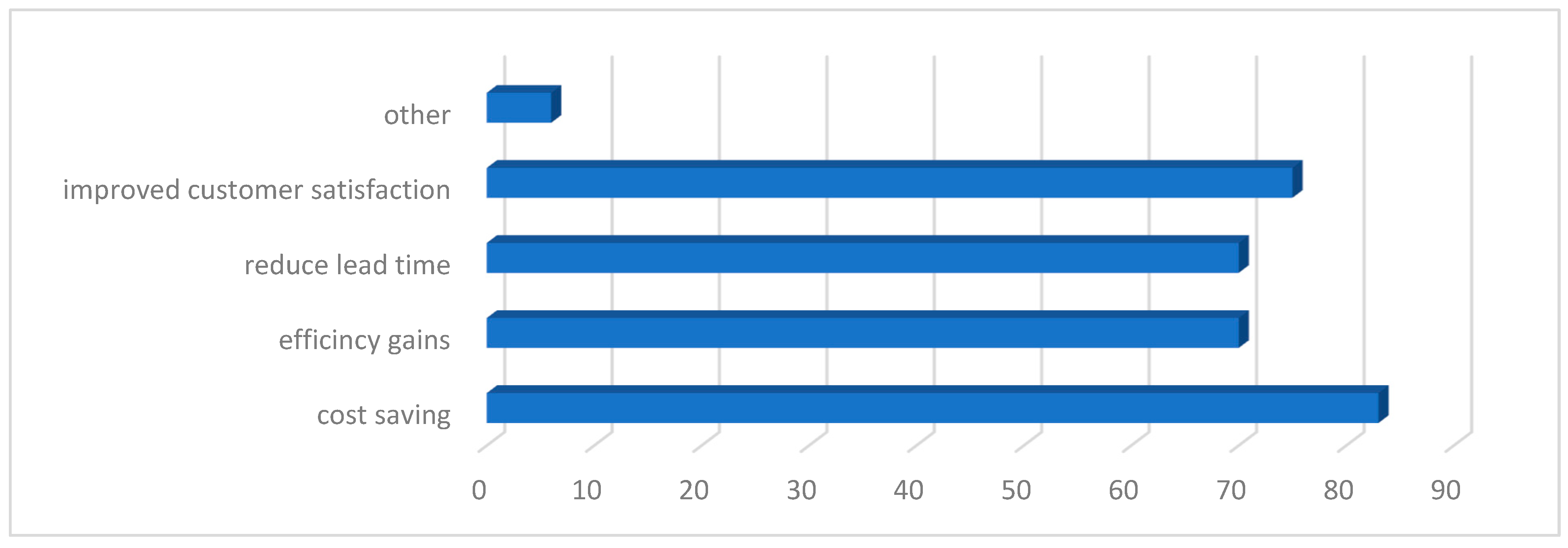
Figure 5 represents the frequency with which different measures of success are cited. Cost saving (83 mentions) is the most frequently cited measure of success, indicating that financial efficiency is a primary concern. Efficiency gains (70 mentions) and reducing lead time (70 mentions) are equally important, highlighting the focus on operational improvements. Improved customer satisfaction (75 mentions) ranks second overall, suggesting that customer experience is nearly as important as cost and operational efficiencies. Six respondents, which is relatively low, show that most success metrics fall within conventional categories. Other (operations and knowledge management) (15 mentions) suggests a niche but significant focus on internal improvements beyond cost and time savings.
Figure 5.
Impact of Technology Integration.
The data indicates that organizations prioritize financial and operational efficiencies, but customer satisfaction is also highly valued. The low frequency of “Other” categories suggests that standardized performance measures dominate decision-making. A possible correlation exists between efficiency, cost savings, and lead time reduction, as these metrics often complement each other. Knowledge management and operational improvements, though less cited, could be growing in importance as organizations focus on long-term sustainability and process optimization.
5. Discussion of Results
The study reveals that the IoT has the highest implementation levels, while that of AI remains moderate and blockchain is minimally applied. This finding is consistent with the literature that identifies the IoT as the most mature, accessible, and widely adopted digital technology in logistics (Chen et al., 2024; Younis et al., 2022). The IoT’s advantage lies in its relatively low barriers to adoption and its prevailing role in tracking, monitoring, and real-time visibility that are essential for logistics operations. The moderate adoption of AI is consistent with the literature stating that globally only 22–26% of ports and logistics firms have integrated AI, subject to a lack of readiness, limited use cases, and low awareness of value (du Plessis et al., 2025). The insights from the interview reveal a similar pattern in the Sultanate of Oman, where respondents identified limited familiarity, moderate confidence, and the need for a clearer understanding of the benefits of AI. These interview findings match the literature by Al Kalbani et al. (2024) and Al-Ajmi et al. (2025), who noted that lack of skills, regulatory framework and variations in technological adoption readiness as critical constraints.
The findings of this study indicated low adoption of blockchain, which is consistent with the reviewed literature (Rejeb et al., 2021; Manzoor et al., 2022), which emphasize its complexity, high integration costs, and the need for cross-stakeholder integration. Although Oman has explored blockchain initiatives—especially at Sohar Port (Khan et al., 2025) the technology remains immature, entailing adoption difficulty. The survey data reveals a larger percentage of respondents replying improvements after the integration of technology, which supports the wider literature that emphasizes operational performance improvements such as efficiency, accuracy, and transparency resulting from technology adoption (Liu & Yuen, 2025; Weerasinghe et al., 2024; du Plessis et al., 2025). Adoption benefits, including cost savings, efficiency, lead time reduction, and improved customer satisfaction, are consistent with the empirical literature review in this study (Chen et al., 2024).
These findings also support SOLS2040’s objectives of enhancing efficiency and facilitating smoother trade operations. Interestingly, the high perceived impact contrasts with the moderate adoption levels, suggesting that even partial or targeted implementations yield tangible value—an observation consistent with Chaibi and Daghrir (2024) on the effects of predictive maintenance and Al-Maqbali et al. (2021) on AI-driven operations at the Port of Salalah. The highest areas of technological application were inventory management, quality control, and customer service, indicating that Omani firms prioritize core operational processes where digital tools generate immediate returns. This is consistent with the literature, which emphasizes that inventory management and quality control benefit heavily from the IoT, automation, and data analytics (Toorajipour et al., 2021; Chen et al., 2024). The comparatively lower adoption of route optimization reflects global challenges identified by Weerasinghe et al. (2024) and du Plessis et al. (2025), including data integration complexity, the dynamic nature of logistics networks, and the need for sophisticated algorithms. The limited use of technologies in knowledge management and operations planning aligns with Al Kalbani et al. (2024), who reported a lack of digital maturity and standards across many Omani logistics providers, which may restrict more advanced forms of digital collaboration and internal information integration.
The descriptive results highlight several persistent challenges, such as implementation difficulties, understanding of technology benefits, and workforce resistance, which have strong alignment with the literature. Implementation difficulty was cited most for AI and blockchain, which were perceived as the most challenging. Moreover, limited awareness was suggested as an important factor to the implementation of AI, which is consistent with du Plessis et al. (2025), who argued that poor understanding is a major inhibitor of AI adoption globally and in the region. Furthermore, workforce and team resistance reinforce earlier Omani studies (Masengu et al., 2024; Al-Ajmi et al., 2025) that point to workforce readiness, skill gaps, and organizational culture as major barriers.
6. Conclusions and Implications
AI holds significant potential to unlock efficiency in Omani seaports by enhancing cargo handling, vessel traffic management, and predictive maintenance. While challenges remain, ongoing advancements and strategic investments in AI technologies are poised to transform the operational landscape of Omani seaports, positioning them as competitive hubs in the global maritime industry. The study reveals a sector transitioning towards digital transformation, with the IoT leading in adoption while blockchain and AI lag due to technical, cognitive, and cultural barriers. There is significant interest in tailored technology solutions, indicating readiness for sector-specific digital models.
AI technologies, including machine learning, computer vision, autonomous vehicles, NLP, and IoT integration, are enhancing the efficiency of seaports worldwide. These technologies improve cargo handling, vessel traffic management, and predictive maintenance, positioning seaports for greater operational success. However, overcoming implementation challenges is crucial for realizing the full potential of AI in this sector. Based on our findings, recommendations include developing regional IoT pilot programs, launching targeted training on blockchain and AI, improving simulation realism, incentivizing digital innovation, and fostering public–private partnerships to enhance digital infrastructure.
Possible Challenges and Future Directions
Despite the promising advancements, several challenges hinder the full-scale adoption of AI in Omani seaports. These include high implementation costs, the need for skilled personnel, and concerns regarding data security. Addressing these challenges requires concerted efforts from port authorities, technology providers, and policymakers. Future research should focus on developing cost-effective AI solutions tailored to the specific needs of Omani seaports. Additionally, fostering collaborations between academic institutions and the maritime industry can help bridge the skills gap and promote innovation in AI applications for seaports (Munim et al., 2020). Future research should focus on successful case studies, applying technology acceptance models, comparative analyses across Gulf countries, and policy studies to align ICT policies with sectoral needs.
Author Contributions
Conceptualization, A.E.A., A.H.A., F.K. and K.S.S.A.K.; methodology, A.E.A. and F.K.; software, A.E.A.; validation, A.E.A., A.H.A., F.K. and K.S.S.A.K.; formal analysis, A.E.A.; investigation, A.E.A., H.Y.A. and S.A.N.A.-R.; data curation, A.E.A., H.Y.A. and S.A.N.A.-R.; writing—original draft preparation, A.E.A.; writing—review and editing, A.E.A., F.K.; visualization, A.E.A.; supervision, A.E.A.; project administration, A.E.A.; funding acquisition, A.E.A., A.H.A., F.K. and K.S.S.A.K. All authors have read and agreed to the published version of the manuscript.
Funding
This research was funded by MoHERI grant number BFP/RGP/ICT/23/054 And The APC was funded by the project.
Institutional Review Board Statement
Ethical review and approval were waived for this study due to it did not involve any particular institution and all individual participants did so voluntarily and with their written informed consent. In addition, all ethical research practices that protected the rights of the participants in this research were followed.
Informed Consent Statement
Informed consent was obtained from all subjects involved in the study.
Data Availability Statement
Data is available, and we can supply the link to access the raw data.
Conflicts of Interest
There are no competing interests to declare.
References
- Abdelfattah, F., Madi, H., Al-Washahi, M., AlAraimi, A., Nagi, S., & Abbas, M. (2025). Harnessing artificial intelligence, business intelligence, and digital technologies for achieving supply chain excellence in Oman: Investigating the mediating role of predictive analytics. Journal of Open Innovation: Technology, Market, and Complexity, 11(4), 100644. [Google Scholar] [CrossRef] [Scilit]
- Al-Ajmi, N., Al-Tamimi, A. N. A. A., & Khudari, M. (2025). Advancing the Oman shipping industry: A comprehensive review of digital transformation adoption and regulatory integration using the extended TOE framework. International Journal of Environmental Sciences, 11(9s), 347–366. [Google Scholar] [CrossRef] [Scilit]
- Al-Hajri, A., Abdella, G. M., Al-Yafei, H., Aseel, S., & Hamouda, A. M. (2024). A systematic literature review of the digital transformation in the Arabian Gulf’s oil and gas sector. Sustainability, 16(15), 6601. [Google Scholar] [CrossRef] [Scilit]
- Al Kalbani, A., Masengu, R., & Al Habsi, J. (2024, February 12–14). Challenges and opportunities in implementing digital solutions in cold chain logistics in Oman. 14th International Conference on Industrial Engineering and Operations Management, Dubai, United Arab Emirates. [Google Scholar] [CrossRef] [Scilit]
- Al-Maqbali, K. H., Slimi, Z., & Balasa, A. (2021). The pros and cons of artificial intelligence use in the logistics sector in Oman. European Journal of Business Management and Research, 6(4), 197–208. [Google Scholar] [CrossRef] [Scilit]
- Ba-Awain, A. M., & Daud, D. (2018). Oman as a future logistics hub: A conceptual study. International Journal of Economics, Commerce and Management, 6(6), 141–148. [Google Scholar]
- Ben-Daya, M., Hassini, E., & Zied Bahroun, Z. (2019). Internet of things and supply chain management: A literature review. International Journal of Production Research, 57(15–16), 4719–4742. [Google Scholar] [CrossRef] [Scilit]
- Chaibi, M., & Daghrir, J. (2024). Artificial intelligence for predictive maintenance of port equipment: A revolution in progress. In M. Chouchane, M. Abdennadher, N. Aifaoui, F. Chaari, S. Bouaziz, Z. Affi, M. Haddar, L. Romdhane, & A. Benamara (Eds.), Design and modeling of mechanical systems—VI. CMSM 2023. Lecture notes in mechanical engineering. Springer. [Google Scholar] [CrossRef] [Scilit]
- Chen, W., Men, Y., Fuster, N., Osorio, C., & Juan, A. A. (2024). Artificial intelligence in logistics optimization with sustainable criteria: A review. Sustainability, 16(21), 9145. [Google Scholar] [CrossRef] [Scilit]
- Creswell, J. W., & Clark, V. L. P. (2017). Designing and conducting mixed methods research. Sage Publications. [Google Scholar]
- Dillman, D. A. (2018). Internet, phone, mail, and mixed-mode surveys: The tailored design method (4th ed.). John Wiley & Sons. [Google Scholar]
- Dinh, G. H., Pham, H. T., Nguyen, L. C., Dang, H. Q., & Pham, N. D. K. (2024). Leveraging artificial intelligence to enhance port operation efficiency. Polish Maritime Research, 31(2), 140–155. [Google Scholar] [CrossRef] [Scilit]
- Di Vaio, A., & Varriale, L. (2019). Digitalization in the sea-land supply chain: Experiences from Italy in rethinking the port operations within inter-organizational relationships. Production Planning and Control, 31(2–3), 220–232. [Google Scholar] [CrossRef] [Scilit]
- du Plessis, M. J., Gerber, R., Goedhals-Gerber, L. L., & van Eeden, J. (2025). Shaping the future of freight logistics: Use cases of artificial intelligence. Sustainability, 17(4), 1355. [Google Scholar] [CrossRef] [Scilit]
- Guest, G., Bunce, A., & Johnson, L. (2006). How many interviews are enough?: An experiment with data saturation and variability: An experiment with data saturation and variability. Field Methods, 18(1), 59–82. [Google Scholar] [CrossRef] [Scilit]
- Haifa, B. A.-I., & Aksoy, M. S. (2024). IoTs in supply chain management. Journal of Advanced Management Sciences, 12(2), 97–102. [Google Scholar]
- Ivankova, N. V., Creswell, J. W., & Stick, S. L. (2006). Using mixed-methods sequential explanatory design: From theory to practice. Field Methods, 18(1), 3–20. [Google Scholar] [CrossRef] [Scilit]
- Johnson, J. L., & O’Leary-Kelly, A. M. (2003). Simulation modelling and analysis (4th ed.). McGraw-Hill. [Google Scholar]
- Kembro, J. H., & Norrman, A. (2025). A strategic perspective on automated warehouse systems in retail: Insights from a multiple case study. International Journal of Physical Distribution & Logistics Management, 55(11), 57–91. [Google Scholar] [CrossRef] [Scilit]
- Khan, M. Z., Kumar, A., & Sahu, A. K. (2025). Blockchain applications in supply chain management: A systematic review of reviews. Global Knowledge, Memory and Communication, 74(3–4), 1191–1208. [Google Scholar] [CrossRef] [Scilit]
- Kouhizadeh, M., Saberi, S., & Sarkis, J. (2021). Blockchain technology and the sustainable supply chain: Theoretically exploring adoption barriers. International Journal of Production Economics, 231, 107831. [Google Scholar] [CrossRef] [Scilit]
- Liu, X., & Yuen, K. F. (2025). A systematic review on artificial intelligence applications in seaports—A network analysis approach. Expert Systems with Applications, 289, 128309. [Google Scholar] [CrossRef] [Scilit]
- Manzoor, R., Sahay, B. S., & Singh, S. K. (2022). Blockchain technology in supply chain management: An organizational theoretic overview and research agenda. Annals of Operations Research, 348, 1307–1354. [Google Scholar] [CrossRef] [Scilit]
- Masengua, R., Ruzive, B., El Din, M. S., Al Harrasi, N. H., & Al Kalbani, A. (2024). E-readiness of the Sultanate of Oman’s ports in improving logistics and supply chain global competitiveness. Cogent Social Sciences, 10(1), 2396953. [Google Scholar] [CrossRef] [Scilit]
- Ministry of Transport, Communications and Information Technology (MTCIT). (2025). National logistics strategy. Available online: https://mtcit.gov.om/sectors/oman-logistics-center/logistics (accessed on 15 December 2025).
- Moosavi, J., Naeni, L. M., Fathollahi-Fard, A. M., & Fiore, U. (2021). Blockchain in supply chain management: A review, bibliometric, and network analysis. In Environmental science and pollution research, sustainable supply chain network design. Springer. [Google Scholar] [CrossRef] [Scilit]
- Munim, Z. H., Dushenko, M., Jimenez, V. J., Shakil, M. H., & Imset, M. (2020). Big data and artificial intelligence in the maritime industry: A bibliometric review and future research directions. Maritime Policy and Management, 47(5), 577–597. [Google Scholar] [CrossRef] [Scilit]
- Palinkas, L. A., Horwitz, S. M., Green, C. A., Wisdom, J. P., Duan, N., & Hoagwood, K. (2015). Purposeful sampling for qualitative data collection and analysis in mixed method implementation research. Administration and Policy in Mental Health and Mental Health Services Research, 42, 533–544. [Google Scholar] [CrossRef] [Scilit]
- Perman, A., Dovletgeldi, S., Begench, A., Bayramgeldi, G., & Tahyr, A. (2025). Digital transformation in logistics: Key drivers, challenges, and sustainable solutions for the modern supply chain. North American Academic Research, 8(4), 152–160. [Google Scholar] [CrossRef]
- Port of Rotterdam. (2022). Digitalisation: The smart port of the future. Port of Rotterdam. Available online: https://www.portofrotterdam.com/en/port-future/digitisation (accessed on 15 December 2025).
- Port Technology Team. (2021). Port of Los Angeles launches new predictive tool to boost visibility. Port Technology International. Available online: https://www.porttechnology.org/news/port-of-los-angeles-launches-new-predictive-tool-to-boost-visibility/ (accessed on 10 October 2023).
- Rejeb, A., Rejeb, K. S., & Treiblmaier, H. (2021). Blockchain technologies in logistics and supply chain management: A bibliometric review. Logistics, 5, 72. [Google Scholar] [CrossRef] [Scilit]
- Sakeri, N. B., Gohari, A., Mokhtar, K., Isiacik Colak, A. T., Hanafiah, R. M., Oloruntobi, O., Abd Manan, T. S., Ab Latip, A. S., & Teh, H. (2025). Revolutionising freight logistics: The role of blockchain in cargo handling operations. Journal of Maritime Logistics, 5(1), 56–65. [Google Scholar] [CrossRef] [Scilit]
- Simion, D., Postolache, F., Fleacă, B., & Fleacă, E. (2024). AI-Driven predictive maintenance in modern maritime transport—Enhancing operational efficiency and reliability. Applied Sciences, 14(20), 9439. [Google Scholar] [CrossRef] [Scilit]
- Sun, X., Yu, H., Solvang, W. D., & Wang, Y. (2021). The application of Industry 4.0 technologies in sustainable logistics: A systematic literature review (2012–2020). Environmental Science and Pollution Research, 29, 9560–9591. [Google Scholar] [CrossRef] [Scilit]
- Toorajipour, R., Sohrabpour, V., Nazarpour, A., Oghazi, P., & Fischl, M. (2021). Artificial intelligence in supply chain management: A systematic literature review. Journal of Business Research, 122, 502–517. [Google Scholar] [CrossRef] [Scilit]
- Weerasinghe, B. A., Perera, H. N., & Bai, X. (2024). Optimizing container terminal operations: A systematic review of operations research applications. Maritime Economics & Logistics, 26, 307–341. [Google Scholar] [CrossRef] [Scilit]
- Younis, H., Sundarakani, B., & Alsharairi, M. (2022). Applications of artificial intelligence and machine learning within supply chains: Systematic review and future research directions. Journal of Modelling in Management, 17(3), 916–940. [Google Scholar] [CrossRef] [Scilit]
- Zhang, Y., & Liu, N. (2022). Blockchain adoption in serial logistics services chain: Value and challenge. International Journal of Product Research, 61(13), 43744401. [Google Scholar] [CrossRef] [Scilit]

Disclaimer/Publisher’s Note: The statements, opinions and data contained in all publications are solely those of the individual author(s) and contributor(s) and not of MDPI and/or the editor(s). MDPI and/or the editor(s) disclaim responsibility for any injury to people or property resulting from any ideas, methods, instructions or products referred to in the content. |
© 2026 by the authors. Licensee MDPI, Basel, Switzerland. This article is an open access article distributed under the terms and conditions of the Creative Commons Attribution (CC BY) license.