1. Introduction
Employee retention has become one of the most pressing challenges for contemporary organizations, amplified by digital transformation, labor market fluidity, and escalating global competition for skilled talent (
Hauer et al., 2021;
Nguyen et al., 2022). As hybrid and remote work arrangements diffuse across industries, retention decisions increasingly reflect multi-level forces that extend beyond individual preferences, encompassing relational, organizational, and institutional determinants. This shift underscores the need for conceptual frameworks capable of explaining why employees remain or leave, not merely as psychological choices but as outcomes embedded in broader social and structural contexts.
Recent managerial reports and workforce-retention studies highlight that rising turnover rates are reshaping organizational dynamics in profound ways (
Fong et al., 2024). Voluntary turnover continues to impose substantial financial burdens on organizations, signaling that employee departures represent systemic risks rather than isolated events (
Work Institute, 2024). 42% of voluntary leavers believe their exit could have been prevented through improved management or organizational practices, pointing to structural shortcomings in retention mechanisms(
Tatel & Wigert, 2024).
Embeddedness theory provides a foundational lens for understanding multi-level dynamics in organizational behavior and HRM. Its intellectual roots lie in
Polanyi’s (
1944) proposition that economic actions are inseparable from social and institutional contexts, emphasizing that decision-making is shaped by cultural norms and collective expectations.
Granovetter (
1985) advanced this view by shifting attention to the micro–relational level, arguing that actors are embedded in social networks where trust, reciprocity, and network position condition organizational behavior. Building on this foundation, subsequent scholarship has incorporated additional classical contributions that deepen the theoretical basis of embeddedness.
Coleman (
1990) highlighted the role of social capital and institutionalized norms in coordinating collective action, foregrounding structural conditions that enable or constrain individual choices.
Uzzi (
1997) focused on relational embeddedness within organizational networks, demonstrating how strong and weak ties differentially influence knowledge flows, innovation, and economic performance.
Boyer and Hollingsworth (
1997) extended the perspective to institutional embeddedness, showing how organizational practices are shaped by broader governance systems and institutional logics.
These distinct perspectives collectively reveal that embeddedness is not a single construct but an evolving multilevel framework encompassing relational, structural, and institutional dimensions. This theoretical maturation set the stage for HRM-specific applications, most notably job embeddedness (
Mitchell et al., 2001), which reframed employee retention as a function of fit, links, and sacrifice. The framework has since been applied to expatriate adjustment (
Lee et al., 2004), employee engagement (
Aftab et al., 2024), and cross-cultural management contexts (
Ho et al., 2022;
Ramesh & Gelfand, 2010), illustrating the theory’s adaptability across organizational settings and its capacity to integrate psychological, relational, and institutional mechanisms.
Despite extensive empirical research, the field remains theoretically fragmented and empirically dispersed. Scholars continue to debate the roles of social structures, trust, and network strength in shaping retention outcomes, and prior reviews often focus on isolated constructs or limited time spans, leaving the conceptual evolution, thematic diversification, and emerging organizational implications of embeddedness in HRM insufficiently synthesized—particularly in the context of digital work, hybrid arrangements, and post-pandemic restructuring.
To address these gaps, this study conducts the first comprehensive bibliometric and science-mapping analysis of embeddedness theory in HRM, synthesizing 562 peer-reviewed articles published between 1995 and 2025. In this study, “embeddedness” is defined in line with its classical foundations (
Polanyi, 1944;
Granovetter, 1985) and its HRM operationalization as job embeddedness (
Mitchell et al., 2001). Articles that use the term in a purely descriptive sense—without grounding in relational, structural, or institutional mechanisms—were excluded. This ensures that the bibliometric analysis captures literature that meaningfully engages with embeddedness as a multi-level explanatory framework for employee retention. By analyzing co-citation networks, co-word structures, and temporal keyword trends, we (1) trace the developmental trajectory of embeddedness research, (2) identify conceptual clusters and cross-level integration patterns, and (3) reveal emerging research frontiers relevant to digital transformation, knowledge ecosystems, and workforce volatility. Through this approach, the study clarifies theoretical ambiguities, maps long-term intellectual shifts, and advances an integrative understanding of embeddedness as both a psychological mechanism and a structural condition underlying employee retention and organizational sustainability. These insights provide practical guidance for HRM interventions in hybrid, remote, and digitally mediated work environments.
2. Methodology
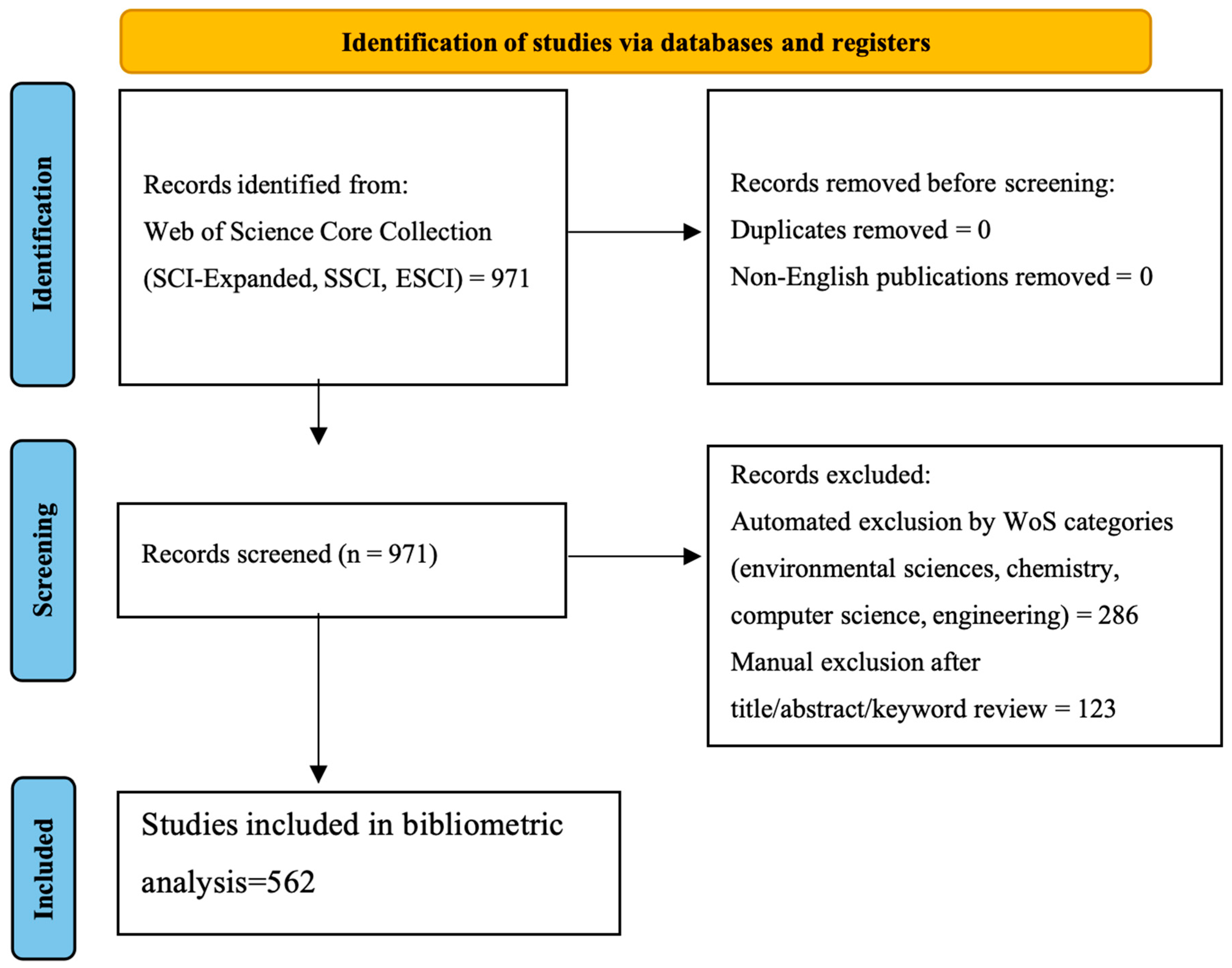
This study employs a systematic review and bibliometric analysis guided by the PRISMA 2020 framework (
Page et al., 2021) to ensure transparency, replicability, and conceptual rigor. The detailed literature search and screening process is illustrated in
Figure 1. The objectives are to map the developmental trajectory of embeddedness theory in HRM, identify key thematic clusters and influential contributors, and examine emerging trends and intellectual frontiers in the field from 1995 to 2025. Given that the term “embeddedness” has been applied across multiple disciplines—from sociology and organizational behavior to ecology and computer science—particular care was taken to establish clear theoretical boundaries. The focus is on research that engages directly with the theoretical lineage of embeddedness, particularly the foundational perspectives of
Polanyi (
1944) and
Granovetter (
1985), while excluding incidental uses in unrelated contexts. The study period was selected to reflect the chronological diffusion of embeddedness theory into HRM scholarship, with the mid-1990s marking its initial adoption in turnover and broader HRM research, followed by progressive theoretical and empirical development in subsequent decades.
2.1. Data Source and Search Strategy
Bibliographic data were retrieved from the Web of Science Core Collection (SCI-Expanded, SSCI, ESCI) on 1 June 2025, chosen for its comprehensive coverage of peer-reviewed journals in management and social sciences and its high bibliographic quality required for network and citation analyses.
A Boolean search targeting titles, abstracts, author keywords, and Keywords Plus was conducted as follows: TS = (“embeddedness” OR “job embeddedness”) AND (“human resource management” OR HRM OR “employee retention” OR turnover OR “organizational behavior” OR “organizational commitment” OR “talent management”).
This strategy was designed to capture studies grounded in embeddedness theory as applied to HRM outcomes, emphasizing conceptual relevance over mere term occurrence. The initial search yielded 971 records. To ensure consistency in citation-based metrics and maintain conceptual focus, only journal articles and review papers were retained, whereas conference proceedings, editorials, book chapters, and early-access documents were excluded.
2.2. Screening and Eligibility Criteria
Given the interdisciplinary use of “embeddedness,” a two-stage screening procedure was employed to ensure conceptual alignment with HRM scholarship.
In the first stage, publications were filtered automatically using Web of Science subject categories to exclude works clearly outside organizational or HRM contexts, such as ecology, environmental sciences, materials engineering, and computer science, where embeddedness refers to biophysical or algorithmic phenomena unrelated to workplace behavior.
In the second stage, titles, abstracts, and author keywords were manually examined to verify substantive engagement with embeddedness theory. Only studies explicitly engaging with the theoretical constructs of
Polanyi (
1944) or
Granovetter (
1985), or extending their embeddedness framework within HRM contexts, were retained. Eligible documents addressed HRM-relevant themes such as voluntary turnover, employee retention, socialization, organizational commitment, work design, and relational or structural embeddedness. Following this procedure, 562 publications formed the final dataset.
2.3. Metadata Quality Assessment and Analytical Tools
High-quality metadata is essential for reliable bibliometric analysis, as incomplete or inaccurate information may bias metrics such as citation counts, co-authorship networks, and keyword co-occurrence patterns. Before conducting analyses, metadata completeness and accuracy were systematically assessed. As summarized in
Table 1, all core bibliographic fields—including authorship, affiliations, cited references, document types, journal names, publication years, and corresponding author details—were complete. Minor gaps were observed in abstracts (0.53% missing), Keywords Plus (2.67%), DOIs (2.85%), and author keywords (8.36%). These missing fields were documented but did not lead to exclusion of records, as their proportion was minimal and did not compromise network or citation analyses. Overall, the metadata quality was deemed excellent and sufficient for robust bibliometric analyses.
For the bibliometric analysis, we employed the Bibliometrix package (v4.3.0) in R, complemented by the Biblioshiny web interface, to systematically examine publication trends, citation dynamics, co-authorship networks, keyword co-occurrence structures, and related analyses. To enhance visualization and capture temporal patterns, OriginPro 2024b was used to generate detailed time-series plots of annual publication outputs and citation dynamics, while Python 3.10.5, with libraries such as Pandas, Matplotlib, and Seaborn, facilitated data preprocessing and the creation of customized visualizations. This multi-tool framework ensured a visually coherent representation of complex bibliometric data.
3. Results
This section presents the results of the bibliometric analysis on embeddedness research in the field of human resource management. The findings are organized around five key dimensions: the developmental trajectory of the literature, conceptual structures revealed through co-word analysis, influential publication sources and contributors, and emerging research trends.
3.1. Development Trajectory of Embeddedness Research
3.1.1. Annual Publication Trends
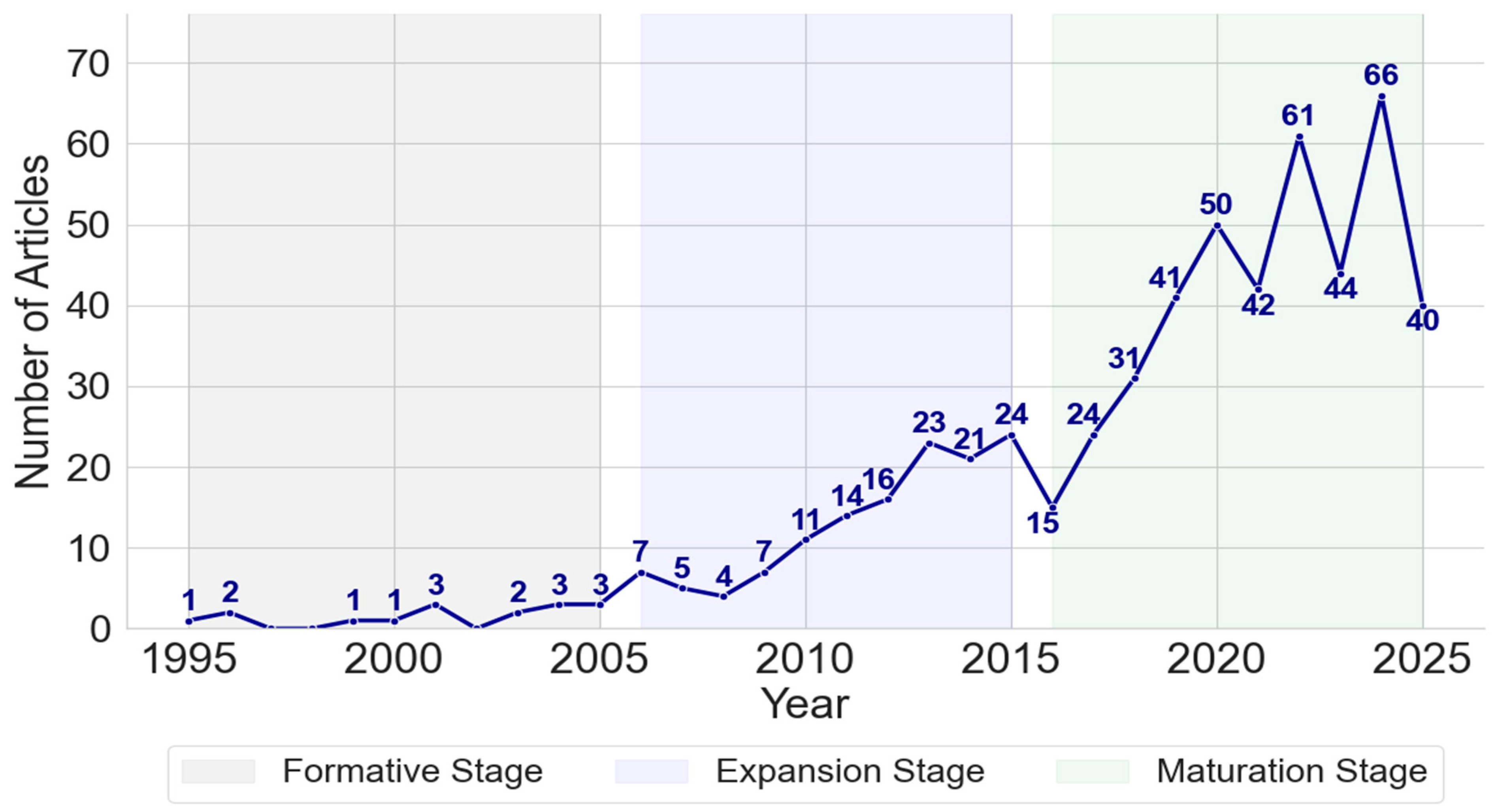
Figure 2 illustrates the annual distribution of publications over the 30-year period. During the formative stage (1995–2005), scholarly engagement with embeddedness in HRM was limited and sporadic. Annual publication output ranged from one to three articles, with several years (1997, 1998, 2002) reporting no publications. The total number of publications in this stage remained below 20, reflecting the conceptual infancy of the field. This low publication volume can be attributed to several factors: the integration of embeddedness theory, originally grounded in sociology and economic sociology (
Polanyi, 1944;
Granovetter, 1985), into HRM was still nascent. Early studies focused largely on conceptual frameworks linking employee retention to social and organizational contexts, and empirical methods were limited by small sample sizes and narrow industry focus. This stage laid the theoretical groundwork for subsequent interdisciplinary exploration.
In the expansion stage (2006–2015), research output increased steadily, rising from 7 publications in 2006 to 24 in 2015, with a notable milestone of 11 publications in 2010—over three times the average of the previous decade.
The maturation stage (2016–2025) witnessed a dramatic surge in output, from 15 publications in 2016 to a peak of 66 in 2024, with a slight decrease to 40 publications in 2025, likely due to incomplete data collection. This stage accounted for over half of the total publications in the dataset. The trajectory demonstrates not only the growing academic interest but also the gradual theoretical consolidation of embeddedness within HRM.
3.1.2. Shifts in Research Focus
As illustrated in
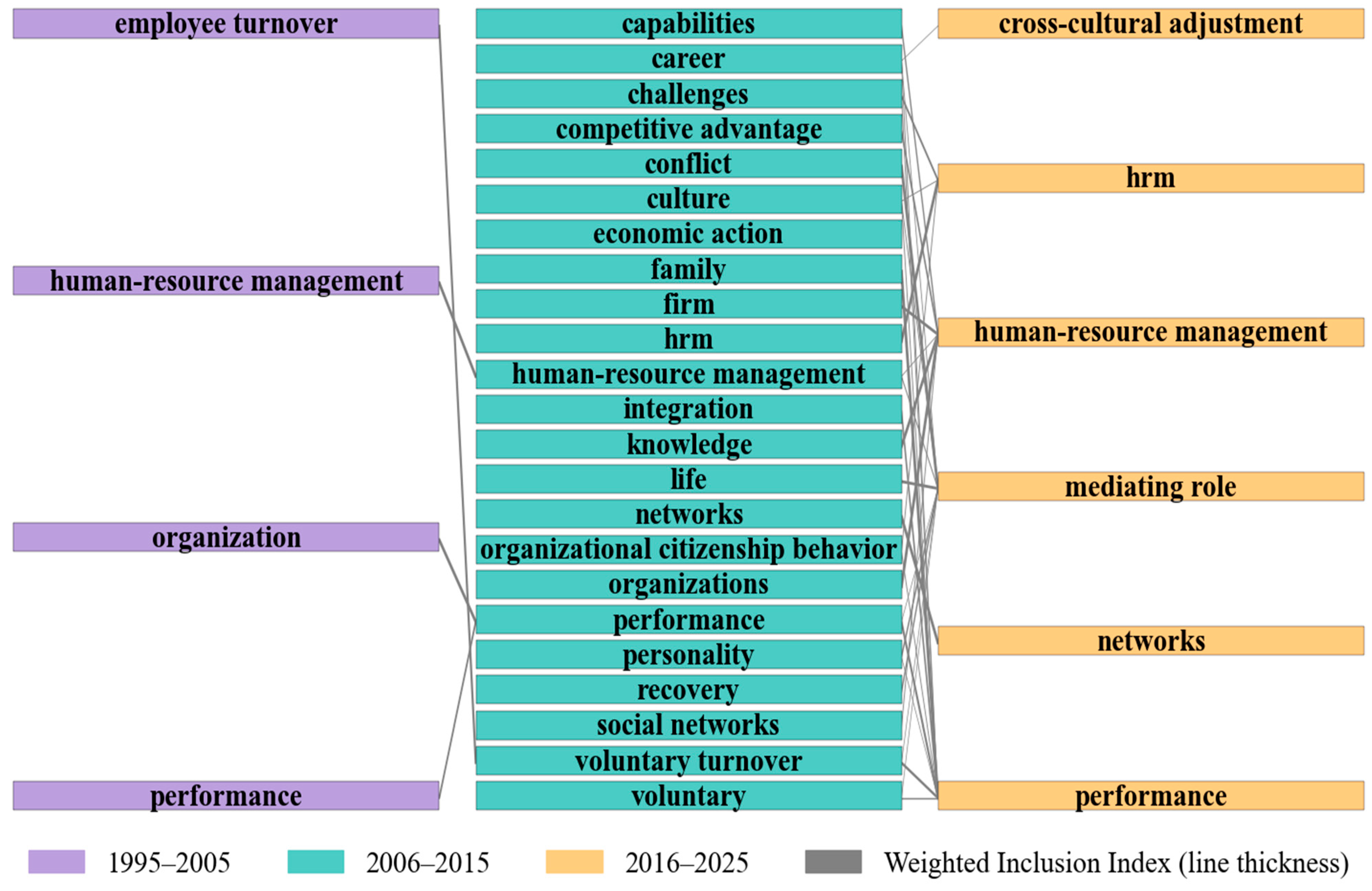
Figure 3, the thematic evolution of embeddedness research in HRM reveals a clear three-stage trajectory from foundational HR outcomes to multidimensional expansion and subsequent theoretical refinement.
The formative stage emphasized foundational HR outcomes such as “employee turnover,” “organization,” and “performance,” reflecting early attempts to link structural and relational contexts with observable retention outcomes. Research was largely conceptual, with limited empirical validation.
These early studies were instrumental in defining the core dimensions of embeddedness—fit, links, and sacrifice—providing a theoretical basis for understanding voluntary turnover. However, their narrow focus on individual-level outcomes and lack of empirical testing limited their immediate applicability across diverse organizational settings.
During the expansion stage, research themes diversified, including “voluntary turnover,” “capabilities,” “knowledge,” “culture,” “organizational citizenship behavior,” “networks,” “competitive advantage,” “integration,” and “firm.” The thematic density increased, indicating interdisciplinary engagement and methodological pluralism. Embeddedness began to be treated as a multidimensional phenomenon embedded in social, organizational, and cultural contexts. This stage illustrates how embeddedness theory bridged HRM and strategic management, emphasizing not only retention but also value creation through social networks, knowledge flow, and organizational culture. Studies increasingly considered contextual moderators such as national culture, industry type, and team structure, reflecting a growing recognition that embeddedness mechanisms operate differently across settings.
In the maturation stage, research shifted toward mechanisms and boundary conditions, with emerging themes such as “mediating role,” “cross-cultural adjustment,” “networks.” Notably, “performance” re-emerged as a central node, reflecting its integration into complex, multi-path models of HRM outcomes. Thematic evolution across the three stages demonstrates progressive intellectual development—from early conceptual exploration, through interdisciplinary expansion, to theoretical refinement and contextual nuance.
3.1.3. Influential Works
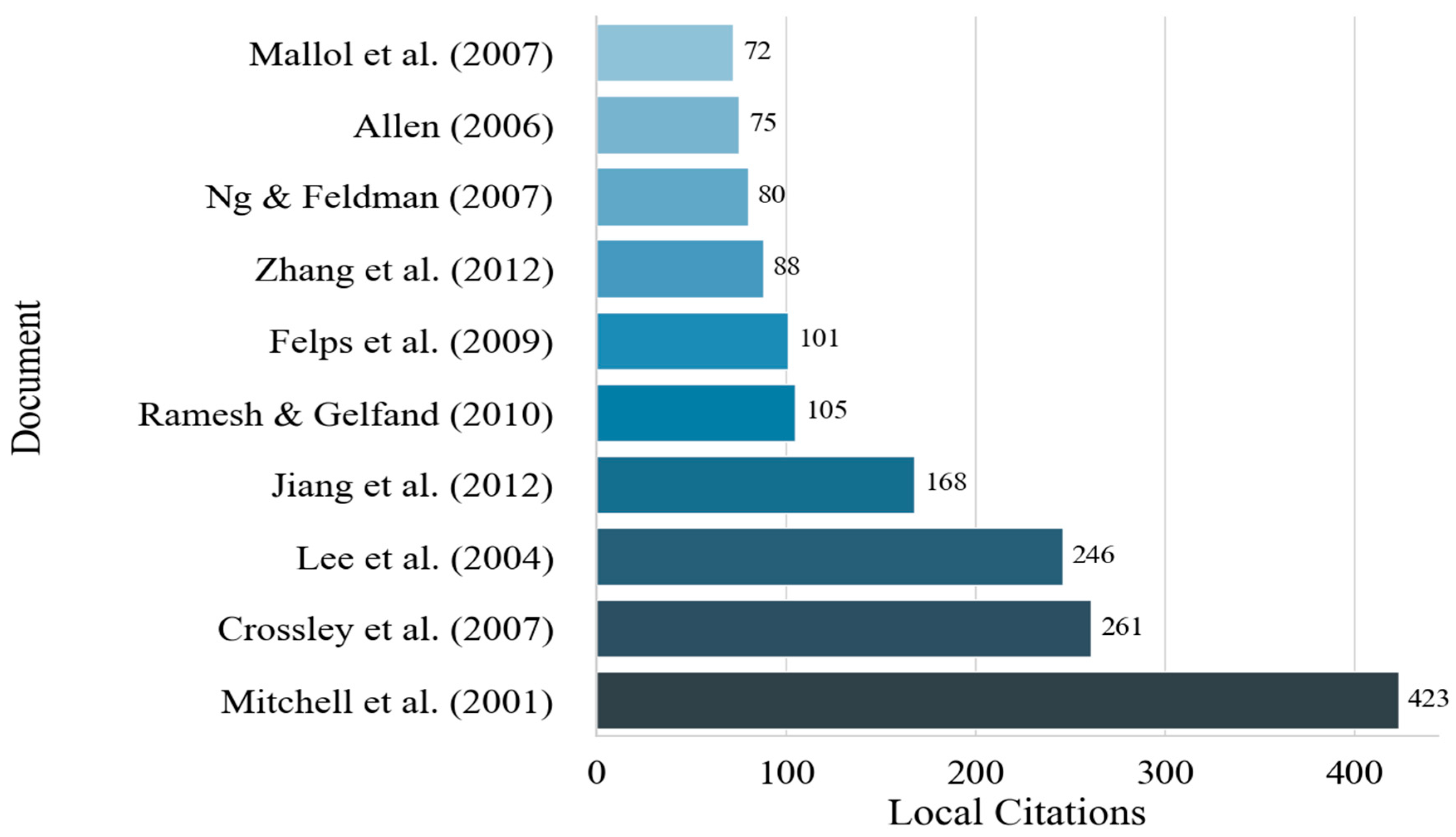
Several publications shaped the intellectual trajectory of embeddedness in HRM (
Figure 4).
Mitchell et al. (
2001, 423 local citations) operationalized job embeddedness, providing the first robust framework linking fit, links, and sacrifice to voluntary turnover.
Crossley et al. (
2007, 261 citations) developed a global measure and validated its predictive power across diverse contexts.
Lee et al. (
2004, 246 citations) extended the unfolding model of turnover, while
Ramesh and Gelfand (
2010, 105 citations) introduced cross-cultural perspectives by examining Indian workers.
Felps et al. (
2009, 101 citations)) explored meso-level diffusion through team networks.
Jiang et al. (
2012, 168 citations)) conducted a meta-analysis demonstrating that organizational embeddedness is a stronger predictor of turnover than community embeddedness. These works collectively illustrate the evolution of methodological rigor and theoretical breadth in the field. For example, early operationalization enabled empirical testing of turnover mechanisms, while subsequent cross-cultural and network-based studies expanded the boundary conditions and generalizability of embeddedness theory.
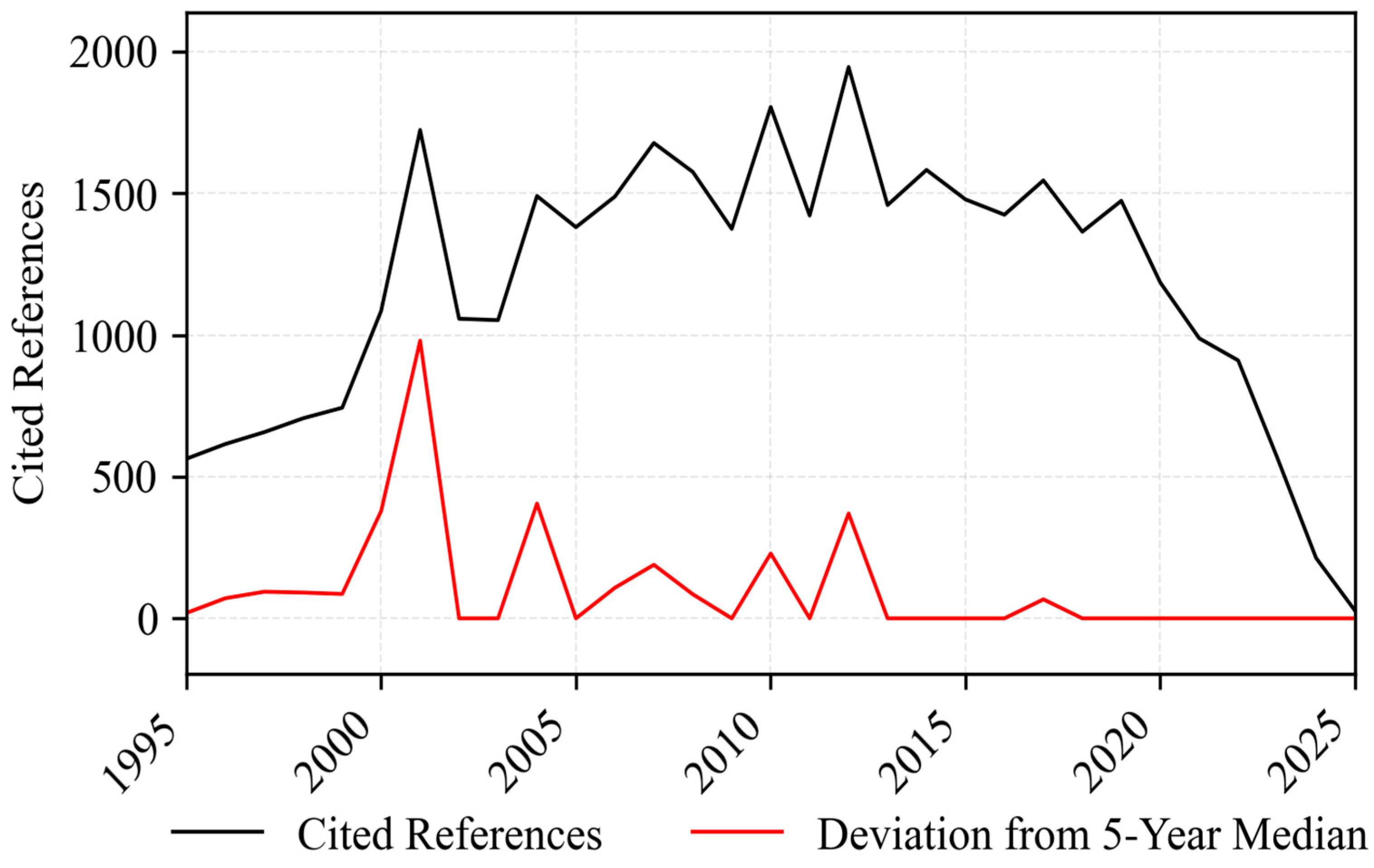
Citation dynamics show that 2012 had the highest total local citations (1945), reflecting theoretical convergence and high influence(
Figure 5). Earlier, 2001 represented a foundational inflection point (1723 citations), highlighting Mitchell et al.’s seminal contribution. Other pivotal years include 2007, 2008, and 2014, each exceeding 1500 citations, indicative of the theory’s penetration into multiple HRM subfields. Collectively, these works form core nodes in the co-citation network, illustrating how embeddedness evolved from a novel construct into a central and versatile framework within HRM, adaptable to diverse organizational and cultural contexts.
3.2. Leading Contributors and Publication Outlets
The analysis of institutional and national contributions provides insight into the global landscape of embeddedness research in HRM.
Table 2 presents the most productive institutions, with Eastern Mediterranean University leading the list with 41 articles, followed by the University of Washington (25) and Georgetown University (24). Universities in China, including Renmin University of China (20) and Peking University (11), also contributed significantly, highlighting the increasing role of emerging research hubs in shaping the international discourse. Other notable institutions, such as Edith Cowan University, the University of Hong Kong, and Arizona State University, further demonstrate the geographic and disciplinary diversity of contributors to the field.
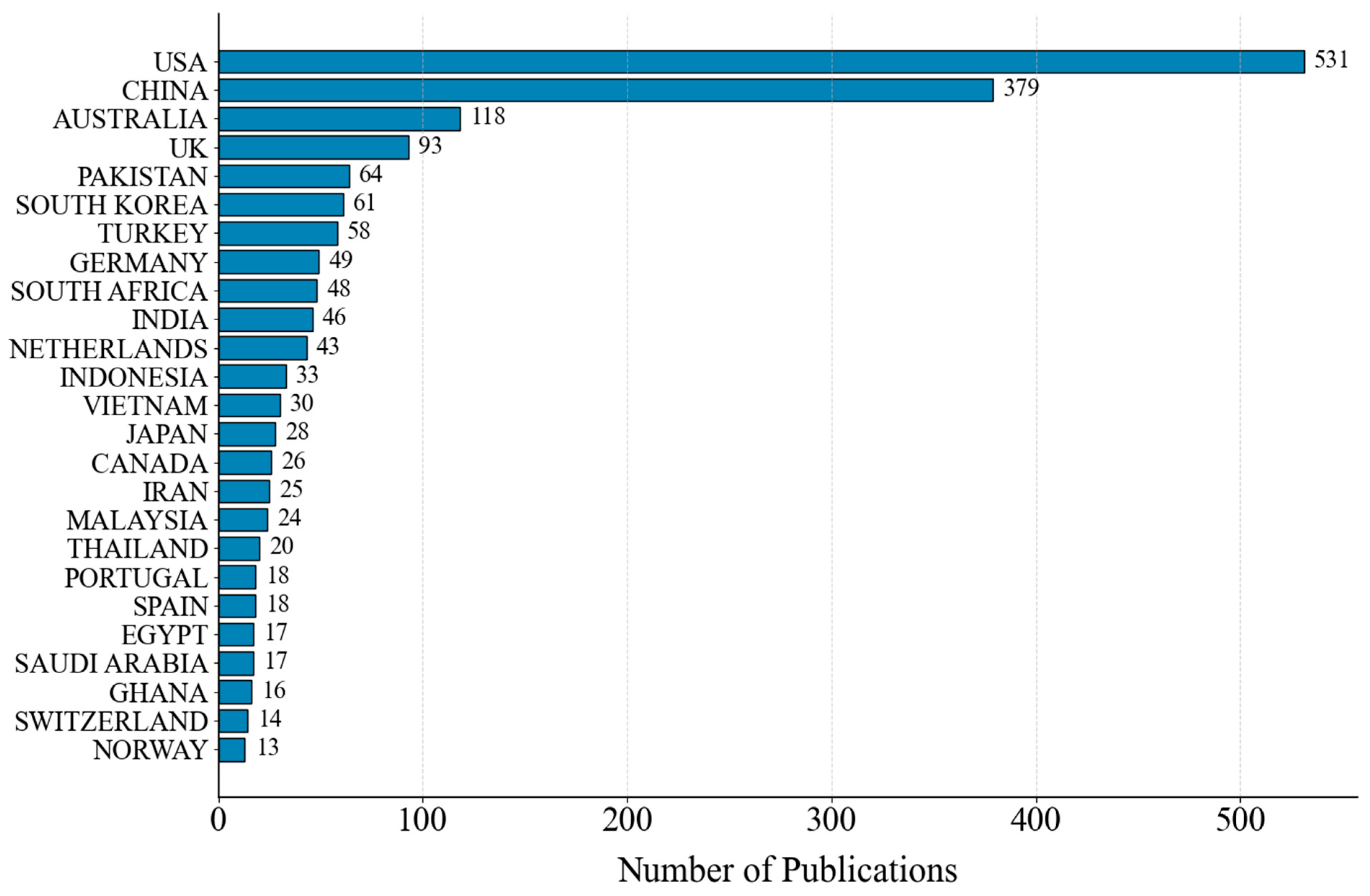
At the national level (
Figure 6), the United States dominates with 531 publications, reflecting its long-standing research infrastructure, funding availability, and established scholarly networks in HRM and organizational studies. China ranks second with 379 publications, indicative of its growing influence in the global HRM research landscape and its engagement with emerging-market contexts. Australia (118) and the United Kingdom (93) also represent important contributors, while countries such as Norway, Switzerland, Ghana, South Africa, India, and Germany illustrate a broader and more distributed engagement with embeddedness theory across diverse institutional and cultural settings.
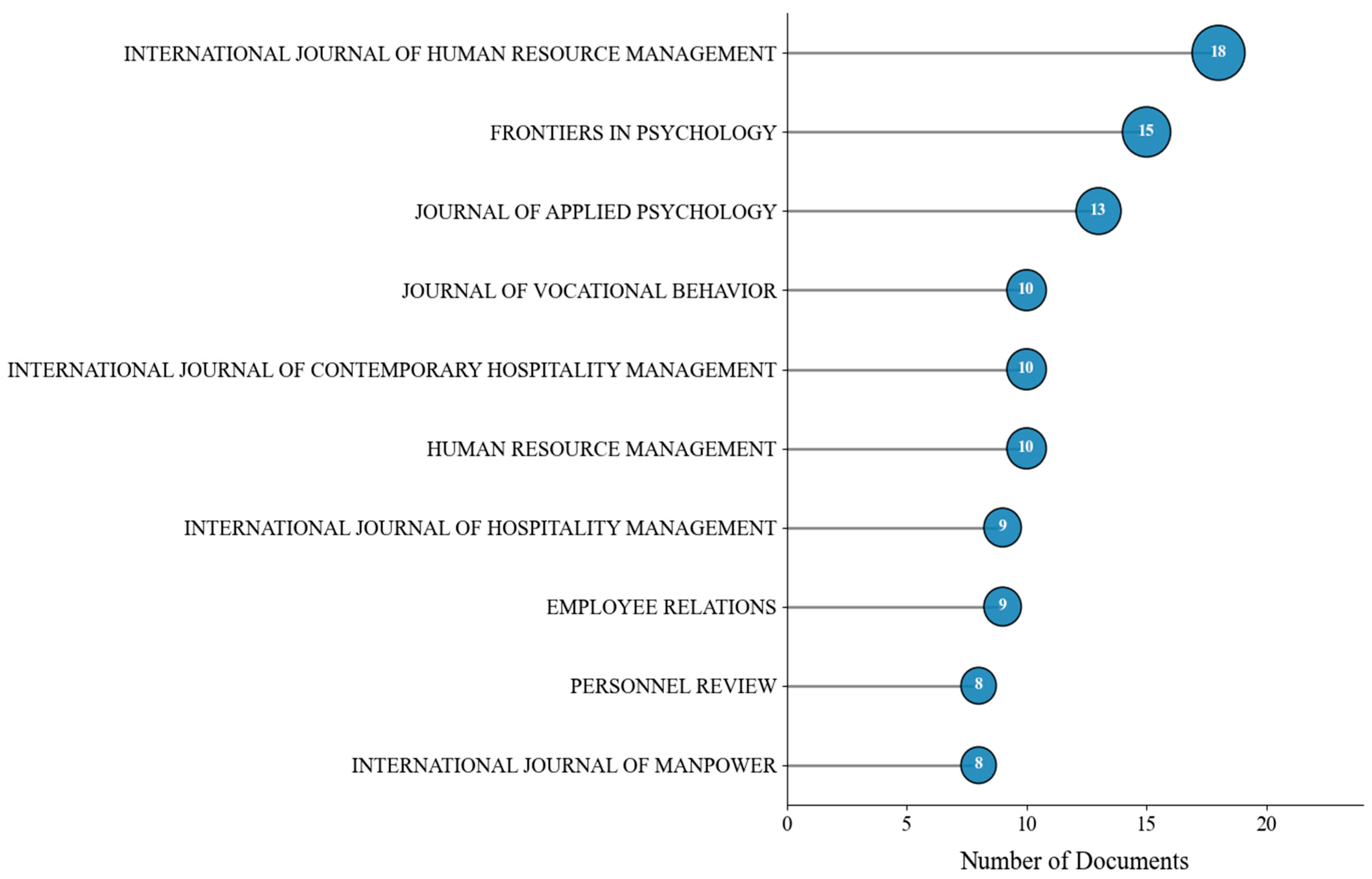
The distribution of publications across journals (
Figure 7) underscores the interdisciplinary nature of the field. Leading outlets include the International Journal of Human Resource Management (18 articles), Frontiers in Psychology (15 articles), and the Journal of Applied Psychology (13 articles). Other prominent journals, such as Human Resource Management, International Journal of Contemporary Hospitality Management, and Journal of Vocational Behavior, each contributed approximately 10 articles. This broad spread across disciplinary venues reflects both the theoretical integration of embeddedness with organizational behavior, social capital, and strategic HRM, and the methodological diversity employed to examine its impact on employee retention and organizational outcomes.
Collectively, the patterns of institutional, national, and journal-level contributions not only reveal the scale and scope of research activity but also provide insight into the evolution of scholarly influence. The prominence of U.S. and Chinese institutions indicates the interplay between established and emerging research environments, while the diverse journal outlets highlight the cross-disciplinary appeal of embeddedness theory. These findings suggest that the field has developed a complex, internationally connected knowledge network, in which influential institutions, countries, and journals serve as key nodes facilitating the dissemination, integration, and advancement of embeddedness research in HRM.
3.3. Conceptual Clusters via Co-Word Analysis
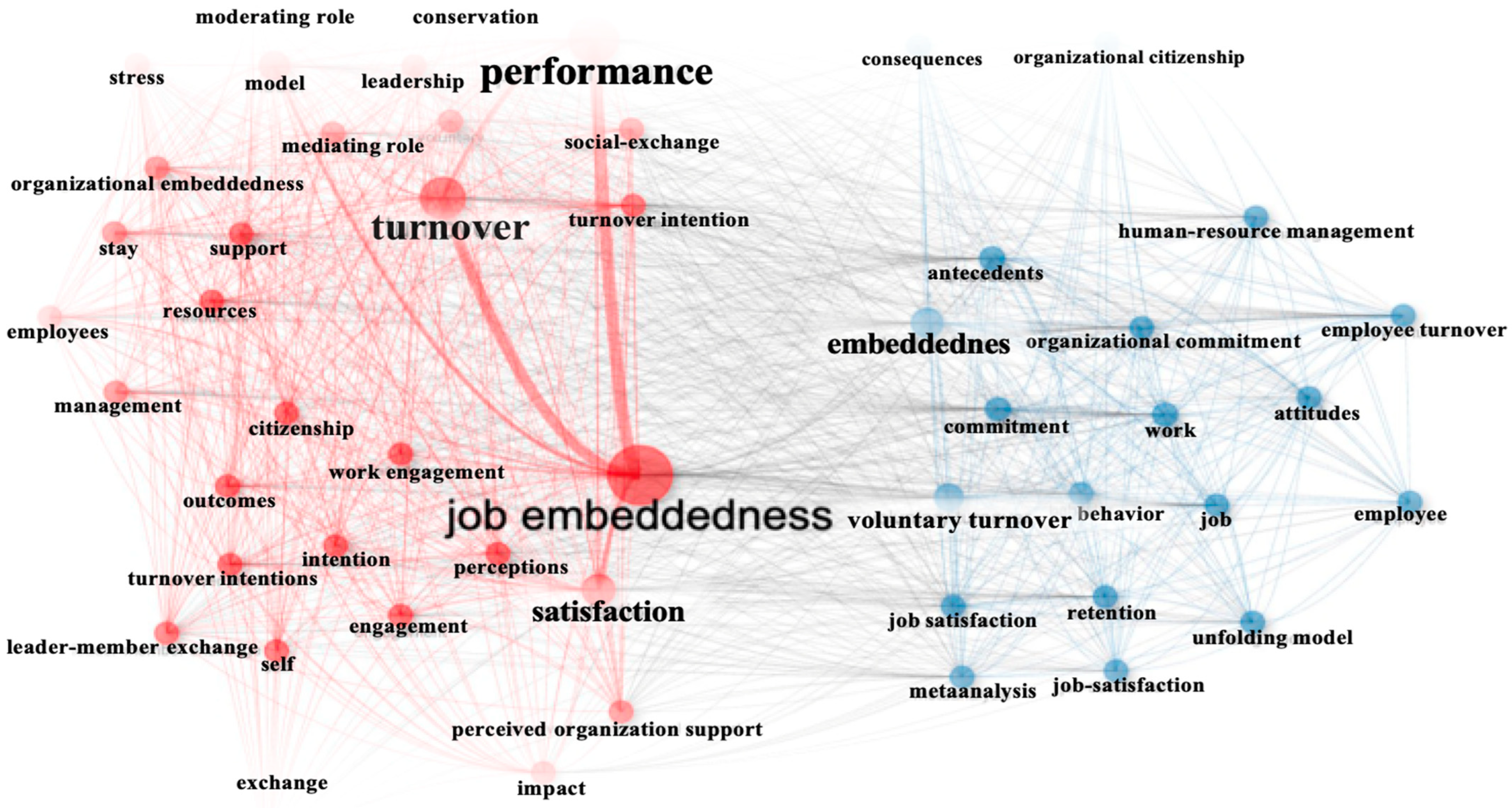
A co-word analysis of author keyword co-occurrence was conducted to systematically identify the thematic architecture of embeddedness research. The results reveal a bifurcated intellectual structure (
Figure 8), with one cluster rooted in micro-level psychological mechanisms and the other in macro-level organizational outcomes.
Cluster 1 is anchored in constructs such as job embeddedness, performance, and turnover, forming a tightly interconnected framework centered on individual behavioral outcomes. As shown in
Table 3, keywords in this cluster exhibit high centrality values(e.g., job embeddedness with betweenness centrality = 52.249, PageRank = 0.083), highlighting their pivotal role in shaping the field’s intellectual core. Theoretical associations within this cluster—such as turnover intention, job satisfaction, work engagement, and perceived organizational support—align with prominent psychological frameworks including social exchange theory, leader–member exchange, and conservation of resources theory. This cluster reflects a micro-foundational research stream focused on motivational drivers of employee retention but also shows limitations: most studies emphasize individual outcomes while underexploring how organizational policies or cultural contexts modulate these effects.
Cluster 2, in contrast, aligns with a macro-organizational orientation, comprising terms such as organizational commitment, human resource management, and meta-analysis. While centrality metrics are lower, the inclusion of organizational citizenship behavior, person–organization fit, and strategic HR outcomes illustrates the integration of embeddedness theory into broader institutional frameworks. Notably, cluster 2 provides a complementary lens to cluster 1, suggesting that micro-level embeddedness mechanisms may aggregate or interact to produce macro-level organizational outcomes.
In sum, the co-word analysis delineates two conceptual clusters—one emphasizing individual-level motivational mechanisms and the other focused on organizational structures and strategic outcomes—illustrating the multilevel and multidisciplinary nature of embeddedness research in human resource management. These clusters highlight both the theoretical richness of the field and the need for integrative approaches that connect micro-level behavioral insights with macro-level organizational strategies. The identified clusters provide the foundation for exploring the temporal evolution of embeddedness research keywords, as detailed in the following section.
3.4. Keyword Frequency and Thematic Evolution
Building upon the conceptual clusters identified in
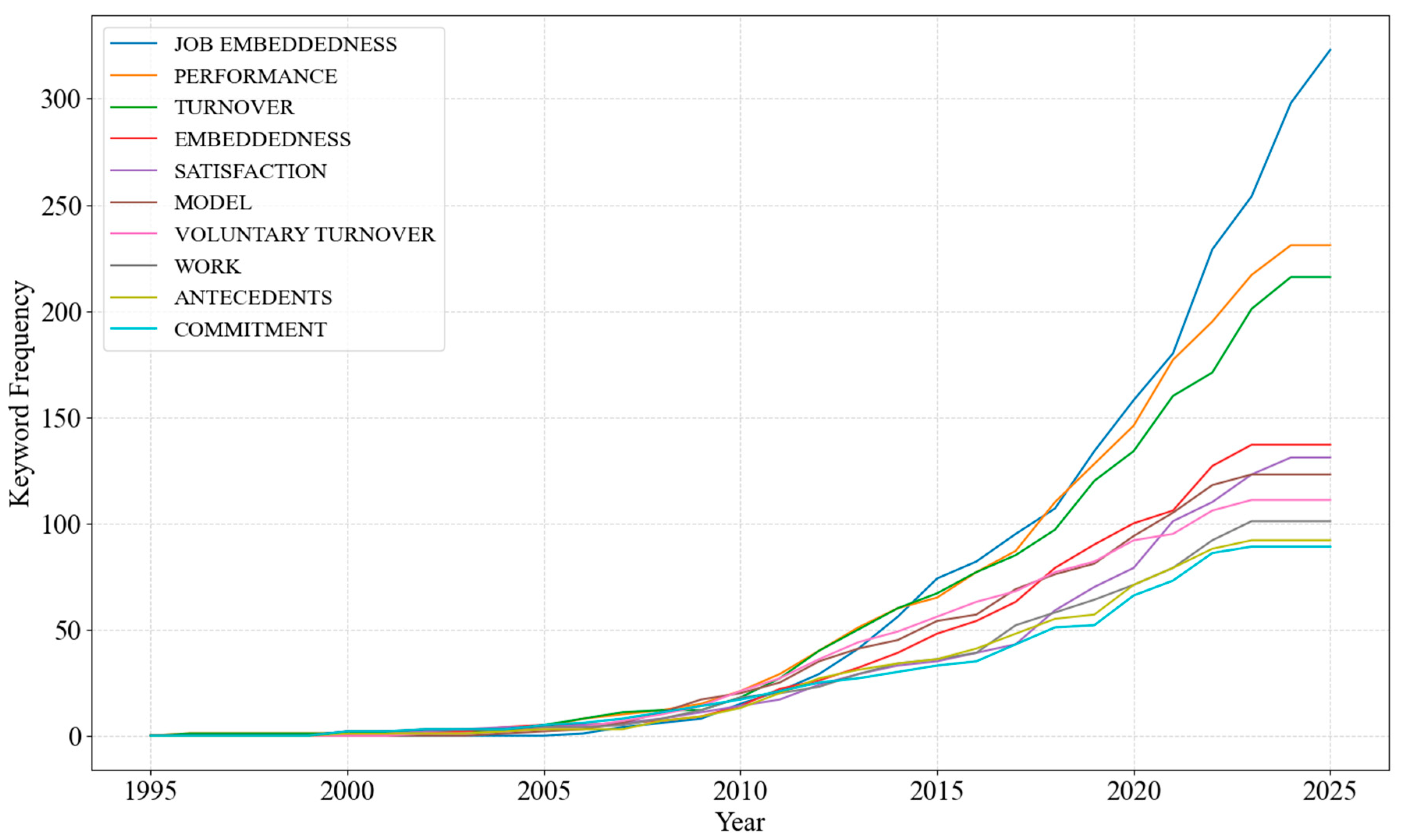
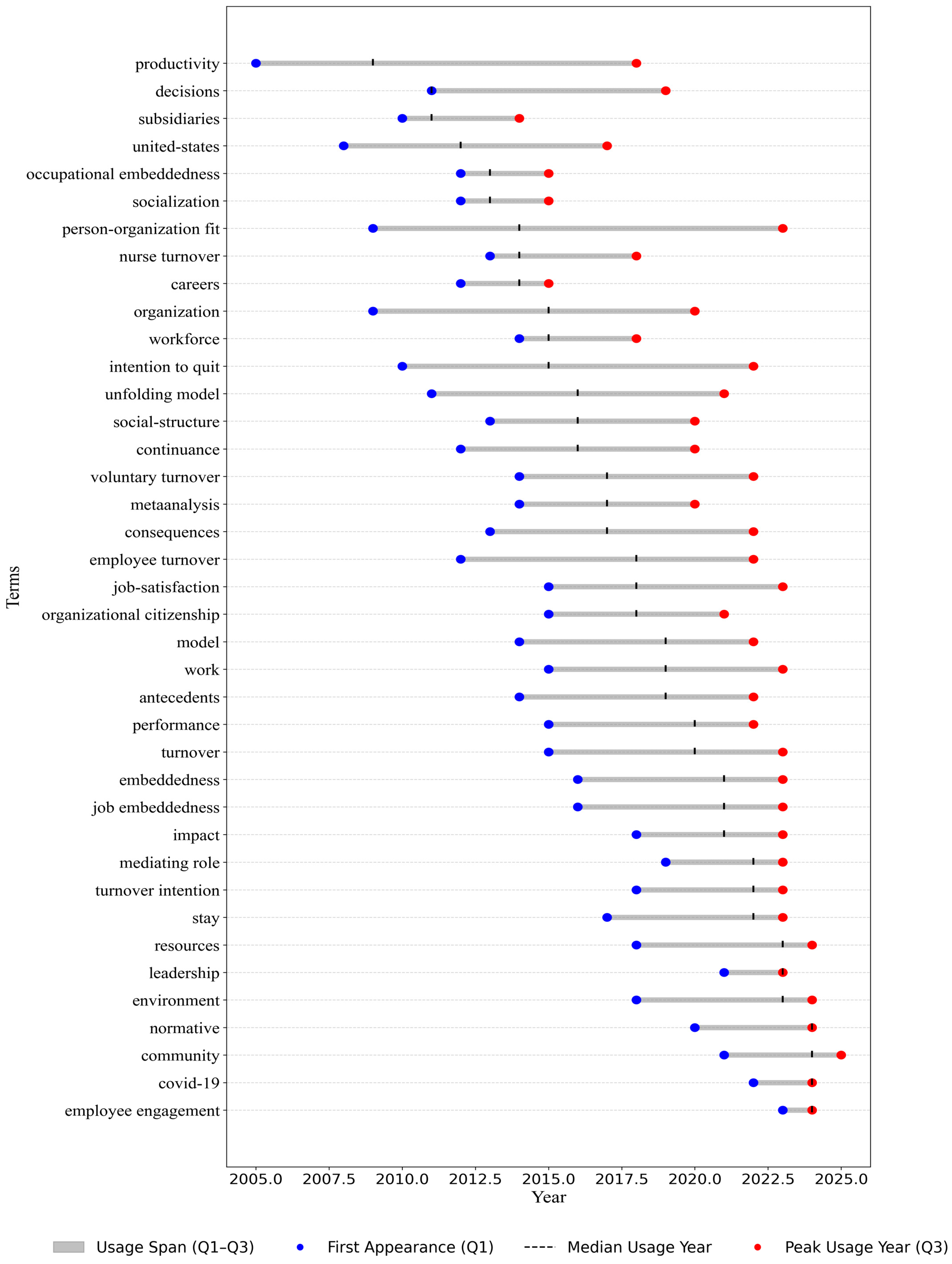
Section 3.3, we further examine the temporal dynamics of keyword usage in embeddedness research within HRM from 1995 to 2025. Two complementary bibliometric visualizations—
Figure 9 and
Figure 10—were employed to capture both the frequency trends and the temporal distribution of key terms, allowing for a nuanced understanding of thematic evolution and intellectual consolidation in the field.
Figure 9 presents the longitudinal frequency trends of selected high-impact keywords, including job embeddedness, turnover, performance, satisfaction, and voluntary turnover. The data indicate a clear acceleration of interest in job embeddedness and embeddedness from the early 2010s, with peak frequencies occurring around 2023, reflecting the increasing centrality of these constructs in contemporary HRM research. Traditional HR constructs, such as turnover and job satisfaction, maintain relatively stable usage across the three-decade period, highlighting their enduring theoretical and practical relevance. The co-existence of emerging and foundational terms suggests that the field is simultaneously consolidating established HRM knowledge while integrating novel constructs that respond to evolving organizational and technological contexts.
Figure 10 provides a complementary perspective by depicting the temporal span of term usage through interquartile ranges (Q1–Q3) and median usage years. This visualization elucidates the adoption patterns of both classical and contemporary keywords. For instance, person-organization fit and organizational citizenship exhibit a broad temporal span from the late 2000s to 2023, signaling sustained scholarly attention. In contrast, keywords associated with contemporary work modalities, including employee engagement, remote work, and digital tools, emerge primarily post-2016, corresponding to technological transformations and the increasing prevalence of hybrid work arrangements. These patterns underscore the field’s responsiveness to contextual shifts and the integration of emergent phenomena alongside foundational constructs.
Overall, the temporal analyses of keyword frequency and distribution reveal a dual trajectory in embeddedness research: (1) the continued relevance of core HRM constructs such as turnover and satisfaction, and (2) the rise in context-specific, technologically informed constructs such as employee engagement and digital tools. This duality reflects a dynamic research landscape in which embeddedness theory serves both as a consolidating framework and as a lens for investigating novel organizational phenomena.
4. Discussion
4.1. Evolutionary Trajectory and Theoretical Maturation
Bibliometric mapping reveals that embeddedness theory in HRM has evolved from initial conceptual foundations to a sophisticated, multilevel paradigm over the past three decades.
This evolution mirrors broader trends in HRM scholarship, where individual-centric models gradually give way to integrative approaches that consider social networks, cultural contexts, and institutional embeddedness. Emerging research clusters—spanning organizational culture, leadership, and network theory—highlight the interdisciplinary synthesis and practical relevance of embeddedness as a lens for understanding multilevel retention dynamics.
Despite the apparent reduction in the number of distinct thematic clusters in the maturation stage, this pattern does not indicate a decline in research diversity. Rather, it reflects increasing theoretical consolidation and conceptual integration within the field. Many previously dispersed sub-themes have been absorbed into higher-order, more explanatory constructs—such as network–performance pathways, mediating mechanisms, and cross-cultural adjustment—signaling a shift from thematic proliferation to conceptual refinement. This consolidation aligns with the broader maturation of embeddedness research, where scholars increasingly converge on unified explanatory frameworks that integrate psychological, organizational, and institutional dimensions.
Notably, the theoretical evolution is not linear; debates persist regarding the role of social capital, institutional embeddedness, and network effects, reflecting the multidisciplinary maturation of embeddedness theory in HRM. Methodological sophistication has advanced alongside theoretical maturation, with mixed-methods, longitudinal, and computational approaches increasingly applied to capture multilevel dynamics.
4.2. Micro–Macro Linkages: From Individual Mechanisms to Organizational Practices
A key insight from the co-word and thematic analyses is the multilevel nature of embeddedness, showing how micro-level mechanisms map onto macro-level HRM practices.
At the individual level, job embeddedness comprises fit, links, and sacrifice, shaping motivation, engagement, and turnover intention. These mechanisms aggregate through team and departmental networks, influencing organizational outcomes such as knowledge retention, collaboration, and performance. Moreover, the effectiveness of embeddedness mechanisms is moderated by contextual factors such as national culture, industry norms, and organizational policies, highlighting that micro-level drivers may manifest differently across settings.
For example, structured onboarding programs that strengthen social links can improve individual engagement while reducing team-level knowledge loss (
Cable et al., 2013). Similarly, value alignment initiatives and mentorship programs translate personal commitment into organizational cohesion, impacting overall productivity and retention metrics (
Tsegaye et al., 2018). The linkage can be conceptualized as a mechanism chain: micro embeddedness → behavioral outcomes → team/network integration → organizational performance and strategic HR outcomes. This framework clarifies how individual retention drivers generate systemic effects, providing a coherent explanation for the observed interplay between psychological and structural dimensions.
4.3. Implications for Employee Retention
The thematic evolution demonstrates a shift from reactive turnover management to proactive strategies (
Qiu, 2009) that emphasize engagement, well-being, and adaptation to digital work environments (
Meske & Junglas, 2021). Effective HR interventions should integrate micro–macro linkages by fostering meaningful social ties, value alignment, and institutional support. In hybrid or remote contexts, initiatives such as digital mentorship (
Darioly & Germanier, 2025;
Roussel, 2022), virtual socialization (
Yarbrough & Ramos Salazar, 2023), and community-building programs help maintain employee fit, strengthen relational links, and reinforce perceived sacrifice, thereby supporting both individual commitment and collective organizational resilience. Recent literature (
Meirun et al., 2022;
Harindranath et al., 2025;
Wang et al., 2025) further emphasizes adaptation under disruption, highlighting mechanisms that promote psychological safety, sustain organizational embeddedness, and buffer against crises such as COVID-19.
Despite these insights, the practical application of embeddedness mechanisms faces significant challenges. Digital tools and hybrid arrangements, while facilitating broader network formation, may inadvertently reduce spontaneous social interactions, weaken trust, or introduce surveillance pressures. Furthermore, reliance on algorithmic HR systems and virtual collaboration platforms can reshape embeddedness in ways that are not yet fully understood, potentially producing disparities in retention outcomes. These issues highlight the need for cautious interpretation of conceptual models and underscore the importance of empirical validation in diverse organizational contexts. Without such validation, the assumptions regarding micro–macro linkages and embeddedness mechanisms remain provisional.
Beyond immediate responses to disruption, broader post-pandemic work trends are reshaping how embeddedness operates. Hybrid and digitally mediated work systems alter the formation of relational links by limiting spontaneous interactions while expanding cross-boundary networks (
Chumg et al., 2022). Fit increasingly depends on digital culture, communication norms, and technology-enabled autonomy, while perceived sacrifice is influenced by flexibility trade-offs and virtual workload demands (
Fuchs & Lopez-Jurado, 2025). These shifts suggest that embeddedness mechanisms are being reconfigured by algorithmic HR tools (
Liang et al., 2025), virtual collaboration platforms, and emerging forms of workplace community. Consequently, HRM must rethink strategies for sustaining social cohesion and retention in technology-driven environments. Overall, these developments indicate that the theoretical and practical application of embeddedness requires continuous adaptation to the evolving digital and hybrid work landscape, ensuring alignment between employee experience and organizational objectives.
5. Conclusions
This study provides a comprehensive bibliometric and science-mapping analysis of embeddedness research in HRM from 1995 to 2025. The analysis reveals a clear evolutionary trajectory: formative (1995–2005) → expansion (2006–2015) → maturation (2016–2025), reflecting increasing theoretical consolidation and conceptual integration. Publication trends indicate the field’s growth from sporadic early studies to a well-established research domain. Research focus shifted from foundational HR outcomes, such as turnover and performance, to multidimensional, multilevel themes encompassing psychological, organizational, and contextual factors, demonstrating the integration of embeddedness theory across HRM and strategic management.
Conceptual structure analysis identifies two dominant clusters: micro-level mechanisms and macro-level organizational outcomes, highlighting the multilevel and interdisciplinary nature of embeddedness research. Global contributions reveal increasing internationalization and cross-disciplinary collaboration, while emerging trends show responsiveness to contemporary organizational and technological changes.
From a practical standpoint, the findings offer actionable guidance for HRM. Retention strategies should integrate individual, relational, and institutional dimensions, leveraging social and professional networks, aligning values, and fostering resilience in hybrid and digitally mediated work contexts. Interventions promoting psychological safety, transparent communication, and adaptive organizational structures can enhance embeddedness, particularly under external disruptions such as pandemics or labor-market volatility.
Methodologically, this study demonstrates the value of bibliometric and science-mapping approaches for systematically synthesizing complex literature, revealing latent structures, and identifying emerging research frontiers. Future studies should extend this work by incorporating qualitative meta-syntheses, expanding cultural and linguistic coverage, and examining how digital transformation and AI-driven work modalities reshape embeddedness mechanisms and retention outcomes.
In sum, this study advances both conceptual understanding and practical application of embeddedness in HRM, providing a robust platform for future research and strategic workforce interventions in an era of globalized, digitally mediated labor markets.