1. Introduction
In recent decades, supreme audit institutions (SAIs) around the world have been called upon to move beyond traditional audit and compliance-based approaches and adopt more participatory and transparent models of fiscal oversight. This shift reflects a broad international consensus: citizen engagement strengthens democratic accountability, improves the quality of public spending, and enhances institutional legitimacy (
Fung, 2015;
Bovens, 2007). Organizations such as the International Organization of Supreme Audit Institutions (INTOSAI), the Inter-American Development Bank (IDB), and the Organization for Economic Co-operation and Development (OECD) increasingly highlight the value of participatory governance in promoting open, responsive, and effective oversight mechanisms.
In Colombia, this transformation has advanced through the development and implementation of the Participatory Fiscal Control System (Sistema de Control Fiscal Participativo, SCFP) led by the Office of the Comptroller General of the Republic (Contraloría General de la República, CGR). Formalized through Executive Regulatory Resolution REG-EJE-0049-2019 (
Contraloría General de la República, 2019a), the SCFP represents a pioneering effort to integrate civil society into the monitoring of public resource management. Its objective is to connect social control with fiscal control by creating structured and sustained mechanisms for citizen involvement throughout the oversight cycle.
The system is built on the dual principle “Participate to V.E.R., V.E.R. to participate.” The acronym V.E.R. refers to vigilance, evaluation, and responsibility by the CGR, and vigilance, evaluation, and response—understood as feedback or claims—by citizens. This principle underscores the bidirectional nature of participatory oversight. Citizens contribute contextual knowledge and signal potential irregularities, while also expecting institutional responsiveness and meaningful accountability. As such, the SCFP positions citizens not merely as sources of alerts but as co-producers of oversight processes and legitimate actors in public decision-making.
To achieve this, the SCFP incorporates participatory planning, capacity building, multi-actor dialogue, institutional intervention, and collaborative follow-up. These mechanisms transform citizen inputs into concrete oversight actions. Beyond this structural integration, the system also strengthens the relationship between the accountability duties of supervised entities and the accountability demanded by citizens. Rather than intervening directly in project execution, the CGR works to ensure—through participatory democratic principles—that public management improves its performance and service delivery. By enabling citizens to identify risks and bottlenecks early in implementation, the SCFP helps ensure appropriate resource allocation and the efficient delivery of public services. This participatory approach enhances the CGR’s preventive capacity while reinforcing public trust and accountability.
Despite growing interest in participatory audit practices, the academic literature has not thoroughly examined how SAIs translates legal mandates for citizen participation into institutionalized and scalable oversight mechanisms. Most existing studies focus on single programs, community-based audits, or digital participation tools. As a result, there is still limited understanding of the institutional architectures that support sustained co-production of fiscal oversight. This article addresses that gap through the following research question: How does the Colombian SCFP operationalize citizen participation to strengthen fiscal accountability, and what governance outcomes does it generate? To answer this, the study pursues three objectives: (1) to analyze the SCFP’s conceptual and regulatory foundations; (2) to examine its methodological and operational design; and (3) to assess its empirical contribution through representative cases.
Within this context, the CGR’s model offers a robust institutionalization of participatory audit practices. It is distinguished by its regulatory basis, operational modalities, and emphasis on civic empowerment. The system has been applied across diverse territorial and sectoral contexts, producing promising results in risk prevention, institutional legitimacy, and citizen learning.
Moreover, Colombia constitutes an important case because the SCFP is one of the most advanced regulatory and institutional efforts in Latin America to embed citizen participation within the core mandate of an SAI. The contribution of this study is therefore twofold: theoretically, it proposes a model of co-produced fiscal oversight that integrates participatory and collaborative governance theories; and practically, it identifies lessons for SAIs seeking to institutionalize participatory approaches in their accountability systems.
The remainder of the article is organized as follows:
Section 2 reviews the theoretical and normative foundations of the model;
Section 3 describes the research methodology, focusing on the design and implementation of the SCFP;
Section 4 presents a data-driven analysis of participatory oversight under the system;
Section 5 discusses two representative case studies;
Section 6 offers a critical discussion of the findings; and
Section 7 concludes with lessons learned and recommendations for scaling and sustainability.
2. Theoretical and Normative Framework
Citizen participation in fiscal oversight draws from theories of democratic accountability and collaborative governance, which emphasize the inclusion of multiple stakeholders in the design and evaluation of public policies. From this perspective, oversight is not merely a technical-expert function but a democratic imperative, requiring public engagement to ensure that fiscal processes align with societal priorities and values. As
Bovens (
2007) and
Fung (
2015) argue, accountability mechanisms are most effective when they are transparent, participatory, and responsive to citizens’ concerns.
2.1. Theoretical Foundations of Participatory Fiscal Oversight
Participatory fiscal control allows citizens to co-produce public value by identifying irregularities, providing contextual knowledge, and legitimizing state interventions.
Ackerman (
2005) and
Fox (
2015) have shown that social accountability mechanisms—such as citizen audits, participatory scorecards, and joint monitoring—can improve service delivery, reduce corruption, and strengthen institutional legitimacy. These mechanisms also contribute to civic education and the development of public ethics.
Globally, there is growing recognition that effective fiscal oversight benefits from informed and organized citizen involvement. The Global Initiative for Fiscal Transparency (GIFT) and the IMF’s Fiscal Transparency Code endorse public participation not only during budgeting, but also in auditing and performance review processes. These principles are reflected in numerous practices across countries, where citizen input is institutionalized into audit agenda setting, public hearings, and follow-up mechanisms.
The Participatory Fiscal Control System (SCFP) in Colombia draws upon these international experiences but seeks to go further by embedding participation as a structural element of fiscal control. Rather than relying solely on ad hoc consultations or social observatories, the SCFP institutionalizes civic engagement into operational procedures, recognizing citizens as co-responsible actors in the prevention and correction of public management failures.
In analytical terms, these theoretical perspectives converge around three interdependent dimensions of public accountability: information disclosure, answerability, and enforceability (
Bovens, 2007). Participatory fiscal oversight, therefore, is not interpreted merely as the inclusion of citizens in monitoring tasks, but as an institutional arrangement capable of altering information asymmetries and influencing the accountability cycle through civic-generated inputs. Within this framework, citizen engagement becomes a mechanism that affects both the quality of oversight, by incorporating contextual, territorially grounded knowledge, and the capacity of institutions to respond to emerging risks. Consequently, participation operates not as a peripheral element of public governance, but as an analytical driver shaping how accountability materializes in practice.
2.2. Legal and Institutional Framework in Colombia
From a theoretical perspective, Colombia’s model represents an opportunity to examine how Supreme Audit Institutions translate normative expectations of participation into operational governance arrangements. While the literature has extensively explored community-based audits and social accountability initiatives, far fewer studies have analyzed the organizational and procedural architectures that allow SAIs to internalize participatory practices. The Colombian experience offers a distinctive case: participation is embedded not only as a normative mandate but as a structural component of the institutional design, enabling systematic interaction between citizen oversight and formal fiscal control functions. This embeddedness provides the analytical lens for assessing the SCFP as a mechanism of co-produced accountability rather than as an isolated participatory program.
In this way, Colombia has progressively established a robust legal framework that promotes citizen participation in fiscal control. Its foundations lie in Articles 1, 2, and 3 of the 1991 Constitution (
Congreso de Colombia, 1991), which enshrine participatory democracy, popular sovereignty, and the State’s duty to facilitate public involvement in decisions that affect citizens. Article 270 further mandates the creation of mechanisms enabling civil society to oversee public administration through social control. This mandate is reinforced by Laws 850 of 2003 (citizen oversight bodies) (
Congreso de Colombia, 2003), 1474 of 2011 (Anti-Corruption Statute) (
Congreso de Colombia, 2011), and 1757 of 2015 (democratic participation) (
Congreso de Colombia, 2015), which collectively establish enabling conditions for citizen engagement across the policy cycle—planning, implementation, monitoring, and accountability.
These instruments frame oversight as both a citizen right and responsibility, providing formal channels such as veedurías ciudadanas to monitor, report, and influence public resource management, while promoting transparency and access to information as prerequisites for meaningful participation. Policy-level initiatives, including “Auditoría Visible,” “Urna de Cristal,” and the National Action Plan for Open Government, have further advanced open government and social accountability, laying the groundwork for more structured participatory oversight.
Within this context, the Comptroller General’s Participatory Fiscal Control System emerges as a strategic institutional response, translating the existing legal and policy framework into an integrated model of co-governance. As such, it positions the CGR as a regional pioneer in institutionalizing citizen engagement within the core functions of a Supreme Audit Institution.
2.3. Institutional Architecture and Regulatory Foundations for Participatory Fiscal Oversight
The institutional architecture of participatory fiscal oversight within the CGR is anchored in a set of regulatory instruments that not only establish the legal basis for citizen engagement but also shape the analytical mechanisms through which participation influences fiscal control. Executive Resolution REG-EJE-0049-2019 (
Contraloría General de la República, 2019a) defines the conceptual and methodological pillars of the Participatory Fiscal Control System, introducing tools such as the “citizenship by levels” framework, the “citizen factor,” and the V.E.R. principle (Vigilance, Evaluation, Recommendation/Responsibility). These instruments do more than codify procedural steps: they configure the modes through which citizen knowledge is incorporated into institutional decision-making, creating differentiated pathways—negotiated evaluation, thematic intervention, technical-legal support, social marketing, and follow-up mechanisms—through which civic actors can shape fiscal oversight processes.
Organizational Resolution REG-ORG-0027-2019 (
Contraloría General de la República, 2019b) further operationalizes this architecture by establishing Compromiso Colombia as a structured co-governance mechanism. Through institutionalized dialogue spaces, risk-prioritization tools, and collaborative follow-up actions, the resolution enables a systematic integration of citizen-generated information into the identification and resolution of implementation barriers affecting high-impact public projects. Analytically, this moves participation beyond normative discourse or symbolic consultation; instead, it frames citizen engagement as a governance instrument capable of modifying oversight trajectories, influencing administrative responsiveness, and expanding the informational base upon which fiscal control decisions are made. Complementarily, Decree 2037 of 2019 (
Presidencia de la República de Colombia, 2019) strengthens the Delegate Comptroller for Citizen Participation, consolidating participatory oversight as a transversal mandate within the CGR rather than an ancillary function.
The operational capacity of this architecture is enacted through the Delegate Comptroller for Citizen Participation, which coordinates four strategic directorates, DPDCFP, DAC, the DSR created by Decree 403 of 2020 (
Presidencia de la República de Colombia, 2020), and the CGR Central Level. These units activate participatory oversight across initiatives such as White Elephants, Compromiso Colombia, emergency and disaster monitoring, judicial ruling follow-up, IDB-funded projects, and the school meals program (PAE). From an analytical perspective, this multi-level structure transforms participation into an institutionalized channel for co-producing accountability: the Delegate Comptroller systematizes civic insights, monitors intervention effectiveness, and integrates territorial knowledge into audit processes. Together, these instruments and organizational arrangements illustrate a governance model in which participation is not an accessory to fiscal control but a structural mechanism that enhances risk anticipation, accountability responsiveness, and public value creation.
2.4. Conceptual Model: Co-Produced Fiscal Oversight
Building on the theoretical foundations presented above, we propose a conceptual model of co-produced fiscal oversight to analytically frame the SCFP. The model synthesizes insights from democratic accountability (
Bovens, 2007), social accountability (
Fox, 2015), and collaborative governance (
Ansell & Gash, 2008) to explain how participatory fiscal control generates governance outcomes. Rather than treating participation as a normative ideal, the model conceptualizes it as a set of institutionalized interactions that shape information flows, decision-making authority, and the implementation of corrective actions. This analytical approach enables a structured interpretation of the mechanisms through which citizen participation influences fiscal oversight, particularly in contexts characterized by institutional complexity and multilevel governance.
The analysis of the SCFP is guided by a conceptual model that integrates theories of democratic accountability, collaborative governance, and social accountability. Building upon
Bovens (
2007),
Fox (
2015), and
Ansell and Gash (
2008), we conceptualize co-produced fiscal oversight as an institutional arrangement in which citizens and SAIs jointly contribute to risk identification, monitoring, and corrective action through structured mechanisms supported by formal regulation.
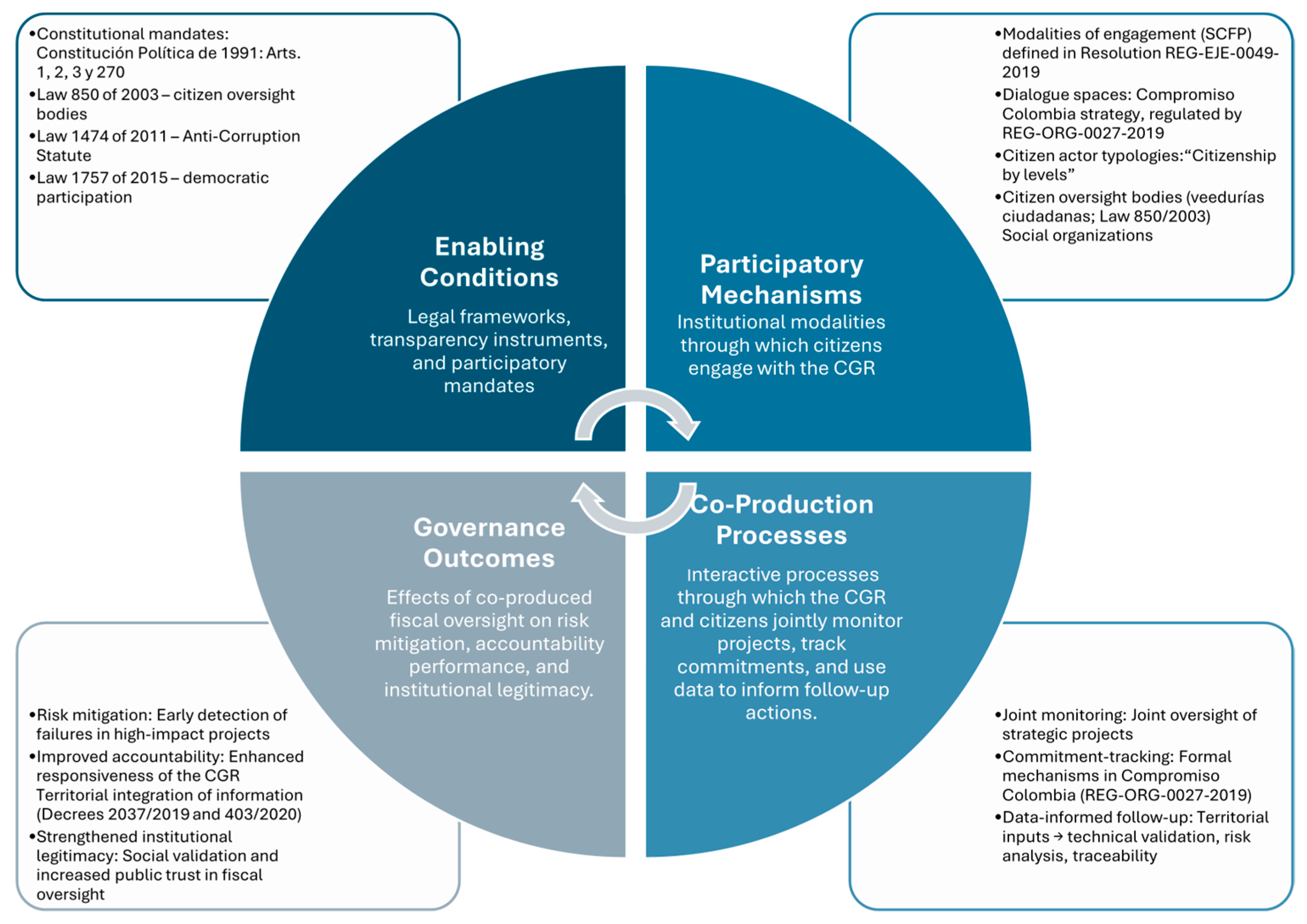
Figure 1 presents the proposed model, which includes four analytical dimensions: (1) enabling conditions (legal frameworks, transparency, and participatory mandates); (2) participatory mechanisms (modalities of engagement, dialogue spaces, and citizen actor typologies); (3) co-production processes (joint monitoring, commitment-tracking, and data-informed follow-up); and (4) governance outcomes (risk mitigation, improved accountability, and strengthened institutional legitimacy). This model provides the analytical lens through which the SCFP’s implementation and results are interpreted in subsequent sections.
2.5. Operational Framework of the Compromiso Colombia Strategy
As has been mentioned in this paper, the foundation of the Participatory Fiscal Control System (SCFP) was laid by Executive Resolution REG-EJE-0049-2019, which established the institutional framework for citizen participation in fiscal oversight. Building upon this general framework, Organizational Resolution REG-ORG-0027-2019 outlines the specific operationalization of participatory control through the Compromiso Colombia strategy. This strategy is designed to mobilize citizen participation in oversight processes through structured, collaborative, and preventive actions that anticipate fiscal risks and promote public value.
The strategy is guided by five core principles:
Proactivity: Prioritizing anticipatory action to prevent irregularities before they materialize.
Multi-actor Dialogue: Facilitating cooperation between institutions, citizens, and social actors.
Transparency and Traceability: Ensuring access to public information and documentation of every stage of the process.
Active Listening: Grounding oversight efforts in real problems identified from local and territorial contexts.
Collaborative Problem Solving: Framing oversight as a shared responsibility between public agencies and civil society.
These principles are operationalized through four strategic components:
Prioritization: The CGR identifies high-impact public projects based on criteria such as investment amount, social relevance, risk exposure, administrative performance, and citizen alerts. This ensures that participatory oversight efforts are targeted and responsive.
Activation of Dialogue Spaces: The strategy convenes structured working groups (participatory work sessions: mesas de diálogo participativo) that bring together CGR teams, public entities, community organizations, and citizens. These spaces are used to diagnose barriers, propose corrective actions, and agree on commitments to improve project implementation.
Follow-up on Commitments: The CGR and citizen actors jointly monitor the fulfillment of agreements reached during dialogue sessions. This collaborative oversight includes assigning responsibilities, establishing timelines, and tracking progress on commitments. By sharing this follow-up role, both institutional and civic actors strengthen accountability, enhance mutual trust, and enable timely detection of risks or deviations. This continuous monitoring loop reinforces transparency and allows for early corrective actions, while empowering citizens as co-responsible agents in the oversight process.
Communication and Public Accountability: The results of participatory interventions are disseminated through reports, media briefings, and public platforms. This transparency strengthens citizen trust and provides legitimacy to oversight processes.
The strategy is coordinated by the Delegate Comptroller for Citizen Participation, who ensures the integration of Compromiso Colombia into the broader SCFP framework. The office facilitates participation, offers legal-technical support, and works with territorial audit teams to operationalize and scale participatory actions. It is important to note that the groups operating in the territory are also citizen participation groups. Their interaction with fiscal oversight and control is manifested through civic pronouncements and complaints, which trigger control actions—whether preventive and concomitant, or subsequent and selective.
Through this structure, Compromiso Colombia becomes both a methodological vehicle and a platform for institutional innovation in fiscal control.
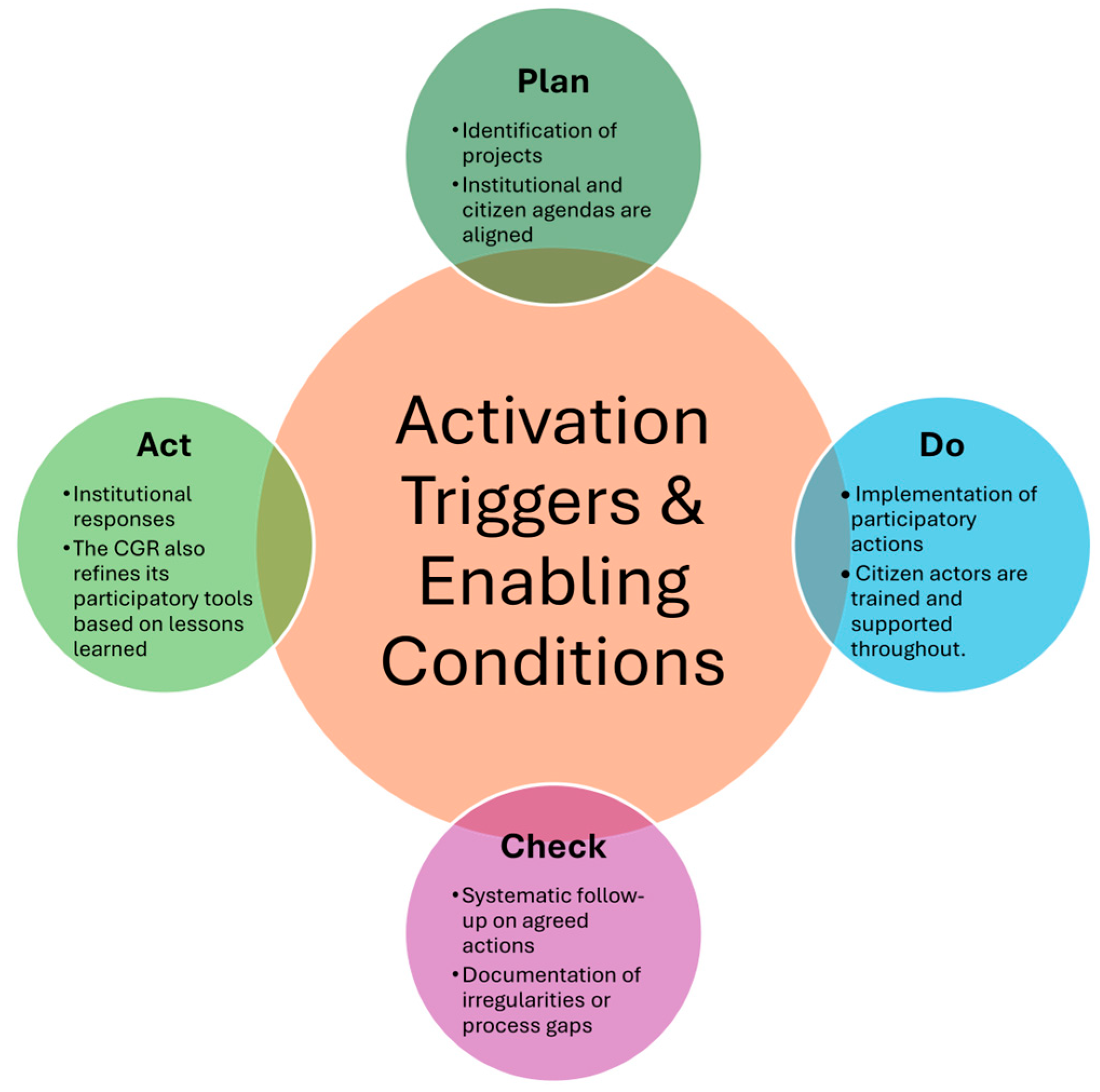
Figure 2 shows how the CGR adopted a PDCA cycle (Plan–Do–Check–Act) adapted to participatory oversight to operationalize the system. Participation in the SCFP is activated by triggers such as social complaints, media alerts, risk analysis results, or CGR prioritization. Once activated, the CGR guarantees enabling conditions for citizen engagement through technical–legal support, open access to information, and mechanisms for dialogue. The model is inclusive, adaptable to regional contexts, and sensitive to the capacities of different types of citizen actors.
3. Methodological Approach
This study adopts a qualitative exploratory case study design to analyze how the CGR institutionalizes participatory fiscal oversight through the Participatory Fiscal Control System (SCFP). A qualitative approach is appropriate because the phenomenon under examination, the integration of citizen participation into fiscal oversight, is embedded in complex institutional, regulatory, and administrative systems that cannot be reduced to quantitative indicators. Following
Yin (
2014), the case study design enables the examination of organizational processes, governance arrangements, and institutional practices in real-life settings, allowing for a deeper understanding of how the SCFP operates.
The methodological strategy combines:
(1) documentary analysis of regulatory, operational, and evaluative documents,
(2) process tracing to reconstruct the institutional development and implementation trajectory of the SCFP, and
(3) case-based analytical reconstruction of selected SCFP interventions based on official documentation.
This triangulated approach increases validity by integrating multiple forms of institutional evidence and connecting the SCFP’s normative design with its operational enactment.
3.1. Data Sources
The study draws on an extensive corpus of institutional documents produced by the CGR and its territorial structures. These materials constitute the official evidence base through which the Participatory Fiscal Control System (SCFP) is designed, implemented, and evaluated. The regulatory instruments—Executive Resolution REG-EJE-0049-2019, Organizational Resolution REG-ORG-0027-2019, Decree 2037 of 2019, and Decree 403 of 2020, form the backbone of the SCFP’s institutional architecture. They define the conceptual elements of participatory oversight, specify the operational logic of strategies such as Compromiso Colombia, and establish the organizational responsibilities of the units in charge of participatory control.
In addition to these regulations, methodological analysis incorporates a wide range of operational documents, including implementation manuals, procedural guides, risk matrices, territorial monitoring reports, internal evaluations, and systematizations of participatory activities. These documents, produced regularly by the Directorate for the Promotion and Development of Participatory Fiscal Control (DPDCFP), the Regional Monitoring Directorate (DSR), and the Citizen Participation Groups of the territorial offices—provide a detailed account of how participatory actions unfold on the ground. They record the planning and execution of citizen monitoring, the development of dialogue spaces, the identification of risks and administrative bottlenecks, and the institutional responses generated through participatory processes. Program-specific documentation, particularly from the White Elephants initiative and the Compromiso Colombia strategy, provides additional depth by offering concrete examples of how participatory interventions influence public project execution.
Table 1 shows how the CGR structured the SCFP into four core components:
Altogether, these sources offer a rich, verifiable, and internally coherent body of evidence. Because the study seeks to understand institutional mechanisms and their implementation rather than individual perceptions or narratives, primary data collection methods such as interviews were not employed. The exclusive use of institutional documentation ensures traceability and avoids interpretive biases.
3.2. Case Selection Criteria
The empirical component of the study focuses on two emblematic participatory interventions selected through a purposive sampling strategy. The purpose was not to achieve statistical representativeness but to choose cases that could illustrate, in a sufficiently detailed and analytically rich way, how the SCFP operates in practice. Selection was guided by four interconnected considerations. First, the interventions had to hold institutional relevance, meaning that they were prioritized within the CGR’s participatory agenda and were directly linked to the system’s core modalities. Second, adequate documentation needed to be available to reconstruct the full participatory cycle—from initial activation to follow-up and institutional response. Third, the cases had to reflect variability in sectoral and territorial contexts, allowing the analysis to capture how participatory control operates under different governance conditions. Finally, each intervention had to provide sufficient analytical richness for examining the four dimensions of the conceptual model proposed earlier in the article: enabling conditions, participatory mechanisms, co-production processes, and governance outcomes.
Through these criteria, the selected cases function as “revelatory examples” of SCFP implementation. They reveal how institutional expectations, participatory tools, and civic contributions converge in real oversight scenarios, and how civic-institutional collaboration leads to identifiable results in terms of risk mitigation, problem-solving, and accountability enhancement. This strategic selection ensures that the cases are not anecdotal but representative of broader institutional logics embedded in the SCFP.
3.3. Analytical Strategy
The analytical strategy combines qualitative content analysis with process tracing to generate an integrated understanding of the SCFP’s design and practical functioning. The analysis began with a systematic reading and coding of all documents in accordance with the four analytical dimensions established in the conceptual model. Regulatory instruments, operational guidelines, and program documents were examined to identify how enabling conditions, participatory mechanisms, co-production processes, and governance outcomes are articulated in institutional practice. This coding process followed deductive logic, with predefined categories derived from the theoretical framework, while also allowing inductive refinement when documents revealed unanticipated mechanisms or relationships.
The next phase involved reconstructing the sequence of events and decision-making processes using process tracing. This method made it possible to understand how the SCFP evolved from regulatory mandates into concrete institutional routines, how participatory actions were activated and executed, and how citizen inputs were incorporated into fiscal oversight decisions. It also allowed the identification of causal mechanisms linking specific participatory practices to institutional responses and oversight outcomes.
Finally, insights from the selected cases were synthesized through cross-case comparison. By contrasting the dynamics of interventions conducted in different policy sectors and territories, the analysis revealed patterns that illuminate the SCFP’s broader governance logic. The findings were then interpreted through the theoretical lenses of democratic accountability, collaborative governance, and social accountability, enabling a rigorous, theory-informed explanation of how participatory fiscal oversight produces its effects.
4. Analytical Assessment of Participatory Oversight Under the SCFP
This section presents the findings derived from the two complementary datasets analyzed: (1) Active Projects under Participatory Oversight and (2) Delivered Works (2022–2025). Rather than describing individual cases, the analysis is structured around three analytical dimensions derived from the conceptual model: (a) implementation challenges, (b) governance outcomes of completed works, and (c) preventive oversight in active projects. This structure allows results to be interpreted through the theoretical lenses of democratic accountability (
Bovens, 2007), social accountability (
Fox, 2015), and collaborative governance (
Ansell & Gash, 2008), highlighting how participatory oversight alters information flows, strengthens answerability, and contributes to co-produced fiscal control.
4.1. Systemic Implementation Challenges: Patterns and Accountability Implications
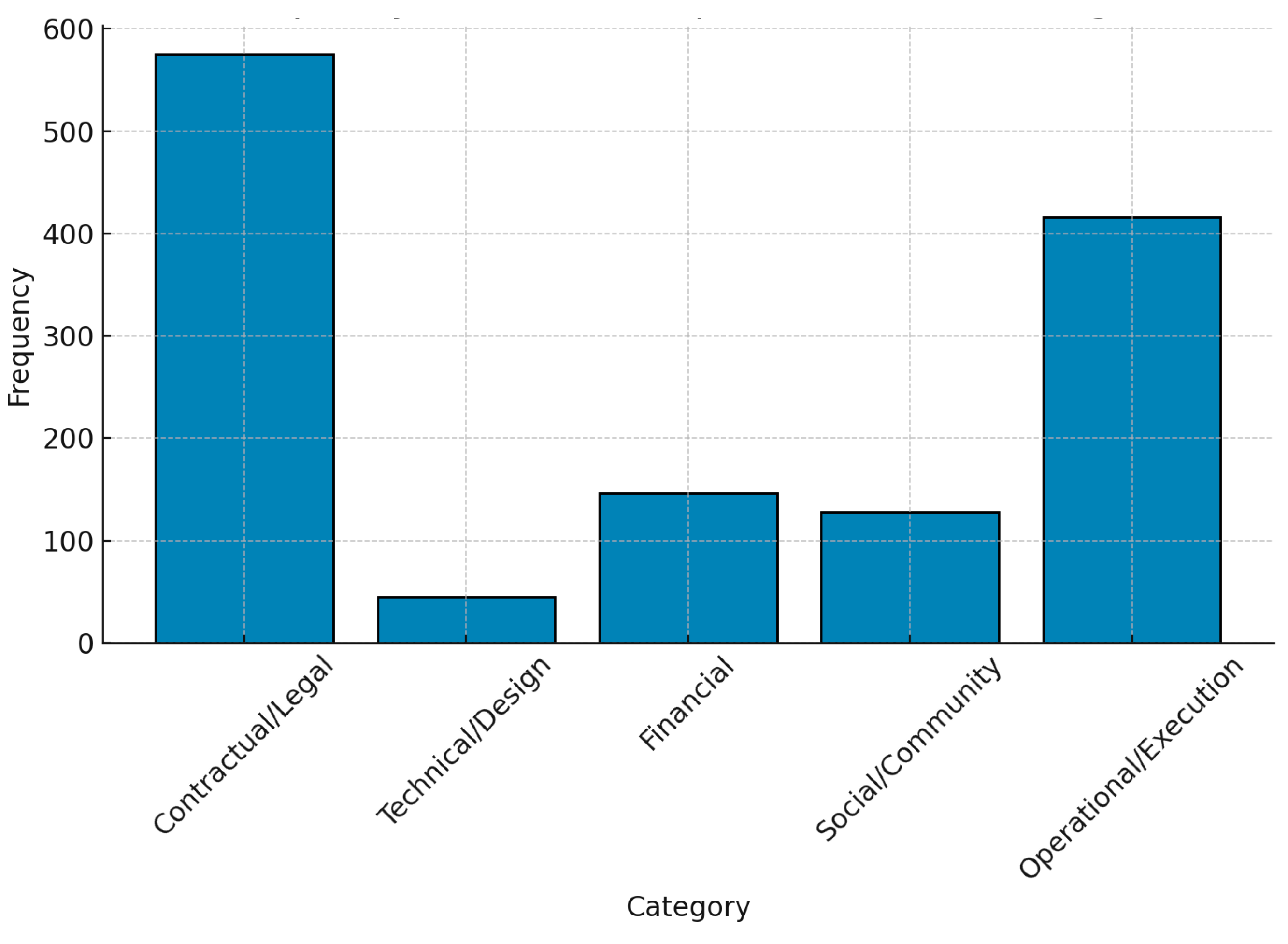
Analysis of more than 1000 textual entries across projects reveals five dominant categories of implementation problems: contractual/legal issues, operational delays, financial constraints, social/community conflicts, and technical/design weaknesses. These categories represent recurring structural barriers in Colombia’s public management system and illuminate the governance gaps participatory oversight must navigate.
Contractual and legal issues (575 mentions) constitute the most prevalent barrier, exposing deficiencies in procurement design, contractor performance, and institutional coordination. From an accountability perspective, such findings reflect significant challenges in enforceability—one of Bovens’ core dimensions—because contractual rigidity diminishes the State’s capacity to demand compliance and ensure timely delivery.
Operational and execution problems (416 mentions), including supply delays and unmet work schedules, underline chronic weaknesses in administrative planning. These delays reduce transparency in timelines and generate information asymmetries that participatory oversight seeks to remedy by introducing citizen-generated monitoring data.
Financial constraints (146 mentions) indicate that public projects often advance without secured budgets or timely disbursements. This instability reinforces what
Fox (
2015) calls “accountability bottlenecks,” where institutional intentions exist but cannot materialize due to resource limitations.
Social and community conflicts (128 mentions) reveal friction between project implementers and local populations, highlighting the absence of effective engagement mechanisms. These results underscore the relevance of collaborative governance: without inclusive dialogue structures, conflicts escalate and delay implementation.
Finally, technical and design weaknesses (45 mentions) reflect problems in initial project formulation that generate costly rework. These deficiencies exemplify failures at the information-disclosure stage, where incomplete or low-quality diagnostics compromise subsequent accountability and performance.
Figure 3 illustrates the relative frequency of the five main categories of challenges identified in the dataset: contractual/legal, operational/execution, financial, social/community, and technical/design. Contractual and execution issues dominate, confirming their centrality as bottlenecks in public project implementation.
Taken together, these categories illustrate that the SCFP operates in an environment characterized by layered governance failures. Participatory oversight becomes not only a monitoring tool but a mechanism for mitigating institutional blind spots, enhancing transparency, and diffusing information asymmetries across actors—core mechanisms predicted by the theoretical framework.
4.2. Governance Outcomes in Delivered and Functioning Works
The dataset of delivered works (374 projects; 36.2 million beneficiaries) allows assessment of the material outcomes and public value generated through participatory oversight. Instead of case-by-case reporting, the analysis focuses on three themes: scale and beneficiaries, financial distribution, and the differentiated role of SCFP strategies.
4.2.1. Scale and Social Reach
The completion of 374 works across the country demonstrates the SCFP’s capacity to convert oversight processes into tangible improvements in service provision and infrastructure. That these works directly benefit 36.2 million citizens reflects a high degree of social reach aligned with the democratic accountability principle of maximizing answerability to heterogeneous publics.
These results show that participatory oversight contributes to expanding the legitimacy of fiscal control institutions by ensuring that works translate into functioning public goods, fulfilling what Bovens conceptualizes as output legitimacy.
4.2.2. Financial Distribution and Territorial Inequalities
The projects collectively mobilize COP 5.07 billion, with significant territorial concentration in departments such as Bolívar, Valle del Cauca, Meta, and Sucre. Notably, departments with lower investment levels often exhibit high beneficiary impact, suggesting varying degrees of allocative efficiency.
The divergence between financial magnitude and beneficiary reach reflects complex governance dynamics. High-cost projects do not always guarantee broad social benefit. Participatory oversight helps identify these imbalances, offering evidence for future prioritization processes aligned with transparent and equitable governance.
4.2.3. Strategic Contribution of Oversight Modalities
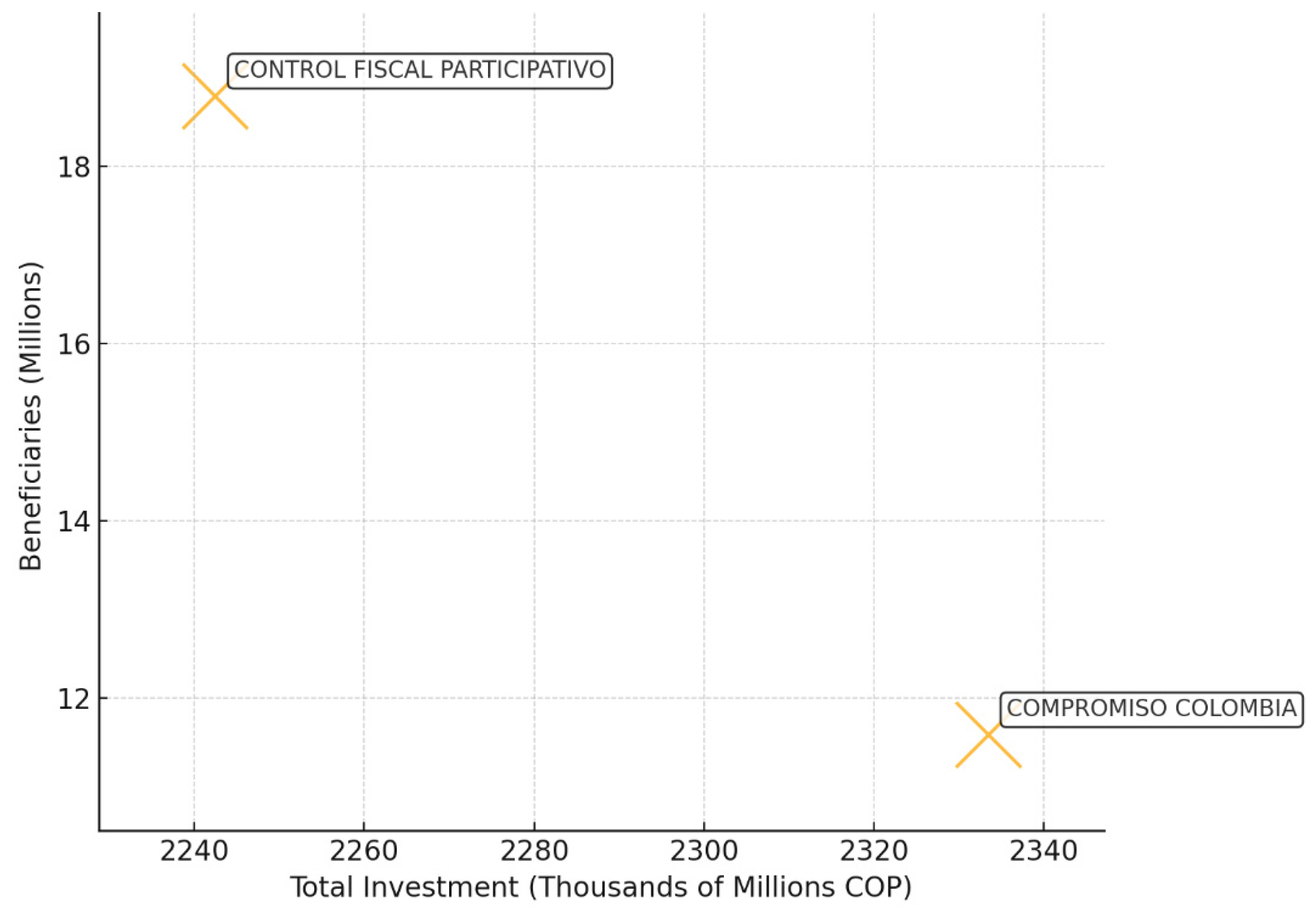
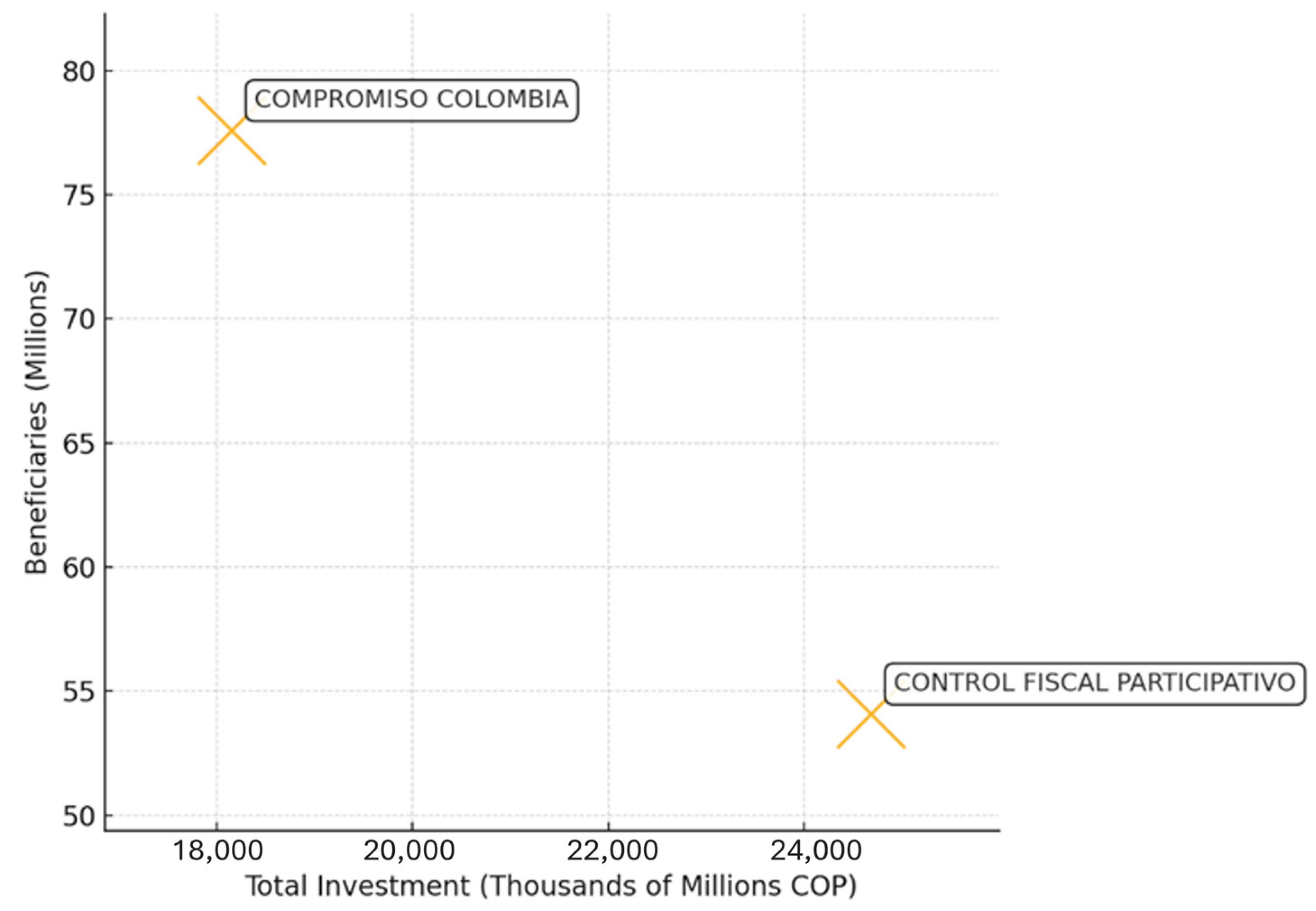
Compromiso Colombia mobilized COP 2.33 billion with 11.6 million beneficiaries, whereas Control Fiscal Participativo mobilized COP 2.24 billion but reached nearly 19 million beneficiaries. This divergence reflects two different governance functions:
Compromiso Colombia: addresses high-risk, high-cost stalled projects—aligning with collaborative problem-solving frameworks.
Control Fiscal Participativo: amplifies social reach by engaging communities directly, thus enhancing participatory accountability.
The complementary nature of these modalities illustrates the SCFP’s dual capacity to (a) unlock complex projects and (b) ensure broad-based social coverage, precisely the co-production mechanisms predicted by theories of collaborative governance.
Comparison between Compromiso Colombia and Control Fiscal Participativo showed in
Figure 4, reveals differentiated but complementary governance functions. While Compromiso Colombia mobilizes larger financial resources to resolve high-risk and stalled projects, Control Fiscal Participativo reaches a larger share of direct beneficiaries through community-focused oversight. These patterns align with collaborative governance theory, illustrating how participatory modalities produce distinct pathways for co-produced accountability.
4.2.4. Impact Assessment
The evidence confirms that the CFP strategy has been decisive in ensuring the delivery of projects that are now operational and serving communities. Its dual impact can be summarized as:
Institutional effectiveness, by reducing delays, addressing contractual bottlenecks, and securing the completion of high value works.
Social legitimacy, by empowering citizens to actively participate in monitoring, thereby reinforcing trust in public institutions and ensuring that investments meet real community needs.
Overall, the CFP strategy demonstrates that fiscal oversight can transcend traditional auditing to become a governance tool, guaranteeing that public resources materialize in effective, functioning works that improve quality of life across Colombia.
4.3. Preventive Governance in Active Projects
Active oversight data (677 projects; COP 42.8 billion) reveal the preventive dimension of the SCFP, where risks are identified and mitigated before crystallizing as costly failures.
4.3.1. Investment Scale and Oversight Distribution
Figure 5 contrasts the aggregate scale of active projects under the two leading participatory oversight strategies. It shows that while Compromiso Colombia concentrates more projects, Control Fiscal Participativo handles higher total investment, emphasizing its focus on high-budget, socially sensitive interventions.
Although Compromiso Colombia monitors a larger number of projects (63%), Control Fiscal Participativo accounts for a higher aggregate investment. This indicates the latter’s role in monitoring technically complex, high-budget sectors where community involvement provides contextual intelligence not captured by institutional diagnostics.
This finding aligns with Fox’s conceptualization of vertical oversight, where organized citizen participation strengthens institutional surveillance over high-stakes public spending.
4.3.2. Territorial and Sectoral Asymmetries
Departments such as Valle del Cauca, Huila, Meta, and Antioquia exhibit the highest resources under oversight, while Cesar, Bogotá, and Cundinamarca evidence large-scale beneficiary coverage. The misalignment between investment and beneficiaries echoes patterns observed in delivered works.
These asymmetries point to structural inequalities in Colombia’s public investment landscape. Participatory oversight contributes to making these patterns visible, fulfilling the democratic accountability principle of transparency.
4.3.3. Status and Risk Patterns
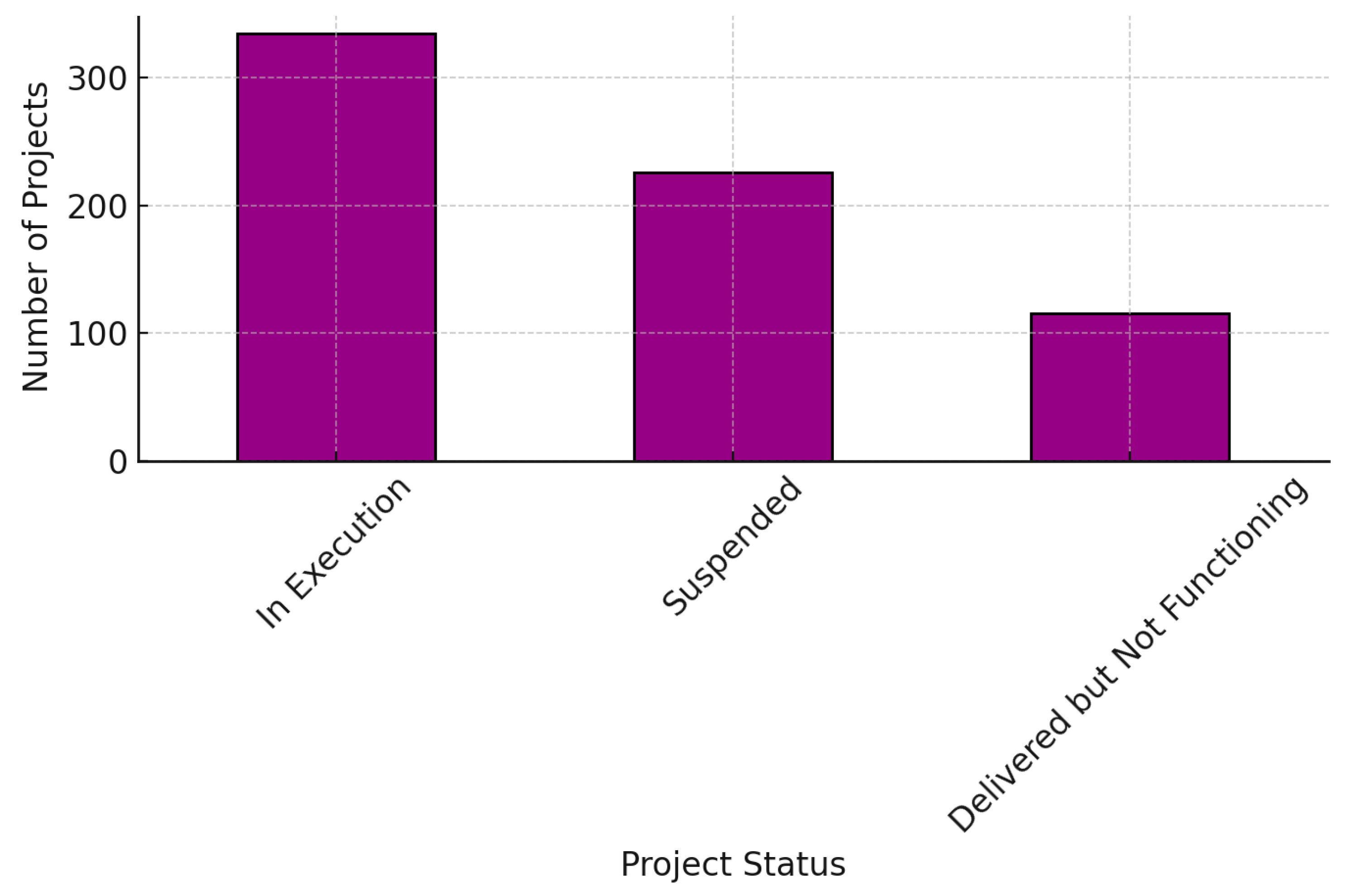
The analysis of project status (
Figure 6) provides a critical lens into the structural challenges that participatory oversight must address. Active projects exhibit three main statuses: under execution (49%), suspended (33%), and delivered but not functioning (17%). Suspensions, in particular, reveal weak enforceability and coordination across administrative actors.
The prevalence of suspended and non-operational projects reflects institutional deficits in information flow and monitoring, precisely the type of governance failures that participatory oversight seeks to correct by incorporating citizen-generated risk signals.
4.3.4. Governance Implications
Active project monitoring underscores the SCFP’s preventive function: identifying risks early, mediating multi-actor conflicts, and channeling citizen insights into institutional decision-making. This function reinforces the SCFP as a co-produced oversight model in which civic and institutional intelligence jointly protect public resources.
This aligns directly with Ansell and Gash’s collaborative governance cycle, where iterative engagement, information sharing, and joint monitoring generate more effective public action.
5. Participatory Fiscal Oversight in Action: Case Studies of Successful Interventions
This section presents two emblematic cases that illustrate the transformative impact of participatory fiscal oversight (SCFP) on public project execution in Colombia. Both cases demonstrate how citizen engagement, combined with institutional accountability mechanisms, can overcome structural barriers, accelerate stalled projects, and ensure the effective delivery of public goods.
The first case examines the completion of the suspension footbridge over the Vaupés River, a project that faced nearly a decade of delays due to technical and logistical difficulties. Through sustained participatory monitoring dialogues, citizens, local authorities, and the Comptroller General of the Republic collectively fostered the conditions required for its completion, directly benefiting indigenous communities in Mitú
1.
The second case focuses on the School Feeding Program (PAE), where participatory oversight played a critical role in ensuring transparency and accountability in the management of resources directed at children’s nutrition. This intervention highlights how SCFP mechanisms not only address infrastructure projects but also safeguard social programs that are essential to human development.
Together, these cases underscore the potential of participatory oversight to strengthen governance, enhance citizen trust, and contribute to the effective implementation of public policies.
5.1. Case Study 1: Suspension Footbridge over the Vaupés River
The project “Construction of the Metal Footbridge over the Vaupés River to connect the urban center of Mitú with rural communities on the opposite bank” was launched in September 2015 to benefit 12,545 inhabitants, including six indigenous communities. Despite its strategic importance, the project faced severe implementation delays due to the need for design readjustments, structural optimization of deep foundations, difficulties in sourcing and transporting materials, and adverse climatic conditions. These challenges led to 10 contract extensions and 8 suspensions, accumulating more than 3460 days of delay, nearly ten years, during which the community remained disconnected from the urban center.
5.1.1. Participatory Oversight Intervention
In 2020, the CGR incorporated the project into the Compromiso Colombia strategy. The intervention was characterized by the establishment of 46 participatory monitoring dialogues, coordinated by the Gerencia Departamental Colegiada of Vaupés and the citizen oversight group (veeduría ciudadana). These dialogues enabled the community to demand adjustments to schedules, require greater responsiveness from the contractor, and ensure timely solutions to logistical obstacles.
Following a field visit by the Acting Comptroller General in March 2024, the CGR committed to organizing two monthly follow-up meetings with active participation of citizen overseers and project stakeholders. This dynamic enabled the municipal administration of Mitú to secure additional resources from the General Royalties System to finance technical modifications and complete pending works.
5.1.2. Results
The participatory monitoring strategy led to the completion of the bridge, which was officially delivered on 18 June 2025, at a total cost of COP 11.379 million. After nearly a decade of stagnation, the indigenous communities of Mitú now have a functional pedestrian bridge that provides safe, direct access to the urban center.
5.1.3. Impact
This case demonstrates how participatory fiscal oversight can transform a project at risk of indefinite suspension into a completed public good. The involvement of citizens, local authorities, and the CGR fostered accountability and collective problem-solving. More broadly, the experience illustrates the capacity of the SCFP (Participatory Fiscal Oversight System) to improve the execution of public works by aligning technical, financial, and social accountability mechanisms.
5.2. Case Study 2: Participatory Oversight of the School Feeding Program (PAE2)
The School Feeding Program (PAE) is one of Colombia’s most significant social initiatives, aimed at guaranteeing adequate nutrition for students across 97 Certified Territorial Entities (ETC). Despite its relevance for child welfare and educational equity, the program has historically faced recurring challenges related to contractual delays, irregularities in food quality and safety, and interruptions in service delivery. Given its critical role in children’s rights, the CGR designated the PAE as a program subject to special participatory oversight, with continuous monitoring throughout the academic year.
5.2.1. Participatory Oversight Intervention
In accordance with the regulatory framework (Law 2167 of 2021 and national resolutions), the CGR, through its Delegated Office for Citizen Participation, established a nationwide strategy for participatory monitoring of the PAE. Local Gerencias Departamentales Colegiadas and Citizen Participation Groups were tasked with applying standardized instruments such as the Survey123 PAE module, contractual monitoring matrices, and field visit reports.
The methodology emphasized citizen engagement and accountability loops: each irregularity—whether delays in ration delivery, lack of compliance with nutritional guidelines, or food safety issues—triggered participatory dialogues with stakeholders, including ETCs, service operators, oversight entities (e.g., Procuraduría, Personerías), and members of the educational community (student comptrollers, parents, school feeding committees). This multi-actor design ensured real-time response to irregularities and strengthened trust in public management.
In 2025, the CGR carried out a National Verification and Monitoring Day of the PAE, deploying citizen participation groups and oversight mechanisms to 168 educational institutions across 32 ETCs, including 29 departmental capitals and three municipalities of Cundinamarca (Chía, Funza, and Mosquera). The strategy was deliberately organized as a surprise exercise to prevent service operators from adjusting prior to inspection.
During this exercise, Citizen Participation Groups, alongside community representatives and student comptrollers, verified compliance with standards of food quality, quantity, safety, and timeliness. They reviewed daily menus, performed food weighing (especially proteins), and assessed the service modalities (on-site hot meals, transported hot meals, or industrialized rations) in their three categories: AM supplement, lunch, and PM supplement.
Importantly, citizen monitors applied standardized survey instruments to collect data on program effectiveness, while veedurías ciudadanas and student comptrollers ensured that findings reflected the lived experience of beneficiaries. This process not only validated the quality-of-service provision but also strengthened the credibility of participatory monitoring practices.
5.2.2. Results
The participatory oversight framework allowed for systematic reporting of contractual and operational irregularities, improving transparency and responsiveness at both local and national levels. Monthly reports and dialogue sessions facilitated timely corrective actions by ETCs, reduced interruptions in service, and empowered citizens—particularly parents and students—to act as co-managers of the program’s quality and continuity. Importantly, the process ensured that data from participatory monitoring directly informed the CGR’s strategic oversight, feeding into SIPAR (Sistema de Información de Participación Ciudadana: Citizen Participation Information System) and institutional decision-making.
The participatory monitoring revealed irregularities in several ETCs, including inconsistencies in food weight, modifications of prescribed menus, student dissatisfaction with the quality of meals, and the delivery of spoiled fruits. Observations were also made regarding inadequate food storage conditions and deficiencies in the infrastructure of school restaurants.
In departments such as Caldas, Huila, and Norte de Santander, follow-up visits had to be rescheduled due to school disruptions caused by union strikes and public order issues. The CGR committed to presenting consolidated results on 3 June 2025, with the objective of prompting ETCs to adopt the necessary corrective measures.
5.2.3. Impact
The PAE case illustrates the ability of participatory fiscal oversight to safeguard social policy implementation by ensuring real-time accountability and service quality in a high-impact public program. Unlike infrastructure projects, where impact is measured in tangible works, the success of participatory oversight in PAE lies in protecting children’s rights, ensuring the continuity and nutritional adequacy of school feeding, and enabling communities to act as co-managers of a policy critical to social equity.
5.3. Comparative Analysis of Case Studies
The two cases analyzed highlight the versatility and impact of the Participatory Fiscal Oversight System (SCFP) across distinct domains of public management: infrastructure and social policy.
In the Vaupés case, participatory oversight enabled the completion of a stalled infrastructure project that had accumulated nearly ten years of delays. Through 46 participatory monitoring dialogues, citizen overseers, local authorities, and the Comptroller General of the Republic collectively removed technical and logistical bottlenecks, secured additional resources from the General Royalties System, and ensured the delivery of a long-awaited public good that directly benefits indigenous communities. Here, the SCFP demonstrated its capacity to transform institutional inertia into collective action, generating tangible physical outcomes that improve connectivity and territorial integration.
In contrast, the PAE case illustrates the application of participatory oversight to a social program of national scope, where the focus is less on physical completion and more on service continuity, quality, and compliance with nutritional standards. By embedding communities, parents, and student comptrollers into monitoring loops, the SCFP enhanced transparency and responsiveness, enabling the timely correction of irregularities in food distribution and strengthening the legitimacy of the program. This case underscores how participatory oversight can safeguard rights and ensure that social investments achieve their intended impact.
Taken together, these cases demonstrate the adaptability of the SCFP to diverse governance challenges. In both infrastructure and social policy, participatory oversight fosters accountability, problem-solving, and citizen trust, turning passive beneficiaries into active co-managers of public resources. The contrast between a localized, delayed construction project and a nationwide social program illustrates how the SCFP scales across contexts while maintaining its core democratic principle: empowering citizens to exercise social control for the effective delivery of public goods.
6. Discussion
The findings of this study illustrate how the Participatory Fiscal Control System (SCFP) functions as a concrete institutional mechanism through which theories of democratic accountability, social accountability, and collaborative governance materialize in practice. By interpreting the empirical results through the theoretical framework, the discussion demonstrates how participatory oversight reshapes information flows, decision-making dynamics, and governance outcomes within an SAI.
6.1. Participation as a Mechanism for Strengthening Democratic Accountability
The identification of systemic implementation challenges—particularly contractual weaknesses, operational delays, and information asymmetries—confirms the central argument in accountability theory that effective oversight requires both answerability and enforceability (
Bovens, 2007). The SCFP contributes to strengthening answerability by generating new channels for information disclosure: citizen reports, co-monitoring sessions, and participatory diagnostics expanding the informational base available to the Comptroller General. Simultaneously, enforceability is reinforced through the activation of institutional responses—warnings, fiscal actions, and follow-up commitments—which translate civic inputs into administrative action. The results show that participatory oversight does not replace formal accountability mechanisms but enhances them by making institutional blind spots visible and by integrating citizen intelligence into oversight cycles.
6.2. Co-Produced Oversight and Social Accountability Dynamics
The dual assessment of delivered and active projects illustrates the co-production function emphasized in the social accountability literature (
Ackerman, 2005;
Fox, 2015). Delivered works reflect how participatory oversight contributes to tangible outcomes: completed projects, expanded public service access, and increased beneficiary reach. Active projects, on the other hand, reveal the preventive role of civic engagement in identifying risks and accelerating administrative responses. Together, these two dimensions confirm that the value of participation lies not only in monitoring but in generating iterative feedback loops that influence public action. Consistent with Fox’s distinction between “tactical” and “strategic” accountability, the SCFP demonstrates characteristics of a strategic approach: it institutionalizes mechanisms that link citizen voice with enforceable state action, enabling more sustained and systemic improvements in public project management.
6.3. Collaborative Governance and Multi-Actor Coordination
The empirical evidence also supports theories of collaborative governance (
Ansell & Gash, 2008), particularly the notion that complex public problems require cooperation among multiple actors. The Compromiso Colombia strategy, with its dialogue tables and joint commitment-tracking, exemplifies the governance model in which stakeholders negotiate expectations, share information, and collectively monitor progress. The results from both delivered and active projects show that these multi-actor processes help unblock stalled projects, mediate conflicts, and provide a structured environment for resolving institutional and community tensions. This confirms the theoretical expectation that collaborative governance enhances problem-solving capacity by integrating diverse forms of knowledge—technical, administrative, and civic.
6.4. Implications for Theories of Institutional Design in Supreme Audit Institutions
The SCFP represents an institutional innovation within the broader literature on SAIs, which traditionally emphasize ex post auditing. By embedding participation into its operational routines, the CGR transitions toward a hybrid model combining preventive oversight, real-time monitoring, and citizen co-production. The findings show that the SCFP functions as a governance architecture that redistributes informational authority: citizens contribute contextual intelligence, while the institution ensures technical rigor and enforceability. This hybridization challenges conventional models of auditing and expands the analytical understanding of how SAIs can incorporate participatory mechanisms without compromising independence or technical standards.
6.5. Toward an Integrated Model of Participatory Governance
Overall, the results suggest that participatory fiscal oversight in Colombia contributes to a broader transformation of accountability systems. Participation enhances transparency (information disclosure), strengthens institutional responsiveness (answerability), and increases the likelihood of corrective action (enforceability). Moreover, by engaging diverse actors across territories and sectors, the SCFP promotes more equitable and context-sensitive governance outcomes. These findings reinforce international experiences reported by GIFT, the OECD, and other global frameworks advocating for citizen participation across the entire fiscal cycle. The Colombian case demonstrates that when participation is institutionalized—not ad hoc—it can reshape governance structures, improve the performance of public projects, and reinforce democratic legitimacy.
6.6. Limitations
This study is subject to several methodological limitations that should be acknowledged. First, the analysis relies exclusively on institutional documents produced by the Comptroller General’s Office and its territorial units. While these sources offer high levels of traceability and internal consistency, they may reflect institutional perspectives that do not fully capture external viewpoints or potential divergences in stakeholder interpretations. Finally, because the SCFP constitutes a unique institutional arrangement within the Colombian context, the generalizability of findings to other Supreme Audit Institutions may be limited. Future research could address these constraints by incorporating mixed methods and comparative case studies to deepen understanding of participatory fiscal oversight across different governance settings.
7. Conclusions
This study set out to examine how the Participatory Fiscal Control System (SCFP) institutionalizes citizen engagement within the Colombian Comptroller General’s Office and how this integration transforms the mechanisms of governance and accountability. The findings demonstrate that the SCFP operates as a hybrid model of co-produced oversight that shifts the dynamics of fiscal control by altering information flows, strengthening answerability, and enabling enforceable institutional responses. In doing so, the system directly addresses the research question and fulfills the study’s objectives: identifying the mechanisms through which citizen participation enhances fiscal governance, revealing the conditions under which it generates public value, and assessing its implications for the theories that frame democratic and collaborative accountability.
Theoretically, the SCFP contributes new empirical grounding to established accountability frameworks. First, the results reinforce Bovens’ conceptualization of accountability as a cycle requiring disclosure, justification, and enforcement. Participation under the SCFP expands disclosure through citizen-generated evidence, strengthens justification by obliging institutions to respond in multi-actor spaces, and promotes enforcement when civic monitoring triggers institutional actions. Second, the findings extend the literature on social accountability by showing that participatory oversight becomes structurally effective when embedded within a Supreme Audit Institution rather than implemented as a standalone community initiative. The SCFP exemplifies what Fox describes as “strategic accountability”—a configuration in which citizen voice is connected to institutional power capable of producing compliance and corrective action. Third, the empirical evidence illustrates core principles of collaborative governance: the resolution of stalled projects, the mediation of conflicts, and the construction of shared problem definitions emerge from iterative interactions among citizens, public officials, and contractors, consistent with the models proposed by Ansell and Gash.
The results also have significant implications for understanding how institutional design shapes accountability outcomes. By operationalizing participation through formal regulations, methodological protocols, and a dedicated organizational unit, the SCFP demonstrates that participatory oversight can become a stable governance function rather than an episodic or symbolic activity. The evidence from delivered works and active projects confirms that participation affects project trajectories: it accelerates the resolution of implementation barriers, enhances the completion of public works, and supports preventive identification of risks. These outcomes show that the SCFP not only aligns with the theoretical expectations of democratic accountability but expands them by integrating community-generated intelligence into high-capacity fiscal control institutions.
The study’s findings further indicate that participatory oversight contributes not only to improved project performance but also to the legitimacy of public institutions. By enabling communities to shape monitoring agendas, influence corrective actions, and observe tangible outcomes, the SCFP strengthens trust and reinforces the constitutional principle that citizens share responsibility for safeguarding public resources. This democratic innovation illustrates how institutionalized participation can bridge the gap between formal control mechanisms and societal expectations, thereby improving both the transparency and responsiveness of the oversight system.
Finally, the Colombian experience offers relevant lessons for the design of participatory governance models in other contexts. It shows that citizen engagement can be effectively hybridized with technical auditing practices when given regulatory backing, organizational support, and methodological rigor. More importantly, it demonstrates that participatory fiscal oversight is not merely an administrative enhancement but a theoretical contribution to understanding how accountability systems evolve when citizens and institutions co-produce oversight functions. By reshaping the architecture of fiscal control, the SCFP responds directly to the research question, advances the objectives of this study, and positions Colombia as a regional reference point for innovations in democratic and collaborative governance.
Author Contributions
Conceptualization: C.E.V.-R., C.M.Z.-P., G.A.R.-S., S.A.V.-N. and R.F.D.-O.; methodology: C.E.V.-R., C.M.Z.-P., G.A.R.-S., S.A.V.-N. and R.F.D.-O.; software: G.A.R.-S., S.A.V.-N., R.F.D.-O. and L.F.; validation: S.A.V.-N.; Formal analysis: S.A.V.-N., R.F.D.-O. and L.F.; investigation: C.E.V.-R., C.M.Z.-P., G.A.R.-S., S.A.V.-N., R.F.D.-O., A.F.C.-P., J.A.R.-C. and L.F.; resources: C.E.V.-R., C.M.Z.-P., A.F.C.-P. and J.A.R.-C.; data curation: S.A.V.-N.; writing—original draft preparation: S.A.V.-N. and L.F.; writing—review and editing: C.E.V.-R., C.M.Z.-P., G.A.R.-S., S.A.V.-N., R.F.D.-O., A.F.C.-P., J.A.R.-C. and L.F.; visualization: A.F.C.-P.; supervision: C.E.V.-R., C.M.Z.-P., A.F.C.-P., J.A.R.-C. and L.F.; project administration: A.F.C.-P., J.A.R.-C. and L.F.; funding acquisition: C.E.V.-R., C.M.Z.-P., A.F.C.-P., J.A.R.-C. and L.F. All authors have read and agreed to the published version of the manuscript.
Funding
This research was funded by Contraloría General de la República (CGR) and the Universidad de Antioquia (UdeA) under contract [CGR-407-2024]. The APC was also funded by the same contract. The payment will be processed by Rotorr Motor de Innovación, the organization allied with the Universidad de Antioquia responsible for project management.
Institutional Review Board Statement
Not applicable.
Informed Consent Statement
Not applicable.
Data Availability Statement
Due to privacy restrictions related to entities data, the dataset used in this study is not publicly available.
Conflicts of Interest
Author Jaime A. Restrepo-Carmona was employed by the company Rotorr Motor de Innovacion. The remaining authors declare that the research was conducted in the absence of any commercial or financial relationships that could be construed as a potential conflict of interest.
Notes
| 1 | Mitú is the capital of the department of Vaupés, located in the
Colombian Amazon region, and is home to diverse indigenous communities. |
| 2 | Programa de Alimentación Escolar. |
References
- Ackerman, J. (2005). Social accountability in the public sector: A conceptual discussion. World Bank. [Google Scholar]
- Ansell, C., & Gash, A. (2008). Collaborative governance in theory and practice. Journal of Public Administration Research and Theory, 18(4), 543–571. [Google Scholar] [CrossRef]
- Bovens, M. (2007). Analysing and assessing accountability: A conceptual framework. European Law Journal, 13(4), 447–468. [Google Scholar] [CrossRef]
- Congreso de Colombia. (1991). Constitución política de Colombia. Available online: https://www.constitucioncolombia.com (accessed on 15 October 2025).
- Congreso de Colombia. (2003). Ley 850 de 2003: Por la cual se reglamentan las veedurías ciudadanas. Diario Oficial No. 45.315. Available online: https://www.funcionpublica.gov.co/ (accessed on 15 October 2025).
- Congreso de Colombia. (2011). Ley 1474 de 2011—Estatuto anticorrupción. Available online: https://www.funcionpublica.gov.co/eva/gestornormativo/norma.php?i=43292 (accessed on 15 October 2025).
- Congreso de Colombia. (2015). Ley 1757 de 2015—Participación democrática. Available online: https://www.funcionpublica.gov.co/eva/gestornormativo/norma.php?i=65335 (accessed on 15 October 2025).
- Contraloría General de la República. (2019a). Resolución EXEC-EJE-0049-2019—Creación del Sistema de Control Fiscal Participativo (SCFP). Available online: https://relatoria.blob.core.windows.net/$web/files/resoluciones/REG-EJE-0049-2019.PDF (accessed on 15 October 2025).
- Contraloría General de la República. (2019b). Resolución Organizacional REG-ORG-0027-2019: Por la cual se establece el marco operativo de la estrategia Compromiso Colombia. Available online: https://vlex.com.co/vid/resolucion-reglamentaria-organica-numero-780337945 (accessed on 15 October 2025).
- Dassen, N., & Lavin, R. (2024). Citizen participation in government audits through digital tools: Overview of initiatives from supreme audit institution. Available online: https://publications.iadb.org/en/citizen-participation-government-audits-through-digital-tools-overview-initiatives-supreme-audit (accessed on 27 October 2025). [CrossRef]
- Fox, J. A. (2015). Social accountability: What does the evidence really say? World Development, 72, 346–361. [Google Scholar] [CrossRef]
- Fung, A. (2015). Putting the public back into governance: The challenges of citizen participation and its future. Public Administration Review, 75(4), 513–522. [Google Scholar] [CrossRef]
- Global Initiative for Fiscal Transparency—GIFT. (2018). Principles of public participation in fiscal policy. Available online: https://fiscaltransparency.net/principles-and-guidance/ (accessed on 15 October 2025).
- IMF. (2019). Fiscal transparency code. International Monetary Fund. [Google Scholar]
- Presidencia de la República de Colombia. (2019). Decreto Ley 2037 de 2019 por el cual se modifican las funciones de la Contraloría Delegada para la Participación Ciudadana y sus Direcciones. Diario Oficial No. 51.084. Available online: https://www.funcionpublica.gov.co/eva/gestornormativo/norma.php?i=102213 (accessed on 28 October 2025).
- Presidencia de la República de Colombia. (2020). Decreto Ley 403 de 2020. Por el cual se dictan normas para la correcta implementación del Acto Legislativo 04 de 2019 y el fortalecimiento del control fiscal. Diario Oficial No. 51.308. Available online: https://www.funcionpublica.gov.co/eva/gestornormativo/norma.php?i=110374 (accessed on 28 October 2025).
- World Bank. (2018). Engaging citizens for better development results. Available online: https://ieg.worldbankgroup.org/evaluations/engaging-citizens-better-development-results (accessed on 15 September 2025).
- World Bank. (2019). Citizen participatory audit in the philippines—Pilot phase. Available online: https://documents1.worldbank.org/curated/en/995101557837621617/pdf/Citizen-Participatory-Audit-in-the-Philippines-Pilot-Phase-I-2012-2014.pdf (accessed on 1 September 2025).
- Yin, R. K. (2014). Case study research: Design and methods (5th ed.). Sage Publications. [Google Scholar]
| Disclaimer/Publisher’s Note: The statements, opinions and data contained in all publications are solely those of the individual author(s) and contributor(s) and not of MDPI and/or the editor(s). MDPI and/or the editor(s) disclaim responsibility for any injury to people or property resulting from any ideas, methods, instructions or products referred to in the content. |
© 2025 by the authors. Licensee MDPI, Basel, Switzerland. This article is an open access article distributed under the terms and conditions of the Creative Commons Attribution (CC BY) license (https://creativecommons.org/licenses/by/4.0/).