1. Introduction
The study of different technologies to achieve complete control of nuclear fusion reactions has led to the construction of systems that are now widely used in scientific research. Sometimes these systems use fusion reactions for direct applications, as is the case of neutron generators, but more frequently they implement technologies useful for the development of future nuclear fusion reactors.
The plasma systems based on the magnetic confinement of ionized gases, such as the “plasma focus” and the “tokamak”, belong to the latter group, as well as the auxiliary systems of future reactors such as the “neutral beam injectors”. All the systems mentioned above produce ionizing radiations, which are always made up of neutron beams, accompanied by photon beams. When the energies and the intensities of neutrons have the minimum necessary characteristics, activation is produced with residual radioactivity during and at the end of the operation.
Although the radioactivity generated in these cases is not of the order of the one due to the operation of nuclear fission plants, radionuclides produced or deposited in solids, liquids, and aeriforms due to the operation of nuclear fusion devices are not always negligible and represent a concern for the correct management of radioactive waste and the control of releases into the environment.
The current study considers the different radiation fields and radioactive materials that are produced at the facilities based on nuclear fusion reactions. The associated risks and safety management are considered and discussed with the aim of describing the radiation protection approach and the consequent low impact on workers and population.
2. Radiation Fields and Radioactive Materials of Concern
Radiations emitted by devices that use nuclear fusion reactions are generally very similar and often have comparable characteristics. In most cases, these systems are based on deuterium-deuterium (D-D) and/or deuterium-tritium (D-T) reactions, according to the following main reactions:
Neutron production is apparent in both cases. These fast neutrons have high initial energy, about 14 MeV in the D-T reaction, and about 2.4 MeV in the D-D reaction.
In D-D systems there is a production of tritium due to the concurrent reaction:
The absence of an energy threshold for these reactions implies that a high acceleration of deuterium towards the target is not necessary. Typically, some hundreds of keV are sufficient to allow the crossing of the Coulomb barrier and to make effective the reaction that is always exothermic. The radioactive residue and the consequent contamination are essentially due to the action of the neutron fields that activate the materials determining the formation of different radionuclides in the structures of the machines themselves and in the surrounding environment, including atmospheric air.
Table 1 shows the main gamma emitters due to the activation of solid metallic materials, which compose the structures of the machines, following the interaction with high energy neutrons. The evaluation was carried out for the International Thermonuclear Experimental Reactor (ITER) experimental nuclear fusion plant (the international experiment on tokamak magnetic confinement fusion, currently under construction in Cadarache, France) in the design phases [
1].
In summary, the sources of ionizing radiation in devices based on nuclear fusion reactions are those listed below:
primary neutron field resulting from D-D and D-T fusion reactions;
prompt gamma radiation emitted in subsequent interactions;
delayed gamma radiation emitted by activated products;
activated dust contamination;
activated corrosion products generated in water and liquid metal refrigeration systems;
activation of cooling water;
air activation;
tritium used as a fuel for the fusion reaction, or produced in the D-D reaction;
residues containing tritium and gamma emitters.
3. Systems Based on Fusion Reactions
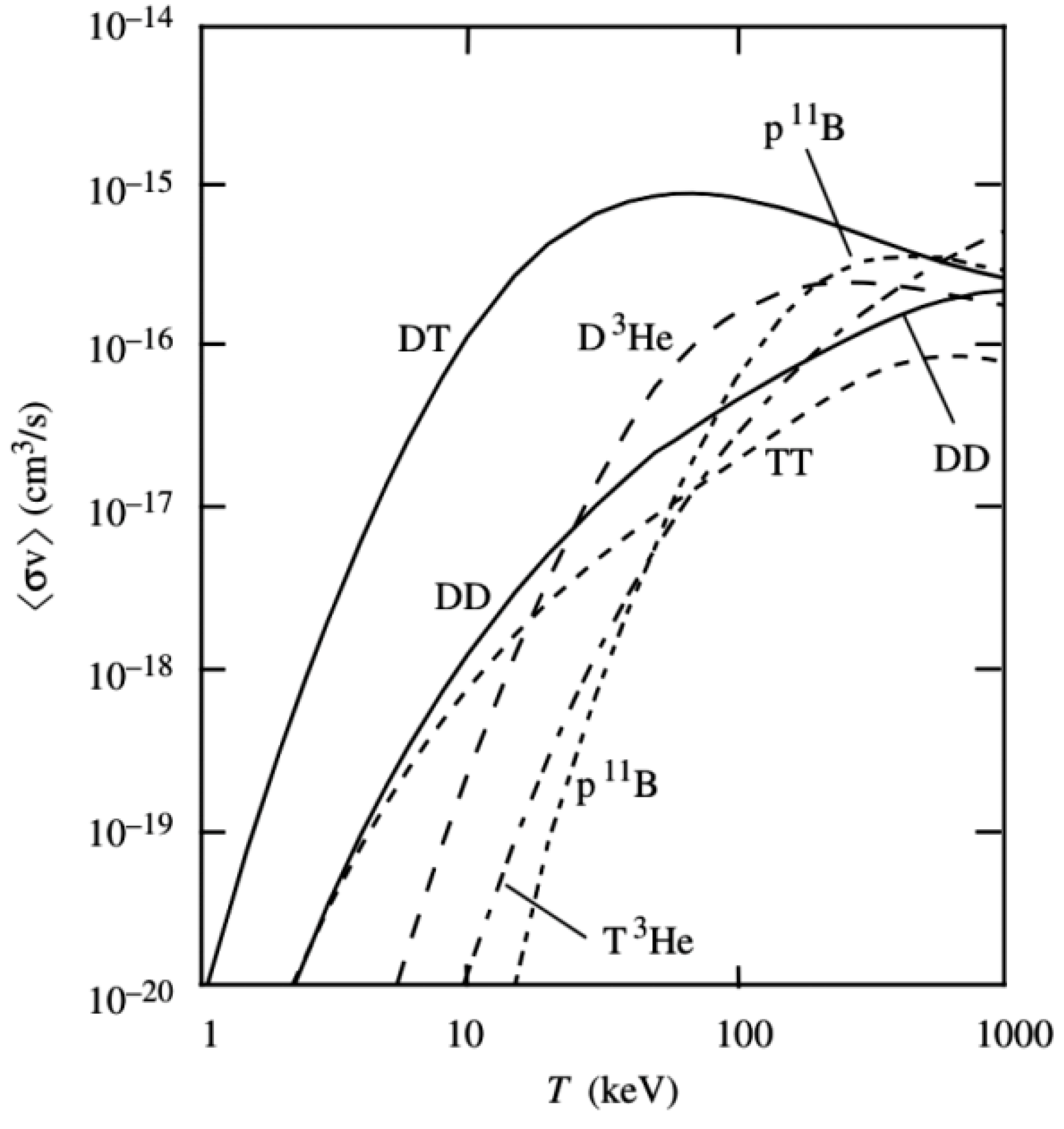
In this context, the term “nuclear fusion systems” refers to machines that are sometimes commercial but mainly experimental. Commercial devices are essentially the so-called “neutron generators” that are used in research, logistics, security, healthcare, and industry. The neutron generators use the fusion reactions described above, mainly the D-T one due to the more favorable conditions of reaction. The D-T reaction has by far the largest reactivity even at “low” energies, of the order of hundreds of keV, as shown by the graph in
Figure 1, which compares the D-T reaction reactivity with other fusion reactions [
2]. D-T reactivity is maximum at about T = 64 keV and for plasma temperature below 60 keV is at least 10 times larger than the reactivity of any other reaction.
The D-T reaction requires the lowest working temperature and has the highest reaction cross-section and reactivity (average number of reactions per unit time and density) at the temperatures achievable in the laboratory. Therefore, this reaction has been chosen in the most common applications. It is an exothermic reaction that releases 17.6 MeV in the form of kinetic energy of the resulting products (14.1 MeV for the neutron, 3.5 MeV for the alpha particle).
Neutrons produced by this reaction can be used in different ways, even taking advantage of the compactness of some generators that can be of the portable type. The main uses of commercial neutron generators are in geological surveys, replacing sealed neutron sources (AmBe, AmB, and 252Cf), and in neutron activation analysis of materials subject to control for safety or inspection reasons. These generators are based on the D-T reaction, so they contain a certain amount of tritium, mainly between 100 and 200 GBq for a production of the order of 108 neutrons per second.
Among the experimental machines, in addition to developing neutron generators, we must mention the experimental facilities for the study of nuclear fusion technology, with the aim of creating actual nuclear fusion reactors to produce electricity. Among the latter the systems currently most developed in Italy are those using magnetic confinement in toroidal geometry (Tokamak). The divertor tokamak test (DTT) facility under construction in Frascati (RM) is one of these Tokamaks.
Among the support studies for the realization of future fusion reactors, the neutral beam injectors (NBI) are accelerators in which the acceleration of deuterium involves the presence of D-D and D-T reactions, with the resulting production of neutrons and the potential activation of the surrounding materials. Currently, all major tokamak-type nuclear fusion experiments employ NBI for plasma heating.
4. The DTT Facility and the Tokamaks
One of the main challenges in the European program in view of the construction of a DEMOnstration nuclear fusion power plant (DEMO) is the problem of thermal loads onto the divertor (the main component for the disposal of the thermal power of the plasma in a fusion power plant). ITER has been planned to test the real potential of a “conventional” divertor working with the plasma completely “detached” from the wall. Unfortunately, this solution could not be exploitable in the operating conditions of DEMO and future reactors. Therefore, the problem of thermal loads on the divertor could remain particularly critical in the road towards the realization of the actual reactor.
For these reasons, a specific program was launched to design a tokamak called divertor tokamak test (DTT). This device will carry out scale experiments in order to look for alternatives of the divertor fully compatible with the specific physical conditions and technological solutions provided in DEMO. DTT must allow experimenting with different magnetic configurations, with components based on the use of liquid metals and other solutions suitable for the problem of heat loads onto the divertor.
In a future perspective, controlled thermonuclear fusion can provide energy, without some issues of environmental impact of current nuclear fission power plants, and therefore energy produced in this way will be:
low environmental impact: the products of the most promising fusion reaction (D-T) are only helium and neutrons. Radioactive waste is not produced and with a correct choice of materials, radioactivity induced in the structural components decays in a relatively short time.
intrinsically safe: chain reactions are not possible as there is only a very limited quantity of reagents in the vacuum chamber; in case of damage, accidents, or loss of control, the fusion reaction with consequent generation of heat will decay very quickly and automatically shut off.
sustainable: deuterium and lithium (tritium is actually produced in the reactor through interaction with lithium) are widespread and practically inexhaustible in nature (deuterium is present in large quantities in sea water and lithium can be extracted both from rocks and from oceans).
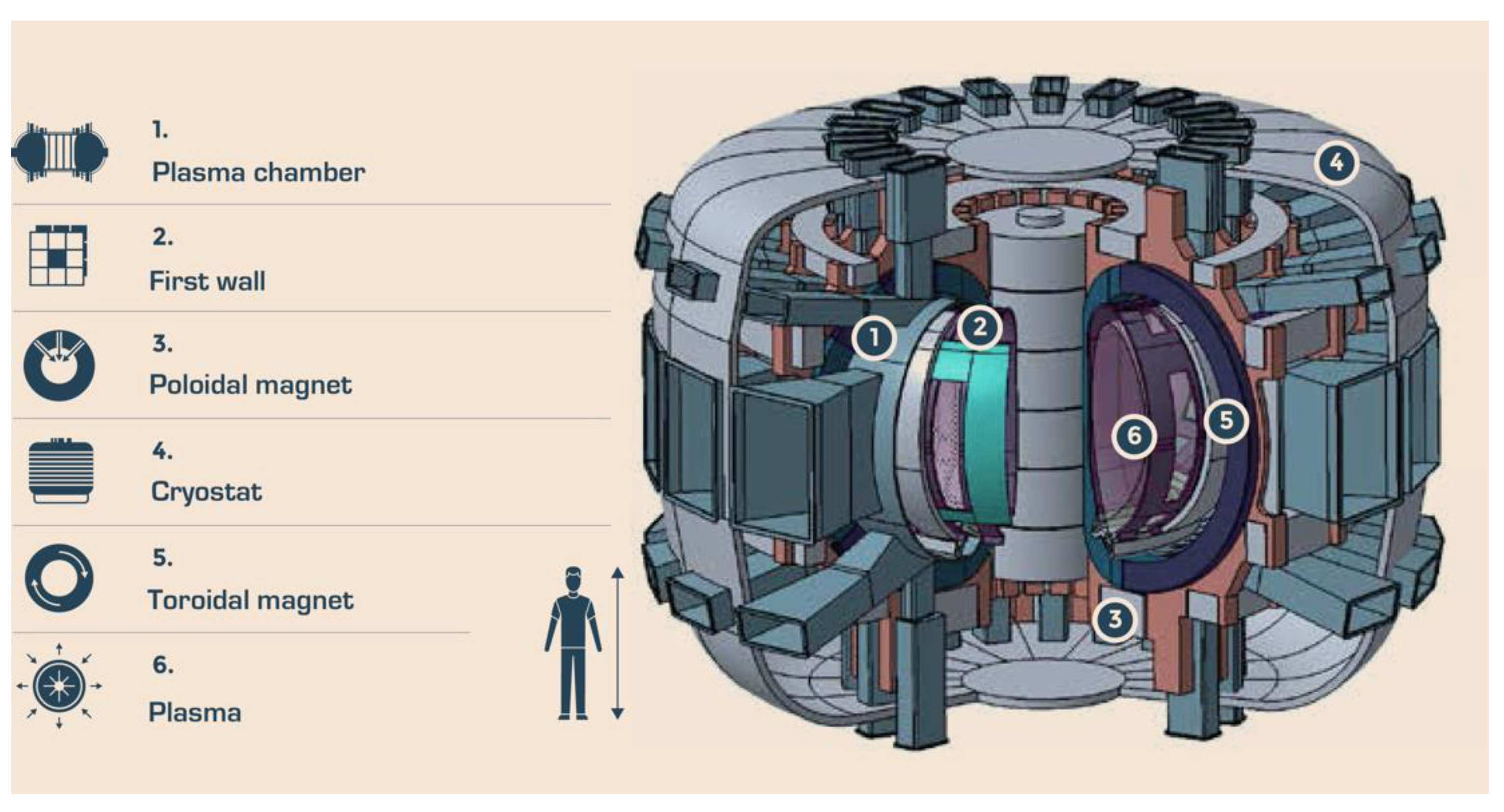
A tokamak-type nuclear fusion device has a structure of the kind shown in
Figure 2 with an external container called cryostat, which has the function of thermally insulating the interior. The internal vacuum chamber has a main toroidal geometry from which some conduits branch out; at the end of them there are some doors that allow access to the interior, where there are the first wall, formed by various steel tiles, and the cassettes of the divertor, also metallic, which can be either in the lower part or in the upper part of the vacuum chamber.
5. Emissions in the Air
The activation of the air surrounding a device based on nuclear fusion reactions, following the interaction with the neutrons that are produced, involves the production of some radionuclides, among which the main ones are: 3H, 11C, 13N, 16N, 14O, 15O, 37S, 37Ar, 41Ar, 39Cl, and 40Cl. Those who generally contribute the most to the dose and need to be considered for the evaluation of releases in the environment are: 15O (for a 30%), 11C, 13N, 41Ar (over 50%), 39Cl and 40Cl.
Generally, the reaction that determines the need to size the ventilation system and that requires the demonstration of respect for the impact on the population is the
40Ar (n, gamma)
41Ar [
3].
The activation of air in these plants does not usually affect operational scenarios as releases in the environment are responsible for very low doses and below the exposure constraints for the population both in the case of normal activity and as a result of accidental releases.
6. Activation of Solids
In the case of machines that use fusion reactions, solids are activated, also because of high-energy neutrons, which determine the production of radionuclides that are partly different from those normally produced by lower-energy neutrons. In order to assess the contribution to the activation of the various parts, one must consider the materials that make up the main structures of the machines, which are essentially steel (SS304L, SS316LN and, for future reactors, low-iron-to-ferritic steels euro-FER) and copper alloys (mainly CuCrZr). As an example,
Table 2 shows a possible composition of these materials, which is not strictly defined but can vary from time to time in some components depending on the manufacturers.
The SS304L steel is the one used in normal applications to build technological structures, also in part of the machines for fusion reactions.
When exposed to intense neutron fluxes, SS304L is activated and gives rise to the production of several radionuclides. By means of software available on the web, it is possible to detect the radionuclides produced in this type of steel by low-energy neutrons, and by fast neutrons. In
Table 3, a partial result is reported for the first case. Fe-55, Cr-51, some isotopes of Ni, Co-60, Mo-99, and Nb-94 can be noticed in the list and are about the same radionuclides previously encountered in
Table 1.
In devices already built or being designed in recent times, in view of the high neutron flows present, low-activation steels have been used reducing, in particular the content of Ni, Co, Nb, and Mo. The so-called “EUROFER” is actually one of these steels. A calculation similar to that of
Table 3 applied to EUROFER provides the results of
Table 4.
The decrease in radioactive inventory is evident as the reduction of the presence of components such as nickel, cobalt, molybdenum, and niobium results in an important decrease in radionuclide activation. Figures in the tables refer to zero cooling times. If we consider longer times or the order of the year, EUROFER is even more advantageous as radionuclides with higher T1/2 are the ones that derive by nickel, niobium, and cobalt, which are present in low quantities in this type of steel.
An example of the radioactive inventory that can be found in operating plants is shown in
Table 5 and
Table 6 from a study conducted for the NBI device [
4], where D-D reactions occur, developed in Italy, and then used for ITER. Figures refer to different waiting times after the shutdown and the lower number of surviving radionuclides can be easily noticed in the second case. The radioactive elements are actually the same as those shown in
Table 3 and
Table 4, which are of a general nature. In some cases, it may be useful to refer to the integral result that indicates total radioactivity following activation.
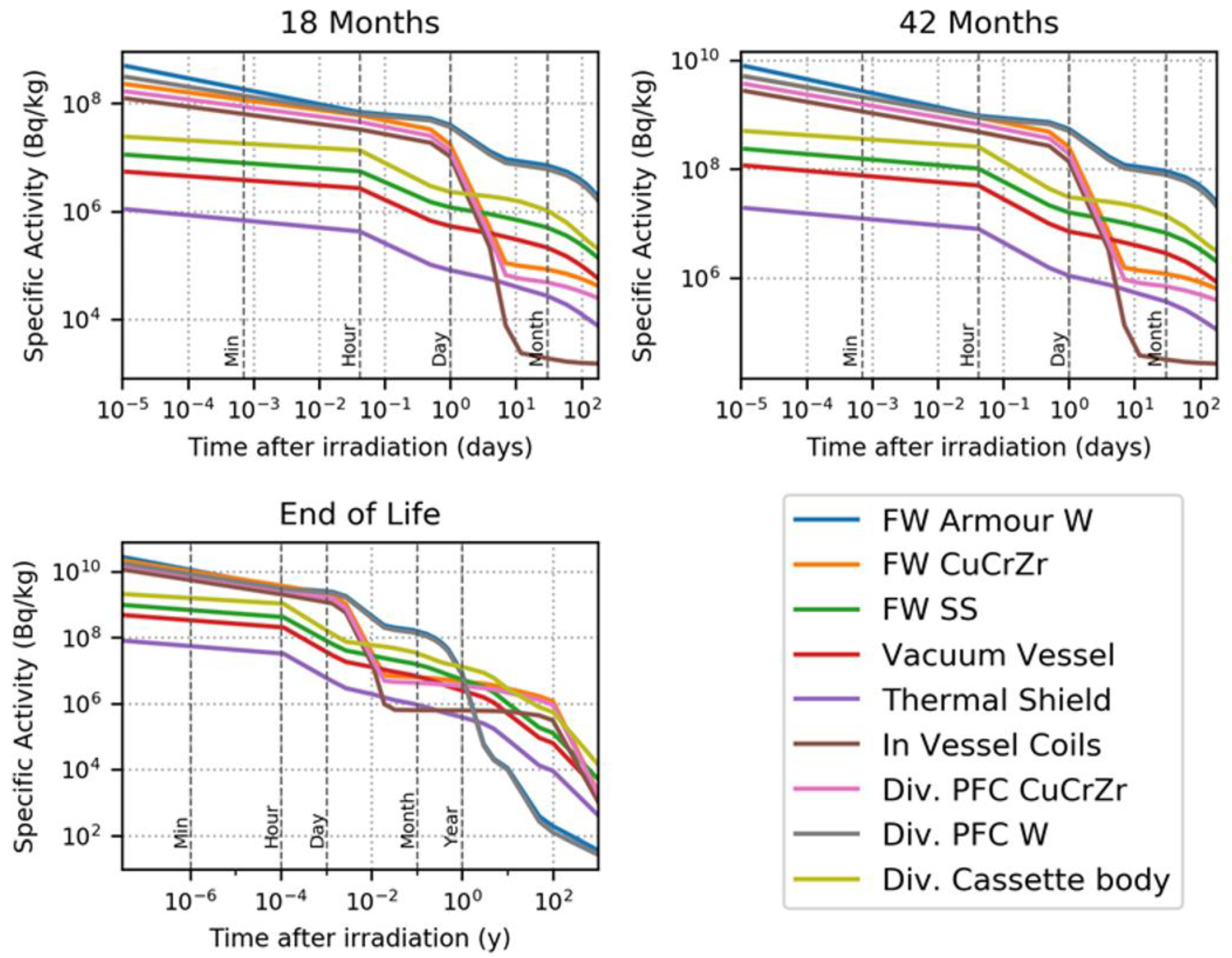
Figure 3 indicates the theoretical result [
5] obtained with calculation codes related to the activation of the parts inside the vessel of DTT, where neutrons from D-D reactions dominate. The graphs shown refer to different phases of the machine’s operation, indicating the integral activity for the components, depending on the cooling time after the end of the activity. For example, it may be noted that at the end of the DTT operations it takes several tens of years to reach radioactivity concentrations of less than 1 Bq/g. Otherwise, some components removed during the working life of the machine fall below the same concentration in a few months.
7. Activation in the Refrigeration Circuits
In the refrigeration circuits mainly used in fusion-based systems, the coolant is usually water and the pipes are made of metal materials (usually steels or copper alloys). In these circuits, activation can take place both in the water itself and in the walls of the pipes that are corroded and eroded by water, leading to dispersion of activated corrosion products (ACPs) in the cooling loops. Water activation occurs because of the interaction of fast neutrons with 17O and 16O to form 17N and 16N, respectively, which emit high-energy gamma rays. These two n,p-type reactions have threshold reactions of about 10 MeV of energy for incident neutrons and therefore occur only as a result of DT reactions, so they are peculiar of this type of device (and are, for example, negligible in nuclear fission reactors). Another specific issue is the subsequent decay of the 17N, which emits high-energy delayed neutrons (0.383 and 1.171 MeV), which in turn can activate the materials. ACPs that disperse in the refrigerant are composed of the same radionuclides already considered in the activation of the solids.
8. Issues Related to the Presence of Tritium
ITER and future devices (e.g., DEMO) will use hydrogen isotopes deuterium and tritium to fuel the fusion reaction. While deuterium is a widely available and virtually inexhaustible resource (it can be distilled from all forms of water), tritium is a fast-decaying radioelement of hydrogen, which occurs only in trace quantities in nature. As a consequence, tritium for a fusion reactor must be produced on site, directly in the reactor “breeding” blanket. The fuel cycle of a fusion reactor consists of all the operations dedicated to the extraction and purification of the tritium from the breeding blanket, as well as the treatment of the gaseous and liquid streams containing the hydrogen isotopes [
6]. With the realization of a “closed” fuel cycle, the tritium is confined to the fusion power plant in such a way that it can fulfil the requirement of safe production of clean energy.
In a fusion reactor, most of the systems processing the fusion fuels will be hosted in a dedicated tritium plant (TP). Here, the different isotopes can be isolated by detritiation of gas streams, so that deuterium and tritium can again be fueled into the reactor. ITER will have a 35 m tall × 80 m long × 25 m wide TP building. These dimensions are necessary to house the systems responsible for tritium recovery, isotope separation, deuterium-tritium fuel storage, and delivery. However, it should be noted that ITER will only test small mock-ups of tritium breeding elements, with an estimated daily production less than 0.4 g. In contrast, the European DEMO, designed to demonstrate tritium self-sufficiency at a reactor scale, may reach a production as high as 250 g/day.
For the above-mentioned reasons, tritium is present in small or large amount in all the parts of tokamak plants. Tritium has a high solubility and diffusivity, from which derives a high permeability to tritium of most materials, such as polymers, metals subject to hydride formation, metals unsuitable for hydride formation, silica, ceramics, and graphite. Tritium also diffuses through glass, especially at high temperatures. Therefore, in the cases in which the tritium is used as fuel, the issue of tritium retention in the materials of the walls may arise due to the interaction between the plasma and the wall itself. Thus, it is necessary to provide for the disposal of tritiated targets and tritium-containing residues.
Regarding human exposure, tritium emits beta radiation of maximum energy of 18.6 keV and a range less than 6 mm in air, which do not penetrate neither the dead layer of the skin, nor the clothes or gloves. For the purpose of radiation protection, the critical aspect is therefore the tritium intake, the internal contamination and the committed effective dose.
In ITER the amount of tritium that will be handled is in the order of 10
17 Bq (i.e., a few kg) [
7]. In the analysis of accident scenarios, the total amount of tritium is a key element. In particular, tritium can be found:
in the vacuum vessel, as un-burnt fuel.
in the cooling loops of the plasma facing components (PFC) and vacuum vessel, due to gas permeation in the pipes.
in the atmosphere of the buildings
in the outer atmosphere, following an accidental release
in the tritium system.
The tritium build-up in the vacuum vessel is not considered a concern, both for workers and for the population [
8]. Previous research demonstrated that the acute release of 10 GBq of tritium accumulated in the vacuum vessel of the ITER neutral beam injector produces a dose to the population below 1 μSv/year (i.e., about three order of magnitude lower than the regulatory dose limit for population) [
9].
In the case b), tritium is mixed with other source terms like activated corrosion products (ACPs) and dusts when released. As a consequence, the general consensus is that it does not represent a major concern.
As a general rule, the containment of tritium is designed to reduce as much as possible the contamination of the building surfaces and atmosphere (case c)). However, diffusion and outgassing of tritium from materials may produce tritium release in the atmosphere of the building. It is generally assumed that the ventilation systems should keep the airborne tritium level below the monitoring devices detection level [
5]. When the dose rate due to tritium concentration in air exceeds approximately 25 µSv/h, the personnel will evacuate or wear protective equipment. As a result of these precautions, the doses resulting from tritium exposure should be very limited (<1% of objective) [
10].
Regarding the accidental release of tritium outside the facility (case d), past research demonstrated that the maximum dose to the population in the worst-case scenario is well within the regulatory dose limits [
11]. The tritium maximum dose received at 2.5 km distance from the site (closest house to the point of release) is expected not to exceed 0.3 mSv, due to the accidental release of 1 g of HTO. A similar dose value (0.4 mSv) was found by Nie et al. [
12]. When chronic ingestion is considered, the dose to the population would be about 2.1 mSv following the accidental release of 1 g of HTO [
12].
In the analysis of emergency scenarios, accidents in tritium handling and in the fueling system (case e)) represent a critical issue. A detailed analysis of possible accidents is discussed elsewhere [
8] and will not be repeated here. Significant data on the influence of tritium on the worker dose come from the (Joint European Torus) JET experience developed in the period 1997–2002 when an average collective worker dose of 37 person-mSv was estimated [
8].
Finally, it is worth mentioning tritium reservoir in portable generators. As a matter of fact, tabletop neutron generators have evolved from a large, expensive instrument to a compact, affordable product. Small neutron generators using the deuterium (
2H)-tritium (
3H) reaction are the most common accelerator-based neutron sources. Creating deuterium ions and accelerating these ions into a tritium or deuterium target produces neutrons. Deuterium atoms in the beam fuse with deuterium and tritium atoms in the target to produce neutrons. However, previous research has demonstrated that releases from portable generators do not represent a concern form a radiation protection point of view [
13].
9. Types of Waste: Clearance and/or Release Routes
From what has been explained above, radioactive materials potentially released by plants making use of DD or DT reactions may not have T
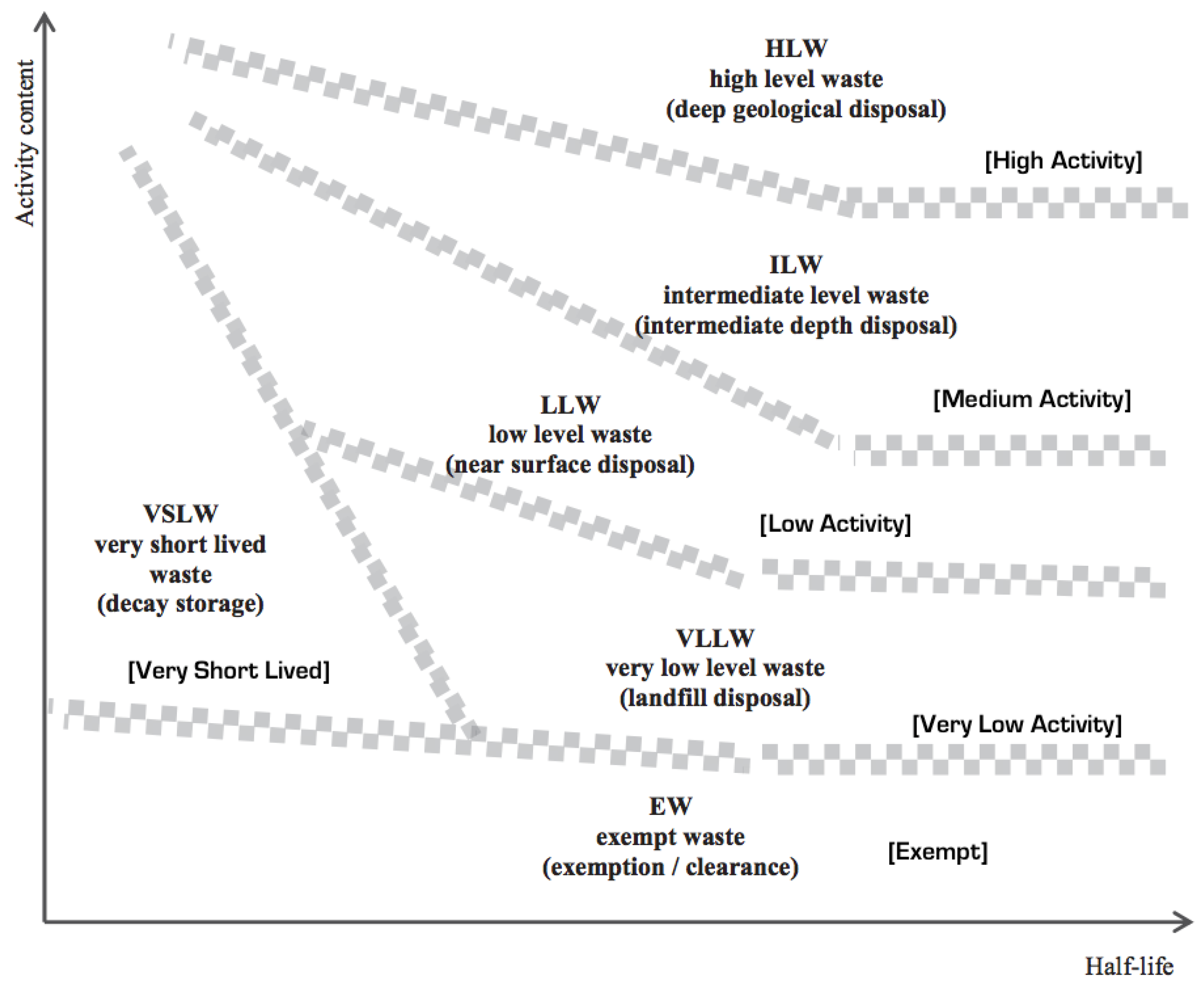
1/2 < 75 days and cannot therefore be considered “exempt” pursuant to art 154 of Legislative Decree 230/95 and subsequent amendments. According to the Ministerial Decree of 7 August 2015, the classification of the radioactive waste in Italy now complies with the IAEA General Safety Guide No. GSG-1, following the general scheme shown in
Figure 4. Actually, Italian regulation refers to the activity and not to the “level” of the radioactive waste, as clarified in
Figure 4. In this classification process also the release constraints defined in the European guide RP 122 [
14] are considered.
Solid radioactive waste usually comes from the removal and replacement of components and the release of disposable protective clothing used in maintenance operations. Maintenance during operation involves the production of radioactive waste, especially in large machines such as high-power tokamaks (e.g., DTT and ITER) or test systems for NBI, for example the one developed in Italy for ITER. In tokamaks it is indeed very common to replace the tiles of the first wall and the divertor cassettes with remote handling systems to avoid undue exposure of operators. As highlighted above, for these parts inside the vacuum chamber the radioactive inventory is significant.
Normally, neutron generators do not produce radioactive waste during their operations, except in the case of replacement of the tritiated target (frequent in large, non-portable generators). However, the exhausted targets are usually withdrawn by companies that supply the new ones.
10. Discussion and Concluding Remarks
The above analysis shows that most of the devices based on nuclear fusion reactions currently on the market do not present critical points regarding the production of radioactive waste or residues. Neutron generators have characteristics and technological solutions such as to exclude almost completely the production of radioactive waste during operation, apart from the tritiated targets of some generators which are withdrawn by the suppliers themselves and then disposed of as radioactive waste. The situation changes when we consider the experimental machines for nuclear fusion currently in operation and above all those under construction.
In these cases, high neutron fluxes, often higher than 1015 n s−1, determine the activation of the internal components closer to the plasma in which fusion reactions take place. These components reach concentrations of radioactivity which, in case of maintenance and replacement, make difficult the hands-on operations and represent a radioactive waste to be disposed of according to the laws in force, although in many cases they are made with selected metals with low activation. Pursuant to the Ministerial Decree of 7 August 2015, they are essentially waste of “very low” or “low” activity, while radioactive waste with “medium” or “high” activity is never produced, unlike the case of nuclear fission reactors.
Even the liquid and gaseous releases into the environment deriving from the operation of the fusion plants do not present critical issues from the point of view of radioactivity and the consequent impact on the exposure of the population, although the content of these effluents must be the object of accurate analysis and checks as both air and water of cooling circuits have radioactivity concentrations which, especially in the case of water, can require the need to release them as radioactive waste.
In summary, it can be stated that in all cases the correct selection of materials and the adoption of adequate procedures allow simplified management of all types of radioactive release and waste, which can be contained in the low-level or very low-level categories, pursuant to the laws.



 ,
,