Review

Environmental Impact of Fireworks

by
Peter Brimblecombe
1,2
1
Department of Marine Environment and Engineering, National Sun Yat-sen University, Kaohsiung 80424, Taiwan
2
School of Environmental Sciences, University of East Anglia, Norwich NR4 7TJ, UK
Environments 2026, 13(6), 355; https://doi.org/10.3390/environments13060355 (registering DOI)
Submission received: 17 May 2026 / Revised: 18 June 2026 / Accepted: 20 June 2026 / Published: 22 June 2026
(This article belongs to the Section Society, Environment, Health)

Abstract

Fireworks have been used in China for more than a millennium, though they are an increasing part of celebration globally. Consumption of fireworks is on the rise despite increased regulation of their use. This review examines the key themes that are apparent in contemporary research: contamination of air, water and soil, in addition to waste debris, noise and light pollution, along with contemporary approaches to mitigate environmental impact. Research is, as expected, more frequent from countries with high fireworks use, so some rather small countries such as the Netherlands, Malta and Iceland are notably active. Concentrations of emitted gases (especially SO2) and fine particles are frequently studied, along with associated toxic metals and semimetals (especially Cu, Zn, Cd, As, Ba and Sr). There are many projections of effects of fireworks, but relatively few epidemiological studies of health outcomes or the impact of contamination on local ecosystems. Fireworks waste and debris is an environmental problem; it is expensive to clear and aesthetically unpleasing. Excessive noise (up to 137 dB) created by fireworks affects pets and wildlife, as well as posing a risk to pyrotechnicians. Fireworks produce bursts of light that can be distracting to motorists and disturb wildlife, while smoke particles cause lowered visibility. Green fireworks and festivals of light with lasers or drone technology present routes to lower impact. Contemporary society is sympathetic towards restricting fireworks, but recognition of their cultural importance remains.

1. Introduction

Gunpowder was developed in China during the late Tang dynasty (9th century) and enabled more sophisticated fireworks to be used in festivals [1]. The adoption of fireworks has been evident in India and Europe from the medieval period [2]. Royal displays were important events, as seen with The Music for the Royal Fireworks composed by George Frideric Handel for the fireworks in London’s Green Park on 27 April 1749. Fortunes were to be made from increasingly innovative displays such as those of the British businesswoman Sarah Hengler (c.1765–1845) [3], a far cry from early Nian festivals, which focused on the noise from firecrackers to aim at scaring away evil spirits [4,5]. As evidence of environmental impact, the Song Dynasty (960–1279) administrator Meng Yuanlao described the pall of smoke that arose from civic displays in his book The Eastern Capital: A Dream of Splendor (1147) [6].
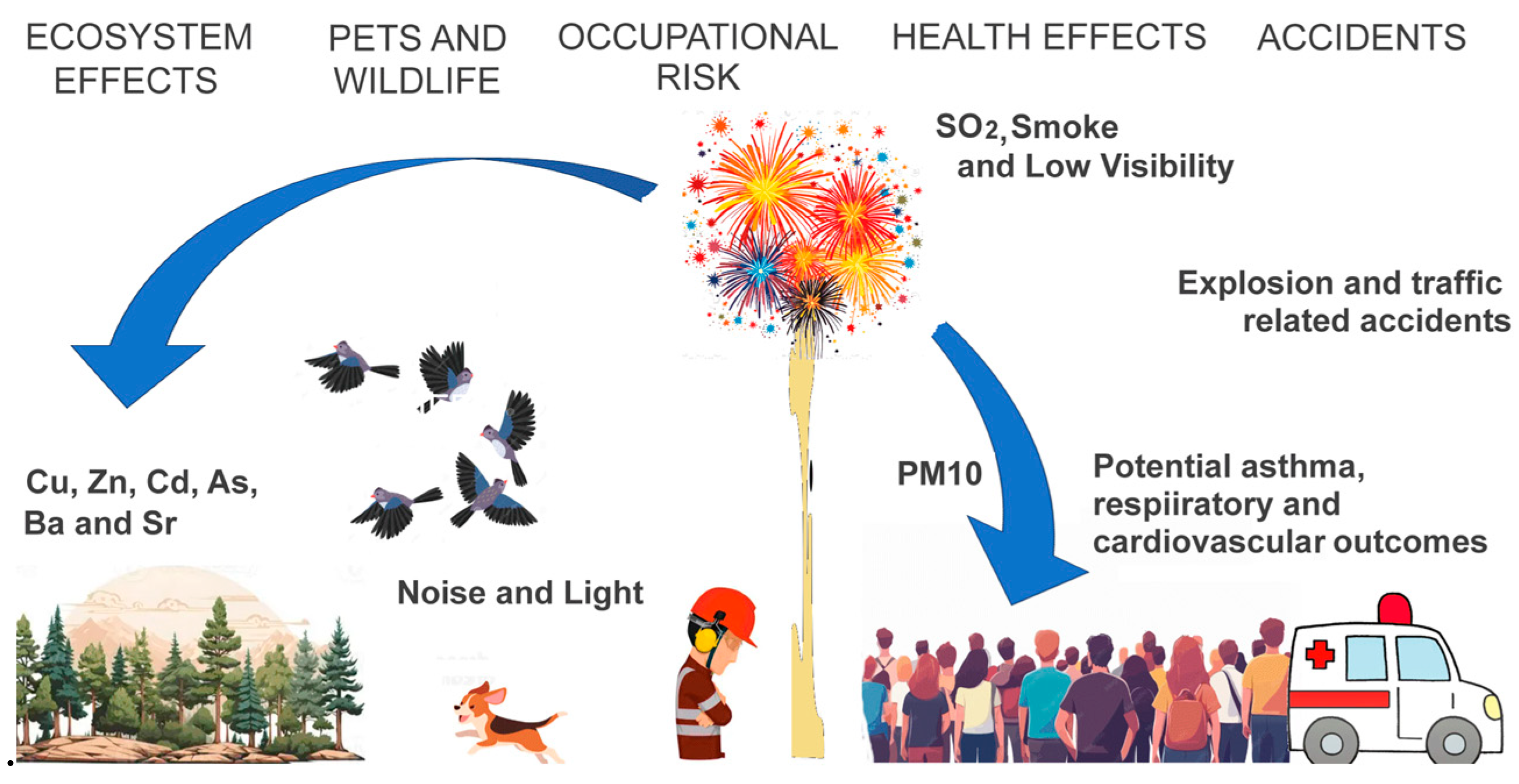
The aim of this review is to explore the way fireworks affect our environment by examining some of the key research themes that are apparent in the academic literature. Much of the review literature in this area is rather specific, so this work tries to cover the breadth of potential environmental issues. Although the detrimental effects of fireworks displays are well recognised, their cultural importance makes regulation a delicate issue. The review will also draw attention to some knowledge gaps that need to be addressed to inform sound policy. It addresses contamination of air, water and soil, in addition to waste debris, noise and light pollution, along with health and environmental outcomes and contemporary approaches to mitigate environmental impacts, as summarised in Figure 1.

2. Materials and Methods

Given the large amount of work done on environmental issues arising from the use of fireworks, it is difficult to be comprehensive in the treatment of the available academic literature. In the past, some reviews have overcome this by limiting the scope to emissions at the Spring Festival in China [7], which is particularly restrictive, as the period can also be described as Chinese New Year or the Lantern Festival (especially at the end of the celebratory period). Other reviews have similarly chosen to limit their breadth using the search term “Diwali” [8], which focusses on India and the Indian diaspora. Additionally, the literature captured through the use of keywords depends on a careful choice of words. The output of such analyses has often been reported as quantitative measures of the material published or through tools such as VOS viewer [9], which examines connections and draws links within the data [8].
This study largely followed the PRISMA approach [https://shribe.eu/prisma-literature-review/, accessed on 16 May 2026]. We firstly undertook a literature search. Although the present study used keyword searches, they did not dominate the choice of material. Occasionally, artificial intelligence was used to explore key ideas within a theme, often adopting Scopus AI, which draws upon abstracts and references within the Scopus database [10]. Secondly, material was selected for use in the review; in particular, it was grouped into themes that emerged as most strongly reflecting current concerns about the impacts of fireworks on the environment. Even within particular themes, the literature was often very rich, so where a multitude of sources were available, recent examples were chosen. Next, key observations and findings were drawn from the selected studies. Not all the claims made within these seemed equally reliable, especially those concerning health effects, so the strength of claims is addressed at the appropriate points in the text.

3. Results

3.1. Festival Dates and Geography

The use of fireworks is now widespread, even in places that have not traditionally used them, such as celebrations in Iceland [11] or Iran [12]. The New Year begins with fireworks almost universally now, so it is difficult to provide a sense of the global extent of the displays, but a list of the best displays suggests that they can be found on all continents [13]. There are numerous studies of air pollution during New Year celebrations that give an indication of the geographical range of studies: Kansal, Germany [14], Honolulu, Hawaii [15], Queretaro, Mexico [16], Metro Manila, Philippines, [17], Ljubljana, Slovenia [18], Rio de Janeiro, Brazil [19], Brno, Czech Republic and Graz, Austria [20].
The Spring Festival (Table 1) or Chinese New Year (21 January to 20 February) has also been widely studied [21,22,23], together with Diwali in India (mid-October to mid-November) [24,25,26]. Some other annual festivals celebrated with fireworks include: (i) Guy Fawkes or Bonfire Night in the UK, Australia and New Zealand [27], (ii) Independence Day in the US on 4 July [28], (iii) the Last Wednesday Eve Festival in Tehran, when Iran celebrates the coming new year that begins at the March equinox [12] and (iv) Loy Krathong Thai, an event celebrated on the full moon of the 12th month in the traditional calendar [29].

3.2. Trends in Fireworks Production and Use

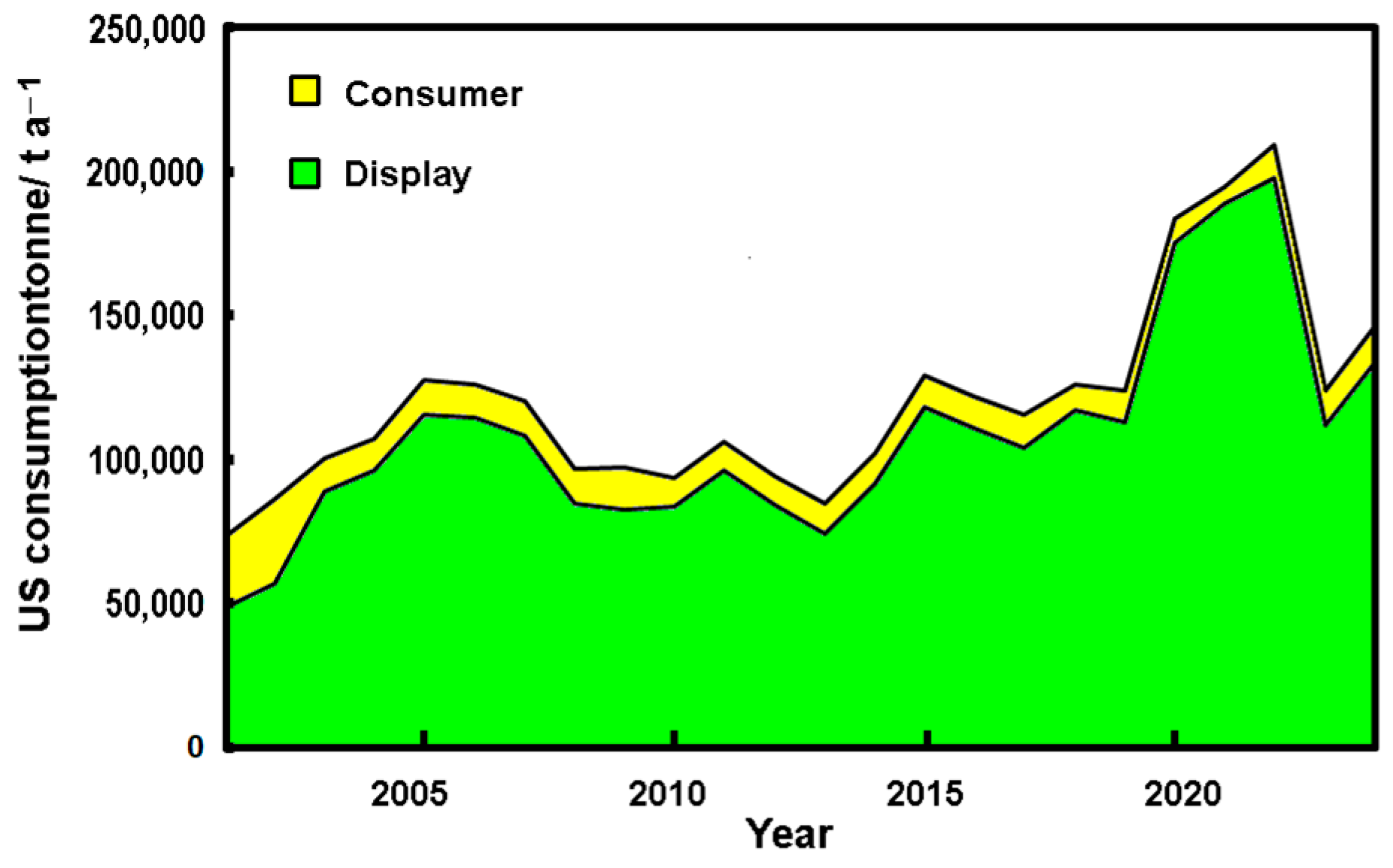
Fireworks production has become highly regulated, with strict laws regarding the production and storage of fireworks. Nevertheless, accidents occur, such as the May 2000 explosion of poorly stored fireworks at Enschede, in the Netherlands, which killed 23 people [30]. Continued concerns lead to increasingly stringent legislation at national levels that additionally relates to the sale and use of fireworks, which puts pressure on the manufacture of fireworks and their sale [31,32]. China is the main producer of fireworks, exporting 0.365 Mt in 2023 [33], with most of this going to the United States, where there is continued growth in consumption (Figure 2) [34]. There was a notable increase in consumption during the period of COVID-19 in the US (2020–2021), as exhibited by a sharp increase in use by individual consumers [35]. There was also an increase in fireworks emissions in some parts of China during the Spring Festival of 2020, where social media revealed an increase in the number of comments about Nian traditions. This might be associated with a belief that the pandemic could be seen as an evil spirit to be driven away by firecrackers [32].

3.3. Trends in Research

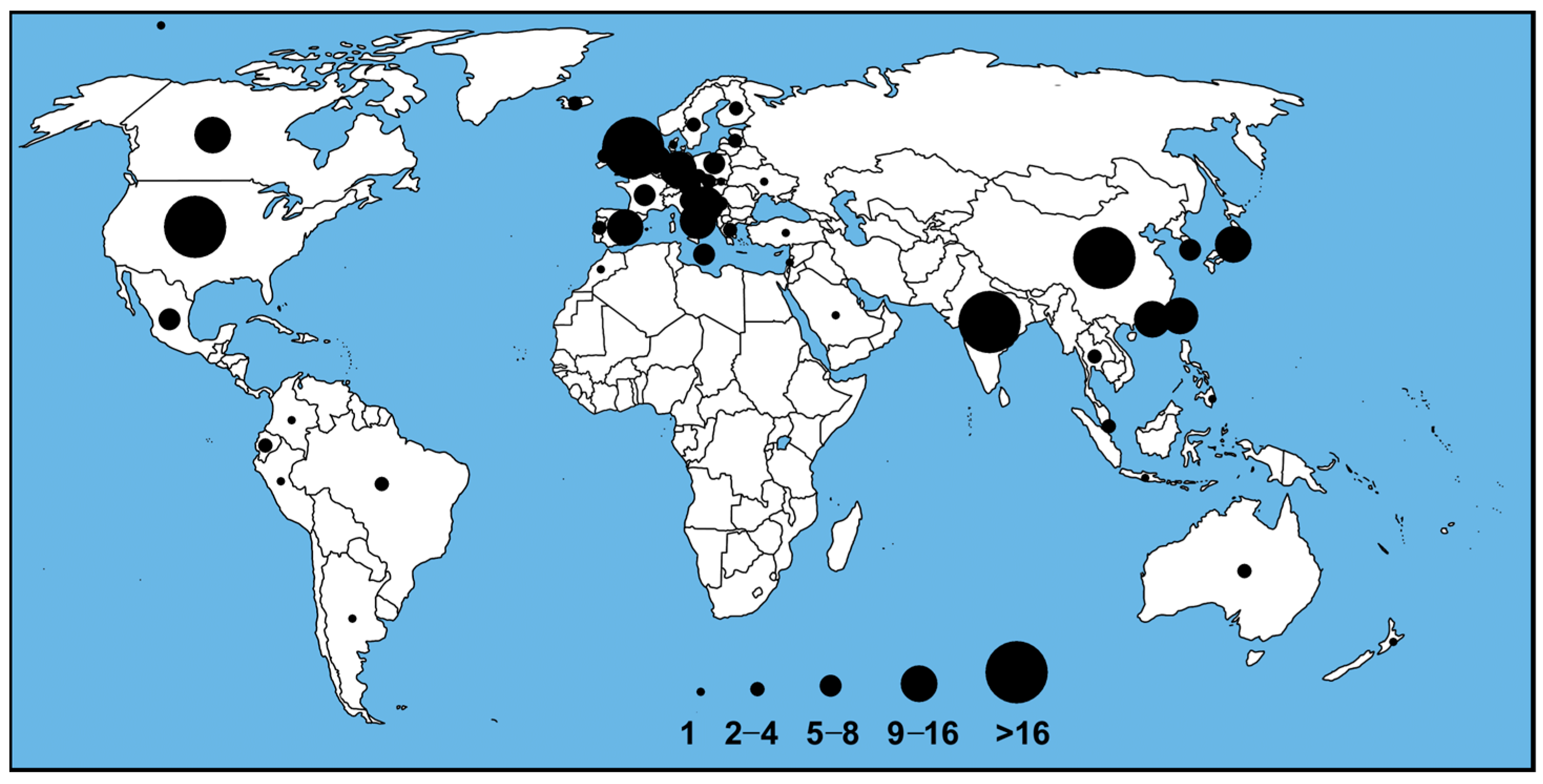
As mentioned earlier, the analysis here is not intended to be comprehensive or quantitative, yet it is important to establish a few quantitative parameters. Although the study did not focus on keywords, they were used to represent the proportional interest. Using the search (TITLE-ABS-KEY (fireworks pollution) AND PUBYEAR > 2000 AND PUBYEAR < 2026) in Scopus suggests that from the year 2000 to the beginning of May, 582 items were available. About one third arise from Chinese affiliations, with 20% from India and 10% from the United States. These are all countries with large populations using considerable quantities of fireworks. Some sense of the global spread of research interest in fireworks pollution is given in Figure 3. Nevertheless, we found very small countries such as Malta, with a population of just half a million in 2021 (compared with China 1.4 billion), to be affiliated with five articles. China’s long history of use of fireworks explains its publication dominance, but the tiny island of Malta has equally strong traditions of celebrating events with fireworks, so it is comparatively well represented in terms of research. The absence of research in Africa is evident from Figure 3, despite very good New Year displays in South Africa [13].

3.4. Regulation and Illegality

Regulating the use of fireworks is often by means of limiting the size of available items, specifying the duration or place of purchase, having age requirements for purchase or requiring permits [36]. Control of the use of fireworks, as distinct from their manufacture, can change rather frequently and switch between liberal and restrictive approaches [37]. The pyrotechnic industry has argued that restrictive laws increase injuries, because illegal products are more dangerous. However, in the US, states that allow consumer fireworks have seven times more injuries and 50 times more fires from fireworks than those with restrictive regulations [37].
Although bans on the use of fireworks can be effective, this may take a concerted effort by authorities. In Beijing, increasing restrictions meant that they slowly came to be accepted by the public, leading to a fall in illegal sales [32]. Caulkins and Reimer [37] have compared the regulation of fireworks and cannabis. Their use is different in that “fireworks are not addictive and create substantial positive externalities”, yet fireworks-related harm to health is physical and acute, leading to four times the level of emergency department visits compared with cannabis. However, public concern creates a kind of “moral panic”, which may drive rather punitive and divisive policies relating to cannabis use. In the case of fireworks, restrictions may be more broadly accepted in society, but contravening the regulations tends be viewed as a mere peccadillo. An increased willingness to indulge in anti-social behaviour is apparent in carnival-like situations, such that revellers may feel permitted to take a “moral holiday” [38], while some excesses in fireworks use may derive from local rivalries [39]. This might explain the continued use of illegal fireworks, which remain a problem even in the face of evidence of the potential for injury [15]. While in China, bans and restrictions have lowered the environmental impact, in other places, cultural traditions and the persistence of illegal fireworks sales continue to represent a problem [22]. Nevertheless, policymakers have a difficult problem in balancing environmental governance with a respect for cultural heritage [22].

3.5. Fireworks Particulate Emissions

The smoke from fireworks has been apparent since ancient times [6], so it is hardly surprising that the increasing particulate load has been well documented. Lin [40] reviewed much published work and tabulated the difference between the concentrations during the fireworks period and the background. He notes that 19 of 20 PM2.5-related studies have reported average PM2.5 levels that exceeded the 24 h U.S. National Ambient Air Quality Standard of 35 μg m−3 (and 15 μg m−3 from the World Health Organization), while 19 of 25 PM10-related studies reported levels that exceeded the 24 h standard of 150 μg m−3 (and 45 μg m−3 from the World Health Organization). In recent work on the Lantern Festival in Changchun, PM2.5 and PM10 concentrations increased by 144% and 64% compared to background levels [41]. Determining the amount of the particulate material that arises from fireworks, as distinct from other sources, benefits from positive matrix factorization models [23]. There is additionally a potential for increases in indoor air pollution during the Spring Festival in China [7]. Several recent reviews [8,22,42] of air pollutants from fireworks also suggest that particulate levels are elevated up to five times compared to their background levels during celebrations in China [22,42]. In India, data is also available at regional levels from north [25,43] to south [44] and across the entire nation, which shows increases as a whole.
The rise in particulate concentration can be very rapid [45]; in Tianjin, PM2.5 and PM10 concentrations rose by 178 μg m−3 and 305 μg m−3, respectively, within a single hour [46]. Many other countries, from tiny Iceland [11] and Malta [47] to the United States [28] and Brazil [19], also reveal substantially elevated particulate concentrations after celebrations with fireworks.
Vertical and circumnavigation flights were conducted using an uncrewed aerial vehicle in Changchun, Northeast China. These showed that PM10 concentration attained peak values of 243 μg m−3, reflecting double that of background values, with an accumulation within the boundary layer [41]. This accumulation may explain the observation that where fireworks are used over a wide area, the boundary layer thickness might be a more significant factor in controlling concentration than wind speed [32].
Widespread use of fireworks means pollutants can persist for days and be transported long distances, as found in India [43]. While the immediate impact is localised, long-range transport of pollutants has been documented, such as the movement of fireworks-related particulate material from China to the Korean Peninsula [48]. Broad regional increases in the satellite aerosol index are found across the Indo-Gangetic Plain, which is elevated in the week after Diwali [43]. Lin [40] points to evidence that particulate matter remains suspended in the air for a week or even up to a month after festival displays. Thus, particle concentrations may be elevated for prolonged periods [49], although the reasons are not entirely clear. It is true that fine particles can remain suspended for a long time, but air masses typically move with the wind. Maintaining high particulate concentrations for long periods can occur if the air remains stagnant or if there is long-range transport from other places or large amounts of resuspension from the ground. Persistence could be important, as it would elevate human exposure to fireworks particles.
The size of fireworks aerosols is allocated to the PM2.5 and PM10 range. However, fireworks emissions yield a wide range of aerosol particle sizes, with notable contributions from both ultrafine and accumulation mode particles. Particles smaller than 100 nm (Aitken mode) are generally less prominent during fireworks events due to coagulation and condensation processes [50,51]. Some studies report significant contributions of particles in the 10–100 nm range during fireworks events [52,53]. Particle size distributions often show peaks between 80 and 175 nm [52,54]. These particles dominate the number and mass concentrations during fireworks events, contributing significantly to air pollution [40,50,53]. Coarse particles may exhibit peaks around 0.93 µm and 5.5 µm, indicating growth of accumulation particles [55].
The optical properties of the atmosphere are affected as fireworks increase the aerosol optical depth (AOD) because of high particle concentrations. During events such as Lunar New Year and Diwali celebrations, AOD values can rise dramatically, with fine-mode particles dominating [56]. Fireworks aerosols tend to have high Single Scattering Albedo (SSA), indicating the dominance of scattering over absorption. For example, SSA values during fireworks events are higher than those observed during dust storms or biomass burning [57,58]. Fireworks particles, particularly those containing water-soluble ions such as potassium chloride (and probably perchlorates), exhibit increased hygroscopicity, which affects their ability to scatter light and act as cloud condensation nuclei [17].

3.6. Pollutant Gases

Fireworks emit a notable amount of sulphur dioxide, which is hardly surprising given that they contain ~10% sulphur as part of the black powder [59,60]. Several studies [45,61] have noticed that sulphur dioxide (SO2) concentrations (up to 100 μg m−3) aligned with the peaks in particulate matter, but even these extremes do not exceed the 24 h World Health Organization guideline of 45 μg m−3. During Diwali in Jodhpur, SO2 concentrations were observed to be 2.5–5.6 times higher on the festival day compared to pre-festival levels [62]. However, in Seoul and Busan, firework festivals caused only light increases in SO2 levels compared to the dramatic spikes in particulate matter (PM2.5 and PM10). Peak SO2 concentrations reached 4.9 ppb in Seoul and 5.7 ppb in Busan, which were relatively modest compared to other pollutants [63].
The concentration of carbon monoxide (CO) can be relatively low and has been used as the CO-ratio method to determine the fraction of pollutants that arise from fireworks [23,45]. During the Deepawali festival in Agra, CO concentrations increase by a factor of 1.7 compared to typical winter days [64], while in Delhi, CO mixing ratios also showed an increase during Diwali celebrations, although the impact was less pronounced compared to particulate matter [65]. Emissions from fireworks include nitrogen oxides, and where these are emitted in large quantities, they can lead to ozone formation or depletion through photochemical or titration reactions [24,66]. However, it is sometimes unclear whether this arises from enhanced motor vehicle emissions associated with the events. For example, nitrogen dioxide levels increased as more individuals attended football games [67]. In the period around the fireworks celebrations at Yanshui, Taiwan, high concentrations of gaseous pollutants were attributed to motor vehicles [68]. At some festivals, the nitrogen oxides partly derived from cooking emissions [69].
Emissions of ammonia have been observed during fireworks events [59], and more generally, gases such as ethylamine have been identified as part of fireworks emissions, highlighting the presence of atmospheric amines [70]. Hydrogen chloride can be released in the combustion of chlorine-containing compounds in fireworks, so it contributes to acidic particles [60,71]. Secondary pollutants (e.g., sulphates) are formed through oxidation and heterogeneous reactions, especially if oxidants such as ozone are at high concentration. There have been claims of ozone production by fireworks, perhaps from the cardboard materials they contain, which leads to 3–8 ppb increases in concentrations in Chinese megacities [72], although the relevance of this remains uncertain.

3.7. Health Exposures

It has long been clear that particulate loads and the concentrations of gases emitted from fireworks exceed guideline values from the World Health Organization and national objectives [73]. There is much evidence that emissions from fireworks are harmful, as they include particulate matter, sulphur dioxide and nitrogen oxides, so they could potentially exacerbate asthma, bronchitis, chronic obstructive pulmonary diseases and cardiovascular problems, including heart attacks and strokes, especially in vulnerable individuals such as those with underlying heart conditions [74]. Nevertheless, as fireworks exposures are likely quite short, more apparent symptoms might include coughing, wheezing, and shortness of breath, especially among asthmatics [75,76].
Observations of health status are not typically part of campaigns that study fireworks episodes, which means many studies offer only limited support for claims of an impact on health. Rather, the association of fireworks air pollution with health is derived through comparison with our more general understanding of the relationship between air pollution and health [77]. Lin [40] wrote that few studies directly address the health effects of air pollution related to fireworks, while others [71,78] note there were few reports on the effects of these exposures, a major gap when attempting to assess health outcomes. The oxidative potential of particulate matter is often seen as a possible driver of acute health effects [79]. Fireworks-related emissions contribute ∼32% to the oxidative potential during the Diwali period [80], with modest 1.5-fold increases on Diwali night [81]. There are other drivers of negative health outcomes in times of celebration, as people might spend more time indoors in domestic environments affected by enhanced levels of cooking [82]. For example, the Spring Festival in China sees higher blood pressure in rural households as families re-unite [83].
Where more direct evidence of short-term health outcomes is available, it often comes from very limited numbers of exposed individuals. During New Year celebrations in Honolulu, when respirable particulate concentration exceeded 3800 μg m−3, two male subjects with history of chronic respiratory disease experienced an average decrease of 26% in maximal mid-expiratory flow, much greater than what was found in normal subjects [84]. Harai et al. [85] reported acute eosinophilic pneumonia in a habitual cigarette smoker who had shown no respiratory distress. Following inhalation of fireworks smoke for three nights, the patient complained of cough, fever and dyspnoea. There is some evidence from Iceland that particulate loads from fireworks lead to increased use of medication among asthmatics [11,86]. In India, there are indications of increased hospital admissions [87] during Diwali, and almost half those questioned complained of cough, while 38% complained of runny nose and eye irritation and 27% of breathlessness [88]. However, Greven et al. [89] found that any changes in daily mortality in the Netherlands after fireworks displays are difficult to detect.
There may also be some potential long-term health issues from exposure to the pollutants released by fireworks, which could derive from exposure to carcinogens, heavy metals [42] or polycyclic aromatic hydrocarbons (PAHs). The cancer risk from chromium exposure during Diwali increased 2.6-fold [25]. Pyrene and benzo(b)fluoranthene were the main contributors to PAH toxic equivalent values of aerosol components during the pre- and post-spring festival period [21]. Pongpiachan et al. [29] determined the mean incremental lifetime cancer risk for adults during displays and found that they were at acceptable levels.
The pollution-derived risks often seem modest when compared to the risk from airborne fragments and shrapnel produced by the fireworks explosions. Eye injuries, which include corneal abrasions and lacerations, are frequent and may lead to permanent loss of vision in severe cases [90]. Injuries to upper extremities are also common [91], such as burns and lacerations due to mishandling fireworks or from accidents during displays, especially among children [92].
While the exposure to environmental risk from fireworks is infrequent and of relatively short duration for typical spectators, this is not the case for pyrotechnicians, who handle and use fireworks much more regularly. Many public displays use aerial fireworks, so the route to such occupational exposures may be different to that of more distant spectators. Studies within the industry typically focus on issues related to production, although there are a few studies of environmental exposure to noise [93]. However, pyrotechnicians are regularly exposed to very loud noise (>100 dB), so hearing loss should be minimised through the use of earplugs or earmuffs [93].

3.8. Fireworks Metals and Trace Substances

Metals and semi-metals are typical components of fireworks, which create colours, produce glitter and cause bright flashes. These components disperse and are ultimately deposited into the local environment, so they accumulate in the soil, often exceeding natural background levels [94].
Copper is frequently elevated during fireworks events, contributing to air pollution and potentially enhancing ecological risks [94,95,96]. Along with zinc [97], it leads to an increase in soil concentrations, so it poses an ecological risk in urban areas [94]. Lead is well known for its toxicity and concentrations often spike during fireworks displays, posing potential risks to human health and ecosystems [96,97]. Cadmium poses a high ecological risk and is often released during fireworks displays [97]. Arsenic creates both ecological and health risks [46,94,98]. Carcinogenic risks can arise from elevated concentrations of chromium following fireworks events [46,94,95]. Concentrations of both barium and strontium rise sharply during displays, which makes them a useful tracer of fireworks use [18,46,96].
Doubtless there are concerns over the deposition of these trace metals and semi-metals in the environment. This is understandable, as a large display might use 20 tonnes of fireworks. The pyrotechnic elements amount to about ~50%, with the rest being casing and small amounts of clay plugs, etc. The pyrotechnic elements contain ~5% barium and strontium, 2% copper and 1% antimony, which would respectively deposit 0.5 g m−2, 0.5 g m−2, 0.1 g m−2 and 0.05 g m−2 over a square kilometre. These deposits can be compared with the copper deposited near a metal smelter, which ranges from 0.11 to 1.30 g m−2 a−1 [99,100], so it is certainly high. Suggested drinking water guidelines for barium (1.3 mg L−1) [101], strontium (0.7 mg L−1) [102], copper (2 mg L−1) [103] and antimony (0.02 g mg L−1) [104] would suggest that fireworks might lead to local concentrations exceeding desirable ones, suggesting further research on water-borne pollutants post-display would be of value.
Additionally, there are a range of water-soluble ions (potassium, sulphate, perchlorate) [42,97]. Perchlorates are especially notable [105] and can leach into soil and water sources during and after fireworks displays. They are highly soluble in water, leading to widespread contamination of ground and surface water, especially in areas with frequent fireworks use. Sulphides and sulphates from displays add to air pollution and can acidify rainwater that might ultimately leach essential nutrients from soil.
The aquatic toxicity of firework-derived metals, notably lead, chromium and copper, can be a particular problem, as they readily accumulate in aquatic organisms, leading to bioaccumulation and biomagnification in the food chain. This affects aquatic life by impairing metabolism, reproduction, and growth [105]. The metals from fireworks also accumulate in soil, potentially affecting vegetation and agricultural productivity [106,107].

3.9. Waste and Debris

Fireworks displays can leave behind a surprisingly complex mix of debris, and the impacts go well beyond simple litter. The problems tend to fall to environmental and safety management, with local authorities dealing with an environment contaminated with large quantities of paper and cardboard waste (casings, wadding) that accumulates on the ground and in waterways [107,108]. Debris can block storm drains and gutters, leading to water buildup and damage. Although the waste is often assumed to be biodegradable, many components are treated or coated and persist longer than expected. Additionally, the waste is associated with chemical residues from fireworks, with relatively high concentrations of strontium, barium and copper that can ultimately adhere to debris, so it remains in the soil and water. The trace elements can affect plants and aquatic life and potentially enter food chains. Microplastics and synthetic fragments from modern fireworks (plastic plugs, tapes, stabilisers) also contribute to long-term pollution [109].
There are fire hazards related to hot debris falling onto roofs, gutters, or flammable vegetation [110]. This creates a risk of secondary fires after the display has ended. Debris containing unburnt or partially burnt materials can smoulder and reignite the waste itself or dry vegetation.
Contaminated areas may be unsafe, as sharp fragments (wires, sticks, casings) create trip and injury hazards. Residual chemicals on debris can cause skin irritation or mild toxicity if handled, especially by children. There are also risks to wildlife. Animals may ingest debris, mistaking it for food, leading to internal injury or poisoning. Residues can contaminate habitats, especially in parks, rivers, and coastal zones. Accumulated waste can clog drainage systems, contributing to localised flooding [111].
Littered public spaces reduce the perceived aesthetic value of parks and streets, sometimes dominated by a “red snow” from firecracker casings. Poor cleanup can affect tourism and community satisfaction after events, so effective post-display management typically includes rapid cleanup, the use of biodegradable materials, exclusion zones over sensitive environments, and monitoring for unexploded ordnance. Clean-up costs for municipalities can be substantial, particularly after large public events. In Nanjing, more than 2000 tonnes of debris were collected following the Chinese New Year celebrations of 2013. Such considerations led to the stricter control of fireworks in the city over the following years [45].

3.10. Noise

Many fireworks are designed to create noise, and this is firmly part of Nian culture [4,5]. It is also a part of the inter-village rivalry during celebrations in Malta [39]. Reategui-Inga et al. [73] have systematically reviewed noise from fireworks. These generate impulsive noise that can exceed occupational noise limits, posing risks of hearing loss. For example, measurements during New Year’s Eve in Kraków showed noise levels exceeding safe thresholds by 1.8 dB at 25 m and 6.2 dB at 15 m [112]. Noise pollution from fireworks is linked to stress, high blood pressure, coronary heart disease and stroke, as well as emotional and digestive disorders [113]. Communities located in urban and residential areas near fireworks displays often experience significant annoyance due to the transient and high-intensity nature of the noise [112,114]. There are occupational health risks also [115], so it is necessary to recognise that pyrotechnicians face a challenging working environment in terms of health and safety [116] due to exposure to noise in particular [93]. Peak sound levels from explosions during events could reach 137 dB(C), far exceeding Directive 2013/29/EU, which sets a maximum level of 120 dB(A), revealing an occupational risk of hearing loss [115].
Fireworks cause distress in domestic animals and disrupt wildlife [117], especially during migratory or reproductive periods. Fireworks cause significant physiological stress in birds. For example, greylag geese exhibit elevated heart rates and body temperatures during and after fireworks events, indicative of a stress response and increased energy expenditure [118].
Fireworks noise can cause long-term population effects on wildlife [106]. The noise disturbs birds, which may fly away over considerable distances [119] with long-lasting effects on their populations [120]. Fireworks thus trigger strong flight responses in birds at night when they would typically be roosting [121,122]. Studies using radar and direct observation have shown that birds fly at higher altitudes and in greater numbers during fireworks events [119,120,123]. Sudden nocturnal disturbances from fireworks can cause erratic flight patterns and frequent changes in direction, particularly in corvids [121], leading to injury and death through collision [124].
The ecological consequences can be reduced abundance and richness in natural habitats, particularly during events with fireworks near conservation areas [122,125]. Noise from fireworks during the breeding season has been associated with reduced juvenile productivity in house sparrows, likely due to stress and disruption of reproductive behaviour [126]. This can ultimately reduce avian populations and the ecological value of important habitats [122].
Pets are affected by fireworks noise, with dogs and cats commonly exhibiting fear-related behaviour, such as hiding, shivering, cowering, panting, and vocalisations during fireworks [127,128,129]. Fireworks noise triggers stress responses in dogs, evidenced by increased cortisol levels during displays. The levels are lower on quiet nights, indicating a direct link between fireworks and physiological distress [129,130]. Dogs tend to show more active fear responses such as running or barking, while cats are more likely to hide or cower. Fear responses can worsen over time, especially if owners comfort their pets during these events, potentially reinforcing the fear [127]. Fireworks can also lead to physical injuries to pets, as they are likely to collide with objects or become hurt while breaking through fences. As many as six percent of the animals in surveys were reported to have sustained injuries after being frightened by fireworks [127,128].

3.11. Visibility and Light

High particle loads, dominated by soot and soluble and hygroscopic aerosol products, reduce visibility during fireworks displays [131], especially under stagnant weather conditions. Sulphates, potassium and chloride, in that order, and to some extent magnesium are in a particle size range that effectively scatters visible light. This can enhance night-time skyglow [132]. Although fireworks themselves create only short-term light disturbances, scattering by particles can be a more persistent change in light at night. Such light pollution can disturb wildlife and pets [106], although it may be difficult to separate from noise effects.
Flashes of light, reduced visibility and loud noise were a distraction to more than half the drivers surveyed by MoneySuperMarket in the UK, and a third actively avoided driving when there were fireworks displays nearby. These statistics highlight the potential dangers of fireworks displays for road safety, especially during busy evening journeys [133]. According to UK government road safety data, 292 road accidents were recorded on 5 November 2024 in the UK, with 1320 accidents in total across the week of Bonfire Night celebrations. At times, fireworks smoke may be so dense that it reduces visibility on roads. In November of 2011, a multi-vehicle crash killed five people and injured 51 others on the M5 motorway adjacent to a fireworks display. Dense fog along with fireworks smoke may have contributed to the accident [134].

3.12. Reducing Fireworks Impacts

Concern over the environmental consequence of fireworks has led to a range of approaches to mitigate the problem. Green fireworks have been proposed as a more acceptable alternative to traditional formulations [135]. These fireworks replace toxic chemicals (e.g., barium) with safer alternatives such as potassium nitrate and incorporate zeolite and boric acid hydrogel as additives to suppress dust, absorb gaseous emissions and sequester metals [136,137].
Green fireworks can reduce particulate matter (PM2.5) emissions by 30–50% compared to traditional fireworks [136,137,138]. Reductions in particulate matter emissions have been reported to be as high as 70–73%, while for sulphur dioxide and the nitrogen oxides, the reductions are 50–85% and 25–30%, respectively [136]. Despite these reductions, the overall air quality deterioration during large-scale fireworks events remains important, especially when the volume of fireworks used is high. Doubling the use of green fireworks can still result in pollution levels comparable to traditional fireworks [138]. Again, while the heavy metals and nanoparticles associated with fireworks, such as aluminium, barium and strontium, are reduced, they can still contribute as pollutants [18].
Non-pyrotechnic alternatives, such as drone and laser-based light shows, offer a more sustainable and environmentally friendly option for celebrations. The best known of these may be the Symphony of Lights, a nightly light and sound show across Victoria Harbour in Hong Kong that uses synchronised lasers, searchlights and building illumination rather than fireworks [139].

4. Discussion

Much of the research on the environmental impact of fireworks is aimed at supporting improved protection of the environment and health, which would lead to sound and well-justified fireworks policies. The work deals with concerns over reducing air pollution and lowering health effects [140] or strengthening policy implementation [23,141]. Studies frequently take the view that pollutant concentrations are too high, so the use of fireworks should be reduced, with authors noting that the concentrations exceed guideline values. Some authors point out that a small number of exceedances is allowed within some national legislation [142], and a study concluded that the fireworks display celebrating National Day in Hong Kong was not a significant source of ambient air pollution [143]. Far less attention is given to the short exposure times and the lack of well-structured epidemiological studies that examine health outcomes after festivities. The dangers of acute injury are set on a firmer basis with epidemiological evidence that is suitably convincing.
Contamination of the environment with metals and compounds such as perchlorate is also well-established, although there seem to be few long-term studies of contaminated environments. The issue of noise impact on animals is well researched and convincing. Multipoint monitoring of sound pressure levels produced by fireworks is important [73], and sound is one of the many worrying occupational exposures for pyrotechnicians. There is evidence that carefully developed policies to restrict fireworks use can become acceptable to the public, along with an acceptance of newer forms of display. Hong Kong’s nightly Symphony of Lights which illuminates buildings is a fine and much appreciated example [139]. Nevertheless, some authors worry about the cultural loss [22], and even those of us who are critical of the use of fireworks can be carried away by the noise, brilliance and colour.
The evidence to support health impacts from air pollutants at fireworks is very limited, yet there are many risks from fireworks displays. However, public health experts would see these as a lesser concern than a range of other potential burdens imposed by large festive gatherings. They rank such risks [144], placing those associated with alcohol or drugs [134], traffic accidents, infectious diseases [145] and illnesses arising from food prepared in temporary facilities [146] highest. Risk of crowd-related injuries is more moderate, though occasionally very serious, along with aggressive behaviour that can sometimes be an issue [147]. Air and noise pollution, along with fireworks injuries, are seen to represent lower burdens by comparison. Despite the risks incurred by festivals, they are encouraged, as they have great cultural value and create a sense of cohesion and shared enjoyment within communities.

5. Conclusions and Future Perspectives

This review has outlined key themes found within contemporary studies of the environmental impacts of fireworks. Celebrations using fireworks typically occur on key dates, and despite restrictions, their use is still increasing in many countries. Bans can be effective, but there is often a reluctance by authorities to interfere with cultural activities. In summary, much attention is given to air pollution from fireworks, especially because of enhanced particulate loads. These are paralleled by sharp peaks in sulphur dioxide and more modest amounts of carbon monoxide. Nitrogen oxides can be associated with motor vehicles and other activities that occur at festivals. However, there are few epidemiological studies of the impact of these pollutants on human health. Research has revealed a range of additional environmental issues. Barium, strontium, copper and antimony are emitted in large quantities, but there is little understanding of their impact when dispersed into the neighbouring environment. Waste and debris from fireworks displays, in addition to potential environmental impacts, can impose costly clean-up operations on local authorities. The noise from displays disturbs animals, so it has considerable ecological impact, along with disturbance from flashes of light. Additionally, low visibility may cause increased traffic accidents.
There are important gaps in our knowledge. Perhaps the most striking is the need to have more epidemiological studies of the impact of displays on short-term health outcomes. This would also provide better understanding of the routes to occupational exposures and longer-term effects on pyrotechnicians. The persistence of fireworks pollutants over many days remains a puzzle, so the potential for resuspension or advection from other areas deserves investigation. It is likely that more care is required to distinguish fireworks pollutants from those arising from other sources, e.g., vehicles and cooking. This is possible using fireworks tracer compounds or computational methods such as positive matrix factorization. Ozone production from fireworks is curious, though poorly understood. Although the pollution problems may be largely solved by displays of laser light or drone technology, it seems our cultural attachment to old-fashioned fireworks remains strong.

Funding

This research received no external funding.

Data Availability Statement

No new data were created or analyzed in this study.

Conflicts of Interest

The author declares no conflicts of interest.

References

  1. Needham, J. Science and Civilisation in China; Volume 5: Chemistry and Chemical Technology, Part 7: Military Technology: The Gunpowder Epic; Cambridge University Press: Cambridge, UK, 1986; pp. 128–131. [Google Scholar]
  2. Salatino, K. Incendiary Art: The Representation of Fireworks in Early Modern Europe; Getty Publications: Los Angeles, CA, USA, 1998. [Google Scholar]
  3. Sturman, B.; Garrioch, D. Amateur science and innovation in fireworks in nineteenth-century Europe. Ambix 2023, 70, 109–130. [Google Scholar] [CrossRef] [PubMed]
  4. Ye, C.; Chen, R.S.; Young, C. Nian: When Chinese mythology affects air pollution. Lancet 2014, 383, 2125. [Google Scholar] [CrossRef] [PubMed]
  5. Ye, C.; Chen, R.; Chen, M. The impacts of Chinese Nian culture on air pollution. J. Clean. Prod. 2016, 112, 1740–1745. [Google Scholar] [CrossRef]
  6. Meng, Y. Dongjing Meng Hua Lu 1147. Available online: https://www.gutenberg.org/ebooks/24137 (accessed on 11 April 2026).
  7. Wu, G.; Tian, W.; Zhang, L.; Yang, H. The Chinese spring festival impact on air quality in China: A critical review. Int. J. Environ. Res. Public Health 2022, 19, 9074. [Google Scholar] [CrossRef] [PubMed]
  8. Karmakar, S.; Koley, A.; Gupta, N.; Kumar, S.; Balachandran, S.; Das, N.; Chakraborty, D. Seasonal dynamics of air pollution and health risks during festive periods in metropolitan and industrial zones of Eastern India. Discov. Public Health 2025, 22, 534. [Google Scholar] [CrossRef]
  9. Van Eck, N.; Waltman, L. Software survey: VOSviewer, a computer program for bibliometric mapping. Scientometrics 2010, 84, 523–538. [Google Scholar] [PubMed]
  10. Aguilera-Cora, E.; Lopezosa, C.; Fernández-Cavia, J.; Codina, L. Accelerating research processes with Scopus AI: A place branding case study. Rev. Panam. Comun. 2024, 6, 3. [Google Scholar] [CrossRef]
  11. Andradottir, H.O.; Thorsteinsson, T. Repeated extreme particulate matter episodes due to fireworks in Iceland and stakeholders’ response. J. Clean. Prod. 2019, 236, 117511. [Google Scholar] [CrossRef]
  12. Saadat, S.; Naseripour, M.; Smith, G.A. The health and economic impact of fireworks-related injuries in Iran: A household survey following the New Year’s Festival in Tehran. Injury 2010, 41, e28–e33. [Google Scholar] [CrossRef] [PubMed]
  13. Barnes, J. The 18 Best NYE Fireworks in the World! The Working Traveller 2025. Available online: https://theworkingtraveller.com/best-nye-fireworks-in-the-world/ (accessed on 13 April 2026).
  14. Khedr, M.; Liu, X.; Hadiatullah, H.; Orasche, J.; Zhang, X.; Cyrys, J.; Michalke, B.; Zimmermann, R.; Schnelle-Kreis, J. Influence of New Year’s fireworks on air quality–a case study from 2010 to 2021 in Augsburg, Germany. Atmos. Pollut. Res. 2022, 13, 101341. [Google Scholar] [CrossRef]
  15. Brimblecombe, P.; Lai, Y. Particulate pollution from new year fireworks in Honolulu. Environments 2023, 10, 68. [Google Scholar] [CrossRef]
  16. Rodríguez-Trejo, A.; Böhnel, H.N.; Ibarra-Ortega, H.E.; Salcedo, D.; González-Guzmán, R.; Castañeda-Miranda, A.G.; Sánchez-Ramos, L.E.; Chaparro, M.A.; Chaparro, M.A. Air quality monitoring with low-cost sensors: A record of the increase of PM2.5 during christmas and new year’s eve celebrations in the city of Queretaro, Mexico. Atmosphere 2024, 15, 879. [Google Scholar] [CrossRef]
  17. Lorenzo, G.R.; Bañaga, P.A.; Cambaliza, M.O.; Cruz, M.T.; AzadiAghdam, M.; Arellano, A.; Betito, G.; Braun, R.; Corral, A.F.; Dadashazar, H.; et al. Measurement report: Firework impacts on air quality in Metro Manila, Philippines, during the 2019 New Year revelry. Atmos. Chem. Phys. 2021, 21, 6155–6173. [Google Scholar] [CrossRef]
  18. Pirker, L.; Velkavrh, Ž.; Osīte, A.; Drinovec, L.; Močnik, G.; Remškar, M. Fireworks—A source of nanoparticles, PM2.5, PM10, and carbonaceous aerosols. Air Qual. Atmos. Health 2022, 15, 1275–1286. [Google Scholar]
  19. Gioda, A.; Pedreira, M.F.; Santa-Helena, E.; De Falco, A.; de Oliveira, A.C.; Saint’Pierre, T.; Ventura, L. Assessment of air quality during the New Year’s Eve fireworks display in Copacabana, Rio de Janeiro, Brazil. Acad. Environ. Sci. Sustain. 2025, 2, 1–11. [Google Scholar] [CrossRef]
  20. Tanda, S.; Ličbinský, R.; Hegrová, J.; Goessler, W. Impact of New Year’s Eve fireworks on the size resolved element distributions in airborne particles. Environ. Int. 2019, 128, 371–378. [Google Scholar] [CrossRef] [PubMed]
  21. Hu, U.; Sun, Y.; Yang, G.; Liu, M.; Gao, Y.; Lin, L.; Cao, Y.; Liu, W.; Huo, Y.; Liu, J.; et al. Spring festival firework activities exacerbate toxic effects of aerosol essential components. J. Hazard. Mater. 2025, 490, 137874. [Google Scholar] [CrossRef] [PubMed]
  22. Li, Y.; Li, R.; Wang, S.; Wei, W. Fireworks celebrations and air pollution: Evidence from Chinese Lunar New Year. J. Environ. Plan. Manag. 2025, 68, 640–660. [Google Scholar]
  23. Xie, J.; Wang, G.; Bi, Y.; Ding, C.; Qiao, J.; Wang, L.; Wang, C.; Qiu, X. Impacts of fireworks on urban air quality during Spring Festivals of 2022–2024 in Shandong Province, China. Environ. Monit. Assess. 2025, 197, 452. [Google Scholar] [CrossRef] [PubMed]
  24. Yerramsetti, V.S.; Sharma, A.R.; Gauravarapu Navlur, N.; Rapolu, V.; Dhulipala, N.C.; Sinha, P.R. The impact assessment of Diwali fireworks emissions on the air quality of a tropical urban site, Hyderabad, India, during three consecutive years. Environ. Monit. Assess. 2013, 185, 7309–7325. [Google Scholar] [CrossRef] [PubMed]
  25. Kaur, P.; Guha, A.; Pipal, A.S. Air pollutants and their health risk assessment during Diwali fireworks in Agartala, Northeast India: A case study. Environ. Monit. Assess. 2026, 198, 152. [Google Scholar] [CrossRef] [PubMed]
  26. Ravindra, K.; Kumar, S.; Mor, S. Long term assessment of firework emissions and air quality during Diwali festival and impact of 2020 fireworks ban on air quality over the states of Indo Gangetic Plains airshed in India. Atmos. Environ. 2022, 285, 119223. [Google Scholar] [CrossRef]
  27. Pope, R.J.; Marshall, A.M.; O’Kane, B.O. Observing UK Bonfire Night pollution from space: Analysis of atmospheric aerosol. Weather 2016, 71, 288–291. [Google Scholar] [CrossRef]
  28. Seidel, D.J.; Birnbaum, A.N. Effects of Independence Day fireworks on atmospheric concentrations of fine particulate matter in the United States. Atmos. Environ. 2015, 115, 192–198. [Google Scholar] [CrossRef]
  29. Pongpiachan, S.; Hattayanone, M.; Suttinun, O.; Khumsup, C.; Kittikoon, I.; Hirunyatrakul, P.; Cao, J. Assessing human exposure to PM10-bound polycyclic aromatic hydrocarbons during fireworks displays. Atmos. Pollut. Res. 2017, 8, 816–827. [Google Scholar] [CrossRef]
  30. Warner, J. Enschede cries–Restoring ontological security after a fireworks disaster. Int. J. Disaster Risk Reduct. 2021, 59, 102171. [Google Scholar] [CrossRef]
  31. Global Times, Air Pollution Ignites Decline in Firework Exports, Impacting Local Businesses, 13 February 2018. Available online: https://peoplesdaily.pdnews.cn/china/er/30001286724#:~:text=Wu%20Zhengli%2C%20secretary-general%20of%20the%20China%20Fireworks%20and,%28%249.48%20billion%29%20in%20annual%20output%20value%20every%20year (accessed on 10 May 2026).
  32. Lai, Y.; Brimblecombe, P. Changes in air pollution and attitude to fireworks in Beijing. Atmos. Environ. 2020, 231, 117549. [Google Scholar] [CrossRef]
  33. Richter, F. Fireworks Made in China, 2024. 2024. Available online: https://www.statista.com/chart/33698/main-exporters-of-fireworks/ (accessed on 12 April 2026).
  34. APA. U.S. Fireworks Consumption Figures, 2000–2024. Available online: https://www.americanpyro.com/assets/docs/FactsandFigures/2025/APA%20Facts%20and%20FiguresConsumption_2024.pdf (accessed on 12 April 2026).
  35. Diaz, C. Americans Are Buying More Fireworks Than Ever—Quartz, 30 June 2023. Available online: https://qz.com/americans-are-buying-more-fireworks-than-ever-1850591105 (accessed on 12 April 2026).
  36. Muldiiarov, V.; Aylward, P.; Buesing, K.; Hamill, M.E. Fireworks and Injury in the United States: A Review of Epidemiology, Clinical Burden, and Policy Implications. Am. Surg. 2026, 92, 1290–1298. [Google Scholar] [PubMed]
  37. Caulkins, J.P.; Reimer, K.V. When prohibition works: Comparing fireworks and cannabis regulations, markets, and harms. Int. J. Drug Policy 2023, 118, 104081. [Google Scholar] [CrossRef] [PubMed]
  38. Motie, M.T. Retourtje Carnival als Toevluchtsoord voor de Brave Burger. B. Sc. Rural Sociology Group van de Universiteit Wageningen, The Netherlands, 22 May 2013. Available online: https://edepot.wur.nl/258825 (accessed on 7 February 2023).
  39. Falzon, M.A.; Cassar, C.M. What’s in a Bang? Fireworks and the Politics of Sound in Malta. Space Cult. 2015, 18, 143–155. [Google Scholar]
  40. Lin, C.C.; Huang, K.L.; Chen, H.L.; Tsai, J.H.; Chiu, Y.P.; Lee, J.T.; Chen, S.J. Influences of beehive firework displays on ambient fine particles during the Lantern Festival in the YanShuei area of southern Taiwan. Aerosol Air Qual. Res. 2014, 14, 1998–2009. [Google Scholar] [CrossRef]
  41. Duanmu, L.; Chen, W.; Guo, L.; Fu, J.; You, B.; Yang, H.; Zhang, T. Concentrated fireworks display-induced changes in aerosol vertical characteristics and atmospheric pollutant emissions. Atmos. Environ. 2024, 322, 120370. [Google Scholar] [CrossRef]
  42. Cao, X.; Zhang, X.; Tong, D.Q.; Chen, W.; Zhang, S.; Zhao, H.; Xiu, A. Review on physicochemical properties of pollutants released from fireworks: Environmental and health effects and prevention. Environ. Rev. 2018, 26, 133–155. [Google Scholar] [CrossRef]
  43. Kumar, M.; Singh, R.K.; Murari, V.; Singh, A.K.; Singh, R.S.; Banerjee, T. Fireworks induced particle pollution: A spatio-temporal analysis. Atmos. Res. 2016, 180, 78–91. [Google Scholar] [CrossRef]
  44. Attri, P.; Mani, D.; Satyanarayanan, M.; Reddy, D.V.; Kumar, D.; Sarkar, S.; Kumar, S.; Hegde, P. Atmospheric aerosol chemistry and source apportionment of PM10 using stable carbon isotopes and PMF modelling during fireworks over Hyderabad, southern India. Heliyon 2024, 10, e26746. [Google Scholar] [CrossRef] [PubMed]
  45. Lai, Y.; Brimblecombe, P. Regulatory effects on particulate pollution in the early hours of Chinese New Year, 2015. Environ. Monit. Assess. 2017, 189, 467. [Google Scholar] [CrossRef] [PubMed]
  46. Hao, T.Y.; Han, S.Q.; Cai, Z.Y.; Meng, L.H.; Wang, Y. Impacts of fireworks on air pollution during the Spring Festival in Tianjin City. Res. Environ. Sci. 2019, 32, 573–583. [Google Scholar]
  47. Camilleri, R.; Vella, A.J. Effect of fireworks on ambient air quality in Malta. Atmos. Environ. 2010, 44, 4521–4527. [Google Scholar] [CrossRef]
  48. Kim, K.; Kim, J.O. Effects of Aerosols on the Korean Peninsila Caised by Fireworks in China during Chinese Lunar New Year. Int. Arch. Photogramm. Remote Sens. Spat. Inf. Sci. 2019, 42, 205–207. [Google Scholar] [CrossRef]
  49. Mahanta, S.K.; Prasad, H.O.; Bojjagani, S. Analysis for suspension time of airborne particles due to Diwali fireworks in an urban atmosphere Lucknow. Air Qual. Atmos. Health 2025, 18, 75–86. [Google Scholar]
  50. Mönkkönen, P.; Koponen, I.K.; Lehtinen, K.E.; Uma, R.; Srinivasan, D.; Hämeri, K.; Kulmala, M. Death of nucleation and Aitken mode particles: Observations at extreme atmospheric conditions and their theoretical explanation. J. Aerosol Sci. 2004, 35, 781–787. [Google Scholar] [CrossRef]
  51. Yuan, L.; Zhang, X.; Feng, M.; Liu, X.; Che, Y.; Xu, H.; Schaefer, K.; Wang, S.; Zhou, Y. Size-resolved hygroscopic behaviour and mixing state of submicron aerosols in a megacity of the Sichuan Basin during pollution and fireworks episodes. Atmos. Environ. 2020, 226, 117393. [Google Scholar] [CrossRef]
  52. Rajagopal, K.; Ramachandran, S.; Mishra, R.K. Measurements of Size-Resolved Nanoparticle Concentration and Its Distribution in Polluted Urban Environment During Induced Firework Event. In Select Proceedings of the 8th Indian International Conference on Air Quality Management (IICAQM 2023); Shiva Nagendra, S.M., Ramamurthy, P.C., Vardoulakis, S., Tantrakarnapa, K., Ball, R.J., Eds.; IICAQM 2023; Lecture Notes in Civil Engineering; Springer: Singapore, 2025; Volume 582. [Google Scholar]
  53. Jing, H.; Li, Y.F.; Zhao, J.; Li, B.; Sun, J.; Chen, R.; Gao, Y.; Chen, C. Wide-range particle characterization and elemental concentration in Beijing aerosol during the 2013 Spring Festival. Environ. Pollut. 2014, 192, 204–211. [Google Scholar] [CrossRef] [PubMed]
  54. Dutschke, A.; Lohrer, C.; Kurth, L.; Seeger, S.; Barthel, M.; Panne, U. Aerosol emissions from outdoor firework displays. Chem. Eng. Technol. 2011, 34, 2044–2050. [Google Scholar] [CrossRef]
  55. Zhao, S.P.; Yu, Y.; He, J.J.; Liu, N.; Chen, J.B.; Chen, X. Concentration and size distribution of aerosol particles during 2011 Spring Festival in Lanzhou. China Environ. Sci. 2012, 32, 1939–1947. [Google Scholar]
  56. Yu, X.; Shi, C.; Ma, J.; Zhu, B.; Li, M.; Wang, J.; Yang, S.; Kang, N. Aerosol optical properties during firework, biomass burning and dust episodes in Beijing. Atmos. Environ. 2013, 81, 475–484. [Google Scholar] [CrossRef]
  57. Liu, H.; Yu, Y.; Xia, D.; Zhao, S.; Ma, X.; Dong, L. Aerosol optical and radiative characteristics under contrasting pollution conditions in a typical urban valley in Northwestern China. Atmos. Res. 2024, 300, 107263. [Google Scholar] [CrossRef]
  58. Shi, C.Z.; Yu, X.N.; Zhou, B.; Xiang, L.; Nie, H.H. Aerosol optical properties during different air-pollution episodes over Beijing. Huan Jing Ke Xue Huanjing Kexue 2013, 34, 4139–4145. [Google Scholar] [PubMed]
  59. Retama, A.; Neria-Hernández, A.; Jaimes-Palomera, M.; Rivera-Hernández, O.; Sánchez-Rodríguez, M.; López-Medina, A.; Velasco, E. Fireworks: A major source of inorganic and organic aerosols during Christmas and New Year in Mexico city. Atmos. Environ. X 2019, 2, 100013. [Google Scholar] [CrossRef]
  60. Wang, Y.; Zhuang, G.; Xu, C.; An, Z. The air pollution caused by the burning of fireworks during the lantern festival in Beijing. Atmos. Environ. 2007, 41, 417–431. [Google Scholar] [CrossRef]
  61. Foreback, B.; Dada, L.; Daellenbach, K.R.; Yan, C.; Wang, L.; Chu, B.; Zhou, Y.; Kokkonen, T.V.; Kurppa, M.; Pileci, R.E.; et al. Measurement report: A multi-year study on the impacts of Chinese New Year celebrations on air quality in Beijing, China. Atmos. Chem. Phys. 2022, 22, 11089–11104. [Google Scholar] [CrossRef]
  62. Jamal, S.; Ajmal, U.; Ali, M.B.; Saqib, M.; Arfeen, S. Assessment of ambient air quality in relation to the burning of firecrackers during the festival of Diwali: A case study of Jodhpur City (India). Environ. Monit. Assess. 2024, 196, 222. [Google Scholar] [CrossRef] [PubMed]
  63. Kang, H.; Oh, E.; Choi, Y.H. Exposure-crossover observations of air pollution after large-scale fireworks in two Korean megacities, Seoul and Busan: Empirical evidence toward sustainable festivals. Sci. Total Environ. 2025, 965, 178640. [Google Scholar] [CrossRef] [PubMed]
  64. Masih, A.; Verma, P.; Lal, J.K.; Taneja, A. Study of noise and atmospheric pollution during the festival of lights (deepawali) in the north central part of India—A case study. Adv. Sci. Lett. 2014, 20, 1666–1672. [Google Scholar] [CrossRef]
  65. Parkhi, N.; Chate, D.; Ghude, S.D.; Peshin, S.; Mahajan, A.; Srinivas, R.; Surendran, D.; Ali, K.; Singh, S.; Trimbake, H.; et al. Large inter annual variation in air quality during the annual festival ‘Diwali’in an Indian megacity. J. Environ. Sci. 2016, 43, 265–272. [Google Scholar] [CrossRef] [PubMed]
  66. Nishanth, T.; Praseed, K.M.; Rathnakaran, K.; Kumar, M.S.; Krishna, R.R.; Valsaraj, K.T. Atmospheric pollution in a semi-urban, coastal region in India following festival seasons. Atmos. Environ. 2012, 47, 295–306. [Google Scholar] [CrossRef]
  67. Watanabe, N.; Yan, G.; McLeod, C. The impact of sporting events on air pollution: An empirical examination of national football league games. Sustainability 2023, 15, 5568. [Google Scholar] [CrossRef]
  68. Chang, S.C.; Lin, T.H.; Young, C.Y.; Lee, C.T. The impact of ground-level fireworks (13 km long) display on the air quality during the traditional Yanshui Lantern Festival in Taiwan. Environ. Monit. Assess. 2011, 172, 463–479. [Google Scholar] [PubMed]
  69. Mendoza, D.L.; Crosman, E.T.; Chaudhari, M.; Anderson, C.; Gonzales, S.A. Summertime Air Pollution Measurements from Temporary Events—Fireworks and Festival Cooking. Environments 2026, 13, 79. [Google Scholar] [CrossRef]
  70. Gui, L.; Xu, Y.; Ma, Y.J.; Yang, T.; Xiao, H.W.; Xiao, H.; Xiao, H.Y. Firework Display Is a Newly Identified Source of Gaseous and Particulate Amines. Environ. Sci. Technol. Lett. 2025, 12, 1387–1393. [Google Scholar] [CrossRef]
  71. Singh, A.K.; Srivastava, A. The impact of fireworks emissions on air quality in Delhi, India. Environ. Claims J. 2020, 32, 289–309. [Google Scholar] [CrossRef]
  72. Xu, Z.; Nie, W.; Chi, X.; Huang, X.; Zheng, L.; Xu, Z.; Wang, J.; Xie, Y.; Qi, X.; Wang, X.; et al. Ozone from fireworks: Chemical processes or measurement interference? Sci. Total Environ. 2018, 633, 1007–1011. [Google Scholar] [CrossRef] [PubMed]
  73. Reategui-Inga, M.; Rojas, E.M.; Casas, G.V.; Lu, J.K.; Valdiviezo, W.A.; Alvarez, M.Ñ.; Durand, R.P.; Coaguila-Rodriguez, P.; Álvarez-Tolentino, D. A Systematic Review of Fireworks Noise and Its Exceedance of WHO Outdoor Limits: Global Trends and Implications. Int. J. Sustain. Dev. Plan 2024, 19, 663–670. [Google Scholar] [CrossRef]
  74. Lelieveld, J.; Evans, J.S.; Fnais, M.; Giannadaki, D.; Pozzer, A. The contribution of outdoor air pollution sources to premature mortality on a global scale. Nature 2015, 525, 367–371. [Google Scholar] [CrossRef] [PubMed]
  75. Neuberger, M.; Moshammer, H. Suspended particulates and lung health. Wien. Klin. Wochenschr. 2004, 116, 8–12. [Google Scholar] [PubMed]
  76. Turner, A.L.; Brokamp, C.; Wolfe, C.; Reponen, T.; Ryan, P.H. Impact of personal, subhourly exposure to ultrafine particles on respiratory health in adolescents with asthma. Ann. Am. Thorac. Soc. 2022, 19, 1516–1524. [Google Scholar] [CrossRef] [PubMed]
  77. Hamad, S.; Green, D.; Heo, J. Evaluation of health risk associated with fireworks activity at Central London. Air Qual. Atmos. Health 2016, 9, 735–741. [Google Scholar]
  78. Gouder, C.; Montefort, S. Potential impact of fireworks on respiratory health. Lung India 2014, 31, 375–379. [Google Scholar] [CrossRef] [PubMed]
  79. Daellenbach, K.R.; Uzu, G.; Jiang, J.; Cassagnes, L.E.; Leni, Z.; Vlachou, A.; Stefenelli, G.; Canonaco, F.; Weber, S.; Segers, A.; et al. Sources of particulate-matter air pollution and its oxidative potential in Europe. Nature 2020, 587, 414–419. [Google Scholar] [CrossRef] [PubMed]
  80. Puthussery, J.V.; Dave, J.; Shukla, A.; Gaddamidi, S.; Singh, A.; Vats, P.; Salana, S.; Ganguly, D.; Rastogi, N.; Tripathi, S.N.; et al. Effect of biomass burning, diwali fireworks, and polluted fog events on the oxidative potential of fine ambient particulate matter in Delhi, India. Environ. Sci. Technol. 2022, 56, 14605–14616. [Google Scholar] [CrossRef] [PubMed]
  81. Dubey, S.; Sahota, V.; Kumar, A.; Prajapati, N.; Laxmi, V.; Dangi, B.; Phuleria, H.C. Chemical and toxicological characteristics of fine particles from festive fireworks in urban residential communities. Atmos. Environ. 2025, 350, 121160. [Google Scholar] [CrossRef]
  82. Ezani, E.; Brimblecombe, P.; Asha’ari, Z.H.; Fazil, A.A.; Ismail, S.N.; Ramly, Z.T.; Khan, M.F. Indoor and outdoor exposure to PM2.5 during COVID-19 lockdown in suburban Malaysia. Aerosol Air Qual. Res. 2021, 21, 200476. [Google Scholar] [CrossRef]
  83. Du, W.; Wang, J.; Zhang, S.; Fu, N.; Yang, F.; Wang, G.; Wang, Z.; Mao, K.; Shen, G.; Qi, M.; et al. Impacts of Chinese spring festival on household PM2.5 pollution and blood pressure of rural residents. Indoor Air 2021, 31, 1072–1083. [Google Scholar] [CrossRef] [PubMed]
  84. Smith, R.M.; Dinh, V.D. Changes in forced expiratory flow due to air pollution from fireworks: Preliminary report. Environ. Res. 1975, 9, 321–331. [Google Scholar] [PubMed]
  85. Hirai, K.; Yamazaki, Y.; Okada, K.; Furuta, S.; Kubo, K. Acute eosinophilic pneumonia associated with smoke from fireworks. Intern. Med. 2000, 39, 401–403. [Google Scholar] [CrossRef] [PubMed]
  86. Gudmundsson, G.; Andradottir, H.O.; Thorsteinsson, T. Fireworks pollution and its impacts on pulmonary health of Icelanders. Læknabladid 2018, 104, 576–577. [Google Scholar]
  87. Garaga, R.; Kota, S.H. Characterization of PM10 and impact on human health during the annual festival of lights (Diwali). J. Health Pollut. 2018, 8, 181206. [Google Scholar] [CrossRef] [PubMed]
  88. Dangi, B.; Bhise, A. Effect of fireworks pollution on human health during Diwali festival: A study of Ahmedabad, India. Indian J. Physiother. Occup. Ther. 2020, 14, 19–23. [Google Scholar]
  89. Greven, F.E.; Vonk, J.M.; Fischer, P.; Duijm, F.; Vink, N.M.; Brunekreef, B. Air pollution during New Year’s fireworks and daily mortality in the Netherlands. Sci. Rep. 2019, 9, 5735. [Google Scholar] [CrossRef] [PubMed]
  90. Kuhn, F.; Morris, R.; Witherspoon, C.D.; Mann, L.; Mester, V.; Módis, L.; Berta, A.; Bearden, W. Serious fireworks-related eye injuries. Ophthalmic Epidemiol. 2000, 7, 139–148. [Google Scholar] [CrossRef]
  91. Myers, J.; Lehna, C. Effect of fireworks laws on pediatric fireworks-related burn injuries. J. Burn Care Res. 2017, 38, e79–e82. [Google Scholar] [CrossRef] [PubMed]
  92. López, V.M.; Cheema, A.N.; Gray, B.L.; Pirruccio, K.; Kazmers, N.H. Epidemiology of fire-works-related injuries to the upper extremity in the United States from 2011 to 2017. J. Hand Surg. Glob. Online 2020, 2, 117–120. [Google Scholar] [CrossRef] [PubMed]
  93. Tanaka, T.; Inaba, R.; Aoyama, A. Noise and low-frequency sound levels due to aerial fireworks and prediction of the occupational exposure of pyrotechnicians to noise. J. Occup. Health 2016, 58, 593–601. [Google Scholar] [CrossRef] [PubMed]
  94. Fu, H.; Yang, Z.; Liu, Y.; Shao, P. Ecological and human health risk assessment of heavy metals in dust affected by fireworks during the Spring Festival in Beijing. Air Qual. Atmos. Health 2021, 14, 139–148. [Google Scholar]
  95. Rocco, D.; Morales, E.; Deflin, T.; Truong, J.; Ju, J.; Curtis, D.B. The Impact of Fireworks on Selected Ambient Particulate Metal Concentrations Associated with the Independence Day Holiday. Atmosphere 2025, 16, 17. [Google Scholar] [CrossRef]
  96. Vecchi, R.; Bernardoni, V.; Cricchio, D.; D’Alessandro, A.; Fermo, P.; Lucarelli, F.; Nava, S.; Piazzalunga, A.; Valli, G. The impact of fireworks on airborne particles. Atmos. Environ. 2008, 42, 1121–1132. [Google Scholar] [CrossRef]
  97. Pal, R.; Mahima; Gupta, A.; Singh, C.; Tripathi, A.; Singh, R.B. The Effects of Fireworks on Ambient Air and Possible Impact on Cardiac Health during Deepawali Festival in North India. World Heart J. 2013, 5, 21. [Google Scholar]
  98. Shon, Z.H.; Jeong, J.H.; Kim, Y.K. Characteristics of Atmospheric Metalliferous Particles during Large-Scale Fireworks in Korea. Adv. Meteorol. 2015, 2015, 423275. [Google Scholar] [CrossRef]
  99. Zhou, J.; Cui, H.; Zhu, Z.; Liu, M.; Xia, R.; Liu, X.; Ding, C.; Zhou, J. Long-term and multipoint observations of atmospheric heavy metal (cu and cd) deposition and accumulation in soil–crop system and human health risk evaluation around a large smelter. Expo. Health 2024, 16, 475–487. [Google Scholar]
  100. Cui, H.; Hu, K.; Zhao, Y.; Zhang, W.; Zhu, Z.; Liang, J.; Li, D.; Zhou, J.; Zhou, J. Impacts of atmospheric copper and cadmium deposition on the metal accumulation of camphor leaves and rings around a large smelter. Environ. Sci. Pollut. Res. 2023, 30, 73548–73559. [Google Scholar] [CrossRef] [PubMed]
  101. Guidelines for Drinking—Water Quality: Fourth Edition Incorporating the First and Second Addenda. pp. 346–347. Available online: https://www.who.int/publications/m/item/chemical-fact-sheets--barium (accessed on 16 June 2026).
  102. Government of Canada. Strontium in Drinking Water—Guideline Technical Document for Public Consultation. 2018; p. 65. Available online: https://www.canada.ca/en/health-canada/programs/consultation-strontium-drinking-water/document.html (accessed on 16 June 2026).
  103. Guidelines for Drinking—Water Quality: Fourth Edition Incorporating the First and Second Addenda. pp. 369–370. Available online: https://cdn.who.int/media/docs/default-source/wash-documents/water-safety-and-quality/chemical-fact-sheets-2022/copper-fact-sheet-2022.pdf?sfvrsn=69d3ca8d_2&download=true (accessed on 16 June 2026).
  104. Guidelines for Drinking—Water Quality: Fourth Edition Incorporating the First and Second Addenda. pp. 314–315. Available online: https://www.who.int/docs/default-source/wash-documents/wash-chemicals/antimony-chemical-fact-sheet.pdf?sfvrsn=640eea69_4 (accessed on 16 June 2026).
  105. Sijimol, M.R.; Mohan, M. Environmental impacts of perchlorate with special reference to fireworks—A review. Environ. Monit. Assess. 2014, 186, 7203–7210. [Google Scholar] [CrossRef] [PubMed]
  106. Bateman, P.W.; Gilson, L.N.; Bradshaw, P. Not just a flash in the pan: Short and long term impacts of fireworks on the environment. Pac. Conserv. Biol. 2023, 29, 396–401. [Google Scholar] [CrossRef]
  107. Shahid, M.R.; Habiba, U.; Ali, S.; Rizwan, M.; Hussain, A.; Adrees, M.; Naqvi, S.A.; Mansha, A.; Rasool, N.; Fawad, A.; et al. Influence of Metals and Metalloids on Microbial Diversity of Soil and Ecosystem. In Metalloids in Plants: Advances and Future Prospects; Deshmukh, R., Tripathi, D.K., Guerriero, G., Eds.; John Wiley & Sons: Hoboken, NJ, USA, 2020; pp. 95–111. [Google Scholar]
  108. Windjue, S. Fireworks Near Our Lakes. Lake Tides. Available online: https://www3.uwsp.edu/cnr-ap/UWEXLakes/Documents/resources/newsletter/vol46-vol50/vol49-2_spring2024web.pdf (accessed on 16 May 2026).
  109. Woidasky, J.M.; Deuschle, L.; Weiser, V.; Oßwald, K. Environmental Effects of Fireworks with Special Consideration of Plastic Emissions, Konferenzband zur 15. Recy&DepoTech 2020, 18.-20.11.2020, Leoben/Österreich. Available online: https://www.researchgate.net/profile/Kai-Osswald-2/publication/348382340_Environmental_effects_of_fireworks_with_special_consideration_of_plastic_emissions/links/6070628fa6fdcc5f7793625e/Environmental-effects-of-fireworks-with-special-consideration-of-plastic-emissions.pdf (accessed on 16 June 2026).
  110. Ye, W.X. Investigation and identification of fire caused by setting off fireworks. Procedia Eng. 2016, 135, 427–430. [Google Scholar] [CrossRef]
  111. EPA. Safe Handling, Storage, and Treatment of Waste Fireworks; Office of Solid Waste and Emergency Response, United States Environmental Protection Agency: Washington, DC, USA, 2017; pp. 1–28. Available online: https://rcrapublic.epa.gov/files/14892.pdf (accessed on 16 May 2026).
  112. Kukulski, B.; Wszołek, T.; Mleczko, D. The impact of fireworks noise on the acoustic climate in urban areas. Arch. Acoust. 2018, 43, 697–705. [Google Scholar] [CrossRef]
  113. Walker, E.D.; Lee, N.F.; Tieskens, K.F.; Jay, J.; Walker, L.J.; Luse, M.; Celestin, R.; Smith, J.; Mejia, J.; Levy, J.I. Firework activity and environmental sound levels: Community impacts and solutions. Cities Health 2022, 6, 552–563. [Google Scholar]
  114. Forschner, H. Noise prediction and assessment of transient screaming events. In INTER-NOISE and NOISE-CON Congress and Conference Proceedings, 19 August 2012; Institute of Noise Control Engineering: Wakefield, MA, USA, 2012; Volume 7, pp. 1073–1079. [Google Scholar]
  115. Passos, R.S.; Carvalho, A.P.; Rocha, C.A. Exposure to firework noise in festivals. Euronoise 2015, 1–6. [Google Scholar]
  116. Inaba, R. Enforcement situation of preventive measures against heat disorders among enterprises setting fireworks. Jpn. J. Occup. Med. Traumatol. 2013, 61, 319–323. [Google Scholar]
  117. Stickroth, H. Auswirkungen von Feuerwerken auf Vögel—Ein Überblick. Berichte Zum Vogelschutz 2015, 52, 115–149. [Google Scholar]
  118. Wascher, C.A.; Arnold, W.; Kotrschal, K. Effects of severe anthropogenic disturbance on the heart rate and body temperature in free-living greylag geese (Anser anser). Conserv. Physiol. 2022, 10, coac050. [Google Scholar] [CrossRef] [PubMed]
  119. Shamoun-Baranes, J.; Dokter, A.M.; van Gasteren, H.; van Loon, E.E.; Leijnse, H.; Bouten, W. Birds flee en mass from New Year’s Eve fireworks. Behav. Ecol. 2011, 22, 1173–1177. [Google Scholar] [CrossRef] [PubMed]
  120. Hoekstra, B.; Bouten, W.; Dokter, A.; van Gasteren, H.; van Turnhout, C.; Kranstauber, B.; van Loon, E.; Leijnse, H.; Shamoun-Baranes, J. Fireworks disturbance across bird communities. Front. Ecol. Environ. 2024, 22, e2694. [Google Scholar]
  121. Wascher, C.A.; Hennigh-Palermo, W. Responses of wintering corvids to New Year’s Eve fireworks in Berlin. Behaviour 2025, 162, 809–819. [Google Scholar] [CrossRef]
  122. Werner, S. Strong disturbance of waterbirds caused by fireworks. Ornithol. Beob. 2015, 112, 237–249. [Google Scholar]
  123. Wayman, J.P.; Atkinson, G.; Jahangir, M.; White, D.; Matthews, T.J.; Antoniou, M.; Reynolds, S.J.; Sadler, J.P. L-band radar quantifies major disturbance of birds by fireworks in an urban area. Sci. Rep. 2023, 13, 12085. [Google Scholar] [CrossRef] [PubMed]
  124. Petrov, R.; Asenov, S.; Dzhamalova, A. Mass Bird Deaths Following New Year’s Eve Fireworks. Diversity 2026, 18, 86. [Google Scholar] [CrossRef]
  125. Rodríguez-Casanova, A.J.; Zuria, I.; Hernández-Silva, D.A. Effect of firework festivities on bird richness and abundance at a natural protected wetland in central Mexico. Waterbirds 2023, 45, 277–286. [Google Scholar] [CrossRef]
  126. Bernat-Ponce, E.; Gil-Delgado, J.A.; López-Iborra, G.M. Recreational noise pollution of traditional festivals reduces the juvenile productivity of an avian urban bioindicator. Environ. Pollut. 2021, 286, 117247. [Google Scholar] [CrossRef] [PubMed]
  127. Dale, A.R.; Walker, J.K.; Farnworth, M.J.; Morrissey, S.V.; Waran, N.K. A survey of owners’ perceptions of fear of fireworks in a sample of dogs and cats in New Zealand. New Zealand Vet. J. 2010, 58, 286–291. [Google Scholar] [CrossRef] [PubMed]
  128. Gates, M.C.; Zito, S.; Walker, J.K.; Dale, A.R. Owner perceptions and management of the adverse behavioural effects of fireworks on companion animals: An update. New Zealand Vet. J. 2019, 67, 323–328. [Google Scholar] [CrossRef] [PubMed]
  129. Gähwiler, S.; Bremhorst, A.; Tóth, K.; Riemer, S. Fear expressions of dogs during New Year fireworks: A video analysis. Sci. Rep. 2020, 10, 16035. [Google Scholar] [CrossRef] [PubMed]
  130. Ramos, D.; Yazbek, K.V.; Brito, A.C.; Georgetti, B.; Dutra, L.M.; Leme, F.O.; Vasconcellos, A.S. Is it possible to mitigate fear of fireworks in dogs? A study on the behavioural and physiological effects of a psychoactive supplement. Animals 2024, 14, 1025. [Google Scholar] [CrossRef] [PubMed]
  131. ten Brink, H.; Henzing, B.; Otjes, R.; Weijers, E. Visibility in the Netherlands during New Year’s fireworks: The role of soot and salty aerosol products. Atmos. Environ. 2018, 173, 289–294. [Google Scholar] [CrossRef]
  132. Carrico, C.M.; Gomez, S.L.; Dubey, M.K.; Aiken, A.C. Low hygroscopicity of ambient fresh carbonaceous aerosols from pyrotechnics smoke. Atmos. Environ. 2018, 178, 101–108. [Google Scholar] [CrossRef]
  133. Yahoo Drivers Given Bonfire Night Warning with Key Advice and Tips Issued. Available online: https://uk.news.yahoo.com/drivers-given-bonfire-night-warning-102242505.html (accessed on 14 May 2026).
  134. BBC M5 Crash: Relatives of Victims React to Inquest 17 April 2014. Available online: https://web.archive.org/web/20150506101927/http://www.bbc.com/news/uk-27071825 (accessed on 14 May 2026).
  135. Mehra, S.; Mawari, G.; Kumar, N.; Daga, M.K.; Singh, M.M.; Joshi, T.; Gargava, P.; Bhattacharjee, M.I.; Shukla, V.; Jha, M.K.; et al. Ecofriendly (green) firecrackers vs old firecrackers and their health effects: A systemic review. Atmos. Poll. Res. 2022, 41, 1095–1105. [Google Scholar] [CrossRef]
  136. Junghare, S.; Hippargi, G.; Mane, P.; Lokhande, S.; Kumari, S.; Kumar, R.; Rayalu, S. Functional additives: Promising material for reducing emissions in sound emitting pyrotechnic formulations. J. Clean. Prod. 2022, 337, 130463. [Google Scholar] [CrossRef]
  137. Nagababu, P.; Kularkar, A.; Ahmed, S.A.; Bhanarkar, A.D.; Krupadam, R.J.; Kumar, R.; Rayalu, S. Reduced emission firecrackers: Barium-free pyrotechnic formulations. Fuel 2022, 317, 123500. [Google Scholar] [CrossRef]
  138. Fan, S.; Li, Y.; Liu, C. Are environmentally friendly fireworks really “green” for air quality? A study from the 2019 National Day fireworks display in Shenzhen. Environ. Sci. Technol. 2021, 55, 3520–3529. [Google Scholar] [CrossRef] [PubMed]
  139. GovHK. Hong Kong a Symphony of Lights GovHK. Available online: https://www.tourism.gov.hk/symphony/english/details/details.html (accessed on 14 May 2026).
  140. Iľko, I.; Peterková, V.; Maniak, J.; Štefánik, D. The Impact of the New Year Celebration on the Air-Pollution in Slovakia. J. Environ. Earth Sci. 2024, 6, 133–142. [Google Scholar] [CrossRef]
  141. Aher, S.B.; Raj, D.; Saroj, P.; Tanwar, N.; Nandi, S. Short-Term PM2.5 Concentration Increases Outpace PM10 During Diwali in Madhya Pradesh, Central India. Water Air Soil Pollut. 2026, 237, 777. [Google Scholar] [CrossRef]
  142. Marco, G.; Bo, X. Air quality legislation and standards in the European union: Background, status and public participation. Adv. Clim. Change Res. 2013, 4, 50–59. [Google Scholar] [CrossRef]
  143. Chan, C.H.; Lo, W.C. A Study of Ambient Air Quality Impact of Fireworks and Pyrotechnics in 2023–2024 in Hong Kong. J. Pyrotech. 2024, 28, 28–51. [Google Scholar]
  144. Kanaujiya, A.K.; Tiwari, V. Addressing Public Health Challenges at Kumbh Mela 2025 in India: An FMEA-Based Resource Management Framework. Proc. Natl. Acad. Sci. India Sect. A Phys. Sci. 2025, 95, 229–239. [Google Scholar] [CrossRef]
  145. Botelho-Nevers, E.; Gautret, P. Outbreaks associated to large open air festivals, including music festivals, 1980 to 2012. Eurosurveillance 2013, 18, 1–9. [Google Scholar] [CrossRef] [PubMed]
  146. Ghose, G.; Saha, I. Food safety during fairs and festivals. In Food Safety in the 21st Century; Gupta, R.K., Dudjea, P., Minhas, A.S., Eds.; Academic Press: Cambridge, MA, USA; Elsevier: Amsterdam, The Netherlands, 2017; pp. 417–425. [Google Scholar]
  147. Raineri, A. A model to facilitate the development of an appropriate risk assessment methodology and instrument for crowd safety at outdoor music festivals. WIT Trans. Built Env. 2013, 134, 79–88. [Google Scholar] [CrossRef]
Figure 1. Schematic diagram of some potential environmental effects from fireworks.
Environments 13 00355 g001
Figure 2. Consumption (tonnes per annum) of fireworks in the United States.
Environments 13 00355 g002
Figure 3. Number of country affiliations in fireworks publications from the Scopus database 2001–2026. Note: size of dot gives a sense of number of affiliations as shown in the legend.
Environments 13 00355 g003
Table 1. Principal fireworks festivities around the world.
FestivalDatesGeographical Range
New Year1 January Almost universal
Spring Festival 121 January–20 February Typically, China and Southeast Asia
Last Wednesday Eve<20 March Iran
Independence Day4 July United States
DiwaliMid-Oct–mid-NovIndia and its diaspora
Loy Krathong~NovemberThailand
Guy Fawkes 25 November UK, Australia and New Zealand
Christmas25 December Mexico, Peru, El Salvador and Colombia
1 Chinese New Year. 2 Bonfire Night.
Disclaimer/Publisher’s Note: The statements, opinions and data contained in all publications are solely those of the individual author(s) and contributor(s) and not of MDPI and/or the editor(s). MDPI and/or the editor(s) disclaim responsibility for any injury to people or property resulting from any ideas, methods, instructions or products referred to in the content.