
Preliminary Insights into the Inflammatory and Oxidative Effects of Galaxolide (HHCB) in the Medicinal Leech Hirudo verbana

 , ,
, ,  , and
, and 
Abstract
1. Introduction
2. Materials and Methods
2.1. Experimental Exposure
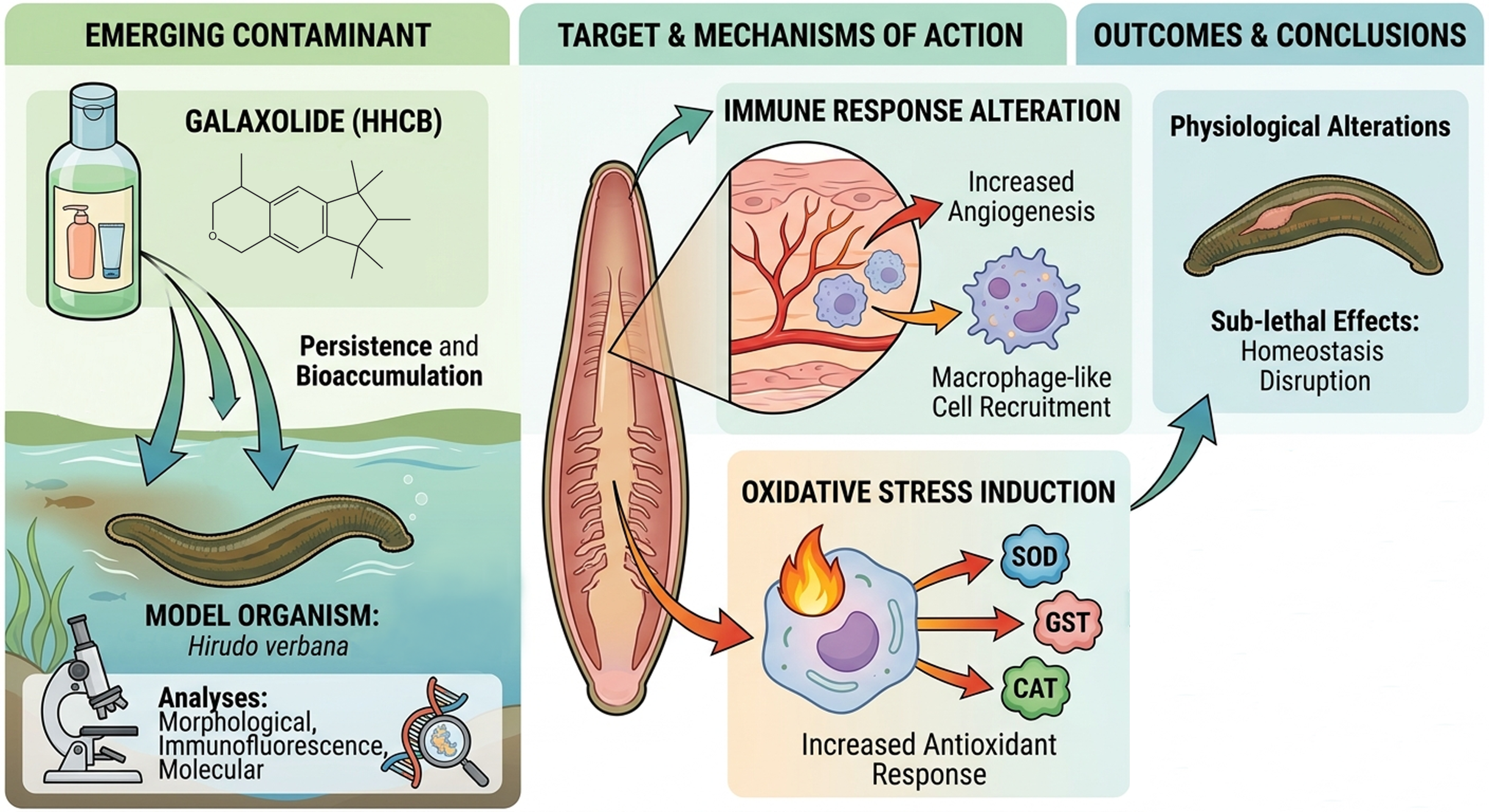
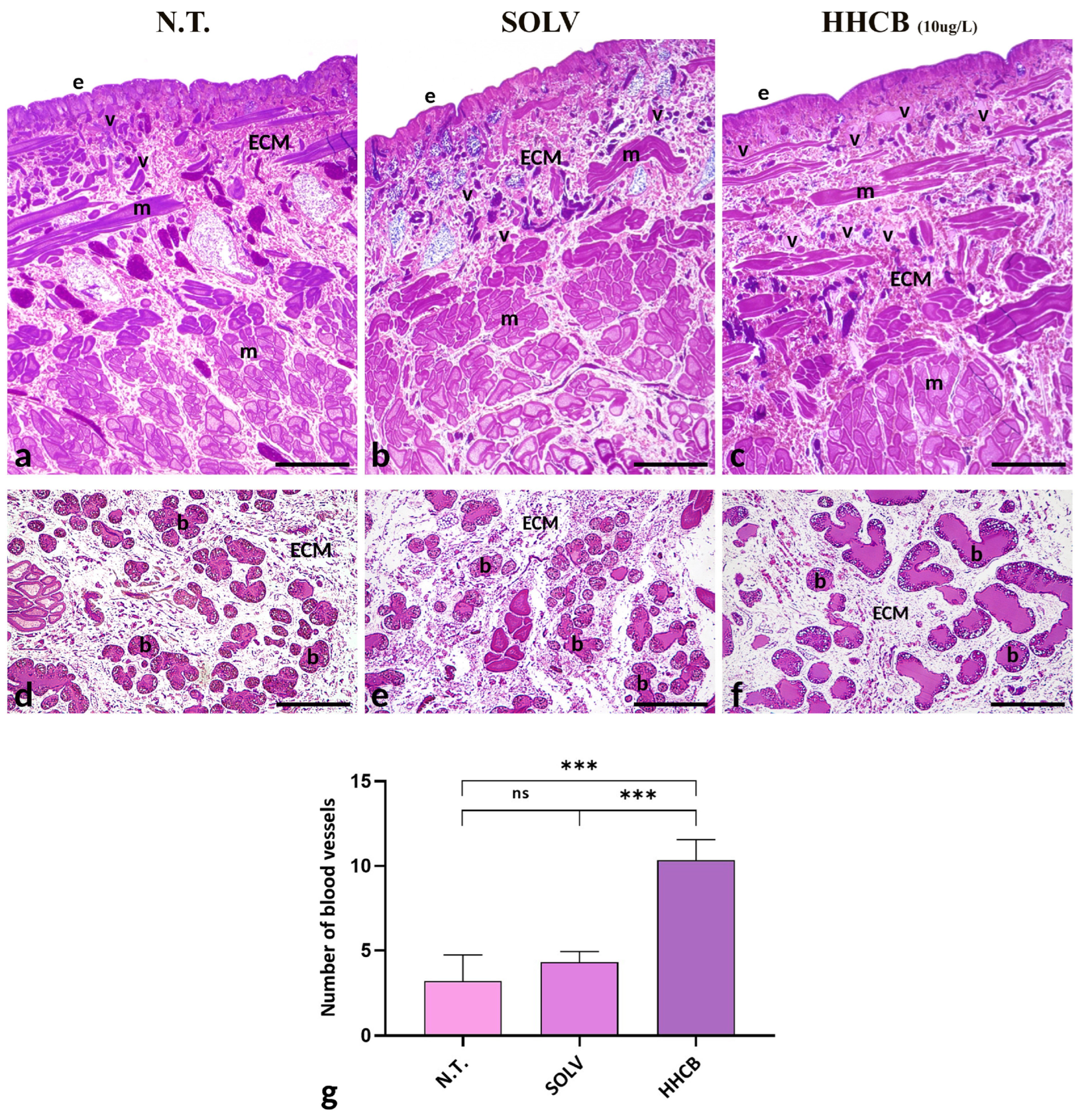
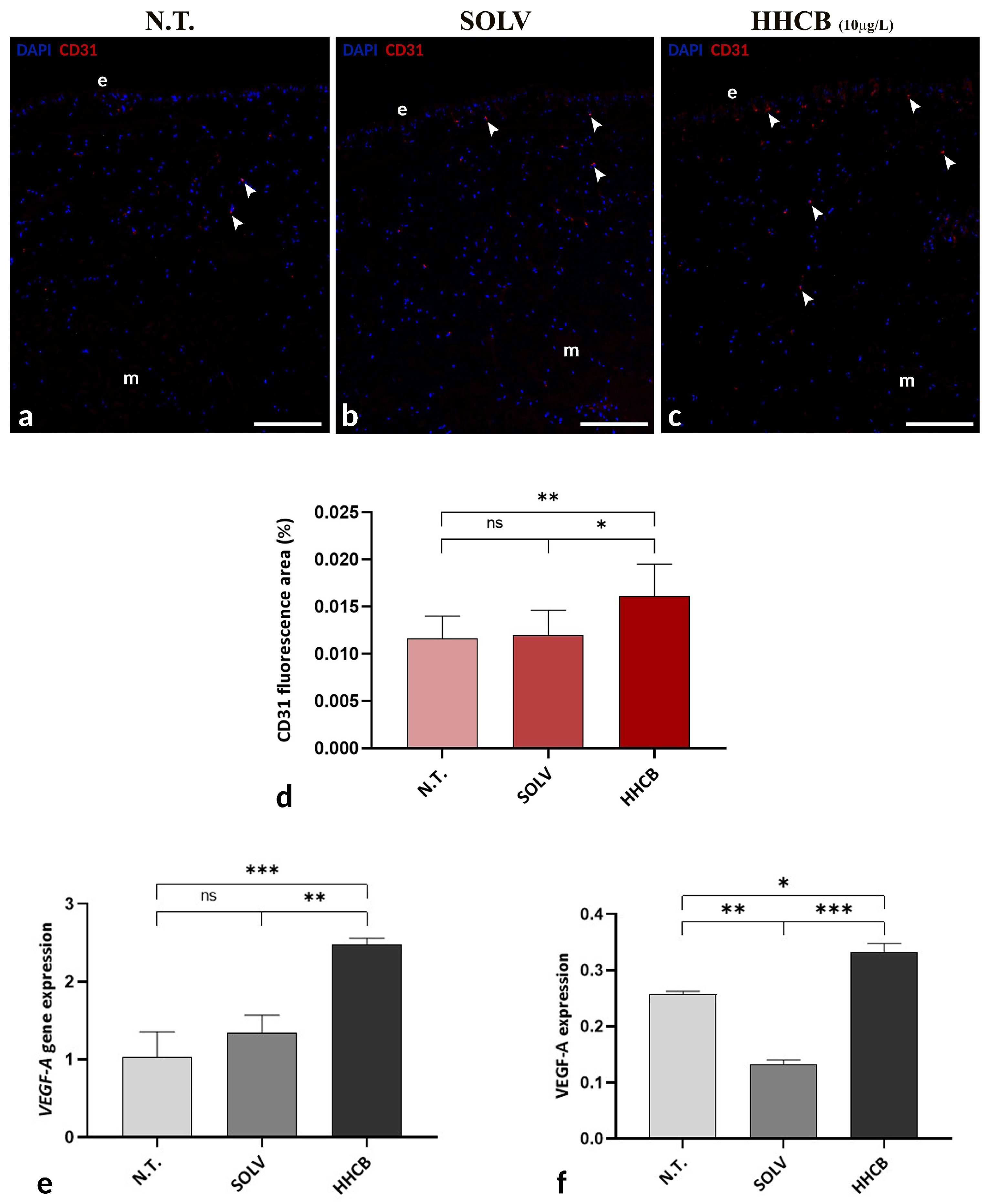
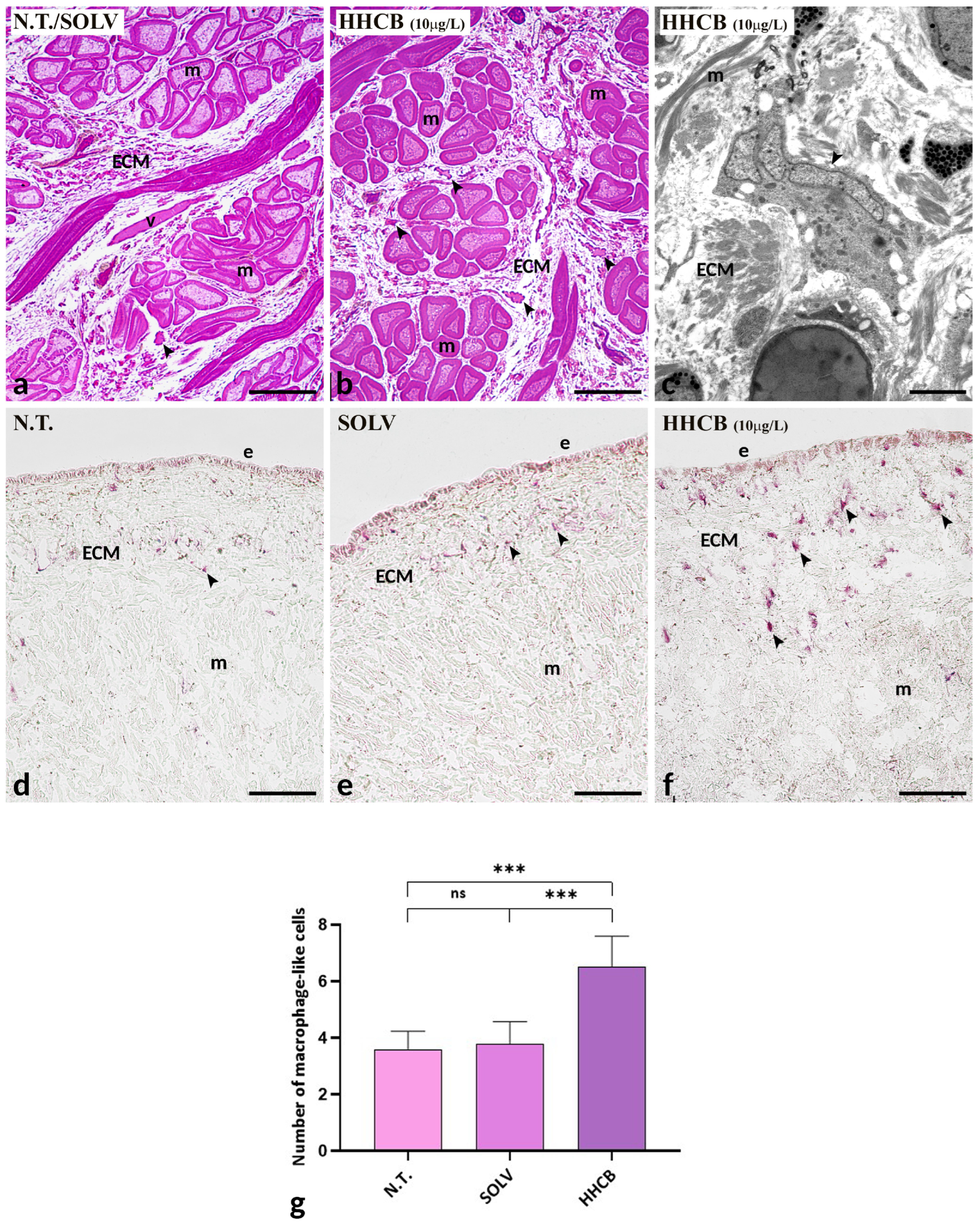
- Leeches of the species Hirudo verbana (Annelida, Hirudinea), obtained from our breeding facility (Italian Leech Farm ILFARM, Varese, Italy), were kept in sealed jars at 20 °C in slightly salted water (NaCl 1.5 g L−1). Twenty-seven leeches were randomly assigned to three experimental groups (9 individuals per group), each consisting of three independent replicates with three animals each, and exposed to the following treatments: Group 1: untreated leeches (N.T., n = 9), used as control.
- Group 2: leeches (n = 9) exposed to acetone (C3H6O) (0.001% v/v), named as SOLV.
- Group 3: leeches (n = 9) exposed to 10 µg L−1 of HHCB.
2.2. Embedding of Tissues in Epoxy Resin for Light and Transmission Electron Microscopy (TEM) Analyses
2.3. Embedding Tissue in OCT for Cryosections and Immunofluorescence Assays on Cryosections
2.4. RNA Extraction and Quantitative PCR (qPCR)
2.5. Western Blot Analyses
2.6. Acid Phosphatase Assay (ACP)
2.7. Paraffin Embedding and Histochemical Analysis of Mucus Cells by PAS Staining
2.8. Statistical Analyses
3. Results
3.1. Characterization of the Angiogenic Processes
3.2. Immunofluorescent and Molecular Analyses
3.3. Recruitment of Macrophage-like Cells Induced by HHCB
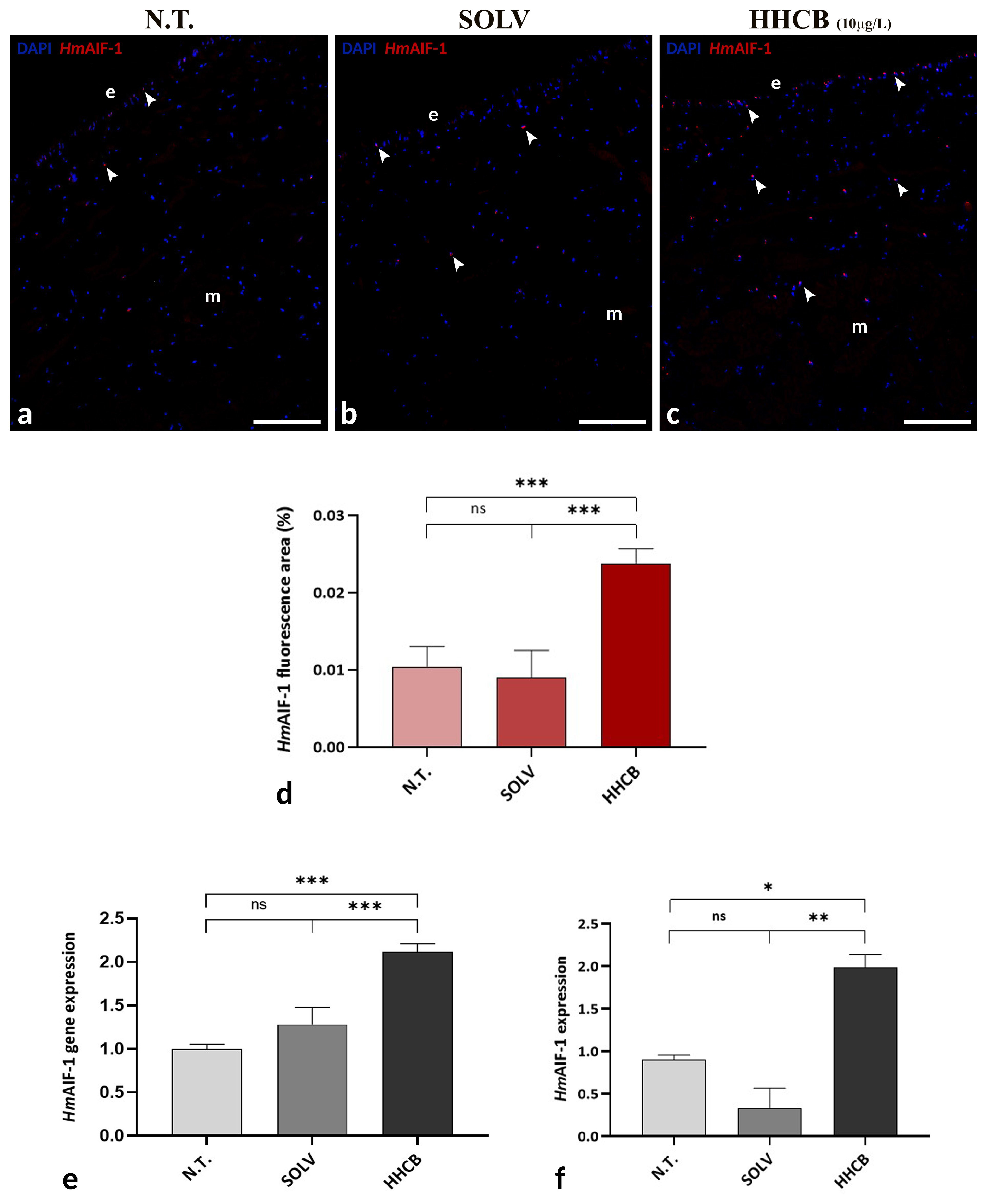
3.4. Expression of HmAIF-1 Pro-Inflammatory Cytokine
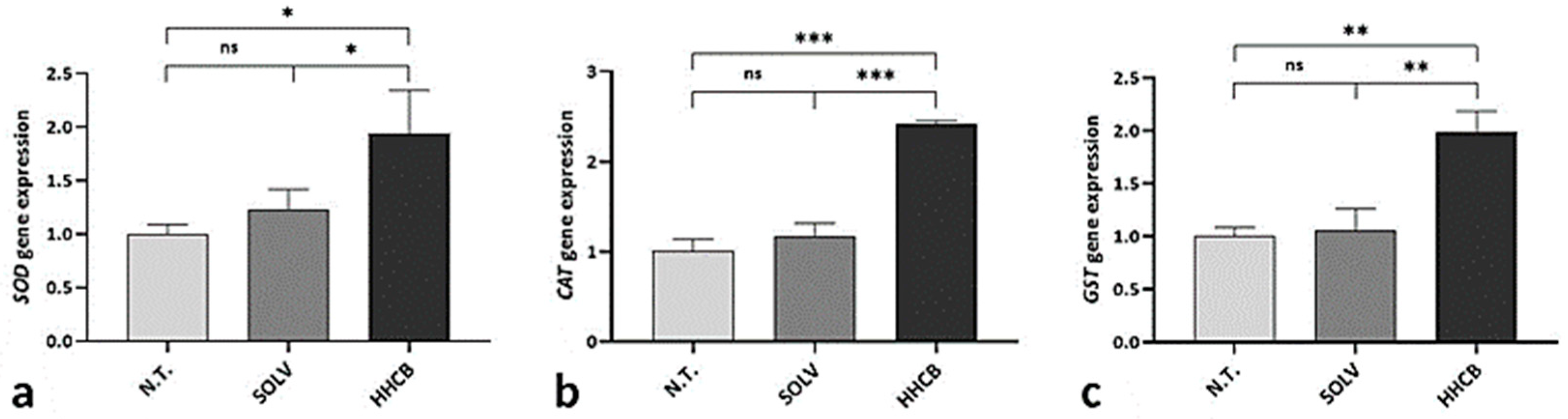
3.5. Assessment of the Oxidative Stress Enzymes Gene Expression
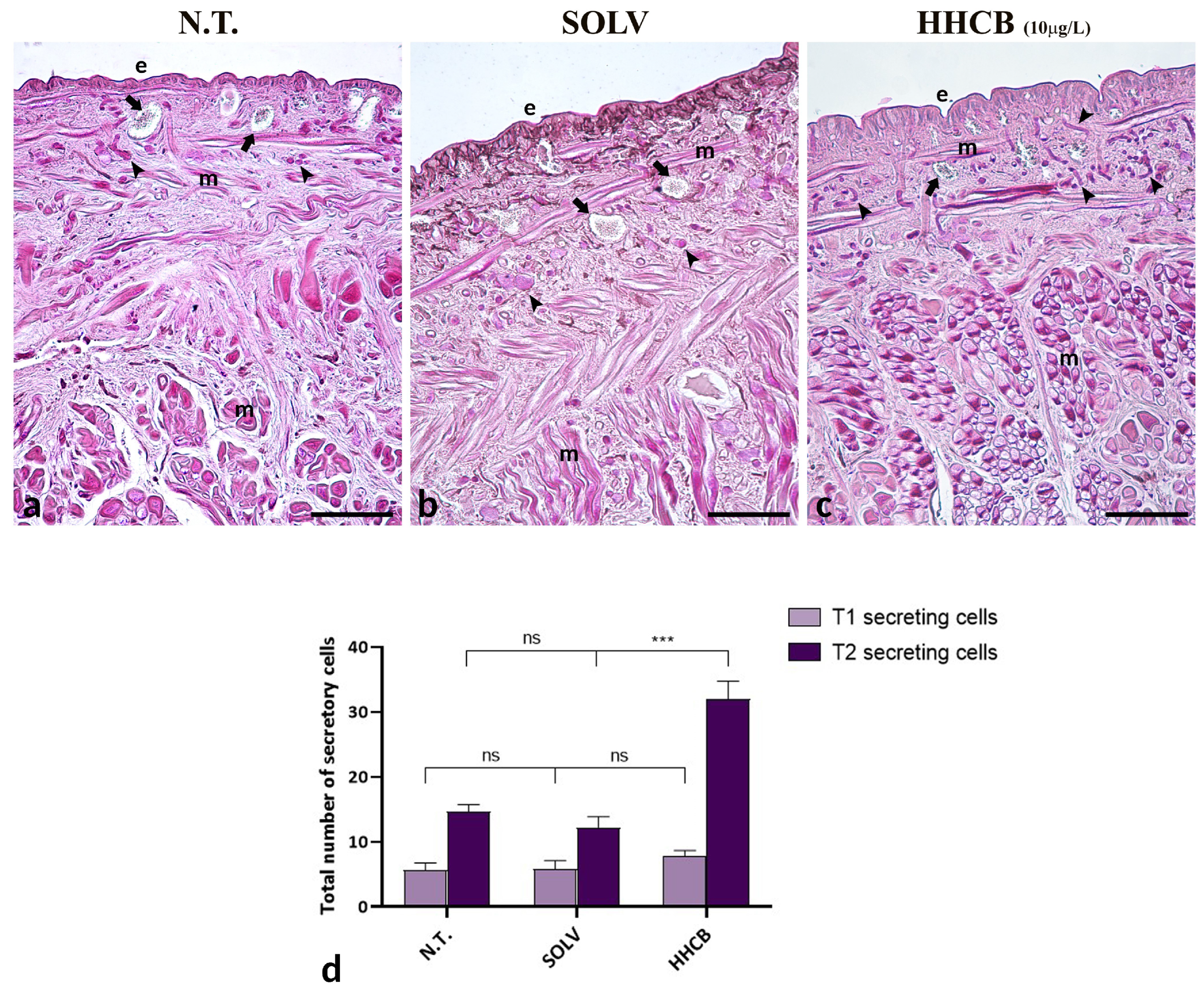
3.6. Evaluation of Leech Secretory Cells in Response to HHCB
4. Discussion
5. Conclusions
Author Contributions
Funding
Data Availability Statement
Acknowledgments
Conflicts of Interest
Abbreviations
| ACP | Acid phosphatase |
| HmAIF-1 | Allograft inflammatory factor 1 |
| BSA | Bovine serum albumin |
| CAT | Catalase |
| CD31 | Cluster of differentiation 31 |
| cDNA | Complementary DNA |
| DAPI | 4′,6-diamidino-2-phenylindole |
| ECM | Extracellular matrix |
| EMPs | Emerging micropollutants |
| FITC | Fluorescein isothiocyanate |
| GST | Glutathione S-transferase |
| HHCB | Galaxolide (hexahydro-hexamethyl-cyclopenta[g]-2-benzopyran) |
| HSPCs | Hematopoietic stem precursor cells |
| NaCl | Sodium chloride |
| OCT | Optimal cutting temperature compound |
| PBS | Phosphate-buffered saline |
| PCR | Polymerase chain reaction |
| PFAS | Per- and polyfluoroalkyl substances |
| qPCR | Quantitative polymerase chain reaction |
| RIPA | Radioimmunoprecipitation assay buffer |
| RNA | Ribonucleic acid |
| ROS | Reactive oxygen species |
| SDS | Sodium dodecyl sulfate |
| SOD | Superoxide dismutase |
| TBS | Tris-buffered saline |
| TEM | Transmission electron microscopy |
| TRIS | Tris(hydroxymethyl)aminomethane |
| VEGF-A | Vascular endothelial growth factor A |
| WWTPs | Wastewater treatment plants |
References
- Petrie, B.; Barden, R.; Kasprzyk-Hordern, B. A Review on Emerging Contaminants in Wastewaters and the Environment: Current Knowledge, Understudied Areas and Recommendations for Future Monitoring. Water Res. 2015, 72, 3–27. [Google Scholar] [CrossRef] [PubMed]
- Richardson, S.D.; Kimura, S.Y. Water Analysis: Emerging Contaminants and Current Issues. Anal. Chem. 2020, 92, 473–505. [Google Scholar] [CrossRef] [PubMed]
- Zhao, X.; Wang, X.; He, J.; Feng, C.; Jin, X.; Leung, K.M.Y.; Xu, J.; Li, C.; Wang, J.; Liu, S.; et al. Time to Strengthen the Governance of New Contaminants in the Environment. Nat. Commun. 2025, 16, 7775. [Google Scholar] [CrossRef]
- Deblonde, T.; Cossu-Leguille, C.; Hartemann, P. Emerging Pollutants in Wastewater: A Review of the Literature. Int. J. Hyg. Environ. Health 2011, 214, 442–448. [Google Scholar] [CrossRef] [PubMed]
- Geissen, V.; Mol, H.; Klumpp, E.; Umlauf, G.; Nadal, M.; van der Ploeg, M.; van de Zee, S.E.A.T.M.; Ritsema, C.J. Emerging Pollutants in the Environment: A Challenge for Water Resource Management. Int. Soil Water Conserv. Res. 2015, 3, 57–65. [Google Scholar] [CrossRef]
- Hollender, J.; van Bavel, B.; Dulio, V.; Farmen, E.; Furtmann, K.; Koschorreck, J.; Kunkel, U.; Krauss, M.; Munthe, J.; Schlabach, M.; et al. High Resolution Mass Spectrometry-Based Non-Target Screening Can Support Regulatory Environmental Monitoring and Chemicals Management. Environ. Sci. Eur. 2019, 31, 42. [Google Scholar] [CrossRef]
- Escher, B.I.; Stapleton, H.M.; Schymanski, E.L. Tracking complex mixtures of chemicals in our changing environment. Science 2020, 392, 388–392. [Google Scholar] [CrossRef]
- Yang, Y.; Ok, Y.S.; Kim, K.H.; Kwon, E.E.; Tsang, Y.F. Occurrences and Removal of Pharmaceuticals and Personal Care Products (PPCPs) in Drinking Water and Water/Sewage Treatment Plants: A Review. Sci. Total Environ. 2017, 596–597, 303–320. [Google Scholar] [CrossRef]
- Gavrilescu, M.; Demnerová, K.; Aamand, J.; Agathos, S.; Fava, F. Emerging Pollutants in the Environment: Present and Future Challenges in Biomonitoring, Ecological Risks and Bioremediation. New Biotechnol. 2015, 32, 147–156. [Google Scholar] [CrossRef]
- Vasilachi, I.C.; Asiminicesei, D.M.; Fertu, D.I.; Gavrilescu, M. Occurrence and Fate of Emerging Pollutants in Water Environment and Options for Their Removal. Water 2021, 13, 181. [Google Scholar] [CrossRef]
- Arp, H.P.H.; Knutsen, H. Could We Spare a Moment of the Spotlight for Persistent, Water-Soluble Polymers? Environ. Sci. Technol. 2019, 54, 3–5. [Google Scholar] [CrossRef]
- Santhappan, J.S.; Kalaiselvan, N.; Assis, S.M.; Amjith, L.R.; Glivin, G.; Mathimani, T. Origin, Types, and Contribution of Emerging Pollutants to Environmental Degradation and Their Remediation by Physical and Chemical Techniques. Environ. Res. 2024, 257, 119369. [Google Scholar] [CrossRef]
- Bu, Q.; Ma, Y. Emerging Pollutants in the Environment: Occurrence, Fate, Risk Assessment and Degradation Methods. Toxics 2025, 13, 521. [Google Scholar] [CrossRef]
- Sharma, T.; Singh, A.; Kumar, N.; Chauhan, G.; Singh, D.P.; Singh, A.; Rana, B.B. Emerging Pollutants in the Environment and Ecological Risks. In Management and Mitigation of Emerging Pollutants; Springer: Cham, Switzerland, 2023; pp. 1–20. [Google Scholar] [CrossRef]
- Daughton, C.G.; Ternes, T.A. Pharmaceuticals and Personal Care Products in the Environment: Agents of Subtle Change? Environ. Health Perspect. 1999, 107, 907–938. [Google Scholar] [CrossRef]
- Mitra, S.; Saran, R.K.; Srivastava, S.; Rensing, C. Pesticides in the Environment: Degradation Routes, Pesticide Transformation Products and Ecotoxicological Considerations. Sci. Total Environ. 2024, 935, 173026. [Google Scholar] [CrossRef] [PubMed]
- Mishra, S.K.; Chowdhury, S.D.; Bhunia, P.; Sarkar, A.; Surampalli, R.Y.; Zhang, T.C. Degradation of Plastics and Formation of Primary and Secondary Microplastics. In Microplastics in the Environment: Fate, Impacts, Removal, and Management; Wiley: Hoboken, NJ, USA, 2025; pp. 43–68. [Google Scholar] [CrossRef]
- Gewert, B.; Plassmann, M.M.; Macleod, M. Pathways for Degradation of Plastic Polymers Floating in the Marine Environment. Environ. Sci. Process. Impacts 2015, 17, 1513–1521. [Google Scholar] [CrossRef]
- aus der Beek, T.; Weber, F.A.; Bergmann, A.; Hickmann, S.; Ebert, I.; Hein, A.; Küster, A. Pharmaceuticals in the Environment-Global Occurrences and Perspectives. Environ. Toxicol. Chem. 2016, 35, 823–835. [Google Scholar] [CrossRef] [PubMed]
- Sun, J.; Dai, X.; Wang, Q.; van Loosdrecht, M.C.M.; Ni, B.J. Microplastics in Wastewater Treatment Plants: Detection, Occurrence and Removal. Water Res. 2019, 152, 21–37. [Google Scholar] [CrossRef]
- Ngo, P.L.; Pramanik, B.K.; Shah, K.; Roychand, R. Pathway, Classification and Removal Efficiency of Microplastics in Wastewater Treatment Plants. Environ. Pollut. 2019, 255, 113326. [Google Scholar] [CrossRef] [PubMed]
- Köck-Schulmeyer, M.; Villagrasa, M.; López de Alda, M.; Céspedes-Sánchez, R.; Ventura, F.; Barceló, D. Occurrence and Behavior of Pesticides in Wastewater Treatment Plants and Their Environmental Impact. Sci. Total Environ. 2013, 458–460, 466–476. [Google Scholar] [CrossRef]
- Sutton, R.; Xie, Y.; Moran, K.D.; Teerlink, J. Occurrence and Sources of Pesticides to Urban Wastewater and the Environment. ACS Symp. Ser. 2019, 1308, 63–88. [Google Scholar] [CrossRef]
- Lenka, S.P.; Kah, M.; Padhye, L.P. A Review of the Occurrence, Transformation, and Removal of Poly- and Perfluoroalkyl Substances (PFAS) in Wastewater Treatment Plants. Water Res. 2021, 199, 117187. [Google Scholar] [CrossRef]
- Melitsiotis, A.; Christodoulis, K.; Karavasilis, M.; Bali, N.; Theodoropoulou, M.; Belay, M.H.; Davide, R.; Robotti, E.; Marengo, E.; Dondero, F.; et al. Remediation of Water from Per- and Poly-Fluoroalkyl Substances (Pfas) with Advanced Oxidation Processes: A Comparative Study of Ozonation and Photocatalysis. Process Saf. Environ. Prot. 2025, 201, 107477. [Google Scholar] [CrossRef]
- Rotondo, D.; Gualandris, D.; Lorusso, C.; Braeuning, A.; Calisi, A.; Dondero, F. Impact of Short-Chain Perfluoropropylene Oxide Acids on Biochemical and Behavioural Parameters in Eisenia Fetida (Savigny, 1826). J. Xenobiotics 2025, 15, 2. [Google Scholar] [CrossRef] [PubMed]
- Luo, Y.; Guo, W.; Ngo, H.H.; Nghiem, L.D.; Hai, F.I.; Zhang, J.; Liang, S.; Wang, X.C. A Review on the Occurrence of Micropollutants in the Aquatic Environment and Their Fate and Removal during Wastewater Treatment. Sci. Total Environ. 2014, 473–474, 619–641. [Google Scholar] [CrossRef]
- Balci, E.; Genisoglu, M.; Sofuoglu, S.C.; Sofuoglu, A. Indoor Air Partitioning of Synthetic Musk Compounds: Gas, Particulate Matter, House Dust, and Window Film. Sci. Total Environ. 2020, 729, 138798. [Google Scholar] [CrossRef] [PubMed]
- Srinivasulu, M.; Chandra, M.S.; Gooty, J.M.; Madhavi, A. Personal Care Products—Fragrances, Cosmetics, and Sunscreens—In the Environment. In Environmental Micropollutants: A Volume in Advances in Pollution Research; Elsevier: Amsterdam, The Netherlands, 2022; pp. 131–149. [Google Scholar] [CrossRef]
- Patel, S.; Homaei, A.; Sharifian, S. Need of the Hour: To Raise Awareness on Vicious Fragrances and Synthetic Musks. Environ. Dev. Sustain. 2020, 23, 4764–4781. [Google Scholar] [CrossRef]
- Babayan, B.; Yesayan, T.; Melkumyan, M.; Mikaelyan, G.; Bagdasaryan, S.; Elbakyan, S.; Avanesyan, A.; Yesayan, A.; Sevoyan, G. Artificial Fragrances and Semisynthetic Perfumes: The Hidden Health Risks. Funct. Food Sci. 2025, 5, 621–632. [Google Scholar] [CrossRef]
- Lange, C.; Kuch, B.; Metzger, J.W. Occurrence and Fate of Synthetic Musk Fragrances in a Small German River. J. Hazard. Mater. 2015, 282, 34–40. [Google Scholar] [CrossRef]
- Li, J.; Lu, Y.; Chen, H.; Zheng, D.; Yang, Q.; Campos, L.C. Synthetic Musks in the Natural Environment: Sources, Occurrence, Concentration, and Fate-A Review of Recent Developments (2010–2023). Sci. Total Environ. 2024, 922, 171344. [Google Scholar] [CrossRef]
- Focardi, S.; Della Torre, C.; Monti, M.; Biagini, T.; Corsi, I. Synthetic Musks Fragrances in the Aquatic Environment: In Vitro Toxicological Studies of Their Biotransformation and Potential Negative Effects. WIT Trans. Biomed. Health 2011, 15, 183–194. [Google Scholar] [CrossRef]
- Guerra-Martín, I.; Lodoso-Ruiz, E.; Trujillo-Rodríguez, M.J.; Ayala, J.H.; Pino, V. Occurrence of Fragrances in the Marine Environment. Handb. Environ. Chem. 2024, 128, 161–189. [Google Scholar] [CrossRef]
- Arruda, V.; Simões, M.; Gomes, I.B. Synthetic Musk Fragrances in Water Systems and Their Impact on Microbial Communities. Water 2022, 14, 692. [Google Scholar] [CrossRef]
- Luckenbach, T.; Epel, D. Nitromusk and Polycyclic Musk Compounds as Long-Term Inhibitors of Cellular Xenobiotic Defense Systems Mediated by Multidrug Transporters. Environ. Health Perspect. 2005, 113, 17–24. [Google Scholar] [CrossRef] [PubMed]
- Nendza, M.; Kosfeld, V.; Schlechtriem, C. Consolidated Octanol/Water Partition Coefficients: Combining Multiple Estimates from Different Methods to Reduce Uncertainties in Log KOW. Environ. Sci. Eur. 2025, 37, 44. [Google Scholar] [CrossRef]
- Petrarca, M.H.; Fernandes, J.O.; Cunha, S.C. Synthetic Musk Fragrances in Seafood: Occurrence, Influence of Culinary Practices, and In Vitro Bioaccessibility. Handb. Environ. Chem. 2024, 128, 265–291. [Google Scholar] [CrossRef]
- Bonato, M.; Corrà, F.; Bellio, M.; Guidolin, L.; Tallandini, L.; Irato, P.; Santovito, G. PFAS Environmental Pollution and Antioxidant Responses: An Overview of the Impact on Human Field. Int. J. Environ. Res. Public Health 2020, 17, 8020. [Google Scholar] [CrossRef] [PubMed]
- Metcalfe, C.D. Toxic Effects of Fragrances to Aquatic Organisms. Handb. Environ. Chem. 2024, 128, 37–46. [Google Scholar] [CrossRef]
- Kim, S.; Ji, K. Effects of Synthetic Musk (AHTN, MK) on Zebrafish Development and Ecological Risk Assessment in Freshwater Environments. J. Environ. Health Sci. 2025, 51, 295–303. [Google Scholar] [CrossRef]
- Tumová, J.; Šauer, P.; Golovko, O.; Koba Ucun, O.; Grabic, R.; Máchová, J.; Kocour Kroupová, H. Effect of Polycyclic Musk Compounds on Aquatic Organisms: A Critical Literature Review Supplemented by Own Data. Sci. Total Environ. 2019, 651, 2235–2246. [Google Scholar] [CrossRef] [PubMed]
- Zhang, X.; Xu, Q.; Man, S.; Zeng, X.; Yu, Y.; Pang, Y.; Sheng, G.; Fu, J. Tissue Concentrations, Bioaccumulation, and Biomagnification of Synthetic Musks in Freshwater Fish from Taihu Lake, China. Environ. Sci. Pollut. Res. 2013, 20, 311–322. [Google Scholar] [CrossRef]
- Ehiguese, F.O.; González-Delgado, M.J.; Garrido-Perez, C.; Araújo, C.V.M.; Martin-Diaz, M.L. Effects and Risk Assessment of the Polycyclic Musk Compounds Galaxolide® and Tonalide® on Marine Microalgae, Invertebrates, and Fish. Processes 2021, 9, 371. [Google Scholar] [CrossRef]
- Liu, C.; Zhu, X.; You, L.; Gin, K.Y.H.; Chen, H.; Chen, B. Per/Polyfluoroalkyl Substances Modulate Plasmid Transfer of Antibiotic Resistance Genes: A Balance Between Oxidative Stress and Energy Support. Water Res. 2023, 240, 120086. [Google Scholar] [CrossRef] [PubMed]
- Gatermann, R.; Biselli, S.; Hühnerfuss, H.; Rimkus, G.G.; Hecker, M.; Karbe, L. Synthetic Musks in the Environment. Part 1: Species-Dependent Bioaccumulation of Polycyclic and Nitro Musk Fragrances in Freshwater Fish and Mussels. Arch. Environ. Contam. Toxicol. 2002, 42, 437–446. [Google Scholar] [CrossRef] [PubMed]
- Zhang, X.; Jing, Y.; Ma, L.; Zhou, J.; Fang, X.; Zhang, X.; Yu, Y. Occurrence and Transport of Synthetic Musks in Paired Maternal Blood, Umbilical Cord Blood, and Breast Milk. Int. J. Hyg. Environ. Health 2015, 218, 99–106. [Google Scholar] [CrossRef]
- Arbulu, M.; Sampedro, M.C.; Unceta, N.; Gómez-Caballero, A.; Goicolea, M.A.; Barrio, R.J. A Retention Time Locked Gas Chromatography-Mass Spectrometry Method Based on Stir-Bar Sorptive Extraction and Thermal Desorption for Automated Determination of Synthetic Musk Fragrances in Natural and Wastewaters. J. Chromatogr. A 2011, 1218, 3048–3055. [Google Scholar] [CrossRef]
- Fan, B.; Wang, X.; Li, J.; Gao, X.; Li, W.; Huang, Y.; Liu, Z. Deriving Aquatic Life Criteria for Galaxolide (HHCB) and Ecological Risk Assessment. Sci. Total Environ. 2019, 681, 488–496. [Google Scholar] [CrossRef]
- Hu, Z.; Shi, Y.; Cai, Y. Concentrations, Distribution, and Bioaccumulation of Synthetic Musks in the Haihe River of China. Chemosphere 2011, 84, 1630–1635. [Google Scholar] [CrossRef]
- Reiner, J.L.; Kannan, K. Polycyclic Musks in Water, Sediment, and Fishes from the Upper Hudson River, New York, USA. Water Air Soil Pollut. 2011, 214, 335–342. [Google Scholar] [CrossRef]
- Zeng, X.; Hu, Q.; He, L.; Liu, Z.; Gao, S.; Yu, Z. Occurrence, Distribution and Ecological Risks of Organophosphate Esters and Synthetic Musks in Sediments from the Hun River. Ecotoxicol. Environ. Saf. 2018, 160, 178–183. [Google Scholar] [CrossRef]
- Minier, C.; Pariselli, F.; Baltora-Rosset, S.; Billault, I.; Calvayrac, C.; Corbel, G.; Daniellou, R.; Denayer, F.-O.; Geoffroy, L.; Habert, R.; et al. Avis de l’Anses Relatif à l’évaluation Des Substances Inscrites Au Programme de Travail 2022–2023 de l’Agence Dans Le Cadre de l’évaluation Des Substances Sous REACH: 1,3,4,6,7,8-Hexahydro-4,6,6,7,8,8-Hexamethylindeno[5,6-c]Pyran (N° CE 214-946-9; N° CCAS 1222-05-5). In Proceedings of the Focus on Microscopy, Genoa, Italy, 24–27 March 2024; 14p. [Google Scholar] [CrossRef]
- Tasselli, S.; Rogora, M.; Orrù, A.; Guzzella, L. Behaviour of Synthetic Musk Fragrances in Freshwaters: Occurrence, Relations with Environmental Parameters, and Preliminary Risk Assessment. Environ. Sci. Pollut. Res. 2023, 30, 109643–109658. [Google Scholar] [CrossRef]
- Ferrario, C.; Finizio, A.; Villa, S. Legacy and Emerging Contaminants in Meltwater of Three Alpine Glaciers. Sci. Total Environ. 2017, 574, 350–357. [Google Scholar] [CrossRef]
- Ding, T.; Li, W.; Cai, M.; Jia, X.; Yang, M.; Yang, B.; Li, J. Algal Toxicity, Accumulation and Metabolic Pathways of Galaxolide. J. Hazard. Mater. 2020, 384, 121360. [Google Scholar] [CrossRef]
- Peck, A.M.; Hornbuckle, K.C. Synthetic Musk Fragrances in Lake Michigan. Environ. Sci. Technol. 2004, 38, 367–372. [Google Scholar] [CrossRef] [PubMed]
- Otludil, B.; Otludil, B. Single and Combined Impact of Environmental Concentrations of Galaxolide (HHCB) and Tonalide (AHTN) on Melanopsis praemorsa: Evaluating Genotoxicity and Stress Response Mechanisms. J. Appl. Toxicol. 2026, 46, 384–400. [Google Scholar] [CrossRef] [PubMed]
- Li, K.; Chen, C.; Wang, D.; Huang, H.; Yuan, Z.; You, J. Comparative Toxicity and Molecular Recognition of Galaxolide and Its Phototransformation Product Galaxolide Lactone in Daphnia magna. Environ. Sci. Process. Impacts 2026. [Google Scholar] [CrossRef]
- Ding, T.; Wei, L.; Yue, Z.; Lin, S.; Li, J. Individual and Combined Toxicity of Silver Nanoparticles and Triclosan or Galaxolide in the Freshwater Algae Euglena sp. Sci. Total Environ. 2023, 887, 164139. [Google Scholar] [CrossRef] [PubMed]
- Petrauskienë, L. Water Toxicity Assessment Using Medicinal Leeches. Aquat. Ecosyst. Health Manag. 2001, 4, 203–208. [Google Scholar] [CrossRef]
- Çelik, Z.; Aydın, H.; Ceylan, M. Acute Cadmium Toxicity in the Medicinal Leech Hirudo verbana Carena, 1820 with a Novel Biomarker for Aquatic Risk Assessment. Ecotoxicology 2025, 35, 3. [Google Scholar] [CrossRef]
- Ben Ahmed, R.; Khaled, I.; El Ayari, T.; Saidi, I.; Harrath, A.H. Assessing the Effect of Polyethylene Microplastics in the Freshwater Leech Erpobdella johanssoni (Annelida, Hirudinida) Through Integrated Biomarkers and Histopathological Analysis. Animals 2025, 15, 1417. [Google Scholar] [CrossRef]
- Tasselli, S.; Valenti, E.; Guzzella, L. Polycyclic Musk Fragrance (PMF) Removal, Adsorption and Biodegradation in a Conventional Activated Sludge Wastewater Treatment Plant in Northern Italy. Environ. Sci. Pollut. Res. 2021, 28, 38054–38064. [Google Scholar] [CrossRef] [PubMed]
- Baranzini, N.; Pulze, L.; Acquati, F.; Grimaldi, A. Hirudo Verbana as an Alternative Model to Dissect the Relationship Between Innate Immunity and Regeneration. Invertebr. Surviv. J. 2020, 17, 90–98. [Google Scholar]
- de Eguileor, M.; Grimaldi, A.; Tettamanti, G.; Congiu, T.; Protasoni, M.; Reguzzoni, M.; Valvassori, R.; Lanzavecchia, G. Ultrastructure and Functional Versatility of Hirudinean Botryoidal Tissue. Tissue Cell 2001, 33, 332–341. [Google Scholar] [CrossRef] [PubMed]
- Grimaldi, A.; Tettamanti, G.; de Eguileor, M. Annelida: Hirudinea (Leeches): Heterogeneity in Leech Immune Responses. In Advances in Comparative Immunology; Springer: Cham, Switzerland, 2018; pp. 173–191. [Google Scholar] [CrossRef]
- Grimaldi, A. Origin and Fate of Hematopoietic Stem Precursor Cells in the Leech Hirudo medicinalis. Invertebr. Surviv. J. 2016, 13, 257–268. [Google Scholar] [CrossRef]
- Bon, C.; Pulze, L.; Amoroso, S.; Bertola, E.; Barbaro, M.; Tessaro, D.; Baranzini, N.; Grimaldi, A. Inflammatory and Oxidative Responses to PET Nanoplastics in the Leech Hirudo Verbana: A Comparative Analysis of Acute and Chronic Exposure. Environ. Sci. Nano 2025, 13, 427–446. [Google Scholar] [CrossRef]
- Goncharov, N.V.; Popova, P.I.; Avdonin, P.P.; Kudryavtsev, I.V.; Serebryakova, M.K.; Korf, E.A.; Avdonin, P.V. Markers of Endothelial Cells in Normal and Pathological Conditions. Biochem. (Mosc.) Suppl. Ser. A Membr. Cell Biol. 2020, 14, 167–183. [Google Scholar] [CrossRef]
- Matsumoto, K.; Ema, M. Roles of VEGF-A Signalling in Development, Regeneration, and Tumours. J. Biochem. 2014, 156, 1–10. [Google Scholar] [CrossRef]
- Dvorak, H.F. Reconciling VEGF with VPF: The Importance of Increased Vascular Permeability for Stroma Formation in Tumors, Healing Wounds, and Chronic Inflammation. Front. Cell Dev. Biol. 2021, 9, 660609. [Google Scholar] [CrossRef]
- Baranzini, N.; Pulze, L.; Bon, C.; Izzo, L.; Pragliola, S.; Venditto, V.; Grimaldi, A. Hirudo Verbana as a Freshwater Invertebrate Model to Assess the Effects of Polypropylene Micro and Nanoplastics Dispersion in Freshwater. Fish Shellfish Immunol. 2022, 127, 492–507. [Google Scholar] [CrossRef]
- Calisi, A.; Baranzini, N.; Marcolli, G.; Bon, C.; Rotondo, D.; Gualandris, D.; Pulze, L.; Grimaldi, A.; Dondero, F. Evaluation of Per- and Polyfluoroalkyl Substances (PFAS) Toxic Effects on the Acute Inflammatory Response in the Medicinal Leech Hirudo verbana. Chemosphere 2024, 366, 143519. [Google Scholar] [CrossRef]
- Baranzini, N.; Monti, L.; Vanotti, M.; Orlandi, V.T.; Bolognese, F.; Scaldaferri, D.; Girardello, R.; Tettamanti, G.; De Eguileor, M.; Vizioli, J.; et al. AIF-1 and RNASET2 Play Complementary Roles in the Innate Immune Response of Medicinal Leech. J. Innate Immun. 2019, 11, 150–167. [Google Scholar] [CrossRef]
- Schorn, T.; Drago, F.; De Eguileor, M.; Valvassori, R.; Vizioli, J.; Tettamanti, G.; Grimaldi, A. The Allograft Inflammatory Factor-1 (AIF-1) Homologous in Hirudo Medicinalis (Medicinal Leech) Is Involved in Immune Response during Wound Healing and Graft Rejection Processes. Invertebr. Surviv. J. 2015, 12, 129–141. [Google Scholar]
- Baranzini, N.; Calisi, A.; Marcolli, G.; Bon, C.; Rotondo, D.; Gualandris, D.; Pulze, L.; Grimaldi, A.; Dondero, F. Incomplete versus Sustained Innate-Immune Responses in the Medicinal Leech Following Chronic, Environmentally Relevant Per- and Polyfluoroalkyl Substance Exposure. Environ. Health 2025. [Google Scholar] [CrossRef]
- Aguirre-Martínez, G.V.; Buratti, S.; Fabbri, E.; DelValls, A.T.; Martín-Díaz, M.L. Potential of Environmental Concentrations of the Musks Galaxolide and Tonalide to Induce Oxidative Stress and Genotoxicity in the Marine Environment. Mar. Environ. Res. 2020, 160, 105019. [Google Scholar] [CrossRef]
- Parolini, M.; Magni, S.; Traversi, I.; Villa, S.; Finizio, A.; Binelli, A. Environmentally Relevant Concentrations of Galaxolide (HHCB) and Tonalide (AHTN) Induced Oxidative and Genetic Damage in Dreissena Polymorpha. J. Hazard. Mater. 2015, 285, 1–10. [Google Scholar] [CrossRef]
- Aguirre-Martínez, G.V.; Martín-Díaz, M.L. A Multibiomarker Approach to Assess Toxic Effects of Wastewater Treatment Plant Effluents and Activated Defence Mechanisms in Marine (Ruditapes philippinarum) and Fresh Water (Corbicula fluminea) Bivalve Species. Ecotoxicology 2020, 29, 941–958. [Google Scholar] [CrossRef]
- Wang, J.; Wu, F.; Wang, X.; Ai, S.; Xi, J.; Liu, Z.; Wang, X. From Microbiota to Metabolism: Unveiling the Hidden Ecological Threat of Galaxolide (HHCB) to Zebrafish through Aquatic Microcosm. Environ. Int. 2025, 202, 109683. [Google Scholar] [CrossRef]
- Espinosa-Ruíz, C.; Esteban, M.Á. Wound-Induced Changes in Antioxidant Enzyme Activities in Skin Mucus and in Gene Expression in the Skin of Gilthead Seabream (Sparus aurata L.). Fishes 2021, 6, 15. [Google Scholar] [CrossRef]




| Target Genes | Primers | Product Size (bp) |
|---|---|---|
| HmAIF-1 | Fw: 5′-GACCTCAAAGACAAGCAGGG-3′ | 229 |
| Rev: 5′-GGCCAATCTTCTCCAGCATC-3′ | ||
| GST | Fw: 5′-AGACACATCGCCAGGACTAA-3′ | 127 |
| Rev: 5′-ACGGATACACGACTCCAACT-3′ | ||
| SOD | Fw: 5′-ATCCTCTTGAACCCACCACA-3′ | 95 |
| Rev: 5′-ATCTGGACGCACATTCTTGT-3′ | ||
| CAT | Fw: 5′-ACCGCCTGGGAACAAATTAC-3′ | 117 |
| Rev: 5′-AATTAGGAGCATCGCCTTGG-3′ | ||
| VEGF-A | Fw: 5′-GATGTTCAGGCTGTTGCTA-3′ | 142 |
| Rev: 5′- TGTTCCTCAATGTCCACTTC-3′ |
Disclaimer/Publisher’s Note: The statements, opinions and data contained in all publications are solely those of the individual author(s) and contributor(s) and not of MDPI and/or the editor(s). MDPI and/or the editor(s) disclaim responsibility for any injury to people or property resulting from any ideas, methods, instructions or products referred to in the content. |
© 2026 by the authors. Licensee MDPI, Basel, Switzerland. This article is an open access article distributed under the terms and conditions of the Creative Commons Attribution (CC BY) license.
Share and Cite
Rihan, A.; Marcolli, G.; Borgese, M.; Pulze, L.; Grimaldi, A.; Baranzini, N.; Tasselli, S. Preliminary Insights into the Inflammatory and Oxidative Effects of Galaxolide (HHCB) in the Medicinal Leech Hirudo verbana. Environments 2026, 13, 285. https://doi.org/10.3390/environments13050285
Rihan A, Marcolli G, Borgese M, Pulze L, Grimaldi A, Baranzini N, Tasselli S. Preliminary Insights into the Inflammatory and Oxidative Effects of Galaxolide (HHCB) in the Medicinal Leech Hirudo verbana. Environments. 2026; 13(5):285. https://doi.org/10.3390/environments13050285
Chicago/Turabian StyleRihan, Alberto, Gaia Marcolli, Marina Borgese, Laura Pulze, Annalisa Grimaldi, Nicolò Baranzini, and Stefano Tasselli. 2026. "Preliminary Insights into the Inflammatory and Oxidative Effects of Galaxolide (HHCB) in the Medicinal Leech Hirudo verbana" Environments 13, no. 5: 285. https://doi.org/10.3390/environments13050285
APA StyleRihan, A., Marcolli, G., Borgese, M., Pulze, L., Grimaldi, A., Baranzini, N., & Tasselli, S. (2026). Preliminary Insights into the Inflammatory and Oxidative Effects of Galaxolide (HHCB) in the Medicinal Leech Hirudo verbana. Environments, 13(5), 285. https://doi.org/10.3390/environments13050285