Article

Recent Challenges in Data Acquisition for Scope 3 Activities in Germany: A Case Study at a Scientific Institute Operating a Production Line


Institute for Production Management, Technology and Machine Tools (PTW), Technical University of Darmstadt, Otto-Berndt-Str. 2, 64287 Darmstadt, Germany
*
Author to whom correspondence should be addressed.
Environments 2026, 13(5), 270; https://doi.org/10.3390/environments13050270
Submission received: 25 March 2026 / Revised: 30 April 2026 / Accepted: 11 May 2026 / Published: 13 May 2026

Abstract

The German industrial and energy sectors accounted for over 52% of national greenhouse gas emissions in 2024. This is influenced both by an ongoing demand for fossil fuels and the usage of emission-intensive raw and processed materials. With the current European directive on corporate sustainability reporting, a push is being made for companies to publish annual emission reports. However, as per a study conducted by the authors, small and medium-sized companies have difficulties accurately calculating emissions across their supply chain without relying on external service providers. As a scientific institute with a real production facility for metal machining, the ETA (Energy Technologies and Applications) Factory bridges the gap between academia and manufacturing enterprises. The authors have used this disposition to calculate scope 1–3 emissions for the factory as per the Greenhouse Gas Protocol across three years, while progressively attempting to automate data collection for all scopes. CO2e emissions for the years 2022–2024 were 86.3 tCO2e, 146.9 tCO2e, and 86.1 tCO2e, respectively. Emission categories were assessed in terms of relevance to the institute and subsequently used to analyze the emission activities of the factory. The highest contributor to emissions was electricity purchasing for 2022 and 2024, along with business travel for 2023. Within scope 3, the emissions produced by business travel showed the highest impact across all years, followed by either energy-related activities or purchased goods. The sensitivity of CO2e factors was also investigated, showing discrepancies between 25% and 130% for the utilized CO2e factor for steel. Automation of data collection benefits largely from implemented manufacturing systems, such as manufacturing execution systems or enterprise resource planning systems.

1. Motivation

The impact of anthropogenic processes on the climate has been a driving factor behind global efforts to address the system stability and resilience of the Earth. Within this context, the European Union (EU) is following a roadmap to achieve climate neutrality by 2050 [1]. In 2021, the Fit For 55 legislative package was introduced with the goal of reducing greenhouse gas (GHG) emissions in Europe by a minimum of 55% by 2030 [1]. Individual member states of the EU have set themselves even more stringent targets. Germany, for example, has the goal of reducing GHG emissions by 65% by 2030, aiming for climate neutrality by 2045 [2].
In terms of CO2 equivalents (CO2e) of national emissions, 2023 marked the first recent instance in which Germany was, allegedly, on track with its climate goals [3]. In large, this is speculated to be due to accelerated implementations of resource efficiency measures within the building sector, fiscal disincentives within the transport sector, and an increase in the share of renewable energies in the energy sector [3]. Notably, the latter is the sector which has achieved the highest reduction in carbon emissions (20.1% compared to 2022) [4]. In contrast, the industry sector achieved a smaller change (7.7% fewer emissions compared to 2022) [4], which was coincident with an overall decline in industrial production (1.5% compared to 2022) [5]. Despite the promising statistics from 2023, climate experts estimate that Germany will still not be able to achieve its climate targets [6,7].
As it stands, industrial contributions to German CO2e emissions are non-negligible. In 2024, the sector amassed 153 million metric tonnes of carbon dioxide equivalents (MMTCDE), equaling about 24% of German total emissions [8]. A large portion of these emissions can be attributed to the usage of fossil resources, such as natural gas, coal, and mineral oil, which is estimated to amount to 90% of industrial emissions [9]. The energy sector (accounting for about 29% of national emissions in 2024 [8]), also makes use of fossil fuels: in terms of electrical energy alone, 45% of the total demand was covered by non-renewable energy sources [10], with 43% of the total demand being allocated to industry [8].
A prerequisite to effectively reduce CO2e emissions is transparency regarding said emissions. To this end, a reporting framework has been in continuous development within the EU to promote companies to publicly disclose their data on environmental, social, and corporate governance (ESG) activities. As of early 2024, this has culminated in the EU Corporate Sustainability Reporting Directive (CSRD), replacing the Non-Financial Reporting Directive (NFRD) and the European Sustainability Reporting Standards (ESRS) [11]. The ESRS defines a standardized scope for reporting, to which companies are held accountable via the CSRD [12]. Beginning with 2025, all previously NFRD-obligatory companies, which are namely large companies, will have to publish reports for the preceding fiscal year [12]. Beginning with 2027, small and medium enterprises (SMEs) will have a grace period with voluntary reporting, after which reporting will become mandatory from 2029 onwards [12].
CO2e emissions are typically found in the environmental category of an ESG report and are typically expressed through CO2e. Thus, carbon accounting has become an integral aspect of the current reporting landscape. Since the time of conception of this work in 2023, however, few scientific publications addressed scope 3 CO2e emissions. Existing ones considered the emissions of universities, and either examined insufficient emission categories or lack consideration for the physical infrastructure used by production institutes [13,14,15,16]. The discrepancy is further highlighted by Helers et al., whose work shows that material usage in the context of universities focuses largely on building materials [17]. This leads to significant differences between scope 3 categories addressed by universities and industrial companies, particularly SMEs. However, public universities (i.e., specifically production institutes at public universities) have the potential to provide grounded analyses that can serve as a starting point for SMEs. This is because academic institutions gain no financial benefits from embellishing their ESG reports, and as such are more prone to publishing activities that identify CO2e hotspots.
This work aims to improve academic sustainability reports through greater calculation accuracy by identifying relevant emission categories at a manufacturing institute with a real production line, along with assessing activities in the context of operating a metalworking factory. Due to the complexity involved in preparing such reports, the primary novelty lies in the identification of hurdles in data acquisition stemming from incomplete system infrastructure at higher levels of industrial data management. By extension, the automation potential of data collection and processing are also investigated, as these would lead to more efficient sustainability reporting. Section 2 gives an overview of current regulatory frameworks concerning carbon accounting, as well as reporting obstacles faced by SMEs. Section 3 details the carbon accounting methodology from data collection to data processing. Section 4 displays and discusses calculated CO2e emissions along with the sensitivity of data and the automation potentials of data acquisition. This section also discusses the implications and consequences derived from calculated emissions. Section 5 gives a summary and outlook of the work.

2. Current State of Carbon Accounting

Several reporting frameworks exist for carbon accounting. This work focuses on the GHG Protocol, a standard first published in 2001 that aims to accurately report on GHG emissions, including CO2e emissions. To achieve this, emissions are separated into three categories, called scopes. Scope 1 refers to direct emissions caused by on-site fossil fuel combustion, scope 2 refers to emissions from purchased energy, and scope 3 refers to all remaining emissions, including upstream and downstream emissions from activities related to the company’s products and services. There are 15 reporting categories for scope 3, each including basic exemplary emission sources, called activities.
Other reporting frameworks that predate the GHG Protocol include the ISO 14000s and EMAS. The ISO 14000 Family, first introduced in 1996, defines standards and guidelines for environmental management, including the implementation of environmental management systems, life cycle assessments, and internal and external environmental communication. The EU EMAS (EU Eco-Management and Audit Scheme) was first introduced in 1993 and is an environmental reporting scheme established by the European Commission. Both the ISO and EU EMAS offer certifications to complying companies following external audits: in 2023, 1115 organizations in Germany (regardless of sector) were EMAS registered [18], while 13383 had become ISO 14001 certified in 2022 [19].

Reporting Obstacles

While compliance with the abovementioned standards and schemes is voluntary for many enterprises, the CSRD is gradually making reporting mandatory. A total of 63 qualitative interviews were conducted from 2023 to 2024 at the ETA with German industry representatives to gauge the reporting readiness of their respective companies. According to the two large company representatives that were interviewed, their companies (both already obligated to publish reports) have specialized sustainability departments to address topics of resource efficiency and environmental reporting. These departments work closely together with internal control and site management to prepare the reports. On the other hand, of the 61 SME representatives (ranging from CEOs to production managers), 32 have affirmed that mandatory reporting remains a daunting task for their company. In eight of these cases, environmental reporting was stated to have been fully passed on to the accounting or human resources departments, with five of them acknowledging that said departments were insufficiently prepared to take on the additional workload, both in terms of work capacity and expertise. In 12 of the remaining cases, the companies were waiting for clearer instructions from the government; nine of those cases explicitly cited the large number of available reporting frameworks as a barrier to properly handling the subject of sustainability reporting. Furthermore, data acquisition and accuracy were cited as a source of difficulty by all representatives but one.
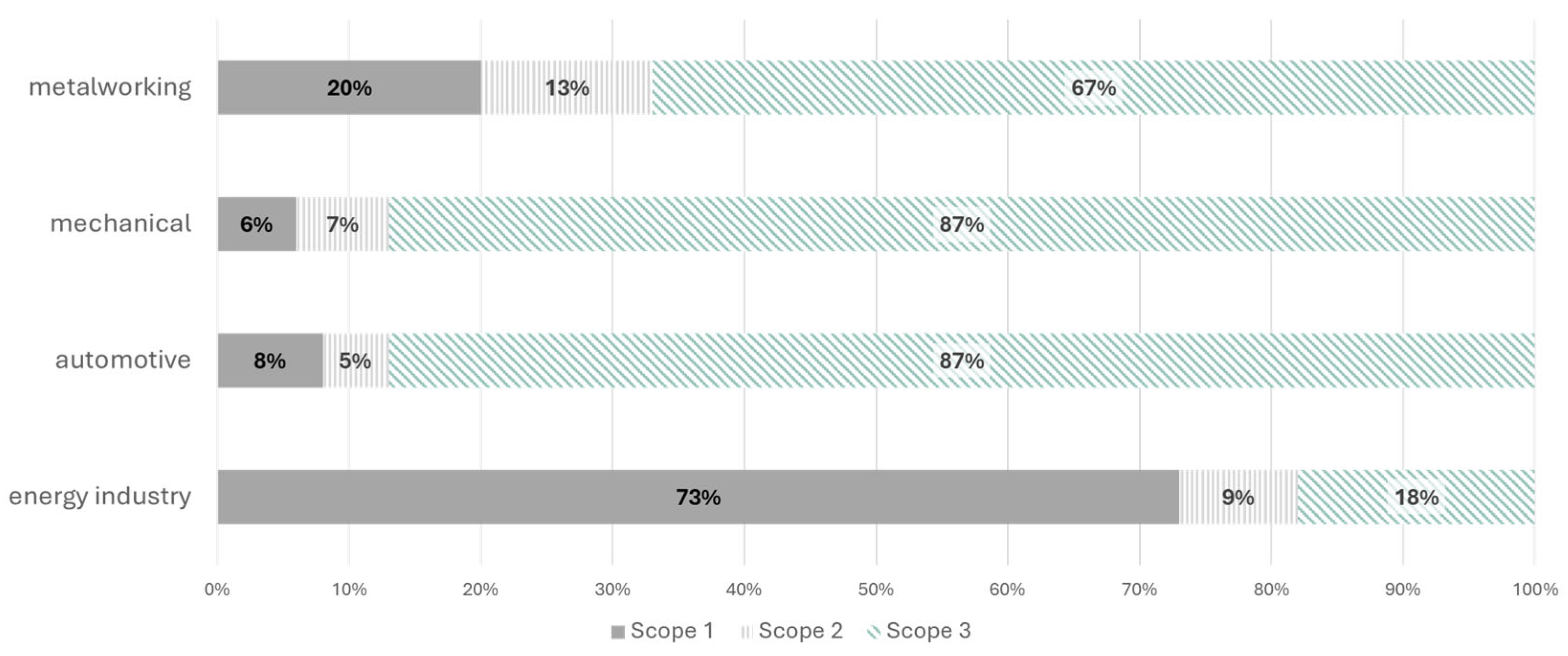
German SMEs are affected by two further obstacles. Firstly, digitalization has been stagnating in recent years, particularly in comparison to the boom experienced during the global lockdown in 2020 and 2021, which has led to lower resource monitoring that could otherwise enable emission calculations through primary data [20]. Secondly, in line with the aforementioned trend, SMEs lack the necessary monitoring infrastructure to accurately calculate their emissions further upstream and downstream [20]. These are included in scope 3 emissions, which in turn are the basis of the majority of CO2e emissions in producing industrial sectors, as can be seen in Figure 1 [21]. This is reflected not only by industrial commissions and interviews carried out by the authors, but also by the ISO Survey of 2022, which has reported that only 33% of the analyzed German working sites were certified for ISO 50001 (energy management, including energy monitoring), compared to 64% for ISO 14001 (environmental management systems) [19].
Despite these trends, 71% of SMEs are aiming to make their companies climate friendly [22].

3. Methodology

This section gives an overview of the manufacturing infrastructure and peripheral systems used during data collection, as well as the identified emission activities of the ETA Factory. Unless otherwise stated, system parameters and assumptions were selected empirically for the ETA Factory. This was completed based on previous research by the institute on carbon accounting, data transparency in production, and the track and trace of produced goods.

3.1. ETA Factory Environment

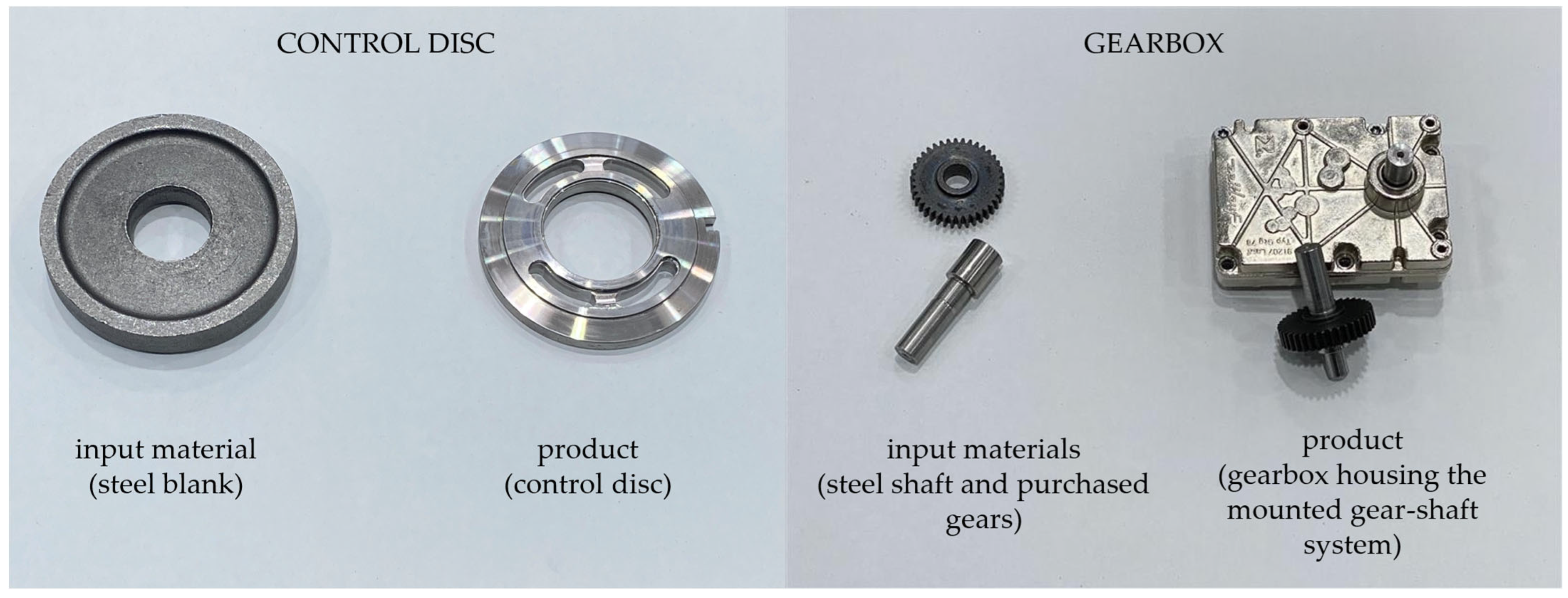
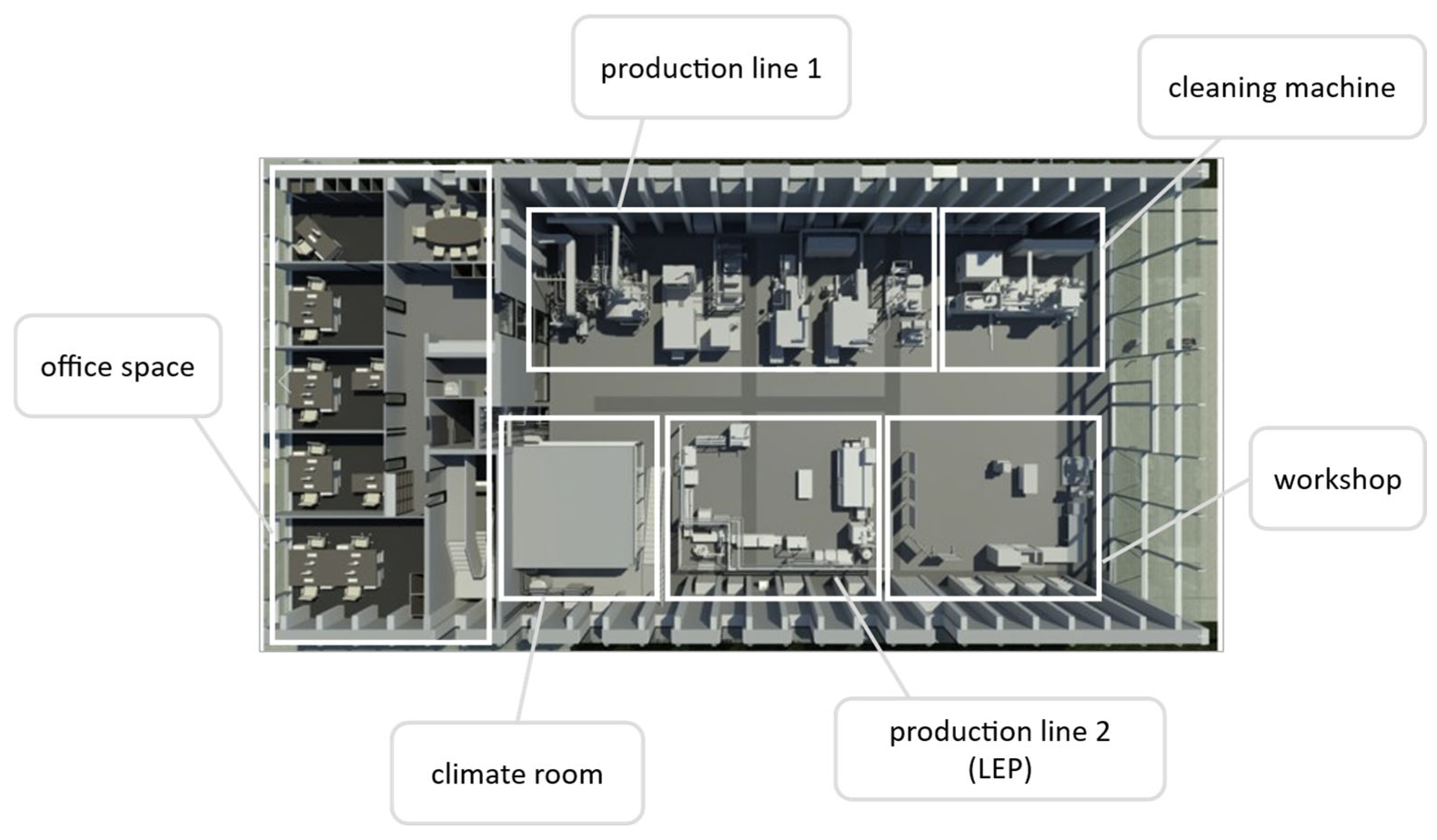
The ETA Factory (derived from “Energy Technologies and Application in production”) offers a joint office and production facility. The latter comprises a modern production line with a gas-fired nitrocarburizing furnace, two aqueous chamber cleaning machines (spray cleaning and flood cleaning), and two vertical lathes (cutting and grinding). The primary output is a hydraulic control disc, which can be seen in Figure 2. A smaller production line (called “LEP” in Figure 3) with retrofitted machinery (one turning machine, one annealing oven, one shrinking oven, one cleaning machine, an assembly station, two industrial robots, and two pneumatic compressors) is also present in the production hall. The primary output is a gearbox, which can be seen in Figure 2. The production hall further contains a throughput cleaning machine, an electromechanical workshop, and an air-conditioned climate room for cooling tests.
The factory makes use of a condensing boiler and two cogeneration units (all gas-fired), along with multiple electrical central supply units to supply the building with thermal energy (cooling and heating). The electricity deficit from the cogeneration units’ supply is covered by a local utility company. Excess thermal energy can be stored in high-volume fly ash and long-term vacuum-super-isolated storages, while excess electrical energy can be stored in lithium-ion batteries or a short-term flywheel system.
It should be noted that despite having a comparable infrastructure to industrial enterprises, the ETA Factory does not produce quantities comparable to an industrial SME. Regular factory operation is limited to monthly production days, along with sporadic production weeks correlating with ongoing research projects. This prevents direct comparison between the ETA Factory and SMEs beyond identification of relevant emission activities for metalworking and challenges in data acquisition.
Due to their primarily academic purposes, manufactured parts from both production lines cannot be sold to or used by downstream organizations. As such, a cradle-to-grave assessment is used in Section 3.2, albeit without consideration of the use phase.

3.2. Data Collection

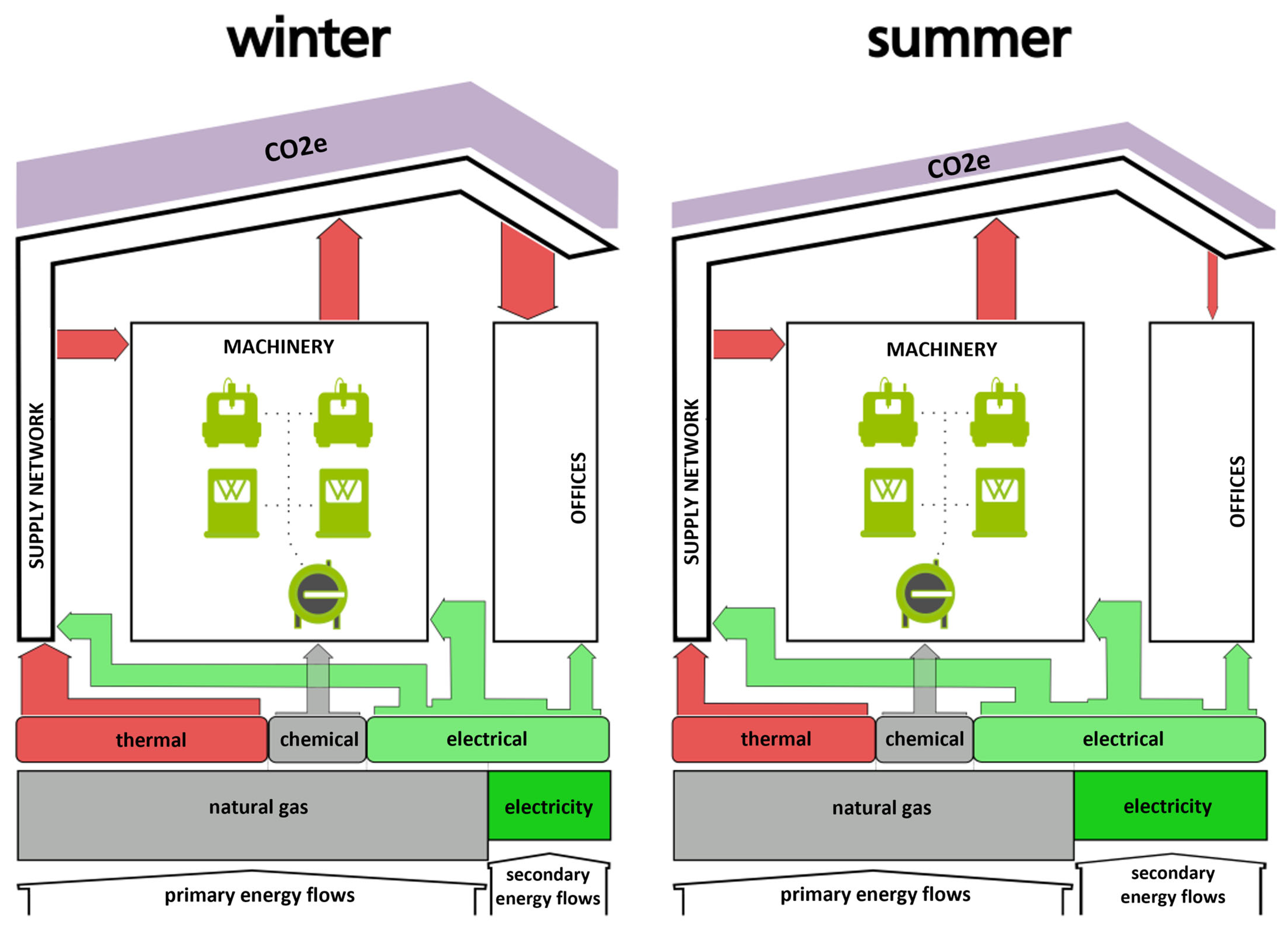
Prior to beginning data collection, the energy flows of the ETA Factory were mapped out based on a representative operational winter and summer scenario for 2022. This can be seen in Figure 4. The mapping was used to identify relevant energy sources, after which data collection was initiated.
The information and communication technology (ICT) infrastructure of the ETA Factory incorporates a multitude of different elements. The focus is on field-level sensor data, control-level systems, and supervisory-level monitoring and management software solutions [23].
The information used to calculate CO2e emissions for the ETA Factory stems mainly from the field level. Relevant energy carriers that could be monitored included electricity, natural gas and compressed air. Over 3000 different data points are continuously being recorded, including readings for power, energy, flow rates of mediums, temperatures, and masses. Data is measured primarily through stationary measurement points, which are supplemented through mobile measurements when required. Hybrid measurement points, such as the ones implemented by Sossenheimer, were not utilized in this work [24].
Collected data were classified either as primary data (self-collected) or secondary data (estimates or calculations based on information from external sources). It was then further differentiated based on whether the measured data was an input (i.e., raw steel) or an output (i.e., metal shavings).
The ETA Factory lacks usable infrastructure at higher levels of automation, namely in the form of an enterprise resource planning (ERP) system. Advantages that would have been offered by an ERP include tracking employee attendance and inventory turnover. To fill the information gaps, some of the required data (such as employee commuting and purchases of goods and services) was based on expert estimates and manual bookkeeping entries, as was the case for the number of purchased blanks and mass of each individual blank.
Since the collected data were updated significantly with regard to monitored activities in 2023, the following section focuses on the updated activity identification process for that year.

3.3. Identifying Relevant Activities in Scope 3 Emission Categories

Due to the CSRD explicitly addressing scope 3 emissions, the GHG Protocol was selected as the governing framework for calculating the ETA CO2e emissions for 2022, 2023, and 2024.
For scope 1, only stationary combustion was identified as relevant. From 1 January 2022 to 31 December 2024, natural gas was used in the condensing boiler, the cogeneration units, and the furnace. For scope 2, the purchased electricity was assessed using the market-based method. For scope 3 emissions, the 15 categories of the GHG Protocol were analyzed in terms of relevance to the ETA use case in 2023, a summary of which can be found in Table 1. Within these categories, activities were considered based on their relevance to industrial production processes, their impact on the overall emissions, and availability of data.

3.4. Emission Calculations

All CO2e factors but one were taken from the ecoinvent 3.9.1 database using the cut-off by classification system model (allocation of primary production emissions to the producer), the Intergovernmental Panel on Climate Change (IPCC) 2021 AR6 impact assessment, climate change impact category, and the Global Warming Potential (GWP) 100 indicator (GWP over a time span of 100 years) [25]. In descending order of preference, the geography was selected as: Germany, Europe without Switzerland, Europe, Global/Rest-of-the-World.
The only CO2e factor that was taken from a different source was for electricity-based CO2e emissions. This was due to a lack of comparable data in ecoinvent 3.9.1 based on the actual German electricity mix. As such, the factor was taken from a report by the German Federal Office for Environment, quantifying the electricity mix at 433 g CO2e/kWh in 2022, 386 g CO2e/kWh in 2023, and 363 g CO2e/kWh in 2024 [26].

Further Details on Activities and Assessment Methods

In this section, emission activities are grouped into either operating materials (activities from categories 3.1, 3,4, 3.5, 3.9, and 3.12), office materials (from categories 3.1), energy (from scopes 1 and 2, as well as category 3.3), or travel (from categories 3.6 and 3.7).
Operating Materials: The ETA production line uses raw steel blanks to produce hydraulic control discs. These are classified as 8CrMo16 nitrided/heat-treated chromium-molybdenum steel. Additional specifications, provided by the supplier, can be found in Table 2. Since no exact equivalent steel alloy could be found in ecoinvent 3.9.1, the CO2e factor for 18/8 chrome-steel was utilized. Despite a high share of chromium, X10CrNi18-8 chrome-steel was deemed the most suitable material for comparing it to 8CrMo16 steel. Representative specifications for this 18/8 chrome-steel were taken from DIN EN ISO 6931-1:2016-05 and a metal supplier, which can be found in Table 2 [25,26].
Further inputs include machine tools (which are regularly replaced based on wear), as well as cooling lubricants, cooling agents, hydraulic oils, machine oils, and lubricating grease for auxiliary machine components. The cleaning machines are operated with chemical cleaning agents. The compositions of each of these operating materials can be found in Table 3. Process gases used in the ETA production facility include nitrogen, carbon dioxide, and ammonia for the oven. The supply systems and machines make use of pumps and valves that are replaced as necessary. Work clothes and safety shoes are purchased for new employees.
Table 3 shows that for specific operating materials, the CO2e factor used for calculating emissions differed from the theoretical factor based on data sheets and the literature [27]. The reasoning behind this was that, whenever possible, a value for the full product was preferred, as these account for the production, processing, and combining of individual components.
Table 2. Product specifications of 8CrMo16 Chromium-Molybdenum Steel and X10CrNi18-8 18/8 Chrome-Steel based on [28,29].
8CrMo16X10CrNi18-8
Material Composition
Ranges
Chromium (Cr%)3.70–4.1016.0–19.0
Molybdenum (Mo%)0.40–0.600.80
Carbon (C%)0.07–0.110.05–0.15
Manganese (Mn%)0.90–1.202.0
Silicon (Si%)0.10–0.402.0
Phosphorus (P%)≤0.020.045
Sulphur (S%)0.015–0.0350.015
Nickel (Ni%)-6.0–9.5
Physical PropertiesDensity at 20 °C7.762 g·cm−37.9 g·cm−3
Mechanical PropertiesYield Strength≥700 MPa≤195 MPA
Tensile Strength≥800 MPa500–700 MPa
Elongation at Break≥14%40%
Contraction at Break≥55%-
Notch Impact Work at −40 °C≥40 J-
Within scope 3, these inputs are not only relevant in terms of purchased volumes, but also in terms of transportation to and from the ETA Factory. They furthermore generate waste, which in turn require end-of-life treatment (recycling for metal wastes and incineration for operating liquids). The amount of produced waste was calculated based on the assumption that the amount was equal to the difference in mass between the initial input and final output of products. Owing to a lack of available information, only the blanks were considered for upstream transportation. Since the CO2e factors for the other operating materials typically included downstream transportation (e.g., market for lubricating oil in Europe), this was deemed acceptable.
The methods used for calculating emissions allocated to operating materials are: the average data method (for purchased goods, based on mass/volume), distance-based method (for land-based upstream/downstream transportation of goods, based on travel distance), and waste-type-specific method (for end-of-life treatment of wastes, based on type of treatment).
Table 3. Volumetric compositions of operating materials for production machines at the ETA Factory; theoretical CO2e factor is based on compositions from data sheets or the literature. Utilized CO2e factors were taken from ecoinvent 3.9.1 (cut-off system model, IPCC 2021 impact assessment, climate change impact category, GWP100). For unknown compositions or missing factors of components, a substitute activity was selected from ecoinvent 3.9.1.
Machine
Process
Operating
Material
Composition
by Volume
Theoretical CO2e
Factors (TCFs)
Utilized Activity and CO2e Factor
Cutting and GrindingCooling LubricantWater (91%), Lubricant + Coolant (9%)Deionized Water (4.3346 × 10⁻⁴ kgCO2e/kg), Mineral Oil (0.58001 kgCO2e/kg)Market for Lubricating Oil (1.5416 kgCO2e/kg)
CuttingCooling AgentWater (91%), Coolant (9%)Deionized Water (4.3346 × 10⁻⁴ kgCO2e/kg), Ethylene Glycol (2.0408 kgCO2e/kg)TCF
GrindingCooling AgentWater (96%), Coolant (4%)Deionized Water (4.3346 × 10⁻⁴ kgCO2e/kg), Ethylene Glycol (2.0408 kgCO2e/kg)TCF
Cutting and GrindingLubricating GreaseSoap (12%), Mineral Oil (88%)Soap (5.2512 kgCO2e/kg), Mineral Oil (0.5800 kgCO2e/kg)TCF
Cutting and GrindingMachine/Hydraulic OilMineral Oil (100%)n/aMarket for Petroleum (0.5800 kgCO2e/kg)
CleaningChemical Cleaning Agentn/an/aMarket for Soap (5.2512 kgCO2e/kg)
Office Materials: Each employee has access to a workstation with technological equipment (computer, two screens, mouse, keyboard, and headset) which had been purchased in previous years and thus were not considered. Further stationery includes pens and writing paper/notepads, which were likewise not considered due to unavailability of purchasing data. Known purchasing data for stationery included printing paper and ink. In addition, the consumption of both tea and coffee was tracked in 2023, because coffee was found to have a significant impact on ETA emissions in 2022.
Transportation distances of office materials were omitted, as these were unknown at the time of the writing of this work.
Office material emissions were mostly calculated based on the average data method (based on inventory numbers), with the spend-based method (based on expenditures) being used as an alternative when no other data was available.
Energy: The majority of energy emissions are accounted for in scopes 1 and 2 (including upstream emissions of fuels and electricity, as well as transmission and distribution losses for electricity), leaving mainly the transportation of natural gas to the factory. The energy demand for home offices was calculated based on documented remote workdays and the average German electricity consumption per day per capita. Home office heating was not considered, as no representative data source could be found. Energy consumption during overnight business travel was allocated to travel emissions.
The average data method was used for all calculations.
Travel: Employee commuting was quantified based on the number of documented workplace workdays. For business travel, a distinction was made between standard and premium transportation. Great circle travel distance was used for flights, while linear distance and actual travel routes were used for other means of transport. Overnight stays were accounted for by average emission factors of hotels in the respective countries.
The distance-based method was used for travel and the average data method for accommodation emissions.

3.5. Calculation Tool

An Excel-based tool was developed to aid the calculation process. It includes CO2e factors for relevant activities, as well as data on activity impacts. An anonymized version of the most recent instance of the tool can be found in Tudatalib [30]. The tool also includes production data pertaining to the ETA Factory and transparency on data sources (primary vs. secondary, as well as the type of secondary data).

4. Results and Discussion

This section presents annual results from 2022 to 2024. A detailed discussion of emission activities is provided for 2023 in Section 4.2.

4.1. Carbon Footprint 2022

This section briefly presents ETA emission activities in 2022.
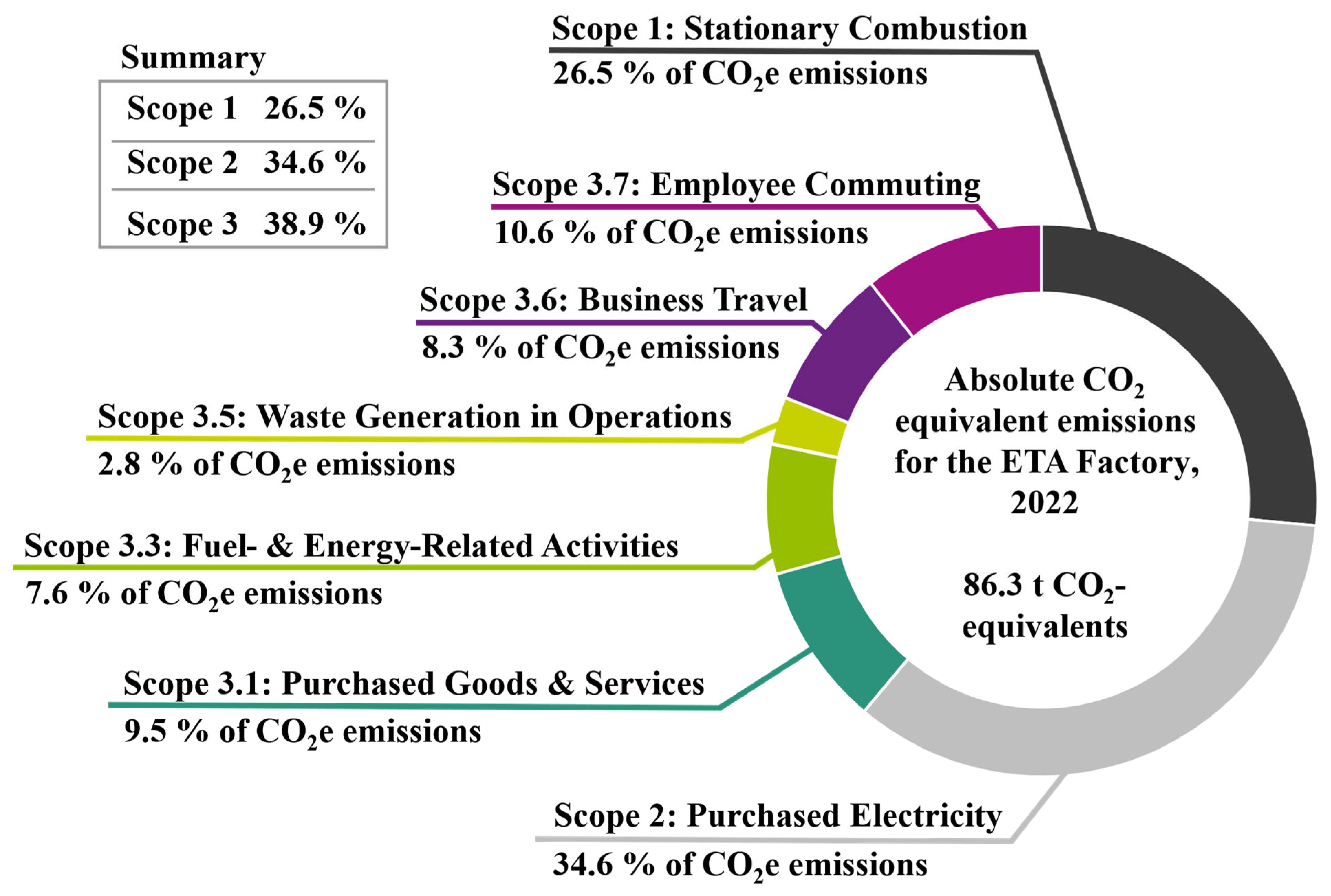
Figure 5 shows the ETA carbon footprint for 2022. Despite being the baseline year for this study, the authors do not view the data as representative for a scientific research facility. This is due to business travel having been extremely limited due to the COVID-19 pandemic, resulting in a single conference visit (scope 3.6) throughout the year, leading to skewed influences of each category. In particular, the impact of scope 3.6 is significantly lower than in subsequent years (8.3% in comparison to 51.9% in 2023 and 22.3% in 2024).

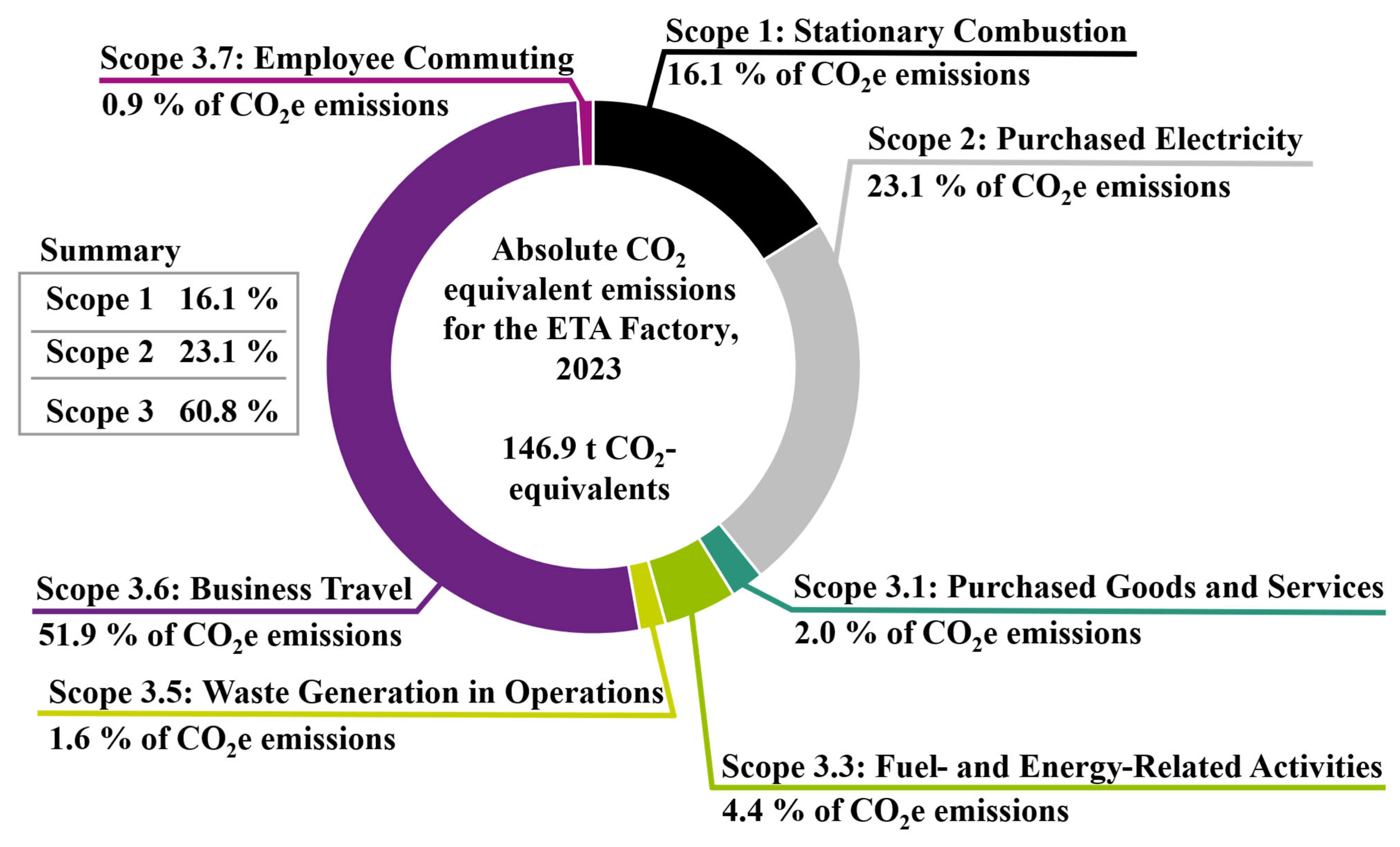
4.2. Carbon Footprint 2023

This section provides a detailed presentation and discussion of ETA emission activities in 2023 with regard to scope 3 and the potential to influence activities in all three scopes.

4.2.1. Scope 3 CO2e Emissions

As per Figure 1, the highest emissions for metal production occur during the utilization phase, correlating with downstream emissions in categories 3.10 and 3.11 (processing and use of sold products), which were not considered due to the research-based production at the ETA Factory. Instead, ETA emissions are governed by business travel, of which flights account for the largest share of emissions. The impact of category 3.6 (travel) is shown in Figure 6, accounting for 51.9% of the overall emissions in 2023.
Excluding category 3.6, category 3.3 (energy-related) has the highest impact in scope 3. Within category 3.1 (purchases), cooling lubricants account for 42% of emissions. With 30% of emissions, coffee has a greater impact than the combined emissions from the purchases of cleaning agents, machine oils, machine tools, and steel blanks.

4.2.2. Discussion of Scope 3 CO2e Emissions

Given that the ETA Factory is highly energy efficient in its operation, the impact of scope 3.3 emphasizes the value of energy efficiency measures and the auto-production of electricity in factories.
With regard to employee home office periods in Germany, the heat demand is typically covered through fossil fuel combustion. Since ETA employees spend an average of 2 days per week working remotely, the omission of home office heating from scope 3.3 is estimated to have significantly affected total emissions in this category. Calculating these emissions was significantly more difficult than expected; firstly, the average apartment size of ETA employees is around 60 m2, but average statistical data is available either for 45 m2 (single-person households) or 90 m2 and upwards (3–4 person households). Secondly, most employees share their apartments with 1–2 other tenants. Thus, the actual allocation of thermal energy requirements, both for space and water heating, would need to be addressed separately from this work.
The inclusion of irrelevant-seeming emission sources (in the case of the ETA Factory, coffee consumption) is relevant for SMEs, where purchased goods and services are not necessarily tracked by ERP systems. This can lead to potential gaps due to underestimating the impact of trivial-seeming activities, as was the case for coffee consumption at the ETA Factory.
Similarly, the lack of transportation emissions for all office materials leads to lower-than-actual calculated emissions for this category. This would need to be remedied in the future.
As category 3.5 (waste generation in operation) is closely linked to downstream emissions, the accuracy of this value directly affects the calculated emissions of downstream transportation and end-of-life treatment of wastes. In the context of the ETA Factory, the method of calculating waste metal shavings (mass difference between raw blank and finished good) from the machined steel blanks is deemed reliable. On the other hand, the reliability of applying the same method to machine oils and lubricants may need further investigation; effects such as the evaporation of fluids at various temperature levels may significantly influence the amount of generated waste medium. However, as can be observed in Figure 6, category 3.12 (end-of-life treatment), along with categories 3.4 (upstream transportation) and 3.9 (downstream transportation), had the smallest contributions to the overall emissions of the ETA Factory. As such, the variance caused by evaporation and similar effects is likely negligible in this case.
As can be seen in Figure 6, the differences in production volume between an industrial SME and the ETA Factory are clearly noticeable. Both energy and resource demands are significantly lower than those of SMEs, even when compared to a one-shift operation. As a result, despite the rigorous data collection that led to two additional scope 3 categories (3.9, downstream transportation, and 3.12, end-of-life treatment) being monitored, the scopes and categories with the highest impacts remain unchanged. While data collection will be continued for 3.9 and 3.12, the overall impact remains negligible due to a smaller production quantity. Furthermore, several identified scope 3 activities could not be analyzed (seen in Table 1 in regular font) either because the data had not been previously collected at the ETA Factory (e.g., purchased safety equipment) or because external sources could not make the data available (e.g., produced annual wastewater volume).

4.2.3. Discussion of Influence on Emission Activities

Apart from regulatory motivations, the benefit in carbon accounting lies in cost optimization potentials. For typical German use cases, lower CO2e emissions correlate with lower costs, which is a driving factor for industrial enterprises. To this end, it is crucial to analyze emission activities in terms of how much they can be influenced by internal means. For example, the CO2e factor of the German electricity mix can hardly be influenced by a single SME-sized institution. However, increasing energy efficiency or self-sufficiency decreases the amount of electricity required from local utilities, thus directly impacting all factory-related CO2e emissions when using electricity. Due to such considerations, emissions from scope 1, scope 2, and scope 3.3 are classified as having a moderate external dependency in Table 4. A similar analysis was applied to each of the emission groupings, which can likewise be found in Table 4.
In the ETA use case, no emission activities were deemed as having zero external dependency. As it stands, so long as parts of the value chain remain carbonized, this will likely continue holding true. Even in the case of widespread decarbonization in the industry, companies may choose to engage in CO2e-heavy activities if this results in a monetary advantage. As such, regulatory incentivization remains crucial in minimizing the anthropogenic greenhouse effect.

4.3. Carbon Footprint 2024

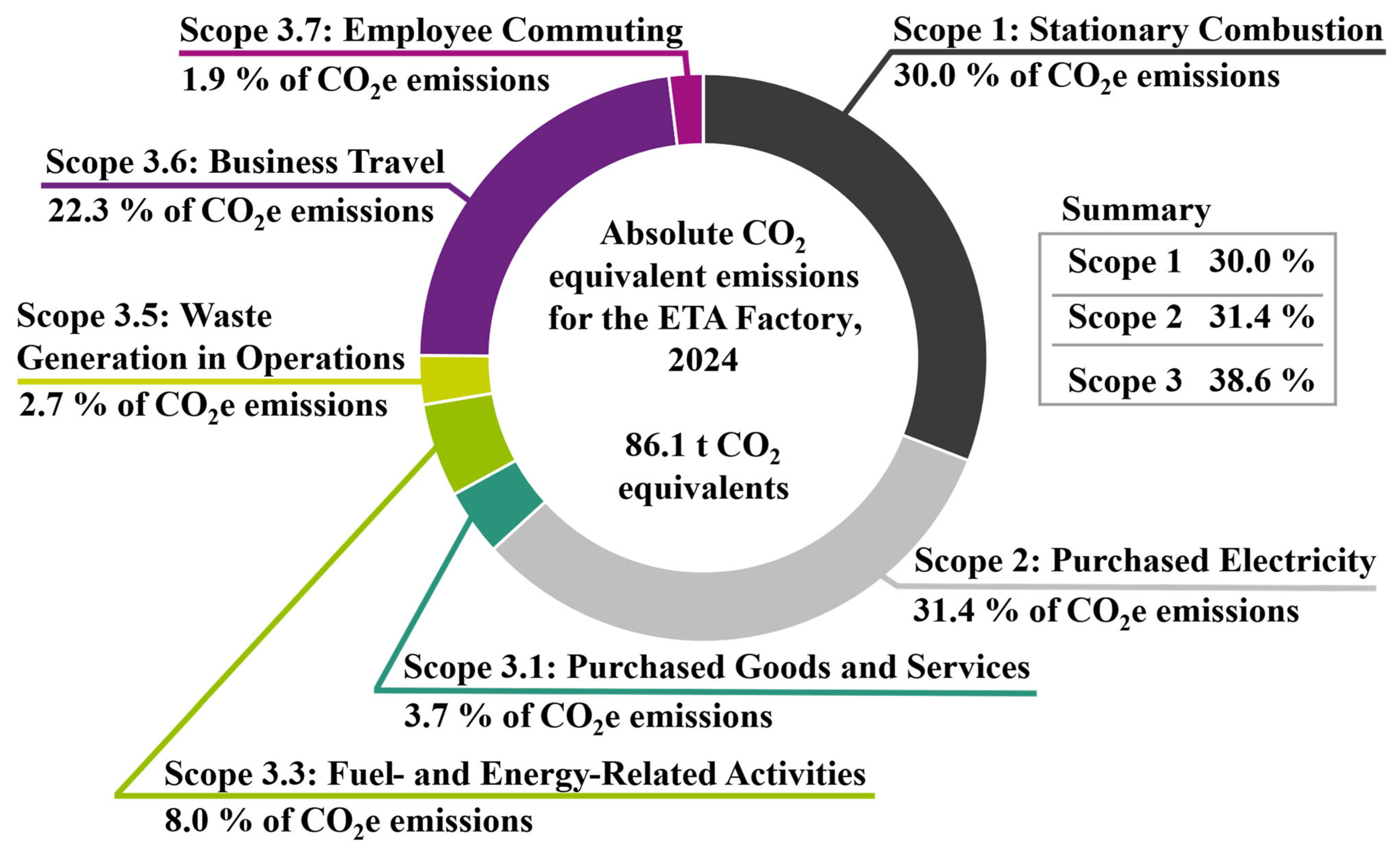
This section provides a presentation and discussion of ETA emission activities in 2024 (see Figure 7) with regard to automated data acquisition and sensitivity of emission factors, both within a single and across multiple databases.
In addition, the section provides normalized emissions for the years 2022–2024.

4.3.1. Discussion of Data Acquisition for 2024

While a greater degree of automated data collection was pursued in 2024 for scope 3 items, the basis of the carbon footprint was provided by the calculation tool from Section 3.4, as the ETA Factory does not have an installed manufacturing execution system (MES) or ERP system.
The degree of automation is heavily dependent on existing ICT infrastructure. For all energy-related activities, field-level energy metres and measuring equipment are necessary, coupled with an energy monitoring/management system, such as an Industrial Internet of Things (IIoT) platform for energy transparency. A MES can further help track production-based emissions for operating materials. If a high level of automated data collection has been achieved through an ERP system, data acquisition for travel and office material could also be automated.
The year 2024 marked the first year that a sustainability report as per the ESRS was published for the ETA Factory [31]. Details on activities that contributed to carbon emissions, along with further sustainability topics, can be found in the report.

4.3.2. Discussion of Sensitivity of CO2e Emission Factors

In Section 3.4, Table 3 exemplified that different calculation methods quickly lead to different CO2e factors; in the case of cooling lubricants, the self-calculated CO2e factor for a lubricating oil containing 91% deionized water (factor: market for deionized water) and 9% mineral oil (market for petroleum) would be 0.0525 kg CO2e/kg, whereas the factor from the ecoinvent 3.9.1 database for the market for lubricating oil is about triple that value, documented at 1.5416 kg CO2e/kg. In both cases, the utilized factors come from the same database. The discrepancy arises from considered activities and carbon accounting boundaries. In the case of the market for lubricating oil, it accounts not only for production, but also for transportation to the consumers of the product.
Another point of discussion can be found in the selected emission factor for steel. Due to the lack of database entries on 8CrMo16 steel in ecoinvent, as well as in other databases, the substitute factor for X10CrNi18-8 had to be chosen. While this factor was deemed more representative than a generic factor for steel (e.g., “Steel Mix” in Table 5), it nonetheless introduces data inaccuracy into the carbon account.
Discrepancies can also be observed when different calculation methods or even databases are used, as is shown in Table 5. Regarding models used by the IPCC 2021 framework, cut-off and APOS (Allocation at the Point Of Substitution) are both allocation-based models. Unlike cut-off, which attributes primary production emissions to the producer, APOS shares emissions between the producer and users of the product. Consequential is a substitution-based model, in which no allocation of emission burden takes place. This is why the CO2e factor for the consequential model is considerably higher compared to allocation models.
Based on Table 5, it becomes apparent that there is little comparability between CO2e emissions of different enterprises, as the exact methodology is seldom documented. As such, a standardized ESG reporting framework is necessary to allow for comparisons and furthermore to reduce the likelihood of unintentional misreporting or greenwashing.
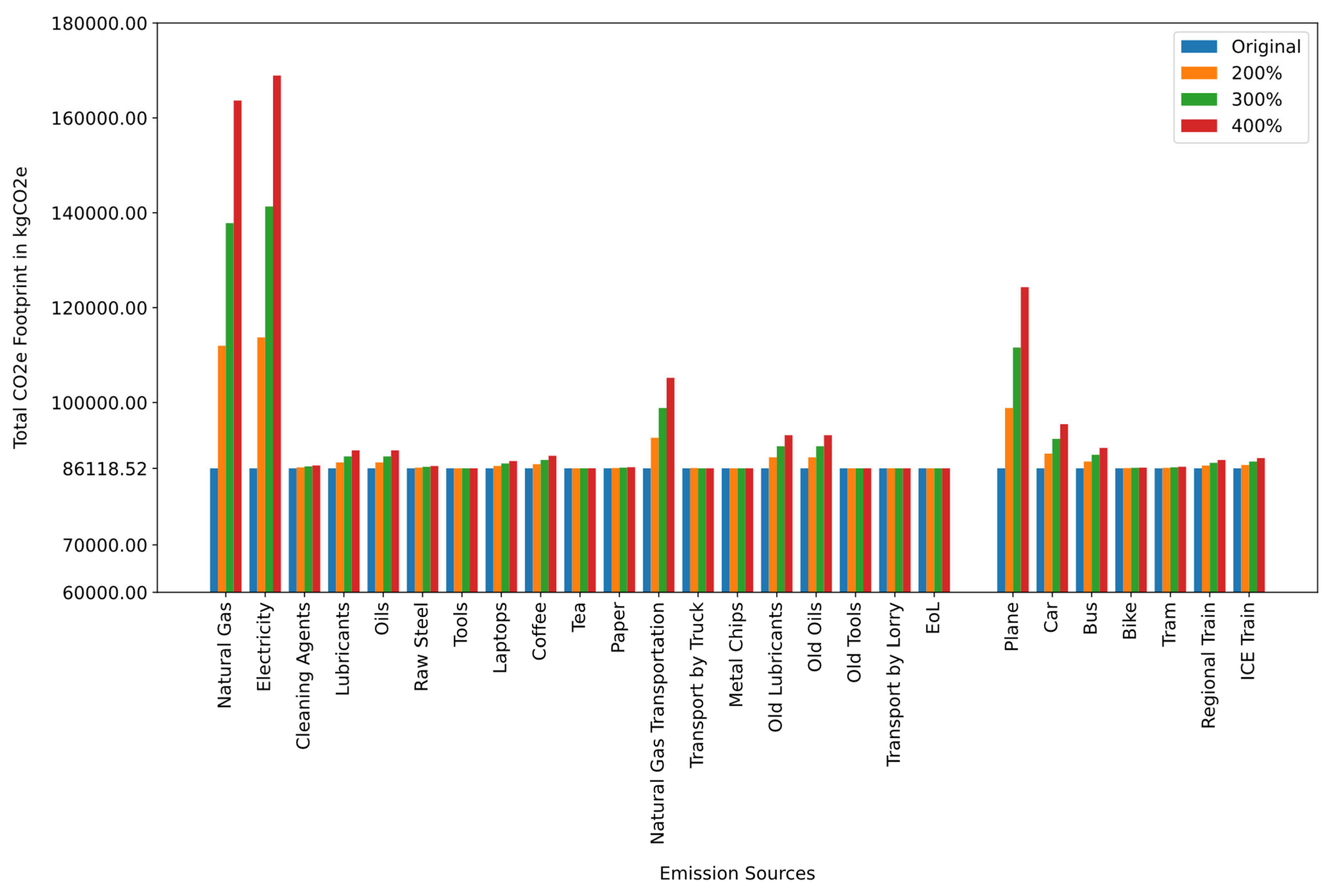
To quantify the impact of different emission factors, a systematic sensitivity analysis was conducted for each of the utilized emission factors. Each emission factor was individually varied to 200%, 300%, and 400% of their original values, followed by a calculation of the adjusted ETA CO2e footprint based on the changed factor. The results, shown in Figure 8, show the linear relationship between emission factors and total footprint. For production processes, the emission factor for electricity had the highest impact, followed by natural gas (combustion) and transportation (as well as losses) of natural gas. Waste operating materials (cooling lubricants and machine oils) had a greater effect than unused ones. For travel, the factor for transportation by plane was found to have the highest impact, followed by the ones for car and bus rides.

4.3.3. Normalized Comparison of 2024 Emissions in Comparison to 2022 and 2023

To allow for better comparison between the years, along with comparisons to other metalworking facilities, Table 6 shows normalized emissions for each of the years. The production volume for control discs was significantly higher in 2022 (500 units versus 150 units in 2023 and 2024), leading to a significantly lower footprint per employed researcher, measured in full-time equivalents (FTEs). Had the number of produced control discs remained at 500 in 2024, the footprint per FTE per produced unit would have equaled the one from 2022.

5. Summary and Outlook

By identifying key scope 3 activities for production facilities, this work manages to address scope 3 categories within the context of metal machining at a scientific institute where the products are neither deployed nor sold downstream. Excluding business travel, scope 3 emissions were governed by energy- and fuel-related activities, followed by purchased goods and materials.
The case study expands on existing works rooted in university-wide CO2e emission tracking by addressing scope 3 categories relevant to real production environments. As such, it offers insights into activities that may require monitoring by industrial organizations, particularly SMEs with limited data transparency. Since production volumes and established energy efficiency measures are not comparable to SMEs (the former being lower and the latter being higher), a direct comparison of CO2e emissions between the ETA Factory and SMEs is not possible. Specific implications, e.g., the decision to reduce flight emissions, require case-by-case analysis for relevance to SMEs. However, the identified emission activities in scope 3 can serve as a starting point for metalworking SMEs that wish to calculate their own scope 3 footprints.
Likewise, the ETA Factory footprint calculation can serve as a starting point or even benchmark for other production institutes with real production environments. Based on this case study, an annual footprint of 3.7 tCO2e/FTE is deemed representative for the ETA Factory. A comparison of annual footprints would be especially interesting against other facilities that aim for sustainable production. However, to ensure comparability, the following framework would need to be used: IPCC 2021 as the Life Cyle Impact Assessment (LCIA) method, climate change as the impact category, and GWP100 as the indicator. Ideally, the utilized database would be ecoinvent version 3.9.1 cut-off. Deviating from these parameters would likely result in incomparability stemming from high sensitivity of the CO2e factors.
Even without aiming for comparison, it is vital to note that due to different calculation and allocation methods, CO2e factors can show a wide range of values for identical activities. Based on the sensitivity of data (Table 5 and Figure 8), it is paramount for carbon accounts to continuously make use of the same system model and impact assessments throughout the footprint calculation. It is just as important to adhere to a single database to ensure consistency throughout the account.
Data acquisition remains a considerable hurdle, particularly for CO2e emissions that occur along the value chain, i.e., outside the boundaries of a production facility. Despite the use of primary data sources in conjunction with automated data collection appearing appealing, the costs of implementing full data automation are high. As such, it is not always feasible to prioritize primary data sources over secondary ones. Instead, an analysis of emission hotspots during production, especially ones that occur within facility boundaries, was found to be preferential for identifying potential spots for primary data collection. By doing so, the trade-off between costs for data acquisition and the resulting footprint accuracy can be limited.
Primary data was found to be most accessible for energy-related emissions. Even without dedicated measuring points for individual machinery, main connection points are monitored in all buildings in Germany, which can be used for calculating aggregated (i.e., annual) CO2e emissions. In case such a point is not publicly accessible, utility companies provide aggregated consumption for gas and electricity. On the other hand, material consumption requires digitalized inventories, such as can be found in ERP systems. Without such systems or access to physical inventory lists, secondary data sources become necessary to fill the information gaps. If the impact of material-related CO2e emissions is low in comparison to energy-related ones (see Figure 7), secondary data sources are found to provide sufficient accuracy for footprint calculations. Furthermore, secondary data is preferable to excluding emission activities entirely.
Aims for improvements to the CO2e accounting process at the ETA Factory are as follows: Firstly, the cooling demand was considered as part of the electrical demand due to the electrification of ETA cooling systems. However, the heat supplied to the absorption chillers comes from gas-based supply units. Isolating the cooling demand would thus enable the usage of cooling energy emission factors, which are different from (i.e., lower than) those for the German electricity mix.
Secondly, using all identified scope 3 activities would reduce the gap between calculated and real emissions.
Thirdly, home office heating demand is expected to have a noticeable impact on scope 3.3 and should therefore be included for accurate CO2e calculations. In addition, the usage of process and tap water have yet to be included in the ETA reports due to missing primary and inaccurate secondary data. As the ETA building has facilities for employees and visitors, along with multiple aqueous cleaning machines as part of the production line, this likely represents a large gap between calculated and actual emissions. The issue is aimed to be remedied in future years through the installation and monitoring of additional measurement equipment.
For greater comparability between small and medium enterprises and the ETA Factory, it remains necessary to scale up the in-house production data to develop a representative industrial production scenario with one-shift operations. To achieve this, the production line would have to be adjusted or simulated, as the current infrastructure only houses one of each machine type needed per process step (e.g., two vertical lathes, but one for cutting and the other for grinding). As a result of scaling up the number of machines, the production plan would also have to change to account for new material and the energy inputs and outputs of each process step. These steps are to be addressed in future works.
A standardized framework for carbon accounting and sustainability reporting has yet to be instituted in the EU, greatly limiting the comparability of environmental, social, and governance reports of industrial enterprises. However, even without a standardized carbon accounting or sustainability reporting framework, several improvements can be made with regard to required data acquisition. For one, (partial) automation of data collection through digitalization can significantly increase the accuracy and speed of emission calculations. At the same time, a framework for handling personal and sensitive data, such as work travel or time spent working remotely, may be necessary to accurately evaluate employee data without infringing on privacy regulations. Above all, a system for enabling the transparent sharing of emission data across supply chains, such as a digital product passport, would greatly facilitate the assessment of industrial scope 3 emissions.
For 2025 and 2026, the gaps in the ICT infrastructure of the ETA Factory will be addressed through synthetically generated data structures that mimic information found in MES and ERP systems. To this end, the ETA environment will be implemented prototypically in Sustainability Footprint Management (SFM) by SAP.

Author Contributions

Conceptualization, O.O. and J.M.; methodology, O.O. and J.M.; data curation, O.O.; writing—original draft preparation, O.O.; writing—review and editing, J.M.; visualization, O.O. and J.M.; supervision, M.W.; funding acquisition, M.W. All authors have read and agreed to the published version of the manuscript.

Funding

This research was funded by the German Federal Ministry of Economic Affairs and Energy (BMWE) within the projects DELTA (grant agreement 03EWR002A-P) and KI4ETA (grant agreement 03EN2053A).

Institutional Review Board Statement

Ethical review and approval were waived for this study, in accordance with guidelines from the German Research Foundation (DFG), as the study involved an anonymous and voluntary survey without the collection of sensitive personal data and posed minimal risk to participants. The study was conducted in accordance with the Declaration of Helsinki.

Informed Consent Statement

Informed consent was obtained from all subjects involved in the study. Participation was voluntary, and respondents were informed about the purpose of the study and the anonymous handling of their data.

Data Availability Statement

The carbon footprint calculation tool (in German) can be accessed in [30], alongside production data for the ETA Factory and data sources by type.

Acknowledgments

The authors gratefully acknowledge project supervision by project management Jülich (PtJ).

Conflicts of Interest

The authors declare no conflicts of interest.

Abbreviations

The following abbreviations are used in this manuscript:
CO2eCarbon Dioxide Equivalents
CSRDCorporate Sustainability Reporting Directive
EMASEco-Management and Audit Scheme
ERPEnterprise Resource Planning
ESGEnvironmental, Social, Governance
ESRSEuropean Sustainability Reporting Standards
EUEuropean Union
FTEFull-Time Equivalent
GHGGreenhouse Gas / Greenhouse Gases
GWPGlobal Warming Potential
ICTInformation and Communication Technology
IIoTIndustrial Internet of Things
IPCCIntergovernmental Panel on Climate Change
MESManufacturing Execution System
MMTCDEMillion Metric Tonnes of Carbon Dioxide Equivalents
n/aNot available
NFRDNon-Financial Reporting Directive
SFMSustainability Footprint Management
SMEsSmall and Medium Enterprises
TCFsTheoretical CO2e Factors

References

  1. European Commission. Communication from the Commission to the European Parliament, the Council, the European Economic and Social Committee and the Committee of the Regions Empty: ‘Fit for 55’: Delivering the EU’s 2030 Climate Target on the Way to Climate Neutrality. Available online: https://eur-lex.europa.eu/legal-content/EN/TXT/?uri=CELEX:52021DC0550 (accessed on 13 April 2026).
  2. Feder, T. Germany’s green transition regains momentum: The country aims to be climate neutral by 2045. Phys. Today 2022, 75, 23–25. [Google Scholar] [CrossRef]
  3. BMWE. Deutschland bei Klimazielen 2030 Erstmals auf Kurs. Available online: https://www.bmwk.de/Redaktion/DE/Pressemitteilungen/2024/03/20240315-deutschland-bei-klimazielen-2030-erstmals-auf-kurs.html (accessed on 13 April 2026).
  4. Umweltbundesamt. Klimaemissionen Sinken 2023 um 10,1 Prozent—Größter Rückgang seit 1990: UBA-Projektion: Nationales Klimaziel bis 2030 Erreichbar. Available online: https://www.umweltbundesamt.de/presse/pressemitteilungen/klimaemissionen-sinken-2023-um-101-prozent (accessed on 13 April 2026).
  5. DESTATIS. Produktion im Dezember 2023: −1,6% zum Vormonat: Produktion im Jahr 2023 um 1,5% Gesunken. Available online: https://www.destatis.de/DE/Presse/Pressemitteilungen/2024/02/PD24_048_421 (accessed on 13 April 2026).
  6. Henning, H.-M.; Knopf, B.; Bettzüge, M.O.; Heimer, T.; Schlomann, B. Gutachten zur Prüfung der Treibhausgas-Projektionsdaten 2024: Sondergutachten Gemäß § 12 Abs. 4 Bundes-Klimaschutzgesetz. Available online: https://expertenrat-klima.de/gutachten-zur-pruefung-der-treibhausgas-projektionsdaten-2024 (accessed on 13 April 2026).
  7. Expertenrat für Klimafragen. Feststellung zur Prüfung der Treibhausgas-Projektionsdaten 2024: Feststellung Gemäß § 16 Abs. 2 in Verbindung mit § 12 Abs. 1 Satz 4 Bundes-Klimaschutzgesetz. Available online: https://expertenrat-klima.de/feststellung-zur-pruefung-der-treibhausgas-projektionsdaten-2024 (accessed on 13 April 2026).
  8. Pawlik, V. Kohlendioxid-Emissionen in Deutschland nach Sektor im Jahr 2023. Available online: https://de.statista.com/statistik/daten/studie/312450/umfrage/treibhausgasemissionen-in-deutschland-nach-quellgruppe/#statisticContainer (accessed on 13 April 2026).
  9. BMBF. Kohlendioxid als Rohstoff. Available online: https://www.foerderinfo.bund.de/bmbf/de/forschung/umwelt-und-klima/ressourcen/kohlendioxid/kohlendioxid-als-rohstoff.html (accessed on 13 April 2026).
  10. Bundesnetzagentur. Bundesnetzagentur Veröffentlicht Da-Ten zum Strom-Markt 2023. Available online: https://www.bundesnetzagentur.de/SharedDocs/Pressemitteilungen/DE/2024/20240103_SMARD (accessed on 13 April 2026).
  11. European Commission. Corporate Sustainability Reporting. Available online: https://finance.ec.europa.eu/capital-markets-union-and-financial-markets/company-reporting-and-auditing/company-reporting/corporate-sustainability-reporting_en (accessed on 13 April 2026).
  12. EUR-Lex. Council Directive 2023/2772 Commission Delegated Regulation (EU) 2023/2772 of 31 July 2023 Supplementing Directive 2013/34/EU of the European Parliament and of the Council as Regards Sustainability Reporting Standards: Document 32023R2772. Available online: https://eur-lex.europa.eu/eli/reg_del/2023/2772/oj (accessed on 13 April 2026).
  13. Vilches, R.; Dávila, F.; Varela, S. Determinación de la huella de carbono en la Universidad Politécnica Saleciana, sede Quito, campus sur, año base 2012. La Granja 2015, 21, 35–47. [Google Scholar] [CrossRef]
  14. Samara, F.; Ibrahim, S.; Yousuf, M.E.; Armour, R. Carbon Footprint at a United Arab Emirates University: GHG Protocol. Sustainability 2022, 14, 2522. [Google Scholar] [CrossRef]
  15. Mendoza-Flores, R.; Quintero-Ramírez, R.; Ortiz, I. The carbon footprint of a public university campus in Mexico City. Carbon Manag. 2019, 10, 501–511. [Google Scholar] [CrossRef]
  16. University of Mannheim. Carbon Footprint of the University: Dual Reporting Approach. Available online: https://www.uni-mannheim.de/en/sustainability/sustainability-in-operations/carbon-footprint-of-the-university/ (accessed on 15 April 2026).
  17. Helmers, E.; Chang, C.C.; Dauwels, J. Carbon Footprinting of Universities Worldwide Part II: First Quantification of Complete Embodied Impacts of Two Campuses in Germany and Singapore. Sustainability 2022, 14, 3865. [Google Scholar] [CrossRef]
  18. Umweltbundesamt. Umwelt- und Energiemanagementsysteme. Available online: https://www.umweltbundesamt.de/daten/umwelt-wirtschaft/umwelt-energiemanagementsysteme#eco-management-and-audit-scheme-emas (accessed on 13 April 2026).
  19. ISO/CASCO. 09. ISO Survey of Certifications to Management System Standards—Full Results. Available online: https://www.iso.org/committee/54998.html?t=KomURwikWDLiuB1P1c7SjLMLEAgXOA7emZHKGWyn8f3KQUTU3m287NxnpA3DIuxm&view=documents#section-isodocuments-top (accessed on 13 April 2026).
  20. Büchel, J.; Bakalis, D.; Scheufen, M.; Schmitz, E. Digitalisierung der Wirtschaft in Deutschland: Digitalisierungsindex 2023. Available online: https://www.iwkoeln.de/studien/jan-buechel-dennis-bakalis-marc-scheufen-digitalisierung-der-wirtschaft-in-deutschland-2023.html (accessed on 13 April 2026).
  21. Schmidt, M.; Nill, M.; Scholz, J. Die Bedeutung der Lieferkette für den Klimafußabdruck von Unternehmen. Chem. Ing. Tech. 2021, 93, 1692–1706. [Google Scholar] [CrossRef]
  22. Telekom Deutschland; Techconsult. Report: Der Digitale Status quo des Deutschen Mittelstands: Digitalisierungsindex Mittelstand 2021/2022; Telekom Deutschland: Bonn, Germany; Techconsult: Bergen, Norway, 2022. [Google Scholar]
  23. Lucizano, C.; de Andrade, A.A.; Facó, J.F.B.; de Freitas, A.G. Revisiting the Automation Pyramid for the Industry 4.0. In 2023 15th IEEE International Conference on Industry Applications (INDUSCON); IEEE: New York, NY, USA, 2024. [Google Scholar] [CrossRef]
  24. Sossenheimer, J. Hybrides Energiemessstellenkonzept zum Ganzheitlichen Energiemonitoring von Fertigungsmaschinen und Komponenten; Shaker Verlag: Düren, Germany, 2023. [Google Scholar]
  25. Wernet, G.; Bauer, C.; Steubing, B.; Reinhard, J.; Moreno-Ruiz, E.; Weidema, B. The ecoinvent database version 3 (part I): Overview and methodology. Int. J. Life Cycle Assess. 2016, 21, 1218–1230. [Google Scholar] [CrossRef]
  26. Icha, P.; Lauf, T. Entwicklung der Spezifischen Treibhausgas-Emissionen des Deutschen Strommix in den Jahren 1990–2023. Available online: https://www.umweltbundesamt.de/publikationen/entwicklung-der-spezifischen-treibhausgas-11 (accessed on 13 April 2026).
  27. Möller, U.J.; Boor, U. Schmierstoffe im Betrieb; VDI Verlag: Düsseldorf, Germany, 1987. [Google Scholar]
  28. DIN EN ISO 6931-1:2016-05; Stainless Steels for Springs—Part 1: Wire. ISO: Geneva, Switzerland, 2016. Available online: https://www.iso.org/obp/ui/en/#iso:std:iso:6931:-1:ed-3:v1:en (accessed on 13 April 2026).
  29. AGST Draht & Biegetechnik. Datenblatt, DIN EN ISO 6931-1, Werkstoffnummer 1.4310. Available online: https://www.agst-steel.de/Werkstoff/Werkstoff_Datenblatt_1.4310.pdf (accessed on 13 April 2026).
  30. Ozen, O.; Weyand, A. Public CO2e Tool Used During the ETA Case Study. Available online: https://tudatalib.ulb.tu-darmstadt.de/handle/tudatalib/5104 (accessed on 21 April 2026).
  31. Ozen, O.; Lademann, T.; Magin, J.; Stock, J.; Clement, A.; Elserafi, G.; Stobert, A.; Frank, M.; Nagel, L.; Belzner, L.; et al. ETA Factory—Sustainability Report 2024; Universitäts- und Landesbibliothek Darmstadt: Darmstadt, Germany, 2025; Available online: https://tuprints.ulb.tu-darmstadt.de/entities/publication/a427a4c0-c2b8-4b50-8715-7f35265185c6 (accessed on 13 April 2026).
Figure 1. Typical emissions by sector and GHG Protocol scope. Adapted from [21].
Environments 13 00270 g001
Figure 2. Products manufactured in the ETA Factory, including raw materials and purchased inputs. (Left) hydraulic control disc. (Right) gearbox.
Environments 13 00270 g002
Figure 3. Visualization of the ETA Factory, without the basement and surrounding outside area. Electrical storages, combi-boilers, and cogeneration units are in the basement; thermal storages are outside.
Environments 13 00270 g003
Figure 4. Example energy flows in the ETA Factory for winter operations (left) and summer operations (right), grouped by supply systems (supply network), production hall (machinery), and office space. Width of arrows correlates with energy demand. From bottom to top: energy inputs are classified by primary or secondary flows, followed by energy carrier, followed by energy form. Estimated CO2e impact from 2021 represented by load on the roof.
Environments 13 00270 g004
Figure 5. Scope 1–3 emissions of the ETA Factory for the year 2022. All calculated scope categories are displayed except for scope 3.4 (Upstream Transportation and Distribution) due to equaling less than 0.05% of total emissions.
Environments 13 00270 g005
Figure 6. Scope 1–3 emissions of the ETA Factory for the year 2023. All calculated scope categories are displayed except for scopes 3.4/3.9 (Upstream/Downstream Transportation and Distribution) and 3.12 (End-of-Life Treatment of Sold Products) due to summing up to less than 0.1% of total emissions.
Environments 13 00270 g006
Figure 7. Scope 1–3 emissions of the ETA Factory for the year 2024. All calculated scope categories are displayed except for scopes 3.4/3.9 (Upstream/Downstream Transportation and Distribution) and 3.12 (End-of-Life Treatment of Sold Products) due to summing up to less than 0.1% of total emissions [31].
Environments 13 00270 g007
Figure 8. Sensitivity analysis for each emission factor used in calculating the ETA footprint. Factors were individually and sequentially varied to 200%, 300%, and 400% to test for linearity between each factor and the total footprint. The lefthand side shows production-related emission factors; the righthand side travel-related emission factors. EoL refers to End-of-Life activities.
Environments 13 00270 g008
Table 1. Analysis of CO2e scope 3 emissions for the ETA Factory use case, along with the utilized assessment method (where applicable). The categories and activities not considered in 2023 are marked in cursive.
Category and DescriptionIdentified ActivitiesAssessment Method
3.1 Purchased Goods and ServicesCleaning agents, cooling agents, cooling lubricants, hydraulic oil, lubricating grease, machine oil, machining tools, measuring equipment, other tools, process gases, pumps, safety equipment, steel blanks, valves, work clothes, coffee, tea, paper, other stationery, water, other equipmentAverage data and spend-based
3.2 Capital Goodsnot available (n/a)n/a
3.3 Fuel- and Energy-Related
Activities Not Included in
Scopes 1 or 2
Transportation of gas fuels, electrical and heating demand (home office)Average data
3.4 Upstream Transportation and
Distribution
Transportation of blanks to ETA, transportation of other purchased goodsDistance-based
3.5 Waste Generated in OperationsMetal chips, waste cooling
lubricant, waste machine oil, waste machining tools, wastewater
Waste-type-specific
3.6 Business TravelMeans of travel, energy emissions of accommodationDistance-based and
average-data
3.7 Employee CommutingMeans of travel to and from workplaceDistance based
3.8 Upstream Leased Assetsn/an/a
3.9 Downstream Transportation and DistributionTransportation of control discs from ETADistance-based
3.10 Processing of Sold Productsn/an/a
3.11 Use of Sold Productsn/an/a
3.12 End-of-Life Treatment of Sold ProductsDisposal of control discsWaste-type-specific
3.13 Downstream Leased
Assets
n/an/a
3.14 Franchisesn/an/a
3.15 Investmentsn/an/a
Table 4. Classification of emissions for scopes 1–3 based on external dependencies at the ETA Factory in 2023, with activities being grouped in accordance with Section 3.4.
External DependencyGroupingActivityComments
HighEnergyHome Office Energy DemandDependent on tenant behaviour and their utility company.
Operating MaterialsProcess GasesFew suitable suppliers in the region.
Operating MaterialsSteel BlanksOne suitable supplier (outside the region).
Operating MaterialsWaste TreatmentIncludes hazardous waste, which is treated in multiple specialized plants.
ModerateEnergyScope 1, Scope 2, Transportation of Gas FuelsElectrifying processes would reduce emissions, otherwise dependent usage of natural gas and current electricity mix (if supplied externally).
Office MaterialsCoffee, TeaHigh emissions from global production and shipping, consumption depends highly on employee preferences.
Operating MaterialsRest of Scope 3.1 (except Work Clothes)Suppliers need to be selected based on quality specification of products.
TravelBusiness Travel, Business AccommodationsCan incentivize trains over planes and economy over premium travel, but otherwise dependent on how much work needs to be done outside headquarters.
TravelEmployee CommutingCan incentivize carpooling or using public transport/electric vehicles, otherwise dependent on employee behaviour.
LowOffice MaterialsPaper, Other Stationery, Technological EquipmentMany suppliers available; could optimize for low distance and high sustainability.
Operating MaterialsWork ClothesMany suppliers available; could optimize for low distance and high sustainability.
None---
Table 5. Impact of availability of specific data and the chosen database, system model, and impact assessment on the CO2e factor.
MaterialDatabaseCalculation MethodCO2e Factor in kg CO2e/kg
Chromium Steel 18/18ecoinvent 3.9.1Cut-off, IPCC 2021, Climate Change, GWP1004.9491
Chromium Steel 18/18ecoinvent 3.9.1Cut-off, IPCC 2021, Climate Change: Fossil, GWP1004.9365
Chromium Steel 18/18ecoinvent 3.9.1Cut-off, ReCiPe 2016 v1.03, midpoint (H), Climate Change, GWP1005.0492
Chromium Steel 18/18ecoinvent 3.9.1Cut-off, CML v4.8 2016, Climate Change, GWP1004.9197
Chromium Steel 18/18ecoinvent 3.9.1Cut-off, EDIP 2003, Global Warming, GWP100a4.8685
Chromium Steel 18/18ecoinvent 3.9.1Cut-off, EF v3.1, Climate Change, GWP1004.9491
Chromium Steel 18/18ecoinvent 3.9.1Cut-off, TRACI v2.1, Climate Change, GWP1004.8761
Chromium Steel 18/18ecoinvent 3.9.1Consequential, IPCC 2021, Climate Change, GWP1006.4654
Chromium Steel 18/18ecoinvent 3.9.1APOS, IPCC 2021, Climate Change, GWP1005.0985
Steel MixProbas2GEMIS (LCA)1.26
Alloy steel, primary ingot forgingsCBAMAR52.96
Table 6. Normalized CO2e emissions for the years 2022–2024.
YearAbsolute tCO2etCO2e/FTE 1kgCO2e/FTE/Produced Control Disc 2
202286.33.87.5
2023146.95.939.2
202486.13.725.0
1 Full-Time Equivalent for employed researchers. 2 Produced control discs: 500 units in 2022, 150 units in 2023 and 2024.
Disclaimer/Publisher’s Note: The statements, opinions and data contained in all publications are solely those of the individual author(s) and contributor(s) and not of MDPI and/or the editor(s). MDPI and/or the editor(s) disclaim responsibility for any injury to people or property resulting from any ideas, methods, instructions or products referred to in the content.