
Article

Insights into the Transcriptomic Response of Two Aspergillus Fungi Growing in the Presence of Microplastics of Polyethylene Terephthalate Residues Unveil the Presence of Fungal Machinery for Possible PET Bioconversion into High-Value Chemicals

by
Leticia Narciso-Ortiz
1,
Carolina Peña-Montes
1,*,
Cristina Escobedo-Fregoso
2,
Manuel A. Lizardi-Jiménez
3,
Eliel Ruíz-May
4,
Belkis Sulbarán-Rangel
5,
Arturo García-Bórquez
6,
Graciela Espinosa-Luna
7 and
Rosa M. Oliart-Ros
1
1
Unidad de Investigación y Desarrollo en Alimentos, Tecnológico Nacional de México-Veracruz, Veracruz 91897, Veracruz, Mexico
2
Centro de Investigaciones Biológicas del Noroeste, S.C, La Paz 23096, Baja California Sur, Mexico
3
Secretaría de Ciencia, Humanidades, Tecnología e Innovación (SECIHTI), Facultad de Derecho, Universidad Autónoma de San Luis Potosí, San Luis Potosí 78210, San Luis Potosí, Mexico
4
Instituto de Ecología A.C, Xalapa 91073, Veracruz, Mexico
5
Centro Universitario de Tonalá, Universidad de Guadalajara, Tonalá 45425, Jalisco, Mexico
6
Escuela Superior de Física y Matemáticas, Unidad Profesional Adolfo López Mateos, Instituto Politécnico Nacional, Gustavo A. Madero, Ciudad de México 07738, Mexico
7
División de Estudios de Posgrado e Investigación, Tecnológico Nacional de México-Boca del Río, Boca del Río 94290, Veracruz, Mexico
*
Author to whom correspondence should be addressed.
Environments 2026, 13(3), 127; https://doi.org/10.3390/environments13030127
Submission received: 9 October 2025 / Revised: 6 January 2026 / Accepted: 16 January 2026 / Published: 25 February 2026
(This article belongs to the Special Issue Advanced Research on the Removal of Emerging Pollutants)

Abstract

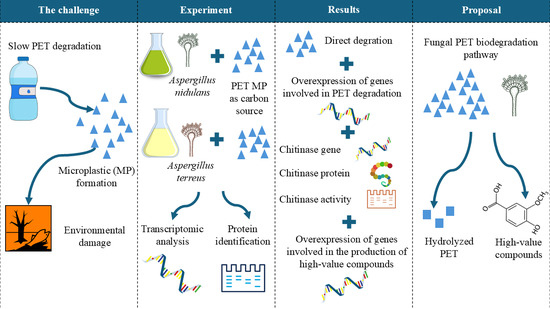
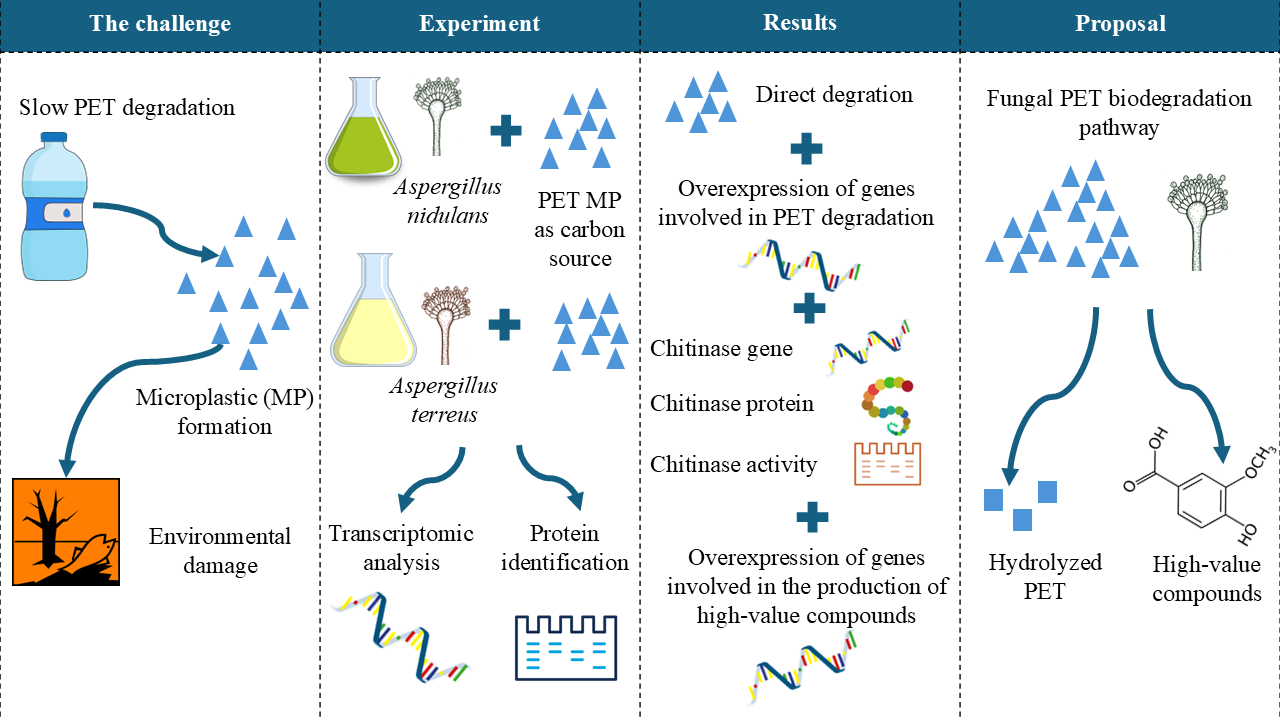
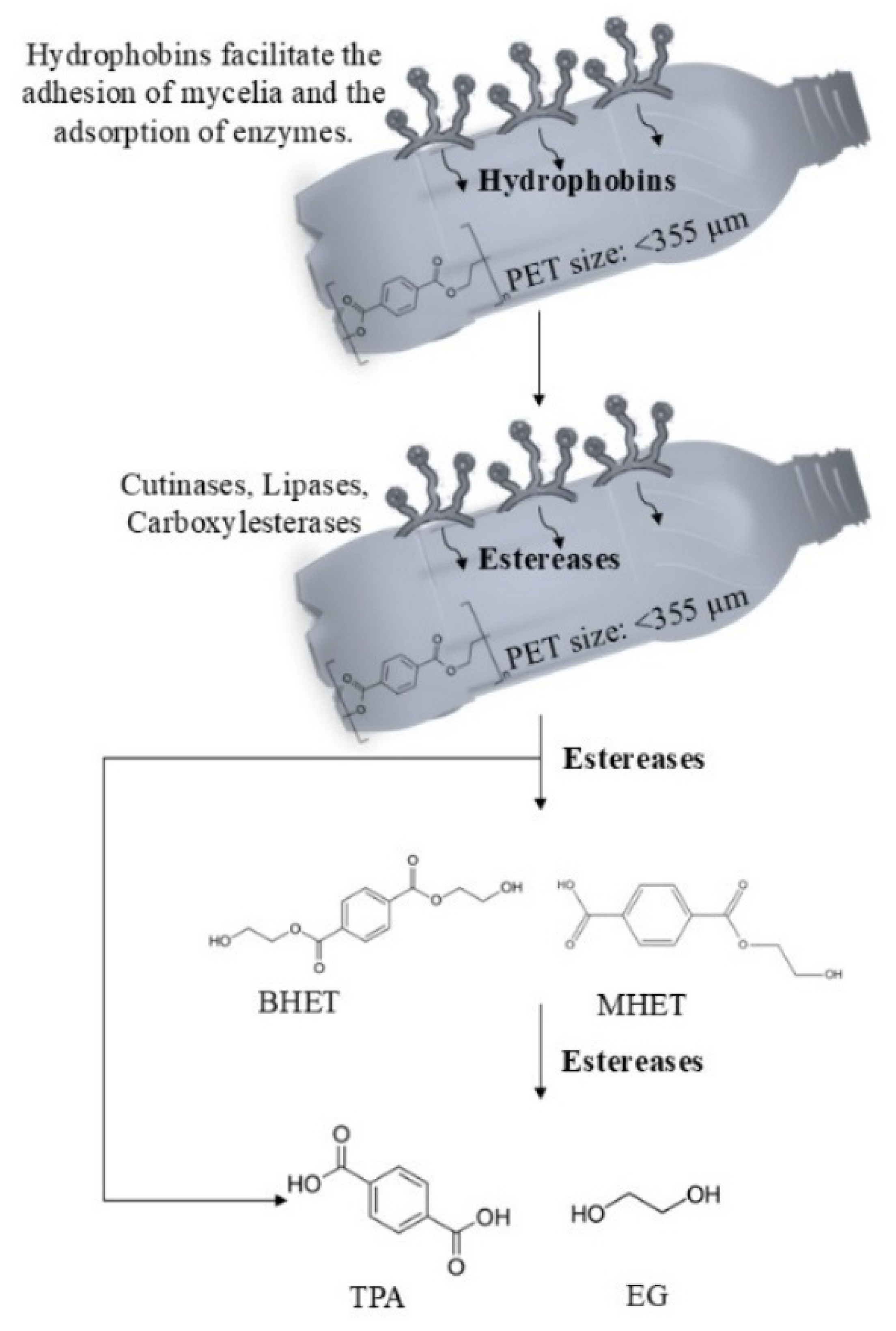
PET biodegradation remains limited due to its intrinsic properties—high crystallinity, hydrophobicity, and strong chemical stability. These characteristics lead to extremely slow degradation rates and contribute to PET’s persistence in the environment. Understanding how microorganisms respond at the molecular level when exposed to such a recalcitrant polymer is therefore essential. Living organisms express genes in response to their needs during development. When microbes are under critical conditions, such as when contaminants are present, they express genes encoding specific enzymes that attack the pollutant. In this study, a fungus isolated from the infected fruit of the plant Randia monantha was identified as Aspergillus terreus. It was tested for polyethylene terephthalate (PET) degradation, and the fungus Aspergillus nidulans was evaluated due to its previously reported recombinant cutinases for PET degradation. A microplastic polyethylene terephthalate (PET-MP) particle size of <355 μm for degradation was established, and a PET weight loss of 1.62% for A. nidulans and 1.01% for A. terreus was found. Additionally, the degradation of PET was confirmed by FTIR and SEM. This study also compares the transcriptomic profiles of Aspergillus nidulans and Aspergillus terreus during cultivation with PET-MP residues, which serve as a replacement for the carbon source. We present the first evidence of chitinase overexpression during direct exposure of PET to Aspergillus fungi. Interestingly, chitinase expression was detected in the crude extracts of A. nidulans and A. terreus during culture in the presence of PET residues, which replaced the carbon source. The chitinase produced by each fungus has a similar molecular weight of approximately 44 kDa. Chitinase activity was monitored over a 14-day cultivation period; from day 2, chitinase activity was detected in both cultures and continued to increase until day 14, when the highest values reported in this work were 24.88 ± 4.17 U mg−1 and 10.41 ± 0.47 U mg−1 for A. nidulans and A. terreus, respectively. Finally, we proposed a pathway for PET degradation by Aspergillus fungi that involves mycelial adherence and the secretion of hydrophobins, followed by the production of intermediates and monomers via esterase hydrolysis, and ultimately, the entry of monomers to the ethylene glycol (EG) and terephthalic acid (TPA) pathways, further suggesting these Aspergillus as candidates to produce valuable compounds under these conditions, such as muconic acid, gallic acid, and vanillic acid.

Graphical Abstract

1. Introduction

Plastics are indispensable to modern civilization [1], benefiting our daily lives because they are inexpensive, adaptable, and used in an extensive variety of products, such as food packaging, home appliances, automobile parts, construction, textiles, or medical equipment [2,3]. Plastic production grows significantly each year. The world plastics production in 2023 was 413.8 Mt, of which more than 90% was fossil-based. The most common plastics made worldwide include polypropylene (PP, 19%), low-density polyethylene (LDPE, 14%), polyvinylchloride (PVC, 12.8%), high-density polyethylene (HDPE, 12.2%), polyethylene terephthalate (PET, 6.2%), polyurethane (PUR, 5.3%) and polystyrene (PS, 5.2%) [4]. PET is a linear, semi-aromatic thermoplastic polymer from the polyester family, composed of the repeating unit of terephthalic acid (TPA) and ethylene glycol (EG) [2,3,5]. PET is the most widely used polymer for producing plastic bottles suitable for soft drinks and water, due to its chemical resistance, reasonable thermal stability, lightweight nature, and ease of storage [2,6,7]. However, with the increase in PET plastic consumption, waste PET will accumulate in the environment [1,6]. Almost half of the plastic produced worldwide (49%) ends up in landfills, and 23% is improperly handled, putting it at risk of entering terrestrial, atmospheric, and, mainly, aquatic systems. Approximately 0.5% of plastic production enters the ocean annually [8]. Plastic pollution, including its fragments known as microplastics [3], poses a significant threat to the environment [9], wildlife [10], and human health [11] (Ragusa et al., 2021). Furthermore, plastics can act as carriers of other contaminants, such as hydrocarbons, heavy metals, or chemical compounds [8,12]. Biodegradation is a more promoted plastic degradation method by the scientific community because it is considered an eco-friendly approach [13]. Biodegradation is defined as the breakdown of organic substances by microorganisms [3]. Microbial degradation involves enzymatic activity that catalyzes the breakdown of polymers into monomers, which can be subsequently metabolized [2].
Bacteria and fungi have demonstrated enzymatic capacity to degrade PET [8,14]. Their extracellular and intracellular polymerases, including esterases, lipases, and cutinases, are actively involved in PET breakdown; all belong to the carboxyl ester hydrolase (CEH) family [2]. Cutinases are among the most well-known fungal enzymes, such as Humicola insolens cutinase (HiC), Fusarium solani pisi cutinase (FsC) and Moniliophtora roreri (MrCUT1) [15,16]. Our research team has widely studied the cutinases of Aspergillus nidulans, including their application in polyester degradation, such as PET [17,18,19]. The genus Aspergillus is the most prevalent fungal genus known for its role in plastic degradation; it comprises many species worldwide, distributed across various habitats [20]. Most studies on this topic focused on the biodegradation of low-density polyethylene (LDPE) by various Aspergillus spp., including A. niger, A. flavus, and A. oryzae. Enzymes such as laccase, esterase, peroxidase, lipase, and urease, produced by Aspergilli, are crucial for the degradation of plastics [21].
Recent studies continue to explore the biodegradation potential of fungi and microbial communities using omics approaches. For example, MacLean et al. conducted a metatranscriptomic analysis of microbial biofilms on polyethylene foil in soil, revealing upregulation of plastic degradation genes and associated transporters [22]. Additionally, a fungal study reported that transcriptomic and functional analyses under calcium-enhanced conditions showed activation of biosurfactant production and membrane transport genes during polybutylene adipate-co-terephthalate film degradation [23]. However, to our knowledge, studies describing the global transcriptional response of fungi specifically exposed to PET as the sole carbon source remain absent.
All organisms express specific genes in response to specific stimuli during development. When microbes are exposed to contaminants, they may express genes that produce specific enzymes capable of attacking the pollutant. Therefore, identifying these transcriptional patterns provides valuable insight into the enzymatic mechanisms underlying fungal plastic degradation. There are no published studies concerning fungal gene expression in the presence of PET. In bacteria, the transcriptional response of the marine bacterium Bacillus sp. AIIW2 exposed to PET as the sole carbon source revealed the upregulation of genes encoding PET-degrading enzymes, including cutinases and esterases [24]. Transcriptomics analysis has been applied to understand the changes in the genes encoding the enzymes that microbes use to break down pollutants. For example, Slobodian et al. reported that a bacterial consortium metabolizing TPA showed an upregulation of the terephthalate-1,2-dioxygenase gene, activation of the benzoate-degradation pathway, and production of valuable by-products, highlighting how gene expression profiling can identify active catabolic steps [25]. Transcriptomic technologies could provide crucial information for developing and designing strategies to reduce plastic contamination [24,26,27].
In this study, we used comparative transcriptomics to identify the genes and key extracellular enzymes expressed during the incubation of two fungi with PET residues replacing the carbon source. This work represents a pioneering effort to conduct a transcriptomic analysis of PET metabolism in fungi. The fungi selected were a phytopathogenic strain of Aspergillus terreus, isolated from an infected fruit of Randia monantha, and a collection strain of Aspergillus nidulans.

2. Methods

2.1. Microorganisms

A. terreus was isolated from a fruit of the plant Randia monantha, known as “crucetillo,” in La Mancha, Veracruz. An ethanolic extract was prepared for fungi inoculation in Potato Dextrose Agar (PDA) for 14 days, as described by Fukuzawa et al. [28]. A. nidulans PW1, a nonpathogenic arginine auxotroph, can be obtained from the American Type Culture Collection (ATCC) with the collection number ATCC®MYA-601™ [18]. A. terreus was selected because preliminary internal experiments conducted by our research group demonstrated its ability to grow on PET as the sole carbon source, indicating a potentially relevant metabolic response to polymer-derived substrates. For this reason, A. terreus was included as an experimental strain alongside the well-established reference organism A. nidulans.

2.2. Fungal Identification

Microbial culture plates were observed with a stereoscope (10×) for macroscopic identification. Microscopic identification was performed using a lactophenol blue solution according to the provider’s instructions (Sigma-Aldrich Merck KGaA, Darmstadt, Germany) for staining fungi; the smears were observed under a microscope (40×). Molecular identification was done by ITS amplicon sequencing. Fungi were inoculated in Potato Dextrose Broth (PDB) with agitation (100 rpm) in an orbital shaker for 2 days at 27 °C. Mycelium was collected by filtration and disrupted using a mortar and pestle in liquid nitrogen. According to Sambrook & Fritsch (2001), DNA extraction was done [29]. The ITS sequences were amplified using the polymerase chain reaction (PCR) method. The ITS primers used were ITS1 (TCCGTAGGTGAACCTGCGG) and ITS4 (TCCTCCGCTTATTGATATGC) [30]. DNA and PCR product concentrations and purities were determined using the BioTek Epoch 2 microplate spectrophotometer (Agilent, CA, USA), and integrity was confirmed by 1% agarose gel electrophoresis. PCR amplicons were purified using the kit DNA Clean and Concentrator (Zymo Research, Irvine, CA, USA) following the supplier’s instructions and sequenced at the Biotechnology Institute of Universidad Nacional Autónoma de México using an automatic 16-capillary DNA sequencer, 3130 xl (Thermo Fischer Applied Biosystems, Waltham, MA, USA).
Obtained DNA sequences were analyzed in the Chromas 2.6.6 software [31], aligned with the MultAlin 5.4.1 program [32] and compared with reported sequences in databases of the National Center for Biotechnology Information (NCBI, www.ncbi.nlm.nih.gov/ accessed on 18 September 2025).

2.3. Selection of Better PET Particle Size and Shape for Incubation

For this assay, A. nidulans was grown in a 250 mL Erlenmeyer flask containing 50 mL of minimal medium (MM), as described by Hill & Käfer (2001) [33]. We evaluated liquid cultures in MM using four sizes of PET (1%) from commercial water bottles as the sole carbon source. Additionally, cultures without inoculum for each PET size were used as a control and incubated under the same conditions. The sizes of PET were, (1) film (2 × 2 cm), (2) Fractions of 2000–710 μm, (3) 710–355 μm, and (4) <355 μm. All three fractions result from PET trituration and sieving. For comparison, cultures of A. nidulans in MM using glucose or glycerol (1%) as the only carbon source were also evaluated.
All fungal cultures were inoculated with 1 × 10⁶ spores mL−1 at 27 °C in a shaker incubator (50 rpm). The samples were followed every 24 h until biomass could be observed in the flask. The flask was then centrifuged to separate the biomass, residual PET, and culture supernatant (crude extracellular extract). The centrifugation conditions used were 13,000 g, 4 °C, and 15 min. Destructive samples were used per day and for each determination: PET and biomass. The culture supernatant (crude extracellular extract) was separated from the compacted mycelium and PET at the bottom by decantation. The mycelium and PET particles (<355 µm), which are easily visible and retained on Whatman No. 4 filter paper, were placed on the filter and manually separated using laboratory forceps, then washed with distilled water until no traces of biomass were observed on the PET. Biomass was calculated as gram of dry biomass per mL of culture liquid. All experiments were performed in triplicate; the graphics presented the average and standard error bars. For the following experiments, the size and shape of PET particles that yielded the best results for PET degradation and biomass production were selected.
PET degradation was evaluated using the gravimetric weight-loss method, Fourier-transform infrared spectroscopy (FTIR), and scanning electron microscopy (SEM) [16]. A PET control without inoculum, treated under the same conditions, was also analyzed for comparison. The experiments were done in triplicate. For the gravimetric weight loss method, PET particles were washed with ethanol and dried in an oven at 80 °C until a constant weight was reached, both prior to inoculation and after the cultivation period. PET degradation was calculated by the weight difference [34,35]. The results are presented as an average of triplicates with standard error bars. Due to the inherent limitations of the manual separation of PET fragments and fungal biomass, the resulting biomass and degradation measurements must be considered qualitative. Minor residual cross-contamination between PET particles and dried mycelium may introduce slight overestimations in both biomass and PET weight loss. FTIR was performed on Bruker Optics spectrometer GmbH & Co. KG, Ettlingen, Germany. The spectral output was recorded in transmittance mode, and 16 scans were acquired in the 400–4400 cm−1 range and a resolution of 4 cm−1. Lines in the spectra correspond to an average of triplicates for the three conditions: PET control without fungus, PET treated with A. nidulans, and PET treated with isolated fungi. The resulting spectra were compared with reference polymers (standards) or those available in the Open Access Spectral Database (https://spectrabase.com/ accessed on 17 January 2025).

2.4. Fungal Growth Conditions

Each fungus was grown in a 250 mL Erlenmeyer flask containing 50 mL of minimal media (MM), as described by Hill & Käfer (2001) [33]. Fungal growth in the presence of PET was performed using PET particles of the size fraction characterized in this study (<355 µm; see Section 3). Briefly, PET (1%) replaced the carbon source in MM. Cultures grown with an easily assimilable carbon source (glucose) were used as the reference condition for differential transcriptomic analysis. The fungal cultures were inoculated with 1 × 10⁶ spores mL−1 under static conditions and then incubated at 27 °C in a shaker at 50 rpm. Negative controls consisted of MM supplemented with PET but without fungal inoculation, incubated under the same conditions. After 14 days, the biomass was collected for RNA extraction, and the culture supernatant (crude extract containing extracellular proteins) was prepared for protein identification. All conditions were analyzed in triplicate.

2.5. Transcriptomic Analysis

2.5.1. RNA Extraction

Fresh mycelium from each condition was collected, immediately frozen in liquid nitrogen, and homogenized in a mortar with a pestle until a fine powder was obtained. RNA was extracted, purified, treated with DNase, and eluted using the Direct-zol™ RNA MiniPrep (Zymo Research, CA, USA) according to the Zymo Research protocol Version 2.2.0. RNA integrity was confirmed by 1% agarose gel electrophoresis [36]. RNA quantity and quality were assessed using absorbance ratios at 260/280 nm and 260/230 nm on a microvolume plate spectrophotometer BioTek Epoch 2 (Agilent, Santa Clara, CA, USA).

2.5.2. RNA-Seq Library Preparation

Total RNA samples (n = 8) were obtained from two fungi grown under two conditions—PET particles (<355 μm) and glucose as a control—each processed in duplicate. These samples were sent to Zymo Research for the Total RNA-Seq service. Libraries were prepared using the “Zymo-Seq RiboFree Total RNA Library Prep Kit” (Zymo Research, CA, USA) according to the manufacturer’s instruction manual, version 1.3.0. RNA was reverse-transcribed into cDNA, followed by ribosomal RNA depletion. The P7 adapter sequence was ligated to the 3′ end of the cDNAs, followed by second-strand synthesis, and the P5 adapter was ligated to the 5′ end of the double-stranded DNAs. Lastly, libraries were amplified to incorporate full-length adapters under the following conditions: initial denaturation at 95 °C for 10 min; 10–16 cycles of denaturation at 95 °C for 30 s, annealing at 60 °C for 30 s, and extension at 72 °C for 60 s; and final extension at 72 °C for 7 min. RNA-Seq libraries were sequenced as forward and reverse read files on an Illumina NovaSeq (Illumina Inc., San Diego, CA, USA) to a sequencing depth of at least 30 million read pairs (150 bp paired-end sequencing) per sample. A limitation of this study is the use of only two biological replicates per condition in the transcriptomic analysis. However, the experimental design also supported this, which aimed to compare two closely related Aspergillus species under controlled conditions. While we acknowledge that this limited replication reduces the statistical power to assess intragroup variance, stringent quality control procedures and consistency criteria were applied to ensure the reliability of observed expression trends. Therefore, the results should be interpreted as indicative and exploratory, serving as a foundation for future studies incorporating larger sample sizes and additional biological replicates.

2.5.3. Bioinformatics Analysis

Quality control of the raw reads was performed using the FastQC program (version 0.11.9). Adapter and low-quality sequences with Q < 30 were trimmed using Trim Galore (v0.6.6). The clean reads for each treatment were aligned to the reference genomes of A. nidulans (ASM1142v1) and A. terreus (ASM14961v1) using STAR (version 2.6.1d). The BAM file was indexed with SAMtools version 1.9. Transcript abundance was analyzed using DESeq2 (version 1.28.0) to obtain stabilized variance estimates and fold-change values. Given the limited number of biological replicates, differential expression was interpreted exclusively through fold-change thresholds (|log2 fold change| ≥ 1). The comparison groups were named An_Control vs. An_Treatment for A. nidulans with glucose and PET as carbon sources, respectively; and At_Control vs. At_Treatment for A. terreus with glucose and PET as carbon sources, respectively. Genes with a positive Log2 fold change have higher expression in the Treatment, and genes with a negative Log2 fold change have higher expression in the Control. Functional enrichment analysis was achieved using Profiler Python API v1.0.0. The gene names were associated with the proteins encoded in the UniProt (www.uniprot.org) database accessed on 6 December 2024, and the Gene Ontology (GO) was associated with each protein. The functional annotation of the enzymes was consulted in the BRENDA database (www.brenda-enzymes.org/index.php) accessed on 6 june 2025. The biological pathways of A. nidulans were mapped to the KEGG database (https://www.genome.jp/kegg/) accessed on 13 July 2025. A. terreus was not mapped because it is not present in KEGG.

2.6. Identification of Fungal Extracellular Proteins

Cultural liquid from the two fungal cultures growing in the presence of PET residues was used to determine protein concentration, perform SDS-PAGE, nano-LC-MS/MS, Zymogram, and enzyme activity. Additionally, a crude extract from each fungal culture in MM with glucose as the carbon source, under the same culture conditions mentioned earlier, was also used for comparison. All experiments were done in triplicate. The graphics present the average and standard error bars.

2.6.1. Quantification of Protein Concentration

Protein concentration was determined by the Bradford method [37]. The Bradford reagent (Sigma-Aldrich Merck KGaA, Darmstadt, Germany) and a standard curve for known bovine serum albumin (BSA) concentrations (0–1 mg mL−1) were used.

2.6.2. Protein Profile by SDS-PAGE

SDS-PAGE was done in 12% acrylamide gels to obtain the protein profile. 100 µg of proteins in the crude extracts were mixed with trichloroacetic acid (10:1) and incubated for 15 min at 4 °C. The mix was centrifuged (14,000 rpm, 15 min, 4 °C). The resulting pellet was washed twice with 200 µL of cold acetone and centrifuged (14,000 rpm, 15 min, 4 °C). The final pellet was dried at room temperature until the acetone had evaporated. The pellet was mixed with loading buffer, boiled at 95 °C for 5 min, and run at 80 mV in a vertical chamber. The gel was then stained with Coomassie [38].

2.6.3. Protein Identification

The proteins that were prominently labeled and exhibited differential expression relative to the control in the gel were selected, manually excised, subjected to in-gel trypsin digestion, and analyzed by nano-LC-MS/MS following the protocol described by Ruiz-May et al. (2020) [39]. Briefly, the protein identification was performed using Proteome Discoverer 3.0 (Thermo Fisher Scientific, MA, USA) with the SEQUEST HT search engine, searching against the reference proteomes of Aspergillus terreus (UP000007963) and Aspergillus nidulans (UP000000560). A false discovery rate (FDR) threshold of 1% was applied to ensure high-confidence identifications. Trypsin was specified as the proteolytic enzyme, allowing up to two missed cleavages. Mass tolerances were set to 20 ppm for precursor ions and 0.5 Da for fragment ions. Carbamidomethylation of cysteine (+57.021 Da) was defined as a fixed modification, while oxidation of methionine (+15.995 Da) and deamidation of asparagine, glutamine, and arginine (+0.984 Da) were included as variable modifications.

2.6.4. Zymogram Analysis

Zymogram analysis was employed to detect chitinase activity, using a 12% separating gel containing 0.1% colloidal chitin as the substrate [40]. 100 µg of total protein from the crude extracts was mixed with loading buffer (1:4) and boiled at 95 °C for 5 min. After electrophoresis, the gel was incubated in 0.1 M sodium acetate buffer (pH 5) for 18 h. Chitinase activity in the gel was visualized by staining with 0.1% Congo Red, followed by the addition of 1 M NaCl.

2.6.5. Chitinase Activity Determination

Chitinase activity in fungal crude extracts after 14 days of PET exposure was determined using colloidal chitin as a substrate. 0.5% chitin colloidal (in 0.1 M citrate buffer, pH 7) was mixed with crude extract in a 50:50 ratio and incubated for 30 min at 37 °C [41]. After incubation, reducing sugars were determined using the 3,5-dinitrosalicylic acid (DNS) method [42]. The chitinase activity was calculated using a standard curve for known concentrations of N-acetyl-D-glucosamine (0–1 µmol/mL). The controls were subtracted for their pair conditions. One unit (U) of activity was defined as the amount of enzyme that catalyzes the release of one μmol of reducing sugar per mL per minute.

2.6.6. Bioinformatics Tools

Protein sequences were compared with the UniProt database (www.uniprot.org/ accessed on 10 December 2024) and aligned using the MultAlin 5.4.1 program [32]. The isoelectric point was obtained from Expasy (www.expasy.org/ accessed on 13 December 2024). The signal peptides were searched using SignalP-6.0 (https://services.healthtech.dtu.dk/services/SignalP-6.0/), and the prediction of N-glycosylation positions was performed in version 6. NetNGlyc-1.0 (https://services.healthtech.dtu.dk/services/NetNGlyc-1.0/).

3. Results

3.1. Fungi Identification

A phytopathogenic fungus was isolated from an infected fruit (known as “crucetillo” in Mexico) of the plant Randia monantha. The physical characteristics correspond to Aspergillus terreus, i.e., colonies of red-brown or yellow-brown color, mycelium white, biserate conoidal head, spherical or subglobose vesicles, smooth and globose conidia. The molecular identification coincides with a 100% identity to the DNA sequence of the reference genome of A. terreus (GCF_000149615.1) in the NCBI database (Supplementary Material).

3.2. Selection of PET Particle Shape and Size for Incubation

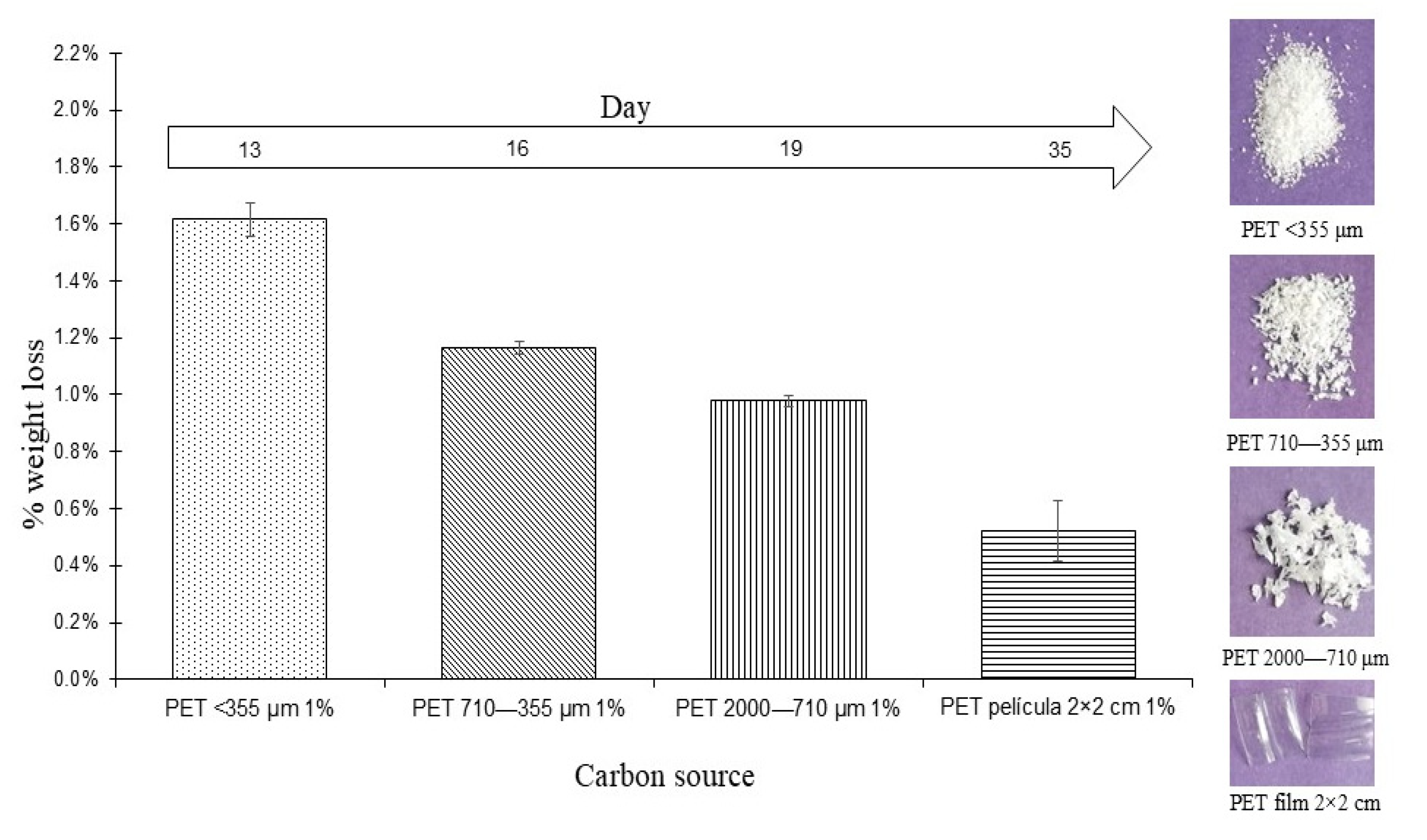
Recombinant cutinases from the fungus A. nidulans have been reported to degrade polyesters, such as PET [43]. We tested two PET shapes—film pieces (2 × 2 cm) and mechanically shredded PET particles in three size ranges (2000–710 μm, 710–355 μm, and <355 μm)—to evaluate and select the most suitable PET size for maximal degradation and biomass production.
Figure 1 illustrates that the shape and size of the PET particle affect the time of appearance and the amount of biomass produced by A. nidulans. In the culture with minor size shredded PET (<355 μm), biomass was observed first at 13 days (0.657 ± 0.043 mg·mL−1), corresponding to a weight loss percentage of 1.62 ± 0.06% for PET (Figure 2). In cultures with other PET sizes, the biomass was detected in subsequent days. In the PET film test, a lower biomass was observed until day 35 (Figure 2). PET with a size of <355 μm and 14 days of culture were the parameters selected and used in subsequent experiments for both fungi.

3.3. Changes in PET Microplastics During Fungal Culture

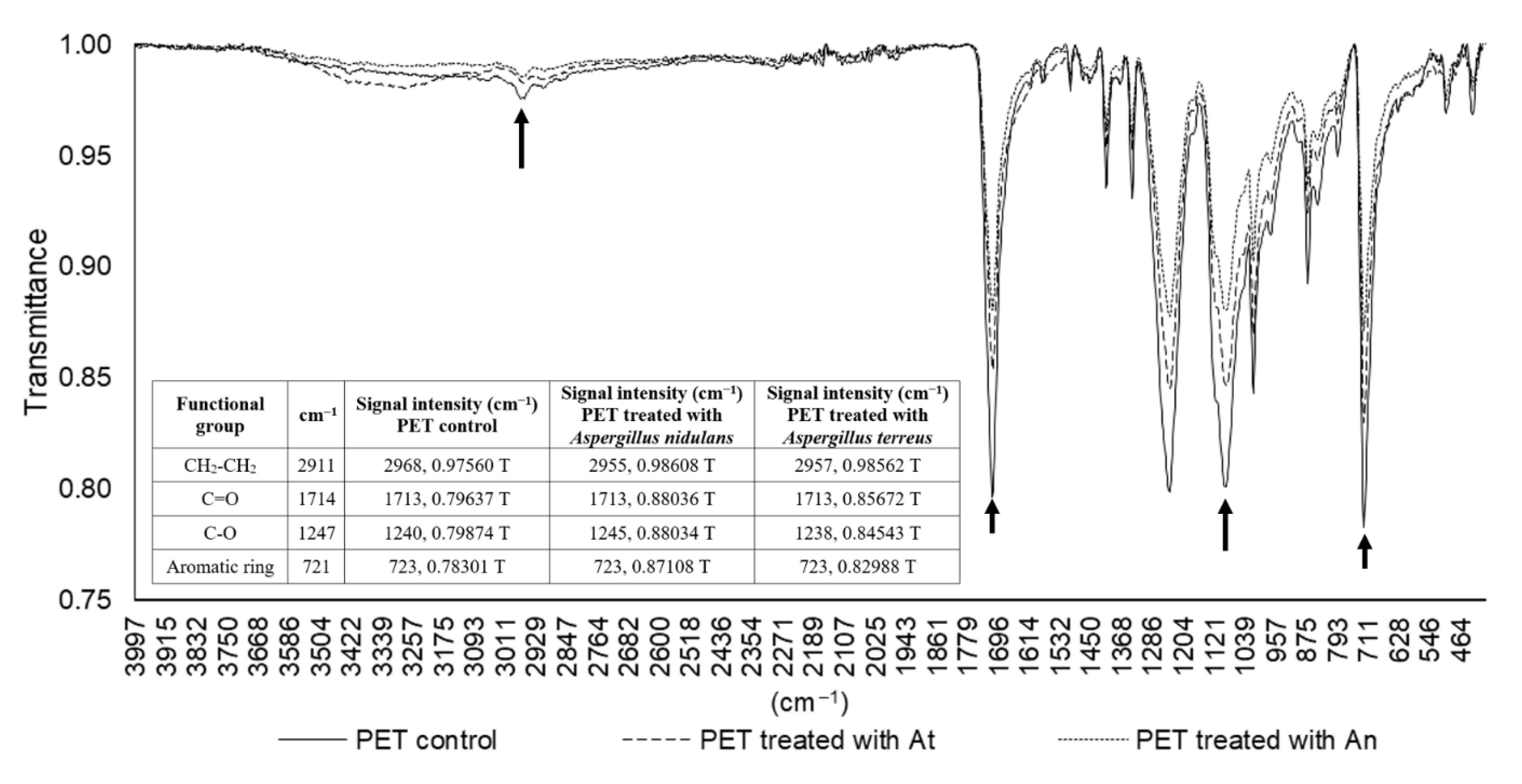
Once the PET film (2 × 2 cm) and the three particle-size fractions were evaluated, the <355 μm particle size was selected for the subsequent experiments. PET degradation by A. terreus and A. nidulans was measured. Both cultures were maintained for 14 days, with PET microplastics (<355 μm) replacing the carbon source. The fungi were observed on the wall of the flask and attached to the PET particles. A. nidulans presented at the end of the culture, 0.657 ± 0.043 mg of dry biomass/mL of crude extract, and A. terreus, 0.513 ± 0.081 mg of dry biomass/mL. The percentage of PET loss in weight was 1.62 ± 0.06% for A. nidulans and 1.01 ± 0.04% for A. terreus. Figure 3 shows the FTIR spectra for PET microplastics without inoculum (control) and PET microplastics exposed to A. nidulans and A. terreus; a PET hydrolysis by both fungi is detected, and the differences are discussed in the next section. Although the degradation percentage is lower, we report, for the first time, the direct degradation of PET by the fungi A. terreus and A. nidulans.

3.4. Transcriptomic Analysis Results

The RNA-seq profiling of A. nidulans and A. terreus, while growing with PET and glucose as carbon sources, was performed to identify genes involved when the fungi are present in PET residues, compared with growth on glucose. It is important to emphasize that the transcriptomic analysis presented in this work is exploratory in nature. Due to the limited availability of biological material, the RNA-seq dataset includes only two biological replicates per condition. Consequently, all transcriptomic results are interpreted strictly based on fold-change thresholds rather than statistical significance. The analysis was conducted using DESeq2 to obtain stabilized variance estimates and descriptive fold-change values; however, these values are not treated as confirmatory. Instead, the expression patterns reported here are intended to provide preliminary insights into the fungal response to PET residue exposure and to support the generation of biologically grounded hypotheses for future, fully powered validation studies.
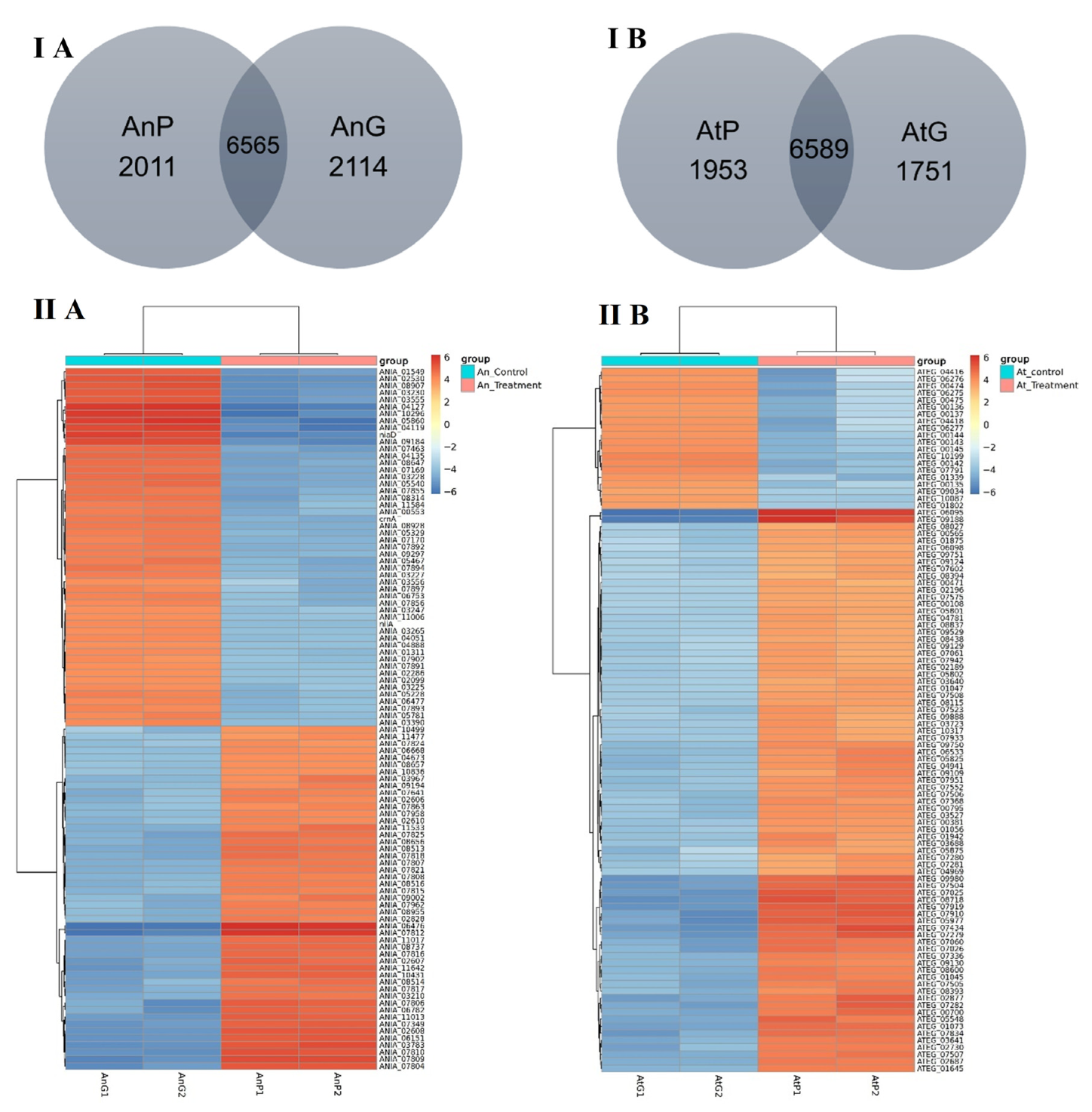
For A. nidulans under the PET condition, 4125 DEGs were detected, with 2011 upregulated, 2114 downregulated, and 6656 not differentially expressed. For A. terreus cultures, 3704 DEGs were detected: 1953 up-regulated and 1751 down-regulated under the PET condition, and 6589 genes were not differentially expressed (Figure 4I). Table 1 provides the general statistics of the transcriptome assembly. All sequencing datasets generated have been deposited in the NCBI Sequence Read Archive (SRA) under the BioProjects PRJNA1365950 for Aspergillus nidulans and PRJNA1365963 for Aspergillus terreus.
Figure 4II shows a heat map of the top up-regulated and down-regulated genes with the greatest log2 fold-change variability relative to their mean expression levels across all samples. The cluster analyses demonstrated a separation in the gene expression of fungi growth between the PET treatments and the control, as observed for both fungi.
The following genes were upregulated in A. nidulans treated with PET as a carbon source: Lyases: versicolorin B synthase (EC 4.2.1.143); Hydrolases: versiconal hemiacetal acetate esterase (EC 3.1.1.94), beta-glucosidase (EC 3.2.1.21), deuterolysin (EC 3.4.24.39); Transferases: amino-acid N-acetyltransferase (EC 2.3.1.1), noranthrone synthase (EC 2.1.1.221), fatty-acyl-CoA synthase system (EC 2.3.1.86), tryptophan-phenylpyruvate transaminase (EC 2.6.1.28); and Oxidoreductases: 5′-hydroxyaverantin dehydrogenase (EC 1.1.1.352), choline monooxygenase (EC 1.14.15.7); norsolorinic acid ketoreductase (EC 1.1.1.349), D-xylose reductase (EC 1.1.1.307). The main pathways related to these enzymes were: Sterigmatocystin (a precursor from aflatoxins) biosynthesis: versicolorin B synthase, versiconal hemiacetal acetate esterase, 5′-hydroxyaverantin dehydrogenase, noranthrone synthase, norsolorinic acid ketoreductase; Arginine metabolism: amino-acid N-acetyltransferase; Glycine, serine, and threonine metabolism: choline monooxygenase; Cellulose degradation: beta-glucosidase; Peptidase: deuterolysin; Fatty acid biosynthesis: fatty-acyl-CoA synthase system, Tryptophan metabolism: tryptophan-phenylpyruvate transaminase; and Pentose and glucuronate interconversions: D-xylose reductase.
For A. terreus cultures with PET as carbon source, the upregulated genes were, Oxidoreductases: alcohol oxidase (1.1.3.13), choline monooxygenase (EC 1.14.15.7), alcohol dehydrogenase (EC 1.1.1.1), oxoglutarate dehydrogenase (EC 1.2.4.2); Hydrolases: chitinase (EC 3.2.1.14), deuterolysin (EC 3.4.24.39), arabinan endo-1,5-alpha-L-arabinanase (EC 3.2.1.99); beta-glucosidase (EC 3.2.1.21); cutinase (3.1.1.74), beta-N-acetylhexosaminidase (3.2.1.52); Transferases: glycerol kinase (EC 2.7.1.30) and Lyases: pyruvate decarboxylase (4.1.1.1).
The associated pathways with these enzymes are: Methane metabolism: alcohol oxidase; Glycine, serine and threonine metabolism: choline monooxygenase; Amino sugar and nucleotide sugar metabolism: chitinase, beta-N-acetylhexosaminidase; Ethanol fermentation: alcohol dehydrogenase, pyruvate decarboxylase; Peptidase: deuterolysin; Pectin degradation: arabinan endo-1,5-alpha-L-arabinanase; Cellulose degradation: beta-glucosidase; Cutin degradation: cutinase; TCA cycle: oxoglutarate dehydrogenase and Degradation of sugar alcohols: glycerol kinase.
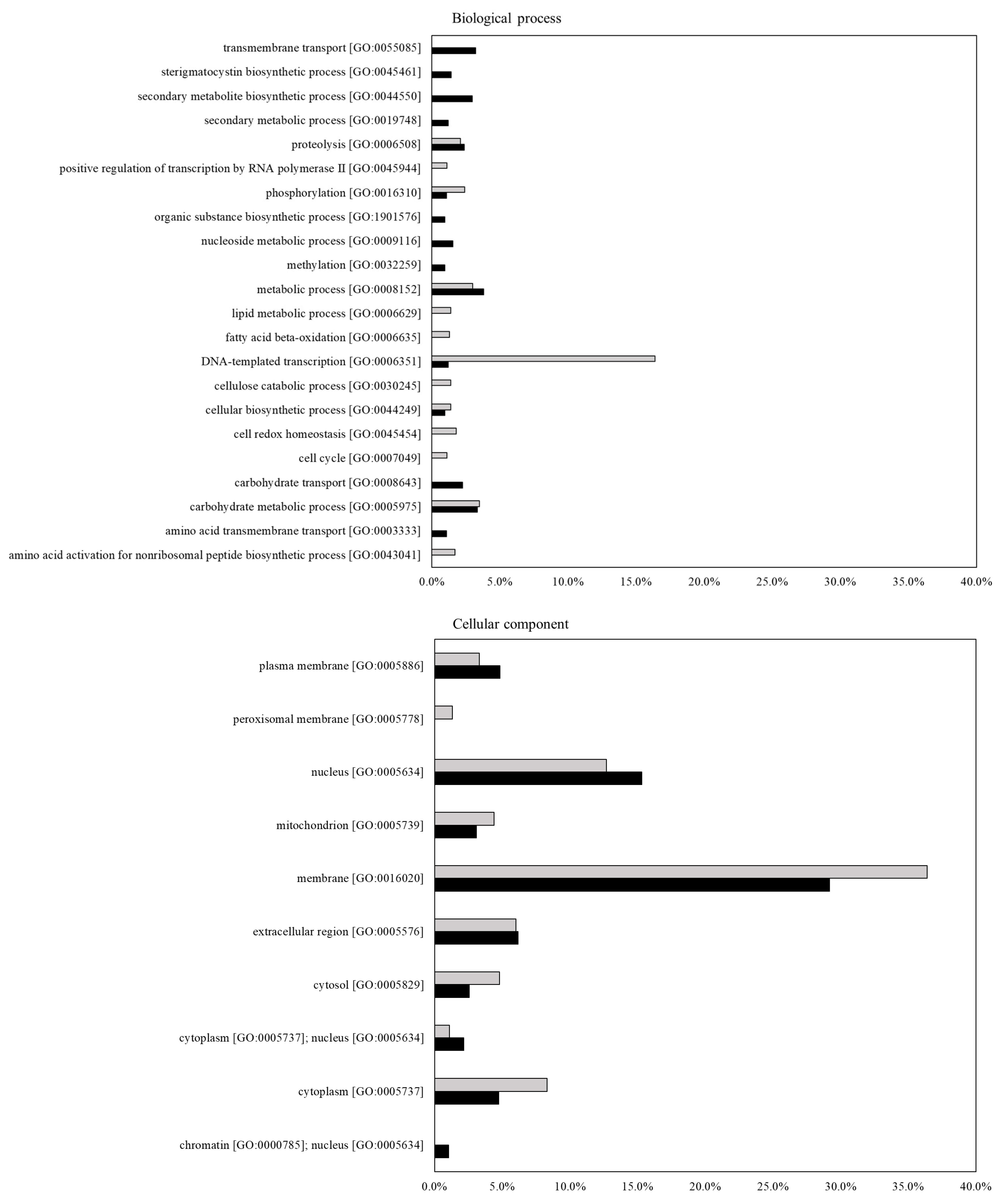
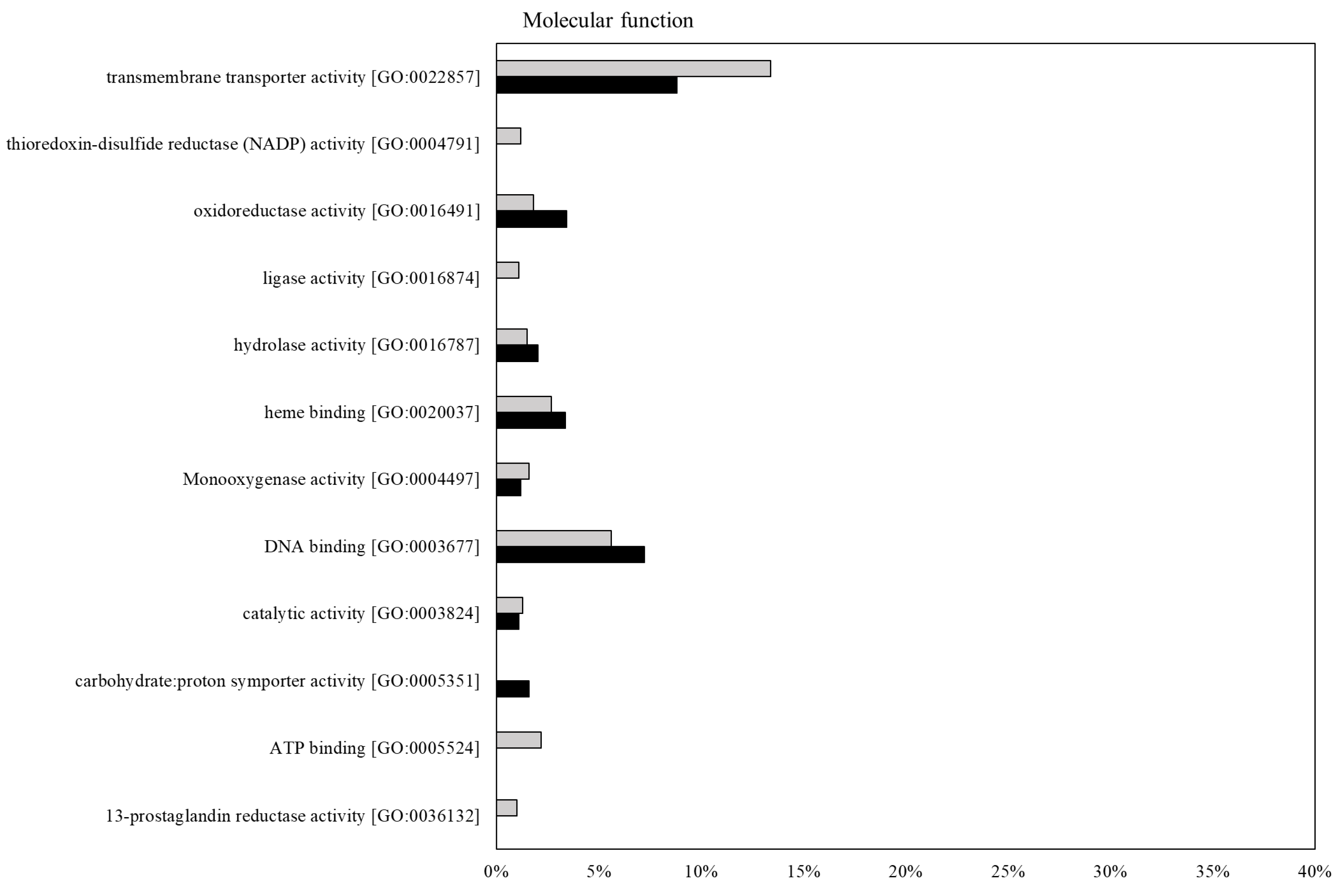
The genes upregulated in the fungi were classified into three Gene Ontology (GO) categories: biological process, molecular function, and cellular component, as shown in Figure 5. The results of GO annotations for A. nidulans treatment showed that the dominant biological processes were metabolic process, carbohydrate metabolic process, transmembrane transport, secondary metabolite biosynthetic process, and proteolysis. In contrast, the membrane and nucleus were the dominant cellular components. Transmembrane transport activity, DNA binding, and oxidoreductase activity are involved in the molecular function. For the culture of A. terreus with PET, the GO annotation revealed that DNA-templated transcription, carbohydrate metabolic process, metabolic process, phosphorylation, and proteolysis were the dominant biological processes; membrane and nucleus were the predominant cellular components; and transmembrane transport activity was the primary molecular function.
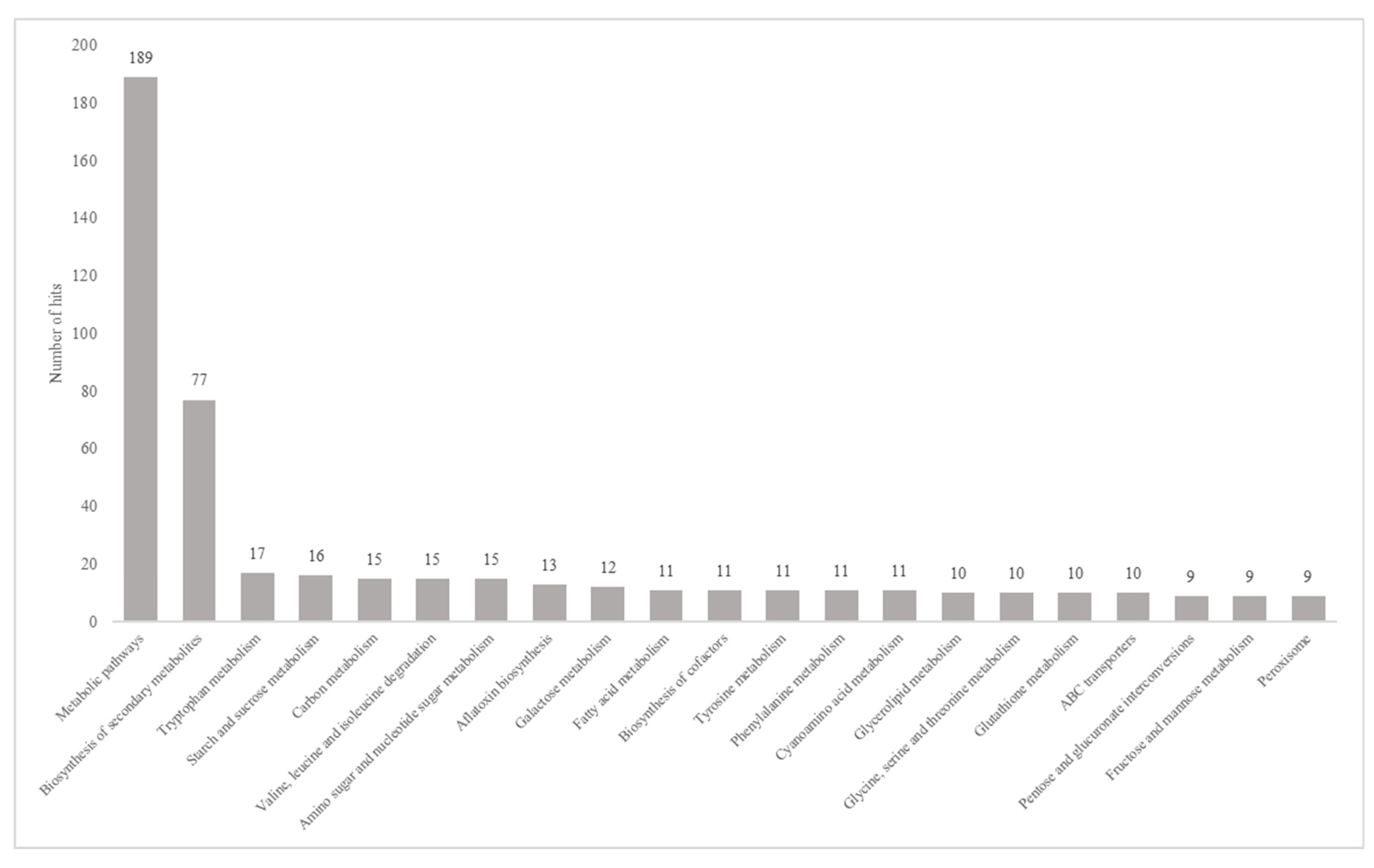
The KEGG database, used to map the biological pathways in A. nidulans (Figure 6) growing with PET, identifies 110 KEGG pathways, mainly metabolic pathways (9.4%) and the biosynthesis of secondary metabolites (3.83%).
Table 2 displays the candidate genes involved in PET degradation, where genes encoding chitinase enzymes were identified during the culture of both fungi in the presence of PET residues, replacing the carbon source. Additionally, other chitinases, cutinases, carboxylesterases, lipases, and hydrophobins were identified (Table 2), as well as similar enzymes to those involved in bacterial PET degradation that have been reported (Table 3).

3.5. Fungal Extracellular Proteins Expressed by Aspergillus During PET Exposition

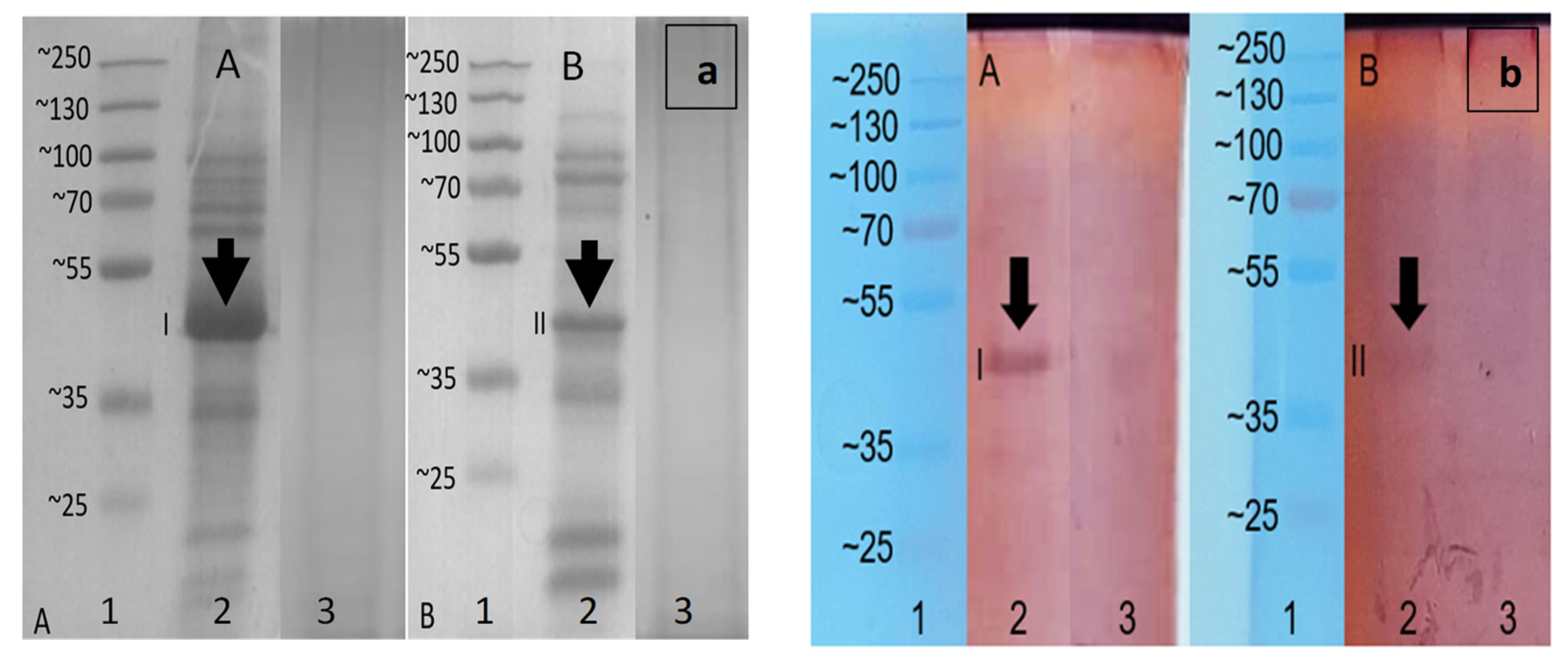
After 14 days of PET fungal degradation, the crude extracts were subjected to SDS-PAGE to determine the extracellular protein profile shown in Figure 7a. The band with the highest intensity for the A. nidulans protein profile was selected for mass spectrometry identification; an expressed protein band with a similar molecular weight in the A. terreus profile was also chosen. Additionally, the target bands were not visible in the SDS-PAGE protein profile of the control glucose crude extract. The target bands were marked as I and II in Figure 7. Table 4 presents the protein identification results. An endochitinase was identified from each fungus A. nidulans and A. terreus, both having a similar molecular weight (≈44 kDa).
The chitinase activity bands on a zymogram confirmed the protein identification results (Figure 7b). In Figure 7A, the band marked with the number I (44.2 kDa) corresponds to the A. nidulans endochitinase (G5EAZ3). In Figure 7B, band II represents the A. terreus chitinase (Q0CNS4). These chitinase activity bands were not observed in the zymogram of the glucose crude extract, as shown in line 3 of Figure 7. Band II is barely visible in the zymogram; however, it is important to note that this analysis provides complementary information to the sequencing and kinetics of chitinase activity.
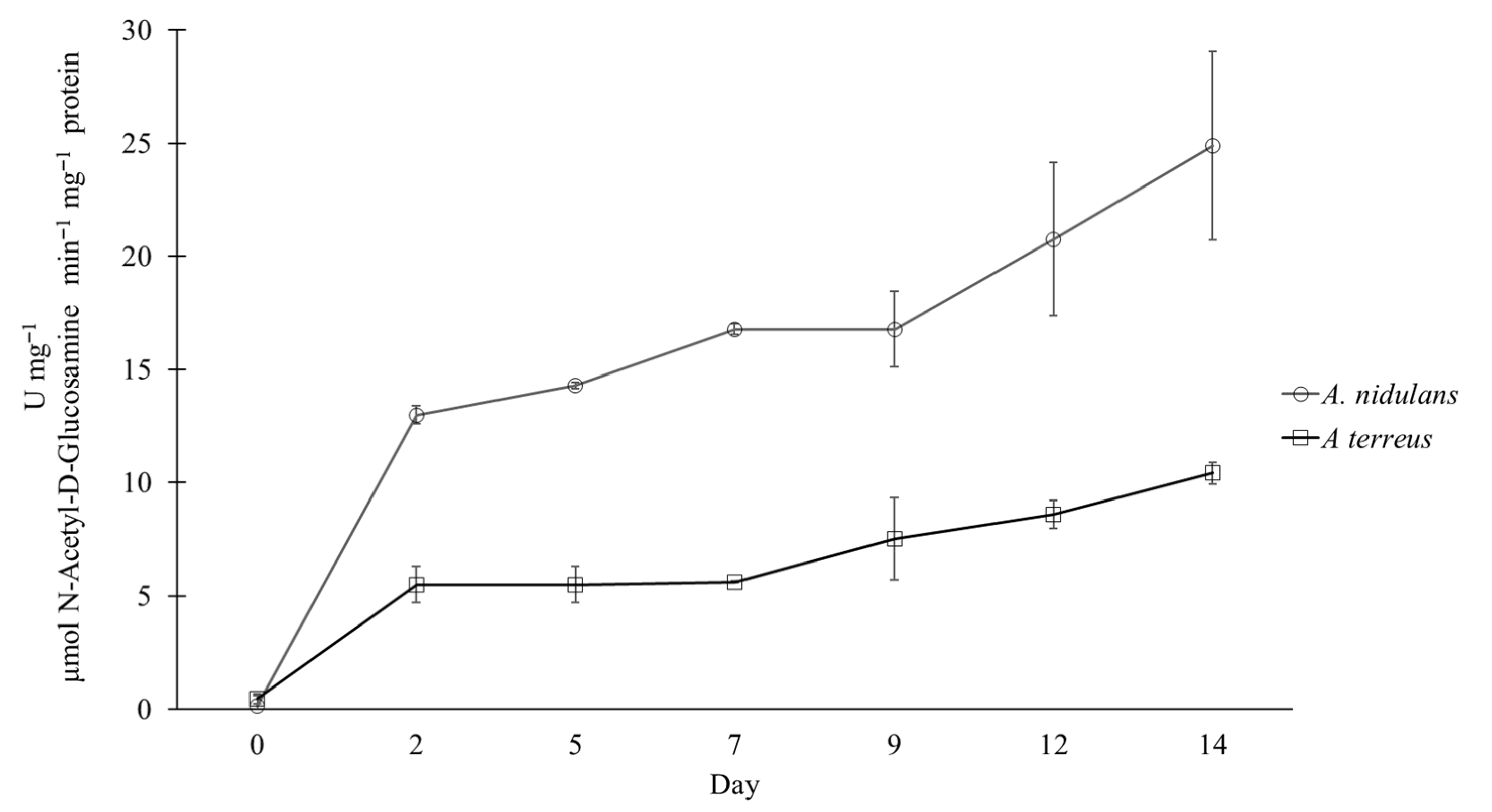
Chitinase activity was monitored for 14 days of fungal culture in the presence of PET (Figure 8). From day 2, chitinase was detected in both fungal cultures and continued to increase until day 14. For A. nidulans and A. terreus, respectively, 24.88 ± 4.17 U/mg and 10.41 ± 0.47 U/mg of specific activity are produced. The controls were subtracted for their pair conditions. The presence of chitinase in the crude extract was demonstrated when Aspergillus was grown in the presence of PET, replacing the carbon source. When the fungi were in the presence of glucose, chitinase activity was not detected.

4. Discussion

4.1. Changes in PET During Fungal Culture

Aspergillus terreus, one of the organisms studied, was isolated from an infected fruit of the plant Randia monantha. This isolate was considered relevant because, as a phytopathogen, it is more likely to secrete enzymes capable of degrading complex polymers naturally found in the fruit cuticle, which protect against infection. Additionally, the team had previously demonstrated that it can grow using PET as its sole carbon source. A. nidulans was used as the comparative microorganism as recombinant cutinases have been reported for PET degradation [43,44]. demonstrated that A. terreus could grow on and use polypropylene (PP) as a carbon source [43]. Additionally, A. terreus was reported for the first time as a fungus capable of degrading poly(butylene succinate-co-adipate (PBSA) [45]. Concerning the degradation of other contaminants, A. terreus has been described as an excellent degrader of BTEX (benzene, toluene, ethylbenzene, and xylene) [46] and aliphatic and aromatic hydrocarbons in crude oil [47]. In this case, we evaluate the PET degradation capacity of two phytopathogenic fungi belonging to the genus Aspergillus.
As a result of the first PET degradation experiment using PET films as the substrate, as typically reported in investigations [48], the biomass yield was limited. Therefore, a degradation test with different PET particle sizes was conducted in A. nidulans. We tested four different PET sizes to select the greatest PET degradation and biomass production. PET with a size of <355 μm and 14 days of incubation after spore inoculation were the parameters used in subsequent experiments for both fungi, where the percentage of PET loss in weight was 1.62 ± 0.06% for A. nidulans and 1.01 ± 0.0% for A. terreus. Although the measured PET mass loss was minimal, this level of polymer exposure was sufficient to trigger a clear transcriptomic response in both fungal species, which aligns with the primary objective of this study. Farzi et al. (2019) reported similar behavior in bacterial cultures, where the smaller PET particle size (212 microns) exhibited a higher degradation percentage (68.8%) [49]. They demonstrated that particle size and reaction time were the most critical parameters in PET biodegradation, with results consistent with those found in this study for fungi of the genus Aspergillus.
The inset table in Figure 3 shows the characteristic FTIR stretching frequencies (wavenumbers) of PET functional groups, methylene (CH stretch) at 2911 cm−1, ester (C=O stretch) at 1714 cm−1, ester (C-O stretch) at 1247 cm−1 and aromatic ring (721 cm−1). The three evaluated spectra for PET triturates without inoculum (control) and PET exposed to A. nidulans and A. terreus are as follows. The CH stretch of the PET-treated does not show a significant difference in transmittance compared to the PET control. Although the spectra of both fungi do not differ in the appearance of new peaks or the disappearance of functional groups (methylene, ester, and aromatic ring) compared with the negative control, they exhibit a change in transmittance, indicating degradation. PET exhibits an intense peak at 1714 cm−1 (C=O of the ester group), making it difficult to determine the polymer’s oxidation degree based on the formation of carbonyl species [50]. As a result, the only way to determine whether the PET treated with fungus was degraded was by measuring a change in transmittance. Although a time-zero (unincubated) PET spectrum was not included, the available comparison -which includes PET triturates without inoculum- still provides useful information regarding potential fungal effects on the polymer. Nevertheless, without this baseline reference, some contribution from general incubation conditions cannot be entirely excluded. Despite the lower degradation percentage, this work provides the first demonstration of direct PET degradation by A. terreus and A. nidulans.

4.2. Transcriptomic Study

4.2.1. Carboxylester Hydrolases (CEH) Expressed During PET Exposure

In general, PET is degraded by different carboxylester hydrolases (CEH), including cutinases, lipases, and carboxylesterases [51], which were detected in this study.

4.2.2. Cutinases

Cutinases have been extensively studied for the degradation of PET, typically by surface-modifying plastics to increase their hydrophilicity [52]. Cutinases are extracellular enzymes that can release TPA when PET acts as a substrate. They are responsible for virulence in phytopathogenic bacteria and fungi. Sometimes, cutinase and lipase work synergistically to release TPA and EG [53]. Bermúdez-García et al. (2019) described the role of cutinases in A. nidulans in the degradation of cutin.,the cutin and its monomers induced the genes of cutinase 1 and 2, while the genes of cutinase 3 were induced constitutively [54]. Furthermore, cutinase 4 was only activated by cutin in the presence of oxidative stress.
Based on the results in Table 2, the overexpression of cutinase genes was among the most expected outcomes of this work. Therefore, we can confirm that cutinase genes and enzymes are overexpressed when A. nidulans and A. terreus are exposed to PET waste, replacing the carbon source.

4.2.3. Lipases

Lipases have emerged as promising enzymes for PET degradation due to their ability to hydrolyze ester bonds [51]. Their mechanism involves peeling off the superficial PET layers [53] and catalyzing PET hydrolysis by increasing wettability. One of the distinctive features of lipases is their interfacial activation, which enables them to act efficiently at the PET-water interface [55].
In this study, lipase-coding genes (Table 2) were overexpressed during PET treatment in both fungal strains, suggesting an active role in the enzymatic response to PET exposure. This upregulation supports previous findings and the hypothesis that lipase contributes to the early stages of PET surface modification, potentially facilitating the action of other enzymes with deeper degradation capabilities.

4.2.4. Other Proteins Expressed During PET Exposure

Hydrophobins
On the other hand, hydrophobins help increase the degradation rates of PET hydrolases. This is because hydrophobins are a class of proteins that can self-assemble spontaneously at hydrophilic-hydrophobic interfaces, exhibiting high surface activity. It is hypothesized that the wetting effect of hydrophobins on the PET surface increases its hydrophilicity, thereby facilitating access and enzymatic attack by other proteins involved in PET degradation [56,57]. The increased enzyme affinity for the PET surface, due to interactions with hydrophobins, has been utilized to enhance breakdown rates [58].
In our study, we observed the overexpression of some hydrophobin-coding genes in A. nidulans and A. terreus during PET treatment. This suggests that hydrophobins are actively involved in the fungal response to PET exposure, probably acting on the PET surface to modify its physicochemical properties and promote enzymatic attack, such as CEH. These findings are consistent with previous reports showing that hydrophobins enhance PET hydrolysis when combined with PET hydrolases. For example, cutinases have demonstrated that adding hydrophobins can enhance the hydrolysis of PET. According to Ribitsch et al. (2015), the hydrolysis of PET was increased by more than 16 times when one cutinase and one hydrophobin were combined [59].

4.2.5. Biopolymer-Degrading Enzymes

Chitinases
Chitinases (EC 3.2.1.14) are glycoside hydrolases that catalyze the hydrolysis of β-1,4 glycosidic bonds in chitin, a homopolymer of N-acetyl-β-D-glucosamine (GlcNAc). It is the second most abundant natural polymer on Earth. Chitin is the primary structural component of the extracellular matrix in a wide range of organisms, including the cell walls of fungi, arthropod cuticles, and the exoskeletons of shellfish [60]. In fungi, chitinases are not only involved in the degradation of environmental chitin for nutrient acquisition but also play crucial roles in internal processes such as autolysis, cell wall remodeling and fungal development [61]. In the present study, chitinase-coding genes were overexpressed in both fungal strains upon exposure to PET. This result is particularly interesting because the expression of chitinases had not been reported during PET degradation by fungi, suggesting that the observed upregulation may be part of a broader stress response triggered by the presence of this recalcitrant synthetic polymer. One possibility is that chitinases are involved in restructuring the fungal cell wall to adapt to the hydrophobic PET surface, perhaps facilitating adhesion or penetration. Another possibility is that the fungi mobilize chitinases as part of a metabolic adaptation strategy, recycling internal chitin to optimize survival and nutrient uptake under nutrient-limited conditions imposed by PET exposure. The overexpression of chitinases, alongside other hydrolases such as lipases or cutinases, could represent a coordinated fungal strategy to survive and interact with PET.
Although there is currently no direct evidence of chitinase overexpression in fungi specifically during PET degradation, previous studies demonstrate a strong relationship between chitinases and polymer degradation. He et al. (2023) reported the predicted gene functions of fungi in Tenebrio molitor larvae during PET degradation, showing that oxidases and hydrolases (cutinase, carboxylesterase, and chitinase) were upregulated [62]. Also, Urbanek et al. (2022) reported the first evidence of a chitinase (chitGB10) in the fungus Geomyces sp. B10I with biodegradation activity over polyesters (PCL, PBS, PBSA) [63].
We present the first evidence of overexpression of these enzymes during direct exposure of PET to Aspergillus fungi, which was observed at the transcriptional level with high values of log2fold change of 7.38 and 4.78 for A. nidulas y A. terreus, respectively and at the translational levels, as the presence of the chitinases was confirmed by an intense protein band. Additionally, another enzyme related to this process, beta-N-acetylhexosaminidase, has been identified and participates in the chitinolytic system by hydrolyzing internal bonds and cleaving terminal residues [64]. Continuing this line of research is crucial, as it could provide significant value to the study of PET degradation or the application of the enzyme in industrial processes. Furthermore, because chitinases are employed in a wide range of industrial processes, including agriculture, leather, textiles, biofuel, pharmaceuticals, and biomedical applications [65], this study offers a novel approach to producing these enzymes using waste.
Polysaccharide-Degrading Enzymes Involved in Cellulose, Lignin and Xylose Degradation
Interestingly, overexpression of other polysaccharide-degrading enzymes, specifically those involved in cellulose degradation and xylose degradation, was also observed in this work. The process of cellulose degradation requires a set of hydrolases that break glycosidic bonds in the polymer to produce its monomeric form, glucose [66]. Among these enzymes, beta-glucosidase (EC 3.2.1.21) plays a key role by hydrolyzing cellobiose and other short cello-oligosaccharides into glucose. In this study, beta-glucosidase-coding genes were overexpressed in both fungal strains, suggesting active involvement in cellulose-related metabolic pathways, even in the presence of synthetic polymers such as PET. Cellulase is crucial for hydrolyzing cellulose and plays a specific role in converting cellobiose into glucose during hydrolysis [67]. In our study, D-xylose reductase (EC 1.1.1.307), which catalyzes the first step of the xylose degradation pathway by reducing D-xylose into xylitol [68], was found to be overexpressed in A. nidulans.
Another enzyme related to polymeric degradation is alcohol oxidase. It plays an important role in the decomposition of the biopolymer lignin during wood degradation, and there is evidence that a similar enzyme is expressed during fungal growth on cellulose-based media [69]. In this research, alcohol oxidase was found to be overexpressed in both fungi when exposed to PET. Although its role in synthetic polymer degradation remains unclear, its expression under these conditions could suggest an auxiliary function. Pectin degradation plays a crucial role in overexpression; this pathway targets pectin, a complex plant polysaccharide composed of galacturonic acid (GalA), a crucial component of plant cell walls [70]. In this investigation, enzymes related to pectin degradation were overexpressed only in A. terreus. To date, there is no evidence relating these enzymes to the degradation of synthetic polymers.

4.2.6. Enzymes from Other Metabolic Processes

Among other metabolic processes identified are the pentose and glucuronate interconversions, which were observed only in A. nidulans. This pathway was involved in the toxicity observed in mouse bone marrow cells following oral administration of a polystyrene microplastic water solution [71]. Additionally, arginine metabolism increases when earthworms are exposed to polyethylene microplastics [72]. According to Chi et al. (2025), exposure to polystyrene microplastics in mice increases tryptophan metabolism [73]. In our investigation, enzymes related to both arginine and tryptophan metabolism were found to be overexpressed in A. nidulans. It is worth noting that the overexpression of enzymes involved in arginine metabolism was anticipated in the case of A. nidulans PW1, given that this strain is auxotrophic for arginine; however, this was not expected for tryptophan.
Enzymes of fatty acid biosynthesis were also abundant in A. nidulans, a result similar to that of Tao et al. (2023), who used polyethylene as the sole carbon source for Rhodococcus, where the proteomic data revealed the high abundance of enzymes involved in fatty acid production [74]. Genes associated with fatty acid production increased in two bacterial consortia isolated from polyethylene fragments [75].
Additionally, methane metabolism is significantly increased by the treatment of low-density polyethylene nanoplastics in a metagenomic study of paddy soils [76]. Enzymes related to methane metabolism were also identified in A. terreus.

4.2.7. Enzymes Degrading Other Pollutants

Another important point was the overexpression of enzymes reported to degrade other types of pollutants. For example, Amino-acid N-acetyltransferases, an N-acetyltransferase superfamily found in A. nidulans, help detoxify and absorb the hazardous phytoproduct L-azetidine-2-carboxylic acid (AZC). The enzyme catalyzes the acetylation of AZC to form N-acetyl-AZC, a substance that is not toxic to cells [77]. Also, a N-acetyltransferase from the eukaryotic alga Chlamydomonas reinhardtii converts aniline to acetanilide, a priority contaminant in aquatic environments [78].

4.2.8. Enzymes Involved in Sterigmatocystin Biosynthesis

It is worth noting that in A. nidulans, several enzymes involved in sterigmatocystin biosynthesis were overexpressed. The sterigmatocystin is an aflatoxin precursor [79]. Aflatoxin (AF) biosynthesis is influenced by various natural and environmental conditions, including light, temperature, and humidity [80]. Considering that the culture conditions for the fungus are under extreme stress due to the provision of a complex carbon source, such as PET, the production of aflatoxins was expected. Versicolorin B synthase (EC 4.2.1.143) produces versicolorin B, an intermediate in this pathway [81]. Other enzymes directly involved in aflatoxin biosynthesis in A. nidulans are versiconal hemiacetal acetate esterase StcI esterase [82], Noranthrone synthase [83], 5’-hydroxyaverantin dehydrogenase [84], and Norsolorinic acid ketoreductase [85]. Additionally, the overexpression of Choline monooxygenase (EC 1.14.15.7) can verify stress in fungi, as this enzyme catalyzes the synthesis of glycine betaine, a compound that plants produce in response to salinity and drought stress conditions [86].

4.2.9. Enzymes Related to Bacterial TPA and EG-Degrading Enzymes

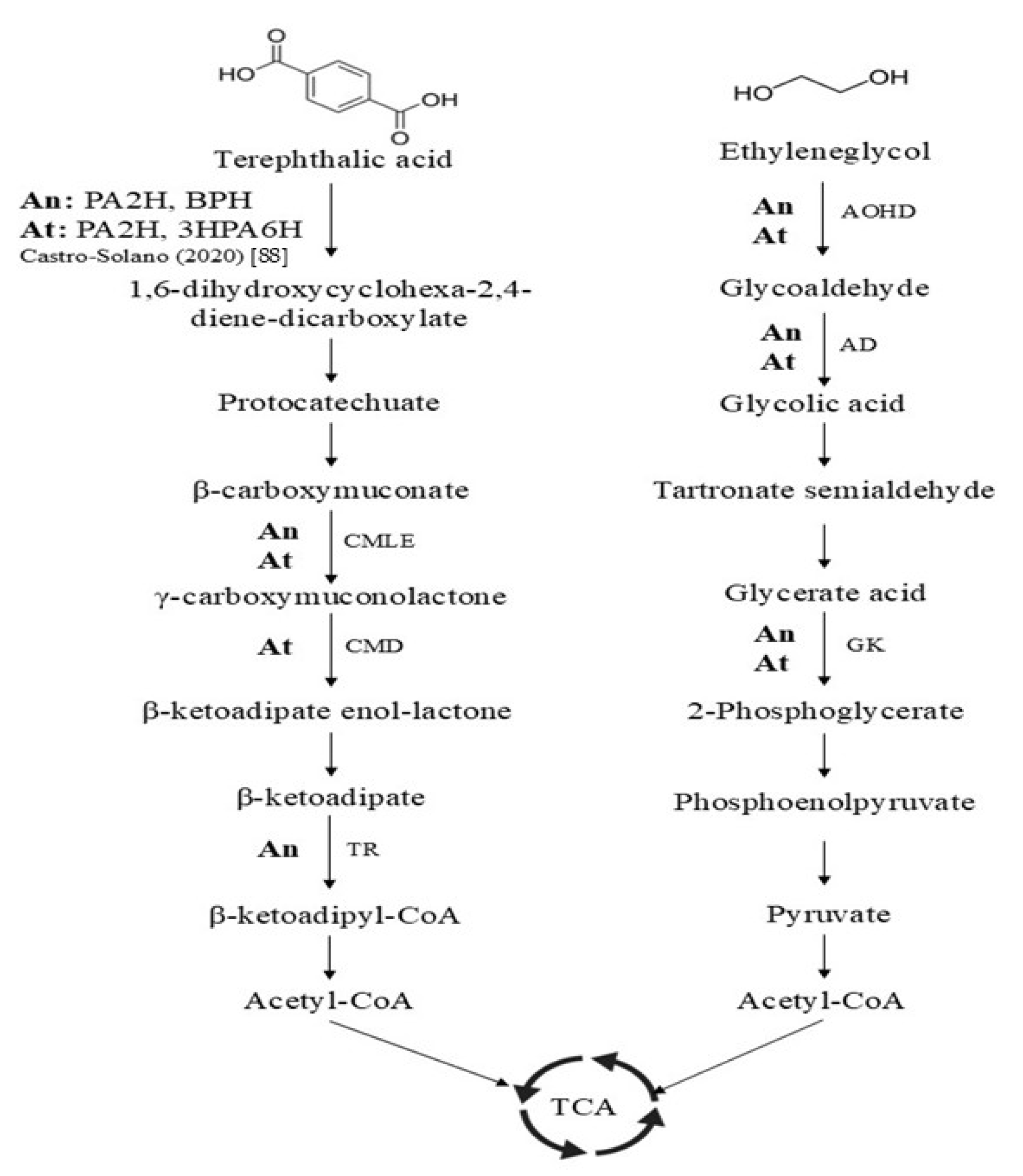
Finally, the enzymes of both fungi are related to those used for TPA degradation in bacteria. Comamonas sp. is the most studied organism in TPA metabolism. The bacteria convert protocatechuate into β-carboxymuconate, which, after a series of reactions, is converted into acetyl-CoA and enters the tricarboxylic acid (TCA) cycle [87]. A β-carboxy-cis, cis-muconate lactonizing enzyme that could catalyze the reaction of β-carboxymuconate to γ-carboxymuconolactone was identified in both fungi, but subsequently, a different enzyme belonging to this pathway was identified for each fungus. The enzyme that catalyzes the following reaction (β-carboxymuconolactone decarboxylase) is involved in the conversion of β-carboxymuconolactone to β-ketoadipate enol-lactone in A. terreus and A. nidulans. In A. terreus and A. nidulans, a β-ketoadipate:succinyl-CoA transferase catalyzes one of the last reactions before entering the TCA cycle (Figure 9).
In bacteria, alcohol dehydrogenases oxidize EG to glycolaldehyde, which is then converted into glyoxylic acid by dehydrogenases and finally enters the TCA cycle [89]. EG metabolism has been well studied in Pseudomonas putida. According to [92] Hachisuka et al. (2022), the homologs of EG metabolic enzymes in P. putida are two alcohol dehydrogenases and one aldehyde dehydrogenase found in the PET-degrading bacterium Ideonella sakaiensis. In P. putida, two alcohol dehydrogenases catalyze the conversion of EG into glycolaldehyde, which is then converted into glycolic acid by two aldehyde dehydrogenases [27]. Overexpression of alcohol dehydrogenase and aldehyde dehydrogenase was observed in both microorganisms, indicating that both microorganisms may initiate EG metabolism.

4.2.10. PET Degradation Mechanism by Aspergillus

The proposed PET degradation by Aspergillus is shown in Figure 10. It begins with the adhesion of the mycelium and the secretion of hydrophobins. This is followed by the action of hydrolases, such as CEH, which produce the intermediates Bis(2-hydroxyethyl) terephthalate (BHET) and Mono(2-hydroxyethyl) terephthalate (MHET), ultimately yielding the monomers TPA and EG.
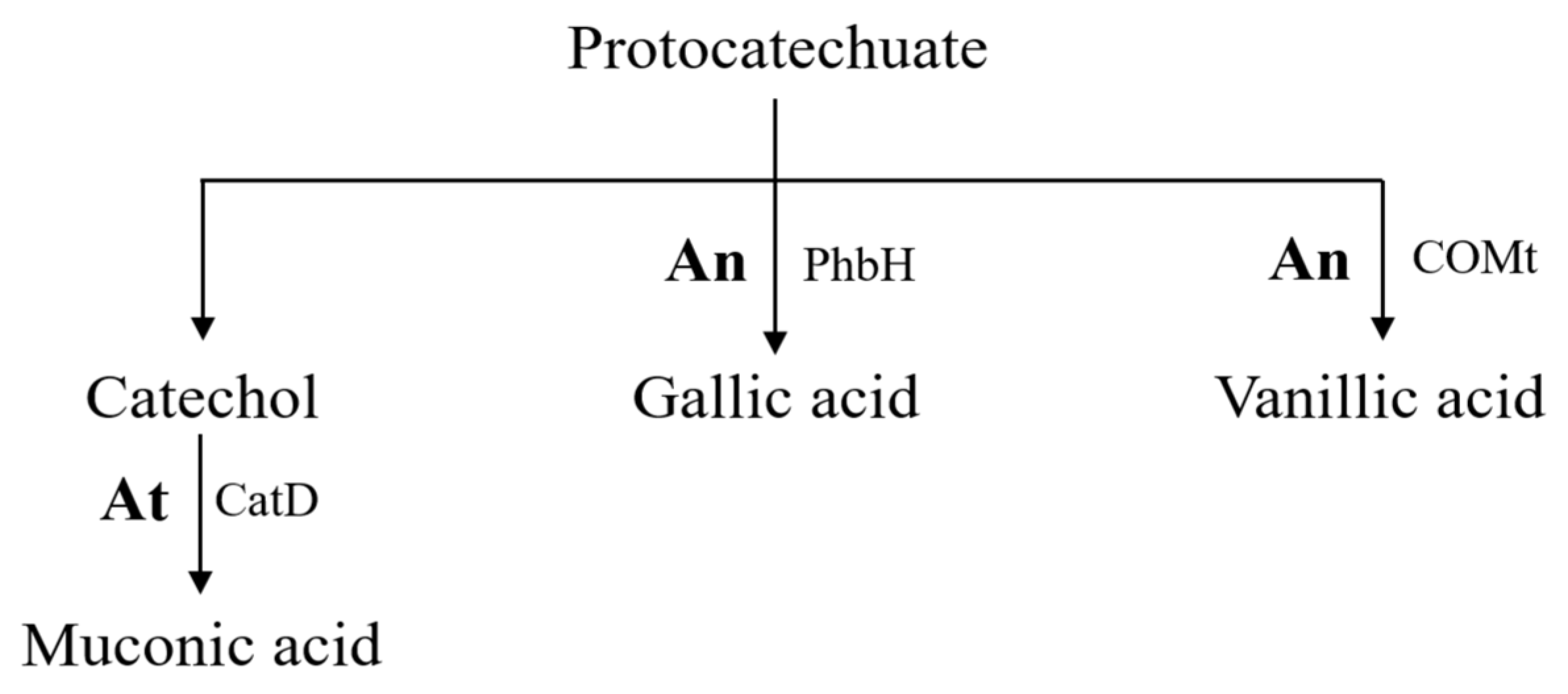
Interestingly, transcriptome analysis of both Aspergilli revealed that TPA is suitable for the biosynthesis of high-value chemicals, including catechol, muconic acid, gallic acid, and vanillic acid. Heterologous expression of different enzymes in E. coli enabled the production of these compounds from protocatechuate [26,91]. In this study, we identified three overexpressed genes encoding enzymes capable of catalyzing the bioconversion of TPA into compounds of industrial interest. In A. nidulans, the overexpression of p-hydroxybenzoate hydroxylase and catechol O-methyltransferase suggests a potential route for the production of gallic acid and vanillic acid, while in A. terreus, a catechol 1,2-dioxygenase may contribute to the formation of muconic acid [26,91] (Figure 11). These metabolites have notable industrial potential. Gallic acid (GA) is known for its antioxidant and antimicrobial properties and has been used as a food preservative and in cosmetic and pharmaceutical formulations [93]. Vanillic acid, while less exploited commercially than vanillin, is recognized as a biochemical intermediate and has been reported as a precursor in bioconversion processes toward vanillin and other aromatic compounds [94]. Muconic acid is a well-studied bio-based platform chemical that can be converted into adipic acid or terephthalic acid, important monomers for the production of bio-based polymers such as nylon and bio-PET [95].

4.3. Main Extracellular Proteins Expressed by Aspergillus During PET Exposition

Finally, the expression of chitinases during Aspergillus culture in the presence of PET was demonstrated. Fungal chitinases are expressed only under certain conditions induced by specific factors and are regulated by a repressor/inducer system; chitin acts as an inducer. In contrast, glucose and other readily assimilable carbon sources act as repressors of activity. It is observed that in the absence of these substrates, no production of chitinase occurs [96]. Fungal chitinases are used in the biocontrol of phytopathogens and pests, the synthesis of protoplasts, the synthesis of single-cell proteins, the synthesis of chitooligosaccharides, and the management of biowaste such as fish scales, crab shells, and snail shells [97,98].
On the other hand, chitinases from Clonostachys rosea are expressed as a biocontrol agent against Botrytis cinerea. Chitinases play a crucial role in the degradation of the cell walls in strawberry leaves [99]. Chitinases from A. flavus, Cladosporium cladosporioides, and Alternaria alternata effectively combat phytopathogenic fungi, thereby mitigating their harmful effects on plants and grains [100]. A. nidulans also induces chitinase genes during interactions with Botrytis cinerea and Rhizoctonia solani but not during self-interaction [101]. In summary, chitinases have multiple functions in fungal biology, including roles during fungal growth, autolysis, and nutritional processes. Chitinases from microorganisms are especially important for the degradation and recycling of the carbon and nitrogen trapped in large amounts of insoluble chitin in nature [102].
Endoquitinase (G5EAZ3) of A. nidulans (Number I in Table 4) has only been reported by [103] Gonçalves et al. (2023). This work determined endoglucanase activity by quantifying reducing sugars in the enzymatic extract, which contained cellobiohydrolases, alpha-L-arabinofuranosidase, and pectin lyase. The authors focused on chitinase production using a modified Czapek medium with carboxymethylcellulose as an enzyme inducer, and they reported an enzymatic activity of 13.3 U/mg, which is 1.86 times lower than that reported in this work. No publication was found for specific Chitinase (Q0CNS4).
There have not been reports of chitinase enzymes for PET decomposition yet. It is essential to mention that until now it has not been reported that chitinases are responsible for PET degradation, but this is an important preliminary study that will allow the investigation to proceed, especially considering that promiscuous activity has been reported for other enzymes [104,105,106]. Fungi can use chitin as a carbon source, although this is unusual. Chitinases are similar to PLA and PHB-degrading enzymes, expressed during interactions with other fungi. Chitinases catalyze the hydrolysis of β-1,4 glycosidic bonds in the chitin polymer, whereas PET hydrolases catalyze the hydrolysis of ester bonds. Therefore, one hypothesis is that Aspergillus confounds the PET by using chitin or another biopolymer as a carbon source and expressing chitinases to survive. The other hypothesis is that chitinases are promiscuous enzymes produced by the fungus to hydrolyze complex polymers, such as PET. As we mentioned earlier, other promiscuous enzymes have been reported to hydrolyze other polyesters [62].
Furthermore, since chitinases are employed in a wide range of industrial processes, such as agriculture, leather, textile, biofuel, pharmaceutical and biomedical processing [63,65,107], this study could be a focus in the improvement of the production of these enzymes by Aspergilli using plastic residues.
Also, the quantity of chitinases is related to the autolytic process of filamentous fungi when they are limited for carbon sources, a condition that induces hyphal autolysis [108]. Because of this, more studies about this discovery are necessary; the focus should be on combating plastic pollution using environmentally friendly technologies. For this, a detailed investigation will be necessary using various tools, such as substrates mimicking the structure of PET, developed by Taxeidis et al. [109], which can indicate enzymes with PET hydrolytic activity by labeling them with fluorogenic moieties.

5. Conclusions

This study provides the first evidence of chitinase overexpression in response to direct exposure to PET after replacing the carbon source with Aspergillus fungi. Although the degradation percentage is lower, we report direct degradation of PET by A. terreus and A. nidulans. Chitinases have depolymerization capacity, but their expression during PET exposure has not been previously reported. We propose a pathway for PET degradation by fungi, which involves two key steps: first, the adhesion of mycelium and the secretion of hydrophobins; second, the action of CEH enzymes, producing intermediates BHET, MHET, and the monomers TPA and EG. TPA could be metabolized via the protocatechuate pathway, and EG via the glycolic acid pathway, with both entering the TCA cycle. Furthermore, Aspergillus may be suitable for the biosynthesis of high-value chemicals such as muconic acid, gallic acid, and vanillic acid. Future studies could focus on characterizing and optimizing the identified fungal enzymes, which may ultimately enable the development of biotechnological strategies for PET degradation and valorization. Additionally, exploring other Aspergillus species under complex carbon sources could provide critical insights into the mechanisms of plastic degradation, the discovery of new enzymes, and the identification of potential substrates. Overall, chitinases represent promising candidates for enzymatic PET depolymerization.

Supplementary Materials

The following supporting information can be downloaded at: https://www.mdpi.com/article/10.3390/environments13030127/s1, Figure S1. Macroscopic and microscopic characteristics of the evaluated fungi in PDA plates after 7 days at 27 °C, A. A. terreus and B. A. nidulans. Table S1. Fungal identification.

Author Contributions

Methodology, L.N.-O., C.P.-M., C.E.-F., B.S.-R. and A.G.-B.; Software, L.N.-O., C.E.-F., M.A.L.-J., B.S.-R. and A.G.-B.; Validation, L.N.-O., G.E.-L. and R.M.O.-R.; Formal analysis, L.N.-O., C.P.-M., C.E.-F., M.A.L.-J., E.R.-M. and R.M.O.-R.; Investigation, L.N.-O., C.P.-M., E.R.-M. and G.E.-L.; Resources, C.P.-M., C.E.-F., E.R.-M., B.S.-R. and A.G.-B.; Data curation, C.P.-M. and E.R.-M.; Writing original draft, L.N.-O.; Writing review & editing, C.P.-M., C.E.-F., M.A.L.-J., E.R.-M., B.S.-R., A.G.-B. and R.M.O.-R.; Supervision, C.P.-M., M.A.L.-J. and C.E.-F.; Project administration, C.P.-M.; Funding acquisition, C.P.-M. All authors have read and agreed to the published version of the manuscript.

Funding

This research was funded by SECIHTI with project A1-S-47929 and L.N.-O. was a recipient of a Ph.D. SECIHTI fellowship (858149).

Data Availability Statement

The original contributions presented in this study are included in the article/Supplementary Material. Further inquiries can be directed to the corresponding author.

Acknowledgments

We thank Citlali Juárez-García for lactophenol cotton blue staining for fungal microscopic identification. Amelia Farres for providing the Aspergillus nidulans PW1 strain. We also acknowledge María Isabel Castro Hernández and Jorge Mario Meza Rodríguez for their support in the administration and maintenance of the genomics and bioinformatics computing cluster.

Conflicts of Interest

The authors declare no conflict of interest.

References

  1. Williams, A.T.; Rangel-Buitrago, N. The past, present, and future of plastic pollution. Mar. Pollut. Bull. 2022, 176, 113429. [Google Scholar] [CrossRef]
  2. Koshti, R.; Mehta, L.; Samarth, N. Biological recycling of polyethylene terephthalate: A mini-review. J. Polym. Environ. 2018, 26, 3520–3529. [Google Scholar] [CrossRef]
  3. Soong, Y.-H.V.; Sobkowicz, M.J.; Xie, D. Recent Advances in Biological Recycling of Polyethylene Terephthalate (PET) Plastic Wastes. Bioengineering 2022, 9, 98. [Google Scholar] [CrossRef] [PubMed]
  4. Plastics Europe (2024) Plastics—The Fast Facts. 2024. Available online: https://plasticseurope.org/knowledge-hub/plastics-the-fast-facts-2024/ (accessed on 14 August 2025).
  5. Dhaka, V.; Singh, S.; Anil, A.G.; Sunil Kumar Naik, T.S.; Garg, S.; Samuel, J.; Singh, J. Occurrence, toxicity and remediation of polyethylene terephthalate plastics. A review. Environ. Chem. Lett. 2022, 20, 1777–1800. [Google Scholar] [CrossRef] [PubMed]
  6. Chu, J.; Cai, Y.; Li, C.; Wang, X.; Liu, Q.; He, M. Dynamic flows of polyethylene terephthalate (PET) plastic in China. Waste Manag. 2021, 124, 273–282. [Google Scholar] [CrossRef]
  7. Tsironi, T.N.; Chatzidakis, S.M.; Stoforos, N.G. The future of polyethylene terephthalate bottles: Challenges and sustainability. Packag. Technol. Sci. 2022, 35, 317–325. [Google Scholar] [CrossRef]
  8. Li, P.; Wang, X.; Su, M.; Zou, X.; Duan, L.; Zhang, H. Characteristics of plastic pollution in the environment: A review. Bull. Environ. Contam. Toxicol. 2020, 107, 577–584. [Google Scholar] [CrossRef]
  9. Kasavan, S.; Yusoff, S.; Fakri, M.F.R.; Siron, R. Plastic pollution in water ecosystems: A bibliometric analysis from 2000 to 2020. J. Clean. Prod. 2021, 313, 127946. [Google Scholar] [CrossRef]
  10. MacLeod, M.; Arp, H.P.H.; Tekman, M.B.; Jahnke, A. The global threat from plastic pollution. Science 2021, 373, 61–65. [Google Scholar] [CrossRef]
  11. Ragusa, A.; Svelato, A.; Santacroce, C.; Catalano, P.; Notarstefano, V.; Carnevali, O.; Papa, F.; Rongioletti, M.C.A.; Baiocco, F.; Draghi, S.; et al. Plasticenta: First evidence of microplastics in human placenta. Environ. Int. 2021, 146, 106274. [Google Scholar] [CrossRef]
  12. Morales-Cano, K.L.; Hermida-Castellanos, L.; Adame-Adame, C.M.; Peláez, L.A.P. Micro (Nano) Plastics as Carriers of Toxic Agents and Their Impact on. In Advances and Challenges in Microplastics; IntechOpen: London, UK, 2023; p. 185. [Google Scholar]
  13. Srikanth, M.; Sandeep, T.S.R.S.; Sucharitha, K.; Godi, S. Biodegradation of plastic polymers by fungi: A brief review. Bioresour. Bioprocess. 2022, 9, 42. [Google Scholar] [CrossRef] [PubMed]
  14. Okal, E.J.; Heng, G.; Magige, E.A.; Khan, S.; Wu, S.; Ge, Z.; Zhang, T.; Mortimer, P.E.; Xu, J. Insights into the mechanisms involved in the fungal degradation of plastics. Ecotoxicol. Environ. Saf. 2023, 262, 115202. [Google Scholar] [CrossRef] [PubMed]
  15. Ronkvist, Å.M.; Xie, W.; Lu, W.; Gross, R.A. Cutinase-catalyzed hydrolysis of poly (ethylene terephthalate). Macromolecules 2009, 42, 5128–5138. [Google Scholar] [CrossRef]
  16. Vázquez-Alcántara, L.; Oliart-Ros, R.M.; García-Bórquez, A.; Peña-Montes, C. Expression of a cutinase of Moniliophthora roreri with polyester and PET-plastic residues degradation activity. Microbiol. Spectr. 2021, 9, e00976-21. [Google Scholar] [CrossRef]
  17. Peña-Montes, C.; Bermúdez-García, E.; Castro-Ochoa, D.; Vega-Pérez, F.; Esqueda-Domínguez, K.; Castro-Rodríguez, J.A.; González-Canto, A.; Segoviano-Reyes, L.; Navarro-Ocaña, A.; Farrés, A. ANCUT1, a novel thermoalkaline cutinase from Aspergillus nidulans and its application on hydroxycinnamic acids lipophilization. Biotechnol. Lett. 2024, 46, 409–430. [Google Scholar] [CrossRef]
  18. Bermúdez-García, E.; Peña-Montes, C.; Castro-Rodríguez, J.A.; González-Canto, A.; Navarro Ocaña, A.; Farrés, A. ANCUT2, a thermo-alkaline cutinase from Aspergillus nidulans and its potential applications. Appl. Biochem. Biotechnol. 2017, 182, 1014–1036. [Google Scholar] [CrossRef]
  19. Castro-Ochoa, D.; Peña-Montes, C.; González-Canto, A.; Alva-Gasca, A.; Esquivel-Bautista, R.; Navarro-Ocaña, A.; Farrés, A. ANCUT2, an extracellular cutinase from Aspergillus nidulans, induced by olive oil. Appl. Biochem. Biotechnol. 2012, 166, 1275–1290. [Google Scholar] [CrossRef]
  20. Ekanayaka, A.H.; Tibpromma, S.; Dai, D.; Xu, R.; Suwannarach, N.; Stephenson, S.L.; Dao, C.; Karunarathna, S.C. A review of the fungi that degrade plastic. J. Fungi 2022, 8, 772. [Google Scholar] [CrossRef]
  21. Temporiti, M.E.E.; Nicola, L.; Nielsen, E.; Tosi, S. Fungal enzymes involved in plastics biodegradation. Microorganisms 2022, 10, 1180. [Google Scholar] [CrossRef]
  22. MacLean, J.; Bartholomäus, A.; Blukis, R.; Liebner, S.; Wagner, D. Metatranscriptomics of microbial biofilm succession on HDPE foil: Uncovering plastic-degrading potential in soil communities. Environ. Microbiome 2024, 19, 95. [Google Scholar] [CrossRef]
  23. Tseng, W.-S.; Lee, M.-J.; Chen, T.-Y.; Lin, S.-S.; Chang, S.-L.; Lin, P.-Y.; Lu, T.-J.; Liu, C.-T. Synergistic enhancement of PBAT biodegradation by Purpureocillium lilacinum BA1S: Insights from transcriptomics and functional analyses. J. Hazard. Mater. 2025, 497, 139699. [Google Scholar] [CrossRef]
  24. Kumari, A.; Bano, N.; Bag, S.K.; Chaudhary, D.R.; Jha, B. Transcriptome-guided insights into plastic degradation by the marine bacterium. Front. Microbiol. 2021, 12, 751571. [Google Scholar] [CrossRef] [PubMed]
  25. Slobodian, M.R.; Jillings, D.; Barot, A.K.; Dougherty, J.; Passi, K.; Tharmalingam, S.; Appanna, V.D. Metabolism of Terephthalic Acid by a Novel Bacterial Consortium Produces Valuable By-Products. Microorganisms 2025, 13, 2082. [Google Scholar] [CrossRef] [PubMed]
  26. Sharma, P.; Singh, S.P.; Iqbal, H.M.; Tong, Y.W. Omics approaches in bioremediation of environmental contaminants: An integrated approach for environmental safety and sustainability. Environ. Res. 2022, 211, 113102. [Google Scholar] [CrossRef] [PubMed]
  27. Qi, X.; Zhu, M.; Yuan, Y.; Rong, X.; Dang, Z.; Yin, H. Integrated toxicology, metabolomics, and transcriptomics analyses reveal the biodegradation and adaptation mechanisms to BDE-47 in Pseudomonas plecoglossicida. Chem. Eng. J. 2023, 454, 140412. [Google Scholar] [CrossRef]
  28. Fukuzawa, M.; Yamaguchi, R.; Hide, I.; Chen, Z.; Hirai, Y.; Sugimoto, A.; Yasuhara, T.; Nakata, Y. Possible involvement of long chain fatty acids in the spores of Ganoderma lucidum (Reishi Houshi) to its anti-tumor activity. Biol. Pharm. Bull. 2008, 31, 1933–1937. [Google Scholar] [CrossRef]
  29. Sambrook, J.; Fritsch, E.F. Molecular Cloning: A Laboratory Manual, 3rd ed.; Cold Spring Harbor Laboratory Press: New York, NY, USA, 2001. [Google Scholar]
  30. White, T.J.; Bruns, T.; Lee, S.J.W.T.; Taylor, J. Amplification and direct sequencing of fungal ribosomal RNA genes for phylogenetics. In PCR Protocols: A Guide to Methods and Applications; Academic Press: New York, NY, USA, 1990; Volume 18, pp. 315–322. [Google Scholar]
  31. Goodstadt, L.; Ponting, C.P. CHROMA: Consensus-based colouring of multiple alignments for publication. Bioinformatics 2001, 17, 845–846. [Google Scholar] [CrossRef]
  32. Corpet, F. Multiple sequence alignment with hierarchical clustering. Nucleic Acids Res. 1988, 16, 10881–10890. [Google Scholar] [CrossRef]
  33. Hill, T.W.; Kafer, E. Improved protocols for Aspergillus minimal medium: Trace element and minimal medium salt stock solutions. Fungal Genet. Rep. 2001, 48, 20–21. [Google Scholar] [CrossRef]
  34. Beltrán-Sanahuja, A.; Casado-Coy, N.; Simó-Cabrera, L.; Sanz-Lázaro, C. Monitoring polymer degradation under different conditions in the marine environment. Environ. Pollut. 2020, 259, 113836. [Google Scholar] [CrossRef]
  35. Qi, X.; Ma, Y.; Chang, H.; Li, B.; Ding, M.; Yuan, Y. Evaluation of PET degradation using artificial microbial consortia. Front. Microbiol. 2021, 12, 778828. [Google Scholar] [CrossRef] [PubMed]
  36. Voytas, D. Agarose gel electrophoresis. Curr. Protoc. Immunol. 1992, 2, 10–14. [Google Scholar] [CrossRef]
  37. Bradford, M.M. A rapid and sensitive method for the quantitation of microgram quantities of protein utilizing the principle of protein-dye binding. Anal. Biochem. 1976, 72, 248–254. [Google Scholar] [CrossRef] [PubMed]
  38. Laemmli, U.K. Cleavage of structural proteins during the assembly of the head of bacteriophage T4. Nature 1970, 227, 680–685. [Google Scholar] [CrossRef] [PubMed]
  39. Ruiz-May, E.; Altúzar-Molina, A.; Elizalde-Contreras, J.M.; Arellano-de Los Santos, J.; Monribot-Villanueva, J.; Guillén, L.; Vázquez-Rosas-Landa, M.; Ibarra-Laclette, E.; Ramírez-Vázquez, M.; Ortega, R.; et al. A first glimpse of the Mexican fruit fly Anastrepha ludens (Diptera: Tephritidae) antenna morphology and proteome in response to a proteinaceous attractant. Int. J. Mol. Sci. 2020, 21, 8086. [Google Scholar] [CrossRef]
  40. Pandya, U.; Saraf, M. Purification and characterization of antifungal chitinase from Bacillus safensis MBCU6 and its application for production of chito-oligosaccharides. Biologia 2015, 70, 863–868. [Google Scholar] [CrossRef]
  41. Gonfa, T.G.; Negessa, A.K.; Bulto, A.O. Isolation, screening, and identification of chitinase-producing bacterial strains from riverbank soils at Ambo, Western Ethiopia. Heliyon 2023, 9, e21643. [Google Scholar] [CrossRef]
  42. Miller, G.L. Use of dinitrosalicylic acid reagent for determination of reducing sugar. Anal. Chem. 1959, 31, 426–428. [Google Scholar] [CrossRef]
  43. Peña-Montes, C.; Farrés-González, A.; Hernández-Domínguez, E.; Morales-García, S.; Sánchez-Sánchez, M.; Solís-Báez, I. Cutinasas Recombinantes de Aspergillus nidulans para la Biodegradación de Poliésteres. Mexican Patent MX380946, 9 March 2021. [Google Scholar]
  44. Samat, A.F.; Carter, D.; Abbas, A. Biodeterioration of pre-treated polypropylene by Aspergillus terreus and Engyodontium album. npj Mater. Degrad. 2023, 7, 28. [Google Scholar] [CrossRef]
  45. Chien, H.L.; Tsai, Y.T.; Tseng, W.S.; Wu, J.A.; Kuo, S.L.; Chang, S.L.; Huang, S.J.; Liu, C.T. Biodegradation of PBSA films by Elite Aspergillus isolates and farmland soil. Polymers 2022, 14, 1320. [Google Scholar] [CrossRef]
  46. Usman, N.; Atta, H.I.; Tijjani, M.B. Biodegradation studies of benzene, toluene, ethylbenzene and xylene (BTEX) compounds by Gliocladium sp. and Aspergillus terreus. J. Appl. Sci. Environ. Manag. 2020, 24, 1063–1069. [Google Scholar] [CrossRef]
  47. Alharbi, N.K.; Alzaban, M.I.; Albarakaty, F.M.; Abd El-Aziz, A.R.; AlRokban, A.H.; Mahmoud, M.A. Transcriptome profiling reveals differential gene expression of laccase genes in Aspergillus terreus KC462061 during biodegradation of crude oil. Biology 2022, 11, 564. [Google Scholar] [CrossRef]
  48. Maheswaran, B.; Al-Ansari, M.; Al-Humaid, L.; Raj, J.S.; Kim, W.; Karmegam, N.; Rafi, K.M. In vivo degradation of polyethylene terephthalate using microbial isolates from plastic polluted environment. Chemosphere 2023, 310, 136757. [Google Scholar] [CrossRef]
  49. Farzi, A.; Dehnad, A.; Fotouhi, A.F. Biodegradation of polyethylene terephthalate waste using Streptomyces species and kinetic modeling of the process. Biocatal. Agric. Biotechnol. 2019, 17, 25–31. [Google Scholar] [CrossRef]
  50. Miranda, M.A.; Jabarin, S.A.; Coleman, M. Modification of poly (ethylene terephthalate)(PET) using linoleic acid for oxygen barrier improvement: Impact of processing methods. J. Appl. Polym. Sci. 2017, 134, 45023. [Google Scholar] [CrossRef]
  51. Khairul Anuar, N.F.S.; Huyop, F.; Ur-Rehman, G.; Abdullah, F.; Normi, Y.M.; Sabullah, M.K.; Abdul Wahab, R. An Overview into Polyethylene Terephthalate (PET) Hydrolases and Efforts in Tailoring Enzymes for Improved Plastic Degradation. Int. J. Mol. Sci. 2022, 23, 12644. [Google Scholar] [CrossRef] [PubMed]
  52. Sui, B.; Wang, T.; Fang, J.; Hou, Z.; Shu, T.; Lu, Z.; Liu, F.; Zhu, Y. Recent advances in the biodegradation of polyethylene terephthalate with cutinase-like enzymes. Front. Microbiol. 2023, 14, 1265139. [Google Scholar] [CrossRef] [PubMed]
  53. Anbalagan, S.; Venkatakrishnan, H.R.R.; Ravindran, J.; Sathyamoorthy, J.; Rangabashyam, K.A.; Ragini, Y.P.; Sathasivam, J.; Sureshbabu, K. Hydrolytic degradation of polyethylene terephthalate by cutinase enzyme derived from fungal biomass–molecular characterization. Biointerface Res. Appl. Chem. 2021, 12, 653–667. [Google Scholar] [CrossRef]
  54. Bermúdez-García, E.; Peña-Montes, C.; Martins, I. Regulation of the cutinases expressed by Aspergillus nidulans and evaluation of their role in cutin degradation. Appl. Microbiol. Biotechnol. 2019, 103, 3863–3874. [Google Scholar] [CrossRef]
  55. Ahmaditabatabaei, S.; Kyazze, G.; Iqbal, H.M.; Keshavarz, T. Fungal enzymes as catalytic tools for polyethylene terephthalate (PET) degradation. J. Fungi 2021, 7, 931. [Google Scholar] [CrossRef]
  56. Puspitasari, N.; Tsai, S.L.; Lee, C.K. Class I hydrophobins pretreatment stimulates PETase for monomers recycling of waste PETs. Int. J. Biol. Macromol. 2021, 176, 157–164. [Google Scholar] [CrossRef]
  57. Chen, Z.; Duan, R.; Xiao, Y.; Wei, Y.; Zhang, H.; Sun, X.; Wang, S.; Cheng, Y.; Wang, X.; Tong, S.; et al. Biodegradation of highly crystallized poly (ethylene terephthalate) through cell surface codisplay of bacterial PETase and hydrophobin. Nat. Commun. 2022, 13, 7138. [Google Scholar] [CrossRef]
  58. Puspitasari, N.; Tsai, S.L.; Lee, C.K. Fungal hydrophobin RolA enhanced PETase hydrolysis of polyethylene terephthalate. Appl. Biochem. Biotechnol. 2021, 193, 1284–1295. [Google Scholar] [CrossRef] [PubMed]
  59. Ribitsch, D.; Herrero Acero, E.; Przylucka, A.; Zitzenbacher, S.; Marold, A.; Gamerith, C.; Tscheließnig, R.; Jungbauer, A.; Rennhofer, H.; Lichtenegger, H.; et al. Enhanced cutinase-catalyzed hydrolysis of polyethylene terephthalate by covalent fusion to hydrophobins. Appl. Environ. Microbiol. 2015, 81, 3586–3592. [Google Scholar] [CrossRef] [PubMed]
  60. Chen, W.; Jiang, X.; Yang, Q. Glycoside hydrolase family 18 chitinases: The known and the unknown. Biotechnol. Adv. 2020, 43, 107553. [Google Scholar] [CrossRef]
  61. Rajput, M.; Kumar, M.; Pareek, N. Myco-chitinases as versatile biocatalysts for translation of coastal residual resources to eco-competent chito-bioactives. Fungal Biol. Rev. 2022, 41, 52–69. [Google Scholar] [CrossRef]
  62. He, L.; Yang, S.S.; Ding, J.; He, Z.L.; Pang, J.W.; Xing, D.F.; Zhao, L.; Zheng, H.S.; Ren, N.Q.; Wu, W.M. Responses of gut microbiomes to commercial polyester polymer biodegradation in Tenebrio molitor Larvae. J. Hazard. Mater. 2023, 457, 131759. [Google Scholar] [CrossRef]
  63. Urbanek, A.K.; Arroyo, M.; de la Mata, I.; Mirończuk, A.M. Identification of novel extracellular putative chitinase and hydrolase from Geomyces sp. B10I with the biodegradation activity towards polyesters. AMB Express 2022, 12, 12. [Google Scholar] [CrossRef]
  64. Kukkemane, K.; Krishnapati, L.S.; Vuruputuri, R.M.; Sakharayapatna, K.; Kumar, N.S. Purification and Biochemical Characterization of Beta-Hexosaminidase B from Freshwater Cnidarian Hydra vulgaris Ind-Pune. Trends Carbohydr. Res. 2024, 16, 60–75. [Google Scholar] [CrossRef]
  65. Unuofin, J.O.; Odeniyi, O.A.; Majengbasan, O.S.; Igwaran, A.; Moloantoa, K.M.; Khetsha, Z.P.; Iwarere, S.A.; Daramola, M.O. Chitinases: Expanding the boundaries of knowledge beyond routinized chitin degradation. Environ. Sci. Pollut. Res. 2024, 31, 38045–38060. [Google Scholar] [CrossRef]
  66. Datta, R. Enzymatic degradation of cellulose in soil: A review. Heliyon 2024, 10, e24022. [Google Scholar] [CrossRef]
  67. Syafriana, V.; Nuswantara, S.; Mangunwardoyo, W.; Lisdiyanti, P. Beta-Glucosidase 1 (bgl1) Gene Analysis in Mutant and Wild-type of Penicillium sp. ID10-T065. J. Ris. Biol. Dan Apl. 2022, 4, 1–8. [Google Scholar] [CrossRef]
  68. Müller, A. Gene Redundancy and Metabolic Flexibility in Aspergillus Niger: Tools to Enhance Industrial Biotechnology. PhD Thesis, Utrecht University, Utrecht, The Netherlands, 2024. [Google Scholar]
  69. Pawlik, A.; Stefanek, S.; Janusz, G. Properties, physiological functions and involvement of basidiomycetous alcohol oxidase in wood degradation. Int. J. Mol. Sci. 2022, 23, 13808. [Google Scholar] [CrossRef]
  70. Li, J.; Peng, C.; Mao, A.; Zhong, M.; Hu, Z. An overview of microbial enzymatic approaches for pectin degradation. Int. J. Biol. Macromol. 2024, 254, 127804. [Google Scholar] [CrossRef] [PubMed]
  71. Sun, R.; Xu, K.; Yu, L.; Pu, Y.; Xiong, F.; He, Y.; Huang, Q.; Tang, M.; Chen, M.; Yin, L.; et al. Preliminary study on impacts of polystyrene microplastics on the hematological system and gene expression in bone marrow cells of mice. Ecotoxicol. Environ. Saf. 2021, 218, 112296. [Google Scholar] [CrossRef]
  72. Yang, X.; Zhang, X.; Shu, X.; Gong, J.; Yang, J.; Li, B.; Lin, J.; Chai, Y.; Liu, J. The effects of polyethylene microplastics on the growth, reproduction, metabolic enzymes, and metabolomics of earthworms Eisenia fetida. Ecotoxicol. Environ. Saf. 2023, 263, 115390. [Google Scholar] [CrossRef] [PubMed]
  73. Chi, J.; Patterson, J.S.; Jin, Y.; Kim, K.J.; Lalime, N.; Hawley, D.; Lewis, F.; Li, L.; Wang, X.; Campen, M.J.; et al. Metabolic Reprogramming in Gut Microbiota Exposed to Polystyrene Microplastics. Biomedicines 2025, 13, 446. [Google Scholar] [CrossRef]
  74. Tao, X.; Ouyang, H.; Zhou, A.; Wang, D.; Matlock, H.; Morgan, J.S.; Ren, A.T.; Mu, D.; Pan, C.; Zhu, X.; et al. Polyethylene degradation by a Rhodococcus strain isolated from naturally weathered plastic waste enrichment. Environ. Sci. Technol. 2023, 57, 13901–13911. [Google Scholar] [CrossRef]
  75. Pinto, M.; Zhao, Z.; Klun, K.; Libowitzky, E.; Herndl, G.J. Microbial consortiums of putative degraders of low-density polyethylene-associated compounds in the ocean. Msystems 2022, 7, e01415-21. [Google Scholar] [CrossRef]
  76. He, Z.; Hou, Y.; Li, Y.; Bei, Q.; Li, X.; Zhu, Y.G.; Liesack, W.; Rillig, M.C.; Peng, J. Increased methane production associated with community shifts towards Methanocella in paddy soils with the presence of nanoplastics. Microbiome 2024, 12, 259. [Google Scholar] [CrossRef]
  77. Biratsi, A.; Athanasopoulos, A.; Kouvelis, V.N.; Gournas, C.; Sophianopoulou, V. A highly conserved mechanism for the detoxification and assimilation of the toxic phytoproduct L-azetidine-2-carboxylic acid in Aspergillus nidulans. Sci. Rep. 2021, 11, 7391. [Google Scholar] [CrossRef]
  78. Dong, T.; Liu, X.; Yang, Y.; Xiong, J.; Wang, X.; Yang, S. Function of N-acetyltransferase in the biotransformation of aniline in green alga Chlamydomonas reinhardtii. J. Phycol. 2025, 61, 231–240. [Google Scholar] [CrossRef] [PubMed]
  79. Zingales, V.; Fernández-Franzón, M.; Ruiz, M.J. Sterigmatocystin: Occurrence, toxicity and molecular mechanisms of action–A review. Food Chem. Toxicol. 2020, 146, 111802. [Google Scholar] [CrossRef] [PubMed]
  80. Wang, Y.; Yang, M.; Ge, F.; Jiang, B.; Hu, R.; Zhou, X.; Yang, Y.; Liu, M. Lysine succinylation of VBS contributes to sclerotia development and aflatoxin biosynthesis in Aspergillus flavus. Mol. Cell. Proteom. 2023, 22, 100490. [Google Scholar] [CrossRef] [PubMed]
  81. Ye, L.; Tang, J.; Wang, Z.; Tan, G. Comparative transcriptome analysis reveals pathogenic mechanisms of Colletotrichum gloeosporioides in figs (Ficus carica L.) infection. Microb. Pathog. 2025, 200, 107319. [Google Scholar] [CrossRef]
  82. Peña-Montes, C.; Lange, S.; Flores, I.; Castro-Ochoa, D.; Schmid, R.; Cruz-García, F.; Farrés, A. Molecular characterization of StcI esterase from Aspergillus nidulans. Appl. Microbiol. Biotechnol. 2009, 84, 917–926. [Google Scholar] [CrossRef]
  83. Tiwari, S.; Thakur, R.; Goel, G.; Shankar, J. Nano-LC-Q-TOF Analysis of Proteome Revealed Germination of Aspergillus flavus Conidia is Accompanied by MAPK Signalling and Cell Wall Modulation. Mycopathologia 2016, 181, 769–786. [Google Scholar] [CrossRef]
  84. Kodape, A.R.; Raveendran, A.; Babu, C.S.V. Aflatoxins: A postharvest associated challenge and mitigation opportunities. In Aflatoxins-Occurrence, Detection and Novel Detoxification Strategies; IntechOpen: London, UK, 2022. [Google Scholar] [CrossRef]
  85. Ho, C.L. Comparative genomics analysis of Ganoderma orthologs involved in plant-pathogenesis. Forests 2023, 14, 653. [Google Scholar] [CrossRef]
  86. Suraninpong, P.; Thongkhao, K.; Azzeme, A.M.; Suksa-Ard, P. Monitoring Drought Tolerance in Oil Palm: Choline Monooxygenase as a Novel Molecular Marker. Plants 2023, 12, 3089. [Google Scholar] [CrossRef]
  87. Qi, X.; Yan, W.; Cao, Z.; Ding, M.; Yuan, Y. Current advances in the biodegradation and bioconversion of polyethylene terephthalate. Microorganisms 2021, 10, 39. [Google Scholar] [CrossRef]
  88. Castro-Solano, B. Identificación y expresión heteróloga de enzimas que intervienen en la mineralización de PET. MSc. Thesis, Tecnológico Nacional de México, Veracruz, México, 2022. [Google Scholar]
  89. Ren, M.; Li, D.; Addison, H.; Noteborn, W.E.; Andeweg, E.H.; Glatter, T.; de Winde, J.H.; Rebelein, J.G.; Lamers, M.H.; Schada von Borzyskowski, L. Promiscuous NAD-dependent dehydrogenases enable efficient bacterial growth on the PET monomer ethylene glycol. bioRxiv 2024. [Google Scholar] [CrossRef]
  90. Shimizu, T.; Inui, M. Novel aspects of ethylene glycol catabolism. Appl. Microbiol. Biotechnol. 2024, 108, 369. [Google Scholar] [CrossRef] [PubMed]
  91. Satta, A.; Zampieri, G.; Loprete, G.; Campanaro, S.; Treu, L.; Bergantino, E. Metabolic and enzymatic engineering strategies for polyethylene terephthalate degradation and valorization. Rev. Environ. Sci. Bio/Technol. 2024, 23, 351–383. [Google Scholar] [CrossRef]
  92. Hachisuka, S.I.; Chong, J.F.; Fujiwara, T.; Takayama, A.; Kawakami, Y.; Yoshida, S. Ethylene glycol metabolism in the poly (ethylene terephthalate)-degrading bacterium Ideonella sakaiensis. Appl. Microbiol. Biotechnol. 2022, 106, 7867–7878. [Google Scholar] [CrossRef]
  93. Saini, U.; Sharma, A.; Mittal, V. Gallic Acid: A Potent Antioxidant and Anti-inflammatory Agent in Modern Cosmeceuticals. Recent Adv. Drug Deliv. Formul. 2025. Online ahead of print. [CrossRef]
  94. Civolani, C.; Barghini, P.; Roncetti, A.R.; Ruzzi, M.; Schiesser, A. Bioconversion of ferulic acid into vanillic acid by means of a vanillate-negative mutant of Pseudomonas fluorescens strain BF13. Appl. Environ. Microbiol. 2000, 66, 2311–2317. [Google Scholar] [CrossRef]
  95. Salvachúa, D.; Johnson, C.W.; Singer, C.A.; Rohrer, H.; Peterson, D.J.; Black, B.A.; Knapp, A.; Beckham, G.T. Bioprocess development for muconic acid production from aromatic compounds and lignin. Green Chem. 2018, 20, 5007–5019. [Google Scholar] [CrossRef]
  96. Nayak, S.K.; Nayak, S.; Mohanty, S.; Sundaray, J.K.; Mishra, B.B. Microbial chitinases and their applications: An overview. In Environmental and Agricultural Microbiology: Applications for Sustainability; Wiley: Hoboken, NJ, USA, 2021; pp. 313–340. [Google Scholar] [CrossRef]
  97. Thakur, D.; Bairwa, A.; Dipta, B.; Jhilta, P.; Chauhan, A. An overview of fungal chitinases and their potential applications. Protoplasma 2023, 260, 1031–1046. [Google Scholar] [CrossRef]
  98. Krishnaveni, B.; Ragunathan, R. Chitinase production from marine wastes by Aspergillus terreus and its application in degradation studies. Int. J. Curr. Microbiol. Appl. Sci. 2014, 3, 76–82. [Google Scholar]
  99. Mamarabadi, M.; Jensen, B.; Jensen, D.F.; Lübeck, M. Real-time RT-PCR expression analysis of chitinase and endoglucanase genes in the three-way interaction between the biocontrol strain Clonostachys rosea IK726, Botrytis cinerea and strawberry. FEMS Microbiol. Lett. 2008, 285, 101–110. [Google Scholar] [CrossRef]
  100. Al Abboud, M.A.; Al-Rajhi, A.M.; Shater, A.R.; Alawlaqi, M.M.; Mashraqi, A.; Selim, S.; Al Jaouni, S.K.; Abdelghany, T.M. Halostability and thermostability of chitinase produced by fungi isolated from salt marsh soil in subtropical region of Saudi Arabia. BioResources 2022, 17, 4763. [Google Scholar] [CrossRef]
  101. Tzelepis, G.D.; Melin, P.; Stenlid, J.; Jensen, D.F.; Karlsson, M. Functional analysis of the C-II subgroup killer toxin-like chitinases in the filamentous ascomycete Aspergillus nidulans. Fungal Genet. Biol. 2014, 64, 58–66. [Google Scholar] [CrossRef]
  102. Hoang, K.C.; Lai, T.H.; Lin, C.S.; Chen, Y.T.; Liau, C.Y. The chitinolytic activities of Streptomyces sp. TH-11. Int. J. Mol. Sci. 2010, 12, 56–65. [Google Scholar] [CrossRef] [PubMed]
  103. Gonçalves, C.G.E.; Lourenço, L.D.F.H.; Philippsen, H.K.; Santos, A.S.; Santos, L.N.D.; Ferreira, N.R. Crude enzyme concentrate of filamentous fungus hydrolyzed chitosan to obtain oligomers of different sizes. Polymers 2023, 15, 2079. [Google Scholar] [CrossRef] [PubMed]
  104. Pallister, E.; Gray, C.J.; Flitsch, S.L. Enzyme promiscuity of carbohydrate active enzymes and their applications in biocatalysis. Curr. Opin. Struct. Biol. 2020, 65, 184–192. [Google Scholar] [CrossRef] [PubMed]
  105. Pérez-Salazar, Y.I.; Peña-Montes, C.; del Moral, S.; Aguilar-Uscanga, M.G. Cellulases production from Aspergillus niger-ITV-02 using corn lignocellulosic residues. Rev. Mex. Ing. Química 2022, 21, Alim2772. [Google Scholar] [CrossRef]
  106. Zhang, H.; Dierkes, R.F.; Perez-Garcia, P.; Costanzi, E.; Dittrich, J.; Cea, P.A.; Gurschke, M.; Applegate, V.; Partus, K.; Schmeisser, C.; et al. The metagenome-derived esterase PET40 is highly promiscuous and hydrolyses polyethylene terephthalate (PET). FEBS J. 2024, 291, 70–91. [Google Scholar] [CrossRef]
  107. Stoykov, Y.M.; Pavlov, A.I.; Krastanov, A.I. Chitinase biotechnology: Production, purification, and application. Eng. Life Sci. 2015, 15, 30–38. [Google Scholar] [CrossRef]
  108. Yamazaki, H.; Yamazaki, D.; Takaya, N.; Takagi, M.; Ohta, A.; Horiuchi, H. A chitinase gene, chiB, involved in the autolytic process of Aspergillus nidulans. Curr. Genet. 2007, 51, 89–98. [Google Scholar] [CrossRef]
  109. Taxeidis, G.; Djapovic, M.; Nikolaivits, E.; Maslak, V.; Nikodinovic-Runic, J.; Topakas, E. New labeled PET analogues enable the functional screening and characterization of PET-degrading enzymes. ACS Sustain. Chem. Eng. 2024, 12, 5943–5952. [Google Scholar] [CrossRef]
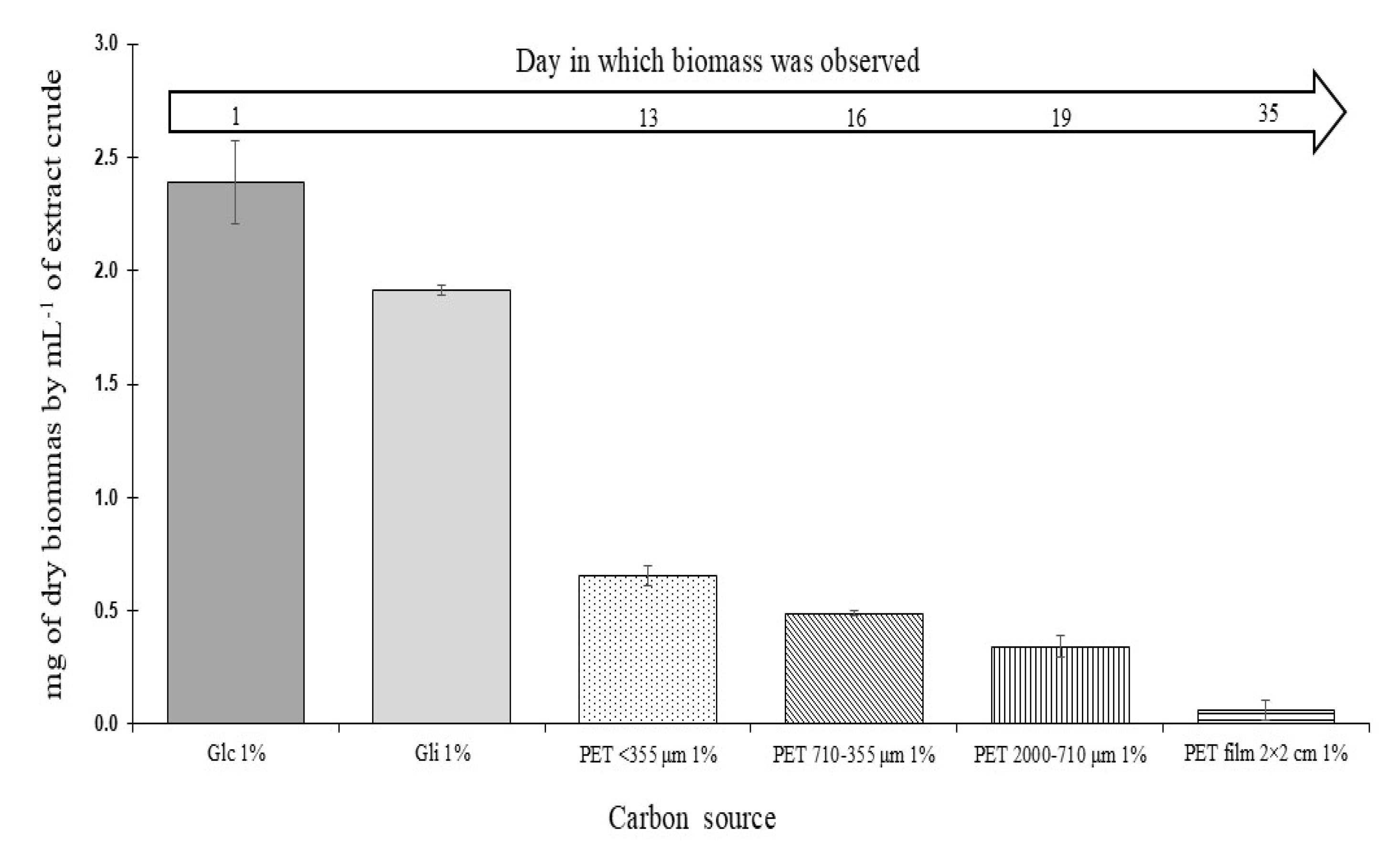
Figure 1. Dry biomass of A. nidulans obtained after growing in the presence of PET film (2 × 2 cm) and ground PET particles of three sizes (<355 μm, 710–355 μm and 2000–710 μm) used as the sole carbon source. Besides, the obtained A. nidulans biomass in MM with glucose (Glc) or glycerol (Gli) as a carbon source is presented. The upper arrow indicates the day on which biomass was observed and collected.
Environments 13 00127 g001
Figure 2. Percent of weight loss of different PET-sized and shaped particles after the exposition of A. nidulans in minimal media with PET replacing the carbon source. The upper arrow indicates the day on which the greater weight loss was observed.
Environments 13 00127 g002
Figure 3. FTIR spectra of PET exposed with A. nidulans (…..), A. terreus (----), and control (without inoculum) (___). The arrows indicate the characteristic signal intensities of PET described in the attached table.
Environments 13 00127 g003
Figure 4. (I) Venn diagram of differentially expressed genes (A) A. nidulans control with glucose (AnG) vs. treatment with PET (AnP); (B) A. terreus control with glucose (AtG) vs. treatment with PET (AtP). (II) Gene heatmap (A) A. nidulans control with glucose (An_Control) vs. treatment with PET (An_treatment); (B) A. terreus control with glucose (At_control) vs. treatment with PET (At_Treatment).
Environments 13 00127 g004
Figure 5. Gene ontology classification of up-regulated genes for A. nidulans (black) and A. terreus (grey) treatment with PET.
Environments 13 00127 g005aEnvironments 13 00127 g005b
Figure 6. Top 10 KEGG pathways of A. nidulans during PET treatment.
Environments 13 00127 g006
Figure 7. Protein profile (a) and zymogram for chitinase activity (b) of crude extract of A. nidulans (A) and A. terreus (B) after 14 days (1) Protein Ladder in kDa, (2) Fungal crude extracts in PET particles presence, (3) Fungal crude extracts in glucose presence (I) Protein identified as G5EAZ3 and (II) Protein identified as Q0CNS4. The black arrow signals the selected proteins for identification.
Environments 13 00127 g007
Figure 8. Specific chitinase activity during the exposition of A. nidulans and A. terreus to PET residues.
Environments 13 00127 g008
Figure 9. Identification of possible enzymes of A. nidulans (An) and A. terreus (At) involved in terephthalic acid and ethylene glycol degradation. PA2H: Phenylacetate 2-hydroxylase; BPH: Benzoate-para-hydroxylase; 3HPA6H: 3-hydroxyphenylacetate 6-hydroxylase; CMLE: β-carboxy-cis, cis-muconate lactonizing enzyme; CMD: β-carboxymuconolactone decarboxylase; TR: β-ketoadipate:succinyl-CoA transferase; GK: Glycerate kinase; AOHD: Alcohol dehydrogenase; AD: Aldehyde dehydrogenase; TCA: Tricarboxylic acid cycle (Figure created based on information from [27,88,89,90,91].
Environments 13 00127 g009
Figure 10. PET degradation by fungi. PET: Polyethylene terephthalate; BHET: Bis(2-Hydroxyethyl) terephthalate; MHET: Mono(2-hydroxyethyl) terephthalate; TPA: Terephthalic acid; EG: Ethyleneglycol. Curved arrows simulate the action of enzymes on the polymer.
Environments 13 00127 g010
Figure 11. Identification of possible enzymes of A. nidulans (An) and A. terreus (At) involved in the bioconversion of terephthalic acid (TPA) to high-value chemicals. CatD: catechol 1,2-dioxygenase; PhbH: p-hydroxybenzoate hydroxylase; COMt: catechol O-methyltransferase [27,91].
Environments 13 00127 g011
Table 1. General statistics overview of RNA-Seq libraries.
SampleTotal Sequences (Millions)Average % GC ContentClean Reads (%)Assigned Reads (%)Assigned Reads (Millions)Number of Genes DetectedAverage Sequence Length (bp)Total Base Pairs Trimmed (%)Uniquely Mapped Reads (Millions)
A. nidulans
PET 1
62.048%99.50%86.00%34.6010,527151 bp3.00%39.9
A. nidulans
PET 2
49.449%99.50%86.30%27.4010,178151 bp2.90%31.5
A. nidulans
GLC 1
52.245%99.60%85.90%22.1010,014151 bp2.70%25.5
A. nidulans
GLC 2
57.645%99.50%85.40%22.7010,056151 bp3.00%26.4
A. terreus
PET 1
50.646%99.60%34.70%16.2010,005151 bp5.50%29.7
A. terreus
PET 2
45.547%99.30%30.20%12.409911151 bp6.40%22.8
A. terreus
GLC 1
54.548%99.50%45.60%23.4010,005151 bp6.10%35.5
A. terreus
GLC 2
53.448%99.60%47.60%24.0010,029151 bp5.90%36.0
Table 2. Genes potentially involved in PET degradation.
Aspergillus nidulans
Gene IDDescriptionlog2 Fold Change
ANIA_04871Endochitinase B7.38
ANIA_09390Chitinase4.6
ANIA_11233Chitinase4.0
ANIA_05454Chitinase3.8
ANIA_00221Chitinase3.4
ANIA_11059Chitinase3.1
ANIA_08481Chitinase2.0
ANIA_00299Chitinase1.3
ANIA_05309Cutinase 13.4
ANIA_07180Cutinase 32.0
ANIA_01314Carboxylesterase type B2.6
ANIA_03037Carboxylesterase, putative1.2
ANIA_02602Lipase/esterase family protein, putative2.3
ANIA_03191Lipase/esterase, putative1.4
ANIA_07524Lipase/esterase family protein1.2
ANIA_09410Lipase/serine esterase, putative1.1
ANIA_00940Hydrophobin7.3
ANIA_01837Hydrophobin5.3
ANIA_06401Hydrophobin3.1
ANIA_08196Hydrophobin2.7
Aspergillus terreus
Gene IDDescriptionlog2 fold change
ATEG_04660Chitinase4.78
ATEG_08600Chitinase12.2
ATEG_07368Chitinase8.5
ATEG_08059Chitinase4.1
ATEG_05624Chitinase1.5
ATEG_03640Probable cutinase 58.6
ATEG_08433Probable cutinase 14.3
ATEG_01037Cutinase3.7
ATEG_04791Probable cutinase 33.6
ATEG_06065Carboxylesterase type B7.4
ATEG_00341Carboxylesterase type B3.6
ATEG_05859Carboxylesterase type B1.3
ATEG_06064Lipase B7.1
ATEG_04283Lipase B3.6
ATEG_06492Hydrophobin5.1
ATEG_10285Hydrophobin1.9
Table 3. Genes of enzymes potentially involved in the metabolism of the resulting monomers of PET degradation.
Aspergillus nidulans
Gene IDDescriptionlog2
Fold change
ANIA_10358Alcohol dehydrogenase7.6
ANIA_06943Hypothetical glycerate kinase7.2
ANIA_06402catechol O-methyltransferase5.1
ANIA_08078Phenylacetate 2-hydroxylase2.4
ANIA_05669Succinyl-CoA:3-ketoacid-coenzyme A transferase2.4
ANIA_05672Mandelate racemase/muconate lactonizing enzyme2.0
ANIA_10950Benzoate-para-hydroxylase1.8
ANIA_00740Aldehyde dehydrogenase domain-containing protein1.3
ANIA_10952p-hydroxybenzoate-m-hydroxylase1.3
Aspergillus terreus
Gene IDDescriptionlog2
Fold change
ATEG_07336Alcohol dehydrogenase9.4
ATEG_06201Carboxymuconolactone decarboxylase6.5
ATEG_09199Mandelate racemase/muconate lactonizing enzyme3.7
ATEG_06399Aldehyde dehydrogenase domain-containing protein3.5
ATEG_07913Phenylacetate 2-hydroxylase2.3
ATEG_04907Glycerate kinase1.6
ATEG_09602Catechol dioxygenase1.5
ATEG_084993-hydroxyphenylacetate 6-hydroxylase1.2
Table 4. Identification of the main extracellular protein bands expressed during PET exposure of A. nidulans and A. terreus.
Identification
Number
Accession Number (UniProt) 1DescriptionCoverage (%)PSMScore Sequest HTUnique PeptidesTheoretical MW 2 (kDa)Theoretical pI 3 (Expasy) 4Signal Peptide (SignalP-6.0) 5N-Glycosylation Position Prediction (NetNGlyc—1.0) 6
IG5EAZ3Endochitinase B OS = Emericella nidulans (strain FGSC A4/ATCC 38163/CBS 112.46/NRRL 194/M139) OX = 227,321 GN = chiB PE = 1 SV = 176231962.653144.25.33--66, 103, 224
IIQ0CNS4Endochitinase OS = Aspergillus terreus (strain NIH 2624/FGSC A1156) OX = 341,663 GN = ATEG_04660 PE = 3 SV = 160140661.122144.55.84----
1. UniProt, Universal Protein Resource (www.uniprot.org/) accessed on 18 December 2024. 2. Molecular Weight. 3. Isoelectric point. 4. Expasy (www.expasy.org/) accessed on 18 December 2024. 5. SignalP-6.0 (https://services.healthtech.dtu.dk/services/SignalP-6.0/) accessed on 19 December 2024. 6. NetNGlyc—1.0 (htpps://services.healthtech.dtu.dk/services/NetNGlyc-1.0/) accessed on 19 December 2024.
Disclaimer/Publisher’s Note: The statements, opinions and data contained in all publications are solely those of the individual author(s) and contributor(s) and not of MDPI and/or the editor(s). MDPI and/or the editor(s) disclaim responsibility for any injury to people or property resulting from any ideas, methods, instructions or products referred to in the content.