

Physicochemical Characterization of Vineyard Stump-Derived Hydrochars and Pyrochars and Preliminary Grapevine Tolerance Screening



Abstract
1. Introduction
2. Materials and Methods
2.1. Materials
2.2. Experimental Reactions
2.2.1. HTC Reactions
2.2.2. Pyrolysis Reactions
2.3. Characterization of Hydrochars, Pyrochars and Raw Material
2.4. Analyses for Plant Evolution in Field Tests
2.4.1. Chlorophyll Index
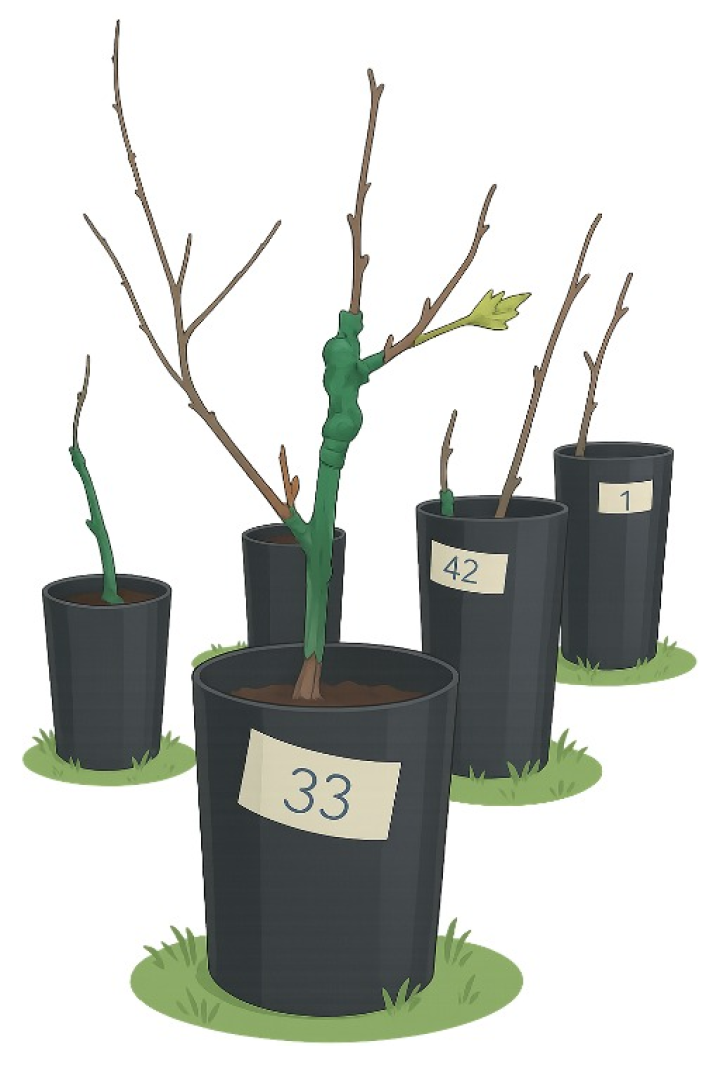
2.4.2. Efficacy Trials on the Soil Application of HCs and PIRs
3. Results and Discussion
3.1. Raw Materials
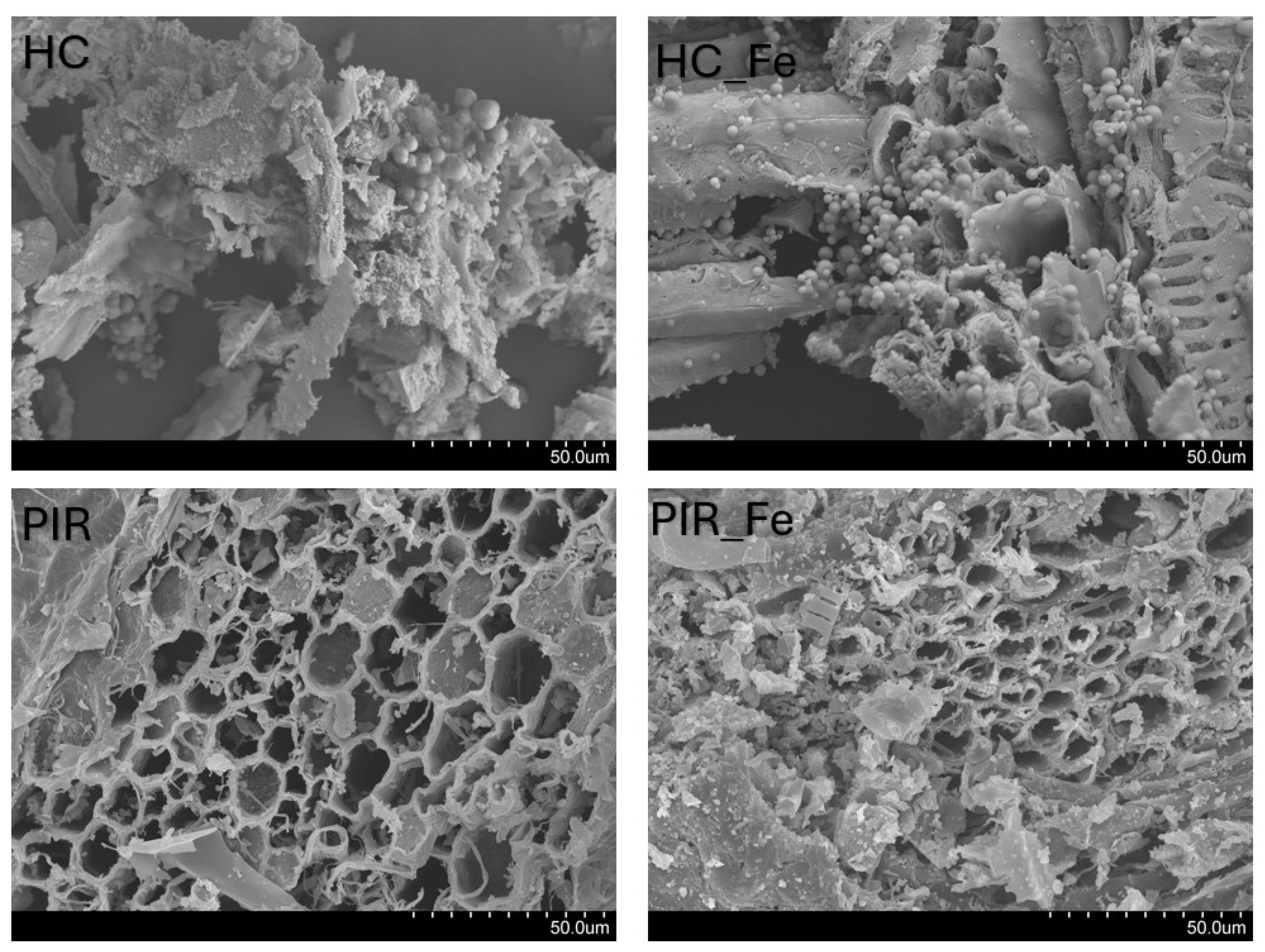
3.2. Analysis of PIRs and HCs
3.3. Analysis of Chlorophyll Index
3.4. HTC Reaction Pressure
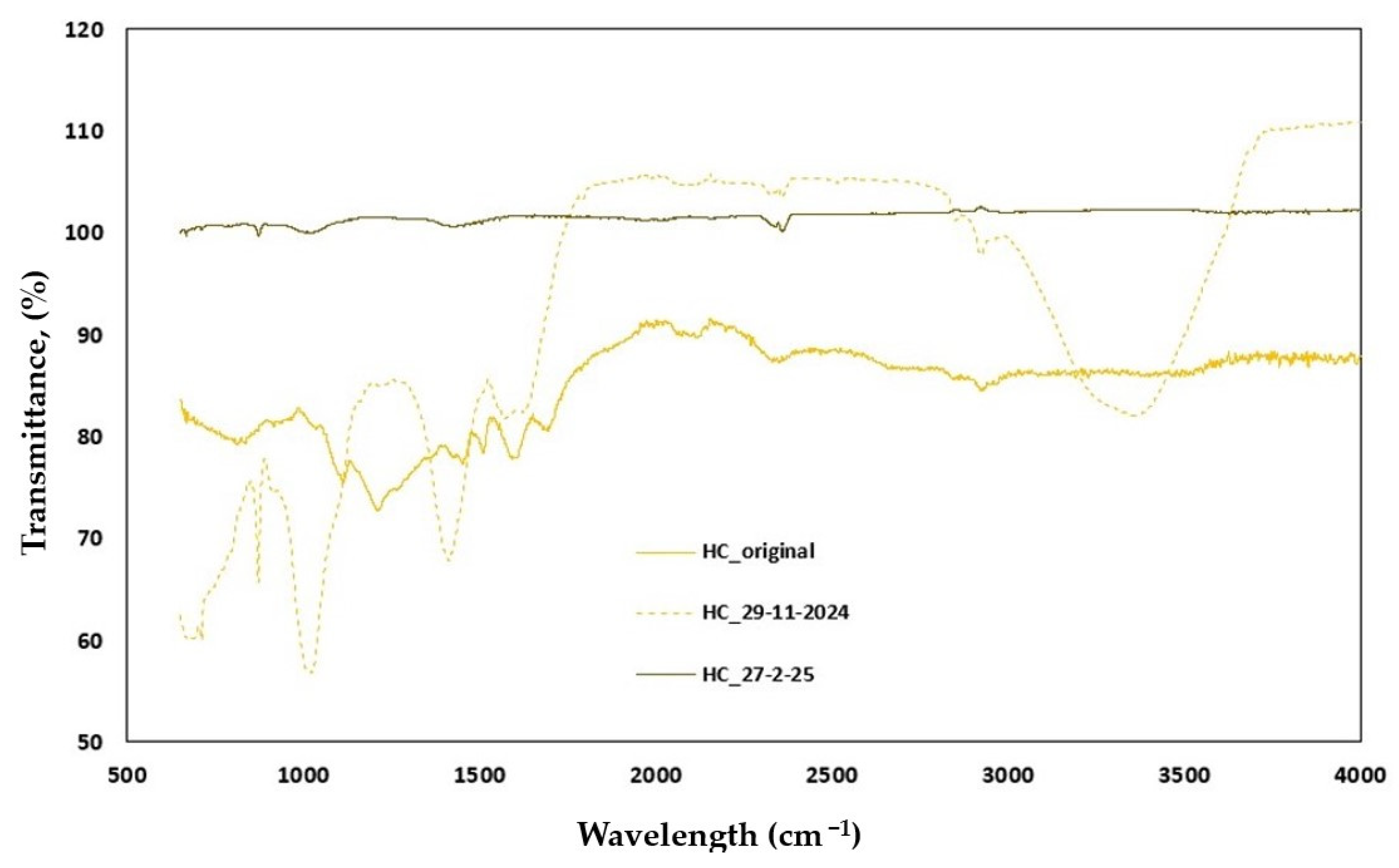
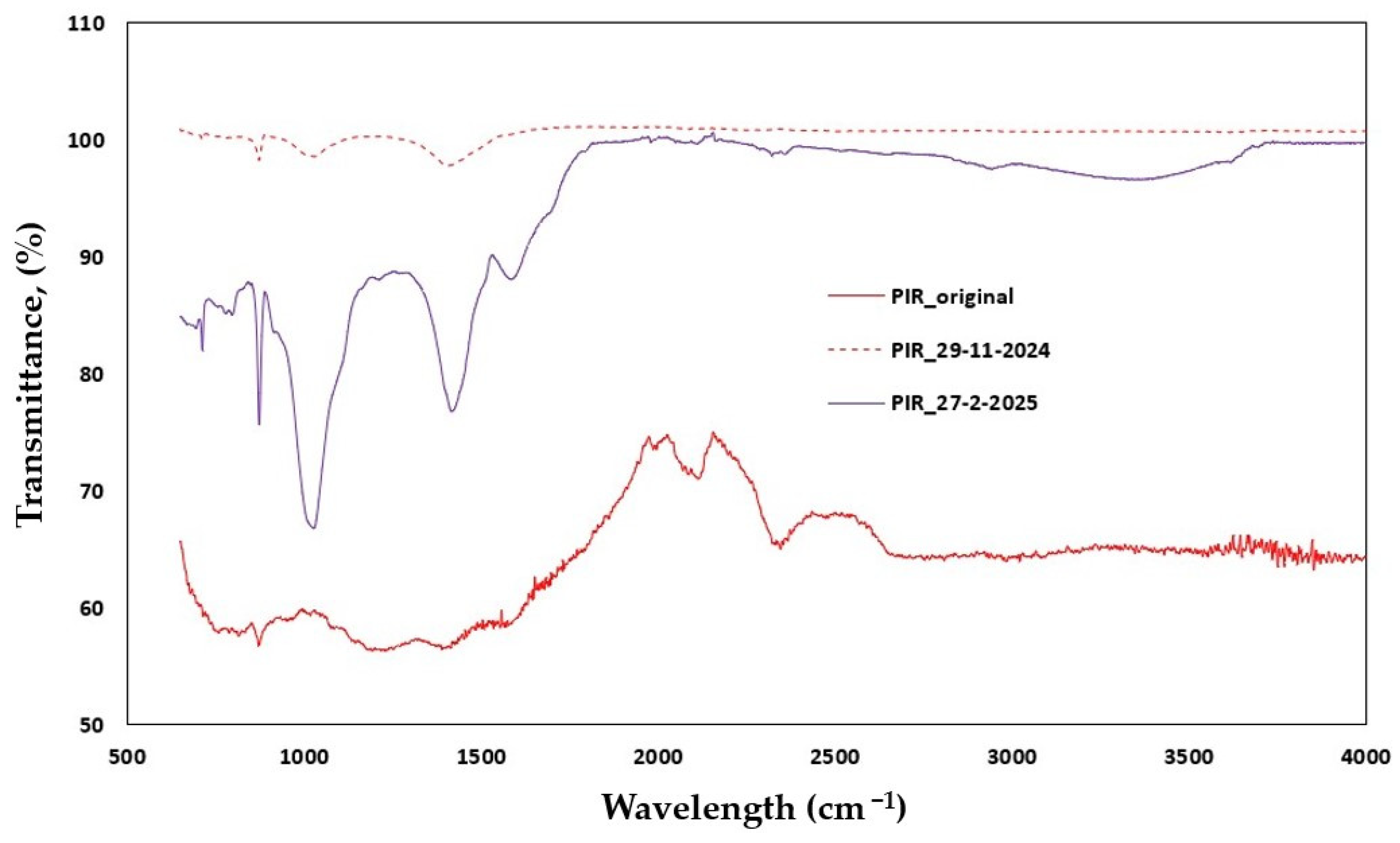
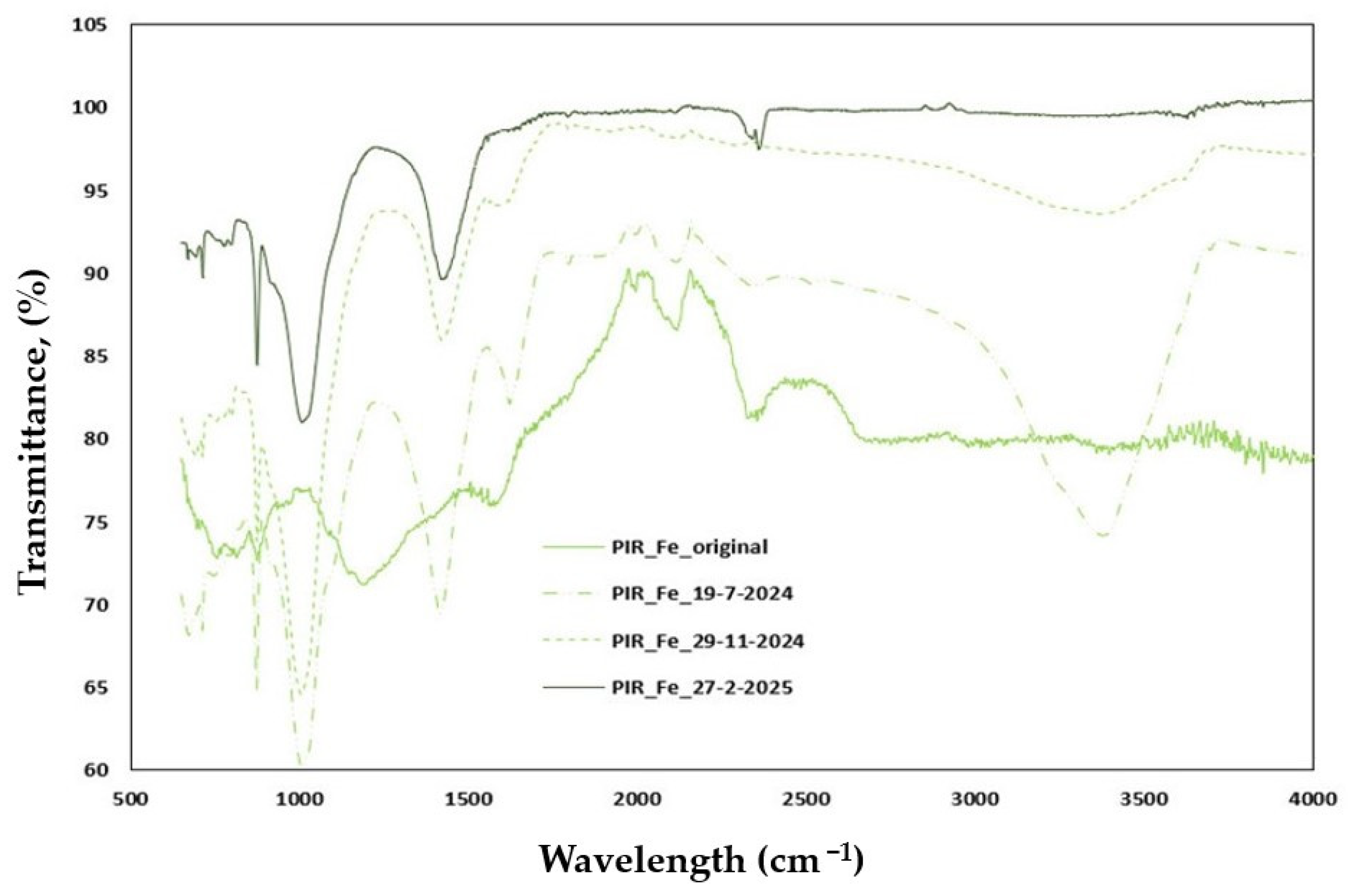
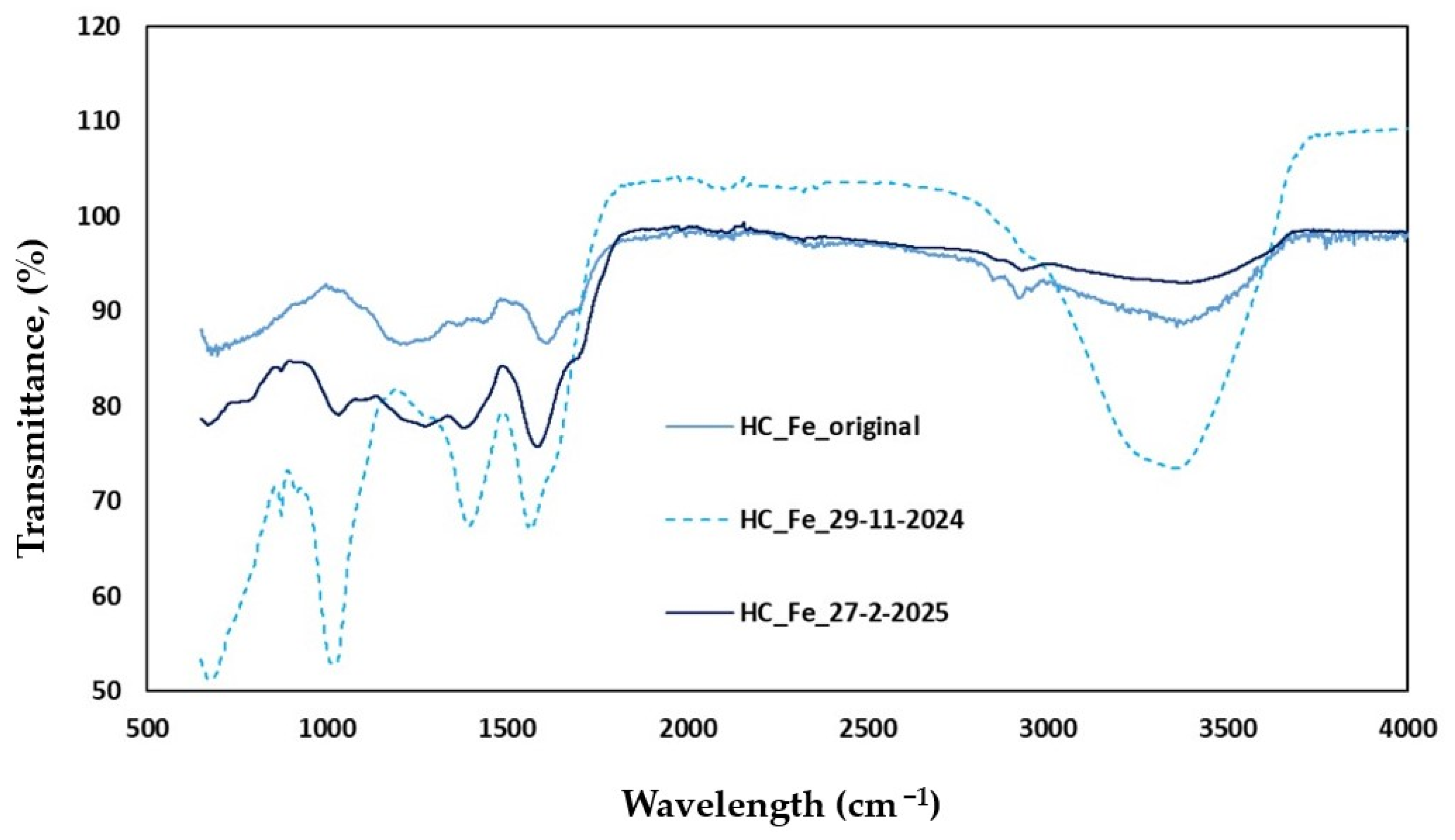
3.5. FTIR Analysis
- The O-H and C=O bands do not decrease, indicating that the oxygenated functional groups remain after doping.
- There is a slight decrease in the aliphatic C-H bands (2920 and 2850 cm−1), possibly due to interactions between Fe and the carbon structure [43].
- The aromatic C-H bands are less intense (~870, 810, and 750 cm−1), suggesting a change in the structural organization of the carbon.
4. Conclusions
Author Contributions
Funding
Data Availability Statement
Acknowledgments
Conflicts of Interest
Abbreviations
| VSs | Vineyard Stumps |
| PIR | Pyrochar |
| HC | Hydrochar |
| HTC | Hydrothermal carbonization |
| PYR | Pyrolysis |
| PIR_Fe | Pyrochars used in soil |
| HC_Fe | Hydrochar used in soil |
| HHV | Higher heating value |
| LHV | Lower heating value |
References
- Winter, S.; Bauer, T.; Strauss, P.; Kratschmer, S.; Paredes, D.; Popescu, D.; Landa, B.; Guzmán, G.; Gómez, J.A.; Guernion, M.; et al. Effects of vegetation management intensity on biodiversity and ecosystem services in vineyards: A meta-analysis. J. Appl. Ecol. 2018, 55, 2484–2495. [Google Scholar] [CrossRef] [Scilit]
- Paiola, A.; Assandri, G.; Brambilla, M.; Zottini, M.; Pedrini, P.; Nascimbene, J. Exploring the potential of vineyards for biodiversity conservation and delivery of biodiversity-mediated ecosystem services: A global-scale systematic review. Sci. Total Environ. 2020, 706, 135839. [Google Scholar] [CrossRef] [Scilit]
- Lazzari, M.; Piccarreta, M. Soil Erosion vs. Vineyard Productivity: The Case of the Aglianico del Vulture DOC and DOCG Areas (Southern Italy). Sustainability 2023, 15, 15700. [Google Scholar] [CrossRef] [Scilit]
- Ferreira, C.S.S.; Seifollahi-Aghmiuni, S.; Destouni, G.; Ghajarnia, N.; Kalantari, Z. Soil degradation in the European Mediterranean region: Processes, status and consequences. Sci. Total Environ. 2022, 805, 150106. [Google Scholar] [CrossRef] [Scilit]
- Cano, B.L.; Sánchez, M.A.; Rasero, J.M.D.; Suero, S.R.; Delgado, S.N. Introduction to Hydrocarbonization: Principles and Applications, 1st ed.; Springer: Cham, Switzerland, 2024; pp. 1–14. [Google Scholar]
- Chen, W.H.; Biswas, P.P.; Zhang, C.; Kwon, E.E.; Chang, J.S. Achieving carbon credits through biomass torrefaction and hydrothermal carbonization: A review. Renew. Sustain. Energy Rev. 2025, 208, 115056. [Google Scholar] [CrossRef] [Scilit]
- Wang, X.; Duo, J.; Jin, Z.; Yang, F.; Lai, T.; Collins, E. Effects of Hydrothermal Carbonization Conditions on the Characteristics of Hydrochar and Its Application as a Soil Amendment: A Review. Agronomy 2025, 15, 327. [Google Scholar] [CrossRef] [Scilit]
- Bargmann, I.; Martens, R.; Rillig, M.C.; Kruse, A.; Kücke, M. Hydrochar amendment promotes microbial immobilization of mineral nitrogen. J. Plant Nutr. Soil Sci. 2014, 177, 59–67. [Google Scholar] [CrossRef] [Scilit]
- Bargmann, I.; Rillig, M.C.; Kruse, A.; Greef, J.M.; Kücke, M. Effects of hydrochar application on the dynamics of soluble nitrogen in soils and on plant availability. J. Plant Nutr. Soil Sci. 2014, 177, 48–58. [Google Scholar] [CrossRef] [Scilit]
- Xia, Y.; Luo, H.; Li, D.; Chen, Z.; Yang, S.; Liu, Z.; Yang, T.; Gai, C. Efficient immobilization of toxic heavy metals in multi-contaminated agricultural soils by amino-functionalized hydrochar: Performance, plant responses and immobilization mechanisms. Environ. Pollut. 2020, 261, 114217. [Google Scholar] [CrossRef] [Scilit] [PubMed]
- Islam, M.A.; Limon, M.S.H.; Romić, M.; Islam, M.A. Hydrochar-based soil amendments for agriculture: A review of recent progress. Arab. J. Geosci. 2021, 14, 102. [Google Scholar] [CrossRef] [Scilit]
- Sun, K.; Han, L.; Yang, Y.; Xia, X.; Yang, Z.; Wu, F.; Li, F.; Feng, Y.; Xing, B. Application of hydrochar altered soil microbial community composition and the molecular structure of native soil organic carbon in a paddy soil. Environ. Sci. Technol. 2020, 54, 2715–2725. [Google Scholar] [CrossRef] [Scilit]
- Battipaglia, G.; Niccoli, F.; Kabala, J.P.; Marzaioli, R.; Di Santo, T.; Strumia, S.; Castaldi, S.; Rutigliano, F.A. Hydrochar application improves growth and intrinsic water use efficiency of Populus alba, especially during hot season. Forests 2023, 14, 658. [Google Scholar] [CrossRef] [Scilit]
- Basso, D.; Weiss-Hortala, E.; Patuzzi, F.; Baratieri, M.; Fiori, L. In deep analysis on the behavior of grape marc constituents during hydrothermal carbonization. Energies 2018, 11, 1379. [Google Scholar] [CrossRef] [Scilit]
- Pagés-Díaz, J.; Alvarado, A.O.C.; Montalvo, S.; Diaz-Robles, L.; Curio, C.H. Anaerobic bio-methane potential of the liquors from hydrothermal carbonization of different lignocellulose biomasses. Renew. Energy 2020, 157, 182–189. [Google Scholar] [CrossRef] [Scilit]
- Zhang, B.; Heidari, M.; Regmi, B.; Salaudeen, S.; Arku, P.; Thimmannagari, M.; Dutta, A. Hydrothermal carbonization of fruit wastes: A promising technique for generating hydrochar. Energies 2018, 11, 2022. [Google Scholar] [CrossRef] [Scilit]
- Hoffmann, V.; Jung, D.; Zimmermann, J.; Rodriguez Correa, C.; Elleuch, A.; Halouani, K.; Kruse, A. Conductive carbon materials from the hydrothermal carbonization of vineyard residues for the application in electrochemical double-layer capacitors (EDLCs) and direct carbon fuel cells (DCFCs). Materials 2019, 12, 1703. [Google Scholar] [CrossRef] [Scilit] [PubMed]
- Lorero, I.; Vizcaíno, A.J.; Alguacil, F.J.; López, F.A. Activated carbon from winemaking waste: Thermoeconomic analysis for large-scale production. Energies 2020, 13, 6462. [Google Scholar] [CrossRef] [Scilit]
- Baronti, S.; Magno, R.; Maienza, A.; Montagnoli, A.; Ungaro, F.; Vaccari, F. Long term effect of biochar on soil plant water relation and fine roots: Results after 10 years of vineyard experiment. Sci. Total Environ. 2022, 838, 158225. [Google Scholar] [CrossRef] [Scilit]
- Giagnoni, L.; Maienza, A.; Baronti, S.; Vaccari, F.; Genesio, L.; Taiti, C.; Martellini, T.; Scodellini, R.; Cincinelli, A.; Costa, C.; et al. Long-term soil biological fertility, volatile organic compounds and chemical properties in a vineyard soil after biochar amendment. Geoderma 2019, 337, 122–131. [Google Scholar] [CrossRef] [Scilit]
- Idbella, M.; Baronti, S.; Giagnoni, L.; Renella, G.; Becagli, M.; Cardelli, R.; Maienza, A.; Vaccari, F.P.; Bonanomi, G. Long-term effects of biochar on soil chemistry, biochemistry, and microbiota: Results from a 10-year field vineyard experiment. Appl. Soil Ecol. 2024, 195, 105217. [Google Scholar] [CrossRef] [Scilit]
- Maienza, A.; Baronti, S.; Cincinelli, A.; Martellini, T.; Grisolia, A.; Miglietta, F.; Renella, G.; Stazi, S.; Vaccari, F.; Genesio, L. Biochar improves the fertility of a Mediterranean vineyard without toxic impact on the microbial community. Agron. Sustain. Dev. 2017, 37, 1–10. [Google Scholar] [CrossRef] [Scilit]
- García-Jaramillo, M.; Meyer, K.; Phillips, C.; Acosta-Martínez, V.; Osborne, J.; Levin, A.; Trippe, K. Biochar addition to vineyard soils: Effects on soil functions, grape yield and wine quality. Biochar 2021, 3, 565–577. [Google Scholar] [CrossRef] [Scilit]
- Aguirre, J.; González-Egido, S.; González-Lucas, M.; González-Pernas, F. Medium-term effects and economic analysis of biochar application in three Mediterranean crops. Energies 2023, 16, 4131. [Google Scholar] [CrossRef] [Scilit]
- Schmidt, H.; Kammann, C.; Niggli, C.; Evangelou, M.; Mackie, K.; Abiven, S. Biochar and biochar-compost as soil amendments to a vineyard soil: Influences on plant growth, nutrient uptake, plant health and grape quality. Agric. Ecosyst. Environ. 2014, 191, 117–123. [Google Scholar] [CrossRef] [Scilit]
- Uras, Ü.; Carrier, M.; Hardie, A.G.; Knoetze, J.H. Physico-chemical characterization of biochars from vacuum pyrolysis of South African agricultural wastes for application as soil amendments. J. Anal. Appl. Pyrolysis 2012, 98, 207–213. [Google Scholar] [CrossRef] [Scilit]
- Marshall, J.; Muhlack, R.; Morton, B.J.; Dunnigan, L.; Chittleborough, D.; Kwong, C.W. Pyrolysis temperature effects on biochar–water interactions and application for improved water holding capacity in vineyard soils. Soil Syst. 2019, 3, 27. [Google Scholar] [CrossRef] [Scilit]
- Videgain, M.; Marco, P.; Martí, C.; García-Ramos, F.J.; Manyà, J.J.; Jaizme-Vega, M.C. Evaluación de los efectos de la aplicación de biochar como enmienda orgánica en suelos agrícolas. In Proceedings of the Congreso Ibérico Agroingeniería 2019, Zaragoza, Spain, 3–6 September 2019; pp. 1–14. [Google Scholar] [CrossRef] [Scilit]
- ISO 3310-1; Test Sieves—Technical Requirements and Testing—Part 1: Test Sieves of Metal Wire Cloth. ISO: Geneva, Switzerland, 2016.
- Olivares-Marin, M.; Román, S.; Ledesma, B.; Álvarez, A. Optimizing Al and Fe Load during HTC of Water Hyacinth: Improvement of Induced HC Physicochemical Properties. Catalysts 2023, 13, 506. [Google Scholar] [CrossRef] [Scilit]
- Gai, C.; Zhang, F.; Lang, Q.; Liu, T.; Peng, N.; Liu, Z. Facile One-Pot Synthesis of Iron Nanoparticles Immobilized into the Porous Hydrochar for Catalytic Decomposition of Phenol. Appl. Catal. B Environ. 2017, 204, 566–576. [Google Scholar] [CrossRef] [Scilit]
- Uddling, J.; Gelang-Alfredsson, J.; Piikki, K.; Pleijel, H. Evaluating the relationship between leaf chlorophyll concentration and SPAD-502 chlorophyll meter readings. Photosynth. Res. 2007, 91, 37–46. [Google Scholar] [CrossRef] [Scilit]
- Li, Q.; Zhang, Y.; Song, Y.; Yang, H.; Yang, L.; Bai, L.; Wei, D.; Wang, W.; Liang, Y.; Chen, H. Apple residues derived porous carbon nanosheets synthesized with FeCl3 assisted hydrothermal carbonization for supercapacitors with high rate performance. Carbon Lett. 2023, 33, 549–560. [Google Scholar] [CrossRef] [Scilit]
- MacDermid-Watts, K.; Adewakun, E.; Norouzi, O.; Deb, A.T.; Pradhan, R.; Dutta, A. Effects of FeCl3 Catalytic Hydrothermal Carbonization on Chemical Activation of Corn Wet Distillers’ Fiber. ACS Omega 2021, 6, 14875–14886. [Google Scholar] [CrossRef] [Scilit]
- Liu, B.; Xing, Z.; Xue, Y.; Zhang, J.; Zhai, J. Effect of Pyrolysis Temperature on the Carbon Sequestration Capacity of Spent Mushroom Substrate Biochar in the Presence of Mineral Iron. Molecules 2024, 29, 5712. [Google Scholar] [CrossRef] [Scilit]
- Ekpo, U.; Ross, A.B.; Camargo-Valero, M.A.; Fletcher, L.A. Influence of pH on hydrothermal treatment of swine manure: Impact on extraction of nitrogen and phosphorus in process water. Bioresour. Technol. 2016, 214, 637–644. [Google Scholar] [CrossRef] [Scilit]
- Kruse, A.; Krupka, A.; Schwarzkopf, V.; Gamard, C.; Henningsen, T. Influence of Proteins on the Hydrothermal Gasification and Liquefaction of Biomass. 1. Comparison of Different Feedstocks. Ind. Eng. Chem. Res. 2005, 44, 3013–3020. [Google Scholar] [CrossRef] [Scilit]
- Cerovic, Z.G.; Masdoumier, G.; Ghozlen, N.B.; Latouche, G. A new optical leaf-clip meter for simultaneous non-destructive assessment of leaf chlorophyll and epidermal flavonoids. Physiol. Plant. 2012, 146, 251–260. [Google Scholar] [CrossRef] [Scilit]
- Canton, M.; Borghezan, M.; Silva, T.C.; Welter, J.F.; Villar, L.; Rosa, D.; Silva, A.L.; Pescador, R. Chlorophyll evaluation on leaves of ‘Sauvignon Blanc’ during vegetative growth in São Joaquim, Santa Catarina, Brazil. Acta Hortic. 2017, 1188, 15–20. [Google Scholar] [CrossRef] [Scilit]
- Petrović, J.; Ercegović, M.; Simić, M.; Koprivica, M.; Dimitrijević, J.; Jovanović, A.; Janković Pantić, J. Hydrothermal Carbonization of Waste Biomass: A Review of Hydrochar Preparation and Environmental Application. Processes 2024, 12, 207. [Google Scholar] [CrossRef] [Scilit]
- Lin, Q.; Yang, X.; Ma, W.; Zahoor, A.; Jin, F.; Chen, X.; Tai, L.; de Caprariis, B.; De Filippis, P.; Damizia, M. Hydrothermal carbonization of fish sludge: Effect of FeCl3 on the hydrochar properties and phosphorus and heavy metal transformation. Environ. Technol. Innov. 2025, 40, 104355. [Google Scholar] [CrossRef] [Scilit]
- Zhang, X.; Wang, Y.; Li, J.; Chen, H. FTIR Analysis of Biomass and Its Application in Soil Studies. IOP Conf. Ser. Earth Environ. Sci. 2019, 239, 012035. [Google Scholar] [CrossRef] [Scilit]
- Zhang, X.; Li, Y.; Wang, L.; Chen, H. Structural Characterization of Biomass Components Using FTIR Spectroscopy. Int. J. Mol. Sci. 2023, 24, 8936. [Google Scholar] [CrossRef] [Scilit]
- Kocsis, T.; Buzás, N.; Farkas, I.; Kocsis, Z. Investigation of Biomass-Derived Materials Using FTIR and Thermal Analysis. J. Agric. Environ. Sci. 2025, 8, 870. [Google Scholar] [CrossRef] [Scilit]




| Topic/Study | Main Findings | Ref. |
|---|---|---|
| Effect of organic viticulture and vegetation cover | Increase biodiversity and ecosystem services (soil fertility, pest control, carbon sequestration). | [1,2] |
| HTC: products and applications | HTC produces solid hydrochar (HC) and process water (PW); viable for wet residues and circular economy uses. | [5] |
| Contrasting roles of HC and PIR | HC improves CEC and nutrient retention; PIR is more stable and favors carbon sequestration. | [6] |
| Variable HC outcomes in soils | Effects depend on feedstock and HTC conditions; HC can act as herbicide or fertilizer; results are heterogeneous | [7,8,9,10] |
| HC and soil properties | HC improves water retention, reduces bulk density, increases microbial biomass and carbon sequestration. | [11,12] |
| Plant responses under heat stress | HC showed positive effects on growth and water use efficiency under heat. | [13] |
| Conversion of vineyard residues by HTC | Grape pomace convertible to HC; yield and quality depend on HTC conditions. | [14,15] |
| Gap in vineyard stumps (VSs) | No specific studies applying VSs as HTC amendments identify as a knowledge gap. | [16,17,18] |
| Long-term benefits of PIR | Increases in soil organic C, pH, water retention and reduced bulk density in study up to 10 years. | [19,20] |
| Biological and productivity effects of PIR | Changes in CEC and microbial communities; effects on yield and wine quality are variable. | [21,22,23,24,25] |
| PIR and water/nutrient availability | PIR improves water retention and nutrient availability; performance depends on pyrolysis temperature and feedstock | [26,27,28] |
| Proximate Analysis | % |
|---|---|
| Volatile matter | 81.27 |
| Fixed carbon | 17.25 |
| Ash | 1.48 |
| Elemental analysis | % |
| C | 45.10 |
| H | 6.05 |
| N | 0.31 |
| S | 0.03 |
| O 1 | 47.03 |
| HHV | MJ/kg |
| 0% moisture | 19.32 |
| Moisture received | 17.57 |
| LHV | MJ/kg |
| 0% moisture | 17.99 |
| Moisture received | 16.37 |
| Sample | Solid Yield (%) | C (%) | N (%) | H (%) | S (%) | O 1 (%) | Ash (%) | HHV (MJ/kg) |
|---|---|---|---|---|---|---|---|---|
| PIR | 27.13 | 68.64 | 0.67 | 3.32 | 0.10 | 18.32 | 8.95 | 30.11 |
| HC | 58.81 | 64.00 | 0.77 | 6.25 | 0.21 | 25.26 | 3.51 | 30.62 |
| PIR_Fe | 30.02 | 65.87 | 0.63 | 3.47 | 0.12 | 16.27 | 13.64 | 25.92 |
| HC_Fe | 62.90 | 54.30 | 0.50 | 5.27 | 0.18 | 36.21 | 3.54 | 21.06 |
| Control | 1%HC | 1%PIR | 1%HC_Fe | 1%PIR_Fe | 3%HC | 3%PIR | 3%HC_Fe | 3%PIR_Fe | |
|---|---|---|---|---|---|---|---|---|---|
| 26 June 2024 | 27.2 | 28.6 | 28.1 | 28.3 | 29.1 | 29.3 | - | - | - |
| 3 July 2024 | 30.0 | 30.6 | 29.7 | 30.5 | 29.0 | 25.0 | 24.0 | 29.6 | 31.4 |
| 10 September 2024 | 24.0 | 24.3 | 22.5 | 25.7 | 23.3 | - | 31.4 | 17.3 | 26.1 |
| Average | 27.1 | 27.9 | 26.8 | 28.2 | 27.1 | 27.2 | 27.7 | 23.4 | 28.7 |
| Functional Group | Peak (cm−1) | Observation |
|---|---|---|
| O-H (hydroxyls) | 3200–3400 | Higher intensity in HC; indicates presence of hydroxyl groups. |
| C=O (carbonyls: carboxylic acids and esters) | 1700 | Prominent in HC; attributed to carbonyl groups. |
| Aromatic C=C/COO− | 1600–1500 | More pronounced in PIR; suggests more condensed aromatic/graphitic structure. |
| Aromatic specific signal | 1580 | Stronger in PIR; indicative of condensed aromatic structures. |
| C-O (alcohols and ethers) | 1000–1200 | More prominent in HC; reflects alcohol and ether functionalities. |
| Aliphatic C-H | 2920; 2850 | Slight decrease after Fe doping; possible interactions between Fe and carbon structure. |
| Aromatic C-H | ~870; 810; 750 | Reduced intensity after Fe doping; suggests changes in structural organization. |
Disclaimer/Publisher’s Note: The statements, opinions and data contained in all publications are solely those of the individual author(s) and contributor(s) and not of MDPI and/or the editor(s). MDPI and/or the editor(s) disclaim responsibility for any injury to people or property resulting from any ideas, methods, instructions or products referred to in the content. |
© 2026 by the authors. Licensee MDPI, Basel, Switzerland. This article is an open access article distributed under the terms and conditions of the Creative Commons Attribution (CC BY) license.
Share and Cite
Díaz-Rasero, J.M.; Sosa, T.; Ledesma, B.; Román, S. Physicochemical Characterization of Vineyard Stump-Derived Hydrochars and Pyrochars and Preliminary Grapevine Tolerance Screening. Environments 2026, 13, 83. https://doi.org/10.3390/environments13020083
Díaz-Rasero JM, Sosa T, Ledesma B, Román S. Physicochemical Characterization of Vineyard Stump-Derived Hydrochars and Pyrochars and Preliminary Grapevine Tolerance Screening. Environments. 2026; 13(2):83. https://doi.org/10.3390/environments13020083
Chicago/Turabian StyleDíaz-Rasero, José Manuel, Teresa Sosa, Beatriz Ledesma, and Silvia Román. 2026. "Physicochemical Characterization of Vineyard Stump-Derived Hydrochars and Pyrochars and Preliminary Grapevine Tolerance Screening" Environments 13, no. 2: 83. https://doi.org/10.3390/environments13020083
APA StyleDíaz-Rasero, J. M., Sosa, T., Ledesma, B., & Román, S. (2026). Physicochemical Characterization of Vineyard Stump-Derived Hydrochars and Pyrochars and Preliminary Grapevine Tolerance Screening. Environments, 13(2), 83. https://doi.org/10.3390/environments13020083