Article

Lagged and Temperature-Dependent Effects of Ambient Air Pollution on COPD Hospitalizations in Istanbul


1
Department of Climate Science and Meteorological Engineering, İstanbul Technical University, 34469 Maslak, İstanbul, Türkiye
2
Department of Climate and Marine Sciences, Eurasia Institute of Earth Sciences, İstanbul Technical University, 34469 Maslak, İstanbul, Türkiye
*
Author to whom correspondence should be addressed.
Environments 2026, 13(1), 56; https://doi.org/10.3390/environments13010056 (registering DOI)
Submission received: 22 December 2025 / Revised: 17 January 2026 / Accepted: 19 January 2026 / Published: 21 January 2026

Abstract

Chronic obstructive pulmonary disease (COPD) is strongly associated with the inhalation of harmful particulate matter in ambient air. This study examined 786,290 COPD-related hospital admissions among patients aged 45–64 in Istanbul from 2013 to 2015, using a Generalized Linear Model (GLM) with meteorological variables included as covariates and air pollutant effects evaluated across lag days 0–9. Daily mean concentrations of PM10, PM2.5, and NO2 were used as air pollution indicators, while average temperature and relative humidity were considered as meteorological variables. Relative risk (RR) and excess relative risk (ERR) estimates were calculated for a 10 μg/m3 increase in pollutant concentrations across the lag period. Significant associations were found between air pollution and COPD-related hospital admissions in overall analyses as well as seasonal assessments, especially for temperature-related effects. A 10 μg/m3 increase in PM2.5 was associated with an ERR of 1.26% in females and 1.07% in males at lag 1, while NO2 exposure showed ERRs of 1.31% in males and 1.30% in females. The effects of PM10 were comparatively smaller, peaking at about 1.13% ERR at lag 5. Stronger associations were observed in both summer and winter seasons. PM2.5 demonstrated the highest overall impact, particularly among females, with an excess risk of 1.7%. Pollutant effects were more pronounced at ambient temperatures around 0 °C and 25 °C.

1. Introduction

Pollution is the leading environmental risk factor contributing to disease and premature mortality worldwide [1]. The World Health Organization (WHO) estimated that pollution-related diseases were responsible for 9 million premature deaths in 2015, accounting for 16% of all global fatalities. This figure is three times higher than the combined death tolls from AIDS, tuberculosis, and malaria, and fifteen times greater than deaths caused by all acts of violence and armed conflict. The WHO further reported that ambient air pollution alone causes 4.2 million deaths annually. In 2019, 99% of the global population lived in areas where air pollution levels exceeded WHO-recommended limits [2]. Urbanization and increasing population density in both developing and developed countries have intensified exposure to traffic-related air pollution, thereby exacerbating public health risks [3]. In the ten most populous countries with the poorest air quality, the average concentration of fine particulate matter (PM2.5), defined as particles with an aerodynamic diameter smaller than 2.5 μm, increased by 11.2%, rising from 39.7 μg/m3 in 1990 to 44.2 µg/m3 in 2015 [4].
Air pollution in İstanbul represents a critical public health challenge that has intensified with rapid urbanization and the widespread use of fossil fuels. Specifically, in Istanbul, major emission sources include dense road traffic, residential heating (especially in winter), industrial activities, and intensive maritime transport through the Bosphorus, while transboundary Saharan dust outbreaks episodically elevate particulate matter concentrations [5,6,7,8]. The growth in traffic volume and associated emissions poses a significant threat to human health, particularly in relation to cardiovascular and respiratory diseases, as well as non-accidental mortality linked to particulate matter smaller than 10 μm in diameter (PM10) [9]. Globally, the prevalence of air pollutants has been associated with a variety of diseases, including pneumonia, influenza, measles, and asthma. The detrimental effects of air pollution, particularly on cardiovascular health, have been extensively studied [10]. In addition, air pollution significantly impairs individuals’ quality of life [11]. Even in regions where air quality is classified as good, ambient air pollution contributes substantially to premature deaths. For example, in 2018, ambient air pollution was responsible for 84,300 deaths in Italy, 78,400 in Germany, 47,300 in France, and 41,900 in the United Kingdom [12]. Moreover, it is estimated that in 2015, 66% of the population in Beijing, 41% in New Delhi, 67% in Paris, and 96% in Barcelona were exposed to elevated levels of air pollution [13]. These pollutants, associated with numerous health conditions, have increased the risk of respiratory illnesses in the general population. Within the respiratory tract, where the effects are most pronounced, common conditions resulting from both short and long-term exposures include sinusitis, coughing, and dyspnoea [14]. Notably, the risk of lung cancer increases by 36% for every 10 μg/m3 increase in PM2.5 concentration [15]. Furthermore, short-term exposure to PM10, PM2.5, and nitrogen dioxide (NO2) has been positively associated with an increase in respiratory hospital admissions (HAs).
Chronic Obstructive Pulmonary Disease (COPD) is a progressive condition characterized by persistent respiratory symptoms and is commonly associated with prolonged exposure to harmful atmospheric particles. COPD-related mortality has increased significantly in recent years, posing a substantial social and economic burden. The estimated global prevalence of COPD is approximately 174 million individuals [16]. In a study conducted in China, the prevalence of COPD among individuals aged 40 years and older was found to be 13.7% [17]. According to the WHO, COPD was projected to become the third leading cause of death worldwide by 2020 and the fifth leading cause of global economic disease burden [18]. Chronic respiratory diseases, including COPD, asthma, and bronchiectasis, are major causes of global morbidity and mortality, characterized by chronic airway inflammation and airflow limitation. COPD prevalence increases markedly with age, affecting 5–16% of individuals aged ≥40 years and up to 20–30% of those aged ≥70 years, with correspondingly higher hospitalization and mortality rates in older adults [19]. Despite this age-related increase, individuals aged 45–64 years represent a key population for epidemiological studies, as this period often reflects disease recognition and early progression, when cumulative environmental exposures become clinically relevant but before advanced multimorbidity and frailty dominate. Focusing on this group enables a clearer assessment of modifiable risk factors, such as ambient air pollution, while limiting confounding from age-related comorbidities and asthma–COPD overlap syndrome [20]. Although cigarette smoking remains the primary risk factor for COPD, ambient air pollution represents an important additional contributor [21]. Evidence from a study in Paris showed that COPD patients are particularly sensitive to ozone exposure, while other pollutants were not significantly associated with exacerbations [22]. Numerous studies have demonstrated associations between COPD and air pollution, with a selection of these studies summarized in Table 1.
Several studies have investigated air pollution and its effects on human health in İstanbul. Significant associations between PM10 and SO2 concentrations and COPD outcomes have been reported in western Türkiye. An analysis of paediatric emergency department admissions in İstanbul revealed that visits due to asthma increased with higher levels of NO, NOx, PM2.5, NO2, and PM10, but decreased with rising SO2 concentrations [28]. Additionally, the spatial and seasonal variations in air pollutants across İstanbul between 2007 and 2017 were also examined, finding that pollutant concentrations were generally higher during winter months, except for ozone, which did not follow this seasonal pattern [29]. Research has also highlighted the frequency and severity of temperature inversion events on days with elevated air pollution levels, indicating that surface-based inversions were more pronounced during winter, particularly under high-pressure systems [30]. These studies provide critical insights into the health impacts of air pollution in İstanbul and are essential for the development of effective air quality management strategies. Nevertheless, current studies based in İstanbul have predominantly concentrated on extensive population segments, paediatric groups, or general spatial and seasonal pollution attributes, with insufficient attention to age-specific susceptibility among middle-aged adults or the synergistic effects of temperature and air pollution on COPD-related outcomes.
In this study, HA data for individuals aged 45 to 64 years were obtained from hospitals across İstanbul between 1 March 2013 and 31 May 2015. The data were categorized by total admissions, as well as by gender. A correlation analysis between HAs and air pollution levels was conducted using the “DLNM” package in the R programming environment. The relationship between air pollution and COPD-related HAs in İstanbul during the 2013–2015 period was examined based on three pollutants: PM10, PM2.5, and NO2, which were further analysed by gender using Poisson regression models within a generalized linear modelling framework with a log link. Relative risk (RR) values were calculated for each pollutant to quantify their health impact. Most epidemiological studies on air pollution and COPD have primarily focused on elderly populations (≥65 years), who are known to be highly vulnerable. However, adults aged 45–64 represent a critical but under-studied group, as they are often actively employed, experience increasing cumulative exposure, and may exhibit early disease progression while still lacking the extensive comorbidity burden observed in older adults. Focusing on this age group allows for a clearer assessment of pollution-related effects with reduced confounding by age-related frailty and multimorbidity. In Istanbul, where air pollution levels remain persistently elevated, evidence for this demographic group is particularly limited. Moreover, this study investigated seasonal associations between COPD hospitalizations and each pollutant during summer and winter. Finally, temperature was incorporated as an effect modifier, and pollutant-related risk estimates were evaluated across a continuous temperature range, with results reported at two representative temperature levels (0 °C and 25 °C).

2. Materials and Methods

2.1. Study Area and Data

Istanbul is located approximately between longitudes 28° E and 30° E and latitudes 41° N and 42° N. As the largest metropolis in Türkiye, İstanbul is home to over 16 million residents. Geographically situated between Asia and Europe, the city functions as Türkiye’s largest port and a major industrial and economic centre. One of the primary contributors to air pollution in Istanbul is urban transportation. According to the Turkish Statistical Institute, a total of 6,353,103 automobiles were registered in the city as of 2022 [31]. Figure 1 illustrates the geographic location of Türkiye and highlights the position of İstanbul.
The Turkish Ministry of Environment, Urbanization, and Climate Change manages the National Air Quality Monitoring Network, which provided hourly air pollution data for the period 2013 to 2015. This study utilized data on nitrogen dioxide (NO2) and PM10 PM2.5. No missing data were observed for PM10 and NO2, and only one day of missing data for PM2.5. Daily average concentrations of these pollutants were calculated from the hourly data for İstanbul. Air quality data were obtained from 10 monitoring stations: Esenler, Alibeyköy, Aksaray, Beşiktaş, Sarıyer, Yenibosna, Üsküdar, Kadıköy, Ümraniye, and Kartal. Hourly measurements were first aggregated to daily mean concentrations for each monitoring station. Subsequently, daily station-level values were averaged across all available stations to derive a single city-wide daily exposure estimate for Istanbul. No hospital-specific or station–hospital matched exposure assignment was applied; instead, a city-level exposure metric was used, consistent with standard ecological time-series study designs. These stations were selected based on their proximity to hospitals to better reflect exposure near healthcare facilities. In addition, relative humidity and temperature data were collected from three meteorology stations: Sarıyer, Florya and Göztepe, to evaluate the influence of weather conditions on HAs. Monitoring stations were selected to represent urban background exposure conditions in areas where hospitals are located; however, exposure estimates were not assigned at the hospital level. Temperature data were recorded hourly and subsequently converted to daily averages for analysis. There are 70 public hospitals in İstanbul; however, according to the data obtained from the Republic of Türkiye Ministry of Health, information was available for only 21 public hospitals. The dataset includes total daily HAs, disaggregated by gender (male and female). COPD-related HAs were identified using hospital records provided by the Republic of Türkiye Ministry of Health. Admissions were classified according to the International Classification of Diseases, 10th Revision (ICD-10). Hospitalizations with primary diagnosis codes J40–J44, corresponding to chronic obstructive pulmonary disease and related conditions, were included in the analysis. Only patients aged 45–64 years were considered. Daily hospitalization counts were aggregated at the city level and stratified by sex. All data were fully anonymized before analysis, and no individual-level personal information was accessible. Only hospitalizations in which COPD was recorded as the primary diagnosis were included to reduce outcome misclassification. Admissions related to asthma (ICD-10 codes J45–J46) or other acute respiratory diseases were excluded from the outcome definition. The outcome variable represents inpatient HAs only; emergency department visits and outpatient consultations not resulting in hospitalization were not included. Re-admissions were treated as independent events, consistent with standard time-series study designs focusing on population-level short-term associations. Although COPD is most commonly diagnosed in individuals aged 60 and above, it can also occur in younger individuals. Therefore, this study focused on HAs for patients aged 45–64 years [32,33,34]. Table 2 presents a statistical summary of total HAs, gender-specific admissions, pollutant concentrations, and meteorological variables.
According to Table 2, the highest total number of HAs was 1372, recorded on 5 January 2015. Among males, the peak was 850 admissions on 10 February 2014, while for females, it was 551 admissions on 5 June 2014. On average, 588 daily HAs were recorded (SD = 379). Male admissions (mean = 368) were consistently higher than female admissions (mean = 221). The mean concentrations of key air pollutants were 52.4 µg/m3 for PM10, 27.9 µg/m3 for PM2.5, and 36.2 µg/m3 for NO2, all exhibiting substantial variability, with peak values exceeding internationally recommended air quality thresholds. The maximum observed concentrations were 297.1 μg/m3 for PM10 and 116.8 μg/m3 for PM2.5. The average concentrations, PM10: 52.4 ± 26.6 µg/m3, PM2.5: 27.9 ± 16.8 µg/m3, and NO2: 36.2 ± 16.5 µg/m3, exceed the latest daily limit values recommended by the WHO in 2021: 45 µg/m3 for PM10, 15 µg/m3 for PM2.5, and 25 µg/m3 for NO2. According to European Union (EU) air quality standards, the daily limit for PM10 is 50 µg/m3, indicating a slight exceedance. The annual limit for PM2.5 is 25 µg/m3, which is also slightly above the observed average. For NO2, the EU sets an hourly limit of 200 µg/m3, which was not exceeded. Under Türkiye’s national legislation, the PM10 daily limit of 50 µg/m3 has been slightly exceeded; however, no daily limit exists for PM2.5. The hourly limit for NO2 in Türkiye is 250 µg/m3, and the observed levels remain well within this legal threshold [35,36,37]. Meteorological conditions during the study period also varied considerably. The mean daily temperature was 14.9 °C, ranging from –3.5 °C to 27.7 °C, and the average relative humidity was 78.2%. These findings suggest considerable temporal variability in environmental exposures, which may influence health outcomes across the population. These peak PM concentrations are influenced by long-range dust transport and related meteorological conditions [38,39,40,41].

2.2. DLNM Model

This study employed a single-pollutant generalized linear model (GLM) that integrates a distributed lag nonlinear model (DLNM) to quantify the association between air pollutants and COPD-related HAs across different lag days, using Poisson regression. The GLMs, incorporating natural cubic splines, were constructed in R (version 4.4.1) using functions from the DLNM package. Cubic splines were used in the DLNM framework to flexibly model the non-linear relationships between pollutant concentrations, lag structure, and COPD hospitalizations without imposing a restrictive functional form. The DLNM package is specifically designed to identify and interpret distributed lag models (DLMs) and nonlinear models (DLNMs). It generates basis matrices, including fundamental and cross-basis matrices, which are used in the model to estimate exposure lag response relationships. The structure of the argument applied in the DLNM model determines the type of data input. If the input is an n-dimensional vector, it is treated as a time series of equally spaced, complete observations. The DLNM framework allows modelling non-linear exposure–response relationships across multiple lag days using cross-basis functions. The use of negative lags is rare [42]. In this study, the concentrations of three air pollutants, PM10, PM2.5, and NO2, were analysed over ten lag days (lags 0–9). This lag window was selected to capture the acute timing of pollution-triggered COPD exacerbations, which are most commonly reported within the first week after exposure in time-series and meta-analytic evidence (often evaluated using lag 0–3 or lag 0–7 structures); therefore, we examined lags 0–9 to also account for short delayed responses [8,43]. A meta-analysis reviewing 59 studies reported that for gaseous air pollutants, the associations with COPD exacerbations are strongest on the first day following exposure, whereas for particulate matter, the strongest associations are observed three days after peak exposure [8]. A 10-day period is therefore an ideal timeframe to examine the relationship between air pollution and COPD. In contrast, temperature can exert more prolonged delayed effects on COPD outcomes, and DLNM studies frequently model temperature over several weeks; accordingly, we used an extended lag period (lags 0–30) for temperature to avoid underestimating delayed and longer-lasting thermal impacts [44]. The selection of 0 °C and 25 °C as representative temperature contrasts is grounded in both local climatological characteristics and epidemiological evidence. Based on Istanbul’s temperature distribution, 0 °C represents an extreme cold condition (approximately below the 5th percentile), which has previously been associated with elevated cardiovascular and respiratory mortality risks in the region and is relevant for COPD vulnerability [45,46]. Conversely, 25 °C marks the transition into significant heat stress (approximately above the 90th percentile of daily mean temperature), corresponding to the climatological definition of a “summer day” (Tmax ≥ 25 °C), during which heat-related systemic inflammation and exacerbation risks become more pronounced [47]. Together, these two temperature contrasts effectively capture the lower and upper extremes of the non-linear, U-shaped exposure–response relationship characteristic of COPD-related outcomes. Excess Relative Risk (ERR) and RR values were calculated for total HAs, as well as for male and female subgroups, for each of the three pollutants. Effect estimates are reported as RR and ERR. RR represents the ratio of hospitalization risk associated with a 10 µg/m3 increase in pollutant concentration, while ERR is expressed as a percentage and calculated as ERR = (RR − 1) × 100. For clarity and consistency, ERR values are presented in percentage form, whereas RR values are used when describing exposure–response relationships. To ensure model stability and interpretability within the DLNM framework, single-pollutant models were applied, allowing the lagged and non-linear effects of each pollutant to be evaluated independently. Therefore, the reported estimates should be interpreted as pollutant-specific indicators rather than as entirely independent causal effects. The generalized linear model (GLM) combined with the distributed lag non-linear model (DLNM) was specified as (Equation (1)):
Y t ~   P o i s s o n   ( μ t ) , log ( μ t ) = α + β c b ( X t , l ) + γ k Z k , t
Here, Y t represents the daily COPD admissions, c b ( X t , l ) denotes the cross-basis function for pollutant concentration X t and lag l , and Z k , t are meteorological covariates. To control for potential temporal confounding, long-term and seasonal trends were adjusted using a natural cubic spline of calendar time. Day-of-week effects and public holidays were included in the model as indicator (dummy) variables. Overdispersion was assessed by examining the ratio of residual deviance to degrees of freedom, which was close to unity across models, indicating no substantial overdispersion. Therefore, a standard Poisson regression was retained. Sensitivity analyses using quasi-Poisson models produced comparable estimates. Natural cubic splines were applied, with knots positioned at equally spaced percentiles of the lag distribution. Model selection was based on the minimization of the Akaike Information Criterion (AIC).

3. Results and Discussion

3.1. Lag Analysis

The lag-based analysis of air pollutants (PM10, PM2.5, and NO2) demonstrated clear associations with increased COPD-related HAs among individuals aged 45 to 64 years in İstanbul. For PM10, the association was modest, with the largest effect observed at Lag 5 (ERR = 1.01%, 95% CI: 0.90–1.13%) in the total population. Among males, a delayed risk pattern was observed, with the largest effects at Lag 6 (ERR = 1.26%, 95% CI: 1.10–1.42%) and Lag 7 (ERR = 1.29%, 95% CI: 1.12–1.47%). Among females, both immediate and delayed effects were evident, with an early increase at Lag 0 (ERR = 1.37%, 95% CI: 1.18–1.56%) and a later peak at Lag 9 (ERR = 1.43%, 95% CI: 1.22–1.65%). This relatively limited effect is consistent with previous research indicating that PM10 has a lower potential to penetrate deeply into the lungs compared to PM2.5 [15,48]. PM2.5 exposure showed a more immediate association with COPD HA, with slightly higher per 10 μg/m3 effect estimates compared to PM10. However, PM10 exhibited larger concentration variability during the study period, which may translate into a greater population-level impact despite smaller per-unit effect estimates. In the total population, the largest effect was observed at Lag 1 (ERR = 1.07%, 95% CI: 1.01–1.13%). Among females, ERRs were consistently elevated from Lag 1 onward, with the highest estimate at Lag 1 (ERR = 1.16%, 95% CI: 1.06–1.26%), whereas ERRs for men remained close to the null value across lag days. This gender disparity may be attributed to physiological differences, including variations in airway reactivity and hormonal influences [49,50]. However, gender-stratified differences may also reflect non-biological factors, including differences in occupational exposure (e.g., traffic- or industry-related environments), smoking prevalence and cumulative smoking history, and gender-related patterns in healthcare-seeking behavior or admission thresholds. These factors may be influenced by both exposure profiles and the likelihood of hospital presentation, and therefore may partially contribute to the observed male–female contrasts alongside biological mechanisms. The pronounced and sustained impact of PM2.5 observed in this study is consistent with findings from previous epidemiological studies in China, emphasizing the critical role of fine PM in respiratory morbidity [48].
The analysis of NO2 revealed a significant and consistent risk across multiple lag periods, exhibiting average ERR values above 1% for the total population. The highest average ERR occurred at Lag 1 (1.16%), with peak values of 1.31% among males and 1.30% among females, highlighting NO2’s immediate and substantial impact on respiratory health. Unlike PM2.5, NO2 exposure did not show notable gender-based differences, suggesting a more uniform physiological response. The results reinforce previous findings indicating that NO2 has strong respiratory effects, even following short-term exposure [51,52]. The observed variations in gender-specific susceptibility to air pollution align with broader epidemiological research, which indicates that females may be more sensitive to PM2.5 and NO2, due to both biological factors and lifestyle-related exposure differences [53,54,55]. In Istanbul, such lifestyle-related differences may include occupation-related time-activity patterns, smoking-related vulnerability, and differential use of emergency care services, which could modify observed hospitalization risks between males and females.
The lag-based analysis indicates that PM2.5 and NO2 are significant contributors to COPD-related HAs, whereas PM10 shows a comparatively weaker association with exacerbation risk. Among the pollutants, NO2 exhibits the most pronounced effect at Lag 1, with comparable excess risks observed in men (ERR = 1.31%) and women (ERR = 1.30%). Similarly, PM2.5 shows a consistently elevated risk, peaking at 1.26% for females at Lag 1, and remaining above 1.00% across multiple lag days. In contrast, the risk estimates for PM10 remain modest throughout the lag period, suggesting that coarse PM plays a more limited role in COPD, likely due to its reduced ability to penetrate deeply into the lower respiratory tract. Table 3 presents the ERRs of COPD-related HAs associated with a 10 μg/m3 increase in PM10, PM2.5 and NO2 across lag days (0–9) in Istanbul (2013–2015).
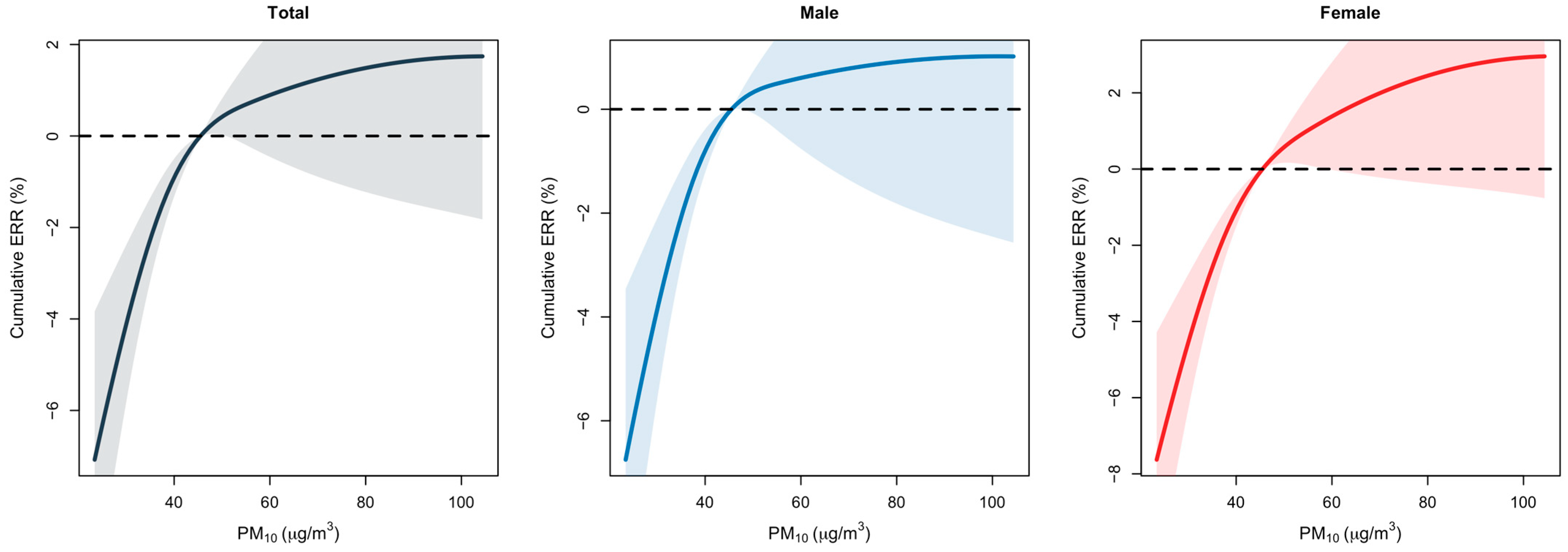
For PM10, ERRs among males gradually increased after Lag 3, peaking at Lag 6 (ERR = 1.25). Following this peak, ERR values decline below 1 at Lag 7 (0.98), suggesting the impact is transient and does not persist beyond a few days post-exposure. Similarly, ERR values remain predominantly below 1 across the lag period, with only a brief and modest increase at Lag 5 (ERR = 1.05), which quickly diminishes by Lag 7 (ERR = 0.97) in females. These findings collectively indicate a weak and temporary association between PM10 and COPD hospitalizations in both genders, further supported by the consistently overlapping confidence intervals. Figure 2 shows a non-linear exposure–response relationship between PM10 concentration and cumulative ERR of COPD hospital admissions, with risk estimates increasing at higher concentrations, although uncertainty widens at the upper exposure range. Although examining cardiovascular outcomes, a time-series study from Tehran showed that short-term exposure to gaseous air pollutants was associated with increased HAs, supporting the concept that acute air pollution effects similarly affect COPD-related morbidity [56].
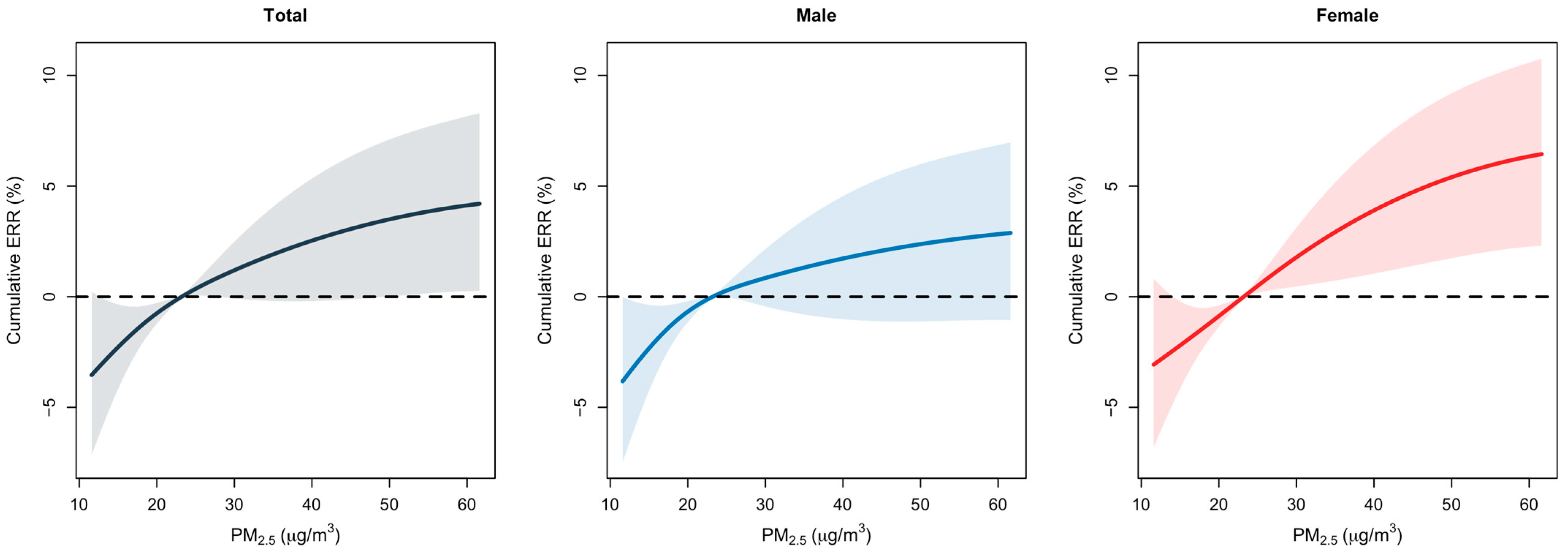
The results indicate an immediate effect, with the ERR peaking at Lag 0 (ERR = 1.18), suggesting a prompt physiological response following exposure (Table 3). After this initial peak, the ERR gradually declines, dropping below 1 by Lag 3 (ERR = 0.96), indicating a temporary reduction in risk. However, a resurgence in risk is observed at Lag 8 (ERR = 1.14), pointing to a potential delayed effect of PM2.5 on COPD. This biphasic pattern, characterized by an early acute response followed by a secondary rise, suggests that PM2.5 may trigger both immediate inflammatory responses and prolonged systemic effects on the respiratory system. These findings are consistent with prior research demonstrating time-lagged associations between PM2.5 exposure and respiratory morbidity [23]. Among females, a similar temporal pattern is evident. A significant increase in risk occurs at Lag 0 (ERR = 1.12), confirming the acute influence of PM2.5 on female respiratory health (Table 3). PM2.5 shows a positive association with cumulative ERR of COPD hospital admissions, with stronger effects observed in females, particularly at higher concentration levels (Figure 3). The ERR subsequently declines, reaching a minimum of 0.97 at Lag 3, before rising again to 1.11 at Lag 8, indicating a re-emergence of risk in the later lag period. Although the risk estimates are slightly lower than those observed in males, the overall trend is consistent, suggesting that PM2.5 exposure poses a substantial risk for both genders. For example, significant positive associations have been found between COPD and PM2.5 in a megacity in Pakistan [57]. The observed gender-based differences may reflect physiological, hormonal, or behavioral variations in susceptibility and exposure, as supported by literature on gender-differentiated environmental health impacts [49,58]. Lastly, a pronounced early peak is observed at Lag 0 (ERR = 1.20), emphasizing the immediate and clinically relevant impact of PM2.5 on respiratory health outcomes (Table 3). Similar to the subgroup patterns, the ERR dips below 1 at Lag 2 (ERR = 0.98) before increasing again to 1.16 at Lag 8, reinforcing the presence of a dual-phase effect.
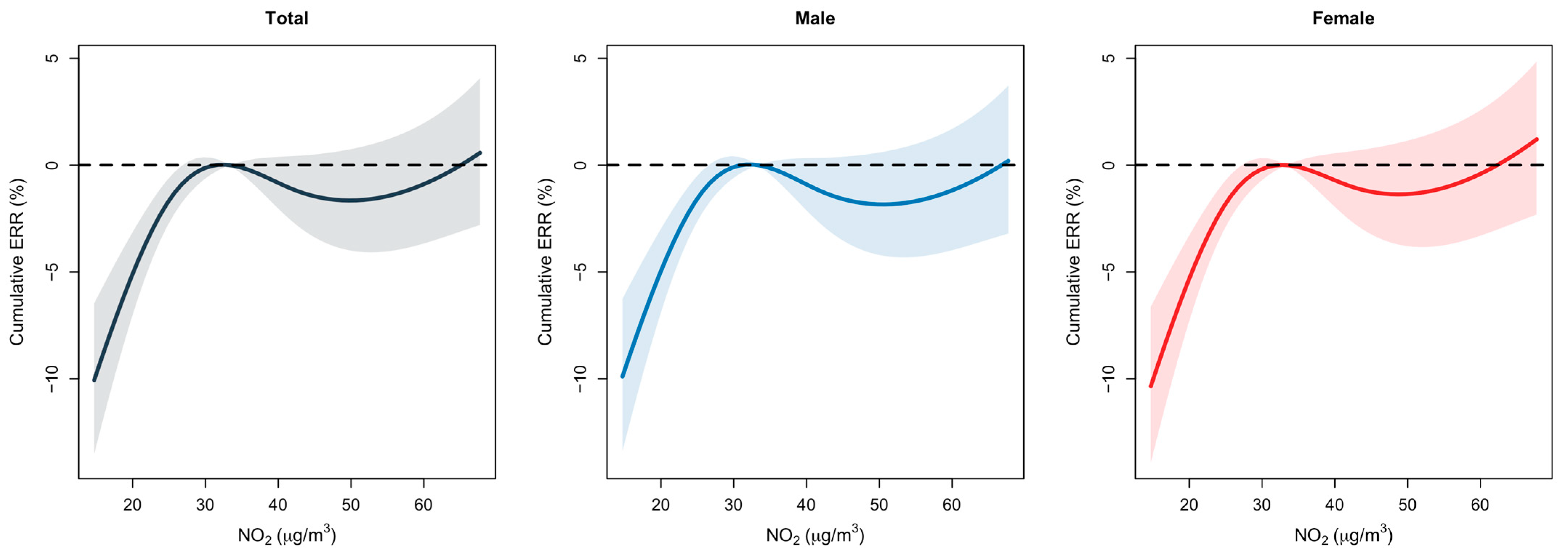
An immediate increase in risk was detected at lag 0, with ERR values of approximately 1.08–1.10, followed by a decline toward the null at lag 2 (ERR ≈ 0.95–0.98). Notably, a secondary increase was observed at lag 6, with ERR reaching 1.20 in males and 1.15 in females, while a similar delayed peak (ERR ≈ 1.17) was observed at the population level. These findings indicate that NO2 exposure is associated with both immediate and delayed increases in COPD-related HAs. Previous studies have likewise reported both immediate and delayed NO2 effects on COPD in urban settings, where NO2 levels are predominantly driven by traffic-related emissions and industrial activities [59]. In line with these findings, a population-based study from Berlin identified NO2 as the most critical air pollutant contributing to COPD and asthma-related hospitalizations [60]. However, in Bogotá, Colombia, no increased risk was found between NO2 and COPD (An increase of 10 μg/m3) [43]. NO2 shows a modest association with cumulative ERR of COPD hospital admissions, with estimates close to the null overall and slightly higher effects observed in females at higher concentrations (Figure 4). Among females, the temporal pattern generally mirrors that observed in males, but the magnitude of the response is slightly attenuated. ERR declined in the early lag period, reaching 0.98 at lag 2, followed by a delayed increase at lag 6 (ERR = 1.15). Despite a lower magnitude compared with males, these estimates indicate a statistically meaningful association between NO2 exposure and COPD-related HAs in females. Some studies attribute higher sensitivity in females to airway reactivity, while others highlight greater outdoor exposure in males as a potential risk driver [51]. The present findings support a slightly stronger early impact in males, whereas the delayed effects appear more pronounced among females. Also, the exposure pattern reflects a dual-phase response, with an initial increase in ERR observed at Lag 0 (ERR = 1.08), followed by a decline to 0.97 at Lag 2, and a subsequent increase to 1.17 at Lag 6. This pattern implies that NO2 exposure may be associated with both acute and delayed respiratory effects. The early peak may be related to short-term airway responses, whereas the delayed increase may reflect longer-term inflammatory processes developing over several days.

3.2. Seasonal Analysis and Temperature Effects

This section evaluates the effects of air pollution during summer and winter on COPD-related HAs. A descriptive analysis of air quality and meteorological data for these seasons is presented in Table S1. While the previous section covered a 27-month dataset (from 1 March 2013 to 31 May 2015), this seasonal analysis specifically examines the winter months (December, January, February) and the summer months (June, July, August) over the two-year study period. In winter, the average pollutant concentrations were: PM10: 61.02 ± 37.71 µg/m3, PM2.5: 38.83 ± 22.28 µg/m3, and NO2: 40.34 ± 18.05 µg/m3. In summer, these values were PM10: 38.62 ± 9.37 µg/m3, PM2.5: 17.80 ± 5.31 µg/m3, and NO2: 25.42 ± 10.66 µg/m3. According to WHO guidelines, all measured values in winter significantly exceed recommended limits. In summer, while PM10 levels remain elevated, PM2.5 and NO2 concentrations are comparatively lower and pose a relatively reduced health risk. According to EU limits, PM10 exceeds the 50 µg/m3 daily limit in winter but remains within acceptable limits in summer. For PM2.5, the EU annual limit of 25 µg/m3 is exceeded in winter and remains at a similar level in summer. NO2 concentrations remain well below the EU hourly limit of 200 µg/m3 in both seasons. When compared to Türkiye’s national air quality standards, PM10 exceeds the 50 µg/m3 daily limit in winter and remains below it in summer. As there is no defined daily limit for PM2.5 in Türkiye yet, direct comparison is not possible. NO2 concentrations remain well below the national hourly limit of 250 µg/m3 in both winter and summer.

3.3. Summer Months

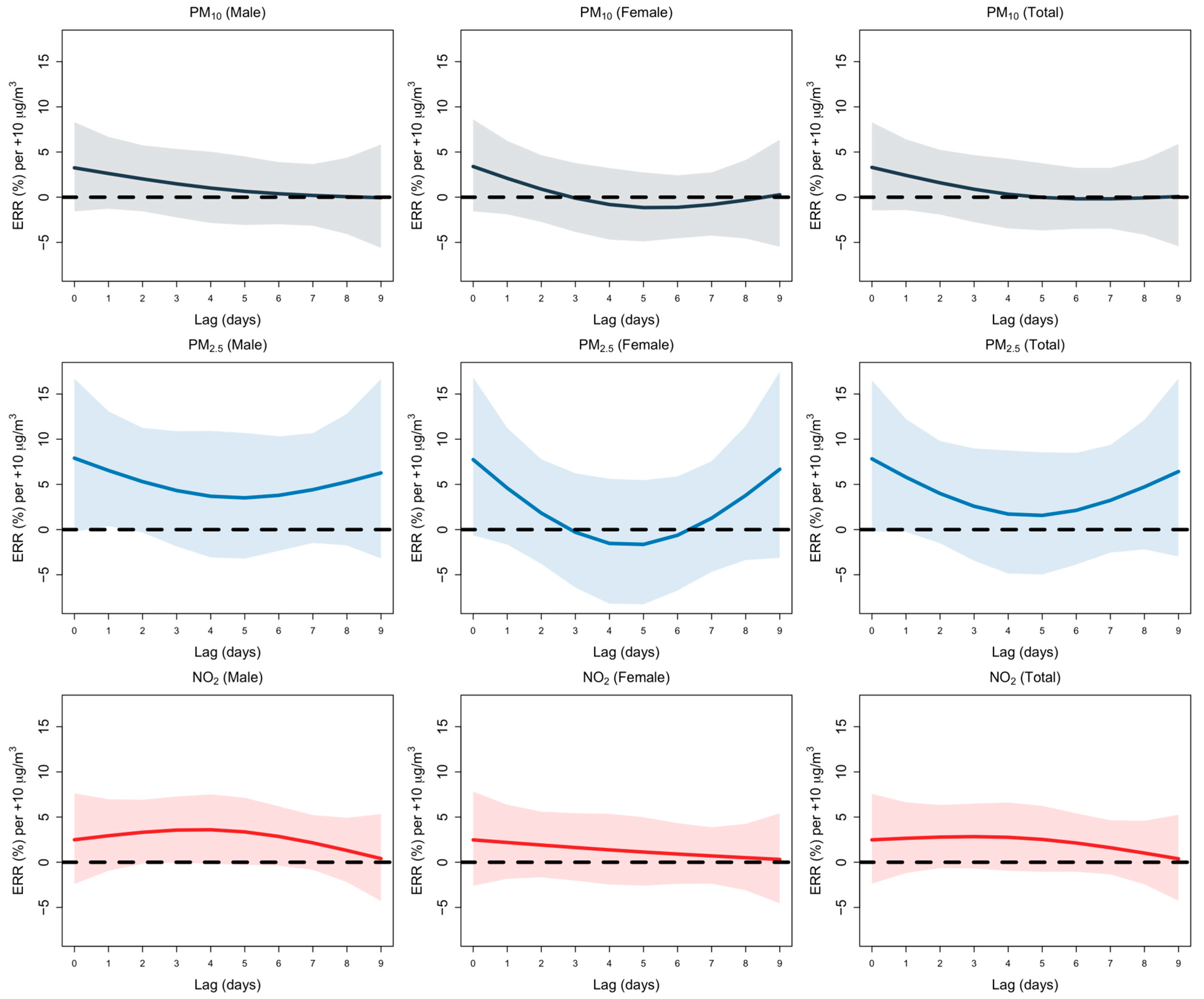
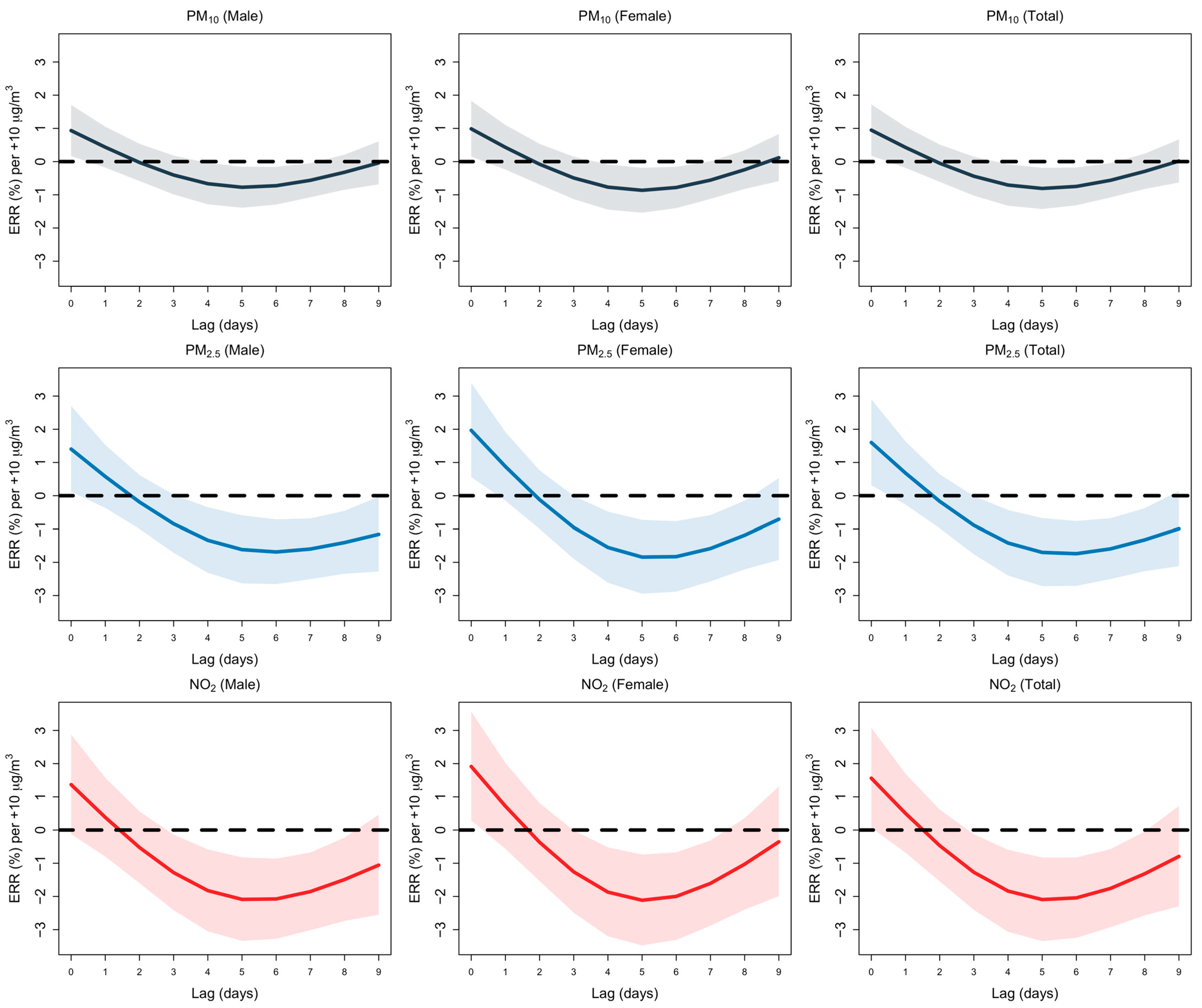
During the summer season, PM10 exposure showed a consistent association with COPD-related HAs across all subgroups (Figure 5). ERR values exceeded unity for more than half of the lag days, with the strongest effect observed at lag 5 in male (ERR = 1.24), female (ERR = 1.22), and the total population (ERR = 1.23). However, when compared with the overall study period, this seasonal effect appears to be transient and confined to the summer months, suggesting that the adverse impact of PM10 on COPD is intensified under specific meteorological and environmental conditions. A study conducted in the United Kingdom reported that for every 1 °C increase in temperatures exceeding 23.2 °C, the risk of hospitalization increased by 1.47% (95% CI: 1.19% to 1.73%) within a lag period of 0–2 days [61].
During the summer season, PM2.5 exposure showed a relatively flat lag–response pattern across all subgroups, with ERR values remaining close to unity in females and the total population, and a modest but stable increase of around 1.1 in males. In contrast, NO2 exhibited a pronounced and consistent association with COPD-related hospitalizations, with ERR peaking at lag 5 in males (ERR = 1.28), females (ERR = 1.26), and the total population (ERR = 1.27). These results highlight the importance of pollutant-specific and seasonally contextualized health risk assessments. While PM2.5 demonstrates limited short-term effects in summer, NO2 emerged as a potent, acute, and demographically consistent risk factor. Urban summer conditions, characterized by reduced atmospheric dispersion and prolonged outdoor exposure, may amplify this effect. The contrast between the two pollutants also reflects differences in toxicological mechanisms: whereas fine particulates like PM2.5 may produce longer-term systemic effects, gaseous pollutants like NO2 appear to trigger immediate respiratory responses. In summary, during the summer season, NO2, PM10, and PM2.5 were associated with increased COPD-related hospitalizations, with PM2.5 showing the largest short-term effects, peaking at ERR values of 1.32 in males and 1.30 in females.

3.4. Winter Months

During the winter season, PM10 exposure showed modest short-term associations with COPD-related hospitalizations, with ERR peaking at lag 0 in males (ERR = 1.10), females (ERR = 1.09), and the total population (ERR = 1.11), followed by a gradual decline at later lags (Figure 6). The prolonged presence of pollutants due to lower atmospheric dispersion in cold weather may contribute to this observed early-phase risk. These findings underscore the importance of PM10 as a significant contributor to respiratory health risks during the winter months. The findings also align with previous studies, indicating that winter months are associated with an increased incidence of acute exacerbations of chronic obstructive pulmonary disease (AECOPD), linked to elevated levels of carbon monoxide (CO) and sulphur dioxide (SO2) pollution [62]. For PM2.5, ERR values remained above unity across most lag periods, with the highest estimates observed at lag 1 in male (ERR = 1.08), female (ERR = 1.07), and the total population (ERR = 1.09) (Figure 6). This difference may be due to increased indoor time during colder months and reduced pollutant penetration indoors, which collectively reduce direct PM2.5 exposure. While modest, this statistically meaningful increase supports the idea that PM2.5 contributes to winter respiratory morbidity. The weaker effect compared to summer aligns with studies showing that elevated temperatures amplify the adverse effects of fine particulates. Previous research has demonstrated that heat waves increase respiratory morbidity and mortality [63,64] and that fluctuations in diurnal temperature range (DTR) can independently exacerbate COPD symptoms [65]. Evidence from Mexico has also highlighted the health burden of fine particulate matter not only in terms of respiratory outcomes but also through its toxic metal constituents. For example, Mn and Ni in PM2.5 were found to exceed WHO benchmark risk levels in both children and adults in Salamanca, with cumulative non-cancer health risks reaching up to 5.24 in children [66]. Moreover, a DLNM-based study conducted in Dingxi, China, found that a 10 μg/m3 increase in PM2.5, PM10, and NO2 was significantly associated with increased COPD HAs, with stronger effects observed during the cold season and among male patients [67,68]. Considering İstanbul’s average summer temperature of ~27 °C, heat-induced physiological stress, increased pollutant reactivity, and altered respiratory function may explain the intensified summer impact.
For NO2, ERRs remained above the null value across most lag days during winter (Figure 6), with the largest effect observed at Lag 2 (ERR = 1.13%, 95% CI: 1.05–1.21%). This indicates a short-term but strong response, likely driven by NO2-induced acute respiratory effects such as airway inflammation, oxidative stress, and increased bronchial sensitivity. In females, the ERR peaked at 1.12 at lag 2 (Figure 6), confirming a nearly identical effect size between genders. This finding suggests that NO2 exposure exerts its influence primarily through mechanisms not significantly modulated by gender-specific physiological factors. For the total population, ERR peaked at lag 2 with a value of 1.14 (Figure 6), reinforcing the association between wintertime NO2 exposure and increased COPD-related HAs. The overlapping confidence intervals further support the interpretation that NO2 poses a comparable risk level to both males and females in winter. These findings are particularly significant in the context of winter months, when lower atmospheric mixing heights and increased combustion-related emissions prolong NO2 exposure, thereby intensifying its respiratory effects. Previous studies, such as one conducted in Bushehr, have reported that up to 2.9% of COPD hospitalizations may be directly attributed to NO2 exposure, further validating the pollutant’s substantial and widespread health impact [52].

3.5. Temperature Effects

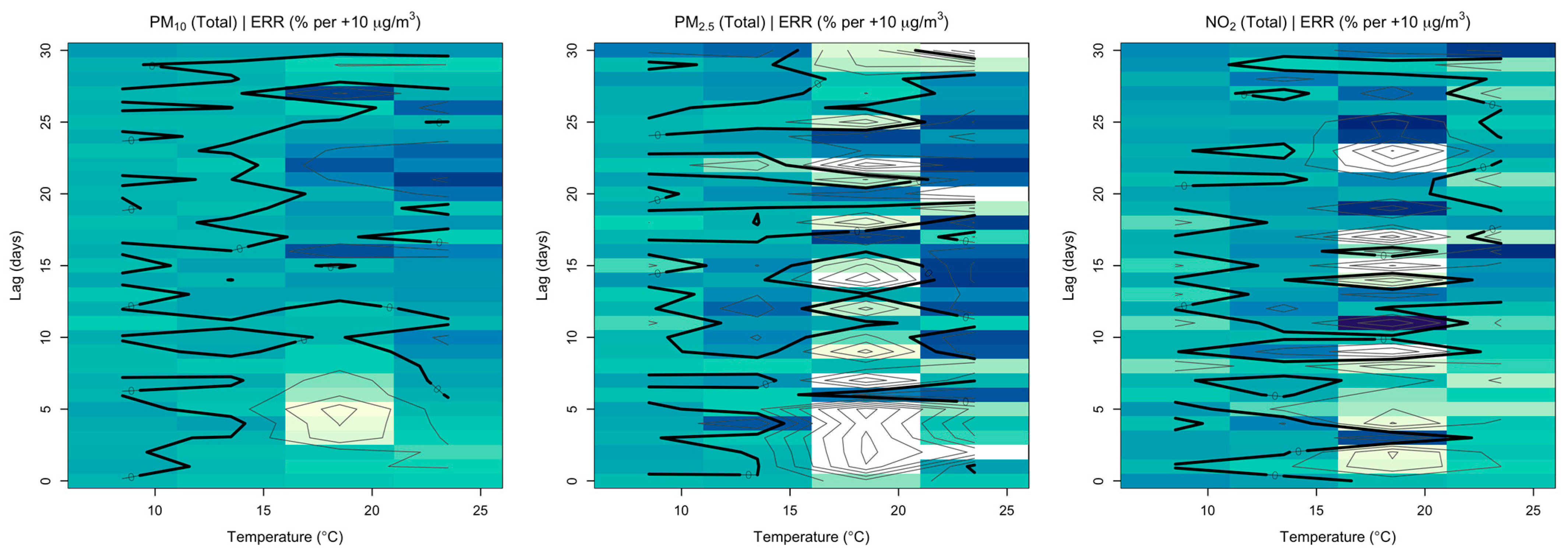
The interaction between temperature and PM10, PM2.5, and NO2 reveals that both low and high ambient temperatures significantly amplify the adverse effects of air pollution on COPD hospitalizations. Figure 7 shows that the RR associated with PM10 peaks at Lag 0, reaching 1.25 under both low and high ambient temperatures. This suggests that PM10 poses a greater threat when thermal stress is present, likely due to mechanisms such as cold-induced bronchoconstriction or heat-related dehydration. Similarly, Figure 7 indicates that PM2.5 exhibited increased risk at thermal extremes, with RR values peaking at approximately 1.30 around 0 °C and again at 25 °C. Figure 7 demonstrates that NO2 showed the strongest interaction with temperature, with RR values reaching 1.35 at both low and high temperatures. This indicates that NO2’s impact is considerably increased by seasonal conditions, either through indoor accumulation during colder months or through accelerated chemical reactivity during periods of high temperature, both of which can trigger COPD hospitalizations within short lag periods. For example, a study conducted in Jilin Province reported that rising temperatures had greater effects on female and the elderly, whereas temperature decreases affected males and younger individuals more significantly [69]. Similarly, it was found that temperatures exceeding 10 °C were associated with a significant increase in COPD mortality in Shanghai, reinforcing the conclusion that thermal stress intensifies the health effects of air pollution [70]. These demographic insights point to the importance of tailoring public health interventions to account for both environmental exposures and individual vulnerability factors.
In this study, exposure to low and high temperature conditions during both winter and summer was associated with increased COPD-related hospital admissions among adults aged 45–64 years. The highest effect estimates were observed at approximately 0 °C in winter and 25 °C in summer, with ERR values peaking at 1.25 for PM10, 1.30 for PM2.5, and 1.35 for NO2. These findings are consistent with previous evidence linking particulate air pollution to respiratory hospitalizations [71]. A nationwide analysis from Poland likewise reported that short-term variations in PM2.5, PM10, SO2, NO2, and temperature were associated with increased emergency COPD HAs, with stronger responses observed among female and urban residents [72].

4. Limitations

This study has several limitations that should be acknowledged. First, the ecological time-series design does not allow causal inference at the individual level. Associations were evaluated at the population level, and individual-level exposure histories and clinical characteristics were unavailable. As a result, potential confounding by individual factors such as smoking status, occupational exposure, socioeconomic status, and pre-existing comorbidities could not be directly controlled. Second, air pollution exposure was estimated using data from fixed-site ambient monitoring stations, which serve as proxies for population-level exposure. This approach may not fully capture individual exposure variability due to differences in indoor environments, mobility patterns, and time–activity behaviors, potentially leading to exposure misclassification.
Third, HA data were obtained from a subset of public hospitals in Istanbul. Although these hospitals represent a large proportion of COPD-related admissions, incomplete coverage may have resulted in an underestimation of the absolute number of hospitalizations. Seasonal stratification was limited to a binary summer–winter framework, which may oversimplify transitional seasons, such as spring and autumn. However, this approach ensured sufficient statistical power, and future studies may consider more refined seasonal classifications. Finally, outcome classification relied on routinely collected administrative records, and some degree of diagnostic miscoding or misclassification cannot be fully excluded, despite the use of standardized ICD-10 coding and restriction to primary diagnoses. Finally, single-pollutant models were used in this study, which do not account for potential interactions or combined effects of multiple air pollutants. Furthermore, the relatively short study period (2013–2015) may limit the generalizability of the findings to longer-term temporal trends. These limitations are common to large-scale time-series studies and should be considered when interpreting the results. Nevertheless, the large dataset, consistent exposure–response patterns, and robust analytical framework support the validity of the observed associations.

5. Conclusions

This study provides robust evidence that exposure to air pollutants, specifically PM10, PM2.5, and NO2, is significantly associated with an increased risk of COPD-related HAs among individuals aged 45 to 64 years in İstanbul. The effects varied by pollutant type, gender, season, and temperature, highlighting the complex public health implications of these interactions. Although several excess relative risk estimates were modest in magnitude, their consistency across pollutants, seasons, and subgroups supports the relevance of these associations in urban population settings.
Among the pollutants, PM2.5 consistently demonstrated the strongest association with COPD-related hospitalizations, with ERR values reaching 1.26 for females and 1.22 for males during summer, peaking at 1.18 overall in winter. These findings confirm that fine PM poses the most immediate and severe respiratory threat, due to its ability to penetrate deep into the lungs and trigger systemic inflammation. NO2 also showed a substantial impact, particularly during summer, with ERR values reaching 1.31 among males and 1.30 among females, while winter effects were moderately lower, peaking at 1.19. This suggests that NO2 has a rapid and significant impact, especially during warmer months. Although PM10 showed relatively weaker effects, its seasonal and gender-specific trends were still noteworthy. In winter, the ERR peaked at 1.13 at Lag 5, suggesting that coarse particles, combined with low temperatures, can exacerbate respiratory conditions, although to a lesser extent than finer pollutants. In this context, even relatively small increases in risk may translate into significant population-level effects due to the high incidence of both exposure and COPD in major urban areas. These results represent statistically significant associations observed within an observational study design, and rather than being conclusive proof of causal relationships, they should be interpreted as suggestive of elevated risk.
The influence of temperature was particularly pronounced. The interaction between extreme temperatures and pollutant exposure significantly intensified the health risks. Three-dimensional analyses showed ERR values peaking at 1.30 for PM10, 1.35 for PM2.5, and 1.40 for NO2 at both low (0 °C) and high (25 °C) temperatures. These results clearly indicate that temperature acts as a key modifier of pollution-related health outcomes, intensifying the respiratory burden through both physiological stress and enhanced pollutant toxicity. Effect estimates should therefore be interpreted in the context of cumulative population exposure as well as individual-level magnitude. However, the current observational framework does not allow for the establishment of causal inference, and residual or unmeasured confounding factors may have an impact on the observed associations.
Gender-specific effects were also evident. Females showed higher susceptibility to PM2.5, while NO2 affected both genders similarly. This highlights the need for tailored public health communication and targeted protection strategies that account for biological vulnerability.
The findings highlight the need for targeted air quality and public health interventions in Istanbul. The strong short-term effects of NO2 point to traffic-related emission control as a priority, particularly during summer months, while the consistent impact of PM2.5 highlights the importance of reducing fine particulate emissions from residential heating, industry, and maritime activities. The increase in pollution-related COPD hospitalizations under both low and high ambient temperature conditions suggests that air quality management should be integrated with temperature-sensitive public health warning systems. Coordinated actions by municipal air quality and health authorities, including seasonal risk communication and early warning strategies, could help reduce preventable COPD related hospital admissions in Istanbul.
Overall, these findings highlight the urgent need for adaptive reduction strategies, particularly for PM2.5 and NO2, during high-risk seasons and extreme temperatures. Enhanced real-time monitoring, public health alerts, and gender-sensitive interventions are vital to reducing the health burden of air pollution. In the context of climate change and increasing temperature variability, integrated air quality and climate-sensitive health adaptation measures will be critical to protect vulnerable populations and reduce COPD-related hospitalizations in urban settings. The underlying mechanisms linking temperature, air pollution, and COPD-related outcomes may be further clarified by future research using longitudinal designs, multi-pollutant frameworks, and causal inference techniques.

6. Future Studies

The findings of this study provide valuable insights into the relationship between air pollutants (PM10, PM2.5, and NO2) and COPD-related hospitalizations, particularly among individuals aged 45–64. However, several areas for future research could further enhance the current understanding of these interactions and help refine air pollution-related public health interventions.
One key approach for future studies is the incorporation of more detailed temporal and spatial analyses. While this study relied on daily average pollutant concentrations, future studies could utilize hourly data to capture short-term pollution peaks and their immediate effects on COPD. This approach could help identify acute exposure periods where pollutant levels increase, providing better insights into short-term respiratory responses. Additionally, exploring the spatial variability of pollutants within a city or region could identify localized hotspots and assess how varying levels of air pollution impact COPD hospitalizations across different urban settings. Such efforts would enable more targeted pollution mitigation strategies for high-risk locations.
A further important area for future research is the integration of additional environmental variables that may influence COPD hospitalizations. While this study examined temperature effects, future studies should consider other meteorological factors such as relative humidity, atmospheric pressure, wind patterns, and precipitation, which may affect pollutant dispersion and deposition. Furthermore, investigating co-exposure to secondary air pollutants, such as ozone (O3) and volatile organic compounds (VOCs), could be investigated to understand their combined effects on respiratory health. Given that indoor air pollution is an increasing concern, particularly during winter months when people spend more time indoors, future studies could explore the role of indoor air quality in COPD exacerbations.
Considering that females exhibited higher susceptibility to COPD than males, future research should focus on gender-specific biological mechanisms that may explain greater vulnerability among females. Detailed demographic analyses could further examine how different population groups, including children, elderly individuals, and those with pre-existing respiratory conditions, respond to air pollution exposure. In addition, investigating socioeconomic and occupational factors could provide insights into how long-term pollutant exposure disproportionately affects vulnerable communities, thereby informing more equitable and targeted policy solutions.
Another key area for future research is longitudinal research on chronic exposure to air pollutants. While this study focused on short-term associations between air pollution and COPD hospitalizations, long-term exposure studies could examine the cumulative respiratory effects of pollution. Cohort-based studies tracking individual health outcomes over multiple years or decades could provide critical evidence on how chronic exposure to PM2.5 and NO2 influences disease progression. The role of climate change in exacerbating air pollution-related health risks represents a crucial area for future research. Rising global temperatures and increasing frequency of heatwaves may alter pollutant behaviour and human physiological responses, potentially leading to more severe respiratory outcomes. Future studies could model how climate change-induced shifts in temperature, relative humidity, and atmospheric stability influence air pollution levels and rates of COPD-related hospitalizations. Urban areas, which experience both high pollution levels and extreme heat stress, should be prioritized in predictive modelling studies assessing climate-driven health risks.
Machine learning and advanced statistical models could be used to predict COPD exacerbations based on real-time air quality, meteorological data, and patient health records. Developing early warning systems that forecast high-risk pollution days could enable timely public health interventions, such as air quality alerts, emergency response planning, and targeted healthcare measures for vulnerable populations. Such predictive models could also assist policymakers in refining air quality regulations, improving urban air pollution mitigation strategies, and reducing the overall healthcare burden associated with COPD.
Expanding the scope of research through higher temporal and spatial resolution analyses, together with the incorporation of additional environmental variables, gender and demographic-based studies, long-term exposure assessments, climate change modelling, and AI-driven predictive systems would provide a more comprehensive understanding of the complex relationship between air pollution and COPD hospitalizations. These future research directions will not only advance the scientific understanding of air pollution health impacts but also contribute to developing more effective and adaptive public health policies aimed at reducing the respiratory disease burden in polluted environments.

Supplementary Materials

The following supporting information can be downloaded at https://www.mdpi.com/article/10.3390/environments13010056/s1, Table S1: Summary statistics of air pollutant concentrations and meteorological conditions during the winter and summer months.

Author Contributions

Conceptualization: E.B., A.O.Ç., H.Ö.; Methodology: Ö.Ç.; Formal analysis and investigation: H.Ö., Ö.Ç.; Writing original draft preparation: E.B., A.O.Ç.; Writing, review and editing: E.B., Ö.Ç., H.Ö.; Supervision: A.D. All authors have read and agreed to the published version of the manuscript.

Funding

This research did not receive any specific grant from funding agencies in the public, commercial, or not-for-profit sectors.

Institutional Review Board Statement

The study was approved by the Ethics Board of Health and Engineering Sciences Human Research at Istanbul Technical University (Date: 10 July 2024 and Decision No: İTÜ-SM.İNAREK-2024-02).

Informed Consent Statement

Patient consent was waived because the study used anonymized retrospective data and posed no risk to participants, as approved by the Ethics Committee. All authors participated in the study. The authors have read and approved the final version of the manuscript.

Data Availability Statement

Air pollution data are publicly available online at https://havakalitesi.ibb.gov.tr/ (accessed on 15 January 2025).

Acknowledgments

Data were provided through the service procurement protocol on “Reducing the Effects of Air Pollution on the Health Budget”. The authors thank the Ministry of Health and Ministry of Environment, Urbanization, and Climate Change of Türkiye for providing the relevant data. This work was supported by the Scientific Research Projects Department of Istanbul Technical University (ITU), Project Number: 45303.

Conflicts of Interest

The authors declare no competing interests.

References

  1. Landrigan, P.J.; Fuller, R.; Acosta, N.J.R.; Adeyi, O.; Arnold, R.; Basu, N.N.; Baldé, A.B.; Bertollini, R.; Bose-O’Reilly, S.; Boufford, J.I.; et al. The Lancet Commission on pollution and health. Lancet 2018, 391, 462–512. [Google Scholar] [CrossRef]
  2. World Health Organization. Ambient (Outdoor) Air Quality and Health. 2024. Available online: https://www.who.int/news-room/fact-sheets/detail/ambient-(outdoor)-air-quality-and-health (accessed on 15 January 2025).
  3. Miller, M.R.; Newby, D.E. Air pollution and cardiovascular disease: Car sick. Cardiovasc. Res. 2020, 116, 279–294. [Google Scholar] [CrossRef]
  4. Cohen, A.J.; Brauer, M.; Burnett, R.; Anderson, H.R.; Frostad, J.; Estep, K.; Balakrishnan, K.; Brunekreef, B.; Dandona, L.; Dandona, R.; et al. Estimates and 25-year trends of the global burden of disease attributable to ambient air pollution: An analysis of data from the Global Burden of Diseases Study 2015. Lancet 2017, 389, 1907–1918. [Google Scholar] [CrossRef]
  5. Baltaci, H.; Alemdar, C.S.O.; Akkoyunlu, B.O. Background atmospheric conditions of high PM10 concentrations in Istanbul, Turkey. Atmos. Pollut. Res. 2020, 11, 1524–1534. [Google Scholar] [CrossRef]
  6. Koçak, M.; Theodosi, C.; Zarmpas, P.; Im, U.; Bougiatioti, A.; Yenigun, O.; Mihalopoulos, N. Particulate matter (PM10) in Istanbul: Origin, source areas and potential impact on surrounding regions. Atmos. Environ. 2011, 45, 6891–6900. [Google Scholar] [CrossRef]
  7. Kesgin, U.; Vardar, N. A study on exhaust gas emissions from ships in Turkish Straits. Atmos. Environ. 2001, 35, 1863–1870. [Google Scholar] [CrossRef]
  8. Li, J.; Sun, S.; Tang, R.; Qiu, H.; Huang, Q.; Mason, T.G.; Tian, L. Major air pollutants and risk of COPD exacerbations: A systematic review and meta-analysis. Int. J. Chronic Obstr. Pulm. Dis. 2016, 11, 3079–3091. [Google Scholar] [CrossRef] [PubMed]
  9. Çapraz, Ö.; Deniz, A.; Doğan, N. Effects of air pollution on respiratory hospital admissions in İstanbul, Turkey, 2013 to 2015. Chemosphere 2017, 181, 544–550. [Google Scholar] [CrossRef]
  10. Lee, K.-Y.; Wu, S.-M.; Kou, H.-Y.; Chen, K.-Y.; Chuang, H.-C.; Feng, P.-H.; Chung, K.F.; Ito, K.; Chen, T.-T.; Sun, W.-L.; et al. Association of air pollution exposure with exercise-induced oxygen desaturation in COPD. Respir. Res. 2022, 23, 77. [Google Scholar] [CrossRef]
  11. Abdullah, S.; Ismail, M.; Fong, S.Y. Multiple linear regression (MLR) models for long term PM10 concentration forecasting during different monsoon seasons. J. Sustain. Sci. Manag. 2017, 12, 60–69. [Google Scholar]
  12. Carvalho, H. Air pollution-related deaths in Europe—Time for action. J. Glob. Health 2019, 9, 020308. [Google Scholar] [CrossRef]
  13. Su, J.G.; Apte, J.S.; Lipsitt, J.; Garcia-Gonzales, D.A.; Beckerman, B.S.; de Nazelle, A.; Jerrett, M. Populations potentially exposed to traffic-related air pollution in seven world cities. Environ. Int. 2015, 78, 82–89. [Google Scholar] [CrossRef] [PubMed]
  14. Pekince, B.; Baccioglu, A. Allergic and non-allergic asthma phenotypes and exposure to air pollution. J. Asthma 2022, 59, 1509–1520. [Google Scholar] [CrossRef]
  15. Raaschou-Nielsen, O.; Andersen, Z.J.; Beelen, R.; Samoli, E.; Stafoggia, M.; Weinmayr, G.; Hoffmann, B.; Fischer, P.; Nieuwenhuijsen, M.J.; Brunekreef, B.; et al. Air pollution and lung cancer incidence in 17 European cohorts: Prospective analyses from the European Study of Cohorts for Air Pollution Effects (ESCAPE). Lancet Oncol. 2013, 14, 813–822. [Google Scholar] [CrossRef]
  16. Vos, T.; Allen, C.; Arora, M.; Barber, R.M.; Bhutta, Z.A.; Brown, A.; Carter, A.; Casey, D.C.; Charlson, F.J.; Chen, A.Z.; et al. Global, regional, and national incidence, prevalence, and years lived with disability for 310 diseases and injuries, 1990–2015: A systematic analysis for the Global Burden of Disease Study 2015. Lancet 2016, 388, 1545–1602. [Google Scholar] [CrossRef]
  17. Wang, C.; Xu, J.; Yang, L.; Xu, Y.; Zhang, X.; Bai, C.; Kang, J.; Ran, P.; Shen, H.; Wen, F.; et al. Prevalence and risk factors of chronic obstructive pulmonary disease in China (the China Pulmonary Health [CPH] study): A national cross-sectional study. Lancet 2018, 391, 1706–1717. [Google Scholar] [CrossRef] [PubMed]
  18. Murray, C.J.; Lopez, A.D. Alternative projections of mortality and disability by cause 1990–2020: Global Burden of Disease Study. Lancet 1997, 349, 1498–1504. [Google Scholar] [CrossRef]
  19. Chae, H.; Jun, K.; Lee, J.Y. Incidence, risk factors, and outcomes of respiratory related hospitalizations in older patients with COPD, asthma, and bronchiectasis. Sci. Rep. 2025, 15, 22580. [Google Scholar] [CrossRef]
  20. Weeks, J.D.; Elgaddal, N. Chronic obstructive pulmonary disease in adults age 18 and older: United States, 2023. In NCHS Data Briefs; National Center for Health Statistics (US): Hyattsville, MD, USA, 2025. [Google Scholar]
  21. Soriano, J.B.; Abajobir, A.A.; Abate, K.H.; Abera, S.F.; Agrawal, A.; Ahmed, M.B.; Aichour, A.N.; Aichour, I.; Aichour, M.T.E.; Alam, K.; et al. Global, regional, and national deaths, prevalence, disability-adjusted life years, and years lived with disability for chronic obstructive pulmonary disease and asthma, 1990–2015: A systematic analysis for the Global Burden of Disease Study 2015. Lancet Respir. Med. 2017, 5, 691–706. [Google Scholar] [CrossRef]
  22. Desqueyroux, H.; Pujet, J.C.; Prosper, M.; Le Moullec, Y.; Momas, I. Effects of Air Pollution on Adults with Chronic Obstructive Pulmonary Disease. Arch. Environ. Health Int. J. 2002, 57, 554–560. [Google Scholar] [CrossRef] [PubMed]
  23. Liu, S.; Zhou, Y.; Liu, S.; Chen, X.; Zou, W.; Zhao, D.; Li, X.; Pu, J.; Huang, L.; Chen, J.; et al. Association between exposure to ambient particulate matter and chronic obstructive pulmonary disease: Results from a cross-sectional study in China. Thorax 2017, 72, 788–795. [Google Scholar] [CrossRef]
  24. Doiron, D.; de Hoogh, K.; Probst-Hensch, N.; Fortier, I.; Cai, Y.; De Matteis, S.; Hansell, A.L. Air pollution, lung function and COPD: Results from the population-based UK Biobank study. Eur. Respir. J. 2019, 54, 1802140. [Google Scholar] [CrossRef] [PubMed]
  25. Cai, J.; Peng, C.; Yu, S.; Pei, Y.; Liu, N.; Wu, Y.; Fu, Y.; Cheng, J. Association between PM2.5 Exposure and All-Cause, Non-Accidental, Accidental, Different Respiratory Diseases, Sex and Age Mortality in Shenzhen, China. Int. J. Environ. Res. Public Health 2019, 16, 401. [Google Scholar] [CrossRef]
  26. Kasdagli, M.-I.; Katsouyanni, K.; de Hoogh, K.; Lagiou, P.; Samoli, E. Investigating the association between long-term exposure to air pollution and greenness with mortality from neurological, cardio-metabolic and chronic obstructive pulmonary diseases in Greece. Environ. Pollut. 2022, 292, 118372. [Google Scholar] [CrossRef] [PubMed]
  27. Lu, W.; Tian, Q.; Xu, R.; Zhong, C.; Qiu, L.; Zhang, H.; Shi, C.; Liu, Y.; Zhou, Y. Short-term exposure to ambient air pollution and pneumonia hospital admission among patients with COPD: A time-stratified case-crossover study. Respir. Res. 2022, 23, 71. [Google Scholar] [CrossRef]
  28. Arslan, H.; Baltaci, H.; Sahin, U.A.; Onat, B. The relationship between air pollutants and respiratory diseases for the western Turkey. Atmos. Pollut. Res. 2022, 13, 101322. [Google Scholar] [CrossRef]
  29. Mentese, S.; Ogurtani, S.Ö. Spatial and temporal look at ten-years air quality of Istanbul city. Int. J. Environ. Sci. Technol. 2022, 19, 925–938. [Google Scholar] [CrossRef]
  30. Yavuz, V. Unveiling the impact of temperature inversions on air quality: A comprehensive analysis of polluted and severe polluted days in Istanbul. Acta Geophys. 2024, 73, 969–986. [Google Scholar] [CrossRef]
  31. Turkish Statistical Institute. Transportation Statistics; Turkish Statistical Institute: Ankara, Turkey, 2022.
  32. Çolak, Y.; Afzal, S.; Nordestgaard, B.G.; Vestbo, J.; Lange, P. Prevalence, Characteristics, and Prognosis of Early Chronic Obstructive Pulmonary Disease. The Copenhagen General Population Study. Am. J. Respir. Crit. Care Med. 2020, 201, 671–680. [Google Scholar] [CrossRef]
  33. Sanchez-Salcedo, P.; Divo, M.; Casanova, C.; Pinto-Plata, V.; de-Torres, J.P.; Cote, C.; Cabrera, C.; Zagaceta, J.; Rodriguez-Roisin, R.; Zulueta, J.J.; et al. Disease progression in young patients with COPD: Rethinking the Fletcher and Peto model. Eur. Respir. J. 2014, 44, 324–331. [Google Scholar] [CrossRef]
  34. Silverman, E.K.; Chapman, H.A.; Drazen, J.M.; Weiss, S.T.; Rosner, B.; Campbell, E.J.; O’donnell, W.J.; Reilly, J.J.; Ginns, L.; Mentzer, S.; et al. Genetic Epidemiology of Severe, Early-onset Chronic Obstructive Pulmonary Disease. Am. J. Respir. Crit. Care Med. 1998, 157, 1770–1778. [Google Scholar] [CrossRef]
  35. EU. EU Air Quality Standards. 2024. Available online: https://environment.ec.europa.eu/topics/air/air-quality/eu-air-quality-standards_en (accessed on 24 January 2025).
  36. IMM. Air Quality Assessment and Management Regulation. 2024. Available online: https://havakalitesi.ibb.gov.tr/Icerik/mevzuat (accessed on 24 January 2025).
  37. World Health Organization. WHO Global Air Quality Guidelines; World Health Organization: Geneva, Switzerland, 2024. [Google Scholar]
  38. Birinci, E.; Deniz, A.; Özdemir, E.T. The relationship between PM10 and meteorological variables in the mega city Istanbul. Environ. Monit. Assess. 2023, 195, 304. [Google Scholar] [CrossRef]
  39. Birinci, E.; Özdemir, E.T.; Deniz, A. An investigation of the effects of sand and dust storms in the North East Sahara Desert on Turkish airports and PM10 values: 7 and 8 April, 2013 events. Environ. Monit. Assess. 2023, 195, 708. [Google Scholar] [CrossRef]
  40. Çapraz, Ö.; Deniz, A. Particulate matter (PM10 and PM2.5) concentrations during a Saharan dust episode in Istanbul. Air Qual. Atmos. Health 2021, 14, 109–116. [Google Scholar] [CrossRef]
  41. Summak, G.; Özdemir, H.; Oruç, İ.; Kuzu, S.; Saral, A.; Demir, G. Statistical evaluation and predicting the possible sources of particulate matter in a Mediterranean metropolitan city. Glob. NEST J. 2018, 20, 173–180. [Google Scholar]
  42. Gasparrini, A.; Armstrong, B.; Scheipl, F. R Package, version 1.1. dlnm: Distributed Lag Non-Linear Models. R Foundation for Statistical Computing: Vienna, Austria, 2010. [Google Scholar]
  43. López, A.B.H.; Torres-Duque, C.A.; Arbeláez, M.P.; Roa, N.Y.R.; Riojas-Rodríguez, H.; Sangrador, J.L.T.; Herrera, V.; Rodríguez-Villamizar, L.A. Short-term effect of air pollution exposure on COPD exacerbations: A time series study in Bogota, Colombia. Air Qual. Atmos. Health 2024, 17, 2775–2787. [Google Scholar] [CrossRef]
  44. Sohail, H.; Kollanus, V.; Tiittanen, P.; Mikkonen, S.; Lipponen, A.H.; Zhang, S.; Breitner, S.; Schneider, A.; Lanki, T. Low temperature, cold spells, and cardiorespiratory hospital admissions in Helsinki, Finland. Air Qual. Atmos. Health 2023, 16, 213–220. [Google Scholar] [CrossRef]
  45. Çapraz, Ö. The impact of air temperature on mortality in İstanbul. Int. J. Biometeorol. 2025, 69, 3351–3362. [Google Scholar] [CrossRef] [PubMed]
  46. Tseng, C.M.; Chen, Y.T.; Ou, S.M.; Hsiao, Y.H.; Li, S.Y.; Wang, S.J.; Yang, A.C.; Chen, T.-J.; Perng, D.W. The effect of cold temperature on increased exacerbation of chronic obstructive pulmonary disease: A nationwide study. PLoS ONE 2013, 8, e57066. [Google Scholar] [CrossRef]
  47. McCormack, M.C.; Belli, A.J.; Waugh, D.; Matsui, E.C.; Peng, R.D.; Williams, D.A.L.; Paulin, L.; Saha, A.; Aloe, C.M.; Diette, G.B.; et al. Respiratory effects of indoor heat and the interaction with air pollution in chronic obstructive pulmonary disease. Ann. Am. Thorac. Soc. 2016, 13, 2125–2131. [Google Scholar] [CrossRef]
  48. Chung, C.Y.; Yang, J.; Yang, X.; He, J. Long-term effects of ambient air pollution on lung cancer and COPD mortalities in China: A systematic review and meta-analysis of cohort studies. Environ. Impact Assess. Rev. 2022, 97, 106865. [Google Scholar] [CrossRef]
  49. Becklake, M.R.; Kauffmann, F. Gender differences in airway behaviour over the human life span. Thorax 1999, 54, 1119–1138. [Google Scholar] [CrossRef] [PubMed]
  50. McCracken, J.P.; Smith, K.R.; Díaz, A.; Mittleman, M.A.; Schwartz, J. Chimney Stove Intervention to Reduce Long-term Wood Smoke Exposure Lowers Blood Pressure among Guatemalan Women. Environ. Health Perspect. 2007, 115, 996–1001. [Google Scholar] [CrossRef] [PubMed]
  51. Meng, X.; Wang, C.; Cao, D.; Wong, C.-M.; Kan, H. Short-term effect of ambient air pollution on COPD mortality in four Chinese cities. Atmos. Environ. 2013, 77, 149–154. [Google Scholar] [CrossRef]
  52. Saki, H.; Goudarzi, G.; Jalali, S.; Barzegar, G.; Farhadi, M.; Parseh, I.; Geravandi, S.; Salmanzadeh, S.; Yousefi, F.; Mohammadi, M.J. Study of relationship between nitrogen dioxide and chronic obstructive pulmonary disease in Bushehr, Iran. Clin. Epidemiol. Glob. Health 2020, 8, 446–449. [Google Scholar] [CrossRef]
  53. Chen, C.; Qin, C.; Qiu, H.; Tarroni, G.; Duan, J.; Bai, W.; Rueckert, D. Deep learning for cardiac image segmentation: A review. Front. Cardiovasc. Med. 2020, 7, 25. [Google Scholar] [CrossRef]
  54. Izquierdo, R.; Dos Santos, S.G.; Borge, R.; de la Paz, D.; Sarigiannis, D.; Gotti, A.; Boldo, E. Health impact assessment by the implementation of Madrid City air-quality plan in 2020. Environ. Res. 2020, 183, 109021. [Google Scholar] [CrossRef]
  55. Hoek, G.; Krishnan, R.M.; Beelen, R.; Peters, A.; Ostro, B.; Brunekreef, B.; Kaufman, J.D. Long-term air pollution exposure and cardio-respiratory mortality: A review. Environ. Health 2013, 12, 43. [Google Scholar] [CrossRef] [PubMed]
  56. Motesaddi Zarandi, S.; Hadei, M.; Hashemi, S.S.; Shahhosseini, E.; Hopke, P.K.; Namvar, Z.; Shahsavani, A. Effects of ambient air pollutants on hospital admissions and deaths for cardiovascular diseases: A time series analysis in Tehran. Environ. Sci. Pollut. Res. 2022, 29, 17997–18009. [Google Scholar] [CrossRef]
  57. Birinci, E.; Denizoğlu, M.; Özdemir, H.; Özdemir, E.T.; Deniz, A. Ambient air quality assessment at the airports based on a meteorological perspective. Environ. Monit. Assess. 2023, 195, 1542. [Google Scholar] [CrossRef]
  58. Clougherty, J.E. A Growing Role for Gender Analysis in Air Pollution Epidemiology. Environ. Health Perspect. 2010, 118, 167–176. [Google Scholar] [CrossRef]
  59. Cheng, C.; Han, C.; Fang, Q.; Liu, Y.; Chi, X.; Li, X. Associations between air pollutants and hospital admissions for chronic obstructive pulmonary disease in Jinan: Potential benefits from air quality improvements. Environ. Sci. Pollut. Res. 2023, 30, 46435–46445. [Google Scholar] [CrossRef]
  60. Hoffmann, C.; Maglakelidze, M.; von Schneidemesser, E.; Witt, C.; Hoffmann, P.; Butler, T. Asthma and COPD exacerbation in relation to outdoor air pollution in the metropolitan area of Berlin, Germany. Respir. Res. 2022, 23, 64. [Google Scholar] [CrossRef] [PubMed]
  61. Konstantinoudis, G.; Minelli, C.; Vicedo-Cabrera, A.M.; Ballester, J.; Gasparrini, A.; Blangiardo, M. Ambient heat exposure and COPD hospitalisations in England: A nationwide case-crossover study during 2007–2018. Thorax 2022, 77, 1098–1104. [Google Scholar] [CrossRef] [PubMed]
  62. Boehm, A.; Aichner, M.; Sonnweber, T.; Tancevski, I.; Fischer, T.; Sahanic, S.; Joannidis, M.; Weiss, G.; Pizzini, A.; Loeffler-Ragg, J. COPD exacerbations are related to poor air quality in Innsbruck: A retrospective pilot study. Heart Lung 2021, 50, 499–503. [Google Scholar] [CrossRef] [PubMed]
  63. Medina-Ramón, M.; Schwartz, J. Temperature, temperature extremes, and mortality: A study of acclimatisation and effect modification in 50 US cities. Occup. Environ. Med. 2007, 64, 827–833. [Google Scholar] [CrossRef]
  64. Rocklöv, J.; Forsberg, B. The effect of temperature on mortality in Stockholm 1998—2003: A study of lag structures and heatwave effects. Scand. J. Public Health 2008, 36, 516–523. [Google Scholar] [CrossRef]
  65. Ding, Z.; Li, L.; Xin, L.; Pi, F.; Dong, W.; Wen, Y.; Au, W.W.; Zhang, Q. High diurnal temperature range and mortality: Effect modification by individual characteristics and mortality causes in a case-only analysis. Sci. Total Environ. 2016, 544, 627–634. [Google Scholar] [CrossRef]
  66. Castro Ramírez, I.; Rocha Amador, D.O.; López Gutiérrez, J.M.; Ramírez Mosqueda, E.; Cea Barcia, G.E.; Ramos Patlán, F.D.; Costilla Salazar, R. Chemical Characterization and Assessment of Public Health Risk due to Inhalation of PM2.5 in the City of Salamanca, Guanajuato. Bull. Environ. Contam. Toxicol. 2024, 113, 47. [Google Scholar] [CrossRef]
  67. Wang, H.; Yan, W.; Zhang, G.; Wang, J.; Dong, J. Association between air pollution and hospital admissions for chronic obstructive pulmonary disease: A time series analysis in Dingxi, China, 2018–2020. Air Qual. Atmos. Health 2024, 17, 865–876. [Google Scholar] [CrossRef]
  68. Jin, L.; Fang, S.; Nan, Y.; Hu, J.; Jin, H. The effect of air pollutants on COPD-hospitalized patients in Lanzhou, China (2015–2019). Front. Public Health 2024, 12, 1399662. [Google Scholar] [CrossRef] [PubMed]
  69. Ma, Y.; Jiao, H.; Zhang, Y.; Cheng, B.; Feng, F.; Yu, Z.; Ma, B. Impact of temperature changes between neighboring days on COPD in a city in Northeast China. Environ. Sci. Pollut. Res. 2020, 27, 4849–4857. [Google Scholar] [CrossRef]
  70. Fu, S.; Zhou, Y.; Peng, L.; Ye, X.; Yang, D.; Yang, S.; Zhou, J.; Luo, B. Interactive effects of high temperature and ozone on COPD deaths in Shanghai. Atmos. Environ. 2022, 278, 119092. [Google Scholar] [CrossRef]
  71. Ivan, P.; Schwarz, M.; Mikušová, M. Assessment of Health Risks Associated with PM10 and PM2. 5 Air Pollution in the City of Zvolen and Comparison with Selected Cities in the Slovak Republic. Environments 2025, 12, 212. [Google Scholar] [CrossRef]
  72. Bochenek, B.; Jankowski, M.; Wieczorek, J.; Gruszczyńska, M.; Sekuła, P.; Jaczewski, A.; Wyszogrodzki, A.; Pinkas, J.; Figurski, M. The impact of ambient air pollution and meteorological factors on emergency hospital admissions of COPD patients in Poland (2012–2019). Sci. Rep. 2025, 15, 21915. [Google Scholar] [CrossRef]
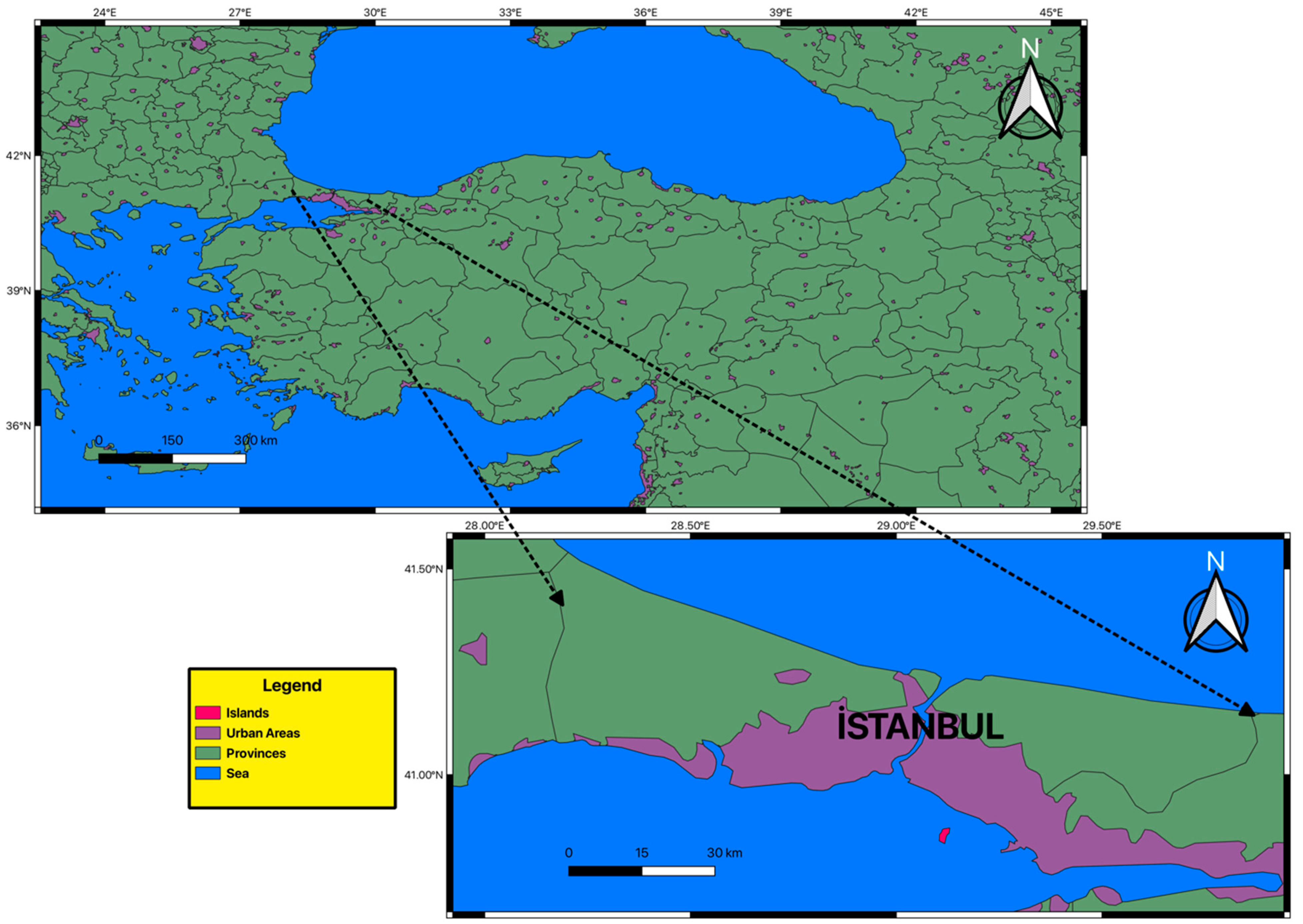
Figure 1. Location of Türkiye and İstanbul. Base map source: OpenStreetMap contributors, visualized using QGIS.
Environments 13 00056 g001
Figure 2. ERR (% per 10 µg/m3) of COPD hospital admissions associated with PM10 exposure for total, male, and female populations in İstanbul (2013–2015).
Environments 13 00056 g002
Figure 3. ERR (% per 10 µg/m3) of COPD hospital admissions associated with PM2.5 exposure for total, male, and female populations in İstanbul (2013–2015).
Environments 13 00056 g003
Figure 4. ERR (% per 10 µg/m3) of COPD hospital admissions associated with NO2 exposure for total, male, and female populations in İstanbul (2013–2015).
Environments 13 00056 g004
Figure 5. Lag–response effects of PM10, PM2.5, and NO2 on hospital admissions for COPD during the summer season (lag 0–9 days), stratified by sex.
Environments 13 00056 g005
Figure 6. Lag–response effects of PM10, PM2.5, and NO2 on hospital admissions for COPD during the winter season (lag 0–9 days), stratified by sex.
Environments 13 00056 g006
Figure 7. Two-dimensional temperature–lag response surfaces showing the joint effects of temperature and PM10, PM2.5, and NO2 on hospital admissions for total COPD cases (lag 0–30 days). Colour gradients indicate ERR (% per 10 µg/m3 increase), while contour lines highlight regions of equal risk. The zero-effect line (ERR = 0) separates positive and negative risk regions.
Environments 13 00056 g007
Table 1. Selected studies on the correlation between air pollution exposure and COPD.
Study/YearLocationMethodSampleHealth EffectsOutcome (Odds Ratio (OR)/Hazard Ratio (HR), 95% Confidence Interval (CI))
[23]China (2012–2015)Cross-sectional study5993prevalencePM concentration levels: 2.416 (95% CI,1.417 to 4.118) for >35–75 μg/m3 and 2.530 (95% CI, 1.280 to 5.001) for >75 μg/m3 compared with the level of ≤35 μg/m3 for PM2.5
2.442 (95% CI, 1.449 to 4.117) for >50–150 μg/m3 compared with the level of ≤50 μg/m3 for PM10
[24]UK (2006–2010)Cross-sectional analyses303,887prevalencePM2.5 (1.52, 95% CI 1.42–1.62, per 5 μg/m3)
PM10 (1.08, 95% CI 1.00–1.16, per 5 μg/m3)
NO2 (1.12, 95% CI 1.10–1.14, per 10 μg/m3)
[25]China (2013–2015)Time-series study41,815mortalityThe excess risk (ER) is 8.24% (95% CI: 3.53–13.17) for a 10 μg/m3 increase in PM2.5
[26]Greece (2010–2011)two-exposure Poisson regression models-mortality1.14, 95% confidence interval (CI): 1.01, 1.28) for PM2.5; 1.03 (95% CI: 0.99, 1.07) for NO2; 1.05 (95% CI: 1.00, 1.10 for BC), respectively, and from cerebrovascular disease (RR: 1.14, 95% CI: 1.10, 1.18 for PM2.5); 1.02 (95% CI: 1.01, 1.04 for NO2); 1.02 (95% CI: 1.00, 1.04 for BC), respectively).
[27]China (2016–2019)crossover design6473prevalenceThe study found that exposure to PM2.5 (lag 2; IQR, 22.1 μg/m3), SO2 (lag 03; IQR, 4.2 μg/m3), NO2 (lag 03; IQR, 21.4 μg/m3), and O3 (lag 04; IQR, 57.9 μg/m3) was linked to an increased odds ratio of pneumonia HA. Specifically, the odds ratios for PM2.5, SO2, NO2, and O3 were 1.043 (95% CI: 1.004–1.083), 1.081 (95% CI: 1.026–1.140), 1.045 (95% CI: 1.005–1.088), and 1.080 (95% CI: 1.018–1.147), respectively.
Table 2. Summary statistics for daily HAs, air pollutant concentrations, and meteorological conditions in İstanbul, Türkiye (2013–2015).
Mean ± SDMinP (25)P (50)P (75)Max
Total (n = 786,290)588 ± 37914884798711372
Male (n = 483,859)368 ± 2371156300544850
Female (n = 302,431)221 ± 143332181331551
Air Pollution Concentrations (µg/m3)
PM1052.4 ± 26.612.63549.565.03297.1
PM2.527.9 ± 16.86.116.825.634.4116.8
NO236.2 ± 16.528.822.735.348.993.14
Meteorological Variables
Temperature (°C)14.9 ± 6.7−3.59.415.620.927.7
Relative Humidity (%)78.2 ± 11.447.271.279.586.4100
HAs, P (25): 25th percentile (first quartile, Q1); P (50): 50th percentile (median, Q2); P (75): 75th percentile (third quartile, Q3).
Table 3. ERR% of daily COPD hospital admissions associated with a 10 μg/m3 increase in PM10, PM2.5, and NO2 concentrations across lag days (0–9) in İstanbul (2013–2015), reported as point estimates with 95% confidence intervals.
LagPM10 (Lower 95% CI)PM10 (Estimate)PM10 (Upper 95% CI)PM2.5 (Lower 95% CI)PM2.5 (Estimate)PM2.5 (Upper 95% CI)NO2 (Lower 95% CI)NO2 (Estimate)NO2 (Upper 95% CI)
TotalL00.540.720.960.981.061.160.90.991.1
L10.590.680.81.021.071.131.061.161.26
L20.670.780.90.971.031.091.021.111.2
L30.820.911.010.930.971.020.930.991.05
L40.921.011.110.890.930.980.850.910.97
L50.91.011.130.880.920.960.830.90.97
L60.780.921.090.890.930.950.890.951.02
L70.640.811.020.920.971.010.971.041.11
L80.590.750.940.9511.050.981.051.13
L90.690.861.070.931.011.090.740.861
MaleL00.450.650.930.991.11.220.931.051.19
L10.560.680.820.971.031.11.061.171.31
L20.640.760.920.910.981.050.981.091.21
L30.770.8810.890.9410.90.971.04
L40.870.981.110.870.920.980.810.890.97
L50.911.041.20.870.920.980.80.880.07
L60.851.031.260.890.940.990.860.941.02
L70.720.971.290.910.961.020.941.021.11
L80.660.871.150.930.991.060.951.041.13
L90.60.791.040.921.011.120.710.861.04
FemaleL00.550.871.370.871.011.170.750.891.06
L10.520.670.871.061.161.260.971.121.3
L20.610.770.981.021.131.240.981.121.29
L30.810.951.130.961.031.110.931.031.13
L40.91.051.230.880.941.020.840.951.07
L50.780.951.160.840.910.980.830.941.07
L60.550.730.980.860.920.980.890.991.12
L70.370.560.840.890.921.050.951.071.21
L80.360.540.810.941.021.110.951.071.21
L90.6911.430.8711.150.670.861.12
Disclaimer/Publisher’s Note: The statements, opinions and data contained in all publications are solely those of the individual author(s) and contributor(s) and not of MDPI and/or the editor(s). MDPI and/or the editor(s) disclaim responsibility for any injury to people or property resulting from any ideas, methods, instructions or products referred to in the content.