Article

Analysis of the Evolution and Driving Factors of Nitrogen Balance in Zhejiang Province from 2011 to 2021

1
Key Laboratory of Estuarine and Coastal Environment, Ministry of Ecology and Environment, Chinese Research Academy of Environment Sciences, Beijing 100012, China
2
College of Hydrology and Water Resources, Hohai University, Nanjing 210098, China
3
School of Ecology and Environment, Xinjiang University, Urumqi 830046, China
*
Author to whom correspondence should be addressed.
Environments 2026, 13(1), 55; https://doi.org/10.3390/environments13010055
Submission received: 2 December 2025 / Revised: 10 January 2026 / Accepted: 14 January 2026 / Published: 20 January 2026

Abstract

With rapid socioeconomic development and intensified human activities, nitrogen (N) loads have continued to rise, exerting significant impacts on the environment. Most existing studies focus on single cities or short time periods, which limits their ability to capture nitrogen dynamics under rapid urbanization. Based on statistical data from multiple cities in Zhejiang Province from 2011 to 2021, this study applied nitrogen balance accounting and statistical analysis to systematically evaluate the spatiotemporal variations in nitrogen inputs, outputs, and surpluses, as well as their driving factors. The results indicate that although nitrogen inputs and outputs fluctuated over the past decade, the overall nitrogen surplus showed an increasing trend, with the nitrogen surplus per unit area rising from 49.89 kg/(ha·a) in 2011 to 62.59 kg/(ha·a) in 2021. Zhejiang’s nitrogen load was higher than the national average but remained below the levels of highly urbanized regions such as the Yangtze River Delta and Pearl River Delta. Accelerated urbanization and increasing anthropogenic pressures were identified as major contributors to the rising nitrogen surplus, with significant inter-city disparities. Cities like Hangzhou, Ningbo, Wenzhou, and Jinhua were found to face higher risks of nitrogen pollution. Redundancy analysis and Pearson correlation analysis revealed that nitrogen surplus was positively correlated with cropland area, livestock population, total population, precipitation, GDP, and industrial output, further highlighting the dominant role of human activities in nitrogen cycling. This study provides the long-term quantitative assessment of nitrogen balance under multi-city coupling at the provincial scale and identifies key influencing factors. These findings provide scientific support for integrated nitrogen management across multiple environmental compartments in Zhejiang Province, including surface water, groundwater, agricultural systems, and urban wastewater, under conditions of rapid urbanization.

1. Introduction

Nitrogen is one of the most abundant elements on Earth and a key essential nutrient for all living systems, playing a critical role in the normal survival and functioning of plants, animals, and humans [1,2,3]. With the rapid development of the socio-economy and the increasing human activities, the nitrogen production caused by anthropogenic factors has surged, causing significant disturbances to the natural nitrogen cycling process. Nitrogen plays an indispensable role in maintaining the balance of ecosystems and promoting the healthy development of ecosystems [4]. The nitrogen cycle is also one of the important biogeochemical cycles on Earth, involving the transfer and transformation of nitrogen among the atmosphere, soil, water bodies, and organisms [5]. Its spatial and temporal characteristics are complex, influenced by natural factors such as soil type, climate conditions, and land use, as well as human factors, and vary greatly between different regions and time periods. Nitrogen can enter soils and aquatic systems through atmospheric deposition; part of the nitrogen is taken up by plants or immobilized by microorganisms (biological nitrogen fixation), while the remaining fraction may be transported via runoff and leaching into rivers, lakes, or coastal waters, leading to eutrophication and posing risks to aquatic ecosystems [6]. In addition, nitrogen can be released back into the atmosphere through denitrification and ammonia volatilization in the form of gaseous compounds such as nitrous oxide (N2O) and nitrogen oxides (NOx), thereby affecting to climate change through continuous biogeochemical cycling [7].
With the development of the socio-economy and the increase in human activities, anthropogenic activities have led to a sharp increase in nitrogen production, severely disturbing the natural nitrogen cycling process [8,9]. Over the past century, nitrogen produced by human activities has reached approximately 210 Tg N yr−1, exceeding the natural nitrogen fixation capacity of terrestrial ecosystems [3]. According to reports, in the 1990s, the world’s anthropogenic reactive nitrogen (i.e., human-generated forms of chemically active nitrogen compounds, such as ammonia (NH3), nitrogen oxides (NOx), and nitrous oxide (N2O), excluding inert atmospheric N2) reached 140 Tg/a, nearly 10 times that of 1860, and is predicted to reach 267 Tg/a by 2050 [10]. Although the increase in reactive nitrogen has boosted system productivity and met human needs, it has also severely disrupted the natural biogeochemical nitrogen cycle on a global scale [8]. This disruption can lead to serious environmental and ecological issues [1,11,12], such as increased emissions of greenhouse gases like N2O [13], ozone layer depletion, acid rain, nitrate pollution of groundwater and surface water, eutrophication, loss of biodiversity, and the formation of coastal dead zones [1,12]. Currently, this impact is no longer confined to land but has also spread to coastal waters. Due to the excessive input of nutrients, the issue of eutrophication in coastal areas has garnered widespread regional and even global attention [14]. Therefore, the nitrogen cycle affected by human activities has become one of the major environmental issues that humanity must face today [15].
Assessing and quantifying regional nitrogen balance processes is key to understanding regional nitrogen cycling. It plays an important role in effectively controlling nitrogen emissions and scientifically managing the nitrogen cycle. This process can accurately reveal the sources and destinations of nitrogen, providing a necessary basis for assessing regional nitrogen cycling and scientifically regulating the direction of regional nitrogen balance [16,17,18,19]. In the past decades, scholars at home and abroad have extensively studied the nitrogen balance at global/continental, national, and watershed scales, including aspects such as models, evolution, and impact. These studies have assessed the nitrogen balance in regions such as global and Asian regions [20,21], China [22,23], South Korea [24], China’s three major river basins [8], the Yangtze River basin [25], the Yangtze River Delta [25], and the Pearl River Delta [19]. These studies adopt nitrogen budget partitioning and accounting approaches to systematically quantify nitrogen stocks and fluxes across different pathways and spatial scales, thereby elucidating the current status of nitrogen balance, highlighting the urgency of nitrogen pollution control, and providing a methodological perspective for comparative analyses. However, current research primarily focuses on watershed-scale and single-city analyses, or emphasizes large-scale watershed/regional studies with relatively coarse estimates. There is a scarcity of studies at the provincial multi-city scale. Additionally, previous studies have often focused on time spans of one or a few years. However, long-term nitrogen balance estimates can provide a more detailed examination of nitrogen balance conditions and evolutionary trends. Meanwhile, studies at the single-city or small watershed scale are no longer sufficient to effectively address the nitrogen pollution issues faced during the current stage of urbanization. Therefore, it is necessary to conduct long-term quantitative studies on nitrogen balance under the coupled effects of multiple cities at the provincial scale.
Zhejiang Province, as an important coastal province in eastern China, is located in the Yangtze River Delta Economic Zone. It has experienced rapid economic development and has a high density of urban agglomerations. However, Zhejiang Province also faces severe challenges related to ecological and environmental pollution. The coastal areas are under increasing environmental pressure due to population growth and the development of industry and agriculture. With the accelerated advancement of industrialization and urbanization, various environmental elements such as air, water quality, and soil in the watersheds of Zhejiang Province have been affected to varying degrees. The discharge of large amounts of industrial wastewater, exhaust gases, and domestic sewage, combined with pollution from developed agriculture and aquaculture, has led to increased concentrations of particulate matter and harmful gases in the atmosphere. This has caused eutrophication and a decline in water quality, resulting in severe water environment issues in some areas. Especially for Zhejiang, a coastal province, changes in nitrogen balance can directly impact terrestrial and inland water environments, as well as significantly affect the nearshore water environments. The “14th Five-Year Plan for Ecological and Environmental Protection in Zhejiang Province” emphasizes the importance of strengthening coordinated management of land and marine pollution. It clearly outlines key tasks, including the effective control of total nitrogen and total phosphorus concentrations in major rivers (and estuaries) entering the sea by 2025. Starting from 2022, the plan aims for zero growth in total nitrogen and total phosphorus emissions from all marine pollution sources in the province. Against this policy and environmental background, a systematic and quantitative assessment of nitrogen balance and its driving mechanisms at the provincial scale is essential for evaluating regional nitrogen pollution risks and providing scientific support for nitrogen management and coastal water quality protection in Zhejiang Province. Furthermore, China’s 12th (2011–2015) and 13th (2016–2020) Five-Year Plans marked a significant shift in national environmental policies, including strengthened targets for pollution control, nitrogen fertilizer reduction, and ecological protection in coastal provinces such as Zhejiang. Moreover, the 11-year time span substantially reduces the influence of short-term interannual variability, thereby facilitating the identification of persistent changes in nitrogen inputs, outputs, and surpluses. Therefore, the period from 2011 to 2021 is scientifically appropriate for identifying long-term trends in regional nitrogen balance under rapid socioeconomic transformation. In addition, this period was selected based on the consistent availability of provincial statistical yearbook data from 2011 to 2021 and its alignment with two consecutive Five-Year Plans.
In light of this, this study selects Zhejiang Province as the research area and conducts a comprehensive review and analysis of nitrogen data from various cities within the province from 2011 to 2021. The study aims to preliminarily assess the sources, sinks, and balance evolution of nitrogen in Zhejiang Province over the past decade, against the backdrop of rapid industrialization, urbanization, and population growth in China. It also seeks to analyze the driving factors behind these changes, with the goal of providing scientific evidence for future nitrogen input regulation, precise nitrogen pollution control, and sustainable development.

2. Materials and Methods

2.1. Study Site

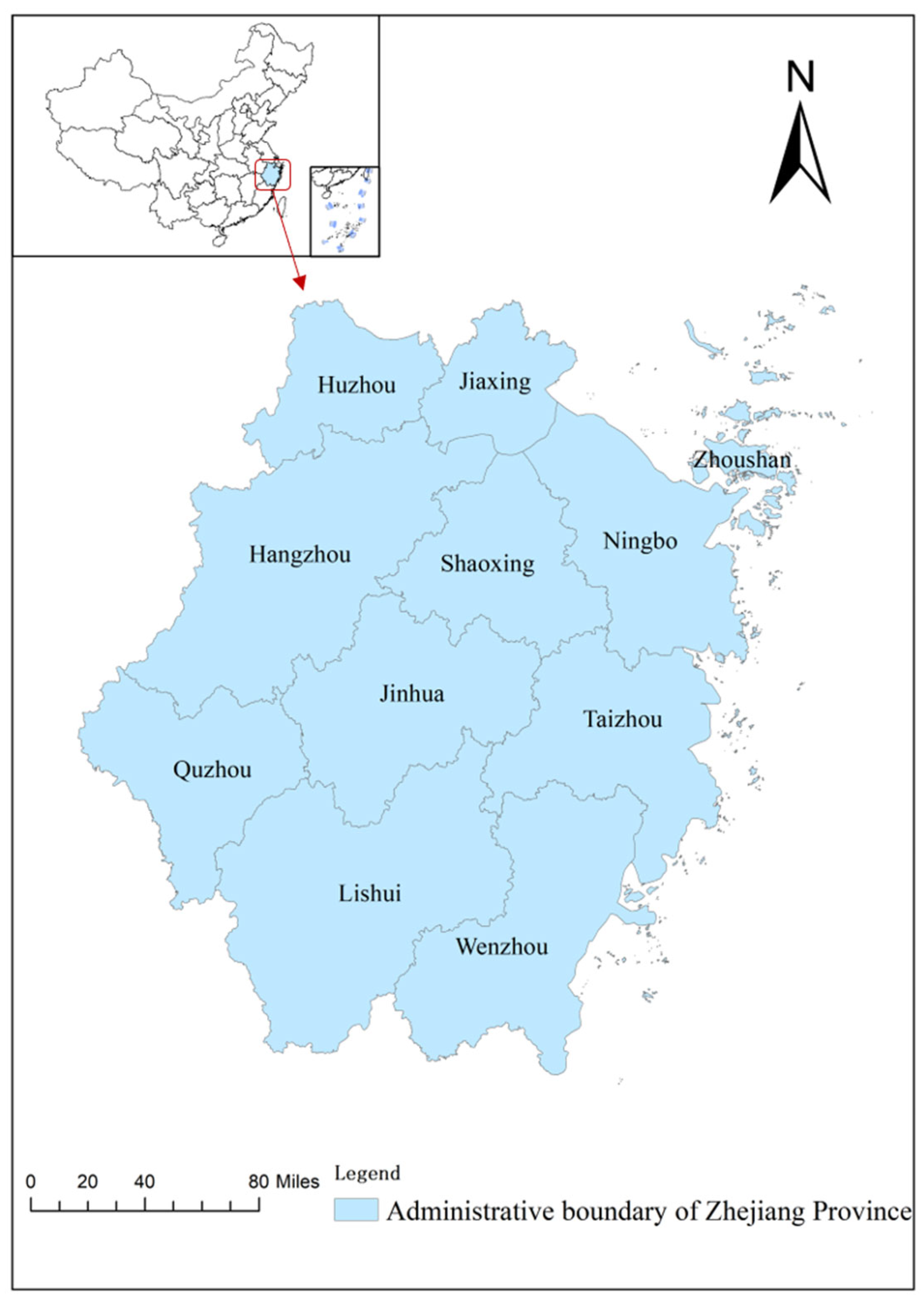
Zhejiang Province, located in the southeastern coastal region of China, is an integral part of the Yangtze River Delta. It spans from 27°02′ to 31°11′ north latitude and from 118°01′ to 123°10′ east longitude, covering a total area of 10.55 × 10⁴ square kilometers. Zhejiang Province administers 11 prefecture-level cities, namely Hangzhou, Ningbo, Wenzhou, Jiaxing, Huzhou, Shaoxing, Jinhua, Quzhou, Zhoushan, Taizhou, and Lishui (Figure 1). As a pioneer in China’s economic development, Zhejiang Province has seen significant socio-economic progress in recent years. According to 2022 statistics, the total population reached 65.77 million, with a per capita GDP of 118,496 yuan and an urbanization rate of 73.4%. Zhejiang Province is rich in rivers and has a well-developed water system. It boasts eight major river systems and over 80,000 rivers, with a total length of approximately 140,000 km. The sea area covers 260,000 square kilometers. In recent years, with rapid urbanization and socio-economic development, Zhejiang Province faces challenges in ecological and environmental protection. Balancing economic growth with effective environmental conservation has become a crucial issue for the region.

2.2. Data Acquisition

This paper utilizes data from the “Zhejiang Statistical Yearbook,” the statistical yearbooks of various cities in Zhejiang Province, and the “Zhejiang Natural Resources and Environment Statistical Yearbook,” supplemented by field surveys, to obtain basic statistical data for Zhejiang Province and its 11 cities from 2011 to 2021 (Table 1).

2.3. Method for Estimating Nitrogen Budget

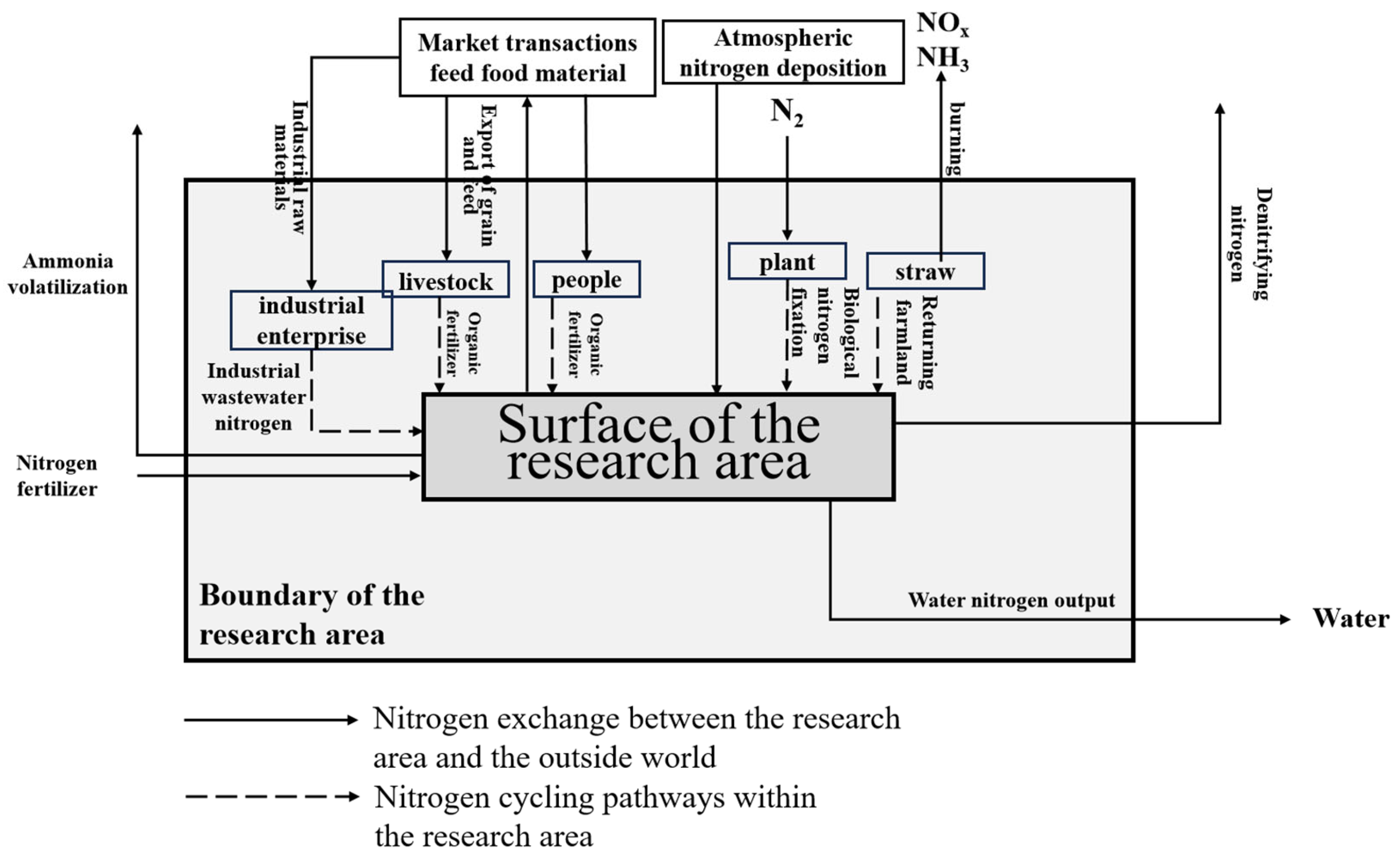
This paper references the nitrogen balance division method proposed by Xing (2002, 1999) [8,26], dividing the nitrogen balance process in Zhejiang Province into three stages: input, output, and surplus, for estimation. To accurately assess the regional nitrogen balance, the research boundary must be clearly defined. The horizontal scope of this study is limited to administrative boundaries, while the vertical scope extends to the upper boundary of the near-surface atmosphere, which is defined here as the lower atmospheric layer directly interacting with the terrestrial system through nitrogen exchange processes (e.g., atmospheric deposition, ammonia volatilization, and gaseous nitrogen emissions), while excluding large-scale atmospheric transport and circulation beyond the study region. The primary sources of nitrogen inputs can include activated nitrogen (both anthropogenic and natural) and recycled nitrogen. Among these, anthropogenic activated nitrogen comprises chemical nitrogen fertilizers, nitrogen fixation by crops themselves, symbiotic nitrogen fixation, and nitrogen from wastewater discharge. Natural activated nitrogen includes nitrogen fixation by natural land and nitrogen activated by lightning processes. Recycled nitrogen encompasses nitrogen from human and animal excreta, atmospheric nitrogen deposition, crop residues, and imported food and feed. Nitrogen outputs include ammonia volatilization, nitrogen output to water bodies, denitrification, biomass burning, nitrogen from crop harvests, and nitrogen exported in food and feed.
Nitrogen surplus = Nitrogen input − Nitrogen output.
The nitrogen transformation process between the watershed and the outside world, and the internal nitrogen cycling pathways within the watershed are shown in Figure 2.

2.3.1. Nitrogen Input Term

The main sources of nitrogen input include chemical nitrogen fertilizers, biological nitrogen fixation by crops, symbiotic nitrogen fixation in fields, excreta from humans and animals, atmospheric nitrogen deposition, nitrogen from wastewater discharge, nitrogen in crop residues, and nitrogen from imported food and feed. It is estimated that globally, nitrogen activated by lightning accounts for approximately 2% of the fixed nitrogen in terrestrial ecosystems [20]. This proportion is minimal and has typically been excluded from previous nitrogen estimation studies. Therefore, this paper also does not include this portion of nitrogen fixation.
Nitrogen input = Nitrogen from fertilizers + Symbiotic nitrogen fixation in fields + Autotrophic nitrogen fixation in fields + Nitrogen from human and animal excreta + Atmospheric nitrogen deposition + Nitrogen discharge from wastewater + Nitrogen from crop residues + Import of grain and feed
The statistical indicators and calculation methods involved are as follows:
(1) Nitrogen from fertilizers: Nitrogen inputs from nitrogen fertilizers and compound fertilizers in each city of Zhejiang over the study period were calculated as pure nitrogen equivalents based on their respective average nitrogen contents. For compound fertilizers, an average nitrogen content of 60% was assumed, following the approach adopted in previous Chinese studies [25].
(2) Symbiotic nitrogen fixation in fields: Symbiotic nitrogen fixation refers to the process by which molecular nitrogen is converted into compound nitrogen through the action of nitrogenase. The amount of nitrogen fixed can be obtained by multiplying the planting area of nitrogen-fixing crops by the corresponding nitrogen fixation rate of these crops. The main nitrogen-fixing crops include soybeans and peanuts, with nitrogen fixation rates of 105 and 112 kg/(ha·a), respectively [27,28].
(3) Autotrophic nitrogen fixation in fields: Autotrophic nitrogen fixation refers to the process by which free-living nitrogen-fixing bacteria convert free nitrogen into a nitrogen source necessary for their own growth. This is calculated by multiplying the planting area of paddy fields and drylands by their corresponding nitrogen fixation parameters. The nitrogen fixation parameters for paddy fields and drylands are 45 and 15 kg/(ha·a), respectively [19].
(4) Nitrogen from human and animal excreta: The nitrogen amount from human and animal excreta is calculated as the product of the nitrogen coefficient of excreta (Table 2) and the number of humans and livestock in the watershed. The livestock number is based on the stock population, while the human population is based on the resident population.
(5) Atmospheric nitrogen deposition: Atmospheric nitrogen deposition = regional area × annual mean precipitation × nitrogen concentration. Nitrogen deposition for 2011–2012 was estimated based on observations by Luo et al. [29] in Fenghua and by Zhu Xuan et al. [30] in Hangzhou, using the average values from the two sites (dry deposition: 20.47 kg N/(ha·a); wet deposition: 24.38 kg N/(ha·a)). For 2013–2014, estimates were derived from the study by Wang Jiangfei et al. [31] in Hangzhou (dry deposition: 21.1129 kg N/(ha·a); wet deposition: 30.79 kg N/(ha·a)). Nitrogen deposition for 2020–2021 was calculated based on nitrogen concentrations in precipitation measured by Qiu Feng et al. [32] in representative areas of Hangzhou (ammonium nitrogen: 1.85 mg/L; nitrate nitrogen: 1.38 mg/L). Due to the lack of continuous observations of precipitation nitrogen concentrations during 2015–2019, the average nitrogen concentration from 2014 and 2020 was used to estimate deposition for this period, in order to maintain the continuity and comparability of the time series. The precipitation data is sourced from the annual “Zhejiang Water Resources Bulletin.”
It should be noted that estimates of atmospheric nitrogen deposition are subject to limitations related to the spatial and temporal representativeness of observational data. Differences in monitoring locations, sampling frequencies, and analytical methods among studies may lead to uncertainties in nitrogen deposition fluxes at the spatial scale. In addition, for the period 2015–2019, the substitution of missing observations with mean nitrogen concentrations from adjacent years may result in under- or overestimation of actual nitrogen deposition levels. Nevertheless, this approach is considered reasonable for long-term regional-scale studies, as it helps ensure the integrity and comparability of interannual results and has been widely adopted in related research.
(6) Nitrogen discharge from wastewater: Given that the statistical yearbooks of each city in Zhejiang Province provide annual data on total nitrogen discharged in wastewater (including industrial and domestic wastewater), city-scale calculations can be directly performed based on the annual total nitrogen loads in wastewater for each city in Zhejiang Province.
(7) Nitrogen from crop residues: According to estimates by Xing et al. [17], approximately 38% of crop residues (non-edible parts) are returned to the fields as fertilizer after the harvest. Due to the fact that the statistical yearbook only provides data on the yield of the edible parts of crops, the yield of crop residues (non-edible parts) is calculated by referring to the empirical ratio of residues to edible parts (Table 2). First, calculate the yield of the corresponding crop residues. Then, determine the nitrogen content in these residues based on the average nitrogen content of different parts of various crops. (Table 2). Given the high level of urbanization in Zhejiang, crop straw is rarely used as kitchen fuel. Instead, it is primarily directed towards industrial production, such as in the paper and construction materials industries. Therefore, the nitrogen released from this portion of crop straw is considered to be included in the nitrogen discharge from wastewater and is not calculated separately.
(8) Import of grain and feed: Schaefer et al. define the import of grain and feed as the difference between the nitrogen content provided by the grain and feed in the region and the nitrogen consumed by humans and livestock in the region. If this value is negative, it indicates import; otherwise, it indicates export [33]. The nitrogen produced by crops in the study area is calculated as: grain yield × nitrogen content in grain (Table 2). The nitrogen provided by livestock is calculated as: market weight of livestock × corresponding protein content (Table 2) × 16% (nitrogen content in protein). The nitrogen consumption by humans and animals is calculated based on the excretion coefficients in Table 2.
Table 2. Calculation parameters of nitrogen provided by animals and plants [8,23,25,26,34,35,36,37].
CategorySubcategoryNitrogen Excretion [kg/(capita·a)]Organic Fertilizer Field Ammonia Volatilization Coefficient (kg NH3-N/kg N)Weight (kg)Protein (%)Grain (Fruit) Nitrogen Content (%)Stem (Leaf) Nitrogen Content (%)Stem-to-Grain Ratio
Animalpeople40.2
Animalpoultry0.30.2
Animalpig80.210013
Animalcow420.247717
Animalsheep70.245.415
AnimalChicken 2.0417
Croprice 1.910.7731.2
Cropwheat 2.320.5651.2
Croppeas and beans 5.112.011.6
Croppeanut 3.730.841.7
Croptubers 0.961.220.5
Cropsesame 3.0280.3861
CropSugar cane 0.2210.0610.3
Cropcotton 3.921.171.22
Cropvegetable 0.50.50.5

2.3.2. Nitrogen Output Term

In terrestrial ecosystems, the main pathways for nitrogen output include ammonia volatilization, biomass burning, denitrification, nitrogen from crop residues, and nitrogen output to water bodies.
Nitrogen output = Nitrogen volatilization + Denitrification nitrogen + Water nitrogen output + Nitrogen removed by crop harvest + Export of grain and feed
The nitrogen output through these pathways is closely related to changes in the regional environment [15,20,38]. Denitrification is a significant pathway for nitrogen loss and an effective method for purifying nitrogen pollution in water bodies [27]. The process produces N2O and NOX, which are directly linked to the greenhouse effect and acid rain. N2O, in particular, has a long atmospheric lifetime (approximately 100 years), leading to extensive impacts on the atmospheric environment. Ammonia volatilization is another significant pathway for nitrogen loss. The volatilized NH3 participates in atmospheric chemical reactions, and a portion of it returns to the land and water bodies through atmospheric deposition. This process has extensive impacts on soil chemical properties, ecosystem functions, and biodiversity. Additionally, nitrogen output to water bodies can impact the water quality of coastal areas in Zhejiang Province’s coastal cities. Therefore, quantitatively calculating nitrogen output from terrestrial systems is Icrucial for controlling nitrogen pollution. The relevant statistical indicators and calculation methods are described as follows.
(1) Nitrogen volatilization: Ammonia nitrogen volatilization includes three components: soil background values, excreta from humans and animals, and fertilizer volatilization. The emission from soil background values is calculated based on the emission factor and area. The emission factor for farmland soil background values is 1.5 kg N/(ha·a) [39]. Due to the differences in ammonia nitrogen volatilization coefficients for paddy fields, drylands, and excreta from humans and animals [8], this study estimates the ammonia nitrogen volatilization for each of these components separately. The volatilization coefficient for excreta from humans and animals is set at 0.20 (Table 2). The organic fertilizer from human excreta is calculated based on the rural population, with a 50% return-to-field ratio. The volatilization coefficients for paddy fields and drylands are set at 0.25 and 0.09 [19], respectively, and the fertilizer usage is converted according to their proportion in the cultivated land area. Ammonia volatilization from fertilizer application was calculated by multiplying these land-use-specific coefficients by the corresponding amounts of fertilizer nitrogen applied to paddy and upland fields.
(2) Denitrification nitrogen: Zhu et al. [40] reported that the denitrification loss parameter for nitrogen fertilizer in paddy fields in China ranges from 33% to 41%. Xing et al. [8] reported that the denitrification loss parameter for dryland crops in China ranges from 13% to 29%, and for organic fertilizers, it ranges from 10% to 30%. Based on these parameters, and considering the corresponding nitrogen application rates for chemical fertilizers and organic fertilizers, the denitrification nitrogen amount is calculated. The organic fertilizer from human excreta is calculated based on the rural population. For parameters reported as ranges in the literature, the midpoint of the reported range was adopted in this study as a representative value for regional-scale estimation. This approach has been widely used in large-scale nitrogen budget studies to provide a balanced and transparent approximation when detailed site-specific information is unavailable.
(3) Water nitrogen output: The export of nitrogen through water bodies, such as rivers, is a significant pathway for regional nitrogen loss. According to Xing et al. [8], approximately 30% of anthropogenic reactive nitrogen is lost to water bodies through processes such as runoff and leaching. Additionally, the direct discharge of human waste results in a nitrogen loss of about 3.3 kg N/a [8]. Due to the lack of precise data, the nitrogen amount from rural livestock and poultry waste discharged into water bodies is typically not included in the estimates.
(4) Nitrogen removed by crop harvest: This includes both the edible and non-edible parts of the crops. The nitrogen in the edible parts is calculated at 100%, while approximately 62% of the nitrogen in the non-edible parts is harvested. Based on the ratio of non-edible parts (straw) to edible parts (grain) in Table 3, as well as the average nitrogen content in different parts of various types of crops, a detailed calculation of the nitrogen removed by crop harvest is performed.
(5) Export of grain and feed: The method is the same as for grain and feed import
In this study, organic fertilizer nitrogen refers exclusively to nitrogen derived from human and livestock excreta that is returned to cropland. It was accounted for under the “human and animal excreta” category rather than being included in chemical fertilizer inputs. Chemical fertilizer nitrogen includes only nitrogen fertilizers and compound fertilizers, and no overlap exists between these two nitrogen sources. Meanwhile, it should be noted that nitrogen inputs and outputs do not necessarily occur within the same year due to nitrogen storage and transformation in soil, vegetation, and water bodies. In this study, an annual nitrogen balance approach is adopted to characterize long-term regional nitrogen dynamics. Although this study does not explicitly model nitrogen residence time, the long-term dataset helps reduce the influence of short-term lag effects. Therefore, over the multi-year study period (2011–2021), the effects of residence time and temporal lag are assumed to be partially integrated and smoothed at the interannual scale, which is consistent with previous regional nitrogen budget studies.

3. Results and Discussion

3.1. Analysis of the Characteristics and Sources of Nitrogen Input in Zhejiang

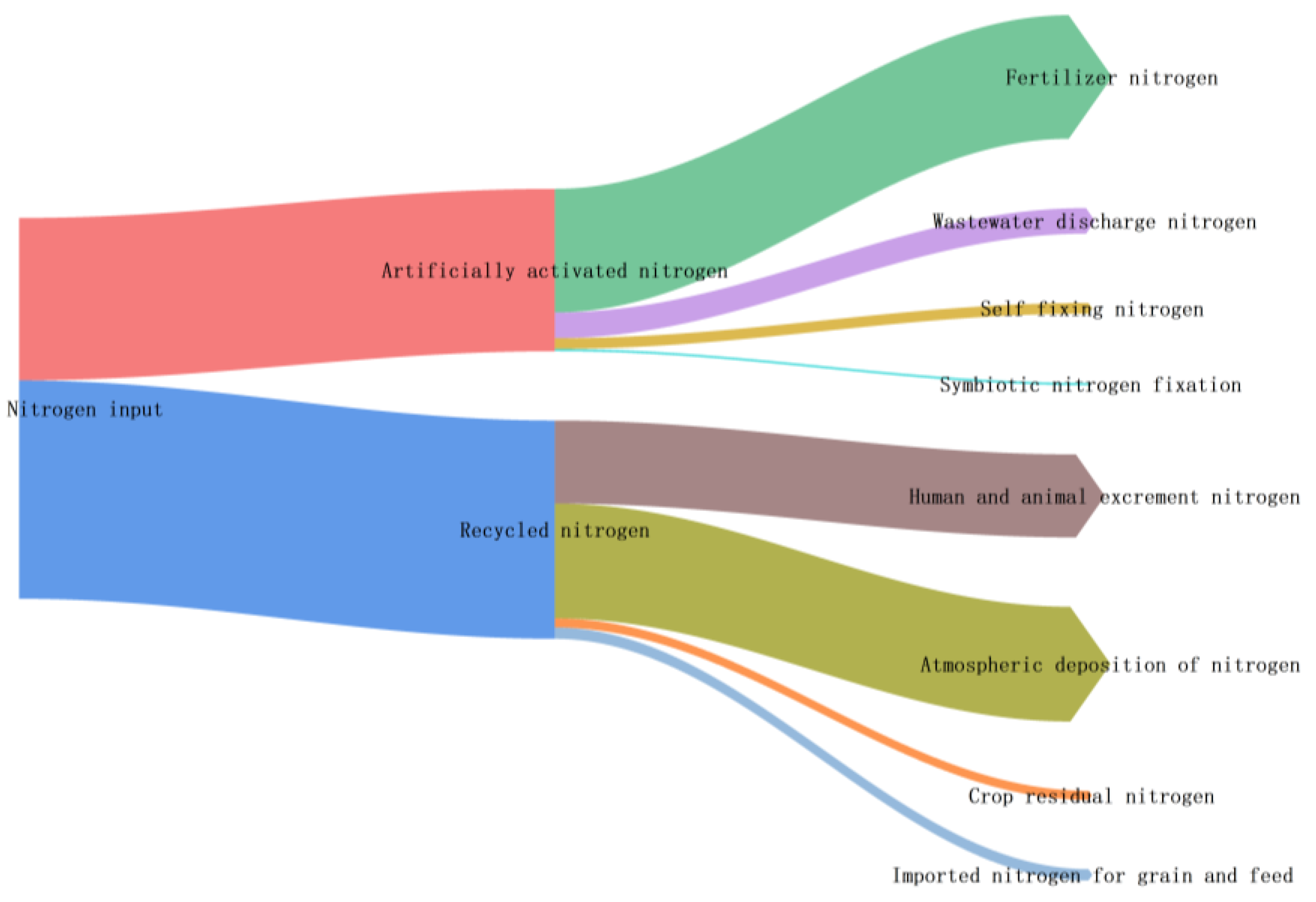
Estimating nitrogen input in Zhejiang province using the above method, the results show that over the past 11 years, the total nitrogen input in Zhejiang province has fluctuated, maintaining between 166.71 × 10⁴~184.02 × 10⁴ t. Temporally, the total nitrogen input increased from 2011 to 2013 and decreased from 2015 to 2017, and despite fluctuations, has shown an overall stable trend thereafter. Between 2011 and 2021, the average nitrogen input in the region was 175.42 × 10⁴ t/a. As shown in Figure 3, based on the multi-year average for the period 2011–2021, the inputs of anthropogenic reactive nitrogen and recycled nitrogen were 74.82 × 10⁴ t/a and100.6 × 104 t/a, respectively, accounting for 42.65% and 57.35% of the total nitrogen input. Among them, fertilizer nitrogen input had the highest proportion in anthropogenic reactive nitrogen, reaching 76.16%, and accounted for 32.47% of the total nitrogen input; meanwhile, regarding recycled nitrogen, atmospheric deposition nitrogen input had the highest proportion, at 52.6%, and accounted for 30.19% of the total nitrogen input.
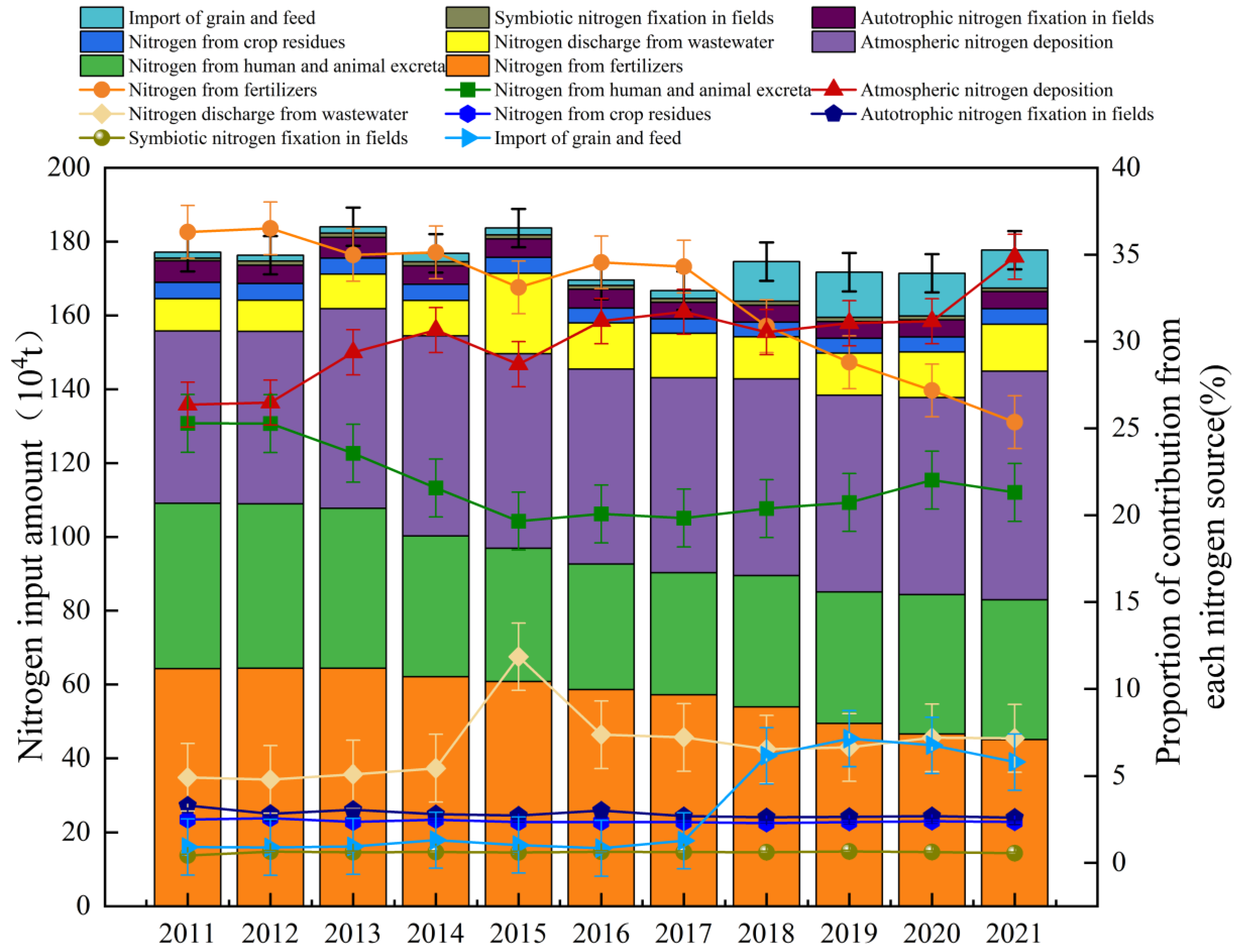
The fluctuations in the total nitrogen input may be associated with local agricultural policies, meteorological conditions, and other factors. There is no clear upward or downward trend is observed in the time series. From a discussion perspective, this relatively stable pattern may reflect local efforts in environmental protection, sustainable agricultural development, and nitrogen pollution management. However, this result led us to hypothesize that controlling only certain nitrogen input sources while neglecting others may have caused a decrease in some inputs and a concurrent increase in others, resulting in relatively small overall changes. Therefore, this study also analyzed the contribution trends of each nitrogen source separately (Figure 4).
As shown in Figure 4, nitrogen inputs from atmospheric deposition exceeded those from chemical fertilizers after 2018. The results indicate that this shift was primarily driven by a reduction in fertilizer-derived nitrogen, likely associated with sustained decreases in fertilizer application resulting from fertilizer-related policies and improved agricultural management practices, rather than by a substantial increase in atmospheric deposition. Consequently, atmospheric deposition became the dominant nitrogen input source in relative terms. Other nitrogen sources, in descending order of their contributions, are wastewater discharge nitrogen, farmland nitrogen fixation, and crop residue nitrogen. Nitrogen from imported grain and feed has always been a relatively small nitrogen source, but it increased in 2018. Overall, fertilizer nitrogen, atmospheric deposition nitrogen, and nitrogen from human and animal excreta have consistently occupied the top three positions. This is consistent with the nitrogen input estimates by other scholars for the Beijiang River Basin [27], he Yangtze River Delta [25], and the three major river basins in China (Yangtze River Basin, Yellow River Basin, and Pearl River Basin) [8], thereby supporting the validity of the results of this study. This distribution characteristic is closely related to the current state of agricultural development and population distribution in China. From a watershed scale perspective, the Yangtze River Basin, Yellow River Basin, and Pearl River Basin are regions in China with rapid industrial and agricultural development and favorable economic conditions. Zhejiang is located in the Yangtze River Basin and on the southern wing of the Yangtze River Delta, sharing similar characteristics.
(1) Fertilizer nitrogen is a significant nitrogen source in Zhejiang, with its input remaining high over the past 11 years. This may be related to the long-standing “high fertilization, high yield” concept practiced in rural areas of China. In many regions of China, the application of chemical nitrogen fertilizers exceeds the optimal recommended amount by more than 50%. This practice has increased the yields of rice, wheat, and corn by 90%, 50%, and 240%, respectively, over the past 40 years. It is noteworthy that although China accounts for only 7% of the world’s arable land, it uses more than a quarter of the global nitrogen fertilizers [22]. If the applied nitrogen fertilizers are not effectively utilized by crops, the remaining reactive nitrogen (Nr) will largely remain in the soil or be transferred and lost to the environment. However, the overall input of chemical nitrogen fertilizers has shown a decreasing trend, from 643,100 tons in 2011 to 450,500 tons in 2021, with its contribution to the total nitrogen input decreasing from 36.31% to 25.35%. This trend is attributed to the implementation of soil testing and formulated fertilization policies in farmland since 2005. Before 2011, Zhejiang Province had already vigorously promoted soil testing and formulated fertilization, as well as projects aimed at reducing and increasing the efficiency of chemical fertilizers, achieving certain results. For example, in the first half of 2009, the province promoted soil testing and formulated fertilization over an area of 13.252 million mu, reducing unreasonable fertilization by 43,100 tons (pure). By the first half of 2011, Zhejiang Province had completed soil testing and formulated fertilization over an area of 12.02 million mu. By 2020, the utilization rate of chemical fertilizers had increased to over 40% compared to 2015, and the coverage rate of soil testing and formulated fertilization technology had reached over 93%. At the same time, the area of farmland has also been decreasing (Table 1), leading to a downward trend in the use of chemical nitrogen fertilizers.
(2) Atmospheric nitrogen deposition, as one of the main pathways of nitrogen input in Zhejiang Province, has been particularly significant during the rapid development over the past decade. Over the past decade, agricultural activities, fossil fuel combustion, denitrification in water bodies, and ammonia volatilization have released large amounts of nitrogen compounds into the atmosphere. Approximately 70% to 80% of these compounds re-enter terrestrial and aquatic systems through deposition [20,22]. Therefore, atmospheric nitrogen deposition has a significant impact on nitrogen input in this region. Additionally, due to the influence of the monsoon climate, the annual rainfall in Zhejiang varies greatly, leading to corresponding fluctuations in the contribution rate of atmospheric nitrogen deposition, ranging from 26.36% to 34.87% (Figure 4).
(3) Human and animal excreta constitute the third largest source of nitrogen in Zhejiang Province. This is primarily due to the increase in the resident population and improved living conditions, which have led to higher demand for grains, poultry, and meat, thereby promoting the development of animal husbandry. From 2011 to 2021, the amount of nitrogen from human and animal excreta decreased from 447,800 tons to 378,600 tons, a reduction of 15.45%. Its contribution to the total nitrogen input also decreased from 25.28% to 21.31%. This indicates significant progress in the management and comprehensive utilization of livestock and poultry farm waste, as well as the construction and upgrading of sewage treatment plants in Zhejiang Province. Over the past decade, various regions and departments in Zhejiang Province have intensified efforts to prevent and control pollution from livestock and poultry farming. They have constructed facilities such as biogas digesters and dry manure pits, and have closed or relocated farms in restricted areas. In 2018, more than 400,000 farms were shut down or relocated, reducing the pig population by 50%. Since 2019, a system for the targeted, quantified, and timed application of excreta to agricultural and pastoral integration and ecological utilization has been implemented. In 2020, the Provincial Environmental Department issued a document emphasizing the promotion of resource utilization of livestock and poultry waste and the industrial treatment of excreta.
(4) Wastewater nitrogen input is the fourth largest nitrogen source in the region, showing an overall increasing trend. The input amount rose from 87,100 tons in 2011 to 127,200 tons in 2021, and its contribution to the total nitrogen input increased from 4.91% to 7.15%. This change is likely due to the continuous addition of large-scale industrial enterprises in Zhejiang province. The industrial output value of these enterprises increased from 3185.48 billion yuan to 7351.576 billion yuan, a growth of 45.97%, with Hangzhou being the most significant, showing an increase of 51.68%. Additionally, the resident population in Zhejiang has been increasing (Table 1), further contributing to the growth of wastewater nitrogen input.
(5) For nitrogen fixation in farmland and crop residue nitrogen (agricultural nitrogen), their proportion of the total nitrogen input is relatively small. Influenced by the area of cultivated land and the scale of crop planting, there are annual fluctuations, but the overall trend remains stable.
(6) The nitrogen input from import of grain and feed has always been a relatively small source of nitrogen input. However, there was a significant change in 2018, with an increase of more than five times compared to the previous year. This growth continued in 2019 until it began to decline in 2020. This change is closely related to the nitrogen yield of grain, as major agricultural products are used to meet human dietary consumption and livestock needs. In 2018, the nitrogen yield of grain in the province significantly decreased by 37.33% compared to the previous year, and it further decreased in 2019, leading to a continuous increase in the required amount of imported nitrogen. In 2020 and 2021, the nitrogen yield of grain rebounded, resulting in a corresponding decrease in the amount of imported nitrogen.

3.2. Nitrogen Output and Pathways

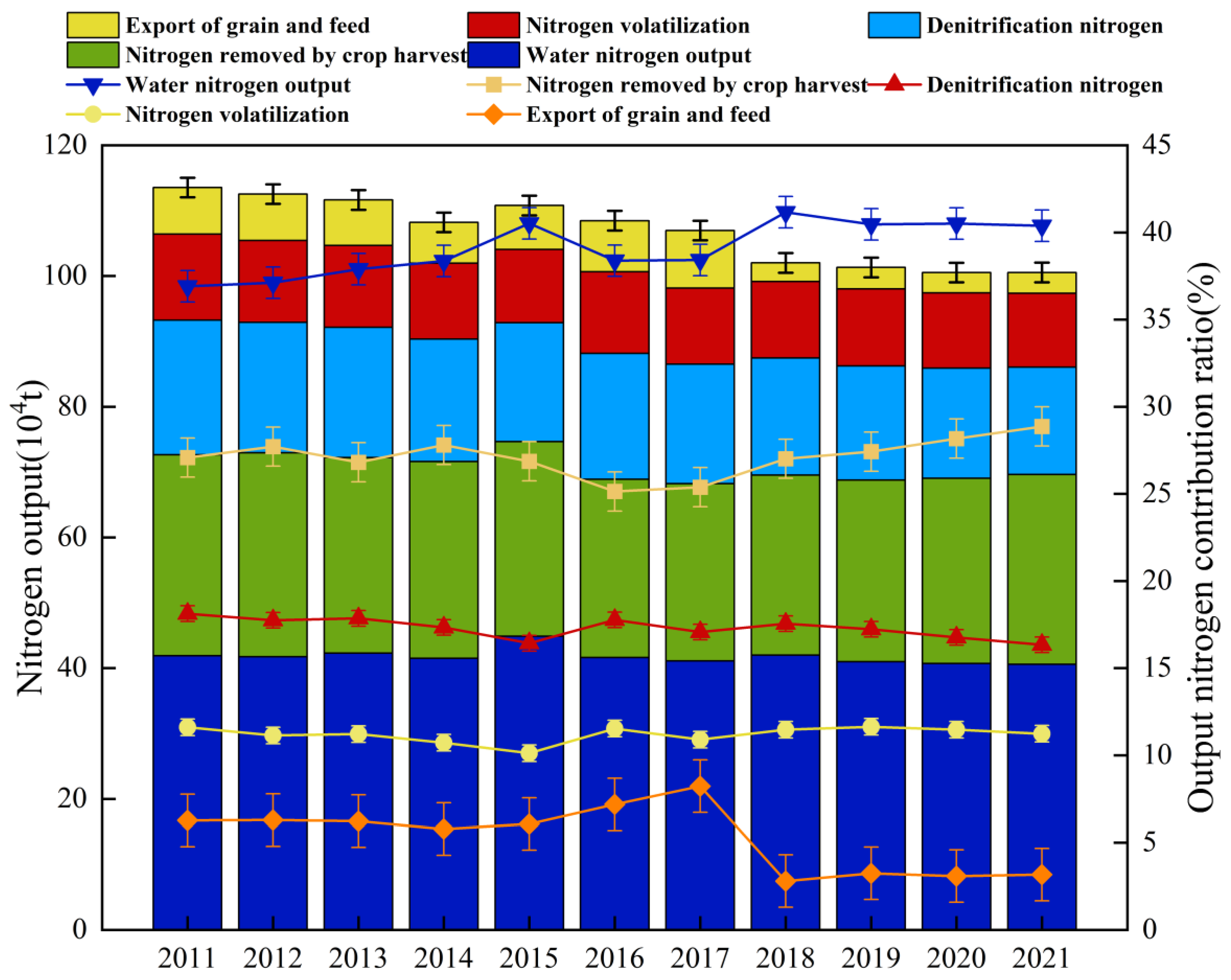
Between 2011 and 2021, the total nitrogen output in Zhejiang Province decreased from 113.54 × 10⁴ tons to 110.54 × 10⁴ tons, a reduction of 10.88%. Except for an increase in 2015, the output decreased in all other years. The proportions of nitrogen output through various pathways remained relatively stable, with water body nitrogen output being the dominant pathway, followed by nitrogen from crop harvests. Denitrification and nitrogen volatilization contributed relatively less, and the nitrogen output from grain and feed exports was the lowest. This characteristic may be related to the high nitrogen input and specific climatic conditions in the region (Figure 5).
Zhejiang is located in a subtropical monsoon climate zone, where high temperatures and abundant rainfall promote the formation of anaerobic environments, which provide a favorable environmental background for denitrification processes and may contribute to enhanced nitrogen losses. Additionally, the large annual nitrogen application in the region’s farmland, combined with rainfall, enhances nitrogen runoff and leaching, leading to consistently high nitrogen output in water bodies. Since 2016, nitrogen from crop harvests has shown an increasing trend, reflecting agricultural development and the effectiveness of nitrogen fertilizer reduction and efficiency improvement measures. The strong ammonia volatilization from farmland, combined with the impact of livestock farming, results in significant overall ammonia volatilization. Reactive nitrogen emitted to the atmosphere can be transported over varying distances and subsequently redeposited via precipitation, returning to terrestrial and aquatic systems and further enhancing nitrogen runoff and leaching. The nitrogen output from grain and feed exports, which corresponds to imports, is the smallest proportion and showed a significant decline in 2018.

3.3. Nitrogen Load and Land Nitrogen Flux

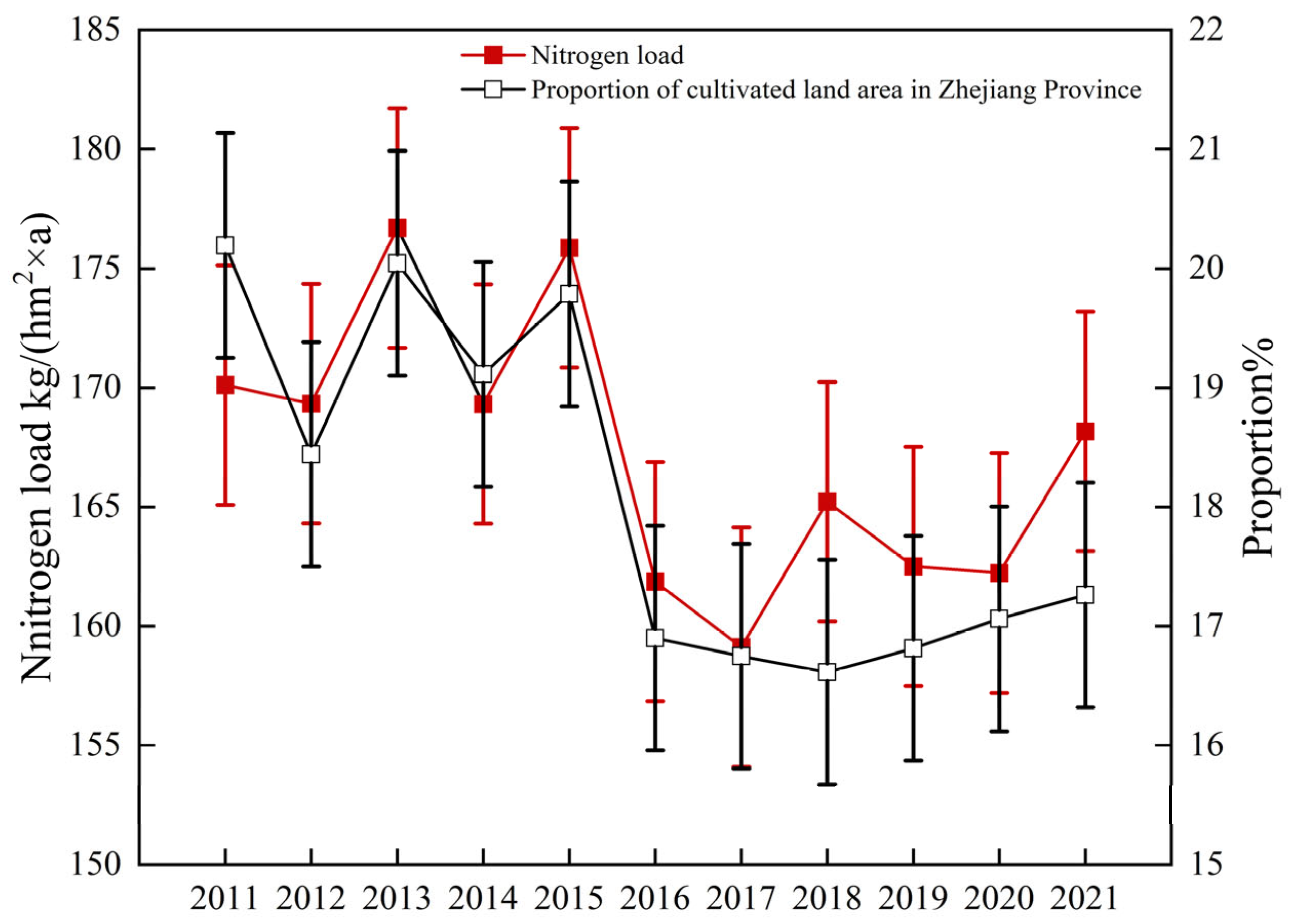
To gain a deeper understanding of the nitrogen input intensity in Zhejiang Province, a study was conducted on the nitrogen load, which is the amount of nitrogen received per unit area of land in the region (Figure 6). From 2011 to 2021, the annual average nitrogen load in Zhejiang Province ranged between 159.12 and 176.7 kg/ha. Except for 2016, the fluctuations in other years were less than 5%, showing no significant overall trend. High nitrogen loads can exacerbate nitrogen losses. Although the nitrogen load level in Zhejiang Province is not the highest in the country, it has already exceeded the national average. It is 2.6 times the national average level in 1995 [64 kg/(ha·a)] [8], 2.8 times the average level of the Yangtze River Basin in 1997 [60.1 kg/(ha·a)] [39], and 1.6 times the average level of the Pearl River Basin in 1997 [104.44 kg/(ha·a)] [8]. However, compared to the average level of the Yangtze River Delta in 2002 [291 kg/(ha·a)] [25] and the average level of the Pearl River Delta in 2010 [190.65 kg/(ha·a)] [19], the nitrogen load in Zhejiang Province is relatively lower. By analyzing the relationship between cultivated land area and nitrogen load over the years, it was found that the proportion of cultivated land area in Zhejiang Province ranged between 16.61% and 20.19% of the total land area(Figure 6), The trend in this proportion is generally consistent with the nitrogen load, indicating that agricultural nitrogen plays an important role in shaping regional nitrogen load patterns. This phenomenon is also reflected in other studies, such as the national average in 1995 (nitrogen load of 64 kg/ha—cultivated land area proportion of 9.89%) [8], the Yangtze River Delta in 2002 (291 kg/ha—33.86%) [25], the Pearl River Delta in 2010 (190.65 kg/ha—24.16%) [19], Zhanjiang Bay in 2010 (249.99 kg/ha—28.09%) [41], and the Beijiang River Basin in 2006 (84.61 kg/ha—21.01%) [27].

3.4. The Nitrogen Surplus and Environmental Impact in Zhejiang Province

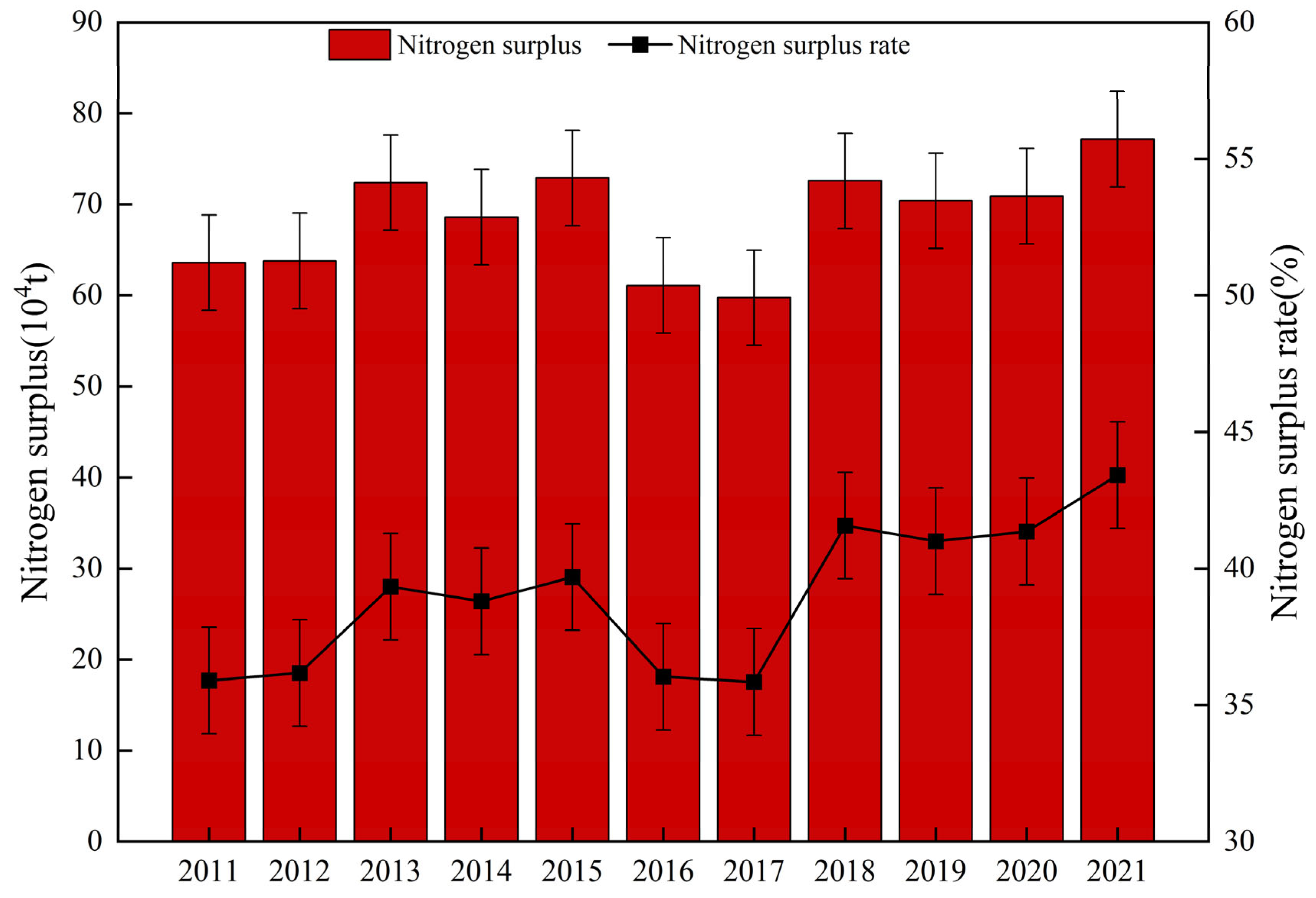
Estimates of nitrogen input and output in Zhejiang Province (Figure 7) over the past 11 years show that the annual nitrogen surplus ranges from 59.76 × 10⁴ to 77.16 × 10⁴ tons, significantly higher than that of the Pearl River Delta (28.42 × 10⁴ tons) [19] and the Beijiang River Basin (9.67 × 10⁴ tons) [27], but notably lower than that of the Yangtze River Delta (approximately 99 × 104 to 128 × 104 tons per year) [25]. Meanwhile, the surplus rate (surplus nitrogen/input nitrogen) ranges from 35.84% to 43.42% (Figure 7), and the annual nitrogen surplus per unit area (surplus load) ranges from 57.03 kg/(ha·a) to 73.02 kg/(ha·a). The trend in nitrogen surplus shows an increase from 2011 to 2015, a decrease from 2015 to 2017, and another rise in 2018. Although there have been fluctuations since then, the overall trend has been upward. Simultaneously, the nitrogen surplus load increased from 61.07 kg/ha in 2011 to 73.02 kg/ha in 2021.
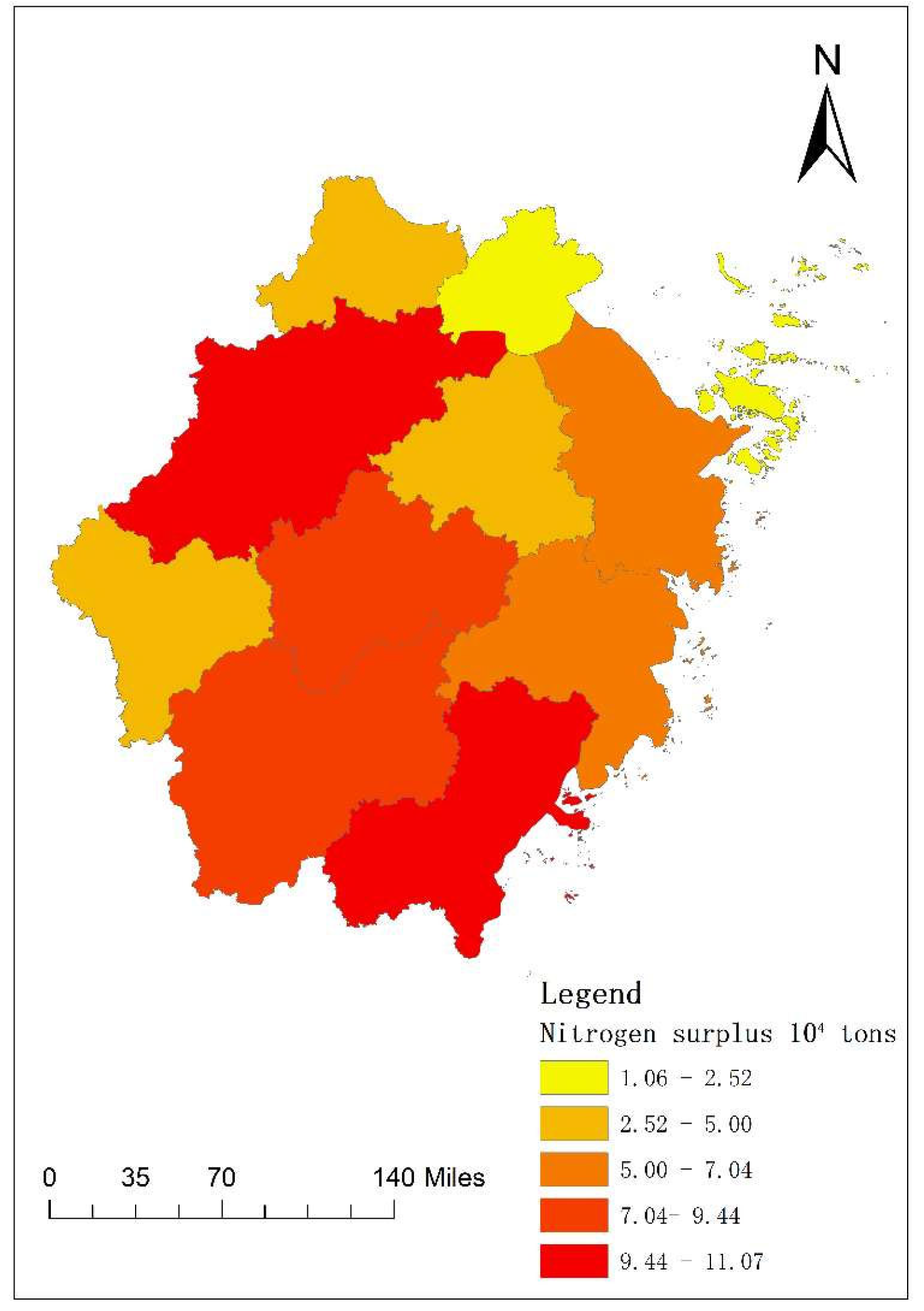
The spatial distribution of the average annual nitrogen surplus across various cities (Figure 8, Table 3) indicates that Hangzhou, Wenzhou, Lishui, Jinhua, and Ningbo rank as the top five. Wenzhou has the highest nitrogen surplus per unit area, followed by Jinhua, Zhoushan, Taizhou, Hangzhou, Ningbo, Lishui, Quzhou, Huzhou, Shaoxing, and Jiaxing. This surplus nitrogen is primarily stored in soil, vegetation, or water bodies. Changes in these stores are crucial for understanding the environmental impact of regional nitrogen pollution. The potential nitrogen pollution situation is particularly severe in cities like Wenzhou, Jinhua, Zhoushan, Hangzhou, and Ningbo.
These results indicate that the nitrogen surplus and surplus load in Zhejiang Province have generally shown an upward trend over the past decade. This trend may be related to the intensification of agricultural production and increased use of chemical fertilizers in the region. Compared to the Pearl River Delta and the Beijiang River Basin, the nitrogen surplus in Zhejiang is significantly higher, likely due to the larger scale and intensity of agricultural production and higher fertilizer usage in Zhejiang. However, the nitrogen surplus in Zhejiang is still lower than that in the Yangtze River Delta, possibly because agricultural production in the Yangtze River Delta is more intensive, with even higher fertilizer usage. Therefore, future research should further explore the differences in nitrogen surplus and surplus load among different regions and their underlying causes, in order to develop more scientifically sound and reasonable nitrogen management strategies.
Previous studies support this conclusion. Regarding the nitrogen surplus issue in Zhejiang Province, Huang Luyao et al. [42] observed a similar trend and found that large-scale farming operations in Zhejiang can significantly reduce nitrogen fertilizer input and promote nitrogen use efficiency. Their research indicates that through land consolidation and large-scale farming, nitrogen fertilizer input can be reduced by 53%, and nitrogen use efficiency can increase from 38% to 56%. Ju Xiaotang and Zhang Chong et al. [43] emphasized that the principles and indicators of rational nitrogen application are crucial for reducing nitrogen surplus and improving nitrogen use efficiency. Their research shows that optimizing fertilization techniques and management measures can significantly reduce nitrogen surplus and enhance nitrogen use efficiency. Additionally, Yin (2021) [44] proposed a dynamic nitrogen balance optimization management method, which can significantly reduce nitrogen surplus and improve nitrogen use efficiency by optimizing nitrogen fertilizer application rates.
Previous studies have also shown that nitrogen surplus has a significant impact on the environment. Gu et al. (2023) [45] pointed out that the nitrogen use efficiency in global farmlands is less than 50%, leading to issues such as water eutrophication, soil acidification, and air pollution. Optimizing nitrogen management measures can effectively reduce nitrogen losses and improve nitrogen use efficiency [45].
In summary, the research findings in Zhejiang Province are consistent with previous studies, all indicating that nitrogen surplus has negative environmental impacts. However, by optimizing management measures, nitrogen pollution can be reduced, and environmental quality can be improved. Through scientific management and policy support, sustainable agricultural development can be achieved.

3.5. Main Driving Factors for Nitrogen Balance in Zhejiang Province

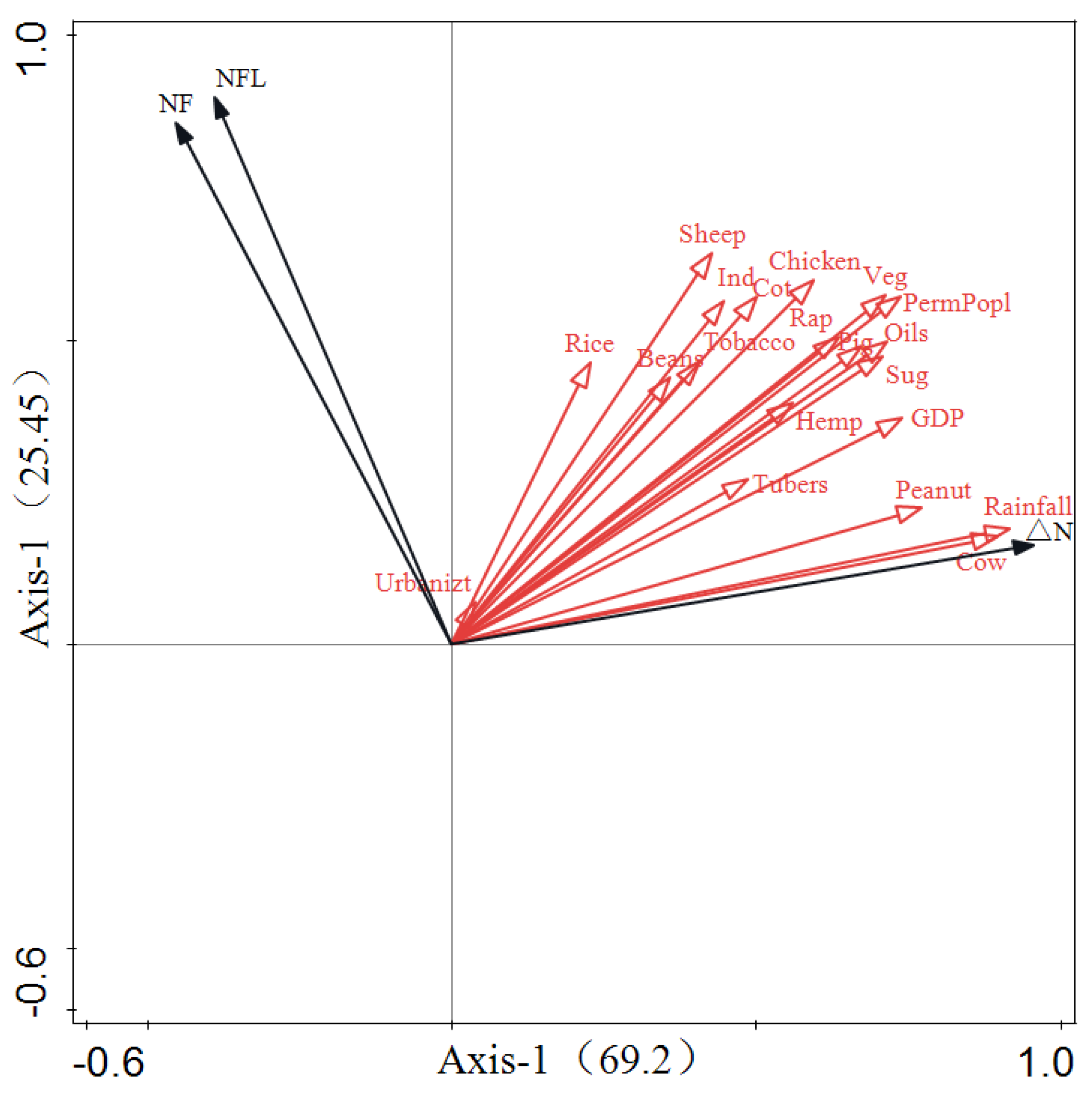
To investigate the primary factors influencing the nitrogen balance in Zhejiang Province, a redundancy analysis (RDA) was conducted on the nitrogen load, terrestrial nitrogen flux, and nitrogen surplus over an 11-year period. This analysis considered key driving factors within the watershed, including livestock and poultry farming, crop planting area, population, and GDP. The DCA ordination results indicate that the maximum gradient length of the ordination axis is 0.04, making redundancy analysis (RDA) appropriate. The ordination diagram (Figure 9) shows a cumulative explanatory power of 98.79%. Monte Carlo tests reveal that the nitrogen balance in Zhejiang is significantly correlated with regional rainfall (p = 0.002), crop planting area (including vegetables, rice, tobacco, peanuts, sugarcane, cotton, and oil crops) (p < 0.05), livestock and poultry farming (p < 0.05), population (p = 0.002), GDP (p = 0.002), and industrial output (p = 0.002). Nitrogen surplus is positively correlated with crop planting area, livestock and poultry farming, population, rainfall, GDP, and total industrial output.
Simultaneously, according to the results of Pearson correlation analysis (Table 4), all environmental factors involved in the analysis (crop planting area, livestock and poultry numbers, population, rainfall, urbanization rate, GDP, and total industrial output) show a highly significant positive correlation with nitrogen surplus. Additionally, the planting area of tobacco and the number of sheep are significantly positively correlated with terrestrial nitrogen flux; rainfall is significantly negatively correlated with nitrogen load.
The above analysis further corroborates the impact of human activities on the nitrogen cycle. High population density and urbanization rates intensify human activities, leading to increased wastewater discharge and consequently higher inputs of reactive nitrogen. Therefore, population size is significantly positively correlated with nitrogen surplus. This finding is consistent with the results of Ren et al. [46], who noted that population growth and increased urbanization rates contribute to higher nitrogen inputs, resulting in nitrogen surplus. Additionally, to meet the demand for food and feed, large-scale crop cultivation leads to the application of substantial amounts of chemical nitrogen fertilizers to farmland. The annual average application rate of chemical nitrogen fertilizers in the region ranges from 247 to 306 kg N/ha. The use of chemical nitrogen fertilizers and livestock farming results in significant nitrogen emissions into the atmosphere through ammonia volatilization and denitrification. Consequently, crop planting area and livestock farming are significantly positively correlated with nitrogen surplus. Previous studies support this view. Chang et al. (2021) [47] pointed out that excessive application of nitrogen fertilizers leads to low nitrogen use efficiency, resulting in nitrogen surplus and environmental pollution. Research on the scale of farmland in Zhejiang Province indicates that land consolidation and large-scale operations can significantly reduce nitrogen fertilizer input and improve nitrogen use efficiency [42]. Simultaneously, the study by Liu Zhong et al. (2009) [48] indicates that livestock manure is a significant source of nitrogen in farmland. Excessive livestock farming leads to nitrogen surplus, and it also results in substantial nitrogen emissions into the atmosphere through ammonia volatilization and denitrification, further exacerbating nitrogen surplus. Industrial development exacerbates the combustion of fossil fuels, increasing nitrogen emissions into the atmosphere. These emitted nitrogen compounds return to terrestrial ecosystems through deposition facilitated by abundant rainfall, leading to nitrogen surplus. Consequently, this study finds that GDP, industrial output, and rainfall are significantly positively correlated with nitrogen surplus. This viewpoint is also supported by Liu Zhong et al. (2009) [48], who noted that industrial development increases nitrogen emissions, resulting in nitrogen surplus. Additionally, the research by Ju Xiaotang et al. [43] indicates that increased rainfall can bring atmospheric nitrogen back to terrestrial ecosystems through wet deposition, contributing to nitrogen surplus.
Based on the previous analysis, regions with higher populations, relatively high per capita GDP, and larger arable land areas, such as Hangzhou, Ningbo, and Wenzhou, exhibit higher total nitrogen inputs. Consequently, these regions also experience higher levels of ammonia volatilization, denitrification, and nitrogen inflow into water bodies. The results of this study are consistent with previous research findings, further confirming the impact of human activities on nitrogen balance. Future research should focus on exploring ways to optimize agricultural and industrial activities to reduce nitrogen inputs and emissions, thereby achieving sustainable nitrogen management.
Based on the identified spatial patterns of nitrogen surplus and its key driving factors, this study provides practical implications for nitrogen management across multiple environmental compartments. Cities with persistently high nitrogen surpluses should be prioritized for integrated control, as they pose elevated risks to surface water, groundwater, and downstream aquatic systems. The strong associations between nitrogen surplus, cropland area, and livestock population highlight the need to improve agricultural nitrogen use efficiency through optimized fertilizer application and improved manure management to reduce runoff and leaching losses. In rapidly urbanizing areas, the positive relationships between nitrogen surplus, population size, and economic indicators emphasize the importance of enhancing sewage collection and wastewater treatment efficiency to limit point-source nitrogen emissions. Although the nitrogen balance approach does not explicitly track nitrogen transport pathways, it provides a useful framework for identifying high-risk areas under rapid urbanization. The nitrogen input structure and surplus dynamics observed in Zhejiang Province are consistent with patterns reported in other coastal and fast-urbanizing regions in China, and the nitrogen load intensity falls within the range of comparable provinces, indicating that the patterns reflect broader regional processes rather than isolated conditions. While our estimates rely on statistical yearbook data and literature-based coefficients and lack high-frequency environmental monitoring for validation, the long-term multi-city dataset and consistent accounting framework ensure that the major spatial–temporal patterns remain robust.

4. Conclusions

This study’s estimation of the nitrogen balance in Zhejiang provides a scientific basis for formulating reasonable nitrogen pollution control measures. It aids in the scientific regulation of regional nitrogen balance and the improvement of coastal water quality. The main conclusions are as follows:
(1) From 2011 to 2021, the total nitrogen input in Zhejiang ranged from 166.71 × 10⁴ to 184.02 × 10⁴ tons. The overall trend showed an increase from 2011 to 2013 and a decrease from 2015 to 2017, and although there were fluctuations thereafter, the nitrogen input remained generally stable. The average nitrogen input was 175.42 × 10⁴ tons per year, with anthropogenic reactive nitrogen and recycled nitrogen inputs being 74.82 × 10⁴ tons per year and 100.6 × 10⁴ tons per year, respectively, accounting for 42.65% and 57.35% of the total nitrogen input. The top three nitrogen sources were chemical fertilizer nitrogen, atmospheric deposition nitrogen, and nitrogen from human and animal excreta. The annual average nitrogen load ranged from 159.12 to 176.7 kg/ha, showing no consistent trend. Compared to national, Yangtze River Basin, and Pearl River Basin averages, the nitrogen load in Zhejiang was higher, but it was lower than the averages in the Yangtze River Delta and Pearl River Delta.
(2) From 2011 to 2021, the total nitrogen output in Zhejiang decreased from 125.17 × 10⁴ tons to 111.56 × 10⁴ tons, a reduction of 10.88%. Except for an increase in 2015, the output decreased in all other years. The contribution proportions of various output pathways remained relatively consistent each year. Over the 11 years, the nitrogen surplus ranged from 59.76 × 10⁴~77.16 × 10⁴ tons. It increased from 2011 to 2015, decreased from 2015 to 2017, and rose again in 2018, and although there were fluctuations, the overall trend was upward. The surplus load ranged from 57.03 kg/(ha·a) to 73.02 kg/(ha·a). Spatial distribution indicated that cities such as Wenzhou, Jinhua, Zhoushan, Hangzhou, and Ningbo faced more severe potential nitrogen pollution issues.
(3) Both RDA and Pearson correlation analysis results indicate that nitrogen surplus in the region is positively correlated with environmental factors such as crop planting area, livestock and poultry breeding numbers, population size, rainfall, GDP, and total industrial output. This further corroborates the impact of human activities on the nitrogen cycle.

Author Contributions

Conceptualization, H.Y., G.H. and Q.L.; methodology, H.Y., Q.L., G.H. and J.Z.; software, H.Y., G.H. and Q.L.; validation, H.Y., G.H. and Q.L.; formal analysis, H.Y.; investigation, H.Y.; resources, H.Y.; data curation, H.Y.; writing—original draft preparation, H.Y.; writing—review and editing, H.Y., G.H. and Q.L.; visualization, H.Y.; supervision, G.H. and Q.L.; project administration, G.H. and Q.L.; funding acquisition, Q.L. All authors have read and agreed to the published version of the manuscript.

Funding

The authors of this study would like to thank all anonymous reviewers for their helpful remarks. This article was financially supported by the Open Research Fund of Key Laboratory for Estuarine and Coastal Environment of the Ministry of Ecology and Environment, Chinese Research Academy of Environmental Sciences (2024YSKY-04), the National Key Research and Development Program of China (2021YFC3101705) and the Provincial “Leading Goose” Key Technology Research and Development Program of Zhejiang, China (2025C02229).

Data Availability Statement

Data will be made available on request.

Conflicts of Interest

The authors declare that they have no known competing financial interests or personal relationships that could have appeared to influence the work reported in this paper.

References

  1. Han, Y.; Feng, G.; Swaney, D.P.; Dentener, F.; Koeble, R.; Ouyang, Y.; Gao, W. Global and regional estimation of net anthropogenic nitrogen inputs (NANI). Geoderma 2020, 361, 114066. [Google Scholar] [CrossRef]
  2. Erisman, J.W.; Galloway, J.; Seitzinger, S.; Bleeker, A.; Butterbach-Bahl, K. Reactive nitrogen in the environment and its effect on climate change. Curr. Opin. Environ. Sustain. 2011, 3, 281–290. [Google Scholar] [CrossRef]
  3. Stevens, C.J. Nitrogen in the environment. Science 2019, 363, 578–580. [Google Scholar] [CrossRef] [PubMed]
  4. Ye, J.Y.; Tian, W.H.; Jin, C.W. Nitrogen in plants: From nutrition to the modulation of abiotic stress adaptation. Stress Biol. 2022, 2, 4. [Google Scholar] [CrossRef]
  5. Anas, M.; Liao, F.; Verma, K.K.; Sarwar, M.A.; Mahmood, A.; Chen, Z.-L.; Li, Q.; Zeng, X.-P.; Liu, Y.; Li, Y.-R. Fate of nitrogen in agriculture and environment: Agronomic, eco-physiological and molecular approaches to improve nitrogen use efficiency. Biol. Res. 2020, 53, 47. [Google Scholar] [CrossRef]
  6. Kou-Giesbrecht, S.; Arora, V.K.; Seiler, C.; Arneth, A.; Falk, S.; Jain, A.K.; Joos, F.; Kennedy, D.; Knauer, J.; Sitch, S.; et al. Evaluating nitrogen cycling in terrestrial biosphere models: A disconnect between the carbon and nitrogen cycles. Earth Syst. Dyn. 2023, 14, 767–795. [Google Scholar] [CrossRef]
  7. Melillo, J.M. Disruption of the global nitrogen cycle: A grand challenge for the twenty-first century: This article belongs to Ambio’s 50th Anniversary Collection. Theme: Eutrophication. Ambio 2021, 50, 759–763. [Google Scholar] [CrossRef]
  8. Xing, G.X.; Zhu, Z.L. Regional nitrogen budgets for China and its major watersheds. Biogeochemistry 2002, 57, 405–427. [Google Scholar] [CrossRef]
  9. Zhu, X.; Shen, J.; Li, Y.; Liu, X.; Xu, W.; Zhou, F.; Wang, J.; Reis, S.; Wu, J. Nitrogen emission and deposition budget in an agricultural catchment in subtropical central China. Environ. Pollut. 2021, 289, 117870. [Google Scholar] [CrossRef]
  10. Xiong, C.; Xu, L.; Mhagama, F.L.; Chen, S.S.; Zhu, K.; Gao, Q.; Li, H.; Su, W. Reactive nitrogen budgets in human-nature coupling system in lakeside area with insufficient data-A case study of Mwanza, Tanzania. Sci. Total Environ. 2023, 855, 158915. [Google Scholar] [CrossRef]
  11. Bai, T.; Wang, P.; Ye, C.; Hu, S. Form of nitrogen input dominates N effects on root growth and soil aggregation: A meta-analysis. Soil Biol. Biochem. 2021, 157, 108251. [Google Scholar] [CrossRef]
  12. Xian, C.; Zhang, X.; Zhang, J.; Fan, Y.; Zheng, H.; Salzman, J.; Ouyang, Z. Recent patterns of anthropogenic reactive nitrogen emissions with urbanization in China: Dynamics, major problems, and potential solutions. Sci. Total Environ. 2019, 656, 1071–1081. [Google Scholar] [CrossRef] [PubMed]
  13. Gao, Y.; Zhou, F.; Ciais, P.; Miao, C.; Yang, T.; Jia, Y.; Zhou, X.; Klaus, B.-B.; Yang, T.; Yu, G. Human activities aggravate nitrogen-deposition pollution to inland water over China. Natl. Sci. Rev. 2020, 7, 430–440. [Google Scholar] [CrossRef] [PubMed]
  14. Malone, T.C.; Newton, A. The globalization of cultural eutrophication in the coastal ocean: Causes and consequences. Front. Mar. Sci. 2020, 7, 670. [Google Scholar] [CrossRef]
  15. Russell, M.J.; Weller, D.E.; Jordan, T.E.; Sigwart, K.J.; Sullivan, K.J. Net anthropogenic phosphorus inputs: Spatial and temporal variability in the Chesapeake Bay region. Biogeochemistry 2008, 88, 285–304. [Google Scholar] [CrossRef]
  16. Zhang, K.; Tian, X.-L.; Dong, S.-L.; Dong, J.; Feng, J.; He, R.; Yan, F. Nitrogen and Phosphorus Budgets of Polyculture System of Portunus trituberculatus, Litopenaeus vannamei and Ruditapes philippinarum. Period. Ocean Univ. China 2015, 45, 44–53. [Google Scholar]
  17. Chen, Z.; Ge, H.; Chang, Z.; Song, X.; Zhao, F.; Li, J. Nitrogen budget in recirculating aquaculture and water exchange systems for culturing Litopenaeus vannamei. J. Ocean Univ. China 2018, 17, 905–912. [Google Scholar] [CrossRef]
  18. Zhang, W.; Li, H.; Li, Y. Spatio-temporal dynamics of nitrogen and phosphorus input budgets in a global hotspot of anthropogenic inputs. Sci. Total Environ. 2019, 656, 1108–1120. [Google Scholar] [CrossRef]
  19. Xie, L.; Chen, J. Nitrogen Budgets of the Pearl River Delta and Its Regional Differences during the Past Decade. J. Nat. Resour. 2014, 29, 237–248. [Google Scholar]
  20. Galloway, J.N. The global nitrogen cycle: Past, present and future. Sci. China C Life Sci. 2005, 48, 669–678. [Google Scholar] [CrossRef]
  21. Zheng, X.; Fu, C.; Xu, X.; Yan, X.; Huang, Y.; Han, S.; Hu, F.; Chen, G. The Asian nitrogen cycle case study. AMBIO A J. Hum. Environ. 2002, 31, 79–87. [Google Scholar] [CrossRef] [PubMed]
  22. Gu, B. Nitrogen Cycle of Coupled Human and Natural System—A Case Study of China. Ph.D. Thesis, Zhejiang University, Zhejiang, China, 2011. [Google Scholar]
  23. Ti, C. Regional Nitrogen Budget at Different Spatial Scales. Ph.D. Thesis, Nanjing Agricultural University, Nanjing, China, 2011. [Google Scholar]
  24. Bashkin, V.N.; Park, S.U.; Choi, M.S.; Lee, C.B. Nitrogen budgets for the Republic of Korea and the Yellow Sea region. Biogeochemistry 2002, 57, 387–403. [Google Scholar] [CrossRef]
  25. Zheng, M.; Xie, Y.; Xiong, Z.; Xing, G.; Yan, X. Nitrogen budgets of the Yangtse delta region and their effect on the environment. Acta Sci. Circumstantiae 2007, 1709–1716. [Google Scholar]
  26. Xing, G.X.; Yan, X.Y. Direct nitrous oxide emissions from agricultural fields in China estimated by the revised 1996 IPPC guidelines for national greenhouse gases. Environ. Sci. Policy 1999, 2, 355–361. [Google Scholar] [CrossRef]
  27. Chen, F.; Jia, G. Nitrogen Budgets of the Beijiang River Basin. Trop. Geogr. 2009, 29, 11–15. [Google Scholar] [CrossRef]
  28. Yan, W.; Yin, C.; Zhang, S. Nutrient budgets and biogeochemistry in an experimental agricultural watershed in Southeastern China. Biogeochemistry 1999, 45, 1–19. [Google Scholar] [CrossRef]
  29. Luo, X.S.; Tang, A.H.; Shi, K.; Wu, L.H.; Li, W.Q.; Shi, W.Q.; Shi, X.K.; Erisman, J.W.; Zhang, F.S.; Liu, X.J. Chinese coastal seas are facing heavy atmospheric nitrogen deposition. Environ. Res. Lett. 2014, 9, 095007. [Google Scholar] [CrossRef]
  30. Zhu, X.; Pan, Y.; Jiao, F.; Gu, D. Analysis of the atmospheric deposition of nitrogen and phosphorus-taking with Beili Lake as an example. J. Saf. Environ. 2015, 15, 313–316. [Google Scholar] [CrossRef]
  31. Wang, J.; Zhou, K.; Wang, X.; Zheng, J.; Wu, L.; Ma, X.; Zhong, X.; Pu, F.; Shi, L.; Chen, J. Atmospheric nitrogen and phosphorous deposition in Hangjiahu area. China Environ. Sci. 2015, 35, 2754–2763. [Google Scholar]
  32. Qiu, F.; Li, S.; Guo, L.; Xie, X. Study on wet deposition characteristics of atmospheric active nitrogen in autumn and winter in typical areas of Hangzhou. Environ. Pollut. Control 2023, 45, 1562–1565. [Google Scholar] [CrossRef]
  33. Schaefer, S.C.; Hollibaugh, J.T.; Alber, M. Watershed nitrogen input and riverine export on the west coast of the US. Biogeochemistry 2009, 93, 219–233. [Google Scholar] [CrossRef]
  34. Zhang, M.; Liu, G.; Tang, J.; Zhong, Y.; Liu, J. Effect of combing application of organinorganil nitrogen fertilizer oncottonʾs yeild formation and on dry matter production characteristics. Cotton Sci. 2003, 3, 10–14. [Google Scholar]
  35. Yan, X.; Akimoto, H.; Ohara, T. Estimation of nitrous oxide, nitric oxide and ammonia emissions from croplands in East, Southeast and South Asia. Glob. Change Biol. 2003, 9, 1080–1096. [Google Scholar] [CrossRef]
  36. Yan, W.; Zhang, S.; Sun, P.; Seitzinger, S.P. How do nitrogen inputs to the Changjiang basin impact the Changjiang River nitrate: A temporal analysis for 1968–1997. Glob. Biogeochem. Cycles 2003, 17, 1091. [Google Scholar] [CrossRef]
  37. Liu, X.; Xu, J.; Wang, F.; Zhang, F.; Ma, W. Estimation parameters of nitrogen balance in stock farming system of China. Chin. J. Appl. Ecol. 2006, 17, 417–423. [Google Scholar]
  38. Dise, N.B.; Stevens, J. Nitrogen deposition and reduction of terrestrial biodiversity: Evidence from temperate grasslands. Sci. China C Life Sci. 2005, 48, 720–728. [Google Scholar] [CrossRef]
  39. Yan, W.; Zhang, S.; Wang, J. Nitrogen Biogeochemical Cycling in the Changjiang Drainage Basin and its Effect on Changjiang River Dissolved Inorganic Nitrogen: Temporal Trend for the Period 1968~1997. Acta Geogr. Sin. 2001, 56, 504–513. [Google Scholar]
  40. Xing, G.X.; Zhu, Z.L. Preliminary studies on N2O emission fluxes from upland soils and paddy soils in China. Nutr. Cycl. Agroecosyst. 1997, 49, 17–22. [Google Scholar] [CrossRef]
  41. Meng, Y.; Chen, F.; Xiao, B.; Zeng, Z. Nitrogen Budgets of the Zhanjiang Bay Area. J. Guangdong Ocean Univ. 2015, 35, 76–81. [Google Scholar]
  42. Huang, L.; Duan, J.; Wu, Q.; Yu, Y.; Xu, J.; Gu, B. Potential of large-scale farming and its effect on nitrogen reduction and yield benefit in Zhejiang. J. Agric. Resour. Environ. 2024, 41, 27–35. [Google Scholar]
  43. Ju, X.; Zhang, C. The Principles and Indicators of Rational N Fertilization. Acta Pedol. Sin. 2021, 58, 1–13. [Google Scholar]
  44. Yin, Y.; Zhao, R.; Yang, Y.; Meng, Q.; Ying, H.; Cassman, K.G.; Cong, W.; Tian, X.; He, K.; Wang, Y.; et al. A steady-state N balance approach for sustainable smallholder farming. Proc. Natl. Acad. Sci. USA 2021, 118, e2106576118. [Google Scholar] [CrossRef]
  45. Gu, B.; Zhang, X.; Lam, S.K.; Yu, Y.; van Grinsven, H.J.M.; Zhang, S.; Wang, X.; Bodirsky, B.L.; Wang, S.; Duan, J.; et al. Cost-effective mitigation of nitrogen pollution from global croplands. Nature 2023, 613, 77–84. [Google Scholar] [CrossRef]
  46. Ren, C.; Zhang, X.; Reis, S.; Wang, S.; Jin, J.; Xu, J.; Gu, B. Climate change unequally affects nitrogen use and losses in global croplands. Nat. Food 2023, 4, 294–304. [Google Scholar] [CrossRef]
  47. Chang, J.; Havlík, P.; Leclère, D.; de Vries, W.; Valin, H.; Deppermann, A.; Hasegawa, T.; Obersteiner, M. Reconciling regional nitrogen boundaries with global food security. Nat. Food 2021, 2, 700–711. [Google Scholar] [CrossRef]
  48. Liu, Z.; Li, B.; Fu, J. Nitrogen balance in agro-ecosystem in China from 1978 to 2005 based on DSS. Trans. Chin. Soc. Agric. Eng. 2009, 25, 168–175+317. [Google Scholar]
Figure 1. Overview and Administrative Division Map of Zhejiang Province.
Environments 13 00055 g001
Figure 2. A schematic diagram of nitrogen cycling patterns.
Environments 13 00055 g002
Figure 3. Total nitrogen input and its composition characteristics.
Environments 13 00055 g003
Figure 4. Nitrogen input and contribution percentage of nitrogen sources in Zhejiang Province over the years.
Environments 13 00055 g004
Figure 5. Nitrogen output and the proportion of nitrogen output in various ways in Zhejiang Province over the years.
Environments 13 00055 g005
Figure 6. Nitrogen load and arable land area proportion in Zhejiang Province.
Environments 13 00055 g006
Figure 7. Nitrogen surplus and surplus rate in Zhejiang Province.
Environments 13 00055 g007
Figure 8. Spatial distribution of nitrogen surplus at the urban scale in Zhejiang Province.
Environments 13 00055 g008
Figure 9. RDA ranking chart of nitrogen surplus, nitrogen load, and terrestrial nitrogen flux and influencing factors in Zhejiang from 2011 to 2021.
Environments 13 00055 g009
Table 1. Basic statistical data of Zhejiang Province.
YearLand Area (km2)Cultivated Area (km2)Gross Domestic Product (Billion)Industrial Output Value Above Designated Size (Billion)Permanent Population (Ten Thousand People)Annual Precipitation (mm)
2011104,122.6721,025.931,85556,406.155701302.5
2012104,122.6719,201.734,38259,124.256851959.5
2013104,145.6720,873.937,33562,980.357841442.8
2014104,426.6719,958.440,02367,039.858901635.5
2015104,444.6720,664.743,50866,819.059851891.2
2016104,753.6717,703.947,25468,953.460721826.0
2017104,771.3117,547.352,40366,328.061701448.7
2018105,668.7417,555.958,00369,775.462731571.3
2019105,668.7417,767.362,46273,766.263751949.9
2020105,661.7518,028.264,68975,684.864681560.4
2021105,661.3318,239.173,51694,969.965401810.2
Table 3. Interannual Variation and Regional Differences in Nitrogen Surplus Load in Zhejiang.
Nitrogen Surplus Load kg/(hm2·a)20112012201320142015201620172018201920202021
Zhejiang Province61.0761.2669.5065.6969.8058.3357.0368.6866.6367.0973.02
Hangzhou City53.5453.6564.3967.7572.9861.0064.6161.4575.3980.1674.73
Ningbo City52.8855.4366.2267.7268.8555.9962.81100.3297.0958.8568.99
Wenzhou City75.7475.4079.5477.2785.5678.6681.7495.6688.5189.0293.73
Jiaxing City146.56135.47150.3787.8083.0959.63−14.9529.8610.563.788.95
Huzhou City44.8846.1455.5257.6770.9250.2137.7191.5686.2749.6456.84
Shaoxing City28.4227.8736.6748.1958.6549.1041.4896.5985.7980.8593.04
Jinhua City71.2070.6178.1975.3379.7166.2461.7495.5194.2394.26101.04
Quzhou City69.0069.0374.3062.3353.1039.0343.0351.3746.0854.1761.03
Zhoushan City69.6268.6572.1581.8788.7874.1770.7971.8169.6965.2473.04
Taizhou City59.1659.1665.4070.7372.5662.5056.6188.8385.1187.6792.21
Lishui City44.6544.4051.6651.0951.7049.6549.5761.7063.3962.3770.80
Table 4. Pearson correlation analysis of nitrogen balance and environmental factors in Zhejiang Province.
rPlanting Area
RiceBeansPotatoesSugarcaneTobaccoCottonVegetablesHempOilseedsPeanutsRapeseed
NF0.03418−0.00518−0.10137−0.053420.160440.04087−0.01210.04482−0.05908−0.11243−0.04672
NFL0.049970.0184−0.07652−0.031180.18506 *0.07849−0.0060.08248−0.03575−0.10163−0.02145
△N0.93615 **0.94013 **0.92557 **0.90969 **0.70672 **0.72381 **0.98009 **0.75529 **0.93836 **0.95457 **0.92287 **
RNumberRainfallPermanent Population (104 People)Urbanization RateGDPGross Industrial Product
PigCowSheepPoultry
NF0.00602−0.148540.18032 *−0.00343−0.17272 *−0.050580.03774−0.077020.00351
NFL0.03902−0.13130.18833 *0.01791−0.15938−0.05187−0.03219−0.08636−0.00
△N0.84118 **0.95039 **0.89937 **0.93048 **0.98904 **0.98448 **0.161640.94541 **0.95177 **
* p ≤ 0.05, ** p ≤ 0.01.
Disclaimer/Publisher’s Note: The statements, opinions and data contained in all publications are solely those of the individual author(s) and contributor(s) and not of MDPI and/or the editor(s). MDPI and/or the editor(s) disclaim responsibility for any injury to people or property resulting from any ideas, methods, instructions or products referred to in the content.