
Article

Economic Valuation of an Innovative Biodiversity Information System: Evidence from the LIFE EL-BIOS Project (Greece)


by
Konstantinos G. Papaspyropoulos
1,*,
Sofia Mpekiri
1,
Konstantinos Moschopoulos
2,3,
Maria Katsakiori
4,
Vasileios Bontzorlos
5 and
Georgios Mallinis
6
1
Laboratory of Forest Economics, School of Forestry and Natural Environment, Aristotle University of Thessaloniki, University Campus P.O. Box 242, 54124 Thessaloniki, Greece
2
Department of Marine Sciences, School of Environment, University of the Aegean, University Hill, 81100 Mytilene, Greece
3
Natural Environment and Climate Change Agency (N.E.C.C.A.), Mesogeion 207, 11525 Athens, Greece
4
Department of Sustainable Development, National Museum of Natural History Goulandris-Greek Biotope/Wetland Centre, 14th km Thessaloniki-Mihaniona, 57001 Thermi, Greece
5
Green Fund, Kifisias Avenue 241, 14561 Athens, Greece
6
Laboratory of Photogrammetry and Remote Sensing (PERS Lab), School of Rural and Surveying Engineering, Aristotle University of Thessaloniki, 54124 Thessaloniki, Greece
*
Author to whom correspondence should be addressed.
Environments 2026, 13(1), 5; https://doi.org/10.3390/environments13010005 (registering DOI)

Submission received: 28 November 2025 / Revised: 16 December 2025 / Accepted: 17 December 2025 / Published: 21 December 2025

Abstract

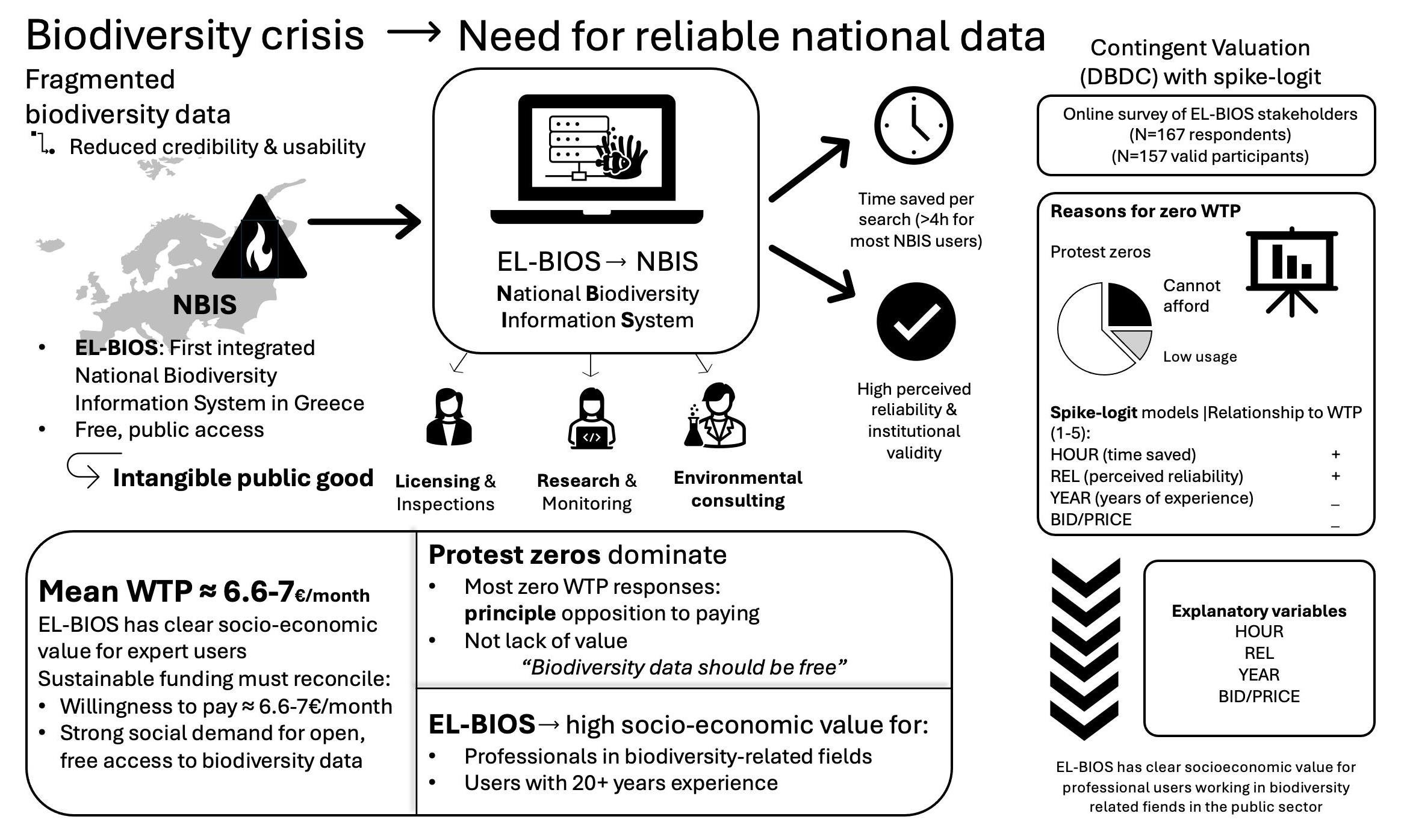
High-quality, interoperable biodiversity information is a prerequisite for effective conservation policy, compliance with European Union (EU) reporting obligations, and efficient environmental decision-making. Greece’s LIFE EL-BIOS (LIFE20 GIE/GR/001317) developed the first National Biodiversity Information System, aiming to aggregate, standardise, and disseminate spatial and non-spatial data for species, habitats, pressures, and trends. This paper provides an economic valuation of this information system as a public, non-market good. We designed a two-stage stated-preference study: (i) a short pre-survey to calibrate initial bids and (ii) the main survey employing double-bounded dichotomous choice (DBDC) contingent valuation with a spike-logit specification. The payment vehicle was a hypothetical monthly subscription in a post-LIFE scenario. The instrument measured time savings (hours), perceived reliability (Likert 1–5), and key demographics/roles. A total of 167 valid responses were collected in September 2025. Participants reported an average of 5.2 h saved per use (median 4; max 14). Among those expressing willingness to pay (WTP), 77% rated EL-BIOS reliability as “High/Very high”. Econometric results indicate time savings as the strongest positive determinant of WTP; perceived reliability is positive and marginally significant; years of experience are negatively associated with acceptance; and cost has a strong negative effect. Mean WTP is estimated at €6.7 per month (median €3.5). Notably, 64% of those unwilling to pay declared protest motives (data should remain public and free). Accordingly, non-payment is decomposed into true zero WTP versus protest-based refusal, i.e., refusal to pay despite acknowledging value. This high protest share reflects principled opposition to paying for public biodiversity data rather than low perceived value of the system. The EL-BIOS database generates measurable productivity gains and social value both through positive WTP and principled protest responses supporting open public data. These findings inform policy on sustainable financing, governance, and long-term operation of national biodiversity information systems.

1. Introduction

Biodiversity has intrinsic value—it is part of the natural heritage that sustains the functioning of the Earth—but at the same time, it is also the “mechanism” on which the economy, public health, and social well-being depend [1,2]. Decisions on spatial planning, energy, agriculture and infrastructure, as well as on coordinated action for the protection of biodiversity, require data that capture the status of species, habitat types and ecosystems, their trends over time, and the pressures they face [2,3,4].
At the EU level, the picture is clear and worrying: the latest comprehensive assessment published by the European Environment Agency for 2013–2018 showed that only 15% of assessments for habitat types were in favourable conservation status, while 81% were in an unfavourable status (45% “poor”, 36% “bad”). For species, only 27% of assessments were in favourable status and 63% in unfavourable status, with very few improving trends. The main source of pressures reported by Member States concerns agriculture (intensification or abandonment), urbanisation, and pollution, in combination with the invasion of alien species and climate change. In other words, the pressures are known, measurable and persistent, which is why monitoring and open data are the only realistic ways for policies to target interventions that are critical for biodiversity conservation [5].
The rapid decline of biodiversity across Europe has elevated the role of high-quality, timely and interoperable information as a critical enabler of effective conservation policy and governance [6,7]. The EU Birds and Habitats Directives [8] require periodic reporting on conservation status, while the EU Biodiversity Strategy for 2030 [9] and the Nature Restoration Regulation demand robust, comparable and accessible indicators. At the same time, biodiversity information systems are not unique to Greece but form part of a broader European information infrastructure. Within the EU, platforms such as the Biodiversity Information System for Europe (BISE) organise biodiversity information through five main entry points (Policy, Topics, Data, Research, and Countries and networks). Related European platforms include the European Nature Information System (EUNIS), which enables users to find species, habitat types and protected sites across Europe, including via cross-search functionality that links these elements. Theme-specific biodiversity data infrastructures—i.e., portals focused on a particular domain (e.g., marine biodiversity)—include the European Ocean Biodiversity Information System (EurOBIS) (the European node of the Ocean Biodiversity Information System (OBIS)) and the European Marine Observation and Data Network (EMODnet), which provide access to interoperable marine biodiversity data and products and make them available through interactive services (e.g., online map viewers and web services such as Web Feature Service (WFS) and Web Map Service (WMS)). In parallel, the European Biodiversity Portal, developed by the EU-funded EU BON project, offers access to insights on biodiversity trends and modelling techniques. Within this policy context, Greece’s LIFE EL-BIOS project established the first National Biodiversity Information System (NBIS).
Despite the breadth of data produced in Greece, fragmentation, heterogeneity and limited interoperability have historically increased the transaction costs for users (public administration, researchers, practitioners), causing delays in permitting, environmental assessment and management actions [10]. In practice, managers, licensing authorities and researchers have traditionally had to search across multiple databases, with disparate data formats, which slows down critical procedures and weakens the overall effectiveness of conservation interventions [11]. NBIS aggregates heterogeneous datasets (field observations, remote sensing and administrative data) into a standardised, interoperable platform capable of providing both spatial and non-spatial information on species, habitats, pressures and trends at national and regional scales [12,13,14]. By integrating multiple sources and establishing standardised workflows and quality controls, EL-BIOS seeks to reduce search costs and enhance the timeliness and credibility of biodiversity evidence used in decision-making.
The broad social and economic effects of a system such as the NBIS are evident both for biodiversity conservation at the national level and for facilitating the professional activities of all stakeholders working in fields where immediate and reliable biodiversity information is a daily necessity. However, the socio-economic value of such a project constitutes an important evaluative measure as well as a criterion for improving its operation in the future. For this reason, an objective and quantitative measurement of the socio-economic impacts of the NBIS is necessary. Since biodiversity information constitutes a public, non-market good, its socioeconomic value is not revealed in competitive markets [15]. This paper therefore applies a stated-preference framework to quantify the benefits of EL-BIOS and to explore the determinants of acceptance and WTP for its sustained operation. The analysis forms part of the socio-economic impact assessment of LIFE EL-BIOS at the regional and national level, focusing on the value of an intangible public good: the NBIS.
This study makes three contributions. First, it documents tangible productivity gains associated with EL-BIOS (e.g., time savings) as a primary channel of social benefit. Second, it estimates WTP using a double-bounded dichotomous choice (DBDC) design with a spike specification to properly account for mass at zero and to distinguish protest from true zeros. Third, it discusses policy implications for the long-term governance and financing of national biodiversity information infrastructures in Greece. Furthermore, compared to biodiversity valuation studies that elicit WTP for conservation outcomes [16,17,18,19,20], our study evaluated a biodiversity information system, NBIS, as a public digital infrastructure, with benefits expressed through reduced time spent on research and accruement of disparate sources of data and improved decision support for professionals in biodiversity-related fields. To our knowledge, WTP studies of national biodiversity information systems as policy infrastructures are still underexplored (an example being [21]). Additionally, by using data from core institutional users, our study informs post-project sustainability of similar projects (such as the National Biodiversity Network of the United Kingdom) by quantifying both economic acceptance (WTP) and the main barrier to a subscription model, which is that many respondents oppose paying on principle and expect free access to public biodiversity data.

2. Materials and Methods

2.1. Selected Stated Preference Technique

The stated preference valuation framework was selected as the methodological basis for this study [22], employing the contingent valuation method (CVM) with a double-bounded dichotomous choice (DBDC) format to derive willingness-to-pay (WTP) estimates that are comparable at both regional and national levels [23,24,25]. Two online questionnaires were designed as research instruments, a choice consistent with international practice in the applied social sciences, where surveys are among the most common and effective tools for collecting standardised data from a large number of participants at low cost and within a short timeframe [26].
Given the public and free-access nature of the National Biodiversity Information System, a non-market valuation approach was required. A public good is characterised by the absence of rivalry in consumption—additional users can benefit without generating extra cost—and by non-excludability, meaning that, once provided, it is neither practically possible nor cost-efficient to prevent others from using it [26,27,28,29]. Respondents were therefore asked to state the value they assign to this public good/service (stated preferences), rather than inferring preferences from observable market behaviour (revealed preferences), which by definition do not exist for public non-market goods [30]. Additionally, alternative approaches, such as revealed-preference proxies, benefit transfer or a choice experiment, were not entirely suitable here, since they did not align with the exact purpose of this study as outlined in the Introduction section. Revealed-preference proxies require observable market behaviour or prices [31,32], but NBIS is currently free-access, so no demand curve can be inferred. Benefit transfer was avoided because closely comparable WTP studies for national biodiversity information systems (same institutional setting and payment vehicle) are limited, risking high transfer error [33,34]. Finally, a choice experiment would shift the focus to valuing attribute trade-offs [35,36], whereas this study’s policy question is the WTP for sustaining access to the system as a whole under a realistic post-LIFE subscription scenario.
The first of the two questionnaires served as a pre-survey, designed to determine the range of initial bids that would form part of the second and main questionnaire, following the methodology of Jeon et al. [37]. To minimise hypothetical bias, the payment vehicle was framed as a post-LIFE scenario in which continued access to the NBIS would be maintained through a monthly subscription fee. The hypothetical scenario stated that following the completion of the LIFE project and in the absence of further funding for maintenance, the State would introduce a subscription fee for continued use of the database.
The payment vehicle was therefore a monthly subscription for access to the NBIS. Similar designs have been shown to increase the realism of valuation scenarios for digital information services (e.g., b-on), thereby reducing bias in stated WTP responses [30]. The scenario was accompanied by a closed-ended question asking whether respondents would be willing to pay any monthly fee at all, regardless of its amount.
Subsequently, an open-ended question asked respondents to specify the maximum amount they would be willing to pay per month. The most frequent response was €10. Based on this result, the second questionnaire implemented the WTP elicitation using a double-bounded dichotomous choice (DBDC) format with three alternative starting bids (€5, €10, €15). This approach, whereby bids are calibrated using a pre-survey open-ended question, enhances statistical efficiency and reduces extreme or unrealistic responses in the main valuation exercise [37].

2.2. Structure of the Questionnaire

The structure of the main questionnaire followed the conceptual chain proposed by Lazo et al. [26] and adapted to the EL-BIOS context:
Sources → Perceptions → Uses → Values
“Sources” refers to where and over what period biodiversity information is obtained, capturing the relative importance and accessibility of the NBIS compared to traditional sources of information (bibliographic searches, local databases, field measurements, etc.). In this study, it was measured through a question estimating time savings (in hours) under a realistic task scenario.
“Perceptions” refers to how users evaluate and interpret the information, serving as an indicator of the system’s perceived reliability and potential gaps. This was measured with a Likert scale (1–5) assessing the perceived reliability of the NBIS in meeting user needs.
“Uses” concerns the ways information is applied in professional or research activities related to biodiversity—knowledge that is critical for both designing appropriate information products and for ensuring the validity of valuation results (non-use should be reflected through lower value). This was recorded by categorising each respondent’s primary field of activity (e.g., strategic planning, development and programming, protection and management, advisory/authorising roles, etc.).
Finally, the “Values” component captures the monetary value of information, representing the trade-offs users are willing to make to access the information compared to alternative sources or acquisition methods. This was measured through the stated WTP, using the DBDC format with three initial bid levels corresponding to the monthly subscription to the information system services.
Sampling was non-stratified: the questionnaire was distributed to a unified target population without prior quota assignments for subgroups. Basic demographic and occupational data were collected at the end of the questionnaire (e.g., organisation/role, region, professional experience, system-use experience). These variables were used both descriptively and as covariates in the econometric estimations.
Furthermore, the demographic questions and their coding were identical to those used in the surveys of Actions A1 (Stakeholder identification and analysis of needs and expectations) and A2 (Review of relevant information systems) of the LIFE EL-BIOS project, since this questionnaire targeted the same participant population. This correspondence enables direct comparison and complementarity with earlier A1–A2 findings (e.g., knowledge/skills levels, service requirements), reduces measurement error due to inconsistent phrasing, and enhances scientific validity through cross-survey comparability [38,39,40]. Subgroup analyses are presented descriptively and supported econometrically where demographic controls were included in the models.
The distribution was conducted electronically—an email invitation was sent to contact lists and institutions previously mobilised in Actions A1–A2. The pre-survey was launched via email on 4 September 2025, and after determining the modal open-ended bid of €10 (with alternative levels at €5 and €15), the main survey was distributed on 10 September 2025, accompanied by a cover letter from the National Environment and Climate Change Agency (NECCA) encouraging participation. A total of 167 valid questionnaires were completed, providing a robust dataset for descriptive and econometric analysis.
The data types collected followed the typologies outlined below:
  • Nominal: organisation type, region, role/use category.
  • Ordinal: Likert scales (e.g., perceived reliability 1–5), certainty scales (1–5), categories of years of professional experience.
  • Numeric: time savings (continuous variable) and open-ended maximum WTP amounts.
The main questionnaire followed a structured flow incorporating filter questions and skip logic to ensure that each respondent viewed only relevant items, thereby minimising completion time, reducing fatigue, and improving data quality [41]. Specifically:
  • Consent and participation: a dichotomous question (Yes/No), with an immediate termination and a thank-you message if “I do not wish to participate” was selected.
  • General willingness-to-pay (Yes/No): asked prior to the valuation section; a negative response directed the respondent to a follow-up question identifying the reason for unwillingness (protest/economic/usage/quality/usability, with an “Other” option), after which the survey closed.
  • DBDC bid block: respondents received an initial bid followed by either a higher or lower bid depending on their previous answer. Certainty scales were included for each amount.
  • Demographic and employment data: organisation, years of experience, and region. As mentioned previously, these variables were identical to those collected in Actions A1 and A2 and served as covariates or control factors in the statistical analysis, allowing cross-referencing and complementarity across datasets.
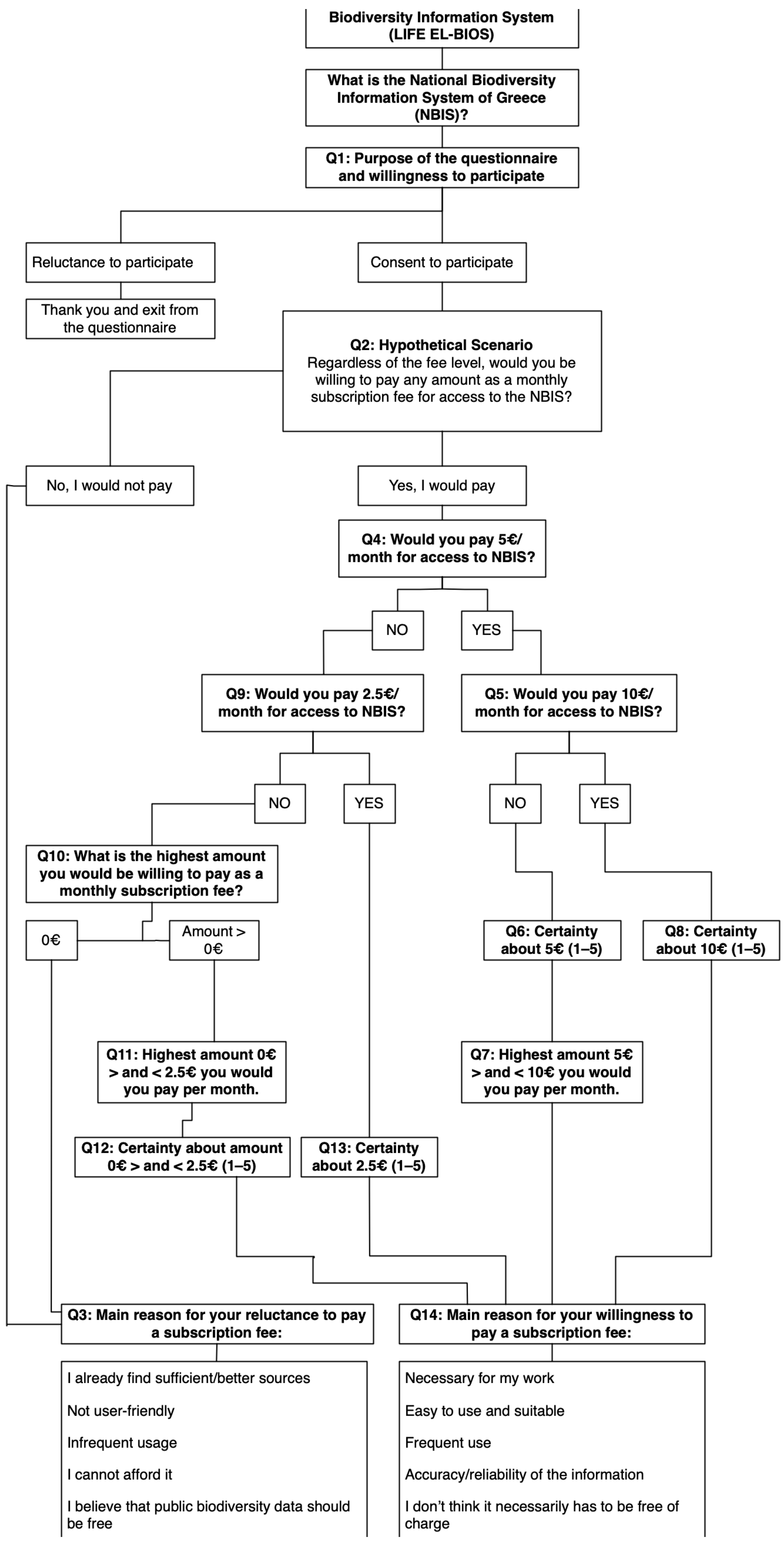
Given the complexity of the questionnaire’s branching structure, a flowchart (Figure 1) was developed to illustrate the core sequence of questions used in the economic valuation of the NBIS. Regardless of the branch path determined by each participant’s responses, all paths converged on the same set of demographic questions, ensuring complete and consistent background data for all respondents. For brevity, the wording of questions shown in the flowchart is a condensed version of the actual survey items. The following subsection provides a detailed presentation and justification of the key valuation questions.
At the beginning of the valuation section, respondents were informed that the survey examined a hypothetical scenario involving a monthly individual subscription for access to the Biodiversity Information System after the completion of the LIFE project and in the absence of available maintenance funding. In the subsequent question (Q2), they were asked to indicate whether they would, in principle, be willing to pay such a subscription (“Yes, I would pay a certain amount”/“No, I would not pay any subscription”).
Branch 1—Refusal to Pay: Diagnosing Protest and Other Motives
Respondents who answered “No” to the general willingness-to-pay question were directed to Q3, which asked them to specify their reasons for unwillingness to pay. The question was closed-ended and covered the main categories of motives:
  • “Public biodiversity data should remain open and free (I disagree with paying a subscription)”—protest zero;
  • “I cannot afford to pay”—economic constraint;
  • “I would not use it frequently enough”—low usage/low benefit;
  • “I do not believe that NBIS provides more accurate or up-to-date information”—quality or timeliness concerns;
  • “It is difficult to use”—usability issue;
  • “Other”—open-ended explanation.
This question was critical for defining exclusion or sensitivity criteria in WTP models (e.g., presenting results with or without protest responses) and for interpreting the “spike at zero”, which incorporates true zeros but not protest zeros.
Branch 2—Positive Willingness to Pay: DBDC (Double-Bounded Dichotomous Choice) Block
Respondents who expressed a positive willingness to pay were directed to the DBDC (double-bounded dichotomous choice) block. In the example illustrated in Figure 1, the initial bid was set at €5. If the respondent accepted the €5 offer, a higher bid of €10 followed; if they declined the initial bid, they were presented with a lower bid of €2.5. The logic followed the classical DBDC structure: two sequential yes/no responses define an interval within which the respondent’s WTP lies. For instance:
  • Yes(5) → Yes(10) ⇒ WTP ≥ €10 (upper bound)
  • Yes(5) → No(10) ⇒ €5 ≤ WTP < €10 (interval)
  • No(5) → Yes(2.5) ⇒ €2.5 ≤ WTP < €5 (interval)
  • No(5) → No(2.5) ⇒ WTP < €2.5 (lower bound, treated as spike—true zeros—where applicable).
This specific structure (€5 → €10 or €5 → €2.5) was explicitly documented in the survey form. Equivalent structures were implemented for the other starting bids (€10 and €15); however, the example shown in Figure 1 corresponds to the €5 path.
After each critical bid response (e.g., €10, €5, €2.5), a certainty scale (1–5) was presented, ranging from “Not at all certain” to “Completely certain,” explicitly instructing respondents to consider their current budget. These certainty scales allow for sensitivity analyses (e.g., restricting to high-certainty responses) or inclusion as explanatory covariates in econometric models to test for hypothetical bias. The inclusion of certainty ratings after each bid serves as an essential internal validity safeguard [42,43]. In line with the survey design, certainty was recorded for respondents who accepted at least one of the two bids (i.e., for the highest bid they were willing to accept) [44]. The process most often adopted in the CVM is the usage of certainty scales in order to recalibrate positive responses that do not meet a given threshold of certainty into negative ones [45]. Due to the fact that certainty scores were therefore available only for affirmative bid responses, and none of these respondents reported low certainty (as outlined in the Results section), they were not incorporated into the spike model estimation. Instead, we elected to report them descriptively as a diagnostic of the quality of the responses that were entered into the spike model.
For those who answered positively to at least one bid, an additional question (Q14) recorded the main reason for their willingness to pay, offering several options reflecting the main dimensions of perceived benefit: frequency of use (“I would use it frequently”), usability/appropriateness, quality and timeliness (“It provides more accurate or up-to-date information”), acceptance of the subscription principle (“I do not believe it must necessarily be free”), and necessity or importance for their professional work (“It is very useful or absolutely essential”). This “quality of logic” check ensures internal consistency, as the declared reasons should logically align with higher acceptance probabilities and/or higher WTP values.
The next section of the questionnaire gathered demographic information and measured socioeconomic benefit indicators (Sources). Respondents were asked (Q15) to consider a realistic current scenario—retrieving biodiversity data for a protected species within their area of responsibility—and to estimate how many hours they would save using the NBIS compared to their previous workflow. The answer was a continuous quantitative variable (decimal values allowed, with 0 permitted if no time savings were expected). This variable serves as a functional indicator of benefit intensity and is expected to be positively correlated with both the probability of acceptance and the WTP amount. It is a key question, as it translates perceived benefit into a measurable form, independent of subjective descriptors such as “very” or “quite”, which often introduce ambiguity and scale error [46,47,48,49].
In the context of valuing informational public goods, time represents a fundamental productive resource, and the benefits of improved information are systematically expressed as the opportunity cost of time avoided or released [26]. The logic is straightforward: fewer hours spent searching, cross-checking, and compiling data translate into lower labour costs for producing the same output or, conversely, greater productive activity within the same time frame—reflecting the principle of efficiency. Studies on early warning systems and information services demonstrate that time valuation is a primary channel through which information translates into measurable social welfare gains [26,50]. Thus, Q15 effectively bridges perceived usefulness with a tangible metric suitable for inclusion in both WTP models and cost–benefit accounting frameworks.
Perceived reliability was measured in Q16 using a 1–5 Likert scale, where respondents rated how reliable they considered NBIS for their professional needs (“Not at all reliable” to “Very reliable”). This variable functions as a qualitative indicator of information quality and has dual relevance: (i) as an explanatory variable expected to have a positive relationship with WTP, and (ii) as a consistency check within the Sources → Perceptions → Uses → Values conceptual chain (a very low reliability perception would logically be inconsistent with a very high WTP).
Questions Q17–Q20 collected data on organisational and professional characteristics, including employer type (with a specific category for Natural Environment and Climate Change Agency (NECCA)/Management Units of Protected Areas (MDPP)), years of professional experience (categorical), region, and main field of activity (covering functional roles from strategic planning to enforcement and reporting). These variables enable dummy coding for assessing WTP differences across categories, allow cross-tabulations (e.g., WTP by region, role, or organisation), and ensure the external validity of the sample. Crucially, they allow for testing of policy-relevant hypotheses—such as whether roles requiring high documentation or permitting demands (e.g., advisory, inspection, or licensing positions) exhibit statistically higher WTP than others.

2.3. Econometric Analysis

The econometric analysis of WTP followed two complementary approaches. First, bid acceptance models (Logit/Probit) estimated the probability of accepting initial and follow-up bids as a function of bid amount, time savings, perceived reliability, organisation type, region, and years of experience. Second, WTP interval estimation employed interval-censored (spike-at-zero) and, alternatively, Tobit models to address the censored nature of DBDC data. Sensitivity tests excluded protest zeros where these were clearly identified from the refusal-reason question (“Public data should remain open and free”).
Explicit protest-diagnosis questions enabled a clear separation between protest zeros (principled objections) and true zeros arising from financial constraints or low perceived utility.
The econometric analysis of WTP in evaluating the socioeconomic impact of EL-BIOS was performed using the DCchoice package in R [51], designed specifically for stated-preference data such as DBDC. The spike model was employed as an extension of the classical DBDC framework, incorporating the probability of zero WTP and distinguishing between true zeros (respondents who genuinely assign no value) and protest zeros (respondents who reject the payment vehicle or question format despite valuing the good). This distinction is critical for the accurate estimation of social preferences and for reducing bias in WTP measures, since treating protest responses as zero WTP would equate respondents who are unwilling to pay for the NBIS due to budget constraints or low usage rate with respondents who object to paying for moral reasons. A high percentage of protest responses is to be expected, especially regarding non-market goods [52,53], while the number of true zeroes is often much lower in comparison, especially in topics concerning biodiversity [53], and therefore, it is recommended to differentiate between true and protest zeroes in WTP analysis [52]. For example, recent stated preference work identifies protest responses as a key source of hypothetical bias [54,55].
Confidence intervals for parameter estimates and mean WTP were computed using the Krinsky and Robb (krCI) simulation method embedded in DCchoice [37]. This approach relies on repeated random draws from the estimated parameter distribution, generating an empirical approximation of the WTP distribution without requiring strict normality assumptions.
Finally, to test for statistical differences between sample subgroups or alternative WTP scenarios, the mded package was used. This tool assesses whether observed WTP differences are statistically significant, accounting for sample size and variance structure, thereby ensuring that conclusions about preference heterogeneity are statistically well-founded [51].

3. Results

3.1. Participant Profile

In total, 167 individuals took part in the survey. However, 10 of them chose not to participate in the research. Therefore, what follows reflects the answers from the 157 individuals who ultimately agreed to take part.
First, a profile of respondents is presented in terms of sector of employment, main field of activity/area of work related to biodiversity, place of employment, and length of experience on biodiversity issues.
In terms of professional field, the large majority, almost half (45%), came from Environmental Public Bodies, that is, public bodies with responsibility for the natural environment (Biodiversity Directorates, Forest Authorities, etc.). This shows that the responses were based mainly on individuals who worked directly on environmental protection and biodiversity management, which strengthens the validity and relevance of the findings.
In second place, with shares of around 14%, respectively, were the second-level Local Authorities (regional authorities) and NECCA/MDPP, highlighting the significant participation of local government and organisations that have an institutional role in the management of protected areas. These were followed, in smaller percentages, by other public bodies and Higher Education Institutions, indicating the participation of the academic and public administrative community.
In contrast, representation from NGOs and Research Institutes/Organisations was more limited, while participation from Consultants/Study Offices was recorded as minimal. It is therefore clear that the research base relies mainly on the public sector and less on the private sector.
Overall, the profile of the participants shows that the survey collected responses from bodies with a strong institutional mandate on biodiversity issues, a factor which reinforces the weight of the conclusions.
Regarding the specific focus of individuals working in fields around biodiversity (what tasks they use biodiversity information for), the most frequent category, with a share exceeding 25%, concerned the provision of opinions, approvals, and licensing of studies/projects. This shows that a significant portion of respondents worked in positions related to institutional procedures and regulatory responsibilities, underlining the link between the survey and the framework for designing and implementing policy.
These were followed by on-site visits, inspections, and audits (20%) and the preparation of studies (15%), which also indicate strong practical involvement in the management and monitoring of biodiversity. At lower percentages, between 5% and 10%, engagement in strategic planning and decision-making was recorded, indicating that fewer participants held responsibilities at the level of long-term strategy formulation.
The remaining activities, such as data management and processing, production of cartographic material, programming and development, promotion/awareness-raising, or the drafting of reports at regional and local level, appeared with very small percentages. This shows that although these are critical functions for an integrated biodiversity strategy, they concerned a limited number of staff members.
Overall, the profile of responses shows that participants were mainly active in regulatory and control procedures, and to a lesser extent in strategy and data. This highlights the institutional character of the sample and the focus on licensing and inspection procedures.
Another interesting finding concerns the years of experience of the participants in their respective biodiversity-related fields. The picture is particularly striking: more than two thirds of respondents (around 67%) stated that they had over 20 years of work experience. This means that the survey sample largely consisted of experienced staff, with a long career and accumulated knowledge in the field.
The rest were distributed across smaller experience categories: about 17% had 6–10 years and roughly the same shared 1–5 years. The absence of intermediate categories (e.g., 11–20 years) reinforces the image of a more “polarised” distribution: on the one hand, mostly highly experienced professionals, and on the other hand, those who are relatively new to the field.
The predominance of the “over 20 years” category shows that the views recorded in the survey came mainly from individuals who had extensively experienced developments in biodiversity management and related policies. This lends authority and weight to the results, but at the same time reveals a limitation: participation by younger scientists is relatively low, something that may affect willingness to pay.
The geographic distribution of participants in terms of their region of employment is as follows. The highest concentration was recorded in Attica, where almost 30% of respondents worked. The capital functions as a centre of administration, research and project management, which explains the increased presence.
Central Macedonia followed with roughly 15% and Epirus with 12%, indicating significant activity in regions where administrative or academic bodies are also present. The remaining regions recorded smaller percentages, between 4% and 7%, such as Western Greece, Central Greece and Western Macedonia.
The island regions (Ionian Islands, Crete, South and North Aegean) showed relatively low participation, a factor that may be due both to the smaller concentration of bodies related to biodiversity and to geographical specificities. Similarly low was the participation from the Peloponnese and Thessaly.

3.2. Social Acceptance of the Database

Crucial are the results regarding the participants’ perception of the reliability of the biodiversity database. The majority, about 44%, rated the reliability as “High”, while another significant share, around 22%, described it as “Very high”. Together, these two percentages exceeded two thirds of the total, which indicates a high level of confidence in the operation and quality of the system.
A share of the participants (29%) chose the middle category, stating that reliability is “Moderate”. This finding shows that although the overall picture is positive, there are still reservations or experiences that point to a need for improvements, probably in terms of data completeness, updating, or user-friendliness. Finally, a small percentage (5%) characterised the reliability of the database as “Low”, which does not negate the generally positive trend but highlights the existence of a few more critical attitudes.
A large proportion of participants stated zero willingness to pay in the scenario that was presented. In total, out of the 157 individuals, 123 assigned a zero value, which was broken down into true zeros and protest zeros, as analysed in the research method.
The majority of participants (more than 80%, corresponding to 101 individuals) believed that public biodiversity data should be free of charge. This stance highlights a strong social and professional demand for free access to information related to the natural environment, as it is treated as a public good that should be provided without financial barriers.
The remaining reasons appeared with very low percentages. About 8% mentioned low use as a reason for not paying, while around 7% stated that they did not have the financial means. These two categories point to practical issues relating to the usability of the database or the financial situation of users. Smaller percentages (<2%) were associated with the existence of sufficient or better alternative sources or with “Other” reasons.
Finally, the predominance of protest zeros in the sample also has methodological implications for the econometric analysis. In willingness-to-pay (WTP) estimation models, these values cannot be interpreted as “true zeros” but must be separated so that the value assigned to the database is not artificially underestimated.
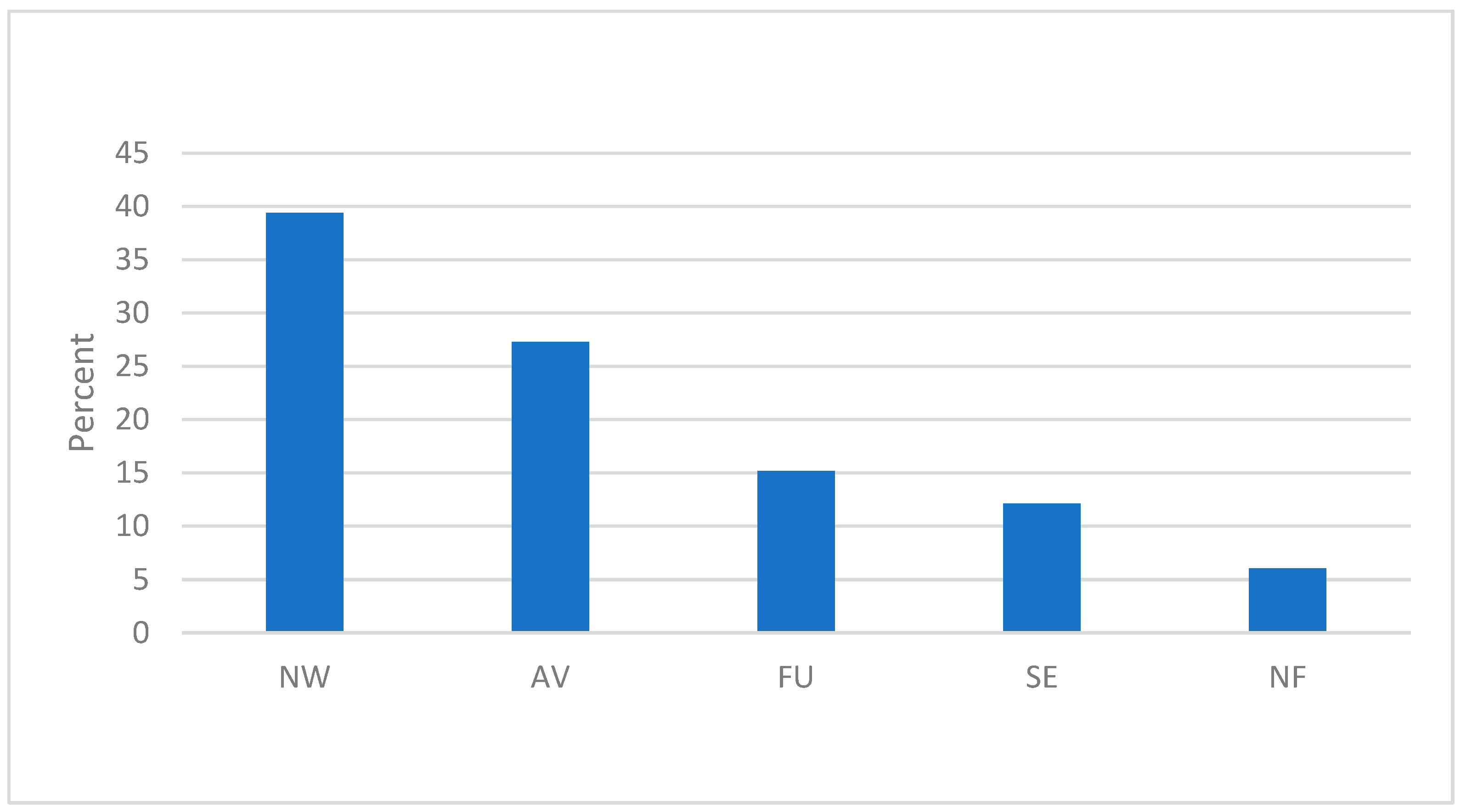
Figure 2, “Main reason for payment”, reveals that willingness to pay for access to EL-BIOS is not general or abstract, but is linked to clear and practical social needs. The dominant reason, with a percentage of almost 40%, is that the database is considered necessary for their work (labelled as NW). This shows that a large share of users recognise the direct usefulness of the database in their professional activities, a fact that adds value to its operation.
The second most important reason, with a share of around 27%, concerns the accuracy and validity of the information (AC). Participants perceive the database not only as a tool for accessing data but also as a source of reliable knowledge that enhances the quality of their decisions and studies.
Frequent use (FU) (15%) and the fact that the database is user-friendly and appropriate (SE) (12%) further underline that usability and practical applicability are key factors behind willingness to pay.
Finally, the small share who stated that “they do not believe it necessarily has to be free of charge”, labelled as NF, suggests that there is a limited group who recognise the need for sustainable funding models, even through charging. However, the low proportion shows responses reflect individual attitudes that deviate from the general trend.
As expected, about 77% of those who responded positively regarding willingness to pay ranked the reliability of the database from High to Very high.
In the question about the time saved by participants thanks to the use of the EL-BIOS database—since they obtained consolidated and reliable information without having to search for scattered data in different sources—the analysis showed the following: the average time saved was about 5.2 h, with a standard deviation of 2.7 h, and values ranging from 1 to 14 h. The median was 4 h, which means that half of the participants saved at least four hours each time they used EL-BIOS.

3.3. Results of Econometric Analysis

Based on the above, the econometric analysis excluded participants who gave protest zero answers and continued with the 34 who expressed a willingness to pay and the 22 who refused to pay for reasons other than protest zeros. Subsequently, the respondents who expressed a positive willingness to pay were asked to provide a certainty rating for the highest bid they were willing to accept. The certainty distribution indicates consistently high confidence in all affirmative bid responses: 64% reported being very or completely certain (Likert 4–5) and 36% reported moderate certainty (Likert 3), while no respondents selected low-certainty categories (Likert 1–2). These results support the use of the certainty scale as a descriptive response-quality diagnostic for the observations entering the spike model. As a result, no affirmative bid responses were excluded on certainty grounds, allowing all respondents who replied positively to either one or both bids to be retained in the spike model and thus yielding the largest feasible sample size for our econometric analysis.
In the econometric analysis, various models are presented based on the independent variables used. Due to the number of responses, the maximum number of variables used as explanatory variables was 5.
Overall, the variables used were HOUR (time saved), REL (database reliability), EMP (employing organisation), YEAR (years of experience), LOC (place of work), and FOC (biodiversity focus).
The results from Model 1 are presented in Table 1. Model 1 was estimated with a spike logistic distribution on a sample of 56 observations and showed good convergence. The strongest factor was time saved (HOUR), with a positive and statistically significant coefficient (β = 0.24, p < 0.01). This shows that the more hours users save by using EL-BIOS, the higher the probability of acceptance. Perceived reliability (REL) also had a positive but marginally significant effect (β = 0.51, p ≈ 0.09), confirming that trust in the database reinforces the stance in favour of using it.
In contrast, years of experience (YEAR) showed a negative and marginally significant effect (β = −0.61, p ≈ 0.06), which indicates that more experienced professionals appear more cautious towards new tools. The employing organisation (EMP) was not statistically significant (p = 0.75), suggesting that the type of organisation does not materially differentiate attitudes. Finally, the BID variable was negative and strongly significant (β = −0.15, p < 0.001), which shows that an increase in cost significantly reduces the probability of acceptance.
Overall, the model was statistically significant (LR test p = 0.018), with an AIC = 170.6 and BIC = 182.7, figures that confirm a satisfactory fit. The estimated willingness to pay amounted to €6.7 on average and €3.5 at the median, reflecting a positive but moderate acceptance of EL-BIOS in economic terms.
Model 2, presented in Table 2, compared to Model 1, showed slightly better fit (AIC = 169.6 versus 170.6), which suggests that the addition of the LOC variable marginally improved the accuracy of the model.
The most important factor remains time saved (HOUR), with a positive and highly significant coefficient (β = 0.26, p < 0.01), confirming that time savings are the main benefit that strengthens acceptance of EL-BIOS. Perceived reliability (REL) followed with a positive and marginally significant effect (β = 0.53, p ≈ 0.08), indicating that trust in the data increases the willingness to support the system, although it is not absolutely decisive.
The YEAR variable (years of experience) showed a negative and statistically significant coefficient (β = −0.78, p < 0.05) in contrast to Model 1, where it was only marginally significant. This means that greater professional experience is systematically associated with greater caution towards using or paying for the database. In contrast, place of work (LOC) is not statistically significant (p = 0.31), indicating that geographical location does not materially differentiate participants’ attitudes. Finally, the BID variable remained negative and particularly significant (β = −0.15, p < 0.001), confirming that higher cost strongly reduces the probability of acceptance.
The estimated willingness to pay (WTP) in Model 2 amounted to €6.6 on average and €3.5 at the median, very close to the results of Model 1. Overall, Model 2 provides a more stable picture, showing that time saved and reliability are the key positive factors, while greater experience acts as a deterrent.
The quality of fit of Model 3 (Table 3) was satisfactory (AIC = 170.2, BIC = 182.4) and similar to that of Model 1, although slightly worse compared to Model 2.
The strongest positive factor remained time saved (HOUR), with a positive and statistically significant coefficient (β = 0.25, p < 0.01), confirming that the possibility of faster access to consolidated information is the main reason for accepting EL-BIOS. Perceived reliability (REL) also had a positive but marginally significant effect (β = 0.52, p ≈ 0.09), which shows that trust in the data has a reinforcing role.
The YEAR variable (years of experience) showed a negative and statistically significant coefficient (β = −0.68, p < 0.05). This means that more experienced professionals appear more cautious towards adopting or funding new systems. In contrast, FOC (biodiversity focus) was not statistically significant (p = 0.50), which shows that the participants’ specialisation in the subject did not differentiate their stance. Finally, the BID variable was negative and particularly significant (β = −0.15, p < 0.001), confirming the constraining role of cost.
The estimated willingness to pay (WTP) amounted to €6.6 on average and €3.5 at the median, values very close to those of the previous models.
The fit of Model 4 (Table 4) was good, with an AIC = 168.7 and BIC = 178.8, which was the best AIC value among all previous models, indicating an improvement in estimation accuracy.
The most important factor was, again, time saved (HOUR), with a positive and statistically significant coefficient (β = 0.24, p < 0.01). This consistently confirms that reducing information search time is the main reason for accepting EL-BIOS. Perceived reliability (REL) also had a positive but marginally significant effect (β = 0.52, p ≈ 0.09), which shows that trust in the data remains a critical reinforcing factor.
Years of experience (YEAR) showed a negative and statistically significant coefficient (β = −0.64, p < 0.05), confirming that more experienced professionals appear more hesitant to adopt or fund new digital tools. Finally, the BID variable was negative and strongly significant (β = −0.15, p < 0.001), which reflects the expected deterrent role of cost in willingness to pay.
The estimated willingness to pay (WTP) was calculated at €6.7 on average and €3.5 at the median, values very close to those of the other models.
The fit of Model 5 (Table 5) was satisfactory (AIC = 169.8, BIC = 177.9), but not the best among the models.
The central positive factor was time saved (HOUR), with coefficient β = 0.25 and p < 0.01, which confirms that reducing information search time is consistently the strongest reason for accepting EL-BIOS. The YEAR variable (years of experience) had a negative coefficient (β = −0.56) and was marginally significant (p ≈ 0.07), showing that more experienced professionals tend to be less willing to invest in new systems. The constant (Intercept) was positive and marginally significant (p ≈ 0.09), indicating a basic tendency towards acceptance even without strong effects from other factors. Finally, the BID variable was negative and extremely significant (p < 0.001), reflecting the constraining role of cost in willingness to pay.
The estimated willingness to pay (WTP) was €6.8 on average and €3.4 at the median, very close to the values of the previous models.
Regarding the comparative evaluation of Models 1–5:
Model 4 had the lowest AIC (168.7), therefore offers the best fit.
Model 2 followed with AIC = 169.6 and consistently yielded significant results for time and experience.
Models 1, 3, and 5 had higher AIC (170.6, 170.2, 169.8, respectively), indicating slightly worse fit.
Overall, Model 4 was considered the best, as it combines the best statistical fit with a clear interpretation: time saved was the most stable positive factor, reliability reinforced acceptance, while years of experience and cost acted as deterrents.
For Models 2 and 4, which were the closest, a comparison was made of the statistical difference in the mean and the median. For the mean, no statistically significant difference was found (p = 0.4614), and there was likewise no statistically significant difference for the median (p = 0.484).
For Model 4, confidence intervals were calculated for the mean and the median. The confidence intervals for willingness to pay (WTP) were estimated using the Krinsky & Robb method. The mean estimate of WTP was €6.68, with a lower bound of €4.74 and an upper bound of €9.81. This means that, with a high degree of confidence, the true mean willingness to pay of participants lies within this range, which strengthens the statistical reliability of the estimate.
For the median, the estimate was €3.52, with a confidence interval from €0.00 to €6.82. This range is wider and less precise, which is related to the heterogeneity of responses and the presence of individuals who stated zero willingness to pay. Nevertheless, the median still indicates that a significant share of participants is willing to pay for the service, even at lower levels than the mean.
These results show that EL-BIOS has positive but moderate economic acceptance, as the mean WTP was sufficiently high to indicate socio-economic value.

4. Discussion

The present analysis showed that the operation of EL-BIOS is linked to clear and measurable socio-economic benefits.
At the descriptive level, respondents consistently framed EL-BIOS as a productivity-enhancing tool (via time savings) and as a credible information source (via high reliability ratings), indicating that practical usefulness and trust jointly underpin social acceptance [56,57].
This finding has particular socio-economic significance. Time is one of the most critical productive resources [58], and saving it translates into higher efficiency, better management of work obligations and reduced administrative costs [59]. At the level of organisations, reducing the time needed to search for information can mean resource savings, faster decision-making and improved responsiveness to project or study requirements [59]. At the individual level, the ability to devote more time to substantive tasks enhances effectiveness and reduces the stress [58] caused by searching for data across multiple sources.
Overall, the pattern of reasons why users are willing to pay for access to EL-BIOS is not general or abstract but is linked to clear and practical social needs. The dominant reason (almost 40%) is that the database is considered necessary for their work. This shows that a large share of users recognise the direct usefulness of the database in their professional activities, a fact that adds value to its operation [60].
Furthermore, participants perceive the database not only as a tool for accessing data but also as a source of reliable knowledge that enhances the quality of their decisions and studies. This is evident from the second most important reason (almost 27%), which concerns the accuracy and validity of the information. This aligns with the overall reliability pattern reported in the Results section and reinforces the role of trust in willingness to support the service. The need for reliable knowledge in an era when data play a decisive role in decision-making is undoubted. Here, the social dimension of trust also becomes evident: users are willing to invest in a source they consider institutionally and scientifically valid [61].
Lastly, reasons related to frequent use (15%) and user-friendliness (12%) highlight the practical side of social acceptance: willingness to pay is reinforced when the tool is embedded in everyday practice and provides direct convenience. This is a functional relationship in which the cost is socially justified through immediate usefulness.
The conclusion that can be drawn from this is that the social legitimacy of payment does not depend only on necessity for work or on user-friendliness, but is based mainly on the conviction that the database provides sound and high-quality data [62,63]. Our finding that willingness to pay for NBIS depends strongly on perceived reliability and usefulness is consistent with evidence from online knowledge-payment platforms, where perceived usefulness, perceived value and trust in the platform are all shown to increase the users’ initial willingness to pay for knowledge content [61].
The econometric analysis, through five spike logistic models, confirmed the importance of these parameters. Time saved (HOUR) was consistently the most important and positive factor in all models, indicating that practical benefit is the main motive for use. Reliability (REL) also had a positive and marginally significant effect, reinforcing the argument that the database must invest in ensuring data quality. In contrast, years of experience (YEAR) showed a negative and in several cases statistically significant effect, indicating that more experienced professionals appear more cautious towards adopting new tools. The variable of employing organisation (EMP) and other institutional factors, such as geographical location (LOC) and biodiversity focus (FOC), did not prove significant. Finally, the BID variable was consistently negative and strongly significant, confirming that cost is the main deterrent factor. Regarding the statistical power of our results, it should be noted that the WTP econometric estimation relied on the sub-sample of 56 respondents who provided non-protest WTP data. This sample size is adequate for identifying large and systematic effects—consistent with the stable coefficient signs across the five spike-logit models and the strong, repeated significance of BID. However, the relatively small sample does denote a reduced reliability in the detection of smaller or more nuanced relationships. As a result, non-significant coefficients (e.g., for EMP, LOC, and FOC) should be interpreted primarily as “no detectable effect in this sample” rather than definitive evidence of no effect, and the marginal significance of REL is compatible with an effect that may be practically relevant but harder to detect with limited observations. Similarly, subgroup WTP results by region or organisation type were similarly not reported because the effective estimation sample (non-protest) was relatively small (n = 56) and the survey was not stratified. Splitting this into subgroups would leave very few observations per category, making estimates highly sensitive, with wide confidence intervals and weak statistical power.
The estimation of willingness to pay (WTP) yielded a mean value of about €6.7 and a median of €3.5 per month, with Krinsky & Robb confidence intervals that enhance the statistical validity of the results. These values are lower than mass subscription services such as Netflix or Spotify, but comparable to productivity tools (e.g., Google Workspace), which provides a realistic basis for shaping pricing policy. Two findings could likely be useful in terms of generalisation across countries. First, the strong role of time savings suggests that biodiversity information systems likely create value mainly by reducing transaction costs for institutional users—especially where pre-existing data are fragmented. Second, the high share of protest zeros signals that subscription-based financing may face moral or social resistance, particularly in contexts where biodiversity data are principally viewed as an open public good [64]. Thus, other countries may find mixed models (public funding with optional paid value-added services) more acceptable.
However, the category of protest zeros constitutes an important dimension: 64% of those who were not willing to pay justified their answer with the argument that biodiversity data should be available free of charge. Rather than diminishing methodological novelty, the 64% protest share is precisely why the spike specification and explicit protest diagnosis matter: without them, WTP would be mechanically biased downward and the actionable message for decision-makers about which funding models users consider acceptable would be lost. This stance does not reflect devaluation of the database, but a social claim for open access to knowledge. Socially, this means that any funding policies for EL-BIOS must strike a balance between viability and safeguarding public benefit.
The resulting picture shows that refusal to pay does not stem mainly from financial inability or indifference, but from principle: that biodiversity data belong in the public sphere and must remain open. This finding has important policy and strategic implications for designing sustainable models for data provision. This choice does not imply devaluation of the database or zero willingness to pay due to indifference [52], but constitutes a typical example of the protest zero phenomenon in econometric analysis [65]. Protest zeros express the respondents’ wish to separate their own individual willingness to pay from issues of principle and fairness in the financing of public goods [65].
The social impact of this stance is multi-layered. First, it highlights the strong view that biodiversity and the data associated with it constitute a public good [66,67]. In contrast to private consumption goods, data on species, habitats and ecological processes are linked to the collective interest and to rights relating to transparency and access to information. Participants consider that the free provision of such data strengthens democratic accountability, facilitates scientific research, and promotes public involvement in the management of the natural environment [68].
Second, this stance fundamentally differs from other categories of non-payment, such as low use or financial inability. In those cases, responses are linked to practical issues of usefulness or available resources. In contrast, protest zeros express a normative message: participants do not reject the value of the database but consider that its funding should be covered by public resources, state budgets or European programmes, so as to ensure equal access for all.
This social stance has direct implications for policy design for EL-BIOS. A funding model based on subscriptions or individual payments would face significant difficulties in terms of acceptance and would lack social legitimacy. Instead, the findings argue in favour of developing open data models, with operating costs covered by public and institutional bodies. This choice would reinforce trust in the system, while at the same time allowing the use of co-financing mechanisms from research programs, international organisations or partnerships with environmental bodies.
The socioeconomic interpretation of protest zeros also concerns social capital and the relationship between citizens and the state [69,70]. Refusal to pay for reasons of principle shows that citizens consider themselves as already contributing to the financing of the public sector through taxation [69]. An additional charge for access to data that are perceived as public would be regarded as unjustified. This stance should be seen as an indication of the need to strengthen trust and to establish institutional mechanisms that make it clear that biodiversity information is provided for the collective good.
Finally, the profile of participants shows that they are mainly individuals professionally engaged in the field of biodiversity: researchers, staff of public bodies, and consultants, who, for the most part, have substantial experience in biodiversity-related work. This composition strengthens the reliability of the findings, as they come from an audience that tangibly understands the usefulness of the tool. At the same time, in terms of sample coverage, the participant profile is more strongly weighted toward highly experienced public-sector professionals, with comparatively lower participation from private-sector consultants and NGOs. This means that the results are most directly informative for the core institutional user base of EL-BIOS, while sector-specific differences in willingness to pay cannot be fully explored with the present distribution of respondents. Future work should broaden the representation of different sectors or employ stratified analysis, especially after the NBIS has been in force for a more substantial amount of time so that more users, both in a professional and non-professional capacity, have had a chance to explore it.
Overall, EL-BIOS exhibits clear socio-economic value. It offers substantial time savings, enhances the effectiveness of professionals and is recognised as a reliable data source. At the same time, willingness to pay, although positive, remains moderate, due to the broader social perception regarding free access to knowledge. A mixed funding model, with a low individual subscription and institutional support, appears to be the most appropriate solution to ensure the sustainability and social legitimacy of the service, with policy design guided by two empirical signals: the mean WTP indicates the feasible order of magnitude for any user charge, while the high protest-zero share implies that core access should remain free and be funded primarily through public and institutional budgets.

5. Conclusions

Taken together, the results of this analysis have shown that the NBIS through the EL-BIOS project generates clear and measurable socio-economic benefits. Professionals in the field of biodiversity who form the target user group report substantial time savings when using NBIS. This translates into higher productivity and enhanced effectiveness and ease in their professional output. The database is widely recognised as a reliable source of biodiversity data within the user base. The estimated willingness to pay is positive and, relative to typical monthly subscription services, is high enough to indicate real economic value and social acceptance, even if it remains moderate in absolute terms.
A key takeaway message, however, concerns the role of protest zeros. Among the respondents unwilling to pay, 64% justified their answer with the argument that biodiversity data should be provided free of charge. This pattern does not reflect a devaluation of EL-BIOS, but a social demand for open access to biodiversity and knowledge, which, especially in the case of professionals working in biodiversity-related fields, is crucial for the protection and improvement of the environment and the conservation of biodiversity. In social and policy terms, this implies that future funding strategies for EL-BIOS must balance financial sustainability with the safeguarding of public benefit, acknowledging both the demonstrated socio-economic value of the system as well as the strong user preference for free access to biodiversity data.

Author Contributions

Conceptualization, K.G.P.; methodology, K.G.P., S.M., K.M. and M.K.; software, K.G.P.; validation, all authors; formal analysis, K.G.P. and S.M.; investigation, K.G.P. and S.M.; data curation, K.G.P., K.M. and S.M.; writing—original draft preparation, K.G.P. and S.M.; writing—review and editing, all authors; supervision, K.G.P.; project administration, V.B. and G.M.; funding acquisition, V.B. and G.M. All authors have read and agreed to the published version of the manuscript.

Funding

This research was funded by the European Commission LIFE Programme and Green Fund, LIFE EL-BIOS Project “hELlenic BIOodiversity Information System: An innovative tool for biodiversity conservation”, grant number LIFE20 GIE/GR/001317.

Institutional Review Board Statement

This study involved a non-interventional, anonymous socio-economic survey conducted within the LIFE EL-BIOS project. According to the Green Fund’s 10707/11-12-2025 Institutional Ethics Compliance Statement, this type of survey is exempt from a formal ethics committee review. Ethical oversight was provided by the Green Fund, the project’s coordinating beneficiary. The study was conducted in accordance with the Declaration of Helsinki. All participants provided informed consent, and data were handled in compliance with the General Data Protection Regulation (GDPR).

Informed Consent Statement

Informed consent was obtained from all subjects involved in the study.

Data Availability Statement

Data are available from the first author upon request.

Conflicts of Interest

The authors declare that this study received funding from European Commission LIFE Programme and Green Fund, LIFE EL-BIOS Project “hELlenic BIOodiversity Information System”. The funding sponsors had no role in the design of the study; in the collection, analyses, or interpretation of data; in the writing of the manuscript; or in the decision to publish the results.

Abbreviations

The following abbreviations are used in this manuscript:
NBISNational Biodiversity Information System for Greece
NECCANational Environment and Climate Change Agency for Greece
MDPPManagement Units of Protected Areas
WTPWillingness to pay

References

  1. Crump, L.; Martinoli, D.; Zinsstag, J. Links between Biodiversity and Human Infectious and Non-Communicable Diseases: A Review. Swiss Med. Wkly. 2021, 151, w20485. [Google Scholar] [CrossRef] [PubMed]
  2. Biodiversa+. The European Biodiversity Partnership (Biodiversa+): Executive Summary; Biodiversa+: Paris, France, 2022. [Google Scholar]
  3. Underwood, E.; Taylor, K.; Tucker, G. The Use of Biodiversity Data in Spatial Planning and Impact Assessment in Europe. Res. Ideas Outcomes 2018, 4, e28045. [Google Scholar] [CrossRef]
  4. IPBES; Díaz, S.; Settele, J.; Brondízio, E.S.; Ngo, H.T.; Guèze, M.; Agard, J.; Arneth, A.; Balvanera, P.; Brauman, K.A.; et al. Summary for Policymakers of the Global Assessment Report on Biodiversity and Ecosystem Services of the Intergovernmental Science-Policy Platform on Biodiversity and Ecosystem Services; IPBES Secretariat: Bonn, Germany, 2019. [Google Scholar]
  5. European Environment Agency. Conservation Status of Habitats Under the EU Habitats Directive; EEA: Copenhagen, Denmark, 2021. [Google Scholar]
  6. Moersberger, H.; Valdez, J.; Martin, J.G.C.; Junker, J.; Georgieva, I.; Bauer, S.; Beja, P.; Breeze, T.D.; Fernandez, M.; Fernández, N.; et al. Biodiversity Monitoring in Europe: User and Policy Needs. Conserv. Lett. 2024, 17, e13038. [Google Scholar] [CrossRef]
  7. Fedrigotti, C.; Endrizzi, S.; Iemma, A.; Deflorian, M.C.; Bassan, D.; Scutari, M.; Pedrini, P. Trentino Living Atlas: La Biodiversità a Portata Di “Click” Parole Chiave Key Words Riassunto Summary. Studi Trentini Sci. Nat. 2023, 102, 97–105. [Google Scholar]
  8. European Commission Directorate-General for Environment. The Habitats Directive; European Commission: Brussels, Belgium, 1992. [Google Scholar]
  9. European Commission Directorate-General for Environment. Biodiversity Strategy for 2030; European Commission: Brussels, Belgium, 2020. [Google Scholar]
  10. Feng, X.; Enquist, B.J.; Park, D.S.; Boyle, B.; Breshears, D.D.; Gallagher, R.V.; Lien, A.; Newman, E.A.; Burger, J.R.; Maitner, B.S.; et al. A Review of the Heterogeneous Landscape of Biodiversity Databases: Opportunities and Challenges for a Synthesized Biodiversity Knowledge Base. Glob. Ecol. Biogeogr. 2022, 31, 1242–1260. [Google Scholar] [CrossRef]
  11. Moersberger, H.; Martin, J.; Valdez, J.W.; Junker, J.; Georgieva, I.; Bauer, S.; Beja, P.; Breeze, T.D.; Brotons, L.; Bruelheide, H.; et al. The Future of Biodiversity Monitoring in Europe; IIASA: Laxenburg, Austria, 2023. [Google Scholar] [CrossRef]
  12. Fotakidis, V.; Roustanis, T.; Panayiotou, K.; Chrysafis, I.; Fitoka, E.; Mallinis, G. The EL-BIOS Earth Observation Data Cube for Supporting Biodiversity Monitoring in Greece. Remote Sens. 2024, 16, 3771. [Google Scholar] [CrossRef]
  13. Network Implementation Testbed Laboratory Biodiversity: LIFE EL-BIOS. Available online: https://nitlab.gr/projects/biodiversity/biodiversity-info/ (accessed on 26 November 2025).
  14. Natural Environment and Climate Change Agency. LIFE EL BIOS—hELlenic BIOdiversity Information System: An Innovative Tool for Biodiversity Conservation. Available online: https://necca.gov.gr/en/erga/nature-biodiversity/life-el-bios-hellenic-biodiversity-information-system-an-innovative-tool-for-biodiversity-conservation-2/ (accessed on 26 November 2025).
  15. OECD. Handbook of Biodiversity Valuation: A Guide for Policy Makers; OECD: Paris, France, 2002; ISBN 978-92-64-19731-2. [Google Scholar]
  16. Yao, R.T.; Wallace, L. A Systematic Review of Non-Market Ecosystem Service Values for Biosecurity Protection. Ecosyst. Serv. 2024, 67, 101628. [Google Scholar] [CrossRef]
  17. Brander, L.M.; De Groot, R.; Schägner, J.P.; Guisado-Goñi, V.; Van ’T Hoff, V.; Solomonides, S.; McVittie, A.; Eppink, F.; Sposato, M.; Do, L.; et al. Economic Values for Ecosystem Services: A Global Synthesis and Way Forward. Ecosyst. Serv. 2024, 66, 101606. [Google Scholar] [CrossRef]
  18. Jacobsen, J.B.; Hanley, N. Are There Income Effects on Global Willingness to Pay for Biodiversity Conservation? Environ. Resour. Econ. 2009, 43, 137–160. [Google Scholar] [CrossRef]
  19. Subroy, V.; Gunawardena, A.; Polyakov, M.; Pandit, R.; Pannell, D.J. The Worth of Wildlife: A Meta-Analysis of Global Non-Market Values of Threatened Species. Ecol. Econ. 2019, 164, 106374. [Google Scholar] [CrossRef]
  20. Martín-López, B.; Montes, C.; Benayas, J. Economic Valuation of Biodiversity Conservation: The Meaning of Numbers. Conserv. Biol. 2008, 22, 624–635. [Google Scholar] [CrossRef] [PubMed]
  21. Mwebaze, P.; Bennett, J. Valuing Access to Biological Collections with Contingent Valuation and Cost–Benefit Analysis. J. Environ. Econ. Policy 2015, 4, 238–258. [Google Scholar] [CrossRef]
  22. Pappa, D.; Kaliampakos, D. Unveiling the Non-Market Value of a Fragile Coastal Wetland: A CVM Approach in the Amvrakikos Gulf, Greece. Environments 2025, 12, 59. [Google Scholar] [CrossRef]
  23. Alberini, A. Optimal Designs for Discrete Choice Contingent Valuation Surveys: Single-Bound, Double-Bound, and Bivariate Models. J. Environ. Econ. Manag. 1995, 28, 287–306. [Google Scholar] [CrossRef]
  24. Hanemann, M.; Loomis, J.; Kanninen, B. Statistical Efficiency of Double-Bounded Dichotomous Choice Contingent Valuation. Am. J. Agric. Econ. 1991, 73, 1255–1263. [Google Scholar] [CrossRef]
  25. Kanninen, B.J. Optimal Experimental Design for Double-Bounded Dichotomous Choice Contingent Valuation. Land Econ. 1993, 69, 138–146. [Google Scholar] [CrossRef]
  26. Lazo, J.K.; Morss, R.E.; Demuth, J.L. 300 Billion Served: Sources, Perceptions, Uses, and Values of Weather Forecasts. Bull. Am. Meteorol. Soc. 2009, 90, 785–798. [Google Scholar] [CrossRef]
  27. Mitchell, R.C. Using Surveys to Value Public Goods: The Contingent Valuation Method, 1st ed.; RFF Press: Washington, DC, USA, 2013; ISBN 978-1-315-06056-9. [Google Scholar]
  28. Doering, O.C. The Political Economy of Public Goods: Why Economists Should Care. Am. J. Agric. Econ. 2007, 89, 1125–1133. [Google Scholar] [CrossRef]
  29. Morss, R.E.; Lazo, J.K.; Brown, B.G.; Brooks, H.E.; Ganderton, P.T.; Mills, B.N. Societal and Economic Research and Applications For Weather Forecasts: Priorities for the North American THORPEX Program. Bull. Am. Meteorol. Soc. 2008, 89, 335–346. [Google Scholar] [CrossRef]
  30. Melo, L.B.; Pires, C. Which Factors Influence the Willingness to Pay for Electronic Library Services? A Study of the Portuguese Electronic Scientific Information Consortium b-On. J. Librariansh. Inf. Sci. 2012, 44, 185–198. [Google Scholar] [CrossRef]
  31. Gore, C. Beyond the Bottom Line: Nonmarket Stated and Revealed Preference Methods for Community Resilience and Adaptation Planning; National Institute of Standards and Technology (U.S.): Gaithersburg, MD, USA, 2024; NIST Special Publication (SP) 1322. [Google Scholar] [CrossRef]
  32. Selivanov, E.; Hlaváčková, P. Methods for Monetary Valuation of Ecosystem Services: A Scoping Review. J. For. Sci. 2021, 67, 499–511. [Google Scholar] [CrossRef]
  33. Lam-González, Y.E.; García, C.; González Hernández, M.M.; León, C.J. Benefit Transfer of Climate Change Adaptation Policies in Island Tourist Destinations. Tour. Manag. 2022, 90, 104471. [Google Scholar] [CrossRef]
  34. Melstrom, R.T.; Kaemingk, M.A.; Cole, N.W.; Whitehead, J.C.; Chizinski, C.J.; Pope, K.L. Valuing Angling on Reservoirs Using Benefit Transfer. North Am. J. Fish. Manag. 2023, 43, 400–416. [Google Scholar] [CrossRef]
  35. Campoamor, N.B.; Guerrini, C.J.; Brooks, W.B.; Bridges, J.F.P.; Crossnohere, N.L. Pretesting Discrete-Choice Experiments: A Guide for Researchers. Patient Patient-Centered Outcomes Res. 2024, 17, 109–120. [Google Scholar] [CrossRef] [PubMed]
  36. Mariel, P.; Campbell, D.; Sandorf, E.D.; Meyerhoff, J.; Vega-Bayo, A.; Blevins, R. Steps of a Discrete Choice Experiment. In Environmental Valuation with Discrete Choice Experiments in R; The Economics of Non-Market Goods and Resources; Springer Nature Switzerland: Cham, Switzerland, 2025; Volume 17, pp. 9–75. ISBN 978-3-031-89337-7. [Google Scholar]
  37. Jeon, C.; Cho, D.; Chu, H.-Y. How Much Will You Pay to Use Open Data?: Evidence from the Seoul Metropolitan Government. Public Perform. Manag. Rev. 2022, 45, 308–328. [Google Scholar] [CrossRef]
  38. Weisberg, H.F. The Total Survey Error Approach: A Guide to the New Science of Survey Research; University of Chicago Press: Chicago, IL, USA, 2005; ISBN 978-0-226-89128-6. [Google Scholar]
  39. Survey Research Center Data Harmonization. In Cross-Cultural Survey Guidelines; Institute for Social Research, University of Michigan: Ann Arbor, MI, USA, 2016.
  40. Wolf, C.; Schneider, S.L.; Behr, D.; Joye, D. Harmonizing Survey Questions Between Cultures and Over Time. In The SAGE Handbook of Survey Methodology; SAGE Publications Ltd.: London, UK, 2016; pp. 502–524. ISBN 978-1-4462-8266-3. [Google Scholar]
  41. Krosnick, J.A.; Presser, S. Question and Questionnaire Design. In Handbook of Survey Research; Wright, J.D., Marsden, P.V., Eds.; Emerald: Bingley, UK, 2010; pp. 264–313. [Google Scholar]
  42. Champ, P.A.; Bishop, R.C. Donation Payment Mechanisms and Contingent Valuation: An Empirical Study of Hypothetical Bias. Environ. Resour. Econ. 2001, 19, 383–402. [Google Scholar] [CrossRef]
  43. Champ, P.A.; Bishop, R.C.; Brown, T.C.; McCollum, D.W. Using Donation Mechanisms to Value Nonuse Benefits from Public Goods. J. Environ. Econ. Manag. 1997, 33, 151–162. [Google Scholar] [CrossRef]
  44. Kontsiotis, V.J.; Emmanouilidou, F.; Liordos, V. Economic Valuation of a Mesocarnivore’s Impact Management. Environ. Sci. Pollut. Res. 2024, 31, 32111–32125. [Google Scholar] [CrossRef]
  45. Vásquez, W.F.; Vasquez Ramos, H.E.; Rodríguez-Estupinan, J.P.; Osorio-Cano, J.D.; Ochoa-Herrera, V. Would Tourists Donate to Improve Local Wastewater Management? A Contingent Valuation Study of Giving Preferences. Environ. Dev. Econ. 2025, 1–21. [Google Scholar] [CrossRef]
  46. Bradburn, N.M.; Miles, C. Vague Quantifiers. Public Opin. Q. 1979, 43, 92–101. [Google Scholar] [CrossRef]
  47. Schaeffer, N.C. Hardly Ever or Constantly? Group Comparisons Using Vague Quantifier. Public Opin. Q. 1991, 55, 395. [Google Scholar] [CrossRef]
  48. Schneider, S.; Stone, A.A. The Meaning of Vaguely Quantified Frequency Response Options on a Quality of Life Scale Depends on Respondents’ Medical Status and Age. Qual. Life Res. 2016, 25, 2511–2521. [Google Scholar] [CrossRef] [PubMed]
  49. Marsden, P.; Wright, J. (Eds.) Handbook of Survey Research, 2nd ed.; Emerald Group Publishing: Bingley, UK, 2010. [Google Scholar]
  50. Ugarov, A. Lives Saved versus Time Lost: Direct Societal Benefits of Probabilistic Tornado Warnings. Weather Clim. Soc. 2023, 15, 587–602. [Google Scholar] [CrossRef]
  51. Aizaki, H.; Nakatani, T.; Sato, K.; Fogarty, J. R Package DCchoice for Dichotomous Choice Contingent Valuation: A Contribution to Open Scientific Software and Its Impact. Jpn. J. Stat. Data Sci. 2022, 5, 871–884. [Google Scholar] [CrossRef]
  52. Frey, U.J.; Pirscher, F. Distinguishing Protest Responses in Contingent Valuation: A Conceptualization of Motivations and Attitudes behind Them. PLoS ONE 2019, 14, e0209872. [Google Scholar] [CrossRef]
  53. Meyerhoff, J.; Liebe, U. Do Protest Responses to a Contingent Valuation Question and a Choice Experiment Differ? Environ. Resour. Econ. 2008, 39, 433–446. [Google Scholar] [CrossRef]
  54. Adloff, S.; Rehdanz, K. Wait and See? Public Preferences for the Temporal Effectiveness of Coastal Protection. Ecol. Econ. 2023, 204, 107634. [Google Scholar] [CrossRef]
  55. Werbeck, A. Stated Preferences and Actual Choices in German Health Insurance; Ruhr Economic Papers; RWI: Essen, Germany, 2024; ISBN 978-3-96973-268-7. [Google Scholar]
  56. Voci, D.; Karmasin, M.; Luef, S.; Förster, S.; Kaltenbrunner, A. Trust Has a Price?! Unraveling the Dynamics between Trust in the Media and the Willingness to Pay in the Post-Pandemic Scenario. Journalism 2024, 14648849241311101. [Google Scholar] [CrossRef]
  57. Söllner, M.; Hoffmann, A.; Leimeister, J.M. Why Different Trust Relationships Matter for Information Systems Users. Eur. J. Inf. Syst. 2016, 25, 274–287. [Google Scholar] [CrossRef]
  58. DeSerpa, A.C. A Theory of the Economics of Time. Econ. J. 1971, 81, 828. [Google Scholar] [CrossRef]
  59. Nakash, M.; Bouhnik, D. How Much Time Does the Workforce Spend Searching for Information in the “New Normal”? In Proceedings of the iConference 2024, Changchun, China, 15–18 April 2024. [Google Scholar] [CrossRef]
  60. Davis, F.D. Perceived Usefulness, Perceived Ease of Use, and User Acceptance of Information Technology. MIS Q. 1989, 13, 319–340. [Google Scholar] [CrossRef]
  61. Kou, L.; Sun, X. The Influence of Perceived Trust, Perceived Value, Perceived Usefulness, and Perceived Risk on College Students’ Initial Willingness to Pay for Online Knowledge. Creat. Bus. Sustain. J. 2024, 46, 1–24. [Google Scholar] [CrossRef]
  62. Deng, J.; Li, J.; Wang, X. The Impact of User’s Perceived Value on the Willingness to Pay for Membership on Internet Platforms. BCP Bus. Manag. 2022, 28, 102–114. [Google Scholar] [CrossRef]
  63. Fridkin, S.; Greenstein, G.; Cohen, A.; Damari, A. Perceived Usefulness of a Mandatory Information System. Appl. Sci. 2024, 14, 7413. [Google Scholar] [CrossRef]
  64. Finck, M.; Mueller, M.-S. Access to Data for Environmental Purposes: Setting the Scene and Evaluating Recent Changes in EU Data Law. J. Environ. Law 2023, 35, 109–131. [Google Scholar] [CrossRef]
  65. Carson, R.T. Contingent Valuation: A User’s Guide. Environ. Sci. Technol. 2000, 34, 1413–1418. [Google Scholar] [CrossRef]
  66. Dosemagen, S.; Williams, E. Data Usability: The Forgotten Segment of Environmental Data Workflows. Front. Clim. 2022, 4, 785269. [Google Scholar] [CrossRef]
  67. Rands, M.R.W.; Adams, W.M.; Bennun, L.; Butchart, S.H.M.; Clements, A.; Coomes, D.; Entwistle, A.; Hodge, I.; Kapos, V.; Scharlemann, J.P.W.; et al. Biodiversity Conservation: Challenges Beyond 2010. Science 2010, 329, 1298–1303. [Google Scholar] [CrossRef]
  68. United Nations Economic Commission for Europe Convention on Access to Information. Public Participation in Decision-Making and Access to Justice in Environmental Matters (Aarhus Convention); Aarhus, Denmark, 1998. Available online: https://unece.org/environment-policy/public-participation/aarhus-convention/text (accessed on 27 November 2025).
  69. Rankin, J.; Robinson, A. Accounting for Protest Zeros in Contingent Valuation Studies: A Review of Literature; University of East Anglia, Health Economics Group (HEG): Norwich, UK, 2018. [Google Scholar]
  70. Chen, W.Y.; Hua, J. Citizens’ Distrust of Government and Their Protest Responses in a Contingent Valuation Study of Urban Heritage Trees in Guangzhou, China. J. Environ. Manag. 2015, 155, 40–48. [Google Scholar] [CrossRef]
Figure 1. Flowchart of questionnaire structure and questions (initial bid €5).
Environments 13 00005 g001
Figure 2. Main reason for payment.
Environments 13 00005 g002
Table 1. Coefficient table for Model 1.
VariableEstimateStd. Errorz ValuePr (>|z|)
(Intercept)−0.698321.37825−0.50670.612386
HOUR0.240830.088752.71360.006656 **
REL0.511930.303771.68530.091934 .
EMP0.036200.113290.31960.749297
YEAR−0.612560.33098−1.85070.064206
BID−0.147790.02427−6.0884<2.2 × 10⁻¹⁶ ***
*** p < 0.001, ** p < 0.01, . p < 0.10.
Table 2. Coefficient table for Model 2.
VariableEstimateStd. Errorz ValuePr (>|z|)
(Intercept)0.223051.489580.14970.880972
HOUR0.256910.092162.78780.005307 **
REL0.529230.303311.74480.081013 .
LOC−0.079450.07787−1.02020.307621
YEAR−0.783580.34792−2.25220.024311 *
BID−0.149410.02457−6.0800<2.2 × 10⁻¹⁶ ***
*** p < 0.001, ** p < 0.01, * p < 0.05, . p < 0.10.
Table 3. Coefficient table for Model 3.
VariableEstimateStd. Errorz ValuePr (>|z|)
(Intercept)−0.136551.43167−0.09540.924016
HOUR0.246730.088482.78850.005296 **
REL0.516500.302931.70500.088188 .
FOC−0.060220.08917−0.67540.499444
YEAR−0.683430.32424−2.10780.035048 *
BID−0.148980.02454−6.0711<2.2 × 10⁻¹⁶ ***
*** p < 0.001, ** p < 0.01, * p < 0.05, . p < 0.10.
Table 4. Coefficient table for Model 4.
VariableEstimateStd. Errorz ValuePr (>|z|)
(Intercept)−0.550491.29681−0.42450.671202
HOUR0.241560.088442.73140.006306 **
REL0.519880.302661.71770.085854 .
YEAR−0.642940.31725−2.02660.042703 *
BID−0.147570.02424−6.0866<2.2 × 10⁻¹⁶ ***
*** p < 0.001, ** p < 0.01, * p < 0.05, . p < 0.10.
Table 5. Coefficient table for Model 5.
VariableEstimateStd. Errorz ValuePr (>|z|)
(Intercept)1.263560.755991.6710.094645 .
HOUR0.246570.086752.8420.004478 **
YEAR−0.564930.30969−1.8240.068124 .
BID−0.142320.02340−6.081<2.2 × 10⁻¹⁶ ***
*** p < 0.001, ** p < 0.01, . p < 0.10.
Disclaimer/Publisher’s Note: The statements, opinions and data contained in all publications are solely those of the individual author(s) and contributor(s) and not of MDPI and/or the editor(s). MDPI and/or the editor(s) disclaim responsibility for any injury to people or property resulting from any ideas, methods, instructions or products referred to in the content.