Article

Water Quality, Environmental Contaminants and Disease Burden in Europe: An Ecological Analysis of Associations with Disability-Adjusted Life Years


1
Faculty of Medicine, University Vita-Salute San Raffaele, 20132 Milan, Italy
2
Food Hygiene, Nutritional Surveillance and Prevention, Department of Prevention, Provincial Healthcare Authority of Palermo, 90129 Palermo, Italy
3
National PhD Programme in One Health Approaches to Infectious Diseases and Life Science Research, Department of Public Health, Experimental and Forensic Medicine, University of Pavia, 27100 Pavia, Italy
4
Unità Funzionale Cure Primarie Valdera, Dipartimento Sanità Territoriale, Azienda Unità Sanitaria Locale (USL) Toscana Nord Ovest, 56124 Pisa, Italy
5
Struttura Semplice Dipartimentale Igiene Alimenti e Nutrizione, Dipartimento di Igiene e Prevenzione Sanitaria, Agenzia di Tutela della Salute (ATS) Brescia, 25124 Brescia, Italy
6
Department of Cardiac, Thoracic and Vascular Sciences, School of Medicine and Surgery, University of Padua, 35128 Padua, Italy
*
Authors to whom correspondence should be addressed.
Environments 2026, 13(1), 36; https://doi.org/10.3390/environments13010036
Submission received: 21 October 2025 / Revised: 16 December 2025 / Accepted: 19 December 2025 / Published: 4 January 2026

Abstract

Rivers and groundwater supply 88% of Europe’s freshwater and are critical for public health. We examined whether cross-country differences in arsenic, lead, mercury, and nickel concentrations in groundwater and rivers are associated with disease burden. In an ecological cross-sectional study of 24 European countries, nationally aggregated concentrations from the European Environment Agency’s Waterbase Water Quality (2016–2019) were linked to cause-specific disability-adjusted life years (DALYs) from the Global Burden of Disease 2021 for six disease groups. Variables were z-standardized. Associations were assessed using Pearson correlations and linear regression with Benjamini–Hochberg correction. Missing concentrations were addressed via multiple imputation by chained equations using 1980–2025 monitoring records, and models were sequentially adjusted for health system, demographic, and economic indices. In groundwater, lead was positively associated with diabetes and kidney disease DALYs and remained significant after imputation and adjustment (β = 0.60, p = 0.011). In rivers, arsenic was positively associated with all-cause, cardiovascular, and neoplasm DALYs in unadjusted analyses but attenuated after adjustment and/or imputation. No consistent associations were observed for mercury or nickel. These continent-wide, non-causal findings can help prioritize monitoring and risk management and support progress toward Sustainable Development Goal 6.

1. Introduction

Safe water underpins population health, economic productivity, and ecological integrity and is recognized as a fundamental human right [1]. Across Europe, around 88% of freshwater use derives from rivers and groundwater, underscoring the centrality of these resources for societies and ecosystems [2]. Over the last few decades, the European Union has established extensive monitoring and regulatory frameworks, most notably the Water Framework Directive [3], while the global policy agenda has converged on Sustainable Development Goal (SDG) 6 [4], which calls for universal access to safely managed water and sanitation by 2030 [5].
Notwithstanding this architecture, aquatic environments are subject to diffuse and point pressures arising from industrial activities, mining, agriculture and livestock production, and urban runoff [6]. These pressures introduce chemical contaminants and microbiological hazards into water bodies, with implications for both environmental quality and human health [7]. Recent studies in Europe have reported metal contamination in water bodies, and risk assessments indicate that exposure through drinking water may contribute to potential adverse health effects [8,9,10]. Among chemical stressors, metals and metalloids, including arsenic, lead, mercury, and nickel, coexist with nutrients, pesticides, and other emerging pollutants, forming complex mixtures that vary across space and time [11].
While toxicological and clinical studies have long catalogued the adverse effects of multiple waterborne contaminants [12,13], the extent to which population-level variation in contaminant concentrations corresponds to variation in national disease burden remains insufficiently characterized. Most prior investigations have focused on subnational settings [14,15], single contaminants [16,17,18], or specific outcomes [19], limiting cross-country comparability and policy translation. In this context, Disability-Adjusted Life Years (DALYs) offer a synthetic, decision-relevant metric that integrates mortality and morbidity and enables comparative assessment across diseases and jurisdictions [20,21].
Against this backdrop, the present study leverages official European monitoring to examine ecological associations between nationally aggregated water-contaminant concentrations (groundwater and river water) and cause-specific DALYs across European countries.
The objectives of the present study are (i) to describe cross-country patterns in monitoring completeness and normalized concentrations for major water contaminants; (ii) to quantify bivariate associations between contaminant concentrations and cause-specific DALYs; and (iii) to evaluate whether these associations persist after accounting for national contextual domains. By aligning surveillance data with burden-of-disease metrics, this study offers policy-relevant evidence to prioritize monitoring and risk management efforts, inform equity-minded allocation of resources, and support progress toward SDG 6 within the existing European regulatory framework.

2. Materials and Methods

2.1. Study Design

This is an ecological, cross-sectional study aiming to examine the associations between chemical contaminants in surface water (specifically river) and groundwater and cause-specific DALYs across Europe.

2.2. Dataset Building

We extracted national contaminant concentrations from the European Environment Agency’s (EEA) Waterbase Quality Inland, Coastal and Marine (ICM) Database in 2019, and, if unavailable, no earlier than 2016, and cause-specific DALYs from the Global Burden of Disease (GBD) study in 2021 and, if unavailable, we used the data from no earlier than 2018. Country inclusion was determined by the availability and completeness of water quality and health data.
We explored groundwater and river water datasets and retained only the countries with available data for both. Since the sets of countries with complete records differed between the two datasets, we applied multiple imputation to harmonize coverage and increase the analytic sample. Specifically, multiple-imputation chained equations (MICEs) were used to impute missing-at-random concentration values, incorporating all available covariates for each pollutant (country, year, and water category). Moreover, MICEs are appropriate for continuous variables with multivariate missingness and allow uncertainty to be propagated into standard errors [22]. For imputation purposes, we considered all the data collected in the Waterbase Quality ICM database ranging from 1980 to 2025 for each country included in this paper in order to preserve the associations of interest under a the missing-at-random (MAR) assumption. When an exposure measurement was reported below the analytical lower limit of detection (LOD), it was replaced with the LOD divided by √2, following the Hornung and Reed procedure (1990) [23]. Imputed analyses were considered a robustness/sensitivity assessment and were interpreted in conjunction with complete case results.
The final analytical dataset comprised 24 European countries (Austria, Belgium, Bulgaria, Croatia, Cyprus, Czechia, Estonia, Finland, France, Germany, Iceland, Ireland, Italy, Latvia, Lithuania, Netherlands, Norway, Poland, Portugal, Serbia, Slovak Republic, Slovenia, Spain, Sweden), providing the most balanced coverage of groundwater and river monitoring while minimizing reliance on imputed observations.
A schematic of this workflow is shown in Supplementary Figure S1.

2.3. Exposure Variables

Data regarding water quality were extracted from Waterbase, the generic name given to the EEA databases on the status and quality of Europe’s rivers, lakes, groundwater bodies, and transitional, coastal, and marine waters, on the quantity of Europe’s water resources, as well as on water quantity and emissions to surface waters from point and diffuse sources of pollution. It is important to note that Waterbase provides monitoring data for groundwater bodies and river water, reflecting broader environmental water quality at sampling locations. These measurements do not necessarily correspond to treated drinking water delivered from a tap, and they do not incorporate information on treatment processes, distribution systems, or individual water consumption. Therefore, in this ecological analysis, national multi-year mean concentrations were used as a proxy for country-level environmental contamination pressure and potential population exposure, aligned with the national unit of analysis
For this study, we used the Waterbase Quality ICM database [24], specifically the dataset “T_WISE6_DisaggregatedData,” which provides disaggregated annual measurements reported by EEA Member Countries. The dataset was last updated on 2 July 2025. We retrieved national mean concentrations (expressed in µg/L) of lead, arsenic, nickel, and mercury, including their inorganic compounds, for the 2016–2019 period. These four contaminants were selected based on both data availability and their recognized health impact potential [25]. Their inclusion is also consistent with the EU Water Framework Directive (2000/60/EC) and a subsequent study [3], which identify lead, arsenic, mercury, and nickel among priority substances or key quality parameters. Moreover, these metals are widely acknowledged as indicators of anthropogenic pollution, being largely emitted by industrial processes, mining activities, and intensive agriculture [26,27].

2.4. Outcomes

DALYs were obtained from the GBD 2021 update. We extracted country-level DALYs for six major disease groups (all causes, cardiovascular diseases, neoplasms, chronic respiratory diseases, diabetes and kidney diseases, and mental disorders), selected because of their high prevalence and public health relevance [28,29,30].

2.5. Contextual Indexes

We conceptualized national multi-year mean contaminant concentrations from Waterbase as an ecological proxy of country-level environmental contamination pressure rather than direct individual intake from taps. In this framework, demographic, economic, governance, and health system domains may confound the association between contamination indicators and DALY rates because they influence both environmental conditions/monitoring capacity and chronic disease burden. Therefore, to capture country-level socioeconomic and institutional contexts potentially influencing both contaminant exposure and disease burden, we compiled 20 World Bank indicators from the World Development Indicators (WDI) [31] and the Worldwide Governance Indicators (WGI) [32], describing demographic, economic, governance, and health system characteristics (Table 1).
Following the procedure of Collignon et al. [33], each indicator was first normalized (z-score transformation) and then averaged within its category to generate four composite indexes. These aggregated indexes were subsequently used as covariates in regression analyses, allowing us to evaluate whether demographic, economic, governance, or health system factors modified the associations between contaminant concentrations and DALYs. Of the four domain-specific indexes constructed (economic, demographic, governance and health system), three (economic, demographic and health system) were included as covariates in the multivariable models. The governance index was not included in the models because it was highly collinear with the economic and health system indexes, and, given the limited number of countries (n = 24), we prioritized a parsimonious adjustment set to avoid unstable estimates.

2.6. Statistical Analysis

We used multi-year (2016–2019) national averages to reduce random measurement variability and to obtain a stable country-level exposure proxy comparable across contaminants and countries; this choice is consistent with the ecological study design and the national scale of the DALY outcomes.
To enable comparability across heterogeneous scales, we normalized contaminant concentrations (µg/L) and DALY outcomes using z-score transformation (mean 0, SD 1), performed separately by pollutant and by outcome.
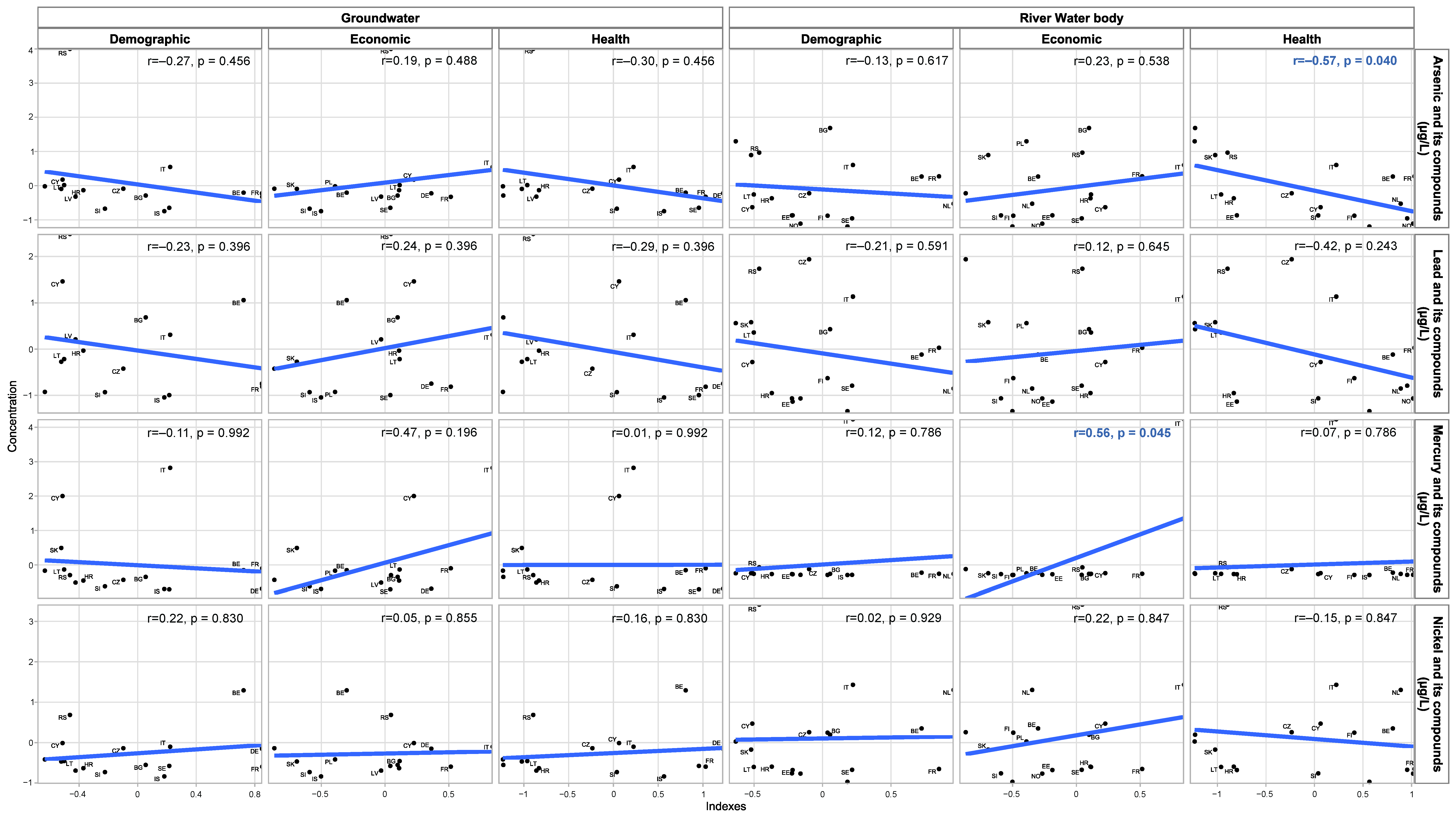
To explore potential associations between water contaminants and indexes, we calculated Pearson’s correlation coefficients (r). For the first analysis, indexes were arranged as rows and contaminants as columns, generating a set of faceted scatterplots with ordinary least-squares (OLS) trend lines, one line per variable of interest. This graphical approach allowed us to visualize the direction and magnitude of the correlations between contaminant concentrations and each contextual index. In a second analysis, Pearson correlations were calculated between contaminants and the six cause-specific DALYs and displayed as faceted scatterplots of DALYs (z-score) versus contaminant concentration, again with OLS trend lines for each contaminant. p-values were corrected for multiple testing using the Benjamini–Hochberg procedure. To evaluate potential multicollinearity among the four contextual indexes (health system, demographic, economic, and governance), we also computed pairwise Pearson correlation coefficients (r) between these indexes. Correlations with an absolute value |r| ≥ 0.70 were considered indicative of high collinearity and were examined to guide the inclusion of covariates in the subsequent regression models.
Across the sample of European countries, associations between contaminant concentrations (groundwater and river water) and DALYs were estimated using a series of linear regression models. The base model assessed the crude relationship between each contaminant and each DALY outcome. To evaluate potential confounding or effect modification by contextual factors, we then fitted four nested linear regression models: Model 1 (crude, unadjusted); Model 2 (+ health system index); Model 3 (+ health system and demographic indexes); Model 4 (+ health system, demographic, and economic indexes).
Regression results are reported as β coefficients with standard errors (SEs), and p-values were corrected for multiple testing using the Benjamini–Hochberg [34] procedure to control the false discovery rate across the 24 primary regressions. Benjamini–Hochberg correction increases the stringency for declaring statistical significance when multiple tests are performed, meaning that marginal findings may no longer meet the adjusted significance threshold. In this framework, an adjusted p-value below α indicates that, among all results we label as significant, the expected proportion of false positives is controlled at the chosen FDR level.
To assess the robustness of the ecological associations, we treated (i) the contrast between crude and sequentially adjusted models and (ii) the comparison between complete case analyses and models based on multiple-imputed contaminant data as sensitivity analyses. All analyses and MICEs were performed in R version 4.4.2 with a two-sided significance level of α = 0.05.

3. Results

3.1. Data Completeness and Normalized Concentrations

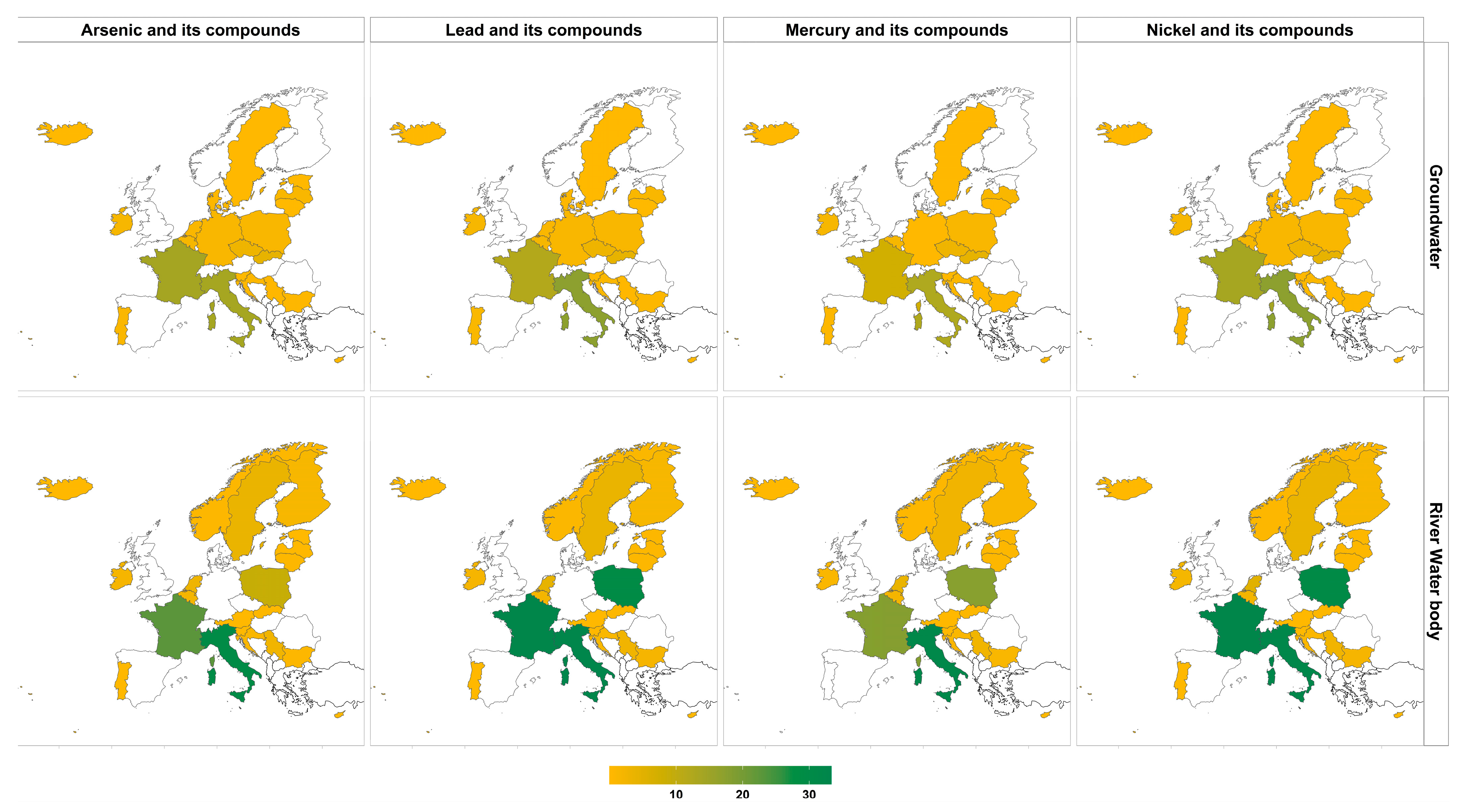
Figure 1 depicts the spatial completeness of monitoring data for arsenic, lead, mercury, and nickel across the 24 European countries included in the analysis, separately for groundwater and river water bodies. As shown in Figure 1, monitoring completeness varied widely across countries. Overall, river water monitoring was denser than groundwater monitoring, as the number of measurements in river waters is 125% higher than those in groundwater, with an average of 20,273.2 measurements per country for river waters compared to 10,008.3 for groundwater in the period 2016–2019. Groundwater monitoring was particularly poor in Iceland (16), Lithuania (357), and Sweden (525), while France (groundwater 47,105; river water 106,228) and Italy (groundwater 60,645; river water 127,227) showed the highest number of observations in both groundwater and river water networks.
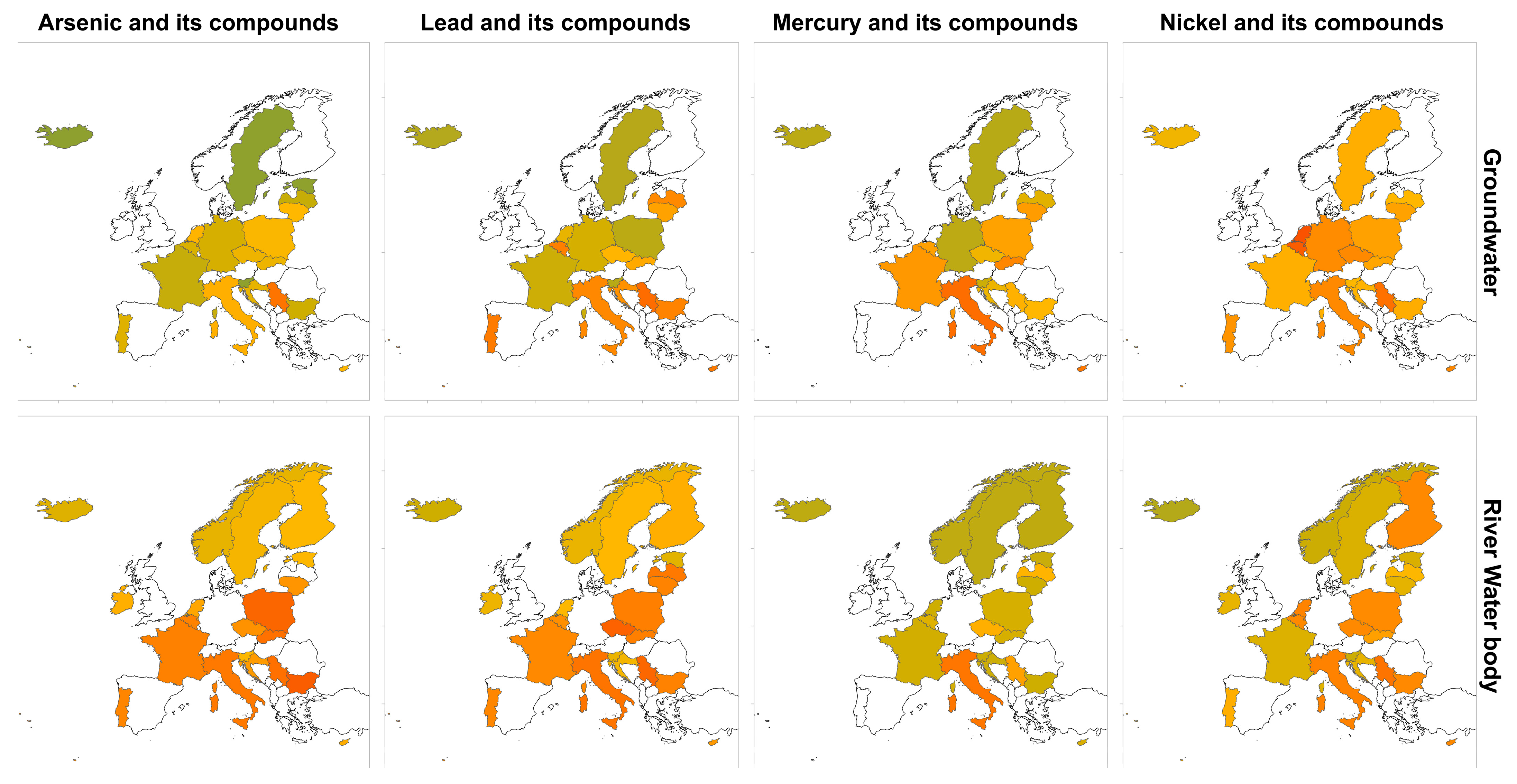
Figure 2 presents the spatial distribution of normalized contaminant concentrations. Values were z-score-standardized to highlight the relative ranking of countries rather than absolute concentration levels, allowing comparison across pollutants and nations.
Countries in Central and Southern Europe generally exhibited higher normalized concentrations of arsenic, lead, mercury, and nickel compared with those in Northern Europe, which consistently showed the lowest relative levels.
All available data, stratified by water type, including both the mean concentrations (µg/L) of the four pollutants from 2016 to 2019 for the 24 countries and the total number of measurements collected by each country for the four pollutants across the four years, are presented in Supplementary Table S1.

3.2. Crude Correlation Between Water Contaminants and DALY Outcomes

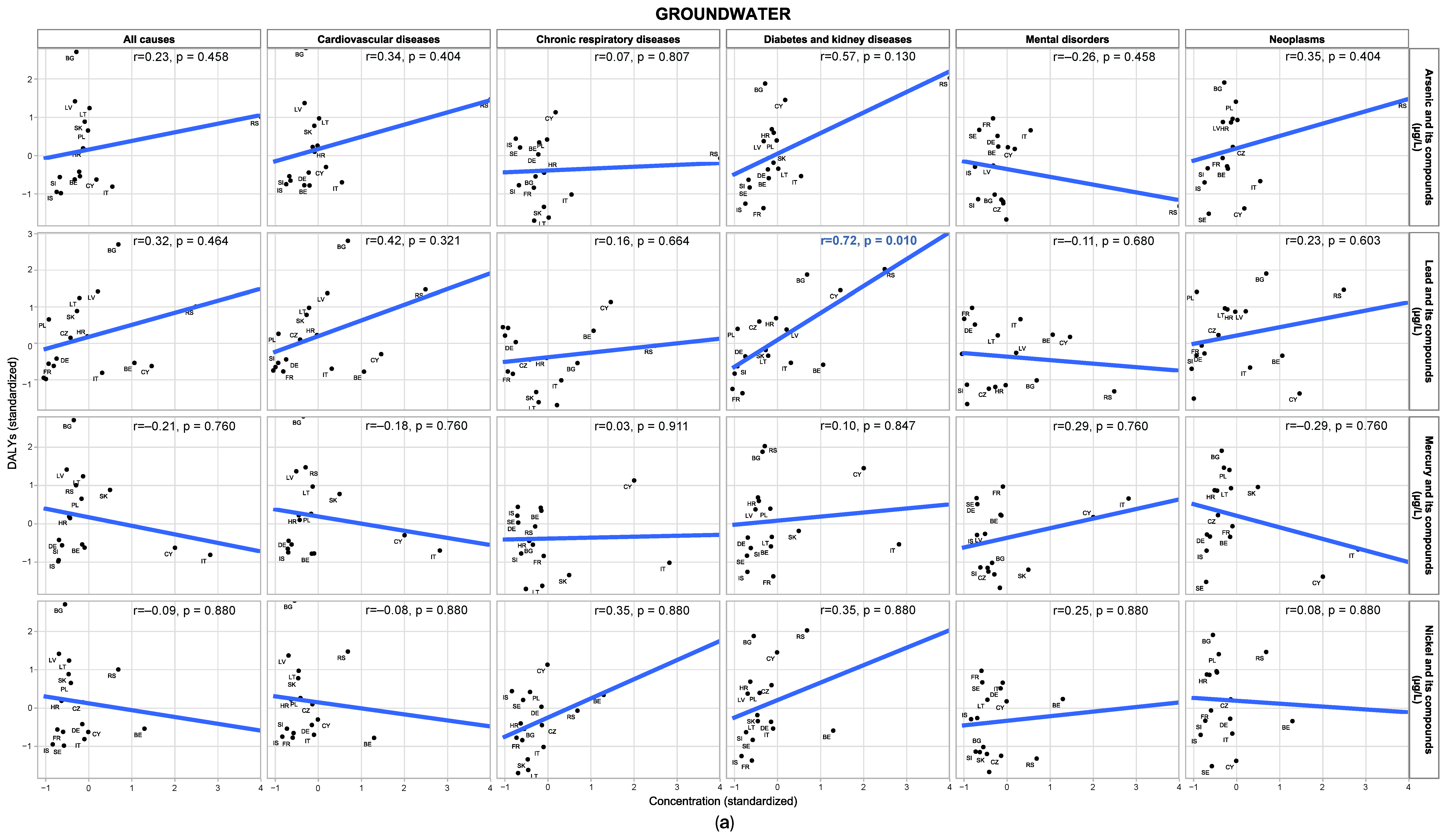
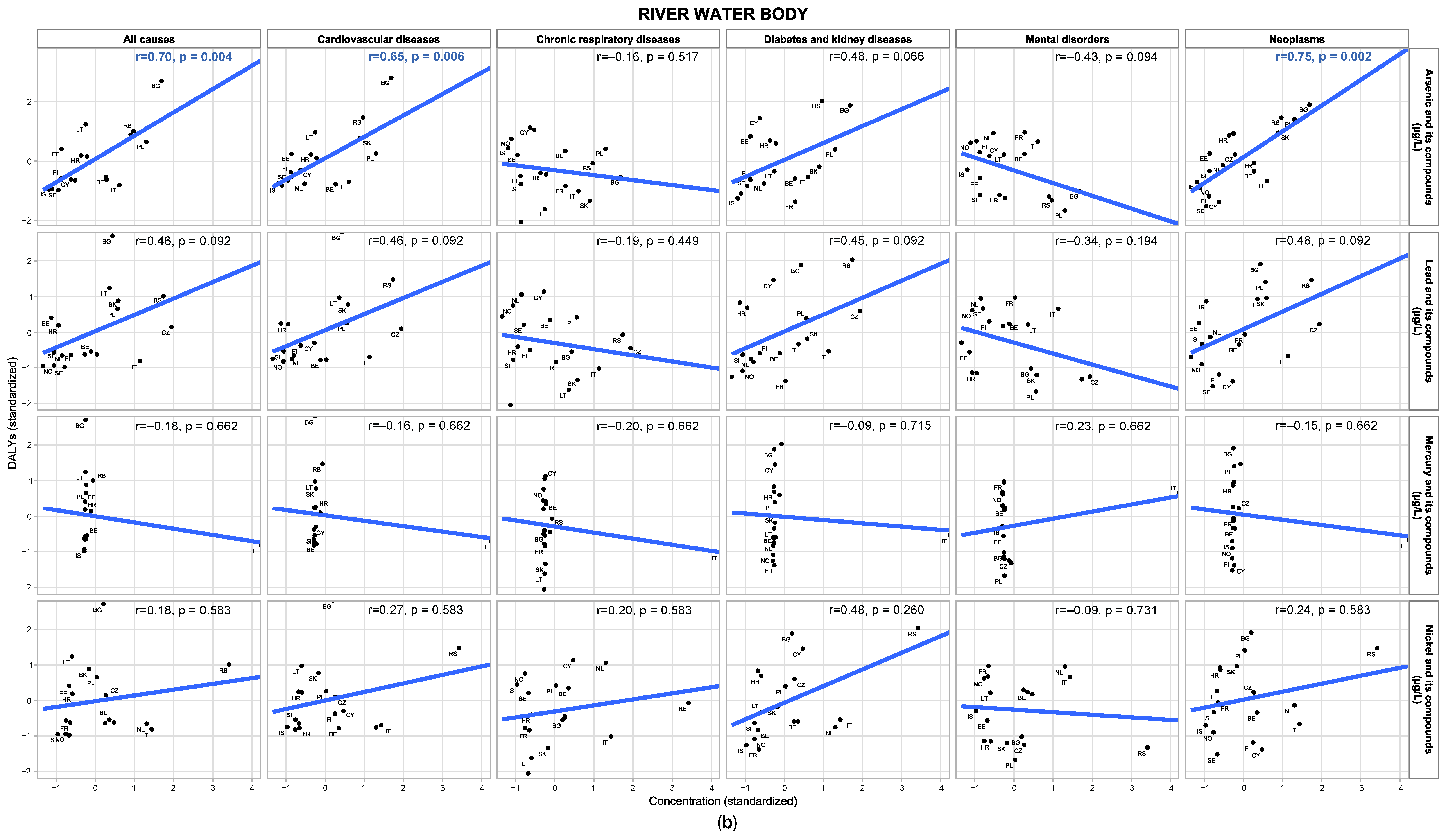
Pearson correlation analyses revealed distinct patterns linking water contaminant concentrations with national contextual indexes and cause-specific disease burden. These relationships are illustrated in faceted scatterplots with OLS trend lines, which highlight the direction and magnitude of each association (Figure 3 and Figure 4).
As shown in Figure 3, crude Pearson correlations between groundwater contaminants and DALY rates were generally weak to moderate, but some patterns emerged. As shown in Figure 3, contaminant concentrations in river water displayed moderate correlations with some contextual indexes: mercury in rivers was positively correlated with the economic index (r = 0.56, p = 0.04), whereas arsenic was negatively correlated with the health system index (r = −0.57, p = 0.04). In contrast, groundwater contaminant concentrations were only weakly related to the demographic, economic, and health system indexes, and none of these correlations reached statistical significance.
The corresponding correlation matrix for river water is presented in Figure 4. Figure 4 summarizes the crude associations between contaminant concentrations and DALY rates. In river water samples, arsenic concentrations showed strong positive correlations with all-cause DALYs (r = 0.70, p < 0.01), cardiovascular disease DALYs (r = 0.65, p < 0.01) and neoplasm DALYs (r = 0.75, p < 0.01). For groundwater, only lead concentrations were significantly associated with disease burden, demonstrating a positive correlation with DALYs attributable to diabetes and kidney diseases combined (r = 0.72, p = 0.01), while all other pollutant–outcome pairs exhibited weaker, non-significant crude correlations.

3.3. Associations of Groundwater and River Water Contaminants with Disease Burden

Using univariate linear regressions, only one exposure–outcome pair reached statistical significance after Benjamini–Hochberg correction for groundwater. Lead concentration was positively associated with diabetes and kidney disease DALYs in the non-imputed analysis (β = 0.72 (0.17); p = 0.016) (Table 2), and the association persisted after multiple imputation (β = 0.70 (0.17); p = 0.013) (Table 3). All other pollutant–DALY combinations were non-significant.
With regard to river water as well, univariate linear regressions were performed to assess the relationship between nationally aggregated contaminant concentrations and cause-specific DALYs. In the analysis without imputation (Table 2), significant positive associations were observed for arsenic concentrations with all-cause DALYs (β = 0.78 (0.19), p = 0.009), cardiovascular diseases (β = 0.72 (0.20), p = 0.017), and neoplasms (β = 0.88 (0.19), p = 0.004). After multiple imputation of missing concentration data (Table 3), the associations for arsenic persisted but were slightly attenuated: all-cause DALYs (β = 0.65 (0.19), p = 0.036) and neoplasms (β = 0.77 (0.18), p = 0.006) remained statistically significant, while the link with cardiovascular diseases was reduced to borderline significance (β = 0.59 (0.20), p = 0.053).
Table 2 and Table 3 report the univariate regression results for groundwater and river-water contaminants (non-imputed and imputed analyses, respectively). Both non-imputed and imputed analysis have been shown as a sensitivity analysis in order to explore the influence of missing exposure data and heterogeneous monitoring coverage.

3.4. Associations After Sequential Adjustment for Contextual Indexes

Sequential adjustment for three contextual indexes (health system, demographic, economic) clarified which contaminant–DALY associations persisted after accounting for national context. We first assessed collinearity among contextual indexes: pairwise correlations were generally modest, with only one pair exceeding the pre-specified threshold (|r| ≥ 0.70; max |r| = 0.73), as shown in Supplementary Figure S2. Accordingly, sequential adjustment included the health system, demographic, and economic indexes, while the governance index was not included because of collinearity with these indexes and to preserve model parsimony (Table 4 and Table 5).

3.4.1. Groundwater

Lead concentrations in groundwater showed a consistent positive association with DALYs attributable to diabetes and kidney diseases across all adjustment levels. Although the magnitude of the effect was moderately attenuated, statistical significance persisted in the fully adjusted model, indicating a robust and independent relationship (non-imputed data: Model 1 β = 0.72 (0.17), p = 0.016; Model 2 β = 0.59 (0.13), p = 0.012; Model 3 β = 0.59 (0.14), p = 0.019; Model 4 β = 0.60 (0.15), p = 0.041). Analyses using the imputed dataset (Supplementary Table S2) yielded virtually identical results, with the association remaining significant through all four models (Model 1 β = 0.70, p = 0.013; Model 2 β = 0.56, p = 0.008; Model 3 β = 0.56, p = 0.010; Model 4 β = 0.60, p = 0.011).

3.4.2. River Water

For river water, arsenic concentrations were positively associated with all-cause DALYs (non-imputed Model 1 β = 0.78 (0.19), p = 0.009) as well as with cardiovascular (β = 0.72 (0.20), p = 0.017) and neoplasm DALYs (β = 0.88 (0.19), p = 0.004). After sequential adjustment for the contextual indexes, these associations were progressively attenuated and lost statistical significance, beginning with Model 2.
The imputed analyses (Supplementary Table S3) confirmed this pattern: significant associations were observed in Model 1 for all-cause DALYs (β = 0.65 (0.19), p = 0.036) and neoplasm DALYs (β = 0.77 (0.18), p = 0.006), but none remained significant once health system, demographic, and/or economic indexes were included (Models 2–4).
Taken together, these sequentially adjusted and imputed models indicate that most crude ecological associations are not robust to contextual adjustment or missing data handling, with the notable exception of groundwater lead in relation to diabetes and kidney disease DALYs.

4. Discussion

4.1. Interpretation of Main Findings

This ecological study is among the first to integrate harmonized EEA water quality data with DALY-based burden estimates across 24 European countries. By combining official monitoring datasets with GBD data and applying multiple imputation to reduce surveillance bias, it provides a comparative continental overview of environmental health patterns. Rather than advancing causal claims, we provide a continent-wide comparative picture of bivariate relationships and assess their robustness to broad contextual conditions summarized by three main domains—demographic, economic, and health system—while a governance index was also derived but not included in the models because of collinearity with these domains. Monitoring coverage was higher for river water than groundwater, and Central and Southern Europe showed higher relative concentrations of arsenic, lead, mercury, and nickel. In river water, mercury correlated positively with the economic index, while arsenic was inversely associated with the health system index. Groundwater contaminants showed only weak correlations with contextual indicators. Arsenic in river water was positively associated with all-cause, cardiovascular and neoplasm DALYs in crude models, with partial persistence after imputation. Lead in groundwater was the only contaminant consistently associated with DALYs across all specifications, particularly for diabetes and kidney diseases. After multiple testing correction, only arsenic–DALY associations in river water and lead–DALY associations in groundwater remained significant. Following adjustment, arsenic associations were attenuated, whereas the groundwater lead–diabetes/kidney DALY association persisted across all models.

4.2. Comparison with the Existing Literature

The overall patterns observed in this ecological study showed differentiated environmental and health dynamics between water compartments, contaminant types, and disease outcomes. The greater monitoring density in river water compared with groundwater suggests that river systems receive higher regulatory and surveillance priority, likely due to their visibility, transboundary relevance, and alignment with surface water directives [35]. In contrast, groundwater networks may reflect legacy infrastructure and historical contamination sources, providing a more stable indicator of long-term, low-level exposure [36,37,38,39].
The geographical gradient in groundwater contamination, with higher relative levels in Central and Southern Europe, aligns with multiple European monitoring reports. The European Environment Agency has documented persistent industrial and mining pressures in regions such as Belgium, Northern France and Germany, Italy, Southern Spain, and Poland, contributing to “less-than-good chemical status” due to legacy emissions of metals [26,40]. Spatial modelling studies similarly identify hotspots of arsenic and other contaminants in the Danube Plain, Northern Italy, the Iberian Peninsula, and Polish basins, reflecting both geological features and historical land-use intensity [41]. Regional investigations, including those in Lombardy [42], show that groundwater in industrialized and agriculturally intensive areas more frequently exceeds legal thresholds for metals than surface waters [43,44]. These converging findings indicate that groundwater contamination is driven more by long-term pollutant accumulation and hydrogeological vulnerability than by current socioeconomic conditions—consistent with our ecological results, where contaminants showed weak correlations with contemporary contextual indexes but followed clear legacy-related spatial gradients.
The positive ecological association between arsenic in river water and DALYs for all-cause, cardiovascular, and neoplastic outcomes aligns with extensive toxicological and epidemiological evidence demonstrating the carcinogenic, vascular, and pro-inflammatory effects of chronic arsenic exposure. Recent systematic reviews and large prospective cohorts in Asia, the United States, and Europe have consistently reported increased cardiovascular and cancer mortality among populations exposed to arsenic-contaminated water, even at relatively low concentrations [45,46,47]. A similar pattern was observed in our ecological models: arsenic retained strong crude associations with DALYs but lost statistical significance after adjustment for health system, demographic, and economic indexes in both non-imputed and imputed analyses (Table 5; Table S2). This attenuation is consistent with the interpretation that, at the national ecological level, river water arsenic partly tracks broader structural and socio-institutional vulnerability (including differences in regulatory capacity, monitoring intensity, and environmental pressures), rather than a fully independent signal detectable after contextual adjustment [48]. The partial reduction in effect sizes after multiple imputation further indicates that monitoring heterogeneity and data sparsity may influence ecological estimates, particularly for river systems where surveillance density varies across countries. Actually, river water concentrations may capture broader environmental contamination or discharge patterns more than drinking water exposure at the point of consumption, increasing exposure misclassification and further attenuating adjusted associations. Overall, these observations support the interpretation that arsenic contamination in river water may be associated with increased disease burden within a broader context of environmental and socio-institutional vulnerability rather than as a standalone exposure factor.
In contrast to arsenic, the association between lead in groundwater and DALYs for diabetes and kidney diseases remained consistent across all analytical specifications, including fully adjusted ecological models. This stability across complete case and imputed analyses and across all sequentially adjusted models (Table 4; Table S1) indicates a more consistent population-level signal that is not fully accounted for by national socioeconomic or health system conditions. Chronic lead exposure has well-documented nephrotoxic and metabolic effects, including tubular injury, glomerulosclerosis, interstitial fibrosis, systemic inflammation, and impaired glucose homeostasis, providing a plausible mechanistic basis for the observed association. Recent studies [49,50,51] have demonstrated that lead contributes substantially to the global burden of chronic kidney disease and diabetes, with increased mortality in exposed chronic kidney disease patients and biological evidence of heightened sensitivity to lead toxicity even at low concentrations. Clinical and toxicological research further shows that lead exacerbates renal dysfunction through oxidative stress, reduced erythropoietin production, and persistent inflammatory activation [52,53]. These findings support the interpretation that groundwater lead contamination may exert a direct, biologically mediated effect on renal–metabolic disease burden, operating beyond structural disadvantages and persisting even when controlling for contextual heterogeneity at the national level.
The absence of significant associations for mercury and nickel at the ecological level does not exclude potential localized health risks. These metals may exert effects in specific subpopulations or geographic hotspots that are not detectable when data are aggregated at the national level. Additionally, the toxicity of mercury and nickel strongly depends on chemical speciation, exposure pathway, and bioavailability, none of which can be captured in aggregated ecological datasets [54,55,56]. Similarly, the lack of association between contaminants and mental disorders or chronic respiratory diseases may reflect either a weaker causal relationship or a longer latency or indirect pathway not captured by the present cross-sectional ecological design [57,58].
The attenuation of several crude associations after adjustment highlights a key consideration in environmental epidemiology: environmental exposures rarely operate in isolation but interact with systemic determinants such as healthcare access, economic resources, and demographic structure [59,60]. In this context, the observed differences in the behaviour of arsenic (sensitive to adjustment) and lead (robust to adjustment) illustrate two distinct patterns, one where contamination aligns with broader vulnerability, and one where contamination maintains an independent association with specific health outcomes.

4.3. Public Health Implications

The findings of this study have several implications for public health planning and environmental governance in Europe. However, given the ecological, non-causal design, the points below should be interpreted as hypothesis-generating implications for monitoring and risk management prioritization rather than as direct evidence for regulatory change. First, the consistent ecological signal linking groundwater lead to renal–metabolic disease burden suggests that groundwater should be considered not only a resource management issue but also a public health priority. Incorporating DALY-based metrics into water policy assessments could support more targeted interventions, redirecting resources toward aquifers where contaminant persistence aligns with measurable population health impacts.
Second, the attenuation of arsenic–DALY associations after adjustment for contextual indexes indicates that environmental exposure reduction alone may not be sufficient if underlying structural vulnerabilities, such as unequal health system capacity, fragmented monitoring infrastructures or socioeconomic deprivation, remain unaddressed [61,62,63,64,65]. This argues for an integrated prevention model in which environmental remediation and health system strengthening are treated as complementary strategies rather than parallel policy domains. Regions with persistent arsenic exposure and limited healthcare capacity may benefit from dual interventions: monitoring and remediation on the environmental side and early detection, screening and primary prevention pathways on the health system side.
Third, the study exposes a structural disparity between groundwater and surface water surveillance, with groundwater being monitored less intensively despite its association with DALY-relevant outcomes. This imbalance raises concerns about environmental health equity: populations relying more heavily on groundwater, often in rural or historically industrialized areas, may remain under-protected if surveillance is not aligned with actual health risk patterns. These findings support conducting a surveillance gap analysis (leveraging monitoring completeness patterns shown in Figure 1) to identify under-monitored settings and to prioritize strengthening groundwater monitoring coverage where it is currently sparse.
Finally, aligning environmental surveillance with global health targets, particularly SDG 6 (Clean Water and Sanitation) [66] and SDG 3 (Good Health and Well-being) [67], requires shifting from compliance-based monitoring toward health impact-oriented monitoring, where chemical concentrations are interpreted not only against regulatory thresholds but also in terms of population-level disease burden. Although our empirical estimates are derived from European monitoring systems and a European regulatory context, the overarching approach—linking routinely collected surveillance indicators to burden-of-disease metrics—may be transferable to other regions seeking to prioritize monitoring and risk management efforts. At the same time, the extent to which the specific patterns observed here would replicate elsewhere is likely to vary with hydrogeology (including geogenic sources), treatment and access to safe drinking water, reliance on groundwater for consumption, and co-occurring pollutant mixtures; therefore, region-specific analyses with appropriate exposure metrics are needed. Such an approach could help jurisdictions identify high-impact pollutants, prioritize intervention in settings with legacy contamination, and improve the allocation of public health resources based on combined environmental and epidemiological evidence. In practical terms, our findings support efforts to improve the comparability, completeness, and transparency of monitoring data across Member States—particularly for groundwater—so that vulnerability patterns can be identified more reliably. However, our results do not enable inferences about the adequacy of regulatory thresholds, nor do they provide a basis for specific enforcement recommendations; rather, they highlight priorities for targeted surveillance, strengthened data quality, and evaluation of remediation and infrastructure interventions in settings where contamination signals and population vulnerability co-occur.

4.4. Strengths and Limitations

This study has several strengths, including its continent-wide scope, the harmonized use of official EEA water quality data, and the integration of DALYs from the GBD study, which allows for a comparative and policy-relevant assessment of environmental health burden. The application of multiple imputation helped reduce selection bias due to heterogeneous monitoring intensity across countries.
However, limitations inherent to ecological designs must be acknowledged, including the inability to infer causality or account for within-country exposure variability. As such, the observed associations between contaminant concentrations and DALY rates cannot be interpreted as causal and may be affected by ecological fallacy, i.e., group-level patterns that do not necessarily hold at the individual level. Second, temporality cannot be established: mean contaminant concentrations and DALY estimates refer to overlapping but not identical periods, and we do not capture individual life-course exposure histories. In addition, outcome definition may contribute to temporal misalignment. DALYs are a composite metric combining years of life lost (YLL) and years lived with disability (YLD) and therefore capture prevalent burden and downstream consequences accrued over time. For chronic conditions such as diabetes and chronic kidney disease, relevant exposure windows may precede observed disability and mortality by years or decades, while early or subclinical disease processes may not be fully reflected in DALY estimates. As a result, using contemporaneous multi-year monitoring averages as an exposure proxy may not align with the true etiologically relevant period, which can dilute exposure contrasts and bias ecological associations towards the null. This further supports interpreting the present findings as non-causal, hypothesis-generating signals requiring longitudinal designs with explicit lag/latency modelling. Aggregation at the national level may obscure subregional hotspots, and DALYs, while comprehensive, do not capture latency or subclinical damage. Additionally, contextual indexes, although informative, may not fully reflect local infrastructural disparities or water treatment practices, and residual confounding by other country-level determinants of chronic disease burden is likely. Fourth, exposure assessment is based on monitoring data for groundwater and river water and does not directly reflect the quality of treated drinking water delivered to individuals, nor their actual water consumption patterns. Moreover, since contaminants were assessed separately, the mixed ecological association of multiple pollutants, with different relationships with human health compared to single substances, was not well-explored. These limitations also open the way to alternative, non-causal interpretations of our findings. For instance, countries with more advanced environmental surveillance systems may both monitor contaminants more intensively and have better ascertainment of chronic disease burden, which could partly drive ecological correlations between contaminant levels and DALYs. Conversely, historical contamination of groundwater or river systems—linked to past industrial activities or legacy pollution— may be associated with current disease burden even when recent monitoring indicates low mean concentrations, creating a mismatch between current exposure indicators and long-term health effects. Therefore, the patterns observed here should be regarded as hypothesis-generating ecological signals rather than evidence of direct causal effects at the individual level. Exposure assessment represents another key limitation. We relied on national multi-year average concentrations from environmental monitoring networks, which inevitably mask subnational variability, local hydrogeological differences, and potential hotspots. Moreover, these concentrations reflect groundwater bodies and river water at monitoring sites and do not necessarily represent treated drinking water at the point of consumption, nor do they account for treatment coverage, water-source reliance, or individual consumption patterns. Consequently, substantial exposure misclassification is likely. Such non-differential misclassification would typically bias associations towards the null, meaning that any stable ecological signals observed across model specifications should still be interpreted cautiously and as hypothesis-generating rather than causal. Lastly, another limitation is that our models considered metals individually, while real-world environmental contamination typically involves co-occurring mixtures with potentially non-linear and interactive effects. Given the small ecological sample (24 countries), mixture modelling was not pursued here to avoid over-parameterisation and instability under correlated exposures and heterogeneous missingness. In addition, other co-contaminants (e.g., nitrates, pesticides, PFAS) were not available in a harmonized way across countries and periods, so observed ecological patterns may partly reflect broader contamination mixtures or common-source pressures rather than independent single-metal associations. Future studies with larger and more granular exposure data should explicitly assess mixture effects using approaches such as weighted quantile sum regression, Bayesian kernel machine regression, or dimension-reduction/shrinkage strategies (e.g., PCA or penalized regression), ideally within subnational or individual-level longitudinal frameworks
To conclude, given the ecological, cross-sectional design, these findings are non-causal and should primarily be interpreted as hypothesis-generating, pointing to contaminants and settings that merit more detailed, individual-level investigation.

4.5. Future Directions

The above-mentioned limitations point to several complementary approaches for future research. Multilevel or small-area ecological studies linking more spatially resolved drinking-water quality indicators with subnational variation in chronic disease burden could help refine the exposure–response assessment. Longitudinal-cohort or record-linkage studies with individual-level information on residential history, drinking-water sources, and disease incidence would be better placed to establish temporality and reduce ecological bias. Future research could improve exposure granularity by using population-weighted contaminant metrics, integrating information on source-specific reliance (e.g., groundwater vs. surface water supply), treatment coverage, and subnational variability through small-area or multilevel designs linking geocoded health outcomes to drinking-water quality indicators. Finally, quasi-experimental evaluations of water remediation measures or regulatory changes, using before–after or panel-data designs, could provide more robust evidence on the causal impact of changes in contaminant levels on chronic disease outcomes.

5. Conclusions

This ecological study provides a European-wide perspective linking water quality data to DALY-based health burden metrics across 24 countries. Two distinct patterns emerged: arsenic in river water showed crude associations with multiple DALY outcomes but lost significance after adjustment, indicating a signal embedded within broader structural vulnerability. In contrast, lead in groundwater remained consistently associated with diabetes and kidney disease DALYs across all models, suggesting a consistent ecological association with renal–metabolic burden.
However, in multivariable regression models with sequential adjustment for health system, economic, and demographic contextual indexes, only lead in groundwater showed consistent positive associations with diabetes and kidney disease DALYs across all models and in imputed analyses. Crude positive associations between arsenic in river water and multiple DALY outcomes were attenuated and lost statistical significance after adjustment, and no robust or consistent associations emerged for mercury or nickel once contextual heterogeneity was taken into account. The null findings for mercury and nickel may reflect the true absence of an association at the country level, but they may also arise from methodological constraints. National aggregation and multi-year averaging likely dilute subnational hotspots and increase exposure misclassification, as monitoring concentrations in groundwater and river water do not necessarily represent treated drinking-water exposure at the point of consumption. In addition, for mercury and nickel, health relevance depends on chemical form/speciation and bioavailability, which cannot be captured by our national mean indicators; heterogeneous monitoring coverage and missingness may further limit power to detect modest ecological signals
Taken together, these findings illustrate the potential of combining harmonized water quality monitoring data with DALY-based health metrics to prioritize contaminants and settings for further assessment and risk management planning at the population level. While this study’s ecological, non-causal design does not allow individual-level inference, the robustness of the associations for groundwater lead supports the need for further longitudinal and mechanistic studies, particularly in regions with ageing water infrastructure and vulnerable populations. Strengthening groundwater monitoring, remediation of contaminated supplies, and integration of water safety planning with chronic disease prevention strategies may therefore help to reduce renal–metabolic disease burden and advance progress towards SDG 6 (Clean Water and Sanitation) in Europe.

Supplementary Materials

The following supporting information can be downloaded at https://www.mdpi.com/article/10.3390/environments13010036/s1: Figure S1: Selection of countries for the analytic dataset; Figure S2: Pairwise Pearson correlations (r) among composite contextual indexes (demographic, economic, governance, health system) at the country level. Numeric labels indicate Pearson’s r; values with |r| ≥ 0.70 were flagged as potentially collinear (max |r| = 0.73). Correlations were computed on z-score-standardized indexes aggregated over the study period (2016–2019); Table S1: Country-level mean concentrations (µg/L) of lead, mercury, nickel, and arsenic in groundwater (GW) and river water (RW) for the period 2016–2019, together with the total number of valid measurements (“N measurements”) reported for each country across the 4 pollutants and 4 years. Values labelled “NA” indicate countries and/or water types for which no valid measurements were available in 2016–2019; for these entries, concentrations were subsequently derived through multiple imputation using the complete historical Waterbase record (1980–2025) prior to aggregation. Table S2: Imputed regressions for groundwater with sequential adjustment for contextual indexes. Values are standardized β coefficients (standard errors [SE]) and BH-adjusted p-values. Concentration data were multiple-imputed using Waterbase (1980–2025) prior to aggregation. Model 1 (crude) is reported in Table 3 (main text); Models 2–4 sequentially add the health system, demographic, and economic indexes (governance excluded for collinearity/parsimony). Period: 2016–2019. Values with a p-value < 0.05 are shown in bold; Table S3: Imputed regressions for river water with sequential adjustment for contextual indexes. Values are standardized β coefficients (standard errors [SE]) and BH-adjusted p-values. Concentrations were multiple-imputed (Waterbase 1980–2025) prior to aggregation. Model 1 (crude) is reported in Table 3; Models 2–4 sequentially add the health system, demographic, and economic indexes (governance excluded for collinearity/parsimony). Period: 2016–2019.

Author Contributions

Conceptualization, A.P., L.S. and V.G.; methodology, A.P., L.S. and V.G.; software, L.S.; validation, F.P. and V.G.; formal analysis, A.P., E.D.P. and L.S.; investigation, L.S. and V.G.; resources, A.P., E.D.P. and L.S.; data curation, A.P., G.M., L.S., E.D.P. and G.E.R.; writing—original draft preparation, A.P., G.M. and F.P.; writing—review and editing, G.E.R., D.N., C.S., V.B. and V.G.; visualization, L.S.; supervision, C.S., V.B. and V.G.; project administration, V.G. All authors have read and agreed to the published version of the manuscript.

Funding

This research received no external funding.

Data Availability Statement

The data presented in this study were derived entirely from publicly accessible sources. Water quality data were obtained from the European Environment Agency (EEA) Waterbase—Water Quality ICM database. Health outcomes were taken from the Global Burden of Disease (GBD) 2021 study, developed by the Institute for Health Metrics and Evaluation (IHME). Contextual socioeconomic and governance indicators were obtained from the World Bank’s World Development Indicators (WDI) and Worldwide Governance Indicators (WGI) datasets. All datasets are open-access and publicly available from the respective institutions.

Conflicts of Interest

The authors declare no conflicts of interest.

References

  1. World Health Organization. The Human Rights to Water and Sanitation in Practice: Findings and Lessons Learned from the Work on Equitable Access to Water and Sanitation Under the Protocol on Water and Health in the Pan-European Region; WHO Regional Office for Europe: Copenhagen, Denmark, 2022. [Google Scholar]
  2. European Environment Agency. Ensuring Clean Waters for People and Nature; European Environment Agency: Copenhagen, Denmark, 2020. [Google Scholar]
  3. European Parliament and Council of the European Union. Directive 2000/60/EC of 23 October 2000 Establishing a Framework for Community Action in the Field of Water Policy. Off. J. Eur. Communities 2000, L327, 1–73. Available online: https://eur-lex.europa.eu/eli/dir/2000/60/oj/eng (accessed on 17 September 2025).
  4. United Nations. Sustainable Development Goal 6: Ensure Availability and Sustainable Management of Water and Sanitation for All; United Nations: New York, NY, USA, 2015. [Google Scholar]
  5. United Nations. Transforming Our World: The 2030 Agenda for Sustainable Development; United Nations: New York, NY, USA, 2015. [Google Scholar]
  6. Hering, D.; Carvalho, L.; Argillier, C.; Beklioglu, M.; Borja, A.; Cardoso, A.C.; Duel, H.; Ferreira, T.; Globevnik, L.; Hanganu, J.; et al. Managing Aquatic Ecosystems and Water Resources under Multiple Stress—An Introduction to the MARS Project. Sci. Total Environ. 2015, 503–504, 10–21. [Google Scholar] [CrossRef]
  7. Grizzetti, B.; Vigiak, O.; Udias, A.; Aloe, A.; Zanni, M.; Bouraoui, F.; Pistocchi, A.; Dorati, C.; Friedland, R.; De Roo, A.; et al. How EU Policies Could Reduce Nutrient Pollution in European Inland and Coastal Waters. Glob. Environ. Change 2021, 69, 102281. [Google Scholar] [CrossRef]
  8. Vesković, J.; Onjia, A. Environmental Implications of the Soil-to-Groundwater Migration of Heavy Metals in Mining Area Hotspots. Metals 2024, 14, 719. [Google Scholar] [CrossRef]
  9. Michalski, R.; Pecyna-Utylska, P.; Kernert, J.; Grygoyć, K.; Klyta, J. Health Risk Assessment of Selected Metals through Tap Water Consumption in Upper Silesia, Poland. J. Environ. Health Sci. Eng. 2020, 18, 1607. [Google Scholar] [CrossRef]
  10. Zlati, M.L.; Georgescu, L.P.; Iticescu, C.; Ionescu, R.V.; Antohi, V.M. New Approach to Modelling the Impact of Heavy Metals on the European Union’s Water Resources. Int. J. Environ. Res. Public Health 2022, 20, 45. [Google Scholar] [CrossRef] [PubMed]
  11. Navarro-Ortega, A.; Acuña, V.; Bellin, A.; Burek, P.; Cassiani, G.; Choukr-Allah, R.; Dolédec, S.; Elosegi, A.; Ferrari, F.; Ginebreda, A.; et al. Managing the Effects of Multiple Stressors on Aquatic Ecosystems under Water Scarcity. The GLOBAQUA Project. Sci. Total Environ. 2015, 503–504, 3–9. [Google Scholar] [CrossRef] [PubMed]
  12. Levin, R.; Villanueva, C.M.; Beene, D.; Cradock, A.L.; Donat-Vargas, C.; Lewis, J.; Martinez-Morata, I.; Minovi, D.; Nigra, A.E.; Olson, E.D.; et al. US Drinking Water Quality: Exposure Risk Profiles for Seven Legacy and Emerging Contaminants. J. Expo. Sci. Environ. Epidemiol. 2024, 34, 3–22. [Google Scholar] [CrossRef]
  13. Lin, L.; Yang, H.; Xu, X. Effects of Water Pollution on Human Health and Disease Heterogeneity: A Review. Front. Environ. Sci. 2022, 10, 880246. [Google Scholar] [CrossRef]
  14. Bradley, P.M.; Romanok, K.M.; Smalling, K.L.; Focazio, M.J.; Evans, N.; Fitzpatrick, S.C.; Givens, C.E.; Gordon, S.E.; Gray, J.L.; Green, E.M.; et al. Bottled Water Contaminant Exposures and Potential Human Effects. Environ. Int. 2022, 171, 107701. [Google Scholar] [CrossRef]
  15. Payment, P. Health Effects of Water Consumption and Water Quality. In Handbook Water Wastewater Microbiol; Academic Press: London, UK, 2007; pp. 209–220. [Google Scholar] [CrossRef]
  16. Levallois, P.; Villanueva, C.M. Drinking Water Quality and Human Health: An Editorial. Int. J. Environ. Res. Public Health 2019, 16, 631. [Google Scholar] [CrossRef] [PubMed]
  17. Fawkes, L.; Sansom, G. Preliminary Study of Lead-Contaminated Drinking Water in Public Parks—An Assessment of Equity and Exposure Risks in Two Texas Communities. Int. J. Environ. Res. Public Health 2021, 18, 6443. [Google Scholar] [CrossRef] [PubMed]
  18. Jarvis, P.; Fawell, J. Lead in Drinking Water—An Ongoing Public Health Concern? Curr. Opin. Environ. Sci. Health 2021, 20, 100239. [Google Scholar] [CrossRef]
  19. Bain, R.; Cronk, R.; Wright, J.; Yang, H.; Slaymaker, T.; Bartram, J. Fecal Contamination of Drinking-Water in Low- and Middle-Income Countries: A Systematic Review and Meta-Analysis. PLoS Med. 2014, 11, e1001644. [Google Scholar] [CrossRef] [PubMed]
  20. Chowdhury, S.; Chowdhury, I.R.; Mazumder, M.A.J.; Al-Suwaiyan, M.S. Predicting Risk and Loss of Disability-Adjusted Life Years (DALY) from Selected Disinfection Byproducts in Multiple Water Supply Sources in Saudi Arabia. Sci. Total Environ. 2020, 737, 140296. [Google Scholar] [CrossRef]
  21. Tolofari, D.L.; Bartrand, T.; Haas, C.N.; Olson, M.S.; Gurian, P.L. Disability-Adjusted Life Year Frameworks for Comparing Health Impacts Associated with Mycobacterium Avium, Trihalomethanes, and Haloacetic Acids in a Building Plumbing System. ACS ES&T Water 2022, 2, 1521–1531. [Google Scholar] [CrossRef]
  22. Zhang, Z. Multiple Imputation with Multivariate Imputation by Chained Equation (MICE) Package. Ann. Transl. Med. 2016, 4, 30. [Google Scholar] [CrossRef]
  23. Hornung, R.W.; Reed, L.D. Estimation of Average Concentration in the Presence of Nondetectable Values. Appl. Occup. Environ. Hyg. 1990, 5, 46–51. [Google Scholar] [CrossRef]
  24. European Environment Agency Waterbase—Water Quality ICM. Available online: https://www.eea.europa.eu/en/datahub/datahubitem-view/fbf3717c-cd7b-4785-933a-d0cf510542e1 (accessed on 2 October 2025).
  25. European Environment Agency. Industrial Waste Water Treatment—Pressures on the Environment (EEA Report No 23/2018); European Environment Agency: Copenhagen, Denmark, 2019. [Google Scholar]
  26. European Environment Agency. Europe’s Groundwater—A Key Resource under Pressure (Briefing No. 03/2022); European Environment Agency: Copenhagen, Denmark, 2022. [Google Scholar]
  27. Tchounwou, P.B.; Yedjou, C.G.; Patlolla, A.K.; Sutton, D.J. Heavy metal toxicity and the environment. Exp. Suppl. 2012, 101, 133–164. [Google Scholar] [CrossRef]
  28. Taheri Soodejani, M. Non-Communicable Diseases in the World over the Past Century: A Secondary Data Analysis. Front. Public. Health 2024, 12, 1436236. [Google Scholar] [CrossRef]
  29. Li, J.; Pandian, V.; Davidson, P.M.; Song, Y.; Chen, N.; Fong, D.Y.T. Burden and Attributable Risk Factors of Non-Communicable Diseases and Subtypes in 204 Countries and Territories, 1990-2021: A Systematic Analysis for the Global Burden of Disease Study 2021. Int. J. Surg. 2025, 111, 2385–2397. [Google Scholar] [CrossRef]
  30. Balakumar, P.; Maung-U, K.; Jagadeesh, G. Prevalence and Prevention of Cardiovascular Disease and Diabetes Mellitus. Pharmacol. Res. 2016, 113, 600–609. [Google Scholar] [CrossRef] [PubMed]
  31. World Bank. World Development Indicators (WDI) [Database]; World Bank: Washington, DC, USA, 2025. [Google Scholar]
  32. World Bank. Worldwide Governance Indicators (WGI), 2024 Update; World Bank: Washington, DC, USA, 2024. [Google Scholar]
  33. Collignon, P.; Beggs, J.J.; Walsh, T.R.; Gandra, S.; Laxminarayan, R. Anthropological and Socioeconomic Factors Contributing to Global Antimicrobial Resistance: A Univariate and Multivariable Analysis. Lancet Planet. Health 2018, 2, e398–e405. [Google Scholar] [CrossRef]
  34. Benjaminit, Y.; Hochberg, Y. Controlling the False Discovery Rate: A Practical and Powerful Approach to Multiple Testing. J. R. Stat. Soc. Ser. B Stat. Methodol. 1995, 57, 289–300. [Google Scholar] [CrossRef]
  35. European Environment Agency. Pesticides in Rivers, Lakes and Groundwater in Europe; European Environment Agency: Copenhagen, Denmark, 2024. [Google Scholar]
  36. European Commission. Technical Report on Groundwater Quality Trend and Trend Reversal Assessment; European Commission: Brussels, Belgium, 2019. [Google Scholar]
  37. Farzana, F.; Roy, T.K.; Hossain, S.A.; Mazrin, M.; Islam, M.S.; Mahiddin, N.A.; Jayoti, J.R.; Ghosh, R.; Al Bakky, A.; Ismail, Z.; et al. Assessment of Groundwater Quality and Potential Health Risks Related to Heavy Metals in a Peri-Urban Area of a Developing Country. Sci. Rep. 2025, 15, 27970. [Google Scholar] [CrossRef] [PubMed]
  38. Rose, J.B.; Örmeci, B.; Aw, T.G. Water Quality and Health: An Ecological Perspective. Water Ecol. 2025, 1, 100007. [Google Scholar] [CrossRef]
  39. Nowicki, S.; Birhanu, B.; Tanui, F.; Sule, M.N.; Charles, K.; Olago, D.; Kebede, S. Water Chemistry Poses Health Risks as Reliance on Groundwater Increases: A Systematic Review of Hydrogeochemistry Research from Ethiopia and Kenya. Sci. Total Environ. 2023, 904, 166929. [Google Scholar] [CrossRef]
  40. Giménez-Forcada, E.; Luque-Espinar, J.A.; López-Bahut, M.T.; Grima-Olmedo, J.; Jiménez-Sánchez, J.; Ontiveros-Beltranena, C.; Díaz-Muñoz, J.Á.; Elster, D.; Skopljak, F.; Voutchkova, D.; et al. Analysis of the Geological Control on the Spatial Distribution of Potentially Toxic Concentrations of As and F- in Groundwater on a Pan-European Scale. Ecotoxicol. Environ. Saf. 2022, 247, 114161. [Google Scholar] [CrossRef]
  41. Sentek, Z.; Prtorić, J.; Pilz, S.; Renson, I.; Eckert, M.; Tudela, A.; Delgado, A.; Aubert, R.; Boutsi, M.; Sanchez, L. Under the Surface—The Hidden Crisis in Europe’s Groundwater. Available online: https://europeanwaters.eu/ (accessed on 11 October 2025).
  42. Zanchi, M.; Zapperi, S.; Zanotti, C.; Rotiroti, M.; Bonomi, T.; Gomarasca, S.; Bocchi, S.; La Porta, C.A.M. A Pipeline for Monitoring Water Pollution: The Example of Heavy Metals in Lombardy Waters. Heliyon 2022, 8, e12435. [Google Scholar] [CrossRef]
  43. Tufano, R.; Allocca, V.; Coda, S.; Cusano, D.; Fusco, F.; Nicodemo, F.; Pizzolante, A.; De Vita, P. Groundwater Vulnerability of Principal Aquifers of the Campania Region (Southern Italy). J. Maps 2020, 16, 565–576. [Google Scholar] [CrossRef]
  44. Ferreira, C.S.S.; Seifollahi-Aghmiuni, S.; Destouni, G.; Ghajarnia, N.; Kalantari, Z. Soil Degradation in the European Mediterranean Region: Processes, Status and Consequences. Sci. Total Environ. 2022, 805, 150106. [Google Scholar] [CrossRef]
  45. Gopang, M.; Yazdi, M.D.; Moyer, A.; Smith, D.M.; Meliker, J.R. Low-to-Moderate Arsenic Exposure: A Global Systematic Review of Cardiovascular Disease Risks. Environ. Health 2025, 24, 29. [Google Scholar] [CrossRef] [PubMed]
  46. Chen, Y.; Graziano, J.H.; Parvez, F.; Liu, M.; Slavkovich, V.; Kalra, T.; Argos, M.; Islam, T.; Ahmed, A.; Rakibuz-Zaman, M.; et al. Arsenic Exposure from Drinking Water and Mortality from Cardiovascular Disease in Bangladesh: Prospective Cohort Study. BMJ 2011, 342, d2431. [Google Scholar] [CrossRef]
  47. Tsuji, J.S.; Perez, V.; Garry, M.R.; Alexander, D.D. Association of Low-Level Arsenic Exposure in Drinking Water with Cardiovascular Disease: A Systematic Review and Risk Assessment. Toxicology 2014, 323, 78–94. [Google Scholar] [CrossRef]
  48. Nigra, A.E.; Cazacu-De Luca, A.; Navas-Acien, A. Socioeconomic Vulnerability and Public Water Arsenic Concentrations across the US. Environ. Pollut. 2022, 313, 120113. [Google Scholar] [CrossRef]
  49. Zhou, N.; Huang, Y.; Li, M.; Zhou, L.; Jin, H. Trends in Global Burden of Diseases Attributable to Lead Exposure in 204 Countries and Territories from 1990 to 2019. Front. Public Health 2022, 10, 1036398. [Google Scholar] [CrossRef]
  50. Li, L.; Zhao, J. Association of Urinary and Blood Lead Concentrations with All-Cause Mortality in US Adults with Chronic Kidney Disease: A Prospective Cohort Study. Sci. Rep. 2024, 14, 23230. [Google Scholar] [CrossRef]
  51. Liang, D.; Liu, C.; Yang, M. The Association between Urinary Lead Concentration and the Likelihood of Kidney Stones in US Adults: A Population-Based Study. Sci. Rep. 2025, 15, 1653. [Google Scholar] [CrossRef]
  52. Paudel, S.; Geetha, P.; Kyriazis, P.; Specht, A.; Hu, H.; Danziger, J. Association of Environmental Lead Toxicity and Hematologic Outcomes in Patients with Advanced Kidney Disease. Nephrol. Dial. Transplant. 2023, 38, 1337–1339. [Google Scholar] [CrossRef]
  53. Wang, N.; Gao, X.; Huo, Y.; Li, Y.; Cheng, F.; Zhang, Z. Lead Exposure Aggravates Glucose Metabolism Disorders through Gut Microbiota Dysbiosis and Intestinal Barrier Damage in High-Fat Diet-Fed Mice. J. Sci. Food Agric. 2024, 104, 3057–3068. [Google Scholar] [CrossRef]
  54. Diwa, R.R.; Deocaris, C.C.; Geraldo, L.D.; Belo, L.P. Ecological and Health Risks from Heavy Metal Sources Surrounding an Abandoned Mercury Mine in the Island Paradise of Palawan, Philippines. Heliyon 2023, 9, e15713. [Google Scholar] [CrossRef]
  55. Genchi, G.; Carocci, A.; Lauria, G.; Sinicropi, M.S.; Catalano, A. Nickel: Human Health and Environmental Toxicology. Int. J. Environ. Res. Public Health 2020, 17, 679. [Google Scholar] [CrossRef]
  56. Town, R.M.; Peters, A.; Cooper, C. Importance of Chemical Speciation and Bioavailability in Hazard Assessment, Risk Assessment and Regulation of Metals in Multi-Stressor Environmental Conditions. Available online: https://www.setac.org/resource/importance-of-chemical-speciation-and-bioavailability-in-hazard-assessment-risk-assessment-and-regulation-of-metals-in-multi-stressor-environmental-conditions.html (accessed on 26 September 2025).
  57. Tota, M.; Karska, J.; Kowalski, S.; Piątek, N.; Pszczołowska, M.; Mazur, K.; Piotrowski, P. Environmental Pollution and Extreme Weather Conditions: Insights into the Effect on Mental Health. Front. Psychiatry 2024, 15, 1389051. [Google Scholar] [CrossRef]
  58. Bai, Y.; Liang, X.; Xia, L.; Yu, S.; Wu, F.; Li, M. Association between Air Pollutants and Four Major Mental Disorders: Evidence from a Mendelian Randomization Study. Ecotoxicol. Environ. Saf. 2024, 283, 116887. [Google Scholar] [CrossRef]
  59. Leonardi, G.S.; Zeka, A.; Ashworth, M.; Bouland, C.; Crabbe, H.; Duarte-Davidson, R.; Etzel, R.A.; Giuashvili, N.; Gökdemir, Ö.; Hanke, W.; et al. A New Environmental Public Health Practice to Manage Current and Future Global Health Challenges through Education, Training, and Capacity Building. Front. Public Health 2024, 12, 1373490. [Google Scholar] [CrossRef]
  60. Graham, H.; White, P.C.L. Social Determinants and Lifestyles: Integrating Environmental and Public Health Perspectives. Public Health 2016, 141, 270–278. [Google Scholar] [CrossRef]
  61. Pennisi, F.; Buzzoni, C.; Russo, A.G.; Gervasi, F.; Braga, M.; Renzi, C. Comorbidities, Socioeconomic Status, and Colorectal Cancer Diagnostic Route. JAMA Netw. Open 2025, 8, e258867. [Google Scholar] [CrossRef] [PubMed]
  62. Signorelli, C.; Pennisi, F.; Lunetti, C.; Blandi, L.; Pellissero, G.; Fondazione Sanità Futura, W.G. Quality of Hospital Care and Clinical Outcomes: A Comparison between the Lombardy Region and the Italian National Data. Ann. Ig. 2024, 36, 234–249. [Google Scholar] [CrossRef] [PubMed]
  63. Signorelli, C.; De Ponti, E.; Mastrangelo, M.; Pennisi, F.; Cereda, D.; Corti, F.; Beretta, D.; Pelissero, G. The Contribution of the Private Healthcare Sector during the COVID-19 Pandemic: The Experience of the Lombardy Region in Northern Italy. Ann. Ig. 2024, 36, 250–255. [Google Scholar] [CrossRef] [PubMed]
  64. Pennisi, F.; Minerva, M.; Valle, Z.D.; Odone, A.; Signorelli, C. Genesis and Prospects of the Shortage of Specialist Physicians in Italy and Indicators of the 39 Schools of Hygiene and Preventive Medicine. Acta Biomed. 2023, 94, e2023096. [Google Scholar] [CrossRef]
  65. Nucci, D.; Pennisi, F.; Pinto, A.; De Ponti, E.; Ricciardi, G.E.; Signorelli, C.; Veronese, N.; Castagna, A.; Maggi, S.; Cadeddu, C.; et al. Impact of Extreme Weather Events on Food Security among Older People: A Systematic Review. Aging Clin. Exp. Res. 2025, 37, 137. [Google Scholar] [CrossRef] [PubMed]
  66. United Nations Progress on Ambient Water Quality (SDG Target 6.3). Available online: https://sdg6data.org/en/indicator/6.3.2 (accessed on 1 October 2025).
  67. The Global Goals Goal 3: Good Health and Well-Being. Available online: https://globalgoals.org/goals/3-good-health-and-well-being/ (accessed on 1 October 2025).
Figure 1. Completeness of monitoring data (in thousands of valid concentration measurements, µg/L) for arsenic, lead, mercury, and nickel in 24 European countries. Panels show groundwater (top row) and river water (bottom row). Colours represent the number of valid concentration measurements per country (2016–2019) normalized across pollutants to allow cross-country comparison. Counts of countries contributing non-imputed data for each contaminant are as follows: groundwater: arsenic 19, lead 18, mercury 16, nickel 18; river water: arsenic 20, lead 21, mercury 19, nickel 21.
Environments 13 00036 g001
Figure 2. Normalized country-level concentrations of arsenic, lead, mercury, and nickel. Top row depicts groundwater and bottom row depicts river water. Colours represent standardized mean concentration (z-score; 2016–2019) following the same ramp across panels: green = lower values, yellow = intermediate, red = higher values; white = no valid measurements in that period (historical data, 1980–2025, were used only for multiple imputation in subsequent analyses).
Environments 13 00036 g002
Figure 3. Associations between contextual indexes and contaminant concentrations. Faceted scatterplots with ordinary least-squares (OLS) trend lines for each index (demographic, economic, health system). Axes display z-scores (x: index; y: concentration). Pearson’s r and p-values are reported within each panel; values shown in blue denote statistically significant correlations (p < 0.05).
Environments 13 00036 g003
Figure 4. (a) Associations between groundwater contaminant concentrations and cause-specific DALYs. (b) Associations between river water contaminant concentrations and cause-specific DALYs. Faceted scatterplots with ordinary least-squares (OLS) trend lines for each contaminant. Axes display standardized z-scores (x: concentration; y: DALYs). Pearson’s r and p-values are reported within each panel; values shown in blue denote statistically significant correlations (p < 0.05).
Environments 13 00036 g004aEnvironments 13 00036 g004b
Table 1. World Bank indicators grouped into four composite indexes, used to construct the domain-specific indexes.
IndexesVariables
DemographyFertility rate, total (births per woman)
Population aged 65 and above (% of total population)
Population density (people per sq. km of land area)
Population growth (annual %)
Population, total
Urban population (% of total population)
EconomyGDP growth (annual %)
GDP per capita, PPP (current international $)
GDP, PPP (current international $)
Gini index
Unemployment, total (% of total labour force) (modelled ILO estimate)
GovernanceControl of corruption
Government effectiveness
Political stability and absence of violence/terrorism
Regulatory quality
Rule of law
Voice and accountability
Health systemCurrent health expenditure (% of GDP)
Current health expenditure per capita, PPP (current international $)
Life expectancy at birth, total (years)
ILO = International Labour Organization; GDP = Gross Domestic Product; PPP = Purchasing Power Parity.
Table 2. Non-imputed univariate regressions of DALYs on contaminant concentrations (µg/L). Reported values are standardized β coefficients (standard errors in parentheses [SE]) and Benjamini–Hochberg-adjusted p-values for associations between country-level contaminant concentrations and cause-specific DALYs, shown separately for groundwater and river water. Concentrations refer to the 2016–2019 period; models are univariate (one pollutant at a time). Values with p-value < 0.05 are shown in bold.
Water
Category
CausesArsenic and Its Compounds
β (SE); p-Value
Lead and Its
Compounds
β (SE); p-Value
Mercury and Its Compounds
β (SE); p-Value
Nickel and Its
Compounds
β (SE); p-Value
GroundwaterAll causes0.203 (0.232); 0.6760.268 (0.241); 0.676−0.224 (0.276); 0.676−0.278 (0.368); 0.676
Cardiovascular diseases0.301 (0.225); 0.6760.344 (0.235); 0.676−0.186 (0.274); 0.676−0.291 (0.368); 0.676
Chronic respiratory diseases0.118 (0.221); 0.7570.142 (0.209); 0.6760.024 (0.215); 0.9110.600 (0.279); 0.374
Diabetes and kidney diseases0.474 (0.206); 0.3740.715 (0.170); 0.0160.106 (0.277); 0.8480.081 (0.369); 0.875
Mental disorders−0.194 (0.236); 0.6760.053 (0.254); 0.8750.251 (0.223); 0.6760.327 (0.371); 0.676
Neoplasms0.312 (0.214); 0.6760.163 (0.237); 0.676−0.303 (0.263); 0.676−0.112 (0.358); 0.866
River WaterAll causes0.783 (0.192); 0.0090.514 (0.202); 0.079−0.184 (0.237); 0.5540.152 (0.220); 0.554
Cardiovascular diseases0.721 (0.202); 0.0170.506 (0.200); 0.079−0.162 (0.233); 0.5540.234 (0.214); 0.509
Chronic respiratory diseases−0.194 (0.251); 0.554−0.276 (0.217); 0.436−0.161 (0.217); 0.5540.141 (0.213); 0.554
Diabetes and kidney diseases0.604 (0.247); 0.0790.501 (0.208); 0.079−0.095 (0.242); 0.7000.458 (0.201); 0.093
Mental disorders−0.444 (0.272); 0.290−0.333 (0.230); 0.3580.198 (0.200); 0.537−0.157 (0.228); 0.554
Neoplasms0.878 (0.186); 0.0040.533 (0.201); 0.079−0.152 (0.237); 0.5540.234 (0.218); 0.509
Table 3. Imputed univariate regressions of DALYs on contaminant concentrations (µg/L). Values are standardized β coefficients (standard errors [SE]) with Benjamini–Hochberg-adjusted p-values. Concentration data were multiple-imputed using all Waterbase–Water Quality ICM records available (1980–2025) and then aggregated at the country level for 2016–2019. Results are presented separately for groundwater and river water. Statistically significant values (p-value < 0.05) are shown in bold.
Water
Category
CausesArsenic and Its Compounds
β (SE); p-Value
Lead and Its Compounds
β (SE); p-Value
Mercury and Its Compounds
β (SE); p-Value
Nickel and Its Compounds
β (SE); p-Value
GroundwaterAll causes0.211 (0.190); 0.5280.223 (0.224); 0.528−0.267 (0.189); 0.514−0.195 (0.277); 0.652
Cardiovascular diseases0.288 (0.181); 0.5070.288 (0.217); 0.525−0.277 (0.185); 0.511−0.213 (0.271); 0.652
Chronic respiratory diseases0.061 (0.183); 0.8090.120 (0.215); 0.6980.210 (0.181); 0.5280.597 (0.231); 0.135
Diabetes and kidney diseases0.454 (0.170); 0.1350.704 (0.174); 0.013−0.129 (0.196); 0.652−0.023 (0.280); 0.935
Mental disorders−0.199 (0.199); 0.5280.100 (0.239); 0.7760.379 (0.190); 0.3500.292 (0.286); 0.528
Neoplasms0.316 (0.185); 0.4890.157 (0.229); 0.652−0.219 (0.194); 0.528−0.080 (0.283); 0.813
River WaterAll causes0.648 (0.194); 0.0360.103 (0.198); 0.730−0.184 (0.195); 0.7090.192 (0.195); 0.709
Cardiovascular diseases0.592 (0.198); 0.0530.093 (0.195); 0.730−0.153 (0.192); 0.7140.263 (0.188); 0.590
Chronic respiratory diseases−0.094 (0.224); 0.739−0.038 (0.188); 0.879−0.139 (0.185); 0.7140.100 (0.187); 0.730
Diabetes and kidney diseases0.529 (0.211); 0.1190.133 (0.198); 0.714−0.141 (0.197); 0.7140.428 (0.178); 0.119
Mental disorders−0.432 (0.232); 0.3020.008 (0.208); 0.9700.129 (0.206); 0.714−0.214 (0.203); 0.709
Neoplasms0.768 (0.177); 0.0060.144 (0.199); 0.714−0.199 (0.196); 0.7090.258 (0.194); 0.590
Table 4. Non-imputed regressions for groundwater with sequential adjustment for contextual indexes. Values are standardized β coefficients (standard errors [SE]) and Benjamini–Hochberg-adjusted p-values from linear models of DALYs on contaminant concentrations (µg/L). Model 1 (crude) corresponds to the univariate specification reported in Table 2; Models 2–4 sequentially add the health system, demographic, and economic indexes (governance excluded for collinearity/parsimony). Governance index was excluded for collinearity/parsimony. All analyses use country-level data for 2016–2019. Bold is used for statistically significant values (p-value < 0.05).
Model
Number
CausesArsenic and Its Compounds
β (SE); p-Value
Lead and Its
Compounds
β (SE); p-Value
Mercury and Its Compounds
β (SE); p-Value
Nickel and Its
Compounds
β (SE); p-Value
Model 2All causes0.017 (0.140); 0.9510.059 (0.147); 0.924−0.221 (0.153); 0.5390.096 (0.221); 0.924
Cardiovascular diseases0.126 (0.144); 0.6350.145 (0.150); 0.597−0.184 (0.164); 0.5630.073 (0.232); 0.951
Chronic respiratory diseases0.233 (0.198); 0.5630.255 (0.191); 0.5390.024 (0.208); 0.9510.475 (0.280); 0.530
Diabetes and kidney diseases0.346 (0.170); 0.4670.593 (0.134); 0.0120.108 (0.218); 0.9240.388 (0.291); 0.539
Mental disorders−0.032 (0.178); 0.9510.254 (0.179); 0.5390.249 (0.145); 0.5300.012 (0.287); 0.969
Neoplasms0.147 (0.139); 0.563−0.038 (0.149); 0.951−0.301 (0.139); 0.4670.250 (0.217); 0.563
Model 3All causes0.018 (0.109); 0.9690.094 (0.108); 0.686−0.137 (0.115); 0.527−0.134 (0.176); 0.686
Cardiovascular diseases0.127 (0.128); 0.6270.174 (0.127); 0.516−0.116 (0.148); 0.686−0.114 (0.216); 0.841
Chronic respiratory diseases0.232 (0.200); 0.5270.246 (0.196); 0.527−0.023 (0.212); 0.9690.628 (0.288); 0.376
Diabetes and kidney diseases0.346 (0.175); 0.4010.593 (0.139); 0.0190.115 (0.232); 0.8410.476 (0.316); 0.516
Mental disorders−0.032 (0.184); 0.9690.255 (0.185); 0.5160.274 (0.151); 0.4020.020 (0.319); 0.969
Neoplasms0.149 (0.085); 0.4020.003 (0.086); 0.969−0.207 (0.076); 0.221−0.012 (0.139); 0.969
Model 4All causes0.005 (0.115); 0.9800.085 (0.118); 0.777−0.219 (0.139); 0.432−0.123 (0.184); 0.777
Cardiovascular diseases0.105 (0.135); 0.7770.153 (0.138); 0.628−0.243 (0.175); 0.460−0.083 (0.223); 0.954
Chronic respiratory diseases0.287 (0.205); 0.4600.333 (0.200); 0.4110.036 (0.266); 0.9760.597 (0.301); 0.411
Diabetes and kidney diseases0.325 (0.185); 0.4110.599 (0.152); 0.0410.007 (0.288); 0.9800.545 (0.316); 0.411
Mental disorders−0.120 (0.171); 0.7770.161 (0.185); 0.7770.046 (0.148); 0.9620.127 (0.295); 0.953
Neoplasms0.169 (0.088); 0.4110.021 (0.093); 0.976−0.249 (0.094); 0.267−0.027 (0.145); 0.976
Table 5. Non-imputed regressions for river water with sequential adjustment for contextual indexes. Values are standardized β coefficients (standard errors [SE]) and Benjamini–Hochberg-adjusted p-values from linear models of DALYs on contaminant concentrations. Model 1 (crude) corresponds to the univariate specification reported in Table 2; Models 2–4 sequentially add the health system, demographic, and economic indexes (governance excluded for collinearity/parsimony). Governance index was excluded for collinearity/parsimony. Country-level period: 2016–2019.
Model
Number
CausesArsenic and Its Compounds
β (SE); p-Value
Lead and Its
Compounds
β (SE); p-Value
Mercury and Its Compounds
β (SE); p-Value
Nickel and Its
Compounds
β (SE); p-Value
Model 2All causes0.352 (0.149); 0.2450.154 (0.132); 0.581−0.122 (0.123); 0.5810.041 (0.117); 0.845
Cardiovascular diseases0.300 (0.172); 0.5810.167 (0.142); 0.581−0.102 (0.133); 0.6800.130 (0.123); 0.581
Chronic respiratory diseases0.139 (0.277); 0.829−0.065 (0.222); 0.845−0.196 (0.191); 0.5810.209 (0.185); 0.581
Diabetes and kidney diseases0.197 (0.252); 0.6800.228 (0.190); 0.581−0.041 (0.173); 0.8490.373 (0.146); 0.235
Mental disorders0.079 (0.251); 0.845−0.001 (0.196); 0.9980.150 (0.128); 0.581−0.063 (0.168); 0.845
Neoplasms0.492 (0.159); 0.1600.195 (0.145); 0.581−0.092 (0.136); 0.7220.129 (0.128); 0.581
Model 3All causes0.192 (0.161); 0.5750.106 (0.116); 0.575−0.150 (0.104); 0.575−0.021 (0.104); 0.921
Cardiovascular diseases0.191 (0.199); 0.5750.132 (0.138); 0.575−0.122 (0.128); 0.5750.089 (0.122); 0.671
Chronic respiratory diseases0.392 (0.308); 0.575−0.029 (0.225); 0.937−0.183 (0.196); 0.5750.265 (0.186); 0.575
Diabetes and kidney diseases0.269 (0.300); 0.5750.234 (0.198); 0.575−0.042 (0.179); 0.9210.392 (0.152); 0.471
Mental disorders0.114 (0.301); 0.8710.001 (0.204); 0.9940.143 (0.131); 0.575−0.063 (0.178); 0.871
Neoplasms0.285 (0.162); 0.5750.129 (0.114); 0.575−0.129 (0.102); 0.5750.049 (0.102); 0.856
Model 4All causes0.208 (0.168); 0.6450.106 (0.120); 0.662−0.231 (0.123); 0.645−0.019 (0.108); 0.950
Cardiovascular diseases0.199 (0.210); 0.6620.132 (0.143); 0.662−0.232 (0.150); 0.6450.089 (0.127); 0.662
Chronic respiratory diseases0.395 (0.324); 0.645−0.030 (0.232); 0.950−0.169 (0.243); 0.6620.265 (0.192); 0.645
Diabetes and kidney diseases0.270 (0.316); 0.6620.233 (0.204); 0.645−0.173 (0.213); 0.6620.393 (0.158); 0.572
Mental disorders−0.029 (0.254); 0.950−0.008 (0.168); 0.964−0.056 (0.131); 0.807−0.109 (0.145); 0.662
Neoplasms0.330 (0.160); 0.6450.131 (0.114); 0.645−0.150 (0.126); 0.645(0.103); 0.724
Disclaimer/Publisher’s Note: The statements, opinions and data contained in all publications are solely those of the individual author(s) and contributor(s) and not of MDPI and/or the editor(s). MDPI and/or the editor(s) disclaim responsibility for any injury to people or property resulting from any ideas, methods, instructions or products referred to in the content.