Article

The Structural Evolution of Bimetallic Fe/Ag Mediated by Montmorillonite and Its Effect on Triclosan in the Environment


1
Institute of Mineral Resources, Chinese Academy of Geological Sciences, Beijing 100037, China
2
China Railway Construction Investment Group Corporation Limited, China Railway Construction New Material Industry Technology Research Institute, Beijing 100855, China
3
Key Laboratory of Computational Geodynamics, College of Earth and Planetary Sciences, University of Chinese Academy of Sciences, Beijing 100049, China
4
Beijing Junmei Environmental Technology Company Limited, Beijing 100000, China
5
School of Environment and Energy, South China University of Technology, Guangzhou Higher Education Mega Centre, Guangzhou 510000, China
6
School of Environment, Tsinghua University, Beijing 100084, China
*
Author to whom correspondence should be addressed.
Environments 2025, 12(2), 65; https://doi.org/10.3390/environments12020065

Submission received: 22 November 2024 / Revised: 17 January 2025 / Accepted: 31 January 2025 / Published: 14 February 2025
(This article belongs to the Special Issue Advanced Nanomaterials for Wastewater Treatment)

Abstract

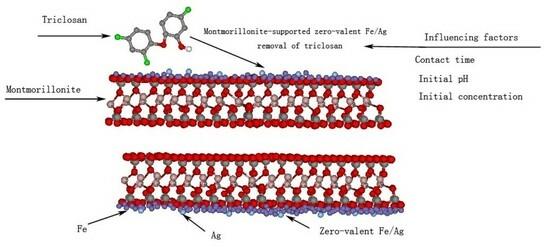
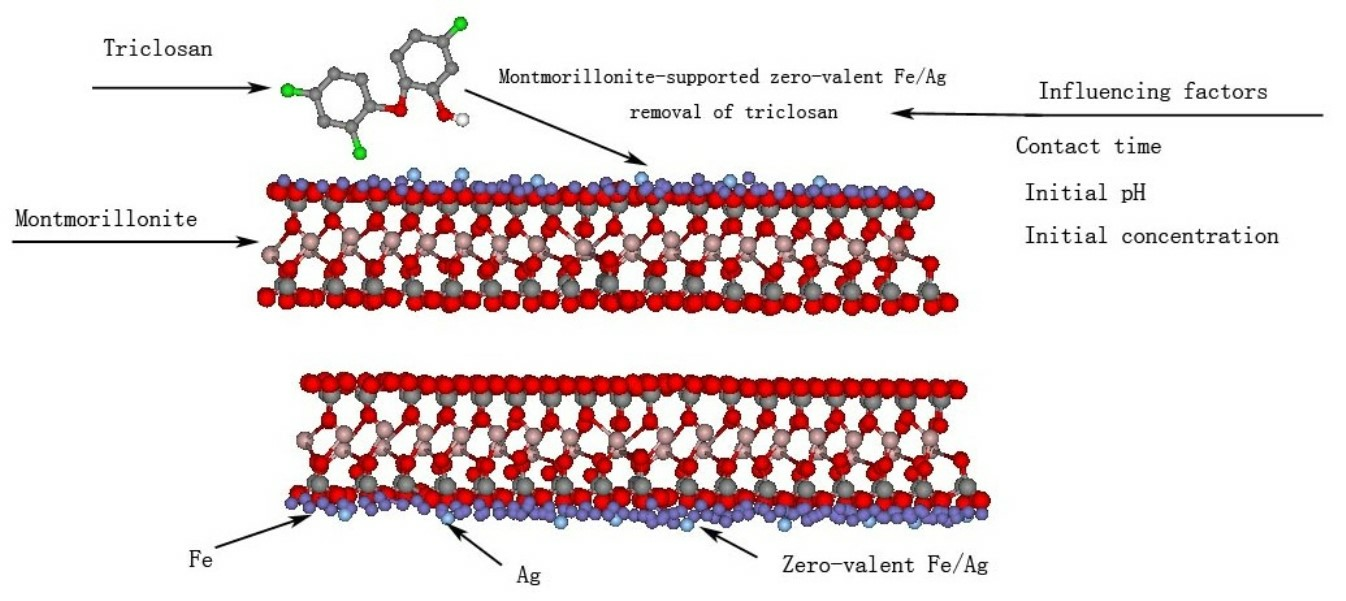
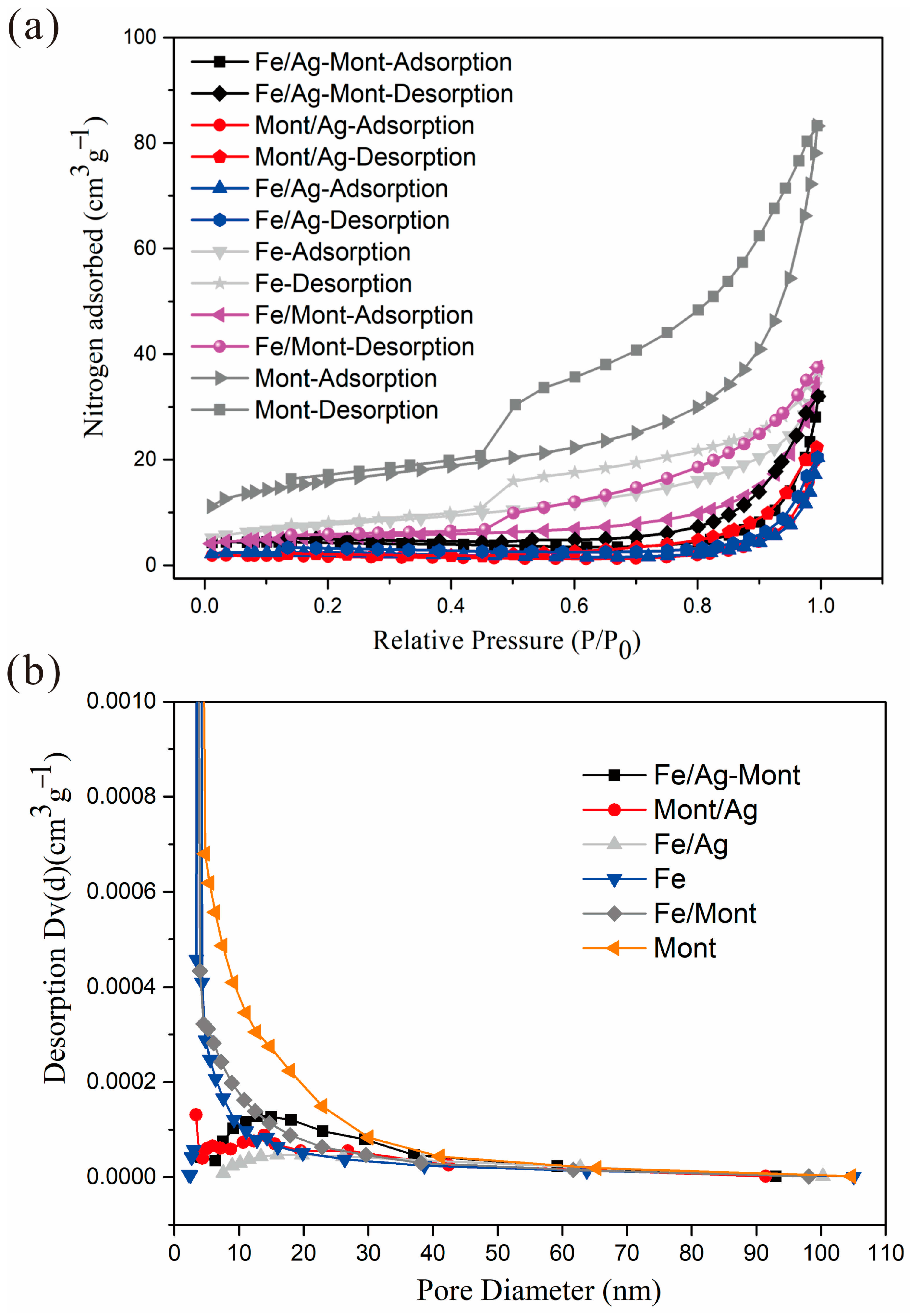
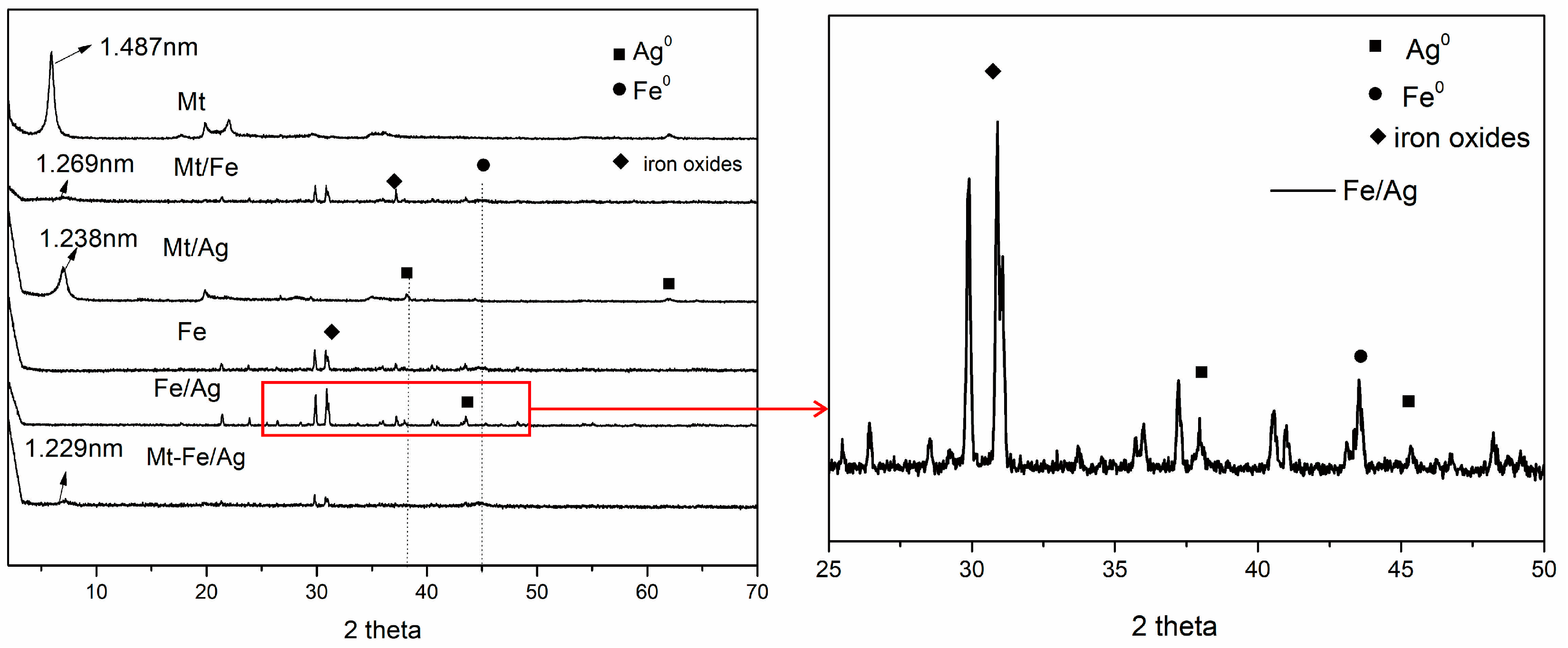
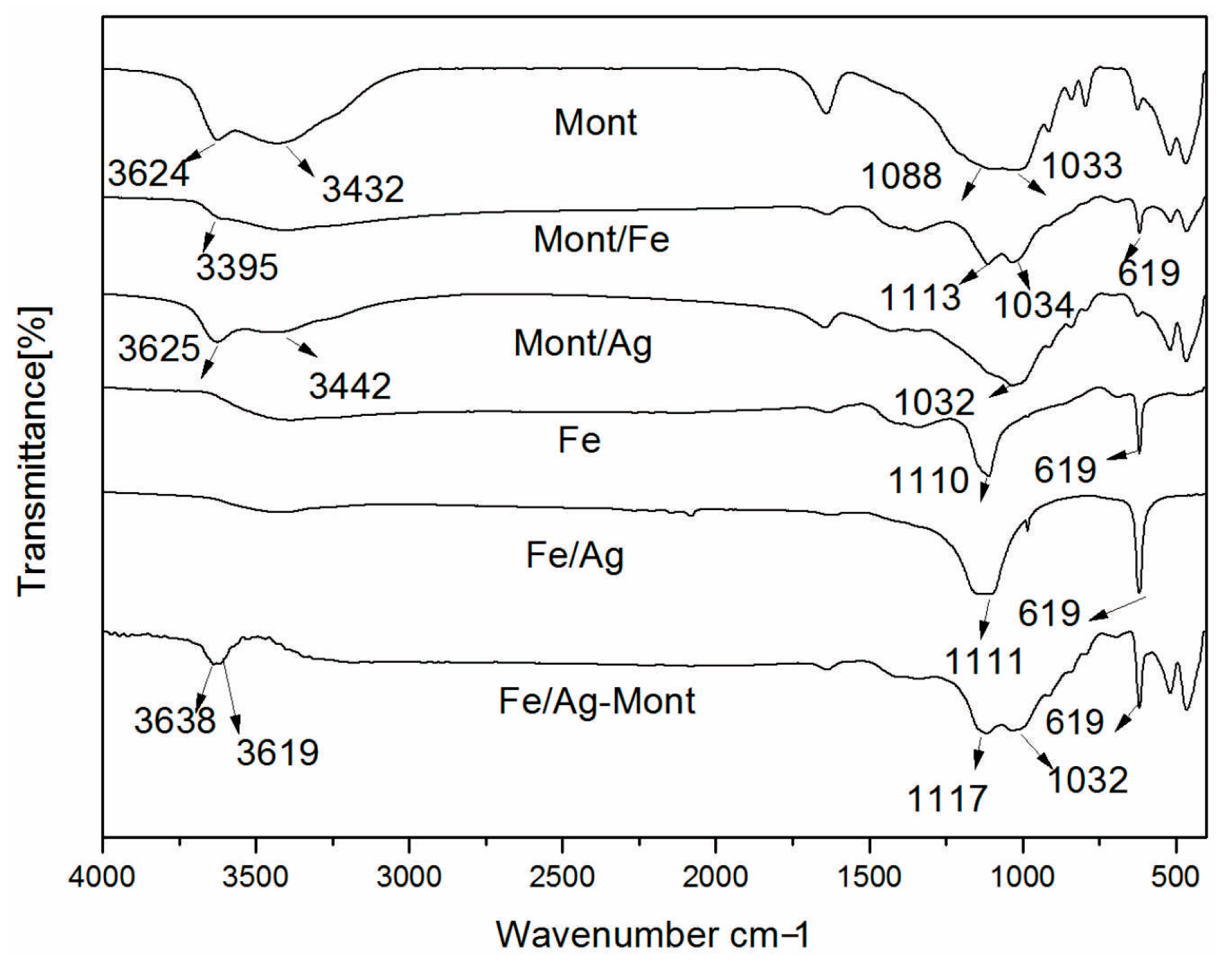
Montmorillonite (Mont) is a natural two-dimensional material with a 2:1 layered silicate crystal structure. It possesses abundant surface groups, cation exchange capacity, and adsorption performance. In addition, it has other advantages such as abundant reserves, environmental friendliness, strong mechanical stability, and a large specific surface area. As such, it shows excellent potential for application in environmental remediation. In the following paper, we focus on the removal of TCS (triclosan) from an aqueous environment by utilizing montmorillonite-supported bimetallic Fe/Ag particles. We use scanning electron microscopy, X-ray diffraction patterns, Fourier-transform infrared spectra, and specific surface area to analyze the structure, morphology, and composition of these nanocomposites. The effects of the pH, different materials, contact time, and different initial concentrations on the degradation efficiency of TCS were studied systematically. Based on the results of our study, montmorillonite-supported bimetallic Fe/Ag nanoparticles (Fe/Ag-Mont) should be categorized as a type of mesoporous material of high uniformity because the pore size of all its catalysts ranges from 10 to 20 nm, and they are well-distributed. The Si-O stretching vibrations of montmorillonite can be changed by adding Fe/Ag. We found that Fe or Ag combined with -O to form a new bond and interacted with Si-O, and the incorporation of Fe/Ag-Mont nanoparticles removed TCS with better reduction rates. By enhancing reduction capacity, the pH was below 4 due to H• species generation by Fe/Ag. H• was the main factor enhancing the redox reaction in reducing TCS. The pH controlled the competition between Fe corrosion and silver formation, which enabled the system to self-regulate. In addition, this study provided a suitable method of efficiently synthesizing clay-supported bimetallic nano-system materials for reduction.
Keywords: structural evolution; bimetallic Fe/Ag minerals; montmorillonite; triclosan; nanoparticles structural evolution; bimetallic Fe/Ag minerals; montmorillonite; triclosan; nanoparticles
Graphical Abstract