Parental Rejection, Overprotection and Adolescent Smartphone Addiction: Mediating Role of Sense of Security and Moderating Role of Forgiveness


Abstract
1. Introduction
2. Literature Review
2.1. The Associations Between Parental Rejection, Overprotection, and Smartphone Addiction
2.2. The Role of Sense of Security in the Relationships Between Parental Rejection, Overprotection, and Adolescent Smartphone Addiction
2.3. The Role of Forgiveness in the Relationships Between Parental Rejection, Overprotection, and Adolescent Smartphone Addiction
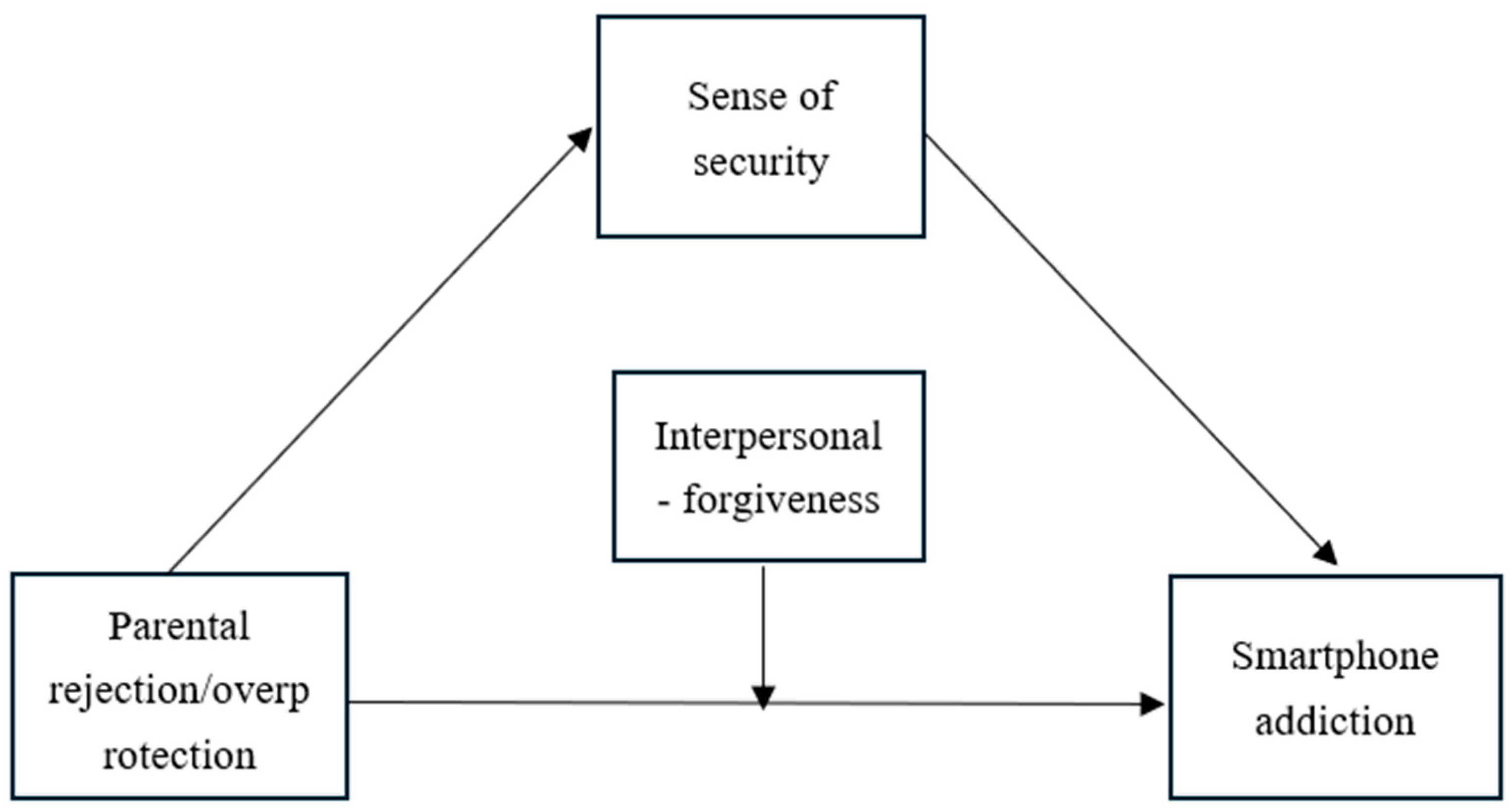
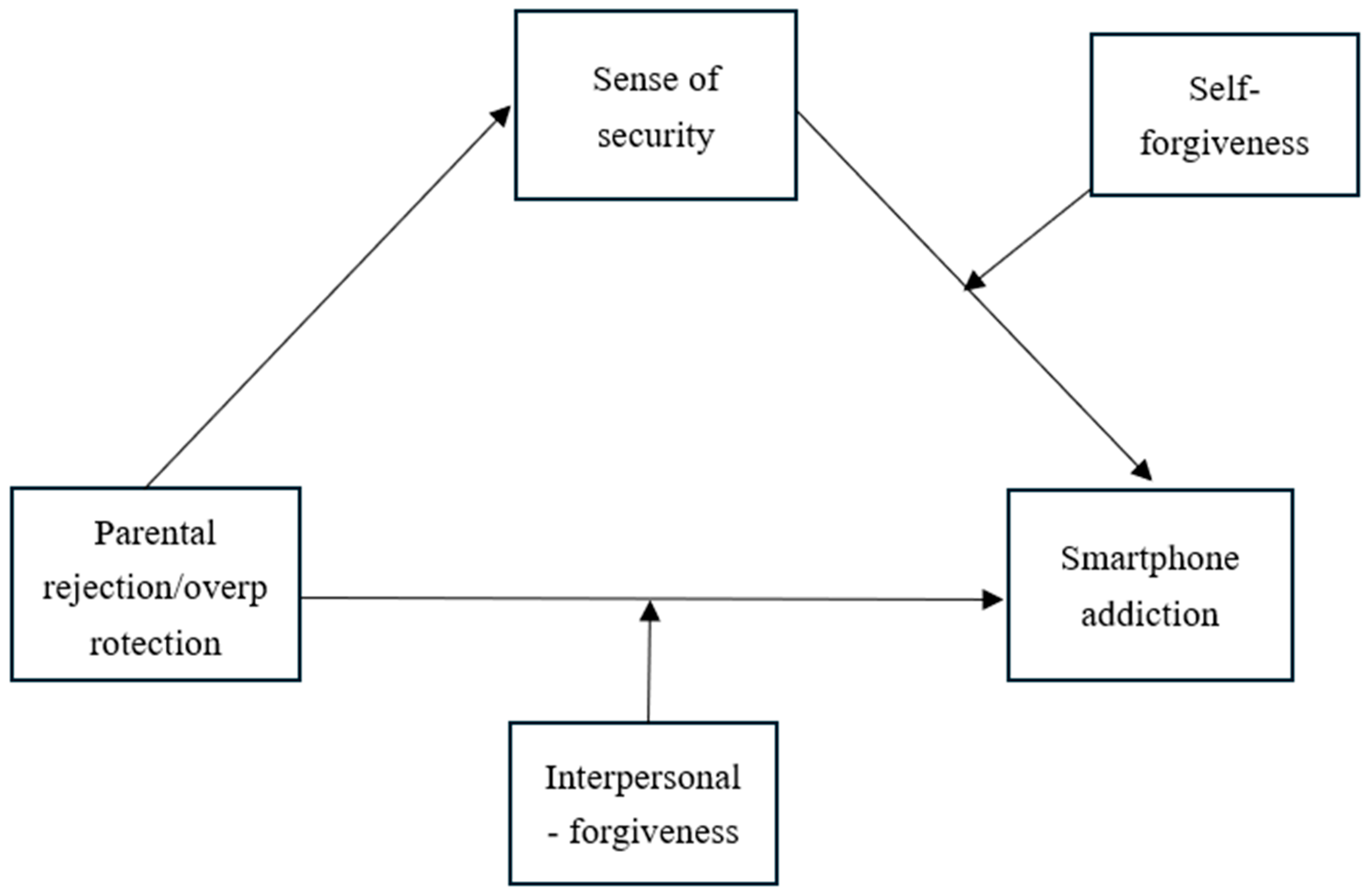
2.4. The Present Study
3. Method
3.1. Participants
3.2. Measurements
3.2.1. Parental Rejection and Overprotection
3.2.2. Sense of Security
3.2.3. Forgiveness
3.2.4. Smartphone Addiction
3.3. Statistical Analysis
4. Results
4.1. Common Method Bias
4.2. Descriptive Statistics and Correlation Analysis
4.3. Moderated Mediation Effect of Parental Rejection on Smartphone Addiction
4.4. Moderated Mediation Effect of Parental Overprotection on Smartphone Addiction
5. Discussion
5.1. The Relationships Between Parental Rejection, Overprotection and Smartphone Addiction
5.2. The Mediating Role of Sense of Security in the Relationships of Parental Rejection, Overprotection and Smartphone Addiction
5.3. The Moderating Role of Forgiveness in the Relationships of Parental Rejection, Overprotection and Smartphone Addiction
5.4. Limitations and Future Directions
6. Conclusions
- (1)
- Parental rejection and overprotection are positively related to adolescent smartphone addiction.
- (2)
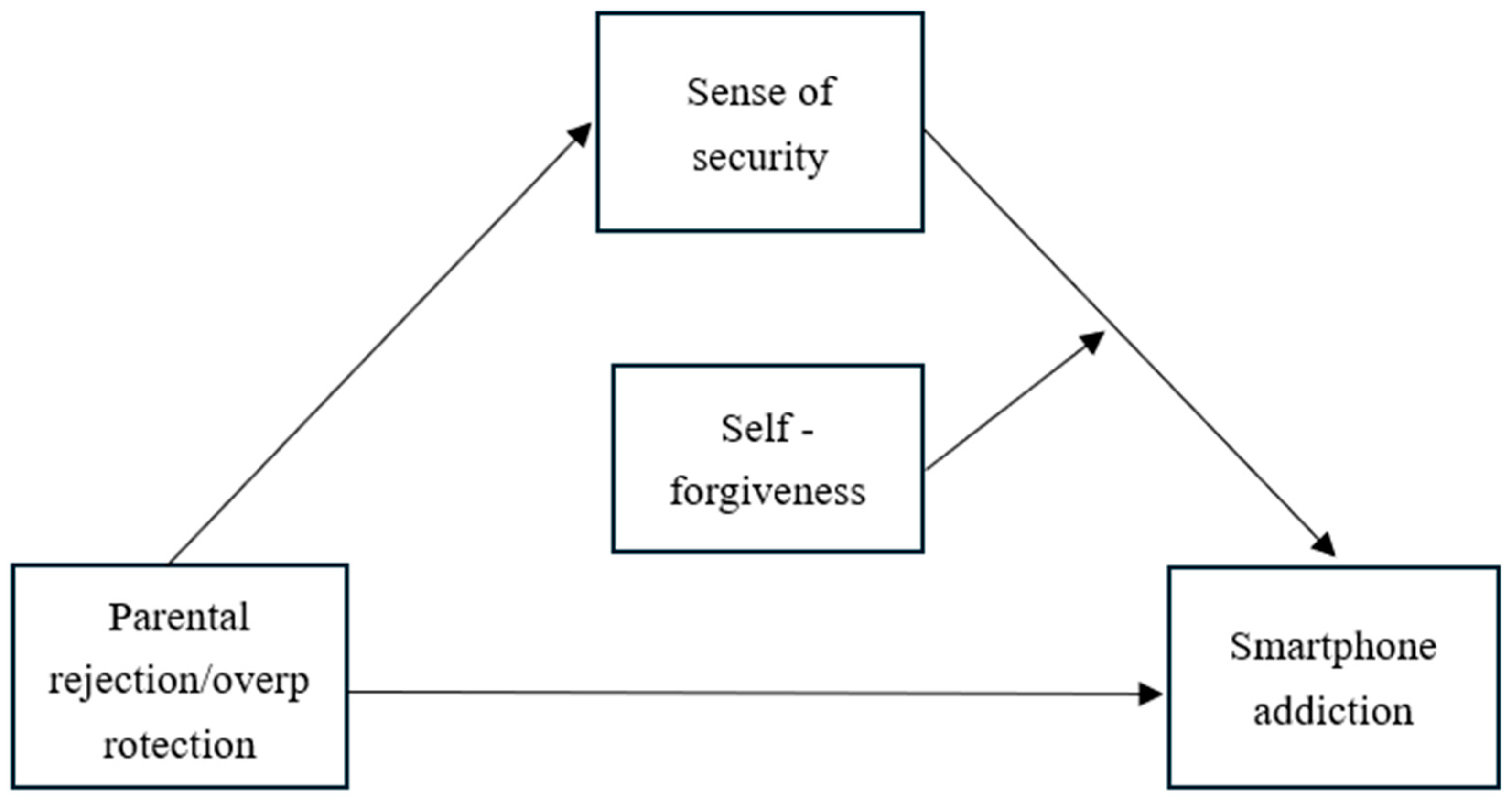
- Sense of security mediates the relationships between parental rejection, overprotection, and adolescent smartphone addiction.
- (3)
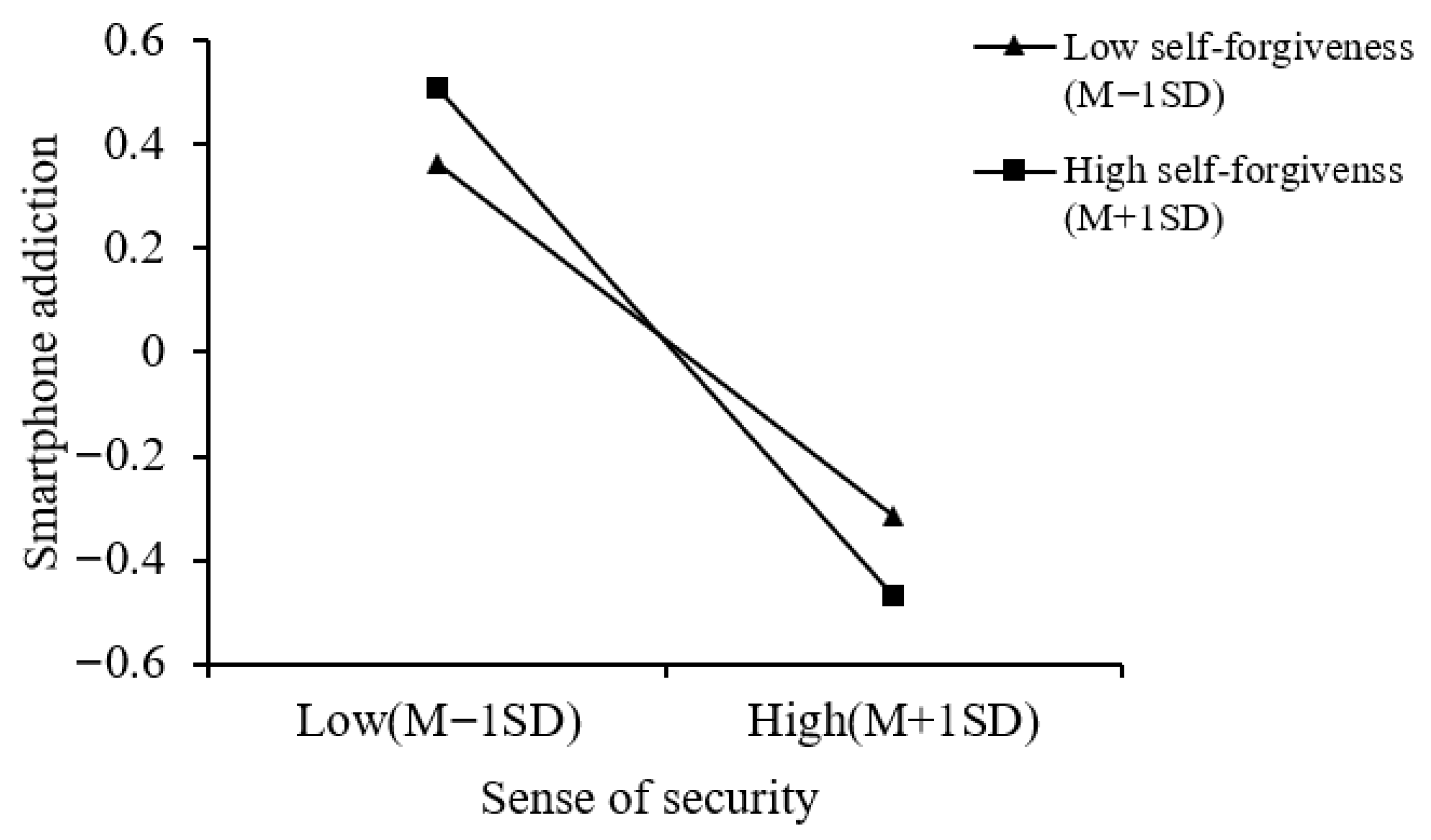
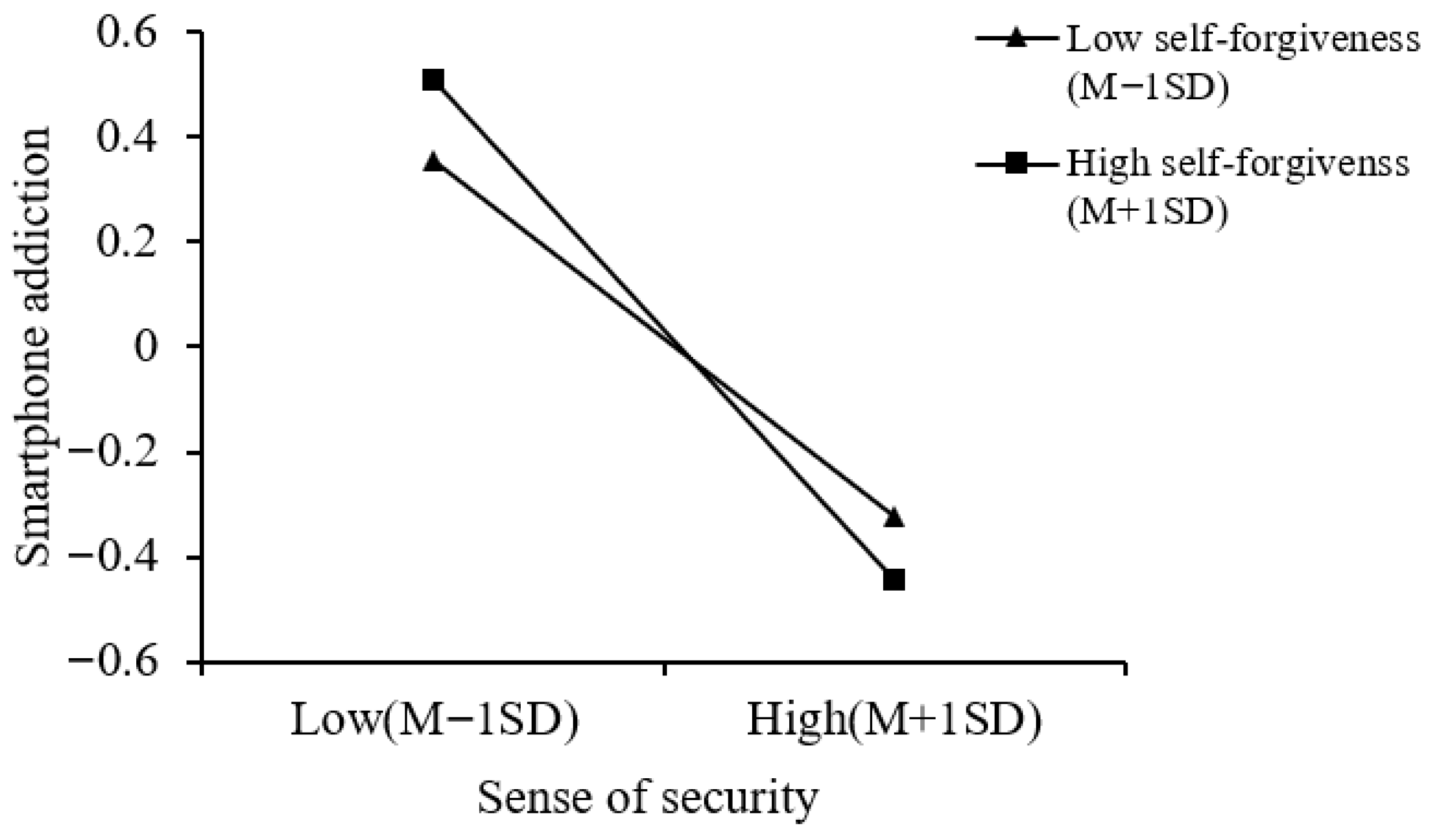
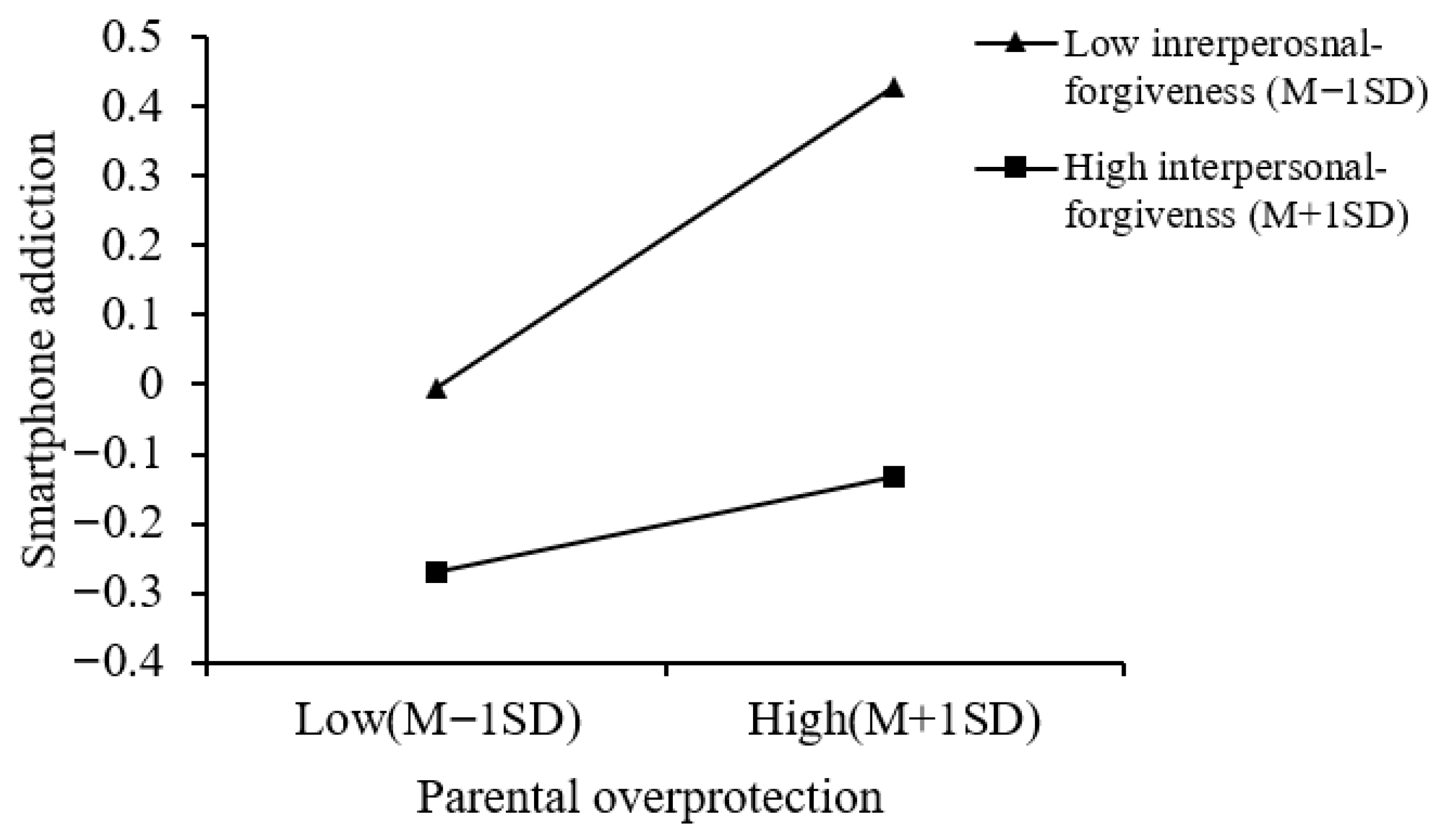
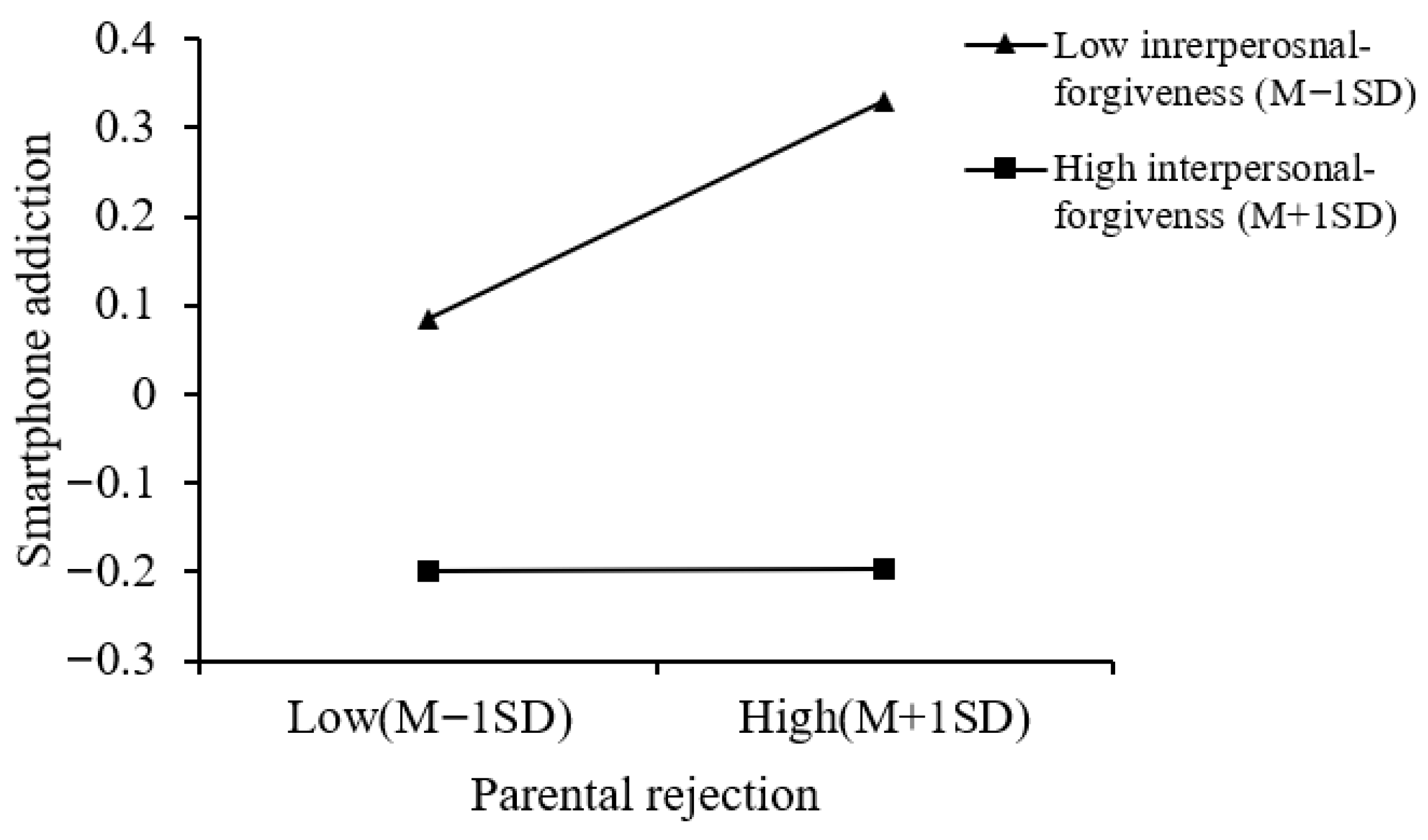
- Interpersonal forgiveness moderates the relationships between parental rejection, overprotection, and adolescent smartphone addiction, and self-forgiveness moderates the relationships between sense of security and smartphone addiction.
Supplementary Materials
Author Contributions
Funding
Institutional Review Board Statement
Informed Consent Statement
Data Availability Statement
Acknowledgments
Conflicts of Interest
References
- Bae, S. M. (2015). The relationships between perceived parenting style, learning motivation, friendship satisfaction, and the addictive use of smartphones with elementary school students of South Korea: Using multivariate latent growth modeling. School Psychology International, 36(5), 513–531. [Google Scholar] [CrossRef] [Scilit]
- Bauer, L., Duffy, J., Fountain, E., Halling, S., Holzer, M., Jones, E., Leifer, M., & Rowe, J. (1992). Exploring self-forgiveness. Journal of Religion and Health, 31(2), 149–160. [Google Scholar] [CrossRef] [Scilit]
- Baumrind, D. (1966). Effects of authoritative parental control on child behavior. Child Development, 37(4), 887–907. [Google Scholar] [CrossRef]
- Bosmans, G., Van Vlierberghe, L., Bakermans-Kranenburg, M. J., Kobak, R., Hermans, D., & van IJzendoorn, M. H. (2022). A learning theory approach to attachment theory: Exploring clinical applications. Clinical Child and Family Psychology Review, 25(3), 591–612. [Google Scholar] [CrossRef] [Scilit] [PubMed]
- Brady, D., Saldanha, M., & Barclay, L. (2023). Conceptualizing forgiveness: A review and path forward. Journal of Organizational Behavior, 44(2), 261–296. [Google Scholar] [CrossRef] [Scilit]
- Chen, Y., Zhu, J., Ye, Y., Huang, L., Yang, J., Chen, L., & Zhang, W. (2021). Parental rejection and adolescent problematic mobile phone use: Mediating and moderating roles of school engagement and impulsivity. Current Psychology, 40, 5166–5174. [Google Scholar] [CrossRef] [Scilit]
- Christou, A. I., & Bacopoulou, F. (2025). Emotion and feeling in parent–child dyads: Neurocognitive and psychophysiological pathways of development. Children, 12(11), 1478. [Google Scholar] [CrossRef] [Scilit]
- Cohen, S., & Wills, T. A. (1985). Stress, social support, and the buffering hypothesis. Psychological Bulletin, 98(2), 310–357. [Google Scholar] [CrossRef] [PubMed]
- Cong, Z., & An, L. (2004). Developing of security questionnaire and its reliability and validity. Chinese Mental Health Journal, 18(2), 97–99. [Google Scholar]
- Deng, L., Fang, X., Wan, J., Zhang, J., & Xia, C. (2012). The relationship of psychological needs and need gratification with internet addiction among college students. Journal of Psychological Science, 35(1), 123–128. [Google Scholar] [CrossRef]
- De Roo, M., Veenstra, R., & Kretschmer, T. (2022). Internalizing and externalizing correlates of parental overprotection as measured by the EMBU: A systematic review and meta-analysis. Social Development, 31(4), 962–983. [Google Scholar] [CrossRef] [Scilit]
- Drake, K. L., & Ginsburg, G. S. (2012). Family factors in the development, treatment, and prevention of childhood anxiety disorders. Clinical Child and Family Psychology Review, 15, 144–162. [Google Scholar] [CrossRef] [Scilit] [PubMed]
- Du, G., & Wang, X. G. (2025). Fighting mobile phone addiction with forgiveness following interpersonal transgressions: A psychological compensation perspective. Behavioral Science, 15(9), 1209. [Google Scholar] [CrossRef] [Scilit]
- Duke, É., & Montag, C. (2017). Smartphone addiction and beyond: Initial insights on an emerging research topic and its relationship to internet addiction. Internet Addiction, 359–372. [Google Scholar] [CrossRef] [Scilit]
- Enright, R. D., Gassin, E. A., & Wu, C. (1992). Forgiveness: A developmental view. Journal of Moral Education, 21, 99–114. [Google Scholar] [CrossRef] [Scilit]
- Fan, X., Fang, X., Huang, Y., Chen, F., & Yu, S. (2018). The influence mechanism of parental care on depression among left-behind rural children in China: A longitudinal study. Acta Psychologica Sinica, 50(9), 1029–1040. [Google Scholar] [CrossRef] [Scilit]
- Flores, P. J. (2006). Conflict and repair in addiction treatment. Journal of Groups in Addiction & Recovery, 1(1), 5–26. [Google Scholar] [CrossRef] [Scilit]
- Freedman, S., & Knupp, A. (2003). The impact of forgiveness on adolescent adjustment to parental divorce. Journal of Divorce & Remarriage, 39(1–2), 135–165. [Google Scholar] [CrossRef] [Scilit]
- Gao, W. B., & Chen, Z. Y. (2006). A study on psychopathology and psychotherapy of internet addiction. Advances in Psychological Science, 14(4), 596–603. [Google Scholar]
- Gomez, R., & McLaren, S. (2006). The association of avoidance coping style, and perceived mother and father support with anxiety/depression among late adolescents: Applicability of resiliency models. Personality and Individual Differences, 40(6), 1165–1176. [Google Scholar] [CrossRef] [Scilit]
- Hayes, A. F. (2017). Introduction to mediation, moderation, and conditional process analysis: A regression-based approach. The Guilford Press. [Google Scholar]
- He, Q., Hu, X., Chen, Y., Li, Y., Zhao, Y., Zhou, Y., & Liu, L. (2024). Depression severity mediates the relationships between parenting styles, peer-victimization and mobile phone dependence in adolescents. Psychology Research and Behavior Management, 2024, 4281–4290. [Google Scholar] [CrossRef] [Scilit]
- Hobfoll, S. E. (2002). Social and psychological resources and adaptation. Review of General Psychology, 6(4), 307–324. [Google Scholar] [CrossRef]
- Jang, M. H., & Ji, E. S. (2012). Gender differences in associations between parental problem drinking and early adolescents’ Internet addiction. Journal for Specialists in Pediatric Nursing, 17(4), 288–300. [Google Scholar] [CrossRef] [Scilit]
- Jiang, J., Lu, Z., Jiang, B., & Xu, Y. (2010). Revision of the short-form Egna Minnen av Barndom’s Uppfostran for Chinese. Psychological Developmental and Education, 26(01), 94–99. [Google Scholar]
- Kang, S., & Jung, J. (2014). Mobile communication for human needs: A comparison of smartphone use between the US and Korea. Computers in Human Behavior, 35(3), 376–387. [Google Scholar] [CrossRef] [Scilit]
- Kardefelt-Winther, D. (2014). A conceptual and methodological critique of internet addiction research: Towards a model of compensatory internet use. Computers in Human Behavior, 31, 351–354. [Google Scholar] [CrossRef] [Scilit]
- Kim, J. C., Ragasajo, L. J. C., Rebekah, K. L., Painter, K. J., Pritchard, J. D., & Wrobleski, A. (2022). The interplay between divine, victim, and self-forgiveness: The relationship between three types of forgiveness and psychological outcomes. Journal of Psychology and Theology, 50(4), 414–427. [Google Scholar] [CrossRef] [Scilit]
- Kim, J. H., & Koh, Y. S. (2018). Smartphone addiction and attachment theory perspectives. Children and Youth Services Review, 91, 298–303. [Google Scholar] [CrossRef] [Scilit]
- Kong, F., Wei, W., Xia, Y., Xie, D., Xue, K., Wang, W., & Potenza, M. N. (2025). Mediating roles of psychological entitlement and presence of meaning in the associations between parental measures (rejection and overprotection) and adolescent internet addiction. Journal of Affective Disorders, 382, 507–517. [Google Scholar] [CrossRef] [Scilit]
- Konok, V., Gigler, D., Bereczky, B. M., & Miklósi, Á. (2016). Humans’ attachment to their mobile phones and its relationship with interpersonal attachment style. Computers in Human Behavior, 61, 537–547. [Google Scholar] [CrossRef] [Scilit]
- Lareki, A., Martínez de Morentin, J. I., Altuna, J., & Amenabar, N. (2017). Teenagers’ perception of risk behaviors regarding digital technologies. Computers in Human Behavior, 68, 395–402. [Google Scholar] [CrossRef] [Scilit]
- Lee, E. J., & Kim, H. S. (2018). Gender differences in smartphone addiction behaviors associated with parent–child bonding, parent–child communication, and parental mediation among Korean elementary school students. Journal of Addictions Nursing, 29(4), 244–254. [Google Scholar] [CrossRef] [Scilit]
- Leung, L. (2008). Linking psychological attributes to addiction and improper use of the mobile phone among adolescents in Hong Kong. Journal of Children and Media, 2(2), 93–113. [Google Scholar] [CrossRef] [Scilit]
- Li, D., Zhou, Y., Zhao, L., Wang, Y., & Sun, W. (2016). Cumulative ecological risk and adolescent internet addiction: The mediating role of basic psychological need satisfaction and positive outcome expectancy. Acta Psychologica Sinica, 48(12), 1519–1537. [Google Scholar] [CrossRef] [Scilit]
- Li, X., & Lu, N. (2014). The mediating role of alexithymia in the relationship between Internet addiction and adult attachment among college students in Shenzhen. Chinese Journal of School Health, 35(5), 760–762. [Google Scholar] [CrossRef]
- Ma, R., Meng, H., Yan, L., Cao, H., Zhou, N., & Zhang, J. (2021). Cellphone-specific parenting practices and Chinese adolescents’ cellphone use and addiction: A national survey. Studies of Psychology and Behavior, 19(2), 265–272. [Google Scholar]
- Maltby, J., Macaskill, A., & Day, L. (2001). Failure to forgive self and others: A replication and extension of the relationship between forgiveness, personality, social desirability and general health. Personality and Individual Differences, 30, 881–885. [Google Scholar] [CrossRef] [Scilit]
- Ojha, H., & Singh, P. (1988). Child rearing attitudes as related to insecurity and dependence proneness. Psychological Studies, 33, 75–79. [Google Scholar]
- Olson, J. A., Sandra, D. A., Colucci, É. S., Al Bikaii, A., Chmoulevitch, D., Nahas, J., Raz, A., & Veissière, S. P. (2022). Smartphone addiction is increasing across the world: A meta-analysis of 24 countries. Computers in Human Behavior, 129, 107–138. [Google Scholar] [CrossRef] [Scilit]
- Peng, Z., Fu, N., & Zhang, X. (2020). The relationship between Interparental conflict and middle school students’ coping style: The chain mediating effect of parental rearing style and emotional security. Psychological Development and Education, 36(6), 668–676. [Google Scholar] [CrossRef]
- Podsakoff, P. M., MacKenzie, S. B., Lee, J. Y., & Podsakoff, N. P. (2003). Common method biases in behavioral research: A critical review of the literature and recommended remedies. Journal of Applied Psychology, 88(5), 879–903. [Google Scholar] [CrossRef] [Scilit]
- Rosenstein, D. S., & Horowitz, H. A. (1996). Adolescent attachment and psychopathology. Journal of Consulting and Clinical Psychology, 64(2), 244–253. [Google Scholar] [CrossRef]
- Sohn, S. Y., Krasnoff, L., Rees, P., Kalk, N. J., & Carter, B. (2021). The association between smartphone addiction and sleep: A UK cross-sectional study of young adults. Frontiers in Psychiatry, 12, 629407. [Google Scholar] [CrossRef] [Scilit]
- Spiers, A. (2004). Forgiveness as a secondary prevention strategy for victims of interpersonal crime. Australasian Psychiatry, 12(3), 261–263. [Google Scholar] [CrossRef] [Scilit] [PubMed]
- Stoltz, S., van Londen, M., Deković, M., Prinzie, P., de Castro, B. O., & Lochman, J. E. (2012). Simultaneously testing parenting and social cognitions in children at-risk for aggressive behavior problems: Sex differences and ethnic similarities. Journal of Child and Family Studies, 22(7), 922–931. [Google Scholar] [CrossRef] [Scilit]
- Stronach, E. P., Toth, S. L., Rogosch, F., & Cicchetti, D. (2013). Preventive interventions and sustained attachment security in maltreated children. Development and Psychopathology, 25, 919–930. [Google Scholar] [CrossRef] [Scilit] [PubMed]
- Sun, Y., Wang, L., Jiang, J., & Wang, R. (2018). Your love makes me feel more secure: Boosting attachment security decreases materialistic values. International Journal of Psychology, 55(1), 33–41. [Google Scholar] [CrossRef] [Scilit]
- Vera, J., Granero, R., & Ezpeleta, L. (2011). Father’s and mother’s perceptions of parenting styles as mediators of the effects of parental psychopathology on antisocial behavior in outpatient children and adolescents. Child Psychiatry & Human Development, 43(3), 376–392. [Google Scholar] [CrossRef] [Scilit]
- Wang, M., & Qi, W. (2017). Harsh parenting and problematic Internet use in Chinese adolescents: Child emotional dysregulation as mediator and child forgiveness as moderator. Computers in Human Behavior, 77, 211–219. [Google Scholar] [CrossRef] [Scilit]
- Wang, W., Ma, X., & Lei, L. (2012). Development and application of the adolescent forgiveness tendency questionnaire. Chinese Journal of Clinical Psychology, 20(1), 18–20. [Google Scholar] [CrossRef]
- Wei, D., Chan, L. S., Du, N., Hu, X., & Huang, Y. T. (2024). Gratification and its associations with problematic internet use: A systematic review and meta-analysis using Use and Gratification theory. Addictive Behaviors, 155, 108044. [Google Scholar] [CrossRef] [Scilit]
- Wu, X., Luo, J., Bai, J., Hou, M., & Li, X. (2019). Effect of security on mobile addiction: Mediating role of actual social avoidance. Psychological Development and Education, 35(5), 589–596. [Google Scholar] [CrossRef]
- Zhang, Y., Ding, Y., Huang, H., Peng, Q., Wan, X., Lu, G., & Chen, C. (2022). Relationship between insecure attachment and mobile phone addiction: A meta-analysis. Addictive Behaviors, 131, 107317. [Google Scholar] [CrossRef] [Scilit] [PubMed]
- Zhao, W. (2016). The relationship between smartphone dependence and online interpersonal trust among young students: The mediating role of sense of security. Journal of Beifang University of Nationalities, (6), 102–105. [Google Scholar]
- Zimmerman, M. A., Stoddard, S. A., EisPman, A. B., Caldwell, C. H., Aiyer, S. M., & Miller, A. (2013). Adolescent resilience: Promotive factors that inform prevention. Child Development Perspectives, 7(4), 215–220. [Google Scholar] [CrossRef] [Scilit] [PubMed]
- Zou, Y., Xia, N., Zou, Y., Chen, Z., & Wen, Y. (2019). Smartphone addiction maybe associated with adolescent hypertension: A cross-sectional study among junior school students in China. BMC Pediatrics, 19(1), 310. [Google Scholar] [CrossRef] [Scilit] [PubMed]




| M (SD) | 1 | 2 | 3 | 4 | 5 | 6 | 7 | 8 | 9 | |
|---|---|---|---|---|---|---|---|---|---|---|
| 1 Sex | - | - | ||||||||
| 2 Age | 12.15 (1.31) | −0.10 ** | - | |||||||
| 3 Parental rejection | 16.71 (5.62) | −0.04 | 0.06 | - | ||||||
| 4 Parental overprotection | 33.10 (6.84) | −0.11 ** | −0.07 | 0.40 *** | - | |||||
| 5 Sense of security | 53.65 (12.30) | −0.12 ** | −0.09 * | −0.36 *** | −0.31 *** | - | ||||
| 6 Smartphone addiction | 43.47 (14.91) | −0.07 | 0.21 *** | 0.28 *** | 0.27 *** | −0.46 *** | - | |||
| 7 Forgiveness | 9.94 (15.01) | −0.05 | −0.04 | −0.26 *** | −0.19 *** | 0.41 *** | −0.34 *** | - | ||
| 8 Self-forgiveness | 1.14 (7.54) | −0.11 ** | 0.01 | −0.16 ** | −0.20 ** | 0.40 ** | −0.18 ** | 0.68 ** | - | |
| 9 Interpersonal forgiveness | 8.80 (11.28) | 0.01 | 0.06 | −0.25 ** | −0.12 ** | 0.28 ** | −0.33 ** | 0.87 ** | 0.24 ** | - |
| Fitness Indexes | Coefficients Significance | |||||||
|---|---|---|---|---|---|---|---|---|
| R | R2 | F | Β | T | LLCI | ULCI | ||
| Sense of security | Parental rejection | 0.40 | 0.16 | 41.40 *** | −0.37 | −10.27 *** | −0.434 | −0.295 |
| Sex | −0.28 | −3.88 *** | −0.416 | −0.136 | ||||
| Age | −0.07 | −2.29 * | −0.134 | −0.010 | ||||
| Smartphone addiction | Parental rejection | 0.55 | 0.30 | 28.88 *** | 0.06 | 1.55 | −0.016 | 0.136 |
| Sense of security | −0.38 | −9.94 *** | −0.460 | −0.308 | ||||
| Interpersonal forgiveness (IF) | −0.20 | −5.49 *** | −0.265 | −0.125 | ||||
| Self-forgiveness (SF) | 0.03 | 0.80 | −0.042 | 0.099 | ||||
| Parental rejection × IF | −0.06 | −1.67 | −0.122 | 0.010 | ||||
| Parental rejection × SF | −0.03 | −0.9 | −0.101 | 0.036 | ||||
| Sense of security × IF | −0.04 | −1.15 | −0.110 | 0.029 | ||||
| Sense of security × SF | −0.05 | −1.60 | −0.115 | 0.012 | ||||
| Sex | −0.18 | −2.78 ** | −0.314 | −0.054 | ||||
| Age | 0.14 | 4.65 *** | 0.078 | 0.192 | ||||
| Fitness Indexes | Coefficients Significance | |||||||
|---|---|---|---|---|---|---|---|---|
| R | R2 | F | β | t | LLCI | ULCI | ||
| Sense of security | Parental overprotection | 0.37 | 0.14 | 35.30 *** | −0.34 | −9.36 *** | −0.409 | −0.267 |
| Sex | −0.33 | −4.54 *** | −0.471 | −0.187 | ||||
| Age | −0.12 | −3.62 ** | −0.179 | −0.053 | ||||
| Smartphone addiction | Parental overprotection | 0.56 | 0.31 | 30.44 *** | 0.15 | 4.31 *** | 0.081 | 0.218 |
| Sense of security | −0.36 | −9.52 *** | −0.433 | −0.285 | ||||
| Interpersonal forgiveness (IF) | −0.21 | −5.86 *** | −0.273 | −0.136 | ||||
| Self-forgiveness (SF) | 0.03 | 0.94 | −0.037 | 0.105 | ||||
| Parental overprotection × IF | −0.07 | −1.97 * | −0.139 | 0.000 | ||||
| Parental overprotection × SF | −0.01 | −0.14 | −0.074 | 0.064 | ||||
| Sense of security × IF | −0.04 | −1.04 | −0.102 | 0.032 | ||||
| Sense of security × SF | −0.05 | −1.50 | −0.113 | 0.015 | ||||
| Sex | −0.15 | −2.25 * | −0.280 | −0.019 | ||||
| Age | 0.15 | 5.08 *** | 0.091 | 0.205 | ||||
Disclaimer/Publisher’s Note: The statements, opinions and data contained in all publications are solely those of the individual author(s) and contributor(s) and not of MDPI and/or the editor(s). MDPI and/or the editor(s) disclaim responsibility for any injury to people or property resulting from any ideas, methods, instructions or products referred to in the content. |
© 2026 by the authors. Licensee MDPI, Basel, Switzerland. This article is an open access article distributed under the terms and conditions of the Creative Commons Attribution (CC BY) license.
Share and Cite
Wang, W.; Xue, K.; Zhou, L.; Kong, F. Parental Rejection, Overprotection and Adolescent Smartphone Addiction: Mediating Role of Sense of Security and Moderating Role of Forgiveness. Behav. Sci. 2026, 16, 796. https://doi.org/10.3390/bs16050796
Wang W, Xue K, Zhou L, Kong F. Parental Rejection, Overprotection and Adolescent Smartphone Addiction: Mediating Role of Sense of Security and Moderating Role of Forgiveness. Behavioral Sciences. 2026; 16(5):796. https://doi.org/10.3390/bs16050796
Chicago/Turabian StyleWang, Wuyu, Kairu Xue, Lu Zhou, and Fanchang Kong. 2026. "Parental Rejection, Overprotection and Adolescent Smartphone Addiction: Mediating Role of Sense of Security and Moderating Role of Forgiveness" Behavioral Sciences 16, no. 5: 796. https://doi.org/10.3390/bs16050796
APA StyleWang, W., Xue, K., Zhou, L., & Kong, F. (2026). Parental Rejection, Overprotection and Adolescent Smartphone Addiction: Mediating Role of Sense of Security and Moderating Role of Forgiveness. Behavioral Sciences, 16(5), 796. https://doi.org/10.3390/bs16050796