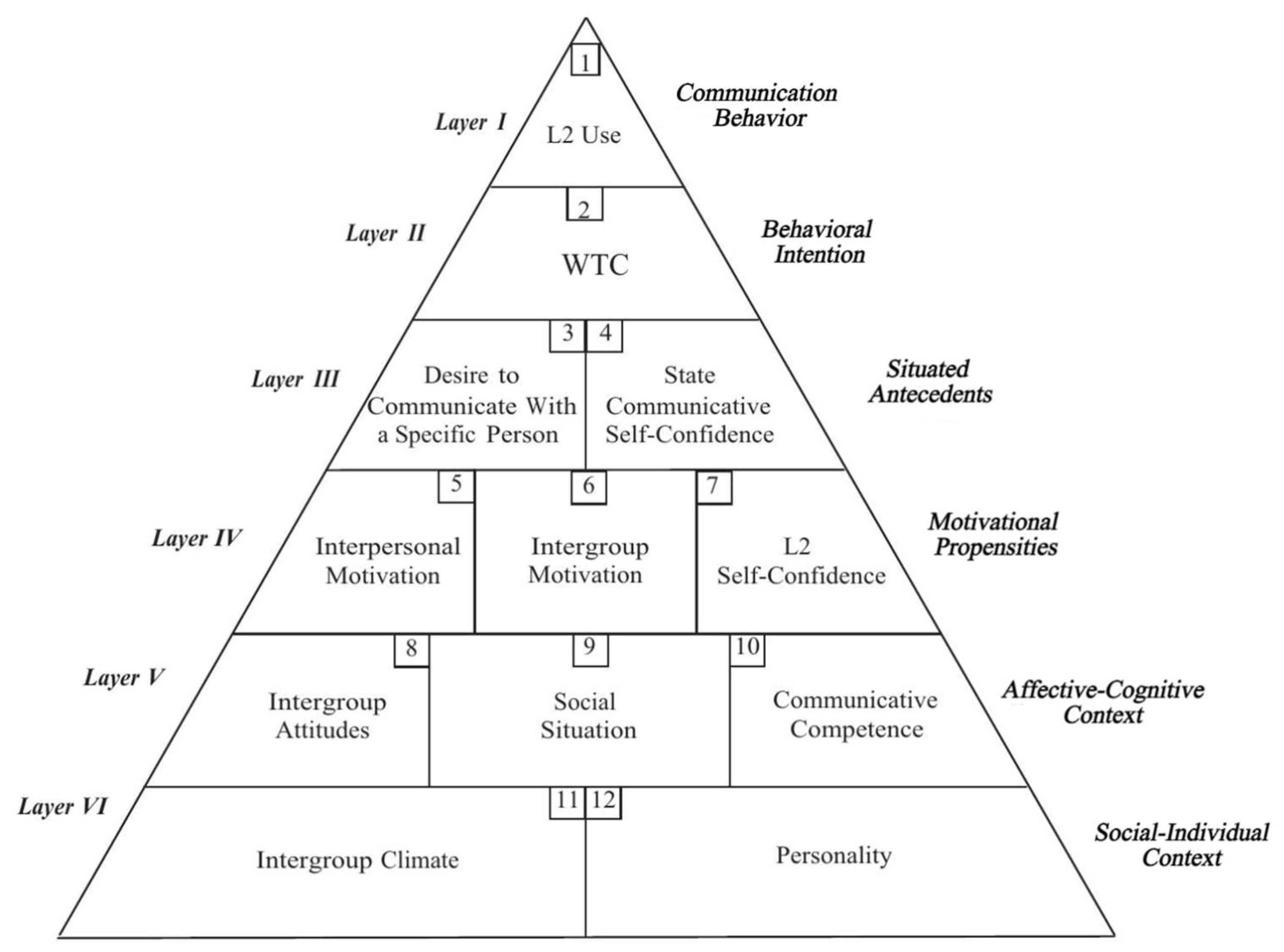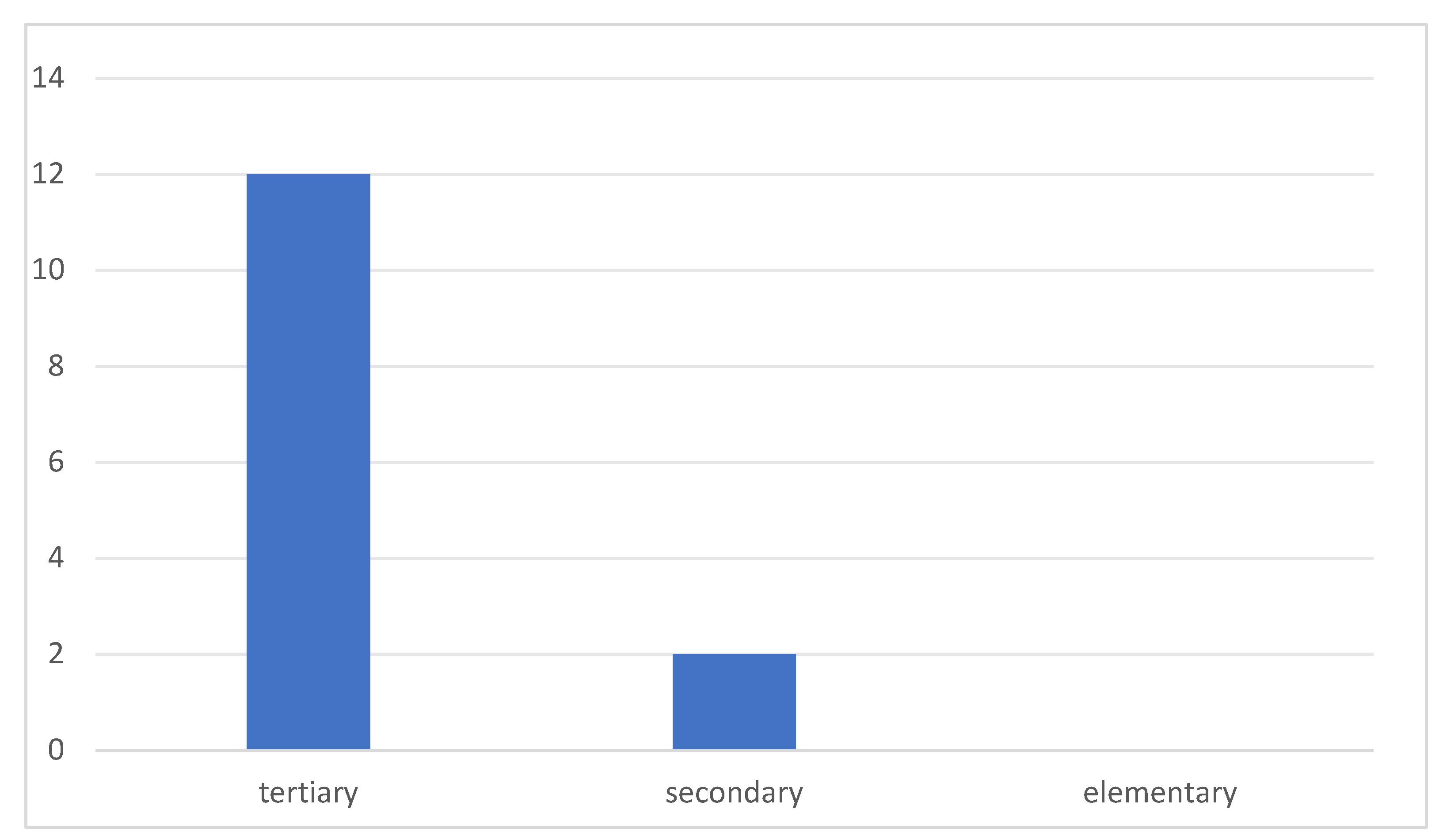
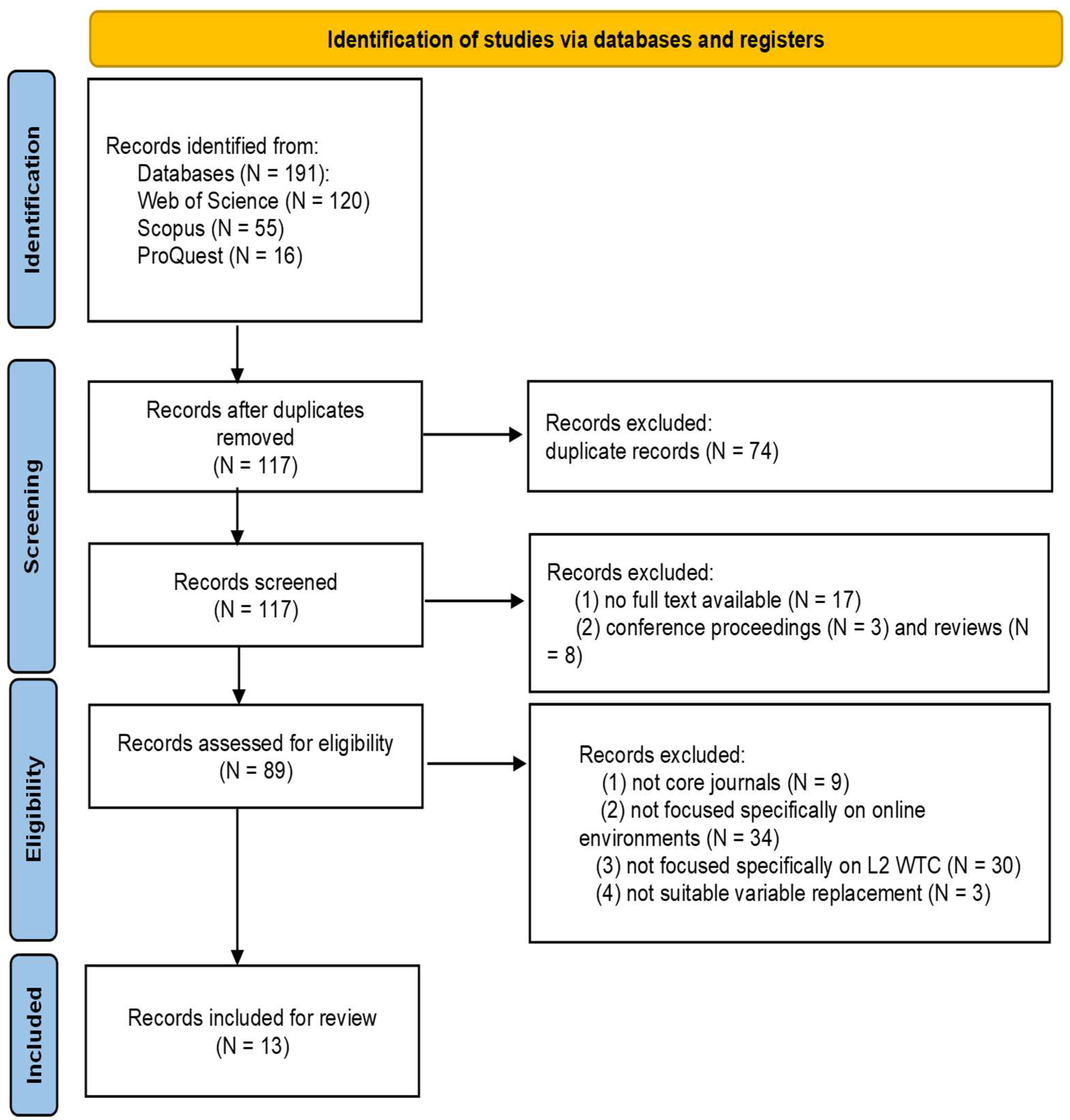
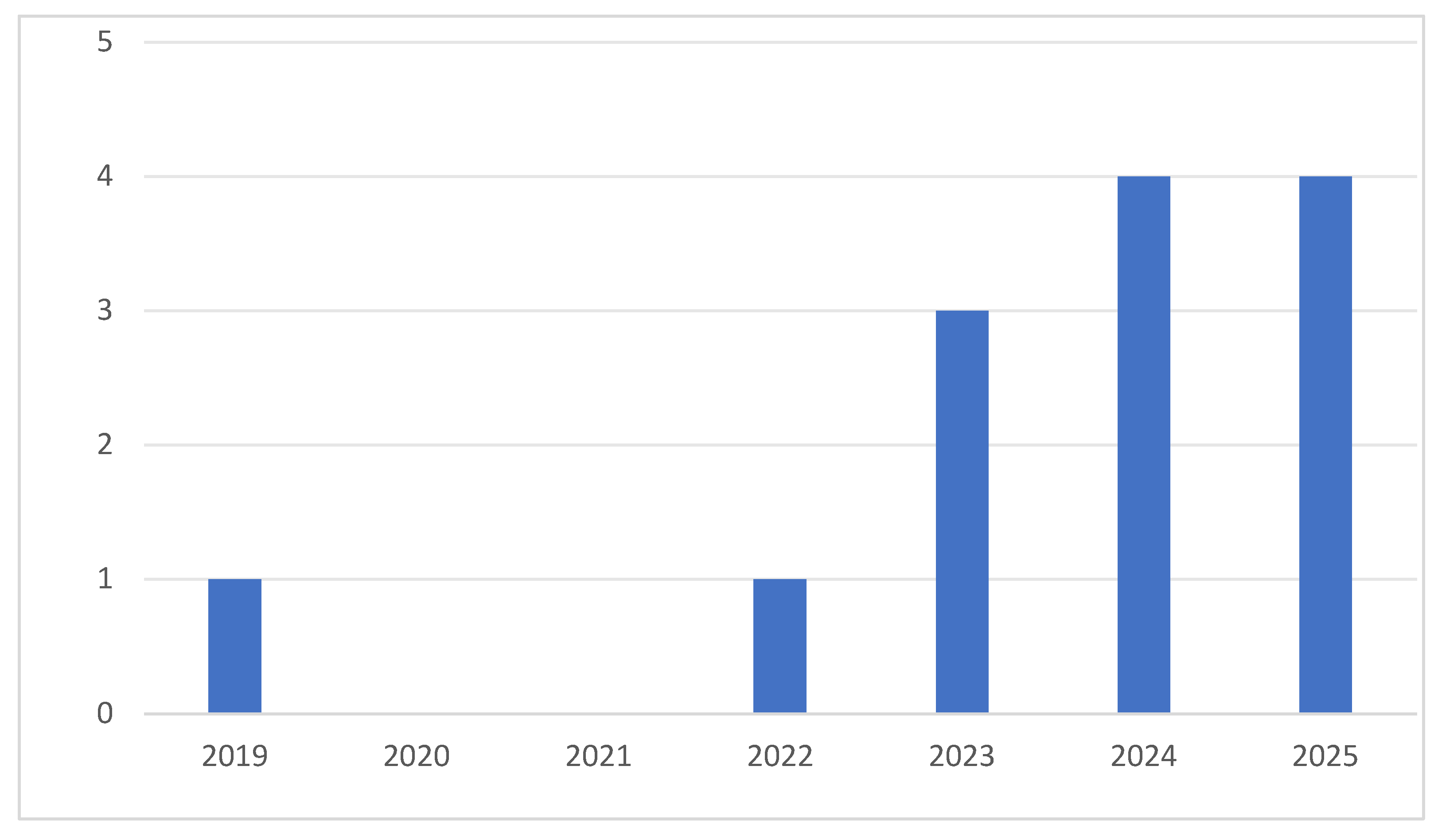
L2 Willingness to Communicate in the Context of Online Learning Environments: A Systematic Review

Abstract
1. Introduction
2. Methods
2.1. Search Strategy
2.2. Inclusion and Exclusion Criteria
2.3. Screening Process
2.4. Analysis and Coding Process
3. Results
3.1. Preliminary Analyses
3.2. Summary of 13 Studies
3.3. Theories, Participants, Tools, Data Analysis, and Results of 13 Studies
4. Discussion
4.1. Implications
4.2. Limitations
5. Conclusions
Author Contributions
Funding
Institutional Review Board Statement
Informed Consent Statement
Data Availability Statement
Conflicts of Interest
Appendix A

| No. | Sources | Theories | Participants | Tools | Data Analysis | Results |
|---|---|---|---|---|---|---|
| 1 | Perceived teachers’ enthusiasm and willingness to communicate in the online class: The mediating role of learning enjoyment and group interaction for Chinese as a second language | The pyramid model of WTC | 473 Chinese major university students from Vietnam and Thailand (males = 119; females = 354). | Scale of WTC in the online Chinese class from previous studies (Khajavy et al., 2018; McCroskey, 1992); Scale of perceived group interaction (Brawley et al., 1987; Den Brok et al., 2006); Scale of learning enjoyment (C. Li et al., 2018); Scale of perceived teachers’ enthusiasm (Deci & Ryan, 1985; Kunter et al., 2008). | SEM; CFA multiple group analysis. | Learning enjoyment and perceived group interaction fully mediate the relationship between perceived teachers’ enthusiasm and WTC, and perceived group interaction shows a stronger mediating effect. Gender, weekly self-online learning time, and learning achievement significantly moderate the relationship between perceived teachers’ enthusiasm, learning enjoyment, perceived group interaction, and WTC. |
| 2 | Nothing ventured, nothing gained: The impact of enjoyment and boredom on willingness to communicate in online foreign language classrooms | MacIntyre et al.’s (1998) model of WTC; control–value theory of achievement; self-determination theory (SDT) | 469 university students with 61% female participants; upper-intermediate proficiency in English (n = 248), followed by intermediate (n = 207), expert (n = 12), and elementary proficiency (n = 2); 20 students took the follow-up semi-structured interview. | L2 WTC scale (Peng & Woodrow, 2010); boredom in practical English language classes (Pawlak et al., 2020); foreign language enjoyment scale (Dewaele & MacIntyre, 2014). | Multiple linear regression; dominance analysis (examines which predictor variable is relatively most important; mediation analysis. | FLB had a considerably stronger effect on L2 WTC. The strong quantitative effect of FLB was to some extent mitigated by FLE but FLB seems to be severely detrimental to the willingness to communicate of online L2 learners. |
| 3 | The Impact of EFL Learners’ Negative Emotional Orientations on (Un)Willingness to Communicate in In-person and Online L2 Learning Contexts | MacIntyre et al.’s (1998) model of WTC; the control–value theory of achievement; the self-determination theory (SDT); the individuals’ psychological need for relatedness, competence, and autonomy | 290 university students majoring English language teaching at various universities (males = 102; females = 188). | L2 WTC scale (Lee & Hsieh, 2019); L2 boredom scale (C. Li et al., 2021); L2 anxiety scale (Botes et al., 2022); L2 demotivation scale (Kikuchi, 2015). | SEM; CFA mediation analysis. | EFL learners’ levels of anxiety and demotivation can directly influence in-person and online communication willingness, with L2 demotivation being the strongest negative predictor of face-to-face L2WTC. L2 anxiety was identified as the strongest negative predictor of online L2WTC. |
| 4 | Affective variables and willingness to communicate of EFL learners in in-class, out-of-class, and digital contexts | The pyramid model of WTC | 261 EFL undergraduate students (males = 84; females = 177). | L2 WTC scale (Lee & Lee, 2020; Peng, 2013); L2 self-confidence scale (Pyun et al., 2014); L2 anxiety scale (Horwitz et al., 1986; Pyun et al., 2014); L2 motivation scale (Gardner, 1985; Gardner et al., 1997; Pyun et al., 2014); Grit scale (A. L. Duckworth & Quinn, 2009). | EFA. Pearson’s Correlation. Three hierarchical (blocked) multiple regression analyses. | Students with higher levels of grit and L2 confidence had higher L2 WTC in all three communicative settings. Lack of L2 anxiety was a significant predictor of students’ L2 WTC in non-digital environments (in-class and out-of-class contexts), but not in the digital setting. |
| 5 | Modeling the Contribution of Grit, Enjoyment, and Boredom to Predict English as a Foreign Language Students’ Willingness to Communicate in a Blended Learning Environment | The broaden-and-build theory; Positive Psychology theory; the control–value theory | 345 EFL students at several campuses of a public university in Saudi Arabia. (females = 252; males = 93) All grouped at the B1 level. | L2 WTC scale (Y. Wang et al., 2021; Lee & Drajati, 2019a); Grit scale (Teimouri et al., 2022); foreign language enjoyment scale (Botes et al., 2021); foreign language learning boredom scale (Alanazi & Bensalem, 2024; Schwartze et al., 2020). | SEM and CFA via AMOS 26.0; statistical analyses via SPSS 27.0; Pearson correlation analysis. | FLB had the largest relationship to students’ L2 WTC followed by FLE and grit, respectively. |
| 6 | Dynamicity of EFL learners’ willingness to communicate in an online class | The Complex Dynamic Systems Theory; MacIntyre et al.’s (1998) model; EFL-based L2 WTC models; the theory of L2 emotional contagion | 7 Chinese EFL students. | Participants self-rated their WTC levels while watching a video recording of L2 performance. | The idiodynamic method. | EFL learners’ levels of L2 WTC are highly dynamic as a result of the combined influences of various trait-like (e.g., openness to a new online learning experience) and state-like factors (e.g., technical issues) factors during their participation in an online class. |
| 7 | Informal digital learning of English and EFL learners’ willingness to communicate: investigating the mediating role of L2 grit | The theories of digital language learning, affective dimensions, and informal language learning | 313 Iran EFL learners | WTC scale (MacIntyre et al., 2001); L2 Grit Scale (Teimouri et al., 2022); Digital Informal Learning Scale (MacIntyre et al., 2001). | SEM with AMOS 26.0 software; CFA; | The correlations between L2 Grit, IDLE, and L2 WTC were significant. The mediating effect of L2 grit on the relationship between IDLE and L2 WTC was statistically significant. |
| 8 | Foreign Language Enjoyment as a mediator between Informal Digital Learning of English and willingness to communicate | The broaden-and-build theory; the Positive Psychology theory; the pyramid model of L2 WTC | 308 EFL Hong Kong secondary students ages 12–18 (females = 148; males = 160). | L2 WTC scale (Lee, 2022b); IDLE scale (Lee, 2022a); FLE scale (Botes et al., 2021). | CFA using Jamovi 2.3.6 | The relationship between receptive IDLE and L2 WTC inside the classroom is partially mediated by teacher appreciation, personal enjoyment, and social enjoyment. The relationship between productive IDLE and L2 WTC inside the classroom is partially mediated by teacher appreciation, personal enjoyment, and social enjoyment. |
| 9 | Informal Digital Learning of English and willingness to communicate in a second language: self-efficacy beliefs as a mediator | The social cognitive theory; The pyramid model of WTC | 246 Kazakhstani university EFL students (females = 219; males = 27). | L2 WTC scale (Lee & Drajati, 2019a); IDLE scale (Lee & Drajati, 2019a); Self-efficacy beliefs scale (Chacón, 2005). | CFA; SEM. | EFL students who participate in IDLE activities more frequently have a stronger belief in their own ability to perform various tasks in English, which leads to a greater willingness to communicate. |
| 10 | Understanding willingness to communicate in L2 between Korean and Taiwanese students | MacIntyre et al.’s (1998) L2 WTC model | 143 Korean university students (females = 99; males = 44); 261 Taiwanese university students (females = 177; males = 84). | L2 WTC scale (Ryan, 2009; Yashima, 2009; Peng, 2013; Lee & Lee, 2020). | Exploratory factor analysis (EFA). | The Taiwanese are more willing to communicate in digital settings than the Koreans. |
| 11 | Enjoyment and Grit as mediators between informal digital learning English, basic psychology needs, and willingness to communicate among English as a foreign language university students | The pyramid model of L2 WTC; the broaden-and-build theory; the Positive Psychology theory the self-determination theory | 1056 Chinese university students learning English as a foreign language (males = 562; females = 494). | L2 WTC scale (Lee & Drajati, 2019b); IDLE scale (Lee et al., 2024b); Foreign Language Enjoyment scale (C. Li et al., 2018); Grit scale (A. Duckworth et al., 2007); Basic Psychological Needs in Second Language scale (Alamer, 2021). | Partial least squares structural equation modeling (PLS-SEM). | Female EFL learners exhibit a greater WTC compared to their male counterparts. IDLE directly and positively predicts WTC in all three communicative contexts. BPNs positively predict WTC in EFL contexts. FLE mediates the relationship between IDLE and WTC within the EFL context. Grit serves as a mediator between IDLE and WTC in the EFL context. FLE serves as a mediator in the relationship between BPNs and WTC in the EFL context. Grit acts as a mediator between BPNs and WTC in the EFL context. |
| 12 | Informal digital learning of English and L2 willingness to communicate: roles of emotions, gender, and educational stage | MacIntyre et al.’s (1998) pyramid model | 1265 Korean EFL learners (764 secondary and 501 tertiary students; 400 males and 865 females). | L2 WTC scale (Lee et al., 2022; Lee, 2019); IDLE scale (Lee & Drajati, 2019a); L2 enjoyment scale (Dewaele & MacIntyre, 2014); L2 anxiety scale (MacIntyre & Gardner, 1994). | EFA; CFA; SEM with AMOS 26.0 software | L2 enjoyment and L2 anxiety partially mediated the relationship between IDLE and L2 WTC. L2 enjoyment was a stronger mediator than L2 anxiety. IDLE affected females more than males in terms of reducing their L2 anxiety. L2 emotions played a similar mediation role for secondary and tertiary students. |
| 13 | A Longitudinal Analysis of Informal Digital Learning of English, Willingness to Communicate and Foreign Language Boredom: A Latent Change Score Mediation Model | Peer contagion; The Complex Dynamic Systems Theory | 325 Iranian university students (females = 197; males = 128) The learners’ English proficiency ranged from lower intermediate to upper-intermediate, as evaluated by the Oxford Placement Test, and their ages ranged from 18 to 33. | L2 WTC scale (Lee, 2022b); informal digital learning of English scale (Lee, 2022a). | Longitudinal development of constructs; SEM: latent change score mediation (LCSM) model. | FLB mediates between IDLE and L2 WTC. 3 variables change over time and change more obviously at the early stages compared with later phases of the course. |
References
- Alamer, A. (2021). Basic psychological needs, motivational orientations, effort, and vocabulary knowledge. Studies in Second Language Acquisition, 44(1), 164–184. [Google Scholar] [CrossRef]
- Alanazi, S., & Bensalem, E. (2024). Modeling the contribution of anxiety, enjoyment, and classroom environment to boredom among students of English as a foreign language. Vigo International Journal of Applied Linguistics, 21, 9–34. [Google Scholar] [CrossRef]
- Audet, É. C., Levine, S. L., Metin, E., Koestner, S., & Barcan, S. (2021). Zooming their way through university: Which Big 5 traits facilitated students’ adjustment to online courses during the COVID-19 pandemic. Personality and Individual Differences, 180, 110969. [Google Scholar] [CrossRef]
- Bandura, A. (1997). Self-efficacy: The exercise of control. W. H. Freeman. [Google Scholar]
- Bensalem, E., Derakhshan, A., Alenazi, F. H., Thompson, A. S., & Harizi, R. (2025). Modeling the contribution of grit, enjoyment, and boredom to predict English as a foreign language students’ willingness to communicate in a blended learning environment. Perceptual and Motor Skills, 132(1), 144–168. [Google Scholar] [CrossRef] [PubMed]
- Botes, E., Dewaele, J., & Greiff, S. (2021). The development and validation of the short form of the foreign language enjoyment scale. The Modern Language Journal, 105(4), 858–876. [Google Scholar] [CrossRef]
- Botes, E., van der Westhuizen, L., Dewaele, J. M., MacIntyre, P., & Greiff, S. (2022). Validating the shortform foreign language classroom anxiety scale. Applied Linguistics, 43(5), 1006–1033. [Google Scholar] [CrossRef]
- Brawley, L. R., Carron, A. V., & Widmeyer, W. N. (1987). Assessing the cohesion of teams: Validity of the group environment questionnaire. Journal of Sport and Exercise Psychology, 9, 275–294. [Google Scholar] [CrossRef]
- Broadbent, J., & Poon, W. L. (2015). Self-regulated learning strategies & academic achievement in online higher education learning environments: A systematic review. The Internet and Higher Education, 27, 1–13. [Google Scholar] [CrossRef]
- Bronfenbrenner, U. (1979). The ecology of human development: Experiments by nature and design. Harvard University Press. [Google Scholar]
- Bronfenbrenner, U. (1993). The ecology of cognitive development: Research models and fugitive findings. In R. H. Wozniak, & K. Fisher (Eds.), Scientific environments (pp. 3–44). Erlbaum. [Google Scholar]
- Cao, Y. (2011). Investigating situational willingness to communicate within second language classrooms from an ecological perspective. System, 39(4), 468–479. [Google Scholar] [CrossRef]
- Chacón, C. T. (2005). Teachers’ perceived efficacy among English as a foreign language teachers in middle schools in Venezuela. Teaching and Teacher Education, 21, 257272. [Google Scholar] [CrossRef]
- Correa, T., Hinsley, A. W., & De Zúñiga, H. G. (2010). Who interacts on the web?: The intersection of users’ personality and social media use. Computers in Human Behavior, 26(2), 247–253. [Google Scholar] [CrossRef]
- Deci, E. L., & Ryan, R. M. (1985). The general causality orientations scale: Self-determination in personality. Journal of Research in Personality, 19, 109–134. [Google Scholar] [CrossRef]
- Den Brok, P., Brekelmans, M., & Wubbels, T. (2006). Multilevel issues in research using students’ perceptions of learning environments: The case of the questionnaire on teacher interaction. Learning Environments Research, 9, 199–213. [Google Scholar] [CrossRef]
- Dewaele, J.-M., & MacIntyre, P. D. (2014). The two faces of Janus? Anxiety and enjoyment in the foreign language classroom. Studies in Second Language learning and Teaching, 4, 237–274. [Google Scholar] [CrossRef]
- Dörnyei, Z. (1998). Motivation in second and foreign language learning. Language Teaching, 31(3), 117–135. [Google Scholar] [CrossRef]
- Dörnyei, Z., & Ushioda, E. (2021). Teaching and researching motivation (2nd ed.). Pearson. [Google Scholar]
- Duckworth, A., Peterson, C., Matthews, M. D., & Kelly, D. R. (2007). Grit: Perseverance and passion for long-term goals. Journal of Personality and Social Psychology, 92(6), 1087–1101. [Google Scholar] [CrossRef]
- Duckworth, A. L., & Quinn, P. D. (2009). Development and validation of the short grit scale (GRIT–S). Journal of Personality Assessment, 91(2), 166–174. [Google Scholar] [CrossRef]
- Fattahi, N., Ebn-Abbasi, F., Botes, E., & Nushi, M. (2023). Nothing ventured, nothing gained: The impact of enjoyment and boredom on willingness to communicate in online foreign language classrooms. Language Teaching Research. Early Access. [Google Scholar] [CrossRef]
- Fredrickson, B. L. (2001). The role of positive emotions in positive psychology: The broaden-and-build theory of positive emotions. American Psychologist, 56(3), 218–226. [Google Scholar] [CrossRef]
- Fu, R. (2025). Enjoyment and grit as mediators between informal digital learning English, basic psychology needs, and willingness to communicate among English as a foreign language university students. Current Psychology, 44(3), 1660–1674. [Google Scholar] [CrossRef]
- Gardner, R. C. (1985). Social psychology and second language learning: The role of attitudes and motivation. Edward Arnold. [Google Scholar]
- Gardner, R. C., Tremblay, P. F., & Masgoret, A.-M. (1997). Towards a full model of second language learning: An empirical investigation. The Modern Language Journal, 81(3), 344–362. [Google Scholar] [CrossRef]
- Henry, A., & MacIntyre, P. D. (2024). Willingness to communicate, multilingualism and interactions in community contexts. Multilingual Matters & Channel View Publications. [Google Scholar]
- Horwitz, E. K., Horwitz, M. B., & Cope, J. (1986). Foreign language classroom anxiety. The Modern Language Journal, 70, 125–132. [Google Scholar] [CrossRef]
- Hsu, C.-F. (2007). A cross-cultural comparison of communication orientations between Americans and Taiwanese. Communication Quarterly, 55, 359–374. [Google Scholar] [CrossRef]
- Huang, X., Liu, X., Hu, Y., & Liu, Q. (2021). The effect of online collaborative prewriting via DingTalk Group on EFL learners’ writing anxiety and writing performance. In W. Jia, Y. Tang, R. S. T. Lee, M. Herzog, H. Zhang, T. Hao, & T. Wang (Eds.), Emerging technologies for education (Vol. 13089, pp. 48–60). SETE 2021. Lecture notes in computer science. Springer. [Google Scholar]
- Ip, S. W. S., & To, W.-M. (2025). Effects of online learning readiness and online self-regulated English learning on satisfaction with online English learning experience during the COVID-19 pandemic. Behavioral Sciences, 15(1), 93. [Google Scholar] [CrossRef]
- Joe, H.-K., Hiver, P., & Al-Hoorie, A. H. (2017). Classroom social climate, self-determined motivation, willingness to communicate, and achievement: A study of structural relationships in instructed second language settings. Learning and Individual Differences, 53, 133–144. [Google Scholar] [CrossRef]
- Khajavy, G. H., MacIntyre, P. D., & Barabadi, E. (2018). Role of the emotions and classroom environment in willingness to communicate: Applying doubly latent multilevel analysis in second language acquisition research. Studies in Second Language Acquisition, 40(3), 605–624. [Google Scholar] [CrossRef]
- Kikuchi, K. (2015). Demotivation in second language acquisition: Insights from Japan. Multilingual Matters. [Google Scholar]
- Kruk, M. (2022). Dynamicity of perceived willingness to communicate, motivation, boredom and anxiety in Second Life: The case of two advanced learners of English. Computer Assisted Language Learning, 35(1–2), 190–216. [Google Scholar] [CrossRef]
- Kunter, M., Tsai, Y.-M., Klusmann, U., Brunner, M., Krauss, S., & Baumert, J. (2008). Students’ and mathematics teachers’ perceptions of teacher enthusiasm and instruction. Learning and Instruction, 18, 468–482. [Google Scholar] [CrossRef]
- Lake, R., & Dusseault, B. (2020). Remote classes are in session for more school districts, but attendance plans are still absent. Center on Reinventing Public Education. [Google Scholar]
- Larsen-Freeman, D., & Cameron, L. (2008). Complex systems and applied linguistics. Oxford University Press. [Google Scholar]
- Lee, J. S. (2019). EFL students’ views of willingness to communicate in the extramural digital context. Computer Assisted Language Learning, 32(7), 692–712. [Google Scholar] [CrossRef]
- Lee, J. S. (2022a). Informal digital learning of English: Research to practice. Routledge. [Google Scholar]
- Lee, J. S. (2022b). The role of grit and classroom enjoyment in EFL learners’ willingness to communicate. Journal of Multilingual and Multicultural Development, 43(5), 452–468. [Google Scholar] [CrossRef]
- Lee, J. S., & Chiu, M. M. (2024). Modelling trait and state willingness to communicate in a second language: An experience sampling approach. Studies in Second Language Learning and Teaching, 14(3), 483–514. [Google Scholar] [CrossRef]
- Lee, J. S., & Drajati, N. A. (2019a). Affective variables and informal digital learning of English: Keys to willingness to communicate in a second language. Australasian Journal of Educational Technology, 35(5), 168–182. [Google Scholar] [CrossRef]
- Lee, J. S., & Drajati, N. A. (2019b). Willingness to communicate in digital and non-digital EFL contexts: Scale development and psychometric testing. Computer Assisted Language Learning, 33(7), 688–707. [Google Scholar] [CrossRef]
- Lee, J. S., & Hsieh, J. C. (2019). Affective variables and willingness to communicate of EFL learners in in-class, out-of-class, and digital contexts. System, 82, 63–73. [Google Scholar] [CrossRef]
- Lee, J. S., & Lee, K. (2020). Affective factors, virtual intercultural experiences, and L2 willingness to communicate in in-class, out-of-class, and digital settings. Language Teaching Research, 24(6), 813–833. [Google Scholar] [CrossRef]
- Lee, J. S., Lee, K., & Hsieh, J. C. (2022). Understanding willingness to communicate in L2 between Korean and Taiwanese students. Language Teaching Research, 26(3), 455–476. [Google Scholar] [CrossRef]
- Lee, J. S., & Liu, L. (2024). Dynamicity of EFL learners’ willingness to communicate in an online class. Journal of Multilingual and Multicultural Development, 45(6), 2078–2096. [Google Scholar] [CrossRef]
- Lee, J. S., Xie, Q., & Lee, K. (2024a). Informal digital learning of English and L2 willingness to communicate: Roles of emotions, gender, and educational stage. Journal of Multilingual and Multicultural Development, 45(2), 596–612. [Google Scholar] [CrossRef]
- Lee, J. S., Yeung, N. M., & Osburn, M. B. (2024b). Foreign language enjoyment as a mediator between informal digital learning of English and willingness to communicate: A sample of Hong Kong EFL secondary students. Journal of Multilingual and Multicultural Development, 45(9), 3613–3631. [Google Scholar] [CrossRef]
- Li, C., Dewaele, J. M., & Hu, Y. (2021). Foreign language learning boredom: Conceptualization and measurement. Applied Linguistics Review, 14(2), 223–249. [Google Scholar] [CrossRef]
- Li, C., Jiang, G., & Dewaele, J. (2018). Understanding Chinese high school students’ foreign language enjoyment: Validation of the Chinese version of the foreign language enjoyment scale. System, 76, 183–196. [Google Scholar] [CrossRef]
- Li, C., & Wei, L. (2023). Anxiety, enjoyment, and boredom in language learning amongst junior secondary students in rural China: How do they contribute to L2 achievement? Studies in Second Language Acquisition, 45(1), 93–108. [Google Scholar] [CrossRef]
- Li, S., Hiver, P., & Papi, M. (2022). The Routledge handbook of second language acquisition and individual differences (1st ed.). Routledge. [Google Scholar]
- Luan, L., Hong, J.-C., Cao, M., Dong, Y., & Hou, X. (2023). Exploring the role of online EFL learners’ perceived social support in their learning engagement: A structural equation model. Interactive Learning Environments, 31(3), 1703–1714. [Google Scholar] [CrossRef]
- MacIntyre, P. D. (2020). Expanding the theoretical base for the dynamics of willingness to communicate. Studies in Second Language Learning and Teaching, 10(1), 111–131. [Google Scholar] [CrossRef]
- MacIntyre, P. D., Baker, S. C., Clément, R., & Conrod, S. (2001). Willingness to communicate, social support, and language-learning orientations of immersion students. Studies in Second Language Acquisition, 23(3), 369–388. [Google Scholar] [CrossRef]
- MacIntyre, P. D., Burns, C., & Jessome, A. (2011). Ambivalence about communicating in a second language: A qualitative study of French immersion students’ willingness to communicate. The Modern Language Journal, 95(1), 81–96. [Google Scholar] [CrossRef]
- MacIntyre, P. D., Clément, R., Dörnyei, Z., & Noels, K. A. (1998). Conceptualizing willingness to communicate in a L2: A situational model of L2 confidence and affiliation. The Modern Language Journal, 82(4), 545–562. [Google Scholar] [CrossRef]
- MacIntyre, P. D., & Doucette, J. (2010). Willingness to communicate and action control. System, 38(2), 161–171. [Google Scholar] [CrossRef]
- MacIntyre, P. D., & Gardner, R. C. (1994). The subtle effects of language anxiety on cognitive processing in the second language. Language Learning, 44(2), 283–305. [Google Scholar] [CrossRef]
- McAdams, D. P. (2015). The art and science of personality development. Guilford Press. [Google Scholar]
- McCroskey, J. C. (1992). Reliability and validity of the willingness to communicate scale. Communication Quarterly, 40, 16–25. [Google Scholar] [CrossRef]
- Meirbekov, A., Nyshanova, S., Meiirbekov, A., Kazykhankyzy, L., Burayeva, Z., & Abzhekenova, B. (2024). Digitisation of English language education: Instagram and TikTok online educational blogs and courses vs. traditional academic education. How to increase student motivation? Education and Information Technologies, 29(11), 13635–13662. [Google Scholar] [CrossRef]
- Munezane, Y. (2015). Enhancing willingness to communicate: Relative effects of visualization and goal setting. The Modern Language Journal, 99(1), 175–191. [Google Scholar] [CrossRef]
- Noughabi, M. A., & Ghasemi, A. (2025). Informal digital learning of English and EFL learners’ willingness to communicate: Investigating the mediating role of L2 grit. Journal of Multilingual and Multicultural Development, 46(10), 3565–3580. [Google Scholar] [CrossRef]
- Ouyang, Z., Jiang, Y., & Liu, H. (2024). The effects of Duolingo, an AI-integrated technology, on EFL learners’ willingness to communicate and engagement in online classes. The International Review of Research in Open and Distributed Learning, 25(3), 97–115. [Google Scholar] [CrossRef]
- Page, M. J., McKenzie, J. E., Bossuyt, P. M., Boutron, I., Hoffmann, T. C., Mulrow, C. D., Shamseer, L., Tetzlaff, J. M., Akl, E. A., Brennan, S. E., Chou, R., Glanville, J., Grimshaw, J. M., Hróbjartsson, A., Lalu, M. M., Li, T., Loder, E. W., Mayo-Wilson, E., McDonald, S., … Moher, D. (2021). The PRISMA 2020 statement: An updated guideline for reporting systematic reviews. International Journal of Surgery, 88, 105906. [Google Scholar] [CrossRef]
- Pawlak, M., Kruk, M., Zawodniak, J., & Pasikowski, S. (2020). Investigating factors responsible for boredom in English classes: The case of advanced learners. System, 91, 102259. [Google Scholar] [CrossRef]
- Peng, J.-E. (2013). The challenge of measuring willingness to communicate in EFL contexts. The Asia Pacific Education Researcher, 22, 281–290. [Google Scholar] [CrossRef]
- Peng, J.-E. (2022). Willingness to communicate. In S. Li, P. Hiver, & M. Papi (Eds.), The routledge handbook of second language acquisition and individual differences (pp. 165–180). Routledge. [Google Scholar]
- Peng, J.-E., & Woodrow, L. (2010). Willingness to communicate in English: A model in the Chinese EFL classroom context. Language Learning, 60, 834–876. [Google Scholar] [CrossRef]
- Pyun, D. O., Kim, J. S., Cho, H. Y., & Lee, J. H. (2014). Impact of affective variables on Korean as a foreign language learners’ oral achievement. System, 47, 53–63. [Google Scholar] [CrossRef]
- Reinders, H., & Wattana, S. (2014). Can I say something? The effects of digital gameplay on willingness to communicate. Language, Learning and Technology, 18(2), 101–123. [Google Scholar] [CrossRef]
- Ryan, S. (2009). Self and identity in L2 motivation in Japan: The ideal L2 self and Japanese learners of English. In Z. Dörnyei, & E. Ushioda (Eds.), Motivation, language identify and the L2 self (pp. 120–143). Multilingual Matters. [Google Scholar]
- Schwartze, M. M., Frenzel, A. C., Goetz, T., Marx, A. K. G., Reck, C., Pekrun, R., & Fiedler, D. (2020). Excessive boredom among adolescents: A comparison between low and high achievers. PLoS ONE, 15(11), e0241671. [Google Scholar] [CrossRef] [PubMed]
- Seligman, M. E. P., & Csikszentmihalyi, M. (2000). Positive psychology: An introduction. American Psychologist, 55(1), 5–14. [Google Scholar] [CrossRef]
- Shirvan, M. E., & Alamer, A. (2024). Modeling the interplay of EFL learners’ basic psychological needs, grit and L2 achievement. Journal of Multilingual and Multicultural Development, 45(7), 2831–2847. [Google Scholar] [CrossRef]
- Shirvan, M. E., Khajavy, G. H., MacIntyre, P. D., & Taherian, T. (2019). A meta-analysis of L2 willingness to communicate and its three high-evidence correlates. Journal of Psycholinguistic Research, 48(6), 1241–1267. [Google Scholar] [CrossRef]
- Sitar-Tăut, D.-A., Mican, D., & Moisescu, O.-I. (2024). To be (online) or not to be? The antecedents of online study propensity and e-learning-dependent dropout intention in higher education. Technological Forecasting and Social Change, 207, 123566. [Google Scholar] [CrossRef]
- Solhi, M. (2024). The impact of EFL learners’ negative emotional orientations on (un)willingness to communicate in in-person and online L2 learning contexts. Journal of Psycholinguistic Research, 53(2), 26. [Google Scholar] [CrossRef] [PubMed]
- Sun, P. P. (2020). Chinese as a second language multilinguals’ speech competence and speech performance: Cognitive, affective, and sociocultural perspectives. Springer Singapore. [Google Scholar]
- Taherian, T., Shirvan, M. E., Yazdanmehr, E., Kruk, M., & Pawlak, M. (2023). A longitudinal analysis of informal digital learning of English, willingness to communicate and foreign language boredom: A latent change score mediation model. The Asia-Pacific Education Researcher, 33(4), 997–1010. [Google Scholar] [CrossRef]
- Tan, E. (2013). Informal learning on YouTube: Exploring digital literacy in independent online learning. Learning, Media and Technology, 38(4), 463–477. [Google Scholar] [CrossRef]
- Teimouri, Y., Plonsky, L., & Tabandeh, F. (2022). L2 grit: Passion and perseverance for second-language learning. Language Teaching Research, 26(5), 893–918. [Google Scholar] [CrossRef]
- United Nations. (2020). Policy brief: Education during COVID-19 and beyond. UN Sustainable Development Group. [Google Scholar]
- Wang, M., Wang, H., & Shi, Y. (2022). The role of English as a foreign language learners’ grit and foreign language anxiety in their willingness to communicate: Theoretical perspectives. Frontiers in Psychology, 13, 1002562. [Google Scholar] [CrossRef]
- Wang, Y., Derakhshan, A., & Zhang, L. J. (2021). Researching and practicing positive psychology in second/foreign language learning and teaching: The past, current status and future directions. Frontiers in Psychology, 12, 731721. [Google Scholar] [CrossRef]
- Wu, C.-P., & Lin, H.-J. (2014). Anxiety about speaking a foreign language as a mediator of the relation between motivation and willingness to communicate. Perceptual and Motor Skills, 119(3), 785–798. [Google Scholar] [CrossRef] [PubMed]
- Yang, Y., Cui, Y., & Yao, S. (2024). Teacher support, grit and L2 willingness to communicate: The mediating effect of foreign language enjoyment. BMC Psychology, 12, 383. [Google Scholar] [CrossRef] [PubMed]
- Yashima, T. (2009). International posture and the ideal L2 self in the Japanese EFL context. In Z. Dörnyei, & E. Ushioda (Eds.), Motivation, language identity and the L2 self (p. 144163). Multilingual Matters. [Google Scholar]
- Yashima, T., MacIntyre, P. D., & Ikeda, M. (2018). Situated willingness to communicate in an L2: Interplay of individual characteristics and context. Language Teaching Research, 22(1), 115–137. [Google Scholar] [CrossRef]
- Zadorozhnyy, A., & Lee, J. S. (2025). Informal digital learning of English and willingness to communicate in a second language: Self-efficacy beliefs as a mediator. Computer Assisted Language Learning, 38(4), 669–689. [Google Scholar] [CrossRef]
- Zare, M., Shooshtari, Z. G., & Jalilifar, A. (2022). The interplay of oral corrective feedback and L2 willingness to communicate across proficiency levels. Language Teaching Research, 26(6), 1158–1178. [Google Scholar] [CrossRef]
- Zhang, H., & Huang, F. (2023). Perceived teachers’ enthusiasm and willingness to communicate in the online class: The mediating role of learning enjoyment and group interaction for Chinese as a second language. Language Teaching Research. Early Access. [Google Scholar] [CrossRef]
- Zhang, X., Dai, S., & Ardasheva, Y. (2020). Contributions of (de)motivation, engagement, and anxiety to English listening and speaking. Learning and Individual Differences, 79, 101856. [Google Scholar] [CrossRef]

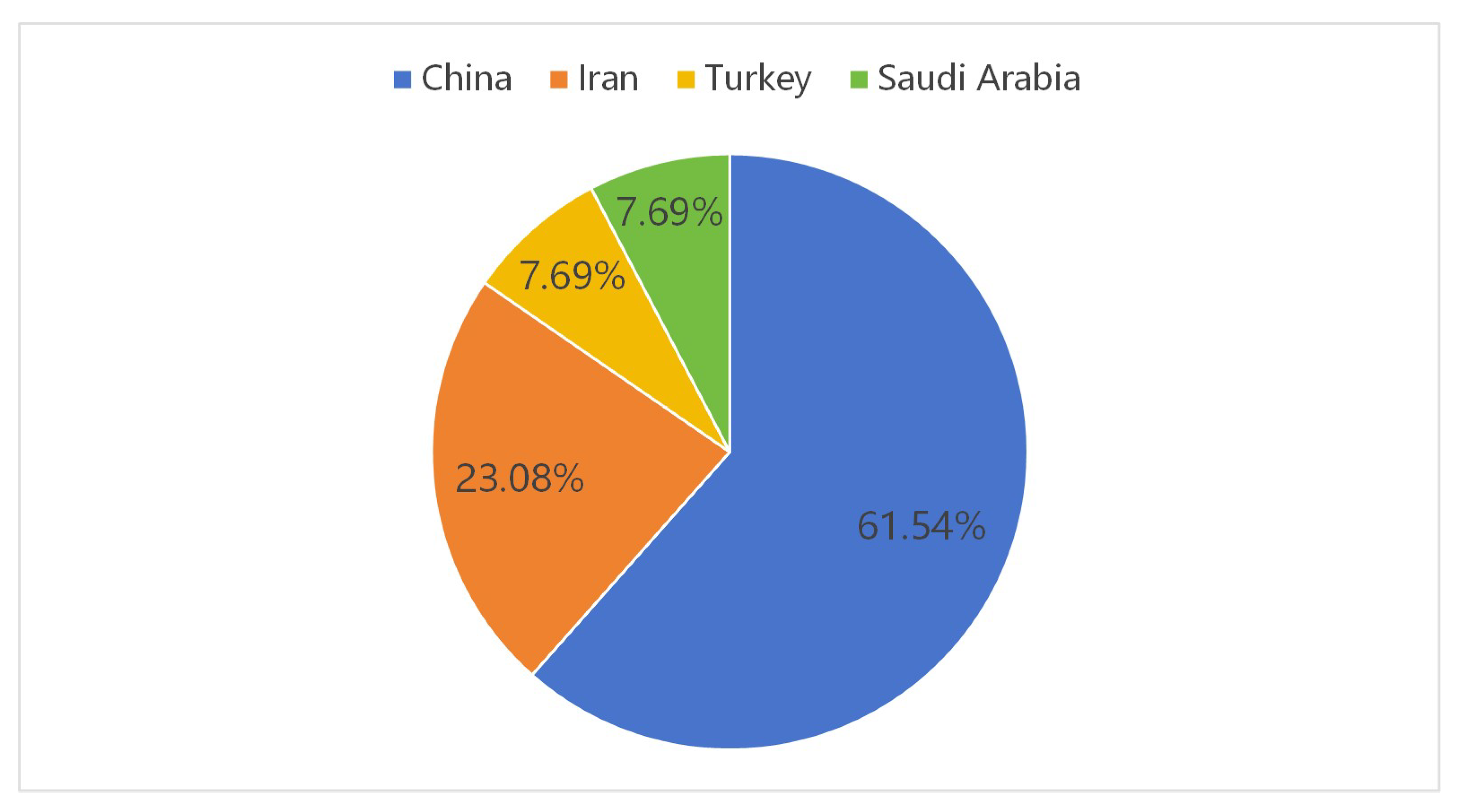

| No | (Authors, Year), Country | Intrapersonal Dimensions | Mediating Dimensions | Situational Dimensions |
|---|---|---|---|---|
| 1 | (H. Zhang & Huang, 2023), China | online foreign language enjoyment and perceived group interaction | perceived teacher’s enthusiasm | |
| 2 | (Fattahi et al., 2023), Iran | foreign language enjoyment | ||
| 3 | (Solhi, 2024), Turkey | foreign language anxiety | L2 demotivation | |
| 4 | (Lee & Hsieh, 2019), China | grit | L2 self-confidence and L2 anxiety | |
| 5 | (Bensalem et al., 2025), Saudi Arabia | grit | foreign language enjoyment and boredom | |
| 6 | (Lee & Liu, 2024), China | openness to the online learning experience and interpersonal and intrapersonal factors | teacher affective and pedagogical support and virtual and nonverbal affective supports and learning stimuli | |
| 7 | (Noughabi & Ghasemi, 2025), Iran | grit | informal digital learning of English | |
| 8 | (Lee et al., 2024b), China | foreign language enjoyment (teacher appreciation, personal enjoyment, and social enjoyment) | informal digital learning of English | |
| 9 | (Zadorozhnyy & Lee, 2025), China | self-efficacy beliefs | informal digital learning of English | |
| 10 | (Lee et al., 2022), China | English environment and teaching practice | ||
| 11 | (Fu, 2025), China | basic psychology needs and grit | enjoyment | informal digital learning of English |
| 12 | (Lee et al., 2024a), China | foreign language enjoyment and foreign language anxiety | informal digital learning of English | |
| 13 | (Taherian et al., 2023), Iran | foreign language boredom | informal digital learning of English |
| Dimension of Measurement | Name of Instruments (Authors, Year) | Research Examples |
|---|---|---|
| L2 WTC inside classrooms | L2 willingness to communicate scale in online Chinese class (Khajavy et al., 2018; McCroskey, 1992), n = 1 | Perceived teachers’ enthusiasm and willingness to communicate in the online class: the mediating role of learning enjoyment and group interaction for Chinese as a second language |
| L2 willingness to communicate scale (Peng & Woodrow, 2010), n = 1 | Nothing ventured, nothing gained: the impact of enjoyment and boredom on willingness to communicate in online foreign language classrooms | |
| L2 WTC scale modified for online classes (Lee & Hsieh, 2019), n = 2 | Informal digital learning of English and L2 willingness to communicate: the roles of emotions, gender, and educational stage | |
| L2 WTC scale (Y. Wang et al., 2021; Lee & Drajati, 2019a), n = 2 | Modeling the contributions of grit, enjoyment, and boredom to predict English as a foreign language students’ willingness to communicate in a blended learning environment | |
| L2 WTC scale (Lee & Drajati, 2019b), n = 1 | Enjoyment and grit as mediators between informal digital learning English, basic psychology needs, and willingness to communicate among English as a foreign language university students | |
| L2 WTC questionnaire (Ryan, 2009; Yashima, 2009; Peng, 2013; Lee & Lee, 2020), n = 3 | Understanding willingness to communicate in L2 between Korean and Taiwanese students | |
| Willingness to communicate questionnaire (MacIntyre et al., 2001), n = 1 | Informal digital learning of English and EFL learners’ willingness to communicate: investigating the mediating role of L2 grit | |
| L2 WTC scale (Lee, 2022b), n = 2 | Foreign language enjoyment as a mediator between informal digital learning of English and willingness to communicate |
Disclaimer/Publisher’s Note: The statements, opinions and data contained in all publications are solely those of the individual author(s) and contributor(s) and not of MDPI and/or the editor(s). MDPI and/or the editor(s) disclaim responsibility for any injury to people or property resulting from any ideas, methods, instructions or products referred to in the content. |
© 2026 by the authors. Licensee MDPI, Basel, Switzerland. This article is an open access article distributed under the terms and conditions of the Creative Commons Attribution (CC BY) license.
Share and Cite
Wang, F.; Yu, X.; Pan, X. L2 Willingness to Communicate in the Context of Online Learning Environments: A Systematic Review. Behav. Sci. 2026, 16, 229. https://doi.org/10.3390/bs16020229
Wang F, Yu X, Pan X. L2 Willingness to Communicate in the Context of Online Learning Environments: A Systematic Review. Behavioral Sciences. 2026; 16(2):229. https://doi.org/10.3390/bs16020229
Chicago/Turabian StyleWang, Fang, Xiaoyun Yu, and Xiaoquan Pan. 2026. "L2 Willingness to Communicate in the Context of Online Learning Environments: A Systematic Review" Behavioral Sciences 16, no. 2: 229. https://doi.org/10.3390/bs16020229
APA StyleWang, F., Yu, X., & Pan, X. (2026). L2 Willingness to Communicate in the Context of Online Learning Environments: A Systematic Review. Behavioral Sciences, 16(2), 229. https://doi.org/10.3390/bs16020229