

The Effects of Computerized Cognitive Training via Tablet and Computer Platforms on Cognitive Function in Patients with Mild Cognitive Impairment: A Systematic Review and Meta-Analysis

 , ,
, , 
Abstract
1. Introduction
2. Methods
2.1. Literature Search Strategy
2.2. Eligibility Criteria
2.3. Data Extraction
2.4. Quality Assessment
2.5. Statistical Analysis
3. Results
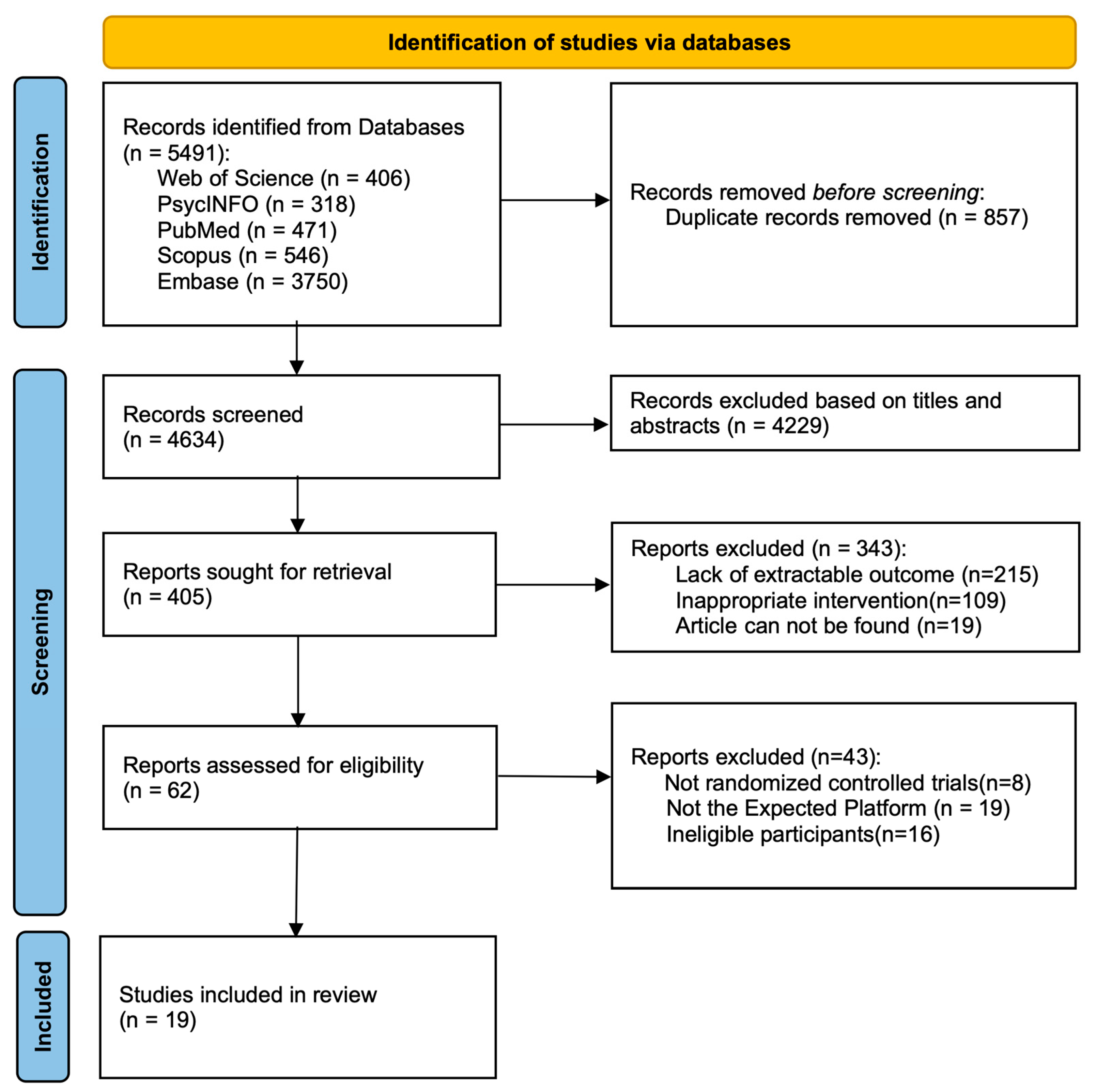
3.1. Study Selection
3.2. Characteristics of Included Studies
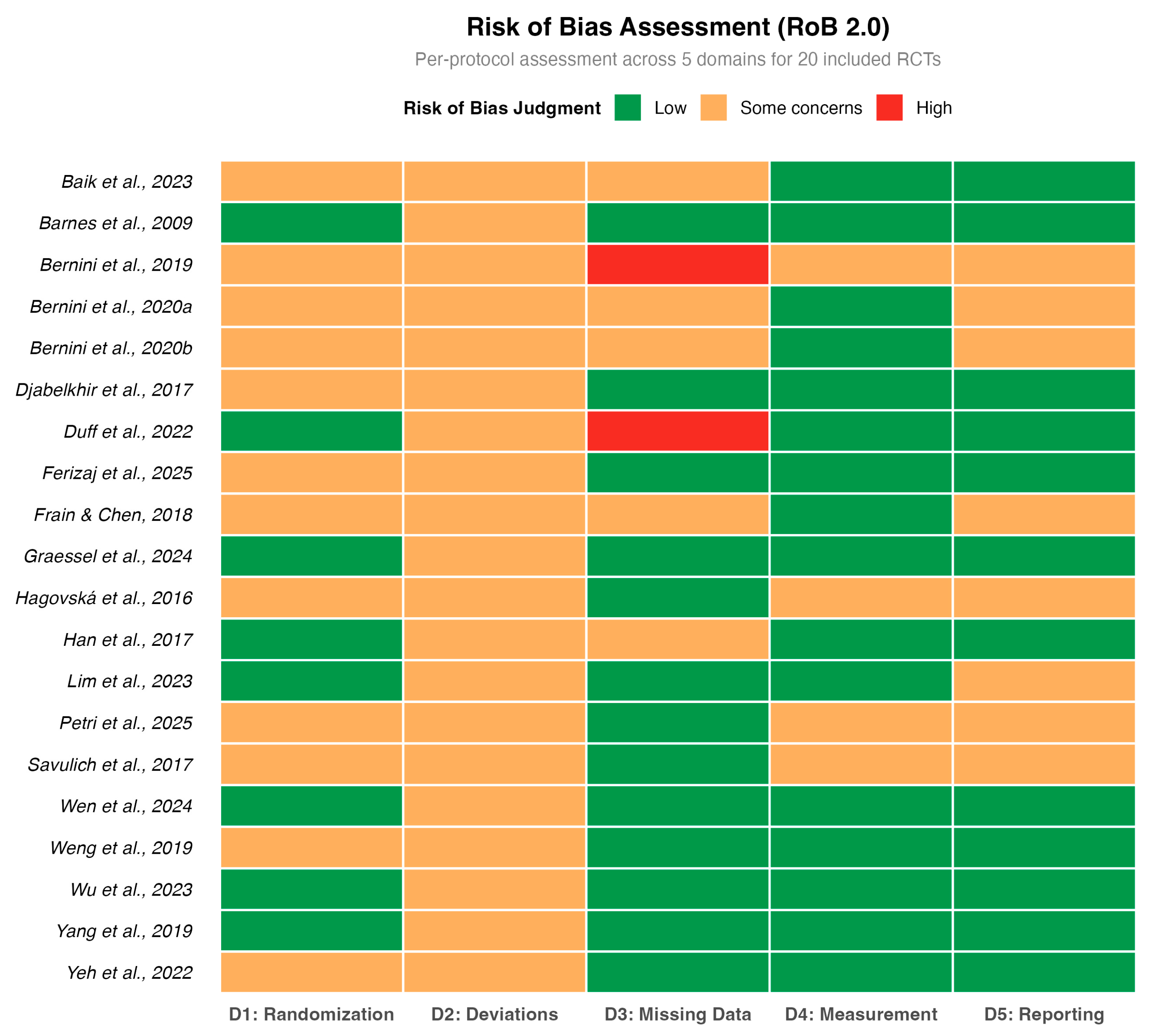
3.3. Methodological Quality
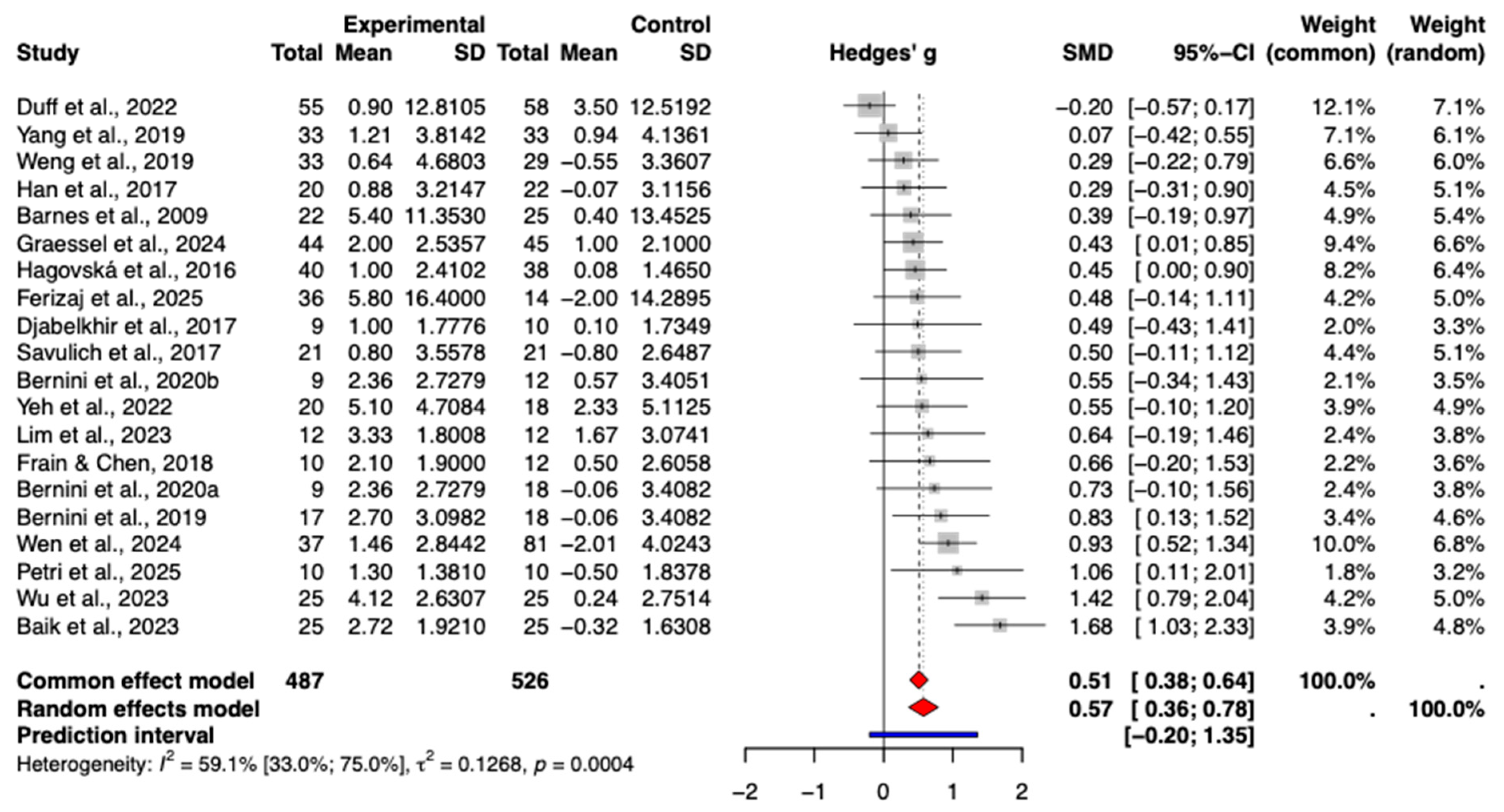
3.4. Overall Meta-Analysis
3.5. Heterogeneity and Moderator Analysis
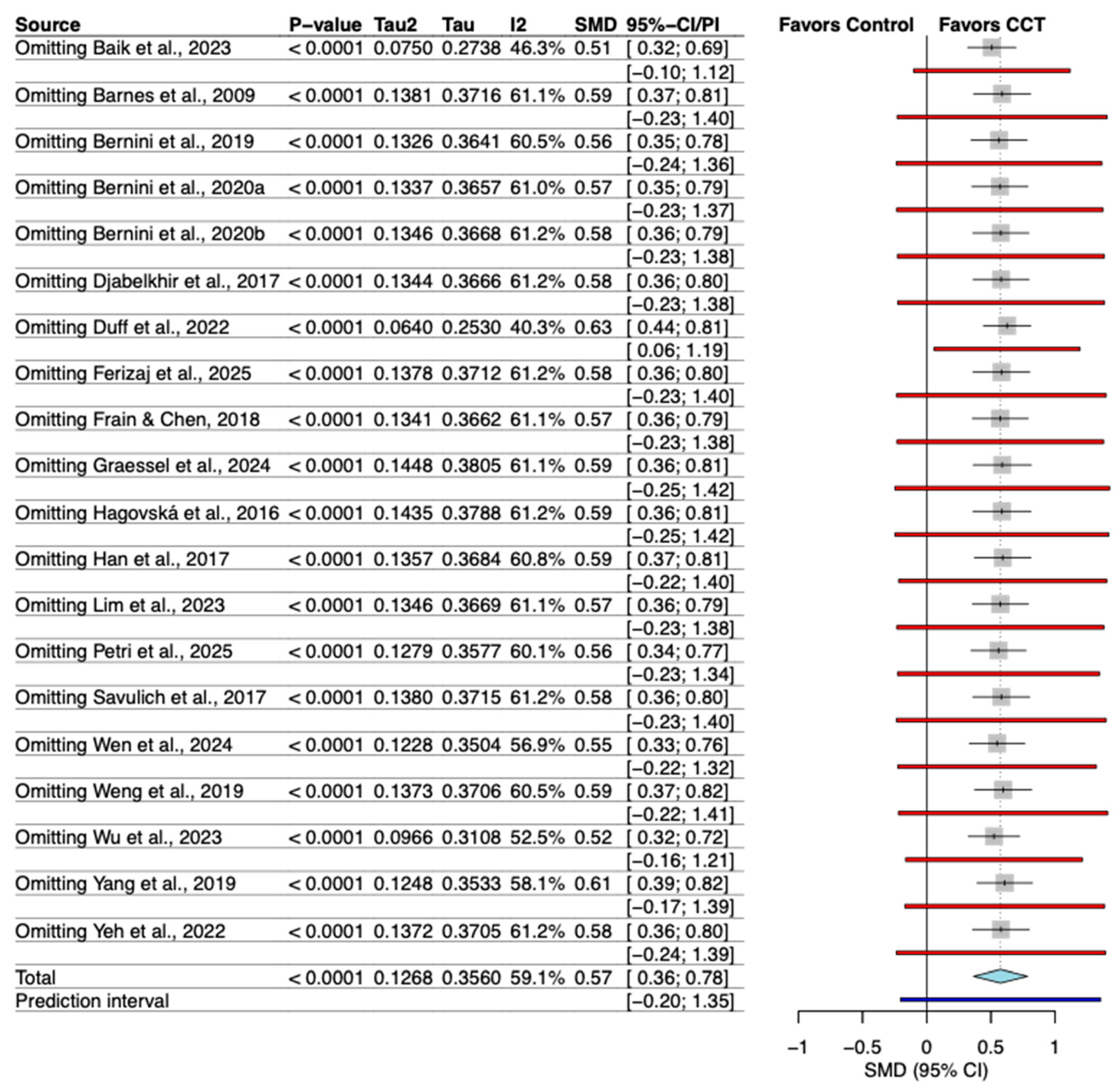
3.6. Sensitivity Analysis
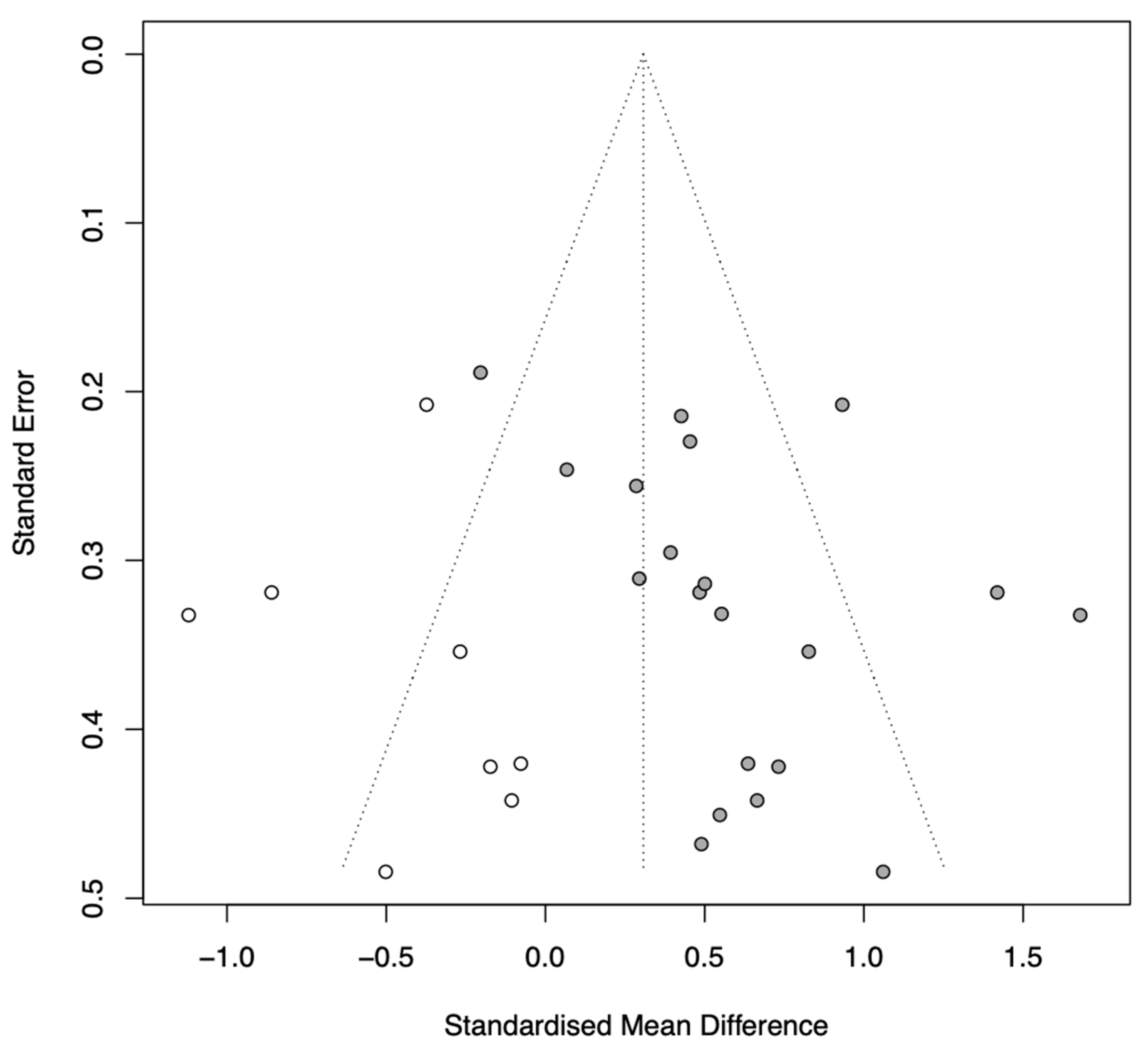
3.7. Publication Bias and Influence Diagnostics
3.8. Subgroup Analyses
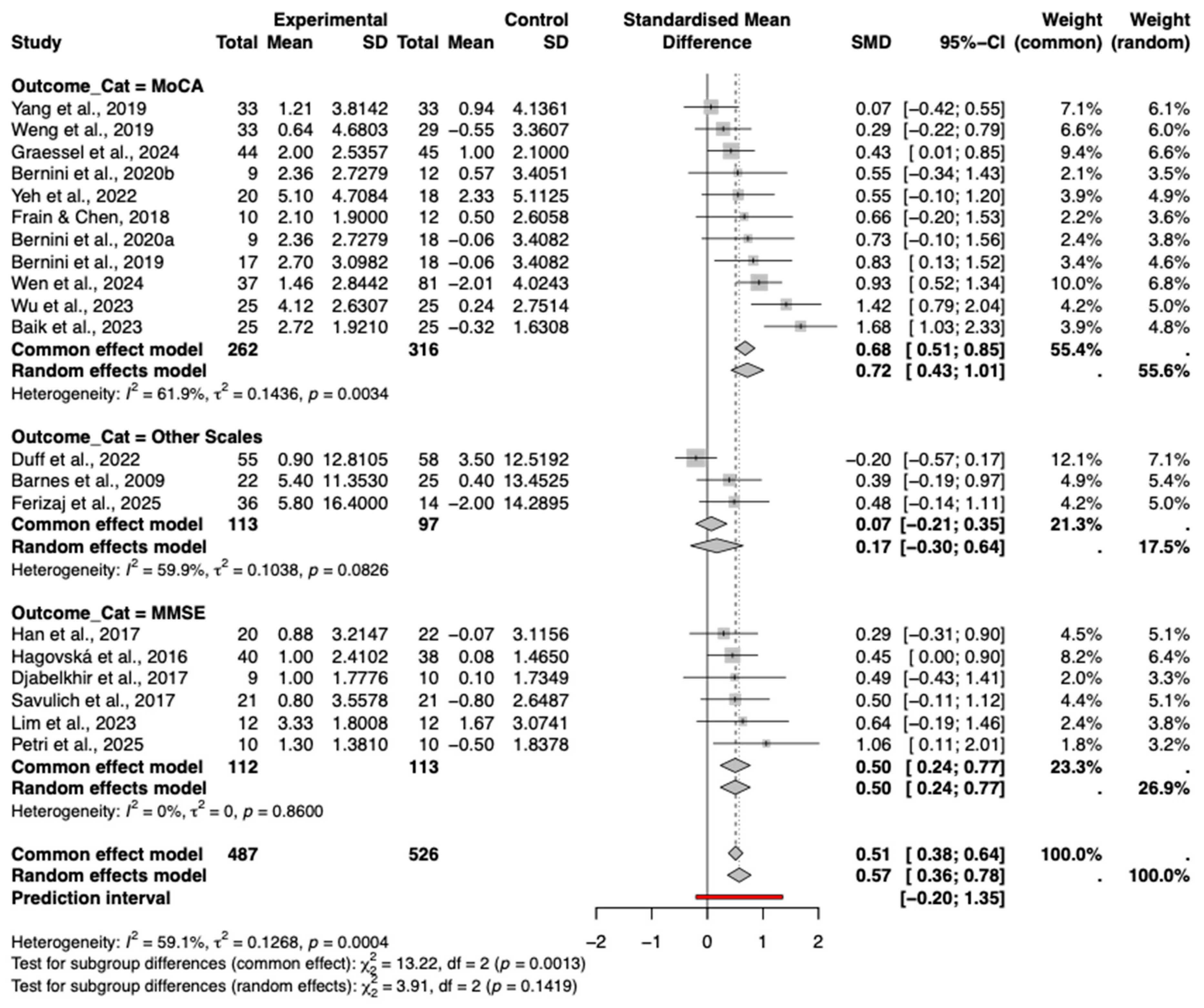
3.8.1. Cognitive Scale Type
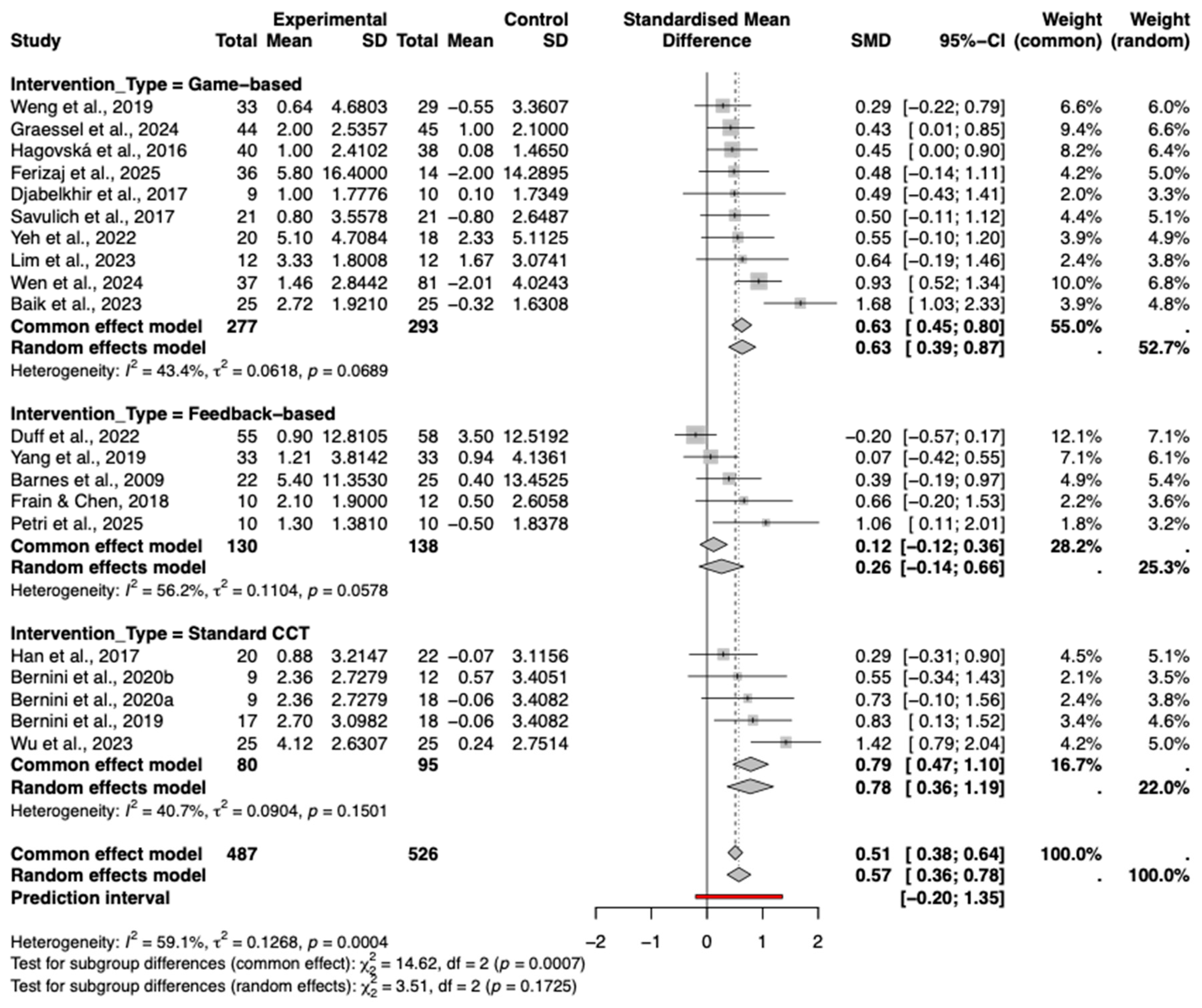
3.8.2. Types of Intervention
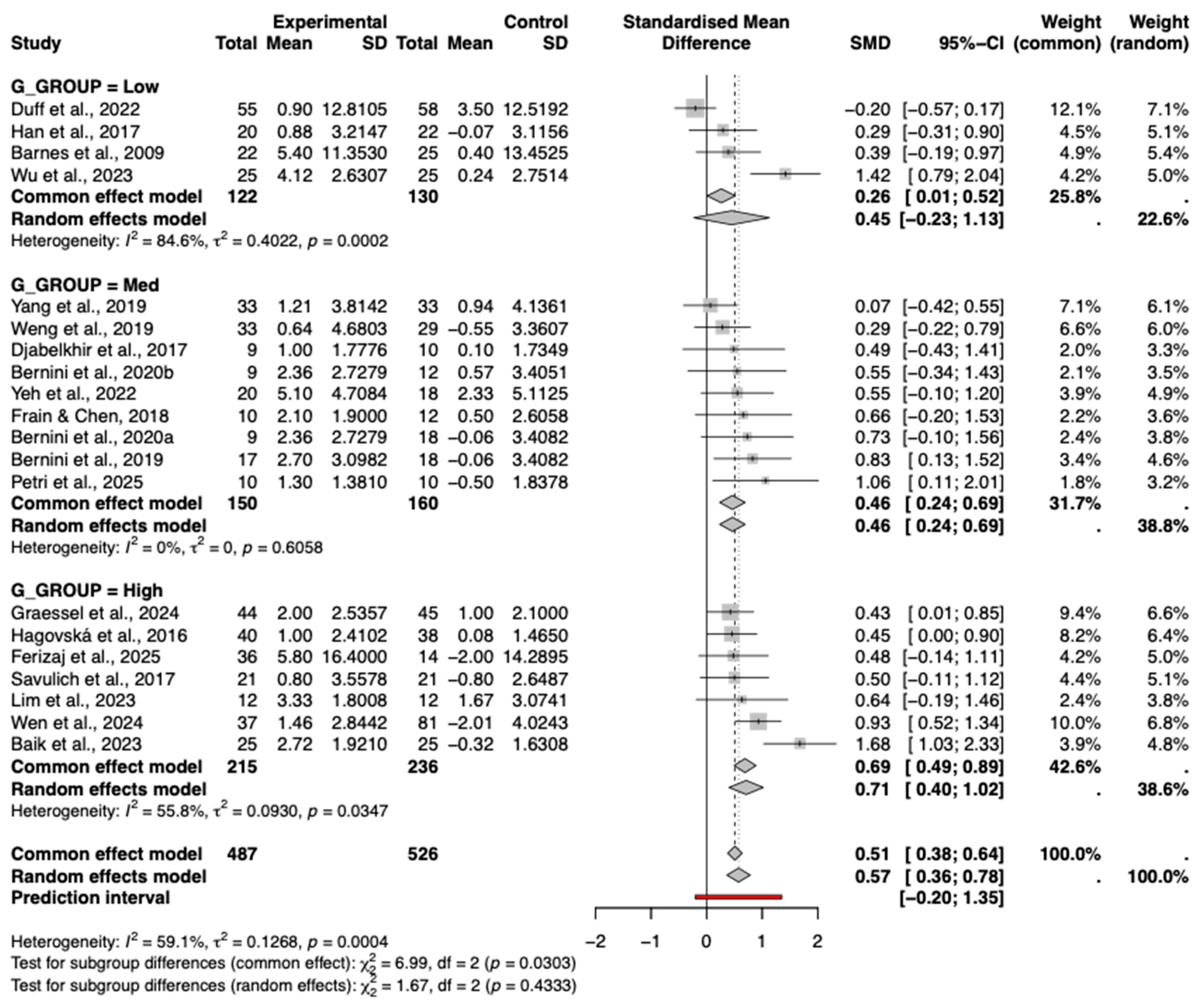
3.8.3. Degree of Gamification
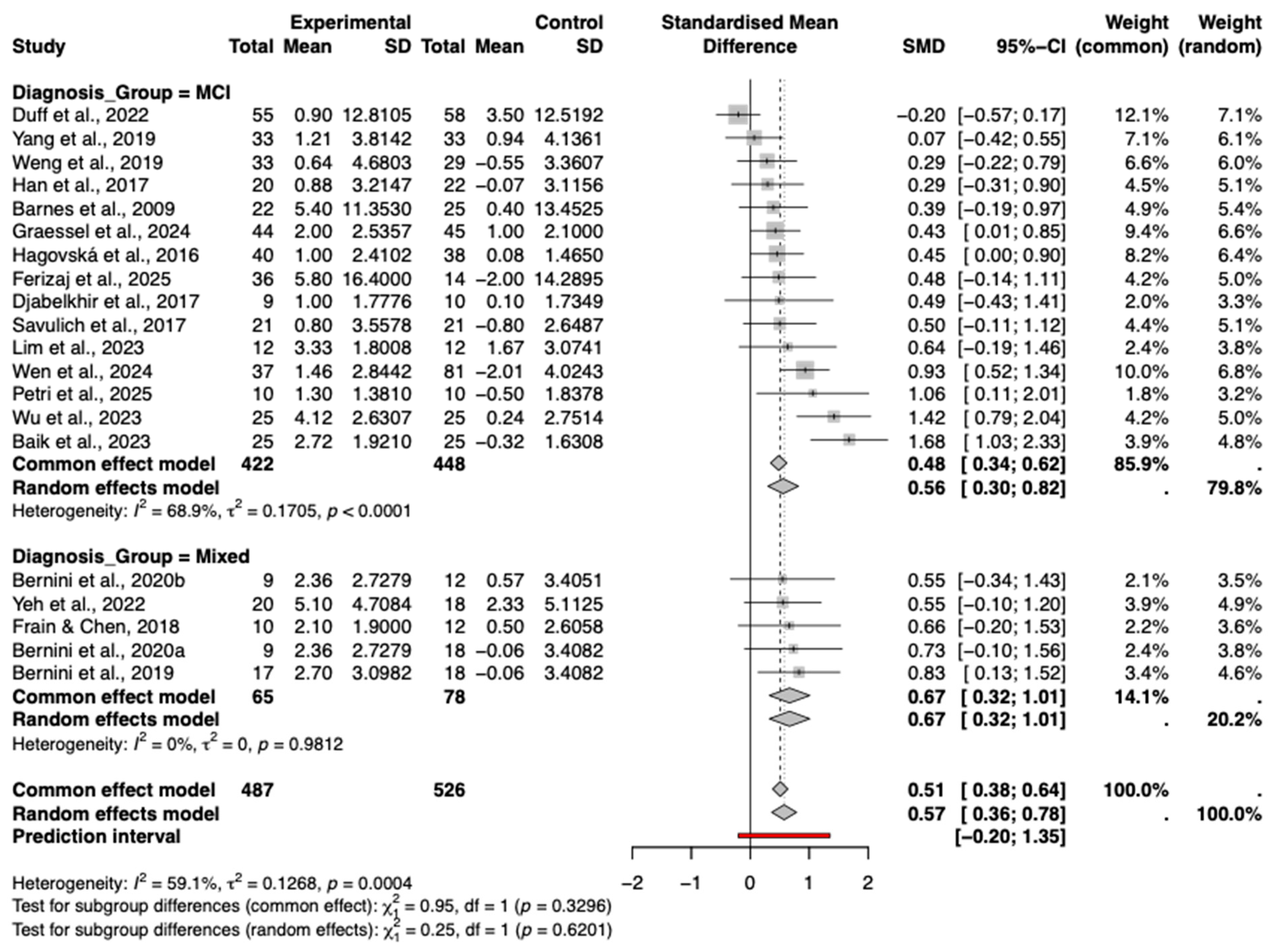
3.8.4. Types of Diagnosis
4. Discussion
4.1. Interpretation of Results
4.2. Strengths and Limitations
4.3. Implications for Clinical Practice and Future Research
5. Conclusions
Supplementary Materials
Author Contributions
Funding
Institutional Review Board Statement
Informed Consent Statement
Data Availability Statement
Conflicts of Interest
References
- Anderson, N. D. (2019). State of the science on mild cognitive impairment (MCI). CNS Spectrums, 24(1), 78–87. [Google Scholar] [CrossRef]
- Baik, J. S., Min, J. H., Ko, S.-H., Yun, M. S., Lee, B., Kang, N. Y., Kim, B., Lee, H., & Shin, Y.-I. (2024). Effects of home-based computerized cognitive training in community-dwelling adults with mild cognitive impairment. IEEE Journal of Translational Engineering in Health and Medicine, 12, 97–105. [Google Scholar] [CrossRef] [PubMed]
- Barnes, D. E., Yaffe, K., Belfor, N., Jagust, W. J., DeCarli, C., Reed, B. R., & Kramer, J. H. (2009). Computer-based cognitive training for mild cognitive impairment: Results from a pilot randomized, controlled trial. Alzheimer Disease & Associated Disorders, 23(3), 205–210. [Google Scholar] [CrossRef]
- Bernini, S., Alloni, A., Panzarasa, S., Picascia, M., Quaglini, S., Tassorelli, C., & Sinforiani, E. (2019). A computer-based cognitive training in mild cognitive impairment in Parkinson’s disease. NeuroRehabilitation, 44(4), 555–567. [Google Scholar] [CrossRef]
- Bernini, S., Panzarasa, S., Barbieri, M., Sinforiani, E., Quaglini, S., Tassorelli, C., & Bottiroli, S. (2021). A double-blind randomized controlled trial of the efficacy of cognitive training delivered using two different methods in mild cognitive impairment in Parkinson’s disease: Preliminary report of benefits associated with the use of a computerized tool. Aging Clinical and Experimental Research, 33(6), 1567–1575. [Google Scholar] [CrossRef] [PubMed]
- Burford, S., & Park, S. (2014). The impact of mobile tablet devices on human information behaviour. Journal of Documentation, 70(4), 622–639. [Google Scholar] [CrossRef]
- Butler, M., McCreedy, E., Nelson, V. A., Desai, P., Ratner, E., Fink, H. A., Hemmy, L. S., McCarten, J. R., Barclay, T. R., Brasure, M., & Davila, H. (2018). Does cognitive training prevent cognitive decline? A systematic review. Annals of Internal Medicine, 168(1), 63–68. [Google Scholar] [CrossRef]
- Chan, A. T., Ip, R. T., Tran, J. Y., Chan, J. Y., & Tsoi, K. K. (2024). Computerized cognitive training for memory functions in mild cognitive impairment or dementia: A systematic review and meta-analysis. NPJ Digital Medicine, 7(1), 1. [Google Scholar] [CrossRef] [PubMed]
- Coelho, F., Gonçalves, D., & Abreu, A. M. (2025). The impact of game-based interventions on adult cognition: A systematic review. International Journal of Human–Computer Interaction, 41(19), 12479–12514. [Google Scholar] [CrossRef]
- Dasgupta, D., Chaudhry, B., Koh, E., & Chawla, N. V. (2016). A survey of tablet applications for promoting successful aging in older adults. IEEE Access: Practical Innovations, Open Solutions, 4, 9005–9017. [Google Scholar] [CrossRef]
- DeCarli, C. (2003). Mild cognitive impairment: Prevalence, prognosis, aetiology, and treatment. The Lancet Neurology, 2(1), 15–21. [Google Scholar] [CrossRef] [PubMed]
- de Paiva Azevedo, J., Delaney, H., Epperson, M., Jbeili, C., Jensen, S., McGrail, C., Weaver, H., Baglione, A., & Barnes, L. E. (2019, April 26). Gamification of ehealth interventions to increase user engagement and reduce attrition. 2019 Systems and Information Engineering Design Symposium (SIEDS) (pp. 1–5), Charlottesville, VA, USA. [Google Scholar] [CrossRef]
- Djabelkhir, L., Wu, Y.-H., Vidal, J.-S., Cristancho-Lacroix, V., Marlats, F., Lenoir, H., Carno, A., & Rigaud, A.-S. (2017). Computerized cognitive stimulation and engagement programs in older adults with mild cognitive impairment: Comparing feasibility, acceptability, and cognitive and psychosocial effects. Clinical Interventions in Aging, 12, 1967–1975. [Google Scholar] [CrossRef]
- Duff, K., Ying, J., Suhrie, K. R., Dalley, B. C. A., Atkinson, T. J., Porter, S. M., Dixon, A. M., Hammers, D. B., & Wolinsky, F. D. (2022). Computerized cognitive training in amnestic mild cognitive impairment: A randomized clinical trial. Journal of Geriatric Psychiatry and Neurology, 35(3), 400–409. [Google Scholar] [CrossRef] [PubMed]
- Dyer, S. M., Harrison, S. L., Laver, K., Whitehead, C., & Crotty, M. (2018). An overview of systematic reviews of pharmacological and non-pharmacological interventions for the treatment of behavioral and psychological symptoms of dementia. International Psychogeriatrics, 30(3), 295–309. [Google Scholar] [CrossRef]
- Eldridge, S., Campbell, M., Campbell, M., Dahota, A., Giraudeau, B., Higgins, J., Reeves, B., & Siegfried, N. (2016). Revised Cochrane risk of bias tool for randomized trials (RoB 2.0): Additional considerations for cluster-randomized trials. Cochrane Methods Cochrane Database of Systematic Reviews, 10. [Google Scholar]
- Ferizaj, D., Stamm, O., Perotti, L., Martin, E. M., Finke, K., Finke, C., Strobach, T., & Heimann-Steinert, A. (2025). Preliminary effects of mobile computerized cognitive training in adults with mild cognitive impairment: Interim analysis of a randomized controlled trial. BMC Psychology, 13(1), 202. [Google Scholar] [CrossRef] [PubMed]
- Frain, J. A., & Chen, L. (2018). Examining the effectiveness of a cognitive intervention to improve cognitive function in a population of older adults living with HIV: A pilot study. Therapeutic Advances in Infectious Disease, 5(1), 19–28. [Google Scholar] [CrossRef]
- Ge, S., Zhu, Z., Wu, B., & McConnell, E. S. (2018). Technology-based cognitive training and rehabilitation interventions for individuals with mild cognitive impairment: A systematic review. BMC Geriatrics, 18(1), 213. [Google Scholar] [CrossRef]
- Goulet-Pelletier, J.-C., & Cousineau, D. (2018). A review of effect sizes and their confidence intervals, Part I: The Cohen’sd family. The Quantitative Methods for Psychology, 14(4), 242–265. [Google Scholar] [CrossRef]
- Graessel, E., Jank, M., Scheerbaum, P., Scheuermann, J.-S., & Pendergrass, A. (2024). Individualised computerised cognitive training (iCCT) for community-dwelling people with mild cognitive impairment (MCI): Results on cognition in the 6-month intervention period of a randomised controlled trial (MCI-CCT study). BMC Medicine, 22(1), 472. [Google Scholar] [CrossRef]
- Hagovská, M., & Olekszyová, Z. (2016). Impact of the combination of cognitive and balance training on gait, fear and risk of falling and quality of life in seniors with mild cognitive impairment. Geriatrics & Gerontology International, 16(9), 1043–1050. [Google Scholar] [CrossRef]
- Han, J. W., Son, K. L., Byun, H. J., Ko, J. W., Kim, K., Hong, J. W., Kim, T. H., & Kim, K. W. (2017). Efficacy of the ubiquitous spaced retrieval-based memory advancement and rehabilitation training (USMART) program among patients with mild cognitive impairment: A randomized controlled crossover trial. Alzheimer’s Research & Therapy, 9(1), 39. [Google Scholar] [CrossRef]
- Harvey, P. D., McGurk, S. R., Mahncke, H., & Wykes, T. (2018). Controversies in computerized cognitive training. Biological Psychiatry: Cognitive Neuroscience and Neuroimaging, 3(11), 907–915. [Google Scholar] [CrossRef]
- Hill, N. T., Mowszowski, L., Naismith, S. L., Chadwick, V. L., Valenzuela, M., & Lampit, A. (2017). Computerized cognitive training in older adults with mild cognitive impairment or dementia: A systematic review and meta-analysis. American Journal of Psychiatry, 174(4), 329–340. [Google Scholar] [CrossRef] [PubMed]
- Hu, M., Wu, X., Shu, X., Hu, H., Chen, Q., Peng, L., & Feng, H. (2021). Effects of computerised cognitive training on cognitive impairment: A meta-analysis. Journal of Neurology, 268(5), 1680–1688. [Google Scholar] [CrossRef]
- Iooss, B., & Lemaítre, P. (2015). A review on global sensitivity analysis methods. In Uncertainty management in simulation-optimization of complex systems: Algorithms and applications (pp. 101–122). Springer. [Google Scholar]
- Jackson, D., White, I. R., & Riley, R. D. (2012). Quantifying the impact of between-study heterogeneity in multivariate meta-analyses. Statistics in Medicine, 31(29), 3805–3820. [Google Scholar] [CrossRef]
- Jaeggi, S. M., Buschkuehl, M., Jonides, J., & Shah, P. (2011). Short-and long-term benefits of cognitive training. Proceedings of the National Academy of Sciences, 108(25), 10081–10086. [Google Scholar] [CrossRef] [PubMed]
- Julayanont, P., Phillips, N., Chertkow, H., & Nasreddine, Z. S. (2012). Montreal cognitive assessment (MoCA): Concept and clinical review. In Cognitive screening instruments: A practical approach (pp. 111–151). Springer. [Google Scholar]
- Kueider, A. M., Parisi, J. M., Gross, A. L., & Rebok, G. W. (2012). Computerized cognitive training with older adults: A systematic review. PLoS ONE, 7(7), e40588. [Google Scholar] [CrossRef] [PubMed]
- Langan, D., Higgins, J. P., Jackson, D., Bowden, J., Veroniki, A. A., Kontopantelis, E., Viechtbauer, W., & Simmonds, M. (2019). A comparison of heterogeneity variance estimators in simulated random-effects meta-analyses. Research Synthesis Methods, 10(1), 83–98. [Google Scholar] [CrossRef]
- Li, R., Geng, J., Yang, R., Ge, Y., & Hesketh, T. (2022). Effectiveness of computerized cognitive training in delaying cognitive function decline in people with mild cognitive impairment: Systematic review and meta-analysis. Journal of Medical Internet Research, 24(10), e38624. [Google Scholar] [CrossRef]
- Lim, E. H., Kim, D.-S., Won, Y.-H., Park, S.-H., Seo, J.-H., Ko, M.-H., & Kim, G.-W. (2023). Effects of home based serious game training (Brain TalkTM) in the elderly with mild cognitive impairment: Randomized, a single-blind, controlled trial. Brain & Neurorehabilitation, 16(1), e4. [Google Scholar] [CrossRef]
- Lin, L., & Chu, H. (2018). Quantifying publication bias in meta-analysis. Biometrics. Journal of the International Biometric Society, 74(3), 785–794. [Google Scholar] [CrossRef]
- Litvin, S., Saunders, R., Maier, M. A., & Lüttke, S. (2020). Gamification as an approach to improve resilience and reduce attrition in mobile mental health interventions: A randomized controlled trial. PLoS ONE, 15(9), e0237220. [Google Scholar] [CrossRef]
- Lumsden, J., Edwards, E. A., Lawrence, N. S., Coyle, D., & Munafò, M. R. (2016). Gamification of cognitive assessment and cognitive training: A systematic review of applications and efficacy. JMIR Serious Games, 4(2), e5888. [Google Scholar] [CrossRef]
- Ma, L.-L., Wang, Y.-Y., Yang, Z.-H., Huang, D., Weng, H., & Zeng, X.-T. (2020). Methodological quality (risk of bias) assessment tools for primary and secondary medical studies: What are they and which is better? Military Medical Research, 7(1), 7. [Google Scholar] [CrossRef]
- Munn, Z., Peters, M. D., Stern, C., Tufanaru, C., McArthur, A., & Aromataris, E. (2018). Systematic review or scoping review? Guidance for authors when choosing between a systematic or scoping review approach. BMC Medical Research Methodology, 18(1), 143. [Google Scholar] [CrossRef] [PubMed]
- Nasreddine, Z. S., Phillips, N. A., Bédirian, V., Charbonneau, S., Whitehead, V., Collin, I., Cummings, J. L., & Chertkow, H. (2005). The Montreal cognitive assessment, MoCA: A brief screening tool for mild cognitive impairment. Journal of the American Geriatrics Society, 53(4), 695–699. [Google Scholar] [CrossRef]
- Oldrati, V., Corti, C., Poggi, G., Borgatti, R., Urgesi, C., & Bardoni, A. (2020). Effectiveness of computerized cognitive training programs (CCTP) with game-like features in children with or without neuropsychological disorders: A meta-analytic investigation. Neuropsychology Review, 30(1), 126–141. [Google Scholar] [CrossRef]
- Page, M. J., McKenzie, J. E., Bossuyt, P. M., Boutron, I., Hoffmann, T. C., Mulrow, C. D., Shamseer, L., Tetzlaff, J. M., Akl, E. A., Brennan, S. E., & Chou, R. (2021). The PRISMA 2020 statement: An updated guideline for reporting systematic reviews. BMJ, 372, n71. [Google Scholar] [CrossRef]
- Park, H., & Ha, J. (2024). Effect of digital technology interventions for cognitive function improvement in mild cognitive impairment and dementia: A systematic review and meta-analysis. Research in Nursing & Health, 47(4), 409–422. [Google Scholar] [CrossRef]
- Petri, M. C., Messinis, L., Patrikelis, P., Nasios, G., Dimitriou, N., Nousia, A., & Kosmidis, M. H. (2025). Feasibility and clinical effectiveness of computer-based cognitive rehabilitation in illiterate and low-educated individuals with mild cognitive impairment: Preliminary data. Archives of Clinical Neuropsychology, 40(3), 382–393. [Google Scholar] [CrossRef]
- Petropoulou, M., Efthimiou, O., Ruecker, G., Schwarzer, G., Furukawa, T. A., Pompoli, A., Koek, H. L., Del Giovane, C., Rodondi, N., & Mavridis, D. (2021). A review of methods for addressing components of interventions in meta-analysis. PLoS ONE, 16(2), e0246631. [Google Scholar] [CrossRef] [PubMed]
- Prince, M., Bryce, R., Albanese, E., Wimo, A., Ribeiro, W., & Ferri, C. P. (2013). The global prevalence of dementia: A systematic review and metaanalysis. Alzheimer’s & Dementia, 9(1), 63–75. [Google Scholar] [CrossRef]
- Realdon, O., Rossetto, F., Nalin, M., Baroni, I., Cabinio, M., Fioravanti, R., Saibene, F., Alberoni, M., Mantovani, F., Romano, M., & Nemni, R. (2016). Technology-enhanced multi-domain at home continuum of care program with respect to usual care for people with cognitive impairment: The Ability-TelerehABILITation study protocol for a randomized controlled trial. BMC Psychiatry, 16(1), 425. [Google Scholar] [CrossRef]
- Sabbagh, M. N., Boada, M., Borson, S., Chilukuri, M., Doraiswamy, P., Dubois, B., Ingram, J., Iwata, A., Porsteinsson, A., Possin, K., & Rabinovici, G. D. (2020). Rationale for early diagnosis of mild cognitive impairment (MCI) supported by emerging digital technologies. The Journal of Prevention of Alzheimer’s Disease, 7(3), 158–164. [Google Scholar] [CrossRef]
- Savulich, G., Piercy, T., Fox, C., Suckling, J., Rowe, J. B., O’Brien, J. T., & Sahakian, B. J. (2017). Cognitive training using a novel memory game on an iPad in patients with amnestic mild cognitive impairment (aMCI). International Journal of Neuropsychopharmacology, 20(8), 624–633. [Google Scholar] [CrossRef]
- Siqueira, G. S., Hagemann, P. d. M., Coelho, D. de S., Santos, F. H. D., & Bertolucci, P. H. (2019). Can MoCA and MMSE be interchangeable cognitive screening tools? A systematic review. The Gerontologist, 59(6), e743–e763. [Google Scholar] [CrossRef] [PubMed]
- Smith, V., Devane, D., Begley, C. M., & Clarke, M. (2011). Methodology in conducting a systematic review of systematic reviews of healthcare interventions. BMC Medical Research Methodology, 11(1), 15. [Google Scholar] [CrossRef] [PubMed]
- Tahami Monfared, A. A., Byrnes, M. J., White, L. A., & Zhang, Q. (2022). Alzheimer’s disease: Epidemiology and clinical progression. Neurology and Therapy, 11(2), 553–569. [Google Scholar] [CrossRef]
- Terhorst, Y., Kaiser, T., Brakemeier, E.-L., Moshe, I., Philippi, P., Cuijpers, P., Baumeister, H., & Sander, L. B. (2024). Heterogeneity of treatment effects in internet-and mobile-based interventions for depression: A systematic review and meta-analysis. JAMA Network Open, 7(7), e2423241. [Google Scholar] [CrossRef]
- Tombaugh, T. N., & McIntyre, N. J. (1992). The mini-mental state examination: A comprehensive review. Journal of the American Geriatrics Society, 40(9), 922–935. [Google Scholar] [CrossRef] [PubMed]
- Traut, H. J., Guild, R. M., & Munakata, Y. (2021). Why does cognitive training yield inconsistent benefits? A meta-analysis of individual differences in baseline cognitive abilities and training outcomes. Frontiers in Psychology, 12, 662139. [Google Scholar] [CrossRef] [PubMed]
- Vermeir, J. F., White, M. J., Johnson, D., Crombez, G., & Van Ryckeghem, D. M. (2020). The effects of gamification on computerized cognitive training: Systematic review and meta-analysis. JMIR Serious Games, 8(3), e18644. [Google Scholar] [CrossRef] [PubMed]
- Viechtbauer, W. (2010). Conducting meta-analyses in R with the metafor package. Journal of Statistical Software, 36, 1–48. [Google Scholar] [CrossRef]
- Wen, X., Song, S., Tian, H., Cui, H., Zhang, L., Sun, Y., Li, M., & Wang, Y. (2024). Intervention of computer-assisted cognitive training combined with occupational therapy in people with mild cognitive impairment: A randomized controlled trial. Frontiers in Aging Neuroscience, 16, 1384318. [Google Scholar] [CrossRef]
- Weng, W., Liang, J., Xue, J., Zhu, T., Jiang, Y., Wang, J., & Chen, S. (2019). The transfer effects of cognitive training on working memory among chinese older adults with mild cognitive impairment: A randomized controlled trial. Frontiers in Aging Neuroscience, 11, 212. [Google Scholar] [CrossRef]
- World Health Organization. (2021). Global status report on the public health response to dementia. World Health Organization. [Google Scholar]
- Wu, J., He, Y., Liang, S., Liu, Z., Huang, J., Liu, W., Tao, J., Chen, L., Chan, C. C. H., & Lee, T. M. C. (2023). Effects of computerized cognitive training on structure-function coupling and topology of multiple brain networks in people with mild cognitive impairment: A randomized controlled trial. Alzheimer’s Research & Therapy, 15(1), 158. [Google Scholar] [CrossRef]
- Yang, H.-L., Chu, H., Kao, C.-C., Chiu, H.-L., Tseng, I.-J., Tseng, P., & Chou, K.-R. (2019). Development and effectiveness of virtual interactive working memory training for older people with mild cognitive impairment: A single-blind randomised controlled trial. Age and Ageing, 48(4), 519–525. [Google Scholar] [CrossRef]
- Yeh, T.-T., Chang, K.-C., Wu, C.-Y., Chen, C.-J., & Chuang, I.-C. (2022). Clinical efficacy of aerobic exercise combined with computer-based cognitive training in stroke: A multicenter randomized controlled trial. Topics in Stroke Rehabilitation, 29(4), 255–264. [Google Scholar] [CrossRef]
- Zhang, H., Huntley, J., Bhome, R., Holmes, B., Cahill, J., Gould, R. L., Wang, H., Yu, X., & Howard, R. (2019). Effect of computerised cognitive training on cognitive outcomes in mild cognitive impairment: A systematic review and meta-analysis. BMJ Open, 9(8), e027062. [Google Scholar] [CrossRef]
- Zuschnegg, J., Ropele, S., Opriessnig, P., Schmidt, R., Russegger, S., Fellner, M., Leitner, M., Spat, S., Garcia, M. L., Strobl, B., & Ploder, K. (2025). The effect of tablet-based multimodal training on cognitive functioning in Alzheimer’s disease: A randomized controlled trial. PLoS ONE, 20(8), e0329931. [Google Scholar] [CrossRef] [PubMed]





| Author, Year | Area | Age (Mean ± SD or Description) | Total Participants (Analyzed) | Patient Population | Outcomes Scale | Intervention Method | Intervention Device | Total Length | Frequency (/Week) | Session Length (min) |
|---|---|---|---|---|---|---|---|---|---|---|
| (Barnes et al., 2009) | USA | IG: 74.1 ± 8.7; CG: 74.8 ± 7.2 | 47 (IG: 22, CG: 25) | MCI | RBANS | Computerized Cognitive Training (Posit Science) | PC | 6 | 5 | 100 |
| (Hagovská & Olekszyová, 2016) | Slovakia | Overall mean: 67.07 | 80 randomized (IG: 40, CG: 40) | MCI | MMSE | CCT + Balance Training (CogniPlus) | PC | 10 | 2 | 30 |
| (Savulich et al., 2017) | United Kingdom | IG: 75.2 ± 7.4; CG: 76.9 ± 8.3 | 42 (IG: 21, CG: 21) | Amnestic MCI | MMSE | Game Show Training | Tablet | 4 | 2 | 60 |
| (Djabelkhir et al., 2017) | France | CCE: 78.2 ± 7.0; CCS: 75.2 ± 6.4 | 19 analyzed (randomized: 20) | MCI | MMSE | Computerized Cognitive Stimulation | Tablet | 12 | 1 | 90 |
| (Han et al., 2017) | Korea | 74.01 ± 5.53 | 50 randomized | MCI | MMSE | uSMART (Spatial Reconstruction Task) | Tablet | 4 | 2 | 30 |
| (Frain & Chen, 2018) | USA | IG: 58 ± 6.5; CG: 54 ± 3.0 | 22 (IG: 10, CG: 12) | HIV-associated MCI | MoCA | Computerized Cognitive Training (BrainHQ) | PC | 8 | 3 | 30 |
| (Yang et al., 2019) | Taiwan | VIMT: 75.4 ± 6.6; PIA: 81.7 ± 7.2; | 66 (VIMT: 33, PIA: 33) | MCI | MoCA | Computerized Cognitive Training (CogniPlus) | PC | 12 | 3 | 45 |
| (Bernini et al., 2019) | Italy | G1: 71.18; G2: 69.33 | 35 analyzed (G1: 17, G2: 18) | Parkinson’s Disease with MCI | MoCA | Computerized Cognitive Training | PC | 4 | 3 | 45 |
| (Weng et al., 2019) | China Mainland | / | 62 analyzed (CCT: 33, MLA: 29) | MCI | MoCA | Working Memory CCT | PC | 8 | 2 | 40–60 |
| a (Bernini et al., 2021) | Italy | CCT: 74.61 ± 5.68; PCT: 69.83 ± 9.66; | 35(CCT: 21 *; PCT: 14) | Parkinson’s Disease with MCI | MoCA | Computerized Cognitive Training (CoRe) | PC | 3 | 4 | 45 |
| b (Bernini et al., 2021) | Italy | CCT: 74.61 ± 5.68; CG: 69.33 ± 7.72 | 39 (CCT: 21 *; CG: 18) | Parkinson’s Disease with MCI | MoCA | Computerized Cognitive Training (CoRe) | PC | 3 | 4 | 45 |
| (Yeh et al., 2022) | Taiwan | SEQ: 53.05 ± 14.53; COG: 60.17 ± 12.13 | 56 (SEQ: 20, COG: 18) | Post-stroke MCI | MoCA | Aerobic Exercise, CCT, Sequential Combination | Tablet | 12 | 3 | 60 |
| (Duff et al., 2022) | USA | 74.9 | 113 (IG: 55, CG: 58) | Amnestic MCI | RBANS | Computerized Cognitive Training (BrainHQ) | PC | 12–13 | 4–5 | 45 |
| (Lim et al., 2023) | Republic of Korea | IG: 75.42 ± 5.74; CG: 73.33 ± 17.52 | 24 (IG: 12, CG: 12) | MCI | MMSE | Serious Game (Brain Talk™) | Tablet | 4 | 3 | 30 |
| (Wu et al., 2023) | China Mainland | IG: 67.68 ± 5.83; CG: 65.52 ± 5.55 | 50 analyzed (IG: 25, CG: 25) | MCI | MoCA | Computerized Cognitive Training | PC | 8 | 3 | 60 |
| (Baik et al., 2024) | Republic of Korea | IG: 67.08 ± 7.92; CG: 65.64 ± 8.54 | 50 (IG: 25, CG: 25) | MCI | MoCA | Home-Based Computerized Cognitive Training (HB-CCT) | Tablet | 8 | 3 | 30 |
| (Graessel et al., 2024) | Germany | IG: 73.4 ± 8.1; CG: 73.5 ± 6.5 | 89 randomized (IG: 44, CG: 45) | MCI | MoCA | Individualized CCT (vs. basic CCT) | Tablet | 24 | 3 | 30–35 |
| (Wen et al., 2024) | China Mainland | IG: 66.78 ± 8.30; CG: 65.75 ± 9.41 | 118 randomized (IG: 37, CG: 81) | MCI | MoCA | CCT + Occupational Therapy | PC | 12 | 3 | ≥30 |
| (Petri et al., 2025) | Greece | IG: 82.5; CG: 80.9 | 20 | MCI | MMSE | Computerized Cognitive Rehabilitation (RehaCom) | PC | 6 | 2 | 50–60 |
| (Ferizaj et al., 2025) | Germany | IG: 58.1 ± 12.9; CG: 59.6 ± 13.0 | 50 (IG: 36, CG: 14) | MCI | S-NAB | Computerized Cognitive Training | Tablet | 12 | 3 | 25–40 |
Disclaimer/Publisher’s Note: The statements, opinions and data contained in all publications are solely those of the individual author(s) and contributor(s) and not of MDPI and/or the editor(s). MDPI and/or the editor(s) disclaim responsibility for any injury to people or property resulting from any ideas, methods, instructions or products referred to in the content. |
© 2025 by the authors. Licensee MDPI, Basel, Switzerland. This article is an open access article distributed under the terms and conditions of the Creative Commons Attribution (CC BY) license.
Share and Cite
Jiao, M.; Ding, Z.; Huang, C.; Xu, Y.; Zhong, B.; Chen, H. The Effects of Computerized Cognitive Training via Tablet and Computer Platforms on Cognitive Function in Patients with Mild Cognitive Impairment: A Systematic Review and Meta-Analysis. Behav. Sci. 2026, 16, 40. https://doi.org/10.3390/bs16010040
Jiao M, Ding Z, Huang C, Xu Y, Zhong B, Chen H. The Effects of Computerized Cognitive Training via Tablet and Computer Platforms on Cognitive Function in Patients with Mild Cognitive Impairment: A Systematic Review and Meta-Analysis. Behavioral Sciences. 2026; 16(1):40. https://doi.org/10.3390/bs16010040
Chicago/Turabian StyleJiao, Meiqi, Zhong Ding, Chaocong Huang, Yiyang Xu, Baoliang Zhong, and Hui Chen. 2026. "The Effects of Computerized Cognitive Training via Tablet and Computer Platforms on Cognitive Function in Patients with Mild Cognitive Impairment: A Systematic Review and Meta-Analysis" Behavioral Sciences 16, no. 1: 40. https://doi.org/10.3390/bs16010040
APA StyleJiao, M., Ding, Z., Huang, C., Xu, Y., Zhong, B., & Chen, H. (2026). The Effects of Computerized Cognitive Training via Tablet and Computer Platforms on Cognitive Function in Patients with Mild Cognitive Impairment: A Systematic Review and Meta-Analysis. Behavioral Sciences, 16(1), 40. https://doi.org/10.3390/bs16010040