



Physical Freezing in Children and Adolescents with Selective Mutism

Abstract
1. Introduction
Physical Aspects of SM
2. Materials and Methods
2.1. Parent Survey
2.2. Child Surveys
2.3. Statistical Analysis
3. Results
3.1. Parent Survey
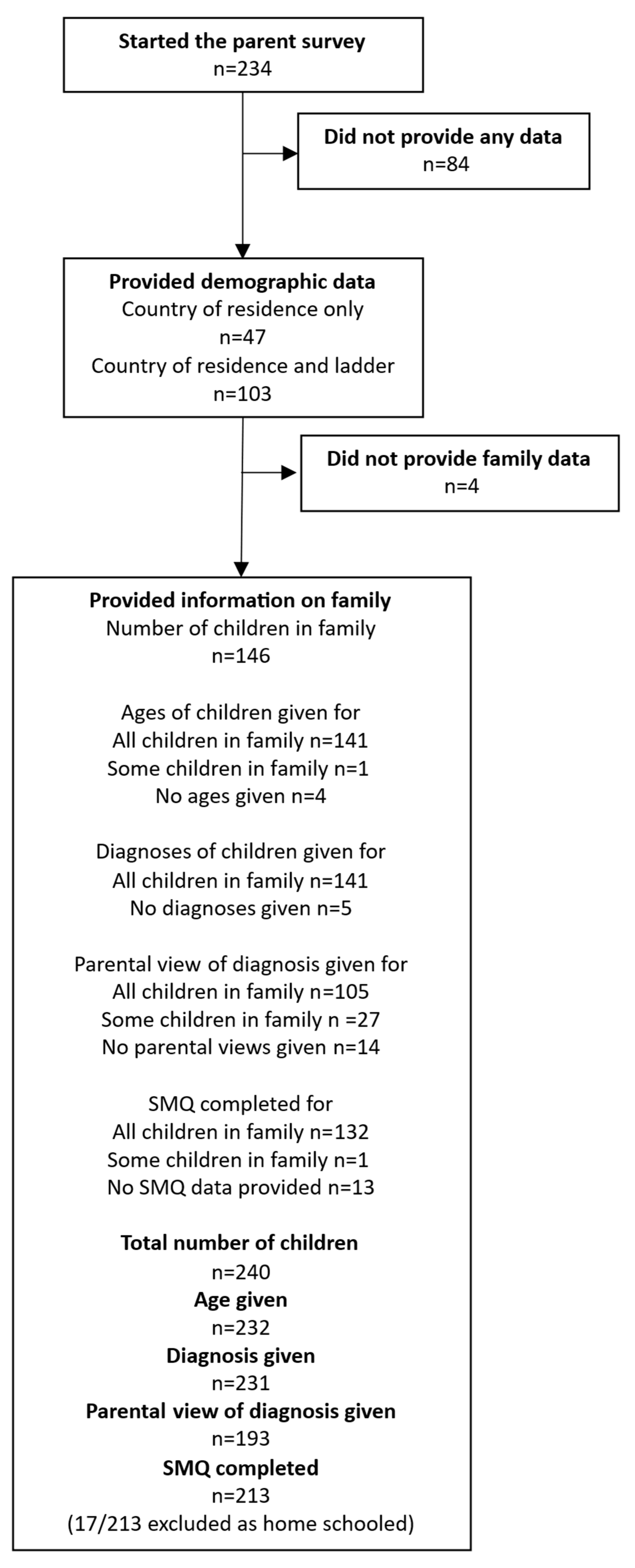
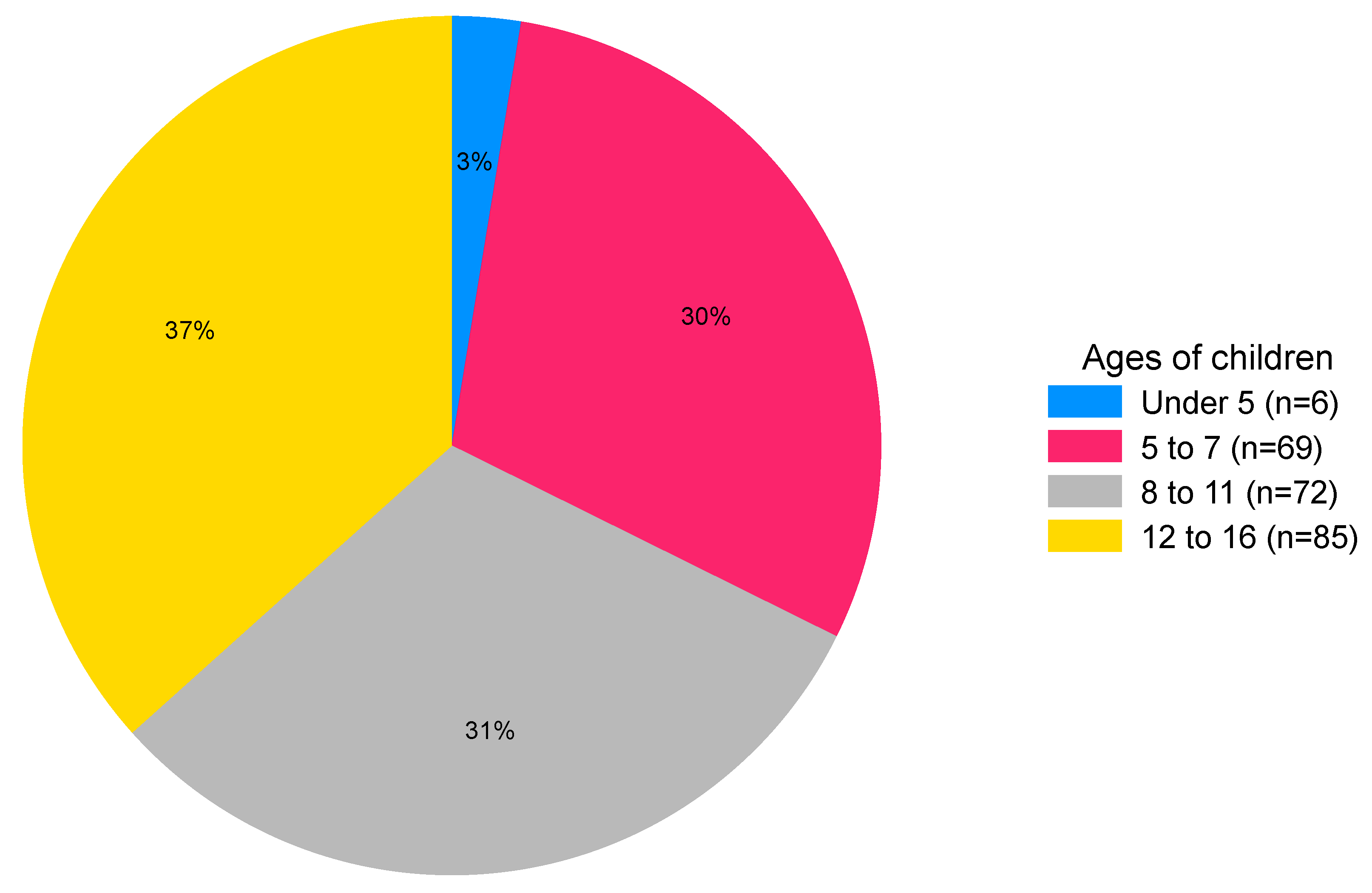
3.2. Number and Ages of Children in the Family
3.3. Diagnoses of Autism and SM in Children
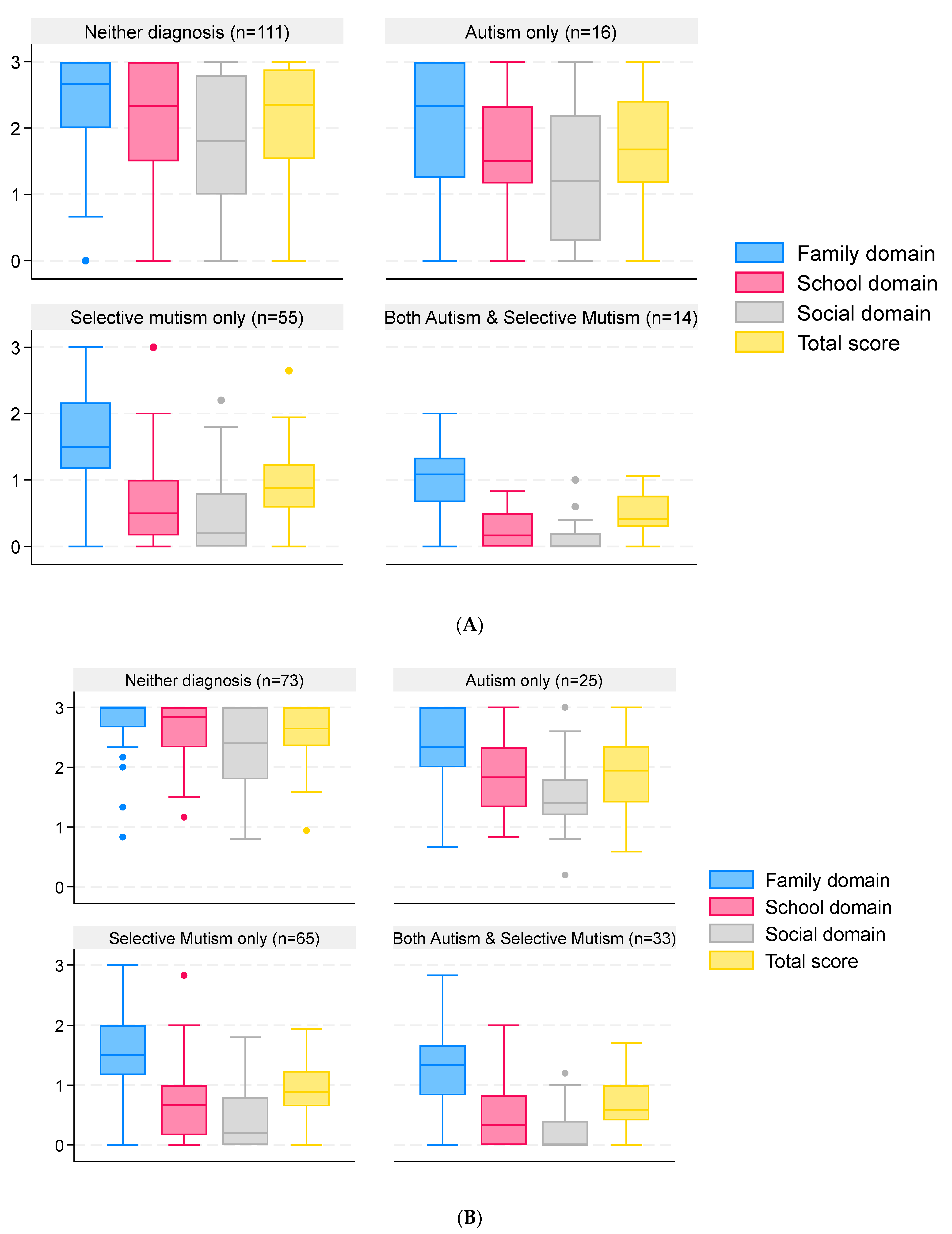
3.4. SMQ Scores—Impact on Family, School, and Social Situations
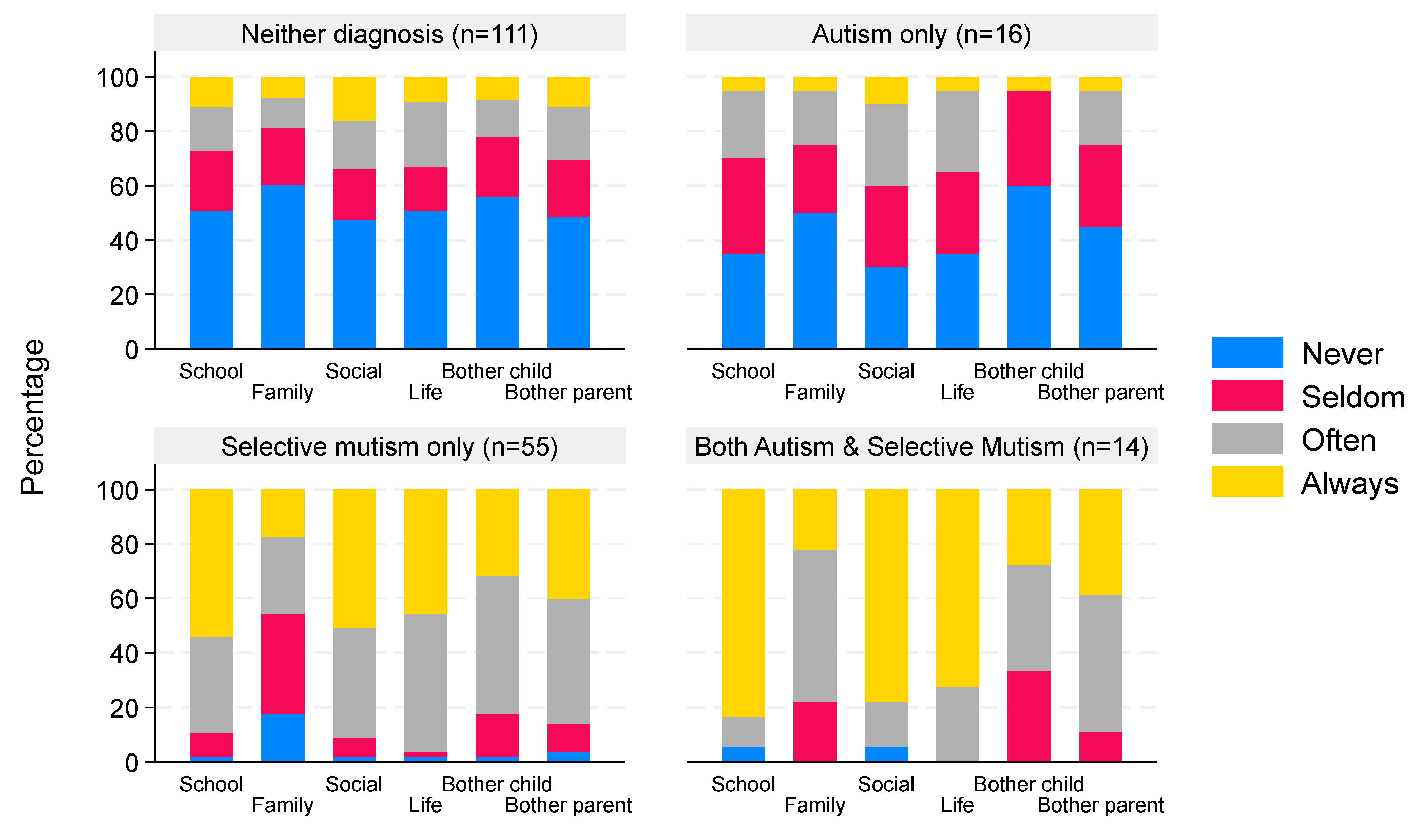
3.5. SMQ Scores—Interference of Not Talking on Family, School, and Social Situations
3.6. Child Survey
3.7. Freezing Behavior Reported by the Children and Young People
3.8. Responses from Boys and Girls
4. Discussion
4.1. The Proportion of Children with SM Who Are Also Autistic
4.2. Differences in Speaking Behaviors
4.3. Life Interference
4.4. Freezing Behavior and Factors Affecting Difficulties with Speaking
4.5. Differences Between Boys and Girls
4.6. Limitations and Recommendations for Future Research
5. Conclusions
Supplementary Materials
Author Contributions
Funding
Institutional Review Board Statement
Informed Consent Statement
Data Availability Statement
Acknowledgments
Conflicts of Interest
Abbreviations
| CEN | Clinical Excellence Network |
| CNTNAP-2 | Contactin-associated protein-like 2 |
| DD | Dissociative disorder |
| DSM | Diagnosis and Statistical Manual |
| ICD | International Classification of Diseases |
| IQR | Interquartile range |
| NASEN | National Association for Special Educational Needs |
| NDD | Neurodevelopmental disorder |
| SAD | Social anxiety disorder |
| SD | Standard deviation |
| SM | Selective mutism |
| SMiRA | Selective Mutism Information and Research Association |
| SMQ | Selective Mutism Questionnaire |
| UK | United Kingdom |
References
- Adamson, R., Powell, L., & Chilokoa, M. (2025). Working in partnership to support children and young people with selective mutism: A reflexive thematic analysis from parent and teacher perspectives. Journal of Research in Special Educational Needs, 25, 973–985. [Google Scholar] [CrossRef]
- American Psychiatric Association. (2013). Diagnostic and statistical manual of mental disorders: DSM-5. Available online: https://www.psychdb.com/anxiety/selective-mutism (accessed on 1 November 2024).
- Bergman, R. L. (2012). Treatment for children with selective mutism: An integrative behavioral approach. Oxford University Press. [Google Scholar]
- Douglas, C. L. (2021). What are the lived experiences of parents’ understanding and supporting their child with selective mutism? An exploratory study [Ph.D Thesis, University of East London]. [Google Scholar]
- Driessen, J., Blom, J. D., Muris, P., Blashfield, R. K., & Molendijk, M. L. (2020). Anxiety in children with selective mutism: A meta-analysis. Child Psychiatry & Human Development, 51(2), 330–341. [Google Scholar] [CrossRef]
- Dummit, E. S., 3rd, Klein, R. G., Tancer, N. K., Asche, B., Martin, J., & Fairbanks, J. A. (1997). Systematic assessment of 50 children with selective mutism. Journal of the American Academy of Child and Adolescent Psychiatry, 36(5), 653–660. [Google Scholar] [CrossRef]
- Fox, N. A., Buzzell, G. A., Morales, S., Valadez, E. A., Wilson, M., & Henderson, H. A. (2021). Understanding the emergence of social anxiety in children with behavioral inhibition. Biological Psychiatry, 89(7), 681–689. [Google Scholar] [CrossRef]
- Gensthaler, A., Khalaf, S., Ligges, M., Kaess, M., Freitag, C. M., & Schwenck, C. (2016). Selective mutism and temperament: The silence and behavioral inhibition to the unfamiliar. European Child & Adolescent Psychiatry, 25(10), 1113–1120. [Google Scholar] [CrossRef]
- Greene, R. K., Vasile, I., Bradbury, K. R., Olsen, A., & Duvall, S. W. (2022). Autism diagnostic observation schedule (ADOS-2) elevations in a clinical sample of children and adolescents who do not have autism: Phenotypic profiles of false positives. The Clinical Neuropsychologist, 36(5), 943–959. [Google Scholar] [CrossRef]
- Held, L. K., Vink, J. M., Vitaro, F., Brendgen, M., Dionne, G., Provost, L., Boivin, M., Ouellet-Morin, I., & Roelofs, K. (2022). The gene environment aetiology of freezing and its relationship with internalizing symptoms during adolescence. EBioMedicine, 81, 104094. [Google Scholar] [CrossRef]
- Hus, Y., & Segal, O. (2021). Challenges surrounding the diagnosis of Autism in children. Neuropsychiatric Disease and Treatment, 17, 3509–3529. [Google Scholar] [CrossRef] [PubMed]
- Johnson, M., & Wintgens, A. (2016). The selective mutism resource manual (2nd ed.). Speechmark Publishing Ltd. [Google Scholar]
- Kamani, Z., & Monga, S. (2020). Understanding the outcome of children who selectively do not speak: A retrospective approach. Journal of the Canadian Academy of Child and Adolescent Psychiatry, 29(2), 58–65. [Google Scholar]
- Kearney, C. A., & Rede, M. (2021). The heterogeneity of selective mutism: A primer for a more refined approach. Frontiers in Psychology, 12, 700745. [Google Scholar] [CrossRef]
- Kent, R., & Simonoff, E. (2017). Chapter 2—Prevalence of anxiety in Autism spectrum disorders. In C. M. Kerns, P. Renno, E. A. Storch, P. C. Kendall, & J. J. Wood (Eds.), Anxiety in children and adolescents with Autism spectrum disorder (pp. 5–32). Academic Press. [Google Scholar]
- Kentrou, V., Livingston, L. A., Grove, R., Hoekstra, R. A., & Begeer, S. (2024). Perceived misdiagnosis of psychiatric conditions in autistic adults. EClinicalMedicine, 71, 102586. [Google Scholar] [CrossRef]
- Keville, S., Zormati, P., Shahid, A., Osborne, C., & Ludlow, A. K. (2024). Parent perspectives of children with selective mutism and co-occurring autism. International Journal of Developmental Disabilities, 70(7), 1251–1261. [Google Scholar] [CrossRef]
- Koskela, M., Jokiranta-Olkoniemi, E., Luntamo, T., Suominen, A., Sourander, A., & Steinhausen, H. C. (2024). Selective mutism and the risk of mental and neurodevelopmental disorders among siblings. European Child & Adolescent Psychiatry, 33(1), 291–302. [Google Scholar] [CrossRef]
- Kozlowska, K., Walker, P., McLean, L., & Carrive, P. (2015). Fear and the defense cascade: Clinical implications and management. Harvard Review of Psychiatry, 23(4), 263–287. [Google Scholar] [CrossRef] [PubMed]
- Kristensen, H., & Torgersen, S. (2001). MCMI-II personality traits and symptom traits in parents of children with selective mutism: A case-control study. Journal of Abnormal Psychology, 110(4), 648–652. [Google Scholar] [CrossRef]
- Ludlow, A. K., Osborne, C., & Keville, S. (2023). Selective mutism in children with and without an Autism spectrum disorder: The role of sensory avoidance in mediating symptoms of social anxiety. Journal of Autism and Developmental Disorders, 53(10), 3891–3900. [Google Scholar] [CrossRef] [PubMed]
- Melfsen, S., Romanos, M., Jans, T., & Walitza, S. (2021). Betrayed by the nervous system: A comparison group study to investigate the ‘unsafe world’ model of selective mutism. Journal of Neural Transmission, 128(9), 1433–1443. [Google Scholar] [CrossRef]
- Moore, S., Amatya, D. N., Chu, M. M., & Besterman, A. D. (2022). Catatonia in autism and other neurodevelopmental disabilities: A state-of-the-art review. NPJ Mental Health Research, 1(1), 12. [Google Scholar] [CrossRef]
- Moskowitz, A. K. (2004). “Scared stiff”: Catatonia as an evolutionary-based fear response. Psychological Review, 111(4), 984–1002. [Google Scholar] [CrossRef] [PubMed]
- Muris, P., Buttgens, L., Koolen, M., Mannien, C., Scholtes, N., & van Dooren-Theunissen, W. (2024). Symptoms of selective mutism in middle childhood: Psychopathological and temperament correlates in non-clinical and clinically referred 6- to 12-year-old children. Child Psychiatry & Human Development, 55(6), 1514–1525. [Google Scholar] [CrossRef]
- Muris, P., Hendriks, E., & Bot, S. (2016). Children of few words: Relations among selective mutism, behavioral inhibition, and (social) anxiety symptoms in 3- to 6-year-olds. Child Psychiatry & Human Development, 47(1), 94–101. [Google Scholar] [CrossRef]
- Muris, P., Monait, N., Weijsters, L., & Ollendick, T. H. (2021). Symptoms of selective mutism in non-clinical 3- to 6-year-old children: Relations with social anxiety, autistic features, and behavioral inhibition. Frontiers in Psychology, 12, 669907. [Google Scholar] [CrossRef] [PubMed]
- Muris, P., & Ollendick, T. H. (2021). Current challenges in the diagnosis and management of selective mutism in children. Psychology Research and Behavior Management, 14, 159–167. [Google Scholar] [CrossRef]
- Oerbeck, B., Overgaard, K. R., Bergman, R. L., Pripp, A. H., & Kristensen, H. (2020). The selective mutism questionnaire: Data from typically developing children and children with selective mutism. Clinical Child Psychology and Psychiatry, 25(4), 754–765. [Google Scholar] [CrossRef] [PubMed]
- Oerbeck, B., Overgaard, K. R., Stein, M. B., Pripp, A. H., & Kristensen, H. (2018). Treatment of selective mutism: A 5-year follow-up study. European Child & Adolescent Psychiatry, 27(8), 997–1009. [Google Scholar] [CrossRef] [PubMed]
- Petrou, A. M., Parr, J. R., & McConachie, H. (2018). Gender differences in parent-reported age at diagnosis of children with autism spectrum disorder. Research in Autism Spectrum Disorders, 50, 32–42. [Google Scholar] [CrossRef]
- Rodgers, J., & Ofield, A. (2018). Understanding, recognising and treating co-occurring anxiety in Autism. Current Developmental Disorders Reports, 5(1), 58–64. [Google Scholar] [CrossRef]
- Roelofs, K. (2017). Freeze for action: Neurobiological mechanisms in animal and human freezing. Philosophical Transactions of the Royal Society B: Biological Sciences, 372(1718), 20160206. [Google Scholar] [CrossRef]
- Schwenck, C., Gensthaler, A., Vogel, F., Pfeffermann, A., Laerum, S., & Stahl, J. (2022). Characteristics of person, place, and activity that trigger failure to speak in children with selective mutism. European Child & Adolescent Psychiatry, 31(9), 1419–1429. [Google Scholar] [CrossRef]
- Scott, S., & Beidel, D. C. (2011). Selective mutism: An update and suggestions for future research. Current Psychiatry Reports, 13(4), 251–257. [Google Scholar] [CrossRef]
- Shah, A., & Wing, L. (2006). Psychological approaches to chronic catatonia-like deterioration in autism spectrum disorders. International Review of Neurobiology, 72, 245–264. [Google Scholar] [CrossRef] [PubMed]
- Shimoni, H. N., Gindi, S., Zilbershot Fink, E., Ben Shabbat Seri, M., Levy, E., Hutter-Beeri, D., Hadaya Cohen, M., & Leitner, Y. (2025). Diagnosing Autism spectrum disorder (Asd) in medical settings: The peer group observation technique-three case studies. Harefuah, 164(7), 412–417. [Google Scholar]
- Snyder, D. M., Miller, K., & Stein, M. T. (2008). It looks like autism: Caution in diagnosis. Journal of Developmental and Behavioral Pediatrics, 29(1), 47–50. [Google Scholar] [CrossRef] [PubMed]
- Steffenburg, H., Steffenburg, S., Gillberg, C., & Billstedt, E. (2018). Children with autism spectrum disorders and selective mutism. Neuropsychiatric Disease and Treatment, 14, 1163–1169, (Erratum in 2018, Neuropsychiatric Disease and Treatment, 14, 2305. https://doi.org/10.2147/NDT.S174945). [Google Scholar] [CrossRef]
- Tavassoli, T., Miller, L. J., Schoen, S. A., Nielsen, D. M., & Baron-Cohen, S. (2014). Sensory over-responsivity in adults with autism spectrum conditions. Autism, 18(4), 428–432. [Google Scholar] [CrossRef]
- Taylor, E., Holt, R., Tavassoli, T., Ashwin, C., & Baron-Cohen, S. (2020). Revised scored sensory perception quotient reveals sensory hypersensitivity in women with autism. Molecular Autism, 11(1), 18. [Google Scholar] [CrossRef]
- Vaquerizo-Serrano, J., Salazar De Pablo, G., Singh, J., & Santosh, P. (2021). Catatonia in autism spectrum disorders: A systematic review and meta-analysis. European Psychiatry, 65(1), e4. [Google Scholar] [CrossRef]
- Vogel, F., Gensthaler, A., & Schwenck, C. (2022a). Frozen with fear? Attentional mechanisms in children with selective mutism. Cognitive Therapy and Research, 46(3), 629–645. [Google Scholar] [CrossRef]
- Vogel, F., Reichert, J., & Schwenck, C. (2022b). Silence and related symptoms in children and adolescents: A network approach to selective mutism. BMC Psychology, 10(1), 271. [Google Scholar] [CrossRef]
- Vogel, F., Rose, C., & Schwenck, C. (2024). Symptoms of selective mutism beyond failure to speak in children and adolescents. European Child & Adolescent Psychiatry, 33(10), 3603–3611. [Google Scholar] [CrossRef]
- Vogel, F., & Schwenck, C. (2021). Psychophysiological mechanisms underlying the failure to speak: A comparison between children with selective mutism and social anxiety disorder on autonomic arousal. Child and Adolescent Psychiatry and Mental Health, 15(1), 81. [Google Scholar] [CrossRef] [PubMed]
- World Health Organization. (2022). International statistical classification of diseases and related health problems (ICD-11) (11th ed.). World Health Organization. Available online: https://icd.who.int/browse/2024-01/mms/en#167946871 (accessed on 19 February 2024).
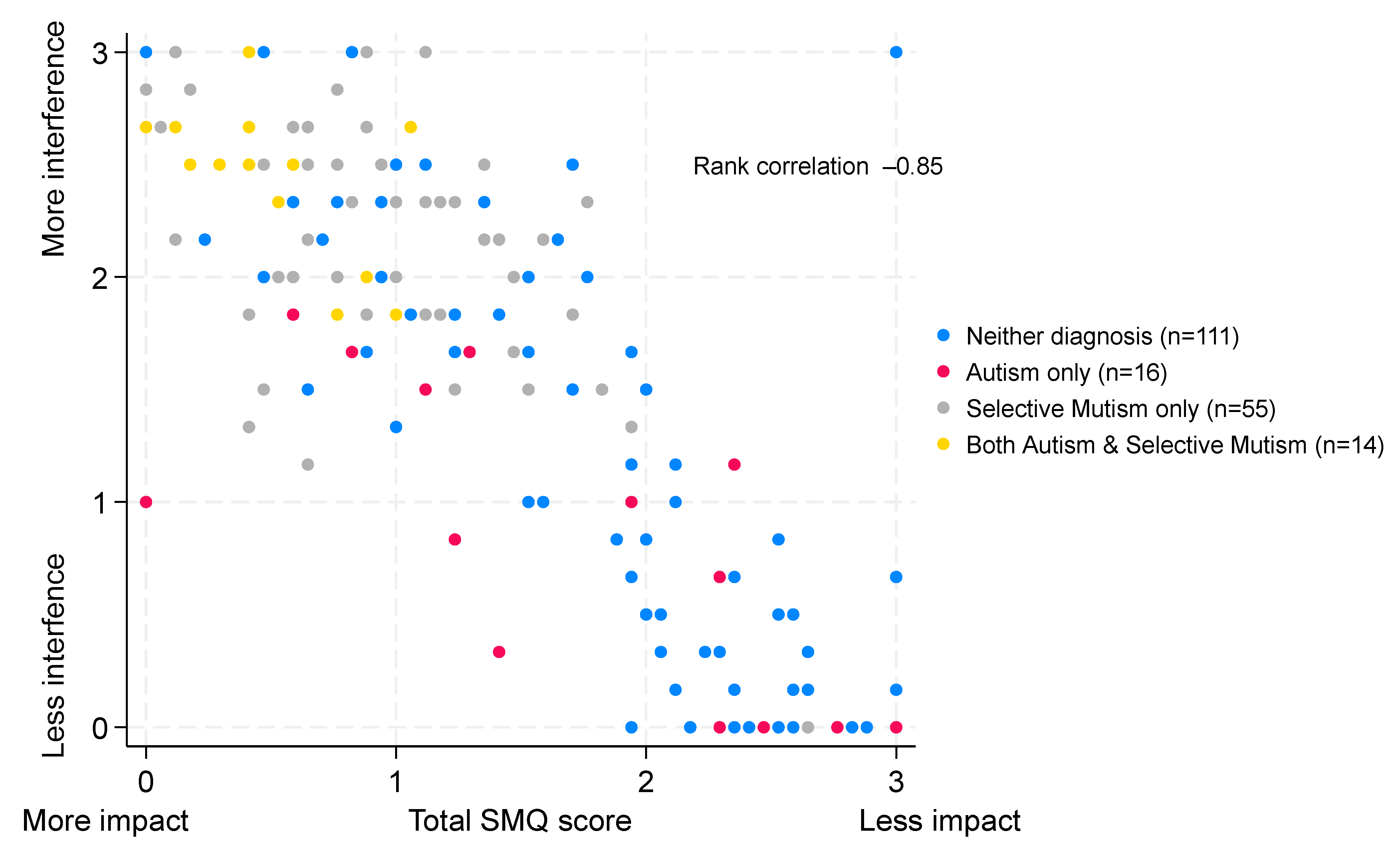
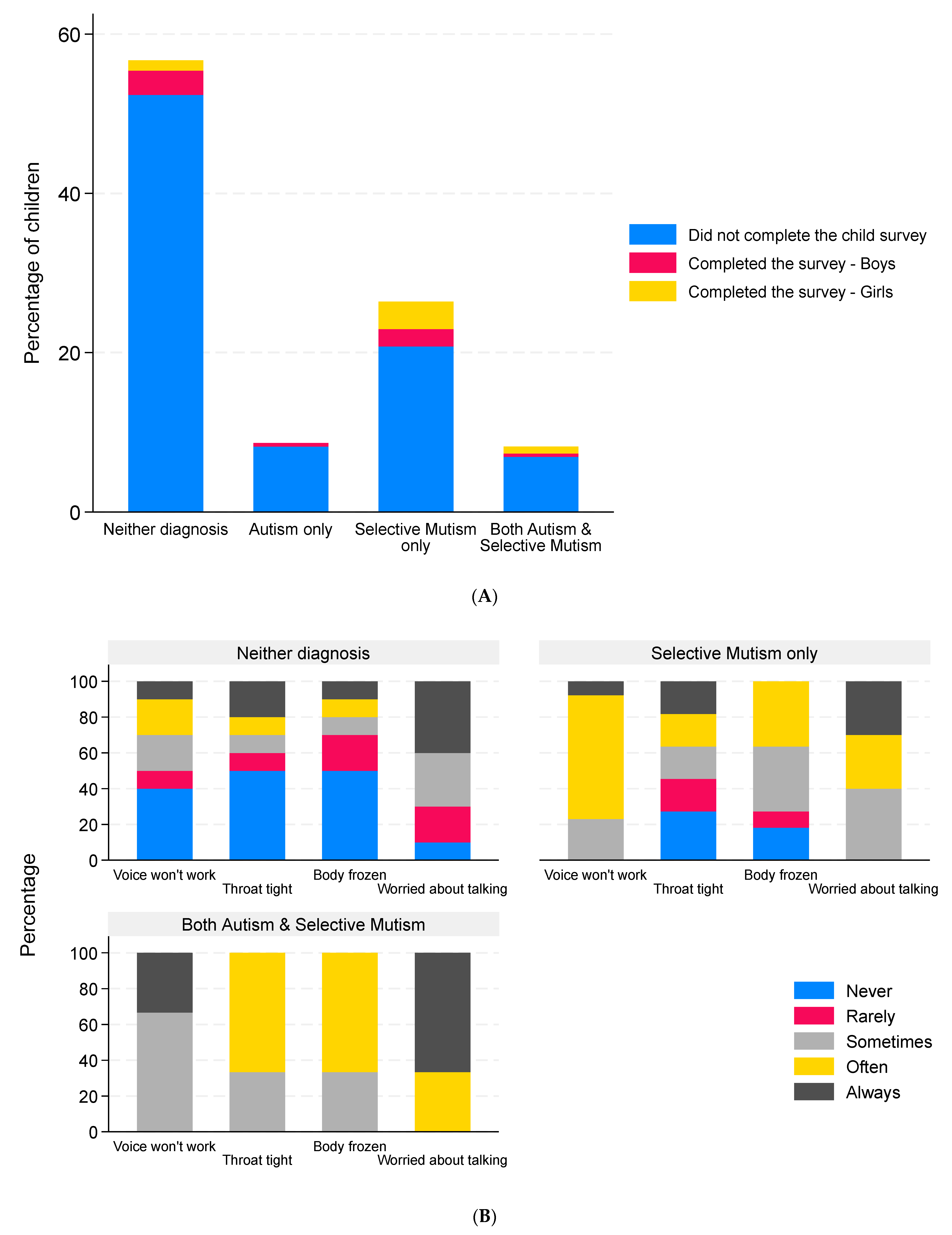
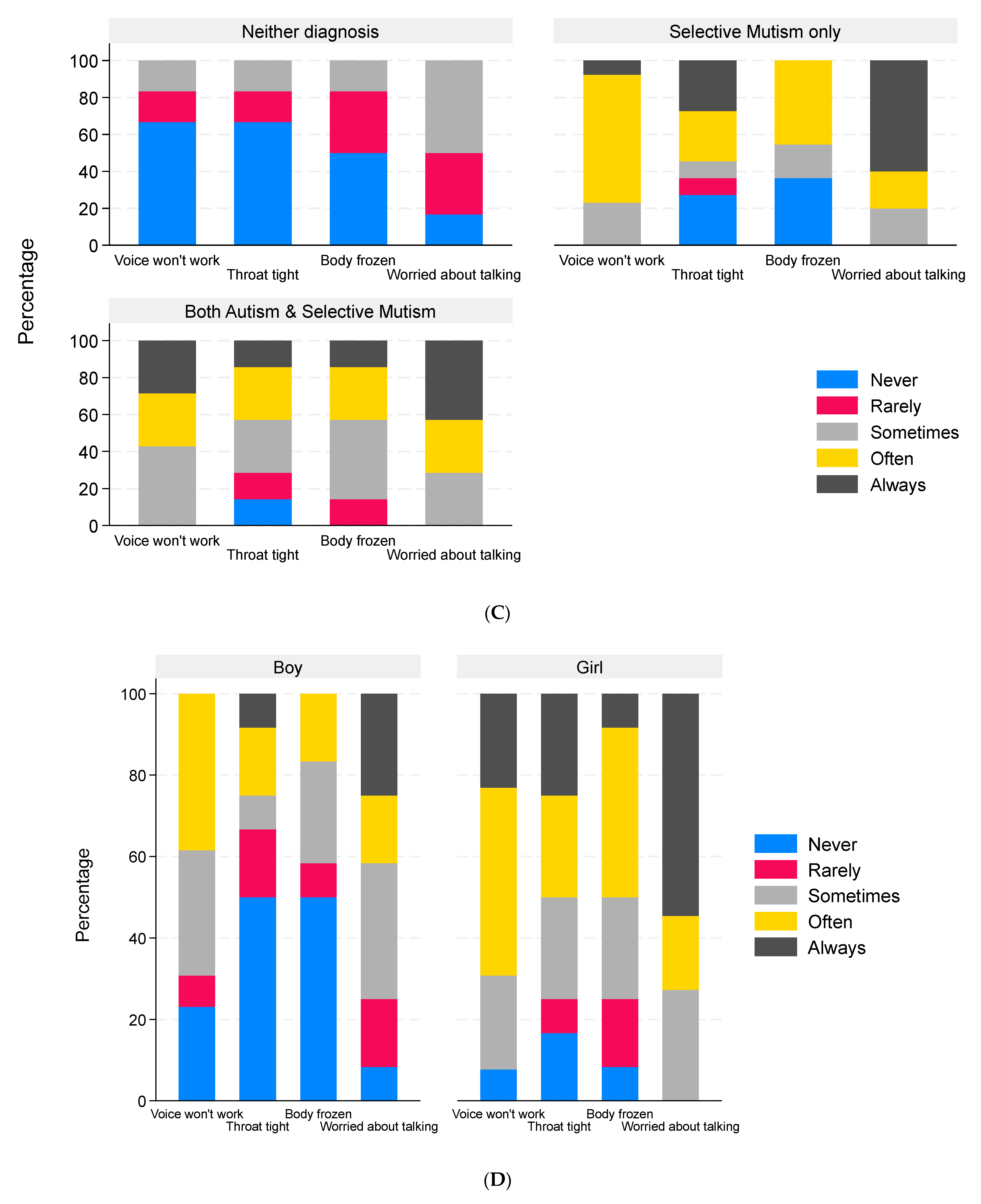

| Country | N (%) |
|---|---|
| United Kingdom | 140 (93%) |
| United States of America | 3 (2%) |
| New Zealand | 2 (1%) |
| Ireland | 1 (<1%) |
| France | 1 (<1%) |
| Germany | 1 (<1%) |
| Greece | 1 (<1%) |
| United Arab Emirates | 1 (<1%) |
| Total | 150 (100%) |
| Number of Children | N (%) |
|---|---|
| 1 | 69 (47%) |
| 2 | 58 (40%) |
| 3 | 17 (12%) |
| 4 | 1 (<1%) |
| 5+ | 1 (<1%) |
| Total number of responses | 146 (100%) |
| Total number of children (excluding families with 5+ children) | 240 |
| Diagnosis | Under 5 | 5–7 | 8–11 | 12–16 | All Children |
|---|---|---|---|---|---|
| Neither diagnosis | 5 (83%) | 34 (50%) | 41 (57%) | 51 (60%) | 131 (57%) |
| Autism only | 0 (0%) | 3 (4%) | 7 (10%) | 10 (12%) | 20 (9%) |
| SM only | 1 (17%) | 30 (43%) | 19 (27%) | 11 (13%) | 61 (26%) |
| Both autism and SM | 0 (0%) | 2 (3%) | 4 (6%) | 13 (15%) | 19 (8%) |
| Total autism | 0 | 5 | 11 | 23 | 39 |
| Total SM | 1 | 32 | 23 | 24 | 80 |
| Total children | 6 | 69 | 71 | 85 | 231 |
| Percentage of children with SM in each age band who also have Autism | 0% | 6% | 17% | 54% | 24% |
| Clinical Diagnosis | |||||
|---|---|---|---|---|---|
| Parental View of the Child’s Diagnosis | Neither Diagnosis | Autism Only | SM Only | Both Autism and SM | Total |
| Neither diagnosis | 81 (35%) | 1 (<1%) | 1 (<1%) | 0 (0%) | 83 (36%) |
| Autism only | 15 (6%) | 15 # (6%) | 1 (<1%) | 0 (0%) | 31 (13%) |
| SM only | 26 (11%) | 2 (1%) | 47 + (20%) | 0 (0%) | 75 (32%) |
| Both autism and SM | 9 (4%) | 2 (1%) | 12 (5%) | 19 * (8%) | 42 (18%) |
| Total | 131 (57%) | 20 (9%) | 61 (26%) | 19 (8%) | 231 (100%) |
| Diagnosis | |||||
|---|---|---|---|---|---|
| Response Status | Neither Diagnosis | Autism Only | SM Only | Both Autism and SM | Total |
| Responded to the child survey | 10 | 1 | 13 | 1 | 25 |
| SMQ total score | 2.3 | 2.8 | 0.9 | 0.2 * | 1.1 |
| (median, IQR) | (1.0–2.7) | (0.8–1.4) | (0.9–2.1) | ||
| Did not respond to the child survey | 101 | 15 | 42 | 13 | 171 |
| SMQ total score | 2.4 | 1.4 | 0.8 | 0.4 (0.4–0.8) | 1.7 |
| (median, IQR) | (1.6–2.9) | (1.1–2.4) | (0.5–1.2) | (0.8–2.5) | |
| All children | 111 | 16 | 55 | 14 | 196 |
| SMQ total score | 2.4 | 1.7 | 0.9 | 0.4 | 1.5 |
| (median, IQR) | (1.5–2.9) | (1.2–2.4) | (0.6–1.2) | (0.3–0.8) | (0.8–2.5) |
| Characteristic | Boys (n = 14) | Girls (n = 13) | Total (n = 27) |
|---|---|---|---|
| Age (years) | 7 (5–9) | 10 (6–15) | 8 (5–11) |
| Clinical diagnosis | |||
| Neither diagnosis | 7/14 (50%) | 3/13 (23%) | 10/27 (37%) |
| Autism only | 1/14 (7%) | 0 | 1/27 (4%) |
| SM only | 5/14 (36%) | 8/13 (62%) | 13/27 (48%) |
| Both autism and SM | 1/14 (7%) | 2/13 (15%) | 3/27 (11%) |
| Parental view of diagnosis | |||
| Neither diagnosis, but suspects SM | 2/14 (14%) | 1/13 (8%) | 3/27 (11%) |
| SM but also suspects autism | 1/14 (7%) | 2/13 (15%) | 3/27 (11%) |
| SMQ | |||
| SMQ total score a | 1.5 (1.1–2.6) | 0.8 (0.5–1.3) | 1.1 (0.9–2.1) |
| Interference score a | 1.3 (0.7–2.3) | 2.4 (1.8–2.8) | 2 (0.5–2.5) |
| Symptoms occurring at least some of the time | |||
| Voice will not work | 9/13 (69%) | 12/13 (92%) | 21/26 (81%) |
| Throat feels tight | 4/12 (33%) | 9/12 (75%) | 13/24 (54%) |
| Body frozen | 5/12 (42%) | 9/12 (75%) | 14/24 (58%) |
| Number of body parts affected | 0.5 (0–1.5) | 2 (1.5–4) | 1.5 (0–3) |
| Body parts affected | |||
| Face | 4/12 (33%) | 5/12 (42%) | 9/24 (38%) |
| Neck | 3/12 (25%) | 5/12 (42%) | 8/24 (33%) |
| Hand | 2/12 (17%) | 5/12 (42%) | 7/24 (29%) |
| Shoulder | 2/12 (17%) | 4/12 (33%) | 6/24 (25%) |
| Leg | 1/12 (8%) | 5/12 (42%) | 6/24 (25%) |
| Arm | 1/12 (8%) | 4/12 (33%) | 5/24 (21%) |
| Stomach | 1/12 (8%) | 2/12 (17%) | 3/24 (13%) |
| Chest/heart | 0 | 2/12 (17%) | 2/24 (8%) |
| Mouth | 0 | 1/12 (8%) | 1/24 (4%) |
| Worried about talking | 9/12 (75%) | 11/11 (100%) | 20/23 (87%) |
| Uncomfortable when expected to speak | 4/12 (33%) | 8/11 (73%) | 12/23 (52%) |
Disclaimer/Publisher’s Note: The statements, opinions and data contained in all publications are solely those of the individual author(s) and contributor(s) and not of MDPI and/or the editor(s). MDPI and/or the editor(s) disclaim responsibility for any injury to people or property resulting from any ideas, methods, instructions or products referred to in the content. |
© 2026 by the authors. Licensee MDPI, Basel, Switzerland. This article is an open access article distributed under the terms and conditions of the Creative Commons Attribution (CC BY) license.
Share and Cite
Landrock-White, S.A.; Lenton, L.; Roe, J.V.J.; Rogers, C.A. Physical Freezing in Children and Adolescents with Selective Mutism. Behav. Sci. 2026, 16, 152. https://doi.org/10.3390/bs16010152
Landrock-White SA, Lenton L, Roe JVJ, Rogers CA. Physical Freezing in Children and Adolescents with Selective Mutism. Behavioral Sciences. 2026; 16(1):152. https://doi.org/10.3390/bs16010152
Chicago/Turabian StyleLandrock-White, Shirley A., Lindsay Lenton, Jean Victoria J. Roe, and Chris A. Rogers. 2026. "Physical Freezing in Children and Adolescents with Selective Mutism" Behavioral Sciences 16, no. 1: 152. https://doi.org/10.3390/bs16010152
APA StyleLandrock-White, S. A., Lenton, L., Roe, J. V. J., & Rogers, C. A. (2026). Physical Freezing in Children and Adolescents with Selective Mutism. Behavioral Sciences, 16(1), 152. https://doi.org/10.3390/bs16010152

