


Sweet Round, Spicy Sharp: How Chinese Typeface Features Trick the Tongue into Tasting Five Flavors


Abstract
1. Introduction
1.1. Crossmodal Correspondence: From Shape to Typeface–Universality and Application
1.2. Deepening of Western Typeface–Taste Crossmodal Correspondence Research
1.3. Research on Typeface–Taste Correspondences in the Chinese Context
1.4. Differences in Typeface–Taste Research Between Chinese and English Contexts
1.4.1. Differences in the Basic Flavor Framework
1.4.2. Differences in Visual Features of Typefaces
1.5. Research Approach and Hypotheses
2. Exploratory Experiment
2.1. Methods
2.1.1. Screening of Samples for the Exploratory Experiment
- (1)
- Grouping and naming: Based on visual features, the five designers independently classified the 20 typeface cards into groups by placing visually similar ones together, and gave each group a name.
- (2)
- Reason elaboration: Each designer provided a written explanation of the visual rationale for each self-created category and any associated sensory impressions.
- (3)
- The researcher compiled results and analyzed major grouping trends, consensus features, and differing viewpoints.
- (4)
- Sample selection: Based on the textual analysis and K-means clustering results, the researcher selected representative samples and described their characteristics.
2.1.2. Participants
2.1.3. Procedure
2.2. Results Analysis
2.3. Discussion
3. Main Study
3.1. Methods
3.1.1. Design
3.1.2. Participants
3.1.3. Procedure
3.2. Results Analysis
3.2.1. Simple Effects Analysis for Sour Taste Expectancy
3.2.2. Simple Effects Analysis for Sweet Taste Expectancy
3.2.3. Simple Effects Analysis for Bitter Taste Expectancy
3.2.4. Simple Effects Analysis for Spicy Flavor Expectancy
3.2.5. Simple Effects Analysis for Salty Taste Expectancy
4. Discussion
4.1. The Taste-Modulating Effect of Typeface Category
4.1.1. The Sweetness Advantage of Yuan Typeface and Its Condition Dependence
4.1.2. The Association of Song Typeface’s Angular Bifeng with Bitter, Spicy, and Salty Tastes
4.1.3. The Hei Typeface’s Association with Saltiness and Glyph Compensation
4.1.4. The Dynamic Bifeng of Calligraphic Typeface and the Effect of Visual Complexity
4.2. The Condition Dependence of Stroke Thickness
4.3. Theoretical Integration of Interaction Patterns
4.4. Commonalities and Differences in Typeface–Flavor Crossmodal Correspondences Between Chinese and Western Contexts
4.4.1. Commonalities: Cross-Cultural Perceptual Regularities
4.4.2. Differences: Modulation of Gustatory Crossmodal Correspondence Pathways by Writing Systems
4.5. Methodological Implications of the Real Packaging Context
4.6. Theoretical Contributions and Practical Implications
4.7. Limitations and Future Directions
5. Conclusions
Author Contributions
Funding
Institutional Review Board Statement
Informed Consent Statement
Data Availability Statement
Acknowledgments
Conflicts of Interest
References
- Arditi, A., & Cho, J. (2005). Serifs and font legibility. Vision Research, 45(23), 2926–2933. [Google Scholar] [CrossRef] [PubMed]
- Bringhurst, R. (2004). The elements of typographic style. Hartley & Marks, Publishers. [Google Scholar]
- Chen, N., Watanabe, K., & Wada, M. (2021). People with high autistic traits show fewer consensual crossmodal correspondences between visual features and tastes. Frontiers in Psychology, 12, 714277. [Google Scholar] [CrossRef]
- Chuquichambi, E. G., Munar, E., Spence, C., & Velasco, C. (2024). Individual differences in sensitivity to taste-shape crossmodal correspondences. Food Quality and Preference, 115, 105110. [Google Scholar] [CrossRef]
- Cohen, J. (1988). Statistical power analysis for the behavioral sciences (2nd ed.). L. Erlbaum Associates. [Google Scholar]
- Cwiek, A., Fuchs, S., Draxler, C., Asu, E. L., Dediu, D., Hiovain, K., Kawahara, S., Koutalidis, S., Krifka, M., Lippus, P., Lupyan, G., Oh, G. E., Paul, J., Petrone, C., Ridouane, R., Reiter, S., Schumchen, N., Szalontai, A., Unal-Logacev, O., … Winter, B. (2022). The bouba/kiki effect is robust across cultures and writing systems. Philosophical Transactions of the Royal Society B: Biological Sciences, 377(1841), 20200390. [Google Scholar] [CrossRef] [PubMed]
- de Sousa, M. M. M., Carvalho, F. M., & Pereira, R. G. F. A. (2020). Do typefaces of packaging labels influence consumers’ perception of specialty coffee? A preliminary study. Journal of Sensory Studies, 35(5), e12599. [Google Scholar] [CrossRef]
- Doyle, J. R., & Bottomley, P. A. (2004). Font appropriateness and brand choice. Journal of Business Research, 57(8), 873–880. [Google Scholar] [CrossRef]
- Doyle, J. R., & Bottomley, P. A. (2006). Dressed for the occasion: Font-product congruity in the perception of logotype. Journal of Consumer Psychology, 16(2), 112–123. [Google Scholar] [CrossRef]
- Drewnowski, A. (1997). Taste preferences and food intake. Annual Review of Nutrition, 17, 237–253. [Google Scholar] [CrossRef]
- Faul, F., Erdfelder, E., Lang, A. G., & Buchner, A. (2007). G*Power 3: A flexible statistical power analysis program for the social, behavioral, and biomedical sciences. Behavior Research Methods, 39(2), 175–191. [Google Scholar] [CrossRef] [PubMed]
- Gou, R. L. (2003). The metaphor system of sensory categories in Chinese. Journal of Zhengzhou University (Philosophy and Social Sciences Edition), 36(5), 108–112. [Google Scholar]
- He, W., Liang, L., & Zhang, Y. (2023). Pungency perception and the interaction with basic taste sensations: An overview. Foods, 12(12), 2317. [Google Scholar] [CrossRef]
- Huang, B. Z. (2006). A comparative study of taste words in Chinese and Japanese. Journal of Shanxi Agricultural University (Social Science Edition), 1(1), 49–52. [Google Scholar]
- Huang, T. Y., Cai, L. L., Dong, Q. Z., Chen, Y. F., Sun, M. L., Li, W. H., Xue, X. X., & Fang, D. D. (2017). A brief discussion on the five tastes in traditional Chinese medicine and dietary five tastes. Journal of Clinical Chinese Medicine, 9(6), 2. [Google Scholar]
- Lee, B. P., & Spence, C. (2023). Synergistic combination of visual features in vision-taste crossmodal correspondences. Multisensory Research, 36(7), 573–612. [Google Scholar] [CrossRef]
- Li, Z. Y., & Wang, A. X. (2018). A comparative study on the legibility of stroke design between Song and Times New Roman typefaces. Packaging Engineering, 39(12), 5. [Google Scholar]
- Liu, W. M., Ma, Z. G., & Ye, F. R. (2020). The influence of packaging elements on consumers and its underlying mechanisms in the marketing field. Advances in Psychological Science, 28(6), 1015–1028. [Google Scholar] [CrossRef]
- Loconsole, M., Stancher, G., & Versace, E. (2023). Crossmodal association between visual and acoustic cues in a tortoise (Testudo hermanni). Biology Letters, 19(7), 20230192. [Google Scholar] [CrossRef]
- Luo, F., Zhang, Y., Liang, W., Blais, C., Plouffe-Demers, M., Fiset, D., Sun, D., & Chen, B. (2025). Stroke features in Chinese character recognition. Quarterly Journal of Experimental Psychology, 78(5), 1024–1041. [Google Scholar] [CrossRef]
- Lyu, R. M., Zhang, T. J., Xi, X., Wang, M. M., Meng, L., & Zhang, K. J. (2022). A quantitative study on the influence of brushwork and structure on the aesthetic quality of regular script characters. Journal of Zhejiang University (Science Edition), 49(3), 261–270. [Google Scholar]
- Martin, B., & Hanington, B. (2013). Universal methods of design. Central Compilation & Translation Press. [Google Scholar]
- Matuschek, H., Kliegl, R., Vasishth, S., Baayen, H., & Bates, D. (2017). Balancing Type I error and power in linear mixed models. Journal of Memory and Language, 94, 305–315. [Google Scholar] [CrossRef]
- Motoki, K., Saito, T., Nouchi, R., Kawashima, R., & Sugiura, M. (2019). Round faces are associated with sweet foods: The role of crossmodal correspondence in social perception. Foods, 8(3), 103. [Google Scholar] [CrossRef]
- Motoki, K., & Velasco, C. (2021). Taste-shape correspondences in context. Food Quality and Preference, 88, 104082. [Google Scholar] [CrossRef]
- Otterbring, T., Rolschau, K., Furrebøe, E. F., & Nyhus, E. K. (2022). Crossmodal correspondences between typefaces and food preferences drive congruent choices but not among young consumers. Food Quality and Preference, 96, 104376. [Google Scholar] [CrossRef]
- Peng, Y. B., & Wan, X. A. (2022). Flavor-induced attentional bias toward associated colors in visual search. Acta Psychologica Sinica, 54(7), 736–747. [Google Scholar] [CrossRef]
- Piqueras-Fiszman, B., & Spence, C. (2011). Crossmodal correspondences in product packaging: Assessing color-flavor correspondences for potato chips (crisps). Appetite, 57(3), 753–757. [Google Scholar] [CrossRef]
- Piqueras-Fiszman, B., Velasco, C., & Spence, C. (2012). Exploring implicit and explicit crossmodal colour-flavour correspondences in product packaging. Food Quality and Preference, 25(2), 148–155. [Google Scholar] [CrossRef]
- Salgado-Montejo, A., Alvarado, J. A., Velasco, C., Salgado, C. J., Hasse, K., & Spence, C. (2015). The sweetest thing: The influence of angularity, symmetry, and the number of elements on shape-valence and shape-taste matches. Frontiers in Psychology, 6, 1382. [Google Scholar] [CrossRef]
- Sciortino, P., & Kayser, C. (2023). Steady state visual evoked potentials reveal a signature of the pitch-size crossmodal association in visual cortex. NeuroImage, 273, 120093. [Google Scholar] [CrossRef]
- Spence, C. (2011). Crossmodal correspondences: A tutorial review. Attention, Perception, & Psychophysics, 73(4), 971–995. [Google Scholar] [CrossRef]
- Spence, C. (2020). Temperature-based crossmodal correspondences: Causes and consequences. Multisensory Research, 33(6), 645–682. [Google Scholar] [CrossRef] [PubMed]
- Spence, C., Ngo, M. K., Percival, B., & Smith, B. (2013). Crossmodal correspondences: Assessing shape symbolism for cheese. Food Quality & Preference, 28(1), 206–212. [Google Scholar]
- Sunaga, T., Moriguchi, T., Nishii, M., & Spence, C. (2025). Connotative congruency effect between instrumental timbre and visual design features on consumer decision-making. Psychology & Marketing, 42(8), 1234–1250. [Google Scholar]
- Tavassoli, N. T. (2001). Color memory and evaluations for alphabetical and logographic brand names. Journal of Experimental Psychology: Applied, 7(2), 104–111. [Google Scholar] [CrossRef]
- Tu, Y. J., & Yang, Z. (2013). A review and implications of the influence of packaging on food taste experience. Packaging Engineering, 34(6), 68–72. [Google Scholar]
- Velasco, C., Hyndman, S., & Spence, C. (2018). The role of typeface curvilinearity on taste expectations and perception. International Journal of Gastronomy and Food Science, 11, 63–74. [Google Scholar] [CrossRef]
- Velasco, C., Salgado-Montejo, A., Marmolejo-Ramos, F., & Spence, C. (2014). Predictive packaging design: Tasting shapes, typefaces, names, and sounds. Food Quality and Preference, 34, 88–95. [Google Scholar] [CrossRef]
- Velasco, C., Woods, A. T., Deroy, O., & Spence, C. (2015a). Hedonic mediation of the crossmodal correspondence between taste and shape. Food Quality and Preference, 41, 151–158. [Google Scholar] [CrossRef]
- Velasco, C., Woods, A. T., Hyndman, S., & Spence, C. (2015b). The taste of typeface. i-Perception, 6(4), 2041669515593040. [Google Scholar] [CrossRef]
- Velasco, C., Woods, A. T., Liu, J., & Spence, C. (2016a). Assessing the role of taste intensity and hedonics in taste-shape correspondences. Multisensory Research, 29(1–3), 209–221. [Google Scholar] [CrossRef] [PubMed]
- Velasco, C., Woods, A. T., Petit, O., Cheok, A. D., & Spence, C. (2016b). Crossmodal correspondences between taste and shape, and their implications for product packaging: A review. Food Quality and Preference, 52, 17–26. [Google Scholar] [CrossRef]
- Wan, X., Woods, A. T., van den Bosch, J. J., McKenzie, K. J., Velasco, C., & Spence, C. (2014). Cross-cultural differences in crossmodal correspondences between basic tastes and visual features. Frontiers in Psychology, 5, 1365. [Google Scholar] [CrossRef] [PubMed]
- Wang, M., & Li, D. (2022). Visualise the tastes from the label: A study on the taste-colour crossmodal association of crisp and dry. Frontiers in Psychology, 13, 980049. [Google Scholar] [CrossRef]
- Wang, W. (2017). Crossmodal correspondences between the shapes and brightness of Chinese characters and taste perception [Master’s thesis, University of Malaya]. [Google Scholar]
- Wang, X., Lu, X. Q., & Tang, Z. (2013). Chinese font recognition based on shape similarity of stroke tips. Acta Scientiarum Naturalium Universitatis Pekinensis, 49(1), 54–60. [Google Scholar]
- Wang, Y., & Lyu, R. (2024). Characteristics of visual complexity: Calligraphic fonts vs. printed fonts. In 2024 IEEE international conference on multimedia and expo workshops (ICMEW) (pp. 1–6). IEEE. [Google Scholar]
- Wei, H., Wang, T., Feng, W. T., & Ding, Q. (2018). The influence of the slant of textual brand logos on consumer perception and attitude. Management Review, 30(2), 136–145. [Google Scholar]
- Wertz, S. K. (2007). The five flavors and Taoism: Lao Tzu’s verse twelve. Asian Philosophy, 17(3), 251–261. [Google Scholar] [CrossRef]
- Xiong, L. (2004). Font design in packaging. Packaging Engineering, 25(2), 172–173. [Google Scholar]
- Xu, H. R. (2014). History of Chinese diet (Vol. 1). Hangzhou Publishing House. [Google Scholar]
- Yi, T., Lian, Z., Tang, Y., & Xiao, J. (2014). A data-driven personalized digital ink for Chinese characters. In International conference on multimedia modeling (pp. 254–265). Springer International Publishing. [Google Scholar]
- Zhang, S. Y. (1999). A comparison of extended meanings of basic taste words in Japanese and Chinese. Journal of PLA University of Foreign Languages, 22(6), 35–38. [Google Scholar]
- Zhao, Q., Huang, C., & Lee, S. Y. (2017). From linguistic synaesthesia to embodiment: Asymmetrical representations of taste and smell in Mandarin Chinese. In Y. Wu, J.-F. Hong, & Q. Su (Eds.), Chinese lexical semantics (pp. 168–178). Springer. [Google Scholar]
- Zhao, Q., Huang, C. R., & Long, Y. (2018). Synaesthesia in Chinese: A corpus-based study on gustatory adjectives in Mandarin. Linguistics, 56(5), 1167–1194. [Google Scholar] [CrossRef]
- Zhou, Y. J. (2022). Terminology of Chinese calligraphy. Hunan Fine Arts Publishing House. [Google Scholar]
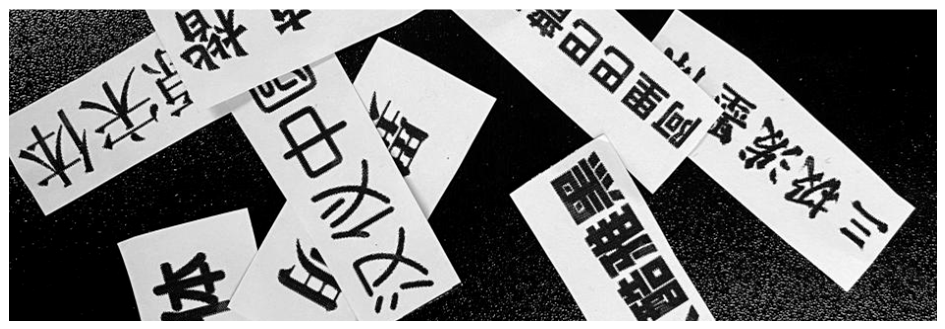

| Calligraphic Fonts | Classical-Style Fonts | Modern Fonts | Creative Fonts | Artistic Fonts |
|---|---|---|---|---|
 |  |  |  |  |
 |  |  |  |  |
 |  |  |  |  |
 |  |  |  |  |
| Grouping | ID | Characteristics | Font Legend | Font Type | |
|---|---|---|---|---|---|
| Contact | Distinction | ||||
| Category 1 | 1 | Distinct bifeng, pronounced stroke width variation, upright | Bold |  | Song |
| 2 | Thin |  | |||
| Category 2 | 3 | Indistinct bifeng, uniform stroke width, upright | Bold |  | Hei |
| 4 | Thin |  | |||
| Category 3 | 5 | Indistinct bifeng, uniform stroke width, rounded | Rounded |  | Yuan |
| 6 | Square and Round |  | |||
| Category 4 | 7 | Graphic symbolization of strokes | Distinct bifeng |  | Calligraphic |
| 8 | Indistinct bifeng |  | |||
| Demographics | Classification | Frequency | Percent (%) |
|---|---|---|---|
| Gender | Male | 39 | 48.75 |
| Female | 41 | 51.25 | |
| Age | 0–17 | 8 | 10.00 |
| 18–44 | 49 | 61.25 | |
| 45–59 | 18 | 22.50 | |
| 60+ | 5 | 6.25 |
| Font Type | Thickness | ID | Experimental Sample | ||||
|---|---|---|---|---|---|---|---|
| Sour | Sweet | Bitter | Spicy | Salty | |||
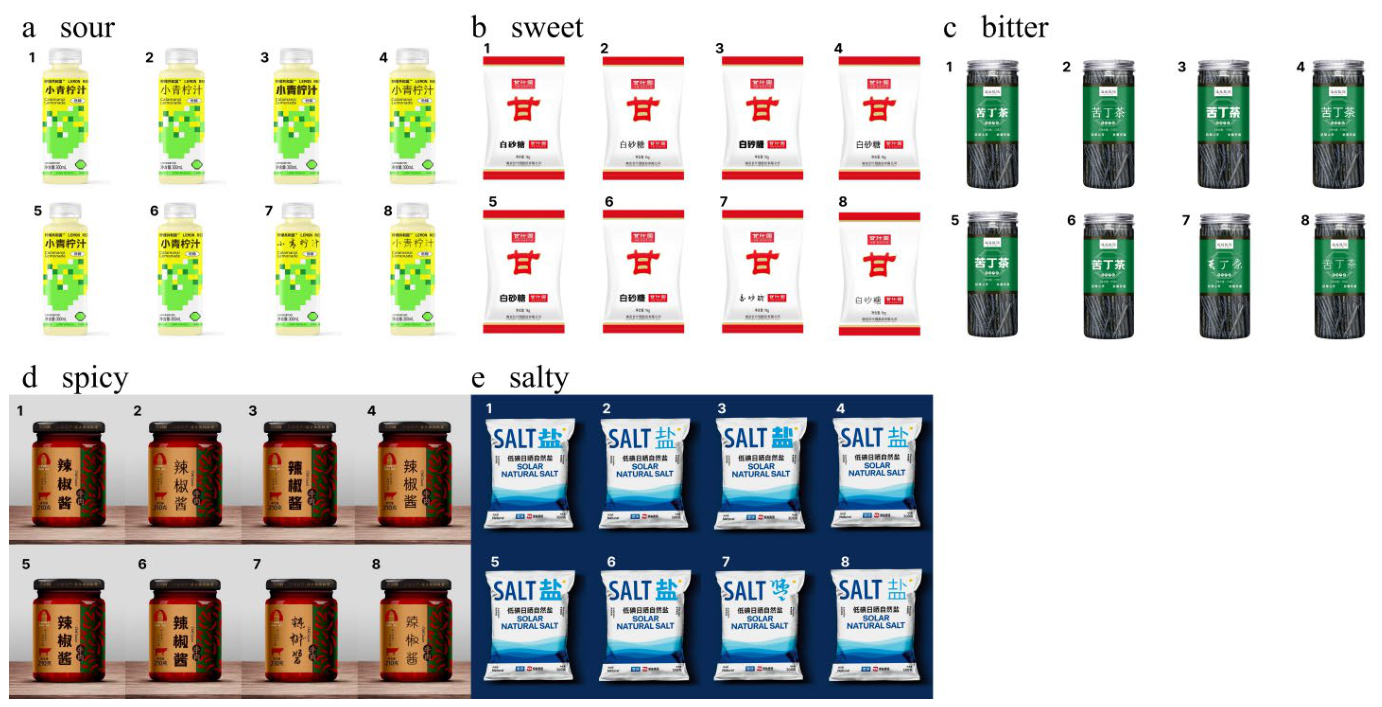
| Song | Bold | 1 |  | 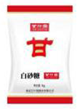 | 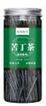 |  |  |
| Medium | 2 |  | 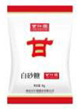 | 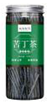 |  | 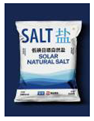 | |
| Thin | 3 |  | 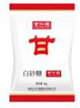 |  |  | 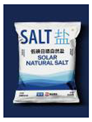 | |
| Hei | Bold | 4 |  | 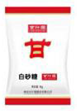 |  |  | 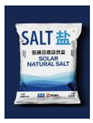 |
| Medium | 5 |  | 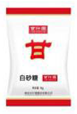 | 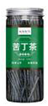 |  | 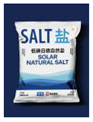 | |
| Thin | 6 |  | 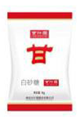 | 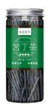 |  | 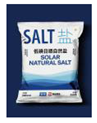 | |
| Yuan | Bold | 7 |  | 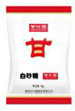 |  |  | 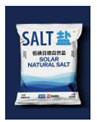 |
| Medium | 8 |  | 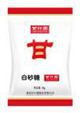 | 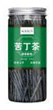 |  | 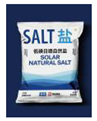 | |
| Thin | 9 |  | 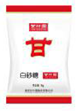 |  |  | 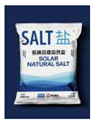 | |
| Calligraphic | Bold | 10 |  |  | 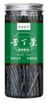 |  | 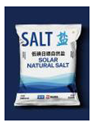 |
| Medium | 11 |  | 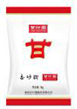 | 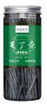 |  | 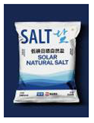 | |
| Thin | 12 | 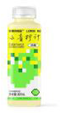 | 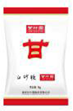 | 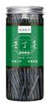 |  | 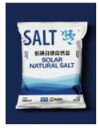 | |
| Demographics | Classification | Frequency | Percent (%) |
|---|---|---|---|
| Gender | Male | 48 | 41.74 |
| Female | 67 | 58.26 | |
| Age | 0–17 | 13 | 11.30 |
| 18–44 | 66 | 57.39 | |
| 45–59 | 29 | 25.22 | |
| 60+ | 7 | 6.09 |
| Sour | Sweet | Bitter | Spicy | Salty | ||
|---|---|---|---|---|---|---|
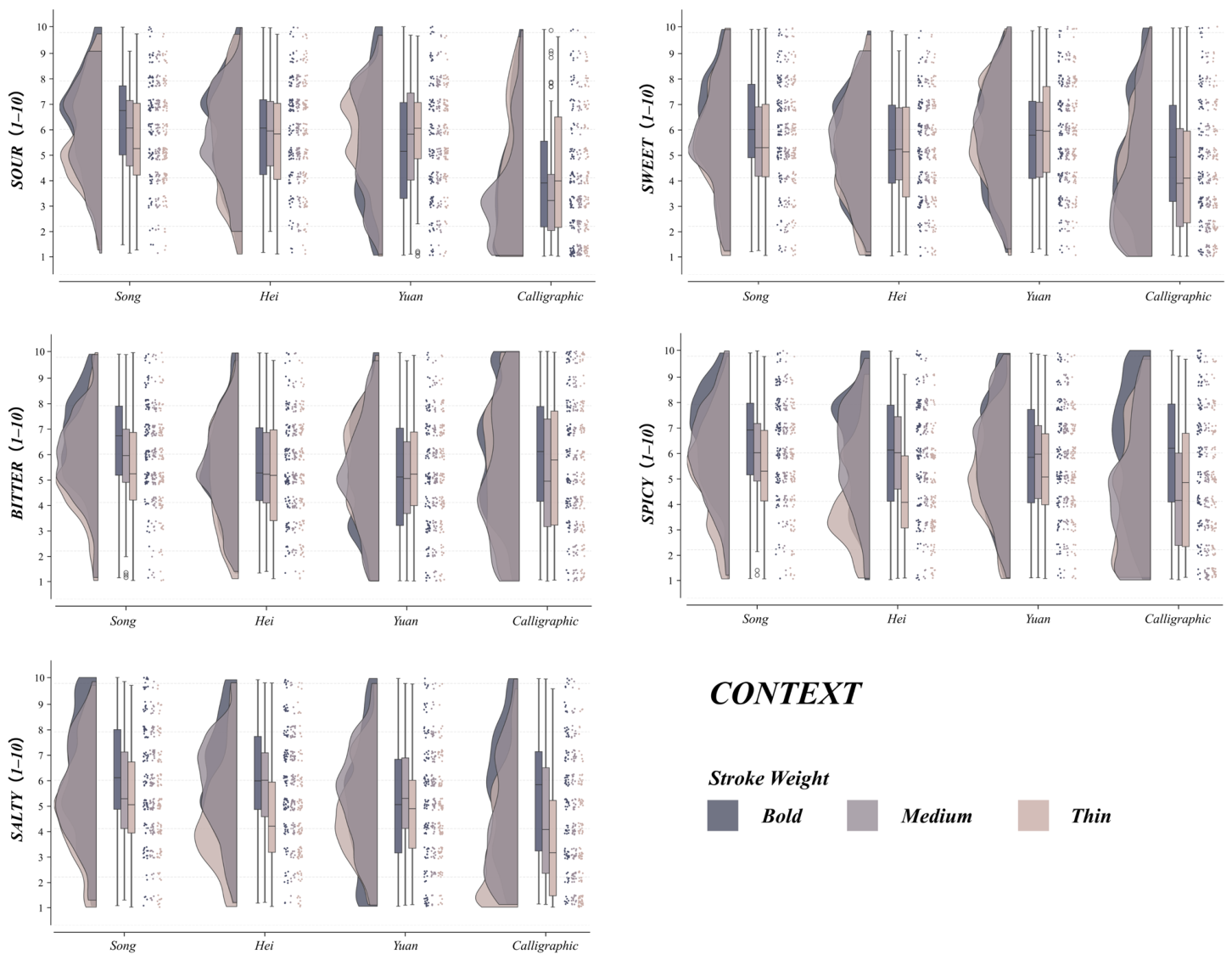
| Font type | F | 88.886 | 38.870 | 10.734 | 16.416 | 22.738 |
| p | <0.001 *** | <0.001 *** | <0.001 *** | <0.001 *** | <0.001 *** | |
| partial η2 | 0.175 | 0.085 | 0.025 | 0.038 | 0.054 | |
| Stroke weight | F | 1.998 | 4.094 | 9.850 | 55.278 | 41.149 |
| p | 0.136 | 0.017 * | <0.001 *** | <0.001 *** | <0.001 *** | |
| partial η2 | 0.003 | 0.006 | 0.015 | 0.081 | 0.062 | |
| Font type × Stroke weight | F | 3.457 | 2.637 | 2.803 | 7.092 | 4.963 |
| p | 0.002 ** | 0.015 * | 0.010 * | <0.001 *** | <0.001 *** | |
| partial η2 | 0.016 | 0.012 | 0.013 | 0.033 | 0.023 |
| Font Type | Stroke Weight | Sour | Sweet | Bitter | Spicy | Salty | |||||
|---|---|---|---|---|---|---|---|---|---|---|---|
| M | SD | M | SD | M | SD | M | SD | M | SD | ||
| Song | Bold | 6.361 | 2.082 | 5.992 | 2.287 | 6.538 | 1.956 | 6.639 | 1.986 | 6.118 | 2.565 |
| Medium | 5.966 | 2.008 | 5.521 | 2.147 | 5.832 | 1.919 | 6.034 | 1.961 | 5.429 | 2.177 | |
| Thin | 5.689 | 2.057 | 5.496 | 2.201 | 5.496 | 1.987 | 5.303 | 2.106 | 4.975 | 2.279 | |
| Hei | Bold | 5.882 | 2.241 | 5.244 | 2.091 | 5.664 | 2.108 | 6.067 | 2.250 | 5.824 | 2.389 |
| Medium | 5.689 | 1.956 | 5.395 | 2.005 | 5.538 | 2.016 | 5.815 | 2.107 | 5.630 | 2.143 | |
| Thin | 5.605 | 2.293 | 4.975 | 2.234 | 5.16 | 2.198 | 4.378 | 2.107 | 4.479 | 2.251 | |
| Yuan | Bold | 5.210 | 2.541 | 5.622 | 2.307 | 5.109 | 2.386 | 5.807 | 2.412 | 4.840 | 2.642 |
| Medium | 5.479 | 2.299 | 5.765 | 2.212 | 5.034 | 2.251 | 5.857 | 2.226 | 5.160 | 2.285 | |
| Thin | 5.756 | 1.966 | 5.908 | 2.079 | 5.202 | 2.196 | 5.235 | 2.090 | 4.740 | 2.149 | |
| Calligraphic | Bold | 3.916 | 2.53 | 4.983 | 2.531 | 6.135 | 2.548 | 6.059 | 2.65 | 5.454 | 2.583 |
| Medium | 3.378 | 2.236 | 4.135 | 2.524 | 5.092 | 2.746 | 4.361 | 2.540 | 4.437 | 2.527 | |
| Thin | 4.168 | 2.611 | 4.227 | 2.309 | 5.471 | 2.776 | 4.479 | 2.597 | 3.546 | 2.280 | |
| Fixed Effects | Pairwise Comparisons | MD | p | 95% CI | |
|---|---|---|---|---|---|
| Font type | Song | Bold vs. Thin | 0.672 | 0.041 * | [0.019, 1.199] |
| Calligraphic | Thin vs. Medium | 0.790 | 0.002 ** | [0.236, 1.416] | |
| Stroke weight | Bold | Song vs. Yuan | 1.151 | <0.001 *** | [0.384, 1.685] |
| Song vs. Calligraphic | 2.445 | <0.001 *** | [1.671, 2.972] | ||
| Hei vs. Calligraphic | 1.966 | <0.001 *** | [1.280, 2.581] | ||
| Yuan vs. Calligraphic | 1.294 | <0.001 *** | [0.637, 1.937] | ||
| Medium | Song vs. Calligraphic | 2.588 | <0.001 *** | [1.819, 3.120] | |
| Hei vs. Calligraphic | 2.311 | <0.001 *** | [1.619, 2.920] | ||
| Yuan vs. Calligraphic | 2.101 | <0.001 *** | [1.454, 2.755] | ||
| Thin | Song vs. Calligraphic | 1.521 | <0.001 *** | [0.776, 2.076] | |
| Hei vs. Calligraphic | 1.437 | <0.001 *** | [0.732, 2.033] | ||
| Yuan vs. Calligraphic | 1.588 | <0.001 *** | [0.932, 2.233] | ||
| Fixed Effects | Pairwise Comparisons | MD | p | 95% CI | |
|---|---|---|---|---|---|
| Font type | Calligraphic | Bold vs. Medium | 0.848 | 0.001 ** | [0.294, 1.427] |
| Bold vs. Thin | 0.756 | 0.004 ** | [0.199, 1.332] | ||
| Stroke weight | Bold | Song vs. Hei | 0.748 | 0.011 * | [0.115, 1.364] |
| Song vs. Calligraphic | 0.009 | <0.001 *** | [0.393, 1.642] | ||
| Yuan vs. Calligraphic | 0.639 | 0.039 * | [0.019, 1.268] | ||
| Medium | Song vs. Calligraphic | 0.386 | <0.001 *** | [0.845, 2.094] | |
| Hei vs. Calligraphic | 0.260 | <0.001 *** | [0.619, 1.868] | ||
| Yuan vs. Calligraphic | 0.630 | <0.001 *** | [0.949, 2.198] | ||
| Thin | Song vs. Calligraphic | 0.269 | <0.001 *** | [0.662, 1.912] | |
| Hei vs. Yuan | −0.933 | 0.003 ** | [−1.451, −0.202] | ||
| Hei vs. Calligraphic | 0.748 | <0.001 *** | [0.202, 1.451] | ||
| Yuan vs. Calligraphic | 1.681 | <0.001 *** | [1.028, 2.277] | ||
| Fixed Effects | Pairwise Comparisons | MD | p | 95% CI | |
|---|---|---|---|---|---|
| Font type | Song | Bold vs. Medium | 0.706 | 0.028 * | [0.051, 1.218] |
| Bold vs. Thin | 1.042 | <0.001 *** | [0.399, 1.566] | ||
| Calligraphic | Bold vs. Medium | 1.043 | <0.001 *** | [0.365, 1.531] | |
| Bold vs. Thin | 0.664 | 0.018 * | [0.086, 1.253] | ||
| Stroke weight | Bold | Song vs. Hei | 0.874 | 0.002 ** | [0.244, 1.530] |
| Song vs. Yuan | 1.429 | <0.001 *** | [0.687, 1.973] | ||
| Yuan vs. Calligraphic | −1.026 | <0.001 *** | [−1.617, −0.331] | ||
| Medium | Song vs. Yuan | 0.798 | 0.010 * | [0.122, 1.408] | |
| Song vs. Calligraphic | 0.740 | 0.036 * | [0.027, 1.313] | ||
| Fixed Effects | Pairwise Comparisons | MD | p | 95% CI | |
|---|---|---|---|---|---|
| Font type | Song | Bold vs. Medium | 0.605 | 0.030 * | [0.046, 1.224] |
| Bold vs. Thin | 1.336 | <0.001 *** | [0.724, 1.902] | ||
| Medium vs. Thin | 0.731 | 0.018 * | [0.089, 1.267] | ||
| Hei | Bold vs. Thin | 1.689 | <0.001 *** | [1.124, 2.302] | |
| Medium vs. Thin | 1.437 | <0.001 *** | [0.907, 2.084] | ||
| Yuan | Bold vs. Thin | 0.572 | 0.040 * | [0.020, 1.198] | |
| Medium vs. Thin | 0.622 | 0.030 * | [0.046, 1.224] | ||
| Calligraphic | Bold vs. Medium | 1.698 | <0.001 *** | [1.116, 2.293] | |
| Bold vs. Thin | 1.580 | <0.001 *** | [0.942, 2.119] | ||
| Stroke weight | Bold | Song vs. Yuan | 0.832 | 0.003 ** | [0.212, 1.510] |
| Medium | Song vs. Calligraphic | 1.673 | <0.001 *** | [0.977, 2.275] | |
| Hei vs. Calligraphic | 1.454 | <0.001 *** | [0.847, 2.145] | ||
| Yuan vs. Calligraphic | 1.496 | <0.001 *** | [0.777, 2.075] | ||
| Thin | Song vs. Hei | 0.925 | 0.001 ** | [0.299, 1.597] | |
| Song vs. Calligraphic | 0.824 | 0.010 * | [0.125, 1.423] | ||
| Hei vs. Yuan | −0.857 | 0.008 ** | [−1.440, −0.142] | ||
| Fixed Effects | Pairwise Comparisons | MD | p | 95% CI | |
|---|---|---|---|---|---|
| Font type | Song | Bold vs. Medium | 0.689 | 0.023 * | [0.070, 1.286] |
| Bold vs. Thin | 1.143 | <0.001 *** | [0.497, 1.712] | ||
| Hei | Bold vs. Thin | 1.345 | <0.001 *** | [0.784, 1.999] | |
| Medium vs. Thin | 1.151 | <0.001 *** | [0.575, 1.790] | ||
| Calligraphic | Bold vs. Medium | 1.017 | <0.001 *** | [0.410, 1.625] | |
| Bold vs. Thin | 1.908 | <0.001 *** | [1.244, 2.460] | ||
| Medium vs. Thin | 0.891 | 0.003 ** | [0.227, 1.443] | ||
| Stroke weight | Bold | Song vs. Yuan | 1.278 | <0.001 *** | [0.574, 1.913] |
| Song vs. Calligraphic | 0.664 | 0.016 * | [0.095, 1.435] | ||
| Hei vs. Yuan | 0.984 | <0.001 *** | [0.347, 1.687] | ||
| Medium | Song vs. Calligraphic | 0.992 | <0.001 *** | [0.434, 1.774] | |
| Hei vs. Calligraphic | 1.193 | <0.001 *** | [0.678, 2.018] | ||
| Yuan vs. Calligraphic | 0.723 | 0.004 ** | [0.200, 1.540] | ||
| Thin | Song vs. Calligraphic | 1.429 | <0.001 *** | [0.843, 2.183] | |
| Hei vs. Calligraphic | 0.933 | 0.001 ** | [0.330, 1.670] | ||
| Yuan vs. Calligraphic | 1.194 | <0.001 *** | [0.521, 1.861] | ||
Disclaimer/Publisher’s Note: The statements, opinions and data contained in all publications are solely those of the individual author(s) and contributor(s) and not of MDPI and/or the editor(s). MDPI and/or the editor(s) disclaim responsibility for any injury to people or property resulting from any ideas, methods, instructions or products referred to in the content. |
© 2026 by the authors. Licensee MDPI, Basel, Switzerland. This article is an open access article distributed under the terms and conditions of the Creative Commons Attribution (CC BY) license.
Share and Cite
Sha, C.; Zhang, Y.; Zhong, Q.; Guo, H.; Han, R. Sweet Round, Spicy Sharp: How Chinese Typeface Features Trick the Tongue into Tasting Five Flavors. Behav. Sci. 2026, 16, 913. https://doi.org/10.3390/bs16060913
Sha C, Zhang Y, Zhong Q, Guo H, Han R. Sweet Round, Spicy Sharp: How Chinese Typeface Features Trick the Tongue into Tasting Five Flavors. Behavioral Sciences. 2026; 16(6):913. https://doi.org/10.3390/bs16060913
Chicago/Turabian StyleSha, Chunfa, Yunxiao Zhang, Qi Zhong, Haojing Guo, and Rong Han. 2026. "Sweet Round, Spicy Sharp: How Chinese Typeface Features Trick the Tongue into Tasting Five Flavors" Behavioral Sciences 16, no. 6: 913. https://doi.org/10.3390/bs16060913
APA StyleSha, C., Zhang, Y., Zhong, Q., Guo, H., & Han, R. (2026). Sweet Round, Spicy Sharp: How Chinese Typeface Features Trick the Tongue into Tasting Five Flavors. Behavioral Sciences, 16(6), 913. https://doi.org/10.3390/bs16060913

