The Influence of Short-Video Usage on Prospective Memory Under Different Cue Type Conditions

Abstract
1. Introduction
1.1. Attention Residue Theory and Short Video Usage
1.2. Mechanisms of Prospective Memory Impairment in Short Video Users
1.3. The Present Study
2. Study 1
2.1. Participants
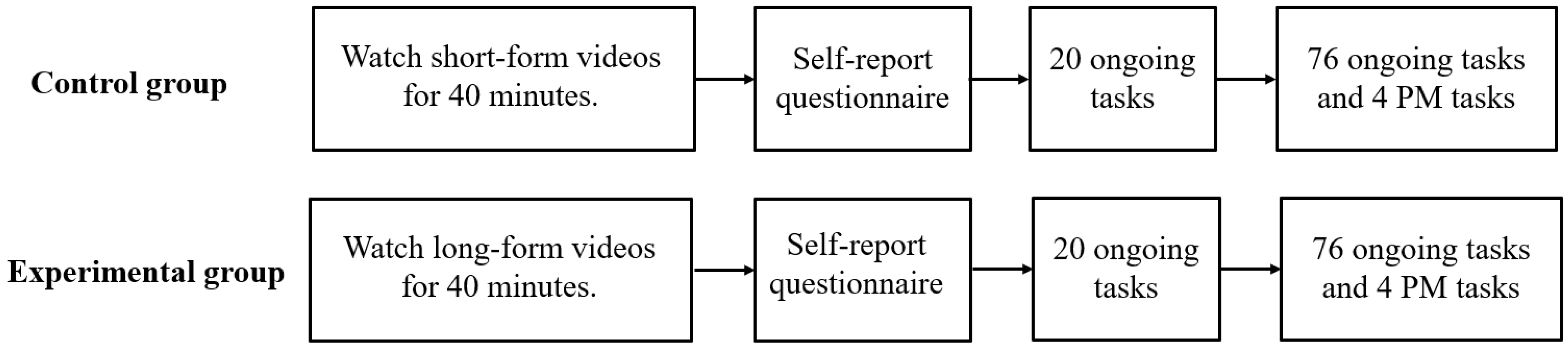
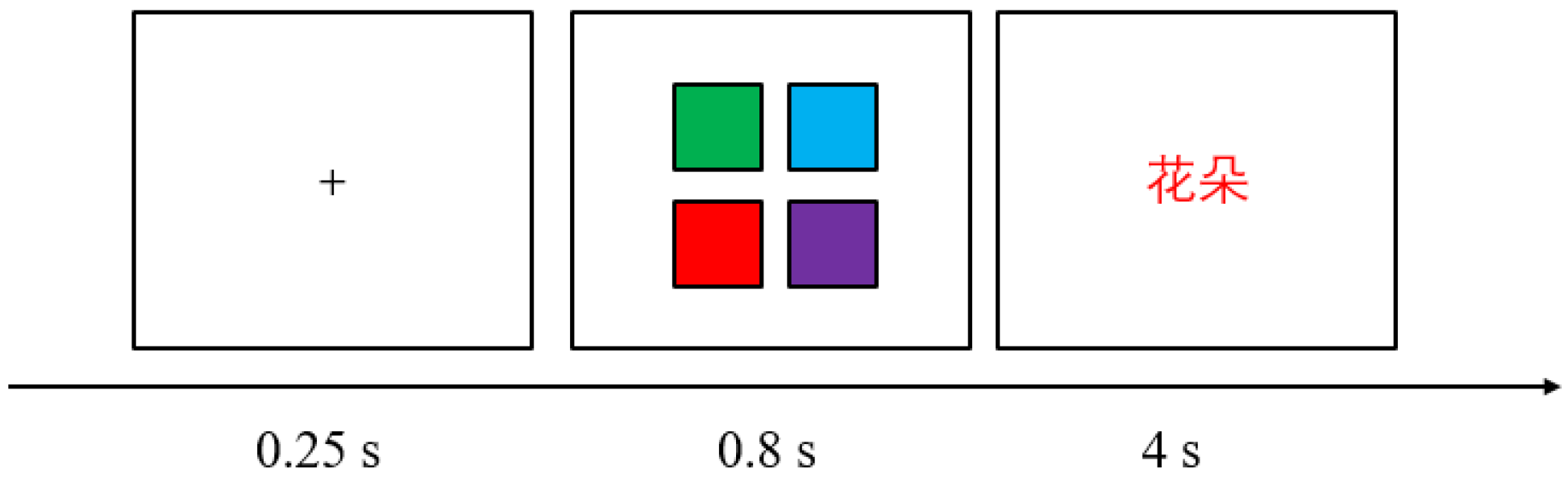
2.2. Experimental Procedure
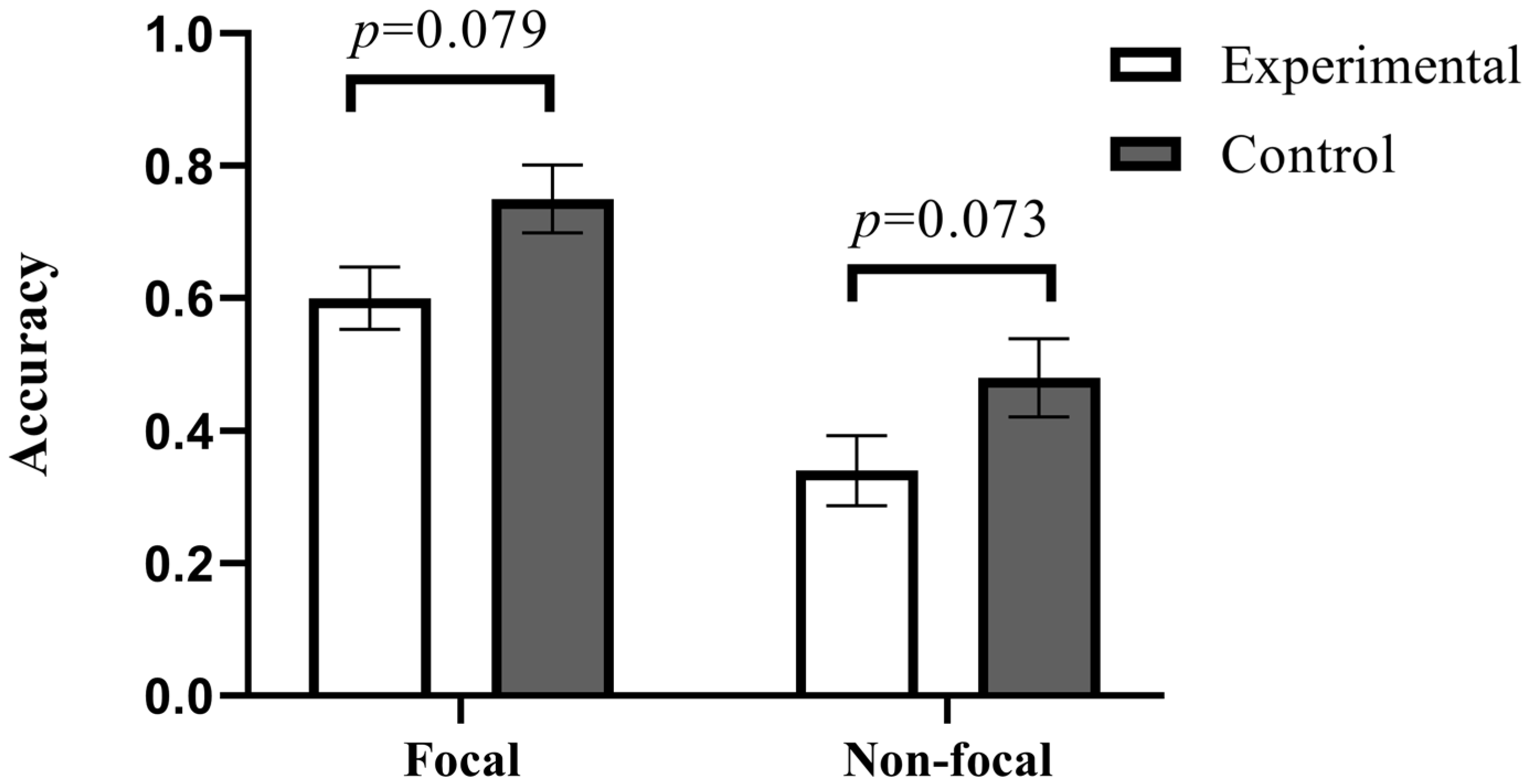
2.3. Results of Study 1
2.4. Discussion of Study 1
3. Study 2
3.1. Participants
3.2. Experimental Procedure
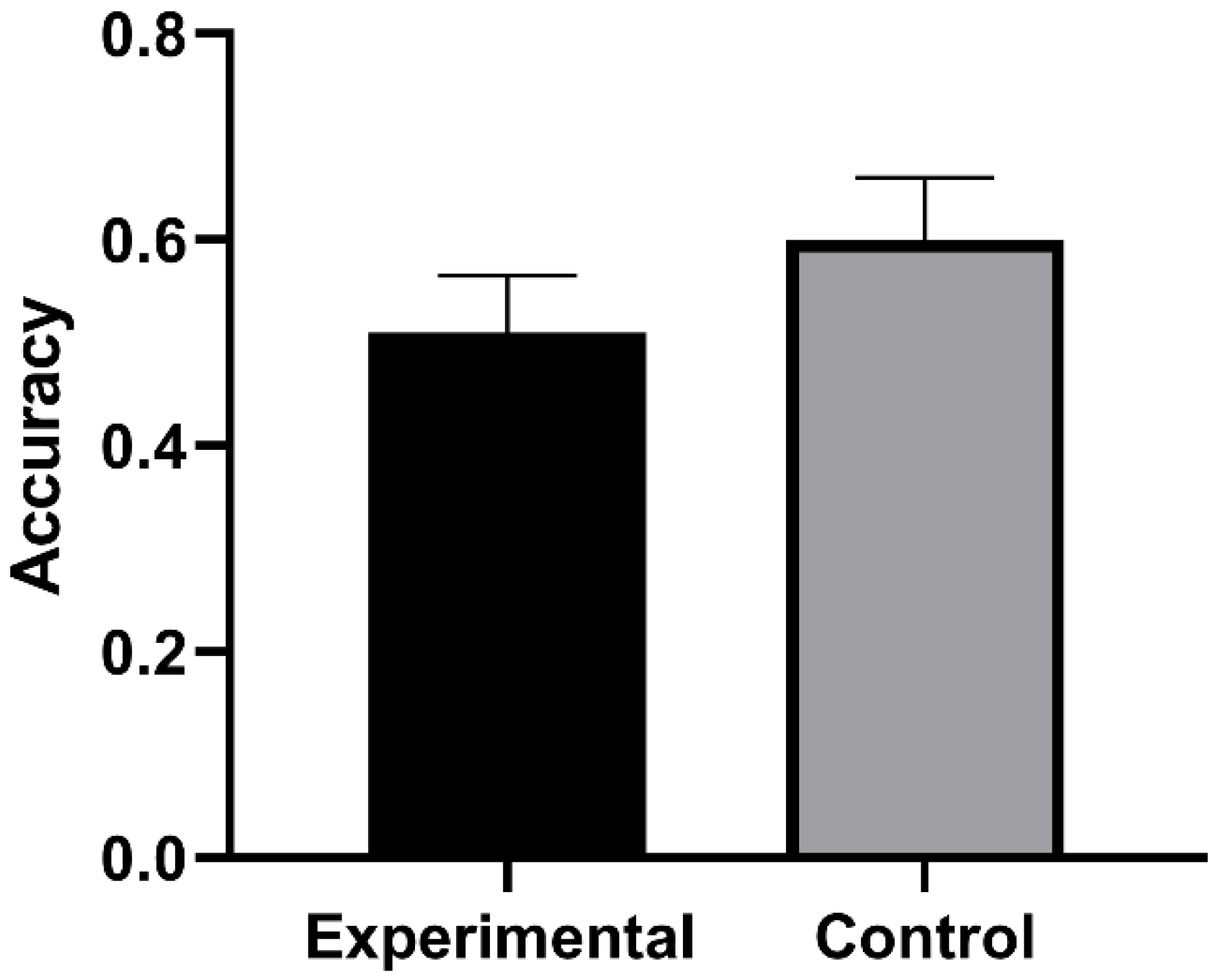
3.3. Results of Study 2
3.4. Discussion of Study 2
4. General Discussion
4.1. Theoretical Mechanisms Underlying PM Impairment
4.2. Cue Number as a Key Moderator
4.3. Limitations and Future Research Directions
4.4. Theoretical and Practical Implications
5. Conclusions
Author Contributions
Funding
Institutional Review Board Statement
Informed Consent Statement
Data Availability Statement
Acknowledgments
Conflicts of Interest
Abbreviations
| PM | Prospective Memory |
| ACC | Accuracy |
| RT | Reaction Time |
References
- Alruwaili, R. F. (2025). Scroll immersion and short-form video use: Predictors of attention, memory, and fatigue among Saudi social media users. Acta Psychologica, 260, 105674. [Google Scholar] [CrossRef] [Scilit]
- Altgassen, M., Kliegel, M., & Martin, M. (2009). Event-based prospective memory in depression: The impact of cue focality. Cognition and Emotion, 23(6), 1041–1055. [Google Scholar] [CrossRef] [Scilit]
- Anderson, F. T., Strube, M. J., & McDaniel, M. A. (2019). Toward a better understanding of costs in prospective memory: A meta-analytic review. Psychological Bulletin, 145(11), 1053–1081. [Google Scholar] [CrossRef] [Scilit] [PubMed]
- Ball, B. H., Wiemers, E. A., & Brewer, G. A. (2022). Individual differences in memory and attention processes in prospective remembering. Psychonomic Bulletin & Review, 29(3), 922–933. [Google Scholar] [CrossRef] [Scilit] [PubMed]
- Barton, N., & Smyth, M. (2025). Context-switching in short-form videos: What is the impact on prospective memory? Memory, 33(7), 788–801. [Google Scholar] [CrossRef] [Scilit]
- Brunyé, T. T., Drew, T., Weaver, D. L., & Elmore, J. G. (2019). A review of eye tracking for understanding and improving diagnostic interpretation. Cognitive Research: Principles and Implications, 4(1), 7–18. [Google Scholar] [CrossRef] [Scilit] [PubMed]
- Chen, H., Liu, C., Zhang, A., Lu, W. Q., Wu, K., & Chiou, W. K. (2024). How flow and mindfulness interact with each other in mindfulness-based augmented reality mandala coloring activities. Frontiers in Psychology, 14, 1301531. [Google Scholar] [CrossRef] [Scilit]
- Chiossi, F., Haliburton, L., Ou, C., Butz, A. M., & Schmidt, A. (2023). Short-form videos degrade our capacity to retain intentions: Effect of context switching on prospective memory. In Proceedings of the 2023 CHI conference on human factors in computing systems (pp. 1–15). Association for Computing Machinery. [Google Scholar] [CrossRef] [Scilit]
- Cohen, A. L., Jaudas, A., Hirschhorn, E., Sobin, Y., & Gollwitzer, P. M. (2012). The specificity of prospective memory costs. Memory, 20(8), 848–864. [Google Scholar] [CrossRef] [Scilit]
- Einstein, G. O., & McDaniel, M. A. (1990). Normal aging and prospective memory. Journal of Experimental Psychology: Learning, Memory, and Cognition, 16(4), 717–726. [Google Scholar] [CrossRef]
- Einstein, G. O., & McDaniel, M. A. (2010). Prospective memory and what costs do not reveal about retrieval processes: A commentary on Smith, Hunt, McVay, and McConnell (2007). Journal of Experimental Psychology: Learning, Memory, and Cognition, 36(4), 1082–1088. [Google Scholar] [CrossRef] [Scilit]
- Guo, Y., Gan, J., & Li, Y. (2025). Effect of negative emotion on prospective memory and its different components. The Journal of General Psychology, 152(1), 130–149. [Google Scholar] [CrossRef] [Scilit]
- Harrington, E. E., Reese-Melancon, C., & Turner, R. L. (2025). Self-reported strategy use and prospective memory: The roles of cue focality and task importance. Memory & Cognition, 53(3), 711–724. [Google Scholar] [CrossRef] [Scilit]
- Hostler, T. J., Wood, C., & Armitage, C. J. (2018). The influence of emotional cues on prospective memory: A systematic review with meta-analyses. Cognition and Emotion, 32(8), 1578–1596. [Google Scholar] [CrossRef] [Scilit]
- Leroy, S. (2009). Why is it so hard to do my work? The challenge of attention residue when switching between work tasks. Organizational Behavior and Human Decision Processes, 109(2), 168–181. [Google Scholar] [CrossRef] [Scilit]
- Leroy, S., & Glomb, T. M. (2018). Tasks interrupted: How anticipating time pressure on resumption of an interrupted task causes attention residue and low performance on interrupting tasks and how a “ready-to-resume” plan mitigates the effects. Organization Science, 29(3), 380–397. [Google Scholar] [CrossRef] [Scilit]
- Lin, B. H., Chung, Y. J., Cheng, H. Y., Yen, Y. T., Li, C. C., & Cherng, F. Y. (2024). Understanding the effects of short-form videos on sustained attention. In Extended abstracts of the CHI conference on human factors in computing systems (pp. 1–8). Association for Computing Machinery. [Google Scholar] [CrossRef] [Scilit]
- Mahy, C. E., & Moses, L. J. (2011). Executive functioning and prospective memory in young children. Cognitive Development, 26(3), 269–281. [Google Scholar] [CrossRef] [Scilit]
- Nguyen, L., Walters, J., Paul, S., Monreal Ijurco, S., Rainey, G. E., Parekh, N., Blair, G., & Darrah, M. (2025). Feeds, feelings, and focus: A systematic review and meta-analysis examining the cognitive and mental health correlates of short-form video use. Psychological Bulletin, 151(9), 1125–1146. [Google Scholar] [CrossRef] [Scilit]
- Rothen, N., & Meier, B. (2014). Psychophysiology of prospective memory. Memory, 22(7), 867–880. [Google Scholar] [CrossRef] [Scilit]
- Scullin, M. K., McDaniel, M. A., Shelton, J. T., & Lee, J. H. (2010). Focal/nonfocal cue effects in prospective memory: Monitoring difficulty or different retrieval processes? Journal of Experimental Psychology: Learning, Memory, and Cognition, 36(3), 736–749. [Google Scholar] [CrossRef] [Scilit]
- Walla, P., & Zheng, Y. (2024). Intense short-video-based social media use reduces the p300 event-related potential component in a visual oddball experiment: A sign for reduced attention. Life, 14(3), 290. [Google Scholar] [CrossRef] [Scilit]
- Wetzel, N., Widmann, A., & Scharf, F. (2021). Distraction of attention by novel sounds in children declines fast. Scientific Reports, 11, 5308. [Google Scholar] [CrossRef] [Scilit] [PubMed]
- Xiao, T., Peng, H., Liang, Z., Pan, M., Liu, Y., Wang, Y., Tang, W., & Wang, B. (2026). When screens replace sleep: Short video addiction impairs executive function through sleep disruption in youth—Is physical activity the antidote? Brain and Behavior, 16(4), e71369. [Google Scholar] [CrossRef] [Scilit]
- Yan, T., Su, C., Xue, W., Hu, Y., & Zhou, H. (2024). Mobile phone short video use negatively impacts attention functions: An EEG study. Frontiers in Human Neuroscience, 18, 1383913. [Google Scholar] [CrossRef] [Scilit] [PubMed]




| Daily Viewing Time (min) | Preference for Video Content | ||
|---|---|---|---|
| Focal | Experimental | 72 (34) | 7.21 (1.56) |
| Control | 61 (30) | 7.19 (1.39) | |
| Non-focal | Experimental | 74 (38) | 6.89 (1.50) |
| Control | 65 (36) | 6.72 (1.46) |
| PM Task | Ongoing Task | ||||
|---|---|---|---|---|---|
| ACC | RT (ms) | ACC | RT (ms) | ||
| Focal | Experimental | 0.60 (0.26) | 1002 (324) | 0.77 (0.09) | 971 (273) |
| Control | 0.75 (0.28) | 1055 (257) | 0.76 (0.08) | 1075 (181) | |
| Non-focal | Experimental | 0.34 (0.29) | 1083 (410) | 0.81 (0.08) | 1047 (259) |
| Control | 0.48 (0.32) | 1259 (411) | 0.81 (0.07) | 1118 (280) | |
| Daily Viewing Time (min) | Preference for Video Content | |
|---|---|---|
| Experimental | 63 (35) | 7.21 (1.56) |
| Control | 71 (33) | 6.72 (1.46) |
| PM Task | Ongoing Task | |||
|---|---|---|---|---|
| ACC | RT (ms) | ACC | RT (ms) | |
| Experimental | 0.51 (0.34) | 1192 (298) | 0.79 (0.08) | 1011 (254) |
| Control | 0.60 (0.33) | 1288 (295) | 0.81 (0.09) | 1019 (215) |
Disclaimer/Publisher’s Note: The statements, opinions and data contained in all publications are solely those of the individual author(s) and contributor(s) and not of MDPI and/or the editor(s). MDPI and/or the editor(s) disclaim responsibility for any injury to people or property resulting from any ideas, methods, instructions or products referred to in the content. |
© 2026 by the authors. Licensee MDPI, Basel, Switzerland. This article is an open access article distributed under the terms and conditions of the Creative Commons Attribution (CC BY) license.
Share and Cite
Zhai, K.; Guo, Y.; Wang, L. The Influence of Short-Video Usage on Prospective Memory Under Different Cue Type Conditions. Behav. Sci. 2026, 16, 904. https://doi.org/10.3390/bs16060904
Zhai K, Guo Y, Wang L. The Influence of Short-Video Usage on Prospective Memory Under Different Cue Type Conditions. Behavioral Sciences. 2026; 16(6):904. https://doi.org/10.3390/bs16060904
Chicago/Turabian StyleZhai, Kaiyue, Yunfei Guo, and Li Wang. 2026. "The Influence of Short-Video Usage on Prospective Memory Under Different Cue Type Conditions" Behavioral Sciences 16, no. 6: 904. https://doi.org/10.3390/bs16060904
APA StyleZhai, K., Guo, Y., & Wang, L. (2026). The Influence of Short-Video Usage on Prospective Memory Under Different Cue Type Conditions. Behavioral Sciences, 16(6), 904. https://doi.org/10.3390/bs16060904