Perceived Capability, Social Belonging, and Behavioral Adherence in Adult Group Fitness Classes: A Systematic Review of Psychosocial Predictors




Abstract
1. Introduction
2. Materials and Methods
2.1. Eligibility Criteria
2.2. Information Sources and Search Strategy
2.3. Selection Process
2.4. Data Collection Process
2.5. Data Items and Outcomes
2.6. Risk of Bias Assessment
2.7. Effect Measures and Data Handling
2.8. Synthesis Methods
3. Results
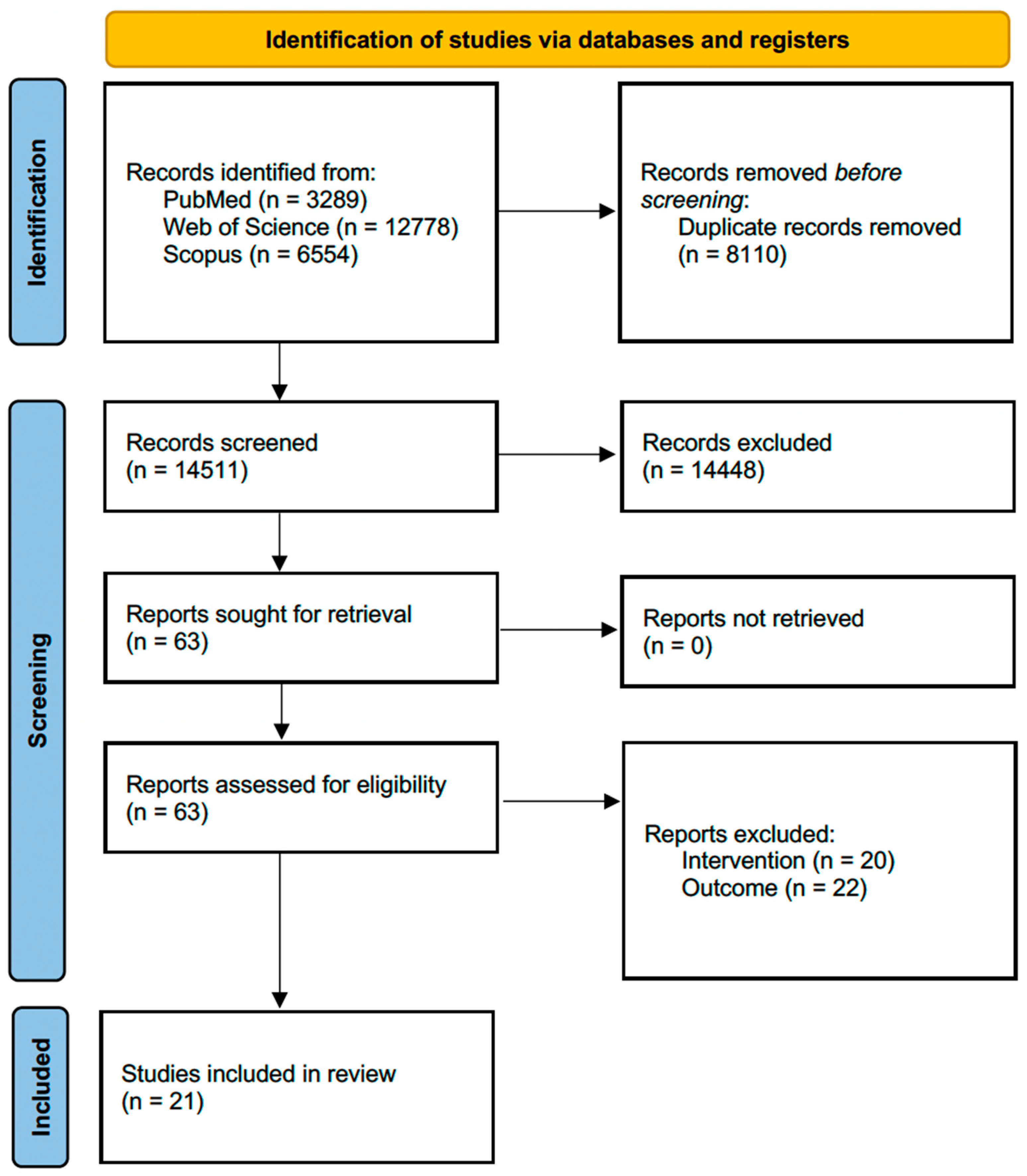
3.1. Study Selection
3.2. Characteristics of Included Studies
3.3. Risk of Bias Assessment and Critical Appraisal of Included Studies
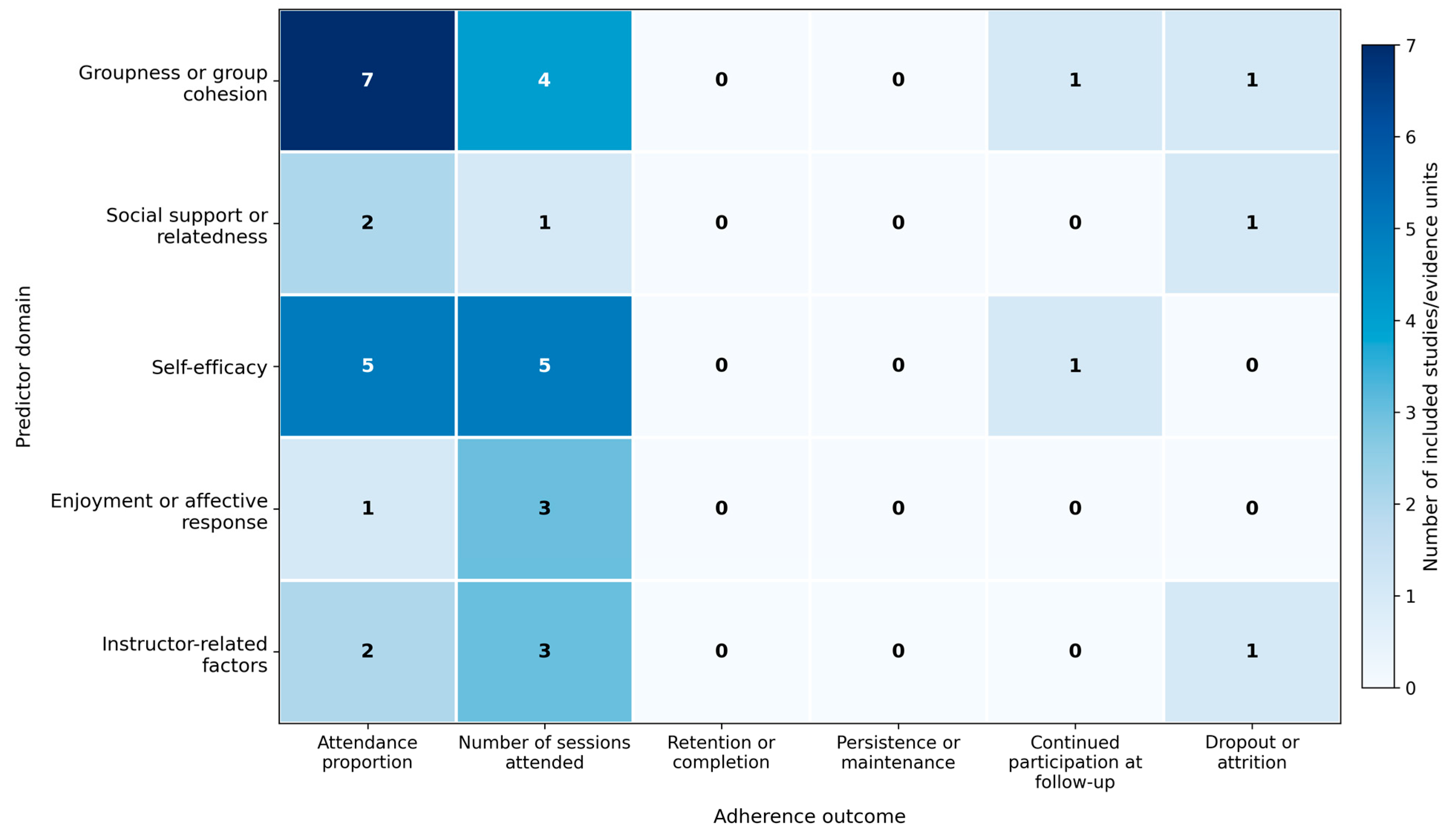
3.4. Synthesis of Findings by Higher-Order Behavioral Pathway
4. Discussion
4.1. Self-Efficacy and Perceived Capability as the Clearest Evidence Cluster
4.2. Group Processes and Instructor-Related Factors as Relational Influences on Adherence
4.3. Social Support, Relatedness, and Enjoyment as Less Consistent Predictors
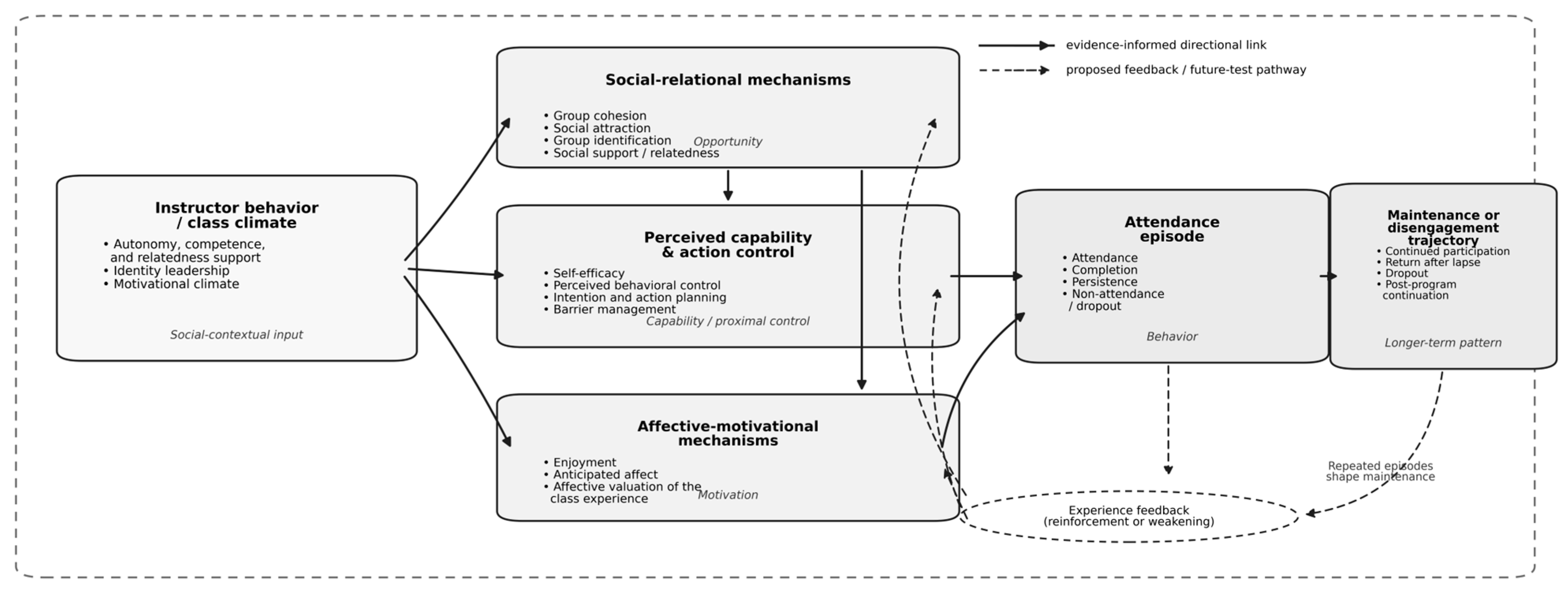
4.4. Integrative Theoretical Contribution to Behavioral Science
4.5. Why Were Findings Inconsistent? Methodological and Theoretical Sources of Heterogeneity
4.6. Limitations of the Evidence Base, Review Limitations, and Future Research
4.7. Practical Implications
5. Conclusions
Author Contributions
Funding
Institutional Review Board Statement
Informed Consent Statement
Data Availability Statement
Conflicts of Interest
Abbreviations
| PRISMA | Preferred Reporting Items for Systematic Reviews and Meta-Analyses |
| ROBINS-I | Risk Of Bias In Non-randomised Studies—of Interventions |
| JBI | Joanna Briggs Institute |
References
- Armitage, C. J., & Conner, M. (2001). Efficacy of the theory of planned behaviour: A meta-analytic review. British Journal of Social Psychology, 40(4), 471–499. [Google Scholar] [CrossRef] [Scilit]
- Bandura, A. (2004). Health promotion by social cognitive means. Health Education & Behavior, 31(2), 143–164. [Google Scholar] [CrossRef] [Scilit]
- Belza, B., Topolski, T., Kinne, S., Patrick, D. L., & Ramsey, S. D. (2002). Does adherence make a difference? Nursing Research, 51(5), 285–291. [Google Scholar] [CrossRef] [Scilit] [PubMed]
- Bray, S. R., Gyurcsik, N. C., Culos-Reed, S. N., Dawson, K. A., & Martin, K. A. (2001). An exploratory investigation of the relationship between proxy efficacy, self-efficacy and exercise attendance. Journal of Health Psychology, 6(4), 425–434. [Google Scholar] [CrossRef] [Scilit] [PubMed]
- Campbell, M., McKenzie, J. E., Sowden, A., Katikireddi, S. V., Brennan, S. E., Ellis, S., Hartmann-Boyce, J., Ryan, R., Shepperd, S., Thomas, J., Welch, V., & Thomson, H. (2020). Synthesis without meta-analysis (SWiM) in systematic reviews: Reporting guideline. BMJ, 368, l6890. [Google Scholar] [CrossRef] [Scilit] [PubMed]
- Chermette, C., Kleinert, J., & Pels, F. (2020). Cohesion and adherence in exercise groups of patients with chronic heart diseases—A prospective study. Psychology & Health, 35(7), 887–900. [Google Scholar] [CrossRef] [Scilit]
- Cheung, C., Wyman, J. F., & Savik, K. (2016). Adherence to a yoga program in older women with knee osteoarthritis. Journal of Aging and Physical Activity, 24(2), 181–188. [Google Scholar] [CrossRef] [Scilit]
- Christensen, U., Schmidt, L., Budtz-Jørgensen, E., & Avlund, K. (2006). Group cohesion and social support in exercise classes: Results from a danish intervention study. Health Education & Behavior, 33(5), 677–689. [Google Scholar] [CrossRef] [Scilit]
- Collado-Mateo, D., Lavín-Pérez, A. M., Peñacoba, C., Del Coso, J., Leyton-Román, M., Luque-Casado, A., Gasque, P., Fernández-del-Olmo, M. Á., & Amado-Alonso, D. (2021). Key factors associated with adherence to physical exercise in patients with chronic diseases and older adults: An umbrella review. International Journal of Environmental Research and Public Health, 18(4), 2023. [Google Scholar] [CrossRef] [Scilit]
- Courneya, K. S., & McAuley, E. (1995). Cognitive mediators of the social influence-exercise adherence relationship: A test of the theory of planned behavior. Journal of Behavioral Medicine, 18(5), 499–515. [Google Scholar] [CrossRef] [Scilit]
- de Lacy-Vawdon, C. J., Klein, R., Schwarzman, J., Nolan, G., de Silva, R., Menzies, D., & Smith, B. J. (2018). Facilitators of attendance and adherence to group-based physical activity for older adults: A literature synthesis. Journal of Aging and Physical Activity, 26(1), 155–167. [Google Scholar] [CrossRef] [Scilit]
- Dyrlund, A. K., & Wininger, S. R. (2006). An evaluation of barrier efficacy and cognitive evaluation theory as predictors of exercise attendance. Journal of Applied Biobehavioral Research, 11(3–4), 133–146. [Google Scholar] [CrossRef] [Scilit]
- Estabrooks, P., & Carron, A. V. (1998). The conceptualization and effect of control beliefs on exercise attendance in the elderly. Journal of Aging and Health, 10(4), 441–457. [Google Scholar] [CrossRef] [Scilit]
- Estabrooks, P., & Carron, A. V. (1999). The influence of the group with elderly exercisers. Small Group Research, 30(4), 438–452. [Google Scholar] [CrossRef] [Scilit]
- Estabrooks, P. A., & Carron, A. V. (1999). Group cohesion in older adult exercisers: Prediction and intervention effects. Journal of Behavioral Medicine, 22(6), 575–588. [Google Scholar] [CrossRef] [Scilit]
- Farrance, C., Tsofliou, F., & Clark, C. (2016). Adherence to community based group exercise interventions for older people: A mixed-methods systematic review. Preventive Medicine, 87, 155–166. [Google Scholar] [CrossRef] [Scilit]
- Feil, K., Fritsch, J., & Rhodes, R. E. (2023). The intention-behaviour gap in physical activity: A systematic review and meta-analysis of the action control framework. British Journal of Sports Medicine, 57(19), 1265–1271. [Google Scholar] [CrossRef] [Scilit] [PubMed]
- Feil, K., Fritsch, J., Weyland, S., & Jekauc, D. (2025). Examining the role of anticipated enjoyment and intention in predicting attendance in exercise classes. BMC Psychology, 13(1), 868. [Google Scholar] [CrossRef] [Scilit]
- Fraser, S. N., & Spink, K. S. (2002). Examining the role of social support and group cohesion in exercise compliance. Journal of Behavioral Medicine, 25(3), 233–249. [Google Scholar] [CrossRef] [Scilit]
- Golaszewski, N. M., LaCroix, A. Z., Hooker, S. P., & Bartholomew, J. B. (2022). Group exercise membership is associated with forms of social support, exercise identity, and amount of physical activity. International Journal of Sport and Exercise Psychology, 20(2), 630–643. [Google Scholar] [CrossRef] [Scilit]
- Graupensperger, S., Gottschall, J. S., Benson, A. J., Eys, M., Hastings, B., & Evans, M. B. (2019). Perceptions of groupness during fitness classes positively predict recalled perceptions of exertion, enjoyment, and affective valence: An intensive longitudinal investigation. Sport, Exercise, and Performance Psychology, 8(3), 290–304. [Google Scholar] [CrossRef] [Scilit]
- Harvey, K., & Griffin, M. (2020). Exercise instructors for older adult fitness: A review of the literature. Canadian Journal on Aging/La Revue Canadienne Du Vieillissement, 39(3), 373–384. [Google Scholar] [CrossRef] [Scilit]
- Hawley-Hague, H., Horne, M., Campbell, M., Demack, S., Skelton, D. A., & Todd, C. (2014). Multiple levels of influence on older adults’ attendance and adherence to community exercise classes. The Gerontologist, 54(4), 599–610. [Google Scholar] [CrossRef] [Scilit]
- Hewett, Z. L., Pumpa, K. L., Smith, C. A., Fahey, P. P., & Cheema, B. S. (2019). Predictors of and barriers to adherence in a 16-week randomised controlled trial of Bikram yoga in stressed and sedentary adults. Complementary Therapies in Medicine, 42, 374–380. [Google Scholar] [CrossRef] [Scilit]
- Hicks, G. E., Benvenuti, F., Fiaschi, V., Lombardi, B., Segenni, L., Stuart, M., Pretzer-Aboff, I., Gianfranco, G., & Macchi, C. (2012). Adherence to a community-based exercise program is a strong predictor of improved back pain status in older adults. The Clinical Journal of Pain, 28(3), 195–203. [Google Scholar] [CrossRef] [Scilit] [PubMed]
- Izumi, B. T., Schulz, A. J., Mentz, G., Israel, B. A., Sand, S. L., Reyes, A. G., Hoston, B., Richardson, D., Gamboa, C., Rowe, Z., & Diaz, G. (2015). Leader behaviors, group cohesion, and participation in a walking group program. American Journal of Preventive Medicine, 49(1), 41–49. [Google Scholar] [CrossRef] [Scilit] [PubMed]
- Loughead, T. M., Colman, M. M., & Carron, A. V. (2001). Investigating the mediational relationship of leadership, class cohesion, and adherence in an exercise setting. Small Group Research, 32(5), 558–575. [Google Scholar] [CrossRef] [Scilit]
- McAuley, E., & Blissmer, B. (2000). Self-efficacy determinants and consequences of physical activity. Exercise and Sport Sciences Reviews, 28(2), 85–88. [Google Scholar]
- McAuley, E., Mullen, S. P., Szabo, A. N., White, S. M., Wójcicki, T. R., Mailey, E. L., Gothe, N. P., Olson, E. A., Voss, M., Erickson, K., Prakash, R., & Kramer, A. F. (2011). Self-regulatory processes and exercise adherence in older adults. American Journal of Preventive Medicine, 41(3), 284–290. [Google Scholar] [CrossRef] [Scilit]
- Michie, S., van Stralen, M. M., & West, R. (2011). The behaviour change wheel: A new method for characterising and designing behaviour change interventions. Implementation Science, 6(1), 42. [Google Scholar] [CrossRef] [Scilit]
- Middelkamp, J., van Rooijen, M., Wolfhagen, P., & Steenbergen, B. (2016). The effects of two self-regulation interventions to increase self-efficacy and group exercise behavior in fitness clubs. Journal of Sports Science & Medicine, 15(2), 358–364. [Google Scholar]
- Middelkamp, J., van Rooijen, M., Wolfhagen, P., & Steenbergen, B. (2017). The effects of a self-efficacy intervention on exercise behavior of fitness club members in 52 weeks and long-term relationships of transtheoretical model constructs. Journal of Sports Science & Medicine, 16(2), 163–171. [Google Scholar]
- Rethlefsen, M. L., Kirtley, S., Waffenschmidt, S., Ayala, A. P., Moher, D., Page, M. J., Koffel, J. B., Blunt, H., Brigham, T., Chang, S., Clark, J., Conway, A., Couban, R., de Kock, S., Farrah, K., Fehrmann, P., Foster, M., Fowler, S. A., Glanville, J., … Young, S. (2021). PRISMA-S: An extension to the PRISMA statement for reporting literature searches in systematic reviews. Systematic Reviews, 10(1), 39. [Google Scholar] [CrossRef] [Scilit]
- Rhodes, R. E., & Kates, A. (2015). Can the affective response to exercise predict future motives and physical activity behavior? A systematic review of published evidence. Annals of Behavioral Medicine, 49(5), 715–731. [Google Scholar] [CrossRef] [Scilit] [PubMed]
- Rhodes, R. E., & Sui, W. (2021). Physical activity maintenance: A critical narrative review and directions for future research. Frontiers in Psychology, 12, 725671. [Google Scholar] [CrossRef] [Scilit]
- Schutzer, K. (2004). Barriers and motivations to exercise in older adults. Preventive Medicine, 39(5), 1056–1061. [Google Scholar] [CrossRef] [Scilit]
- Shields, C. A., Brawley, L. R., & Lindover, T. I. (2006). Self-efficacy as a mediator of the relationship between causal attributions and exercise behavior. Journal of Applied Social Psychology, 36(11), 2785–2802. [Google Scholar] [CrossRef] [Scilit]
- Speed-Andrews, A., Stevinson, C., Belanger, L., Mirus, J., & Courneya, K. (2012). Predictors of adherence to an Iyengar yoga program in breast cancer survivors. International Journal of Yoga, 5(1), 3. [Google Scholar] [CrossRef] [Scilit]
- Steffens, N. K., Slade, E. L., Stevens, M., Haslam, S. A., & Rees, T. (2019). Putting the ‘we’ into workout: The association of identity leadership with exercise class attendance and effort, and the mediating role of group identification and comfort. Psychology of Sport and Exercise, 45, 101544. [Google Scholar] [CrossRef] [Scilit]
- Stevens, M., Rees, T., Coffee, P., Haslam, S. A., Steffens, N. K., & Polman, R. (2018). Leaders promote attendance in sport and exercise sessions by fostering social identity. Scandinavian Journal of Medicine & Science in Sports, 28(9), 2100–2108. [Google Scholar] [CrossRef] [Scilit] [PubMed]
- Teixeira, P. J., Carraça, E. V., Markland, D., Silva, M. N., & Ryan, R. M. (2012). Exercise, physical activity, and self-determination theory: A systematic review. International Journal of Behavioral Nutrition and Physical Activity, 9(1), 78. [Google Scholar] [CrossRef] [Scilit]
- Terry, D. J., & O’Leary, J. E. (1995). The theory of planned behaviour: The effects of perceived behavioural control and self-efficacy. British Journal of Social Psychology, 34(2), 199–220. [Google Scholar] [CrossRef] [Scilit]
- Trost, S. G., Owen, N., Bauman, A. E., Sallis, J. F., & Brown, W. (2002). Correlates of adults’ participation in physical activity: Review and update. Medicine and Science in Sports and Exercise, 34(12), 1996–2001. [Google Scholar] [CrossRef] [Scilit] [PubMed]
- Vlachopoulos, S. P., & Neikou, E. (2007). A prospective study of the relationships of autonomy, competence, and relatedness with exercise attendance, adherence, and dropout. The Journal of Sports Medicine and Physical Fitness, 47(4), 475–482. [Google Scholar] [PubMed]
- Watson, J. D., Martin Ginis, K. A., & Spink, K. S. (2004). Team building in an exercise class for the elderly. Activities, Adaptation & Aging, 28(3), 35–47. [Google Scholar] [CrossRef] [Scilit]
- Wininger, S. R. (2004). Predicting females’ attendance for step-aerobics classes. Recreational Sports Journal, 28(1), 19–29. [Google Scholar] [CrossRef] [Scilit]
- Yeung, R. R., & Hemsley, D. R. (1997). Exercise behaviour in an aerobics class: The impact of personality traits and efficacy cognitions. Personality and Individual Differences, 23(3), 425–431. [Google Scholar] [CrossRef]
- Yorks, D. M., Frothingham, C. A., & Schuenke, M. D. (2017). Effects of group fitness classes on stress and quality of life of medical students. Journal of Osteopathic Medicine, 117(11), e17–e25. [Google Scholar] [CrossRef] [Scilit]



| Study | Population (n Analyzed) | Design | Class Modality/Technique | Predictor Domain(s) | Adherence Outcome(s) |
|---|---|---|---|---|---|
| (Bray et al., 2001) | Healthy adults (n = 127) | Prospective cohort or longitudinal observational | Mixed or unclear instructor-led group fitness class: Several structured instructor-led group fitness classes; exact modalities not clearly reported | Self-efficacy; Instructor-related factors | Attendance proportion |
| (Chermette et al., 2020) | Adults with chronic heart diseases participating in phase III outpatient cardiac rehabilitation exercise groups (n = 474) | Prospective cohort or longitudinal observational | Outpatient cardiac rehabilitation exercise group: Outpatient cardiac rehabilitation exercise group with diverse physical activities, relaxation, and healthy lifestyle information | Groupness or group cohesion | Number of sessions attended |
| (Cheung et al., 2016) | Older women with knee osteoarthritis living in the community (n = 34) | Randomized controlled trial | Yoga: Hatha yoga program combining weekly group classes and prescribed home practice | Self-efficacy | Number of sessions attended; Continued participation at follow-up |
| (Courneya & McAuley, 1995) | Adult participants in structured university exercise classes (n = 62) | Prospective cohort or longitudinal observational | Aerobics and step aerobics: University aerobics program with multiple exercise classes | Social support or relatedness; Groupness or group cohesion | Attendance proportion |
| (Dyrlund & Wininger, 2006) | Undergraduate students in university group fitness classes (n = 189) | Prospective cohort or longitudinal observational | Mixed or unclear instructor-led group fitness class: Abdominal conditioning, kickboxing, step aerobics, and yoga classes | Self-efficacy; Enjoyment or affective response; Social support or relatedness | Number of sessions attended |
| (P. Estabrooks & Carron, 1998) | Older adult exercisers in university-based exercise classes (n = 157) | Prospective cohort or longitudinal observational | Mixed or unclear instructor-led group fitness class: Power walking, strength training, cardiovascular training, and Tai Chi classes | Self-efficacy | Attendance proportion |
| (P. A. Estabrooks & Carron, 1999) | Older adult exercisers in continuing group exercise classes (n = 69) | Prospective cohort or longitudinal observational | Mixed or unclear instructor-led group fitness class: Exercise classes ranging from aerobic fitness to strength training to improved flexibility | Groupness or group cohesion | Attendance proportion |
| (P. Estabrooks & Carron, 1999) | Older adult exercisers in university-based classes (n = 179) | Prospective cohort or longitudinal observational | Mixed or unclear instructor-led group fitness class: Power walking, strength training, cardiovascular training, and Tai Chi classes | Groupness or group cohesion | Attendance proportion |
| (Feil et al., 2025) | Adults in weekly exercise classes across university and sports-club settings (n = 363) | Prospective cohort or longitudinal observational | Mixed or unclear instructor-led group fitness class: Weekly fitness classes and non-competitive sports classes including yoga, Pilates, Zumba, full-body workouts, badminton, volleyball, and basketball | Enjoyment or affective response | Attendance proportion; Number of sessions attended |
| (Fraser & Spink, 2002) | Adult women instructed to exercise for prevention or rehabilitation of chronic disease risk or chronic conditions (n = 49) | Prospective cohort or longitudinal observational | Mixed or unclear instructor-led group fitness class: Light stretching warm-up, individualized light aerobic activity such as walking, stationary cycling, or stationary rowing, followed by light calisthenics and stretching | Social support or relatedness; Groupness or group cohesion | Attendance proportion; Dropout or attrition |
| (Hawley-Hague et al., 2014) | Older adults in community exercise classes, many with long-term conditions (n = 189) | Prospective cohort or longitudinal observational | Multicomponent community exercise class: Multicomponent community exercise classes for older adults including aerobic, strength, balance, and stretching components; classes could be mostly seated or mostly standing | Groupness or group cohesion; Instructor-related factors | Number of sessions attended; Dropout or attrition |
| (Hewett et al., 2019) | Stressed and sedentary adults without diagnosed chronic disease (n = 29) | Randomized controlled trial | Yoga: Standardized Bikram yoga classes in a heated room using a fixed sequence of postures and scripted instruction | Self-efficacy | Number of sessions attended |
| (Izumi et al., 2015) | Racially and ethnically diverse community adults from low-to-moderate income Detroit neighborhoods participating in a heart-health walking program (n = 603) | Prospective cohort or longitudinal observational | Multicomponent community exercise class: Structured community walking group sessions including warm-up, neighborhood walking, and cool-down | Instructor-related factors; Groupness or group cohesion | Number of sessions attended |
| (Loughead et al., 2001) | Older adult exercisers in recreational activity classes (n = 117) | Analytical cross-sectional | Mixed or unclear instructor-led group fitness class: Recreational group exercise classes including clogging, aerobic exercise, line dancing, tai chi, and power walking | Instructor-related factors; Groupness or group cohesion | Attendance proportion |
| (McAuley et al., 2011) | Inactive community-dwelling older adults without medical contraindications to exercise (n = 177) | Prospective cohort or longitudinal observational | Mixed or unclear instructor-led group fitness class: Walking group classes or flexibility, toning, and balance group classes | Self-efficacy | Attendance proportion |
| (Shields et al., 2006) | Adult exercisers in structured exercise classes, mostly already intermittently or regularly active in the previous year (n = 260) | Prospective cohort or longitudinal observational | Mixed or unclear instructor-led group fitness class: Structured exercise classes across community, university, and private fitness facilities; specific class modalities were not fully described. | Self-efficacy | Attendance proportion |
| (Speed-Andrews et al., 2012) | Post-adjuvant-therapy breast cancer survivors in the survivorship phase and disease-free at enrollment (n = 23) | Prospective cohort or longitudinal observational | Yoga: Iyengar yoga classes using props and pose modifications for breast cancer survivors | Self-efficacy | Attendance proportion |
| (Steffens et al., 2019) | Adults attending ongoing group exercise classes in commercial fitness settings (n = 249) | Prospective cohort or longitudinal observational | Mixed or unclear instructor-led group fitness class: Mixed group exercise modalities including cardiorespiratory, strength-conditioning, yoga, and Pilates classes | Groupness or group cohesion; Instructor-related factors | Number of sessions attended |
| (Watson et al., 2004) | Very old adults in a residential seniors’ facility exercise class who passed cognitive screening (n = 11) | Non-randomized intervention | Multicomponent community exercise class: Stretch and Strengthen class focused on strength, balance, coordination, and flexibility | Groupness or group cohesion | Attendance proportion |
| (Wininger, 2004) | Full-time female university students in not-for-credit step-aerobics classes (n = 71) | Prospective cohort or longitudinal observational | Aerobics and step aerobics: Step-aerobics classes with stepping activity, warm-up, prolonged aerobic workout, and cool-down | Self-efficacy; Enjoyment or affective response | Number of sessions attended |
| (Yeung & Hemsley, 1997) | Initially sedentary adult women without psychiatric disorder, obesity, or exercise-limiting medical conditions (n = 46) | Prospective cohort or longitudinal observational | Aerobics and step aerobics: Supervised aerobics program with warm-up, aerobic choreography, floor work, and cool-down | Self-efficacy | Number of sessions attended |
| Study | Bias Due to Confounding | Bias in Selection of Participants | Bias in Classification of Interventions | Bias Due to Deviations from Intended Interventions | Bias Due to Missing Data | Bias in Measurement of Outcomes | Bias in Selection of Reported Results | Overall Risk of Bias |
|---|---|---|---|---|---|---|---|---|
| (P. A. Estabrooks & Carron, 1999) | Serious | Moderate | Low | Moderate | Low | Low | Moderate | Serious risk of bias |
| (Watson et al., 2004) | Serious | Serious | Low | Moderate | Serious | Low | Moderate | Serious risk of bias |
| Study | Groups Similar and Recruited from Same Population | Exposures Measured Similarly | Exposure Measured Validly | Confounders Identified | Strategies to Deal with Confounders | Participants Free of Outcome at Start | Outcomes Measured Validly | Follow-Up Time Reported and Sufficient | Follow-Up Complete or Explained | Strategies for Incomplete Follow-Up | Appropriate Statistical Analysis | Overall Appraisal |
|---|---|---|---|---|---|---|---|---|---|---|---|---|
| (Bray et al., 2001) | Yes | Yes | Unclear | No | No | Yes | Yes | Yes | Unclear | No | Yes | Moderate quality/some risk of bias |
| (Chermette et al., 2020) | Yes | Yes | Unclear | No | No | Yes | Yes | Yes | Unclear | No | Yes | Moderate quality/some risk of bias |
| (Cheung et al., 2016) | Yes | Yes | Yes | No | No | Yes | Yes | Yes | Yes | Yes | Yes | Moderate quality/some risk of bias |
| (Courneya & McAuley, 1995) | Yes | Yes | Yes | No | No | Yes | Yes | Yes | Yes | Yes | Yes | Moderate quality/some risk of bias |
| (Dyrlund & Wininger, 2006) | Yes | Yes | Yes | No | No | Yes | Yes | Yes | No | No | Yes | Moderate quality/some risk of bias |
| (P. Estabrooks & Carron, 1998) | Yes | Yes | Unclear | No | No | Yes | Yes | Yes | Yes | No | Yes | Moderate quality/some risk of bias |
| (Bray et al., 2001) | Yes | Yes | Unclear | No | No | Yes | Yes | Yes | Yes | No | Yes | Moderate quality/some risk of bias |
| (P. Estabrooks & Carron, 1998) | Yes | Yes | Yes | No | No | Yes | Yes | Yes | Yes | No | Yes | Moderate quality/some risk of bias |
| (P. Estabrooks & Carron, 1999) | Yes | Yes | Yes | No | No | Yes | Yes | Yes | Unclear | No | Yes | Moderate quality/some risk of bias |
| (Feil et al., 2025) | Yes | Yes | Yes | No | No | Yes | Yes | Yes | Unclear | No | Yes | Moderate quality/some risk of bias |
| (Fraser & Spink, 2002) | Yes | Yes | Unclear | No | No | Yes | Yes | Yes | Yes | Yes | Yes | Moderate quality/some risk of bias |
| (Hawley-Hague et al., 2014) | Yes | Yes | Yes | Yes | Yes | Yes | Yes | Yes | Unclear | No | Yes | Moderate quality/some risk of bias |
| (Hewett et al., 2019) | Yes | Yes | Yes | No | No | Yes | Yes | Yes | Yes | Yes | Yes | Moderate quality/some risk of bias |
| (Izumi et al., 2015) | Yes | Yes | Yes | Yes | Yes | Unclear | Yes | Yes | Unclear | No | Yes | Moderate quality/some risk of bias |
| (Loughead et al., 2001) | Yes | Yes | Yes | No | No | Unclear | Yes | Unclear | Unclear | No | Yes | Moderate quality/some risk of bias |
| (McAuley et al., 2011) | Yes | Yes | Yes | No | No | Unclear | Yes | Yes | Unclear | No | Yes | Moderate quality/some risk of bias |
| (Shields et al., 2006) | Yes | Yes | Yes | No | No | Unclear | Yes | Yes | Unclear | No | Yes | Moderate quality/some risk of bias |
| (Speed-Andrews et al., 2012) | Yes | Yes | Unclear | No | No | Yes | Yes | Yes | Yes | No | Yes | Moderate quality/some risk of bias |
| (Steffens et al., 2019) | Yes | Yes | Yes | No | No | Unclear | Unclear | Yes | Unclear | No | Yes | Moderate quality/some risk of bias |
| (Wininger, 2004) | Yes | Yes | Yes | No | No | Unclear | Yes | Yes | Unclear | No | Yes | Moderate quality/some risk of bias |
| (Yeung & Hemsley, 1997) | Yes | Yes | Unclear | No | No | Yes | Unclear | Yes | Unclear | No | Yes | Moderate quality/some risk of bias |
| Higher-Order Pathway | Constructs Mapped to Pathway | Evidence Coverage | Collective Pattern Across Studies | Main Adherence Outcomes Represented | Interpretation and Caution |
|---|---|---|---|---|---|
| Cognitive/action-control pathway | Self-efficacy, including barrier self-efficacy, scheduling self-efficacy, and exercise-specific self-efficacy; perceived behavioral control when reported in theory-based models. | Self-efficacy was represented in 10 studies across university, community, yoga, aerobics, and older-adult exercise contexts. | This pathway showed the most recurrent pattern of positive associations with attendance-related adherence. Positive findings were more apparent when the efficacy measure was behavior-specific and prospectively aligned with the attendance window. However, null or weaker findings were also reported, particularly when the outcome shifted from supervised class attendance to post-program continuation or when experienced exercisers were analyzed separately. | Attendance proportion; number of sessions attended; continued participation at follow-up. | Perceived capability may be a relatively proximal action-control mechanism for repeated attendance decisions. This should be interpreted as comparative consistency rather than causal evidence because studies were heterogeneous, mostly observational, and varied in adjustment for confounding. |
| Social-relational and instructor-shaped pathway | Groupness, cohesion, social attraction, social integration, group identification, social support, relatedness, instructor efficacy, leader behavior, motivational training, and identity leadership. | Groupness/cohesion was represented by 11 studies; social support/relatedness by 3 studies; and instructor-related factors by 5 studies, with overlap across domains. | The collective pattern was suggestive but mixed. More favorable associations were reported for social attraction to the group, social cohesion, reliable alliance, group identification, leader behavior, and some instructor-related constructs. Broad cohesion, generic social support, and some task-focused indicators were less consistently related to adherence, and some effects appeared conditional on membership duration, follow-up interval, or model specification. | Attendance proportion; number of sessions attended; dropout or attrition; continued participation after a program hiatus. | The evidence suggests that social belonging and instructor-shaped motivational climate may contribute to adherence, but these influences appear context-dependent and measurement-sensitive. Future studies should distinguish individual-level social perceptions from class-level or instructor-level effects and should account for clustering by class or instructor. |
| Affective-motivational pathway | Enjoyment, anticipated enjoyment, retrospective enjoyment, affective response, and affective valence. | Eligible quantitative evidence was limited to 3 studies. | Evidence was sparse and inconsistent. Anticipated enjoyment assessed close to the next attendance decision showed small positive associations with next-class attendance and short-term maintenance, but these associations attenuated when intention was modeled. Retrospective or broader enjoyment measures were not independent predictors in the available studies. | Attendance proportion; number of sessions attended; short-term maintenance over subsequent classes. | Affective experience may operate as a time-sensitive motivational or reinforcement process, but the current evidence is insufficient for firm conclusions. Future studies should use repeated or event-proximal affect measures linked to specific attendance windows. |
| Study | Main Analysis Conducted | Main Statistical Values Related to Eligible Main Outcomes | Main Findings and Study Conclusions |
|---|---|---|---|
| (Bray et al., 2001) | Hierarchical regression of self-efficacy subtypes and fitness instructor efficacy predicting subsequent class attendance, stratified by exercise experience. | Exercise initiates: model R2 = 0.34, F(4,28) = 3.58, p = 0.02; step-2 R2 change for fitness instructor efficacy = 0.12, p = 0.03; barrier self-efficacy beta = 0.40, t = 2.40; fitness instructor efficacy beta = 0.38, t = 2.26. Experienced exercisers: model R2 = 0.01, F(4,89) = 0.27, p = 0.90. | For beginning exercisers, greater confidence in overcoming barriers and in instructor capability was associated with better attendance; for experienced exercisers, the psychosocial predictors did not explain attendance. |
| (Chermette et al., 2020) | Bivariate correlations and moderated regression of cohesion dimensions predicting seven-week attendance, with duration of membership as moderator. | Bivariate correlations with adherence were small and non-significant (ATG-S r = 0.04; ATG-T r = 0.09; GI-S r = 0.03; GI-T r = −0.03). Final interaction model: ATG-S × duration of membership beta = 0.14, t = 2.38, p = 0.018; F(1,271) = 5.67; R2 = 0.02. | Overall cohesion was not directly associated with attendance, but social attraction to the group was positively associated with attendance among members with longer group membership. |
| (Cheung et al., 2016) | Baseline self-efficacy predicting intervention-period class attendance and follow-up continuation of yoga practice. | Self-efficacy for Exercise with class attendance: rs = 0.34, p = 0.03. Self-efficacy for Exercise with follow-up home-practice days: rs = 0.06, p > 0.05. Self-efficacy for Exercise with follow-up home-practice minutes: rs = 0.01, p > 0.05. | Greater self-efficacy was associated with better class attendance during the eight-week yoga intervention, but not with continued follow-up practice after the group classes ended. |
| (Courneya & McAuley, 1995) | Direct social support and cohesion correlations with later attendance, plus indirect pathways tested in a trimmed path model. | Direct correlations with attendance were non-significant: social support composite r = 0.07; cohesion composite r = −0.17; subscales ranged from r = −0.17 to r = 0.11. Trimmed path model coefficients: social support to perceived behavioral control = 0.26; cohesion to attitude = 0.52; perceived behavioral control to intention = 0.32; attitude to intention = 0.31; intention to exercise adherence = 0.51. | Social support and cohesion were not directly associated with attendance, but the authors interpreted them as indirectly related to adherence through theory-of-planned-behavior mediators. |
| (Dyrlund & Wininger, 2006) | Mutually adjusted regression of class type and psychosocial variables predicting semester attendance. | Self-efficacy beta = 0.131, t = 1.92, p = 0.057; enjoyment beta = 0.018, t = 0.232, p = 0.817; relatedness beta = −0.242, t = −3.50, p = 0.001; overall model R2 = 0.286. | Relatedness showed an adjusted negative association with attendance, whereas self-efficacy and enjoyment were not significant. |
| (P. Estabrooks & Carron, 1998) | Hierarchical regression comparison of scheduling self-efficacy with perceived behavioral control and perceived barriers as predictors of later attendance. | Scheduling self-efficacy beta = 0.237; when entered at step 4 for weeks 9 through 12 attendance, R2 = 0.439 and F increment = 16.59, p < 0.01. Perceived behavioral control and perceived barriers did not add meaningful explanatory value. | Scheduling self-efficacy was positively associated with better later attendance and was a stronger protocol-relevant control-belief construct than perceived behavioral control or perceived barriers. |
| (P. A. Estabrooks & Carron, 1999) | Pearson correlations and stepwise regression of four cohesion dimensions predicting attendance at one, six, and twelve months. Team-building group-cohesion intervention compared with placebo and control conditions on attendance and post-hiatus return rate. | One month: attraction to the group—social r = 0.29, group integration—social r = 0.36, group integration—task r = 0.26, and group integration—social stepwise adjusted R2 = 0.12, F = 10.60. Six months: group integration—task r = 0.25 and stepwise adjusted R2 = 0.05, F = 4.76. Twelve months: group integration—task r = 0.25 and stepwise adjusted R2 = 0.05, F = 4.23. Attendance: control 65.0% (SD 32.1), placebo 70.0% (SD 20.5), team-building 90.8% (SD 13.8); overall F(2,30) = 4.10, p < 0.05; effect sizes for team-building versus control = 1.20 and versus placebo = 1.10. Return rate: control 40.0%, placebo 73.0%, team-building 91.7%; overall F(2,30) = 4.01, p < 0.05; team-building versus control effect size = 1.20. | Social and task cohesion were relevant to short-term attendance, but only group integration. Task remained associated with adherence over longer follow-up periods. The cohesion-focused team-building condition improved both short-term attendance and longer-term return to the program after a hiatus, although group-cohesion scale reliability was poor in this sample. |
| (P. Estabrooks & Carron, 1999) | Direct cohesion-attendance correlations and theory-of-planned-behavior regressions in older adult exercisers. | Direct attendance correlations: attractions to the group—social r = 0.09 and attractions to the group—task r = 0.05, both not statistically significant. Contextual hierarchical models: social cohesion to attitude R = 0.19, F(1,177) = 5.24, p < 0.05; task cohesion to perceived control R = 0.28, F(1,177) = 15.51, p < 0.01; intention and perceived control predicted attendance in final model F(2,176) = 19.23, p < 0.01. | Direct cohesion-attendance associations were not statistically significant. |
| (Feil et al., 2025) | Anticipated enjoyment predicting attendance at the next exercise class and maintenance over the next five classes, with contextual models adding intention. | Next-class attendance: OR = 1.40, 95% confidence interval 1.011 to 1.927, p = 0.022; after adding intention, OR = 1.06, p = 0.738 and intention OR = 2.05, p < 0.001. Maintenance: b = 0.301, p = 0.005; after adding intention, b = 0.125, p = 0.310 and intention b = 0.322, p < 0.001. | Anticipated enjoyment showed small positive direct associations with attendance and maintenance, but intention appeared to mediate these associations. |
| (Fraser & Spink, 2002) | Social support and group cohesion differentiating high versus low attenders and graduates versus dropouts in a clinical exercise program. | High versus low attendance function: Wilks lambda = 0.559, chi-square(3) = 13.65, p = 0.003; reliable alliance coefficient = 1.382, p = 0.009; attraction to the group—task coefficient = 0.826, p = 0.008; guidance coefficient = −1.207, p = 0.004. Dropout function: Wilks lambda = 0.829, chi-square(3) = 8.54, p = 0.04; reliable alliance coefficient = −1.027. | Reliable alliance consistently supported better compliance; task attraction supported better attendance, whereas higher guidance characterized poorer attendance. |
| (Hawley-Hague et al., 2014) | Multivariable prediction of attendance and adherence from participant, group-cohesion, and instructor characteristics. | Three-month attendance: ATG-S B = 0.321, p < 0.05; GI-T B = −0.343, p < 0.001; female instructor gender B = −4.396, p < 0.001; instructor age B = −0.139, p < 0.05; instructor experience B = 0.053, p < 0.05; motivational training B = 2.631, p < 0.05; extraversion B = −2.455, agreeableness B = −3.804, conscientiousness B = 1.746, intellect B = −0.554, all p < 0.05. Six-month attendance: ATG-S B = 0.699, p < 0.001; GI-T B = −0.494, p < 0.001; extraversion B = −1.381, p < 0.05; conscientiousness B = 2.811, p < 0.001. Six-month adherence: ATG-S OR = 1.87, p = 0.07; instructor experience OR = 0.96, p < 0.05; conscientiousness OR = 4.87, p < 0.05. | Both group cohesion and instructor characteristics mattered. Social attraction to the group predicted better attendance, whereas some task-bonding and several instructor personality or demographic characteristics predicted poorer attendance. |
| (Hewett et al., 2019) | Baseline predictors of adherence to sixteen weeks of Bikram yoga within the intervention arm of a randomized trial. | Participants attended 27 ± 18 classes on average. Exercise self-efficacy regression coefficient = 0.16, r = 0.042, p = 0.829. Final multivariable model: age beta = 0.492, p = 0.006; heart rate variability total power beta = 0.413, p = 0.021; pain beta = 0.329, p = 0.048. | The exercise self-efficacy measure was not associated with adherence. The study highlighted older age, lower pain, and higher heart rate variability as adherence predictors, and reported lack of enjoyment as a qualitative barrier. |
| (Izumi et al., 2015) | Generalized Estimating Equation models of leader behaviors, task cohesion, and social cohesion predicting walking-group participation over repeated follow-up assessments. | Leader behaviors: beta = 2.71, standard error = 0.60, p < 0.001. Task cohesion: beta = 0.28, standard error = 0.58, p = 0.63. Social cohesion: beta = 1.53, standard error = 0.37, p < 0.001. In joint model with social cohesion, leader behaviors beta = 1.81, standard error = 0.76, p = 0.02; social cohesion beta = 1.05, standard error = 0.42, p = 0.01. | Participants reporting more favorable Community Health Promoter behaviors and greater social cohesion had more consistent walking-group participation; social cohesion partially mediated the leader-behavior relationship, whereas task cohesion did not predict participation. |
| (Loughead et al., 2001) | Regression and correlation models of class leader behaviors and cohesion subscales predicting attendance over the prior four weeks. | Leader enthusiasm beta = 0.26, t(1,109) = 2.85, p < 0.01. Leader motivation beta = 0.29, t(1,109) = 3.16, p < 0.01. Individual attractions to the group—task r = 0.284, p < 0.01. Group integration—task r = 0.277, p < 0.01. Group integration—social r = 0.279, p < 0.01. | More favorable leader enthusiasm and motivation and stronger task and social integration were associated with better attendance. Task-related cohesion partially mediated some associations between leader enthusiasm and attendance. |
| (McAuley et al., 2011) | Structural equation model testing executive function and self-regulatory strategy use as antecedents of exercise-specific self-efficacy and long-term attendance. | Self-efficacy to attendance: beta = 0.34, z = 6.31, p < 0.01. Self-regulatory practices to self-efficacy: beta = 0.21, z = 4.33, p = 0.015. Dual-task error to self-efficacy: beta = −0.25, z = −4.54, p = 0.01. Stroop interference to self-efficacy: beta = 0.18, z = 4.04, p = 0.02. Model fit: chi-square = 141.40 (103), CFI = 0.96, RMSEA = 0.05, SRMR = 0.06. | Higher exercise-specific self-efficacy was associated with better attendance across the final eleven months of the program. Executive function and self-regulatory strategy use influenced adherence indirectly through self-efficacy. |
| (Shields et al., 2006) | Hierarchical mediation and additive regression models testing scheduling self-efficacy in relation to attendance across early and late program periods. | Early self-efficacy to early attendance: adjusted R-squared = 0.02, p = 0.079; overall additive model adjusted R-squared = 0.04, p = 0.019. Late self-efficacy to late attendance: adjusted R-squared = 0.09, p = 0.001; full mediation model adjusted R-squared = 0.10, p = 0.006. | Scheduling self-efficacy showed a weak, non-significant association with early attendance but a significant positive association with later attendance, and it fully mediated the relationship between early causal attributions and later attendance. |
| (Speed-Andrews et al., 2012) | Baseline self-efficacy contrast predicting yoga attendance proportion across the program. | Self-efficacy score of 7 versus 6 or lower: 88.3% versus 60.3% attendance; mean difference 28.0 percentage points; 95% confidence interval 10.6 to 45.4; p = 0.003. | Greater self-efficacy was associated with better Iyengar yoga adherence in breast cancer survivors. |
| (Steffens et al., 2019) | Prospective association of instructor identity leadership and exercise-group identification with later class attendance. | Group identification to attendance: b = 0.69, standard error = 0.23, beta = 0.23, t = 3.06, p < 0.01. Identity leadership indirect effect to attendance through group identification: gamma = 0.32, standard error = 0.11, 95% confidence interval 0.14 to 0.57. | Identity leadership was related to more frequent class attendance indirectly through stronger group identification. |
| (Watson et al., 2004) | Pre-intervention versus during-intervention attendance in a cohesion-focused team-building program. | Attendance increased from 53.5% to 75.7%; absolute increase 22.2 percentage points; t(11) = −2.15; p < 0.10. | Attendance improved during the team-building period, but the result did not meet the conventional 0.05 significance threshold. |
| (Wininger, 2004) | Multivariable prediction of step-aerobics attendance from self-efficacy and enjoyment. | Self-efficacy: beta = 0.383, t = 3.272, p = 0.002. Retrospective enjoyment: beta = 0.076, t = 0.673, p = 0.503. Overall model explained 20% of the variance in attendance. | Higher self-efficacy predicted more frequent attendance, whereas retrospective enjoyment did not. |
| (Yeung & Hemsley, 1997) | Stepwise regression of eight-week aerobics attendance on personality and efficacy cognitions. | Exercise-specific self-efficacy: estimate = −0.47, standard error = 0.13, t = −3.57, p = 0.001; the scale was negatively scored. Extraversion also predicted poorer attendance. Model R-squared = 0.312. | Greater exercise-specific self-efficacy was associated with better attendance after harmonizing the negatively scored efficacy measure. |
| Behavioral Pathway | Studies (n) | Directional Consistency | Magnitude from Reported Estimates | Interpretation |
|---|---|---|---|---|
| Cognitive/action-control pathway: self-efficacy and perceived capability | 10 studies | Most consistent positive pattern across domains, but not uniformly positive | Reported positive estimates included rs = 0.34; β/path coefficients around 0.24–0.40; adjusted or model-based R2 contributions around 0.02–0.09 in some models; one dichotomized contrast showed a 28-percentage-point attendance difference. Near-null effects were also reported, including r = 0.042 in one yoga intervention study. | Most robust pathway overall. The signal was strongest when self-efficacy was behavior-specific and temporally aligned with class attendance. Robustness was reduced by heterogeneity in efficacy constructs, outcome windows, adjustment strategies, and non-comparable effect measures. |
| Social-relational and instructor-shaped pathway: cohesion, groupness, social support, relatedness, group identification, instructor behavior | Groupness/cohesion: 11 studies; social support/relatedness: 3 studies; instructor factors: 5 studies | Mixed but suggestive; more favorable for specific social attachment and instructor/identity constructs than for broad social climate measures | Broad cohesion and social-support correlations were often near-null or small. More specific constructs showed stronger patterns, including social attraction/group integration correlations around r = 0.25–0.36, group identification β = 0.23, and leader-behavior coefficients that remained significant in some multivariable models. One team-building study reported large effects, but with serious risk-of-bias concerns. | Moderately supportive but context-dependent. Effects appeared strongest for social attraction, reliable alliance, social cohesion, group identification, and instructor/leader behavior. Generic cohesion or social support measures were less reliable. |
| Affective-motivational pathway: enjoyment and affective response | 3 studies | Sparse and inconsistent | Anticipated enjoyment showed a small positive association with next-class attendance, but the effect attenuated after adding intention. Broader or retrospective enjoyment estimates were near-null in available adjusted models. | Weakest independent evidence. The pathway may be under-measured rather than unimportant, because available studies rarely used event-proximal or repeated affective assessment linked to specific attendance decisions. |
Disclaimer/Publisher’s Note: The statements, opinions and data contained in all publications are solely those of the individual author(s) and contributor(s) and not of MDPI and/or the editor(s). MDPI and/or the editor(s) disclaim responsibility for any injury to people or property resulting from any ideas, methods, instructions or products referred to in the content. |
© 2026 by the authors. Licensee MDPI, Basel, Switzerland. This article is an open access article distributed under the terms and conditions of the Creative Commons Attribution (CC BY) license.
Share and Cite
Gao, X.; Song, Y.-G.; Shu, Y.; Silva, A.F.; Greco, G. Perceived Capability, Social Belonging, and Behavioral Adherence in Adult Group Fitness Classes: A Systematic Review of Psychosocial Predictors. Behav. Sci. 2026, 16, 882. https://doi.org/10.3390/bs16060882
Gao X, Song Y-G, Shu Y, Silva AF, Greco G. Perceived Capability, Social Belonging, and Behavioral Adherence in Adult Group Fitness Classes: A Systematic Review of Psychosocial Predictors. Behavioral Sciences. 2026; 16(6):882. https://doi.org/10.3390/bs16060882
Chicago/Turabian StyleGao, Xiaoxue, Yong-Gwan Song, Yu Shu, Ana Filipa Silva, and Gianpiero Greco. 2026. "Perceived Capability, Social Belonging, and Behavioral Adherence in Adult Group Fitness Classes: A Systematic Review of Psychosocial Predictors" Behavioral Sciences 16, no. 6: 882. https://doi.org/10.3390/bs16060882
APA StyleGao, X., Song, Y.-G., Shu, Y., Silva, A. F., & Greco, G. (2026). Perceived Capability, Social Belonging, and Behavioral Adherence in Adult Group Fitness Classes: A Systematic Review of Psychosocial Predictors. Behavioral Sciences, 16(6), 882. https://doi.org/10.3390/bs16060882