The Relationship Between Negative Life Events and Internalizing Problems: The Mediating Role of Self-Esteem and the Moderating Role of Resilience

Abstract
1. Introduction
1.1. Negative Life Events and Adolescent Internalizing Problems
1.2. The Mediating Role of Self-Esteem
1.3. The Moderating Role of Resilience
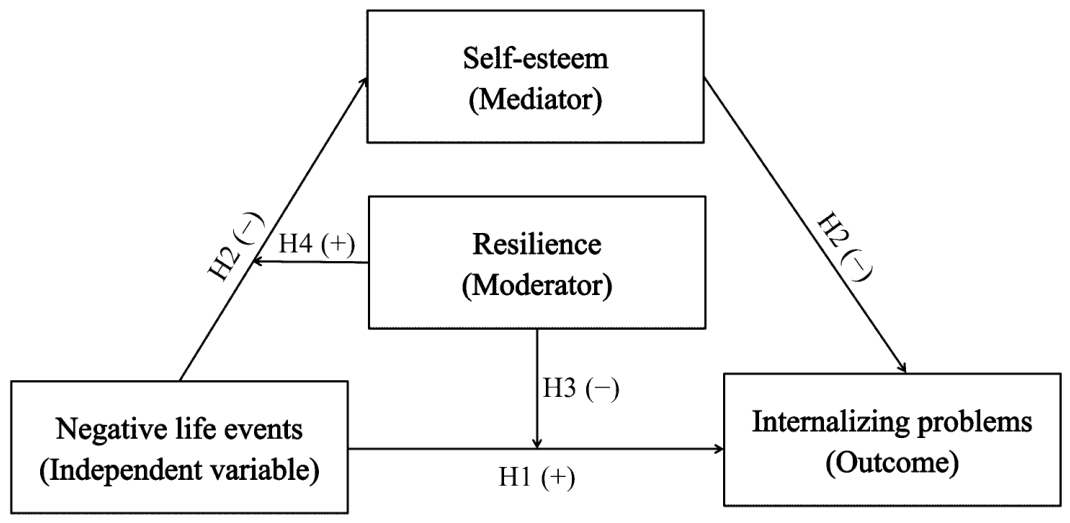
1.4. This Study
2. Materials and Methods
2.1. Participants
2.2. Measurements
2.2.1. Negative Life Events
2.2.2. Internalizing Problems
2.2.3. Self-Esteem
2.2.4. Psychological Resilience
2.3. Data Analysis
3. Results
3.1. Common Method Bias Test and Multicollinearity Diagnostics
3.2. Descriptive Statistics and Correlation Analysis
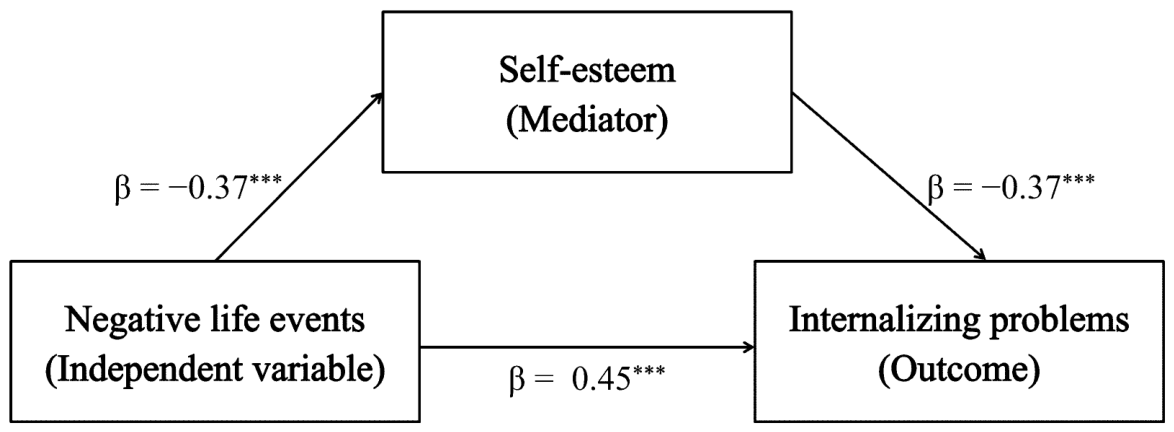
3.3. Testing for the Mediating Role of Self-Esteem
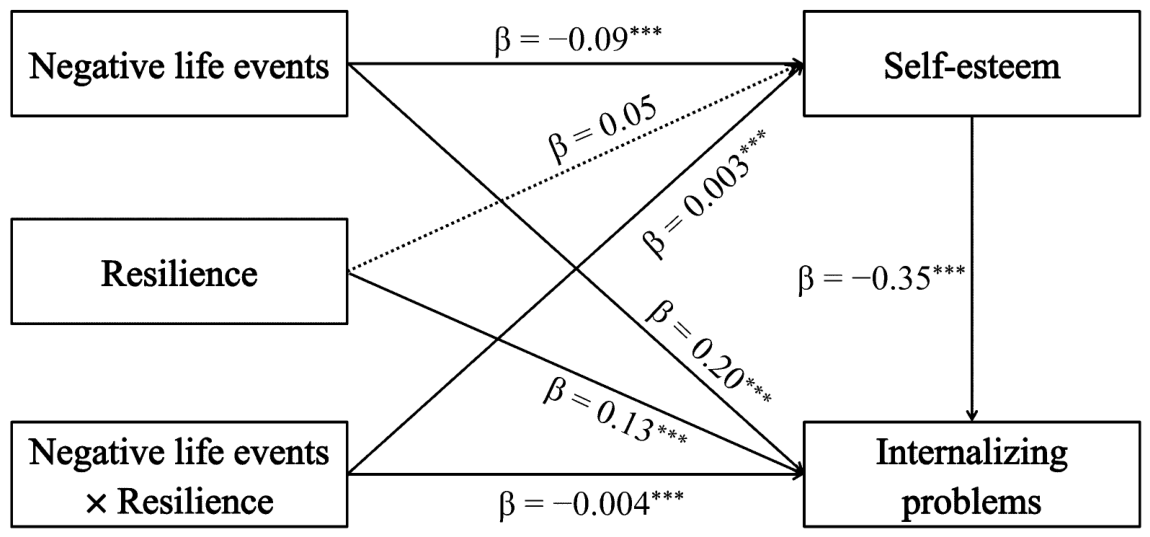
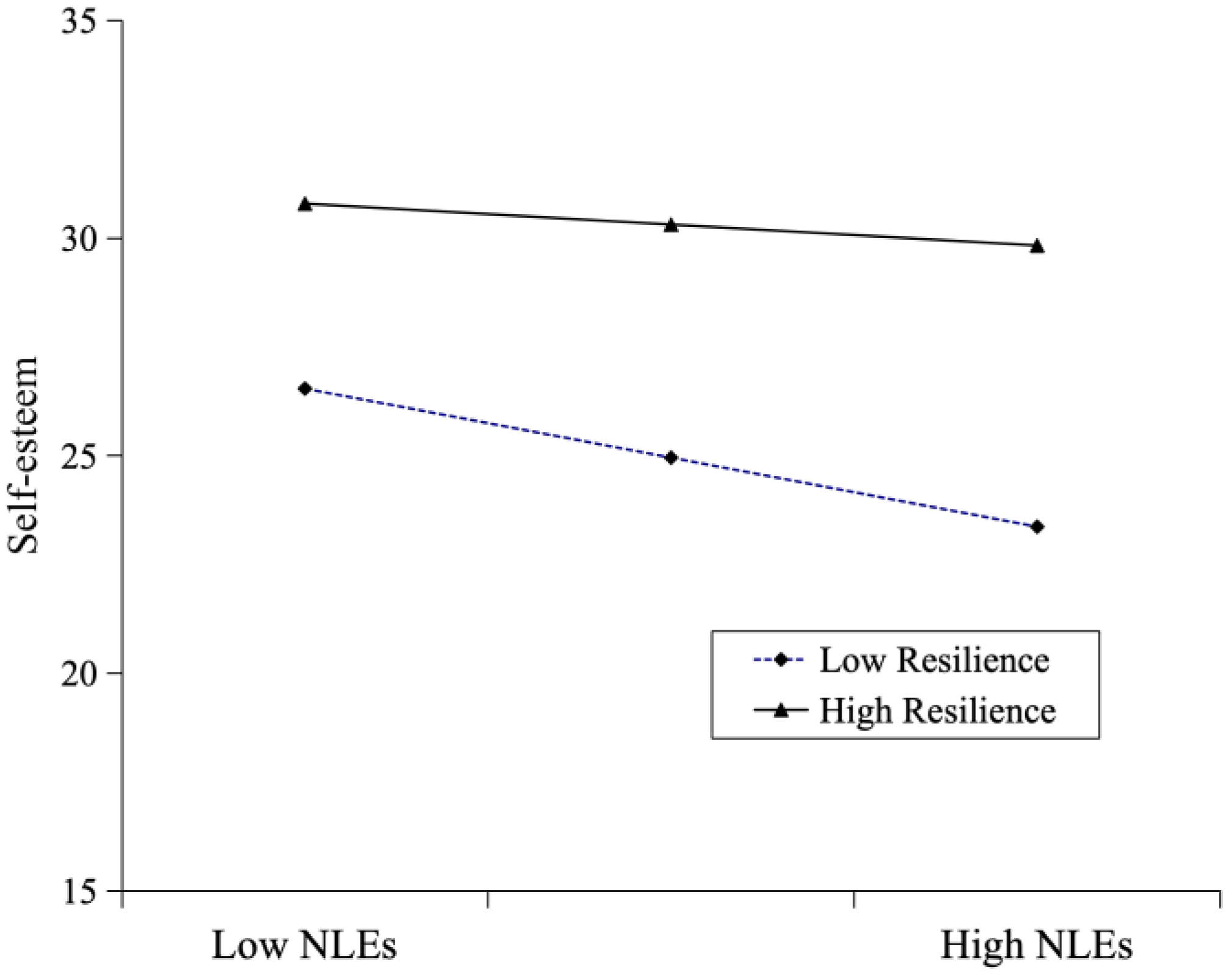
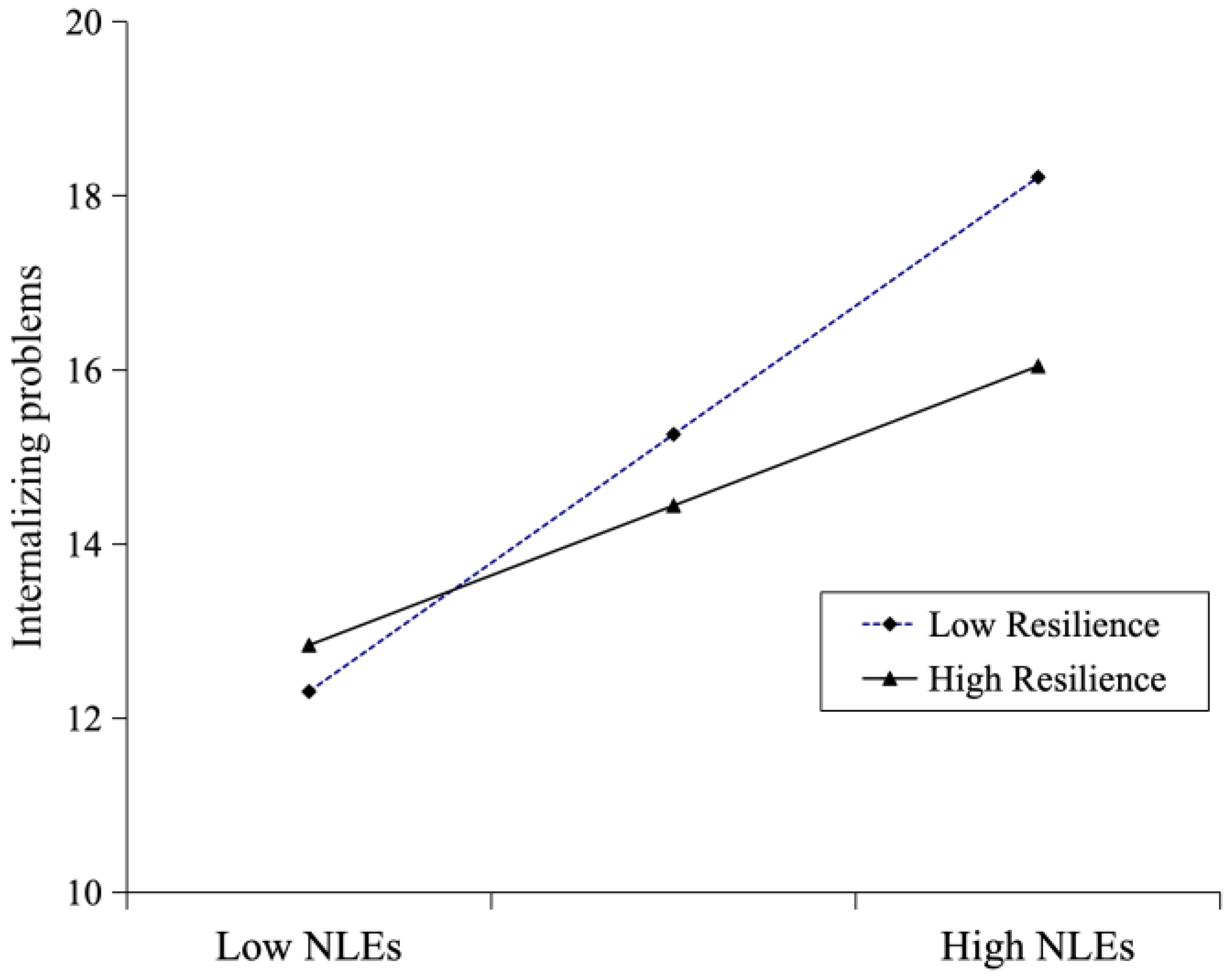
3.4. Testing the Moderated Mediation Effect
4. Discussion
4.1. The Direct Effect of Negative Life Events on Internalizing Problems
4.2. The Mediating Role of Self-Esteem
4.3. The Moderating Role of Resilience
4.4. Theoretical and Practical Implications
4.4.1. Theoretical Implications
4.4.2. Practical Implications
4.5. Limitations and Future Directions
5. Conclusions
Author Contributions
Funding
Institutional Review Board Statement
Informed Consent Statement
Data Availability Statement
Acknowledgments
Conflicts of Interest
References
- Achenbach, T. M. (1991). Manual for the youth self-report and 1991 profile. Department of Psychiatry, University of Vermont. [Google Scholar]
- Achenbach, T. M., & Edelbrock, C. S. (1981). Behavioral problems and competencies reported by parents of normal and disturbed children aged four through sixteen. Monographs of the Society for Research in Child Development, 46(1), 1–82. [Google Scholar] [CrossRef]
- Anyan, F., Bizumic, B., & Hjemdal, O. (2018). Specificity in mediated pathways by anxiety symptoms linking adolescent stress profiles to depressive symptoms: Results of a moderated mediation approach. Journal of Affective Disorders, 228, 72–79. [Google Scholar] [CrossRef]
- Anyan, F., & Hjemdal, O. (2016). Adolescent stress and symptoms of anxiety and depression: Resilience explains and differentiates the relationships. Journal of Affective Disorders, 203, 213–220. [Google Scholar] [CrossRef]
- Askeland, K. G., Bøe, T., Breivik, K., La Greca, A. M., Sivertsen, B., & Hysing, M. (2020). Life events and adolescent depressive symptoms: Protective factors associated with resilience. PLoS ONE, 15(6), e0234109. [Google Scholar] [CrossRef]
- Beck, A. T. (1967). Depression: Clinical, experimental, and theoretical aspects. Harper & Row. [Google Scholar]
- Blakemore, S. J., & Mills, K. L. (2014). Is adolescence a sensitive period for sociocultural processing? Trends in Cognitive Sciences, 18, 142–148. [Google Scholar] [CrossRef]
- Calvete, E., Villardón, L., & Estévez, A. (2008). Attributional style and depressive symptoms in adolescents: An examination of the role of various indicators of cognitive vulnerability. Behaviour Research and Therapy, 46(8), 944–953. [Google Scholar] [CrossRef]
- Casey, B. J., Jones, R. M., & Hare, T. A. (2008). The adolescent brain. Annals of the New York Academy of Sciences, 1124, 111–126. [Google Scholar] [CrossRef] [PubMed]
- Chaplin, T. M., & Aldao, A. (2013). Gender differences in emotion expression in children: A meta-analytic review. Psychological Bulletin, 139(4), 735–765. [Google Scholar] [CrossRef] [PubMed]
- Chaplin, W. F. (1991). The next generation of moderator research in personality psychology. Journal of Personality, 59(2), 143–178. [Google Scholar] [CrossRef]
- Clayborne, Z. M., Varin, M., & Colman, I. (2019). Systematic review and meta-analysis: Adolescent depression and long-term psychosocial outcomes. Journal of the American Academy of Child & Adolescent Psychiatry, 58(1), 72–79. [Google Scholar]
- Cohen, J. (1988). Statistical power analysis for the behavioral sciences (2nd ed.). Lawrence Erlbaum Associates. [Google Scholar]
- Cohen, S., & Wills, T. A. (1985). Stress, social support, and the buffering hypothesis. Psychological Bulletin, 98(2), 310–357. [Google Scholar] [CrossRef]
- Colodro-Conde, L., Couvy-Duchesne, B., Zhu, G., Coventry, W. L., Byrne, E. M., Gordon, S., Wright, M. J., Montgomery, G. W., Madden, P. A. F., Major Depressive Disorder Working Group of the Psychiatric Genomics Consortium, Ripke, S., Eaves, L. J., Heath, A. C., Wray, N. R., Medland, S. E., & Martin, N. G. (2018). A direct test of the diathesis–stress model for depression. Molecular Psychiatry, 23(7), 1590–1596. [Google Scholar]
- Compas, B. E., Jaser, S. S., Bettis, A. H., Watson, K. H., Gruhn, M. A., Dunbar, J. P., Williams, E., & Thigpen, J. C. (2017). Coping, emotion regulation, and psychopathology in childhood and adolescence: A meta-analysis and narrative review. Psychological Bulletin, 143(9), 939–979. [Google Scholar] [CrossRef]
- Connor, K. M., & Davidson, J. R. T. (2003). Development of a new resilience scale: The connor-davidson resilience scale (CD-RISC). Depression and Anxiety, 18(2), 76–82. [Google Scholar] [CrossRef]
- Duprey, E. B., McKee, L. G., O’Neal, C. W., & Algoe, S. B. (2018). Stressful life events and internalizing symptoms in emerging adults: The roles of mindfulness and gratitude. Mental Health & Prevention, 12, 1–9. [Google Scholar] [CrossRef]
- Duprey, E. B., Oshri, A., & Caughy, M. O. (2017). Childhood neglect, internalizing symptoms and adolescent substance use: Does the neighborhood context matter? Journal of Youth and Adolescence, 46(7), 1582–1597. [Google Scholar] [CrossRef]
- Edwards, J. R., & Lambert, L. S. (2007). Methods for integrating moderation and mediation: A general analytical framework using moderated path analysis. Psychological Methods, 12(1), 1. [Google Scholar] [CrossRef]
- Essau, C. A., Lewinsohn, P. M., Olaya, B., & Seeley, J. R. (2014). Anxiety disorders in adolescents and psychosocial outcomes at age 30. Journal of Affective Disorders, 163, 125–132. [Google Scholar] [CrossRef] [PubMed]
- Fergus, S., & Zimmerman, M. A. (2005). Adolescent resilience: A framework for understanding healthy development in the face of risk. Annual Review of Public Health, 26, 399–419. [Google Scholar] [CrossRef]
- Fornell, C., & Larcker, D. F. (1981). Evaluating structural equation models with unobservable variables and measurement error. Journal of Marketing Research, 18(1), 39–50. [Google Scholar] [CrossRef]
- Gao, F., Yao, Y., Yao, C., Xiong, Y., Ma, H., & Liu, H. (2019). The mediating role of resilience and self-esteem between negative life events and positive social adjustment among left-behind adolescents in China: A cross-sectional study. BMC Psychiatry, 19(1), 239. [Google Scholar] [CrossRef] [PubMed]
- Garmezy, N., Masten, A. S., & Tellegen, A. (1984). The study of stress and competence in children: A building block for developmental psychopathology. Child Development, 55(1), 97–111. [Google Scholar] [CrossRef] [PubMed]
- Geng, Y., Gu, J., Yu, J., & Zhu, X. (2022). Negative life events and depressive symptoms among Chinese adolescents: Mediating role of resilience and moderating role of psychopathy. Current Psychology, 41(3), 1486–1493. [Google Scholar] [CrossRef]
- Grant, K. E., Compas, B. E., Stuhlmacher, A. F., Thurm, A. E., McMahon, S. D., & Halpert, J. A. (2003). Stressors and child and adolescent psychopathology: Moving from markers to mechanisms of risk. Psychological Bulletin, 129(3), 447. [Google Scholar] [CrossRef]
- Greenberg, J., Solomon, S., Pyszczynski, T., Rosenblatt, A., Burling, J., Lyon, D., Simon, L., & Pinel, E. (1992). Why do people need self-esteem? Converging evidence that self-esteem serves an anxiety-buffering function. Journal of Personality and Social Psychology, 63(6), 913–922. [Google Scholar] [CrossRef]
- Haaga, D. A., Dyck, M. J., & Ernst, D. (1991). Empirical status of cognitive theory of depression. Psychological Bulletin, 110(2), 215–236. [Google Scholar] [CrossRef]
- Hair, J. F., Black, W. C., Babin, B. J., & Anderson, R. E. (2019). Multivariate data analysis (8th ed.). Cengage. [Google Scholar]
- Hammen, C. (2005). Stress and depression. Annual Review of Clinical Psychology, 1, 293–319. [Google Scholar] [CrossRef] [PubMed]
- Hammen, C., Hazel, N. A., Brennan, P. A., & Najman, J. (2012). Intergenerational transmission and continuity of stress and depression: Depressed women and their offspring in 20 years of follow-up. Psychological Medicine, 42(5), 931–942. [Google Scholar] [CrossRef] [PubMed]
- Hammen, C., Henry, R., & Daley, S. E. (2000). Depression and sensitization to stressors among young women as a function of childhood adversity. Journal of Consulting and Clinical Psychology, 68(5), 782–787. [Google Scholar] [CrossRef]
- Hayes, A. F. (2022). Introduction to mediation, moderation, and conditional process analysis: A regression-based approach (3rd ed.). Guilford Press. [Google Scholar]
- Hazzard, V. M., Mason, T. B., Smith, K. E., Schaefer, L. M., Anderson, L. M., Dodd, D. R., Crosby, R. D., & Wonderlich, S. A. (2023). Identifying transdiagnostically relevant risk and protective factors for internalizing psychopathology: An umbrella review of longitudinal meta-analyses. Journal of Psychiatric Research, 158, 231–244. [Google Scholar] [CrossRef]
- Henriksen, I. O., Ranøyen, I., Indredavik, M. S., & Stenseng, F. (2017). The role of self-esteem in the development of psychiatric problems: A three-year prospective study in a clinical sample of adolescents. Child and Adolescent Psychiatry and Mental Health, 11(1), 68. [Google Scholar] [CrossRef]
- Jenness, J. L., Peverill, M., King, K. M., Hankin, B. L., & McLaughlin, K. A. (2019). Dynamic associations between stressful life events and adolescent internalizing psychopathology in a multiwave longitudinal study. Journal of Abnormal Psychology, 128(6), 596–609. [Google Scholar] [CrossRef]
- Kang, B., Li, Y., Zhao, X., Cui, X., Qin, X., Fang, S., & Liu, X. (2024). Negative parenting style and depression in adolescents: A moderated mediation of self-esteem and perceived social support. Journal of Affective Disorders, 345, 149–156. [Google Scholar] [CrossRef]
- Krueger, R. F. (1999). The structure of common mental disorders. Archives of General Psychiatry, 56(10), 921–926. [Google Scholar] [CrossRef] [PubMed]
- Leary, M. R. (2005). Sociometer theory and the pursuit of relational value: Getting to the root of self-esteem. European Review of Social Psychology, 16(1), 75–111. [Google Scholar] [CrossRef]
- Leary, M. R., & Baumeister, R. F. (2000). The nature and function of self-esteem: Sociometer theory. Advances in Experimental Social Psychology, 32, 1–62. [Google Scholar]
- Lerner, R. M., Chase, P. A., Dowling, E. M., Tirrell, J. M., Buckingham, M. H., Yu, D., Park, Y., Gonçalves, C., Gansert, P., & Lerner, J. V. (2023). Resilience and positive youth development: A dynamic, relational developmental systems-based perspective. In S. Goldstein, & R. B. Brooks (Eds.), Handbook of resilience in children (pp. 337–349). Springer. [Google Scholar]
- Little, T. D., Cunningham, W. A., Shahar, G., & Widaman, K. F. (2002). To parcel or not to parcel: Exploring the question, weighing the merits. Structural Equation Modelling, 9, 151–173. [Google Scholar] [CrossRef] [PubMed]
- Liu, X. C., Liu, L. Q., Yang, J., Chai, F. X., Wang, A. Z., Sun, L. M., Zhao, G. F., & Ma, D. D. (1997). Development and psychometric evaluation of the adolescent life events scale. Shandong Archives of Psychiatry, 10(1), 15–19. [Google Scholar]
- Luthar, S. S., Cicchetti, D., & Becker, B. (2000). The construct of resilience: A critical evaluation and guidelines for future work. Child Development, 71(3), 543–562. [Google Scholar] [CrossRef]
- Masselink, M., Van Roekel, E., & Oldehinkel, A. J. (2018). Self-esteem in early adolescence as predictor of depressive symptoms in late adolescence and early adulthood: The mediating role of motivational and social factors. Journal of Youth and Adolescence, 47(5), 932–946. [Google Scholar] [CrossRef]
- Masten, A. S. (2001). Ordinary magic: Resilience processes in development. American Psychologist, 56(3), 227–238. [Google Scholar] [CrossRef]
- Masten, A. S. (2014). Global perspectives on resilience in children and youth. Child Development, 85(1), 6–20. [Google Scholar] [CrossRef] [PubMed]
- McLaughlin, K. A., Conron, K. J., Koenen, K. C., & Gilman, S. E. (2010). Childhood adversity, adult stressful life events, and risk of past-year psychiatric disorder: A test of the stress sensitization hypothesis in a population-based sample of adults. Psychological Medicine, 40(10), 1647–1658. [Google Scholar] [CrossRef]
- McLaughlin, K. A., & Nolen-Hoeksema, S. (2011). Rumination as a transdiagnostic factor in depression and anxiety. Behaviour Research and Therapy, 49(3), 186–193. [Google Scholar] [CrossRef] [PubMed]
- McLeod, B. D., Weisz, J. R., & Wood, J. J. (2007). Examining the association between parenting and childhood depression: A meta-analysis. Clinical Psychology Review, 27(8), 986–1003. [Google Scholar] [CrossRef]
- Milas, G., Ribar, M., & Ćavar, F. (2025). Why are adolescent girls more prone to stress-induced depression? Testing moderation, mediation, and reciprocal causality in a three-wave longitudinal study. Journal of Research on Adolescence, 35(1), e70015. [Google Scholar] [CrossRef]
- Monroe, S. M., & Harkness, K. L. (2005). Life stress, the “kindling” hypothesis, and the recurrence of depression: Considerations from a life stress perspective. Psychological Review, 112(2), 417–445. [Google Scholar] [CrossRef]
- Monroe, S. M., & Simons, A. D. (1991). Diathesis–stress theories in the context of life stress research: Implications for the depressive disorders. Psychological Bulletin, 110(3), 406–425. [Google Scholar] [CrossRef]
- O’Mara, A. J., Marsh, H. W., Craven, R. G., & Debus, R. L. (2006). Do self-concept interventions make a difference? A synergistic blend of construct validation and meta-analysis. Educational Psychologist, 41(3), 181–206. [Google Scholar] [CrossRef] [PubMed]
- Orth, U., & Robins, R. W. (2022). Is high self-esteem beneficial? Revisiting a classic question. American Psychologist, 77(1), 5–17. [Google Scholar] [CrossRef]
- Patel, V., Flisher, A. J., Hetrick, S., & McGorry, P. (2007). Mental health of young people: A global public-health challenge. The Lancet, 369(9569), 1302–1313. [Google Scholar] [CrossRef]
- Podsakoff, P. M., MacKenzie, S. B., Lee, J.-Y., & Podsakoff, N. P. (2003). Common method biases in behavioral research: A critical review of the literature and recommended remedies. Journal of Applied Psychology, 88(5), 879–903. [Google Scholar] [CrossRef]
- Pyszczynski, T., Greenberg, J., Solomon, S., Arndt, J., & Schimel, J. (2004). Why do people need self-esteem? A theoretical and empirical review. Psychological Bulletin, 130(3), 435–468. [Google Scholar] [CrossRef] [PubMed]
- Quan, X., & Sun, J. (2024). Negative life events and college students’ adjustment: The mediating role of self-esteem and the moderating role of grade. Frontiers in Psychology, 15, 1265870. [Google Scholar] [CrossRef]
- Racine, N., McArthur, B. A., Cooke, J. E., Eirich, R., Zhu, J., & Madigan, S. (2021). Global prevalence of depressive and anxiety symptoms in children and adolescents during COVID-19: A meta-analysis. JAMA Pediatrics, 175(11), 1142–1150. [Google Scholar] [CrossRef]
- R Core Team. (2023). R: A language and environment for statistical computing [Computer software]. R Foundation for Statistical Computing. Available online: https://www.r-project.org/ (accessed on 1 February 2026).
- Reiss, F. (2013). Socioeconomic inequalities and mental health problems in children and adolescents: A systematic review. Social Science & Medicine, 90, 24–31. [Google Scholar] [CrossRef]
- Reitz, A. K. (2022). Self-esteem development and life events: A review and integrative process framework. Social and Personality Psychology Compass, 16(11), e12709. [Google Scholar] [CrossRef]
- Rose, A. J., & Rudolph, K. D. (2006). A review of sex differences in peer relationship processes: Potential trade-offs for the emotional and behavioral development of girls and boys. Psychological Bulletin, 132(1), 98–131. [Google Scholar] [CrossRef]
- Rosenberg, M. (1965). Society and the adolescent self-image. Princeton University Press. [Google Scholar]
- Rosseel, Y. (2012). lavaan: An R package for structural equation modeling. Journal of Statistical Software, 48, 1–36. [Google Scholar] [CrossRef]
- Rudolph, K. D. (2002). Gender differences in emotional responses to interpersonal stress during adolescence. Journal of Adolescent Health, 30(4), 3–13. [Google Scholar] [CrossRef] [PubMed]
- Rutter, M. (1987). Psychosocial resilience and protective mechanisms. American Journal of Orthopsychiatry, 57(3), 316–331. [Google Scholar] [CrossRef] [PubMed]
- Ruttle, P. L., Armstrong, J. M., Klein, M. H., & Essex, M. J. (2014). Adolescent internalizing symptoms and negative life events: The sensitizing effects of earlier life stress and cortisol. Development and Psychopathology, 26((4 Pt 2)), 1411–1422. [Google Scholar] [CrossRef]
- Salami, S. O. (2010). Moderating effects of resilience, self-esteem and social support on adolescents’ reactions to violence. Asian Social Science, 6(12), 101–110. [Google Scholar] [CrossRef]
- Seery, M. D., Holman, E. A., & Silver, R. C. (2010). Whatever does not kill us: Cumulative lifetime adversity, vulnerability, and resilience. Journal of Personality and Social Psychology, 99(6), 1025–1044. [Google Scholar] [CrossRef]
- Shih, J. H., Eberhart, N. K., Hammen, C. L., & Brennan, P. A. (2006). Differential exposure and reactivity to interpersonal stress predict sex differences in adolescent depression. Journal of Clinical Child and Adolescent Psychology, 35(1), 103–115. [Google Scholar] [CrossRef]
- Silk, J. S., Davis, S., McMakin, D. L., Dahl, R. E., & Forbes, E. E. (2012). Why do anxious children become depressed teenagers? The role of social evaluative threat and reward processing. Psychological Medicine, 42(10), 2095–2107. [Google Scholar] [CrossRef]
- Southall, D., & Roberts, J. E. (2002). Attributional style and self-esteem in vulnerability to life stress. Cognitive Therapy and Research, 26(4), 539–554. [Google Scholar] [CrossRef]
- Sowislo, J. F., & Orth, U. (2013). Does low self-esteem predict depression and anxiety? A meta-analysis of longitudinal studies. Psychological Bulletin, 139(1), 213–240. [Google Scholar] [CrossRef]
- Steiger, A. E., Allemand, M., Robins, R. W., & Fend, H. A. (2014). Low and decreasing self-esteem during adolescence predict adult depression two decades later. Journal of Personality and Social Psychology, 106(2), 325–338. [Google Scholar] [CrossRef] [PubMed]
- Stroud, C. B. (2019). The stress sensitization model. In K. L. Harkness, & E. P. Hayden (Eds.), The Oxford handbook of stress and mental health. Oxford University Press. [Google Scholar]
- Tugade, M. M., & Fredrickson, B. L. (2004). Resilient individuals use positive emotions to bounce back from negative emotional experiences. Journal of Personality and Social Psychology, 86(2), 320–333. [Google Scholar] [CrossRef] [PubMed]
- Wang, X. D., Wang, X. L., & Ma, H. (1999). Handbook of mental health assessment scales. Chinese Mental Health Journal Press. [Google Scholar]
- Watson, D. (2005). Rethinking the mood and anxiety disorders: A quantitative hierarchical model for DSM-V. Journal of Abnormal Psychology, 114(4), 522–536. [Google Scholar] [CrossRef]
- Wei, C., Li, Z., Ma, T., Jiang, X., Yu, C., & Xu, Q. (2022). Stressful life events and non-suicidal self-injury among Chinese adolescents: A moderated mediation model of depression and resilience. Frontiers in Public Health, 10, 944726. [Google Scholar] [CrossRef]
- Xia, H., Han, X., Cheng, J., Liu, D., Wu, Y., & Liu, Y. (2022). Effects of negative life events on depression in middle school students: The chain-mediating roles of rumination and perceived social support. Frontiers in Psychology, 13, 781274. [Google Scholar] [CrossRef]
- Yang, S., Huang, P., Li, B., Gan, T., Lin, W., & Liu, Y. (2023). The relationship of negative life events, trait-anxiety and depression among Chinese university students: A moderated effect of self-esteem. Journal of Affective Disorders, 339, 384–391. [Google Scholar] [CrossRef]
- Ye, X., Yang, G., Zhang, W., Toussaint, L., & Zhao, F. (2025). Relationship of negative life events with depression and anxiety in nursing students: A moderated mediation model of resilience and gender. BMC Nursing, 24, 58. [Google Scholar] [CrossRef]
- Yeager, D. S., & Dweck, C. S. (2020). What can be learned from growth mindset controversies? American Psychologist, 75(9), 1269–1284. [Google Scholar] [CrossRef]
- Young, K. S., Sandman, C. F., & Craske, M. G. (2019). Positive and negative emotion regulation in adolescence: Links to anxiety and depression. Brain Sciences, 9(4), 76. [Google Scholar] [CrossRef]
- Yu, X. N., & Zhang, J. X. (2007). A comparison of the ego-resilience scale and the connor–davidson resilience scale in application. Psychological Science, 30(5), 1169–1171. [Google Scholar]
- Zahn-Waxler, C., Shirtcliff, E. A., & Marceau, K. (2008). Disorders of childhood and adolescence: Gender and psychopathology. Annual Review of Clinical Psychology, 4(1), 275–303. [Google Scholar] [CrossRef]
- Zhao, S. Y., Ren, R. R., & Chen, W. (2023). A mediated moderation model of negative life events, self-esteem, rumination and parental divorce on depression among Chinese juvenile delinquents. Scientific Reports, 13(1), 1793. [Google Scholar] [CrossRef]
- Zhou, L., Qiao, C., Huang, J., Lin, J., Zhang, H., Xie, J., Yuan, Y., & Hu, C. (2024). The impact of recent life events, internalizing symptoms, and emotion regulation on the severity of non-suicidal self-injury in adolescents: A mediation analysis. Neuropsychiatric Disease and Treatment, 20, 415–428. [Google Scholar] [CrossRef]
- Zimmerman, M. A., Stoddard, S. A., Eisman, A. B., Caldwell, C. H., Aiyer, S. M., & Miller, A. (2013). Adolescent resilience: Promotive factors that inform prevention. Child Development Perspectives, 7, 215–220. [Google Scholar] [CrossRef]



| M | SD | 1 | 2 | 3 | 4 | 5 | 6 | |
|---|---|---|---|---|---|---|---|---|
| 1 Gender | 1.51 | 0.50 | 1 | |||||
| 2 Age | 15.98 | 0.78 | −0.06 | 1 | ||||
| 3 NLEs | 41.12 | 11.49 | 0.14 ** | −0.09 | 1 | |||
| 4 IPs | 5.37 | 5.01 | 0.24 ** | −0.09 | 0.61 ** | 1 | ||
| 5 Self-esteem | 27.41 | 4.50 | −0.05 | 0.03 | −0.37 ** | −0.54 ** | 1 | |
| 6 Resilience | 55.32 | 15.06 | −0.13 ** | 0.04 | −0.25 ** | −0.39 ** | 0.62 ** | 1 |
| Effect | Bootstrap | 95% CI | Relative Effect | ||
|---|---|---|---|---|---|
| SE | LLCI | ULCI | |||
| Total effect (c) | 0.25 | 0.02 | 0.22 | 0.29 | |
| Direct effect (c′) | 0.19 | 0.02 | 0.16 | 0.23 | 76.5% |
| Indirect effect (ab) | 0.06 | 0.01 | 0.04 | 0.08 | 23.5% |
| Predictor | Self-Esteem | IPs | ||||||||
|---|---|---|---|---|---|---|---|---|---|---|
| β | SE | t | LLCI | ULCI | β | SE | t | LLCI | ULCI | |
| Gender | 0.54 | 0.34 | 1.59 | −0.130 | 1.216 | 1.44 | 0.35 | 4.10 *** | 0.750 | 2.133 |
| Age | −0.12 | 0.22 | −0.54 | −0.542 | 0.310 | −0.17 | 0.22 | −0.75 | −0.602 | 0.271 |
| NLEs | −0.09 | 0.02 | −6.01 *** | −0.122 | −0.062 | 0.20 | 0.02 | 12.05 *** | 0.165 | 0.229 |
| Self-esteem | −0.35 | 0.05 | −6.80 *** | −0.452 | −0.249 | |||||
| Resilience | 0.05 | 0.04 | 1.20 | −0.029 | 0.122 | 0.13 | 0.04 | 3.38 *** | 0.056 | 0.211 |
| NLEs × Resilience | 0.003 | 0.001 | 3.37 *** | 0.001 | 0.005 | −0.004 | 0.001 | −4.01 *** | −0.006 | −0.002 |
| R2 | 0.45 | 0.53 | ||||||||
| ΔR2 | 0.02 | 0.02 | ||||||||
| F | 63.89 *** | 74.29 *** | ||||||||
| Moderator (Resilience) | Indirect Effect | Boot SE | 95% Confidence Interval | |
|---|---|---|---|---|
| LLCI | ULCI | |||
| M − 1 SD | 0.05 | 0.01 | 0.030 | 0.070 |
| M | 0.03 | 0.01 | 0.019 | 0.048 |
| M + 1 SD | 0.02 | 0.01 | −0.001 | 0.034 |
Disclaimer/Publisher’s Note: The statements, opinions and data contained in all publications are solely those of the individual author(s) and contributor(s) and not of MDPI and/or the editor(s). MDPI and/or the editor(s) disclaim responsibility for any injury to people or property resulting from any ideas, methods, instructions or products referred to in the content. |
© 2026 by the authors. Licensee MDPI, Basel, Switzerland. This article is an open access article distributed under the terms and conditions of the Creative Commons Attribution (CC BY) license.
Share and Cite
He, D.; Mai, J.; He, X. The Relationship Between Negative Life Events and Internalizing Problems: The Mediating Role of Self-Esteem and the Moderating Role of Resilience. Behav. Sci. 2026, 16, 845. https://doi.org/10.3390/bs16060845
He D, Mai J, He X. The Relationship Between Negative Life Events and Internalizing Problems: The Mediating Role of Self-Esteem and the Moderating Role of Resilience. Behavioral Sciences. 2026; 16(6):845. https://doi.org/10.3390/bs16060845
Chicago/Turabian StyleHe, Dexian, Jiaxin Mai, and Xianyou He. 2026. "The Relationship Between Negative Life Events and Internalizing Problems: The Mediating Role of Self-Esteem and the Moderating Role of Resilience" Behavioral Sciences 16, no. 6: 845. https://doi.org/10.3390/bs16060845
APA StyleHe, D., Mai, J., & He, X. (2026). The Relationship Between Negative Life Events and Internalizing Problems: The Mediating Role of Self-Esteem and the Moderating Role of Resilience. Behavioral Sciences, 16(6), 845. https://doi.org/10.3390/bs16060845