How Bodily Interaction Shapes Creativity: Two Experiments on Direction and Type

Abstract
1. Introduction
2. Materials and Methods
2.1. Research Aims and Overall Design
2.2. Participants
2.2.1. Experiment 1: Participants
2.2.2. Experiment 2: Participants
2.3. Experimental Design and Procedure
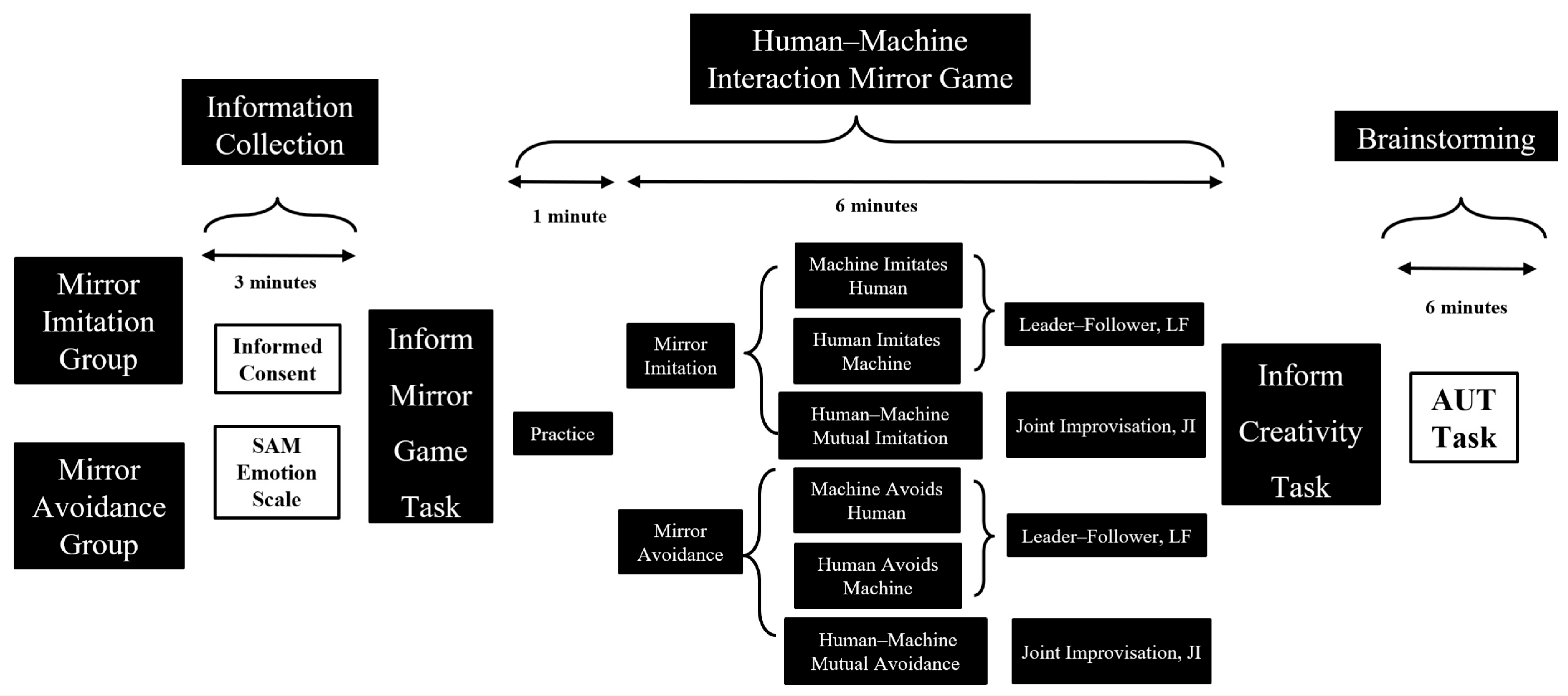
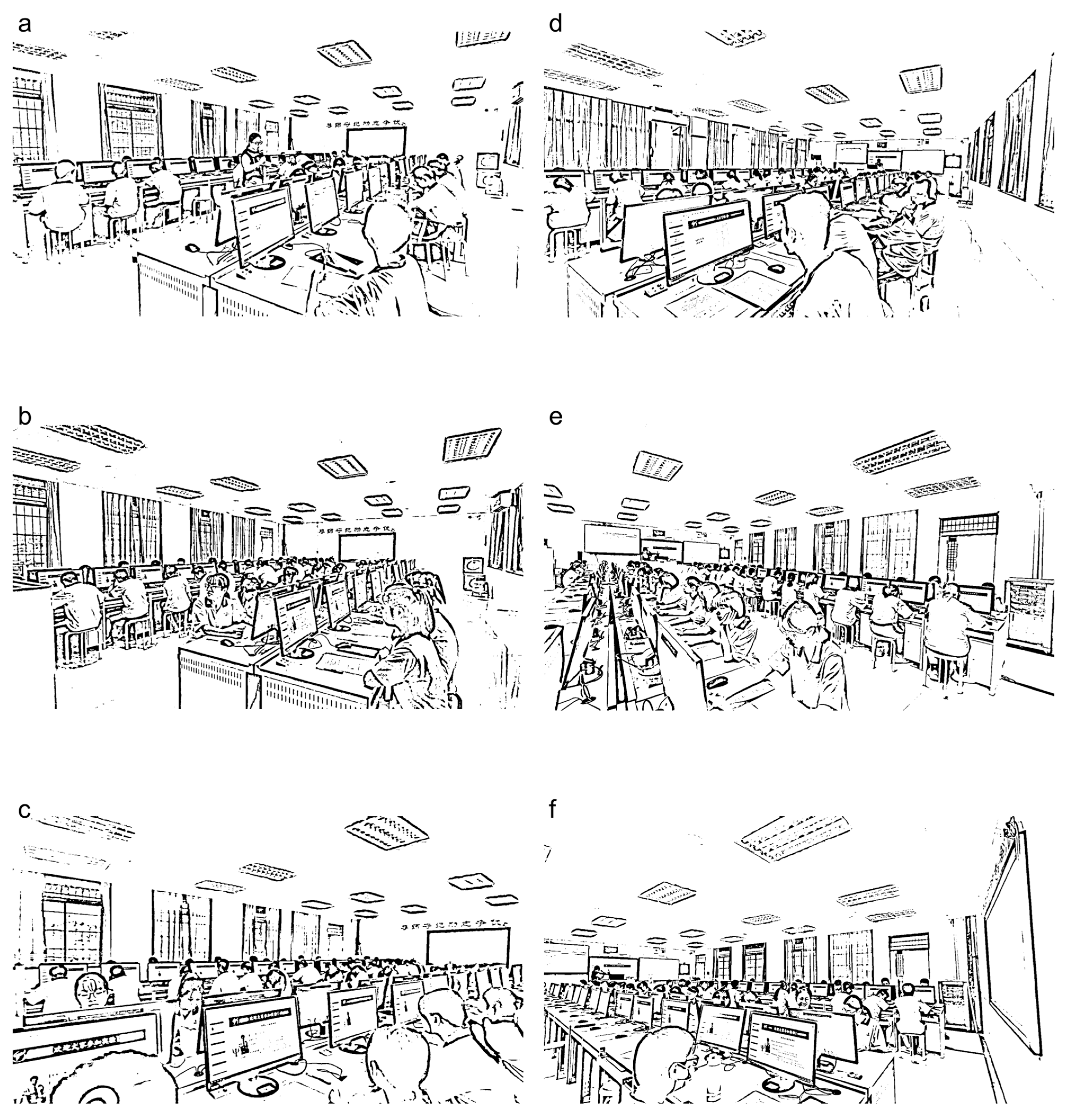
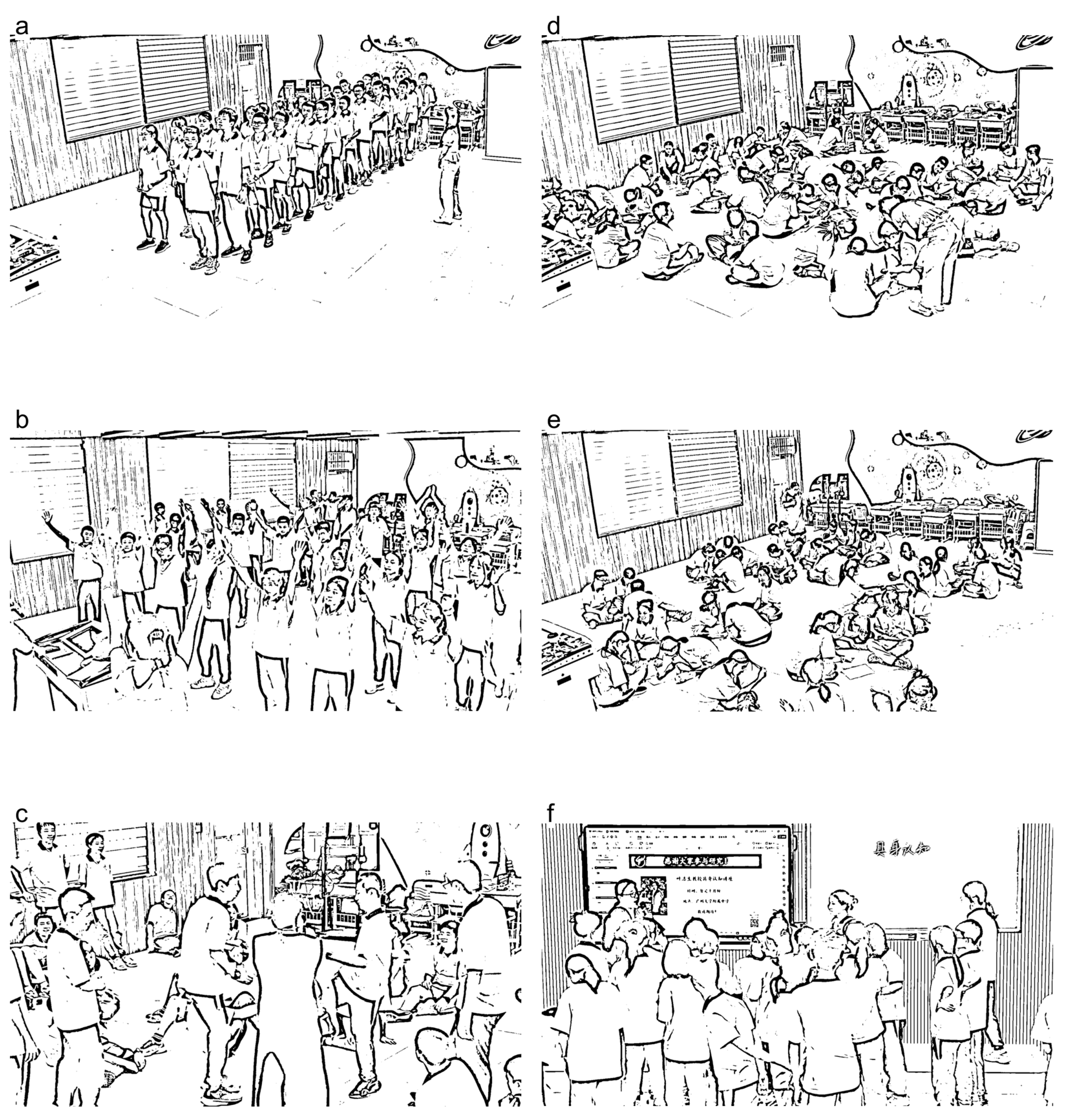
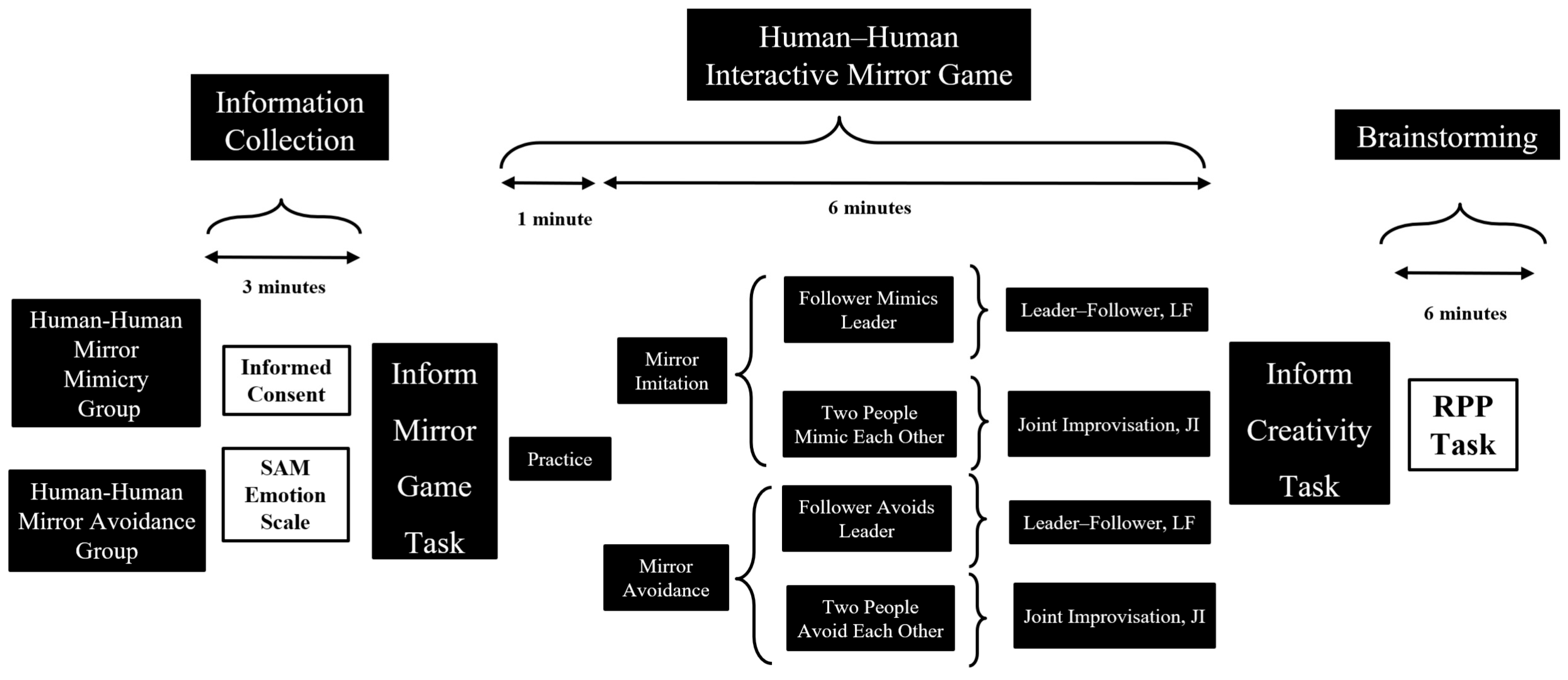
2.3.1. Experiment 1: Design and Procedure
2.3.2. Experiment 2: Design and Procedure
2.4. Experimental Equipment and Measures
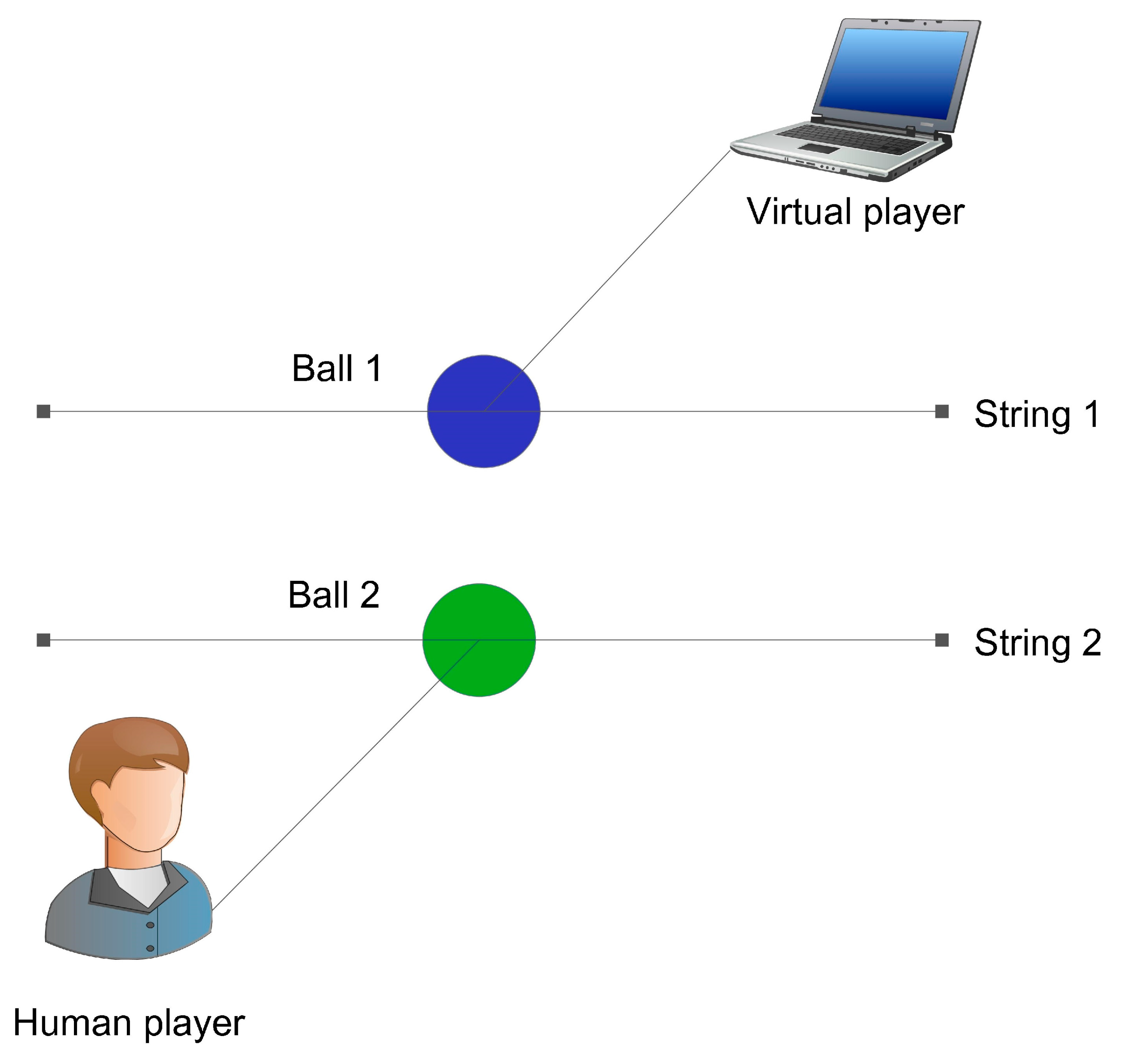
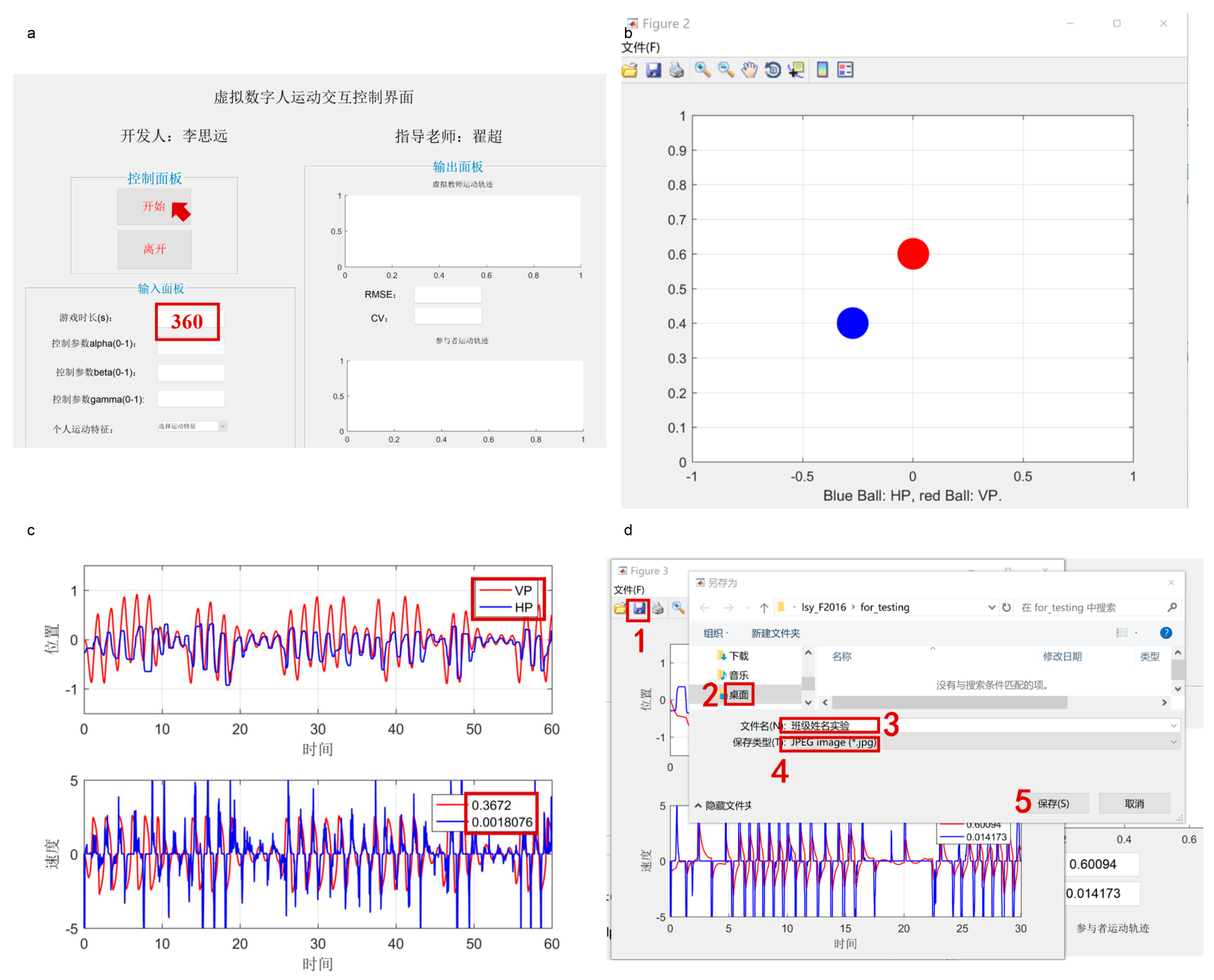
2.4.1. Experiment 1: Equipment and Measures
2.4.2. Experiment 2: Equipment and Measures
3. Results
3.1. Manipulation Check
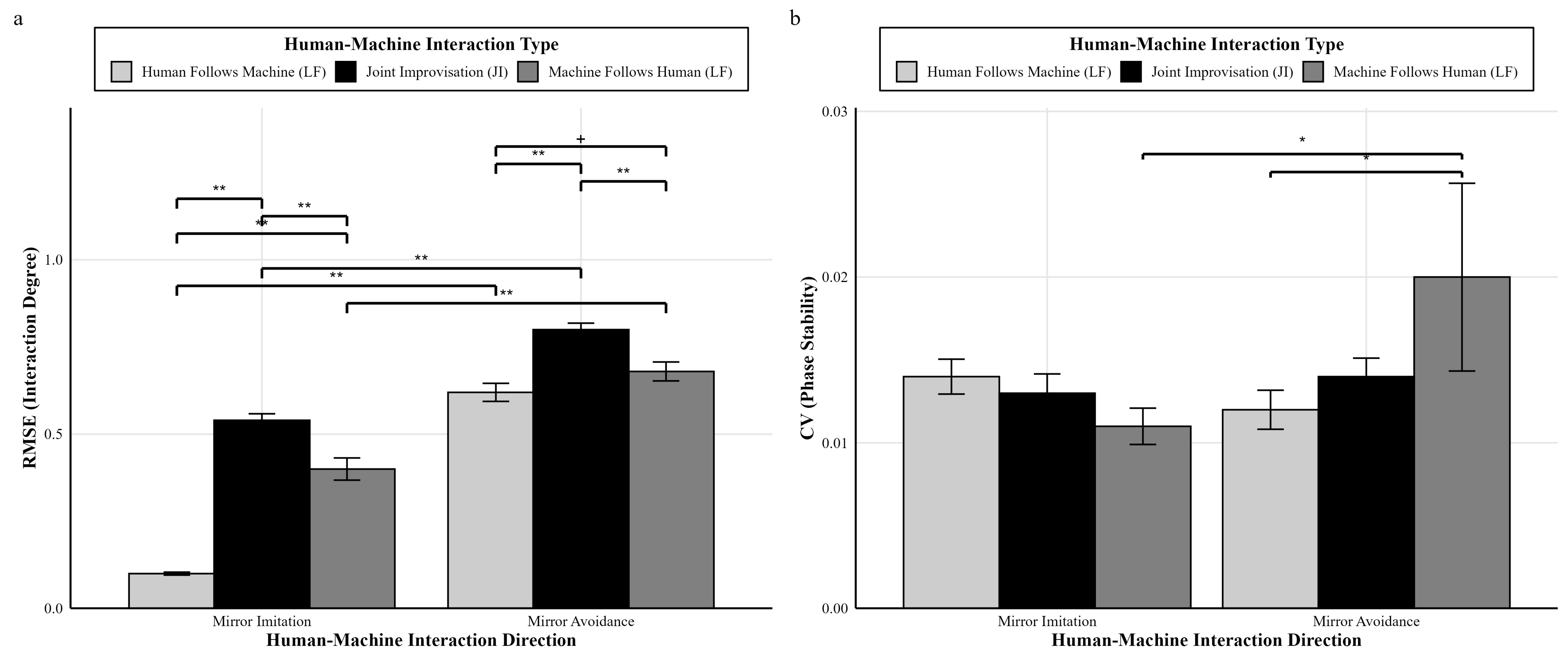
Experiment 1: Interaction Degree
3.2. Consistency Check for Scoring
3.2.1. Experiment 1: Scoring Consistency
3.2.2. Experiment 2: Scoring Consistency
3.3. Dependent Variable: Performance in the Creativity Task
3.3.1. Experiment 1: AUT Performance
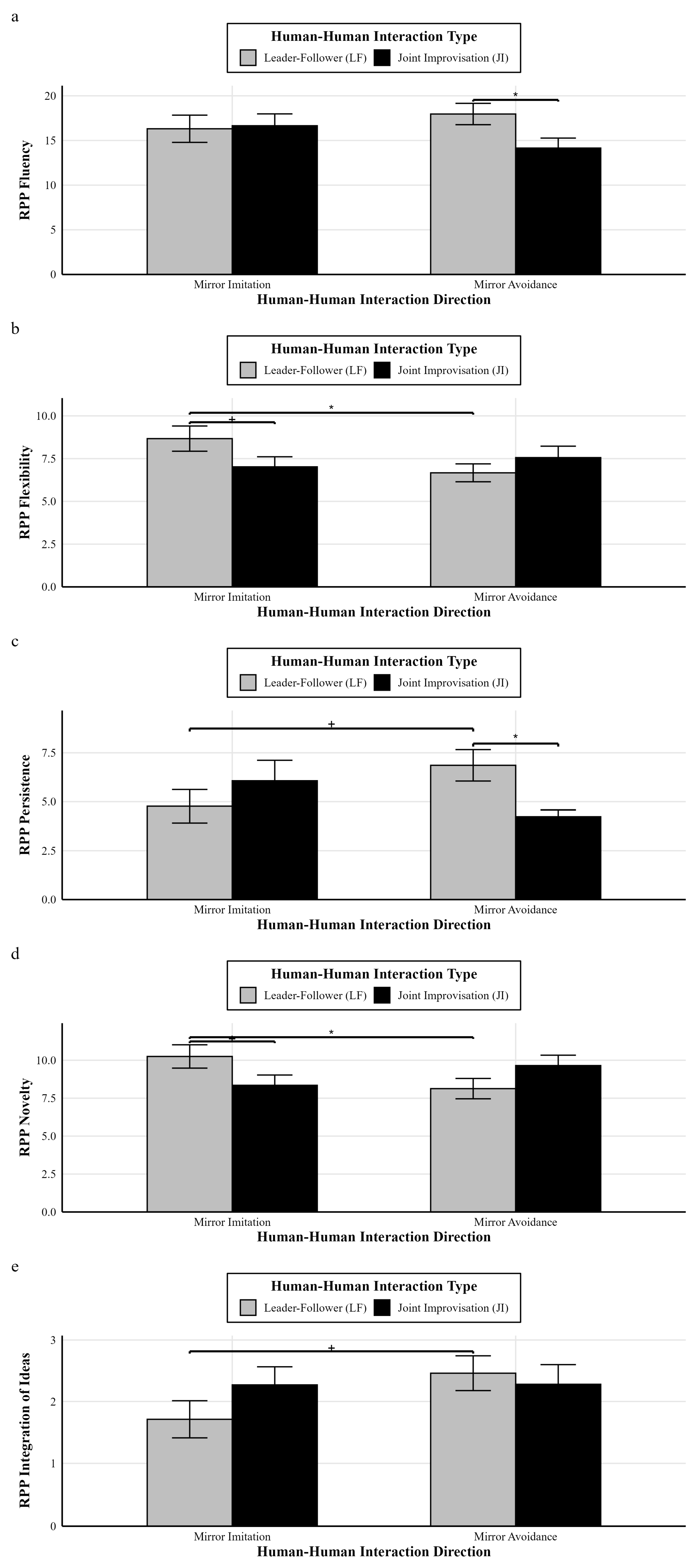
3.3.2. Experiment 2: RPP Task Performance
3.4. Additional Variable: Emotion
3.4.1. Experiment 1: Emotion
3.4.2. Experiment 2: Emotion
4. Discussion
4.1. Discussion of Experiment 1
4.1.1. Manipulation Check Results Confirm Effective Manipulation of Interaction Degree
4.1.2. Synergistic Effects of Embodied and Enactive Metaphors: Interactive Effects of Human–Machine Interaction Direction and Type on Creativity Dimensions
4.2. Discussion of Experiment 2
Embodied and Enactive Metaphors Synergistically Enhance Group Creativity: Multidimensional Effects of Interaction Direction and Type on Group Creativity
4.3. General Discussion
4.3.1. Challenges in Embodied Creativity
4.3.2. Extending Previous Mirror Game Research
4.3.3. The Dual Mechanisms of Embodied and Enactive Metaphors—Interpreting Creativity from Human–Machine Interaction to Human–Human Interaction
4.3.4. Contributions to the Literature
4.3.5. Limitations
4.3.6. Future Directions: Could Predictive Processing Explain How Bodily Interaction Enhances Creativity?
5. Conclusions
Author Contributions
Funding
Institutional Review Board Statement
Informed Consent Statement
Data Availability Statement
Conflicts of Interest
References
- Amabile, T. M. (1983). The social psychology of creativity: A componential conceptualization. Journal of Personality and Social Psychology, 45(2), 357–376. [Google Scholar] [CrossRef]
- Anderson, R. C. (2018). Creative engagement: Embodied metaphor, the affective brain, and meaningful learning. Mind, Brain, and Education, 12(2), 72–81. [Google Scholar] [CrossRef] [Scilit]
- Barrett, L., & Stout, D. (2024). Minds in movement: Embodied cognition in the age of artificial intelligence. Philosophical Transactions of the Royal Society B: Biological Sciences, 379(1911), 20230144. [Google Scholar] [CrossRef] [Scilit]
- Borghi, A. M., Binkofski, F., Castelfranchi, C., Cimatti, F., Scorolli, C., & Tummolini, L. (2017). The challenge of abstract concepts. Psychological Bulletin, 143(3), 263–292. [Google Scholar] [CrossRef] [Scilit]
- Bradley, M. M., & Lang, P. J. (1994). Measuring emotion: The self-assessment manikin and the semantic differential. Journal of Behavior Therapy and Experimental Psychiatry, 25(1), 49–59. [Google Scholar] [CrossRef] [Scilit]
- Carbajal, M. L., & Baranauskas, M. C. C. (2025). Enactive interaction in support of creative learning: A systematic literature review. International Journal of Human–Computer Interaction, 41(8), 4775–4800. [Google Scholar] [CrossRef] [Scilit]
- Clark, A. (2016). Surfing uncertainty. Prediction, action and the embodied mind. Oxford University Press. [Google Scholar]
- Cui, H., & Yasseri, T. (2024). AI-enhanced collective intelligence. Patterns, 5(11), 101074. [Google Scholar] [CrossRef] [Scilit] [PubMed]
- De Jaegher, H., & Di Paolo, E. A. (2007). Participatory sense-making: An enactive approach to social cognition. Phenomenology and the Cognitive Sciences, 6(4), 485–507. [Google Scholar] [CrossRef] [Scilit]
- Dietrich, A., & Haider, H. (2015). Human creativity, evolutionary algorithms, and predictive representations: The mechanics of thought trials. Psychonomic Bulletin & Review, 22(4), 897–915. [Google Scholar]
- Drury, N., & Tudor, K. (2024). Radical enactivism: A guide for the perplexed. Journal of Theoretical and Philosophical Psychology, 44(1), 1–16. [Google Scholar] [CrossRef] [Scilit]
- Feniger-Schaal, R., Hart, Y., Lotan, N., Koren-Karie, N., & Noy, L. (2018). The body speaks: Using the mirror game to link attachment and non-verbal behavior. Frontiers in Psychology, 9, 1560. [Google Scholar] [CrossRef] [Scilit] [PubMed]
- Feniger-Schaal, R., & Lotan, N. (2017). The embodiment of attachment: Directional and shaping movements in adults’ mirror game. The Arts in Psychotherapy, 53, 55–63. [Google Scholar] [CrossRef] [Scilit]
- Feniger-Schaal, R., Schönherr, D., Altmann, U., & Strauss, B. (2021). Movement synchrony in the mirror game. Journal of Nonverbal Behavior, 45, 107–126. [Google Scholar] [CrossRef] [Scilit]
- Fischer, G., & Amabile, T. M. (2009). Creativity and teams. In K. Sawyer (Ed.), The Cambridge handbook of creativity (pp. 396–412). Cambridge University Press. [Google Scholar]
- Frith, E., & Miller, S. E. (2024). Creativity in motion: Examining the impact of meaningful movement on creative cognition. Frontiers in Cognition, 3, 1386375. [Google Scholar] [CrossRef] [Scilit]
- Froese, T., Loh, C. L., & Putri, F. (2024). Inter-brain desynchronization in social interaction: A consequence of subjective involvement? Frontiers in Human Neuroscience, 18, 1359841. [Google Scholar] [CrossRef] [Scilit]
- Fuchs, T., & De Jaegher, H. (2009). Enactive intersubjectivity: Participatory sense-making and mutual incorporation. Phenomenology and the Cognitive Sciences, 8(4), 465–486. [Google Scholar] [CrossRef] [Scilit]
- Gallagher, S. (2015). How embodied cognition is being disembodied. The Philosophers’ Magazine, 68, 96–102. [Google Scholar] [CrossRef] [Scilit]
- Gallagher, S. (2017). Enactivist interventions: Rethinking the mind. Oxford University Press. [Google Scholar]
- Gallagher, S. (2023). Embodied and enactive approaches to cognition. Cambridge University Press. [Google Scholar]
- Gibbs, R. W., Lima, P. L., & Francozo, E. (2004). Metaphor is grounded in embodied experience. Journal of Pragmatics, 36(7), 1189–1210. [Google Scholar] [CrossRef] [Scilit]
- Green, A. E., Beaty, R. E., Kenett, Y. N., & Kaufman, J. C. (2024). The process definition of creativity. Creativity Research Journal, 36(3), 544–572. [Google Scholar] [CrossRef] [Scilit]
- Gueugnon, M., Salesse, R. N., Coste, A., Zhao, Z., Bardy, B. G., & Marin, L. (2016). The acquisition of socio-motor improvisation in the mirror game. Human movement science, 46, 117–128. [Google Scholar] [CrossRef] [Scilit]
- Guilford, J. P. (1967). The nature of human intelligence. McGraw-Hill. [Google Scholar]
- Jensen, K. B., & Cuffari, E. C. (2014). The doubleness of experience: Toward a distributed enactive approach to metaphoricity. Phenomenology and the Cognitive Sciences, 13(3), 503–525. [Google Scholar] [CrossRef] [Scilit]
- Kahneman, D. (2011). Thinking, fast and slow. Farrar, Straus, and Giroux. [Google Scholar]
- Keisari, S., Feniger-Schaal, R., Palgi, Y., Golland, Y., Gesser-Edelsburg, A., & Ben-David, B. (2022). Synchrony in old age: Playing the mirror game improves cognitive performance. Clinical Gerontologist, 45(2), 312–326. [Google Scholar] [CrossRef] [Scilit]
- Kolfschoten, G. L., & Brazier, F. M. (2013). Cognitive load in collaboration: Convergence. Group Decision and Negotiation, 22, 975–996. [Google Scholar] [CrossRef] [Scilit]
- Lakoff, G., & Johnson, M. (1980). Metaphors we live by. University of Chicago Press. [Google Scholar]
- Lehmann, K., Bolis, D., Friston, K. J., Schilbach, L., Ramstead, M. J., & Kanske, P. (2022). An active-inference approach to second-person neuroscience. Perspectives on Psychological Science, 19(6), 931–951. [Google Scholar] [CrossRef] [Scilit] [PubMed]
- Leung, A. K., Kim, S., Polman, E., Ong, L. S., & Qiu, L. (2012). Embodied metaphors and creative “acts”. Psychological Science, 23(5), 502–509. [Google Scholar] [CrossRef] [Scilit]
- Li, S., & Zhai, C. (2022). Design and control of a virtual teacher with individual motor signature. In 2022 41st Chinese control conference (CCC) (pp. 5580–5585). IEEE. [Google Scholar]
- Llobera, J., Jacquat, V., Calabrese, C., & Charbonnier, C. (2022). Playing the mirror game in virtual reality with an autonomous character. Scientific Reports, 12(1), 21329. [Google Scholar] [CrossRef] [Scilit] [PubMed]
- Malinin, L. H. (2019). How radical is embodied creativity? Implications of 4E approaches for creativity research and teaching. Frontiers in Psychology, 10, 2372. [Google Scholar] [CrossRef] [Scilit]
- Malinin, L. H. (2025). Embodied dynamics of creative placemaking: Conceptualizing the spaces, places, and environments of creativity. Frontiers in Psychology, 16, 1656337. [Google Scholar] [CrossRef] [Scilit]
- Newen, A., de Bruin, L., & Gallagher, S. (Eds.). (2018). The Oxford handbook of 4E cognition. Oxford University Press. [Google Scholar]
- Nijstad, B. A., De Dreu, C. K. W., Rietzschel, E. F., & Baas, M. (2010). The dual pathway to creativity model: Creative ideation as a function of flexibility and persistence. European Review of Social Psychology, 21(1), 34–77. [Google Scholar] [CrossRef] [Scilit]
- Noller, J. (2025). 4E cognition and the coevolution of human–AI interaction. Discover Artificial Intelligence, 5(1), 323. [Google Scholar] [CrossRef] [Scilit]
- Noy, L., Dekel, E., & Alon, U. (2011). The mirror game as a paradigm for studying the dynamics of two people improvising motion together. Proceedings of the National Academy of Sciences of the United States of America, 108(52), 20947–20952. [Google Scholar] [CrossRef] [Scilit] [PubMed]
- Oppezzo, M., & Schwartz, D. L. (2014). Give your ideas some legs: The positive effect of walking on creative thinking. Journal of Experimental Psychology: Learning, Memory, and Cognition, 40(4), 1142–1152. [Google Scholar] [CrossRef] [Scilit]
- Paulus, P. (2000). Groups, teams, and creativity: The creative potential of idea-generating groups. Applied Psychology, 49(2), 237–262. [Google Scholar] [CrossRef] [Scilit]
- Pelkey, J. (2023). Embodiment and language. Wiley Interdisciplinary Reviews: Cognitive Science, 14(5), e1649. [Google Scholar]
- Plass, J. L., Moreno, R., & Brünken, R. (Eds.). (2010). Cognitive load theory. Cambridge University Press. [Google Scholar]
- Qu, R., Janssen, O., & Shi, K. (2017). Leader–member exchange and follower creativity: The moderating roles of leader and follower expectations for creativity. The International Journal of Human Resource Management, 28(4), 603–626. [Google Scholar] [CrossRef] [Scilit]
- Richard, V., Glăveanu, V., & Aubertin, P. (2023). The embodied journey of an idea: An exploration of movement creativity in circus arts. The Journal of Creative Behavior, 57(2), 221–236. [Google Scholar] [CrossRef] [Scilit]
- Runco, M. A. (1994). Problem finding, problem solving, and creativity. Ablex Publishing Corporation. [Google Scholar]
- Runco, M. A., & Jaeger, G. J. (2012). The standard definition of creativity. Creativity Research Journal, 24(1), 92–96. [Google Scholar] [CrossRef] [Scilit]
- Schiavio, A., Witek, M. A., & Stupacher, J. (2024). Meaning-making and creativity in musical entrainment. Frontiers in Psychology, 14, 1326773. [Google Scholar] [CrossRef] [Scilit]
- Shapiro, L. (2019). Embodied cognition. Routledge. [Google Scholar]
- Slepian, M. L., & Ambady, N. (2012). Fluid movement and creativity. Journal of Experimental Psychology: General, 141(4), 625–629. [Google Scholar] [CrossRef] [Scilit]
- Stanciu, M. M. (2015). Embodied creativity: A critical analysis of an underdeveloped subject. Procedia-Social and Behavioral Sciences, 187, 312–317. [Google Scholar] [CrossRef] [Scilit]
- Su, J., & Ye, H. (2023). Extended Mind: Is the brain the sole basis for realizing the mind? Acta Psychologica Sinica, 55(11), 1889–1902. [Google Scholar]
- Thompson, E., & Stapleton, M. (2009). Making sense of sense-making: Reflections on enactive and extended mind theories. Topoi, 28(1), 23–30. [Google Scholar] [CrossRef] [Scilit]
- van der Zanden, P. J., Meijer, P. C., & Beghetto, R. A. (2020). A review study about creativity in adolescence: Where is the social context? Thinking Skills and Creativity, 38, 100702. [Google Scholar] [CrossRef] [Scilit]
- Varela, F., Thompson, E., & Rosch, E. (1991). The embodied mind: Cognitive science and human experience. MIT Press. [Google Scholar]
- Walkington, C., Nathan, M. J., Huang, W., Hunnicutt, J., & Washington, J. (2024). Multimodal analysis of interaction data from embodied education technologies. Educational Technology Research and Development, 72(5), 2565–2584. [Google Scholar] [CrossRef] [Scilit]
- Werner, K. (2024). Enacted institutions, participatory sense-making and social norms. Synthese, 203(5), 152. [Google Scholar] [CrossRef] [Scilit]
- Whitehead, P. M., De Jaegher, H., Santana, I., Todd, R. M., & Blain-Moraes, S. (2024). Capturing spontaneous interactivity: A multi-measure approach to analyzing the dynamics of interpersonal coordination in dance improvisation. Frontiers in Psychology, 15, 1465595. [Google Scholar] [CrossRef] [Scilit]
- Wilson, N. L., & Gibbs, R. W., Jr. (2007). Real and imagined body movement primes metaphor comprehension. Cognitive Science, 31(4), 721–731. [Google Scholar] [CrossRef] [Scilit]
- Wu, Y., & Koutstaal, W. (2022). Creative flexibility and creative persistence: Evaluating the effects of instructed vs autonomous choices to shift vs. dwell on divergent and convergent thinking. Consciousness and Cognition, 105, 103417. [Google Scholar] [CrossRef] [Scilit]
- Yuan, H., Lu, K., & Hao, N. (2018). Interactive effect of motivational motor action and emotion on divergent thinking. Personality and Individual Differences, 131, 93–98. [Google Scholar] [CrossRef] [Scilit]
- Zhai, C., Alderisio, F., Tsaneva-Atanasova, K., & Di Bernardo, M. (2014). A novel cognitive architecture for a human-like virtual player in the mirror game. In 2014 IEEE international conference on systems, man, and cybernetics (SMC) (pp. 754–759). IEEE. [Google Scholar]
- Zhai, C., Chen, M. Z., Alderisio, F., Uteshev, A. Y., & Di Bernardo, M. (2018). An interactive control architecture for interpersonal coordination in mirror game. Control Engineering Practice, 80, 36–48. [Google Scholar] [CrossRef] [Scilit]
- Zhao, Q., Li, Y., Li, S., Liang, Z., Chen, S., Ga, R., Yu, Q., & Zhou, Z. (2022). A study on the relationship between the dynamic behaviors of the leader and group performance during creativity. Journal of Intelligence, 10(4), 87. [Google Scholar] [CrossRef] [Scilit]





| Interaction Level | Human–Machine Interaction Direction | Human–Machine Interaction Type | M | SD |
|---|---|---|---|---|
| RMSE (Position Error) | Mirror Mimicry | Machine Follows Human (LF) | 0.40 | 0.29 |
| Human Follows Machine (LF) | 0.10 | 0.04 | ||
| Joint Improvisation (JI) | 0.54 | 0.16 | ||
| Mirror Avoidance | Machine Follows Human (LF) | 0.68 | 0.24 | |
| Human Follows Machine (LF) | 0.62 | 0.22 | ||
| Joint Improvisation (JI) | 0.80 | 0.16 | ||
| CV (Phase Stability) | Mirror Mimicry | Machine Follows Human (LF) | 0.01 | 0.01 |
| Human Follows Machine (LF) | 0.01 | 0.01 | ||
| Joint Improvisation (JI) | 0.01 | 0.01 | ||
| Mirror Avoidance | Machine Follows Human (LF) | 0.02 | 0.05 | |
| Human Follows Machine (LF) | 0.01 | 0.01 | ||
| Joint Improvisation (JI) | 0.01 | 0.01 |
| Scoring Dimension | AUT | Cronbach’s Alpha |
|---|---|---|
| Flexibility | Chopsticks | 0.804 |
| Key | 0.821 | |
| Persistence | Chopsticks | 0.890 |
| Key | 0.840 | |
| Novelty | Chopsticks | 0.710 |
| Key | 0.683 |
| Rating Dimension | RPP Task | Cronbach’s Alpha |
|---|---|---|
| Dyadic Flexibility | Desk-mate Disturbance | 0.958 |
| Dyadic Persistence | Desk-mate Disturbance | 0.946 |
| Dyadic Novelty | Desk-mate Disturbance | 0.899 |
| Dyadic Integration of Ideas | Desk-mate Disturbance | 0.890 |
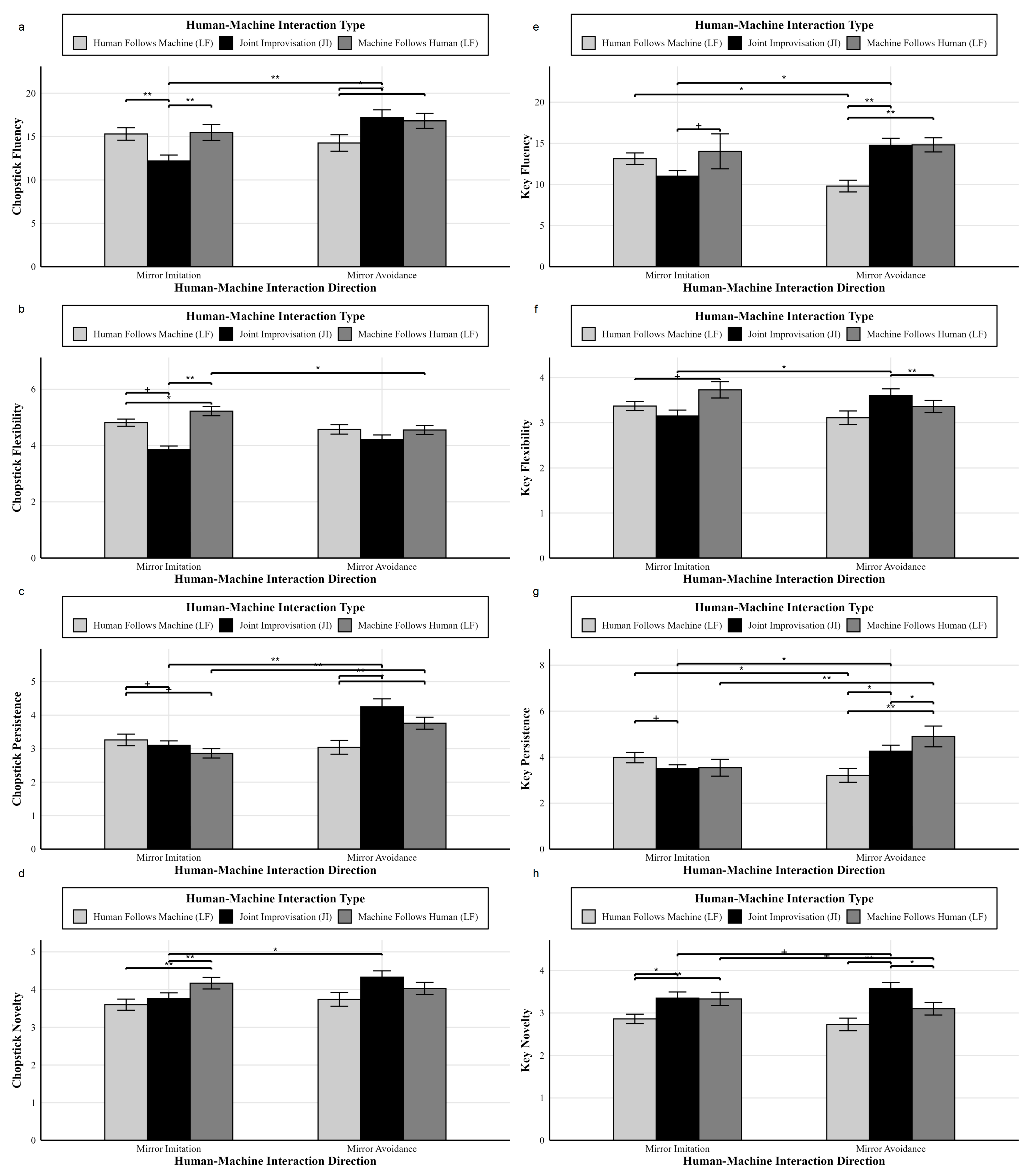
| Human–Machine Interaction Direction | Human–Machine Interaction Type | Chopstick Fluency | Chopstick Flexibility | Chopstick Persistence | Chopstick Novelty | ||||
|---|---|---|---|---|---|---|---|---|---|
| M | SD | M | SD | M | SD | M | SD | ||
| Mirror Imitation | Machine Follows Human (LF) | 15.48 | 8.39 | 5.22 | 1.50 | 2.86 | 1.27 | 4.17 | 1.40 |
| Human Follows Machine (LF) | 15.30 | 6.82 | 4.81 | 1.21 | 3.26 | 1.65 | 3.60 | 1.40 | |
| Joint Improvisation (JI) | 12.19 | 5.86 | 3.85 | 1.11 | 3.10 | 1.13 | 3.76 | 1.32 | |
| Mirror Avoidance | Machine Follows Human (LF) | 16.81 | 7.65 | 4.55 | 1.43 | 3.76 | 1.58 | 4.03 | 1.43 |
| Human Follows Machine (LF) | 14.26 | 8.05 | 4.57 | 1.42 | 3.04 | 1.75 | 3.74 | 1.54 | |
| Joint Improvisation (JI) | 17.20 | 7.87 | 4.21 | 1.46 | 4.25 | 2.12 | 4.33 | 1.49 | |
| Human–Machine Interaction Direction | Human–Machine Interaction Type | Key Fluency | Key Flexibility | Key Persistence | Key Novelty | ||||
|---|---|---|---|---|---|---|---|---|---|
| M | SD | M | SD | M | SD | M | SD | ||
| Mirror Imitation | Machine Follows Human (LF) | 14.02 | 19.36 | 3.73 | 1.65 | 3.54 | 3.34 | 3.33 | 1.42 |
| Human Follows Machine (LF) | 13.13 | 6.64 | 3.37 | 0.95 | 3.98 | 2.14 | 2.86 | 1.06 | |
| Joint Improvisation (JI) | 11.01 | 5.79 | 3.15 | 1.12 | 3.50 | 1.44 | 3.35 | 1.24 | |
| Mirror Avoidance | Machine Follows Human (LF) | 14.81 | 7.58 | 3.36 | 1.19 | 4.90 | 3.99 | 3.10 | 1.31 |
| Human Follows Machine (LF) | 9.80 | 6.05 | 3.11 | 1.28 | 3.21 | 2.56 | 2.73 | 1.26 | |
| Joint Improvisation (JI) | 14.76 | 7.66 | 3.60 | 1.36 | 4.26 | 2.33 | 3.58 | 1.21 | |
| Human–Human Interaction Direction | Human–Human Interaction Type | RPP Fluency | RPP Flexibility | RPP Persistence | RPP Novelty | Integration of Ideas | |||||
|---|---|---|---|---|---|---|---|---|---|---|---|
| M | SD | M | SD | M | SD | M | SD | M | SD | ||
| Mirror Imitation | Leader–Follower (LF) | 16.31 | 7.77 | 8.67 | 3.76 | 4.77 | 4.36 | 10.25 | 3.92 | 1.71 | 1.54 |
| Joint Improvisation (JI) | 16.65 | 6.76 | 7.02 | 3.00 | 6.07 | 5.34 | 8.35 | 3.45 | 2.27 | 1.50 | |
| Mirror Avoidance | Leader–Follower (LF) | 17.96 | 6.21 | 6.67 | 2.72 | 6.86 | 4.18 | 8.13 | 3.48 | 2.46 | 1.47 |
| Joint Improvisation (JI) | 14.15 | 5.80 | 7.56 | 3.47 | 4.24 | 1.78 | 9.65 | 3.55 | 2.28 | 1.66 | |
Disclaimer/Publisher’s Note: The statements, opinions and data contained in all publications are solely those of the individual author(s) and contributor(s) and not of MDPI and/or the editor(s). MDPI and/or the editor(s) disclaim responsibility for any injury to people or property resulting from any ideas, methods, instructions or products referred to in the content. |
© 2026 by the authors. Licensee MDPI, Basel, Switzerland. This article is an open access article distributed under the terms and conditions of the Creative Commons Attribution (CC BY) license.
Share and Cite
Su, J.; Ye, H. How Bodily Interaction Shapes Creativity: Two Experiments on Direction and Type. Behav. Sci. 2026, 16, 735. https://doi.org/10.3390/bs16050735
Su J, Ye H. How Bodily Interaction Shapes Creativity: Two Experiments on Direction and Type. Behavioral Sciences. 2026; 16(5):735. https://doi.org/10.3390/bs16050735
Chicago/Turabian StyleSu, Jiajia, and Haosheng Ye. 2026. "How Bodily Interaction Shapes Creativity: Two Experiments on Direction and Type" Behavioral Sciences 16, no. 5: 735. https://doi.org/10.3390/bs16050735
APA StyleSu, J., & Ye, H. (2026). How Bodily Interaction Shapes Creativity: Two Experiments on Direction and Type. Behavioral Sciences, 16(5), 735. https://doi.org/10.3390/bs16050735