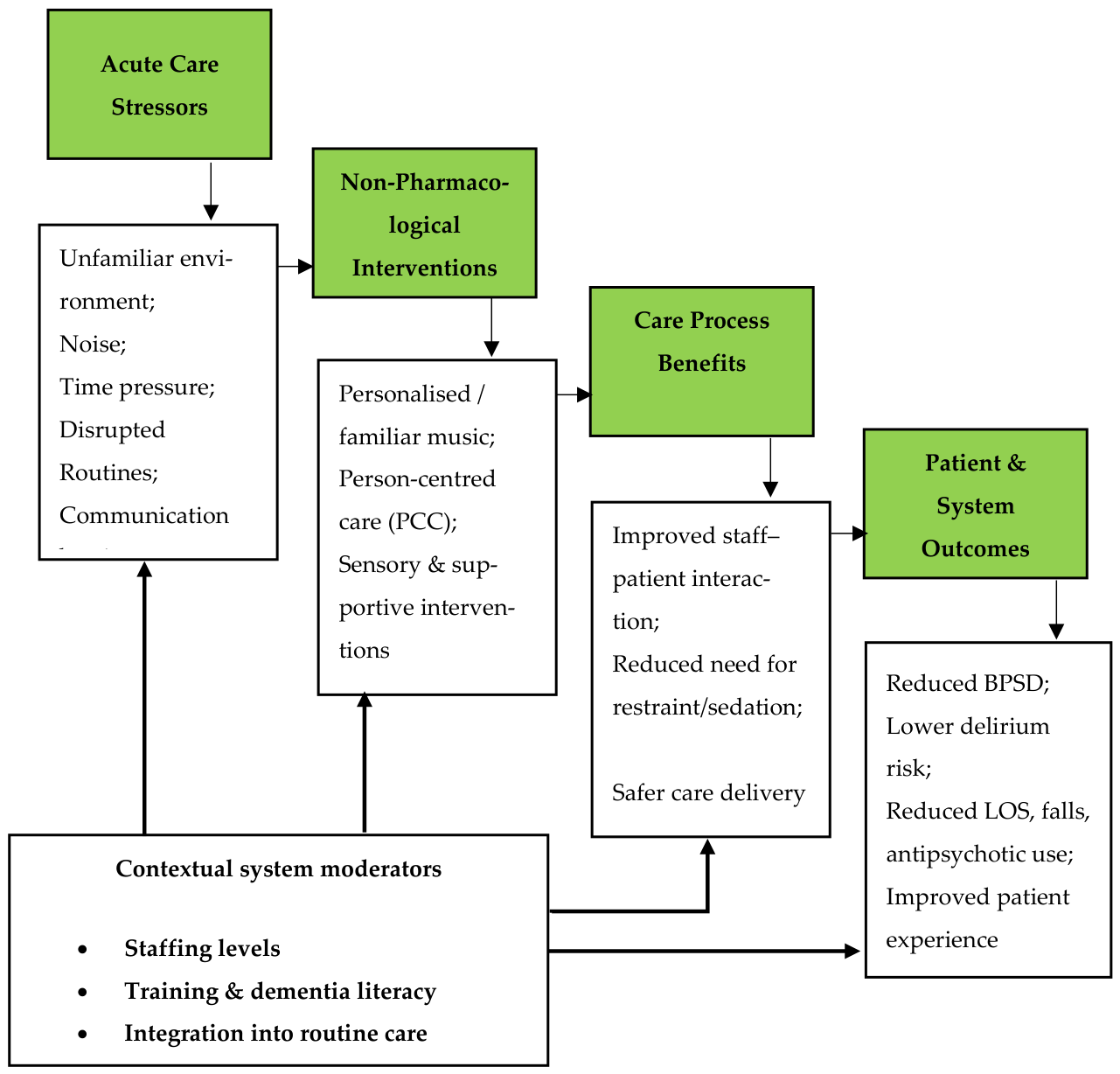
The Effectiveness and Feasibility of Non-Pharmacological Interventions for Reducing Behavioural and Psychosocial Symptoms of Dementia and Improving Patient Experience in Acute Care Settings: A Systematic Review

Abstract
1. Introduction
2. Materials and Methods
2.1. Eligibility Criteria
2.1.1. Population
2.1.2. Intervention
2.1.3. Comparator
2.2. Outcomes of Interest
2.2.1. Primary Outcome
2.2.2. Secondary Outcomes
- Wellbeing or other quality-of-life reports
- Reduction in pain
- Staff knowledge and care management
- Length of stay
- Feasibility of delivery
- Acceptance of intervention
2.3. Study Design
2.4. Exclusions
- Systematic reviews
- Pharmacological intervention
- Care homes
- Not published in English language
- Not published between 2015 and 2025
2.5. Information Sources and Literature Search Strategy
2.6. Selection Process
2.7. Data Extraction
2.8. Data Items
- Data extracted included the following:
- Author, date, country
- Description of study design
- Setting and sample size
- Type of intervention
- Intervention details
- Outcomes measured
- Results
- Main findings
- Feasibility of intervention and acceptance was considered
- Study quality
2.9. Quality Assessment
2.10. Synthesis
3. Results
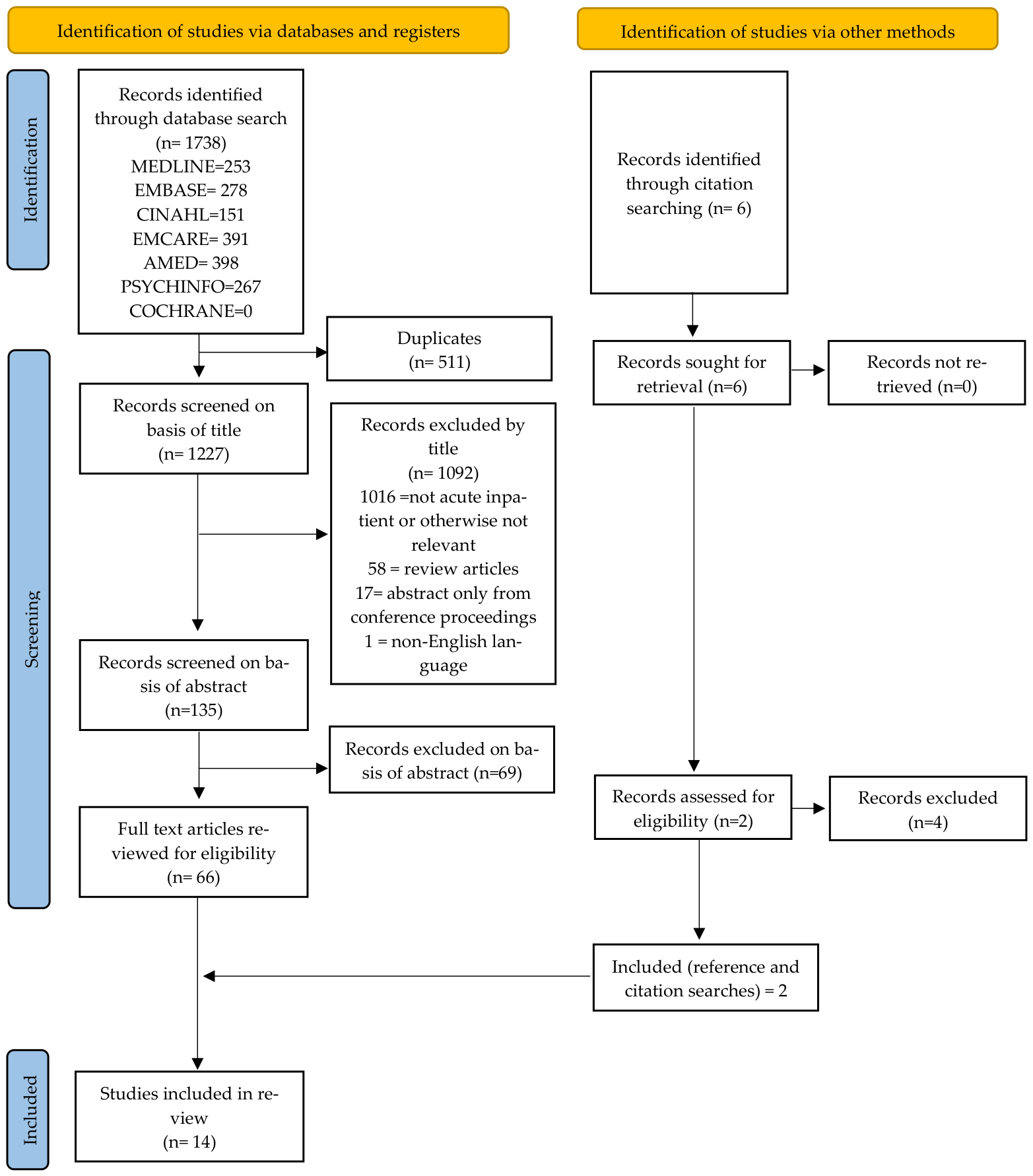
3.1. Study Selection
3.2. Study Characteristics
3.3. Summary of Interventions Used to Lower Anxiety and Agitation
Primary Outcome
- Music-Based Interventions, including: MT, CMT, Individualised music listening, live/recorded music, tailored music sessions and music delivered online (Abeywickrama et al., 2025; Álvarez Gómez et al., 2019; Belenchia, 2023; Daykin et al., 2018; Dimitriou et al., 2022; Cheong et al., 2016; Lee et al., 2023; Mandzuk et al., 2018; Munsterman et al., 2024; Pitkänen et al., 2019; Thompson et al., 2023).
- Multi-Component Psychosocial Interventions, such as: person-centred care (PCC), mixed therapies such as validation therapy, aromatherapy/massage, and individualised activity programmes around identity, sensory abilities, emotional needs and preserved skills (Chenoweth et al., 2022; Dimitriou et al., 2022).
- Sensory and Support-Based Interventions: for example, PARO robot therapy or enhanced staffing models to offer support beyond standard dementia care (Dasgupta et al., 2021; Munsterman et al., 2024; Sinvani et al., 2023).
3.4. Risk of Bias in the Studies and Quality of the Evidence
3.5. Overall Pattern
3.6. Results of the Synthesis
4. Discussion
4.1. Effectiveness of Music-Based Interventions
4.2. Role of Person-Centred and Multi-Component Interventions
4.3. Secondary Outcomes and System-Level Benefits
4.4. Feasibility, Acceptability and Sustainability
4.5. Limitations of the Evidence Base
4.6. Implications for Acute Care and Future Research
5. Conclusions
Supplementary Materials
Author Contributions
Funding
Institutional Review Board Statement
Informed Consent Statement
Data Availability Statement
Acknowledgments
Conflicts of Interest
Abbreviations
| BPSD | Behavioural and Psychosocial Symptoms of Dementia |
| WHO | World Health Organisation |
| NICE | National Institute for Health and Care Excellence |
| NHS | National Health Service |
| MT | Music Therapy |
| CMT | Creative Music Therapy |
Appendix A
Appendix A.1. Example of Search Terms Used
Appendix A.2. Table MMAT Outcomes for All Papers

| Authors | Confirm Acute Setting | 1. Screening Questions (for All Types) | 2. RCTs | Rating | ||||||
| 2. RCTs | S1. Are there clear research questions? | S2. Do the collected data address the research questions? | 2.1. Is randomization appropriately performed? | 2.2. Are the groups comparable at baseline? | 2.3. Are there complete outcome data? | 2.4. Are outcome assessors blinded to the intervention provided? | 2.5 Did the participants adhere to the assigned intervention? | |||
| Lee et al. (2023) | Single centre two-arm RC feasibility trial | Y | Y | Y | Y | Y | Y | N | Y | 4 **** |
| Dimitriou et al. (2022) | Cross -over RCT | Y | Y | Y | Y | Y | Y | N | Y | 3 *** |
| Munsterman et al. (2024) | Y | Y | Y | Y | Y | Y | N | Y | 4 **** | |
| 3. Quasi-experimental (same appraisal as RCT, see above) | ||||||||||
| Belenchia (2023) | Quasi-experimental | Y | Y | Y | N/A (paired) | N | Y | N | Y | 3 *** |
| Dasgupta et al. (2021) | Pre-post quasi-experimental | Y | Y | Y | N/A (paired) | N | Y | N | Y | 3 *** |
| Sinvani et al. (2023) | Non-RCT pilot feasibility | Y | N | Y | N | N | Y | N | Y | 3 *** |
| Abeywickrama et al. (2025) | Before and after time series | Y | Y | Y | N/A (paired) | Y | Y | N | Y | 4 **** |
| 4. Non-RCT | 4.1. Are the participants representative of the target population? | 4.2. Are measurements appropriate regarding both the outcome and intervention (or exposure)? | 4.3. Are there complete outcome data? | 4.4. Are the confounders accounted for in the design and analysis? | 4.5. During the study period, is the intervention administered (or exposure occurred) as intended? | |||||
| Chenoweth et al. (2022) | Non-RCT two group | Y | Y | Y | Y | Y | Y | Y | Y | 4 **** |
| 5. Observational (same appraisal as Non-RCT) | ||||||||||
| Pitkänen et al. (2019) | Non-RCT two group | Y | Y | Y | Y | Y | Y | Y | Y | 5 ***** |
| Mandzuk et al. (2018) | Prospective, Controlled Non-RCT | Y | Y | Y | Y | Y | Y | Y | Y | 4 **** |
| Álvarez Gómez et al. (2019) | Non-RCT two group | Y | Y | Y | Y | ? | ? | N | Y | 3 *** |
| Cheong et al. (2016) Singapore | Prospective, Controlled Non-RCT | Y | Y | Y | Y | Y | Y | N | Y | 4 **** |
| 6. Mixed methods | 6.1. Is there an adequate rationale for using a mixed methods design to address the research question? | 6.2. Are the different components of the study effectively integrated to answer the research question? | 6.3. Are the outputs of the integration of qualitative and quantitative components adequately interpreted? | 6.4. Are divergences and inconsistencies between quantitative and qualitative results adequately addressed? | 6.5. Do the different components of the study adhere to the quality criteria of each tradition of the methods involved? | |||||
| Thompson et al. (2023) | Mixed methods retrospective | Y | Y | Y | N | Y | Y | Y | Y | 4 **** |
| Daykin et al. (2018) | Exploratory sequential mixed methods | Y | Y | Y | N | Y | Y | Y | Y | 4 **** |
References
- Abeywickrama, N., Miraval, M. N. E., Subramaniam, H., Arshad, Q., Pollard, S., Chauhan, G., Jussab, S., & Mukaetova-Ladinska, E. B. (2025). Efficacy of music-based intervention for people living with dementia in an inpatient setting: A pilot study. Journal of Alzheimer’s Disease, 103(3), 905–919. [Google Scholar] [CrossRef] [PubMed]
- Alzheimer’s Disease International. (2022). Dementia statistics. Available online: https://www.alzint.org/about/dementia-facts-figures/dementia-statistics/ (accessed on 2 January 2026).
- Aranda, M. P., Kremer, I. N., Hinton, L., Zissimopoulos, J., Whitmer, R. A., Hummel, C. H., Trejo, L., & Fabius, C. (2021). Impact of dementia: Health disparities, population trends, care interventions, and economic costs. Journal of the American Geriatrics Society, 69(7), 1774–1783. [Google Scholar] [CrossRef] [PubMed] [PubMed Central]
- Álvarez Gómez, E., Minthe, M. B., & Cánovas Pareja, C. (2019). Musical stimulus in hospitalized patients with dementia. Medicina Clinica, 153(11), e62, (In English and Spanish). [Google Scholar] [CrossRef] [PubMed]
- Ballard, C., Corbett, A., Orrell, M., Williams, G., Moniz-Cook, E., Romeo, R., Woods, B., Garrod, L., Testad, I., Woodward-Carlton, B., Wenborn, J., Knapp, M., & Fossey, J. (2018). Impact of person-centred care training and person-centred activities on quality of life, agitation, and antipsychotic use in people with dementia living in nursing homes: A cluster-randomised controlled trial. PLoS Medicine, 15(2), e1002500. [Google Scholar] [CrossRef] [PubMed] [PubMed Central]
- Belenchia, E. (2023). An individualized music listening program to reduce agitation in hospitalized patients with Alzheimer’s disease and related dementias. Geriatric Nursing, 52, 157–164. [Google Scholar] [CrossRef]
- Brossard Saxell, T., Ingvert, M., & Lethin, C. (2021). Facilitators for person-centred care of inpatients with dementia: A meta-synthesis of registered nurses’ experiences. Dementia (London), 20(1), 188–212. [Google Scholar] [CrossRef] [PubMed]
- Butcher, L. (2018). Caring for patients with dementia in the acute care setting. British Journal of Nursing, 27(7), 358–362. [Google Scholar] [CrossRef]
- Chenoweth, L., Williams, A., Fry, M., Endean, E., & Liu, Z. (2022). Outcomes of person-centered care for persons with dementia in the acute care setting: A pilot study. Clinical Gerontology, 45(4), 983–997. [Google Scholar] [CrossRef] [PubMed]
- Cheong, C. Y., Tan, J. A., Foong, Y. L., Koh, H. M., Chen, D. Z., Tan, J. J., Ng, C. J., & Yap, P. (2016). Creative music therapy in an acute care setting for older patients with delirium and dementia. Dementia and Geriatric Cognitive Disorders Extra, 6(2), 268–275. [Google Scholar] [CrossRef] [PubMed] [PubMed Central]
- Cochrane Public Health Group Template. (2024). V 6.5. Available online: https://training.cochrane.org/handbook (accessed on 2 January 2026).
- Cooper, C., Mukadam, N., Katona, C., Lyketsos, C. G., Ames, D., Rabins, P., Engedal, K., de Mendonça Lima, C., Blazer, D., Teri, L., Brodaty, H., & Livingston, G. (2012). World federation of biological psychiatry—Old age taskforce. Systematic review of the effectiveness of non-pharmacological interventions to improve quality of life of people with dementia. International Psychogeriatrics, 24(6), 856–870. [Google Scholar] [CrossRef] [PubMed]
- Dasgupta, M., Beker, L., Schlegel, K., Hillier, L. M., Joworski, L., Crunican, K., & Coulter, C. (2021). A non-pharmacologic approach to manage behaviours in confused medically ill older adults in acute care. Canadian Geriatric Journal, 24(2), 125–137. [Google Scholar] [CrossRef] [PubMed] [PubMed Central]
- Daykin, N., Parry, B., Ball, K., Walters, D., Henry, A., Platten, B., & Hayden, R. (2018). The role of participatory music making in supporting people with dementia in hospital environments. Dementia (London), 17(6), 686–701. [Google Scholar] [CrossRef] [PubMed]
- de Witte, M., Spruit, A., van Hooren, S., Moonen, X., & Stams, G. J. (2020). Effects of music interventions on stress-related outcomes: A systematic review and two meta-analyses. Health Psychology Review, 14(2), 294–324. [Google Scholar] [CrossRef] [PubMed]
- Dimitriou, T., Papatriantafyllou, J., Konsta, A., Kazis, D., Athanasiadis, L., Ioannidis, P., Koutsouraki, E., Tegos, T., & Tsolaki, M. (2022). Assess of combinations of non-pharmacological interventions for the reduction of irritability in patients with dementia and their caregivers: A cross-over RCT. Brain Sciences, 12(6), 691. [Google Scholar] [CrossRef] [PubMed] [PubMed Central]
- Douglas, S., James, I., & Ballard, C. (2004). Non-pharmacological interventions in dementia. Advances in Psychiatric Treatment, 10(3), 171–177. [Google Scholar] [CrossRef]
- Edmans, B. G., Wolverson, E., Dunning, R., Slann, M., Russell, G., Crowther, G., Hall, D., Yates, R., Albert, M., & Underwood, B. R. (2021). Inpatient psychiatric care for patients with dementia at four sites in the United Kingdom. International Journal of Geriatric Psychiatry, 37(2), 1–4. [Google Scholar] [CrossRef] [PubMed]
- Finn, S., & Fancourt, D. (2018). The biological impact of listening to music in clinical and nonclinical settings: A systematic review. Progress in Brain Research, 237, 173–200. [Google Scholar] [CrossRef]
- Fogg, C., Griffiths, P., Meredith, P., & Bridges, J. (2018). Hospital outcomes of older people with cognitive impairment: An integrative review. International Journal of Geriatric Psychiatry, 33(9), 1177–1197. [Google Scholar] [CrossRef] [PubMed]
- Goodman, R. A., Lochner, K. A., Thambisetty, M., Wingo, T. S., Posner, S. F., & Ling, S. M. (2017). Prevalence of dementia subtypes in United States Medicare fee-for-service beneficiaries, 2011–2013. Alzheimer’s & Dementia, 13(1), 28–37. [Google Scholar]
- Hapca, S., Guthrie, B., Cvoro, V., Bu, F., Rutherford, A., Reynish, E., & Donnan, P. (2018). Mortality in people with dementia, delerium and unspecified cognitive impairment in the general hospital prospective cohort study of 6724 patients with 2 years follow up. Clinical Epidemiology, 23(10), 1743–1753. [Google Scholar] [CrossRef] [PubMed] [PubMed Central]
- Hole, J., Hirsch, M., Ball, E., & Meads, C. (2015). Music as an aid for postoperative recovery in adults: A systematic review and meta-analysis. Lancet, 386(10004), 1659–1671, (Erratum in 2015, Lancet, 386(10004), 1630). [Google Scholar] [CrossRef] [PubMed]
- Johnson, M., Wakeling, A., Graham, N., & Stokes, F. (2011). Cognitive impairment emotional disorder and length of stay of elderly patients in a district general hospital. British Journal of Medical Psychology, 60(2), 133–139. [Google Scholar] [CrossRef]
- Kales, H. C., Gitlin, L. N., & Lyketsos, C. G. (2015). Assessment and management of behavioural and psychological symptoms of dementia. BMJ Clinical Research, 350, h369. [Google Scholar] [CrossRef] [PubMed] [PubMed Central]
- Karrer, M., Zeller, A., & Mayer, H. (2023). Dementia care in acute hospitals: A framework for practice development and theory-based evaluation. Nursing Open, 10(3), 1393–1403. [Google Scholar] [CrossRef] [PubMed] [PubMed Central]
- Khan, K. S., Ter Riet, G., Glanville, J., Swoden, A. J., & Kleijen, J. (2001). Undertaking systematic reviews of research on effectiveness: CRD’s guidance for carrying out or commissioning reviews. York Hierarchy of evidence. NHS Centre for Reviews and Dissemination. [Google Scholar]
- Lee, S., Chan, L., & Maddison, J. (2023). Can a personalised music listening intervention decrease agitation in hospitalised patients with dementia? A feasibility trial. Frontiers in Psychiatry, 14, 1186043. [Google Scholar] [CrossRef]
- Mandzuk, L., Klos, J., & Hillier, J. (2018). Personalized music...so simple yet so powerful: A pilot initiative for hospitalized older adults living with dementia in an acute care facility. Perspectives, 40(2), 15–18. [Google Scholar]
- Marengoni, A., Corrao, S., Nobili, A., Tettamanti, M., Pasina, L., Salerno, F., Iorio, A., Marcucci, M., Bonometti, F., Mannucci, P. M., & SIMI Investigators. (2011). In-hospital death according to dementia diagnosis in acutely ill elderly patients: The REPOSI study. International Journal of Geriatric Psychiatry, 26(9), 930–936. [Google Scholar] [CrossRef]
- McArthur, V., Everington, S., & Patel, M. (2024). Effectiveness of music-based interventions in acute care settings for people living with dementia to reduce anxiety and enhance the care experience: A systematic review. Archives of Gerontology and Geriatrics Plus, 1(4), 100087. [Google Scholar] [CrossRef]
- MMAT. (2018). Available online: http://mixedmethodsappraisaltoolpublic.pbworks.com/w/file/fetch/127916259/MMAT_2018_criteria-manual_2018-08-01_ENG.pdf (accessed on 5 October 2025).
- Mok, P. L., Carr, M. J., Guthrie, B., Morales, D. R., Sheikh, A., Elliott, R. A., Camacho, E. M., Van Staa, T., Avery, A. J., & Ashcroft, D. M. (2024). Multiple adverse outcomes associated with antipsychotic use in people with dementia: Population based matched cohort study. The BMJ, 17, 385. [Google Scholar] [CrossRef] [PubMed]
- Moore, L., Britten, N., Lydahl, D., Naldemirci, Ö., Elam, M., & Wolf, A. (2017). Barriers and facilitators to the implementation of person centred care in different healthcare contexts. Scandinavian Journal of Caring Sciences, 31(4), 662–673. [Google Scholar] [CrossRef] [PubMed] [PubMed Central]
- Munsterman, E., Petersen, S., & Newcomb, P. (2024). Use of socially assistive robots to improve outcomes among hospitalized older adults with dementia: A pilot randomized trial. Journal of Gerontological Nursing, 50(10), 11–16. [Google Scholar] [CrossRef]
- National Institute for Health and Care Excellence (NICE). (2018). Dementia: Assessment, management and support for people living with dementia and their carers. (NICE guideline NG97) (Updated October 2025). NICE. Available online: https://www.nice.org.uk/guidance/ng97 (accessed on 5 December 2025).
- National Institute of Health and Social Care Excellence (NICE). (2019). Dementia quality-standard 184. Available online: https://www.nice.org.uk/guidance/qs184/resources/dementia-pdf-75545721373381 (accessed on 1 December 2025).
- Nørgaard, A., Jensen-Dahm, C., Wimberley, T., Svendsen, J. H., Ishtiak-Ahmed, K., Laursen, T. M., Waldemar, G., & Gasse, C. (2022). Effect of antipsychotics on mortality risk in patients with dementia with and without comorbidities. Journal of the American Geriatrics Society, 70(4), 1169–1179. [Google Scholar] [CrossRef]
- O’Neil, M., Freeman, M., Christensen, V., Telerant, R., Addleman, A., & Kansagara, D. (2011). A systematic evidence review of non-pharmacological interventions for behavioral symptoms of dementia. Department of Veterans Affairs Health Services Research and Development Evidence Synthesis Program. Available online: http://www.ncbi.nlm.nih.gov/books/NBK54978/ (accessed on 1 November 2025).
- Pitkänen, A., Alanen, H. M., Kampman, O., Suontaka-Jamalainen, K., & Leinonen, E. (2019). Implementing physical exercise and music interventions for patients suffering from dementia on an acute psychogeriatric inpatient ward. Nordic Journal of Psychiatry, 73(7), 401–408. [Google Scholar] [CrossRef] [PubMed]
- Popay, J., Roberts, H., Sowden, A., Petticrew, M., Arai, L., Rodgers, M., Britten, N., Roen, K., & Duffy, S. (2006). Guidance on the conduct of narrative synthesis in systematic reviews: A product from the ESRC methods programme. Lancaster University. [Google Scholar] [CrossRef]
- PRISMA. (2020). Statement. Available online: https://www.prisma-statement.org/prisma-2020 (accessed on 5 October 2025).
- Reich, C. D., Lyons, H., & Holroyd-Leduc, J. M. (2022). Optimizing the physical and social environment within hospitals for patients with dementia: A Systematic Review. Canadian Geriatrics Journal, 25(2), 222–231. [Google Scholar] [CrossRef]
- Shepherd, H., Livingston, G., Chan, J., & Sommerlad, A. (2019). Hospitalisation rates and predictors in people with dementia: A systematic review and meta-analysis. BMC Medicine, 17(1), 130. [Google Scholar] [CrossRef] [PubMed] [PubMed Central]
- Sinvani, L., Strunk, A., Ardito, S., Gordon, S., Liu, Y., Schantz, E., Arroon, A., Ilyas, A., Gromova, V., Polokowski, A., Levin, J., Makhnevich, A., D’Angelo, S., & Boltz, M. (2023). Reducing behavioral and psychological symptoms of dementia in acutely ill patients via patient engagement specialists: A pilot feasibility study. Journal of Gerontology and Geriatric Medicine, 17(9), 23337214231192162. [Google Scholar] [CrossRef] [PubMed] [PubMed Central]
- Smith, J., Talon, B., Martinez, A., McCarrier, K., & Aggarwal, J. (2025). Physician and professional caregiver perspectives on meaningful change in agitation behaviors in Alzheimer’s dementia: Insights from qualitative interviews. Frontiers in Dementia, 4, 1607566. [Google Scholar] [CrossRef] [PubMed]
- Sommerlad, A., Perera, G., Mueller, C., Singh-Manoux, A., Lewis, G., Stewart, R., & Livingston, G. (2019). Hospitalisation of people with dementia: Evidence from English electronic health records from 2008 to 2016. European Journal of Epidemiology, 34(6), 567–577. [Google Scholar] [CrossRef] [PubMed] [PubMed Central]
- Tavares, J., Nunes, L., & Gracio, J. (2021). Hospitalized older adult: Predictors of functional decline. Revisto Latino-Americana de Enfermagem, 29, e3399. [Google Scholar] [CrossRef]
- Thompson, N., Iyemere, K., Underwood, B. R., & Odell-Miller, H. (2023). Investigating the impact of music therapy on two in-patient psychiatric wards for people living with dementia: Retrospective observational study. BJPsych Open, 9(2), e42. [Google Scholar] [CrossRef]
- Torjesen, I. (2020). Figures show big increase in emergency admissions for dementia patients. BMJ, 368, m249. [Google Scholar] [CrossRef]
- World Health Organisation (WHO). (2017). Global action plan on the public health response to dementia 2017–2025. Available online: https://www.who.int/publications/i/item/global-action-plan-on-the-public-health-response-to-dementia-2017---2025 (accessed on 5 October 2025).
- World Health Organisation (WHO). (2025). Dementia fact sheet. Available online: https://www.who.int/news-room/fact-sheets/detail/dementia (accessed on 1 December 2025).
- Wu, Y. T., Beiser, A. S., Breteler, M., Fratiglioni, L., Helmer, C., Hendrie, H. C., Honda, H., Ikram, M. A., Langa, K. M., Lobo, A., & Matthews, F. E. (2017). The changing prevalence and incidence of dementia over time—Current evidence. Nature Reviews Neurology, 13(6), 327–339. [Google Scholar] [CrossRef]

| First Author, Year, Country | Study Design | Setting & Sample Size | Study Design and Analysis Approach | Type of Intervention and Details | Outcomes Measured | Key Findings | Key Conclusions | Feasibility | Study Quality Grading |
|---|---|---|---|---|---|---|---|---|---|
| Lee et al. (2023) Australia | Single centre two-arm randomised control feasibility trial. | Geriatric management and evaluation unit in metropolitan hospital n = 21 | Participants randomly allocated to intervention or control group | Playlist of personally curated music, Control group: routine medical care. Participants listened—1 h for 5 days (3–4 pm). Time chosen because of ‘sundowning effect’ | Feasibility assessed with 45 min interviews with delivery team. Patients PAS was recorded and CGI completed pre-/post-trial. | Intervention feasible and satisfying to deliver. Challenged use of psychotropic medications and increased staff engagement, PAS data higher in intervention group. | Feasible to deliver music intervention alongside clinical care. Assisted with engagement and increased efficiency in some clinical tasks. PAS result inconclusive possibly due to being underpowered. | Yes | 4 **** |
| Dimitriou et al. (2022) Greece | Cross-over randomised control trial | Neurological Departments of Thessaloniki and Athens n = 60 | Six non-pharmacological interventions including music | Assigned into six mixed therapy groups composed of: Validation Therapy, Aromatherapy and massage, Music Therapy (MT) (preferred music). For five days. | Patients and caregivers assessed for baseline measures of: MMSE, ACE, GDS, FRSSD, NPI. And after interventions. | Interventions can reduce irritability in people with dementia and lower caregiver distress. Significant finding in a combination of therapies. | MT combined with other therapies may reduce agitation. | Not clear | 3 *** |
| Munsterman et al. (2024) US | Unblinded, randomised controlled trial | Hospital, acute n = 38 | 15 min with Robotic pet therapy or 15 with normal human visitor | PARO-‘Personal robot’ in Japanese, a socially assistive robot. Compared to empathetic human visitor. Three visits (15 min/day), capped if visible agitation. Concluded on day six, or earlier if discharged | MoCA and CAM. Secondary outcomes—use of restraints and medicines | 17 human visitor participants and 21 PARO. Participants spent > time in human group vs robot. PARO group significantly less medication and delirium. Use of restraints had no difference. | PARO robotic pet has promise to reduce delirium use and psychotropic medications in acute care. Challenges in acute care are limited staffing, there remains the possibility of training volunteers in robots. | Maybe | 4 **** |
| Belenchia (2023) US | Quasi-experimental, paired samples, pre-post design | Acute care hospital n = 21 | Individualised music listening over ten-week period (measurements taken before and after) | Individualised music intervention to reduce agitation in people with dementia. (Individualised music identified by interviewing patients, family members or caregivers on music preferences downloaded onto iPods.) | PAS scored pre- and post-intervention individualised music listening on (five point Likert Scale (0–4, 0 = no reaction, 4 = striking caregiver) in four behaviours groups | Average PAS post-test lower than pre—reduced agitation in all four behavioural groups. Greatest in motor agitation, then aberrant vocalisation, resisting care and the smallest change for aggressiveness. | Individualised music is an effective intervention reducing agitation in people with dementia. Staff responded positively and would consider a treatment in managing BPSD. Patients responsive to personalization of music, effects were immediate. | Yes | 3 *** |
| Dasgupta et al. (2021) Canada | Pre-post case-series methodological study. | General medicine sub-acute unit. n = 13 (11 documented people with dementia) | Control-no., pre and post intervention measures for case studies. | Individualised interventions incorporating: (1) sense of identity; (2) sensory abilities; and (3) enhanced understanding of current needs. Two-week period, outcomes prior and post. | Primary outcomes: Participants engagement; Need for assistance and mobility support. Secondary Outcomes: behaviour, restraint use, calls to security, falls and neuroleptic use. | Unique interventions with a PCC approach-considering participant prior to cognitive impairment in a very dynamic with different care providers interacting with the patient. Some evidence for less neuroleptic use. | Post-intervention, most participants had reduced agitated behaviours. Non-pharmacologic interventions feasible in acute care. Low implementation due to lack of engagement. Optimise by including family members, increased staff education and technology. | Yes | 3 *** |
| Sinvani et al. (2023) US | Prospective non-randomised pilot feasibility trial. | Two tertiary hospitals. n= 158 | One dementia unit staffed with nurse assistant (NA) plus Patient Engagement Specialists (PES) and another staffed with routine care (NA). | Extra PES compared to standard care (NA with normal dementia care and education training). Effectiveness of an added layer of staff (PES) working 8 h shifts compared to normal care performed by NA | NPI-Q scores, plus use of restraints, psychoactive medications, Length of stay (LOS) and falls. Satisfaction obtained using family caregiver. | Although a difference in NPI-Q scores did not differ significantly, overall rated good/excellent. | Demonstrated feasibility of using NA and training for hospitalised people with dementia. No difference between the NA and NA + PES—due to baseline differences in control/intervention, and variability of dementia. | Yes | 3 *** |
| Abeywickrama et al. (2025) UK | Single-arm intervention trial | Two inpatient wards for people with advanced dementia n = 17 | Before and after intervention measures. | Weekly group music (Ward 1). Patients free to join/leave. Ward 2 one-to-one sessions due to needs of patient. Tailored music was dynamic, responding to people with dementia. Some sessions used instruments (maracas). 5 weeks. | Before and after measures of NPI-Q and MiDAS used at the beginning (first five minutes and during intervention) (most significant five minutes) | NPI-Q scores before and after. For Delusion, Motor Disturbances, and Agitation scores significantly reduced post-intervention. Significant improvements in: Interest, Response, and Enjoyment of MiDAS items | Positive delivery of music interventions to people with dementia. A useful, cost-effective, non-pharmacological intervention, alongside routine care. Multi-component interventions decrease BPSD and improve mood, cognition and communication. Staff observations positive. | Yes | 4 **** |
| Chenoweth et al. (2022) Australia | Non-randomised two group (control and treatment) pre- post-intervention study | Acute ward and mixed surgical ward on tertiary hospital n = 47 | Control group -staff trained on dementia and delirium care, Intervention group -staff trained in PCC (person-centred care). | PCC- comprising four parts: baseline audit, PCC training, VIPS framework. Three timepoints collected: baseline; day 4–5 (T2) and for subgroup T3 (more than 8 days after baseline). | Outcomes measured CMAI QUIS Secondary outcomes CAM, ADL Iatrogenic harms including falls and injuries, psychotropic medicines use and LOS | CMAI lower in PCC group and QUIS higher. Secondary outcomes-risk of CAM decreased at T1. Falls and injury higher in control group at all times. More discharges to aged-care homes in control. | PCC in acute hospital reduced BPSD and delirium at T2 compared to usual care. Not sustained with longer stays. PCC reduces BPSD when supported by system (staffing, stable routines, and organisation). Greater cognitive impairment/comorbidities/ busy wards contributed to unsustained results. | Yes, if supported by staff | 4 **** |
| Pitkänen et al. (2019) Finland | Observation-interventional (Benchmark controlled trial | Acute psychogeriatric ward (n = 175) | Intervention group (n = 86) singing and listening to music. Control (n = 89) no intervention. | Weekly singing, live, recorded music, and dancing | NPI, MMSE. BI and ADCS-ADL | No evidence that music interventions reduced anxiety, agitation or aggression, and no overwhelming benefit of physical exercise. | No significant differences between groups. Possible reduction in anxiety and improved sleep in the intervention group. | N/A | 5 ***** |
| Mandzuk et al. (2018) Canada | Quality improvement, pre-/post-intervention, observational. | Acute care facility. (n = 20) | Pre, during and post-intervention behaviours observed. | Personalised playlist created on portable music device with aid of carers, staff and individual. Listening sessions lasted 30 min on 10 sessions. | Effectiveness of personalised music as distraction from boredom/distress, participation in reminiscence, and greater engagement. | 9/10 adults engaged in positive, calm appreciative responses including reminiscence. These responses were limited and not lasting. | Personalised music engaged people with dementia in positive actions and distraction. There was no comparison to non-individualised music. Music effects did not last post the sessions. Staff felt there were benefits. | Yes | 4 **** |
| Álvarez Gómez et al. (2019) Spain | Cross-sectional observational | Acute geriatric ward (n = 32) | Recorded music | 15 min of music (ranging from more to less relaxing) played over headphones and patients responses observed. | Observed responses (three healthcare providers), generalised responses were recorded before and after. | 27/32 patients showed positive responses (smiling, sang, danced, exhibited pain relief), two indifferent, one aggressive. Familiar melodies of youth liked. | Music stimulus, appropriate used and timely help relax and divert people with dementia. | Yes | 3 *** |
| Cheong et al. (2016) Singapore | Within subject design (participant acting as own controls) pre–post-intervention | Acute Care setting Geriatric Hospital (n = 25) | Pre-post intervention observations, control = no interventions. 5 min interval observations. Analysed for mean difference in engagement and effect. | All subjects (groups or one-to-one) 30 m observation with no intervention Day 1 (1/2 h ×3 period). Followed by 30 m of Creative Music Therapy (CMT)-music improvisation; playing familiar songs and listening | MPES Lawton OERS | Positive MPES (higher during CMT, and MPES lower. Positive LOERS (pleasure general alertness) higher during CMT, and negative OERS (anger, anxiety, sadness) lower. | CMT effected mood and engagement, could have a supplementary role to support treatments. With known resistance to care and nursing procedures in people with dementia, CMT in daily care could improve compliance and cooperation. | Yes | 4 **** |
| Daykin et al. (2018) UK | Exploratory sequential mixed methods | Acute elderly care hospital (n = 85) | Weekly inclusive participatory music activity | Unstructured observation of music sessions plus brief interviews post-music. Interviews with focus group of carers | Quantitative data on falls, length of stay, antipsychotic prescriptions and ArtsObs to record mood, distraction, relaxation and happiness. | Decrease in LOS, falls, reduction in antipsychotic medication during music. Observational—music has positive effect in clinical environment. | Overall strong positive effect on clinical environment. Responses to music are elicited wide range of emotions. | Yes | 4 **** |
| Thompson et al. (2023) UK | Mixed methods retrospective observational | Two inpatient psychiatric wards for people with dementia (n = 37) | Retrospective gathering of distress behaviour incidents (Datix) correlated to when MT sessions were scheduled. | MT sessions (usual practice), 2× weekly. Until COVID-19, sessions were delivered online to Ward 1 and it was not possible to arrange for Ward 2 due to very vulnerable patient group. | Disruptive or aggressive behaviour occurred every 7.1% of days with in-person therapy, compared with 32.1% and 30.6% of days for online and no therapy, respectively. | Number of incidents on in-person MT days were significantly lower than number of incidents on days with online MT. | In-person MT showed reduction in reported rates of disruptive and aggressive behaviour compared to none. Other outcomes- staff perceptions: MT was a helpful for people with dementia, could lift mood, calm agitation and possibly reduce distress | Yes | 4 **** |
| Outcome Category | Measures Used | Key Findings |
|---|---|---|
| Primary outcome | ||
| BPSD | MPES, OERS, CMAI, PAS, NPI-Q |
|
| Secondary Outcomes | ||
| Wellbeing/Quality of Life | OERS (pleasure, alertness), MiDAS (interest, response, enjoyment), ArtsObs (mood), qualitative staff/patient reports |
|
| Pain Reduction | Observed behavioural responses (e.g., smiling, dancing) |
|
| Staff Knowledge & Care Management | Feasibility interviews; QUIS (care quality); qualitative feedback |
|
| Length of Stay (LOS) | Hospital LOS data; discharge destination |
|
| Feasibility of Delivery | Staff interviews and session observations |
|
| Intervention acceptance | Patient observed responses; caregiver surveys (e.g., 10-item FCG); participation rates |
|
| Additional Clinical Outcomes | Falls, restraint use, psychotropic medicines, CAM, antipsychotic prescribing |
|
Disclaimer/Publisher’s Note: The statements, opinions and data contained in all publications are solely those of the individual author(s) and contributor(s) and not of MDPI and/or the editor(s). MDPI and/or the editor(s) disclaim responsibility for any injury to people or property resulting from any ideas, methods, instructions or products referred to in the content. |
© 2026 by the authors. Licensee MDPI, Basel, Switzerland. This article is an open access article distributed under the terms and conditions of the Creative Commons Attribution (CC BY) license.
Share and Cite
McArthur, V.; Everington, S.; Wastell, E.; Ukaji, N. The Effectiveness and Feasibility of Non-Pharmacological Interventions for Reducing Behavioural and Psychosocial Symptoms of Dementia and Improving Patient Experience in Acute Care Settings: A Systematic Review. Behav. Sci. 2026, 16, 688. https://doi.org/10.3390/bs16050688
McArthur V, Everington S, Wastell E, Ukaji N. The Effectiveness and Feasibility of Non-Pharmacological Interventions for Reducing Behavioural and Psychosocial Symptoms of Dementia and Improving Patient Experience in Acute Care Settings: A Systematic Review. Behavioral Sciences. 2026; 16(5):688. https://doi.org/10.3390/bs16050688
Chicago/Turabian StyleMcArthur, Victoria, Susan Everington, Emily Wastell, and Nmesoma Ukaji. 2026. "The Effectiveness and Feasibility of Non-Pharmacological Interventions for Reducing Behavioural and Psychosocial Symptoms of Dementia and Improving Patient Experience in Acute Care Settings: A Systematic Review" Behavioral Sciences 16, no. 5: 688. https://doi.org/10.3390/bs16050688
APA StyleMcArthur, V., Everington, S., Wastell, E., & Ukaji, N. (2026). The Effectiveness and Feasibility of Non-Pharmacological Interventions for Reducing Behavioural and Psychosocial Symptoms of Dementia and Improving Patient Experience in Acute Care Settings: A Systematic Review. Behavioral Sciences, 16(5), 688. https://doi.org/10.3390/bs16050688