Musical Training Amplifies Food Cue-Related Interference in Working Memory


 and
and 
Abstract
1. Introduction
2. Methods
2.1. Participants
2.2. Procedure
2.3. Questionnaires
2.3.1. Visual Analogue Scale (VAS)
2.3.2. Food Craving Questionnaires-Trait (FCQ-T)
2.4. Stimuli and 2-Back Task
2.5. Behavioral Analysis
2.6. EEG Recording Analysis
3. Results
3.1. Behavioral Results
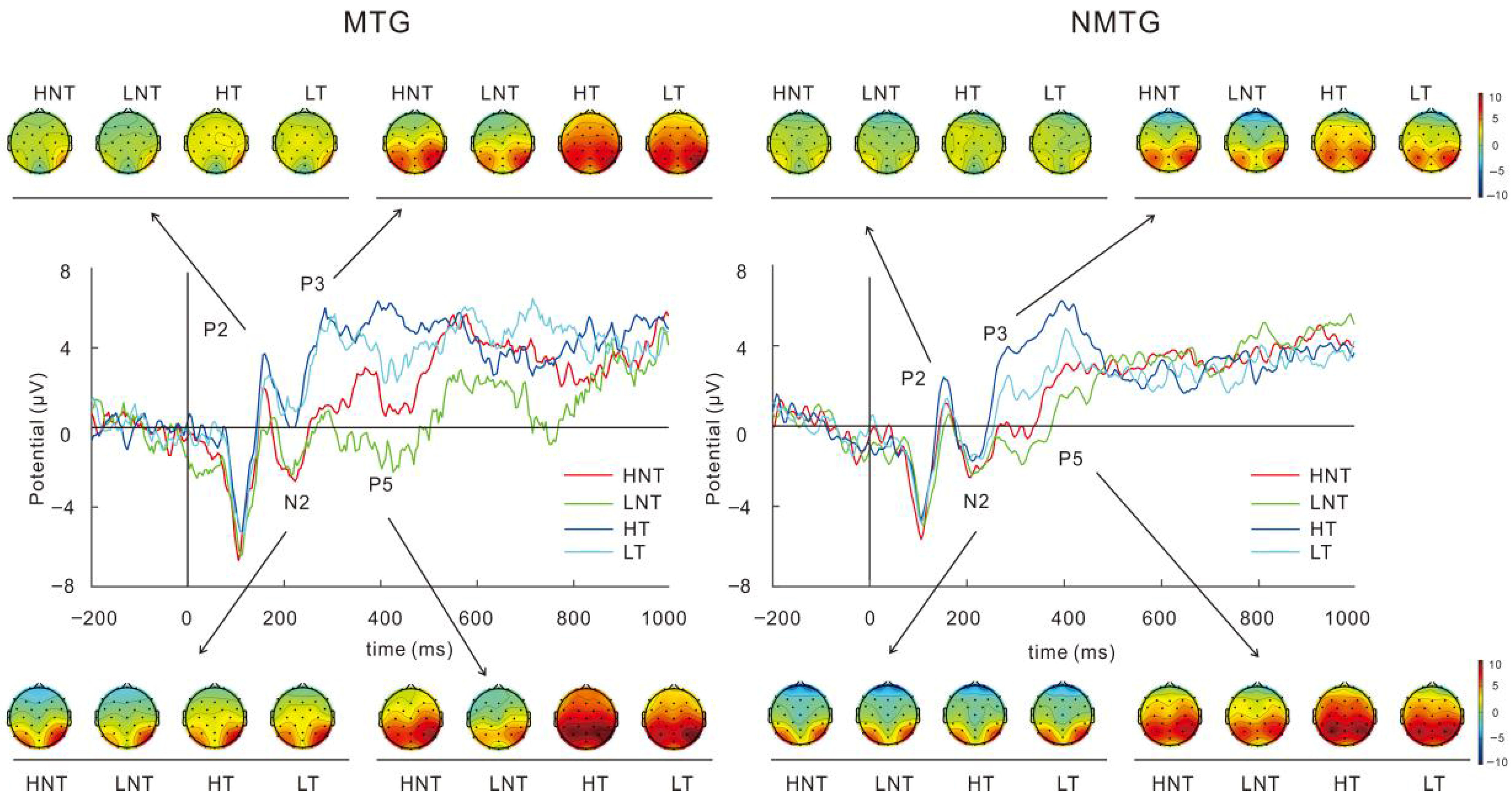
3.2. ERP Results
3.2.1. N2 Component
3.2.2. P2, P3, and P5 Components
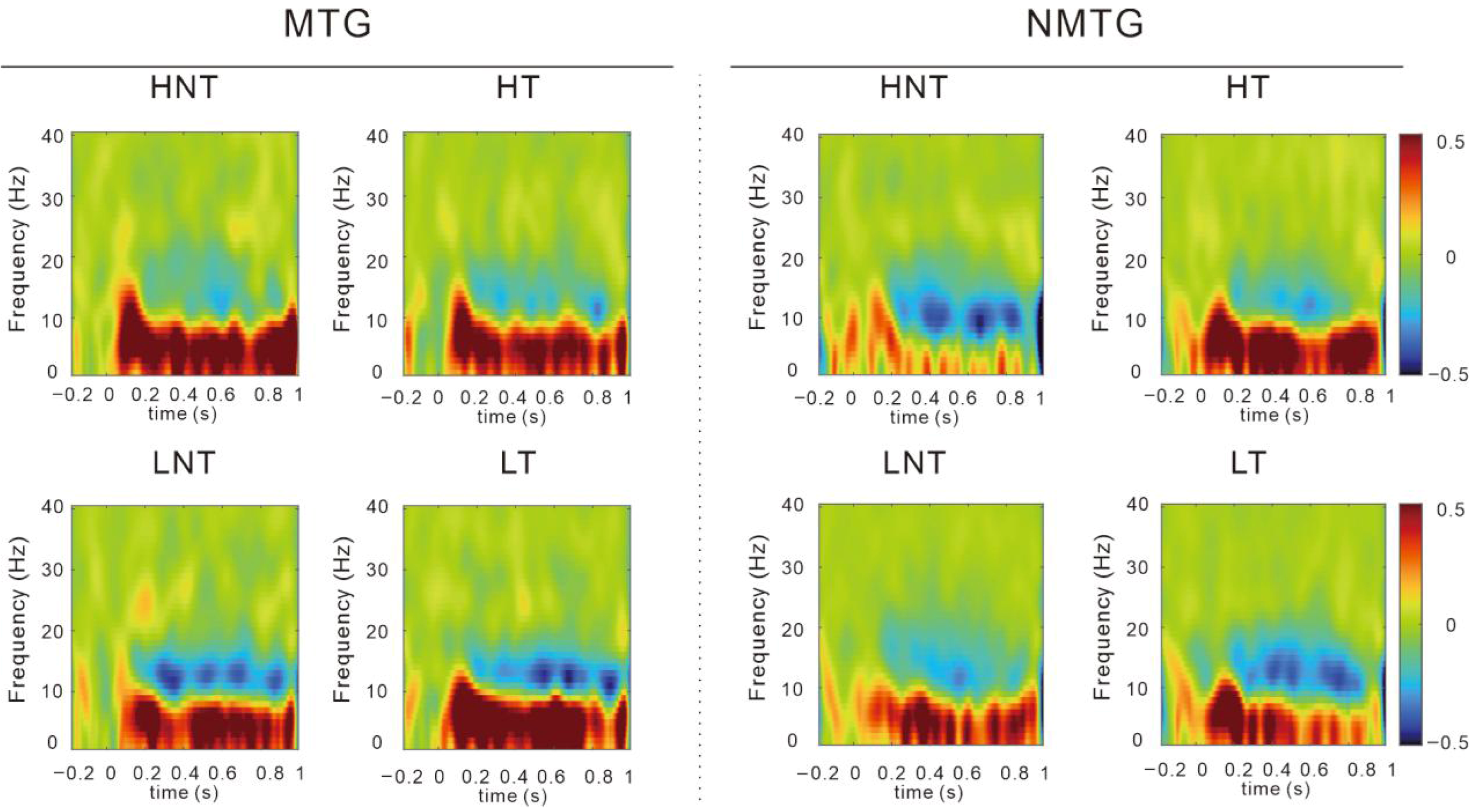
3.3. Time–Frequency EEG Results
3.3.1. Beta Band Activity
3.3.2. Other Frequency Bands
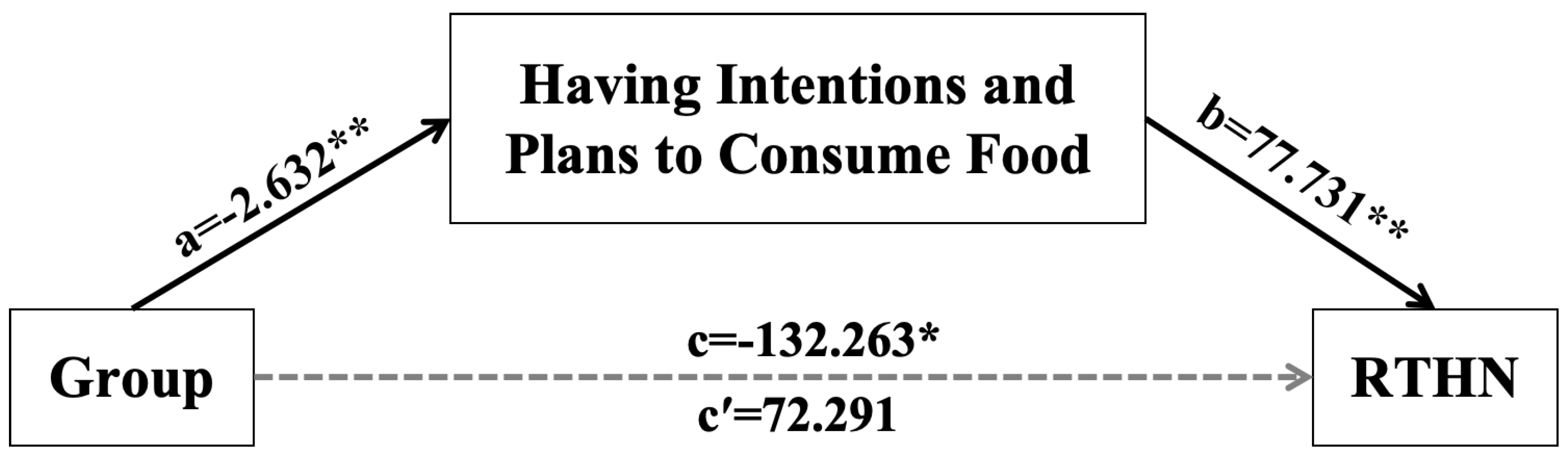
3.4. Between-Group Mediation Effect
3.5. Relationships Among Self-Report Data, Behavioral, and ERP Results in Music Trainees
3.5.1. Spearman’s Correlation
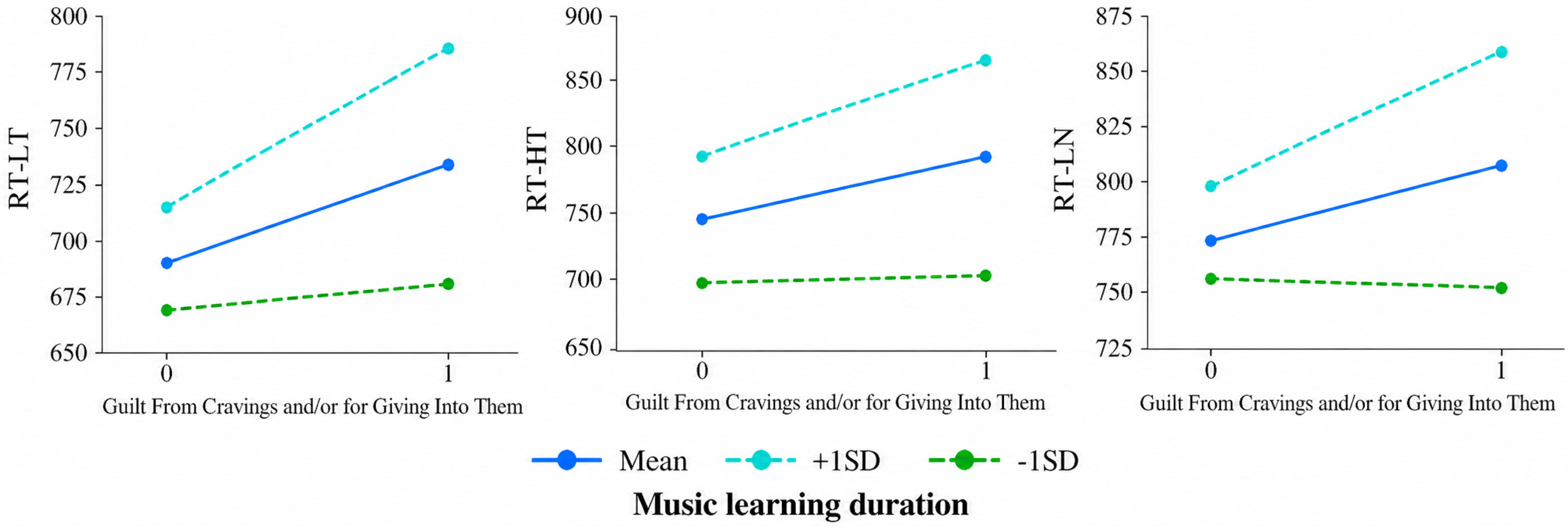
3.5.2. Moderation Analysis
4. Discussion
4.1. Behavioral Performances
4.2. Neurological Mechanisms
4.3. Executive-Reward-Emotion Triangulation Model
4.4. Limitations
5. Conclusions
Supplementary Materials
Author Contributions
Funding
Institutional Review Board Statement
Informed Consent Statement
Data Availability Statement
Conflicts of Interest
References
- Baddeley, A. (1992). Working memory. Science, 255(5044), 556–559. [Google Scholar] [CrossRef]
- Baddeley, A. D. (2013). The concept of working memory. In Models of short-term memory (pp. 1–27). Psychology Press. [Google Scholar]
- Baddeley, A. D., & Hitch, G. (1974). Working memory. In G. H. Bower (Ed.), Psychology of learning and motivation (Vol. 8, pp. 47–89). Academic Press. [Google Scholar] [CrossRef]
- Baxter, B. W., & Hinson, R. E. (2001). Is smoking automatic? Demands of smoking behavior on attentional resources. Journal of Abnormal Psychology, 110(1), 59–66. [Google Scholar] [CrossRef] [PubMed]
- Benz, S., Sellaro, R., Hommel, B., & Colzato, L. S. (2016). Music makes the world go round: The impact of musical training on non-musical cognitive functions—A review. Frontiers in Psychology, 6, 2023. [Google Scholar] [CrossRef] [PubMed]
- Blasiman, R. N., & Was, C. A. (2018). Why is working memory performance unstable? A review of 21 factors. Europe’s Journal of Psychology, 14(1), 188. [Google Scholar] [CrossRef] [PubMed]
- Braboszcz, C., & Delorme, A. (2011). Lost in thoughts: Neural markers of low alertness during mind wandering. Neuroimage, 54(4), 3040–3047. [Google Scholar] [CrossRef]
- Buss, A. T., Fox, N., Boas, D. A., & Spencer, J. P. (2014). Probing the early development of visual working memory capacity with functional near-infrared spectroscopy. Neuroimage, 85, 314–325. [Google Scholar] [CrossRef]
- Carbine, K. A., Duraccio, K. M., Kirwan, C. B., Muncy, N. M., LeCheminant, J. D., & Larson, M. J. (2018a). A direct comparison between ERP and fMRI measurements of food-related inhibitory control: Implications for BMI status and dietary intake. Neuroimage, 166, 335–348. [Google Scholar] [CrossRef]
- Carbine, K. A., Rodeback, R., Modersitzki, E., Miner, M., LeCheminant, J. D., & Larson, M. J. (2018b). The utility of event-related potentials (ERPs) in understanding food-related cognition: A systematic review and recommendations. Appetite, 128, 58–78. [Google Scholar] [CrossRef]
- Cepeda-Benito, A., Gleaves, D. H., Fernández, M. C., Vila, J., Williams, T. L., & Reynoso, J. (2000). The development and validation of Spanish versions of the state and trait food cravings questionnaires. Behaviour Research and Therapy, 38(11), 1125–1138. [Google Scholar] [CrossRef]
- Cepeda-Freyre, H. A., Garcia-Aguilar, G., Eguibar, J. R., & Cortes, C. (2020). Brain processing of complex geometric forms in a visual memory task increases P2 amplitude. Brain Sciences, 10(2), 114. [Google Scholar] [CrossRef]
- Chen, J., Liu, L., Wang, R., & Shen, H. (2017). The effect of musical training on executive functions. Advances in Psychological Science, 25(11), 1854–1864. [Google Scholar] [CrossRef]
- Cohen, J. D., Perlstein, W. M., Braver, T. S., Nystrom, L. E., Noll, D. C., Jonides, J., & Smith, E. E. (1997). Temporal dynamics of brain activation during a working memory task. Nature, 386(6625), 604–608. [Google Scholar] [CrossRef]
- Courtney, K. E., Ghahremani, D. G., & Ray, L. A. (2016). The effects of pharmacological opioid blockade on neural measures of drug cue-reactivity in humans. Neuropsychopharmacology, 41(12), 2872–2881. [Google Scholar] [CrossRef]
- Delorme, A., & Makeig, S. (2004). EEGLAB: An open source toolbox for analysis of single-trial EEG dynamics including independent component analysis. Journal of Neuroscience Methods, 134(1), 9–21. [Google Scholar] [CrossRef] [PubMed]
- Diamond, A. (2013). Executive functions. Annual Review of Psychology, 64(1), 135–168. [Google Scholar] [CrossRef] [PubMed]
- Ding, Y., Gray, K., Forrence, A., Wang, X., & Huang, J. (2018). A behavioral study on tonal working memory in musicians and non-musicians. PLoS ONE, 13(8), e0201765. [Google Scholar] [CrossRef] [PubMed]
- Faul, F., Erdfelder, E., Lang, A.-G., & Buchner, A. (2007). G* Power 3: A flexible statistical power analysis program for the social, behavioral, and biomedical sciences. Behavior Research Methods, 39(2), 175–191. [Google Scholar] [CrossRef]
- Folstein, J. R., & Van Petten, C. (2008). Influence of cognitive control and mismatch on the N2 component of the ERP: A review. Psychophysiology, 45(1), 152–170. [Google Scholar] [CrossRef]
- Gade, M., & Schlemmer, K. (2021). Music modulates cognitive flexibility? An investigation of the benefits of musical training on markers of cognitive flexibility. Brain Sciences, 11(4), 451. [Google Scholar] [CrossRef]
- Gagnon, R., & Nicoladis, E. (2021). Musicians show greater cross-modal integration, intermodal integration, and specialization in working memory than non-musicians. Psychology of Music, 49(4), 718–734. [Google Scholar] [CrossRef]
- Ghin, F., Stock, A.-K., & Beste, C. (2022). The importance of resource allocation for the interplay between automatic and cognitive control in response inhibition—An EEG source localization study. Cortex, 155, 202–217. [Google Scholar] [CrossRef]
- Green, M. W., Rogers, P. J., & Elliman, N. A. (2000). Dietary restraint and addictive behaviors: The generalizability of Tiffany’s cue reactivity model. International Journal of Eating Disorders, 27(4), 419–427. [Google Scholar] [CrossRef]
- Guo, A., Yang, W., Yang, X., Lin, J., Li, Z., Ren, Y., Yang, J., & Wu, J. (2023). Audiovisual n-back training alters the neural processes of working memory and audiovisual integration: Evidence of changes in ERPs. Brain Sciences, 13(7), 992. [Google Scholar] [CrossRef]
- Gurbuz, E., & Gokce, A. (2023). Visual processing of food stimuli: The impact of working memory load and color. Attention, Perception, & Psychophysics, 85(5), 1722–1732. [Google Scholar] [CrossRef]
- Habibi, A., Damasio, A., Ilari, B., Elliott Sachs, M., & Damasio, H. (2018). Music training and child development: A review of recent findings from a longitudinal study. Annals of the New York Academy of Sciences, 1423(1), 73–81. [Google Scholar] [CrossRef] [PubMed]
- Haque, Z. Z., Samandra, R., & Mansouri, F. A. (2021). Neural substrate and underlying mechanisms of working memory: Insights from brain stimulation studies. Journal of Neurophysiology, 125(6), 2038–2053. [Google Scholar] [CrossRef]
- Hayes, A. F., & Preacher, K. J. (2013). Conditional process modeling: Using structural equation modeling to examine contingent causal processes. In Structural equation modeling: A second course. Emerald Publishing Limited. [Google Scholar]
- Hormes, J. M., & Rozin, P. (2010). Does “craving” carve nature at the joints? Absence of a synonym for craving in many languages. Addictive Behaviors, 35(5), 459–463. [Google Scholar] [CrossRef] [PubMed]
- Huang, J., Wang, C., Zhang, H.-B., Zheng, H., Huang, T., & Di, J.-Z. (2023). Neuroimaging and neuroendocrine insights into food cravings and appetite interventions in obesity. Psychoradiology, 3, kkad023. [Google Scholar] [CrossRef] [PubMed]
- Jing, D., He, X., Luo, Y., Fei, N., Wei, W., Zhao, H., & Lu, Z. (2024). Fineclip: Self-distilled region-based clip for better fine-grained understanding. Advances in Neural Information Processing Systems, 37, 27896–27918. [Google Scholar]
- Kalivas, P. W., & Volkow, N. D. (2005). The neural basis of addiction: A pathology of motivation and choice. American Journal of Psychiatry, 162(8), 1403–1413. [Google Scholar] [CrossRef]
- Kerem, L., & Lawson, E. A. (2021). The effects of oxytocin on appetite regulation, food intake and metabolism in humans. International Journal of Molecular Sciences, 22(14), 7737. [Google Scholar] [CrossRef]
- Koob, G. F., & Volkow, N. D. (2010). Neurocircuitry of addiction. Neuropsychopharmacology, 35(1), 217–238. [Google Scholar] [CrossRef]
- Kramer, A. F., Trejo, L. J., & Humphrey, D. (1995). Assessment of mental workload with task-irrelevant auditory probes. Biological Psychology, 40(1–2), 83–100. [Google Scholar] [CrossRef]
- Lee, Y.-s., Lu, M.-j., & Ko, H.-p. (2007). Effects of skill training on working memory capacity. Learning and Instruction, 17(3), 336–344. [Google Scholar] [CrossRef]
- Leon-Dominguez, U., Martín-Rodríguez, J. F., & León-Carrión, J. (2015). Executive n-back tasks for the neuropsychological assessment of working memory. Behavioural Brain Research, 292, 167–173. [Google Scholar] [CrossRef] [PubMed]
- Li, Q., Long, Q., Hu, N., Tang, Y., & Chen, A. (2020). N-back task training helps to improve post-error performance. Frontiers in Psychology, 11, 370. [Google Scholar] [CrossRef]
- Liu, Y., Zhang, X., Pang, Y., Zhao, J., Han, J., Jing, Y., & Chen, H. (2024). Effect of food stimuli presentation on restrained eater’s food choice: An ERP study. Physiology and Behavior, 287, 114704. [Google Scholar] [CrossRef]
- Liu, Y., Zhao, J., Zhou, Y., Yang, R., Han, B., Zhao, Y., Pang, Y., Yuan, H., & Chen, H. (2022). High-calorie food-cues impair conflict control: EEG evidence from a food-related stroop task. Nutrients, 14(21), 4593. [Google Scholar] [CrossRef]
- Lu, C.-I., & Greenwald, M. (2016). Reading and working memory in adults with or without formal musical training: Musical and lexical tone. Psychology of Music, 44(3), 369–387. [Google Scholar] [CrossRef]
- Lundqvist, M., Herman, P., Warden, M. R., Brincat, S. L., & Miller, E. K. (2018). Gamma and beta bursts during working memory readout suggest roles in its volitional control. Nature Communications, 9(1), 394. [Google Scholar] [CrossRef] [PubMed]
- Mayer, J. S., Bittner, R. A., Nikolić, D., Bledowski, C., Goebel, R., & Linden, D. E. (2007). Common neural substrates for visual working memory and attention. Neuroimage, 36(2), 441–453. [Google Scholar] [CrossRef] [PubMed]
- Meng, J., Hu, L., Shen, L., Yang, Z., Chen, H., Huang, X., & Jackson, T. (2012). Emotional primes modulate the responses to others’ pain: An ERP study. Experimental Brain Research, 220, 277–286. [Google Scholar] [CrossRef] [PubMed]
- Meule, A. (2016). Dieting and food cue-related working memory performance. Frontiers in Psychology, 7, 1944. [Google Scholar] [CrossRef] [PubMed]
- Meule, A., Skirde, A. K., Freund, R., Vögele, C., & Kübler, A. (2012). High-calorie food-cues impair working memory performance in high and low food cravers. Appetite, 59(2), 264–269. [Google Scholar] [CrossRef]
- Miele, C., Cabé, J., Cabé, N., Bertsch, I., Brousse, G., Pereira, B., Moulin, V., & Barrault, S. (2023). Measuring craving: A systematic review and mapping of assessment instruments. What about sexual craving? Addiction, 118(12), 2277–2314. [Google Scholar] [CrossRef]
- Morris, J., Yeomans, M. R., & Forster, S. (2020). Testing a load theory framework for food-related cognition. Journal of Experimental Psychology: General, 149(12), 2406–2421. [Google Scholar] [CrossRef]
- Mölle, M., Marshall, L., Gais, S., & Born, J. (2002). Grouping of spindle activity during slow oscillations in human non-rapid eye movement sleep. Journal of Neuroscience, 22(24), 10941–10947. [Google Scholar] [CrossRef]
- Nan, Y. (2017). The facilitation effect of music learning on speech processing. Advances in Psychological Science, 25(11), 1844–1853. [Google Scholar] [CrossRef]
- Neves, L., Martins, M., Correia, A. I., Castro, S. L., Schellenberg, E. G., & Lima, C. F. (2025). Does music training improve emotion recognition and cognitive abilities? Longitudinal and correlational evidence from children. Cognition, 259, 106102. [Google Scholar] [CrossRef]
- Ott, V., Finlayson, G., Lehnert, H., Heitmann, B., Heinrichs, M., Born, J., & Hallschmid, M. (2013). Oxytocin reduces reward-driven food intake in humans. Diabetes, 62(10), 3418–3425. [Google Scholar] [CrossRef]
- Pallesen, K. J., Brattico, E., Bailey, C. J., Korvenoja, A., Koivisto, J., Gjedde, A., & Carlson, S. (2010). Cognitive control in auditory working memory is enhanced in musicians. PLoS ONE, 5(6), e11120. [Google Scholar] [CrossRef] [PubMed]
- Pasqualitto, F., Panin, F., Maidhof, C., Thompson, N., & Fachner, J. (2023). Neuroplastic changes in addiction memory—How music therapy and music-based intervention may reduce craving: A narrative review. Brain Sciences, 13(2), 259. [Google Scholar] [CrossRef]
- Plessow, F., Marengi, D. A., Perry, S. K., Felicione, J. M., Franklin, R., Holmes, T. M., Holsen, L. M., Makris, N., Deckersbach, T., & Lawson, E. A. (2018). Effects of intranasal oxytocin on the blood oxygenation level-dependent signal in food motivation and cognitive control pathways in overweight and obese men. Neuropsychopharmacology, 43(3), 638–645. [Google Scholar] [CrossRef]
- Pollack, I., Johnson, L. B., & Knaff, P. R. (1959). Running memory span. Journal of Experimental Psychology, 57(3), 137–146. [Google Scholar] [CrossRef]
- Quinci, M. A., Belden, A., Goutama, V., Gong, D., Hanser, S., Donovan, N. J., Geddes, M., & Loui, P. (2022). Longitudinal changes in auditory and reward systems following receptive music-based intervention in older adults. Scientific Reports, 12(1), 11517. [Google Scholar] [CrossRef]
- Ray, L. A., & Roche, D. J. (2018). Neurobiology of craving: Current findings and new directions. Current Addiction Reports, 5(2), 102–109. [Google Scholar] [CrossRef]
- Rodriguez-Gomez, D. A., & Talero-Gutierrez, C. (2022). Effects of music training in executive function performance in children: A systematic review. Frontiers in Psychology, 13, 968144. [Google Scholar] [CrossRef]
- Sauseng, P., Griesmayr, B., Freunberger, R., & Klimesch, W. (2010). Control mechanisms in working memory: A possible function of EEG theta oscillations. Neuroscience and Biobehavioral Reviews, 34(7), 1015–1022. [Google Scholar] [CrossRef]
- Schellenberg, E. G., & Lima, C. F. (2024). Music training and nonmusical abilities. Annual Review of Psychology, 75(1), 87–128. [Google Scholar] [CrossRef] [PubMed]
- Scholz, S., Schneider, S. L., & Rose, M. (2017). Differential effects of ongoing EEG beta and theta power on memory formation. PLoS ONE, 12(2), e0171913. [Google Scholar] [CrossRef]
- Short, A. D., & Dingle, G. A. (2016). Music as an auditory cue for emotions and cravings in adults with substance use disorders. Psychology of Music, 44(3), 559–573. [Google Scholar] [CrossRef]
- Silas, S., Müllensiefen, D., Gelding, R., Frieler, K., & Harrison, P. M. (2022). The associations between music training, musical working memory, and visuospatial working memory: An opportunity for causal modeling. Music Perception: An Interdisciplinary Journal, 39(4), 401–420. [Google Scholar] [CrossRef]
- Spetter, M. S., Feld, G. B., Thienel, M., Preissl, H., Hege, M. A., & Hallschmid, M. (2018). Oxytocin curbs calorie intake via food-specific increases in the activity of brain areas that process reward and establish cognitive control. Scientific Reports, 8(1), 2736. [Google Scholar] [CrossRef] [PubMed]
- Sweller, J. (2011). Cognitive load theory. In Psychology of learning and motivation (Vol. 55, pp. 37–76). Elsevier. [Google Scholar]
- Taylor, M. (2019). A review of food craving measures. Eating Behaviors, 32, 101–110. [Google Scholar] [CrossRef]
- Tiffany, S. T. (1990). A cognitive model of drug urges and drug-use behavior: Role of automatic and nonautomatic processes. Psychological Review, 97(2), 147–168. [Google Scholar] [CrossRef]
- Tiggemann, M., Kemps, E., & Parnell, J. (2010). The selective impact of chocolate craving on visuospatial working memory. Appetite, 55(1), 44–48. [Google Scholar] [CrossRef][Green Version]
- Wang, H., Jiang, J., & Jiang, C. (2015). The effects of music training on cognitive abilities. Advances in Psychological Science, 23(3), 419–429. [Google Scholar] [CrossRef]
- Wang, X., Ossher, L., & Reuter-Lorenz, P. A. (2015). Examining the relationship between skilled music training and attention. Consciousness and Cognition, 36, 169–179. [Google Scholar] [CrossRef]
- Zuk, J., Benjamin, C., Kenyon, A., & Gaab, N. (2014). Behavioral and neural correlates of executive functioning in musicians and non-musicians. PLoS ONE, 9(6), e99868. [Google Scholar] [CrossRef]



| Music Trainees (n = 19) | Non-Music Trainees (n =19) | t-Test | ||
|---|---|---|---|---|
| M (SD) | M (SD) | |||
| Age | 19.58 (1.465) | 19.74 (1.851) | −0.292 | |
| Gender | 1.42 (0.507) | 1.47 (0.516) | 0.959 | |
| BMI | 21.74 (1.98) | 22.03 (2.34) | −0.417 | |
| Music Learning Duration | 6.95 (4.37) | 0.00 (0.00) | 6.183 *** | |
| FCQ-T | Intentions & Plans | 9.95 (1.58) | 7.37 (1.85) | 5.031 *** |
| Anticipation of Positive Reinforcement | 17.37 (2.72) | 17.63 (3.04) | 0.505 | |
| Anticipation of Relief From Negative States and Feelings | 10.42 (1.76) | 10.47 (2.03) | 0.277 | |
| Lack of Control | 14.21 (3.52) | 17.21 (3.71) | −3.115 ** | |
| Thoughts or Preoccupation | 16.79 (6.06) | 16.21 (5.71) | 0.74 | |
| Physiological State | 13.26 (2.72) | 12.42 (2.08) | 1.063 | |
| Emotions | 12.32 (2.46) | 12.53 (2.97) | −0.178 | |
| Cues | 59.53 (16.72) | 58.79 (16.76) | −0.485 | |
| Guilt | 8.58 (2.42) | 5.21 (1.61) | 6.486 *** | |
| Hunger | 5.32 (1.974) | 4.47 (2.17) | 1.252 | |
| ERP Component | Stimuli | Type | Group | |
|---|---|---|---|---|
| Music Trainees | Non-Music Trainees | |||
| N2 | High-calorie food | Target | 0.49 ± 7.52 | −1.23 ± 7.45 |
| Non-target | −1.95 ± 8.67 | −1.86 ± 8.83 | ||
| Low-calorie food | Target | 1.09 ± 7.25 | −1.26 ± 8.55 | |
| Non-target | −1.39 ± 8.31 | −1.74 ± 8.58 | ||
| P2 | High-calorie food | Target | 2.18 ± 6.61 | 1.37 ± 4.38 |
| Non-target | 0.56 ± 6.16 | 0.42 ± 5.05 | ||
| Low-calorie food | Target | 1.50 ± 6.17 | 0.53 ± 5.48 | |
| Non-target | −0.44 ± 5.40 | −0.26 ± 5.42 | ||
| P3 | High-calorie food | Target | 4.15 ± 8.18 | 2.71 ± 6.81 |
| Non-target | 0.58 ± 7.75 | −0.54 ± 7.76 | ||
| Low-calorie food | Target | 3.99 ± 7.49 | 1.05 ± 6.71 | |
| Non-target | −0.05 ± 8.24 | −1.10 ± 8.82 | ||
| P5 | High-calorie food | Target | 5.31 ± 7.95 | 4.74 ± 5.73 |
| Non-target | 1.84 ± 7.09 | 2.63 ± 7.26 | ||
| Low-calorie food | Target | 3.65 ± 8.19 | 3.17 ± 6.73 | |
| Non-target | −1.04 ± 7.88 | 1.51 ± 7.63 | ||
| Band | Stimuli | Type | Group | |
|---|---|---|---|---|
| Music Trainees | Non-Music Trainees | |||
| Oz | High-calorie food | Target | −0.240 (0.606) | −0.058 (0.491) |
| Non-target | −0.233 (0.531) | −0.051 (0.452) | ||
| Low-calorie food | Target | −0.272 (0.558) | −0.356 (0.556) | |
| Non-target | −0.263 (0.341) | −0.265 (0.401) | ||
| Cz | High-calorie food | Target | 0.433 (0.578) | 0.408 (0.668) |
| Non-target | 0.378 (0.315) | 0.120 (0.658) | ||
| Low-calorie food | Target | 0.567 (0.754) | 0.338 (0.455) | |
| Non-target | 0.428 (0.448) | 0.244 (0.505) | ||
| RT-LT | RT-HT | RT-LN | ||||
|---|---|---|---|---|---|---|
| β | t | β | t | β | t | |
| Guilt From Cravings and/or for Giving Into Them | 0.590 | 3.365 ** | 0.541 | 2.847 * | 0.421 | 1.999 |
| Music Learning Duration | 0.125 | 0.685 | 0.213 | 1.079 | 0.098 | 0.450 |
| Guilt From Cravings and/or for Giving Into Them × Music Learning Duration | 0.494 | 2.963 *** | 0.531 | 2.936 ** | 0.511 | 2.548 * |
| R2 | 0.639 | 0.479 | ||||
| R2 Adjusted | 0.566 | 0.374 | ||||
| F | 8.837 ** | 6.761 ** | 4.591 * | |||
Disclaimer/Publisher’s Note: The statements, opinions and data contained in all publications are solely those of the individual author(s) and contributor(s) and not of MDPI and/or the editor(s). MDPI and/or the editor(s) disclaim responsibility for any injury to people or property resulting from any ideas, methods, instructions or products referred to in the content. |
© 2026 by the authors. Licensee MDPI, Basel, Switzerland. This article is an open access article distributed under the terms and conditions of the Creative Commons Attribution (CC BY) license.
Share and Cite
Xiao, M.; Guo, Y.; Song, Y.; Pang, Y.; Shi, P.; Zhao, J.; Liu, Y. Musical Training Amplifies Food Cue-Related Interference in Working Memory. Behav. Sci. 2026, 16, 659. https://doi.org/10.3390/bs16050659
Xiao M, Guo Y, Song Y, Pang Y, Shi P, Zhao J, Liu Y. Musical Training Amplifies Food Cue-Related Interference in Working Memory. Behavioral Sciences. 2026; 16(5):659. https://doi.org/10.3390/bs16050659
Chicago/Turabian StyleXiao, Mingyue, Yatong Guo, Youjia Song, Yazhi Pang, Pan Shi, Jia Zhao, and Yong Liu. 2026. "Musical Training Amplifies Food Cue-Related Interference in Working Memory" Behavioral Sciences 16, no. 5: 659. https://doi.org/10.3390/bs16050659
APA StyleXiao, M., Guo, Y., Song, Y., Pang, Y., Shi, P., Zhao, J., & Liu, Y. (2026). Musical Training Amplifies Food Cue-Related Interference in Working Memory. Behavioral Sciences, 16(5), 659. https://doi.org/10.3390/bs16050659